Tag: Barack Obama

  • 6 Indian-American kids’ culinary skills feted at White House

    6 Indian-American kids’ culinary skills feted at White House

    WASHINGTON (TIP): Six Indian-American kid chefs have been honored for their fabulous culinary skills by US First Lady Michelle Obama at the White House’s “Kids State Dinner” as part of her initiative to tackle obesity and promote healthy eating among American children. Anisha Patel from Ohio, Ganesh Selvakumar from Pennsylvania; Devanshi H Udeshi from Texas; Emma Scielzo from Maryland, Vijay I Dey from North Carolina and Shefali Singh from Massachusetts were among 54 children invited by the First Lady for the event at the White House yesterday where they also had a chance encounter with President Barack Obama.

    “Now, first of all, usually at a state dinner, I get invited. So I don’t know what happened on this one — somehow the invitation slipped through somewhere. But it looks like you guys are having fun,” the President said amid laughter. Selected from over 13,000 contestants nationwide, the six Indian Americans probably constituted the largest number of kids from any ethnic group.

    So far, Indian Americans have been known for winning various science and math competitions and those like Spelling Bee and Geography Bee. “And we’re really proud of you winning this challenge — because, frankly, I’m not a great cook and — I’m not bad, but I don’t do it that much. Its hard to find the time,” the President said. “But when I do cook, I’m following a recipe.

    And to think that all of you have invented all this fabulous food just shows how creative you are and it shows that food that tastes good can be healthy, too,” Obama said. 10-year old Emma Scielzo, a third generation Indian American who attributes her winning recipe of “Chicken Masala Wrap” to her Indian grandparents who immigrated to the US several decades ago from Punjab, was one of three children who were selected to shoot short cooking videos.

  • Politically connected ex-Mutual Bank president barred from banking

    Politically connected ex-Mutual Bank president barred from banking

    CHICAGO (TIP): Amrish Mahajan, former president of failed Mutual Bank of Harvey and a major fundraiser for imprisoned former Gov. Rod Blagojevich, has been barred from future participation in the banking industry under a newly released regulatory order. Mr. Mahajan consented, without admitting or denying unsafe or unsound banking practices, to a May 1 order by the Federal Deposit Insurance Corp. prohibiting him from participating “in any manner” in the conduct of the affairs of any federally insured institution. Until early 2009, Mr. Mahajan ran Mutual Bank of Harvey, one of the most active lenders to Indian-Americanowned businesses in the Chicago area and an enthusiastic commercial real estate lender in Chicago and other markets around the country.

    The bank, which had $1.7 billion in assets at its peak, failed spectacularly in 2009, saddling the FDIC’s insurance fund with an estimated $917 million in losses, according to the latest FDIC account. That makes it the costliest Chicago-area bank failure since the beginning of 2009. Mr. Mahajan is a defendant in an FDIC lawsuit against former officers and directors of Mutual Bank seeking $130 million in damages. That suit, filed in October 2011, is pending and in discovery. In its order – you can read the document at the end of this story – the FDIC said it had “reason to believe” that Mr. Mahajan had engaged in unsafe or unsound banking practices and that “such practices and breaches of fiduciary duty demonstrate personal dishonesty and/or willful or continuing disregard for the safety and soundness of the bank.” Mr. Mahajan didn’t respond to a request for comment.

    A spokeswoman for the law firm representing him declined to comment. Mr. Mahajan was known for his political connections, particularly to Mr. Blagojevich. Mutual Bank briefly entered the realm of national politics after news surfaced of the bank’s role in financing the purchase of a lot next to the home of then-U.S. Sen. Barack Obama. The Obama family bought part of the lot from the wife of Blagojevich fundraiser Tony Rezko after Mutual Bank lent her $500,000 to purchase the property.Mr. Rezko is in prison on charges of fraud, among other things. Mr. Obama, during his initial run for president, acknowledged later that the deal was a mistake.

  • MORSI OUSTED, under house arrest

    MORSI OUSTED, under house arrest

    CAIRO (TIP): Mohammed Morsi, in office only a year as the first democratically elected leader of Egypt, was rousted from power by the military July 3 as a euphoric crowd in Tahrir Square cheered his exit. The former leader was placed under house arrest at the Republican Guard Club, a senior adviser to the Freedom and Justice Party and spokesman for the Muslim Brotherhood said. Most members of the presidential team have also been placed under house arrest. Egyptian security forces also arrested the head of the Muslim Brotherhood’s Freedom and Justice Party and another of the movement’s top leaders.

    The commanding general of the armed forces, Gen. Abdel Fattah al-Sisi, said on Egyptian television that the military was suspending the constitution, which Morsi pushed through and which many Egyptians saw as slanted toward Islamists. “The armed forces couldn’t plug its ears or close its eyes as the movement and demands of the masses calling for them to play a national role, not a political role as the armed forces themselves will be the first to proclaim that they will stay away from politics,” al-Sisi said.

    He added that the head of the constitutional court, Adli Mansour, would be the acting president, with new elections to be held later. The general said that the military did not have designs on controlling the country’s politics but would “never turn a blind eye to the aspirations of the Egyptian people.” He spoke alongside a leading Sunni Muslim cleric and the head of Egypt’s Coptic Christians, as well as a prominent political opponent of Morsi — Mohamed ElBaradei, the former head of the U.N. nuclear weapons agency. Armored vehicles, tanks and troops deployed throughout the Egyptian capital, including near the presidential palace. The army seized the headquarters of the state television and the state-run newspaper, which reported that Morsi had been told he was no longer president.

    A statement on Morsi’s Facebook page described the army’s move as a “military coup.” Mansour will be sworn in as interim head of state on July 4. The United States will continue to monitor the “very fluid situation” in Egypt, President Barack Obama said in a statement Wednesday night. “We are deeply concerned by the decision of the Egyptian Armed Forces to remove President Morsy and suspend the Egyptian constitution,” the statement read. “I now call on the Egyptian military to move quickly and responsibly to return full authority back to a democratically elected civilian government as soon as possible through an inclusive and transparent process, and to avoid any arbitrary arrests of President Morsy and hisU.N. Secretary-General Ban Ki-moon called for calm and restraint, as well as the preservation of rights such as freedom of expression and assembly. “Many Egyptians in their protests have voiced deep frustrations and legitimate concerns,” he said in a statement that did not condemn the Egyptian armed forces’ ouster of Morsi.

    “At the same time, military interference in the affairs of any state is of concern,” he added. “Therefore, it will be crucial to quickly reinforce civilian rule in accordance with principles of democracy.” Security forces, meanwhile, raided the Cairo offices of Al Jazeera’s Egyptian television channel and detained at least five staff members. Four were later released, the channel said. Karim El-Assiuti, a journalist at the station, told Reuters his colleagues at the Al Jazeera Mubasher Misr channel were arrested while working in the studio. The station was prevented from broadcasting from a pro-Morsi rally and its crew there was also detained, he said. Authorities also shut down three Islamistrun TV stations, including one operated by the Muslim Brotherhood. The State Department warned U.S. citizens to defer travel to Egypt and told Americans already living in Egypt to depart “because of the continuing political and social unrest.” Morsi was elected a year ago after Egyptians ousted Hosni Mubarak, the autocrat who had ruled for almost three decades. Egyptians hoped he would build a more pluralistic and tolerant country.

    Instead, Egyptians have been frustrated by a struggling economy and poor services and infuriated by what they see as power grabs by Morsi — stifling the judiciary and forcing through a constitution that favored Islamists and ignored minorities. “Now we want a president who would really be the president of all Egyptians and will work for the country,” Said Shahin, a 19- year-old protester in Tahrir Square, told The Associated Press. The ouster will remake the politics of the Middle East at a volatile time. Egypt is the most populous country in the region, has a peace treaty with Israel and is a partner of the United States. On july 2, Morsi gave a loud, passionate, 45- minute speech to the country, blaming loyalists of Mubarak for fighting against democracy and refusing to step down.

    He vowed to die for his cause. “I am prepared to sacrifice my blood for the sake of the security and stability of this homeland,” he said. On July 3, as the military appeared to be taking control of parts of Cairo, advisers to Morsi said the generals were staging a coup and subverting the will of the people. In Tahrir Square, however, the military announcement hours later was greeted with jubilation reminiscent of the first days of the Arab Spring two years ago. Tens of thousands of people shot fireworks, sang, danced, chanted and waved Egyptian flags. Before they deposed Morsi, Egyptian military officials assured the U.S. that the military would not assume long-term control of the government, and ensured the safety of the U.S. Embassy, personnel and all Americans in Egypt, U.S. officials told NBC News.

  • US Suspends Trade Preference Benefits For Bangladesh

    US Suspends Trade Preference Benefits For Bangladesh

    WASHINGTON (TIP): President Barack Obama announced on June 27 the suspension of US trade privileges for Bangladesh because of concerns over labor rights and worker safety that intensified after hundreds died there in the global garment industry’s worst accident. In a proclamation, Obama said that Bangladesh was not taking steps to afford internationally recognized worker rights to employees in the South Asian country.

    US Trade Representative Mike Froman said the US will, however, start new discussions with Bangladesh on improving workers’ conditions so the duty-free benefits that cover some 5,000 products can be restored. He didn’t say when that might be, saying it would depend on Bangladesh’s actions. Thursday’s announcement was the culmination of a yearslong review of labor conditions in the impoverished country.

    Democratic lawmakers have been pushing for the step since the April 24 collapse of Rana Plaza in Dhaka that killed 1,129 people. In November, a fire at a garment factory killed more than 100 people. “The recent tragedies that needlessly took the lives of over 1,200 Bangladeshi garment factory workers have served to highlight some of the serious shortcomings in worker rights and workplace safety standards in Bangladesh,” Froman said.

    The Generalized System of Preferences, that is designed to boost the economies of developing nations, covers less than 1 percent of Bangladesh’s nearly $5 billion in exports to the US, its largest market. The benefits don’t cover the lucrative garment sector but Bangladesh’s government was anxious to keep them. The action may not exact a major and immediate economic impact, but it carries a reputational cost and might deter American companies from investing in the country, one of the world’s poorest.

    The US action, which takes effect in 60 days, may also sway a decision by the European Union, which also is considering withdrawing GSP privileges. EU action could have a much bigger economic impact, as its duty-free privileges cover garments, which account for 60 percent of Bangladesh’s exports in that sector. The US Trade Representative review of labor conditions in Bangladesh follows a petition filed in 2007 by the AFL-CIO seeking withdrawal of the GSP benefits.

    The review was expedited late last year amid concern from US lawmakers over deadly industrial accidents, deteriorating labor rights and the April 2012 killing of prominent labor activist Aminul Islam — a case that has not been solved. Froman said despite close engagement with Bangladesh to encourage labor reforms, the US hasn’t seen sufficient progress. But he said the US is “committed to working with the government of Bangladesh to take the actions necessary to rejoin the program.” Bangladesh maintains it is doing all it can, by closing dangerous factories and moving to amend its labor law.

    Calls from both House and Senate Democrats for the US benefits to be curtailed had multiplied since the Rana Plaza disaster, and some of those lawmakers quickly welcomed Thursday’s decision. Democrat Rep. Joe Crowley, who is cochair of the congressional caucus on Bangladesh, said that in light of recent tragedies in the country, the suspension was “inevitable.” “I hope this action will propel Bangladeshi officials to develop a clear path forward that protects all workers in Bangladesh,” he said.

    Robert Menendez, chairman of the Senate Foreign Relations Committee, said it was long overdue for Bangladesh to reform its labor practices and ensure workers’ rights. “Bangladesh is an important trading partner, but we cannot and will not look the other way while workers are subjected to unsafe conditions and environments endangering their wellbeing,” Menendez said in a statement. He also called for American companies operating in Bangladesh to improve conditions for factory workers and work with European companies on a global standard for safety.

    Lawmakers have criticized US retailers that source garments from Bangladesh for not joining the more than 40 mostly European companies that have adopted a five-year, legally binding contract that requires them to help pay for fire safety and building improvements. The Bangladeshi garment manufacturers’ association says it stepping up inspections and has closed 20 factories.The garment industry employs some 4 million people in Bangladesh, 80 percent of them women.

    Mike Posner, a former senior US official and professor of business and human rights at New York University’s Stern School of Business, appealed to US and European firms to work with Bangladesh in the urgent task of improving working conditions in the garment sector. “The message should be not to bail out but to stay the course and make a sustained commitment to Bangladesh, otherwise things will never get better,” he said.

  • Obama Heads To South Africa With Mandela On His Mind

    Obama Heads To South Africa With Mandela On His Mind

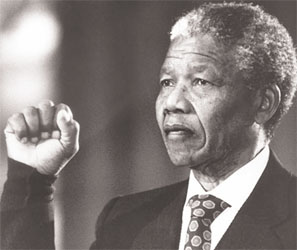
    DAKAR (TIP): US President Barack Obama heads to South Africa on June 28 hoping to see ailing icon Nelson Mandela, after wrapping up a visit to Senegal that focused on improving food security and promoting democratic institutions. Obama is in the middle of a three-country tour of Africa that the White House hopes will compensate for what some view as years of neglect by the administration of America’s first black president.

    Before departing Dakar, Obama was scheduled to meet with farmers and local entrepreneurs to discuss new technologies that are helping farmers and their families in West Africa, one of the world’s poorest and most drought-prone regions. But it was Mandela, the 94-year-old former South African president who is clinging to life in a Pretoria hospital, who will dominate the president’s day even before he arrives in Johannesburg.

    Asked on June 27 whether Obama would be able to pay Mandela a visit, the White House said that was up to the family. “We are going to completely defer to the wishes of the Mandela family and work with the South African government as relates to our visit,” deputy national security adviser Ben Rhodes told reporters in Senegal. “Whatever the Mandela family deems appropriate, that’s what we’re focused on doing in terms of our interaction with them.”

    Obama sees Mandela, also known as Madiba, as a hero. Whether they are able to meet or not, officials said his trip would serve largely as a tribute to the anti-apartheid leader. “I’ve had the privilege of meeting Madiba and speaking to him. And he’s a personal hero, but I don’t think I’m unique in that regard,” Obama said on Thursday. “If and when he passes from this place, one thing I think we’ll all know is that his legacy is one that will linger on throughout the ages.”

    The president arrives in South Africa on Friday evening and has no public events scheduled. He could go to the hospital then.Obama is scheduled to visit Robben Island, where Mandela spent years in prison, later during his trip. On June 28 morning, Obama will take part in a “Feed the Future” event on food security. That issue, along with anti-corruption measures and trade opportunities for US companies, are topics the White House wants to highlight on Obama’s tour. Obama, who has been in office since 2009, has only visited Africa once in his presidential tenure: a short trip to Ghana at the beginning of his first term.

    While acknowledging that Obama has not spent as much time in Africa as people hoped, the administration is eager to highlight what it has done, in part to end unflattering comparisons to accomplishments of predecessors George W Bush and Bill Clinton.Food security and public aid are two of the issues the Obama team believes are success stories.”Africa has seen a steady and consistent increase in our overall resource investment each year that we’ve been in office,” said Raj Shah, head of USAID.

  • NELSON MANDELA’S health is showing great improvement, says ex-wife

    NELSON MANDELA’S health is showing great improvement, says ex-wife

    ORLANDO (TIP: South Africa’s ailing anti-apartheid icon Nelson Mandela is showing “great improvement”, his former wife said on June 28 as his countrymen continued to pray for the speedy recovery of the 94-year-old former president. “I’m not a doctor but I can say that from what he was a few days ago there is great improvement,” Winnie Madikizela-Mandela told reporters outside his former home in Orlando, Soweto. Madikizela-Mandela called on the media not to “get carried away” in their reporting on her former husband’s illness.

    “Please understand the sensitivities and the feeling of the family,” she said. “It can also happen that you have crossed the boundaries.” The medical condition of Mandela, South Africa’s first black president, has improved slightly from an earlier “critical” state, the country’s Presidency said yesterday. Mandela, who turns 95 on July 18, has been admitted to a hospital here on June 8 with a recurring lung infection.

    Well wishers are continuing to gather outside the hospital where Mandela, regarded the founding father of South Africa’s multiracial democracy, was admitted 21 days ago. They have been singing and saying prayers outside the hospital and at Soweto former home of Mandela, who is revered across the globe as a symbol of resistance against injustice. South African children released 94 balloons – one for every year of Mandela’s life – into the air in his honour.

    US President Barack Obama also arrived in South Africa, the second stop in his three-country tour of Africa. But he is not expected to meet the globally admired statesman. Mandela had a long history of lung problems, dating back to the time when he was a political prisoner on Robben Island during apartheid. While in jail he contracted tuberculosis. Mandela is revered for leading the fight against white minority rule in the African country and then preaching reconciliation despite being imprisoned for 27 years.

    Mandela served as the country’s first black president from 1994 to 1999.He left power after five years as president. Mandela was awarded the Nobel Peace Prize in 1993. He retired from public life in 2004 and has not been seen in public since the football World Cup finals in in 2010. Meanwhile, South Africans protested against Obama’s visit to the country. Trade union activists, students and South African Communist Party cadres staged the demonstration to protest Obama’s “arrogant, selfish and oppressive” foreign policy.

  • US Allows Unrestricted Morning-After Pill Sales

    US Allows Unrestricted Morning-After Pill Sales

    WASHINGTON (TIP): The US Food and Drug Administration on Thursday approved unrestricted sales of the Plan B One-Step morning-after pill, lifting all age limits on the emergency contraceptive. The move came a week after the Obama administration ended months of back-and-forth legal battles by promising a federal judge it would take that step. Women’s health advocates had pushed for easier access to next-day birth control for more than a decade.

    “Over-the-counter access to emergency contraceptive products has the potential to further decrease the rate of unintended pregnancies in the United States,” FDA drug chief Dr Janet Woodcock said in a statement announcing the approval. It wasn’t clear how quickly Plan B One-Step would move from behind pharmacy counters to sit on drugstore shelves. Until now, customers could buy that morningafter pill and competing generic versions without a prescription only if they proved to a pharmacist that they were 17 or older.

    FDA said the product will have to be repackaged to reflect the change; maker Teva Women’s Health didn’t immediately respond. FDA has not lifted age limits on competing generics. The morning-after pill contains a higher dose of the hormone in regular birth control pills. Taking it within 72 hours of rape, condom failure or just forgetting regular contraception can cut the chances of pregnancy by up to 89 percent, but it works best within the first 24 hours. If a girl or woman already is pregnant, the pill, which prevents ovulation or fertilization of an egg, has no effect.

    Back in 2011, the FDA was preparing to allow over-the-counter sales of emergency contraceptives with no limits when Health and Human Services Secretary Kathleen Sebelius overruled her own scientists in an unprecedented move. She said she worried that girls as young as 11 could use the pill with no supervision, a concern that President Barack Obama echoed. In April, US District Judge Edward Korman blasted that decision as putting politics ahead of science and ordered the FDA to allow unrestricted sales of emergency contraceptives. He said hardly any 11-year-olds would use the pill, which costs about $50.

    The Obama administration lost a round in the appeals court, too, before telling the judge it would approve the one-pill brand. Doctors’ groups and contraceptive advocates have long argued that easier access to emergency contraceptives would cut unintended pregnancies and said the drugs are safe even when used at young ages. Social conservatives, in contrast, complain that lifting prescription requirements undermines the rights of parents and could endanger girls.

  • Economic Issues Likely To Dominate Kerry’s Visit To India

    Economic Issues Likely To Dominate Kerry’s Visit To India

    WASHINGTON (TIP): Economic issues like intellectual property protection, local content restrictions and a continued cap on FDI are likely to be on top of his agenda when US Secretary of State John Kerry travels to India next week for the strategic dialogue between two countries. “First and the foremost from our perspective will be economic piece of this (dialogue). There has been lot of concern on part of American business community about what they see as growing obstacles to trade and investment,” Assistant Secretary of State for South and Central Asia, Robert Blake, told an audience here.

    Both Kerry and President Barack Obama have been receiving letters from the US business community, advocacy groups, Senators and Congressmen on the trade policies of India, which they claim is harming American businesses. “Intellectual property protection, local content restrictions, continued restrictions on FDI in different sectors. This is certainly going to be our focus,” Blake said, adding that one of the goals is to reinvigorate the bilateral investment treaty talks and conclude them as soon as possible.

    Likewise, the US wants to reinvigorate the trade policy forum, and will also push for continued progress on the civil nuclear side, he added. Responding to questions, Blake said the US is not looking at any deliverables during the strategic dialogue, except to making sure that they understand each other on these issues. “India has its own concerns on comprehensive immigration reform. Obviously we need to hear from that.

    The purpose of the dialogue is to hear each other out in a very open and friendly manner and then figure out who is going to take charge of fixing these,” he said. As a result of the three rounds of strategic dialogue so far, Blake said there has been significantly quite convergence of strategic growth between the United States and India. Referring to the various bilateral and trilateral dialogues between the two countries, Blake said: “All of these collectively really enabled us to have an extremely good dialogue on issues that were previously very difficult.”

    “Things like Afghanistan, Iran, Burma and Middle East were areas of quite sharp differences. Now we have a remarkable degree of convergence, which has been a very welcome to see. Non-proliferation, food security, scientific and academic co-operation, climate change, defence trade, and regional issues like Afghanistan and Pakistan will also figure prominently during Kerry’s visit, Blake noted. Responding to questions, Blake said India is one of the highest strategic priorities for the US.

  • Obama To Nominate Jim Comey As Next FBI Chief On Friday

    Obama To Nominate Jim Comey As Next FBI Chief On Friday

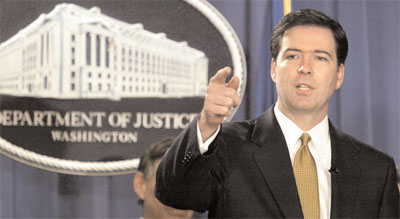
    WASHINGTON (TIP): President Barack Obama will nominate Jim Comey to be the next FBI director on Friday, picking a former Justice Department official who has deep experience in the US battle against terrorism, a White House official said on June 20. If confirmed by the Senate, Comey, a Republican, would replace FBI director Robert Mueller, who has led the agency since just before the September 11, 2001, attacks. Mueller is expected to step down this fall.

    A White House official said Obama would make the announcement about Comey on Friday afternoon. “In more than two decades as a prosecutor and national security professional, Jim has demonstrated unwavering toughness, integrity, and principle in defending both our security and our values,” the official said. Comey, 52, served as deputy US attorney general for President George W Bush. He had previously been the US attorney for the Southern District of New York.

    As assistant US attorney for the Eastern District of Virginia, Comey had handled the Khobar Towers bombing case that arose out of an attack on a US military facility in Saudi Arabia in 1996. Seventeen US military members died in the attack. Comey gained notoriety for refusing in 2004 to certify the legal aspects of National Security Agency domestic surveillance during a stint as acting attorney general while John Ashcroft was hospitalized with pancreatitis.

    That refusal prompted two senior White House officials – counsel Alberto Gonzales and chief of staff Andrew Card – to try to persuade Ashcroft to sign the certification. Comey, who was in the room, said Ashcroft refused. Comey later told the Senate Judiciary Committee at a 2007 hearing that the situation was “probably the most difficult night of my professional life.” His actions endeared him to many Democrats opposed to Bush’s domestic surveillance program.

    The surveillance program resurfaced as a major bone of contention this month when it was revealed that the US government maintained an expansive surveillance program targeting internet and phone communications. Obama has staunchly defended the program. Comey, after leaving the Justice Department in 2005, became general counsel to aerospace giant Lockheed Martin Corp until 2010.

    He most recently joined Columbia University’s law school as a senior research scholar after working for Bridgewater Associates, an investment fund, from 2010 to 2013. The Washington, DC-based Federal Bureau of Investigation serves as both a federal criminal investigative agency and a domestic intelligence body.

  • Indian-American Sri Srinivasan Sworn In As Top Us Court Judge

    Indian-American Sri Srinivasan Sworn In As Top Us Court Judge

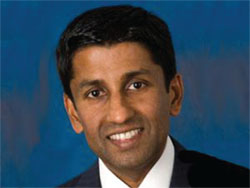
    WASHINGTON (TIP): The Chandigarh-born 46-yearold Srinivasan was sworn in a judge in the US Court of Appeals for the DC Circuit, the second most powerful court in the United States after the Supreme Court on June 18. He is the first Indian American judge in the second most powerful court of the country. Described by President Barack Obama as “trailblazer”, Srinivasan attributed phenomenal success to his family and the Indian American community.

    “You all made it possible,” Srinivasan told a gathering of Indian Americans at a reception hosted in his honor by the Indian Ambassador to the US, Nirupama Rao. “I am incredibly honored and humbled by the tremendous support you have given me,” he said. Srinivasan was first nominated by Obama on June 11, 2012. On January 2, 2013, his nomination was returned to the President, due to the sine die adjournment of the Senate. On January 3, 2013, Obama re-nominated him for the same office.

    Srinivasan was confirmed by a rare US Senate 97-0 votes, which he attributed to the overwhelming support he received from the Indian American community throughout the nation. Addressing the gathering, Rao said Srinivasan personifies the “extraordinary” accomplishments of the Indian Americans in the country and much more. Having achieved so much at this young age, Rao said the best is yet to come. She hoped that soon, there would be an Indian American in the US Supreme Court. Srinivasan began his legal career by serving as a law clerk for Judge J Harvie Wilkinson on the US Court of Appeals for the Fourth Circuit from 1995 to 1996.

  • ICCR Chair On Contemporary Indian Studies At Rutgers University

    ICCR Chair On Contemporary Indian Studies At Rutgers University

    NEW YORK, NY (TIP): The Consulate General of India, New York in association with Rutgers University organized an event on June 19, 2013 announcing the commencement of the ”ICCR Chair on Contemporary Indian Studies” at Rutgers University. About 90 guests including high level officials of Rutgers University, New Jersey Department of Higher Education and Department of Labor, delegates from India, academicians from other universities, media persons, officials of the Consulate and others attended this memorable event.

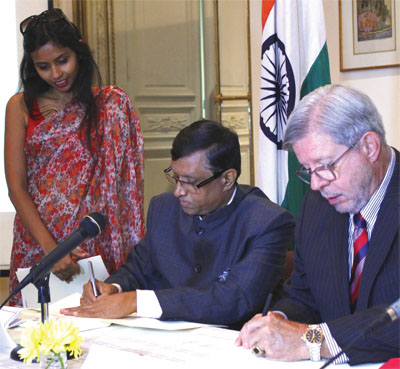
    A Memorandum of Understanding was signed by Ambassador Dnyaneshwar Mulay, Consul General of India, New York on behalf of the ICCR and Dr. Richard L. Edwards, Executive Vice President for Academic Affairs and interim Chancellor, Rutgers University to initiate this academic partnership which will bring a distinguished visiting professor annually from India to teach courses on different subjects, deliver public lectures, and engage directly with staff and students at Rutgers University.

    Under the collaboration of the Singh- Obama 21st Century Knowledge Initiative, Rutgers University was one of five institutions with Tata Institute for Social Sciences (TISS) as its partner institute to be awarded the grant in the first round of awards announced during the India-US Higher Education Dialogue in 2012. As part of the study tour for this international scholar exchange, the University and representatives of TISS held a panel discussion, in which, experts on reforming education and training systems, discussed higher education and skills development in a transnational context.

    Rutgers is one of four U.S. institutions to receive a grant of approximately $250,000 from President Barack Obama and Prime Minister Manmohan Singh’s 21st Century Knowledge Initiative. The program was announced in November 2009 as an affirmation of the leaders’ commitment to enhancing India-U.S. partnerships in education. Each government pledged $5 million for this endeavor, for a total of $10 million to encourage mutual understanding, facilitate educational reform, foster economic development and engage civil society through academic cooperation.

    Rutgers, with the assistance of its partner institution, Tata Institute of Social Sciences in Mumbai, will welcome a distinguished visiting professor from India to teach courses, deliver public lectures and engage directly with faculty, staff and students. The initiative aims to increase study abroad opportunities for American students through international service learning, internships and dual degree opportunities.

  • US House Of Representatives Votes To Resume Deporting Immigrants

    US House Of Representatives Votes To Resume Deporting Immigrants

    WASHINGTON (TIP): The Republican-controlled House of Representatives voted on Thursday to resume the deportation of hundreds of thousands of immigrants brought illegally to the United States as children, the first immigration-related vote in either chamber of Congress this year and a measure of the daunting challenge facing supporters of a sweeping overhaul of existing law on the subject.

    The party-line vote of 224-201 was aimed at blocking implementation of President Barack Obama’s 2012 electionyear order called the DREAM Act to stop deportations of many individuals who could benefit from it. Democrats on the House floor reacted with boos when the provision was added to a routine spending bill for the Department of Homeland Security. The vote was largely symbolic, since the administration has threatened to veto the overall legislation on budgetary grounds.

    It nevertheless stood as a stark warning from conservatives who dominate the ranks of the Republican House majority about attempts in the Senate to grant a chance at citizenship to an estimated 11 million immigrants residing in the country illegally. And the White House reacted sharply, saying the House-passed measure would affect “Dreamers” who are “productive members of society who were brought here as young children, grew up in our communities, and became American in every way but on paper.”

    Rep. Steve King, a Republican, said in a statement that the vote prohibits the administration “from implementing executive amnesty” without congressional action. “Bipartisan support for my amendment is the first test of the 113th Congress in the House of Representatives on immigration. My amendment blocks many of the provisions that are mirrored in the Senate’s `Gang of Eight’ bill. If this position holds, no amnesty will reach the President’s desk,” he said.

    The vote took place as Senate leaders set Friday for the opening of debate on White House-backed legislation that would create a chance at citizenship for those in the country unlawfully, at the same time it takes steps to assure the borders are secure against future illegal immigration. The measure was drafted by a bipartisan group of eight senators, then approved by the Senate Judiciary Committee last month on a vote of 13-8.

    It also creates a new low-skilled guestworker program, expands the number of visas available for high-tech industry workers and reorders the system for legal immigration that has been in place for decades. Debate is expected to consume weeks on the Senate floor as lawmakers of differing views try to change it more to their liking. Notably, Sen. Marco Rubio, a Florida Republican who was part of the group that drafted the legislation and is a potential presidential candidate in 2016, is saying he wants changes before he will support it on final passage.

    His office did not respond to a request for reaction to the House vote. In the House, 221 Republicans and three Democrats voted for King’s proposal, while 195 Democrats and six Republicans opposed it. “I can’t believe they just did that,” said Sen. Dick Durbin, a Democrat and a leading supporter of the DREAM Act. Ana Avendano of the AFL-CIO labor federation, said in a statement that King and his allies are playing to “a dwindling base of anti-immigrant Republican primary voters.

  • Barack Obama And Xi Jinping Seek To Build New Ties

    Barack Obama And Xi Jinping Seek To Build New Ties

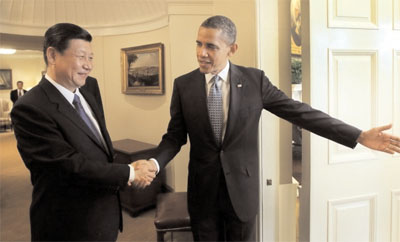
    PALM SPRINGS (CALIFORNIA) (TIP): President Barack Obama and Chinese President Xi Jinping, seeking a fresh start to a complex relationship, are retreating to a sprawling desert estate for two days of talks on highstakes issues, including cybersecurity and North Korea’s nuclear threats. Obama’s efforts to press Xi to halt China’s alleged hacking against the US could be overshadowed by revelations that Obama’s own administration has been secretly seizing phone records from millions of Americans.

    There are significant differences between China’s reported cyberattacks against US interests and the Obama administration’s court-approved domestic surveillance program. But both underscore the vast technological, and in some cases, legal, powers that governments have to access information covertly from individuals, companies and other governments. The setting for the talks that begin Friday is the 200-acre (80.94-hectare) Sunnylands estate just outside Palm Springs, marking a departure from the formality that typically greets Chinese leaders during state visits at the White House.

    US officials hope the relaxed atmosphere will facilitate a more candid and free-flowing discussion between the leaders of the world’s two largest economies. Obama was due to arrive Friday afternoon following a health care event and a Democratic fundraiser in Northern California. He and Xi will hold a bilateral meeting on Friday evening, then take questions from reporters. They’ll also have discussions during a working dinner Friday night and hold additional talks Saturday morning.

    The media availability with reporters will likely mark Obama’s first public comments on the revelation that the National Security Agency, under the cover of a topsecret court order, is accessing the telephone records of millions of US customers of Verizon. White House spokesman Josh Earnest said Thursday that the NSA phone record program is a “critical tool” in keeping Americans safe. “The top priority of the president of the United States is the national security of the United States and protecting this homeland,” Earnest said.

    “And we need to make sure that we have the tools we need to confront the threat posed by terrorists, to disrupt plots that may exist and to otherwise protect the homeland.” The debate over US governmentsanctioned surveillance will be juxtaposed with Obama’s warnings to Xi against Chinese spying on the American government and businesses. China has publicly denied that it is using computer network technology to spy on the US But Obama administration officials say they’ve seen some signals in private meetings with Chinese counterparts that Beijing may be ready to address the issue.

    The economy is also expected to be a major topic during the talks, with Xi likely to press China’s claims of business discrimination in US markets. The leaders are also certain to discuss North Korea’s provocative nuclear threats. Obama and Xi first met before the Chinese leader took office in March. They weren’t slated to meet again until September, on the margins of an international economic summit in Russia, but both countries saw a need to move up their first meeting of the year, given the myriad issues that define their relationship.

    The China summit kicks off a heavy foreign policy-focused stretch for Obama that includes trips to Europe and Africa later this month. It also comes as the White House grapples not only with the NSA disclosure, but also controversies over the Internal Revenue Service’s targeting of conservative political groups, the Justice Department’s seizure of phone records from Associated Press journalists, and the resurgent investigation into the attack on Americans in Benghazi, Libya.

  • Rice Named Obama’s National Security Adviser

    Rice Named Obama’s National Security Adviser

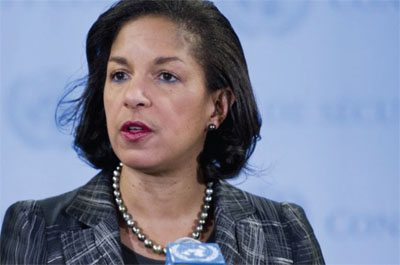
    NEW YORK (TIP): In a reshuffle of top foreign policy posts in his second term, U.S. President Barack Obama, on June 5, announced the appointment of the controversial and blunt-spoken U.S. Ambassador to the United Nations, Susan Rice to replace Tom Donilon as his national security adviser.

    He also announced that another longtime aide on the National Security Council staff who began working with Obama when he was still a freshman senator from Illinois, Samantha Power, will replace Rice as Washington’s U.N. envoy, a cabinet position. The moves, which had been anticipated but whose precise timing was uncertain, are considered unlikely to signal major changes in U.S. policy, despite the fact that both Power and Rice have been associated with the more-interventionist tendencies within the Democratic Party.

    “I don’t think this change in personnel marks a turning point in policy,” said Charles Kupchan, a senior fellow at the Council on Foreign Relations. “From the get-go, foreign policy under Obama has been run from the Oval Office, and Obama’s brain trust has included primarily a small inner circle of folks that cut their teeth on the (2008) campaign. Susan Rice and Samantha Power have been part of that inner circle all along.”

  • FBI: RICIN LETTER TO BARACK OBAMA SENT FROM WASHINGTON

    FBI: RICIN LETTER TO BARACK OBAMA SENT FROM WASHINGTON

    SEATTLE (TIP): A suspicious letter containing the deadly poison ricin was mailed to President Barack Obama from Spokane, Washington, on the same day similar ricin-tainted letters were mailed to a federal judge and a post office, the FBI said on May 30. A man arrested last week in Spokane has been charged with sending the letter to the Spokane-based judge after that letter and the letter to the post office were intercepted on May 14.

    The Obama letter was intercepted May 22, along with a similar letter sent to Fairchild Air Force Base, near Spokane, the Seattle FBI office said in a written statement. The FBI and the US Postal Inspection Service said all four envelopes were postmarked May 13 in Spokane and are in the possession of law enforcement. Three contained active ricin toxin, but the letter sent to the Air Force base continues to undergo testing.

    Each was addressed by hand in red ink. The authorities said they have information that a fifth similar letter was sent to a Central Intelligence Agency location in McLean, Va., and it was “detected” May 22 but has not been located. “Active monitoring of the mail stream continues in an effort to locate this letter and mitigate any risk its contents might pose,” the FBI statement said. It is unlikely the letter would be encountered by a member of the public, but it should not be opened or handled, and law enforcement authorities should be notified immediately, the statement said.

    According to the Centers for Disease Control and Prevention, ricin is a poison found naturally in castor beans. Symptoms can include difficulty breathing, vomiting and redness on the skin, depending on how the affected person comes into contact with the poison. The FBI is not aware of any illness resulting from exposure to the Spokanepostmarked letters, agency spokeswoman Ayn Dietrich said. Matthew Ryan Buquet, a 37-year-old registered sex offender who lives near downtown Spokane, has pleaded not guilty to a single charge of mailing a threatening communication and was being held without bail.

  • Obama terms Srikanth Srinivasan as a ‘Favorite’ person

    Obama terms Srikanth Srinivasan as a ‘Favorite’ person

    WASHINGTON (TIP): US President Barack Obama has described Indian-origin Srikanth Srinivasan, who created history by becoming a top federal judge, as one of his “favourite” persons. “One of my favourite people right now [is], Sri Srinivasan, who has just been confirmed,” Obama said at a White House reception held to celebrate the month of Asian American and Pacific Islanders (AAPI).

    “I was proud to nominate Sri, and he was just confirmed unanimously to become the first South Asian American federal appeals court judge,” Obama said addressing the gathering at the White House last evening. “I was telling his kids, who are here today, if he starts getting a big head, walking around the house with a robe asking them to call him ‘Your Honor’ then they should talk to me,” Obama said amidst laughter.

    Media reports suggest Obama might consider nominating Srinivasan, one of his favourite legal luminaries, for the Supreme Court judge in case of the next vacancy on the bench. Last week, Srinivasan was confirmed by the US Senate (97-0) votes as a judge on the DC circuit court of appeals, which is considered as the top court of the country after the Supreme Court. He is the first Indian-American to achieve the fete. Addressing the gathering, Obama fondly remembered delicacies like ‘keema’ and ‘daal’ cooked by his Indian and Pakistani classmates during college days.

  • PROMINENT LEGAL LUMINARIES OF INDIAN ORIGIN IN THE US

    PROMINENT LEGAL LUMINARIES OF INDIAN ORIGIN IN THE US

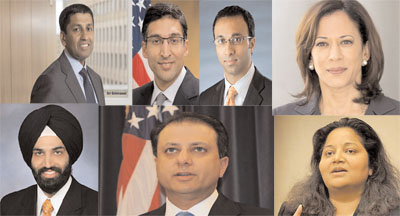
    WASHINGTON (TIP): Recently, Indian-American Srikanth Srinivasan scripted history after he was confirmed as the first South Asian judge to America’s second highest court. But Srinivasan is not the only famous person of Indian origin who has made it to the top ranks in US judicial system.
    Srikanth Srinivasan was appointed as a judge on the prestigious US Court of Appeals in Washington DC, the highest judicial appointment achieved by an Indian-American. Born in Chandigarh, Srinivasan spent nearly two decades as an extraordinary litigator before serving as Principal Deputy Solicitor General of the United States. Now he will serve with distinction on the federal bench. Srinivasan will be the first South Asian American to serve as a circuit court judge in US history.
    Preet Bharara, who was born in Punjab, is the US attorney for the Southern District of New York. In 2012, Bharara was named by Time magazine as one of ‘The 100 Most Influential People in the World’ and was also featured on a cover of Time Magazine. His office was responsible for the high-profile prosecutions of insider trading and other financial fraud on Wall Street including the investigation against the Galleon Group of Raj Rajaratnam and former McKinsey chief Rajat Gupta. Bharara graduated from Harvard College and Columbia Law School.

    Neal Katyal served as Acting Solicitor General of the United States from May 2010 until June 2011. A graduate of Dartmouth College and Yale Law School, Katyal currently runs the appellate practice at the law firm Hogan Lovells and teaches at the Georgetown University Law Center, where he was one of the youngest tenured professors in the university’s history. Katyal has served as counsel or co-counsel for numerous US Supreme Court cases.

    Amit Mehta, an Indian-origin lawyer, is a partner at Washington law firm Zuckerman Spaeder, and has been involved in many big cases, including helping former IMF president Dominique Strauss-Kahn successfully get criminal assault charges in New York state court dismissed. Mehta, 39, is also a board member of the Mid-Atlantic Innocence Project, which seeks to reverse and prevent wrongful convictions in DC, Maryland and Virginia.

    Preeta D. Bansal served as the General Counsel and Senior Policy Advisor to the US federal Office of Management and Budget from 2009 until 2011. Before her assignment in the Obama administration, she served as a law partner at Skadden, Arps, Slate, Meagher & Flom

    Amandeep Sidhu is a partner of law firm McDermott Will & Emery in Washington DC. He has built a reputation as a strong litigator with a solid commitment to pro bono cases. He is a founding member of The Sikh Coalition and has fought a pro bono battle on behalf of three Sikh men who wanted to serve in the US Army. He was able to successfully show that the men were able to meet uniform requirements by using Army-issued cloth for the turbans and that even with a beard, the men could not only use a gas mask effectively, but surpass their clean-shaven comrades in field tests. Eventually the men were allowed to join the service, but Sidhu said that he would settle for nothing less than a policy change.

    Kamala Devi Harris is the Attorney General of California following the 2010 California state elections. Earlier she had served as District Attorney of San Francisco from 2004 to 2011. Recently, US President Barack Obama apologized to Kamla Harris, for his comment in which he described the Indian-American as the best-looking attorney general of America – which many alleged was a sexist remark.

  • Barack Obama sees narrower terror threat, defends drone strikes

    Barack Obama sees narrower terror threat, defends drone strikes

    WASHINGTON (TIP): President Barack Obama sought on Thursday to advance the US beyond the unrelenting war effort of the past dozen years, defining a narrower terror threat from smaller networks and homegrown extremists rather than the grandiose plots of Osama bin Laden’s al-Qaida.

    In a lengthy address at the National Defense University, Obama defended his controversial drone-strikes program as a linchpin of the US response to the evolving dangers. He also argued that changing threats require changes to the nation’s counterterrorism policies. Obama implored Congress to close the much-maligned Guantanamo Bay detention center in Cuba and pledged to allow greater oversight of the drone program.

    But he plans to keep the most lethal efforts with the unmanned aircraft under the control of the CIA. He offered his most vigorous public defense yet of drone strikes as legal, effective and necessary as terror threats progress. “Neither I, nor any president, can promise the total defeat of terror,” Obama told his audience of students, national security and human rights experts and counterterror officials. “What we can do – what we must do – is dismantle networks that pose a direct danger, and make it less likely for new groups to gain a foothold, all while maintaining the freedoms and ideals that we defend.

    ” Obama’s address came amid increased pressure from Congress on both the drone program and the status of the Guantanamo prison. A rare coalition of bipartisan lawmakers has pressed for more openness and more oversight of the highly secretive targeted strikes, while liberal lawmakers have pointed to a hunger strike at Guantanamo in pressing Obama to renew his stalled efforts to close the detention center.

    The president cast the drone program as crucial in a counterterror effort that will rely less on the widespread deployment of US troops as the war in Afghanistan winds down. But he acknowledged the targeted strikes are no “cure-all” and said he is deeply troubled by the civilians unintentionally killed. “For me, and those in my chain of command, these deaths will haunt us as long as we live,” he said. Before any strike, he said, “there must be near-certainty that no civilians will be killed or injured – the highest standard we can set.

    ” In Pakistan alone, up to 3,336 people have been killed by the unmanned aircraft since 2003, according to the New America Foundation which maintains a database of the strikes. However, the secrecy surrounding the drone program makes it impossible for the public to know for sure how many people have been killed in in strikes, and of those, how many were intended targets. In an attempt to lift the veil somewhat, the Justice Department revealed for the first time Wednesday that four Americans had been killed in US drone strikes abroad.

    Just one was an intended target – Anwar al-Awlaki, who officials say had ties to at least three attacks planned or carried out on US soil. The other three Americans, including al-Awlaki’s 16-year-old son, were unintended victims. Drones aside, some Republicans criticized Obama as underestimating the strength of al- Qaida in his speech and for proposing to repeal the president’s broad authorization to use military force against the nation’s enemies – powers granted to George W Bush after the Sept. 11, 2001, attacks.

    “I believe we are still in a long, drawn-out conflict with al-Qaida,” Sen. John McCain, RAriz., told reporters after the speech. “To somehow argue that al-Qaida is on the run comes from a degree of unreality that to me is really incredible. Al-Qaida is expanding all over the Middle East, from Mali to Yemen and all places in between.” Obama announced new “presidential policy guidelines” on the standards his administration uses when deciding to launch drone strikes.

    According to an unclassified summary of the guidelines, the US will not strike if a target can be captured, either by the US or a foreign government; a strike can be launched only against a target posing an “imminent” threat, and the US has a preference for military control of the drone program. However, the CIA will continue to work with the military on the program in Yemen, and control it in Pakistan, given the concern that al-Qaida may return in greater numbers as US troops leave Afghanistan.

    The military and the CIA currently work side by side in Yemen, with the CIA flying its drones over the northern region out of a covert base in Saudi Arabia and the military flying its unmanned aerial vehicles from Djibouti. Obama’s advisers said the new guidelines would effectively limit the number of drone strikes in terror zones and pointed to a future decline of attacks against extremists in Afghanistan as the war ebbs.

    But strikes elsewhere will continue. The guidelines will apply to strikes against both foreigners and US citizens abroad. Though Obama sought to give more transparency to the drone program, the strikes will largely remain highly secret for the public. Congress has been briefed on every strike that US drones have made outside Afghanistan and Iraq, Obama said, but those briefings are largely classified and held privately.

    The president said he was open to additional measures to further regulate the drone program, including creating a special court system to regulate strikes, similar to one that signs off on government surveillance in espionage and terror cases. Congress is already considering whether to set up a court to decide when drones overseas can target US citizens linked to al-Qaida. While civil rights groups welcomed some of Obama’s steps, they appeared largely unappeased.

    “The president still claims broad authority to carry out target killings far from any battlefield, and there is still insufficient transparency,” said Anthony D Romero, executive director of the American Civil Liberties Union. “We continue to disagree fundamentally with the idea that due process requirements can be satisfied without any form of judicial oversight by regular federal courts.” Obama was interrupted three times by a woman from the anti-war group Code Pink, who appeared to be protesting both the drone program and the Guantanamo prison.

    The president said at one point that he was willing to “cut the young lady some slack” because the issues he was addressing were worth being passionate about. In seeking to close Guantanamo, Obama faces many of the same roadblocks that stymied his efforts to shut the prison when he first took office. Many Republican lawmakers oppose Obama’s efforts to bring some of the detainees to the US to face trial and be held in maximum security American prisons.

    But a new hunger strike by prisoners protesting their conditions and indefinite confinement has refocused Obama on efforts to close the detention center. He tried to jumpstart that process Thursday by announcing a fresh push to transfer approved detainees to their home countries and lift a ban on transfers to Yemen. The end of the Yemen restrictions is key, given that 30 of the 56 prisoners eligible for transfer are Yemeni. Obama halted all transfers to the poor Middle Eastern nation in 2010, after a man trained in Yemen was convicted in a failed bombing attempt of an airliner over Detroit.

    In a statement from its embassy in Washington, the Yemeni government said it welcomed the administration’s decision and pledged to “work with the United States to take all necessary steps to ensure the safe return of its detainees.” Obama acknowledged that the politics of closing Guantanamo are difficult, but he said, “History will cast a harsh judgment on this aspect of our fight against terrorism and those who fail to end it.”

    The president said he planned to appoint a special envoy to oversee the prisoner transfers and other efforts to close the prison. McCain, a leading voice among Republicans, has long advocated closing Guantanamo and pledged Thursday to urge his colleagues to work with Obama to shut the facility. But Rep. Howard P. “Buck” McKeon, the Republican chairman of the House Armed Services Committee, said he was open to a proposal from Obama on the future of Guantanamo Bay. But that plan has to consist of more than political talking points, he said.

    “This speech was only necessary due to a deeply inconsistent counterterrorism policy, one that maintains it is more humane to kill a terrorist with a drone than detain and interrogate him at Guantanamo Bay,” McKeon said This week, the Pentagon asked Congress for more than $450 million for maintaining and upgrading the Guantanamo prison. More than 100 of the prisoners are involved in the hunger strike, and the military earlier this month was force-feeding 32 of them to keep them from starving.

  • India’s Home Minister Shinde holds talks with US Officials

    India’s Home Minister Shinde holds talks with US Officials

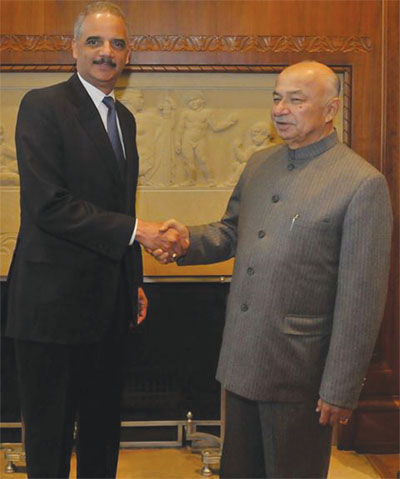
    WASHINGTON (TIP): India’s Home Minister Sushil Kumar Shinde, on an official visit to the United States, continued dialogue in to another day on May 21 with senior US Government leaders including Secretary for Homeland Security Janet Napolitano, Attorney General Eric Holder and FBI Director Robert Muller, a press release issued by Embassy of India in Washington said. Minister Shinde and Secretary Napolitano convened the second round of the Homeland Security Dialogue, which last met in New Delhi in May 2011.

    The two leaders emphasized that cooperation between India and the United States in securing the two nations was a key pillar of the India-US Global Strategic Partnership. They recognized that such cooperation was imperative, in view of commonality of the threats that confront the two countries. They welcomed progress made over the recent past in developing practical steps to enhance the security of the citizens of the two countries, and to prevent the misuse of increasinglyinterconnected global financial, transportation and communication systems.

    They agreed to enhance cooperation in capacity building programs and to identify technologies and equipment which may be useful for Indian law enforcement agencies to source in the United States. Minister Shinde and Secretary Napolitano received reports from the six sub-groups that constitute the Homeland Security Dialogue, and welcomed the fact that progress was being achieved in substantive terms.

    They applauded the fact that specific cooperation programs were identified and emphasized the need for results from the Homeland Security Dialogue. Minister Shinde invited Secretary Napolitano to visit India in 2014 to co- Chair the next round of the Dialogue, and the two sides agreed to carry out a review of the process a few months before that, under the stewardship of India’s Home Secretary and the US Deputy Secretary of the Department of Homeland Security. In the afternoon of May 21, Minister Shinde had a meeting with Attorney General Eric Holder.

    The two leaders recognized the compelling reasons for closer cooperation between India and the United States based on the larger strategic objective underlined by President Barack Obama and Prime Minister Manmohan Singh during the President’s State Visit to India in November 2010.

    Minister Shinde and Attorney General Holder agreed that the Ministry of Home Affairs and the Department of Justice should work together institutionally, so as to ensure the best possible outcomes within the laws of the two countries, to address pending issues relating to extradition, execution of Letters Rogatory and Red Corner Notices, as well as other areas of cooperation in law enforcement, counter terrorism and judicial processes.

    In the Home Minister’s meeting with FBI Director Muller, the two sides reviewed areas of cooperation and issues of interest. The FBI and Indian agencies have remained in close contact, and it was agreed that the process of inter-agency cooperation would be developed further, in this context. After the completion of his official meetings, Home Minister Shinde and senior members of his delegation left for a day-visit to Boston to have a detailed briefing of the investigations that resulted in the successful investigation of the April 15 Boston Marathon bombing. Later, after a day’s sojourn in New York, the Minister was to leave for India.

  • Highway bridge collapses between Seattle and Vancouver in US; no deaths reported

    Highway bridge collapses between Seattle and Vancouver in US; no deaths reported

    WASHINGTON (TIP): The major highway bridge linking Seattle with Canada and the rest of the Pacific Northwest region collapsed Thursday evening, dumping at least a handful of vehicles and people into a river, the Washington State Patrol said. There were no immediate reports of deaths, and three people were taken to hospitals.

    The fourlane Interstate 5 bridge more than half a century old collapsed about halfway between Seattle and Vancouver, British Columbia, Trooper Mark Francis said. Francis said he did not know what caused the collapse, which came at the start of one of the country’s busiest holiday weekends of the year. Xavier Grospe, who lives near the river, said he could see three partially submerged cars, and the apparent drivers were sitting either on top of the vehicles or on the edge of open windows.

    “It doesn’t look like anybody’s in danger right now,” Grospe said. The collapse came before sundown on a clear day. Helicopter footage aired by KOMO-TV in Seattle showed one rescue boat leaving the scene with one person strapped into a stretcher. A damaged red car and a damaged pickup truck were visible in the water, which appeared so shallow it barely reached the top of the car’s hood.

    Kari Ranten, a spokeswoman for Skagit Valley Hospital, said two people who were injured in the collapse were en route to the facility. She said another person was being taken to a different area hospital. A man told the local Skagit Valley Herald newspaper he felt a vibration and looked in his rear view mirror to see that the part of bridge he had just crossed was no longer behind him.

    “I thought something was wrong with my car at first,” he said. The collapse will raise questions about the state of the nation’s infrastructure, which has been a popular issue with President Barack Obama, who earlier this year warned against “raggedy” roads and wants to focus more money on rebuilding to improve the economy.

  • Barack Obama invites Manmohan Singh, visit likely this year

    Barack Obama invites Manmohan Singh, visit likely this year

    NEW DELHI (TIP): At a time when Indo-US ties appeared to be losing steam, President Barack Obama has invited PM Manmohan Singh for a bilateral meeting this year. Confirming the development, sources in Washington told that Singh has accepted the invitation and the dates were being worked. India has proposed that the meeting happen when Singh visits the US for the UNGA but sources said that both sides are looking for a mutually convenient time between September and December.

    The invitation to Singh comes when there has been a stalemate over civil nuclear cooperation owing to India’s nuclear liability law. US Deputy Secretary of State William Burns first spoke to Indian authorities about Obama’s desire for a meeting with Singh during his recent visit to Delhi. Then a formal invite was extended.

    Sources said that the leaders will review all key bilateral issues between the two countries including civil nuclear initiative, counter terrorism, Afghanistan, defence, space collaboration and education.Afghanistan is an issue where India has certain reservations about US policies ahead of the pullout next year. US has repeatedly praised India for facilitating regional economic integration and ensuring private sector investment in the country but New Delhi has been watching with reservations the US move to engage the Afghan Taliban in the reconciliation process.

    Sources said that Singh will also strongly take up the issue of a controversial immigration bill, proposed by a bipartisan group of Senators (Gang of 8), which proposes to tighten H1-B regulations further against the interest of Indian IT companies. In an interview to TOI, foreign minister Salam Khurshid said that the draft bill wasn’t good for bilateral ties. This will be Obama’s first bilateral meeting in his second term with Singh, whom he looks upon as a friend. While the US president has expressed his fondness for Singh on several occasions, the fact that he chose not to meet him on the sidelines of UNGA in New York in 2011, and also did not invite him to Washington during that trip, was seen as a let down.Obama may have more than made up for it by inviting Singh at a time when the government led by the Indian PM is plagued by domestic crises.

    Singh was the first state guest of President Obama when he visited Washington in November 2009. The visit was used by the two leaders to reaffirm the global strategic partnership between the two countries. The meeting will also earn India some diplomatic bragging rights in that it will ensure Singh’s engagements with leaders of all P5 countries in 2013. While French President Francois Hollande and British PM David Cameron have already visited India, Chinese Premier Li Keqiang is arriving in New Delhi on Sunday. Singh is also expected to visit Russia this year

  • Renowned Indian American health expert Mukesh Hariawala to address India Leadership Conclave 2013

    Renowned Indian American health expert Mukesh Hariawala to address India Leadership Conclave 2013

    WASHINGTON (TIP): Renowned Indian American health expert Mukesh Hariawala will address the fourth edition of the India Leadership Conclave 2013 in Mumbai in June, 2013. Harvard trained and internationally acclaimed Indian American healthcare economist and cardiac surgeon Dr Mukesh Hariawala will deliver the keynote address with the theme ” President Barack Obama 2nd Term – Business Implications on Indian Healthcare “.

    This highly anticipated lecture is expected to attract an elite audience and will dispel negative myths that surround the hotly debated “Obamacare” – President Barack Obama’s Affordable Care Act (ACA), its implementation milestones, changing ecosystems in the US, but importantly its positive impact on the Indian healthcare industry. Dr.Hariawala spoke of the 100-billion dollar medical tourism revenue opportunity, increased IT contracts, generic drug company revenues and overseas insurance company investments in Indian healthcare sector facilitated by soft FDI policies of incumbent Prime Minister Manmohan Singh. The cumulative effect would accelerate the GDP trajectory from a limping five percent close to the earlier projected eight percent rate.

    This undoubtedly will help multiple industry augmented employment and improvement in living standards for a good portion of the Indian population with an overall tangential impact on the national BPL. Expectantly, this will be refreshing news for the Planning Commission of India and a boost in its implementation of the ambitious 12th – 5 year plan. Dr.Hariawala further added that ” Obamacare ” will also necessitate revamping of all the computing systems handling U.S. healthcare which would open a wide door of business opportunity for Indian IT companies. Purely for financial reasons, this will in all likelihood compel the U.S. Government to continue large outsourcing of software contracts. The key economic driver of “Obamacare” is to reduce the debt ridden trillion dollar healthcare burden on the U.S. exchequer.

    Global experts have suggested that Dr Hariawala’s lecture will shed new light and open up a wider debate, considering his deep-rooted intellectual insight of Indo-American business cultures. Over 300 iconic leaders, including Reliance Industries owner Mukesh Ambani and Tata Group ex-chairman Ratan Tata, will take part in the event, which has been organized by the Network 7 Media Group and the Ministry of Corporate Affairs.

    Top politicians, bureaucrats, other business tycoons, social reformers, media barons, diplomats and global dignitaries will attend one of Asia’s largest events to be held in Mumbai on June 21 at the Majestic Hall in the Lalit Intercontinental Hotel. The theme will be “New India – Agenda for Change”. Dr.Hariawala is widely regarded as an influential policy thinker, and is expected to elaborate on his popular concepts of ” Universal Patient Care ” and ” Womb to Tomb ” economical insurance models for all Indians across the entire spectrum of socio – economic classes.

  • Karnataka State Election: A Key Test

    Karnataka State Election: A Key Test

    The 224-member Karnataka assembly will go to polls on May 5 and counting of votes will take place on May 8. Undoubtedly, this will set the tone for the 2014 general elections and will have significant impact on the political parties as to how they would conduct themselves in the realignment process. It is well known that the state of Karnataka has been beset with corruption, nepotism, ineptitude, public squabbling and internal rivalries and to simply put it, very bad governance. The BJP regime has also become known for its religious intolerance of the minorities and moral policing.

    In nutshell, BJP in their years as a ruling party saw Karnataka take a beating in terms of development as well as suffering a setback to the progressive image of such a vibrant state. I do believe the Kannada people deserve better governance. It was a state that created a Silicone Valley for India through its dynamism and energy under various Congress Governments. Non-Resident Indians working with entrepreneurs in India played a vital role in transforming the Karnataka State especially the city of Bangalore into a world class metropolis. US president Barack Obama has mentioned Bangalore in many of his speeches including once when he exhorted American students ‘to toil harder at school, saying their success would determine the country’s leadership in a world where children in Bangalore and Beijing were raring to race ahead’.

    Successive Congress Governments in Karnataka played key roles in making this a reality. It was the Congress governments under Veerappa Moily and S.M. Krishna who have ushered Karnataka into the modern age recognizing the potential of the Information Technology and Biomedical research and laid the foundation for their growth. In addition, the land reform act, major irrigation projects, establishments of several Universities including the University for Medical Studies and the prestigious Law School of India University were all part of those notable achievements. Moreover, four lakh houses were constructed during the last Congress Karnataka Government under “Rajiv Gandhi rural housing program.

    Since 1980 Karnataka leads the nation in GDP and per capita GDP as compared to other states in India and it should also be noted that with the initiatives undertaken during the Congress Government, Karnataka became home of largest biotechnology with 50% of large firms in Bangalore.” Sonia Gandhi in a major address pepping up the Congress cadres in Karnataka said “we all know corruption is a disease, a cancer. Who does it affect the most, it is the poor. No other party has done what UPA has done to fight corruption. We brought RTA (Right to Information Act) because we genuinely want to fight corruption”. She went on to say that the UPA government wanted to pass the Lokpal bill but BJP has indeed obstructed the initiative. There is no doubt that corruption is endemic and it is a national problem that transcends all boundaries. However, it is clear to those keen political observers who take an objective look at the issue that UPA Government has done a whole lot more to fight corruption than any one other party.

    Anyone who is directly accused of corruption has either resigned from the Government, or sent to jail or under active investigation and facing possible trial. The RTI itself has become the catalyst in unearthing numerous cases of corruption and has become a very effective tool in the hands of the civil society. In addition, the UPA Government has introduced a number of bills in the Parliament to combat corruption in public places that include The Public Procurement Bill, 2012, Grievances Redresser Bill, Foreign Bribery Bill, Judicial Accountability Bill as well as the Whistle Blowers Protection Bill. What happened to Karnataka under the stewardship of Yeddyurappa is out there for the record. He is accused of massive corruption, with 15 cases including him and his family members and was subsequently jailed. This is the first Chief Minister who has been jailed because of corruption.

    It has been reported in the media that “All restraint appears to have been thrown to the winds during the reign of Chief Minister B S Yeddyurappa when the Reddy brothers, ministers in his Bharatiya Janata Party government who had allegedly bankrolled the party’s campaign, were given free rein and the illegal mining spilled into adjoining Andhra Pradesh” A former BJP leader and a junior central minister Mr. V. Dhananjaya Kumar has even alleged that one of the national leaders of BJP was on the take from the Yeddyurappa Government in this web of corruption and the misguided governance. BJP also tried to turn Karnataka into a mini Gujarat with fanning of the flame of communalism across the state.

    There were cases of people getting killed, worship places of minorities attacked and their leaders jailed for exercising their right to religious freedom under the Constitution. Once again the objective of the BJP Government was to divide the people along caste and religious lines. Sonia Gandhi while visiting the Mangalore city said, “We have to see the forces of communalism are defeated… We must stand up and fight these forces. We must fight communalism regardless of where it originates from”. The UPA Government under the capable leadership of Dr. Manmohan Singh has shown the way for economic growth and prosperity for all its citizens by leading India as an important player in the global arena while keeping the integrity of the nation and providing inclusive growth opportunity to everyone. The Mahatma Gandhi Rural Employment Act alone has given much needed relief for the so many unskilled laborers across the country.

    The reforms in the economic arena including granting of FDI to multinationals are not only to benefit the consumer but are also expected to bring technology and jobs along with. Undoubtedly, the NRIs in United States especially from the proud state of Karnataka with a long history and tradition would like to see their State continue to be a beacon of hope for freedom, liberty and Justice for all. The cosmopolitan city of Bangalore that has become a magnet for those with a vision, dynamism and energy has to be sustained and to be protected.

    The NRIs indeed have a stake in the outcome of this very important election. Therefore, the time is ripe for the people of Karnataka to speak out on the Election Day with their ballots. They can reclaim their state by electing clean candidates who are committed to good governance. I am certain that people of Karnataka will deliver their answer on May 5th. (The author is the President of the Indian National Overseas Congress (I) which is the recognized entity in USA by the All India Congress Committee and has various chapters that include a Karnataka Chapter headed by Dr. Dayan Naik)

  • Sikhs Take Out An Impressive Sikh Day Parade In New York

    Sikhs Take Out An Impressive Sikh Day Parade In New York

    NEW YORK, NY (TIP): Organized by the Sikh Cultural Society, Richmond Hill, New York, the Sikh Day Parade on April 27 in Manhattan, New York, attracted, as usual, large crowds of Sikh men, women and children from the Tri -States area of New York, New Jersey and Connecticut. Besides, contingents came from as far as Philadelphia and Maryland.

    An estimated 30,000 ( according to the organizers, 50, 000) Sikhs participated. The parade that started from 36th street and Madison Ave wound its way through the city and ended up at 26th Street and Madison Ave for the conference. The event is held annually to mark Vaisakhi, the harvest festival of Punjab that coincides with the day the Tenth Master of the Sikhs, Guru Gobind Singh, created the order of Khalsa in 1699. All along and at the conference, placards with Prof. Davinderpaul Singh Bhullar’s photograph were carried by the participants who raised slogans for freedom for Bhullar and denounced government of India for being unjust to the Sikhs. Pro Khalistan slogans were also raised. The parade was dedicated to Prof. Davinderpaul Singh Bhullar who is in death row in India. The Parade passed a resolution requesting President of USA to secure freedom for Prof. Bhullar. The memorandum to US President alleged atrocities on Sikhs in India in 1984 (Operation Blue Star in which “1600 innocent Sikhs were killed” and killing of Sikhs in the wake of Indira Gandhi’s assassination when “3000 innocent Sikhs were brutally murdered”) and continued injustice to the community in India. It said Prof. Bhullar is being unjustly put to death even though there is no evidence of the crime he is said to have committed.

    The resolution read, inter alia, ” Sikh Cultural Society on behalf of this 50,000 strong peaceful gathering of Sikhs from the Tri-State area, but in spirit of all the Sikh Americans pass the resolution to request Mr. Barack Obama, the President of USA, to use his good offices and ask Indian government to stop the execution of Prof. Bhullar” . The resolution was received by Harpreet Singh Sandhu, an official with the Director of Public Engagement, White House. The first to be asked to speak was the President of Sikh Youth of America, the most vocal Khalistani organization that was founded by Dr. Amarjit Singh of Washington. Gurvinder Singh Manna, in his 8 minute long speech called upon the Sikhs all over the world to raise their voice of protest against death to Prof. Bhullar. He said that Prof. Bhullar’s confessional statement was obtained under duress and there is no witness nor any other corroborative evidence to prove his guilt. Even the judgment of the three judge bench was a split judgment when the presiding judge Justice Shah did not find Prof. guilty. The President of India who rejected Prof. Bhullar’s mercy petition did so without following the proper process of consulting the presiding judge, since the law says in the case of a split judgment, President should confer with the presiding judge in deciding on a mercy petition. Manna called upon Sikhs to work tirelessly to have their homeland without which they will always be subjected to injustice.

    Another noteworthy speaker at the parade conference was Ganga Singh Dhillon, one of the front ranking fighters for Sikh homeland, who, in spite of his frail health, was present to read out the resolution and present his viewpoint. He said, “sloganeering only helps government of India to brand Sikhs as separatists.” He noted that nothing could be achieved by raising slogans. The only way was to fight for Sikh homeland. Obviously, he was repeating himself when he went to Pakistan and from there organized the militant movement for Khalistan. Others who spoke included Boota Singh Kharaund, President of Shiromani Akali Dal , Mann (Simranjit Singh Mann ), Attorney Jaspreet Singh, Baljinder Singh Brar from Gurdwara Dashmesh Darbar, Carterot, Gurmej Singh, President, Gurdwara Baba Makhan Shah Lobana, New York, and Hardev Singh Padda, President, Sikh Gurdwara, Flushing. Two former Khalistani leaders, Gurmit Singh Auluck and Paramjit Singh Ajarawat, from Washington appeared to be ignored by the organizers. Auluck used to be the principal voice of Khalistanis some 20 years ago. He held sway up to 2000 and then faded out. Paramjit Ajarawat also was a potent Khalistani voice but now seems to have lost esteem with the Sikh leaders.

    They were invited to speak at the end when the gathering had almost left. Their disappointment was writ large on their faces. Contrary to their fate, resurrection of octogenarian Ganga Singh Dhillon, who has links in Pakistan, is surprising and intriguing. Among the political leaders and law makers present were Congresswoman Grace Meng, Council Member Mark Weprin, and Reshma Saujani who is seeking election to the Public Advocate in September, 2013. Gurdev Singh Kang, President of the Sikh Cultural Society which organizes the parade every year, expressed his gratitude to the participants for turning out in large numbers and celebrating the event in a befitting manner. He thanked the guest speakers, including the local politicians and law makers, for their time and valuable views they expressed.

  • Obama, ex-presidents honor George Bush at new museum

    Obama, ex-presidents honor George Bush at new museum

    DALLAS (TIP): President Barack Obama praised his predecessor at the dedication of his library for showing strength and resolve in the days after the September 11 attacks and said if Congress passes immigration reform “it will be in large part thanks to the hard work of President George W Bush.” Obama spoke along with all four living former presidents in a rare reunion honoring one of their own at the opening of the George W Bush Presidential Center. “To know President George W Bush is to like him,” Obama said. The presidents — Bush, Barack Obama, Bill Clinton, George HW Bush and Jimmy Carter — were cheered by a crowd of former White House officials and world leaders as they took the stage together to open the dedication.

    They were joined on stage by their wives — the nation’s current and former first ladies — for the outdoor ceremony on a sun-splashed Texas morning. It was a day for recollections and reveries, and no recriminations or remorse. The five men have been described as members of the world’s most exclusive club, but Obama said they are “more like a support group.” “Being president above all is a humbling job,” Obama said. He there were moments that they make mistakes and wish they could turn back the clock, but “we love this country and we do our best.” He said Bush started an important conversation by speaking to the American people about the United States as a nation of laws and a nation of immigrants and he hopes Congress will act this year to pass reform, which Bush wasn’t able to achieve. The leaders put aside the profound ideological differences that have divided them for years for a day of pomp and pleasantries. For Bush, 66, the ceremony also marked his unofficial return to the public eye four years after the end of his deeply polarizing presidency. “Oh happy day,” Bush said as he took the stage. President George HW Bush, who has been hospitalized recently for bronchitis, spoke haltingly for just about 30 seconds while seated in his wheelchair, thanking guests for coming out to support his son.

    A standing ovation lasted nearly as long as his comments, and his son and wife helped him to his feet to recognize the applause. Clinton, too, was warmly received by the heavily Republican crowd, who applauded and laughed along with Clinton’s joke-peppered speech. He concluded on a serious note about the importance of the leaders coming together. “Debate and difference is an important part of every free society,” Clinton said. President Jimmy Carter praised Bush for his role in helping secure peace between North and South Sudan in 2005 and his approval of expanded aid to the nations of Africa. “Mr. President let me say that I am filled with admiration for you and deep gratitude for you about the great contributions you’ve made to the most needy people on earth,” Carter said.

    Former first lady Laura Bush said the library isn’t just about her husband, but reflects the world during his time as the first president as the 21st century. “Here we remember the heartbreak and heroism of Sept. 11 and the bravery of those who answered the call to defend our country,” she said. In a reminder of his duties as the current Oval Office inhabitant, Obama planned to travel to Waco in the afternoon for a memorial for victims of last week’s deadly fertilizer plant explosion.

    Presidential politics also hung over the event. Ahead of the ceremony, former first lady Barbara Bush made waves by brushing aside talk of her son, former Florida Gov. Jeb Bush, running for the White House in 2016. “We’ve had enough Bushes,” said Mrs Bush, the wife of George HW Bush and mother of George W Bush.

    She spoke in an interview with NBC’s “Today” show. Yet George W Bush talked up the presidential prospects of his brother in an interview that aired Wednesday on ABC.”He doesn’t need my counsel, because he knows what it is, which is, ‘Run,”‘ Bush said.

    Key moments and themes from George W Bush’s presidency — the harrowing, the controversial and the inspiring — would not be far removed from the minds of the presidents and guests assembled to dedicate the center, where interactive exhibits invite scrutiny of Bush’s major choices as president, such as the financial bailout, the Iraq War and the international focus on HIV and AIDS. On display is the bullhorn that Bush, near the start of his presidency, used to punctuate the chaos at ground zero three days after 9/11.

    Addressing a crowd of rescue workers amid the ruins of the World Trade Center, Bush said: “I can hear you. The rest of the world hears you. And the people who knocked these buildings down will hear all of us soon.” “Memories are fading rapidly, and the profound impact of that attack is becoming dim with time,” Bush told The Associated Press earlier this month. “We want to make sure people remember not only the lives lost and the courage shown, but the lesson that the human condition overseas matters to the national security of our country.”