Tag: Barack Obama

  • President Signs Order For “Sequester” Budget Cuts

    President Signs Order For “Sequester” Budget Cuts

    WASHINGTON (TIP): President Barack Obama on Friday, March 1, signed an order that starts putting into effect across-the-board budget cuts known as the “sequester” after he and congressional leaders failed to find an alternative budget plan. The White House released a copy of Obama’s directive entitled “Sequestration Order for Fiscal Year 2013.” Government agencies will now begin to hack a total of $85 billion from their budgets between Saturday, March 2 and October 1. Now that the sequester has happened, attention shifts to the next key battle in Washington’s ongoing, partisan fiscal war. At the end of March, Democrats and Republicans must agree on how to continue funding the overall government if it’s not to shut down.

    Unlike the sequester, a government shutdown would likely be much more disruptive and noticeable to the average American – and politically damaging, especially to Republicans. President Obama in his weekly address told the American people that a series of harmful budget cuts-called the sequester-have taken effect because Congress failed to act. Because Republicans in Congress refused to compromise to close tax loopholes for the wealthiest Americans, hundreds of thousands of Americans will lose their jobs or see their paycheck reduced, and middle class families will be hurt.

    Obama said, “On Friday, I met with leaders of both parties in Congress to try and find a way forward in light of the severe budget cuts – known in Washington as “the sequester” – that have already started to inflict pain on communities across the country. “These cuts are not smart. They will hurt our economy and cost us jobs. And Congress can turn them off at any time – as soon as both sides are willing to compromise. “As a nation, we’ve already fought back from the worst economic crisis of our lifetimes, and we’ll get through this, too. But at a time when our businesses are finally gaining some traction, hiring new workers, bringing jobs back to America – the last thing Washington should do is to get in their way.

    That’s what these cuts to education, research, and defense will do. It’s unnecessary. And at a time when too many of our friends and neighbors are still looking for work, it’s inexcusable. “Now, it’s important to understand that, while not everyone will feel the pain of these cuts right away, the pain will be real. Many middle-class families will have their lives disrupted in a significant way. “Beginning this week, businesses that work with the military will have to lay folks off. Communities near military bases will take a serious blow. Hundreds of thousands of Americans who serve their country – Border Patrol agents, FBI agents, civilians who work for the Defense Department – will see their wages cut and their hours reduced.

    “This will cause a ripple effect across the economy. Businesses will suffer because customers will have less money to spend. The longer these cuts remain in place, the greater the damage. Economists estimate they could eventually cost us more than 750,000 jobs and slow our economy by over one-half of one percent. “Here’s the thing: none of this is necessary. It’s happening because Republicans in Congress chose this outcome over closing a single wasteful tax loophole that helps reduce the deficit. Just this week, they decided that protecting special interest tax breaks for the well-off and well-connected is more important than protecting our military and middle-class families from these cuts.

    “I still believe we can and must replace these cuts with a balanced approach – one that combines smart spending cuts with entitlement reform and changes to our tax code that make it more fair for families and businesses without raising anyone’s tax rates. That’s how we can reduce our deficit without laying off workers, or forcing parents and students to pay the price. I don’t think that’s too much to ask. It’s the kind of approach I’ve proposed for two years now. A majority of the American people agree with me on this

  • Japan’s New PM Arrives In US For Obama Meeting

    Japan’s New PM Arrives In US For Obama Meeting

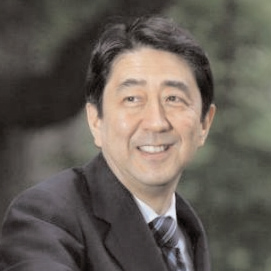
    WASHINGTON (TIP): Japanese Prime MinisterShinzo Abe has arrived in the United States for a WhiteHouse meeting with President Barack Obama.Abe, who was elected in December, is seeking toreinforce the longstanding U.S.-Japan alliance at a timeof high tension stoked by a Japan-China territorialdispute and a North Korean nuclear test.He arrived at Andrews Air Force Base outsideWashington on Thursday.

    He meets Obama at the WhiteHouse on Friday.They will also discuss economic ties. Theadministration will be gauging Japan’s intent to join atrans-Pacific trade agreement under negotiation.Abe is a nationalist and wants to rebuild Japan’sglobal standing, diminished by years of economicmalaise.He is the fifth Japanese prime minister duringObama’s time in office.

  • Joseph Dunford: ‘Fighting Joe’ To Lead Us Out Of Afghanistan

    Joseph Dunford: ‘Fighting Joe’ To Lead Us Out Of Afghanistan

    Gen Dunford, formerly theassistant commandant of theUS Marine Corps, haspromised to complete the transition ofsecurity duties to Afghan forces and to”set the conditions for an enduringpartnership with the Afghan people”.He replaces another Marine: GenJohn Allen, who was recently clearedof misconduct after an investigationinto “potentially inappropriate”communication with a Floridasocialite.Gen Allen this week said he wouldretire from the military instead ofaccepting President Barack Obama’sappointment as supreme Natocommander in Europe, citing familyhealth issues.

    While Gen Allen was busy finishinghis recommendations to the WhiteHouse on how quickly to withdrawtroops from Afghanistan next year,Gen Dunford was studying up andpreparing for deployment.As the second-ranking MarineCorps officer, Gen Dunford has visitedAfghanistan many times.Maren Leed, senior adviser at theCenter for Strategic and InternationalStudies, says Gen Allen’s departurewill not lead to a major revision in theUS exit plan from Afghanistan. As itstands now, the US is to finish itsmission in Afghanistan by the end of2014.”What you will see is [Dunford]spending time building and nurturingrelationships, trying to keep moraleup, and keep pressure on the Afghangovernment to make sure that theyare progressing and meeting theircommitments,” she says.

    While some Republicans suggestGen Dunford will be susceptible topolitical pressure from the WhiteHouse, Ms Lees says the generalrejects this notion.”Once he is in command, if heperceives that [withdrawal] deadlineto be counter-productive or to be tooearly, he absolutely would make thatvery clear to the White House,” shesays.Gen Dunford earned the nickname”Fighting Joe” in the Iraq war, whenhe led the initial attack into Iraq andon to Baghdad. Subsequently, GenDunford shot rapidly up the chain ofcommand, faster than almost anyonein recent Marine history.

    Afghanistan may prove GenDunford’s most challengingassignment yet. Ms Leedsummarised the tasks ahead:
    finish negotiations on legalframework governing how remainingUS forces are treated in Afghanistancontinue the military campaigndiscuss with Washington the paceand size of the troop withdrawalweigh in on the roles andresponsibilities of remaining USforceskeep morale high and troopscommitted to the missionThe arrival of the war-wise Marinegeneral as the new top Natocommander provides the US with anopportunity to reassure Afghans thatwhile America’s longest war is ending,the Americans are not leavingcompletely anytime soon.

  • Indian-American Lawmaker Welcomes Obama Plan

    Indian-American Lawmaker Welcomes Obama Plan

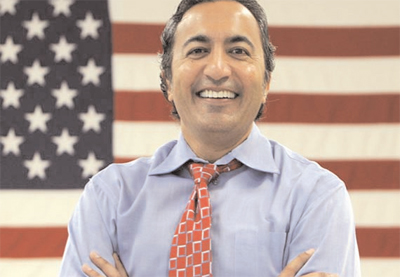
    WASHINGTON (TIP): Ami Bera, the only Indian-American member of the US Congress, has welcomedPresident Barack Obama’s plan “to restore an economythat works for middle class families by investing ininfrastructure, innovation, and education.””America is at its strongest when we have a strongmiddle class, and growing jobs and the economy for themiddle class should be our number one priority inCongress,” said Bera, the third Indian-American, afterDalip Singh Saund and Bobby Jindal, to be ever electedto the US House of Representatives.

  • Obama Says Public Deserves To Know More On Drones

    Obama Says Public Deserves To Know More On Drones

    WASHINGTON (TIP): President Barack Obama saidon Thursday that Americans needed more than just hisword to be assured he was not misusing his powers inwaging a secret drone war overseas.The president was asked about the debate over thedeadly tactic, a backbone of the US campaign againstAl-Qaeda, and whether the Constitution allows the useof drones against Americans who have turned againsttheir country.”It is not sufficient for citizens to just take my wordfor it that we are doing the right thing,” Obama told anonline forum sponsored by Google.The president, who has said he is working withCongress to provide more oversight of the clandestinedrone war against Al-Qaeda, was also asked what was tostop the US government from using unmanned aerialvehicles at home.”There has never been a drone used on an Americancitizen on American soil,” Obama said in the GooglePlus “Fireside Hangout.”

    “The rules outside the United States are going to bedifferent than the rules inside of the United States inpart because our capacity, for example, to captureterrorists in the United States is going to be verydifferent than in the foothills or mountains ofAfghanistan or Pakistan.Debate about the use of drones has slowly beenmounting following the September 2011 killing in Yemenof cleric Anwar al-Awlaki, a senior Al-Qaeda operativewho was an American citizen.The president said that he was working with Congressto ensure that the public was also able to understand theconstraints and legal rationales of the US drone war.”I am not somebody who believes that the presidenthas the authority to do whatever he wants, or whatevershe wants, whenever they want, just under the guise ofcounter terrorism,” he added.

    “There have to be checks and balances on it.”Some observers, including prominent senators, areconsidering whether a special court should monitor thesecret drone war.Missiles fired from unmanned aircraft have becomethe Obama administration’s weapons of choice in itswar against Al-Qaeda.The administration’s legal rationale for the targetedkillings was leaked to the media ahead of Senatehearings last week on the nomination of Obama’s topcounterterrorism adviser John Brennan to head theCIA.The guidelines allow the use of drone strikes againstUS citizens suspected of being senior Al-Qaedaoperatives, even if there is no evidence they are activelyplotting an attack.Some administration critics have questioned thelegality of drone strikes against US citizens, whileothers fear that raining death from the skies may domore harm than good in increasing anti-US sentiment.

  • Obama State Of The Union Speech Demands Vote On Gun Control Bills

    Obama State Of The Union Speech Demands Vote On Gun Control Bills

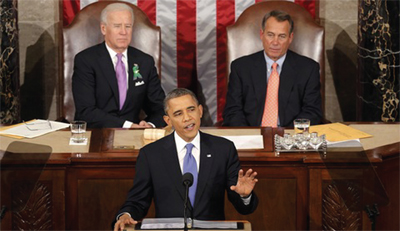
    WASHINGTON (TIP): President Barack Obama on February 12 called for Congress to vote on a variety of gun control proposals that are currently up for debate, and heoffered a heartfelt, but not sharply political, endorsement for the proposals. Towards the end of his State of the Union address, as the speech reached a crescendo, the president turned to the topic of gun violence: “What I’ve said tonight matters little if we don’t come together to protect our most precious resource — our children.” “This is not the first time this country has debated how to reduce gun violence,” Obama said.

    But two months after the shooting of20 children and six adults at anelementary school in Newtown, Conn.,he said, “This time is different.””Overwhelming majorities ofAmericans -– Americans who believe inthe 2nd Amendment — have cometogether around common-sense reform,like background checks that will makeit harder for criminals to get theirhands on a gun,” Obama continued.

    “Senators of both parties are workingtogether on tough new laws to preventanyone from buying guns for resale tocriminals. Police chiefs are asking ourhelp to get weapons of war and massiveammunition magazines off our streets,because they are tired of being outgunned.

    “Universal background checks, andthe tougher penalties for “strawpurchases” of guns, are some of themost popular gun-control proposalsamong voters, and both may eventuallywin bipartisan support. But a ban onmilitary-style weapons faces an uphillbattle in Congress, where Sen. DianneFeinstein (D-Calif.) has championed arenewal of the 1994 Assault WeaponsBan, which expired in 2004.The measures face opposition largelyfrom Republicans, but in an unexpectedmove, Obama did not single out any ofthe biggest obstacles to the bills, whichinclude the powerful National RifleAssociation. Instead, he asked onlythey be put to a vote.”Each of these proposals deserves avote in Congress,” he said.

    “If you wantto vote no, that’s your choice. But theseproposals deserve a vote. Because in thetwo months since Newtown, more thana thousand birthdays, graduations andanniversaries have been stolen fromour lives by a bullet from a gun.”The president’s take is similar to thatof Senate Majority Leader Harry Reid(D-Nev.), who enjoys a positive ratingfrom the NRA. Reid has so far beennoncommittal on specific gun-controlproposals, but said in a recentinterview that lawmakers should voteon each of them.To drive home his point on the needfor action on gun control, Obamainvoked a string of mass shootings thathave occurred during hisadministration. The State of the Unionaudience included dozens of peoplewhose lives had been affected by gunviolence, invited as guests ofcongressional Democrats and the WhiteHouse.Obama received one of the biggeststanding ovations of the night as hesaluted the parents of HadiyaPendleton, a young woman killed bygun violence, and demanded thatCongress vote on gun-control measures.”One of those we lost was a younggirl named Hadiya Pendleton. She was15 years old. She loved Fig Newtons andlip gloss. She was a majorette.

    She wasso good to her friends, they all thoughtthey were her best friend. Just threeweeks ago, she was here, inWashington, with her classmates,performing for her country at myinauguration. And a week later, she wasshot and killed in a Chicago park afterschool, just a mile away from myhouse,” he said.”Hadiya’s parents, Nate and Cleo, arein this chamber tonight, along withmore than two dozen Americans whoselives have been torn apart by gunviolence. They deserve a vote,” he said.”[Former Rep.] Gabby Giffords deservesa vote. The families of Newtowndeserve a vote. The families of Auroradeserve a vote. The families of OakCreek, and Tucson, and Blacksburg,and the countless other communitiesripped open by gun violence — theydeserve a simple vote.

    “As he prepared to finish the speech,the president acknowledged — and somemight say disarmed — the argumentfavored by many who oppose guncontrol laws that no law can eliminateall gun violence.”Our actions will not prevent everysenseless act of violence in thiscountry. Indeed, no laws, no initiatives,no administrative acts will perfectlysolve all the challenges I’ve outlinedtonight,” Obama said. “But we werenever sent here to be perfect. We weresent here to make what difference wecan, to secure this nation, expandopportunity, and uphold our idealsthrough the hard, often frustrating, butabsolutely necessary work of selfgovernment.”Two official responses are expectedafter Obama’s speech, one fromRepublican Sen. Marco Rubio (Fla.),and another from Tea Party favoriteSen. Rand Paul (R-Ky.). As two of themost conservative members of theSenate, both Paul and Rubio arestaunchly opposed to gun control.

  • Barack Obama Nominates Tavenner To Lead Medicare And Medicaid

    Barack Obama Nominates Tavenner To Lead Medicare And Medicaid

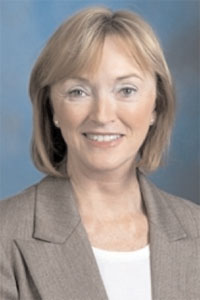
    WASHINGTON (TIP): PresidentBarack Obama on Feb 6 renominatedone of his top healthcare advisers tolead the federal agency responsible foroverseeing Medicare, Medicaid andthe implementation of his healthcarereform law.If confirmed by the Senate, MarilynTavenner would become the firstofficial head of the US Centers forMedicare and Medicaid Services(CMS) since 2006.

    She currently leadsthe same agency as actingadministrator.As part of the US department ofhealth and human services, CMS runsthe Medicare and Medicaid healthcareprograms that serve about 100 millionelderly, disabled and low-incomepeople at a cost estimated at $885billion for this year. Both programsare at the center of a looming debatein Congress over how to reduce thefederal deficit.If confirmed as agency chief,Tavenner would also exercise officialauthority over the biggest expansionof healthcare coverage in more than ageneration under Obama’s PatientProtection and Affordable Care Act,which is expected to extend coverageto 38 million people over the next 10years.

    CMS has been a target ofRepublican opposition to Obama’shealthcare policies since early in hispresidency. Tavenner, a nurse andformer hospital executive, becameacting administrator in late 2011 andwas nominated to lead the agency. Butthe Senate never acted on hernomination. Her predecessor,healthcare reform expert DonaldBerwick, had assumed the job througha temporary appointment in July 2010but left after less than 18 months whenSenate Republicans made it clear thatthey would not allow his nomination.

    Tavenner has won praise from someRepublicans, including HouseMajority Leader Eric Cantor, andenjoys strong support amonghealthcare industry groups andconsumer advocates.

  • Marco Rubio Becomes First Hispanic To Give GOP Response To State Of The Union

    Marco Rubio Becomes First Hispanic To Give GOP Response To State Of The Union

    WASHINGTON (TIP): Sen. MarcoRubio, R-Florida, will make history onFebruary 12 when he will give his party’srebuttal to President Barack Obama’sState of the Union address. He’ll becomethe first Hispanic to ever give the GOPresponse to the State of the Union andhe’ll do it in both English and Spanish –also a first.The Republican party has had anIndian-American — Louisiana Gov. BobbyJindal, in 2010 –and an African-American,former Congressman J.C. Watts, in 1997 togive the party’s response.In 2004, then Gov.

    Bill Richardsonbecame the first to provide a secondaryrebuttal in Spanish.U.S. House Speaker John Boehner, ROhio,and Senate Republican leader MitchMcConnell, R-Ky., announced theselection of Rubio on February 5, callinghim a strong advocate of conservativeprinciples.Rubio will speak after Obama’s primetimeaddress before Congress, offering acounterweight to the president’s agenda.

    The high-profile speech gives Rubio abroad national audience for a party thatlacks a true standard-bearer afterObama’s re-election.The 41-year-old Cuban-Americanlawmaker will provide a direct message toa growing Hispanic electorate thatshunned the GOP in last year’s election.Rubio was given a prominent speakingrole at last year’s Republican NationalConvention and traveled extensively onbehalf of Republican presidentialcandidate Mitt Romney. He has beentouted as a potential presidentialcandidate in 2016 for a party that faredpoorly among Latino voters last year.Boehner called Rubio “one of ourparty’s most dynamic and inspiringleaders. He carries our party’s banner offreedom, opportunity and prosperity in away few others can.

    “McConnell said his Senate colleaguewould “contrast the Republican approachto the challenges we face with PresidentObama’s vision of an ever-biggergovernment and the higher taxes thatwould be needed to pay for it.”Rubio has played a leading role amongRepublicans in seeking changes onimmigration, one of the top legislativepriorities of the year for both parties. Hehas been part of a bipartisan group ofsenators who have proposed a plan thatwould allow illegal immigrants to pursuecitizenship after a number of steps aretaken to secure the border with Mexico.

    The issue is expected to be among themost highly-watched measures inCongress this year.On the economy, Rubio has said taxincreases will not bring down the nation’s$16 trillion debt and urged policies topromote economic growth and changes toentitlement programs.Rubio said he would discuss “howlimited government and free enterprisehave helped make my family’s dreamscome true in America.” He said thespeech would help lay out “the Republicancase of how our ideas can help peopleclose the gap between their dreams andthe opportunities to realize them.”Rubio, a former state house speakerfrom Miami, became a popular figureamong tea party activists during hisimprobable rise during his 2010 Senatecampaign.

    He defeated Florida Gov.Charlie Crist, who switched to run as anindependent when it became clear hewould lose the Republican primary toRubio.Rubio becomes the first Hispanic toever provide the opposition response tothe president’s State of the Union sincethe practice of an opposition response tothe State of the Union address began in1966.

  • As I See It: Worry About Kerry

    As I See It: Worry About Kerry

    As the US president, Barack Obama embarks on his second term, New Delhi is once again feeling the chill of a new administration in Washington. Sections of the Indian foreign policy making community are once again doing what they do best – crying hoarse over a possible change in the tone and tenor of US foreign policy. Obama has a new cabinet line-up with John Kerry nominated for the post of secretary of state, Chuck Hagel for the secretary of defense and John Bremmer as the head of the CIA. The US foreign policy is in a state of flux and some very significant changes are likely over the course of the next few years under the second Obama presidency. The most important issue in the short to medium term will be withdrawal of around 66,000 US troops from Afghanistan after more than a decade battling al Qaeda and the Taliban.

    Like most nations around the world, New Delhi will also be impacted by the impending changes in the foreign policy priorities of Washington. But instead of debating the larger ramifications of these changes, the discussion in India today is reminiscent of the discussion in the country when Obama came to office for the first time in 2008. There were widespread concerns about Obama’s attitudes towards India after eight years of privileged position under George W Bush administration. George W Bush, deeply suspicious of communist China, was personally keen on building strong ties with India.

    Hence, he was willing to sacrifice long-held US non-proliferation concerns to embrace nuclear India and acknowledge it as the primary actor in South Asia, dehyphenated from Pakistan. The Obama administration’s concerns in its initial months with protecting the nonproliferation regime, dealing with the immediate challenge of the growing Taliban threat in Afghanistan and Pakistan, and solving the unprecedented economic challenge led it to a very different set of priorities and an agenda in which India seemed to have a marginal role. The only context in which Obama mentioned India in his early months was related to the need to resolve Kashmir so as to find a way out of the west’s troubles in Afghanistan.

    To many Indians, the new administration seemed intent on sidelining India. In a similar vein, discussion these days is centered around the appointment of John Kerry and his supposed ’tilt’ toward Pakistan. Kerry has been closely associated with Obama administration’s Pakistan policy.

    It was he who helped broker the release of the CIA contractor, Raymond Davis, arrested on suspicion of murder and later persuaded Islamabad to return parts of US stealth helicopter that crashed during the Abbottabad raid that killed Osama bin Laden. Kerry has already been termed by sections of the Indian media as a friend of Pakistan, implication being that he would be unfriendly towards India. Kerry’s strong support for strengthening the NPT and the Kerry-Lugar-Berman bill authorizing a five-year $7.5 billion financial aid package to Pakistan have been viewed as examples of Kerry’s pro-Pakistan worldview.

    Sympathetic ear
    Pakistan’s effusive praise for Kerry’s nomination may indeed underscore a sense in Islamabad and Rawalpindi that they have gained a sympathetic ear in the new US cabinet. It won’t be surprising if the recent adventurous behavior of Pakistan military at the Line of Control may have been inspired by this bravado.

    But just as Pakistan will be fooling itself, if it believes that Kerry is going to be Pakistan’s friend, India is being unnecessarily defeatist if it thinks that Kerry’s nomination will be a disaster for India. Kerry is neither going to be pro-India nor pro-Pakistan, he will be pro-US. And if Obama had to change his foreign policy worldview vis-à-vis India soon after coming into office, Kerry will have no choice but to build on Obama’s first term and strengthen ties with India.

    After all, it was Kerry who has described India-US ties as “without doubt one of the most significant partnerships in US foreign policy.” The US-India relationship has matured and reached a stage where changes in personnel will only have a limited impact on its trajectory. There is a growing perception that India is not yet ready for prime-time and that the political leadership in New Delhi remains perpetually preoccupied with domestic turmoil and lacks political will to claim India’s rightful place in the comity of nations.

    It is for India to pursue strategic partnerships with like-minded nations and advance its interests. The world will only take India seriously when India starts taking itself seriously and starts behaving like a serious power. There is a larger problem that underlies this perpetual hyperventilation in India about the ostensible tilt in Washington.

    It has become a regular feature of Indian diplomacy to press America toward securing its own regional security interests. The speed with which India has outsourced its regional foreign policy to Washington is astonishing.New Delhi is now reduced to pleading with Washington to tackle Pakistan and to rein in Pakistan army’s nefarious designs against India in Afghanistan, in Kashmir and elsewhere.

    For all the breast beating in recent years about India emerging as a major global power, Indian strategic and political elites display an insecurity that defies explanation. A powerful, self-confident nation should be able to articulate a coherent vision about its priorities and national interests.

    The brazen display of a lack of self-confidence by Indian elites in their nation’s abilities to leverage the international system to its advantage only weakens India.

    A diffident India will continue to crave for the attention of Washington but will find it difficult to get. A confident India that charts its own course in world politics based on its national imperatives will force the world to sit up and take notice.

  • John Kerry vows to strengthen ‘critical’ China ties

    John Kerry vows to strengthen ‘critical’ China ties

    WASHINGTON (TIP): Senator John Kerry, on track to be America’s next secretary of state, told US lawmakers on Thursday that he would work to boost ties with China, but warned of a “long slog” ahead. Kerry told his Senate confirmation hearing that he wanted to “grow the rebalance” towards Beijing “because it is critical to us to strengthen our relationship in China.” Washington would continue the so-called pivot — begun during the first term of President Barack Obama — towards Asia and in particular China, Kerry told the Senate Foreign Relations committee, though he added that America was not “turning away from anywhere else.” Kerry said that while the United States and China would remain economic “competitors,” the two nations “shouldn’t be viewed as adversaries in some way that diminishes our ability to cooperate on a number of things.” “China is, you know, the other sort of significant economy in the world and obviously has a voracious appetite for resources around the world, and we need to establish rules of the road that work for everybody,” Kerry said.

    He acknowledged the difficulty of issues such as intellectual property rights, and China’s propping up of its currency, the yuan. But he stressed there were areas where the two economic superpowers could work together. “China is cooperating with us now on Iran.

    I think there might be more we could perhaps do with respect to North Korea,” the veteran senator said. It could be more we could do in other parts of the Far East. And hopefully we can build those relationships that will further that transformation.

    We make progress. It’s incremental… It’s a tough slog.” Another area where the two nations could perhaps come together might be on climate change, Kerry added. Earlier in the hearing he had vowed to be “a passionate advocate” on the subject of working to battle global warming. “China is soon going to have double the emissions of the United States of America.

    So we’ve got to get these folks as part of this unified effort, and I intend to work very, very hard at trying to do that,” Kerry said.

    But he appeared to rule out any move towards increasing again the US military force in the Asia-Pacific region. “I’m not convinced that increased military rampup is critical yet,” Kerry said, adding that if confirmed he wanted to “dig into this a little deeper” and try a thoughtful approach. “We have a lot more bases out there than any other nation in the world, including China today,” he argued, saying the Chinese must be wondering “What’s the United States doing? They trying to circle us? What’s going on?”

  • Obama Vows To Take America Forward

    Obama Vows To Take America Forward

    WASHINGTON (TIP): The second inauguration of Barack Obama as the 44th President of the United States took place in a private swearing-in ceremony on Sunday, January 20, 2013 in the Blue Room of the White House.

    A public ceremony marking the occasion took place the following day, on Monday, January 21, 2013 at the United States Capitol building. The inauguration marked the beginning of the second term of Barack Obama as President and Joe Biden as Vice President. The inauguration theme was “Faith in America’s Future”, a phrase that draws upon the 150th anniversary of President Abraham Lincoln’s Emancipation Proclamation and the completion of the Capitol dome in 1863. The theme also stresses the “perseverance and unity” of the United States, and echoes the “Forward” theme used in the closing months of Obama’s reelection campaign.

    The inaugural events held in Washington, D.C. from January 19 to 21, 2013 included concerts, a national day of community service on Martin Luther King, Jr. Day, the swearing-in ceremony, luncheon and parade, inaugural balls, and the interfaith inaugural prayer service. The presidential oath was administered to Obama during his swearing-in ceremony on January 20 and 21, 2013 by Chief Justice of the United States John G. Roberts.

    While Beyonce sang the National Anthem at the ceremonial swearing-in for President Barack Obama at the U.S. Capitol during the 57th Presidential Inauguration, it was Richard Blanco, the 44-year-old Madrid-born Cuban-American poet who read his poem “One Today” at the swearing-in ceremony for President Obama. Blanco is only the fifth poet – Robert Frost (1961), Maya Angelou (1993), William Miller (1997) and Elizabeth Alexander (2009) were the previous ones – reading at a presidential inauguration. He is also the first Hispanic as well as the first openly gay one. In his 18 minute speech, Obama tied current issues to founding principles.

    He sought to link the past and future, tying the nation’s founding principles to the challenges confronting his second term in a call for Americans to fulfill the responsibility of citizenship.

    Eschewing poetic language for rhetorical power, Obama cited the accomplishments of the past four years while laying out a progressive agenda for the next four that would tackle thorny issues like gun control, climate change and immigration reform. “We have always understood that when times change, so must we; that fidelity to our founding principles requires new responses to new challenges; that preserving our individual freedoms ultimately requires collective action,” he said. “My fellow Americans, we are made for this moment and we will seize it so long as we seize it together,” he added later.

    Analysts called the speech politically astute and an important expression of new forcefulness by the president as he enters his second term following re-election last November. “It’s a real declaration of conscience, about principles, about what he believes in,” said CNN Senior Political Analyst David Gergen. “He basically said, ‘When I came in the first term, we had all these emergencies, we had these wars. We’ve now started to clear the decks.

    Let’s talk about what’s essential.’” The foundation of the address, and Obama’s vision for the future, were the tenets he quoted from the Declaration of Independence — “that all men are created equal, that they are endowed by their Creator with certain unalienable rights, that among these are life, liberty, and the pursuit of happiness.” “Today, we continue a neverending journey, to bridge the meaning of those words with the realities of our time,” Obama said to gathered dignitaries and flag-waving throngs on the National Mall. “For history tells us that while these truths may be self-evident, they have never been self-executing; that while freedom is a gift from God, it must be secured by His people here on Earth.” In particularly pointed references, the president made a forceful call for gay rights that equated the issue with the struggle for women’s rights in the 19th century and civil rights in the 1960s. “We, the people, declare today that the most evident of truths — that all of us are created equal — is the star that guides us still; just as it guided our forebears through Seneca Falls, and Selma, and Stonewall,” Obama said, mentioning landmarks of the women’s, black and gay rights movements. “It is now our generation’s task to carry on what those pioneers began,” he continued, prompting the loudest applause and cheers of his address when he said “our journey is not complete until our wives, our mothers, and daughters can earn a living equal to their efforts.” More cheers came when Obama called for “our gay brothers and sisters” to be treated “like anyone else under the law — for if we are truly created equal, then surely the love we commit to one another must be equal as well.” According to observers, it was the first time a president championed gay marriage in an inaugural address. With further mention of topical issues such as immigration reform and gun control, Obama came to his key point — that adhering to America’s bedrock principles requires taking action on today’s challenges. “Being true to our founding documents does not require us to agree on every contour of life; it does not mean we will all define liberty in exactly the same way, or follow the same precise path to happiness,” he said. “Progress does not compel us to settle centuries-long debates about the role of government for all time — but it does require us to act in our time.” A deep partisan divide in Washington and the country characterized Obama’s first term, with Congress seemingly paralyzed at times and repeated episodes of brinksmanship over debt and spending issues bringing the first-ever downgrade of the U.S. credit rating.

    Acknowledging the political rift, Obama called for leaders and citizens to work for the greater good of the country. “We cannot mistake absolutism for principle, or substitute spectacle for politics, or treat name-calling as reasoned debate,” he said. “We must act, knowing that our work will be imperfect.” At the same time, he made clear he would fight for the central themes of his election campaign. “For we, the people, understand that our country cannot succeed when a shrinking few do very well and a growing many barely make it,” he said.

    While “we must make the hard choices to reduce the cost of health care and the size of our deficit,” he said, “we reject the belief that America must choose between caring for the generation that built this country and investing in the generation that will build its future.” In particular, he defended the need for popular entitlement programs that provide government benefits to senior citizens, the poor and the disabled, saying they were part of the American fabric. “The commitments we make to each other — through Medicare, and Medicaid, and Social Security — these things do not sap our initiative; they strengthen us,” Obama said. “They do not make us a nation of takers; they free us to take the risks that make this country great.” On Monday, Senate Republican leader Mitch McConnell, one of Obama’s harshest critics, called the president’s second term “a fresh start when it comes to dealing with the great challenges of our day; particularly, the transcendent challenge of unsustainable federal spending and debt.” Other issues also appear difficult, if not intractable.

    Obama made a reference to gun control, saying that the nation needed to ensure that “all our children, from the streets of Detroit to the hills of Appalachia to the quiet lanes of Newtown, know that they are cared for, and cherished, and always safe from harm.” However, congressional Republicans and some Democrats, as well as the powerful gun lobby, have rejected proposals Obama recently announced in response to the Connecticut school shootings that killed 20 Newtown first-graders last month.

    In citing climate change as a priority, Obama raised the profile of the issue on the national agenda after a presidential campaign in which it was almost never mentioned. “We will respond to the threat of climate change, knowing that the failure to do so would betray our children and future generations,” he said, warning of a “long and sometimes difficult” path to sustainable energy sources in a nation dominated by its fossil fuel industries such as oil and coal. “America cannot resist this transition; we must lead it,” Obama said. “We cannot cede to other nations the technology that will power new jobs and new industries — we must claim its promise.” Obama infused his speech with references to two assassinated American icons — President Abraham Lincoln and civil rights leader Martin Luther King Jr. In one passage, Obama cited “blood drawn by lash and blood drawn by sword” in mentioning the Civil War and slavery.

    It mimicked Lincoln’s second inaugural address in 1865, when he spoke of the possibility that “every drop of blood drawn with the lash shall be paid by another drawn the sword.” Of King, Obama referred to those who came to Washington almost 50 years ago “to hear a preacher say that we cannot walk alone; to hear a King proclaim that our individual freedom is inextricably bound to the freedom of every soul on Earth.” The inauguration coincided with the national holiday honoring King.

    The president concluded by urging Americans to fulfill their responsibility as citizens by meeting “the obligation to shape the debates of our time — not only with the votes we cast, but with the voices we lift in defense of our most ancient values and enduring ideals.” At a little more than 2,100 words, Obama’s speech was about 300 shorter than his first inaugural address four years earlier.

    In 2009, he was fresh off his historic election as the nation’s first African- American president, facing an economic recession, wars in Iraq and Afghanistan and the ongoing terrorist threat.

    David Maraniss, author of the book “Barack Obama: The Story,” said the difference from four years ago was palpable, adding: “I could feel his heart beating this time.” The inauguration was attended by approximately a million people.

    Obama Inauguration:
    The Inaugural Poem WASHINGTON (TIP): Inaugural poet Richard Blanco read his poem “One Today” at the swearing-in ceremony for President Obama. Blanco, the 44-year-old Madrid-born Cuban-American poet, is only the fifth poet – Robert Frost (1961), Maya Angelou (1993), William Miller (1997) and Elizabeth Alexander (2009) were the previous ones – reading at a presidential inauguration. He is also the first Hispanic as well as the first openly gay one.
    Here is the Poem
    One sun rose on us today, kindled over our shores,
    peeking over the Smokies, greeting the faces
    of the Great Lakes, spreading a simple truth
    across the Great Plains, then charging across the Rockies.
    One light, waking up rooftops, under each one, a story
    told by our silent gestures moving behind windows.

    My face, your face, millions of faces in morning’s mirrors,
    each one yawning to life, crescendoing into our day:
    pencil-yellow school buses, the rhythm of traffic lights,
    fruit stands: apples, limes, and oranges arrayed like rainbows
    begging our praise. Silver trucks heavy with oil or paperbricks
    or milk, teeming over highways alongside us,
    on our way to clean tables, read ledgers, or save livesto
    teach geometry, or ring-up groceries as my mother did
    for twenty years, so I could write this poem.

    All of us as vital as the one light we move through,
    the same light on blackboards with lessons for the day:
    equations to solve, history to question, or atoms imagined,
    the “I have a dream” we keep dreaming,
    or the impossible vocabulary of sorrow that won’t explain
    the empty desks of twenty children marked absent
    today, and forever. Many prayers, but one light
    breathing color into stained glass windows,
    life into the faces of bronze statues, warmth
    onto the steps of our museums and park benches
    as mothers watch children slide into the day.

    One ground. Our ground, rooting us to every stalk
    of corn, every head of wheat sown by sweat
    and hands, hands gleaning coal or planting windmills
    in deserts and hilltops that keep us warm, hands
    digging trenches, routing pipes and cables, hands
    as worn as my father’s cutting sugarcane
    so my brother and I could have books and shoes.

    The dust of farms and deserts, cities and plains
    mingled by one wind-our breath. Breathe. Hear it
    through the day’s gorgeous din of honking cabs,
    buses launching down avenues, the symphony
    of footsteps, guitars, and screeching subways,
    the unexpected song bird on your clothes line.

    Hear: squeaky playground swings, trains whistling,
    or whispers across café tables, Hear: the doors we open
    for each other all day, saying: hello, shalom,
    buon giorno, howdy, namaste, or buenos días
    in the language my mother taught me-in every language
    spoken into one wind carrying our lives
    without prejudice, as these words break from my lips.

    One sky: since the Appalachians and Sierras claimed
    their majesty, and the Mississippi and Colorado worked
    their way to the sea. Thank the work of our hands:
    weaving steel into bridges, finishing one more report
    for the boss on time, stitching another wound
    or uniform, the first brush stroke on a portrait,
    or the last floor on the Freedom Tower
    jutting into a sky that yields to our resilience.

    One sky, toward which we sometimes lift our eyes
    tired from work: some days guessing at the weather
    of our lives, some days giving thanks for a love
    that loves you back, sometimes praising a mother
    who knew how to give, or forgiving a father
    who couldn’t give what you wanted.

    We head home: through the gloss of rain or weight
    of snow, or the plum blush of dusk, but always-home,
    always under one sky, our sky. And always one moon
    like a silent drum tapping on every rooftop
    and every window, of one country-all of usfacing
    the stars
    hope-a new constellation
    waiting for us to map it,
    waiting for us to name it-together.

  • A Tale Of Two Tragedies The Different Ways In Which The Us And India Have Reacted To Horrific Incidents Is Telling

    A Tale Of Two Tragedies The Different Ways In Which The Us And India Have Reacted To Horrific Incidents Is Telling

    As2012 made its exit, it left two horrific tragedies in its wake: the massacre of 26 students and teachers in my country of residence, the US, and the gang rape of a medical student in my country of citizenship. The two tragedies produced markedly contrasting reactions by leaders and people in the two countries, however. The relatively young African-American president of the US instantly connected with the tragedy and its immediate victims in Newtown, Connecticut. Addressing the nation the very same day on the television, the normally steely President Barack Obama could be seen wiping tears multiple times. “We’ve endured too many of these tragedies in the past few years, and each time I hear the news I react not as a president but as anyone else would, as a parent,” he said.

    Two days later, the president travelled to Connecticut to be with the families of the victims. In New Delhi, the aging leadership greeted the news of the gang rape with total indifference. Having deliberately insulated itself for years from the reality that real people with real problems live in the cities too, it went about business as usual. It was a full week of swelling crowds and rising rage of tens of thousands of men and women in the streets that finally led the Prime Minister’s Office to break its silence. Even then, the December 23 statement by it reflected aloofness, opening with the words, ”We are all joined in our concern for the young woman…” The slight personal touch, with this line rephrased as “My wife, my family and I are all joined in our concern…” came only in the terse televised speech by the prime minister the next day. Even more disappointing, as a woman, Congress President Sonia Gandhi was well positioned to offer a healing touch to the families of the two victims and the entire nation. But beyond a brief appearance outside her home to speak with the protesters, no such touch was forthcoming.

    As late as December 24, an intransigent home minister Sushil Kumar Shinde refused to meet the protesters at India Gate. Abhijit Mukherjee, the son of the president and a Member of Parliament, added insult to the injury by describing the women demonstrating in the streets as “highly dented and painted”. An entirely different contrast characterized the responses of the ordinary citizens in India and the US. As the news of the ghastly crime spread, tens of thousands of ordinary residents converged on India Gate in Delhi to protest on behalf of the victim and to shake the political class out of its slumber. Remarkably, not only did the protests successfully sustain in Delhi despite suspension of buses and metro trains on key routes, they also spread to many other cities.

    And when the victim passed away on December 29, the entire nation chose to abstain from the New Year’s Day celebrations. In contrast, while the Newtown tragedy shook up every American at the personal level, it sparked no mass protests at the White House or the doorstep of the National Rifle Association (NRA). Four massacres of innocent citizens in a school, a shopping mall, a movie theatre and a gurdwara have characterized the first term of President Obama. Easy access to assault weapons has been an important key to each of them. Yet, there have been no sustained protests that would force the hand of the government against the lobbying power of the NRA. A March 2011 proposal would have outlawed the possession of magazines with more than 10 bullets in Connecticut thereby removing from circulation the Bushmaster AR-15 rifle with 30-round magazine that the Newtown shooter used.

    But the NRA successfully defeated that proposal. Earlier, in 2009, gun manufacturer Colt had defeated another even weaker reform by threatening to move its facility employing 900 workers to another state. So, sadly, Connecticut ended up trading the possibility of the loss of 900 jobs for 26 lives. Following the latest shootings, the NRA had the audacity to suggest posting armed guards in every school in the country as the solution! “The only thing that stops a bad guy with a gun is a good guy with a gun,” contended its executive vice-president. Yet, no protests against the NRA emerged. Already, American newspapers can be found devoting more space to the tragedy in Delhi than in Newtown. It is this contrast in the way people have reacted to the tragedies that gives greater hope of change in India. Yet, it is important to appreciate that just making punishment yet more stringent will scarcely improve safety. Rape is only one of many manifestations of insecurities that women in urban India experience every day. On literally dozens of trips to Delhi since the early 1980s, my wife has never once felt safe enough to take a taxi on her own from the airport to Mayur Vihar where her sister lives.

    While social reform is the ultimate key, the immediate relief must come from effective implementation of existing laws. And, first and foremost, that requires police reform. On the one hand, the police, who are expected to risk their lives every day to secure the lives of all others, must be paid several times their civilian counterparts. On the other hand, they must face substantially greater risk of dismissal, not just temporary suspension, should they fail in their duties.

  • Car Bomb Targets Afghan Spy Agency In Kabul

    Car Bomb Targets Afghan Spy Agency In Kabul

    KABUL (TIP): A car bomb exploded in front of the gates of the Afghan intelligence agency on Wednesday, Reuters witnesses said, near heavily barricaded government buildings and western embassies. Shopkeepers and passersby were injured in the blast, which took place at noon (0730 GMT), but it was not immediately clear if anyone had been killed. Shattered glass and twisted metal lay scattered in front of the gates of the National Directorate of Security (NDS) and gunfire and sirens were heard.

    NDS head Asadullah Khalid narrowly survived a suicide bomber’s assassination attempt last month in a brazen attack that threatened to derail a nascent and already fragile peace process between the Afghan government and the Taliban. When contacted by Reuters, Taliban spokesman Zabihullah Mujahid said the group was “unaware” of the car bomb. Wednesday’s attack came just days after President Hamid Karzai returned from a trip to Washington, where he discussed the country’s future with U.S. President Barack Obama once most NATO-led troops withdraw as planned by the end of 2014.

    On that trip, Karzai visited Khalid in a US hospital, where he was recovering from the Kabul assassination attempt by a man who had hidden a bomb in his trousers. Violence across the country has been increasing in recent months, sparking concern over how the 350,000- strong Afghan security forces will be able to manage once foreign troops withdraw.

  • Obama’s Half-Brother Eyes Kenya Political Role

    Obama’s Half-Brother Eyes Kenya Political Role

    KOGELO (TIP): President Barack Obama’s Kenyan half-brother has launched his own political career by announcing his intention to run for a Kenyan county gubernatorial seat in the upcoming March 4 elections. Malik Obama, 54, who shares a father with the US president, said in an interview late on Wednesday that the achievements of his brother have “inspired and challenged” him to get into active politics in his homeland. “When I look at the success that my brother has had in the US, I feel I would have let down my people if I do not follow in his footsteps and end their suffering through dedicated, honest and focused leadership,” Malik said in his ancestral home of Kogelo in western Kenya. The trained economist said he is the right candidate to deal with the “endless cycle of poverty and unemployment that bedevils my people”.

    “I can confidently say that of all the people who are vying for the position, I am the best placed candidate … by virtue of my second name alone, I have the connections to bring development to Siaya,” he said, referring to his home county 100 km from the lakeside city of Kisumu. Although he says he is charting his own path, Malik Obama is using his now famous second name to try and get an edge over his competitors, who include the younger brother of Kenyan Prime Minister Raila Odinga. In a country polarized by dominant political parties, Malik Obama is running as an independent. He said his links to Washington will help him clinch the seat. “Why would my people settle for a local connection when they have a direct line to the White House,” he said as he weaved his way through a group of supporters, the slogan “Obama here, Obama there” looming on posters.

  • Gun Found In 7-Yr-Old’s Backpack At New York City School

    Gun Found In 7-Yr-Old’s Backpack At New York City School

    NEW YORK (TIP): A handgun was found in the backpack of a 7-year-old boy at a New York City public elementary school on January 17, triggering a brief lockdown amid heightened concern about gun violence in U.S. schools, officials said. New York City Police Department spokesman John Grimpel said authorities are investigating how the unloaded .22-caliber handgun ended up in the child’s backpack. Police also found an ammunition clip and a flare gun in the bag belonging to the second-grade student, Grimpel said.

    Officials locked down the Wave Preparatory Elementary School, located in Queens, for an hour, the New York City Education Department said. In December a gunman killed 20 first-graders along with six adults at Sandy Hook Elementary School in Newtown, Connecticut. President Barack Obama launched the biggest U.S. guncontrol push in generations, urging Congress to approve an assault weapons ban and background checks for all gun buyers to prevent mass shootings like the Newtown massacre.

  • Obama Nominates Jack Lew as Treasury Secretary

    Obama Nominates Jack Lew as Treasury Secretary

    WASHINGTON (TIP): US President Barack Obama, in an effort to rejuvenate the battered US economy, on Thursday, January 10th, nominated his Chief-of-Staff and budget specialist Jack Lew to succeed Timothy Geithner as the next Treasury Secretary. Obama announced his nomination in the ornate White House East Room, flanked by Lew and outgoing Treasury Secretary Timothy Geithner. The two men and their backgrounds illustrate the nation’s changing economic landscape – Geithner a long time banking specialist with the Treasury and the Federal Reserve took office in 2009 at the height of the nation’s financial crisis and Lew, the budget expert as the government struggles with its debt and deficit challenges. Obama heaped praise on Geithner for addressing the Wall Street meltdown and shepherding an overhaul of financial regulations through Congress.

    “When the history books are written, Tim Geithner is going to go down as one of our finest secretaries of the Treasury.” Obama highlighted Lew’s past work on economic policy, from his days in the 1980s as an aide to then House Speaker Tip O’Neill to his work on the budget with President Bill Clinton. Obama said he felts “bittersweet” about losing Lew as his White House chief of staff but says “my loss will be the nation’s gain.”

    “I cannot think of a better person to continue Tim’s work at Treasury than Jack Lew,” Obama said, in a White House event announcing his nominations for the top cabinet jobs in his second term beginning January 20. “Jack knows that every number on a page, every dollar we budget, every decision we make, has to be an expression of who we wish to be as a nation,” Obama said. “So, I hope the Senate will confirm him as quickly as possible,” Obama said. “Jack Lew will bring an impressive record of service in both the public and private sectors for over three decades and economic expertise to this important role, and his deep knowledge of domestic and international economic issues will enable him to take on the challenges facing our economy at home and abroad on day one,” a White House official said, explaining the reasons behind Lew’s selection. “Throughout his career, Jack Lew has proven a successful and effective advocate for middle class families who can build bipartisan consensus to implement proven economic policies,” the official said.

    “As White House Chief of Staff, Jack Lew led the President’s team in tackling some of the toughest domestic and international economic challenges facing our nation in decades,” the official said, adding that that the challenges included strengthening nation’s recovery from the worst economic crisis since the Great Depression to dealing with serious fiscal matters and challenges in the global economy.” “He also led the Office of Management and Budget under President Clinton and President Obama, negotiating a historic agreement with Congress during the Clinton administration to balance the federal budget and leading the negotiations of the bipartisan Budget Control Act in 2011, which brought discretionary spending to historically low levels,” the White House official said.

    As Deputy Secretary of State for Management and Resources, in addition to managing the day-today operations of the Department, Lew managed the State Department’s international economic policy portfolio and travelled the world to advance our nation’s interest, said the official. “He also has a distinguished record leading private and public sector institutions and will bring strong relationships in the business community to his new role,” the official said.

    “At Citi, he was part of the senior internal management team of this global financial institution, serving as managing director and COO of Citi Global Wealth Management and then as managing director and COO of Citi Alternative Investments,” he said. A series of economic topics, including how to raise the USD 16.4 trillion federal borrowing limit to avert a first-ever default by the government and how to respond to China’s growing economic might, would await Lew at the Treasury Department, experts said.

  • 2 Indian-Americans Sworn in as Members of US House of Representatives

    2 Indian-Americans Sworn in as Members of US House of Representatives

    WASHINGTON (TIP): Indian- Americans Ami Bera and Tulsi Gabbard were sworn in as members of the US House of Representatives January 4, much to the delight of the small but powerful community in the country.

    Born of immigrant parents from Punjab, California-based physician Bera is only the fourth Indian American to be a member of the US House of Representatives, while Iraq war veteran Tulsi Gabbard is the first Hindu ever to win Congressional election.

    The 113th Congress commenced on January 3, 2013 with the swearing-in ceremony for newly elected Members of Congress. The new Congress in session till January 3, 2015 has 43 African American members (all but one in the House of Representatives), a record high number of 100 female, seven LGBT members, and one member of the Kennedy family returning to elective federal office after a brief pause from public service from the family.

    Bera, 47, from seventh Congressional District from California and Gabbard, 31, from Hawaii’s second Congressional District, are reflective of the diversity of the new Congress. Both are from the Democratic Party of President Barack Obama. Hindus represent less than one per cent of the current US population.

  • Obama Criticized For White Male Cabinet

    Obama Criticized For White Male Cabinet

    WASHINGTON (TIP): The first black US president is coming under fire from some of his own Democratic Party for naming a stream of white men to key cabinet and leadership posts in his second administration. President Barack Obama on Thursday named Jack Lew as his Treasury secretary, the fourth white male he has named to the most prized cabinet posts in recent weeks. Lew’s nomination follows Obama’s pick of Senator John Kerry to replace Hillary Clinton as secretary of state. He has also named former Senator Chuck Hagel to be defense Secretary and John Brennan to head the Central Intelligence Agency. Against this, he lost the first Hispanic woman in the cabinet when Labor Secretary Hilda Solis announced her resignation on Wednesday.

    And last month Lisa Jackson, who is black, announced she was stepping down as head of the Environmental Protection Agency. “It’s embarrassing as hell,” New York Democrat Charles Rangel, one of the most senior black members of Congress, said of the Obama appointments. New Hampshire Democratic Senator Jeanne Shaheen, whose state has the only all-female delegation in Congress, described the appointments as “disappointing.” “We need a government that looks like America so we can address the concerns that we hear from across the spectrum,” she said. Republicans joined in the criticism with former presidential candidate Mike Huckabee accusing Obama of waging a “war on women,” using the same words Democrats coined to criticize Republican presidential candidate Mitt Romney during the election campaign last year. “Now a lot of those females who supported Barack Obama are scratching their heads, and they’re saying, ‘Whoa! How come there is so much testosterone in the Obama Cabinet and so little estrogen?’” the former Arkansas governor said on his radio show. Obama beat Romney 55 percent to 43 percent among women, according to Reuters/Ipsos exit polling on Election Day. He also won large majorities of the African-American and Hispanic vote.

    DIVERSITY AND DEMOGRAPHICS
    Diversity in the United States is usually defined as including women and racial minorities, especially Hispanics and African-Americans. U.S. political pundits parse polling data of women, Hispanics, African Americans and other groups for signs of voting patterns. They track the “gender gap,” which is the percentage difference between Democratic and Republican support among women. Since Obama’s reelection in November, many analysts have noted the rising percentage of U.S. ethnic minorities and described his victory as a reflection of changing demography. The criticism of Obama is surprising because Republicans usually are the party accused of insensitivity to diversity. Former President George W. Bush deflected this by pointing to the two secretaries of state during his eight years in office — African-Americans Colin Powell and Condoleezza Rice.

    They were followed by Hillary Clinton. If confirmed by the Senate, Kerry will be the first white male to hold the top US diplomatic post in more than a decade. Almost overlooked in the criticism is that the White House announced this week that Attorney General Eric Holder, who is black, will stay on as the nation’s senior legal officer. Obama also was widely reported to be considering an African-American woman, United Nations Ambassador Susan Rice as Secretary of State. She pulled her name from consideration because of Republican objections to her statements about the attack on the US consulate in Benghazi, Libya. White House spokesman Jay Carney urged critics on Wednesday to make their judgments only after Obama had completed his team.

    “Women are well represented in the president’s senior staff,” he told reporters, noting that his team included Homeland Security Secretary Janet Napolitano and Health and Human Services Secretary Kathleen Sebelius. Debbie Walsh, director of Rutgers University’s Center for American Women in Politics, which tracks women in elective office, said Obama’s choices were a missed opportunity to put women into powerful jobs such as heading the Pentagon. “A case could be made that Barack Obama won on the strength of the support that he had with women, given the gender gap,” she told Reuters. With women filling 36 percent of Cabinet posts in his first term, Obama had the highest percentage of women in top jobs of any president other than fellow Democrat Bill Clinton, she said.a

  • Obama Cabinet Shuffle Takes Shape Amid Concerns About Diversity In Obama’s Inner Circle

    Obama Cabinet Shuffle Takes Shape Amid Concerns About Diversity In Obama’s Inner Circle

    WASHINGTON (TIP): The composition of President Barack Obama’s second term Cabinet became clearer on January 9, with Labor Secretary Hilda Solis resigning and three other members of the president’s team deciding to stay on amid concerns about diversity in Obama’s inner circle. Solis, a former California congresswoman and one of the highestranking Hispanics in the Cabinet, said she was departing after leading the department during the economic storms of the first term. She was the nation’s first Hispanic labor secretary. A White House official said three Cabinet members: Attorney General Eric Holder, Health and Human Services Secretary Kathleen Sebelius and Veterans Affairs Secretary Eric Shinseki: would stay on as the second term begins.

    It would ensure diversity among the president’s leadership team: Holder is black, Sebelius is a woman and Shinseki is of Japanese-American descent. The official, who spoke on condition of anonymity to discuss personnel changes, said the three remaining officials were not an exhaustive list of which Cabinet members intended to stay. Some Democratic women have raised concerns that the “big three” jobs in the Cabinet State, Defense and Treasury will be taken by white men. Democratic Sen. John Kerry of Massachusetts has been tapped as the next secretary of state; former Nebraska Sen. Chuck Hagel, a Republican, was picked to run the Pentagon and White House chief of staff Jack Lew is expected to be named treasury secretary later this week.

    The White House is expected to announce more members of Obama’s Cabinet in the coming weeks, giving the president a chance to present a team that reflects the diverse coalition of women, Hispanics and minorities that helped give him a second term. Susan Rice, the U.S. ambassador to the United Nations and a close friend of the president, removed her name from consideration for the State Department last month following criticism from Republicans over her initial comments about the attacks on Americans in Libya. Several female House Democrats said the criticism of Rice, who is black, was indicative of sexism and racism.

    EPA Administrator Lisa Jackson said last month she is stepping down after nearly four years as the administration’s chief environmental watchdog. No replacement has been named, although several names are reportedly under consideration, including Washington Gov. Chris Gregoire and Jackson’s deputy, Bob Perciasepe. Gregoire is a longtime Obama ally who is leaving office next week after two terms, while Perciasepe is slated to take over as acting EPA administrator after Jackson leaves, expected in the next few weeks. Energy Secretary Steven Chu, meanwhile, is expected to leave sometime after the inauguration, while Interior Secretary Ken Salazar’s plans are unknown. Contenders to replace Chu include former North Dakota Sen. Byron Dorgan, former Michigan Gov. Jennifer Granholm and Gregoire.

  • US May Leave No Troops In Afghanistan: Officials

    US May Leave No Troops In Afghanistan: Officials

    WASHINGTON (TIP): The Obama administration gave the first explicit signal that it might leave no troops in Afghanistan after December 2014, an option that defies the Pentagon’s view that thousands of troops may be needed to contain al-Qaida and to strengthen Afghan forces. The issues will be central to talks this week as Afghan President Hamid Karzai meets with President Barack Obama and Defense Secretary Leon Panetta to discuss ways of framing an enduring partnership beyond 2014.

    “The US does not have an inherent objective of ‘X’ number of troops in Afghanistan,” said Ben Rhodes, a White House deputy national security adviser. “We have an objective of making sure there is no safe haven for al-Qaida in Afghanistan and making sure that the Afghan government has a security force that is sufficient to ensure the stability of the Afghan government.” The US now has 66,000 troops in Afghanistan, down from a peak of about 100,000 as recently as 2010. The US and its NATO allies agreed in November 2010 that they would withdraw all their combat troops by the end of 2014, but they have yet to decide what future missions will be necessary and how many troops they would require.

    At stake is the risk of Afghanistan’s collapse and a return to the chaos of the 1990s that enabled the Taliban to seize power and provide a haven for Osama bin Laden’s al-Qaida network. Fewer than 100 al-Qaida fighters are believed to remain in Afghanistan, although a larger number are just across the border in Pakistani sanctuaries. Panetta has said he foresees a need for a US counterterrorism force in Afghanistan beyond 2014, plus a contingent to train Afghan forces. He is believed to favor an option that would keep about 9,000 troops in the country. Administration officials in recent days have said they are considering a range of options for a residual US troop presence of as few as 3,000 and as many as 15,000, with the number linked to a specific set of military-related missions like hunting down terrorists.

    Asked in a conference call with reporters whether zero was now an option, Rhodes said, “That would be an option we would consider.” Karzai is scheduled to meet Thursday with Panetta at the Pentagon and with secretary of state Hillary Rodham Clinton at the State Department. Karzai and Obama are at odds on numerous issues, including a US demand that any American troops who would remain in Afghanistan after the combat mission ends be granted immunity from prosecution under Afghan law. Karzai has resisted, while emphasizing his need for large-scale US support to maintain an effective security force after 2014. In announcing last month in Kabul that he had accepted Obama’s invitation to visit this week, Karzai made plain his objectives. “Give us a good army, a good air force and a capability to project Afghan interests in the region,” Karzai said, and he would gladly reciprocate by easing the path to legal immunity for US troops.

    Without explicitly mentioning immunity for US troops, Obama’s top White House military adviser on Afghanistan, Doug Lute, told reporters Tuesday that the Afghans will have to give the US certain “authorities” if it wants US troops to remain. “As we know from our Iraq experience, if there are no authorities granted by the sovereign state, then there’s not room for a follow-on US military mission,” Lute said. He was referring to 2011 negotiations with Iraq that ended with no agreement to grant legal immunity to US troops who would have stayed to help train Iraqi forces. As a result, no US troops remain in Iraq. David Barno, a former commander of US forces in Afghanistan and now a senior fellow at the Center for a New American Security, wrote earlier this week that vigorous debate has been under way inside the administration on a “minimalist approach” for post-2014 Afghanistan.

    In an opinion piece for ForeignPolicy.com on Monday, Barno said the “zero option” was less than optimal but “not necessarily an untenable one.” Without what he called the stabilizing influence of US troops, Barno cautioned that Afghanistan could “slip back into chaos.” Rhodes said Obama is focused on two main outcomes in Afghanistan: ensuring that the country does not revert to being the al-Qaida haven it was prior to September 11, 2001, and getting the government to the point where it can defend itself. “That’s what guides us, and that’s what causes us to look for different potential troop numbers – or not having potential troops in the country,” Rhodes said.

    He predicted that Obama and Karzai would come to no concrete conclusions on international military missions in Afghanistan beyond 2014, and he said it likely would be months before Obama decides how many US troops – if any – he wants to keep there. Rhodes said Obama remains committed to further reducing the US military presence this year, although the pace of that withdrawal will not be decided for a few months. Last year the U.S. military pulled 23,000 troops out of Afghanistan on Obama’s orders.

  • Obama Renominates Indian American As Federal Judge

    Obama Renominates Indian American As Federal Judge

    WASHINGTON (TIP): Indian- American Srikanth Srinivasan is among the 33 federal judges renominated by the US President Barack Obama for the US Court of Appeals, January 4, 2013. Srinivasan is the only Indian American re-nominated by Obama for the District of Columbia Circuit. “Today, I am re-nominating thirtythree highly qualified candidates for the federal bench, including many who could have and should have been confirmed before the Senate adjourned,” Obama said. “Several have been awaiting a vote for more than six months, even though they all enjoy bipartisan support. I continue to be grateful for their willingness to serve and remain confident that they will apply the law with the utmost impartiality and integrity,” he said.

    “I urge the Senate to consider and confirm these nominees without delay, so all Americans can have equal and timely access to justice,” Obama said in a statement. Srinivasan was born in Chandigarh, and grew up in Lawrence, Kansas. He received his BA with honors and distinction in 1989 from Stanford University and his JD (Juris Doctor) with distinction in 1995 from Stanford Law School, where he was elected to Order of the Coif and served as an editor of the Stanford Law Review. He also holds an MBA from the Stanford Graduate School of Business, which he received along with his JD in 1995.

    Srinivasan began his legal career by serving as a law clerk for Judge J Harvie Wilkinson on the US Court of Appeals for the Fourth Circuit from 1995 to 1996. He then spent a year as a Bristow Fellow in the Office of the Solicitor General before clerking for Justice Sandra Day O’Connor during the Supreme Court’s 1997-98 term. He was an associate at the law firm of O’Melveny & Myers LLP in Washington, DC, from 1998 until 2002. In 2002, he returned to the Solicitor General’s Office as an Assistant to the Solicitor General, representing the US in litigation before the Supreme Court.

    For his work, he received the Attorney General’s Award for Excellence in Furthering US National Security in 2003 and the Office of the Secretary of Defense Award for Excellence in 2005. In 2007, Srinivasan became a partner with O’Melveny & Myers LLP. In 2011, he was named the Chair of the firm’s Appellate Practice Group. He was named as the Principal Deputy Solicitor General in August 2011. In June this year he was nominated by Obama to serve on the US Court of Appeals for the District of Columbia Circuit.

  • Obama Congratulates Japan’s Shinzo Abe On Election Win

    Obama Congratulates Japan’s Shinzo Abe On Election Win

    WASHINGTON (TIP) President Barack Obama applauded former Japanese prime minister Shinzo Abe on his conservative opposition’s electoral win on Sunday, saying he looked forward to working with the next government. “The US-Japan Alliance serves as the cornerstone of peace and prosperity in the Asia-Pacific and I look forward to working closely with the next government and the people of Japan on a range of important bilateral, regional and global issues,” Obama said in a statement.

  • Sandy Hook Elementary School Shooting

    Sandy Hook Elementary School Shooting

    27 deaths, including 20 children, six adults and the shooter
    ” The shooter, 24 year old Ryan Lanza was carrying 4 weapons and wore a bulletproof vest.
    He shot dead his mother who was a teacher in that school and fired at the children in her class
    ” Reports indicate that at least 100 rounds were fired

    NEWTOWN, CONN (TIP): A lone gunman killed 26 people at an elementary school here, including 20 children, in a terrifying Friday morning shooting spree that rocked this genteel community. The shooter was identified by the Associated Press as Adam Lanza, 20, who was found dead inside Sandy Hook Elementary School of a self-inflicted gunshot wound. At least three weapons were recovered at the scene, including a .223-caliber assault rifle from the back of a car and two semiautomatic handguns found near Lanza. President Barack Obama arrived in Newtown, Conn.

    Sunday, 16th afternoon to meet with the parents of the 20 children who were killed along with six other women at an elementary school shooting Friday. The president met privately with the families at Newtown High School, where he was also scheduled to speak at an interfaith vigil to mourn the victims, most of whom were just 6 or 7 years old. Obama also met with the first responders of the incident behind closed doors. As the vigil began, the first responders of the incident received a long standing ovation from attendees as they entered the high school auditorium. In his speech, Obama conceded that no words could match the sorrow of the tragedy that had occurred at Sandy Hook Elementary, but pledged that change must come in the wake of it.

    “Newtown, you are not alone,” said the president, according to NBC News. “This job of teaching our children and keeping them safe is something we can only do together.” The demand for stricter gun control is getting louder after the tragic incident at Newton. Many lawmakers who had earlier been against gun control laws have revised their stand and are advocating a gun control mechanism. There is a widespread feeling that it is time the administration came up with legislation to stop guns going freely in to the hands of people. Government of India has expressed sympathy for the victims and their families. Many organizations of Indian Americans too have expressed condolences.

    UNITED SIKHS said in their condolence message: “UNITED SIKHS condemns this senseless act of violence in the strongest possible terms. Our hearts go out to the victims and their families. Even the thought of such a catastrophic incident could not be conceived with the holiday season underway – a time to spread love and do charity. With the nation still overcoming the grief of the Wisconsin shootings, this incident has added to the pain.”

  • Guru Nanak Birth Anniversary Celebrated In White House

    Guru Nanak Birth Anniversary Celebrated In White House

    WASHINGTON (TIP) : Members of the American Sikh community from across the country turned up in large numbers as the White House celebrated the 544th birth anniversary of Guru Nanak Dev, the first Guru of Sikhs. This was the third consecutive year that the White House celebrated the occasion. Conveying his best wishes on the occasion, President Obama remembered victims of the Wisconsin gurdwara shooting in his message. “I can’t think of a better way to honor their memory, and to join our Sikh friends as they mark this sacred time, than to recommit ourselves to the spirit of pluralism, equality and compassion that define both the Sikh community and our nation,” he said.

    Although unable to attend the event on December 7, Indian American Congressman from California Ami Bera thanked the US President Barack Obama for hosting a special event commemorating Guru Nanak’s life. “On the anniversary of his birth and every day, we should honor the values Guru Nanak taught — tolerance, respect, hard work and service — to those most in need. We must also remember the innocent lives lost earlier this year in the tragic Oak Creek gurdwara shooting and the tragedies that followed, and commit to preventing future incidence of violence,” Bera said. The United Sikhs, a voluntary organization, in a statement said the White House’s Eisenhower executive office building was filled with Sikh Jaikaras.

    Members of the Sikh community from around the country were invited to celebrate the occasion with traditional hymns by a group of Sikh Kirtanias (Chanters) from India, it said. Thomas Edward Perez, the Assistant Attorney General for the Civil Rights Division of the US Department of Justice, said the Obama Administration is supportive of all communities, and called the Wisconsin incident a hate crime. “Obama has once again demonstrated that he has admiration for the high principles of equality and interfaith collaborative spirit started by Guru Nanak, and we are thankful to him and his team” said Bakshish Singh, advisor to United Sikhs.

  • Cigarette Makers To Enter Pot Market?

    Cigarette Makers To Enter Pot Market?

    SPOKANE (WASHINGTON) (TIP): The states of Washington and Colorado legalized possession of small amounts of marijuana in the November elections, but it is unclear if any cigarette makers plan to supply either market. Marijuana remains illegal under federal law. President Barack Obama indicated last week that going after individual users won’t be a priority, but there’s no firm indication yet what action the justice department might take against states or businesses that participate in the nascent pot market, which has the potential to be large.

    For example, analysts have estimated that a legal pot market could bring Washington state hundreds of millions of dollars a year in new tax revenue. Bill Phelps, a spokesman for Philip Morris USA, maker of Marlboro, was vague when asked about the future intentions of the nation’s largest tobacco company. “We have a practice of not commenting or speculating on future business,” he said. Bryan Hatchell, a spokesman for the second-largest cigarette maker, Reynolds American Inc, said, “It’s not part of our strategy.” But if major tobacco companies are not going to supply the new markets, it appears there are some ready to step in. The Washington State Liquor Control Board is receiving plenty of applications from people who want to be certified to be able to grow pot legally.