

US-India relations have sunk to a new low, with the Cold War era distrust returning
“As for the NSS, three things have so far been clarified. First, that Trump would like to, as it were, ‘circle the wagons’ and secure control over the western hemisphere, declaring North and South America as “out of bounds” for “outside” powers. In some ways, this mirrors views in Asia that believe the US is an “outside” power in this part of the world. There is, however, no evidence to suggest that Trump would have US forces retreat from Asia and hand over the security of the region to regional powers.”

There is little doubt that US President Donald Trump dominated world headlines in 2025. He did so on five different fronts: first, with his ‘America First’ and ‘Make America Great Again’ policy that has not only had an impact on US domestic politics and economics but also on global trade, migration and investment flows; second, with his tariff war and the use of tariffs as a geo-economic weapon; third, by seeking to inject himself into various bilateral conflicts around the world, from South, West and South-east Asia to Europe; fourth, by altering the equation between the US, China and Russia, seeking a G-2 with the former and a détente with the latter; and, finally, by becoming the subject of investigations and news headlines about his sex life.
Most recently, the focus has been on the Trump administration’s National Security Strategy (NSS). Scores of papers and articles have been written worldwide commenting on this document. It has been described as a new Monroe Doctrine, not only asserting the primacy of the Western Hemisphere in American security strategy but also proposing military action in the region to defend those interests.
How important this stated strategy would be in influencing the actual behaviour of the US on the diplomatic and military fronts remains to be seen. In India, much of the commentary has been on the NSS view of US-India relations and India’s place in Trump’s worldview and ‘grand strategy’. It has been noted widely that US-India relations have sunk to a new low, with the distrust of the Cold War era returning, especially in the nature of the relationship at the leadership level.
In Prime Minister Indira Gandhi’s time, the unprintable language in which President Richard Nixon spoke about her and India remained within closed doors and sealed papers till the confidentiality was broken and various memoirs recorded the low level of discourse in Washington, DC, about India and its leadership. Today, most of what is said is on television and social media. This has cast a long shadow on the relationship.
As for the NSS, three things have so far been clarified. First, that Trump would like to, as it were, ‘circle the wagons’ and secure control over the western hemisphere, declaring North and South America as “out of bounds” for “outside” powers. In some ways, this mirrors views in Asia that believe the US is an “outside” power in this part of the world. There is, however, no evidence to suggest that Trump would have US forces retreat from Asia and hand over the security of the region to regional powers.
Second, Trump has prioritised US relations with China above all else. China is both a challenge and a power to deal with. His tweet about the idea of a G2 — Group of Two — set the cat among Asian pigeons. He would like the war in Europe to end more or less on Russia’s terms, thereby further promoting the implicit view that the three Big Powers are entitled to their spheres of influence and security. These approaches have implications for India.
Finally, many in India and overseas, especially in Europe, have interpreted the NSS as a statement of American retrenchment. This particular conclusion is a misinterpretation of Trump’s worldview and exaggerates the possibility of American retrenchment.
Consider the fact that nowhere in the NSS is there any statement proposing retrenchment as far as the real projection of American power worldwide is concerned, namely, the US military bases overseas. There is no suggestion in the NSS that these would be shut down or that there would be any significant draw-down in the number of US troops stationed abroad.
There are, as of now, over 1,60,000 US troops stationed in over 100 countries worldwide at 750 military sites. The most important overseas stations of US armed forces are in the ‘occupied’ countries of Germany, Japan, Italy and Korea (countries occupied by the US in the Second World War), member nations of the North Atlantic Treaty Organisation and in the ‘client’ states of West Asia, especially Bahrain and Kuwait.
The annual cost of maintaining these bases has been estimated variously as being between $50 billion and $60 billion. The NSS says nothing about reducing the number of troops or bases but is emphatic that there has to be a greater “burden-sharing”. The US wants NATO members, Japan, Korea and Gulf states to increase their defence spending by partly financing the presence of US armed forces on their territories.
Neither President Trump nor any other American President since the Second World War has ever said that there is any longer any reason for the US forces to be stationed in other countries.
While these forces are present in limited numbers in many countries, including in India, thanks to bilateral agreements, the fact is that the larger presence in some countries is linked to the outcome of the Second World War. US troops remain stationed in all the countries the US ‘liberated’ and ‘occupied’ at the end of the war.
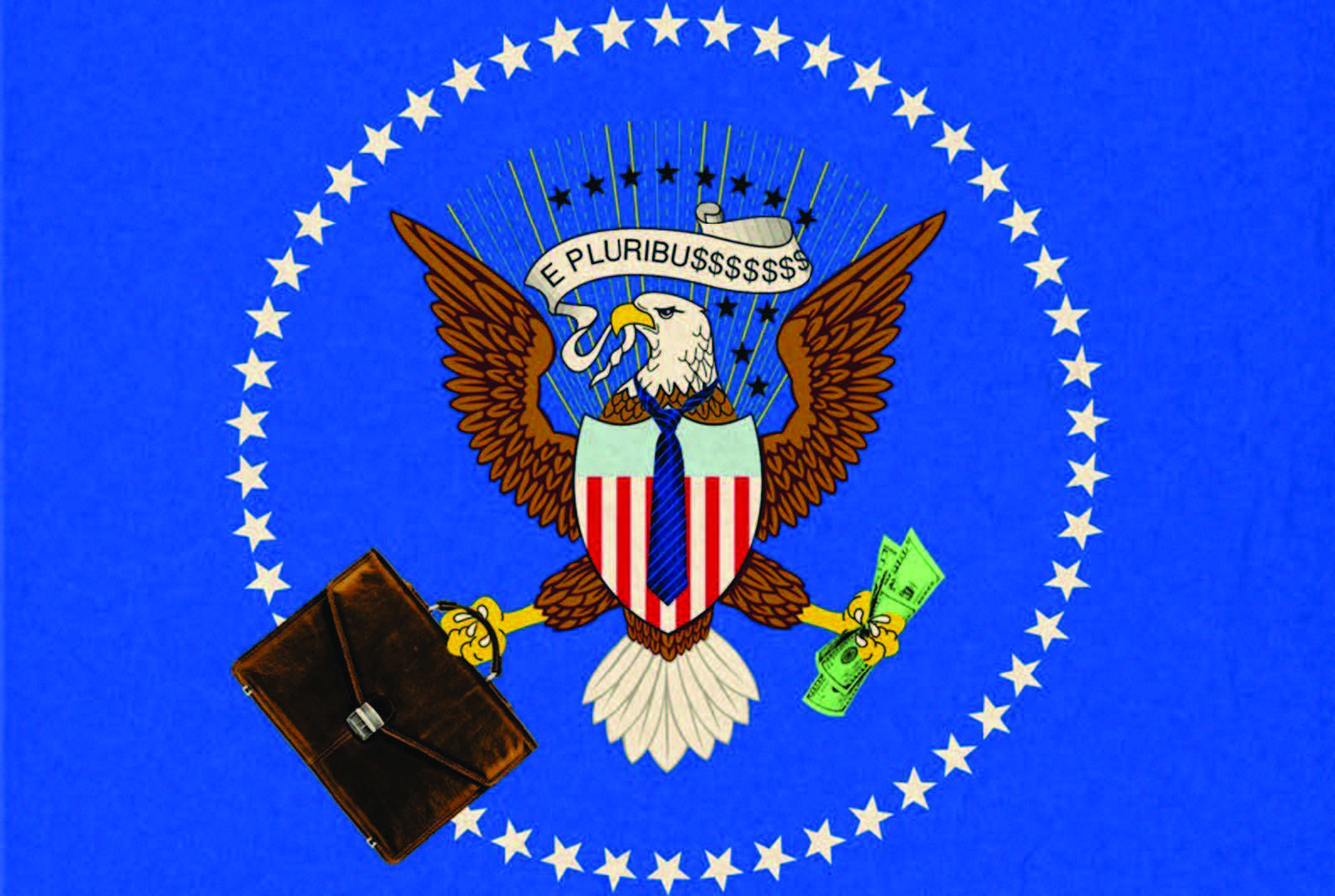
Trump’s NSS has not called for a retreat or a retrenchment from these territories. It merely asks these countries to pay up for the maintenance of the US forces they host. It is the classic mafia-style act of demanding ‘protection money’ for the ‘security’ offered against potential threats from other Big Powers.
So, think about this — the US is willing to allow China and Russia to be powerful military machines in Europe and Asia so that the European and Asian neighbours of Russia and China would seek protection from these regional hegemons from the global hegemon, the United States. In what way is this US retrenchment?
This will be Trump’s legacy and going forward, the 2020s will be defined by how the world and the US respond to what can best be described as Trumpism.
(Sanjay Baru is a senior journalist)

Be the first to comment