
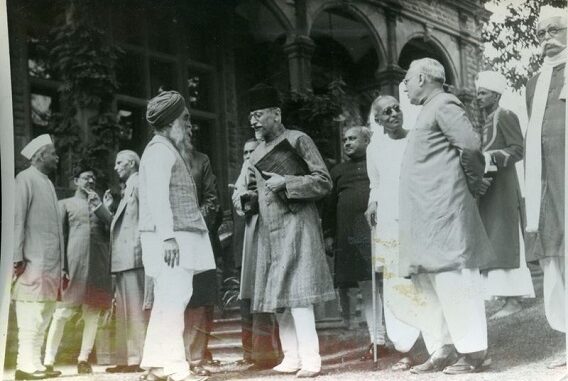

The British rejected the demand for a separate Sikh state in the event of a partition along religious lines in 1946
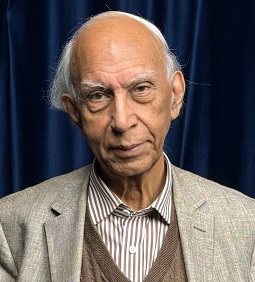
In undivided Punjab, Sikhs comprised an influential, though numerically smaller, community. Within the directly administered regions of Punjab, Sikhs made up 13.2% of the population, Hindus accounted for nearly 29% and Muslims formed the majority at 57.1%. If the princely states were included, then the Sikh representation increased to 14.9% and that of the Hindus to 29.1% and the number of Muslims decreased to 53.2%. Despite being a minority, Sikhs enjoyed a level of prominence as they were overrepresented in the army, police and land ownership across several districts.
Historical context
Before the British annexed Punjab in March 1849, the Sikhs held power, thanks to Maharaja Ranjit Singh’s formation of the kingdom of Lahore in 1801. The British administration subsequently introduced representative institutions, though access was limited by requirements related to property and education. Separate electorates were established for Muslims in 1909 and for Sikhs in 1919.
The two-nation theory
On March 23, 1940, the All-India Muslim League advanced the two-nation theory, categorizing Hindus and Muslims as distinct and antagonistic populations. The League passed a resolution demanding independent Muslim states in the northwestern and northeastern regions of India, where Muslims were in the majority.
This proposal alarmed the Hindus and Sikhs alike. Congress leaders pledged to maintain India’s unity. Sardar Sunder Singh Majithia, a prominent Sikh leader, declared that Sikhs would never accept living in a Muslim-majority Pakistan. This stance was later supported by mainstream Sikh leaders.
The Partition Debate
From 1942, Sikh leaders began discussing the potential consequences of the partition of the country on their community.
Two main approaches emerged: one, advocating for a separate Sikh state and two, collaborating with Hindus and demanding the division of Punjab, with the Hindu-Sikh majority areas joining a secular India.
The 1946 political polarization
The 1946 elections resulted in political polarization nationally and within Punjab. The Muslim League won 73 out of 84 reserved seats for Muslims, the Congress claimed 50 general seats, and Sikh Panthic parties secured 21 out of the 23 reserved Sikh seats.
The Congress campaigned for a united India. The Muslim League insisted on partition, with both Punjab and Bengal not to be divided.
Sikhs opposed their inclusion in Pakistan, and their ability to advocate for Punjab’s partition depended on alliances with Punjabi Hindus.
Negotiations with Cabinet Mission
Sikh leaders met the Cabinet Mission Delegation in 1946 to express their opposition to the country’s partition. In the event of a partition along religious lines, they demanded a separate Sikh state. The British rejected these demands. The last elected premier of united Punjab, Sir Khizr Hayat Khan Tiwana, proposed the creation of a united Punjab as a third dominion, but this suggestion was dismissed by British authorities.
Communal violence
From March 1947, Punjab was engulfed in communal violence, pitting Hindus and Sikhs against Muslims. Lahore, Amritsar, Multan and Rawalpindi witnessed severe clashes. Sikhs suffered significant losses in villages near Rawalpindi. In May 1947, Viceroy Mountbatten attempted to mediate between Sikh leaders and the Muslim League to keep Punjab undivided, but these negotiations were unsuccessful.
Aftermath of Partition
Meanwhile, Sikh leadership, which included rulers of some princely states, had been discussing plans to safeguard their interests in case Punjab was partitioned, as sought by the Muslim League. Their handicap was their small numbers and lack of a majority in any part of Punjab. This weakness was to be overcome by expelling Muslims from what would become Indian East Punjab and resettling Sikhs displaced from Pakistani West Punjab, aiming to establish a compact Sikh majority in parts of East Punjab.
The CID’s 1948 ‘Notes on The Sikh Plan’ observes that Sikhs aspired to establish Sikh rule in Punjab, with preparations directed specifically against Muslims. While Hindus were the larger minority, their willingness to support Sikh ambitions at their own expense remained uncertain. However, for the time being, Hindus and Sikhs joined forces, and regarded Muslims as a common adversary, leading to collaborative efforts and, at times, virtually conspiratorial activities.
Migration and violence
By December 1947, except for the small princely state of Malerkotla, where around 80,000 Muslims remained unharmed, six million Muslims fled to Pakistani West Punjab. Meanwhile, 5.5 million Hindus and Sikhs migrated from West Punjab to East Punjab. At least 8,00,000 Hindus, Muslims, and Sikhs died during these forced migrations.
Punjabi Suba Movement
In Indian East Punjab, despite the formation of a compact Sikh majority in central districts and adjoining princely states, Hindus remained the overall majority. Sikh leaders subsequently launched a movement to create a Punjabi-speaking East Punjab. This alienated the Hindi-speaking majority of Ambala division. Opposition also came from Punjabi Hindus, many of whom identified with Hindi as their mother tongue.
Punjabi Suba granted
Years of agitation by Sikhs followed. Ultimately, in 1966, the Punjabi Suba was granted, though certain areas were separated and incorporated into the newly formed states of Haryana and Himachal Pradesh.
(Ishtiaq Ahmed is professor emeritus of political science at Stockholm University. His books have won several awards in Pakistan and India. His X handle is @IshtiaqLahori)

Đá Gà Thomo 88 Hướng dẫn chọn đá gà trực tiếp Thomo BJ88 phù hợp với mục đích cá cược của bạn Chúng tôi sẽ cung cấp thông tin chi
tiết về cách xem đá gà trực tiếp, cách đặt cược và
cơ hội để giành chiến thắng lớn. Hãy cùng chúng tôi khám phá.