

An individual who has made the world a better place through their work and accomplishments, especially finding solutions to pressing problems, through seeking knowledge and then giving back to the benefit of fellow man is truly worthy of recognition.
Asima Chatterjee may not be known or even heard of by most of the world’s 8.1 billion people, yet her life’s work has benefited and continues to benefit millions of people receiving medical treatments for diseases such as gastroenterology, cancer, epilepsy, and malaria worldwide across all borders.
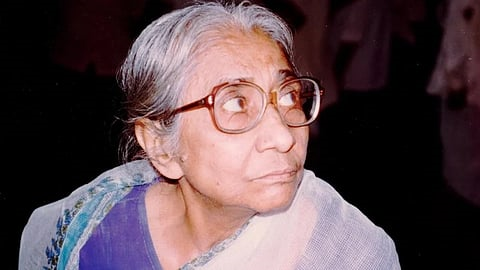
Asima Chattrjee, an Indian woman was born on September 23, 1917 in Calcutta (now Kolkata). At an early age she developed a love for botany (the study of plants) from her father, a medical doctor.
At university she majored in organic chemistry, specializing in research on vinca alkaloids, which in oncology is “any agent that inhibits CA growth (proliferation cancer cells) by stopping cell division.” Vinca is the well-known flowering plant periwinkle. Chatterjee’s research on the medicinal properties of plants that were native to India over a period of 40 years, helped scientists train their research interests on the great potential of medicinal plants. Vinca alkaloids “from the Madagascar periwinkle plant are used today in chemotherapy treatment because they help slow down or stall the multiplying of cancer cells” reports Google.
During the four decades of research on the chemical compounds called alkaloids, she developed several drugs, one of which when used in chemotherapy, inhibits the division of cancer cells, which usually divide faster than other cells, causing the cancer to spread rapidly.
Chatterjee also isolated a group of chemical compounds called coumarins in vascular plants native to India and other South Asian Countries. These chemical compounds commonly found naturally in many medicinal plants are used in the treatment of a wide variety of diseases. According to the website thebetterindia.com “Asima also chemically analyzed (sic) coumarins, which essentially came from the bael tree, a native species in India. It was she who brought to light that the fruits and bark of this tree could treat a variety of gastrointestinal disorders.” She developed and patented (among others) two other significant drugs: Ayush-56 and Ayush-64.The Ayush-56 developed from a water fern (marsilia minuta) is used in antiepileptic drugs and the Ayush-64 an antimalarial drug developed from the blackboard tree (alstonia scholaris) and an herb (swertia chirayita) all native to India. In addition to Ayush-64, she also developed several other antimalarial drugs. These drugs are used in the production of medicines and marketed by major drug companies worldwide.
According to Asish De, writing in Resonance Journal in June 2015, Chatterjee “was able to isolate a large number of natural products from many species of plants indigenous to the Indian subcontinent, and unravel their structure by degradative, spectroscopic and synthetic procedures.”
She has received numerous recognitions for her 40-year research activities and dedication to the scientific field for over 60 years – publishing some 400 scientific papers in Indian and international professional journals. In 2017 Google observed her 100th birthday with a special Doodle: “This serene bespectacled woman, a world class scientist, Dr. Chatterjee primarily studied the medicinal properties of plants native to India. Throughout her career, her research contributed to the development of drugs that treated epilepsy and malaria. Dr. Chatterjee’s most noted contributed to the field, however, was her work on vinca alkaloids.”
She was the first or second woman to be conferred a Doctor of Science Degree from an Indian university (University of Calcutta) in 1940. Some reports say she was the second and named Janaki Ammal as the first.
In 1940 she founded the Department of Chemistry at the University of Calcutta; in 1961 she was the first woman to be awarded the Shanti Swarup Bhatnagar Science Award – the most prestigious in India; she established the Natural Resource Institute of Ayurvedic Drug Development (NRIAAD) that research the chemical, botanical and pharmacological potential of drugs from India’s medicinal plants. Ayurvedic medicine, which began over 5 000 years ago uses mainly plant based drugs and uses a holistic approach to maintaining a healthy life. Regarded as the one of the world’s oldest medical systems, it is still the traditional system in Indian healthcare system.
In 1975 she was the first woman elected general president of the Indian Science Congress Association; she was also appointed to the upper house of the Indian Parliament.
Chatterjee was born at a time when education of girls, especially in India, was not encouraged and education was expensive to begin with. Funding for scientific research was also scarce during her career. However, as a devoted “karma yogi,” one dedicated to selfless service in work, deed, and action and who focuses on doing good and not expecting rewards, Chatterjee led the way in ground-breaking research that has led to improvement in medical treatment and healthcare worldwide.
Known during her lifetime as India’s “Doyenne of Chemistry” Chatterjee passed away November 22, 2006. The September 23, 2017 Google Doodle sums up her life in its tribute: “Today’s Doodle pays homage to this trailblazer and her accomplishments in the name of science.”
(Chaitram Aklu is a retired NYC veteran teacher and writer. He writes on a variety of topics ranging from education, environment and labor and current events. He can be reached on Phone 718 647 7610)



Be the first to comment