Tag: Philippines

  • US resumes visas for foreign students; Demands  access to social media accounts

    US resumes visas for foreign students; Demands access to social media accounts

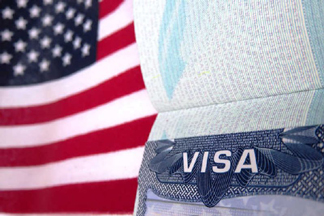
    WASHINGTON, D.C. (TIP): The US State Department said on Wednesday, June 18, it is restarting the suspended process for foreigners applying for student visas but all applicants will now be required to unlock their social media accounts for government review. The department said consular officers will be on the lookout for posts and messages that could be deemed hostile to the United States, its government, culture, institutions or founding principles.

    In a notice made public on Wednesday, the department said it had rescinded its May suspension of student visa processing but said new applicants who refuse to set their social media accounts to “public” and allow them to be reviewed may be rejected. It said a refusal to do so could be a sign they are trying to evade the requirement or hide their online activity.

    The Trump administration last month temporarily halted the scheduling of new visa interviews for foreign students hoping to study in the US while preparing to expand the screening of their activity on social media, officials said.

    Students around the world have been waiting anxiously for US consulates to reopen appointments for visa interviews, as the window left to book their travel and make housing arrangements narrows ahead of the start of the school year. Students from China, India, Mexico and the Philippines have posted on social media sites that they have been monitoring visa booking websites and closely watching press briefings of the State Department to get any indication of when appointment scheduling might resume. In reopening the visa process, the State Department also told consulates to prioritize students hoping to enroll at colleges where foreigners make up less than 15 per cent of the student body, a US official familiar with the matter said.

    The official spoke on condition of anonymity to detail information that has not been made public.

    Foreign students make up more than 15% of the total student body at almost 200 US universities, according to an Associated Press analysis of federal education data from 2023. Most are private universities, including all eight Ivy League schools. But that criteria also includes 26 public universities, including the University of Illinois and Pennsylvania State University. Looking only at undergraduate students, foreign students make up more than 15 per cent of the population at about 100 universities, almost all of them private.

    International students in the US have been facing increased scrutiny on several fronts. In the spring, the Trump administration revoked permission to study in the US for thousands of students, including some involved only in traffic offences, before abruptly reversing course.

    The government also expanded the grounds on which foreign students can have their legal status terminated.

    As part of a pressure campaign targeting Harvard University, the Trump administration has moved to block foreign students from attending the Ivy League school, which counts on international students for tuition dollars and a quarter of its enrolment. Trump has said Harvard should cap its foreign enrolment at 15 per cent.

    This latest move to vet students’ social media, the State Department said on Wednesday, “will ensure we are properly screening every single person attempting to visit our country”.

    In internal guidance sent to consular officers, the department said they should be looking for “any indications of hostility towards the citizens, culture, government, institutions, or founding principles of the United States”.

    Jameel Jaffer, executive director at the Knight First Amendment Institute at Columbia University, said the new policy evokes the ideological vetting of the Cold War, when prominent artists and intellectuals were excluded from the US. “This policy makes a censor of every consular officer, and it will inevitably chill legitimate political speech both inside and outside the United States,” Jaffer said.

    The Trump administration also has called for 36 countries to commit to improving vetting of travelers or face a ban on their citizens visiting the United States. A weekend diplomatic cable sent by the State Department says the countries have 60 days to address US concerns or risk being added to a travel ban that now includes 12 nations.

  • Former Secretary General Ban Ki-moon, three veteran diplomats honored with 2023 Diwali ‘Power of One’ Awards at UN

    Former Secretary General Ban Ki-moon, three veteran diplomats honored with 2023 Diwali ‘Power of One’ Awards at UN

    “The ideals of Diwali are the ideals of UN Charter” : Chair of Diwali Foundation USA Ranju Batra

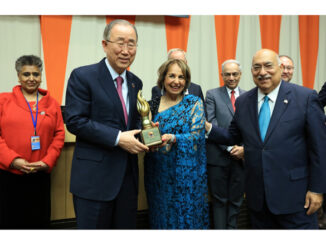
    UNITED NATIONS (TIP): Former UN Secretary General Ban Ki-moon and three veteran diplomats were honored with the annual ‘Diwali Power of One Awards’, hailed as the ‘Oscars of diplomacy’, for their selfless efforts to “help form a more perfect, peaceful, and secure world for all”. The former UN chief was honored with the Lifetime Achievement Award at the 2023 Diwali Stamp — The Power of One Award ceremony organized by the Diwali Foundation USA. The other awardees for the year 2023 are former permanent representative of Bosnia and Herzegovina to the UN Ambassador Mirsada Colakovic, former permanent representative of South Korea to the UN Ambassador Kim Sook and 72nd UN General Assembly president and EU Special Representative for the Belgrade-Pristina Dialogue Miroslav Lajcak. They were honored at a special ceremony held in the UN Headquarters on Monday, December 11.

    Former Secretary General Ban Ki-moon addressing the gathering after receiving the award. Seen, among others, are India’s Permanent Representative to the United Nations, Ambassador Ruchira Kamboj ( extreme left) , Ranju Batra (4th from left), and Ravi Batra (behind Mr. Ban Ki-moon) (Photo : Mohammed Jaffer / SnapsIndia)

    Ban commended the work and “forward-thinking vision” of the Diwali Foundation USA “for advancing vital light in a world of increasing darkness”.

    Ban said the world of today “seems fractured like never before” as he cited the COVID-19 pandemic, climate crisis and regional conflicts, particularly “regional crisis as we see today in the Middle East and Ukraine”.

    “But it is exactly at times such as these that the work of the United Nations is indispensable. The United Nations and its pursuit of peace, human rights and sustainable development exemplifies the values and principles that we should all espouse to replicate,” he said. Ban was the eighth Secretary-General of the United Nations, serving two terms as the world’s top diplomat from January 2007 to December 2016.

    He said that as the world moves into 2024 and beyond, “we share a common destiny illuminated by peace, sustainability and prosperity. Let us work together and expand our unified efforts to realize this shared destiny for all. This is your political responsibility and for me, my moral responsibility as a former Secretary General” and as an awardee of the Power of One honor.

    India’s Permanent Representative to the UN Ambassador Ruchira Kamboj, in her address to the event attended by UN diplomats, envoys, civil society members and policy experts, said that Diwali is a celebration that holds a very special place in the hearts of over a billion Indians across the globe.

    Diwali “is more than just a festival. It is a sentiment that embodies the triumph of light over darkness, knowledge over ignorance and hope over despair”, she said.

    Kamboj said, “as we light the lamps of Diwali, let us remember that every small light, no matter how small, can make a significant difference in dispelling the shadows”.

    Sri Lanka’s Permanent Representative to the UN Ambassador Mohan Pieris said “Deepawali has become truly a secular festival in the world, since its message is not exclusively restricted to any religious creed.

    “This festival has united the global community with the central message that we need more than ever the humanistic ideals to engage the inglorious wars, which are bleeding the innocence of humanity,” he said.

    Pieris underscored that for the world to have peace, it is important that the whole world must be united to save the higher ideals of humanity, which have evolved since the millennium in various religious traditions.

    Chair of Diwali Foundation USA Ranju Batra, who had spearheaded efforts for over seven years to get a commemorative ‘Forever Diwali’ stamp issued by the US Postal Service in 2016, said: “Diwali is a message of peace.” She said her journey for the Diwali stamp is seen as a “metaphor of peace and harnessing its power to promote excellence in diplomacy. The ideals of Diwali are the ideals of UN Charter”.

    She noted that the 2023 Power of One awardees have clearly demonstrated that “one person can make a difference”. The Diwali stamp celebration is not of a religion or nation but of the spirit of harmonious inclusiveness and cross-cultural understanding that all religions deserve, she said.

    Eminent Indian-American attorney and Chair of National Advisory Council South Asian Affairs and moderator of the award ceremony Ravi Batra said the UN transcends borders and boundaries.

    “The need to acknowledge excellence is critical, generally, but in diplomacy, which is on life support in today’s world, it is essential and that’s how these awards are – the Power of One,” he said, adding that they honor “world class diplomats who have changed the world by what they did”.

    Awardees and organizers of Power of One Awards (Photo : Mohammed Jaffer / SnapsIndia)

    Hailed as the ‘Oscars of Diplomacy’, the awards are presented to former Permanent Representatives or former high-level members of the UN Secretariat or member state, or soon to be “former”, who have “toiled selflessly to help form a more perfect, peaceful and secure world for all”.

    The 2023 Award ceremony was co-organized by the Diwali Foundation USA and Delegation of the European Union to the United Nations, and the Permanent Missions of Chile, Eritrea, Georgia, India, Kazakhstan, Kiribati, Morocco, Oman and Sri Lanka to the United Nations. The co-sponsors included the Permanent Mission to the United Nations of Albania, Armenia, Austria, Azerbaijan, Belarus, Bhutan, Cyprus, France, Germany, Ghana, Hungary, Iraq, Israel, Kuwait, Kyrgyzstan, Malaysia, Mexico, Nepal, Philippines, South Korea, South Africa, Spain, Tajikistan, Thailand, Turkiye, Turkmenistan, Ukraine, United Kingdom, United States, Uzbekistan, Vietnam and Palestine, and International Atomic Energy Agency (IAEA-NY) among others.

    Diwali Foundation USA was established in 2017 to promote a peaceful and consensus-based process to achieve societal “good, as befits the high hopes and ideals of humanity enshrined in the United Nations Charter”.

    The Foundation established ‘The Power of One’ awards to celebrate and highlight the important work done in a peaceful manner, especially at the United Nations.

    Previous honorees include former UN assistant secretary general and deputy executive director of UN Women, Lakshmi Puri, former UK Ambassador to the UN, Matthew Rycroft, former permanent representative of Georgia to the UN, Kaha Imnadze, and former permanent representative of Grenada to the UN Keisha McGuire.
    (Source: PTI)

    The traditional lamp lighting . Mr. & Mrs. Ban Ki-moon with organizers of Power of One Award lighted the lamp. (Photo : Mohammed Jaffer / SnapsIndia)
  • Four killed in bomb attack on Catholic mass in Philippines

    MARAWI (TIP): At least four people were killed and dozens wounded in a bomb attack on a Catholic mass in the insurgency-plagued southern Philippines on December 4, with President Ferdinand Marcos blaming “foreign terrorists”. The blast happened during a morning service at Mindanao State University’s gymnasium in Marawi, the country’s largest Muslim city, which was besieged by Islamist militant groups in 2017.
    Police Lieutenant General Emmanuel Peralta said four people were killed and around 50 wounded in the blast from an improvised explosive device.
    Other security officials said the bombing may have been a retaliatory attack for a series of military operations against Islamist militant groups in recent days.
    Photos posted on the Lanao del Sur provincial government’s Facebook page showed several overturned plastic chairs, shattered glass and debris around a black patch on the floor of the gymnasium.
    University student Chris Jurado, 21, told AFP from his hospital bed that the explosion happened during the first Bible reading of the morning mass at 7:00 am (2300 GMT Saturday).
    “It was really sudden and everyone ran,” Jurado said.
    “When I looked behind me people were lying on the floor. We didn’t know what happened because everything happened so fast.”
    Rowena Mae Fernandez, 19, said she did not know what the blast was at first — then others started running.
    “My companion and I also ran, even though we fell on the ground at one point. That was the only thing I remembered until I got out of the gym and I fell again,” she said from hospital.
    “My friends were crying because they saw my injury.”
    Marcos condemned the attack by “foreign terrorists”, describing it as “senseless” and “heinous”, while Pope Francis offered his prayers for the victims. “I am close to the families, to the people of Mindanao, who have already suffered so much,” the pontiff said from his residence in remarks broadcast in Saint Peter’s Square. (AFP)

  • Philippine ferry was overloaded when it flipped over, leaving 27 dead, official says

    Philippine ferry was overloaded when it flipped over, leaving 27 dead, official says

    MANILA, Philippines (TIP): The skipper of a Philippine ferry that flipped over in a lake in an accident that killed 27 passengers decided to sail despite knowing that his boat was filled beyond capacity, the coast guard chief said on July 28. Forty-three passengers were rescued after the M/B Aya Express capsized in Laguna de Bay on Thursday shortly after leaving Binangonan town southeast of Manila in what should have been a 30-minute cruise to nearby Talim Island, officials said.
    Coast guard, police and other government personnel continued to search the lake Friday but said they had no idea whether anyone was still missing because of uncertainties over the number of passengers on the ferry. No more survivors or bodies were found.
    Two coast guard inspectors allowed the ferry to sail after being shown a manifest that listed only 22 passengers in addition to the boat’s three-member crew, coast guard chief Admiral Artemio Abu said at a news conference.
    The two inspectors were removed from their post and will be investigated, coast guard officials said. They said the skipper and the two other crew members and the boat owner may face criminal complaints.
    Sea accidents are common in the Philippines because of frequent storms, poorly maintained boats, overcrowding and weak enforcement of safety regulations. In December 1987, the ferry Dona Paz sank after colliding with a fuel tanker, killing more than 4,300 people in the world’s worst peacetime maritime disaster.
    The Aya Express had a capacity of 42 passengers, the coast guard said.
    Under questioning by authorities, the skipper acknowledged that the ferry had exceeded its passenger capacity when it left port, Abu said.
    The skipper said only 22 passengers were aboard the ferry at first but the number swelled when more people desperate for a ride arrived. The passengers had been stranded for days after stormy weather forced the suspension of ferry services earlier this week, Abu said.
    “On his way back to the boat, he said that he saw far too many people have gone onboard and he could no longer convince them to disembark,” Abu said. “Those who were stranded had insisted on staying onboard.”
    Shortly after leaving port, the Aya Express was pummeled by strong winds which caused the passengers to panic and rush to one side of the boat. The vessel tilted and its outrigger broke, causing it to capsize just 46 meters (150 feet) from shore, police and coast guard officials said.
    “This is really a tragic event that has to be investigated,” coast guard Rear Adm. Hostillo Arturo Cornelio said Thursday night at a news conference.
    Investigators will look into reports that many of the passengers were not wearing life vests as required by safety regulations, Cornelio said.
    The boat accident brought the death toll from a week of stormy weather across the main island of Luzon to 40.
    In addition to the 27 ferry deaths, Typhoon Doksuri left at least 13 people dead, mostly due to landslides, flooding and toppled trees. Twenty people remained missing, including four coast guard personnel whose boat overturned Wednesday while on a rescue mission in hard-hit Cagayan province. (AP)

  • Chinese eye in sky

    • ‘Spy balloon’ underlines need for constant alertness

    Days after a US Air Force fighter jet shot down a Chinese surveillance balloon — which the US claimed was a ‘spy balloon’ — off the South Carolina coast, it has been reported that China operates a fleet of such balloons and has targeted several countries, including India and Japan, in the past. A US media report, quoting several unnamed defense and intelligence officials, alleged that the spy balloon project has been operating for several years, and ‘has collected information on military assets in countries and areas of emerging strategic interest to China including Japan, India, Vietnam, Taiwan and the Philippines’. Senior US officials are reported to have briefed ‘nearly 150 foreign diplomats across 40 embassies’ in the US and Beijing, explaining its action of shooting down the balloon, presenting reasons why it was not a ‘civilian’ weather balloon, as China claimed, but an intelligence-gathering device.

    It seems counterintuitive to use an apparently low-tech method such as a balloon for intelligence-gathering when high-resolution satellite images of the earth’s surface are easily available, but such debates are best left to techint experts. Also, China keeping a spying eye on its neighbors and adversaries is not a significant point — it’s a fact that all countries engage in intelligence-gathering, or spying, even if not one would admit it publicly. What is really remarkable about the Chinese balloon is that if it were indeed spying, it was doing so in a very brazen manner; and if it indeed was a ‘civilian airship’ intended for ‘meteorological research’, China’s secretiveness about it is quite inexplicable.

    One takeaway for India from this episode is that it must keep its eyes open — it’s not quite a new lesson but the reinforcement of one, because China’s increased aggressiveness at the borders during the last few years has already underlined the need for India to always keep its guard up. For the countries that are concerned over China’s hegemonistic ambitions, it is imperative to share technology and intelligence in order to not be outsmarted and outmaneuvered in geopolitical games.

    (Tribune, India)

  • CIFF MARKS 18TH EDITION

    Weckuwapok (The Approaching Dawn) (Photo: pointsnorthinstitute.org)By Mabel Pais

    Featuring

    • SHAUNAK SEN’S All That Breathes
    • GEETA GANDBHIR & SAM POLLARD’S Lowndes County And The Road To Black Power
    • NEHAL VYAS’S Dapaan
    • SOHIL VAIDYA’S Murmurs Of The Jungle
    • SHRUTIMAN DEORI’S My Courtyard (Ne Sotal)
    • KAVITA PILLAI’s Weckuwapok (The Approaching Dawn)

    The Camden International Film Festival (CIFF) for its 18th edition presents feature and short films and documentaries. The festival takes place in person from September 15-18 at venues in Camden and Rockland, Maine, and online from September 15-25 for audiences across North America.

    A program of the Points North Institute, CIFF remains widely recognized as a major platform championing the next generation of nonfiction storytellers and one of the hottest documentary and industry festivals on the festival and awards calendars. This year’s edition is the most international and formally adventurous to date and includes 34 features and 37 short films from over 41 countries. Over 60% of the entire program is directed or co-directed by BIPOC filmmakers and this is the 6th consecutive program the festival has reached gender parity within the program and across all competitions. Nearly half of the feature program will be US or North American premieres, including several new titles fresh from Venice, Locarno, and TIFF premieres, alongside award-winning films from Sundance, Rotterdam, Cannes, and Visions du Reel.

    This year’s program celebrates the diversity of voices and forms in documentary and cinematic nonfiction,” says Ben Fowlie, Executive and Artistic Director of the Points North Institute, and Founder of the Camden International Film Festival. “These films help us make sense of an ever-changing world, and do everything we expect from great art – they ask provocative questions and interrogate the form. This year’s program emphasizes the international that represents the ‘I’ in CIFF, and reminds us time and again of the limitless creative potential and potency of the documentary form. Just as we have been for each of the past seventeen years, we are grateful to the filmmakers who have made these works of art and shared these stories.”

    CIFF 2022 FEATURES

    5 DREAMERS AND THE HORSE

    Dirs: Aren Malakyan & Vahagn Khachatryan | Armenia, Georgia, Germany |

    US Premiere

    A COMPASSIONATE SPY 

    Dir: Steve James | USA, United Kingdom

    AFTER SHERMAN

    Dir: Jon-Sesrie Goff | USA

    ALL OF OUR HEARTBEATS ARE CONNECTED THROUGH EXPLODING STARS

    Dir: Jennifer Rainsford | US Premiere

    ALL THAT BREATHES

    Dir: Shaunak Sen | India, USA, UK

    BURIAL

    Dir: Emilija Škarnulytė | Lithuania, Norway | US Premiere

    COWBOY POETS

    Dir: Mike Day | UK, Scotland, US | World Premiere

    CROWS ARE WHITE

    Dir: Ahsen Nadeem | Japan, Ireland, USA

    DAY AFTER…

    Dir: Kamar Ahmad Simon | Bangladesh, France, Norway

    DESCENDANT

    Dir: Margaret Brown | USA

    DETOURS

    Dir: Ekaterina Selenkina | Russia, Netherlands | US Premiere

    DOS ESTACIONES

    Dir: Juan Pablo González | México, with France, USA

    EAMI

    Dir: Paz Encina | Paraguay, Argentina, Mexico, USA, Germany, France, The Netherlands | North American Premiere

    FORAGERS

    Dir: Jumana Manna | Palestine | North American Premiere

    GEOGRAPHIES OF SOLITUDE

    Dir: Jacquelyn Mills | Canada

    Dir: Carlos Pardo Ros | Spain | North American Premiere

    HERBARIA

    Dir: Leandro Listorti | Argentina, Germany | North American Premiere

    I DIDN’T SEE YOU THERE

    Dir: Reid Davenport | USA

    IN HER HANDS

    Dirs: Tamana Ayazi, Marcel Mettelsiefen | USA, Afghanistan | US Premiere

    IT IS NIGHT IN AMERICA (É Noite na América)

    Dir: Ana Vaz | Italy, Brazil, France | North American Premiere

    LOWNDES COUNTY AND THE ROAD TO BLACK POWER

    Dirs: Geeta Gandbhir, Sam Pollard | USA

    MATTER OUT OF PLACE

    Dir: Nikolaus Geyrhalter | Austria | North American Premiere

    MY IMAGINARY COUNTRY (Mi País Imaginario)

    Dir: Patricio Gúzman | Chile, France | Sneak Preview

    NOTHING LASTS FOREVER

    Dir: Jason Kohn | USA

    POLARIS

    Dir: Ainara Vera | Greenland, France | North American Premiere

    REWIND & PLAY

    Alain Gomis | France, Germany

    All That Breathes. (Photo: pointsnorthinstitute.org)

    Dir: Chris Smith | USA

    SUBJECT

    Dir: Jennifer Tiexiera, Camilla Hall | USA

    TERRANOVA

    Dirs: Alejandro Alonso & Alejandro Pérez | Cuba | North American Premiere

    THE AFTERLIGHT

    Dir: Charlie Shackleton | UK

    THE TERRITORY

    Dir: Alex Pritz | Brazil, Denmark, USA

    THIS MUCH WE KNOW

    Dir: Lily Frances Henderson | USA | World Premiere

    WHAT WE LEAVE BEHIND (LO QUE DEJAMOS ATRÁS)

    Dir: Iliana Sosa | USA, Mexico

    CIFF 2022 SHORTS

    ARALKUM

    Dirs: Daniel Asadi Faezi, Mila Zhluktenko | Germany, Uzbekistan |

    North American Premiere

    THE ARK

    Dir: Amira Louadah | Algeria, France | North American Premiere

    THE ARTISTS

    Dirs: Noah David Smith, Elizabeth L. Smith | USA | World Premiere

    BELONGINGS

    Dir: Alex Coppola | USA

    BIGGER ON THE INSIDE

    Dir: Angelo Madsen Minax | USA | Sneak Preview

    BRAVE

    Wilmarc Val | France | US Premiere

    CALL ME JONATHAN

    Dir: Bárbara Lago | Argentina | US Premiere

    CONGRESS OF IDLING PERSONS

    Dir: Bassem Saad | Lebanon, Germany

    CONSTANT

    Dir: Beny Wagner, Sasha Litvintseva | Germany, United Kingdom

    DAPAAN

    Dapaan. (Photo: pointsnorthinstitute.org)

    Dir: Nehal Vyas | USA

    DEERFOOT OF THE DIAMOND 

    Dir: Lance Edmands | USA | World Premiere

    ECHOLOCATION

    Dir: Nadia Shihab | USA

    EVERYTHING WRONG AND NOWHERE TO GO

    Dir: Sindha Agha | USA, United Kingdom | World Premiere

    THE FAMILY STATEMENT

    Dir: Grace Harper, Kate Stonehill | USA

    FIRE IN THE SEA

    Dir: Sebastián Zanzottera | Argentina | North American Premiere

    THE FLAGMAKERS

    Dirs: Cynthia Wade, Sharon Liese | USA | World Premiere

    LA FRONTIÉRE (THE BORDER)

    Dirs: Katy Haas, Megan Ruffe | USA, Canada | Sneak Preview

    HANDBOOK

    Dir: Pavel Mozhar | Germany, Belarus

    IRANI BAG

    Dir: Maryam Tafakory | Iran, Singapore, United Kingdom

    LA FRONTIÉRE

    Dirs: Katy Haas & Megan Ruffe | USA |  work in progress

    LIFE WITHOUT DREAMS

    Dir: Jessica Bardsley | USA, France

    LUNGTA

    Dir: Alexandra Cuesta | Mexico, Ecuador | North American Premiere

    MASKS

    Dir: Olivier Smolders | Belgium | North American Premiere

    MOUNE 

    Dir: Maxime Jean-Baptiste | Belgium, French Guiana, France

    MURMURS OF THE JUNGLE

    Dir: Sohil Vaidya | India

    MY COURTYARD (NE SOTAL)

    Dir: Shrutiman Deori | India | North American Premiere

    NAZARBAZI

    Dir: Maryam Tafakory | Iran

    ONE SURVIVES BY HIDING

    Dir: Esy Casey | USA, Philippines

    PACAMAN

    Dir: Dalissa Montes de Oca | Dominican Republic

    PARADISO, XXXI, 108

    Dir: Kamal Aljafari | Palestine, Germany | North American Premiere

    SEASICK

    Dir: João Vieira Torres | Brazil, France | North American Premiere

    SOLASTALGIA

    Dir: Violeta Mora | Cuba, Honduras | North American Premiere

    SOMEBODY’S HERO

    Dir: Morgan Myer | USA

    THE SOWER OF STARS (EL SEMBRADOR DE ESTRELLAS)

    Dir: Lois Patiño | Spain | US Premiere

    SUBTOTALS

    Dir: Mohammadreza Farzad | Poland, Germany, Iran | North American Premier

    SWERVE

    Dir: Lynne Sachs | USA

    UNSINKABLE SHIP

    Dir: Lamia Lazrak, Josie Colt | USA | North American Premier

    WECKUWAPOK (THE APPROACHING DAWN)

    Dirs: Jacob Bearchum, Taylor Hensel, Adam Mazo, Chris Newell, Roger Paul, Kavita Pillay, Tracy Rector, and Lauren Stevens | USA

    WECKUWAPASIHIT (THOSE TO COME) Weckuwapasihtit (Those Yet to Come)

    Weckuwapok (The Approaching Dawn) (Photo: pointsnorthinstitute.org)

    Dir: Geo Neptune, Brianna Smith | USA

    WHEN THE LAPD BLOWS UP YOUR NEIGHBORHOOD

    Dir: Nathan Truesdell | USA

    TICKETS

    For Tickets and Passes, visit pointsnorthinstitute.org/ciff/box-office

    Online registration for pass holders began on September 1. General tickets for screenings will open on September 8.

    POINTS NORTH INSTITUTE

    To learn about the Points North Institute, visit pointsnorthinstitute.org.

    (Mabel Pais writes on Social Issues, The Arts and Entertainment, Health & Wellness, Cuisine and Spirituality.)

  • Pioneering Russian journalist sells Nobel Peace medal for Ukraine

    Moscow (TIP): Russian journalist and Nobel Peace laureate Dmitry Muratov is auctioning his Nobel medal for Ukrainian refugees, distraught at the eradication of independent media in his country, where he says fewer and fewer people support Moscow’s military campaign.

    Muratov is the bear-like co-founder and long-time editor-in-chief of Novaya Gazeta, a newspaper critical of the Kremlin that was itself established in 1993 with money from former Soviet president Mikhail Gorbachev’s Nobel Peace Prize. For years it defied tightening restrictions on dissenting media, but in March it finally suspended its online and print activities after it became a crime – punishable by 15 years in jail – to report anything on the conflict that veered from the government line.

    “My country invaded another state, Ukraine. There are now 15.5 million refugees … We thought for a long time about what we could do … and we thought that everyone should give away something dear to them, important to them,” Muratov told Reuters in an interview.

    Auctioning his golden medal would mean he shared in some way in the fate of refugees who had lost their mementoes and “their past”, he said.

    “Now they want to take away their future, but we must make sure that their future is preserved … the most important thing we want to say and show is that human solidarity is necessary.” Muratov’s medal is being sold by Heritage Auctions on June 20, World Refugee Day, with the support of the prize committee.

    It had called the award to Muratov and Maria Ressa, a journalist from the Philippines, an endorsement of the right to free speech that was in jeopardy around the world.

    Muratov dedicated his prize to six Novaya Gazeta journalists murdered for their work, among them some of the highest-profile critics of President Vladimir Putin.

    MEDIA CLAMPDOWN

    He lamented the lack of a free media, and the severity of the state’s crackdown on protest.

    “The absence of real freedom of speech, of real exchange of opinions, of real freedom of expression is leading to the fact that people have no choice. They just have to believe what the state propagandists tell them,” he said.

    “There are no free media outlets. Rallies are actually banned, including in the regions. For any statement, an administrative or criminal case is initiated. (Reuters)

  • Indian-origin nurses drive UK’s health service foreign intake

    Indian-origin nurses drive UK’s health service foreign intake

    LONDON (TIP): Indians are driving a rise in foreign nurses coming in to boost the workforce of the UK’s National Health Service, according to official figures released in London on Wednesday, May 18.

    The Nursing and Midwifery Council (NMC) data for 2021-22 shows 37,815 Indian nurses on the council’s register of those qualified to work in the UK, up from 28,192 the previous year and a jump from 17,730 four years ago. The Philippines remains the top-most source country with 41,090 nurses and Nigeria is third with 7,256 nurses on the register. “Our register is at the highest level ever. This is good news considering all the pressures of the last two years. But a closer look at our data reveals some warning signs,” said Andrea Sutcliffe, Chief Executive and Registrar at the NMC. “The total number of people leaving the register has risen, after a steady and welcome fall over the previous four years. Those who left shared troubling stories about the pressure they’ve had to bear during the pandemic. A focus on retention as well as attracting new recruits needs to be part of a sustainable workforce plan to meet rising demands for health and care services,” she said. In total there were 48,436 joiners, up from 34,517 the previous year and 38,317 in 2019-2020, which was seen as a welcome sign for the health service coping with nursing staff shortages. The NMC found that of all the joiners almost half (48 per cent) had trained overseas and of those, 66 percent had trained in India or the Philippines. This means growth of the UK nursing and midwifery workforce has become more reliant than ever on internationally trained professionals joining the register, the NMC notes.

    “Another note of caution is that growth of the workforce has become more reliant on internationally trained professionals joining our register. These professionals make a welcome and vital contribution to our nation’s health and wellbeing. But we can’t take them for granted,” warns Sutcliffe.

    The UK’s Royal College of Nursing (RCN) also called for radical action to boost the nursing workforce in a sustainable way. “We again question how sustainable it is to recruit half of all new nurses from around the world. The UK’s health and care workforce is proudly diverse, but it must be done ethically and come at the same time as increased investment in education and domestic workers,” said Pat Cullen, RCN General Secretary and Chief Executive.

    “When we have tens of thousands of vacant nurse jobs, a sharp rise in leavers should not be overlooked while we welcome new recruits. Nursing staff tell us these shortages are biting more than ever,” she said.

    The UK government says the NHS follows ethical recruitment practices by not recruiting from a red list of countries, which have declared shortages of healthcare staff. All parts of the UK have set out plans to increase the number of nurses and midwives in the NHS, with a target to boost numbers domestically and be less reliant on foreign staff.

  • HRWFF RETURNS WITH 33RD EDITION

    By Mabel Pais

    The Human Rights Watch Film Festival (HRWFF), now in its 33rd year, will present a hybrid full edition of 10 groundbreaking new films, available both in-person and online nationwide in the U.S., from May 20 to 26, 2022.

    For the first time in two years, the New York festival will be back with a full program of in-person screenings at Film at Lincoln Center and IFC Center, with in-depth discussions with filmmakers, film participants, activists and Human Rights Watch researchers. The festival will continue to offer the opportunity to watch all 10 new films online across the U.S. with a full digital edition of the film festival.

    This year’s edition highlights activism and features courageous individuals around the world standing up to powerful forces and demanding change. John Biaggi, Director of the Human Rights Watch Film Festival, said, “We are thrilled to be back in theaters after two years away, bringing our audience a full slate of powerful films tackling urgent human rights issues including China, Russia, the climate crisis and reproductive rights.” Lesli Klainberg, President of Film at Lincoln Center said, “History has shown that film not only empowers understanding, but also ignites urgent public dialogues about how to help the most vulnerable.” John Vanco, Senior Vice President and General Manager at IFC Center said, “IFC Center is proud to continue our partnership with the Human Rights Watch Film Festival and support their mission to use cinema to shine a light on important issues.”

    FILM LINEUP

    REBELLION – OPENING NIGHT

    U.S. Premiere

    Dirs: Maia Kenworthy & Elena Sanchez Bellot l 2021 l UK, Poland l Eng l Doc l 1h 22m

    Opening Film (Photo / www.ff.hrw.org, 2022.)

    “Rebellion” brings viewers behind-the-scenes with Extinction Rebellion (XR), as the group confronts the climate emergency – reminding the world there is no time to wait. Emerging as action on climate change dangerously slipped from the political agenda, XR took bold steps to break through the deadlock: mass civil disobedience. It worked. “Rebellion” reminds viewers to question white Western environmentalism and push back against a fight that ignores structural racism and oppression.

    In-person screening:

    Friday, May 20, 7:00pm, Film at Lincoln Center, Walter Reade Theater

    THE JANES – CLOSING NIGHT

    Dirs: Tia Lessin & Emma Pildes l 2022 l USA l Eng l Doc l 1h 41m

    Grand Jury Prize Documentary Nominee, Sundance Festival, 2022

    Closing Film. (Photo / www.ff.hrw.org, 2022.)

    Seven women were part of a clandestine network that built an underground service for women seeking safe, affordable abortions in the pre-Roe v. Wade era. They called themselves “The Janes.” This galvanizing documentary tells the story of the past and, potentially, the future.

    In-person screening:

    Thursday, May 26, 7:00pm, IFC Center

    CLARISSA’S BATTLE         

    World Premiere

    Dir: Tamara Perkins l 2022 l USA l Eng l Doc l 1h 30m

    Single mother and organizer Clarissa Doutherd is building a powerful coalition of parents fighting for childcare and early education funds, from her own experience of losing childcare and becoming unhoused, desperately needed by low-and middle-income parents and children across the United States. “Clarissa’s Battle” offers an insight into an erupting movement, as communities across the country follow Clarissa’s successes, setbacks and indomitable resilience.

    In-person screenings:

    Saturday, May 21, 8:00pm, Film at Lincoln Center, Elinor Bunin Munroe Film Center

    Sunday, May 22, 5:15pm, Film at Lincoln Center, Elinor Bunin Munroe Film Center

    DELIKADO          

    New York Premiere

    Dir: Karl Malakunas l 2022 l Philippines, Hong Kong, Australia, USA, UK l Eng, Filipino l Doc l 1h 34m

    Official Selection, Hot Docs 2022

    A small network of environmental crusaders, Bobby, Tata and Nieves – a charismatic lawyer, a former illegal logger and a fearless politician – are three magnetic leaders fighting to stop corporations and governments seeking to plunder increasingly valuable natural resources in Palawan in the Philippines.

    In-person screenings:

    Sunday, May 22, 8:00pm, Film at Lincoln Center, Elinor Bunin Munroe Film Center

    Tuesday, May 24, 9:00pm, IFC Center

    ETERNAL SPRING     

    U.S. Premiere

    Dir: Jason Loftus l 2022 l Canada l Eng, Mandarin Chinese l Doc l 1h 26m

    In March 2002, members of the outlawed spiritual group Falun Gong hijacked a state TV station in China. Their goal was to counter the government narrative about their practice. In the aftermath, police raids sweep Changchun City, and comic book illustrator, Daxiong (Justice League, Star Wars), a Falun Gong practitioner, is forced to flee.

    In-person screenings:

    Monday, May 23, 6:15pm, Film at Lincoln Center, Elinor Bunin Munroe Film Center

    Tuesday, May 24, 6:30pm, IFC Center

    MIDWIVES     

    New York Premiere

    Dir: Snow Hnin Ei Hlaing l 2022 l Myanmar, Germany, Canada l Rohingya, Rakhine, Burmese l Doc l 1h 31m

    Winner, World Cinema Documentary Special Jury Award: Excellence in Verité Filmmaking, Sundance 2022

    Hla is a Buddhist and the owner of an under-resourced medical clinic in western Myanmar, where the Rohingya (a Muslim minority community) are persecuted and denied basic rights. Nyo is a Rohingya and an apprentice midwife who acts as assistant and translator at the clinic. Risking her own safety daily by helping Muslim patients, she is determined to become a steady healthcare provider and resource for the families who desperately need her.

    In-person screenings:

    Saturday, May 21, 5:15pm, Film at Lincoln Center, Elinor Bunin Munroe Film Center

    Monday, May 23, 6:30pm, IFC Center

    THE NEW GREATNESS CASE

    World Premiere

    Dir: Anna Shishova l 2022 l Finland, Croatia, Norway l Russian l Doc l 1h 32m

    In “The New Greatness Case” with hidden camera footage, and an intimate relationship with the protagonists, the director, Anna Shishova, shows the complete repression of present-day Russia, and how young, free-thinking people are seen as a threat to the government.

    In-person screenings:

    Tuesday, May 24, 9:00pm, Film at Lincoln Center, Elinor Bunin Munroe Film Center

    Wednesday, May 25, 6:30pm, IFC Center

    NO U-TURN

    New York Premiere

    Dir: Ike Nnaebue l 2022 l France, Nigeria, South Africa, Germany l Eng, Igbo, French, Nigerian Pidgin l Doc l 1h 34m

    Special Mention, Documentary Award, Berlinale 2022

    In his first documentary, “No U-Turn,” Nigerian director Ike Nnaebue retraces the life-changing journey he made over 20 years ago. Overlaid with a powerful poetic commentary, this self-reflective travelog hints at the deep longing of an entire generation for a better life.

    In-person screenings:

    Tuesday, May 24, 6:15pm, Film at Lincoln Center, Elinor Bunin Munroe Film Center

    Wednesday, May 25, 9:00pm, IFC Center

    UP TO G-CUP

    World Premiere

    Dir: Jacqueline van Vugt l 2022 l Netherlands l Kurdish, Arabic l Doc l 1h 20m

    Northern Iraq’s first lingerie store not only sells underwear, but also acts as a meeting place where women connect to their bodies and sensuality after overcoming the traumas of oppression, war, and conservative morality. Director Jacqueline van Vugt captures intimate stories about love, sex, shame, and war.

    In-person screenings:

    Monday, May 23, 9:00pm, IFC Center

    Wednesday, May 25, 9:00pm, Film at Lincoln Center, Elinor Bunin Munroe Film Center

    YOU RESEMBLE ME

    New York Premiere

    Dir: Dina Amer l 2021 l  France,Egypt,USA l Arabic, French l Drama l 1h 31m

    Who was Hasna Aït Boulahcen? After the November 2015 Paris bombings, she was labelled “Europe’s first female suicide bomber.” Director Dina Amer, in this nuanced drama shows what happens when society fails to protect a child, and how discrimination, poverty, and abuse facing young people can allow radicalization to plant roots and grow, with devastating impact on the wider community.

    Digital Screenings:

    DIGITAL SCREENINGS for each film are available to watch at your own pace, any time between May 20-26, 2022 on the festival’s digital streaming platform.

    TICKETS

    TICKETS can be purchased at the IFC Center, Film at Lincoln Center and Human Rights Watch. In-Theater tickets are available online or at the Film at Lincoln Center (FLC) and the IFC box offices. For individual film tickets or a Festival Pass at a discounted price, visit ff.hrw.org/newyork, filmlinc.org or ifccenter.com. The entire Festival can be rented on the festival streaming site May 20, 9 a.m. EDT until May 26, 11:59 PST. For more information and accessibility options for each digital presentation, visit ff.hrw.org.

    HUMAN RIGHTS WATCH FILM FESTIVAL

    For Details and Program updates, visit ff.hrw.org. For more information and accessibility options for each digital presentation, visit ff.hrw.org.

    FESTIVAL IN-PERSON SAFETY PROTOCOLS

    For Festival disclaimers, and other Safety Protocols, visit ff.hrw.org

    (Mabel Pais writes on Social Issues, The Arts and Entertainment, Cuisine, Health & Wellness and Spirituality)

  • HARLEM I (Hi) FILM FEST

    HARLEM I (Hi) FILM FEST

    “The Ugly Truth.”
    “Ela: Breaking Boundaries.” (Photos / Hi Film Fest)

    By Mabel Pais

    Krishna Ashu Bhati’s “The Ugly Truth” and   Swapna Kurup’s ”Ela: Breaking Boundaries”  among them

    The Harlem International Film Festival (Hi), New York takes place May 5-15. This 17th Edition is a hybrid presentation of the annual event. Harlem International Film Festival’s Program Director, Nasri Zacharia, said, “We are excited to once again have screenings at the New York Public Library and Columbia University, which both hold wonderful memories for this film festival. At the same time, we look forward to sharing so many wonderful films virtually to introduce our audiences throughout the state of New York to films from around the world. And, of course, we’ll continue our efforts to truly showcase the filmmakers and the setting of our beloved home neighborhoods of Harlem, Upper Manhattan and the Bronx, which we call the HUB.”

    2022 HI FILM LINEUP

    OPENING NIGHT SELECTIONS

    A Gorgeous Mosaic                                                                   

    DIR: Jamal Joseph l USA l 25m l World Premiere

    A portrait of David Dinkins, the first Black mayor of New York City.

    An American Street Mural in Harlem

    DIR: Ano Okera l USA l 39m l World Premiere

    Love is in the Legend                                           

    DIR: Myra Lewis l USA l 1h 50m l World Premiere

    Friday Screenings at Columbia University

    Clarisa   

    DIR: Philip Knowlton l USA l 17m

    Let’s Talk Mental Health in Color  

    DIR: Camille Bradshaw l USA l 56m

    Swimming Against the Current                                                                 

    DIR: Aminah Salaam l USA l 55m

    Saturday Screenings at the AMC Magic Johnson Theater Harlem 9

    Blurring the Color Line: Chinese in the Segregated South  

    DIR: Crystal Lee Kwok l USA l 1h 17m

    Preceded by

    Shot in Italy        

    DIR: Mirko Bischofberger l Switzerland l 16m

    Sign the Show 

    DIR: Cat Brewer l USA l 1h 36m

    Saturday Shortcuts #1

    Uptown Shorts From Harlem to the Bronx

    (TRT: 1h 6m)

    B-Box

    DIR: Xavier Michael Griffiths l USA l 10m

    En Avant                                                                                          

    DIR: Sarah Jean Williams l USA l 13m l East Coast Premiere

    If My Voice Rang Louder Than My Skin

    DIR: Kyra Peters l USA l 4m l East Coast Premiere

    Lowlife    

    DIR: Alexandra Hinojosa l USA l 9m

    Pécho                                                                                                     

    DIR: Luis Villanueva, Pier Paolo, Mason Coburn l Philippines l 2m

    Silent Partner                                                                                

    DIR: Aristotle Torres l USA l 16m

    Sheila                                                                                                

    DIR: Gabri Christa l USA l 8m

    Saturday Shortcuts #2

    Black Love Matters

    (TRT: 91 min)

    An American Street Mural in Harlem                                            

    DIR: Ano Okera l USA l 39m l World Premiere

    Black.Eco                                                                                         

    DIR: Shauna Davis l USA l 12m

    Black Love Manifesto                                                                                

    DIR: Liza Jessie Peterson l USA l 20m

    Black Rainbow                                                                                

    DIR: Zig Dulay l Philippines l 20m l International Premiere

    VIRTUAL SCREENING SELECTIONS

    NARRATIVE FEATURES

    Broken Blooms                                                                                

    DIR: Luisito Lagdameo Ignacio l Philippines l 1h 43m l East Coast Premiere

    Maya And Her Lover                                                                                               DIR: Nicole Sylvester l USA l 1h 46m

    Never Better                                                                                                   

    DIR: Julianne Fox l USA l 1h 21m l World Premiere

    Person Woman Man Camera TV                                                    

    DIR: Niav Conty l USA l 1h 17m

    Playing Through                                                                                       

    DIR: Balbinka Korzeniowska l USA l 1h 27m

    Raise Your Hand                                                                                                

    DIR: Jessica Rae l USA l 1h 31m

    Ranch Water   

    DIR: Sophie Miller l USA l 1h 20m

    The Ugly Truth     

    DIR: Krishna Ashu Bhati l Germany l 1h 36m

    The Walk                                                                                                      

    DIR: Daniel Adams l USA l 1h 44m

    What is Buried Must Remain                                                          

    DIR: Elias Matar l Lebanon l 1h 35m l World Premiere

    DOCUMENTARY FEATURES

    Cinema and Sanctuary – Hans Richter & America’s First Documentary Film

    DIR: Dave Davidson l USA l 60m

    City of a Million Dreams                                                                           

    DIR: Jason Berry l USA l 89m

    Dying for Gold                                                                                            

    DIR: Catherine Meyburgh & Richard Pakleppa l South Africa l 1h 39m

    Ela: Breaking Boundaries                                                                  

    DIR: Swapna Kurup l USA l 53m

    Exclusion U 

    DIR: Ginger Gentile l USA l 1h 25m

    Girls for Future                                                                                              

    DIR: Irja von Bernstorff l Germany l 1h 22m

    Hiroshima: City of Water                                                                           

    DIR: Chris John Brooke l UK l 1h 8m

    Landis, Just Watch Me                                                                              

    DIR: Eric Cochran l USA l 1h 35 min

    Leveling Lincoln                                                                                        

    DIR: Arden Teresa Lewis l USA l 1h 19m

    Manzanar, Diverted: When Water Becomes Dust                                 

    DIR: Ann Kaneko l USA l 1h 24m

    My Mother’s Son 

    DIR: Jose Batista-Ayala l USA l 1h 27m

    Samira’s Dream/Ndoto ya Samira

    DIR: Nino Tropiano l Ireland l 1h 28m

    Stateless                                                                                           

    DIR: Michéle Stephenson l Haiti l 1h 34m

    The Rumba Kings                                                                                         

    DIR: Alan Brain l Peru l 1h 35m

    Tonton Manu                                                                                    

    DIR: Patrick Puzenat & Thierry Dechilly l France l 1h 30m

    Truth Tellers                                                                                    

    DIR: Richard Kane l USA l 58m

    Ushiku                                                                                               

    DIR: Thomas Ash l Japan l 1h 27m

    Why We Walk                                                                                               

    DIR: Eric Bishop l USA l 55m

    WEBISODES

    Bronx’ish

    DIR: Danielle Alonzo l USA l 9m

    How Did That Happen?!                                                                             

    DIR: Laurence Shanet l USA l 27m

    How to Hack Birth Control

    DIR: Sassy Mohen l USA l 27 m

    Lost/Found                                                               

    DIR: Brian Christopher White l USA l 24m

    QauranDream!

    DIR: Jeffrey Elizabeth Copeland

    SHORTS

    American Justice on Trial                                                                         

    DIR: Andrew Abrahams & Herb Ferrette l USA l 40m

    Birdie

    DIR: Andrew Edison l USA l 13m l East Coast Premiere

    Just a Moment                                                                                           

    DIR: Djigui Diarra l France l 28m

    Last Laugh                                                                                                    

    DIR: Paul Lewis Anderson l USA l 25m

    Out of Tune                                                                                     

    DIR: Portlynn Tagavi l USA l 15m

    Pat! A Revolutionary Black Molecule                                                                      

    DIR: Lupe Tofaceit l USA l 9m

    Resurrection! Airto Moreira & the Preservation Hall Jazz Band              

    DIR: Dale Djerassi l USA l 21m

    The Mason Ring            

    DIR: Terry Dawson l USA l 15m

    Think Like a Filmmaker                              

    DIR: Eli Berliner l USA l 5m

    When I Get Grown – Reflections of a Freedom Rider                                     

    DIR: Chris Preitauer l USA l 32m

    Wildcat   

    DIR: Cat Dale l USA l 15m

    TICKETS

    For Film festival passes, tickets, and more information on the Harlem International Film Festival, go to HarlemFilmFestival.org

    THE HARLEM INTERNATIONAL (Hi) FILM FESTIVAL

     Celebrating the art of cinema in the home of the Harlem Renaissance, The Harlem International Film Festival (Hi) inspires and entertains by honoring dynamic films by anyone about anything under the sun. Conceived from the belief that we all have unique experiences and perspectives to share, the Festival actively seeks and exhibits fresh work. He is committed to exemplifying the eminence that Harlem represents and is dedicated to bringing attention to the finest filmmakers from Harlem and across the globe.

    (Mabel Pais writes on The Arts and Entertainment, Social Issues, Cuisine, Health & Wellness and Spirituality)

  • GENERAL DOUGLAS MacARTHUR & CHURCHILL ARE NEEDED IN 2021

    GENERAL DOUGLAS MacARTHUR & CHURCHILL ARE NEEDED IN 2021

    By Ravi Batra

    The world has not seen a weapon that without a bomb launched or a bullet fired could devastate economies of all nations on earth in one fell swoop, and render their citizenry dead or fearing for life itself.

    2020, to paraphrase FDR, is a year that will live in infamy, and it is also the year when Neville Chamberlain reigned supreme. Indeed, no less than President Trump – who has stood taller than any before him, including, Richard M. Nixon, when he was a Communism-buster up until prior to his 1967 abdication in Foreign Affairs’ pages with a quid pro quo op-ed entitled “Asia After Viet Nam” – called the Virus the “China Virus,” yet, then incredulously declared: that we are fighting “an invisible enemy.” No, we are not Mr. President. The Virus isn’t our enemy, just as on December 7, 1941 the Japanese bombs and bullets weren’t the enemy; Imperial Japan was, by attacking us at Pearl Harbor, in Hawaii. Then, FDR, after sentencing that day “to live in infamy,” unleashed the indominatable General Douglas MacArthur. The same General, who when first expelled from Philippines, left written messages for the people of Philippines:  “I shall return.” And, return he did. Promise made; promise kept. Indeed, a short few years later on September 2, 1945 there was a Surrender Ceremony. A visit to the USS Missouri website proudly shows that the infamous history started at Peral Harbor was in-fact stopped, and a new history of American Freedoms, for all, was made to wit:

    “On the teak decks of USS Missouri, WWII finally came to an end on 2 September 1945. The Surrender Ceremony, which formally brought an end to the bloodiest conflict in human history, lasted a mere 23 minutes. It began at 0902 with a brief opening speech by General Douglas MacArthur. In his speech, the General called for justice, tolerance, and rebuilding. After MacArthur’s speech, Foreign Minister Mamoru Shigemitsu, representing the Emperor of Japan, signed the Instrument of Surrender. He was followed by the Chief of the Army General Staff, General Yoshijirō Umezu, who signed for the Japanese Army. After this, General MacArthur signed the Instrument of Surrender as the Supreme Allied Commander with 6 pens. Of these pens, he gave two to former POWs Lt. General Jonathan Wainwright and Lt. General Lt. General Arthur E. Percival. Following MacArthur, other allied representatives followed in this order:

    Fleet Admiral Chester W. Nimitz signed for the United States; General Xu Yongchang for the Republic of China; Admiral Sir Bruce Fraser for the United Kingdom; Lt. General Kuzma Derevyanko for the Union of Soviet Socialist Republics (USSR); General Sir Thomas A. Blamey for the Commonwealth of Australia; Colonel Lawrence Moore Cosgrave for the Dominion of Canada; General Philippe Le Clerc for the Provisional Government of the French Republic; Lt. Admiral Conrad E. L. Helfrich for the Kingdom of the Netherlands;Air Vice Marshal Leonard M. Isitt for the Dominion of  New Zealand.

    5-Star General MacArthur’s Remarks – that day – on the deck of the USS Missouri are illuminating, and hence, worthy of reproduction so we may escape, even belatedly, History’s “curse of repetition” upon those who forget the past, while cuddling up to happy-amnesia:

    “We are gathered here, representatives of the major warring powers, to conclude a solemn agreement whereby peace may be restored. The issues involving divergent ideals and ideologies have been determined on the battlefields of the world, and hence are not for our discussion or debate. Nor is it for us here to meet, representing as we do a majority of the peoples of the earth, in a spirit of distrust, malice, or hatred.

    But rather it is for us, both victors and vanquished, to rise to that higher dignity which alone befits the sacred purposes we are about to serve, committing all of our peoples unreservedly to faithful compliance with the undertakings they are here formally to assume. It is my earnest hope, and indeed the hope of all mankind, that from this solemn occasion a better world shall emerge out of the blood and carnage of the past — a world founded upon faith and understanding, a world dedicated to the dignity of man and the fulfillment of his most cherished wish for freedom, tolerance, and justice. The terms and conditions upon which surrender of the Japanese Imperial Forces is here to be given and accepted are contained in the Instrument of Surrender now before you. As Supreme Commander for the Allied Powers, I announce it my firm purpose, in the tradition of the countries I represent, to proceed in the discharge of my responsibilities with justice and tolerance, while taking all necessary dispositions to insure that the terms of surrender are fully, promptly, and faithfully complied with. I now invite the representatives of the Emperor of Japan and the Japanese government and the Japanese Imperial General Headquarters to sign the Instrument of Surrender at the places indicated.”

    [After the Instrument of Surrender was executed by all, he concluded with:]

    “Let us pray that peace be now restored to the world, and that God will preserve it always. These proceedings are closed.” (Emphasis added)

    InWWII – we were united with USSR and China (not today’s Chinese Communist Party’s (CCP’s) People Republic of China (PRC)), but the Republic of China (ROC) – today, known as Taiwan, when General Chiang Kai-shek was head of ROC.  I cite the above snippet of history to document the gross geopolitical malpractice of leaders, here at home and abroad, since 1945. Indeed, CCP’s brilliant Chairman Mao, who had originally joined under the leadership of General Chiang, revolted, caused a civil war, and finally expelled him in 1949 from Mainland China to a mere island, Formosa, aka Taiwan. CCP’s China is a new world order – different from feudalism, communism, socialism, corporate-capitalism and our cherished Bill of Rights embedded in our Separated Powers regime – as it is an amalgam of all. Indeed, there are 99 million members of CCP – think corporate governance and the now-disappeared “Avon Lady.” Everybody in China is directly and intimately known by a CCP Member.

    From Chiang Kai-shek, to Harry Truman, to Pandit Nehru, and above all others, to Richard Nixon who rolled out the red carpet for CCP’s China and gifted the critical multi-polar Permanent Seat on the United Nations Security Council – after unilaterally amending History and taking it away from ROC – the world could not, and sadly did not, see the slowly moving tortoise of CCP-China as a threat greater than the fast-moving Adolf Hitler.

    We are at the Third Act of CCP’s “rejuvenation” of the Ming Dynasty’s Tribute System. Indeed, President Xi has honestly stated his China Policy to be “rejuvenation” – almost with as much delight as Edgar Allen Poe had in writing the Purloined Letter.  What former National Security Advisor H.R. McMaster warned about in The Atlantic on May 19, 2020 – “What China Wants” – but left off at, I have continued – as I must warn as Paul Revere did – that our “Emperor wears no clothes,” to metaphorically assert without doubt, that our China Policy – created and effectuated by our Deep State and Executive and Legislative Leaders – is both a misdiagnosis, and a mistreatment that embraces de facto, if not de jure, impotent Chamberlain while rejecting the necessary Churchill, who to them is truly “invisible,” let alone “necessary.” Giving us governmental malpractice that is both decrypt, as it is impotent.

    The world has not seen a weapon that without a bomb launched or a bullet fired could devastate economies of all nations on earth in one fell swoop, and render their citizenry dead or fearing for life itself. Coronavirus, with its transplanted from Bats’ “Spike Glycoprotein (S)” – which I wrote about in my Open Letter to President Trump on April 14, 2020, and the next day United States opened its then-Preliminary Investigation of China – is now the very piece of protein that Pfizer and Moderna’s mRNA-based vaccines now – in error – implant in every patient, and after the initial 2-shots, require a booster shot every 3 months, for life. Result: the enemy get refreshed, while our body’s “T cell” get exhausted or run out. Indeed, Merck’s CEO Kenneth C. Fraizer has correctly said: we don’t even understand the Virus yet, let alone treat it. How right he is. This vaccine frenzy is nothing short of a global clinical trial – worse than if you signed up for one – for now, as a patient, you don’t get paid, and if you suffer a severe reaction, you can’t sue as they have a liability shield, courtesy of Operation Warp Speed that didn’t have to do 10 years of public health studies to identify its efficacy, but its side effects. Risks vs Benefits. A patient with a migraine headache would never accept decapitation as a solution; yet, now, we are to accept this vaccine with a public health study over 10-years of time. Yes, we need a vaccine; but, we need the raw truth about the creation of SARS-CoV2, its escape from the Wuhan lab, its variations, etc., before we can figure out the correct cure.

    Kompromat – is a term used to suggest Russia’s ability to control another person or nation through some act or knowledge that the target would not like exposed. Blackmail. In our social media-connected world, with data that documents one’s hallucinations as if “fact,” our exceptional separated powers regime is sadly checkmated. As 2021 is the Year of Hope, like never before, I end with a wish that just as the Ming Dynasty voluntarily gave up its Tribute system, so does President Xi Jinping; and, instead, he joins in transparent disarming of SARS-CoV2 and dismantles his Jaws of War (which I have previously described). Otherwise, let Churchill be re-born as an American – worthy of everyday hardworking Americans who toil to achieve the American Dream, as merit alone can – and uphold our Flag high and free, as those who died doing so in 1814 at Fort McHenry and caused lawyer-poet Francis Scott Keys to be so moved by their undying courage and national pride to write “The Star-Spangled Banner.”

    (Ravi Batrais a senior attorney and  advisor to many governments. Twitter @RaviBatra)

  • Indian American to embark on solo flight around the world

    Indian American to embark on solo flight around the world

    NEW YORK (TIP): On July 4, Ravinder K. Bansal, a retired entrepreneur of Indian origin, will embark on a solo flight around the world in a single-engine Cessna 400 to raise money for a hospital in Haryana. He hopes to raise $750,000 to purchase an MRI machine for a hospital in his hometown Ambala.

    The 100-bed hospital Rotary Ambala Cancer and General Hospital has been built with donations from philanthropists both in the US and India. The contribution is also a tribute to his elder brother Subhash Bansal’s wife, Sneh Bansal, who died of cancer in India, in 2005.

    “I am excited to start my round the world trip from Buffalo Niagara International Airport on July the 4th. This mission for me is very personal as it not only is an adventure that I have been dreaming about for a while, but will also get the hospital a needed piece of MRI equipment now and help bring awareness about cancer in rural community around Ambala. Above all, it will generate publicity for the hospital that will hopefully continue to bring donations/support from the local and international community and Rotarians to keep the hospital operating and growing in future”, Bansal wrote in his blog.

    Ravi Bansal, a resident of Buffalo, New York, is the pilot/owner of Cessna 400. The Cessna 400 is the fastest FAA-certified fixed-gear, single-engine piston aircraft in production today, reaching a speed of 235 knots (435 km/h) true air speed at 25,000 feet (7,600 m).  The 19,878-mile trip will have several stops in different countries including England, France, Italy, Greece, Jordan, UAE, Oman, and India while going; and while returning Bansal would come via Thailand, Malaysia, Philippines, Japan, Russia, and Canada.

  • Miracle plant breeder Dilbagh Athwal passes away at 88

    Miracle plant breeder Dilbagh Athwal passes away at 88

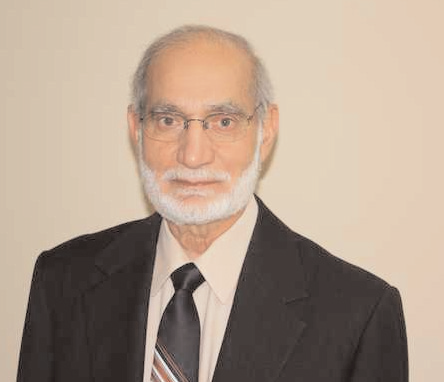
    NEW JERSEY (TIP): Dr Dilbagh Singh Athwal, a “miracle plant breeder” who was among those who laid the foundation of the Green Revolution in the 1960s, passed away in New Jersey (USA), May 15 evening. He was 88. His family, including his two sons, were by his side when he breathed his last.

    Athwal, whose work was much appreciated by Nobel laureate and “father of global Green Revolution”, the late Dr Norman Borlaug, first developed hybrid “bajra” (millet) in the early 1960s and later segregated PV-18 and Kalayan-227, two high-yielding wheat varieties, from the material provided by Mexico’s International Maize and Wheat Improvement Centre, also known as CIMMYT.

    Recipient of Padma Bhushan, Shanti Swarup Bhatnagar Memorial Award and several national and international honors, Athwal was bestowed with the highest honor in 1967, when a wheat variety – Kalyan-227 – was christened after his Kalyan village, located on the outskirts of Jalandhar city.

    The Kalyan variety, commercially released in 1967-68, not only provided the country salvation from hunger, but India also became wheat-surplus soon thereafter. In fact, the production in 1970s went up so rapidly that there was not enough space to stock wheat. As a temporary arrangement, the stock had to be kept on school premises.

    While Athwal was working on the wheat production improvement program at Punjab Agricultural University, Borlaug visited him in Ludhiana. In 1967, he got an offer from the International Rice Research Institute (IRRI), Philippines. Many state leaders and MLAs requested him to stay back at PAU. The then Prime Minister Indira Gandhi even wrote to the Punjab CM to persuade him not to leave India, but he had already made a commitment to the IRRI authorities.

    In 1977, he joined the International Agriculture Development Services created by the Rockefeller Foundation that later merged with Winrok International Institute.

    He retired as a senior vice-president of Winrok in 1991, but remained in touch with Borlaug. Both co-authored some research papers.

  • China’s Silk Road forum latest effort to boost Xi Jinping’s stature

    China’s Silk Road forum latest effort to boost Xi Jinping’s stature

    China’s Silk Road forum latest effort to boost Xi Jinping’s stature

    BEIJING (TIP): China will seek to burnish President Xi Jinping’s stature as a world-class statesman at an international gathering centered on his signature foreign policy effort envisioning a future world order in which all roads lead to Beijing.

    The “Belt and Road Forum” opening on Sunday is the latest in a series of high-profile appearances aimed at projecting Xi’s influence on the global stage ahead of a key congress of the ruling Communist Party later this year. All feed a fundamental yearning among ordinary Chinese: to see their country’s prestige and status rise.

    “Xi is now seen as a world leader with a lot of influence and respect internationally and that will definitely boost his domestic appeal,” said Joseph Cheng, a long-time observer of Chinese politics now retired from the City University of Hong Kong.

    Leaders from 28 countries are set to attend, including Presidents Vladimir Putin of Russia and Rodrigo Duterte of the Philippines. The most prominent attendee from the West will be Prime Minister Paolo Gentiloni of Italy.

    Other Western nations, including the United States, will be represented by officials of significantly lower standing. Washington is sending a delegation led by Eric Branstad, senior White House adviser in the Department of Commerce. Britain, Germany and France are to be represented by finance officials.

    That’s partly because of developments at home, but also is a reflection of concerns that China may be exporting its standards on human rights, the environment and government transparency, while leaving poor countries with unsustainable levels of debt.

    Yet the forum is as much about promoting Xi’s image at home as it is about pushing his vision abroad.

    Chinese state media outlets have linked Xi inextricably to the two-day gathering in Beijing, which will be centered around their president’s plan for a vast network of ports, railways and roads expanding China’s trade with Asia, Africa and Europe. Xi has even popped up in a series of English language promotional videos produced by the official China Daily called “Belt and Road Bedtime Stories.”

    “He’s showing vision. Leaders have to be visionary. He’s showing hope in their economic future by proposing a very significant economic plan,” former U.S. ambassador to China Max Baucus told The Associated Press. “I think it’s going to help him very much ahead of the next party congress.”

    The party will hold its twice-a-decade congress this fall at which Xi will oversee an infusion of fresh blood in leading bodies, most importantly the all powerful Politburo Standing Committee. Xi rose to the top of an intensely competitive system riven by factions and rivalries to take the reins of the party in 2012, and has steadily accrued powers well beyond those of his predecessors in areas such as defense, internal security and the economy.

    He’s also fallen back on the hallowed tradition of political campaigns and sloganeering, preaching the “Chinese Dream” of prosperity and national rejuvenation, pushing a sweeping anticorruption campaign and cracking down on the infiltration of “Western” democratic values that could threaten party control.

    In the international sphere, he’s presided over both the Asia-Pacific Economic Cooperation forum and the G- 20 meeting of industrialized states, both of which were attended by former President Barack Obama. In January, Xi sought to portray himself as a champion of globalization and free trade at the World Economic Forum in Davos, in contrast to President Donald Trump’s protectionist rhetoric. On an entirely different level though is his signature initiative formally known as “One Belt, One Road.”

    It aims to reassert China’s past prominence as the dominant power in Asia whose culture and economy deeply influenced its neighbors as far as Africa and Europe. It speaks deeply to Chinese pride in their country’s explosive economic growth and political clout after a century of humiliation at the hands of foreign powers that formally ended with Mao Zedong’s communist revolution in 1949.

    The initiative also furthers the Xi administration’s reputation for muscular foreign policy. Under Xi, China has strongly asserted its claim to virtually the entire strategic South China Sea and established the Asian Infrastructure Development Bank as a global institution alongside such bodies as the World Bank, Asian Development Bank and International Monetary Fund.

    And unlike APEC and Davos, it involves the disbursal of potentially trillions of dollars in contracts, expanding both China’s economic reach and Xi’s personal authority as holder of the purse strings. The Asian Development Bank says the region, home to 60 percent of the world’s people, needs more than $26 trillion of infrastructure investment by 2030 to keep economies growing. (AP)


  • Philippine ministry asks Rodrigo Duterte to clarify military’s role in drug war

    Philippine ministry asks Rodrigo Duterte to clarify military’s role in drug war

    MANILA (TIP): The Philippine defence ministry on Feb 1 asked President Rodrigo Duterte to issue an order for the military to play a role in his war on drugs, including granting troops powers to arrest “scalawag” police.

    The ministry asked Duterte to formalise remarks he made in a speech to army generals on Tuesday, when he said he needed their help in his drugs war, and to detain members of a police force he described as “corrupt to the core”. The ministry asked for “an official order regarding this presidential directive to serve as a legal basis for our troops to follow”.

    “By the same token, the president’s verbal directive to arrest ‘scalawag cops’ should also be covered by a formal order,” the ministry said in a statement.

    Duterte’s police chief ordered the Philippine National Police (PNP) on Monday to suspend their anti-drugs operations after the killing of a South Korean businessman by rogue drug-squad police. Duterte is infuriated and embarrassed by the incident, which he said had “international implications”.

    His suggestion that the military should fill the void left by police marks a stunning change of tack by the former city mayor, who had steadfastly backed the police amid allegations from human rights groups and some lawmakers they were operating with impunity.

    It was not clear why the ministry made public its request to Duterte. Any grant of powers of arrest to the Armed Forces of the Philippines (AFP) would require an executive order, or a declaration of martial law.

  • Advantage India? Over 1 Million BPO Jobs at Stake if US Firms Say Goodbye to Philippines

    Advantage India? Over 1 Million BPO Jobs at Stake if US Firms Say Goodbye to Philippines

    NEW YORK (TIP): Economists and senators warned that Philippine President Rodrigo Duterte’s cheeky “goodbye” to the US was not the smartest move in a country where more than a million of service jobs are tied to many large US companies that operate business process outsourcing (BPO) there.

    It would rather be a shot in the own foot to turn away from the US in economic terms, particularly in large urban areas like Manila and Cebu City where many young people rely on call center jobs, they argue.

    Estimations are that about 1.2 million Filipinos would lose employment if US Companies pull out of the Philippines.

    Many of them are huge multinationals, including IBM, Microsoft, Amazon, American Express, JP Morgan, Wells Fargo, Accenture and Citibank, just to quote a few, operating call centers with service hotlines and other back office processes.

    The BPO industry is the second largest source of foreign income for the Philippines after overseas workers’ remittances, generating $22 billion in revenue in 2015.

    By one estimate, 77 per cent of BPO services are done for US companies. According to earlier forecasts, by the end of this year the sector would employ 1.3 million people in the Philippines, according to the country’s IT and Business Process Association.

    Apart from the BPO sector, the Philippine sugar industry could be another casualty of a divorce from the US, since the sugar quota to the US might also be adversely affected.

  • TYPHOON HAIMA KILLS 12 IN PHILIPPINES, TAKES AIM AT HONG KONG

    TYPHOON HAIMA KILLS 12 IN PHILIPPINES, TAKES AIM AT HONG KONG

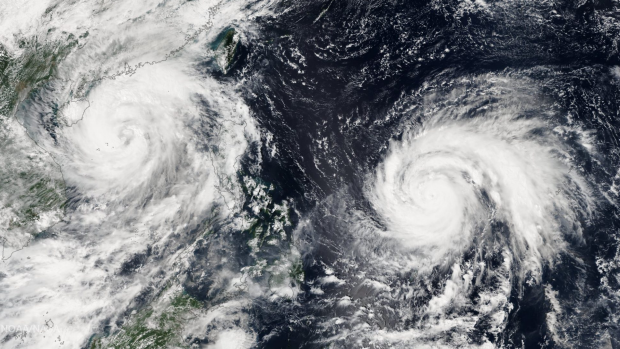
    BENGUET (PHILIPPINES) (TIP): Typhoon Haima, the strongest storm to hit the Philippines in three years, killed at least 12 people and inundated vast tracts of rice and corn fields, officials in Manila said on Oct 20, before it took aim at Hong Kong.

    Philippine authorities said they were assessing the extent of damage to infrastructure and crops, but confirmed that thousands of hectares of farmland were destroyed in northern provinces.

    Eight of the victims were from the Cordillera region, said Ricardo Jalad, chief of the National Disaster Risk Reduction and Management Council, citing reports the agency received from provincial officials.

    In Cagayan alone, where the super typhoon made landfall late on Wednesday with destructive 225 kmph winds and heavy rain, between 50,000-60,000 hectares of rice fields were flattened and flooded, said the provincial governor Manuel Mamba.

    “It was like we were hit by another Yolanda,” he told a radio station, referring to the 2013 super typhoon known internationally as Haiyan which killed at least 6,000 people and destroyed billions of pesos worth of property.

    Hong Kong shut all but essential services in the global financial hub as the storm approached. (PTI)

  • Philippines’ Duterte, in China, announces ‘separation’ from US

    Philippines’ Duterte, in China, announces ‘separation’ from US

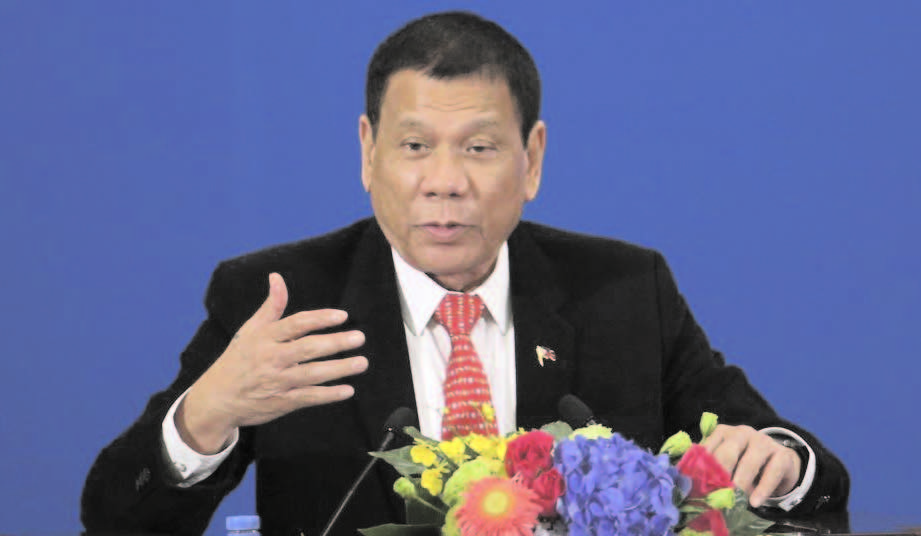
    BEIJING (TIP): Philippines’ President Rodrigo Duterte declared his “separation” from longstanding ally the United States in Beijing on Oct 20, as he rebalances his country’s diplomacy towards China.

    “I announce my separation from the United States,” he said to applause at a meeting in the Chinese capital.

    His comments came after he met his Chinese counterpart Xi Jinping at the Great Hall of the People on Tiananmen Square, with the two men pledging to enhance trust and friendship, while playing down a maritime dispute.

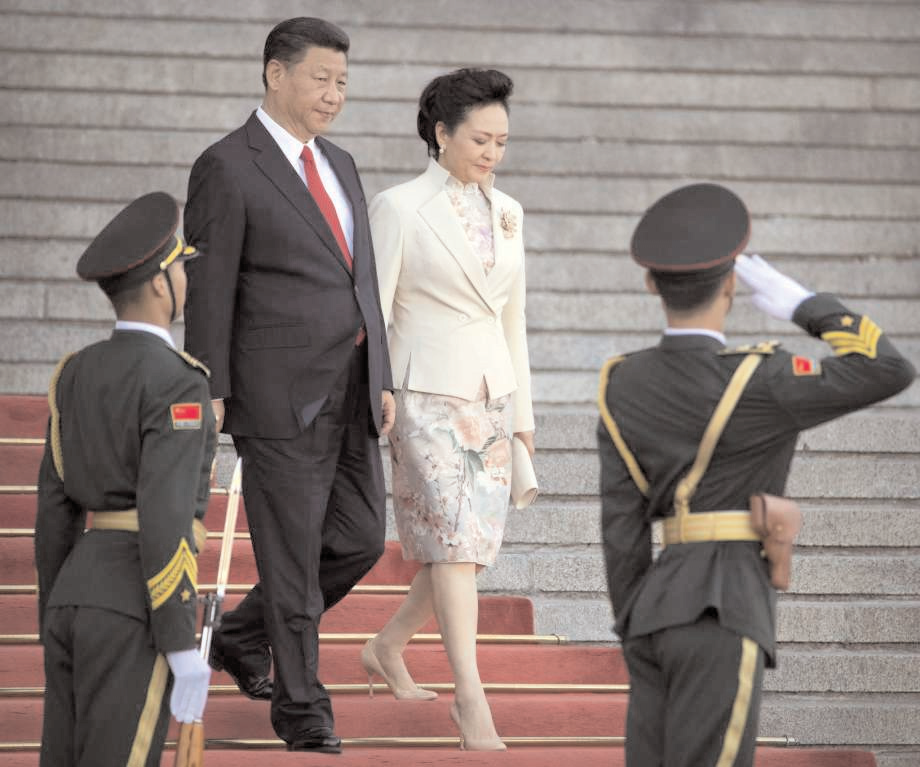
    The two leaders — Duterte donning a suit and tie for the occasion — strode side-by-side down the red carpet inspecting an honour guard, with children cheering.

    Xi called the two countries “neighbours across the sea” with “no reason for hostility or confrontation”, the official Xinhua news agency said.

    Duterte is in China for a four-day trip seen as confirming his tilt away from Washington and towards Beijing’s sphere of influence — and its deep pockets.

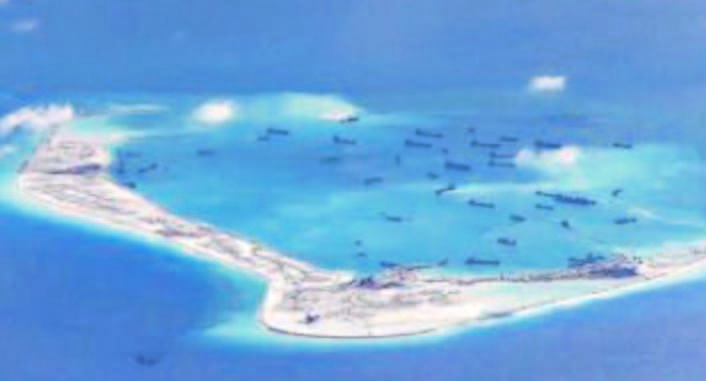
    Under Duterte’s predecessor Benigno Aquino the two countries were at loggerheads over the South China Sea –where Beijing has built a series of artificial islands — but since taking office in June the new head of state has changed course.

    The two leaders held “extensive” and “amicable” official talks and oversaw the signing of 13 bilateral cooperation documents on business, infrastructure, and agriculture, among other fields, Chinese foreign ministry spokesperson Hua Chunying said, without giving details.

    In a statement, the foreign ministry cited Xi as telling Duterte their emotional foundation of friendly good neighbourliness was unchanged, and difficult topics of discussion “could be shelved temporarily”.

    Duterte called the meeting “historic”, it added.

    Duterte’s visit to Beijing capped a series of recent declarations blasting the US and President Barack Obama.

    Addressing the Filipino community in Beijing on Wednesday, the firebrand leader said the Philippines had gained little from its long alliance with the US, its former colonial ruler.

    “Your stay in my country was for your own benefit. So time to say goodbye, my friend,” he said, as if addressing the US.

    He also repeated his denunciation of Obama as a “son of a whore”.

    China, he said earlier, was “good”. “It has never invaded a piece of my country all these generations.”

    Duterte has also suspended joint US-Philippine patrols in the strategically vital South China Sea, and has threatened an end to joint military exercises.

    The South China Sea is of intense interest to Washington and it has repeatedly spoken out on the various territorial disputes between China and its neighbours over the waters.

    Tensions have risen between the US and China over Washington’s so-called “pivot” to the Asia-Pacific, a move that Beijing says is intended to contain it.

    In 2012, China seized control of Scarborough Shoal, a fishing ground in the Philippines’ exclusive economic zone.

    In a case brought by Aquino, the Philippines won a resounding victory at an international tribunal earlier this year over Beijing’s extensive territorial maritime claims in the area, infuriating the Asian giant.

    But Duterte, who took office in June shortly before the tribunal ruling, has made a point of not flaunting the outcome.

    Asked whether the leaders had discussed the South China Sea, the foreign ministry’s Hua said they had a “candid and friendly exchange of views on how to resolve relevant disputes”.

    Their meeting represented a “return to the right track of dialogue and consultation” she said, adding China was willing to make “relevant arrangements” to cooperate on fishery issues. (AFP)

  • Defense secretary: US will sharpen ‘military edge’ in Asia

    Defense secretary: US will sharpen ‘military edge’ in Asia

    SAN DIEGO (TIP): Defence secretary Ash Carter said on sept 29 the US will “sharpen our military edge” in Asia and the Pacific in order to remain a dominant power in a region feeling the effects of China’s rising military might.

    Carter made the pledge in a speech aboard the aircraft carrier USS Carl Vinson in port in San Diego.

    The Pentagon chief described what he called the next phase of a US pivot to Asia — a rebalancing of American security commitments after years of heavy focus on the Middle East.

    His speech, aimed at reassuring allies unsettled by China’s behavior in the South China Sea, came three days after he made remarks at a nuclear missile base in North Dakota about rebuilding the nuclear force. Those comments prompted a strong reaction from the Russian foreign ministry, which issued a statement saying it had interpreted Carter’s statement as a declared intention to lower the threshold for using nuclear weapons.

    Carter said the Pentagon will make its attack submarines more lethal and spend more to build undersea drones that can operate in shallower waters where submarines cannot.

    “The United States will continue to sharpen our military edge so we remain the most powerful military in the region and the security partner of choice,” he said. He added, “We’re going to have a few surprises as well,” describing them only as “leap-ahead investments.”

    With a broad complaint that China is “sometimes behaving aggressively,” Carter alluded to Beijing’s building of artificial islands in disputed areas of the South China Sea.

    “Beijing sometimes appears to want to pick and choose which principles it wants to benefit from and which it prefers to try to undercut,” he said. “For example, the universal right to freedom of navigation that allows China’s ships and aircraft to transit safely and peacefully is the same right that Beijing criticizes other countries for exercising in the region. But principles are not like that. They apply to everyone, and every nation, equally.”

    Carter’s speech was meant to set the scene for a meeting on Friday in Hawaii with his counterparts from the 10 member countries of the Association of Southeast Asian Nations, or ASEAN. The association focuses mainly on trade issues, but in recent years, with US encouragement, has sought to engage in a range of defence and military issues. The US is not a member of the organization but has sought to use it as a forum for further developing security partnerships amid regional concern about China’s military buildup.

    On Carter’s flight from San Diego to Hawaii later on Sept 29, a senior defence official aboard the plane told reporters that Carter expects to hear concerns from some Southeast Asian ministers, including those from Singapore, Indonesia and the Philippines, about the threat they perceive from an expected return of extremists who have been fighting for the Islamic State group in Syria and Iraq.

    The official, who spoke on condition of anonymity under ground rules set by the Pentagon, said “hundreds” of IS fighters already have returned to Southeast Asia from Syria and Iraq and said up to 1,000 more may return as the Islamic State group faces increased military pressure.

    Carter has described Pentagon efforts to execute a “pivot” to Asia by shifting, or rebalancing, US forces and attention toward the Asia-Pacific region after a decade and a half of Mideast-focused strategies and operations.

    In April, he said he was putting “the best people and platforms forward to the Asia-Pacific” by increasing the number of US military personnel in the region and by sending and stationing advanced weapons system there. He said that includes F-22 and F-35 stealth fighter jets, P-8 Poseidon maritime surveillance aircraft, continuous deployments of B-2 and B-52 strategic bombers and the newest surface warfare ships like the amphibious assault ship USS America.

    Among the Asia problems that have arisen for the Pentagon since Carter last met with the region’s defence ministers is a sudden and steep deterioration in relations with the Philippines.

    When Carter visited the Philippines in April, he praised the strength of the partnership. He said his visit had inaugurated “a major new era in a longstanding alliance.” He was referring to the US-Philippines Enhanced defence Cooperation Agreement. “I’m proud to say this alliance is as close as it’s been in years.”

  • Indians Across The World Mark Independence Day With Fervor

    Indians Across The World Mark Independence Day With Fervor

    BEIJING/WASHINGTON: Soaked in patriotism, hundreds of Indians today proudly marked the country’s 70th Independence Day, as the national flag fluttered and the national anthem reverberated at Indian missions across the world.

    Indians in countries like China, the US, Thailand and Singapore joined people in India to celebrate the day with recital of patriotic songs and dance performances representing the diverse ethnicity of India.

    In Beijing, Indian Ambassador Vijay Gokhale hoisted the tricolour in the embassy premises at a function that was attended by members of the Indian community.

    A large of number of Indian professionals besides embassy staff took part in the flag hoisting ceremony along with their families.

    Mr Gokhale also read out President Pranab Mukherjee’s address to the nation followed by recital of patriotic songs. In Shanghai, Consulate General of India Prakash Gupta hosted the celebrations. Gupta unfurled the tricolour besides reading out excerpts from the President’s address. A similar celebration was held at the Indian Consulate in Guangzhou led by Consulate General Y K Sailas Thangal.

    In the US, the Independence Day was celebrated on a large scale in Fremont in California and Edison in New Jersey where thousands of people attended the event amid a colorful cultural extravaganza.

    In cities like Dallas, Houston, Chicago, Orlando and Minneapolis, community organisations held cultural events over the weekend to celebrate the Independence Day. The patriotic fervour also gripped Indian missions across Southeast Asia, as hundreds of Indian nationals, ethnic Indians and India lovers gathered.

    In Bangkok, Indian Ambassador Bhawant Singh Bishnoi said, “2016 has been a most significant year for our bilateral relationships”.

    Mr Bishnoi, in his speech to over 500 people gathered at the embassy premises, said Thailand remains one of India’s “closest” friends.

    “People to people linkages are one of the most important aspects of our bilateral relationships. Central to this is the role played by the Indian community,” he said and commended the significant contribution by ethnic Indians and Indian nationals to the economic and social development of Thailand.

    Indian Embassies, High Commissions and Consulates echoed with melodious strains of the national anthem as children and the hundreds of Indians joined to sing patriotic songs in Thailand, Vietnam, Singapore, Malaysia, Yangon, Laos, Cambodia, the Philippines, Indonesia and Brunei.

    In Singapore, India’s High Commissioner Vijay Thakur Singh celebrated the day, reading out President Mukherjee’s Independence Day message to some 600 Indians.

    Students from local Indian schools also sang patriotic songs and staged dance performances in a cultural show. In a congratulatory message on the Independence Day of India, Singaporean President Tony Tan Keng Yam reaffirmed strong bilateral relations and underlined that “relations between Singapore and India remain strong and will grow despite challenges in the global economy”.

    “As our people-to-people relations flourish, I am delighted by the excellent progress in bilateral projects and initiatives on various fronts including trade, skills development, defence cooperation, and Smart Cities development,” said Mr Tan.

    In Kuala Lumpur, High Commissioner TS Tirumurti hoisted the flag at India House. About 350 people attended the ceremony that also witnessed a Carnatic singing performance. The High Commissioner also flagged off a Malaysia- Thailand-Myanmar-India car rally by Vinayak Mission that will cover 46,000 Kms and end in Salem Tamil Nadu.

    In Hanoi, around 250 members of the Indian community and friends of India attended the hoisting of the flag by Ambassador P Harish, who also read out the President’s address.

  • WHY WOMEN LIVE LONGER THAN MEN

    WHY WOMEN LIVE LONGER THAN MEN

    It’s queer but true – women have a longer lifespan compared to men.

    Researchers Steven Austad and Kathleen Fischer of the University of Alabama explored this riddle in their latest perspective piece.

    “Humans are the only species in which one sex is known to have a ubiquitous survival advantage,” the researchers write in their review covering a multitude of species.

    “Indeed, the sex difference in longevity may be one of the most robust features of human biology,” they added.

    Though other species, from roundworms and fruit flies to a spectrum of mammals, show lifespan differences that may favour one sex in certain studies, contradictory studies with different diets, mating patterns or environmental conditions often flip that advantage to the other sex.

    With humans, however, it appears to be all females all the time.

    “We don’t know why women live longer. It’s amazing that it hasn’t become a stronger focus of research in human biology,” said Austad.

    One of the evidences of the longer lifespan for women includes ‘The Human Mortality Database,’ which has complete lifespan tables for men and women from 38 countries that go back as far as 1751 for Sweden and 1816 for France.

    Again, longer female survival expectancy is seen across the lifespan, at early life (birth to 5 years old) and at age 50. It is also seen at the end of life, where Gerontology Research Group data for the oldest of the old show that women make up 90 percent of the super centenarians, those who live to 110 years of age or longer.

    Longevity may relate to immune system differences, responses to oxidative stress, mitochondrial fitness or even the fact that men have one X chromosome (and one Y), while women have two X chromosomes.

    But the female advantage has a thorn.

    “One of the most puzzling aspects of human sex difference biology,” write Austad and Fischer, “something that has no known equivalent in other species, is that for all their robustness relative to men in terms of survival, women on average appear to be in poorer health than men through adult life.”

    This higher prevalence of physical limitations in later life is seen not only in Western societies, they say, but also for women in Bangladesh, China, Egypt, Guatemala, India, Indonesia, Jamaica, Malaysia, Mexico, the Philippines, Thailand and Tunisia. But this is just one of several plausible hypotheses for the mystery of why women live longer, on aver age, than men.

  • Philippine officials say China blocking access to disputed South China Sea atoll

    Philippine officials say China blocking access to disputed South China Sea atoll

    MANILA (TIP): China has stationed several ships near a disputed atoll in the South China Sea, preventing Filipino fishermen from accessing traditional fishing grounds and raising tensions in the volatile region, Philippine officials said on Wednesday.

    China had deployed up to seven ships to Quirino Atoll, also known as Jackson Atoll, said Eugenio Bito-onon Jr, the mayor of nearby Pagasa Island in the Spratly Islands.

    The Spratlys are the most contested archipelago in the South China Sea, a resource-rich region and critical shipping lane linking North Asia to Europe, South Asia and the Middle East.

    “This is very alarming, Quirino is on our path when we travel from Palawan to Pagasa. It is halfway and we normally stop there to rest,” Bito-onon Jr told Reuters.

    “I feel something different. The Chinese are trying to choke us by putting an imaginary checkpoint there. It is a clear violation of our right to travel, impeding freedom of navigation,” he said.

    Fishermen told the mayor one Filipino boat had run aground in the area and was still there but was not being harassed by the Chinese vessels.

    Chinese authorities did not immediately respond to faxed requests for comment.

    The Philippine military said it was trying to verify the presence of Chinese ships near Jackson Atoll, where a Chinese warship allegedly fired warning shots at Filipino fishermen in 2011.

    “We know there are Chinese ships moving around the Spratly area,” spokesman Brigadier-General Restituto Padilla told Reuters. “There are also ships around Second Thomas Shoal so we want to make sure if the presence is permanent.”

    Second Thomas Shoal is where the Philippine navy has been occupying and reinforcing a rusting ship that it ran aground in 1999 to bolster its claims to the disputed reef.

    TENSIONS ON THE RISE

    A military source from Palawan said a surveillance plane had seen four to five ships in the vicinity of Jackson Atoll last week. The source could not say if the ships were passing through or permanently stationed there because the area is close to Mischief Reef, where China is busy building an artificial island. “There are no indications China will build structures or develop it into an island,” said the source, who was not authorised to speak to the media about the South China Sea.

    The Philippines Star newspaper, which earlier reported the story, quoted an unidentified fisherman as saying Chinese boats chased them away when they tried to enter the area last week.

    “These gray and white Chinese ships, around four of them inside the lagoon, prevented us from entering our traditional fishing ground,” he said.

    Along with China and the Philippines, Brunei, Malaysia, Taiwan and Vietnam also have claims on the waters, through which about $5 trillion in trade is shipped every year.

    Tensions in the region have been building recently, with the United States and others protesting against Beijing’s land reclamations, along with the recent deployment of surface-to-air missiles and fighter jets in the Paracel Islands.

    U.S. Defense Secretary Ash Carter warned China on Tuesday against what he called “aggressive” actions in the region, saying there would be “specific consequences” to militarisation of the South China Sea.

    Beijing, for its part, has been angered by “freedom of navigation” air and sea patrols the United States has conducted near the islands it claims in the South China Sea and says it needs military facilities for its self defence.

    (Reuters)

  • Pandemic could kill 165 million people in near future: Indian American writer Sonia Shah

    Pandemic could kill 165 million people in near future: Indian American writer Sonia Shah

    Indian American journalist and writer Sonia Shah writes how epidemiologists are bracing themselves for what has been called the next “Big One” — a disease that could kill tens of millions of people in the coming years.

    In an interview to Fresh Air’s Dave Davies (NPR), Shah talks about her new book, Pandemic: Tracking Contagions from Cholera to Ebola and Beyond, Shah discusses the history and science of contagious diseases. She notes that humans put themselves at risk by encroaching on wildlife habitats. “About 60 percent of our new pathogens come from the bodies of animals,” she says.

    Citing a 2006 survey, Shah says, “the majority of … pandemic experts of all kinds, felt that a pandemic that would sicken a billion people, kill 165 million people and cost the global economy about $3 trillion would occur sometime in the next two generations.”

    Shah adds that international travel is also a factor in the spread of disease. “Air travel shapes our epidemics in such a powerful way that scientists can actually predict where and when an epidemic will strike next just by measuring the number of direct flights between infected and uninfected cities,” she says.

    Looking toward the future, Shah says that epidemiologists can do more to identify potential outbreaks before they happen. But eliminating them altogether is another matter. “Our relationship to disease and pandemics is really … part of our relationship to the natural world,” she says. “It’s a risk we have to live with.”

    Interview Highlights

    On our first response to new pathogens
    A lot of times when we talk about being more prepared in preventing pathogens from spreading or preventing pandemics, what we’re really talking about is first response, stepping up our first response, so that when we have outbreaks of disease that our hospitals are prepared and we have vaccines stockpiled and we are able to fly our experts around really quickly to get to the scene of the outbreak, and things like that. But that’s not actually preventing these pathogens from emerging and from causing outbreaks. That’s kind of after the fire has started, then we rush in with our fire extinguishers.

    But to really prevent them would mean stepping it way farther back, and that is possible now, because … we know there’s certain places that have higher risk of pathogens emerging, and we can do kind of active surveillance in those places by mapping the microbes that are there, by surveilling people or animals who are more likely to spread or to have spill-overs of microbes into their bodies. … We have more advanced detection capacity now with genetic analysis and other kinds of ways that we can see where these invisible microbes are spreading and changing.

    On how most of our pathogens come from animals

    From bats, we got Ebola; from monkeys we got HIV, malaria, most likely Zika, as well; from birds we got avian influenzas, all other influenzas as well, West Nile virus, etc. So it’s when we invade wildlife habitat or when we disrupt it in ways that brings people and animals into close contact, that their microbes start to spill over and adapt to our bodies.

    On how Zika emerged

    I think Zika is a great example of how new pathogens are emerging today. It came out of the bodies of animals; for many years, we had Zika virus in the equatorial forests of Africa and Asia. It mostly infected monkeys and possibly other creatures, too, but it very rarely came into humans. …

    We don’t know what the triggering event was that allowed Zika virus to start spreading into humans, but we do know what it exploited — and it exploited two things that a lot of other pathogens have exploited, too, which is urbanization and flight travel. So in the 1940s and ’50s and ’60s when we had Zika virus in the forests of Africa, it was carried by a forest mosquito and that mosquito very rarely bit humans, it mostly bit animals, which is why we didn’t have a lot of Zika virus in people, at least it’s one reason why.

    What we’re seeing now is Zika virus has crossed over into a mosquito called Aedes aegypti, and this is a mosquito that has expanded its range over recent years as we have urbanized. It specializes in living in human cities. It loves garbage, it can breed in a drop of water in a bottle cap … and it only bites humans.

    So once we had Zika virus coming into Aedes aegypti, this highly urbanized mosquito, that’s when we started having this explosive spread. Of course, it traveled from Asia. It came out of Africa. It came into Malaysia, and then probably into the Philippines, Micronesia and French Polynesia. And that was the sort of slow spread, but then the rapid expansion happened when it came from French Polynesia into Brazil, and that was almost certainly through a flight, either people from French Polynesia coming to Brazil for the World Cup or possibly an international canoe race. But whatever it was, it was on a flight that it came over, and from there it’s able to access these huge, highly urbanized populations and have no immunity, and that’s what created the epidemic.

    On the evolution of antibiotic-resistant bacteria

    We’ve known since antibiotics were first developed that if we use them in ways that were not medically necessary that it would lead to the evolution of resistant bacteria. And yet, in this country, 80 percent of our antibiotic consumption is not medically necessary, it’s done for commercial reasons.

    When we have livestock farmers giving antibiotics in low doses to their animals because it fattens them, it helps them gain weight faster and that gets them to market faster, so this is a commercial use. And that’s the vast majority of the antibiotics that are consumed in this country are for that reason. …

    We’ve known this for years and we do have an increasing problem with antibiotic-resistant pathogens, which is a very serious problem where we’re running out of these drugs to treat these runaway infections, and we’re on the cusp of entering an era when we have no more antibiotics that work for some of these bugs. …

    We need to use antibiotics more rationally. We don’t do that now. That’s sort of the hardest part of it that we need to do. But the other part of it is we also need to develop new antibiotics to keep up — these pathogens are always going to evolve resistance eventually, so we always need to come up with new weapons to fight them.

    On why incidents of Lyme disease are increasing

    Lyme disease is caused by a bacteria that lives in rodents and is spread by ticks. Now in the intact northeastern forest where Lyme disease first emerged, there used to be a diversity of different woodland animals there, like chipmunks and opossums as well as deer and mice and other things, but as we spread our suburbs into the northeastern forest and we kind of broke up that forest into little patchworks, we got rid of a lot of that diversity. We lost chipmunks, we lost opossums, and it turns out that those animals actually control tick populations. The typical opossum destroys about 6,000 ticks a week through grooming, but the typical white-footed mouse, which is what we do have left in those patchwork forests, a typical mouse destroys maybe 50 ticks a week. So the fewer opossums you have and the more mice you have, the more ticks you have and the more likely it becomes that this tick-borne pathogen will spill over into humans. And that’s exactly what happened with Lyme disease and now with many other tick-borne illnesses as well.

    On what scares virologists most

    Novel forms of influenza are what really keeps most virologists up at night, because we are so good at spreading those around quickly, and it happens every year. We have a flu pandemic every year, and now we’re hatching all kinds of new kinds of flu viruses, mostly in Asia, and then they’re spreading across the globe, and we don’t have immunity to some of those. …

    Right now, a typical flu virus, the seasonal flu, will still kill a lot of people every year and it’s a real drain on our global economy. But we kind of put up with that, so if you had a new flu virus that even had a slightly higher mortality rate, you could see a lot more death and destruction because so many people get the flu. Think about the 1918 flu, which killed maybe 100 million people, maybe more, estimates vary, but certainly huge numbers of people died from that flu. The mortality rate was like 1 percent, which isn’t huge. It sounds like a small number, but when you think about how many people get the flu, that adds up to a huge number of deaths. So these new kinds of influenza, I think, are what virologists are most fearful of.


  • BOEING GETS $440 MILLION ORDER FROM PAPUA NEW GUINEA CARRIER

    BOEING GETS $440 MILLION ORDER FROM PAPUA NEW GUINEA CARRIER

    SINGAPORE (TIP): US aircraft maker Boeing said on February 19 it had won a $440 million deal with Papua New Guinea’s flag carrier Air Niugini for four 737 MAX 8 planes.

    Announcing the deal along with Boeing at the final trade day of the Singapore Airshow, Air Niugini chairman Sir Frederick Reiher said the carrier needed the planes “urgently”.

    The airline currently has a domestic service, as well as flights to Australia, Singapore, Fiji, the Philippines, Solomon Islands, Hong Kong, Vanuatu and Japan. It is planning to fly to China in the near future.

    Dinesh Keskar, regional senior vice president for sales at Boeing Commercial Airplanes, said the aircraft had its first test flight in late January and was “performing exceptionally well”.

    Boeing’s 737 aircraft family competes with European rival Airbus’ A320 series in the single-aisle market where the planes are favoured for short to medium-haul routes because of their fuel efficiency.

    The Singapore show, considered the biggest in Asia and held every two years, has seen markedly fewer orders for aircraft this time around amid a global economic slowdown led by China that has impacted travel demand.

    On Wednesday, Airbus said it had won an $1.85 billion deal for the purchase of six A350-900s by Philippine Airlines (PAL), the flag carrier of one of Asia’s fastest-growing economies.

    Boeing also announced a commitment from China’s Okay Airways to buy 12 aircraft for $1.3 billion despite a weakening Chinese economy.

    The biggest deal announced at the show was from Vietnamese budget carrier VietJet Air, which said Thursday it had signed a $3.04 billion contract with US engine maker Pratt & Whitney. The engines will power the 63 Airbus A320neo and A321neo aircraft ordered by the carrier.

    Source: AFP

  • A grave provocation: Chinese missiles to increase tensions in South China Sea

    A grave provocation: Chinese missiles to increase tensions in South China Sea

    Beijing’s reported deployment of surface-to-air missile bound to be introspected as launchers on an island in the South China Sea recently photographed by a commercial satellite is an act of grave provocation. It is clearly in violation of the spirit of a 2002 Asean-China joint declaration on the conduct of parties in the South China Sea which affirms the signatories’ commitment to international law. China’s unilateral action, clearly aimed at militarily asserting its claim in the maritime region, is going to aggravate tensions in the South China Sea, a key international shipping route through which $5 trillion worth trade passes each year.

    Beijing is not going to be amused at the detection of the missiles on Woody Island. It could think of imposing an air defense identification zone (ADIZ) whereby China can question and intercept aircraft flying in that area. This could increase chances of conflict, especially with the US insisting on its right to continue to fly, sail and operate wherever international laws permits. Already aircraft from the Philippines overflying the Spratly Islands, another disputed archipelago in the South China Sea, have been the recipients of such stern warnings due to a Chinese ADIZ established in the area. The South China Sea is the scene of multiple and complex maritime disputes between several countries with China as the central player. Beijing claims 1.35 million square miles of water in the area, thus virtually regarding the entire South China Sea to be its own.

    China is busy buildings roads, runways, jetties and other infrastructure on some of the disputed islands and all these activities invite suspicion of its expansionist intent. China also wants the world to respect it as a peaceful nation. It is imperative that it disengages militarily in the South China Sea and seeks to resolve its disputes peacefully through negotiations. Muscle flexing is not going to help build a benign image.

    – Tribune, Chandigarh