Tag: politics

  • Pride and foreign aid

    Pride and foreign aid

    By Happymon Jacob

    “Whichever way one plays it, New Delhi’s unwillingness to accept foreign aid reflects poor judgment, is bad optics, and goes against the spirit of cooperative federalism. Moreover, this decision, when read with the National Democratic Alliance government’s adversarial attitude towards foreign-funded NGO activism in the country, suggests a sense of insecurity and paranoia that hardly befits a rising power”.
    By Happymon Jacob

    New Delhi’s unilateral decision to not let humanitarian assistance reach a needy State also does not befit the federal character of the country as the spirit of federalism demands that such crucial decisions be taken after consultations with the stakeholders. The Union government should consult the affected federating units, which have large populations to care for, before crucial decisions of this nature are taken, says the author.

    The Central government’s decision to decline offers of humanitarian aid from the United Arab Emirates and other concerned countries for Kerala, in the aftermath of the worst flood in the State in close to a century, is unfortunate. Whichever way one plays it, New Delhi’s unwillingness to accept foreign aid reflects poor judgment, is bad optics, and goes against the spirit of cooperative federalism. Moreover, this decision, when read with the National Democratic Alliance government’s adversarial attitude towards foreign-funded NGO activism in the country, suggests a sense of insecurity and paranoia that hardly befits a rising power.

    While the government itself has been very cryptic in its response to the recent foreign aid offers, those in support of the government’s informal decision have essentially made five sets of arguments to justify the government’s decision. Let’s examine their merit.

    Policy precedent

    The strongest argument by far for refusing foreign aid flows from past policy and practice. It is argued that there is a policy in place since 2004, enunciated by the then Prime Minister, Manmohan Singh, to not accept foreign aid in times of natural disasters. Dr. Singh had stated in the wake of the tsunami in December that year, “We feel that we can cope with the situation on our own and we will take their help if needed.” The practice thereafter has been to shun foreign aid during natural calamities because the government has been confident of “coping with the situation” using internal sources.

    However, it is important to note that the 2004 statement by Dr. Singh was a political articulation, not a legal directive or policy document. In any case, his statement did not close the door to external aid (“we will take their help if needed”). Does Kerala need help? Yes, it desperately does. Former National Security Adviser Shivshankar Menon, in a recent tweet, explained the 2004 decision in the following words: “If memory serves, the 2004 decision was to not accept foreign participation in relief but accept it for long term rehabilitation case by case.”

    In any case, since 2004, various policy documents have explicitly and implicitly suggested that the government may accept foreign aid during emergencies. The 2016 National Disaster Management Plan states: “…if the national government of another country voluntarily offers assistance as a goodwill gesture in solidarity with the disaster victims, the Central Government may accept the offer.” Similarly, the National Policy on Disaster Management of 2009 and the Disaster Management Act of 2005 are both positively inclined to coordinating with external agencies and institutions for disaster relief. The 2009 document even argues — thoughtfully so — that “disasters do not recognize geographical boundaries.”

    In short, while the 2004 policy says that foreign aid can be accepted if need be, the 2016 policy document states that the government “may” accept foreign aid. The question is whether the situation in Kerala can persuade the Centre to operationalize the word “may” in a generous manner.

    National pride

    The second argument against accepting foreign aid seems to flow from a sense of national pride: that India is a not a poor country any longer and hence it doesn’t need anyone’s charity. There was a time we were forced to go abroad with a begging bowl, but those days are over, and we can look after ourselves, goes the argument. Despite its powerful emotional appeal, this argument is misplaced at several levels. For one, it is misleading to say that only poor states accept foreign aid in times of natural disasters. For instance, India’s offer of aid was accepted by the U.S. in the wake of Hurricane Katrina in 2005, and by China after the 2008 Sichuan earthquake. The reality is that countries reeling under natural calamities routinely accept emergency aid from other countries irrespective of how rich or poor they are.

    Self-sufficiency

    The third argument is that India is self-sufficient and hence does not need relief material to deal with natural disasters. Here, it is important to make a distinction between foreign aid during normal periods and emergency humanitarian and reconstruction assistance. Besides, in the case of Kerala, by providing only a fraction of the emergency and reconstruction assistance requested by the State government despite repeated appeals, the Central government seems to have implicitly indicated that there aren’t sufficient funds available. Although New Delhi has taken the line that “in line with the existing policy, the government is committed to meeting the requirements for relief and rehabilitation through domestic efforts,” its actions so far fly in the face of this tall claim. So, if New Delhi is unable to heed Thiruvananthapuram’s urgent requests, shouldn’t it let Kerala take help from outside?

    Aid with strings

    Then there is the argument that foreign aid comes with strings attached. Yes, it has in the past, especially developmental assistance from Western nations or the World Bank. Aid and loans often came with demands of economic restructuring or resetting governance priorities, and an occasional sermon on human rights. But there is again a fundamental difference between such funding and humanitarian assistance. Hence the argument that UAE’s disaster relief to Kerala would come with strings attached is ludicrous. Abu Dhabi’s rationale for offering aid to Kerala is straightforward: the Malayali population in UAE has been crucial in its development, and the aid offer is a recognition of that bond.

    A related issue is the paranoia displayed by successive governments in New Delhi about the ‘foreign hand/s’ constantly trying to undermine the Indian state. This has increased over the years, particularly under the current regime: consider the manner in which it cancelled the Foreign Contribution (Regulation) Act (FCRA) licenses of thousands of NGOs, including Greenpeace and Amnesty, depriving them of foreign funding.

    Ironically, even as New Delhi vows to continue the policy of not allowing foreign humanitarian aid, and of restricting the activities of foreign-funded NGOs, it recently amended the FCRA to allow foreign funding of Indian political parties.

    Money won’t bring relief

    The fifth argument is that airdropping monetary aid doesn’t help in the absence of pre-existing administrative capacity for proper distribution, reconstruction and governance. In fact, some would argue that monetary aid without a focus on governance capacity building is useless or could even make the situation worse. While there is some merit in such an argument, this holds little relevance to the case of Kerala which happens to be one of India’s best governed States. What Kerala requires at the moment is monetary assistance, not lessons in governance.

    New Delhi’s unilateral decision to not let humanitarian assistance reach a needy State also does not befit the federal character of the country as the spirit of federalism demands that such crucial decisions be taken after consultations with the stakeholders. The Union government should consult the affected federating units, which have large populations to care for, before crucial decisions of this nature are taken.

    The argument here is not that India should seek/ receive regular foreign aid, but that it should accept foreign aid in times of humanitarian emergency, as do several countries, including the U.S., China and Japan. Moreover, there is an urgent need to evolve sensible, practical and empathetic guidelines on receiving emergency aid for the federal units in times of dire need.

    (The author teaches Disarmament and National Security at the School of International Studies, JNU, New Delhi)

  • ‘Real hero’: Crowds brave Arizona heat to honor John McCain

    ‘Real hero’: Crowds brave Arizona heat to honor John McCain

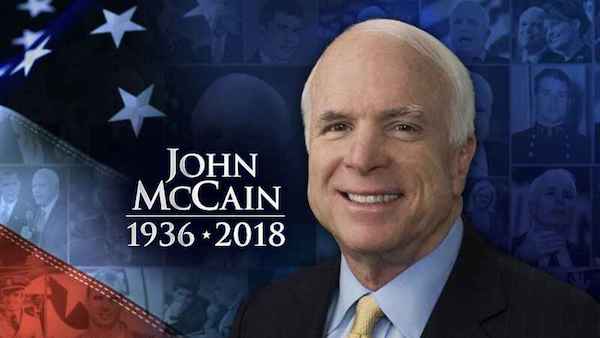
    PHOENIX, AZ(TIP): Hundreds of people paid their respects to US Senator John McCain on Wednesday, standing for hours in the broiling Arizona sun before filing past the flag-draped casket that his tearful wife, Cindy, lovingly pressed her face against after a ceremony for the former North Vietnam prisoner of war who represented Arizona for decades.

    Former military members in shorts and T-shirts stopped and saluted the closed casket flanked by National Guard members at the Arizona Capitol. Families will small children came by, and several people placed their hand over their heart or bowed, including Vietnamese residents who traveled from Southern California.

    The private service held earlier marked the first appearance of McCain’s family since the Republican senator died Saturday of brain cancer. It also began two days of official mourning in Arizona before his body is taken to Washington for a viewing at the US Capitol, followed by burial at the US Naval Academy in Annapolis, Maryland.

    At the emotional private ceremony in Arizona, Gov. Doug Ducey remembered McCain as an internationally known figure and “Arizona’s favorite adopted son” on what would have been his 82nd birthday. He was born in the Panama Canal Zone while his father, who went on to become an admiral, served in the military.

    “Imagining an Arizona without John McCain is like picturing Arizona without the Grand Canyon,” Ducey said.

    Former Arizona Sen. Jon Kyl said he had been with McCain across the world and he had better instincts on when to assert US power than anyone else he knew.

    “I will miss him as a friend, and a strong force for America, and the world,” Kyl said.

    Sen. Jeff Flake offered the benediction, expressing gratitude “for his life and for his sacrifice” and “that John made Arizona his home.” By the time the service ended, crowds had gathered to wait for the public viewing of McCain’s closed casket, seeking shelter from Phoenix’s summer heat under tents with coolers filled with ice and water bottles.

    The line snaked down streets even as a continuous flow of people flowed past the casket. The visitation was to continue as long as people waited in line, said Rick Davis, McCain’s former presidential campaign manager.

    (Source: AP)


  • Indian American members of Congress running for re-election

    Indian American members of Congress running for re-election

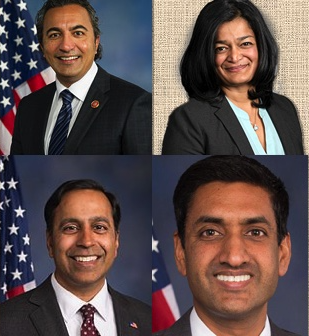
    WASHINGTON(TIP): Never before has there been such a crop of Indian Americans in politics in the US. The Indian American community has come of age in respect of their involvement in politics. Four Indian American members of Congress — Reps Ami Bera, D-CA; Ro Khanna, D-CA; Pramila Jayapal, D-WA; and Raja Krishnamoorthi, D-IL — are running for re-election.

    Additionally, the following Indian Americans will be on ballot in November:

    Aftab Pureval, Ohio’s 1st congressional district: Pureval, son of an Indian father and a Tibetan mother, is one of the rising stars in Ohio’s Democratic party. He won the May primary unopposed and is running against Republican Rep. Steve Chabot.

    Sri Preston Kulkarni, Texas’ 22nd congressional district:

    A former diplomat, Kulkarni won a contested primary to earn the right to face Republican Pete Olson in the Houston area district.

    Chintan Desai, Arkansas’ first district: Desai, a teacher, won the Democratic primary in June and will take on three-term incumbent Republican Rick Crawford in November.

    Jitendra ‘J.D.’ Diganvker, Illinois’ 6th congressional district: Diganvker, who immigrated to the United States in 1995, is the only Indian American Republican congressional candidate who will be on the ballot in November. He will face the incumbent Indian American Rep. Krishnamoorthi.

  • Gauri Lankesh killers had a long hit-list?

    Gauri Lankesh killers had a long hit-list?

    Most of 16 pistols recovered in Maharashtra were acquired recently: police

    K.V. Aditya Bharadwaj

    BENGALURU(TIP): Most of the 16 country-made pistols recovered from the three right-wing activists arrested in Maharashtra were procured recently, most likely after the arrest of K.T. Naveen Kumar — one of the accused in the Gauri Lankesh case — in February 2018. Sources said this is a cause for concern as it indicates that the people involved were plotting to kill more people on their hit list, many in a short span of time.

    These are suspected to include the two pistols used in the murders of Narendra Dabholkar, Govind Pansare, M.M. Kalburgi and Gauri Lankesh. They are being tested for possible matches with cartridges found at the crime scene.

    During the course of their investigation into the murder of Gauri Lankesh, the SIT in May 2018 had recovered a hit list of 34 intellectuals from Amol Kale’s diary, eight of who were from Karnataka. The probe revealed an ambitious plan to set in motion multiple murder plots simultaneously in Karnataka.

    The probe revealed a plot to kill Mysuru-based rationalist Prof. K.S. Bhagavan, which investigators said was at an advanced stage of implementation. K.T. Naveen Kumar, 37, of Hindu Yuva Sena, a fringe group, was arrested by Bengaluru police in February 2018 when he was trying to procure a country-made pistol for the murder. This indicated that the gang had no weapon other than the one used to kill Gauri Lankesh. FSL reports have linked the weapon to the murder of M.M. Kalburgi.

    The pistol, which was used to kill Narendra Dabholkar and was also one of the weapons used in the murder of Govind Pansare, is not working, the probe had indicated.

    Amol Kale reportedly told interrogators that they were trying to create ‘multiple self-contained teams’ to execute multiple plots. His diary had entries pointing to several plots targeting rationalists in Karnataka.

    “At that time, we doubted their ability to carry out multiple assassinations. But now, the 16 pistols indicate that they seemed to have been moving towards that goal,” said a senior officer, who said it is alarming as it indicates that remnants of the gang continue to be active and furthering the conspiracy even after the arrest of most of their key players.

    Sources said Srikanth Pangarakar, a former Shiv Sena councillor from Jalna who was arrested by the Maharashtra ATS, was a close associate of Amol Kale, the alleged kingpin in the Gauri Lankesh case. The investigation indicates that they were in constant touch for the past one year and Pangarkar had visited well-known country-made pistol hubs in central India.

    (Source: The Hindu)


  • Trump says market would ‘crash’ if he was impeached

    Trump says market would ‘crash’ if he was impeached

    WASHINGTON(TIP): President Donald Trump said in an interview aired on Thursday that the US economy would collapse if he was impeached.

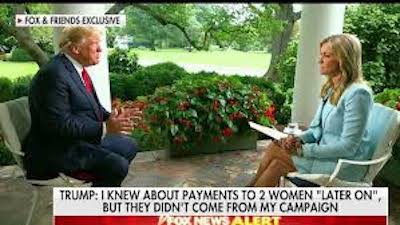
    “I will tell you what, if I ever got impeached, I think the market would crash. I think everybody would be very poor, because without this thinking, you would see—you would see numbers that you wouldn’t believe in reverse,” Trump told the program Fox and Friends.

    Trump was responding to a question on his mounting legal woes after his former attorney Michael Cohen said under oath that Trump instructed him to commit a felony by breaking US campaign finance laws.

    The US president then launched into a rambling statement on job creation and other economic progress he said had been made during his presidency and insisted Americans would be much worse off if Hillary Clinton had won the 2016 election.

    “I don’t know how you can impeach somebody who has done a great job,” Trump said.

  • SANT RAJINDER SINGH JI MAHARAJ, HEAD OF SCIENCE OF SPIRITUALITY, INAUGURATES SPECTACULAR New National Headquarters In CHICAGO

    SANT RAJINDER SINGH JI MAHARAJ, HEAD OF SCIENCE OF SPIRITUALITY, INAUGURATES SPECTACULAR New National Headquarters In CHICAGO

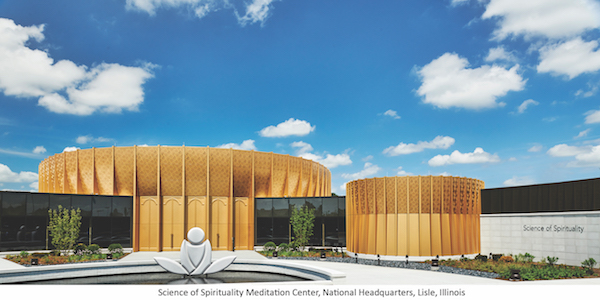
    CHICAGO, IL(TIP): Over the last three decades, Sant Rajinder Singh Ji Maharaj has impacted the lives of millions of people throughout the world with his message of personal transformation through meditation on the inner Light and Sound. As witness to his global influence, thousands of people from 30 different countries gathered in Lisle, IL on Saturday, July 28, for the inauguration of the new National Headquarters for the Science of Spirituality.

    Accompanied by a delegation of dignitaries from local cities, the U.S. Senate and the U.S. House of Representatives, Sant Rajinder Singh Ji Maharaj cut the ribbon to inaugurate the iconic building. The organization’s new home embodies love, grace, and universality, bringing together design elements from the East and the West, just as the spiritual Master’s message brings together people from all walks of life.

    The ribbon-cutting took place in front of the reflecting pool where a three-ton sculpture named “The Meditator” embodies the Science of Spirituality logo and represents a person in meditation. The gently rippling pool in which it sits echoes the inner stillness and peace a person experiences in meditation. In the middle of the main building, the circular, gold-colored main hall rises from the tinted, curved glass arms that surround it, evoking two hands cupped in prayer and reaching to the heavens for divine inspiration and love.

    Perhaps one of the most interesting features of the building is a separate golden circular structure designed as a meditation sanctuary. It sits on a floor that was poured separately so that sound or vibration cannot travel from any other part of the building. The sanctuary is only for meditation. With its transitional lighting and serene atmosphere, the sanctuary will serve the community as a place to sit in silence and discover the peace and joy embedded within.

    Speakers at the Inauguration

    The architect, Gensler, is widely recognized as the world’s largest and leading collaborative architectural design firm, whilethe general contractor, Skender, has been the builder of choice for many of the world’s leading brands. The Science of Spirituality Meditation Center, built in accordance with green standards, represents one of Gensler’s and Skender’s most recent iconic successes.

    The inauguration program, featuring a panel of honored guests as speakers, took place on the stage of the main hall immediately following the ribbon-cutting. Speaking first, Sant Rajinder Singh Ji Maharaj expressed his appreciation to the guests, after which he outlined the four main purposes of the Meditation Center.

    He said, “We have a wisdom awaiting us deep within. Instead of only logging onto the Internet, we can take some time daily to log into our own inner essence to lead to a wisdom to enrich our lives. We can discover how to enter our personal sanctuary through meditation, leading to inner and outer peace and lasting joy. Meditation can help us uncover our spiritual side and discover the wonders within.”

    U.S. Congressman Bill Foster, from the 11thDistrict of Illinois, commented on how the Science of Spirituality has brought together people from all backgrounds. “I cannot tell you how proud I am to look out at the wonderful diversity in this audience and think how it reflects the diversity of these communities, of the state of Illinois, the United States and all of humanity. Thank you for representing them.”

    Kathryn Kruger, PhD read a welcome letter from U.S. Senator Dick Durbin, Illinois: “There’s an old saying: travel light, live light, spread the light, be the light. The Science of Spirituality has been the light in Lisle, Illinois for years, and today, with the inauguration of its new meditation center, that light shines a little bit brighter. Thank you for all you do and all you will continue to do in this community. Your work matters and makes a meaningful difference in all the lives you touch.”

    Marina Faz-Huppert, the Chicago Director for U.S. Senator Tammy Duckworth, Illinois, read the Senator’s congratulatory letter, in which she said, “I am particularly appreciative of the Center’s mission to support people from all walks of life in coming together to encourage peace. Your efforts are vital in uniting people all over the world and emphasizing the values of kindness, goodness, and harmony.”

    U.S. Representative Grace Meng from New York, after mentioning the organization’s affiliation with the United Nations as an NGO and praising its commitment to enriching the lives of those it serves, wrote: “I commend Science of Spirituality for its unwavering dedication to supporting its community and beyond.”

    All the thanks and appreciation are a testament to the tireless efforts of Sant Rajinder Singh Ji Maharaj whose vision for humanity is both individual and global. It is one in which all people can realize the true value of their deepest self. Through meditation we deepen our commitment to serving the world with love and compassion. Through meditation we realize that all life forms are vital and valuable members of one family of God.

    When the Meditation Center opens its doors to the public in September, not only will the community find a sanctuary of peace where they can spend time in meditation, but they will also be able to register for a variety of classes, programs, and events. These, as with all Science of Spirituality programs, are free. From vegetarian cooking classes, to learning how to meditate or participating in retreats, the Meditation Center will offer the community a full schedule of activities. All are welcome.

    For more information see: www.sos.org

    (Based on a press release issued by Renee Mehrra)


  • US Attorney General Jeff Sessions hits back at Trump criticism

    US Attorney General Jeff Sessions hits back at Trump criticism

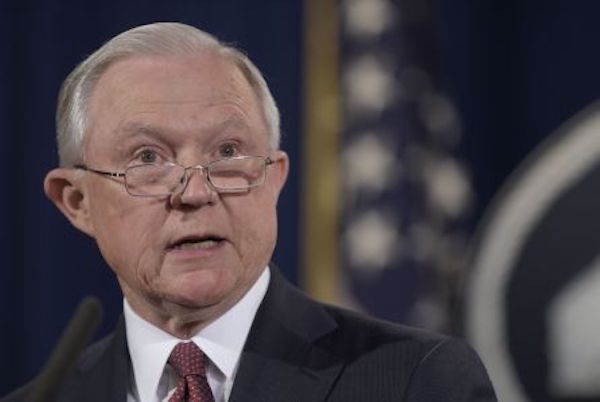
    WASHINGTON(TIP): Stung by US President Donald Trump’s criticism of him as being unable to take control of the Justice Department, attorney general Jeff Sessions came out with a strong rebuttal.

    Sessions, in a rare rebuttal to Trump, issued a statement defending the integrity of his department.

    “I took control of the Department of Justice the day I was sworn in,” he said. “While I am attorney general, the actions of the Department of Justice will not be improperly influenced by political considerations.”

    Sessions, a longtime US senator and early supporter of Trump’s presidential bid, drew Trump’s ire when he recused himself in March 2017 from issues involving the 2016 White House race.

    That removed him from oversight of the federal special counsel’s investigation of Russia’s role in the election and whether Trump’s campaign worked with Moscow to influence the vote. Trump has repeatedly called the investigation a witch-hunt and maintained there was no collusion.

    Trump told Fox that Sessions should not have recused himself from Russia-related matters.

    “He took the job and then he said, ‘I’m going to recuse myself,’” Trump said. “I said, ‘What kind of a man is this?’”

    However, Trump told “Fox & Friends” he would “stay uninvolved” in department matters.

    Trump intensified his criticism of the Justice Department in a Fox News interview broadcast on Thursday, August 23, as the White House grappled to respond to the conviction of former Paul Manafort, Trump’s former campaign chairman, on multiple fraud counts and a plea deal struck by Michael Cohen, Trump’s former personal lawyer, that implicated the president.

    Trump reprised a litany of complaints about the Justice Department and the FBI, attacking both without providing evidence they had treated him and his supporters unfairly.


  • The freedom to differ

    The freedom to differ

    Space for a rational and responsible debate on ideas and religion is shrinking

    By Swami Agnivesh

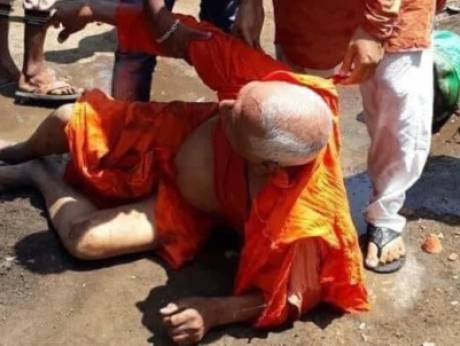
    I can understand that my advocacies and interventions are provocative to the Parivar.  But the hallmark of the democratic mindset is the freedom to differ in a rational and responsible manner. In our tradition, differences in ideas and beliefs are to be addressed through dialogues — shaastrarths — and not by violence and intimidation. We have always believed that the preference for violence is a sign of weakness, not of strength, says the author.

    that spirituality is the light of life. But my idea of spirituality has been, from the beginning, different from its pietistic version. The goal of spirituality is to build a dharmic society, wherein all human beings can attain growth, freedom and dignity. If so, a world-denying, escapist religiosity is clearly unacceptable. So, I developed for myself the vision of Vedic socialism and applied spirituality.

    In this, I have been inspired by the teachings of Maharshi Dayanand. The nine principles of Arya Samaj, as formulated by him, have been my guiding light. I became deeply convinced that his endeavor to re-instate reason in the sphere of religion, and his relentless battle against religious obscurantism and superstitions of all kinds, is the way forward for India. I left academics and plunged into spiritual activism under the world-transforming vision of Dayanand, convinced that it was the cause for which I was to live, for the rest of my life.

    So, my sanyas is a relentless pursuit to seek the light of truth and to make it prevail in the life of our country. The shaping discipline of my life is ‘to doubt, to debate and, if need be, to dissent’. It is not an option for me, hence, to be coopted into anybody’s myths, make-believe or partisan agenda. My spiritual discipline obliges me to satisfy my conscience that what I embrace is in full harmony with the light of truth. I have taken a stand against the indoctrination and communal conditioning by religions, using the arsenal of blind faith, of humans from infancy onwards. I have no doubt that this is an atrocity on freedom and is clearly violative of rights. Every form of conditioning, especially the conditioning that begins from birth, militates against the right to choose, which is basic to religious freedom. To me, freedom to choose where I should stand and which cause I need to support, based on a free and informed application of reason, is the essence of the religion I wish to practice and is, hence, the essence also of religious freedom.

    Dayanand’s campaigns against blind faith and religious obscurantism is an aspect of his commitment to make justice and human dignity prevail in our society. Merely attacking superstition is an academic exercise. I resist and question this evil as part of my commitment to make truth prevail. My reading of history convinces me that blind faith — and the suppression of free and rational thinking it brings about — is the main weapon that agents of injustice, exploitation and oppression use. My spiritual calling and conviction make it incumbent on me to resist this aberration.

    I state the above, to alert my countrymen that the attacks launched on me, which can no longer be glossed over as stray instances, are assaults on the freedom of religion that I am entitled to under Article 25 of our Constitution. The right to practice, preach and propagate my religious vision does not mean, as I understand it, the right to convert anyone. It envisages the freedom to express my spiritual convictions in the public sphere. It protects me from the need to toe the line drawn by some muscular outfits and ideologies.

    I see the present trend not only as a personal threat, but also as a dangerous social and national malady. As a sanyasi in the Arya Samaj tradition, I feel that the Samaj itself is under attack. In this respect two strategies are used. First, that of penetration and colonization. RSS elements have penetrated the Arya Samaj in several areas and, with the help of weak and willing collaborators, hollowed out its innards. The crucial distinction between the RSS and the Arya Samaj stands blurred in such pockets.

    The orchestrated physical attacks on me signal the inauguration of the second strategy: that of intimidation and coercion. The message is clear: the Arya Samaj will be allowed only a shadowy existence in the backyard of Hindu triumphalism as spearheaded by the Sangh Parivar. Any attempt to articulate the authentic spiritual vision of the Samaj will be crushed.

    The RSS and the Arya Samaj are opposites. The one stands for authoritarian, top-down regimentation. It is a threat to social justice and the fundamental values of our Constitution. It scorns the universal vision of the Vedas and espouses a jingoistic and casteist idea of India, which is intolerant and narrow-minded. It replaces truth with violence, especially the violence of blind faith. It swears by hierarchical stratifications that discriminate against women, Dalits and adivasis. The Arya Samaj, in contrast, insists on the freedom of religion based on the primacy of reason. It has a creedal commitment to gender equality and social justice. It dreams of establishing a society of the noble (arya).

    I can understand that my advocacies and interventions are provocative to the Parivar.  But the hallmark of the democratic mindset is the freedom to differ in a rational and responsible manner. In our tradition, differences in ideas and beliefs are to be addressed through dialogues — shaastrarths — and not by violence and intimidation. We have always believed that the preference for violence is a sign of weakness, not of strength.

    What are the options available to me at the fag end of my life? To be silenced by the agents of aggression or to be coopted by them into an agenda that I am totally convinced is a peril to the country? Or, to soldier on, for as long as I retain my breath, and uphold the relevance of the spiritual vision of Maharshi Dayanand to our times? As for me, this does not present a personal dilemma. It poses a challenge; a challenge significant for the country as a whole.

    (The author is an Arya Samaj scholar and social activist)


  • President Trump in soup as 2 ex-aides face jail

    President Trump in soup as 2 ex-aides face jail

    Former campaign chairman convicted of financial crimes; Ex- lawyer pleads guilty of campaign finance violations and other crimes

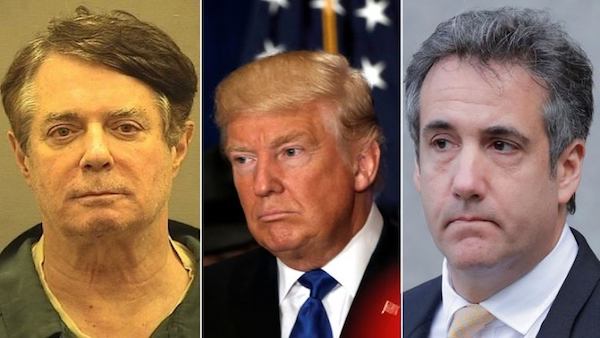
    NEW YORK(TIP): United States President Donald Trump was hit by a double whammy on Tuesday, August 21, as his former lawyer implicated him in a case of campaign finance violation and his former campaign chief was convicted of financial wrongdoing.

    Paul Manafort, who led the Trump campaign during the Republican National Convention in 2016, was found guilty of bank and tax frauds and one charge of failing to disclose foreign bank accounts, by a jury in Virginia, in the suburbs of the U.S. capital. All offences took place before he joined the Trump campaign, and none relates to links with Russia, but the conviction has given a fillip to Mr. Mueller’s ongoing investigation.

    Michael Cohen, long-time lawyer and self-declared ‘fixer’ for Mr. Trump, pleaded guilty to tax and bank fraud and violation of campaign finance rules, allegedly at the behest of the President. The investigation against Mr. Cohen by U.S. Attorney’s office for the Southern District of New York was also triggered by the Special Counsel’s findings.

    Mr. Cohen said he organized hush money for two porn stars, who allegedly had sexual relations with Mr. Trump, who directed him to pay them off. The 22-page plea deal admits this as a violation of campaign finance, as these expenses were not declared as such.

    Mr. Cohen told a court on Tuesday, August 21, that he made the payments “in coordination and at the direction of a candidate for federal office,” but the plea deal documents do not implicate Mr. Trump in the transaction.

    Lanny Davis, Mr. Cohen’s attorney, said on Twitter: “Today he stood up and testified under oath that Donald Trump directed him to commit a crime by making payments to two women for the principal purpose of influencing an election. If those payments were a crime for Michael Cohen, then why wouldn’t they be a crime for Donald Trump?”

    Mr. Davis told CNN that Mr. Cohen has information that would be useful for Mr. Mueller’s investigation.

    Sitting Presidents are not indicted, but Mr. Trump could be charged once he leaves office, according to several legal scholars.

    Meanwhile, Michael Avenatti, lawyer for one of the porn actors who was paid hush money, said he would press for the President’s appearance in the court. The porn star is suing Mr. Trump and Mr. Cohen for ending the contract that forced her to remain silent on her sexual ties with the President.

    President is in a lot of trouble, says the lawyer.

    “The President’s in a lot of trouble,” he told CNN. “…and we’re coming for him. I’m telling you flat out we’re going to come for him. We’re going to get this deposition.”

    The President responded to the Manafort verdict but had no word on the Cohen guilty plea until Wednesday morning. “Paul Manafort is a good man. … It doesn’t involve me, but I still feel – you know, it’s a very sad thing that happened,” Mr. Trump told reporters ahead of a political rally in West Virginia on Tuesday night. “This has nothing to do with Russian collusion.”

    Speaking at the rally, he trained his guns on the media and the investigation. “Fake news and the Russian witch hunt…Where is the collusion? You know they’re still looking for collusion. Where is the collusion? Find us some collusion. We want to find the collusion.”

    The White House said Mr. Trump’s outside legal team would respond to Mr. Cohen’s guilty plea.

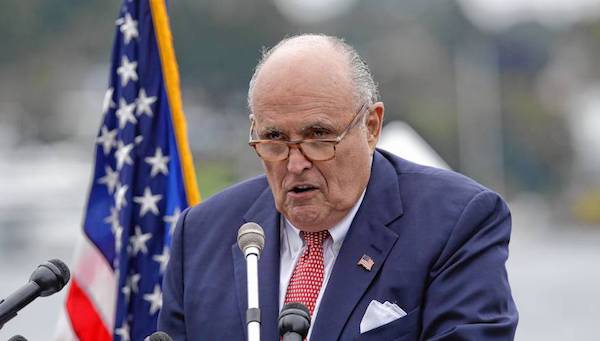
    Rudy Giuliani, Mr. Trump’s attorney, said in a statement: “There is no allegation of any wrongdoing against the President in the government’s charges against Mr. Cohen. It is clear that, as the prosecutor noted, Mr. Cohen’s actions reflect a pattern of lies and dishonesty over a significant period of time.”


  • The Colossus of Indian Politics bids good bye

    The Colossus of Indian Politics bids good bye

    Former PM Atal Bihari Vajpayee dies at 93

    NEW DELHI(TIP): Former Prime Minister Atal Bihari Vajpayee passed away at All India Institute of Medical Sciences (AIIMS), August16 evening at 5.05 bringing to an end a glorious political innings.The 12-time Parliamentarian   was 93.

    Vajpayee, a bachelor, is survived by his adopted daughter Namita Kaul Bhattacharya.

    AIIMS announced the demise of the BJP veteran saying, “It is with profound grief that we inform about the sad demise of former PM of India Shri Atal Bihari Vajpayee at 5.05 pm on August 16.”

    Vajpayee was admitted to AIIMS on June 11 and was stable in the last nine weeks under the care of a team of AIIMS doctors.

    “Unfortunately, his condition deteriorated over the last 36 hours and he was put on life support systems. Despite the best of efforts, we have lost him today. We join the nation in deeply mourning this great loss,” the bulletin issued by Dr Aarti Vij, chairperson, media and protocol division, AIIMS said.

    In his condolence message, President Ram Nath Kovind stated, “His leadership, foresight, maturity and eloquence put him in a league of his own. Atalji, the Gentle Giant, will be missed by one and all.”

    “It was Atalji’s exemplary leadership that set the foundations for prosperous and inclusive India in the 21st century,” Modi said.

    Vajpayee, who joined the Rastriya Swamsevak Sangha (RSS) in 1947 rose through ranks to become a stalwart of the BJP and was the first non-Congress prime minister to complete a full term in office.

    “It was due to the perseverance and struggles of Atal Ji that the BJP was built brick by brick,” Modi said in a tweet.

    “He travelled across the length and breadth of India to spread the BJP’s message, which led to the BJP becoming a strong force in our national polity and in several states,” he added.

    India grieves the demise of our beloved Atal Ji.

    His passing away marks the end of an era. He lived for the nation and served it assiduously for decades. My thoughts are with his family, BJP Karyakartas and millions of admirers in this hour of sadness. Om Shanti.

        — Narendra Modi (@narendramodi) August 16, 2018

    It was Atal Ji’s exemplary leadership that set the foundations for a strong, prosperous and inclusive India in the 21st century. His futuristic policies across various sectors touched the lives of each and every citizen of India.

        — Narendra Modi (@narendramodi) August 16, 2018

    Atal Ji’s passing away is a personal and irreplaceable loss for me. I have countless fond memories with him. He was an inspiration to Karyakartas like me. I will particularly remember his sharp intellect and outstanding wit.

        — Narendra Modi (@narendramodi) August 16, 2018

    Vajpayee was born on December 25, 1924 in Gwalior, Madhya Pradesh to a schoolteacher, Krishna Bihari Vajpayee, and Krishna Devi. Today, his birthday is celebrated as ‘Good Governance Day’.

    Mr. Vajpayee was Prime Minister thrice in 1996, 1998-1999 and 1999-2004. As his health deteriorated, he slowly withdrew himself from public life and was confined to his residence for several years.

    In his tribute, BJP president Amit Shah said he was a “rare politician, brilliant speaker, poet and patriot, his demise is not just an irreparable loss for the BJP but also for the entire country.”

    Congress president Rahul Gandhi said on Twitter: “Today India lost a great son. Former PM, Atal Bihari Vajpayee ji, was loved and respected by millions. My condolences to his family and all his admirers. We will miss him.”

    (With inputs from PTI)

  • Trump Lawyers Submit a Counteroffer to Mueller’s Terms for Interview with the President

    Trump Lawyers Submit a Counteroffer to Mueller’s Terms for Interview with the President

    WASHINGTON(TIP): President Trump’s lawyers on Wednesday, August 8, submitted a counteroffer to Special Counsel Robert Mueller’s proposal for the terms of a possible interview with the president, the latest turn in the protracted negotiations over a sit-down stretching back to January, according to a report published in Wall Street Journal.

    The counteroffer largely sticks to the terms the president’s legal team outlined last month, a person familiar with the matter said: The president’s lawyers would be open to questions about collusion with Russia but wished to limit inquires related to obstruction of justice.

    Rudy Giuliani, one of the president’s lawyers, said in an interview that the team’s proposal was “a little bit different than what we recommended before, but not terribly.”

    He said the legal team had “left open” the possibility to investigators that the president would answer a question on obstruction of justice “if they can show us an obstruction question that they need an answer to, where they haven’t gotten an answer.”

    Mr. Giuliani said that in the special counsel’s last offer, Mr. Mueller agreed to decrease the number of questions posed to the president but hasn’t agreed to the Trump team’s request to curb obstruction of justice inquiries.

    A spokesman for Mr. Mueller, who has not publicly commented on the negotiations, didn’t immediately respond to a request for comment.

    Mr. Mueller is investigating whether Trump associates colluded with Russia’s efforts to interfere in the 2016 U.S. election, and whether Mr. Trump sought to obstruct justice by firing Federal Bureau of Investigation Director James Comey in May 2017, while the FBI’s Russia probe was under way. Mr. Trump has repeatedly denied collusion and obstruction, and Moscow has denied election interference.

    The special counsel’s team of investigators and prosecutors has netted guilty pleas from several Trump campaign associates and indictments of a dozen Russian intelligence officials on hacking charges, among other prosecutions. Mr. Trump’s one-time campaign chairman Paul Manafort is currently being tried in Virginia on bank and tax fraud charges.

    The special counsel this year outlined for the president’s legal team more than 40 questions he planned to ask in a possible interview with Mr. Trump. The questions focused largely on the president’s decision to fire Mr. Comey and his public criticisms of Attorney General Jeff Sessions and other top law-enforcement officials.

    Mr. Giuliani has said the reasons Mr. Trump has given in public for firing the former FBI director are “more than sufficient” and that as president, he had the power to fire any member of his administration.

    The president’s legal team has been negotiating the terms of a possible interview with Mr. Mueller for more than eight months. Mr. Trump has said he is eager to sit down with Mr. Mueller. It is unclear how long the two sides will allow the negotiations to continue.

    Mr. Giuliani said Wednesday that the legal team wants to see the Mueller investigation “over with” by Sept. 1, ahead of the November midterm elections. He said Mr. Trump’s lawyers would make a final decision in the coming weeks whether or not the president would sit for an interview. The president’s lawyers have previously offered timelines in which they would decide on an interview, only to see those end dates pass by.

    “It really depends on how badly they want it,” Mr. Giuliani said of an interview. “This is about the last couple of days that you can really putz around.”

  • Indian American Sri Preston Kulkarni Quit Job Over Trump’s Policies

    Indian American Sri Preston Kulkarni Quit Job Over Trump’s Policies

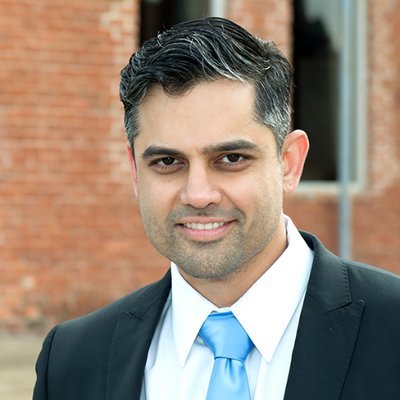
    WASHINGTON(TIP): Indian American Sri Preston Kulkarni decided to quit his dream job at the US State Department last December to run for Congress. Preston found it difficult to defend the Trump administration’s policies as a diplomat especially over race and immigration.

     Mr Kulkarni, whose family traces its roots to Maharashtra and Karnataka, says on his website that he spent his career trying to reduce conflict in other countries…”but right now hostility and conflict are being inflamed in our own country through the politics of anger and demagoguery”.

    “I have worked under Democratic and Republican administrations before, but the current situation is different and should concern all Americans of conscience,” he said on his website.

    After quitting his job, Mr Kulkarni announced that he will run for the 22nd Congressional District of Texas, to be part of the policy making, and not implementing them.

    Six months later, he won the Democratic primary and is pitching for a tough battle against five-term Republican incumbent Pete Olson.

    “There is a little bit of nervousness on the other side about (my) campaign,” Mr Kulkarni told the media.

    Mr Kulkarni’s family immigrated to the US in 1969 to Louisiana, where he was born in 1978. Soon thereafter they moved to Houston, where Mr Kulkarni grew up.

    After completing his college, he joined the US foreign service in 2003 and worked in various capacities in both inside the US and overseas. This summer he was posted as spokesperson of the US Embassy in New Delhi.

    Being an Indian American, representing the US was very important, he said.

    “But I think the 2016 election for me actually drove home as some of these issues are still unresolved for America,” he said.

    “During that election, there was so much anti-immigrant sentiment being spread that it was a real blow to me personally. When I came back to the State Department, I said (to myself) ‘I’m just going to continue to be a professional and I’m going to do this job’,” he said.

    But, there were two incidents that changed his mind and made him feel that he couldn’t continue in the State Department.

    “One was the Charlottesville rally one year ago where we had Nazis in the street screaming about white supremacy and my government could not make a clear distinction. That’s absolutely morally unequivocally awful. I was asked to explain this when I was overseas. Why is it that they’re very fine people who were Nazis and why is it that both sides are the same? I couldn’t do that,” Mr Kulkarni said.

    At the rally last summer, white supremacists and counter-protesters clashed in the streets before a car plowed into a crowd, killing 32-year-old counter-protester.

    The second was the Roy Moore campaign, Mr Kulkarni recollected.

    “He was molesting 14-year-old girls and he said that our families are stronger when we had slavery and that Muslims shouldn’t be able to hold a public office in the United States. To me that’s just beyond what’s acceptable in the kind of democracy and the kind of society that I believe in,” he said.

    Roy Moore was the Republican nominee in the 2017 US Senate special election in Alabama to fill the seat vacated by Jeff Sessions. Moore, who had faced multiple allegations of sexual assault during his campaign, was backed by President Donald Trump. Later he lost to Democratic candidate Doug Jones.

    At the time of these incidents, Mr Kulkarni was in Jamaica on a temporary assignment. His next posting was at the US Embassy in New Delhi as its spokesperson.

    “I decided that I was going to resign to come back home and run for office. Because I think we need to stand up against this idea that we should be divided up by, by race, by ethnicity, and that some people are less American than other people. That’s when I started the campaign,” Mr Kulkarni said.

    Mr Kulkarni resigned from the foreign service in December.

    He says that it is not about just one person, Trump as an individual.

    “It is more about these ideas that we should be divided against each other, Muslim versus Hindu or Muslim or Christian or Hindu versus Christian or black versus white or Asian versus white. That ideas are the more dangerous thing than a person,” he said.

    He said the social fabric of America was being torn apart and Americans were blaming immigrants for everything.

    “If the fight is against illegal immigrants, then why H-1B program is being threatened. Why are we trying to reduce legal immigration and family reunification?” he asked.

    “It doesn’t have to do with illegal immigration. That has to do with anti-immigrant sentiment. The anti-immigrant sentiment is something that should worry all of us because we are an immigrant country and honestly, without immigrants, most of our fortune 500 companies wouldn’t be here,” Mr Kulkarni said.

    “But whenever any group is discriminated against, it’s a threat to all minority groups. If a Muslim is being discriminated against, it still affects me as a Hindu,” Mr Kulkarni said.

    Now running an effective campaign, Mr Kulkarni, pollsters say has considerably reduced the poll numbers against his rival Olson, who is considered to be a friend of India in the US Congress.

    Mr Kulkarni, who is a cousin of BJP Member of Parliament Poonam Mahajan, hopes that the entire community would come out to vote in November.

  • Indian American Democrats lose in Michigan primaries

    Indian American Democrats lose in Michigan primaries

    MICHIGAN(TIP): Indian American Democrats Shri Thanedar and Suneel Gupta lose in Michigan primaries on August 7. Entrepreneur and scientist Shri Thanedar finished third for Michigan governor, which was won by former legislative leader Gretchen Whitmer.

    Thanedar, from Ann Harbor, polled 199,574 votes, while Whitmer received 586,074 votes.

    Abdul El-Sayed, who was endorsed by former presidential candidate Bernie Sanders, was second with 340,560 votes.

    Suneel Gupta, brother of physician and television personality Sanjay Gupta fell short by more than 5,000 votes in Michigan’s 11th congressional district. Gupta received 19,149 votes. The eventual nominee Haley Stevens received 24,232 votes.

    Thanedar, who grew up in Belgaum, in the south Indian state of Karnataka, self-financed his campaign to the tune of $11 million.

    His website says Thanedar purchased or sold eight different businesses—many of them chemical testing analytics firms.

    The controversial businessman had toyed with the idea of running in the Republican primary before filing papers to run as a Democrat, according to reports. Ultimately, he ran as a progressive.

    Gupta, whose mom was the first female engineer hired by Ford half a century ago, ran on a progressive platform, including education, environment, healthcare and jobs creation.

    “Taking this country back from Donald Trump—that’s job one,” Gupta, who holds a law degree from Northwestern Law School and an MBA from the Kellogg School of Management, said in one of his campaign ads.

    He founded Rise, a healthcare technology company he set up, with the help of his brother Sanjay Gupta.


  • Indian American Democrat Candidate Aftab Puravel receives Obama endorsement

    Indian American Democrat Candidate Aftab Puravel receives Obama endorsement

    OHIO(TIP): Indian American Democrat candidate Aftab Puravel from Ohio’s first congressional district received former President Barack Obama’s endorsement on August 2.

    The Hamilton County Courts clerk is one of the dozens of Democrats the former president — who’s considered the de facto leader of the party — endorsed via twitter in what’s billed as the “first wave of mid-term endorsements.”

    Last week, political analyst Larry Sabato’s “Crystal Ball” moved the district to the “Toss up” column, indicating that it will be one of the dozens of districts that will decide which party will control Congress after November. Previously, Sabato had deemed Ohio-1 as “Likely Republican.”

    Pureval is the only Indian American endorsed by Obama on Wednesday. In all, the previous occupant of the White House endorsed more than 80 Democrats who are running for various state and federal offices that include governor, lieutenant governor, US Senate and US House of Representatives.

    Pureval, who won the Democratic primary unopposed, has so far outraised Chabot by more than 2 to 1 margin, campaign finance data by the Center for Responsive Politics shows. Through June 30, he raised more than $1.5 million, compared to $950,000 raised by the congressman.

    Pureval, 35, is the son of an Indian father and Tibetan mom. He is a former Special Assistant US Attorney for the Department of Justice and the first Democrat to get elected as the Hamilton County Courts clerk in a hundred years.


  • Engaging Naya Pakistan

    Engaging Naya Pakistan

    Imran Khan offers a chance to deal with Pakistan’s deep state, but no outcome is likely before the Lok Sabha polls

    By Happymon Jacob

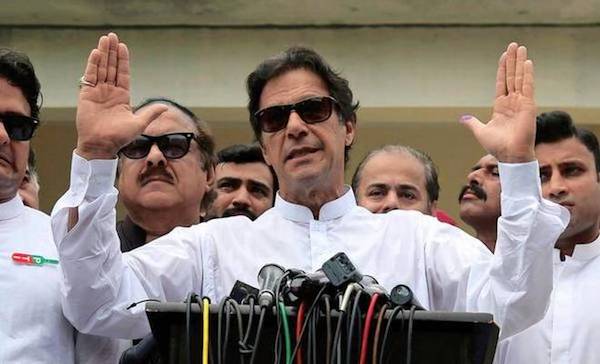
    The victory of Imran Khan’s Pakistan Tehreek-e-Insaf (PTI) in the recent general elections in Pakistan poses both challenges and opportunities for India. The challenge would be to engage a newly minted Pakistani Prime Minister who is yet to reveal his way of conducting diplomacy. The opportunity, even so, lies in the fact that the rise of Mr. Khan will enable India to deal with the Pakistani ‘deep state’ more effectively.

    Mr. Khan’s ‘victory speech’ had several well-meaning and conciliatory references to India which, if logically followed up, could potentially yield long-term benefits for the two countries. But it may be unrealistic to expect much movement in bilateral ties till India’s own general elections are concluded.

    A popular leader

    Despite allegations of a rigged election in Pakistan in which the army is said to have enabled Mr. Khan’s victory, it is widely recognized that there was a major groundswell of support for him. The fact that his PTI left the rival Pakistan Muslim League (Nawaz) far behind in terms of seat share, and that the PTI, until recently a provincial party, made stunning inroads in all of Pakistan’s provinces shows that the big story is also the rise of a charismatic Pakistani political leader seen as incorruptible and visionary by young voters.

    More significantly, despite concerns in India, religious parties have once again failed to convert their street power into political outcomes, which goes to highlight the sheer lack of mass base for terror outfits and their affiliates in Pakistan, and the moderate nature of its polity. This is not to say that Mr. Khan has a clean record: he has been a supporter of Pakistan’s blasphemy law and has in the past flirted with rightwing parties and terror outfits in Pakistan, which earned him the moniker ‘Taliban Khan’.

    The central Indian concern, and a legitimate one, about Mr. Khan’s victory is whether he can independently navigate a sustained policy process with New Delhi. India fears that the Pakistani deep state, i.e. the army and the Inter-Services Intelligence (ISI), will decide the India policy, and Mr. Khan will merely carry it out, if he is kept in the loop at all. A related concern is that the Pakistani deep state is not keen on a dialogue process with New Delhi. While it is difficult to predict the nature of the evolving relationship between an extremely popular Mr. Khan with the Pakistani deep state, let’s assume, for argument’s sake, that Mr. Khan will be subservient to the Pakistan army with regard to the country’s security policy. Whether that is desirable for the Pakistani state and its democracy is not a question that should detain us here.

    The question that should bother us is whether Mr. Khan being a puppet in the hands of the Pakistan army is detrimental to Indian interests or not. India’s grievance in regard to civil-military relations so far has been three-fold: one, the Pakistani deep state has a nefarious agenda vis-à-vis India; two, dialogue with the Pakistani political establishment has often not been successful since the Pakistani security establishment is often not on board the dialogue process; three, New Delhi’s desire for peace becomes a casualty in the turf war between Pakistan’s deep state and its political establishment.

    Logically then, one could argue that the only way India can have a steady dialogue process with Pakistan is when there is agreement between Pakistan’s deep state and its Prime Minister on what the country’s India policy should be. If so, Mr. Khan’s closeness to the Pakistan army should be viewed as an opportunity to have a fruitful dialogue with the Pakistani deep state without New Delhi’s message to Rawalpindi getting lost in Islamabad. New Delhi, while engaged in a dialogue with Islamabad, would not need to second-guess Rawalpindi’s intentions.

    Does the Pakistan army desire peace with India? Pakistan’s Army Chief, General Qamar Javed Bajwa, has on several occasions spoken of the need to build peace with India, underscoring that bilateral dialogue can lead to peace and stability in the region. There is, of course, no need to take it at face value. However, if the Pakistan army proposes dialogue and if the new Prime Minister is assumed to be on board such an objective, wouldn’t it suit Indian interests?

    This begets more questions. Can this new-found civil-military equation in Pakistan withstand the force of Mr. Khan’s personality traits and Pakistan’s political dynamics in the days ahead? Will Mr. Khan’s relationship with the deep state continue as expected or will his unpredictable temperament create more confusion? One would have to wait and watch.

    The China question

     Yet another angle that needs to be factored in while engaging Naya Pakistan is the rising regional influence of China and the further strengthening of China-Pakistan ties. Both the Pakistan army and the political class in Pakistan are upbeat about the China-Pakistan Economic Corridor (CPEC) and Chinese investments in Pakistan, notwithstanding Mr. Khan’s initial reservations about China. It is possible that China could pacify some of Pakistan’s revisionist tendencies towards both Afghanistan and India. In Wuhan, Prime Minister Narendra Modi and Chinese President Xi Jinping agreed to carry out joint projects in Afghanistan. This is perhaps the opportune time to implement them. If (and that’s a big ‘if’) Beijing can get the Pakistan army to agree to a reconciliation process in Afghanistan, and if New Delhi and Beijing can collaborate in Afghanistan, we may witness some move towards regional stability. This would be helped by Mr. Khan’s desire to improve Pakistan-Afghanistan relations.

    The Kashmir hurdle

    In this plausible scenario, Kashmir is likely to be the wild card. Two lessons stand out from earlier India-Pakistan negotiations: talks with Pakistan are unlikely to succeed if Kashmir continues to be a domestic challenge for India; and talks with Kashmiri separatists will not get anywhere without a parallel process with Pakistan. In other words, unless New Delhi reaches out to Kashmiri separatists and to Pakistan in parallel, a dialogue process with Pakistan is unlikely to succeed. Given that the Bharatiya Janata Party — after having pulled out of a difficult coalition with the Peoples Democratic Party in Jammu and Kashmir — is gearing up to use the Kashmir issue in the upcoming elections, there is unlikely to be much appetite in New Delhi to open a serious dialogue with Kashmiris, and Pakistan.

    In any case, Mr. Modi might not want to take a chance with Pakistan at this point since a failure to show anything substantive from a peace process with Pakistan could have domestic political implications, especially if ceasefire violations and terror attacks continue to take place.

    Therefore, notwithstanding the positive statements from Mr. Khan and Mr. Modi’s gracious phone call to him, we might not witness much progress in bilateral ties in the short term. The interlude between the general elections in Pakistan and India is a period of extreme caution and careful domestic calculations, and hence not conducive for bold foreign policy initiatives, especially on something as fraught as India-Pakistan relations.

    (The author is Associate Professor of Disarmament Studies at JNU, New Delhi)


  • Russia’s pro-Pakistan tilt: India must not allow old ally to slip away

    Russia’s pro-Pakistan tilt: India must not allow old ally to slip away

    The signs have been ominous for the past four years. By the time PM Modi arrived at his ‘Barack’ moment, Russia had read South Block’s signals of apathy and inked an agreement on defense cooperation with Pakistan. Meandering through a naval agreement and sale of Mi helicopters, the Russia-Pakistan security relationship has moved well past Cold War hostilities to enter a more intimate phase of training Pakistani troops in Russian institutes. Pakistan may have taken the plunge because the US, its steady pole of security cooperation, is more interested in a settlement in Afghanistan rather than shoring up Pakistan army’s arsenal.

    But for India’s policy planners this is a moment of reflection. Russia is not just a consistent supplier of cheap and sturdy military equipment. Both sides have taken comfort in the other’s company at times of international distress — India backed Moscow to the hilt on Afghanistan while Russia bailed out India on Kashmir with its vetoes. There was also a healthy dose of self-interest involved: Russia backed India in the 1971 war to pay back Pakistan for arranging a secret summit between Nixon and Mao. For India, Moscow provided a reliable hedge against geopolitical arm-twisting by the West during the Cold War.

    Indian diplomacy may be on the wrong side of history if it is steering away from Russia. Along with Iran and China, Russia has lately become indispensable in the region. In addition, much is going on with Russia to permit it to drift away. Moscow’s mediation, in fact, can prove useful in bringing together Pakistan and India on Afghanistan, which could lead to the breaking of the Indo-Pak diplomatic ice. PM Modi’s informal meeting in May with Vladimir Putin would have attempted a course correction, reflecting the unease in the Indian establishment over the current state of affairs. Russia is currently in a spot of bother; a helping hand at this juncture is likely to be more than appreciated.

    (Tribune, India)

  • End of an epoch: on M. Karunanidhi’s death

    End of an epoch: on M. Karunanidhi’s death

    By Gopalkrishna Gandhi
    “He will be long remembered for three outstanding accomplishments — his passion for Tamil as a language and a metaphor for the dignity of its users; his refusal to be bullied by political hubris during the national emergency; and his uncompromising secularism.
    “Jakkirathaiya irunga,”he said in Tamil, over which his command was legendary. “Take care” is how the phrase would translate. But in the way he said it, laying stress on the double ‘kk’, I could see he meant to say, “Take every care.” This was on August 13, 2000. I was on my way to Colombo to join duty as High Commissioner.

    A federal mind

    Calling on Tamil Nadu Chief Minister M. Karunanidhi would have been on the wish list and task list of any Indian envoy on her or his way to Sri Lanka. But, for me, this was not just about protocol. Nor was it about politics, the Dravida Munnetra Kazhagam (DMK) then being a crucial presence in the National Democratic Alliance government led by Atal Bihari Vajpayee. It was about plain common sense, sheer self-interest. There was no way I would present letters of credence in Colombo without finding out what Tamil Nadu’s senior-most and completely wide-awake leader thought about the island nation’s travails, the present and future state of its Tamil population and that of the Liberation Tiger of Tamil Eelam’s supremo, Velupillai Prabhakaran. To go to Colombo without the ‘input’ — to use a crassly opportunistic expression — of a veteran of Tamil Nadu’s political chemistry would be absurd. What I needed and was to get from him was the insight, as knowledgeable as it was detached, of ‘one who knew’. The hinterland of any foreign policy is ground knowledge of the roots of that policy in the soil of its origin.

    It was not easy, even for one on ‘relevant’ official duty, to get an appointment with the Chief Minister. He had his hands more than full with the complexities of Tamil Nadu’s polity, where facing the All India Anna Dravida Munnetra Kazhagam and its charismatic leader J. Jayalalithaa meant being alert 24×7; where running a government of which he was the alpha and the omega meant working harder than the mind and body could take. And where, to make matters more complex for him, explaining to the people of Tamil Nadu how and why India-Sri Lankan relations were a foreign policy matter and foreign policy was the prerogative of the Union government was just about impossible. He was on the cusp of India’s federal dilemmas.

    A lesser politician could have played politics on that fluid crest, just to remain ‘on top’. But, as the direct successor-in-office to C.N. Annadurai (CNA) who had given up secession as the DMK’s policy goal, he was going to do nothing of the kind.

    The Chief Minister was seated in the sitting room on the first floor of his Gopalapuram residence in Chennai. He half-rose to greet me, a gesture that neither his age — he was 76 at the time — nor his high office necessitated. “Sir… sir… Please do not get up,” I protested. Sitting back, he commenced what was for me a lesson on the limitations of diplomacy and of politics. He said I was going to a highly troubled land at a highly incendiary time. “Ranil Wickremesinghe [now Prime Minister of Sri Lanka] met me the other day,” he said, “and we spoke for more than an hour. He is a visionary… He wants to build a physical bridge from Rameswaram to Talai Mannar… I welcomed the idea and told him that our own Bharathiar [Subramania Bharati] had envisioned the very thing…palamaippom… But today who is going to be crossing that bridge and in which direction?” Then followed an analysis of the ethnic problem on the island which for its crisp pragmatism could not have been equaled, let alone bettered.

    “Nobody knows Prabhakaran’s mind,” he said. “Nobody from our side is in touch with him… Nobody can be… We used to know his deputies… Amirthalingam… Now they are all dead… assassinated. But militancy is no solution… Secession will never be countenanced by Sri Lanka… And it will never be given up by Prabhakaran… We grope in the dark.” And then doing a fast-forward: “Yet, we have to keep trying for our Tamil kin’s urimai (rights) there.” The insights continued for some 10 more minutes and then he rose to conclude the call, saying, as if in a summing-up: “Prabhakaran will never have a change of heart.” As I thanked him and prepared to leave, he gave the advice I started this tribute with, very softly, “Jakkirathaiya irunga.”

    I had received briefings, each very helpful, very skilled, from officials, ministers, politicians, military leaders, strategists. But the one I got at Gopalapuram that afternoon covered every facet of the Sri Lankan scene in brief sentences, replete with historical, geopolitical and diplomatic nuances, topped with an intuitive sense of urimai being the long-shot aim and jakkirithai an immediate concern.

    Another meeting

    Seventeen years later, last year, I was to see him again, in the same room. He was seated on a wheelchair. And this time he did not — could not — get up. His son, M.K. Stalin, and his daughter, Kanimozhi, who were beside him, gave him the caller’s name. The 93-year-old looked long and steadily at me. No sign of recognition appeared on his face. There was no immediate response, but a few seconds later, when everyone present was waiting for a response, a wisp of a half-smile played across his face for but a fleeting moment. I will not presume to imagine he recognized me. But that was not really necessary.

    Kalaignar Karunanidhi was now a legend, an icon of the old mold, but without the patina of obsolescence on its form or features. He was a living legend, an icon of the here and now as a symbol of aspirational politics negotiating electoral quicksand. In his case the aspirational politics was Dravida self-esteem combined with social radicalism, derived from Periyar and C.N. Annadurai (CNA). And the quick sands were Tamil Nadu’s political uncertainties, with his mentors having become history and rivals from a different ‘stage’ scripting a very new, very glitzy theatre. Here was an idealism being taunted by reality to be pragmatic, a pragmatism being haunted by history to be idealistic. Some predicaments are cruel.

    And yet, he emerged from it, un-bowed, the see-saw of electoral results being another matter.

    He will be long remembered for three outstanding accomplishments — his passion for Tamil as a language and a metaphor for the dignity of its users; his refusal to be bullied by political hubris during the national emergency; and his uncompromising secularism.

    Such a long journey

    CNA was in office for far too little for the dust of any controversy to settle on him. The Kalaignar was in office for far too long for that dust to stay away. Did he shake it off?

    Did the flatterer and the tale-carrier manage to reach ear-distance? Was the sponger spurned, the money-spinner, the corrupter, family-splitter, the party-breaker turned away? Was the fear-instiller, the superstition-planter, the suspicion-sower shown the door? Equally, was the caring critic, the daring dissenter, the worried warner given welcome? Was the frank friend, the bold biographer shown in, given time, consideration?

    Only his family would know.

    On it — all generations of it — falls the privilege and the challenge now to stay and work together, to take the legacy of this extraordinary statesman further afield and make it a force for Tamil Nadu’s redemption from localism, myopia and the power of floating cash. And beyond that, a force for India’s federal intelligence, her plural wisdom and, above all, her Constitution-enshrined mandate for justice — social, economic and political.

    (The author is a former administrator, diplomat and Governor)

  • Russia faces US sanctions over poisoning of Skripal in UK

    Russia faces US sanctions over poisoning of Skripal in UK

    WASHINGTON(TIP): The US has said it will impose fresh sanctions on Russia after determining it used nerve agent against a former Russian double agent living in the UK.

    Sergei Skripal and his daughter Yulia were left seriously ill after being poisoned with Novichok in Salisbury in March, though they have now recovered.

    A UK investigation blamed Russia for the attack, but the Kremlin has strongly denied any involvement.

    Russia has criticized the new sanctions as “draconian”.

    In a statement released on Wednesday, August 8, the US State Department confirmed it was implementing measures against Russia over the incident.

    Spokeswoman Heather Nauert said it had been determined that the country “has used chemical or biological weapons in violation of international law or has used lethal chemical or biological weapons against its own nationals”.

    “The strong international response to the use of a chemical weapon on the streets of Salisbury sends an unequivocal message to Russia that its provocative, reckless behavior will not go unchallenged,” a UK Foreign Office statement said.

    The Russian embassy in the US hit back on Thursday morning, criticizing what it called “far-fetched accusations” from the US that Russia was behind the attack.

    Russia had become “accustomed to not hearing any facts or evidence”, it said, adding: “We continue to strongly stand for an open and transparent investigation of the crime committed in Salisbury.”

    The new sanctions will take effect on or around 22 August and relate to the exports of sensitive electronic components and other technologies.

    The State Department said “more draconian” sanctions will follow within 90 days if Russia fails to give reliable assurances it will no longer use chemical weapons and allow on-site inspections by the United Nations.

    An official said it was only the third time that the US had determined a country had used chemical or biological weapons against its own nationals.

    Previous occasions were against Syria and against North Korea for the assassination of Kim Jong-nam, the half-brother of leader Kim Jong-un, who died when highly toxic VX nerve agent was rubbed on his face at Kuala Lumpur airport.

    Are these the only US sanctions against Russia?

    No. In June the US imposed sanctions on five Russian companies and three Russian individuals in response to alleged Russian cyber-attacks on the US.

    All are prohibited from any transactions involving the US financial system.

    Treasury Secretary Steven Mnuchin said the measures were to counter “malicious actors” working to “increase Russia’s offensive cyber-capabilities”.

    After pressure from Republican members of Congress, the State Department has determined Moscow broke international law by using a military grade chemical weapon on the Skripals.

    While the US expelled some five dozen diplomats shortly after the poisoning, the administration stopped short of making a formal determination that Russia had broken international law.

    But Congress has been pushing for such a decision and now the state department has confirmed Russia’s actions contravened 1991 US legislation on the use of chemical weapons. That breach automatically triggers the imposition of sanctions and places requirements on Russia to avert further restrictions in three months’ time.

    Those requirements could include opening up sites in Russia for inspection – a move Moscow would probably resist.

    So far President Donald Trump has been silent on this latest move – which could well derail his attempts to develop a new, warmer relationship with Vladimir Putin.

    Following the incident, the British government said the military-grade nerve agent Novichok, of a type developed by Russia, had been used in the attack.

    Relations between Russia and the West hit a new low. More than 20 countries expelled Russian envoys in solidarity with the UK, including the US. Washington ordered 60 diplomats to leave and closed the Russian consulate general in Seattle.

    Three months after the Salisbury attack, two other people fell ill at a house in Amesbury, about eight miles from the city. Dawn Sturgess later died while her partner, Charlie Rowley, spent three weeks recovering in hospital.

    After tests, scientists at the UK’s military research lab, Porton Down, found the couple had also been exposed to Novichok.

    Mr Rowley told ITV News he had earlier found a sealed bottle of perfume and given it to Ms Sturgess, who sprayed the substance on her wrists.

  • NY Congressman Collins Arrested, Charged with Insider Trading

    NY Congressman Collins Arrested, Charged with Insider Trading

    NEW YORK(TIP): The FBI has arrested New York Rep. Chris Collins on securities fraud-related charges, law enforcement officials said.

    Collins, a Republican who hails from western New York, his son and his son’s future father-in-law have all been charged with insider trading, U.S. Attorney Geoffrey Berman said.

    The congressman surrendered to the FBI at 26 Federal Plaza Wednesday, August 8 morning, officials said.

    Collins pleaded not guilty at an appearance in Manhattan federal court Wednesday afternoon.

    Hours after he was released on bail, Collins spoke to reporters in Buffalo, professing his innocence and saying he would remain on the ballot for re-election this fall.

    Collins was one of the first members of Congress to endorse President Donald Trump during his presidential campaign.

    Last fall, the Office of Congressional Ethics released a report that said the congressman may have violated House rules when he bought discounted stock that wasn’t available to the public and was offered to him based on his status as a politician.

    The report also found that Collins, a board member of Australia-based Innate Immunotherapeutics, may have shared nonpublic information about the company, another possible violation.

    Innate had been in the process of developing a drug to treat multiple sclerosis in 2017, according to the indictment. When the product failed drug trials in June 2017, however, the public results sent Innate stock prices plummeting by 92 percent.

    Collins — one of Innate’s largest stockholders — had access to information about the company and its research that wasn’t available to the public, the indictment alleges.

    When Collins found out about the trial results, he allegedly told his son Cameron Collins, also an Innate stockholder, who told his then-girlfriend’s father Stephen Zarsky, as well as several other stockholders.

    Cameron Collins, Zarsky, and the stockholders Collins told subsequently sold their Innate stock before prices plunged, narrowly avoiding hundreds of thousands of dollars in losses, the indictment says.

    The congressman, his son and Zarsky have all been charged with conspiracy, securities fraud, wire fraud and making false statements to the FBI, the Manhattan U.S. Attorney’s office said. The Securities and Exchange Commission has filed its own civil action against the three men.

    “Representative Collins, who, by virtue of his office, helps write the laws of this country, acted as if the law did not apply to him,” Berman said. “These charges are a reminder that this is a nation of laws, and everyone stands equal before the bar of justice.”

    “I believe I acted properly and within the law at all times,” he said. “I will mount a vigorous defense in court to clear my name. I look forward to being fully vindicated and exonerated.”

    The congressman’s attorneys Jonathan Barr and Jonathan New, of BakerHostetler, also said Wednesday they would “answer the charges filed against [Collins] in court and… mount a vigorous defense to clear his good name.”

    “It is notable that even the government does not allege that Congressman Collins traded a single share of Innate Therapeutics stock,” they said in a statement. “We are confident he will be completely vindicated and exonerated.”

    House Speaker Paul Ryan said in a statement the congressman would no longer serve on the House Energy and Commerce Committee, pending the ultimate outcome of the indictment.

    “While his guilt or innocence is a question for the courts to settle, the allegations against Rep. Collins demand a prompt and thorough investigation by the House Ethics Committee,” he said. “Insider trading is a clear violation of the public trust.”

    House Democratic leader Nancy Pelosi, meanwhile, said Americans “deserve better than the GOP’s corruption, cronyism and incompetence.”

    “The charges against Congressman Collins show the rampant culture of corruption and self-enrichment among Republicans in Washington today,” she said. “The Ethics Committee must accelerate its own investigation into Congressman Collins’ illegal abuse of the public trust.”

    The congressman is expected to appear in court again on Oct. 11.

  • Pence details plan for creation of Space Force

    Pence details plan for creation of Space Force

    ‘We must have American dominance in space”- Pence

    WASHINGTON(TIP): ‘We must have American dominance in space”, said Vice President Pence, outlining an ambitious plan on Thursday, August 9 that would begin creating a military command – “Space Force” as the sixth branch of the U.S. military as early as 2020.

    Pence warned of the advancements that potential adversaries were making and issued what amounted to a call to arms to preserve the military’s dominance in space.

    “Just as we’ve done in ages past, the United States will meet the emerging threats on this new battlefield,” he said in a speech at the Pentagon. “The time has come to establish the United States Space Force.”

    But the monumental task of standing up a new military department, which would require approval by a Congress that shelved the idea last year, may require significant new spending and a reorganization of the largest bureaucracy in the world. And the idea has already run into fierce opposition inside and out of the Pentagon, particularly from the Air Force, which could lose some of its responsibilities.

    Defense Secretary Jim Mattis last year said he opposed a new department of the military “at a time when we are focused on reducing overhead and integrating joint warfighting functions.”

    This week, Mattis said the Pentagon and White House “are in complete alignment” on the need to view space as a warfighting domain. But he stopped short of endorsing a full-fledged Space Force. In a briefing with reporters after Pence’s speech, Deputy Defense Secretary Patrick Shanahan suggested that Mattis’s comments opposing the Space Force were made at a different time, before the Pentagon received a bolstered budget.

    White House officials have been working with national security leaders to aggressively move ahead without Congress. The first step is creating a new U.S. Space Command by the end of the year, which would be led by a four-star general, the way the Pentagon’s Indo-Pacific Command oversees those regions.

    The new command would pull space experts from across the armed services, and there would be a separate acquisitions office, dedicated to buying satellites and developing new technology to help the military win wars in space.

    After the announcement Thursday, President Trump tweeted, “Space Force all the way!”

    For months, Trump has been calling for a Space Force, a new, free-standing military department, with its own chain of command and uniforms.

    The White House intends to work with lawmakers in submitting legislation by early next year, a senior administration official said, with the hopes of standing up the first new military department since the Air Force in 1947.

    Some members of Congress and military leaders have been warning space is no longer a peaceful sanctuary, but a domain of conflict that needs more attention and resources. Space is vital to the way the United States wages war; The Pentagon’s satellites are used for missile-defense warnings, guiding precision munitions and providing communications and reconnaissance.

    Russia and China have made significant advancements, challenging the United States’ assets in space.

    After Pence’s speech, Reps. Mike Rogers (R-Ala.) and Jim Cooper (D-Tenn.), members of the House Armed Services Committee, praised the move, saying a Space Force “will result in a safer, stronger America.”

    “We have been warning for years of the need to protect our space assets and to develop more capable space systems,” they said in a joint statement.

    In his speech, Pence urged the audience to support the administration’s effort to create the new department.

    Speaking to a room made up mostly of U.S. troops in uniform, Pence said their “Commander-in-Chief is going to continue to work tirelessly toward this goal, and we expect you all to do the same.”

    “The only thing we can’t afford is inaction,” he said.


  • ‘India is at a crucial crossroads’; Sam Pitroda appeals NRIs for help

    ‘India is at a crucial crossroads’; Sam Pitroda appeals NRIs for help

    NEW YORK (TIP): “India is at a crucial crossroads and unless NRIs come forward in preserving truth, trust, inclusion, and non-violence, India’s democracy could be in jeopardy,” Said Mr. Sam Pitroda, Chairman of the Overseas Congress Department of All India Congress Committee. Mr. Pitroda was inaugurating the National Conference of the Indian Overseas Congress that was held at the Crowne Plaza Hotel in New York. “A climate of fear is gripping the nation and lies are constantly propagated for political ends” Pitroda added citing the case against National Herald newspaper. “Congress believes in the bottom-up development, not top-down approach followed by the current government that benefits a few”.  Pointing to the upcoming parliamentary elections in 2019, he urged the delegates who have gathered there to collaborate and work together in unity so that Congress party can restore the democratic values that have been the hallmark of the nation for the last 7 decades.

    Audience

    Dr. Surinder Malhotra, who has served as the President of INOC, USA for a number of years and a member of the governing Board of IOC appealed to the gathering for an end to groupism and division and to move forward. Mr. George Abraham, the Vice-Chair of the IOC detailed various threats to democracy in India and asked the meeting to be pro-active in dealing with critical issues. “Constitution is out there to protect us; however, if we don’t protect the constitution, it will not protect us either” Abraham added.

    Mr. Mohinder Singh, Gilzian, President of the INOC, USA lauded the Congress party for its enormous contribution to India that made it a prosperous economy and detailed some of his plans to grow the Overseas Congress in the USA. He promised to increase the membership of the organization and bring in more young people to the fold primarily by reaching out to the large pool of Indian students at the Universities. He has also promised to conduct charitable programs on behalf of the organization and to send volunteers to the upcoming elections in India. In addition, he expressed optimism that a ‘Congress Bhavan’ can be built as headquarters for IOC in the not so distant future.

    Mr. Himanshu Vyas, newly appointed Secretary to the Overseas Congress Department of AICC spoke about building strong Overseas Congress Chapters around the globe and asked the participants to communicate with him for any extra help from his Delhi office.

    Mr. Madhu Yaskhi, former Member of Parliament and AICC Secretary Spoke about the challenges to Indian democracy and pointed out, in particular, the corruption at the highest levels citing the Rafael Jet purchasing case. He urged NRIs to get involved and bring about a change that is essential for the survival of India’s democracy.

    Mr. Shudh Prakash Singh, President of INOC (I) introduced several members of INOC (I) to the audience. Mr. Harbachan Singh, Secretary-General of the INOC, USA and Rajender Dichpally, General Secretary of INOC (I), Mr. Kamalpreet Singh Dhaliwal, President of IOC, United Kingdom and Dr. Dayan Naik also addressed the conference.

    Mr. Manoj Shinde presented an integrated IT plan for the organization and asked members to provide him with the content.

    Ms. Tavishi Alagh, the Media Coordinator for Overseas Congress Department of AICC, screened several videos at the conference showing the history the Congress Party and fortitude of the past leaders of the freedom struggle along with Mr. Rahul Gandhi’s vision for a more inclusive India.

    Madhu Yaskhi speaking, Sam Pitroda, Mohinder Singh Gilzian, Shudh Prakash Singh, Himanshu Vyas, George Abraham, Surinder Malhotra on the dias

    In the ensuing discussions, delegates from all Chapters spoke about the vision and missions of the organization and stressed the issue of unity as a pre-requisite to moving forward in achieving set goals. T. J. Gill, Malini Shah, John Joseph, Gurmit Singh Gill, Charan Singh, Phuman Singh, Ravi Chopra, Thomas T. Oommen, Satish Sharma, R. Jayachandran, Zinda Singh, Kulbir Singh Prempur Sarpanch, Sarvjit Singh, Prasad Kambapathy, Devendra Vora, Girish Vaidya, Ajay Singh Lakhan, Santok Singh, Paul Sihota, Rana Gill, Jaya Sundaram, Ram Gadula, Harkesh Thakur, Oommen Koshy, Chandu Patel, Santhosh Nair, Rajesh Allahdad, Thomas Mathew, Krishan Arora, Leela Maret, Sawaran Singh, Vishak Cherian, Paul Paramby, Ramesh Chandra, Nikhil G. Reddy, Saji Karimpannuur, Rajan Padavathil, Mr. Sravanth Poreddy, Krishna Chaithanya and Anil Patel, Dr. Mohammed Jameel, , Dr. Enu Karuvathu, Joy Thomas, Saji Abraham, Madhu Erugu, Raj Boda, Rajeev Mohanan also participated in the discussions. Delegates from various States including New York, New Jersey, Maryland, Virginia, Connecticut, Illinois, California, Indiana, Texas, Minnesota, Washington, Florida, Pennsylvania, Massachusetts, Michigan and Ontario (Canada) were present at the meeting.

    A copy of the constitution was presented to the meeting by Mr. Harbachan Singh who is the main architect behind that effort. The document was referred to Sanjay Dubey Esq to resolve various legal questions concerning that within the next two weeks.

    The meeting also appointed committee Chairpersons for Finance, Membership, Youth group, Women’s group, IT group, Social Media etc. and a detailed list will be published soon.

  • Indian American Woman becomes the first ever CEO of Democratic National Committee

    Indian American Woman becomes the first ever CEO of Democratic National Committee

    WASHINGTON(TIP): Indian American Seema Nanda has been announced as the CEO of the opposition Democratic National Committee. She vows to fight for the “soul of the country” and ensure the victory of Democrats in every corner of the US in the crucial upcoming mid-term elections.

    “We are fighting now for the soul of our country, for our democracy and for opportunity,” Ms Nanda, the first Indian- American ever to be the Chief Executive Officer of either the Democratic National Committee or the Republican National Committee took over reigns of the main opposition party on July 23.

    In this capacity, she is responsible for the day-to-day operations of the powerful Democratic National Committee (DNC).

    She would play a key role in party’s winning strategy in the mid-term November elections, for which the DNC has set a target of winning back the House of Representatives from the Republicans.

    “Democrats are offering the positive solutions so desperately needed right now, solutions forged by the strength of our diversity, the rigor of our ideas, and the decency of our values,” she said.

    “Since (President Donald) Trump took office, it’s been clear that the number one best way for us to set our country back on track is to elect Democrats in every corner of our country. That’s why I took this job,” Ms Nanda said in her first message to Democratic supporters.

    Ms Nanda said supporting the Democratic party is synonymous with building a future for the children that they can be proud of.

    “My promise to my two teenage boys is to do all I can to create an America that is bright, fair, and that works for everyone, where opportunity for all means something,” she said.

    “Our party is strong because it’s built on forging positive solutions that include everyone. I’m proud to be the first Asian-American in recent memory to lead the DNC. Democrats are leading with our values and empowering people from diverse backgrounds to speak up and make our voices heard,” Nanda said.

    The fight to take back the country for working families is one that all must fight together, she said, adding “At the DNC, we have committed to helping Democrats win back seats at all levels of government, because we need Democrats from the school board to the Senate to take back our country”.

    Noting that everything is at stake with this year’s midterm elections in November, Nanda said Democrats are investing in state parties, putting organizers on the ground in all 50 states, and mobilizing 50 million voters by November through their nationwide ‘I Will Vote’ campaign.

    “We’re setting our sights and our goals higher than ever before in order to help Democratic leaders fight and win all across our country,” Nanda said.

    “As we head toward a crucial election, I’m one hundred percent certain that Seema’s leadership will help the DNC capitalize on the unprecedented grassroots energy and enthusiasm surging throughout the country,” DNC Chairman Tom Perez had said on her appointment last month.

    Ms Nanda’s appointment is seen as another sign of the political emergence of Indian-American in particular women in the country’s political arena.

    Nanda, whose parents are dentists, grew up in Connecticut. She went to the Brown University and Boston College Law School.

    She also has a background in labor and employment law and has worked in the Civil Rights Division of the Department of Justice.


  • Indian American Raj Shukla announces his candidacy for Madison, Wisconsin Mayor

    Indian American Raj Shukla announces his candidacy for Madison, Wisconsin Mayor

    MADISON, WI(TIP): Indian American Raj Shukla has announced that he will run for the Madison, Wisconsin, mayor. “I am running for mayor to lead Madison to become all we know it can be,” he said on his website announcing the candidacy. “I’ve helped businesses, nonprofits and governments move forward and live up to their ideals. I will do same for the people of Madison, WI.”

    The University of Wisconsin-Madison grad is currently the executive director of River Alliance of Wisconsin, a coalition of individuals, businesses and watershed groups that works toward protecting and restoring the state’s waters. Shukla also heads the Sustainable Madison Committee — an advisory panel appointed by the mayor that is tasked with ensuring that Madison is safe, clean and healthy. He once worked for former Vice President Al Gore’s Climate Reality Project.

    According to the Political Action Committee Indian American Impact Fund, if elected, Shukla would become the first Indian American mayor of one of the 100 largest cities in the United States.

    The primary will be held on February 19, 2019, and the general mayoral election is scheduled for April 2, 2019.

    Madison is an overwhelmingly progressive and Democratic city. The last time a Republican won a mayoral election in the city was in 1969.

    Shukla is the fourth Democrat to enter the race.

    The current Mayor Paul Soglin, who is running for Wisconsin governor, announced on July 17 that he will not seek re-election.

    Shukla and his wife, Tora Frank, have been residents of Madison since 2006. They have three daughters.

  • Do sportspersons make good politicians?

    Do sportspersons make good politicians?

    Barring a few exceptions, they were all introduced on the political horizon as “bold and big game-changers”. Finding their wings clipped and sans all powers, they attempted to walk free, only to end up as “loners” and “failures”. What they did on playfields, they could not repeat even one per cent of that in politics. It is all the more intriguing that Indian sports is mired much deeper in politics than the politics of running the world’s biggest liberal democracy. But our sports personalities have failed on that front, too, says the author.

    Politics in sports and sportspersons in politics are two diverse, interesting and highly debatable issues. The emergence of former Test cricketer Imran Khan on the global political scenario has again activated an animated discussion on whether sportspersons make better politicians or not. Never before in the world has a Test cricketer been chosen to lead a country tormented by internal strife, economic turndown, corruption and armed conflict.

    For a sportsperson, building a career in politics on his athletic legacy may not be easy unless he has a high popularity profile, as the shift from the peak of being a sports celebrity to a political bigwig may not be possible without a deluge of publicity and unconditional support from the rank and file of the political outfit he intends to head or lead.

    There have been lots of Olympians and cricketing heroes who wandered into politics and made a name for themselves. Sportspersons-turned-politicians have held limelight all over, including the US, England, Australia, Canada, Japan, India.

    Sprinters Ralph Metcalfe and Jim Ryun, cagers Bill Bradley and Tom McMillen, decathlete Bob Mathias and judoka Nighthorse had successful innings in US politics after successful years in sports.

    Richard Charlesworth of Australia belongs to the rare category of people who excelled not only in more than one sport but also hogged limelight and honor as a trainer, a coach and politician. A Test cricketer, Olympic hockey gold medalist and MP, all made one Richard Charlesworth.

    Then there is Australian aboriginal Nova Perry, an Olympic gold medalist in hockey and Commonwealth Games gold medalist in athletics. She became the first indigenous woman to be elected to the Australian Parliament and later to the Senate.

    Ryoko Tami of Japan, a renowned judoka, who won silver in the Barcelona Olympic Games and gold medals in Sydney and Athens and a bronze in Beijing, turned to politics at the end of her career in sports. She won a seat in the House of Councilors of Japan.

    Before Imran Khan made it to the Pakistan National Assembly, his contemporaries in sports — Sarfraz Nawaz (cricket) and Akhtar Rasool (hockey) — also sat in the Punjab provincial Assembly and held ministerial posts.

    Sports stars-turned politicians: Kirti Azad, Navjot S Sidhu, Pargat Singh, Rajyavardhan S Rathore.

    India has a longer history of sportspersons in politics. There have been numerous instances of eminent sportspersons joining politics, both at the state and national levels. Olympian Jaipal Singh (hockey), Raja Karni Singh, Chetan Chauhan, Kirti Azad, Navjot Singh Sidhu, Sachin Tendulkar, Aslam Sher Khan, Mohammed Azharuddin, Pargat Singh, Dilp Tirkey and Rajyavardhan Singh Rathore are some of the stalwarts, who after or during their innings in sports, dabbled in politics. Their entry was either through established political parties or as independents.

    Kirti Azad (BJP) is a senior politician. His long innings in cricket and then in politics almost brought him to the brink for alleging wrongdoings in the DDCA.

    Why are sports stars damp squibs in politics? Or are they content with just a membership of Parliament or state assemblies?

    Athens Olympic medalist Rajyavardhan Singh Rathore and Test cricketer Navjot Singh Sidhu may be exceptions. Rathore is a part of the Modi ministry. His portfolio is sports. Sidhu is a minister in Punjab. But his portfolio does not include sports.

    It is more than a question of political rehabilitation for those leaving sports and opting for a new career. If politicians are not welcome to national sports federations, how can sports stars expect a warm welcome or assimilation in political administration, is a vexed question.

    The last election to the 15th Punjab Vidhan Sabha was, however, different as not only a large number of sportspersons, but also bureaucrats, technocrats, artistes, singers, academicians, journalists and realtors evinced a keen interest in politics.

    Besides Sidhu (cricket) and Olympian Pargat Singh (hockey), who were successful in the last Punjab Assembly elections, Asian Games gold medalist Kartar Singh (wrestling), Sajjan Singh Cheema (Olympian, basketball) and Gulzar Singh (kabaddi) were in the fray, while several others, including Olympians Surinder Singh Sodhi and Hardeep Singh Grewal and internationals Jagdeep Singh Gill and Asian Games gold medalist Rajbir Kaur Rai (all hockey), did not get a chance to enter electoral politics.

    In all previous instances, sportspersons may have stirred a hornet’s nest here and there, but in the long run, their actions have remained far too small to impact national or provincial politics.

    Barring a few exceptions, they were all introduced on the political horizon as “bold and big game-changers”. Finding their wings clipped and sans all powers, they attempted to walk free, only to end up as “loners” and “failures”. What they did on playfields, they could not repeat even one per cent of that in politics. It is all the more intriguing that Indian sports is mired much deeper in politics than the politics of running the world’s biggest liberal democracy. But our sports personalities have failed on that front, too.

    One may not be able to name a sport that is free from politics. Political affiliations apart, sports administrators defy rules, regulations and guidelines to monopolize state and national sports associations. Governments come and go, but our sports politicians, who have perfected the art of staying in office irrespective of the political party in power, remain indispensable.

    It is but natural to ponder that if our sports are so deep into politics, why sports personalities have been generally non-performers on the political scenario.

    (Source: Tribune)

    (The author is a Chandigarh based senior journalist. He can be reached at prabhjot416@gmail.com)

  • Trump should be Impeached. Are there Republicans with spine who will do it? ​

    Trump should be Impeached. Are there Republicans with spine who will do it? ​

    By M.P. Prabhakaran

    Will some Republicans in Congress prove that they have spine by coming forward to initiate the process of impeachment of Trump? Any effort on the part of Democrats will get nowhere, because they are in a minority in both the House of Representatives and the Senate. The initiative should come from Republicans. They owe it to their country to act before it is too late. And they owe it to the Constitution which they are sworn to “support and defend … against all enemies, foreign and domestic.

    President Donald Trump has already committed crimes that are impeachable under the U.S. Constitution. Apolitical Americans are demanding that he be impeached right away. Are there Republicans with spine in U.S. Congress who will initiate the process of impeachment without wasting any more time? They don’t have to wait until special counsel Robert S. Mueller III completes his investigation into Russia’s meddling in the 2016 presidential election and into the alleged collusion between the Trump campaign and Russia during that election.

    The demand for Trump’s impeachment became louder in the wake of his disgraceful performance at the joint press conference with Russian President Vladimir V. Putin, in Helsinki, Finland, on July 16, 2018. Most Americans were appalled to see the president of their country fawning before the Russian dictator, who is also a murderous thug. They bowed their heads in shame when they heard the president challenge the findings of the intelligence community of his own country, in the presence of the man who has been implicated in those findings. Nothing comparable to that has ever happened in the history of their country, they all say.

    The press conference followed a secret one-on-one meeting of the two leaders, with only two translators present. Except for some stooges of Trump, all Americans had expected him to cancel the hastily arranged meeting, because, only a week earlier, the Mueller investigation referred to above had taken a critical turn: It had indicted 12 officers of the GRU, Russia’s military intelligence service, for their role in their country’s attack on America’s electoral system. The 29-page indictment detailed how these officers, at the behest of their president, hacked into the computers of over 300 people working for Democratic Party candidate Hillary Clinton and of the Democratic Party itself; stole thousands of emails and other documents; and used them to prepare anti-Clinton propaganda material. They opened fake social-media accounts to release the material to the public. (At this writing, Facebook, the social-media site that has the widest reach in the U.S., has announced the closing of 32 fake accounts and their respective web pages, on suspicion of being linked to Russians. The fake accounts were opened to disrupt the mid-term election that will take place in three months.) President Trump, who has been ridiculing the Mueller investigation as a “witch hunt” and the allegations of Russian interference in the 2016 election as a “hoax,” paid no heed to the indictment and went ahead with the planned summit with his favorite Russian dictator.

    Putin could not have asked for a better warm-up to the summit than the Twitter message Trump issued on the morning of the summit. In that message, he blamed the years of tension with Russia on the “foolishness and stupidity” of his own country, as well as the “Rigged Witch Hunt,” meaning the Mueller investigation. Americans are anxious to know what the two leaders discussed at their one-on-one secret meeting. What little they know so far came to them in dribs and drabs from the government-controlled Russian press, not from the free press of their own country. The free press of America, which is the envy of the rest of the world, is being attacked by Trump day in and day out. It puts out only “fake news,” he keeps saying, to the delight of Putin and his ilk. Does Mr. Trump know that an attack on the free press is an attack on the First Amendment rights enshrined in the Constitution, which he has sworn to “preserve, protect and defend.” The time will come when he will be made to pay a heavy price for this deplorable behavior. But the words he uttered at the press conference that followed the Helsinki meet and the way he conducted himself in the presence of the man, who ordered the attack on the democratic foundation of his own country, annexed Crimea, is supporting rebels in Ukraine and defending the murderous Assad regime in Syria, and has poisoned his opponents both at home and abroad, call for action right now.

    Standing next to that man, Trump challenged the conclusion of the Justice Department, the intelligence community and both houses of the legislature of his own country. Their conclusion was that Russia had attacked the United States during the 2016 presidential election. The attack, which took the form of hacking into the digital devices used in the election, was called cyberattack. It was an attack on the very democratic foundation on which the country is built. As such, it was an attack on the country itself. Despite the irrefutable evidence of the attack contained in the indictment, Trump repeated his ridicule that the Mueller investigation was a “witch hunt,” this time in the presence of the man who necessitated it.

    Putin, as was expected, denied that his country had anything to do with the hacking. But he did admit, in his answer to a reporter’s question, that he wanted Trump, and not his Democratic opponent Hillary Clinton, to win the election. The reason for his preference, he added, was that Trump had “talked about bringing the U.S.-Russia relationship back to normal.” To a follow-up question, put to Trump, as to whom he trusted more, Putin or his own intelligence community, Trump gave this reply: “I have confidence in both parties. I have great confidence in my intelligence people, but I will tell you that President Putin was extremely strong and powerful in his denial today.”

    That response, and his responses to many other questions, drew strong protests not only from Democrats, but from some Republicans as well. Some even characterized some of his words “treasonous” and called for his impeachment. Let’s examine whether those words rise to the level of treason.

    “Treason” Under the U.S. Constitution

    Under the U.S. Constitution, “Treason against the United States shall consist only in levying War against them, or in adhering to their Enemies, giving them Aid or Comfort.”

    Russia is the enemy and it has been waging war against the U.S. for some time now. As stated above, it is a new kind of war, something unheard of at the time the U.S. Constitution was written. The term used to refer to it is “cyberwar.” If it can be established that cyberwar falls within the purview of war as defined in the Constitution, President Trump’s performance in Helsinki was treasonous, and the demand for his impeachment is justified. He called Putin’s denial of the cyberwar “powerful;” praised him as a “good competitor,” hastening to add that “the word competitor is a compliment;” and denigrated his own country as “foolish” for allowing its relationship with Russia to deteriorate.

    There was also a moment when he uttered something which even his lackeys back home found loathsome. He did it when Putin offered, while responding to a reporter’s question, to allow the Mueller team to interview the 12 Russians indicted by the special counsel, in exchange for allowing Russian investigators to interview Bill Browder and those close to him. Mr. Browder, a billionaire, born in the U.S. but now a British citizen (which fact Putin didn’t seem to know), has been at the top of the list of Putin’s foreign enemies for 10 years. Trump welcomed what Putin said as “an incredible offer.” If words like these don’t give comfort to an enemy, what will? The charge of treason leveled against Trump is a valid one.

    How did Bill Browder make the list of Putin’s enemies? Browder himself has answered the question in an article, titled “Viewpoint: The View from the Top of Putin’s Enemies List,” published in the July 30, 2018, issue of TIME magazine: “Putin almost never utters the names of his enemies – except for mine, which lately seems to be very much on his mind. Why? Because I am the person responsible for lobbying the Obama Administration to pass the Magnitsky Act in 2012. The law allows the U.S. to freeze the assets and withhold the visas of people who are violating human rights in Russia. The act was named for my lawyer Sergei Magnitsky, who was murdered in a Moscow jail in 2009 after uncovering a massive $230 million Russian government corruption scheme – one we have since traced to Putin’s cronies.”

    Since the passage of the Magnitsky Act, Russia has been reeling from the punishing sanctions imposed on it by the Obama administration, and re-imposed by the Trump administration after a great deal of arm-twisting by both Democrats and Republicans. Several European allies of the U.S. have expressed solidarity with it by passing their own versions of the Magnitsky Act and imposing sanctions on Russia. Many other countries around the world are also in the process of taking similar steps. No wonder Putin detests Bill Browder. Browder’s TIMES article also gives a clue to why Trump did not have a word of a word of criticism for Putin and was obsequious toward him throughout the news conference.

    Trump’s Links to Russian Oligarchs

    Rumors have been rife that Donald Trump’s business activities in Russia were bankrolled by Russian oligarchs. Some of them could as well be “Putin’s cronies” that Browder referred to in his article. The fear of his questionable dealings with those cronies being exposed may be the reason behind Trump’s persistent refusal to release his tax returns. The same fear may be what stands in the way of his confronting Putin for the election meddling. That also explains his tirade against the Mueller investigation which, among other things, has been looking into Trump’s business activities in Russia.

    We will know more about those activities and about Trump’s links to Russian oligarchs as the trial of his former campaign chairman, Paul Manafort, progresses. The trial, in a federal court in Alexandria, Virginia, has entered its second day as I write this. This is the first trial stemming from Mueller’s Russia probe, though the crimes Manafort is charged with have nothing to do with the Russian meddling in the U.S. election. He is charged with tax evasion and bank fraud. The 32 charges he is facing arose largely from his work as a political consultant in Ukraine.

    The star prosecution witness in the case is Rick Gates, Manafort’s longtime partner in the political consultancy work, who had also worked as number two person in Trump’s presidential campaign, when Manafort was its chairman. He stayed on with the campaign even after Manafort was removed from it over his work in Ukraine. While Manafort decided to fight the charges against him, Gates pleaded guilty and offered to cooperate with the investigation. He is now one of the 35 prosecution witnesses.

    Manafort’s main client in Ukraine was Viktor F. Yanukovych, the pro-Russian politician whom he helped to become president of Ukraine in 2010. Since his removal from power in February 2014, Yanukovych has been living in exile in Russia. Manafort also worked for some pro-Russian, pro-Yanukovych Ukrainian oligarchs. Payments for his work came through bank accounts in Cypress. Manafort’s defense team says that they were opened by the Ukrainian oligarchs who were his clients. Ukrainian oligarchs’ links to Russian oligarchs are well-documented. The possibility of some of them being linked to Donald Trump cannot be ruled out. Since the Manafort trial began, Trump has been going berserk. He and his attorney, Rudolph Giuliani, have intensified their tirade against the Mueller investigation. Trump has even asked attorney general Jeff Sessions to call off the investigation.

    Russia’s Offer of “Dirt” on Hillary Clinton

    The media was abuzz throughout last with a new revelation on the controversial meeting Donald Trump Jr. had with a Russian lawyer, at Trump Tower, New York, in June 2016. The lawyer, Natalia Veselnitskaya, reportedly has strong ties to the Kremlin. The meeting was held in pursuance of an email Trump Jr. received from Veselnitskaya, offering some “dirt” on Hillary Clinton. The dirt was supposedly gathered by Russian intelligence. The meeting was attended by high-ranking officials of the Trump campaign, including chairman Manafort.

    Donald Trump had said all along that he knew nothing about the meeting, held at his own New York residence, which was also his campaign headquarters at the time. Michael Cohen, his longtime personal lawyer, confidant and fixer, who fell out with him recently, threw a bombshell last week, saying that Trump was lying. He had prior knowledge of the meeting, Cohen said. If Cohen has concrete evidence to prove it, the Mueller investigation will be a step closer to proving that the Trump campaign did collude with Russia.

    Among the numerous documents confiscated during the FBI raid, in April, on Cohen’s apartment in Manhattan were dozens of tapes containing recorded conversations between him and Trump. It was through the airing of one such tape that another lie of Trump’s got exposed. It pertained to his affair with Karen McDougal, a former Playboy model, and payment to her of $150,000 as hush money to buy her silence about the affair. Until the tape, containing Trump’s conversation with his then-attorney Cohen about how to pay the money, was aired, Trump had kept denying that he had any affair with Ms. McDougal.

    The McDougal story broke out in the wake of the controversy stirred by another Trump lie about his affair with another woman. The woman involved in this was is a pornographic film actress known as Stormy Daniels. The hush money paid to her was $130,000. Here again, the middleman was Michael Cohen. How Cohen raised the money to pay the porn star and what made her break the silence about the affair and expose another Trumpian lie were juicy topics of gossip in the media as well as in political circles. Though the controversy did not derail Trump’s presidential campaign and, later, his presidency, he is not out of the woods yet. Stormy Daniels has taken the matter to court. Michael Avenatti, the attorney who represents her, also represents three other women who claim to have had affairs with Trump. All three, Avenatti said, were paid “hush money” before the 2016 election. We will hear more juicy stories when those cases go on trial.

    Trump was shocked that that his own personal attorney had been secretly taping his conversations with him. He is also afraid that having been a longtime associate, Cohen may spill the beans on many more of his personal, business and political activities during his testimony in the case that will soon come up in the federal court in New York. Investigators are examining Cohen’s role in the payment of hush money to women during the 2016 campaign and whether campaign finance laws were violated. More than anyone else, Cohen knows that he could be implicated in many questionable activities Trump was involved in as a real estate tycoon. So, his offer to cooperate with the investigators is understandable.

    A panic-stricken Trump has launched a Twitter tirade against the Mueller investigation. He is very much aware of the disastrous consequences of what Cohen may reveal to the authorities. His tirade against the investigation has now taken the form of a character assassination campaign against special counsel Mueller himself. His personal attorney now is Rudolf Giuliani, a former New York mayor and himself a federal prosecutor once. Giuliani has been making himself a laughingstock by saying stupid and contradictory things in defense of his client. The latest stupid thing he said is that even if there was collusion between the Trump campaign and Russia, collusion is not a crime. I leave it to legal experts to tutor him on that. What he and his client don’t seem to realize is that their attacks on the special counsel could be construed as obstruction of justice.

    Conclusion

    I can go and on to stress the point that the demand for impeachment of President Trump is a well-founded one. Apart from treason, which we discussed above, “bribery and other high crimes and misdemeanors” are also grounds for impeachment under the Constitution. We already discussed some of the activities and utterances of Trump that fit one or more of those categories. By the time the Muller team completes its work, we will surely learn of many more of the Trumpian activities and utterances that reach the level of impeachability. Remember, we are talking about a man who, according to The Washington Post, utters 6.5 lies a day, on average. He doesn’t know when he lies that some of them could be perjurious, which is another ground for impeachment.

    If the Congress is serious about impeaching Trump, it doesn’t have to wait until the Russia probe is completed. It already has ample bases to initiate the process. Alas, it won’t happen as long as the composition of the Congress is what it is. It is Republican-controlled, and most Republicans are too timid to stand up to Trump. His modus operandi is such that even a mafia don could learn a lesson or two from him. He has been running the country as if it were part of his sprawling business empire.

    Will some Republicans in Congress prove that they have spine by coming forward to initiate the process of impeachment of Trump? Any effort on the part of Democrats will get nowhere, because they are in a minority in both the House of Representatives and the Senate. The initiative should come from Republicans. They owe it to their country to act before it is too late. And they owe it to the Constitution which they are sworn to “support and defend … against all enemies, foreign and domestic.”

    (The author is editor and publisher of The East-West Inquirer. He can be reached at prabha@eastwestinquirer.com)