Tag: Punjab

  • Students are ambassadors of the country

    The Indian Panorama Editor Indrajit Saluja interviews Ambassador Randhir Kumar Jaiswal, Consul General of India at New York 

    Ambassador Jaiswal says Indian students here are promoters of “economic ties,technological ties, cultural ties.” (File Photo / TIP)

    Consul General of India at New York Mr. Randhir Kumar Jaiswal, a few days after joining the present position on 19th July 2020  in an interview with The Indian Panorama, had spelt out  in brief  his  priorities which included nourishing and  strengthening the already strong bonds between India and US, and exploring  new areas of cooperation and relationship in diverse fields of  economy, trade, technology, and   culture etc. Ambassador Jaiswal added  that serving the Indian Diaspora remained the primary focused concern of  the Consulate. The strengthening of multi-stake holders relationship will be another priority, he said.

    The Indian Panorama interviewed him a couple of times, and each time, Mr. Jaiswal was forthcoming on all issues raised ,and questions asked. Three days to the end of the year 2022, Mr. Jaiswal agreed to sit with the editor of The Indian Panorama to share for the readers of the publication his thoughts. It was a long interview in which Ambassador Jaiswal touched upon all the aforementioned areas.

    In the part 1 of the interview published last week, Ambassador Jaiswal focused on the vibrant Indian American community and its contribution. In this second  part of the interview, we bring to readers Ambassador’s perspective on Indian students as a powerhouse of knowledge, catalysts of  national integration, and promoters  of Indian arts, culture and values.

    Here are some excerpts from the interview.

    TIP: We have a large number of Indians studying in the US. A large chunk of them is on the East Coast where there are a number of prestigious educational institutions which are the preferred destinations for pursuing studies. They may need help from the Consulate in quite a few areas. How does your Consulate help them?

    Ambassador: We  have a very broad mandate. The consulate has a certain jurisdiction. Our jurisdiction  comprises 10 states in northeast of United States which include six of  New England- Connecticut, Maine, Massachusetts, New Hampshire, Rhode Island, and Vermont-, New York, New Jersey, Pennsylvania and Ohio. This is a conservative direction, in terms of rendering, consular services- Visa, passports, all sorts of documentation, which are required, and  power of attorney etc. That is a constitution. In addition, we have a large community here so we have to maintain community links, community relations, and we have to see as to how we can strengthen the links of India with the community here, not just strengthen, but also continue to add value to it. It’s a cross flow which helps all the stakeholders; it helps the country; it helps the community. So, that is a community part of our function.

    Then we have cultural relations that we have to maintain. We have this beautiful relationship. We have to promote cultural understanding. That cultural understanding enhances the value of our community here at the same time as it  enhances mutual cooperation between the people of America and our people. The  unity  binds us together and we have to see how we can build this relationship. So, cultural understanding and better appreciation  of each other are important.  And that was the third pillar.

    The fourth pillar, I would say is education. We  have a large number of students here who are studying in various universities. We have upwards of 220,000 students in the United States. This year, I think, 82,000 fresh Indian students have come which makes us the largest international cohort. We have to take care of the welfare of  students. We maintain close relations with the student bodies. They may have welfare issues. They may have several day-to-day issues which we have to attend every year. That’s why you know we try to have a meet and greet with the students. Obviously, the space is a limitation. We can’t invite 80,000 people but we do invite whoever we can, so that our student relations are smooth and efficient and cordial and we attend to their needs.

    Education has other aspects to it. Also, there is a very strong education cooperation between universities here  and universities in India on the research side,  on faculty exchange and academics. And now with the new education policy, we see that more and more universities in the United States want to do more and more things with universities in India on  research side, on finding ways to earn degrees. New programs are coming up . So,  that remains an important part of our function.

    TIP: Since you were speaking  about the understanding of India amongst the American people and all that,  do you think students can really play a major role in promoting an understanding about India here because they are in contact with the Americans, the mainstream Americans where they are studying? Do you think something should be done in the first place to have the students come under an umbrella and that umbrella organization gives them a feed on what is happening in India, and about Indian values,  and how they can probably pass on that kind of information to their friends in the colleges and the universities where they are studying? Have you ever had an idea that an organization of students under your jurisdiction should be created?

    A view of the gathering of new students at University of Connecticut meet and greet organized by GOPIO (File photo / Courtesy GOPIO-CT )

     Ambassador : So, you know, students are ambassadors of the country. They bring with them their cultural values, their ethos, their fairs and festivals. Each year, I go around universities where I find them  all celebrating  Holi, Diwali and other festivals. The Indian organizations  celebrate them.  We were in Ohio. Ohio State University has very strong links with Punjab and  Punjab Agricultural  University. So very interestingly in Ohio, apart from the Indian association, you also had  Punjabi Student Association. So, they celebrate fairs and festivals as per the calendar.  So, I see like the Indian diaspora, the Indian students who come here,  have a very important role to play as cultural ambassadors in the country.  They live the  American environment. So, they are very well placed to make an impact as far as understanding of India is concerned among the cohort, among the student groups and that has huge impact that will  go a long way in promoting India -US friendship. That’s on the cultural side.

    The second thing is, of the 220,000 Indian students who come here,  a majority of them are into STEM  areas. Now, when you are  an expert in data science or computer science  etc. you add competitive value to the local economy. You provide talent based to the local economy, which serves the interests of local society of local economy. It adds competitive value and that leads to a very strong appreciation of the kind of value that Indian talent and skills is today, adding to not just American economy, but global economy. So, overall, you know, the large number of students that we have, they then become the conveyor belt or the conduit through which they promote economic ties, technological ties, cultural ties.

                                    To be continued next week

  • Countering narco terror

    • State-of-the-art anti-drone technology is a must

    Reiterating the Centre’s zero-tolerance policy on the drug menace, Home Minister Amit Shah has announced that big criminals involved in narcotic trafficking would be put behind bars in the next two years. He has admitted that profits from the drug trade are being used to finance terrorism, while expressing concern that the ‘dirty money’ thus generated is hurting the country’s economy. According to the minister, the mapping of drug routes has been done in 472 districts, even as narcotic contraband is entering the country from across the border through drones, tunnels, ports and airports. Shah’s statement in the Lok Sabha came hours after the Border Security Force (BSF) recovered around 26-kg heroin from a field in Fazilka, a border district of Punjab. Suspected Pakistani smugglers had abandoned the drug packets and escaped after the troops opened fire. On the intervening night of December 20-21, the BSF had shot down a drone near Amritsar and seized over 4 kg of narcotics.

    Attempts by smugglers to push narcotics and weapons into India through drones and other means have increased during the ongoing winter season, when dense fog envelopes the region. The BSF says it has stepped up vigil near the India-Pakistan border in Punjab, but the frequent seizures don’t seem to be deterring drug traffickers. Most of the drugs smuggled into India originate from the ‘Golden Crescent’ (comprising Afghanistan and parts of Pakistan) and the ‘Golden Triangle’ (including areas of Myanmar, Laos, Vietnam and Thailand). There are reports that the illicit drug trade continues to flourish in Afghanistan under the Taliban regime, which had promised a crackdown on narcotics after it grabbed power in August last year. India has proactively used multilateral platforms this year to push for a joint fight against terror funding.

    There is a need to up the ante and call out nations aiding or abetting narco terror. On the ground, the security forces should be equipped with state-of-the-art counter-drone technology to block the aerial route of drug supply. Synergy among agencies and governments holds the key to breaking the back of drug cartels.

    (Tribune, India)


  • Long-term plan needed for Punjab’s progress

    Long-term plan needed for Punjab’s progress

    “To regain a leading position, Punjab’s economy needs to enter high-growth trajectory and attain a double-digit rate by 2047 and 8 per cent growth of per capita income. These targets are achievable in view of strengths of the economy such as sizeable market, skilled and entrepreneurial human capital, diasporic social capital and industrial peace. The double-digit growth should be accompanied by social safety nets to make growth equitable.”

    By BS Ghuman

    The Economic Advisory Council to the Prime Minister released the ‘Competitiveness Roadmap for India@100’ earlier this year, envisioning guiding principles for putting India on the trajectory of becoming a middle-income country and beyond by 2047. To achieve this vision, state-specific roadmaps need to be worked out.

    The most important markers of Punjab’s growth story of 75 years are the glorious journey during the implementation of the state-led model and the slide under the aegis of the market-driven model. The policy advice based on the economic journey and the theory of ‘market failure’ suggests reinvention of the development model to rejuvenate Punjab’s economy. Can it happen when the market is dominating the economy? The answer is yes, but in the form of a hybrid model developed on the strengths of the triad — the state, the market and the social forces. Theoretically, the state and the market are dichotomous institutions, but, in reality, the border between the two is blurred. Social forces play a soothing role in the state-market mix. In the hybrid model, the state, however, will play a leading role. The roadmap’s vision is to restore the economic glory of Punjab based on sectoral strategies, linkages among sectors, investment, fiscal health, infrastructure, human resources, employment and zero-waste economy. Punjab’s economy registered a growth rate of 4.6 per cent per annum from 2011-12 to 2020-21, occupying the 20th position among states. The per capita income grew at 3.05 per cent. Leading states are growing at more than 7 per cent and registering around 6 per cent growth in per capita income. To regain a leading position, Punjab’s economy needs to enter the high-growth trajectory and attain a double-digit rate by 2047 and 8 per cent growth of per capita income. These targets are achievable in view of strengths of the economy such as a sizeable market, skilled and entrepreneurial human capital, diasporic social capital and industrial peace. Double-digit growth should be accompanied by social safety nets to make growth equitable. To facilitate high growth, the structure of the economy also requires rapid structural transformations.

    Currently, the service sector contributes 46 per cent to the state’s income, followed by primary (31 per cent) and secondary sectors (23 per cent). By 2047, the structure of the economy should resemble that of industrial states by making the primary sector’s share 16 per cent, secondary sector 30 per cent and tertiary 54 per cent. An intersectoral strategy of strengthening backward and forward linkages among sectors will help bring structural transformations. Agriculture is riddled with four types of crises/challenges — economic, environmental, efficiency-related and equity-linked. In the next 25 years, the agenda is to take agriculture to the next level (Agriculture 2.0), driven by precision/satellite agriculture.

    The industrial profile of the state is relatively weak. A two-pronged strategy can enable Punjab to become an industrial hub by 2047. The state’s industry is dominated by small units, mostly employing old technologies. Therefore, the first strategy is to upgrade the technology of the existing industry. The second is the steering of high-tech agro-based industries and the industries led by knowledge and smart technologies. To develop high-tech industries and promote innovations, the government, the industry and universities need to join hands on the pattern of the triple helix model of innovation.

    Thriving on selling ideas, intangible/abstract products and professional services, the tertiary sector can become an epicenter of development in Punjab; firstly, by making service delivery more efficient. Secondly, by according priority to services such as information technology, social media, cybersecurity, environmental services, financial services, consultancy services and quinary services steered by ‘gold-collar’ professionals.

    Punjab’s performance on account of investment has deteriorated during the implementation of the market-led model. The investment-GSDP (Gross State Domestic Product) ratio declined from 32.27 per cent in 1995-96 to half (16.4 per cent) in 2019-20. To achieve the double-digit growth rate, the ratio should be scaled up to 40 per cent by 2047. The fiscal health of Punjab is worrisome. The fiscal roadmap comprises reducing public debt-GSDP ratio from 50 per cent to 32.5 per cent and fiscal deficit from 5 per cent to 3 per cent of the GSDP, reducing committed expenditure from 78 per cent to 50 per cent of the total revenue receipts, increasing capital expenditure from 6 per cent to 20 per cent of the total expenditure and mobilizing resources by doubling the tax-GSDP ratio from 6.1 per cent to 12.5 per cent by 2047.


    The state’s performance in the field of infrastructure is impressive. However, to attain double-digit growth, there is a need to improve the quality of economic, social and physical infrastructure and invest heavily in digital infrastructure. In Punjab, investment in human resources is very low. On education, the state is spending only 2.5 per cent of the GSDP — less than half of the 6 per cent norm suggested by the Kothari Commission on education. Expenditure on health being 4 per cent of the state income is also inadequate. To improve human capital, Punjab should spend at least 6 per cent and 10 per cent of the GSDP on education and health, respectively, by 2047.

    Punjab has a relatively high unemployment rate of 7.8 per cent. It should strive to attain a rate of around 4.5 per cent by 2047. The roadmap for reducing unemployment comprises skill development programs with ‘apprenticeship’ in vocations, including animal husbandry, electricity, driving, plumbing, computer courses, hospitality and healthcare. Long-term measures for generating employment include promoting industry and services, incentivizing startups and entrepreneurship, and developing synergy between educational institutions and the industry.

    Guided by these parameters, the roadmap should incorporate inputs from experts and stakeholders. Political consensus on the roadmap should be arrived at by deliberating on it and giving it the go-ahead in the Assembly. It may be treated as a ‘living document’, which can be modified as and when the need arises.

    (The author is a former Vice-Chancellor, Punjabi University, Patiala)


  • Assassination attempts are nothing new to politics in South Asia

    Assassination attempts are nothing new to politics in South Asia

    “India, too, had its share of political assassinations. Two of Indian Prime Ministers, Indira Gandhi, and her son, Rajiv Gandhi, were assassinated while in power. Similarly,  Chief Minister Beant Singh was killed outside his fortified Punjab Civil Secretariat office. Before him, Punjab’s Finance Minister Balwant Singh, too, was ambushed and killed in a terrorist attack in Chandigarh.” 

    Difference of opinion is an accepted aspect of a democratic process. But extending this differentiation of opinion to liquidation is extremely deplorable. Unfortunately, political assassinations have refused elimination as democracies, both controlled and liberal, face new  and uphill challenges.

    By Prabhjot Singh

    When an attempt on the life of former Pakistan Prime Minister Imran Khan was made on Thursday, October 27, it was a revival of an unfortunate and  gory aspect of Pakistan’s recent political history. After Pakistan came into existence in 1947, similar attempts, including a few fatal, have dotted the history of this trouble-torn nation. Cricketer-turned politician Imran Khan was shot in the shin  during his anti-government protest last Thursday. Imran Khan’s convoy was  attacked in the east of the country in what his aides said was a  clear attempt on the life of the immediate past  Prime Minister of Pakistan. Pakistan has a long history of political coups and unrest. Rawalpindi has been notorious for its history of political assassinations. At least two former Prime Ministers had been assassinated on the streets of this twin city of capital Islamabad. It all started in 1951 when the country’s first Prime Minister Liaquat Ali Khan, after the 1947 partition of India, was shot dead at a political rally in Rawalpindi.

    Another Prime Minister to be assassinated during a political event  in Rawalpindi was none other than Benazir Bhutto.

    Two-time Prime Minister Benazir Bhutto was assassinated in a gun and bomb attack after holding an election rally in Rawalpindi. A few months before her death, she had survived a suicide bomb assassination attempt in Karachi, where at least 139 people were killed. It was  one of Pakistan’s deadliest attacks at a political rally.

    In 1988 Military ruler President Mohammad Zia ul Haq was killed  in an air crash. He was travelling in a Hercules C-130 aircraft that crashed in mysterious circumstances. Several conspiracy theories shrouded the crash. Some of these theorists suggested a case of mangoes being loaded in the plane shortly before its take-off. The box of mangoes was suspected to  contain a timer device that released gas to knock out the cockpit crew. Besides attempted political assassinations, Pakistan’s history is also dotted by political bosses abandoning country’s shores after being thrown out of power.

    Former army chief-turned President Pervez Musharraf annexed power in a bloodless coup. He was sworn in as president and head of state in June 2001. He resigned in 2008 and Asif Ali Zardari, Benazir Bhutto’s husband, succeeded him  as president.

    Zulfiqar Ali Bhutto, the father of Benazir who was elected as Prime Minister in 1970, was hanged  following  conviction that remained mired in controversies.

    In 1977, Zia ul Haq seized power after a coup against the Bhutto government. He put Bhutto under house arrest, imposed martial law, suspended the constitution and put a blanket ban on political parties. It was not the first military coup in Pakistan.

    Pakistan’s first military coup was in 1958 when  Governor-General Sikander Mirza enforced martial law with General Ayyub Khan as chief martial law administrator. Ayyub Khan later assumed the presidency and sacked Mirza, who  later exiled as was subsequently done by Parvez Musharraf and Nawaz Sharif.

    India, too, had its share of political assassinations. Two of Indian Prime Ministers, Indira Gandhi, and her son, Rajiv Gandhi, were assassinated while in power. Similarly,  Chief Minister Beant Singh was killed outside his fortified Punjab Civil Secretariat office. Before him, Punjab’s Finance Minister Balwant Singh, too, was ambushed and killed in a terrorist attack in Chandigarh.

    Difference of opinion is an accepted aspect of a democratic process. But extending this differentiation of opinion to liquidation is extremely deplorable. Unfortunately, political assassinations have refused elimination as democracies, both controlled and liberal, face new  and uphill challenges.

    Tail piece : Now when Imran Khan is in the news again, it may not be way off  the context to recall my interaction with him (that appeared in The Tribune) during the 1989 World Cup Cricket Tournament:

    My piece: On meeting a Sikh journalist

    On professional assignments outside Chandigarh, whenever I introduce myself as Prabhjot Singh from The Tribune, the question comes to me: “Are you from Punjabi Tribune?” Perhaps implying thereby that a Sikh cannot write: English. I often laugh away such queries. There could be many reasons for such a question. There were not many Sikhs who took to newspaper reporting, especially as Staff Correspondents of The Tribune.

    I had gone to Pakistan to cover the World Cricket Tournament for the Reliance Cup. Accompanied by other Indian and foreign journalists. I went to the National Stadium at Lahore on the eve of Pakistan’s match against England.

    Pakistani players were at the nets.

    We were engrossed in a discussion when I found someone touching my shoulder. I looked back. It was none other than Pakistan’s freak leg spinner, Abdul Qadir. “Sardarji, sada kaptan tuhanu bulanda je” (Sardarji, our skipper is calling you), said Abdul Qadir, pointing towards the Pakistani tent where Imran Khan sat in a chair.

    I told Qadir that I would come in a few minutes.

    Imran Khan was all smiles as he admired me from head to toe. He enquired: “Sardarji, Punjabon aye ho?” (Sardarji, have you come from (East) Punjab?)

    “Ji”, I replied.

    “Match dekhan aye ho ke ghuman phiran aye ho?” (Have you come to watch matches or for sightseeing?)

    “Matchan layi aya haan”. (I have come for the matches).

    “Ki kam karde ho?” (What do you do?)

    “Main ik akhbar wich kam karda haan”. (I work on a newspaper).

    “Aacha; tusee taan te pher ik sahafi ho?” (I see, then you are a journalist), he said, and started laughing. He hugged me and said: “Kasam Khuda di aaj main pehli var koi Sikh sahafi takya je”. (By God, I have seen a Sikh journalist for the first time).

    “Sikh lok te vaise ve kaat hi cricket khed de ne. Par Sikh Sahafi dekh ke tan barri hairangi hoi je. Koi sewa hoi taan dasna”, he said. (Not many Sikhs play cricket.

    But seeing a Sikh journalist is a greater surprise. Let me know if I can be of any help.)

    Afterwards, throughout the tournament, whenever Imran Khan would see me he would wave and shout; “Sardarji, Sat Sri Akal.”

    (Prabhjot Singh is a veteran journalist with over three decades of experience covering a wide spectrum of subjects and stories. He has covered  Punjab and Sikh affairs for more than three decades besides covering seven Olympics and several major sporting events and hosting TV shows. For more in-depth analysis please visit probingeye.com  or follow him on Twitter.com/probingeye)

  • Migrants in Canadian Politics: Naranjan Grewall was the trend setter

    Migrants in Canadian Politics: Naranjan Grewall was the trend setter

    By Prabhjot Singh

    Seventy-two years ago, a young man from Punjab set a new trend in Canadian politics. He became the first ever South Asian to get elected to a public office. Now more than a hundred migrants of Punjabi descent are in the fray for Municipal elections in  five Canadian provinces in October/November this year.

    Municipal elections are due in British Columbia (October 15), Northwest Territories (October 17), Ontario (October 24), Manitoba (October 26) and Prince Edward Island (November 7).

    Municipalities in these provinces will not only elect Mayors and Councillors but also Regional Councillors and School Board Trustees. Those in the run now include Canada born young professionals who have now opted for life in the public domain. The municipal elections are for a term for four years.

    “Thank you all citizens of Mission City. It is a credit to this community to elect the first East Indian to public office in the history of our great dominion. It shows your broad-mindedness, tolerance and consideration, ” read a public notice (advertisement) given by Niranjan Grewal in a local newspaper in Mission in British Columbia in 1950.

    Known in his friends circle as “Giani”, Naranjan Grewall was the first Indian ever elected to any political office in North America. Born in Dhudike,  “Giani”  moved to British Columbia in 1925. In 1941, he made Mission City  in Fraser Valley as his hometown. Grewall worked as a millwright at Fraser Mills and was elected a union official.

    He owned and operated six sawmill companies  to emerge as one of the largest employers and most influential business leaders in British Columbia. In 1950, he decided to run for a political office in his home city. He entered into an electoral battle  against six other contestants  in  the board of commissioners election in Mission city.

    Popular as he was, “Giani”  finished at the top. Two years later, he was elected for his second successive term during which he was unanimously chosen chairman of the board by his fellow commissioners for the year 1954.

    When Mission City went to polls in 2018, it elected two Councillors – Ken Herar and Jag Gill. Now when it goes to polls again in October this year, there will be  no candidate of Punjabi origin in the line to become Mayor of the City of Naranjan Grewal. Though Mission may not have a Punjabi Mayor in 2022, many other municipalities in British Columbia, Ontario and Manitoba will witness candidates of Punjabi origin running for Mayoral posts.

    Trend set in motion by Naranjan Grewall in British Columbia has been carried forward by Jyoti Gondek (Calgary) and Amarjeet Sohi (Edmonton) who both were elected Mayors in October last year.

    Jyoti holds Doctorate in Urban Sociology while Amarjeet Sohi had an interesting political journey starting his career as a Bus Driver. He remained a Councillor as well as MP. He served as Federal Minister, both for Infrastructure and Communities as well as Minister of Natural Resources.

    Jyoti Gondek also happens to be the first woman Mayor of Calgary and first woman of Indian origin to hold this position. The growing enthusiasm of the Indo-Canadian community in municipal politics is reflected by the number of community candidates in the Mayoral run.In Toronto, there are three candidates of Indian origin in the fray. They are Sandeep Srivastava, Knia Singh and Arjuna Gupta.

    In Brampton, the Canadian Punjab, there are four candidates of Indian origin in the fray for Mayor’s post. Vidya Sagar Gautam, Nikki Kaur, Prabh Kaur Mand and Bob Singh will oppose the incumbent Patrick Brown in the October 24 election. Bob Singh who had earlier filed his nomination as a Councillor in Mississauga is now a Mayoral candidate.

    In Mississauga, another city with a substantial South Asian migrant population, there are at least  two candidates of Indian origin in the Mayoral run. They are Derek Ramkissoon and Jayesh Trivedi.

    In Vaughan, it is Parveen Bola, a trained Nurse, who will be opposing former Ontario Liberal leader, Stephen Del Luca. Also in the fray is Robert Gulassorian, a real estate agent.

    Besides Param Singh in Ottawa, another Indian migrant contesting as Mayor is Rajiv Dhawan from Milton.

    (Prabhjot Singh is a veteran journalist with over three decades of experience covering a wide spectrum of subjects and stories. He has covered  Punjab and Sikh affairs for more than three decades besides covering seven Olympics and several major sporting events and hosting TV shows. For more in-depth analysis please visit probingeye.com  or follow him on Twitter.com/probingeye)

  • Death toll from Pakistan floods reaches 1,186

    Death toll from Pakistan floods reaches 1,186

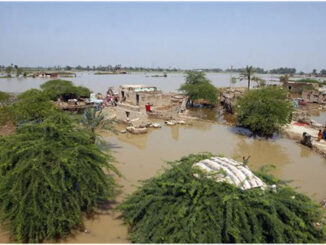
    Islamabad  (TIP): The death toll from flash floods triggered by record monsoon rains across much of Pakistan reached 1,186 on September 1, as authorities scrambled to provide relief materials to tens of thousands of affected people. Record monsoon rains in the last three decades triggered floods which inundated one third of the country, including most of Balochistan and Sindh provinces.

    “So far 1,186 people have died and 4,896 injured while 5,063 kms of roads damaged, 1,172,549 houses partially or completely destroyed and 733,488 livestock killed,” said the National Disaster Management Authority (NDMA), the main body dealing with calamities.

    On Thursday, the army said that some 50,000 people have been evacuated since rescue efforts began.

    Foreign Office spokesperson AsimIftikhar Ahmed said that more than 33 million people have been affected due to “colossal scale of devastation”.

    During a media briefing here, he said Pakistan mounted coordinated rescue and relief operations mobilising all possible resources but the sheer scale of the calamity “stretched our resources and capacities to the limit, thus necessitating support from the international community”.

    The cash-strapped Pakistan government on Tuesday teamed up with the United Nations to issue a flash appeal for USD 160 million to deal with the disaster in the country that has become the “ground zero” of global warming.

    “The Flash Appeal launch was well attended by Member States both in Islamabad and Geneva, Heads of UN agencies in Pakistan, representatives of international organizations, among others. Participants offered condolences and expressions of solidarity, and assured continued support for Pakistan,” the spokesman said.

    He also said that Pakistan faced a “climate-induced calamity” because the monsoons were not ordinary, “as the UNSG termed them ‘monsoons on steroid’.” UN Secretary-General Antonio Guterres will be visiting Pakistan on September 9-10 on an important visit to “express solidarity and international community’s support for Pakistan at this difficult time,” he said.

    Talking about the outpouring of relief supplies, he said till last night, Pakistan received flood relief goods through 21 flights notably from Turkey, UAE and China.

    He said a large number of countries and international organisations pledged to support and are extending cash or in-kind assistance including Australia, Azerbaijan, Canada, China, EU, France, Iran, Japan, Kazakhstan, Kuwait, New Zealand, Norway, Palestine, Qatar, South Korea, Saudi Arabia, Singapore, Turkiye, the UAE, United Kingdom, the United States, Uzbekistan, along with various international organisations including World Bank, Asian Development Bank and other UN Agencies. He said Pakistan on Wednesday signed the Green Framework Engagement Agreement with Denmark in Copenhagen, which marks the first step in creating stronger collaboration in areas such as climate change mitigation and adaptation, and a just and sustainable green transition.

    Separately, Prime Minister Shehbaz Sharif while addressing lawmakers of his Pakistan Muslim League-Nawaz asked them to visit the flood victims with relief goods. The prime minister said that he had never seen such a calamity before. “Water has wreaked havoc everywhere,” he said.

    He also asked Finance Minister Miftah Ismail to devise a plan to give relief to the flood-affected people with electricity bills. Army chief General Qamar JavedBajwa visited the Rohjan area of Punjab and met flood victims whom he assured that the Pakistan Army will help them to overcome their problems in these difficult times, the army said.

    He also directed ground troops to “take this responsibility as a noble cause and spare no effort to lessen the burden of flood-affected brothers and sisters”.

    Advisor to the Prime Minister on Kashmir and Gilgit-Baltistan Affairs Qamar Zaman Kaira said that Prime Minister Sharif would visit Gilgit-Baltistan on Friday and announce a relief package for the flood victims.

    Separately, the United Nations International Children’s Emergency Fund (Unicef) said in a statement that more than three million children were in need of humanitarian assistance in Pakistan and at increased risk of waterborne diseases, drowning and malnutrition due to flooding.

    “These floods have already taken a devastating toll on children and families, and the situation could become even worse,” the statement quoted Unicef representative in Pakistan Abdullah Fadil as saying.

    To add to worries, the Pakistan Meteorological Department (PMD) has forecast more rain in September, saying that La Nina conditions — responsible for recent spells of flood-triggering deluge in the country — would persist in September but become less intense.

    “Tendency for normal to above normal precipitation is likely over the country during September,” the Met Office said, predicting above-normal rainfall in northeastern Punjab and Sindh. (PTI)

  • FIA Chicago is celebrating 75 years of Independent India under the banner of “The Azadi Ka Amrit Mahotsav

    FIA Chicago is celebrating 75 years of Independent India under the banner of “The Azadi Ka Amrit Mahotsav

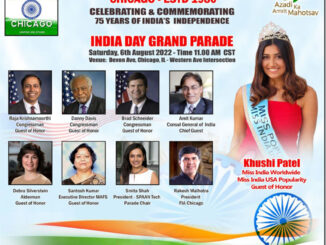
    CHICAGO, IL (TIP): : Federation of Indian Association, Chicago is celebrating 75 years of Independent India under the banner of “The Azadi Ka Amrit Mahotsav”. Independence Day is always memorable – the day to rejoice in the glory of what India has been able to achieve and to remember the contributions, battles, and sacrifices of all the people who helped achieve it. During the past 75 years, India has emerged as a mature democracy. This is very special for all of us as INDIA completes 75 years of independence. FIA celebrations include the grand India Day Parade at the Devon Ave, Chicago on Saturday, 6th August at 11 pm. The Indian National flag rising will be on 15th August at the prestigious Daley Center in Chicago Downtown, and there will be a patriotic Gala Banquet on Friday, 12th August to commemorate and recognize the people who have been serving the community selflessly. “The entire Indian diaspora living the United States is very excited and looking forward to FIA annual India day Parade and celebrating Azadi Ka Amrit Mahotsav”, said Rakesh Malhotra, President of the Federation of Indian Associations, Chicago

    Celebrating Indian Independence Day 2022

    FIA has been organizing these events for the past forty years here in Chicago, in which the spirit of the freedom movement, honor to the martyrs, and their vow to develop India can be experienced. “It is important to make the new generation aware of India’s freedom struggle and the contributions made by the freedom fighters to get India its independence. Our goal is to inspire the young generation to connect with their roots, values, and rich heritage and work hard to make India Vishwa Guru Again”, said Rakesh Malhotra, President of the Federation. Miss India Worldwide Khushi Patel has been invited to India Day Parade. Indian diaspora living from Chicago land are excited about participation in the Grand Parade. Multiple community-based organizations representing various Indian states like Bengal, Punjab, Uttar Pradesh, Madhya Pradesh, Chhattisgarh, Maharashtra, Telangana, Andhra Pradesh, and Kerala will be showcasing their decorative floats during the grand parade to commemorate 75 years of Independence. Consul General of Chicago Amit Kumar, US Congressman Danny Davis, Congressman Raja Krishnamurthy, Congressman Brad Schneider, Alderman Debra Silverstein, Alderman Shweta Baid, Prominent Community leaders including Dr Bharat Barai, Dr Darshan Sigh Dhaliwal,  Mr Santosh Kumar, Executive Director MAFS , Dr. Ram Chakroborty, founder of Chicago Kali Bari and Mrs. Smita Shah President & CEO of Spaan Tech. are likely to attend the FIA India@75-day events.  Aparna Chakravarty, Mrs India Worldwide 2ndRU will be joining the Chicago Kali Bari colorful float to reflect the spirit of community and festivity

    Connecting with the roots

    To engage the young students, a poster and painting contest on the theme of “My Idea of India” is being organized so that the younger generation can express their impression and vision of India. Likewise, a “Rangoli Making” competition for all age groups has also been organized.  Participation in these contests is free and entries can be submitted digitally. FIA Chicago proudly shares that all plaques and trophies to be given during its annual India@75 Gala are handmade in India by Tribal from the State of Chhattisgarh.

    Federation of Indian Associations, Chicago will be also releasing India@75 souvenir on this momentous occasion to commemorate the glory of India. “Souvenir will capture iconic moments that shaped India”, informed Rakesh Malhotra. Young students, women and professionals are amongst the contributors.

    About the Federation of Indian Associations, Chicago

    Federation of Indian Associations (FIA), Chicago is the largest non-profit Indian American organization. It was established in 1980 to primarily serve the community and promote and educate Indian Cultural Heritage while making meaningful contributions to America’s growth. More than 50 Illinois-based community organizations and nonprofits are members of the Federation. Besides engagement with various organizations across Chicago land, the FIA also takes a lead role in bringing the community together to celebrate various events of historical importance to both the United States and India.

    (Press release and photo /Asian Media USA)

  • Pakistan energy crisis: Karachi markets to shut at 9 pm to save electricity

    Pakistan energy crisis: Karachi markets to shut at 9 pm to save electricity

    Karachi (TIP): The vibrant nightlife in Pakistan’s biggest city Karachi has been hit with the Sindh province government directing all shopping malls, markets, wedding halls and restaurants to close down early to save fuel and energy.

    The move by the provincial government on June 18 was aimed to overcome the energy crisis in the country that has also affected Pakistan’s economy. “We are facing an ongoing energy crisis emergency and we need to take measures which might not be popular but necessary to control the situation,” Home Secretary Dr Saeed Ahmed Mangnejo said. Mangnejo said that all markets, bazaars, shops and shopping malls would have to close by 9 pm while wedding halls and restaurants have also been instructed to shut down by 10.30 pm.

    Karachi, being a cosmopolitan city, is famous for its nightlife with restaurants, markets, malls, cineplexes, wedding halls all remaining outlets open till late into the night.

    The official said these measures were being taken to not only reduce wastage of fuel and electricity but to find a solution to the prevalent power outages and load shedding so the shortfall between the demand and supply of electricity could be reduced.

    Karachiites in recent weeks have spent sleepless nights in the hot sweltering weather conditions due to prolonged power cuts and load shedding with angry residents even coming out on roads in many areas to protest the hours-long power cuts. Mangnejo said that a notification from the Sindh government also authorised station house officers (SHOs) to register complaints against people who violated the directives. The federal government on Saturday also issued similar instructions for the Punjab province. With the US dollar soaring to Rs 208 in recent days, the government is desperate to reduce the burden of importing fuel, energy and other items with import of many non-essential items already being banned in the just announced federal budget. (PTI)

  • Know how President of India is elected

    Know how President of India is elected

    On July 18, elected MLAs and MPs across the country will vote to elect India’s 15th President. Under Article 62(1) of the Constitution, “an election to fill a vacancy caused by the expiration of the term of office of President shall be completed before the expiration of the term”. President Ram Nath Kovind’s tenure ends on July 24. The counting of votes will take place on July 21 and the new president will take oath on July 25.

    The notification for the presidential election has been issued on June 15 and the last day of filing a nomination will be June 29. The papers will be scrutinised on June 30. The last day to withdraw the nomination papers will be July 2.

    “The Election Commission, in consultation with the Central Government, appoints the Secretary General of Lok Sabha and Rajya Sabha, by rotation, as the Returning Officer,” the EC said.

    “Accordingly, the Secretary General, Rajya Sabha will be appointed as the Returning Officer for the present election to the Office of the President,” it added.

    Here’s the process of electing a President

    According to Article 55 of the Constitution, the President of India is elected by members of the Electoral College consisting of elected Members of Parliament and that of all the state assemblies including the National Capital Territory of Delhi and the Union Territory of Puducherry. It follows the system of proportional representation utilising a single transferable vote system and secret ballots.

    Nominated members of Parliament, state assembly and members of legislative council are not eligible to vote.

    Importantly, the members who are nominated to either House of Parliament or the Legislative Assemblies of State including NCT of Delhi and UT of Puducherry are not eligible to be included in the Electoral College.

    This year, a total of 776 Members of Parliament and 4,033 MLAs will vote in the Presidential elections. The total value of votes is 10,86,431. The value of votes of MLAs is 5,43,231 and MPs are 5,43,200.

    Who is eligible?

    To be eligible for the election, the person: must be a citizen of India; have completed the age of 35 years; and is qualified for election as a member of the House of the People (Article 58).

    The person will not be eligible if he/she holds any office of profit under the Government of India or the Government of any State or under any local or other authority that is controlled by any of the state governments.

    What’s the process?

    The process starts with the nomination. The Presidential candidate should get his nomination paper subscribed by at least 50 electors as proposers and at least 50 electors as seconders. Importantly, the elector should not subscribe to more than one nomination paper either as a proposer or as a seconder. The candidate is required to deposit security, which is Rs 15,000. It is supposed to be made along with the nomination paper. More than four nomination papers can not be filed by or on behalf of a candidate or received by the Returning Officer.

    Where does the voting take place?

    Voting for the Presidential election will take place in Parliament and the premises of state assemblies, while Rajya Sabha Secretary-General will be the returning officer. MPs cast their vote in Parliament and MLAs in their respective state assemblies.

    Process of voting

    The election follows proportional voting which means that the value of each vote varies as it based on the post. The value of each vote based on the population is also predetermined for an MLA vote. This year, the total number of electors for the election will be 4,809 – 776 MPs and 4,033 MLAs.

    Who will be India’s next President?

    India’s President does not exercise executive powers, but all executive decisions are carried out in her name. She is required by the Constitution to act on the advice of the council of ministers led by the Prime Minister.

    But the President can ask the government to reconsider actions and offer advice. In matters of legislation, for example. So, it would be wrong to say that the role is only ceremonial or that the President is a mere figurehead or rubber stamp. Presidents like Pranab Mukherjee have been quite assertive, especially while dealing with mercy petitions from death row convicts. One of the most crucial roles of the President is seen when no party is able to get a parliamentary majority in a national election.

    So, the presidential election is crucial, and you should care about it. The election is indirect, but the result does indicate how much popular support both camps, the government and the opposition, have in the country.

    On your mind could be several key questions, from the poll process to front-runners to the numbers game, and to possible scenarios. But first let’s get some important dates out of our way.

    The President is elected by members of the Electoral College comprising elected members of both Houses of Parliament, and elected members of the Legislative Assemblies of all states and the National Capital Territory of Delhi and the Union Territory of Puducherry.

    This means nominated members of the Rajya Sabha and the Lok Sabha or Legislative Assemblies of states are not part of the Electoral College. Similarly, members of Legislative Councils also do not participate in the election process.

    The value of votes of MPs and MLAs varies based on the population of states they come from.

    It is mandatory for 50 MPs to propose the candidate, followed by another 50 seconding the candidature.

    Polling will be held in the Parliament House and on the premises of the State Legislative Assemblies.

    The election is held by secret ballot. A single transferable vote is used per the system of proportional representation.

    On the ballot paper, there are two columns. The names of candidates are listed in the first column, and the order of preference is listed in the second column.

    THE NUMBERS GAME

    The Electoral College has 4,809 electors, including 776 Members of Parliament (MPs) and 4,033 Members of Legislative Assemblies (MLAs).

    The total value of votes will be 10,86,431. To win, a candidate must get at least 5,43,216 votes.

    In the last election in 2017, Ram Nath Kovind of the NDA defeated joint Opposition candidate Meira Kumar. Kovind polled 7,02,000 votes compared with Kumar’s 3,67,000, out of a total of 10,69,358 votes.

    Roughly speaking, the ruling BJP-led National Democratic Alliance (NDA) has 48 per cent of the votes this time. It is 23 per cent for the Congress-led United Progressive Alliance (UPA).

    So, the NDA should not have any problem in getting its candidate elected. But the contest will become tight if all non-BJP parties unite (this explains hectic consultations on both sides). Then the opposition will have about 51 per cent of the votes.

    This is unlikely. Some reports say that “independents” such as Andhra Pradesh’s ruling YSRCP and Odisha’s ruling BJD may support the NDA. The BJP’s Tamil Nadu ally, the AIADMK, may also do so.

    The BJP has authorised its party president JP Nadda and Union minister Rajnath Singh to hold consultations with constituents of the NDA and the UPA, besides other political parties, as well as independent members. A consensus candidate is always preferable.

    PROBABLE CANDIDATES

    The general impression is that the BJP is unlikely to re-nominate Kovind. Rajendra Prasad was the only President to get two full terms. Both camps have not named their candidates yet. But that does not mean we’re short of suggestions. Former West Bengal Governor and Mahatma Gandhi’s grandson, Gopalkrishna Gandhi, has been approached by some leaders to be a joint Opposition candidate. He is the Left’s suggestion. There is talk about NCP chief Sharad Pawar exploring the possibility of pushing dissident Congress leader Ghulam Nabi Azad as the Opposition nominee. On the other hand, NDA probables may include Kerala Governor Mohammad Arif Khan, former Jharkhand Governor and tribal leader from Odisha Draupadi Murmu, Chhattisgarh Governor and tribal leader Anusuiya Uikey, Telangana Governor Tamilsai Soundararajan, Karnataka Governor and Dalit leader Thawar Chand Gehlot, former Lok Sabha Speaker Sumitra Mahajan, and Odisha’s tribal leader Jual Oram

    A disclaimer: The BJP remains capable of surprising everyone, like when it nominated APJ Abdul Kalam in 2002. The name of TMC leader Yashwant Sinha (though Bengal’s ruling party TMC has indicated none of its own members will be a candidate) is also being talked about. Earlier reports said that the Congress, the TMC, the AAP and the Shiv Sena wanted Pawar to be the opposition’s candidate, but he has declined the offer.

    JD(U) leader and Bihar minister Shravan Kumar has said party chief and Bihar CM Nitish Kumar could be a good candidate. Maharashtra minister and NCP spokesperson Nawab Malik has said Kumar’s candidature as an opposition choice can be considered if the latter snaps ties with the BJP/NDA in Bihar. On his part, Nitish Kumar has clarified that he never wanted to, and will not, contest the President’s election.

    CRACKS IN OPPOSITION

    Cracks have appeared in the opposition camp. The Congress is currently preoccupied with rallying support for its leader Rahul Gandhi, being questioned by the Enforcement Directorate in the National Herald money-laundering case.

    Actually, there is no one opposition camp. There is the Congress-led United Progressive Alliance (UPA). But that’s mostly the Congress with non-ruling allies like the RJD of Bihar. The Congress rules Rajasthan and Chhattisgarh and is a junior partner in states such as Maharashtra, Jharkhand and Tamil Nadu.

    West Bengal Chief Minister and TMC leader Mamata Banerjee has met Sharad Pawar, whose party NCP is part of Maharashtra’s ruling coalition MVA, led by the Shiv Sena and also comprising the Congress. Banerjee is trying to bring everyone on a single platform but Congress, while attending consultations driven by her, does not want to be overshadowed by a former Congresswoman. The grand old party is also holding its own meetings.

    The Left is not happy with Banerjee’s “unilaterally” organised deliberations. Delhi Chief Minister Arvind Kejriwal’s AAP (which is also ruling Punjab) has been a Congress critic and cautious of Banerjee in matters of national politics. On the other hand, Telangana Chief Minister K Chandrashekar Rao of TRS has his own ambitions.

    The Congress has asked its leader Mallikarjun Kharge to hold talks with all like-minded parties on the possibility of fielding a joint candidate. Kharge met NCP chief Sharad Pawar at the latter’s residence in Mumbai on June 9.

    Congress president Sonia Gandhi has herself reached out to Opposition leaders, including DMK chief MK Stalin, Pawar, CPM’s Sitaram Yechury. Banerjee and Telangana CM K Chandrashekar Rao, both non-UPA leaders, have also met leaders of the MVA. On June 15, Banerjee held a meeting with Opposition leaders in Delhi where no one from the AAP, the TRS and the BJD came despite invitations. Those who attended the meeting convened to prepare a joint strategy included Pawar, PDP’s Mehbooba Mufti, NC’s Omar Abdullah and SP’s Akhilesh Yadav, besides some Congress leaders including Kharge.

    Looks like a fractured opposition may again end up helping the BJP in an important election. Unless, of course, the mirage of oft-cited total opposition unity finally becomes a reality.

  • Indo-Canadians are emerging as a strong political entity

    Indo-Canadians are emerging as a strong political entity

    By Prabhjot Singh

    Indo-Canadian politicians after establishing their credibility at the community level, and now, on the basis of their track record, are  emerging as a strong political entity  with their growing presence on the provincial and federal stage.  When Ontario goes to polls in first week of June, they will be  major  playmakers,  says Prabhjot Singh, holding  their past record since their entry in provincial politics in British Columbia in 1986 has been a success story that every immigrant community across the globe should emulate.

    After making  a dent in the political scenario of the province of British Columbia in Canada in the early 80s when they sent Moe Sihota to the state legislature as an elected MLA on the New Democratic Party ticket, South Asian politicians have come a long way. They have not only scripted a success story but are a vibrant and rapidly growing political entity that has  successfully spread its wings  as  both federal and provincial  lawmakers.

    Born in Duncan, Moe  – Munmohan Singh – Sihota has been the second generation politician of Indian origin who served on the BC Cabinet in different capacities before heading the BC NDP. “Immigrants  from South Asia take more interest in politics back home than flex theirpolitical sinews in the new countries of their domicile. They, somehow, do not get assimilated in their new political environments.” This observation, made by one of the scholars-cum-writers on the Indian diaspora about 30 years ago, now needs to be revised.

    The South Asian politicians are now more into Canadian politics at all levels – from municipal to federal – than remaining involved in politics back home.  Their diminishing interest in politics back home was evident from their token presence in the just concluded Punjab Vidhan Sabha elections that gave a landslide win to the Aam Aadmi party with 92 of 117 seats.

    South Asian immigrants now not only occupy 20 odd seats in the House of Commons but also have one of them as the leader of a major federal party, the NDP. It is this leader, Jagmeet Singh, who earlier sat in the Ontario Provincial Parliament for nearly two terms, signed an agreement with the minority Liberal Government of Justin Trudeau to keep it in office till the completion of its term in 2024, for getting important demands of NDP, including free dental care, accepted.

    What started as a single seat in the British Columbia Provincial Parliament in October 1986 has now spread to five Provincial Parliaments that have South Asian politicians as members. The latest on the list is Saskatchewan that had in 2020 elected its first ever Indo-Canadian Gary Grewal from Regina.

    The South Asian politicians in general and Indo-Canadians in particular will now be sending 50-odd candidates for the ensuing elections to the Ontario Provincial Parliament in the first week of June. Besides representing the ruling Conservatives, they will also be contesting under the banners of Liberal, NDP, Green and other parties.

    Interestingly, most of these candidates are not only second generation Canadians but are also well qualified professionals, including lawyers, teachers, nurses, engineers and social activists with degrees from top universities in Canada. Only a handful of first generation politicians will be in fray for the June polls. The growth  of Indo-Canadian politicians has been phenomenal. Fourteen years after Moe Sihota was elected to British Columbia Provincial Parliament, Ujjal Dosanjh earned the distinction of becoming the first Indo-Canadian to take oath as Premier of British Columbia. The Indo-Canadian community, especially Punjabis, have, since then, not looked back.

    Though initial political successes came in British Columbia under the banner of NDP, the South Asian politicians jumped on the Liberal bandwagon for rapid strides in Canadian politics.

    The 1990 Calgary Convention of the Liberal Party, leading to the election of Jean Chretien as its leader, was a milestone, for it formed a solid, loyal voting block for the future Prime Minister of Canada. It was the first time the community organized itself as a political force. Some still believe that the events back home in 1984 was a strong factor that mobilized a small but highly vociferous community into a political group.

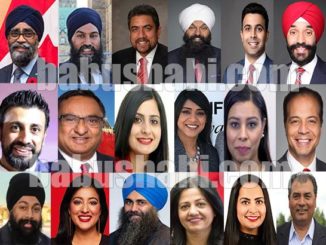
    Now 30 years later, the Indo-Canadian community not only boasts of  Indo-Canadian as Defense Ministers of Canada in Harjit Singh Sajjan or Anita Anand  or a Punjabi as the first woman Leader of the House of Commons in Bardish Chagger or first Punjabi Premier of British Columbia in Ujjal Dosanjh but  also  several  ministers  starting with Herb Dhaliwal, Navdeep Bains,  and Amarjit Sohi ; Gurbax Malhi, the first turbaned Sikh as Member of the House of Commons for five successive terms; and Grewals, Gurmant and wife Neena, as the first Punjabi couple in Parliament, but also several Punjabis sitting in Provincial Parliaments of Ontario, British Columbia, Manitoba, Alberta and Saskatchewan.

    In Ontario , Raminder Gill, who represented the Conservative Party, was  one of pioneers of Punjabi politicians  to be elected as  a Member of the Provincial Parliament. Since then, the number of  Punjabi politicians  as MPPs (Members of Provincial Parliament or MLAs in common parlance) has been growing with every election.

    Dr Gulzar Cheema has the distinction of sitting in both Manitoba and British Columbia Provincial Parliaments.

    Besides the 1990 Calgary convention of the Liberals, the emergence of this new phenomenon of ethno-politics in Canada is  also linked more to the election of three Indo-Canadians to the House of Commons in 1993 — Herb Dhaliwal, Gurbax Singh Malhi and Jag Bhaduria — it has been gradually gaining ground to what the Canadian media used to  describe as the “apna factor”, symbolizing a movement that was gaining strength using the “block voting” technique.

    Arguments given in favor of the “apna factor” and “block voting” techniques were substantiated by the fact that most of the political success stories, for example in Ontario,  came from the suburbs of major  cities like Brampton, Mississauga and Scarborough of the Greater Toronto Area. It is true that not many politicians of South Asian origin have won from the main cities. But things are changing.

    Late Deepak Obhrai, who won from Calgary East for a record number of times, used to attribute the influence of the Indo-Canadian community to a passion for politics that he believed was rooted in a movement that led to India’s Independence from Britain in 1947.

    It is pertinent to mention here that Kamagata Maru or the Ghadar Movement, too, took off from the shores of British Columbia in Canada, the region from where the battle for political recognition began. The then Indo-Canadians or Indian immigrants worked as lumberjacksand participated in development projects, before getting together and heading homewards to get their motherland freed.

    It was argued  that the freedom movement galvanized the whole nation as every cross-section of society was involved. It infused Indians with an intense interest in politics that is still palpable in the Indo-Canadian community, which has been called the “most politically active ethnic group in Canada now.”

    Interestingly, the Indo-Canadian community mostly  supported the NDP inBritish Columbia in provincial elections.  It  also ensured that  Sukh Dhaliwal now and HerbDhaliwal  earlier retained their  seat in the House of Commons as  Liberals. In Alberta, the Indo-Canadian community, though small in number, elected more Reform or Conservative  MPs. In Ontario,  initially they used to go  with Liberals in Federalelections  but gradually started supporting Conservatives also. It has supported both Liberals and Conservatives in the provincial elections.

    That diversity of view is seen at the elected level, where there are MPPs or MPs with the Reform, Liberals, NDP and Conservative parties. Some former Canadian MPs of Punjabi origin, including Gurbax Malhi, used to attribute the success of Indo-Canadian politicians totiming rather than to the “apna factor”. They argued  that Indo-Canadian politicians had spent many years establishing their credibility at the community level, and now on the basis of their track record, they are getting widespread voter support to jump to the provincial or federal stage.

                                                                                 (To be concluded)

    (Prabhjot Singh is a veteran journalist with over three decades of experience covering a wide spectrum of subjects and stories. He has covered  Punjab and Sikh affairs for more than three decades besides covering seven Olympics and several major sporting events and hosting TV shows. For more in-depth analysis please visit probingeye.com  or follow him on Twitter.com/probingeye. He can be reached at prabhjot416@gmail.com)


  • Get Rid of the feudal mindset

    Punjab is beset with many problems. Surely, Chandigarh is not one. The worst is the feudal mindset that governs relationship between people. There can be no equality if the society is divided among two groups- the masters and the slaves. This mindset has to change. The Sarkar, mai baap, huzoor, Sahib ji culture has nothing to do with humility. These words  reek of slavishness. The people in the government, the bureaucrats and the civil servants should cease to behave like masters.

    Another evil plaguing the State is corruption. The pay and play game which has been going on for decades must stop. There can be no fairness and justice in such a system.

    Too many people are unemployed and poor. One cannot expect hungry people to contribute to a State in any way. On the contrary, one can clearly find a connection between unemployment and crime. Drug addiction, drug smuggling, and many other crimes are directly related to the unemployment of the people. Then there is a fractured educational system, and another is a sick healthcare system.

    Any State aspiring to be worth living for people must provide means of sustenance and a dignified life. Hope the new government in Punjab  is aware of the problems and has solutions, too.

  • Congress must reform: It’s in the interest of democracy

    The rout of the Congress in the recent Assembly elections confirms the view that the grand old party is in terminal decline, and that the 2024 parliamentary election would pit the BJP not against the Congress but a coalition of regional parties, with or without the Congress. When the BJP won power at the Centre in 2014, the Congress ruled nine states — now, with the loss of Punjab, the number is down to two. In the last eight years, the Congress has won just five of the 45 elections held in the country. Its hope of wresting back Himachal Pradesh from the BJP later this year would be reduced in the absence of state supremo Virbhadra Singh, who died last year; the two states it still rules, Rajasthan and Chhattisgarh, go to the polls in 2023 and there is a real possibility that by the 2024 General Election, it may be in power in no state at all. The decimation of the Congress robs the voter of a centrist option at the national level, and makes the contest in national electoral politics multipolar, with various regional parties — with vastly different ideologies and ambitions — coming together to challenge the BJP. India must have a strong Opposition to hold the government to account.

    However, a motley collection of parties — competing for prime ministership among themselves — may not be best suited to serve the interests of democracy. The Congress, despite its spectacular decline over the last decade, had seemed the most viable alternative to the BJP, but even veteran Congressmen are losing hope now. The Congress’ vote share in the last two General Elections was the second-best — at 19.31% and 19.46% — behind the BJP, and it has the potential to represent Indian citizens across the country. It still may be the biggest single challenger to the BJP, but it’s obvious that it has got stuck in a rut. There is confusion at the top — after Rahul’s resignation as president in 2019, Sonia Gandhi has been interim president — and panic in the ranks. Organizational reform is the need of the hour, in the interest of a strong Opposition — and, thus, in the interests of India.

    (Tribune, India)

  • Mild Fluctuations in Share of National and Regional Parties

    Mild Fluctuations in Share of National and Regional Parties

    By Prabhjot Singh

    A careful analysis of the election results since 1967 would reveal that the percentage of votes polled by national parties, mainly the Congress, except for 1977 and 1997, has been more than 50. In 1967, for example, when Punjab had its first coalition government — the United Front — the Congress had polled 36.56 per cent of the total votes against 26.47 per cent votes polled by all state parties. The overall votes polled by national parties, including the Congress, Jana Sangh, CPI, CPM, Praja Socialist Party and Swatantra Party — was 56.60. In 1969, the share of national parties rose to 58.34 per cent, with the Congress increasing its share to 39.18 per cent while the state parties accounted for only 30.44 per cent of the votes. In 1972, when the Congress returned to power in the State, the share of the national parties increased slightly to 58.77 per cent while those of state parties dropped to 28.73 per cent. The Congress had taken its poll percentage to 42.84, which had been surpassed only twice afterwards, first in 1980 when the Congress got 45.19 per cent of the total votes polled and again in 1992 when it got 43.71 per cent votes.

    The 1992 election was exceptional in the history of Punjab. The mainstream Shiromani Akali Dal boycotted the elections. A faction of the Dal, led by the then rebel Akali leader, Capt Amarinder Singh, contested 58 seats and won only three. This was the only occasion when the percentage of votes dropped to 23.82, the lowest ever. The other lowest being 64.33 in 1980. The share of national parties dropped to 40.29 per cent, the only time below 50 per cent, in 1997 when besides 26.59 per cent of the votes secured by the Congress, all the national parties, including the BJP, CPI and CPM had aggregated 40.29 per cent. The most distinguishing aspect of Punjab politics has been that the Akalis, even at times securing clear majority, have been aligning themselves with the Jana Sangh/Bharatiya Janata Party. This combination alienated both Sikh and Hindu votes from the once powerful Congress.

    The emergence of the Bahujan Samaj Party in the 1992 elections saw this political outfit of the downtrodden getting 16.32 per cent of the valid votes polled which in the 1992 elections was more than three times that secured by the Akali Dal led by Capt Amarinder Singh. Interestingly, the BSP had bagged nine seats against three by the Akalis. The BSP, however, failed to maintain its tempo and in the 1997 elections, after witnessing a vertical split-leading to the formation of the Bahujan Semaj Morcha headed by Mr. Satnam Singh Kainth — saw its share of vote coming down to 7.48 per cent of the total valid votes and its share in the Vidhan Sabha dropping to one. The electorate in Punjab have known to participate in the process enthusiastically, averaging more than 64 per cent in all the previous elections held in the State so far.

    Till date, the Shiromani Akali Dal has never crossed the 40 per cent barrier. Its best performance was in 1985 when it got 38.01 per cent of the total valid votes. In 1997, this percentage dropped slightly to 37.64. Besides the Congress and the Akali Dal, other main players in Punjab politics have been Jana Sangh/BJP, CPI, CPM and briefly the Janata Party, which in the 1977 elections polled 14.99 per cent votes to win 25 seats out of 41 candidates put up by it.

    The Communists — the CPI and the CPM — put together had been aggregating about 9 to 10 percent of the total valid votes polled till 1997. The exceptions were the 1967 and 1969 election when they polled less than 8 per cent but since 1972, they have been averaging 9 per cent and above. In the 1967 elections they polled 8.46 per cent votes, 7.91 per cent in 1969, 9.77 per cent in 1972 and 9.60 per cent in 1977 winning eight, six, 11 and 15 seats collectively, respectively.

    In 1980, they crossed the double figure mark, aggregating 10.52 per cent to win 14 seats — nine by the CPI and five by the CPM. Since then, their share, both in percentage of valid votes and seats in the Vidhan Sabha, has been dropping as in the 1997 elections, they got only 4.77 per cent of total valid votes with two seats in the Vidhan Sabha. In the last Vidhan Sabha, the Communists went unrepresented. During the first term of Capt Amarinder Singh as Chief Minister, both the Communist legislators, defected and joined Congress. Since then, the Communists had been drawing a blank in Vidhan Sabha elections.

    (Prabhjot Singh is a veteran journalist with over three decades of experience covering a wide spectrum of subjects and stories. He has covered  Punjab and Sikh affairs for more than three decades besides covering seven Olympics and several major sporting events and hosting TV shows. For more in-depth analysis please visit probingeye.com  or follow him on Twitter.com/probingeye)

  • Law ministry approves increase of poll expenditure by candidates

    New Delhi (TIP)-The Union ministry of law and justice on Thursday, Jan 6,  approved raising the election expenditure ceiling by a candidate to a maximum of Rs 95 lakh in Parliamentary elections and Rs 40 lakhs in assembly elections, increasing them from the earlier limits of Rs 77 lakh and Rs 30.8 lakh.

    The increase comes at a time when five states are headed for assembly polls — Uttar Pradesh, Punjab, Uttarakhand, Manipur and Goa — even as a sharply rising third wave of Covid-19 cases has raised the clamour for political rallies to be conducted virtually to avoid the spread of the infection.

    The increased budget is meant to facilitate this shift, officials familiar with the matter said on condition of anonymity.

    “In exercise of the powers conferred by subsection (3) of Section 77 read with Section 169 of the Representation of the People Act, 1951 (43 of 1951), the central government, after consulting the Election Commission of India, hereby makes the following rules further to amend the Conduct of Elections Rules, 1961, namely, the government said in a gazette notification. These rules may be called the Conduct of Elections (Amendment) Rules, 2022. (2) They shall come into force on the date of their publication in the Official Gazette,” the gazette notification said.

    In 2020, the government approved a 10% raise in the poll expenditure cap ahead of the Bihar elections to allow candidates to spend on virtual campaigning amid the pandemic. The ceiling for parliamentary constituencies was at the time raised to Rs 77 lakh, from the 2014 limit of Rs 70 lakh, and assembly polls to Rs 30.8 lakhs from Rs 28 lakh in larger states. With the revision, candidates in Uttar Pradesh, Uttarakhand and Punjab — classified among large states — will therefore be able to spend Rs 40 lakh in the upcoming polls, while those in Goa and Manipur — classified as small states — will have to adhere to a limit of Rs 28 lakh.

    The increase was cleared on the recommendation by the Election Commission, the official cited above said.

    According to EC officials, there were three considerations which officials had while recommending raising limit. “Number of electors has gone up significantly, inflation index has also gone up,” a second official said.

    The Commission anticipates virtual campaigning to also increase costs. ‘They will need to out up big screens in various places so a budget for that had to be factored in,’’ the official added, saying that this was part of the reforms that the poll panel has been pushing for. The Commission had come under the scanner in April this year as polls continued amid the peak of the second wave of the pandemic. The Madras High Court went as far as to say that EC officials were culpable for murder for conducting polls.

    Candidate expenditure includes the money spent by them on polling events, rallies, posters and other paraphernalia. The same, however, can also be borne by the political party the candidate is affiliated to.      Source HT

  • Four men handed death penalty for gang raping college student in Pakistan

    Lahore (TIP):  Four men who were convicted of gang-raping and robbing a 20-year-old college student in Punjab province has been sentenced to death by a Pakistan court. In January this year, the four suspects — Naseer Ahmed, Muhammad Waseem, Umar Hayat and Faqir Hussain — broke into a house at a village in Bahawalpur district, around 400 kms from Lahore, and gang raped the girl, before disappearing with cash and gold ornaments, the prosecution said. After the robbery, the suspects took the girl to a separate room and gang raped her, despite requests from her parents to spare her, the FIR stated. The additional district and sessions judge, Rana Abdul Hakim, on Wednesday pronounced the verdict. A few months ago, in Shujabad, Multan, four armed robbers had ganged raped a newly-wed bride in front of her husband. The police are yet to nab the culprits. —PTI

  • India in history this Week-December 10 to December 16, 2021

    India in history this Week-December 10 to December 16, 2021

    10 DECEMBER

    1878       The freedom fighter leader G. Rajagopalachari was born.

    1878       Birth of Muhammad Ali Johar, one of the founders of Jamia Millia Islamia in Rampur.

    2001       Dada Muni, one of the stalwarts of Indian cinema, said goodbye to the world.

    1992       The first hovercraft service of the country was started in Gujarat.

    1998       Amartya Sen was awarded the Nobel Prize for Economics in Stockholm.

    11 DECEMBER

    1911       Dilip Kumar, one of the greatest actors of Indian cinema, was born.

    1935       Former President of the country Pranab Mukherjee was born in Birbhum in West Bengal.

    1969       Vishwanath Anand, the emperor of chess, was born.

    2011       Pandit Ravi Shankar died.

    1845       First Anglo-Sikh War: The Sikh army crossed the Sutlej River in Punjab.

    1858       Bankim Chandra Chattopadhyay and Yadunath Bose became the first Bachelor of Arts subjects from the University of Calcutta.

    1946       Rajendra Prasad was appointed the President of the Constituent Assembly.

    1967       In western India, a magnitude 6.5 earthquake killed 170 people.

    1687       The East India Company formed a municipal corporation in Madras (India).

    12 DECEMBER

    1911       The capital of India was shifted from Calcutta to Delhi.

    1971       All the facilities provided to the former kings by the Indian Parliament were canceled.

    1992       Giant Buddha statue was installed in Hyderabad’s Hussain Sagar lake.

    1996       Signing of 30-year treaty on the sharing of Ganga water between India and Bangladesh.

    2001       India gave two cheetah helicopters and weapons to Nepal.

    1964       Famous Hindi poet and litterateur Maithilesharan Gupta died.

    13 DECEMBER

    1232       Iltutmish, the ruler of the Ghulam dynasty, captured Gwalior.

    2001       The Indian Parliament was attacked by terrorists.

    1921       The Banaras Hindu University was inaugurated by the ‘Prince of Wales’.

    1955       India and the Soviet Union accepted the Panchsheel agreement.

    1961       Mansoor Ali Khan Pataudi started his Test match career against England in Delhi.

    1998       Mahatma Ramchandra Veer was awarded the “Bhai Hanuman Prasad Poddar Rashtra Seva” award from the Bada Bazaar Library in Kolkata.

    2008       For the fifth phase of Jammu and Kashmir, 57% polling was held in 11 assembly constituencies.

    2012       In the final match of the blind Twenty20 World Cup, the Indian cricket team defeated Pakistan by 30 runs to take the title of world winner.

    1955       Former Chief Minister of Goa Manohar Parrikar was born.

    2000       Former captain of the Indian cricket team, Vijay Samuel Hazare became the first person to receive the ‘Castrol Lifetime Achievement Award’.

    14 DECEMBER

    1924       Director, producer, showman Raj Kapoor was born.

    1901       Mahatma Gandhi reached Rajkot via Porbandar.

    1960       The Organization for Economic Cooperation and Development (OECD) was established.

    2005       11 Hindus are condemned with life imprisonment for their involvement in the killing of Muslims in the 2002 Gujarat violence.

    2011       Poisonous liquor banned in India kills 166 people in West Bengal.

    15 DECEMBER

    1950       The iron man Sardar Vallabhbhai Patel died.

    1749       Chhatrapati Shivaji’s grandson Shahu died.

    1953       India’s S. Vijayalakshmi Pandit was elected the first woman president of the eighth session of the United Nations General Assembly.

    1991       Filmmaker Satyajit Ray was awarded a Special Oscar for his achievements in the cinema world.

    16 DECEMBER

    1985       The country’s first fast breeder nuclear react started functioning in Kalpakkam.

    1971       Bangladesh separated from Pakistan and became an independent nation after agreeing to a cease-fire between India and Pakistan.

    1993       ‘Education for all’ conference starts in New Delhi.

    2004       Doordarshan’s free to air DTH service ‘DD Direct +; Was launched by the Prime Minister.

    1903       The Taj Mahal Palace Hotel in Mumbai was opened for guests.

    2012       In New Delhi, a woman was gang-raped in a bus, leading to public protests against the Government of India and the Government of Delhi.

    1937       Hawa Singh, one of the best boxers in India, was born.

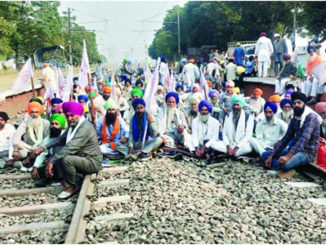
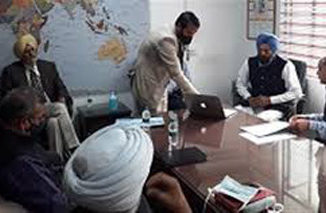
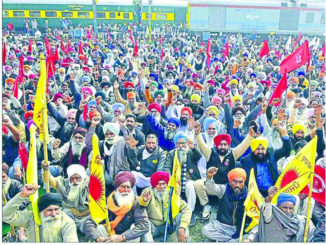
  • Sanyukta Kisan Morcha suspends protest aftergovt agrees to most of their demands

    Sanyukta Kisan Morcha suspends protest aftergovt agrees to most of their demands

    Experts call agitation ‘enriching of democracy’, but also term victory as one ‘forced due to political compulsions’

    NEW DELHI (TIP): As the leaders of the Samyukta Kisan Morcha on Thursday, December 9, formally announced the ending of their year-long agitation at the Delhi borders in the backdrop of now-repealed farm laws and the Centre’s outreach, according to some agriculture experts the story may be far from over yet. They called the farmers’ victory “reclaiming of democracy” and one that exposed “inability/limitations of RSS-BJP strategy/instrument to counter agitation/movement without any religious tinge”. However, it was also one resulting from “pure political compulsions of the ruling BJP”, they said. “Yes, it is a glorious victory, but forced due to UP/Punjab/Uttarakhand elections. The Narendra Modi Government conceded to farmers’ demands because of the fear of losing in 2022 Assembly elections,” said agriculture expert from Western UP Sudhir Panwar, who is also associated with the Samajwadi Party.

    “The compelling reasons for repeal was possibility of novel political alliance in Punjab and the growing support of farmers for political alliance of Akhilesh Yadav and Jayant Chaudhary (in Western UP),” he added.

    Also pointing to the words used by the Prime Minister while announcing the decision to rollback, Panwar called it a “clear indication of future”. “The PM said he felt sorry over his failure in convincing a small number of farmers of the benefits of new agriculture laws. It was not an apology on the manner of implementation and implications of laws. In future the BJP government can always claim that farmers are now convinced on benefits of repealed laws,” he said.

    Amid speculations of divisions among farmer groups, it seems BKU leader Rakesh Tikait, who infused life into the agitation with his emotional outbreak after the January-26 Republic Day violence, was not in favor of ending the agitation till the time there was a legal guarantee of Minimum Support Price.

    Panwar also said “farmers were divided”. While repeal was the main demand of those from Haryana and Punjab, for the rest of the country it was the legal guarantee of the MSP. “Rakesh Tikait was not as happy as farmer leaders of Punjab and Haryana. It also shows the dominant role of farmers from Punjab and Haryana in the agitation and subsidiary role of those from other regions,” he said. While there was “no real gain for farmers even after year-long agitation as issue related with electricity, burning of agriculture waste and legal guarantee of MSP handed over to committee”, the successful agitation exposed the inability/limitations of RSS-BJP strategy/instrument to counter agitation/movement without giving religious hues, Panwar said. “The BJP used all known strategies such as calling farmers anti-national, Khalistani, secessionist, anti-Hindu, etc. January 26 incidents were used to malign the image of farmer leaders and their organizations. The success of the agitation was clear records of its leaders and sustained food supply and shelters at agitation sites,” he said.

    (With inputs from Tribune, India)

  • Farmers withdraw dharna on rail tracks near Amritsar after 169 days

    Farmers withdraw dharna on rail tracks near Amritsar after 169 days

    Amritsar (TIP): A group of farmers squatting on railway tracks near here to protest the Centre’s new farm laws withdrew their agitation on Thursday, March 11,  after 169 days, as suspension of trains caused losses to them and traders. Savinder Singh, a leader of the Kissan Mazdoor Sangarsh Committee which had been spearheading the stir, said they decided to withdraw the rail blockade at Devidaspura on the Amritsar-Delhi route after a meeting of all protesting farmer unions. Devidaspur near Jandiala station is about 25 km from Amritsar railway station. “Farmers were blocking only passenger trains, but the Centre decided to stop goods trains as well which caused huge losses to farmers, traders and industrialists. In the light of current circumstances, farmers have unanimously resolved to end the stir here,” he said. Officials said that with the farmers ending their stir here, normal movement of trains will resume within a couple of days. Meanwhile, the ‘Delhi Chalo’ farmers’ protest at border points of New Delhi has entered the 107th day. Thousands of farmers, especially from Punjab and Haryana, are staging a sit-in protest along Delhi borders. The protest started on November 26, 2020. The farmers are demanding a complete rollback of the new farm reform laws and a guarantee on the Minimum Support Price (MSP) system being retained. Multiple rounds of talks between the Centre and the farmers’ union leaders have ended in a stalemate. Protesting farmers fear that the new laws will dismantle the MSP system and corporatise farming.

  • Daily cases hit 3-month high in India

    India on Thursday, March 11,  logged 22,854 new Covid-19 cases, the highest in nearly three months as well as this year, as Maharashtra, Kerala, Punjab, Karnataka, Gujarat and Tamil Nadu continued to fuel the pandemic burden. The total cases reached 1,12,85,561, riding on a surge in 24-hour infections. It was 76 days ago on December 25 that 23,067 cases were recorded. India’s active cases have gone up from a low of 1.35 lakh on February 12 to a high of 1.89 lakh today, but the government said the disease graph was stable nationally. The high-burden states, it said, needed to prioritise vaccinations. The surges have been high in six states in particular. The daily new cases in Punjab grew around 4.5 times between February 11 and March 11, from 2,112 to 9,402. The rise is around six-fold when compared with 1,388 cases in the first week of February. With around 8,000 cases and over 100 deaths reported over the past one week, Punjab appears headed towards a spike worst than the one in September last when over 60,000 cases were reported in a month. The active cases too have shot up five times—from around 2,000 in February first week to almost 10,000 today. The state today also saw imposition of night curfew in Patiala and Ludhiana districts in view of the rising cases. The government said India had seen active cases as high as 10 lakh on September 18 last and the situation nationally was overall in control, except in six states. The eight of the country’s 10 highest active case burden districts are in Maharashtra and one each in Kerala and Karnataka. The government said Haryana, Gujarat and Madhya Pradesh were at a tipping point and were yet to enter a surge, said Union Health Secretary Rajesh Bhushan. In MP, daily cases have risen from 1,951 on February 11 to 3,915 on March 11; corresponding period rise in Haryana is 824 to 2,440 and in Gujarat from 1,800 to 3,529. On vaccinations, the government said the speed was satisfactory with 2,56,90,545 doses administered till today morning. Globally, India is second only to the US on the speed and scale of inoculation. As of March 9, the US had delivered 9.36 crore doses followed by India (2.43 crore) and the UK (2.37 crore). “The signs from Maharashtra are very worrying. Do not take the virus for granted. It can come up unexpectedly. We also need to caution Delhi as many adjoining districts like Gurugram, Ghaziabad and Gautam Budhh Nagar are seeing surges,” the government said. Punjab health officials said the state may see the worst spike by March-end with cases expected to soar to 3,000 a day. The state has recorded around 8,000 cases and over 100 deaths in a week. Meanwhile, PM Narendra Modi’s mother Hiraben, a centenarian, took her first dose of Covid-19 vaccine on Thursday.

  • NRIs can now resolve issues via newly launched website by Punjab Govt.

    NRIs can now resolve issues via newly launched website by Punjab Govt.

    CHANDIGARH/NEW YORK (TIP): The Punjab Government has launched a website to deal with the matters related to family, property and other issues of Non-Resident Indians. The website of the Punjab State Commission for NRIs, www.nricommissionpunjab.com, was launched by NRI Affairs, Sports and Youth Services Minister Rana Gurmit Singh Sodhi, here, today.

    Time-bound settlement

    • Complaints be lodged from any country with requisite documents on the website of the Punjab State NRI Commission
    • A complainant will be issued a unique number to track the complaint, which would be settled in a time-bound manner

    Sodhi said to deal with the cases of NRIs such as immigration, nationality, matrimony, inter-parental child removal, spousal maintenance, division of matrimonial property, inter-country adoptions, succession and inheritance, illegal migration, poor job conditions, tenancy of Indian property and surrogacy arrangements, the Punjab State Commission for NRIs was constituted in 2011 but due to lack of information related with the issues of NRIs, communication and exchange of required documents in the case, it was difficult to resolve the issue immediately.

    Hence, to bridge the gap this website has been launched.

    The NRI Affairs Minister said through this portal, NRIs residing in any country would be able to register their grievances along with important documents, adding that the complainant would have to register his complaint on the website as per the checklist related to the issue. Once the complaint is registered, the complainant will be given a unique number for further information or future course of action.

    Commission Chairman Justice Shekhar Kumar Dhawan (retd) said the complainant should be a native of Punjab or an occurrence in complaint should be Punjab-related.


  • New Yorkers mourn the death of Punjabi Singer Sardool Sikandar

    New Yorkers mourn the death of Punjabi Singer Sardool Sikandar

    Balwinder Singh Bajwa organized a condolence meeting Feb 25 to pay tribute to Sardool Sikandar. A group of attendees.

    I.S. Saluja

    NEW YORK (TIP): The sad demise of popular Punjabi singer Sardool Sikandar on February 24 in India has shocked and saddened millions of his fans across the world.  One of the first to reach out to The Indian Panorama with his tribute to the legendary singer was Tirlok Malik, a New York based film maker. Paying rich tribute to Sardool, Malik disclosed that Sardool had not only sung a beautiful Lohri song in his celebrated film “KHUSHIAN” but had also performed in the Lohri celebration scene. He recalled that Sardool was full of energy and dressed up in colorful costume for the scene filmed in the evening. Watch the scene here.

    https://www.youtube.com/watch?v=VqujLbJMB30

    Balwinder Singh Bajwa, an entertainment industry promoter, organized a condolence meeting on Feb 25 at which artists and mediapersons paid rich tributes to the popular Punjabi singer. Speaking on the occasion. Bajwa recalled his long association with the singer and described him as a very lovable person who, with his rich and mellifluous voice became the heartthrob of Punjabis of all ages across the world. The gathering also mourned those who died of COVID-19, and the farmers in the Farmers Movement in India who died fighting for their just rights. Sardool Sikander passed away at Fortis hospital at Mohali on Wednesday, February 24. He was 60. “Sikander, who was diabetic, was recently treated for COVID-19. He had undergone renal transplant in 2016 and Percutaneous transluminal coronary angioplasty (PTCA) in 2003,” the hospital said in statement. He was admitted to Fortis Mohali on January 19 in a very serious condition with complaints of low oxygen levels, it added. He is known for his songs, ‘Ek charkha gali de wich dha laya’ and ‘Sanu ishq brandi char gayi’. As word spread, celebrities and fans expressed condolences on social media. Sikander had made his first appearances on radio and television in the early 1980s with his album, ‘Roadways di Laari’. He also acted in Punjabi films like ‘Jagga Daku’. His father, late Sagar Mastana, was a noted tabla player. Sikander was married to Amar Noorie, also an accomplished singer and actress. Born at Kheri Naudh Singh in Fatehgarh Sahib, Sikander belonged to the Patiala gharana of music and had 27 albums to his credit. His album ‘Husna de Malko’ released in 1991 sold more than 5 million copies worldwide. Sikander leaves behind wife and sons Sarang and Alaap. We, at The Indian Panorama, pray for eternal peace to the departed soul, and strength enough to the bereaved family to bear the irreparable loss.

  • Movement of trains hit as farmers block rail tracks

    Movement of trains hit as farmers block rail tracks

    New Delhi (TIP): The “rail roko” call given by farmers’ bodies impacted rail movement in Punjab, Haryana, western Uttar Pradesh and parts of Rajasthan on Thursday, February 18,  with reports of sporadic blockades reported from other parts of the country. Railway officials said there was negligible impact of the strike even as some trains were stopped as a precautionary measure. The Samyukta Kisan Morcha, a group of about 40 farmers’ bodies protesting against three new farm laws, had given a call for a four-hour nationwide rail blockade from noon till 4pm. According to farmers’ bodies, the strike received massive support across the country with trains being stopped. “In many places trains were not stopped for long to prevent inconvenience to passengers,” the All India Kisan Sabha said in a statement.

    In Punjab and Haryana, farmers at several places squatted on railway tracks, which led to disruptions. Protests were also staged at some places in Uttar Pradesh, Maharashtra, Madhya Pradesh and Karnataka.

    In Punjab, trains passing through rural areas were stopped at several places, especially in agriculture belts of Malwa and Doaba areas. In several places, tea and snacks were offered to stranded passengers. Some trains coming into Punjab were stopped at Jammu, officials said. In Haryana too, hundreds of farmers, including women, peacefully participated in the agitation at multiple locations in Dadri, Bhiwani, Jind, Sonepat, Rohtak, Hisar and Fatehabad, said Dayanand Punia, state secretary of Akhil Bharatiya Kisan Sabha. Due to the blockade, the busy Delhi-Ambala-Amritsar railway track was affected, leading to the diversion of six trains and the stoppage of many others.

    The affected trains waiting at various railway stations were allowed to commence their journeys after farmers lifted the blockade at 4pm.

    In Rajasthan, officials said the Rewari-Sri Ganganagar special train was the only one cancelled due to the agitation, while a few others were delayed. Most of the protests were in western Rajasthan. “The train movement remained almost unaffected. There were reports of minor blockade on two of our routes. However, it was ensured that the issue is addressed. Hence, train movement remained unaffected,” said Ajit Kumar Singh, chief public relation officer (CPRO), North Central Railways — the zone which covers a large part of Uttar Pradesh.

    In Bihar, trains were blocked in Patna-Buxar, Gaya-Patna, Mokama-Barauni, Siwan-Chhapra, Kiul-Gaya, Muzaffarpur-Samastipur, Bhagalpur-Jamalpur and Patna-Darbhanga stretches. Supporters of the CPI (ML), the RJD and the JAP took part in the agitation. Railway officials said that around 20 trains were affected by the agitation.

    The protest saw a mixed response in Madhya Pradesh, West Bengal, Karnataka and Tamil Nadu with some sporadic protests by Left organisations. Some members of Left farmers’ bodies were arrested in Madhya Pradesh for trying to disrupt rail traffic. No disruption in rail traffic was reported from Goa, Kerala and north-eastern states.

    “Majority of the zones have reported not a single case of any stoppage of train by the agitators. Few trains were stopped in some areas of some railway zones, but now train operation is normal and trains are being operated smoothly,” said a railway spokesperson. The railways deployed 20 additional companies of the Railway Protection Special Force across the country.

    Thousands of farmers have been camping at Delhi’s borders since November last year, seeking a repeal of the new farm laws, which they say will erode their bargaining power, weaken a system of assured prices, and leave them vulnerable to exploitation by big agri businesses.

    The government has maintained that the laws aim to ease restrictions on farm trade by setting up free markets, allow traders to stockpile large stocks of food for future sales and lay down a framework for contract farming.

                    Source: HT

  • Polarization of societies

    Polarization of societies

    By Shyam Saran

    “The Right has been able to exploit the existing social, communal and sectarian fault lines to deflect attention from its complicity in the disempowerment and the immiseration of the majority. In the US, it is by deliberately sharpening the racial divide, stoking the fear of immigrants and loss of cultural identity that a figure like Trump was able to continue rewarding the corporate class with large tax cuts at the cost of the very services that could ameliorate the worsening economic status of the less-educated white minority. Recently, historian Rana Dasgupta has drawn attention to a very cynical insight offered by Lyndon Johnson, a former President: ‘If you can convince the lowest white man he’s better than the best-colored man, he won’t notice you’re picking his pocket. Hell, give him somebody to look down upon and he’ll empty his pockets for you.’


    Stop the Steal. Trump supporters stormed the capitol on January 6

    We see echoes of what Johnson was alluding to in our own country. Those most affected by demonetization were the already poor and those eking out a constantly threatened existence as small and medium enterprises and their unorganized workers. But millions were ready to stand in unending queues to get their paltry sums exchanged, their pain dulled by the belief that fat cats and money bags had been deprived of their ill-gotten gains. Except that they had not and many profited by turning their black money into white. Or if the lowliest Hindu is made to feel superior to the best among the Muslims in the country, perhaps he is ready to accept his dire economic situation and forget who may be really responsible for his deprivation.

    There has been a sigh of relief manifest across the world as Joe Biden has succeeded to the US presidency, presaging a more predictable and more ‘normal’ conduct of domestic and external affairs under an experienced and professional administration. Biden has promised to heal a deeply divided country, to promote reconciliation and unity and to restore the democratic and liberal credentials of the US as the world’s oldest democracy. This promises to be a long haul and unlikely to be achieved during one four-year administration. He would be deemed a success if he at least manages to, as he said, ‘lower the temperature.’

    The social and political polarization on display in the US is increasingly manifest in other democracies, including our own. A key causal factor is the rising inequalities of wealth and income that undermine the most powerful appeal of democracy which is egalitarianism, the equality of opportunity it promises and the fairness with which the state will treat all its citizens. As economies develop, as technology advances, there will inevitably be winners and losers. A democratic state will have to continually ensure that it is able to redistribute rising incomes and wealth in a manner that helps those left behind to retain hope in a better future, if not for themselves, then at least for their children. It is not that globalizationin itself has spawned huge inequalities, nor that inequality is inherent in increasingly arcane and specialized technological advancement. The fault lies with public policy which has failed to distribute the benefits of globalization more evenly. When the number of losers far outstrips the winners, and this state of affairs persists and even worsens, democracy will be challenged. This is what we witness in the US and in democracies across the world, India included.

    There is an intriguing question, however. It is the political Left (in which I broadly include the liberal constituency) which has historically mobilized support among those who are at the lower end of the economic and social scale. In the present case, the Right and nativist forces have captured the imagination of the exploited and deprived. The Left targets the rich and the corporate sector; the Right does not pay a price for associating with this privileged minority and profiting from its generous funding. What explains this oddity? That there is an alliance between the populist and the powerful elements within the corporate sector is more than apparent. But the liberal and the Left have been unable to leverage this to mobilize support among those who are, in fact, at the receiving end of this powerful nexus. The Right has been remarkably successful in co-opting the ranks of the dejected and deprived to buttress its own power. How is this possible?

    The Right has been able to exploit the existing social, communal and sectarian fault lines to deflect attention from its complicity in the disempowerment and the immiseration of the majority. In the US, it is by deliberately sharpening the racial divide, stoking the fear of immigrants and loss of cultural identity that a figure like Trump was able to continue rewarding the corporate class with large tax cuts at the cost of the very services that could ameliorate the worsening economic status of the less-educated white minority. Recently, historian Rana Dasgupta has drawn attention to a very cynical insight offered by Lyndon Johnson, a former President: ‘If you can convince the lowest white man he’s better than the best-colored man, he won’t notice you’re picking his pocket. Hell, give him somebody to look down upon and he’ll empty his pockets for you.’ Dasgupta points to an ugly truth: Sometimes people can be persuaded to ‘prize the removal of others’ rights above the preservation of their own.’

    And this is what is happening in the US. Can Biden change this?

    Why is the Left unable to build its constituency in the ranks of the deprived? Precisely because ideologically, it sees its role as transcending the societal fault lines and uniting around a more inclusive concept of egalitarianism.

    We see echoes of what Johnson was alluding to in our own country. Those most affected by demonetization were the already poor and those eking out a constantly threatened existence as small and medium enterprises and their unorganized workers. But millions were ready to stand in unending queues to get their paltry sums exchanged, their pain dulled by the belief that fat cats and money bags had been deprived of their ill-gotten gains. Except that they had not, and many profited by turning their black money into white.

    Or if the lowliest Hindu is made to feel superior to the best among the Muslims in the country, perhaps he is ready to accept his dire economic situation and forget who may be really responsible for his deprivation.

    There was only one brief occasion when the current political dispensation was threatened and that was when the label of ‘suit-boot kisarkar’ struck home but then it was never built up into an alternative political narrative. The Left in our country has failed precisely because it has become defensive about its core beliefs and started flirting with the narrow inclinations of the Right, for example, by doing its own religious rituals and spouting nationalist slogans. Nor is there stomach to shine the spotlight on the nexus among the politician-bureaucracy and big business that has come to dominate governments in democracies across the world.

    There are parallels between the oldest and the largest democracies in the world. Both are at critical junctures in their evolution as enlightened democracies envisaged by their respective constitutions. But I believe that the future of democracy as a political ideal may likely be determined by the trajectory that India takes in the coming years rather than the US, especially when the Chinese model of authoritarian capitalism seems to bewinning admirers across the world.

    (The author is Former Foreign Secretary and senior fellow, Centre for Policy Research)


  • India, Singapore commit to further enhance bilateral defence ties

    New Delhi (TIP): India and Singapore on Wednesday,  Jan 20,  signed an implementing agreement on submarine rescue support and cooperation between their navies during the 5th Defence Minister’s Dialogue held over video conference, a joint statement said. The signing of an implementing agreement is very significant between two submarine operating navies, said maritime affairs expert Rear Admiral Sudarshan Shrikhande (retd). “We have had a growing defence relationship with several ASEAN  members and naval cooperation between Singapore and India goes back to the early 1990s. Cooperation in submarine rescue enables sharing of resources and expertise and much faster response should an accident happen. It is cost-effective and, importantly, time-effective when time is the most critical factor,” Shrikhande said. In another move to deepen military cooperation, defence minister Rajnath Singh and his Singaporean counterpart Ng Eng Hen expressed their support to the early conclusion of agreements to facilitate live firing drills and to establish reciprocal arrangements for the cross-attendance of military courses.

    Punjab, Haryana among 10 most innovative states

    Haryana (sixth) and Punjab (10th) find place among the top 10 most innovative states as Karnataka ranks first, the Centre’s policy think tank, NITI Aayog, has said in its report — India Innovation Index 2020. Released by NITI Aayog Vice Chairman Rajiv Kumar in the presence of members VK Paul (Health), Ramesh Chand (Agriculture) and CEO Amitabh Kant, the index places Himachal Pradesh at the top among the hill and north-eastern states. Chandigarh has made a leap forward to rank second among the UTs after Delhi.

    The index, launched last year, ranks states based on whether they provide a conducive environment for registering new businesses, applying for patents, human capital and investments, among other measures.In the second edition, Maharashtra has overtaken Tamil Nadu for the second spot. Telangana has claimed the fourth place, with Kerala moving one notch up to fifth slot, pushing Haryana to sixth place on the list of 17 major states. Bihar has featured at the bottom. “There is a very strong correlation between innovation and development. As states become more innovative, their per-capita GDP (gross domestic product) rises,” said Amit Kapoor, chairman of the Institute for Competitiveness, a Gurugram-based organisation that worked with NITI Aayog to develop the index.

  • India’s youngest organ donor at 20 months saves five lives in her death

    New Delhi (TIP): All of 20-months, Dhanishtha became the youngest cadaver donor of India, hailing from New Delhi’s Rohini, the infant was left in a comatose state after she fell from a balcony at her home.

    She was brought to Ganga Ram Hospital on January 8 in an unconscious state. After she was declared brain dead on January 11, her family decided to donate all her functional organs and have now saved the lives of five patients, the hospital informed in a press statement.

    The child’s heart, liver, and both kidneys and corneas were retrieved successfully at the hospital and used in five patients. All her other organs were in excellent condition.

    Inspite of the irreparable loss, her parents, Ashish Kumar and Babita, decided to donate Dhanishtha’s organs to inspire others to come forward and save lives.

    Ashish Kumar said: “During our stay at the hospital, we met many patients who were in dire need of organs. Though we lost our child, our daughter will continue to live, and in the process, improve the quality of life of the needy patients.”

    DS Rana, chairman, Sir Ganga Ram Hospital, said: “This noble act by the family is really praiseworthy and should motivate others. At 0.26 per million, India has the lowest rate of organ donation. On an average, five lakh Indians die every year due to lack of organs.”