Tag: Punjab

  • Crime against children up by 24% in 2010-11

    Crime against children up by 24% in 2010-11

    NEW DELHI (TIP): India is fast earning the label of a country unsafe for children, with an alarming 24% increase in crimes against children in 2011 compared to the previous year. Nearly 33,100 cases were reported in 2011 against 26,694 cases in 2010.

    Uttar Pradesh accounted for 16.6% of total crimes against children in 2011, followed by Madhya Pradesh (13.2%), Delhi (12.8%), Maharashtra (10.2%), Bihar (6.7%) and Andhra Pradesh (6.7%).

    Maharashtra accounted for 74% of the total 27 cases of “buying of girls for prostitution” while West Bengal accounted for 77% of the total 113 cases of “selling of girls for prostitution”.

    Last year also saw a 43% increase in cases abduction, while cases of rape increased by 30%. UP and Delhi together accounted for 47.6% abduction of children while MP, UP and Maharashtra together made up 44.5% of child rape cases in 2011.

    These are the findings of the latest ‘Children in India 2012’ report brought out by the ministry of statistics and programme implementation. The last time such a report on the state of India’s children came out was in 2008.

    Feticide cases increased by 19% a year

    Feticide cases increased by 19% over 2010 to 132 cases in 2011, most of which were registered from Madhya Pradesh, followed by Chhattisgarh and Punjab, says a ministerial report. The three states together reported 56% of the foeticide cases last year.

    The report said, “The analysis of crime and children as presented here, puts forward a few upsetting revelations about the child victims as well as child offenders, which points out to the vulnerable conditions of children that need to be addressed urgently especially poverty.”

    India’s chief statistician T C A Anant said in the report, “Even today, after six decades of independence, the condition of children remains a cause of concern in the country. As the statistics speaks out loudly, we have miles to go to ensure a bright future for the children in all spheres of their life.” According to the report, procurement of minor girls saw a 27% spike—862 cases in 2011 compared to 679 cases in 2010. West Bengal reported the highest chunk of these cases (298) —a share of 34.6% followed by Bihar (183), Assam (142) and Andhra (106).

    The average chargesheeting rate for all crimes against children was 82.5% in 2011, which was the same in 2010 as well.

    The highest chargesheet rate was observed in cases under ‘buying of girls for prostitution’ (100%) followed by ‘rape’ (97.3%) in comparison to the prevailing national level chargesheeting rate of 78.8% for the IPC crimes. The lowest charge sheet rate was found in cases of feticide.

    The conviction rate at national level for the crimes committed against children stood at 34.6%. The conviction rate for ‘infanticide (other than murder)’ was highest at 46.9% followed by cases under ‘murder’ (45.5%).

    When taking all the crimes against children into account, the crime rate (ratio of number of crimes to population) saw a marginal increased from 2.3 in 2009 to 2.7 in 2011. Delhi, however, topped the crime rate (25.4) followed by Andaman and Nicobar Islands (20.3), Chandigarh (7) and Chhattisgarh (7), Madhya Pradesh (6) and Goa (5.1).

    The 2012 data showed that juvenile IPC crimes in 2011 increased by 10.5% over 2010 as 22,740 IPC crimes by juveniles were registered during 2010 which increased to 25,125 cases in 2011. Out of the total 888 juvenile murder cases reported in the country in 2011, Maharashtra and Madhya Pradesh reported 16.3% and 12.6% cases.

    The highest incidence of the juvenile rape cases was reported from Madhya Pradesh (23.6%) followed by UP (12.7%) and Maharashtra (10.9%). Among such disturbing trends, the report also had some good news. In 2011, buying of girls for prostitution showed a decline of 65%, and selling of girls for prostitution reported a decline of 13% compared to 2010. Cases of infanticide too showed a decline of 37 points during this period.

  • Priya Dutt praises donors; cites  anti-cancer effort of the Foundation

    Priya Dutt praises donors; cites anti-cancer effort of the Foundation

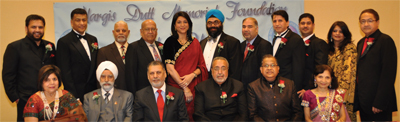
    NEW YORK (TIP): The Nargis Dutt Foundation organized its 31st annual fundraising event at the Marriott Hotel and Convention Center in Uniondale, Long Island Sunday, September 30.

    Member of Parliament Priya Dutt, daughter of the late Dutts-Nargis and Sunil, was the keynote speaker along with Ambassador Prabhu Dayal, Consul General of India in New York.

    The occasion saw a number of Indian Americans being honored for their excellence, services and contribution to community. They included Haridas Kotahwala (Lifetime Achievement), Kamlesh C. Mehta (Lifetime Achievement), Dr. Parag H. Mehta (Excellence in Medical Care), Sudhir Vaishnav (Excellence in Media), Gurdev D.P. Singh (Business Entrepreneurship), Dr. Tanveer Mir (Excellence in Medical Care), Ravi Chopra (Business Entrepreneurship), and Gurdip Singh Narula (Dedicated Service to the Foundation).

    Mrs. Priya Dutt spoke about the vision and work of the Nargis Dutt Memorial Foundation which was founded by her late father Sunil Dutt and Inder Bindra. She said during the last more than thirty years, the Foundation has taken up 57 projects at a cost of more than $5 million. She spoke feelingly about the vast population of India that suffers from cancer. She said the journey was long and the effort had to be kept on.

    And Consul General Prabhu Dayal underscored the importance of taking people along in the noble work that the Foundation was doing when he said, ” If you want to go fast, you go alone. If you want to go far, you go together.” He praised the work of the Foundation and the Indian American community for their generous support to the cause espoused by the Foundation.

    Inder Bindra, founder and past president of NDMF explained the method that goes in to funding a project. He spoke of four basic conditions: 1. The Foundation gives financial assistance to only charitable hospitals in India. 2. No cash is given; only equipment is provided. 3. The assistance should be used for treating the poor and the needy. 4. All equipment sent to a charitable organization has to be installed in the hospital for the care of the cancer patients.

    He added that the Foundation also sponsors doctors and volunteers for training in US to render better service in India.

    A cricket bat with signatures of Indian Cricket team that has been with Inder Bindra was auctioned for $20,000. There were three to bid – Harry Bola, Peter Bheddah and Gurdev DD.P. Singh. However, finally, the bat went to Gurdev D.P. Singh.

    A dazzling Fashion Show was presented by Ginny Jaggi that added color to the event.

    Before the event began Priya Dutt addressed a press conference, with Board members by her side. The Press Conference was conducted by The Indian Panorama Editor Prof. Indrajit S. Saluja

    “I am overwhelmed with the response from the Indian-American community to the charitable work we at the foundation are doing,” Mrs. Dutt said in her opening remarks. “Though there are several non-profit bodies working for the relief of pain caused by cancer, ours has a special place in society as 100% of all donations go towards our projects and other work we are doing with various organizations.”

    Recalling the charitable acts the foundation has undertaken over the years, Ms Dutt said one of the most important things was that it funded the entire expenditure of a teen-age girl who lost her right hand. “Now that woman is leading a near-normal life with an artificial hand,” the MP noted.

    According to her, the foundation is No. 1 in India in doing cancer-related service to the needy-both in rural areas and urban centers. She lauded particularly the services of Tata Memorial Hospital, Mumbai; Indore Cancer Foundation, Madhya Pradesh; Karnataka Cancer Institute, Hubli; and Indo-American Cancer Institute, Hyderabad. The foundation’s work in Punjab was also praised.

    She said the foundation ensures the supply of equipment and medicines to several of the centers and hospitals. “Spreading awareness is important. What causes it and how to prevent it. For instance leukemia/blood cancer can be cured and one has to stay away from carcinogens,” Ms Dutt pointed out.

    In her special message to the souvenir released on the occasion, Ms Dutt said, “It is my ambition to be decent. This shall be my doctrine. One that I will try and pass on to all who I deal with.”

    She added, “I am writing this message to congratulate you [all officeholders of the foundation] on completing three decades of fruitful service to improve cancer hospitals for the benefit of poor people in India.”

    Members of the foundation were praised by none other than Prime Minister Manmohan Singh himself. In his brief message on the great occasion, the prime minister said, “The commitment to the cause of cancer and the missionary zeal with which the Nargis Dutt Memorial Foundation has been helping those affected by this disease is indeed commendable.”
    The foundation has financed cancer-focused hospitals and organizations across the country in states such as Punjab, Maharashtra, Andhra Pradesh and Karnataka.

    The nonprofit, charitable body whose donations are tax-deductible is based in New Hyde Park on Long Island, New York state. It is formally known as Nargis Dutt Memorial Cancer Foundation Inc.

    The foundation was set up in 1981 in memory of Nargis, a noted film star in India. Though she entered the movie industry in mid-1940s, it was only in late 1940s she became widely known. She was probably best known for her film “Mother India”, which was nominated for an Oscar in 1957.

    She was a caring woman and her dream was to see that the underprivileged in India should have access to quality medical care. Despite the fact that she receive world-class treatment in New York, Nargis passed away in 1981-the year in which the foundation was established in her memory. She was 51 at that time. Her husband Sunil Dutt and her children, particular Priya Dutt, have since then embarked upon on the mission of helping cancer-stricken patients in India. Sunil breathed his last in 2005 serving the nation in the position of Minister for Sports and Youth Affairs.
    DJ Kucha and Mala Bakshi did well to manage the ceremonies.

  • FIA: An Insult to Democracy and  Secularism

    FIA: An Insult to Democracy and Secularism

    By
    Dave Makkar

    FIA is an organization in the public domain. As we had promised our readers to lay bare the facts about the organization in our editorial last week, here is the first in the series of revelations we will be making over the next few weeks.

    We will be very happy to receive your comments which will be treated with all respect and published in the columns of The Indian Panorama. Please email your comment to editor@theindianpanorama.news. You may also mail your comment to P.O.Box 190067, S. Richmond Hill, NY 11419. The comment can also be posted on line.

    We have placed on our website (www.theindianpanorama.news) a petition to concerned authorities and call upon you to sign it if you are convinced that the FIA needs to be reformed and agree with the contents of the petition.

    The Indian Panorama will be grateful for your support in reforming an organization which should legitimately belong to the Indian Americans as a whole.

    EDITOR

    Federation of Indian Associations (FIA) came into existence in 1977 after changing the name of umbrella organization “Joint Committee of Indian Organizations” founded in 1975 under the leadership of Rajan Ghosh. The main goal of this organization was to celebrate India’s Independence and Republic days in Tri-state area by bringing under one roof Indian student organizations; India Club of New York University, India Club of Columbia University and Association of Indians in America, The Bharathi Society of America and the Tagore Society of America.

    Mr. Thomas Abraham, a Christian from Kerala was elected First President of FIA and in March 1981 Sureshwar Prasad Singh took over and initiated the first India Day Parade in 1982 in New York. He was succeeded by H. C. Chandershekar for the term of 1982-83.

    During the Presidency of Sudha Acharaya in 1983-84 tradition of Bollywood movie star as Grand Marshal with Sunil Dutt was started. She was also instrumental in bringing 17 more organizations under FIA.

    With the Presidency of Ram Gadhvi in 1985, Hindu Gujarati Leader’s hold on FIA started increasing and the final nail in the coffin was put with the entry of Ramesh Patel to have absolute control. This organization lost its focus on Student Organizations, other regional organizations and other communities’ involvement in the India Day Parade. FIA stooped so low that its Chairman Ramesh Patel appointed Nirav Mehta, a wanted man by CBI in India as its President in 2010 and subsequently as its Trustee in 2011.

    The 13 members all FIA Trust under the Chairmanship of Ramesh Patel has only 2 non Gujarati members; Yash Pal Soi a Hindu from Punjab and Prabir Roy a Hindu from West Bengal. The 6 member Executive Committee, barring Treasurer Ahmed Shakir, are Hindus from Gujarat. The same is true for various committees formed for the purpose of organizing the Parade. Majority are Hindus from one state- Gujarat only.

    Current President Kanu Chauhan is a Trustee also and was also President in 1997.

    This raises serious a question. There are almost 1 million Indians in Tri-State area how come FIA could not find talented individuals from other religions and belonging to other regions of India?

    The truth is FIA has been majority controlled/owned by Hindus from one state of Gujarat only for over 25 years. In fact FIA is in perpetual control of Ramesh Patel along with his hand picked kitchen cabinet including fugitives running from law in India.

    The most disgusting part in FIA is a lack of understanding the meaning of Indian Unity. The utter disregard for other states and other than Hindu religions of India does not contribute to the broad concept of Indian unity. FIA has shown no interest in promoting Indian Culture and Indian Art. Recognition of American born Indians who have brought glory to the community has never been on the agenda of FIA that has been obsessed soley with organizing India Day Parade or a Bollywood style Dance Pe Chance .All they know is how to parade themselves, their families, friends and parade contractors with a Bollywood star. They do not hesitate to Parade girls in Indian Tri color Bikinis dancing to the song “Mera rang de Basanti Chola” to insult India- the very country they profess they love.

    FIA is not at all transparent and willing to put their accounts on the internet for public to see despite the fact money spent has been received from organizations owned by Indian public like State Bank of India, Bank of Baroda, Bank of India, Air India etc. and Indian Multinational Corporations like Kingfisher, Jet Airways, Zee TV etc. as well as Indian Americans. No one knows how the money is collected and spent. All the contracts are awarded to majority from Gujarat on no bid basis without calling for open tenders.

    Insiders are claiming that donations from big donors are collected by a third party and after taking out 15-20% as commission the third party passes on the rest of money to FIA with the full knowledge of its Chairman Ramesh Patel.

    Then FIA is violating US Laws also for Charitable organizations by openly taking sides in Elections besides violating financial disclosure and Foreign Trade Practices laws. FIA should be investigated for its illegal activities by Government of India for misusing Public Organization Funds, appointing fugitives running from law in India as President and Trustee. FIA needs to be investigated by US Authorities as well for violating numerous laws of the country.

    Ramesh Patel and his supporters must understand FIA is run with public money and contributions from sponsors. They have no ownership rights of the organization. Moreover a great majority of Indians do not agree with their narrow thinking that “Hindu Gujarat is India and India is Hindu Gujarat”. They must honor and respect that India has 28 states and 7 Union Territories practicing all the major religions of the world. The Hindus of other states are not inferior to Gujarati Hindus. Neither are the Sikhs, Muslims, Jains, Christians & Budhists inferior to Gujarati Hindus.

    Multi-religious and multi-state secular nature of India and democratic process demands term limits for all FIA office bearers and trustees as well as representation to every state and ethnicity to the maximum possible limits. Let there be a public debate on this issue on the basis of the formula given below:

    1. Equal Representation to all Major Religions of India by keeping 2 members for each religion nominated by their religious bodies. If there are multiple religious bodies in a particular religion; those bodies have to put their head together to nominate 2 people for a tenure of 2 years only for the post of Trustee. A Trustee will have 1 term limit with no exceptions. After a gap of 4 years a person can come back on the request of his/her religious body. This will give equal representation to Hindus, Muslims, Sikhs, Jains, Budhists & Christians. All financial matters will be the responsibility of the Trustees.

    2. One member from each of the registered State organizations for 2 year term nominated by their organization like Gujarat, Bihar, Bengal, Punjab, Uttarakhand, Kashmir, U.P. etc. for the working committee. There will be 2 Term Limit. If the organization wants to replace its nominee after 2 year term, they will be free to do so.

    3. One Member each from registered Indian Student bodies nominated by their Student council for a term of 2 years for the working committee with 1 Term limit.

    4. One Member each from Lesbian/Gay Transgender/ Bisexual (LGTB ) community for a 2 year Term nominated by their organization with a 1 Term Limit.

    5. One Member from the Indian Consulate nominated by the CG to monitor that the theme of the Parade is in conformity with the international image of India.

    Non representation of people from other religions and other states as well as Union Territories of India in FIA doing India Day Parade has been going on for over 2 decades. It is insulting to the very secular and democratic nature of India. It is gross injustice and should not be allowed to continue any more. In the name of Equality and Justice, it is the solemn duty of every individual of Indian origin living in America to demand equal representation for all communities and all Indian states in FIA. If FIA does not agree to this they should not be funded or sponsored or allowed to organize India Day Parade.

    The major sponsors especially government of India, and government of India owned corporations, Indian Multinationals and Indian Americans must get involved in this public debate.

    Joint Effort by volunteers
    For
    Secular India Day Parade


    davemakkar@yahoo.com

  • Maharaja Dalip Singh’s dinner plate up for auction

    Maharaja Dalip Singh’s dinner plate up for auction

    LONDON: Collectors of Maharaja Dalip Singh memorabilia will be thrilled at the prospect of bidding for a dinner plate that once belonged to the last independent ruler of the Punjab, reports appearing in London newspapers say.

    The plate being put up for auction by Mullock’s auctioneers in the English county of Shrops hire is valued at between £2,000 and £3000 (Rs1.5 to Rs 2.5 lakh). It was manufactured by ceramics manufacturer Mintons who also supplied china tableware to Queen Victoria.

    The plate is nowhere as valuable as other items from Dalip Singh’s estate, such as the Kohinoor diamond, which now lodges in one of the crowns belonging to the British royal family, or the golden throne of Ranjit Singh currently in a London museum, but itis till a reminder of the glory of the Sikh empire that stretched from Afghanistan to Kashmir.
    Inked on the back of the plate is a black ink certificate of provenance which reads, ‘From the collection of late Maharaja Dhuleep Singh. ‘Dalip Singh was only 11-year old when he was removed from his throne by the East India Company.

    He was ubsequently baptized as a Christian and sent to England where he was induced to ‘gift’ the Kohinoor to the Queen. Since his death other family heirlooms have surfaced from time to time and are immediately snatched up by eager collectors. Such was the case with the 12 bore hammer gun made by J.P Urdey and Sons that was offered for sale by Bonhams auctioneers last April.

    The gun commissioned for Dalip Singh’s 15-year-old son, Prince Victor, is thought to have been used for many of the shooting parties that were hosted by the exiled Maharaja at his country estate of Elveden in Norfolk.

    At least as much interest was generated more recently by a gold coin minted during the reign of Dalip Singh’s father, Maharaja Ranjit Singh, which was purchased for more than £10,000 by a mystery buyer from India.

    Although the provenance of the coin is not known, there was speculation that it came from the estate of the late Dr John Login, a Scottish doctor who was appointed by the East India Company as Dalip Singh’s guardian in the mid 19th century.

  • Nargis Dutt Memorial Cancer Foundation: a Lighthouse of Hope for Cancer Patients

    Nargis Dutt Memorial Cancer Foundation: a Lighthouse of Hope for Cancer Patients

    It was a pleasant afternoon on September 18 that I was in the company of Nargis Dutt Memorial Foundation Board of Governors and Executive Members at Akbar Restaurant in Garden City, Long Island. Sher S Madra, Chairman of Nargis Dutt Memorial Foundation was present with his colleagues to give an exclusive interview to The Indian Panorama.

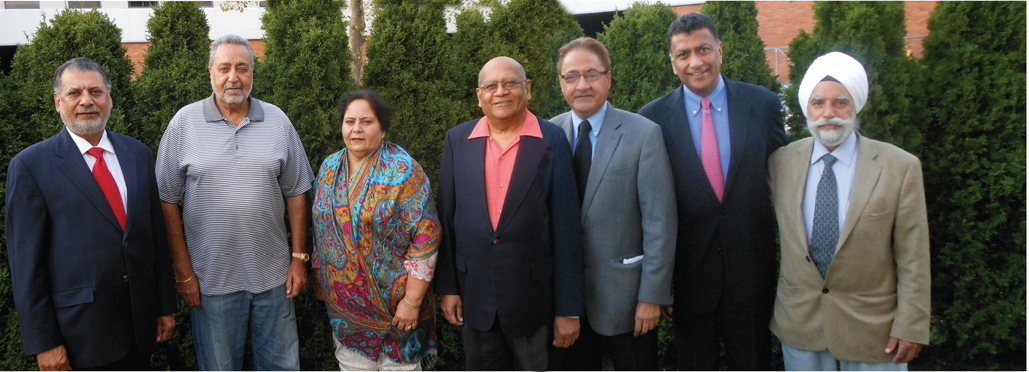
    Present on the occasion were members of Board of Governors and executive committee members that included Inder Bindra, Founder and a Past President, Peter Bheddah, a Past President and a member of Board of Governors, Shammi Singh, another member of Board of Governors and a Past President; she is chair, Entertainment and Fashion Show, Hussain Baqueri, General Secretary, Gurdip Singh Narula, Treasurer and Zinda Singh, member, Board of Directors.

    In reply to my question as to how the idea of forming NDMF came up, the septuagenarian Inder Bindra, one of the original 14 founding members and the only one to be going strong, a Past President and currently a member of Board of Governors recounted how the great organization with a noble vision came into being.

    In 1981 Nargis Dutt who was suffering from Pancreatic cancer was treated at Sloane Kettering Institute in New York. In spite of best efforts of doctors and the loving care of her husband, Sunil Dutt, cancer ultimately snuffed life out of the legendary cine artist.

    Inder Bindra recalled that in April/May, 1981 Sunil Dutt had come to New York to settle the bill for Nargis Dutt’s treatment at Memorial Sloan- Kettering Cancer Center. They were together in the Bahamas when the idea of forming Nargis Dutt Memorial Cancer Foundation came to their mind. It was later that he , along with 13 other persons with philanthropic disposition (some of whom have since withdrawn or have migrated to the other world ) held a meeting with Sunil Dutt and discussed the issue of forming the organization.

    Sunil Dutt, Bindra said, felt mightily pleased and said he was obliged for the offer to form Nargis Dutt Memorial Cancer Foundation. Thus, the embryonic idea took a shape in 1981. And soon, the first formal meeting took place in the month of May, 1981 itself. The NDMF was registered as 501-C 3 Not-for Profit corporation. Ranjit Ghura and Russel Rosen in Wall Street who was the attorney helped in the formation of the corporation. Inder Bindra recalled the first meeting of the 14 founding members at the residence of Dr. Amarjit Singh. Each of them contributed $500.00. That was the beginning, 31 years ago.

    Sher Madra added that from that humble beginning, in 31 years NDMF has come a long way. During this period the NDMF has completed 56 projects valued at more than 5 million dollars. NDMF today has chapters all over the world. In North America itself, the Foundation has chapters in New York, Chicago, Portland, Seattle, Austin , and Vancouver.
    During the course of the interview, each person present contributed to giving a view of the organization; much of it however came from Inder Bindra.

    To a question on the broad objective of the NDMF, Inder Bindra said it was to “improve and upgrade medical care and treatment of cancer related patients; and to provide financial support for the training of doctors from India specializing in the field of cancer”.

    To another question about the criteria for giving financial assistance to an institution working to fight the scourge of cancer, Inder Bindra said that there are clear guidelines in this respect. He said the Foundation gives financial assistance to only charitable hospitals in India. Also, no cash is given; only equipment is provided. There is another condition attached to the assistance that it should be used for treating the poor and the needy. All equipment sent to a charitable organization has to be installed in the hospital for the care of the cancer patients.
    Bindra added that in India the nodal chapter is in Mumbai which is managed by Priya Dutt. Earlier, it was managed by Sunil Dutt until his death. The India center overseas the entire project. In fact, the procedure followed is India office sends recommendation and NDMF creates resources to fund the project.

    Speaking about the projects undertaken by the NDMF, Peter Bheddah said the Foundation had completed 56 projects worth more than $ 5 million. He said that last year the Foundation provided Radiation Field Analyzer valued at $150,000 for cancer treatment to Indore Cancer Foundation Charitable Trust, Madhya Pradesh. The grant has been made possible, in part, to the efforts of Ms. Priya Dutt.

    Peter Bheddah quickly listed some of the more notable projects undertaken by NDMF in the last 31 years. In 2010, NDMF donated $20,000 to American Red Cross for Haiti Relief . In 2006, Guru Nanak Mission Medical and Educational Trust Hospital in Dhahan Kaleran, Punjab was gifted a Mammography unit, valued at $80,000.In 2005, NDMF donated 425,000 towards Indian Prime Minister’s Relief Fund for Tsunami Relief in South India. In 2001, NDMF provided earthquake relief consisting of medical supplies and providing primary health care facility in earth quake ravaged Gujarat. Similarly, Sohana Eye Hospital in Punjab was provided eye equipment valued at $45,000.

    Peter added that NDMF has already completed the Pune Project that was reported as being under consideration which takes the total number of projects done to 57. Further details of the projects undertaken by NDMF can be obtained from www.nargisduttny.org.

    Sher Madra clarified that besides the projects that NDMF does regularly, the Foundation also attaches great importance to the training of doctors from India in cancer treatment in the US. He said NDMF is affiliated with Indian American Cancer Society who have their offices all over the United States. This Society selects doctors from India for training in the treatment of cancer. NDMF sponsors the doctors thus selected.

    Of the proud achievements, Bindra said, is the one relating to first bone marrow transplant in India in 1984. He said it was sponsored by NDMF. He added that the beneficiary- a girl- is still alive. Also, he recalled that Praful Desai from Tata Cancer Institute, Mumbai was the first doctor from India who was sponsored by NDMF for training in cancer treatment in the US. Dr. Desai was trained here for 6 months.

    Inder Bindra listed another great job that NDMF has been doing since its inception. It is to recognize talent, achievement, accomplishment and contribution of people.

    He mentioned some of the more notable honorees from the past. They included Dr. Jatin P Shah, world renowned Oncologist at Memorial Sloan- Kettering Cancer Center, Dr. Manjit Bains, Dr. Nori, Dr. P. Narsimhan, and Dr. Jeremy Boal, Bindra said that each year 5-7 eminent personalities are selected for honors.

    The 2012 honorees include Kamlesh Mehta (Lifetime Achievement), Haridas Kotahwala (Lifetime Achievement), Gurdev Singh (D.P.) (Business Entrepreneur), Dr. Parag H. Mehta (Excellence in Healthcare), Dr. Tanveer Mir (Excellence in Palliative Medical Care), Ravi Chopra (business Entrepreneur), Sudhir Vaisnav (Community Service) and Gurdip S. Narula ( Services to NDMF)

    Those honored in 2011 included Mrs. Anupam Goenka, Mr.Arvind Walia, Dr. I.G. Bhat, Dr. Digpal Dharkar, Mrs. Vandana Govil, Mr. Mohinder Singh Taneja, and Dr. Dev Ratnam.

    Shammi Singh, a prominent Member of Governing Body and Chairman, Entertainment promised a very entertaining evening with the Fashion Show being presented by Ginni Jaggi in conjunction with Parvesh & Jai , leading designers from New Delhi who will showcase their latest range of fashion wear. which has a 25 models who will showcase

    Giving information about the Chief Guest, General Secretary Hussain Bacqueri said that Mrs. Priya Dutt, Hon. Member of Parliament, and daughter to Nargis and Sunil Dutt will be gracing the occasion as the Chief Guest. Keynote speakers include Hon. Mrs. Priya Dutt, Hon. Ambassador Prabhu Dayal, Consul General of India in New York and Nassau County Executive Hon. Edward P. Mangano

    NDMF Treasurer Gurdip S. Narula said that they expected 500 guests at the gala. He made a special note of the fact that NDMF incurs no operative costs. All money is paid by the members themselves.

    Asked about the composition of Board of Governors, Sher S Madra explained that it consists of six active Past Presidents. The Board of Governors at present, consists of Inder Bindra, Founder and the oldest Past President, Peter Bheddah, a man of all seasons, N.D. Mansukhani, ever ready to help, Dr. Jagdish K. Gupta, one size fits all, Shammi Singh, the entertainment maestro, and Dr. Inderpal Singh Chhabra, the smart organizer.

    Inder Bindra made a closing statement that NDMF has members from all walks of life and from all faiths even though the Foundation primarily is concerned with providing relief against cancer and thus, is of a medical nature, and the cancer care is provided in India.

    The 31st Annual Fund Raising Gala is being held on September 30th, 2012 at Marriott Hotel & Convention Center, 101 James Dolittle Boulevard, Uniondale, NY 11553.

  • Ex-minister Henry loses Indian citizenship

    Ex-minister Henry loses Indian citizenship

    Jalandhar (TIP): The Ministry of Home Affairs (Foreigners Division) has ceased the Indian citizenship of senior Congress leader and transporter Avtar Henry.

    In a communication to Principal Secretary (Homes) DS Bains, Undersecretary, Union Government, SN Garg has said the Centre, while exercising powers under Sections 9(2) of the Citizenship Act-1955, had ceased Henry’s Indian citizenship from the date he acquired British citizenship and passport in 1969. Henry, however, is at liberty to acquire Indian citizenship by following the procedures laid down under the law. In the letter, Garg stated that an inquiry report forwarded

    by the Additional Director General of Punjab Police specified that the office of the Jalandhar Deputy Commissioner was not in possession of any record that could be used to ascertain whether Henry had submitted an application to acquire Indian citizenship or not. Henry had acquired an Indian passport in 1981 and subsequently in 2004. The passport can be issued only to an Indian citizen.
    But the records of the Foreigners Division of the Ministry of Home Affairs confirmed that the division had not granted Indian citizenship to Avtar Henry 1981 onwards. The letter sent by Garg to Bains stated that the fact that he had acquired a British passport conclusively proved that he had acquired British citizenship and thereby automatically ceased to be an Indian citizen under Sections 9(1) of the Citizenship Act-1955 from the date of the acquisition of British citizenship.

    son blew the lid

    Avtar Henry’s son Gurjit had accused him of holding dual citizenship
    He said Henry had visited the UK on an Indian passport procured from the Delhi Passport Office posing as Lakhbir Singh Sanghera’s son

    Lakhbir Singh was Henry’s elder brother and his father’s name was Joginder Singh
    The Centre had ceased Henry’s Indian citizenship from the date he acquired British citizenship and passport in 1969.

  • 314 perish in twin blazes in Karachi  garment factory & Lahore shoe unit

    314 perish in twin blazes in Karachi garment factory & Lahore shoe unit

    Karachi/Islamabad (TIP): Two devastating fires engulfed a garment factory in Karachi and a shoe unit in Lahore killing at least 314 persons, including women and children, in one of the worst industrial accidents in Pakistan.
    The fire in the multi-storey garment factory in Baldia Town area of Karachi broke out at 6 pm local time yesterday, hours after 25 persons were killed in a blaze in a shoe factory in Lahore, the capital of Punjab province, officials said today.

    Rescue workers had pulled out 289 bodies from the Karachi factory till late this afternoon and the toll could rise as the rescue operation was continuing, Karachi Commissioner Roshan Ali Shaikh told reporters.
    Another 31 people were injured, he said. Karachi police chief Iqbal Mahmood told the media that rescue teams were yet to gain access to several parts of the gutted factory.

    Shaikh too said some people could be trapped in cabins and the basement, which are yet to be cleared. “Rescue workers are proceeding carefully as huge cracks have appeared in the building, which could collapse at any time,” Shaikh said.

    He said the owners of the factory had gone into hiding and raids were being conducted to arrest them. Sagheer Ahmed, the Health Minister of Sindh province, said scores of people were injured. Women and children were among the dead and injured.

    The Abbasi Saheed Hospital alone had received 95 bodies, he said. Only about 55 bodies had been identified so far as many of them were badly charred, officials said.

    When the fire engulfed the second and third floors of the factory in Karachi yesterday, several workers jumped out of windows in desperation. Others used the lights of their mobile phones to signal their location to fire fighters. Special ladders were used to bring down people who gathered on the roof.

    Fire fighters said they could not enter the factory for several hours because of the intensity of the blaze. They called in additional fire fighters and special squads from the navy. At least 40 fire tenders were used to put out the flames. Karachi’s Chief Fire Officer Ehtishamuddin Siddiqui said the factory could collapse at any time as it had been weakened by the fire.

  • Act against Hafiz Saeed, Krishna tells Pak

    Act against Hafiz Saeed, Krishna tells Pak

    Lahore (TIP): Continuing to exert pressure on Pakistan to act against terror, India has conveyed to Chief Minister of Punjab province in Pakistan that Jamat-ul Dawa Chief Hafiz Saeed, a mastermind behind the Mumbai terror attacks, remains free and and sought action against him.

    The issue was broached by External Affairs Minister SM Krishna during his interaction with the Chief Minister Shahabaz Sharief. The minister said that Saeed was known to be staying in the city, the capital of Punjab province whose government is headed by Sharief’s party, Pakistan Muslim League (Nawaz).

    On his part Sharief told Krishna that being a provincial government, he could act only after the issue is referred to his government by the Federal Government in Islamabad. He, however, stated that there is nothing like a good terrorist or a bad terrorist and underscored the stand taken by the party against such activities. The Chief Minister drew the attention that the PML(N) chief Nawaz Sharief had got into trouble for his observations on terrorism and its impact.

    Two days ago, Pakistan media carried a statement from Lahore quoting Saeed at a public meeting in which he alleged that Krishna’s visit was aimed to detract from the issue of Jammu and Kashmir and reiterating his organisation’s support for it.

    At the meeting and the lunch, he hosted in honour of Krishna, the Chief Minister dwelt at length on how trade and business with India would benefit the country in general and Punjab province in particular. Also present at the meeting were a large number of business representatives signalling immense interest in Pakistan over expanding trade and business ties with India.

    Yesterday, India and Pakistan signed a new liberal visa regime introducing a new category for business persons that would make travel easier with lesser restrictions, including exemption from police reporting in certain cases.
    The External Affairs Minister arrived here for a day-long visit from Islamabad on the way back home. Besides meeting the Chief Minister, he also called on Punjab Governor Latif Khosa. As part of the tour, the minister also paid respects at the 11th century shrine of Sufi saint Daata Ganj Baksh in the walled city area of Lahore. Krishna also visited Minar-e-Pakistan that symbolises the place where Muslim League passed a resolution in 1940 for a separate state. Wishing the people peace and process, the minister said he believes India and Pakistan can and need to live respectfully.

  • Rural spending outpaces urban consumption

    Rural spending outpaces urban consumption

    Mumbai (TIP): Rural spending outpaced urban consumption in the two years up to 2011-12, the first time in nearly 25 years, according to a study by Crisil Research. This, according to Crisil, was fuelled by a strong increase in incomes, led by rising non-farm employment opportunities and the government’s focus on rural employment generation schemes.For India, a young population, rising income and low penetration of many consumer durables means that rural consumption has the potential to remain an important source of demand. To sustain this phenomenon, it is critical to substitute short-term income boosters such as government-sponsored employment guarantee schemes with durable job opportunities in rural areas, said the study. Crisil said given the size of India’s rural population, the value of goods and services consumed has always been greater in rural India, but urban India had narrowed the differential during most of the last decade by growing at a faster pace. Between 2009-10 and 2011-12, additional spending by rural India was Rs 3,75,000 crore, significantly higher than Rs 2,99,400 crore by urbanites.

    Between 2009-10 and 2011-12, rural consumption per person grew annually at 19 per cent — two percentage points higher than its urban counterpart, according to preliminary data released for 2011-12 by the National Sample Survey Organisation.

    With rising purchasing power and disposable income, the study said that notable phenomenon that is increasingly discernible in rural consumption is a shift from necessities to discretionary goods. “About one in every two rural households now has a mobile phone. Even in India’s poorest states such as Bihar and Orissa, one in three rural households has a mobile phone,” said the study. Nearly 42 per cent of rural households owned a television in 2009-10, up from 26 per cent five years earlier. There are also interesting state-wise differences in the ownership of durables in rural India, depending on the differences in purchasing power and cultural preferences. While in rural Bihar, only 6 per cent own a two-four-wheeler, one in two households in rural Punjab has a two-/four-wheeler — a ratio even higher than that in urban Maharashtra and Karnataka.

  • Badal Responds Summons Not Properly Served

    Badal Responds Summons Not Properly Served

    Requests 90 Days Extension to Defend Charges of Human Rights Violation

    NEW YORK (TIP): Responding to the US Court Summons, Prakash Singh Badal, Chief Minister of State of Punjab in India through its attorneys sought additional 90 days to defend the charges of commanding and shielding the officers responsible for custodial torture and extra judicial killings of Sikhs. On August 08, United States District Court for the Eastern District of Wisconsin issued Summons against Badal who was in Wisconsin on a private visit to attend the marriage ceremony of the business tycoon Darshan Singh Dhaliwal’s daughter. Badal has hired two top law firms, New York based “Kirkland & Ellis LLP” and Milwaukee based “Michael Best and Friedrich LLP”, to defend him against the charges of continuous human rights violations in the State of Punjab during his regime as the Chief Minister. On August 30, representing Badal, attorney Michelle L. Jacobs submitted a motion before the US court asking “to dismiss for failure to effectuate service; or in the alternative for an additional 90 days to file a responsive pleading”.

    Defending Badal attorney Jacobs in the motion argued that “On information and belief, the defendant was not personally served with Summons at Oak Creek High School, Wisconsin, and service of Summons as claimed by plaintiffs is “invalid and procedurally deficient”. The motion further argues that “the importance of proper service is paramount in this case because the plaintiffs’ sole claim for jurisdiction and venue against the defendant, a foreign citizen, is based on plaintiffs’ assertion that the defendant was present in the state of Wisconsin within the territorial boundaries of this district at or around the time of filing this complaint. The complaint alleges no other connection to the State and Eastern District of Wisconsin.

    ” According to attorney Gurpatwant Singh Pannun, legal advisor to Sikhs for Justice (SFJ), since the issuance of summons against Badal, scores of Sikhs who have suffered torture and human rights abuses during the Badal regime have come forward with proofs of abuses and want to be part of the case against Badal before US Court. SFJ will amend the complaint against Badal to add additional charges, plaintiffs and witnesses who have suffered custodial abuses and torture, added attorney Pannun.

    Since the issuance of summons against Badal, the family members of the plaintiffs Jagtar Singh, Jeet Singh, Gurdeep Kaur and Avtar Singh are being frequented by the Punjab Police and threatened with dire consequences. Citing the threats and continuous harassment by Badal regime of the family members of plaintiffs back home, attorney Pannun stated that such threats by Badal regime not only prove continued human rights violations but also corroborate the charges of abuse in the past by the Badal regime. The lawsuit against Badal has been filed under Alien Torts Claims Act and Torture Victims Protection Act on the charges of custodial torture and shielding the Police officers responsible for torture, extra judicial killings and continuous human rights violations against the Sikh community in Punjab

  • Iran’s connection to India’s Sikhs

    Iran’s connection to India’s Sikhs

    By Maya Mirchandani
    Tehran (TIP):

    It could simply be lore now, but if the story Jugal Kishore, the principal of Tehran’s new Kendriya Vidyalaya told us is true, Iran’s province of Zahedan was named for the Sikh gentlemen, called Zaheds- the pious- by the Shah at the time.
    It was called Dozdab before being rechristened. Dozd for bandit, Ab for water. So in Persian it literally meant -a town of bandits by the water. When the Shah visited, he found Sikh gentlemen in white robes, and flowing beards and asked what they were doing among the thieves. And that’s how Zahedan got its name.
    Zahedan was also the place where Narender Kaur Sahni was born, 74 years ago. Her parents had arrived from the Punjab in their youth, beckoned by the promise of a better life in the transport business. For the Sikhs, Iran is sacred ground, in their “Taqdeer” as the priest in the local Gurudwara says, while addressing the sangat and its special guest, Mrs Gursharan Kaur. They believe that Guru Nanak

  • SC Confirms Death For Kasab

    SC Confirms Death For Kasab

    India’s Supreme Court on August 29 upheld the death sentence of Ajmal Amir Kasab, rejecting a plea by the lone surviving terrorist of the 2008 Mumbai attacks to commute the capital punishment.Observing that the primary and foremost offence that Kasab was charged with was waging war against India, the apex court bench comprising of justice Aftab Alam and justice CK Prasad passed the verdict saying, “We are left with no option, but to uphold the sentence.”

    Kasab wanted his death sentence pronounced by a trial court to be reversed.Following the verdict Kasab can now file a review petition in the Supreme Court within the next 30 days which will be examined by the same bench, on the rejection of which a curative petition can be filed, which will be examined by a different bench in the court.
    If the curative petition is also dismissed, Kasab can appeal for clemency and file a mercy petition with the President PranabMukherjee, who reach a decision based on a recommendation by the Union Home Ministry. Kasab had appealed to the Bombay High Court first which upheld the trial court order in October last year and now the Supreme Court also upheld the trial court order of May 2010. The court had earlier reserved the order after hearing the arguments of both the prosecution and defense counsels for more than two-and-a-half months. After the verdict, Special Public Prosecutor Ujjwal Nikam said the verdict is an important one. “I am very satisfied that for the first time we proved in a court of law that Kasab and his nine associates had been sponsored by Pakistan. Pakistan’s army and terror outfit Lashkar were behind it,” Nikam said. “Pakistan encourages terrorism and now if the country is serious about curbing it it should also act against those who were behind Kasab,” he said. In his judgment Justice Prasad said, “I am more than certain that the planning and conspiracy to commit the crime were hatched in Pakistan, the perpetrators of crime were Pakistani trained at different centres in that country, and the devastation which took place at various places in the city of Mumbai, were executed by the appellant in furtherance thereof.” Kasab argued that he was denied free and fair trial and he was not part of a larger conspiracy of engaging into a war against a nation. Kasab had filed the appeal from the prison that challenged his conviction and death sentence. Raju Ramachandran was appointed by the Supreme Court to represent Kasab as an amicus curiae. After the judgment, Ramachandran said he “bows before the verdict of the Supreme Court.” He said he was given full opportunity to say what he wanted in defence of Kasab. Union Home Minister Sushil Kumar Shinde on Wednesday said the government would see that if Ajmal Amir Kasab, the lone surviving Pakistani terrorist in 26/11 Mumbai attacks, files a mercy plea then it is disposed of in minimum time. “In case Ajmal Kasab files a mercy plea then we will ensure that it is disposed of in minimum time,” Shinde told reporters on Wednesday. Indian External Affairs minister S M Krishna on Wednesday said Pakistan should take ‘note’ of the Supreme Court’s decision that upheld the sentence of Kasab who had challenged the trial court verdict in the 26/11 attacks in Mumbai in the apex court. “The Supreme Court is the highest court; whenever it pronounces its verdict it becomes the law of the land,” Krishna told reporters in Tehran. “I am sure Pakistan did not fail to take note of the verdict,” he said. Politicians across party lines on Wednesday welcomed the Supreme Court’s decision on Kasab. Bharatiya Janata Party (BJP) leader Mukhtar Abbas Naqvi said: “The terrorists had challenged the security and peace of the nation. If there were more stringent punishments then it should have been given to him (Kasab). There should not be any delay in execution of the verdict.” Congress spokesperson Rashid Alvi said: “The entire country knew or I should say every country knew the role of Kasab, who had come to this nation from Pakistan. We have our own legal procedures. The Supreme Court upheld the decision. Everything became clear today. The world realized the situation.” Welcoming the verdict, Union Home Secretary RK Singh said: “In our judicial system everyone has opportunity to go to the highest court in the land.” “Mercy petition has not been filed,” he said while speakig on Kasab’s mercy plea issue. Kasab has been lodged in a Mumbai jail since being captured following the Mumbai terror attacks that left 166 people dead and over 300 injured. He had been convicted and sentenced to death by a trial court court in Mumbai and later by the Bombay High Court in February last year. Kasab was one of the ten Pakistan-based militants who launched coordinated strikes in vital places of India’s financial capital including two luxury hotels, a hospital, a Jewish centre and a railway station on Nov 26, 2008. Ajmal Kasab’s journey from petty crime to jihad He belonged to a poor family, in an impoverished part of Pakistan. Mohammed Ajmal Amir Kasab’s journey from crime to jihad and to India began after his father refused to buy him new clothes on Eid. Until then, the now 25-year-old Kasab — whose death sentence was upheld Wednesday by the Supreme Court of India – – led a simple life in Pakistani Punjab’s Okara district. His father was a food vendor while a brother was a laborer in Lahore. Kasab decided to quit home in 2005 after quarrelling with his father, who could not provide him new clothes because of poverty. The disgusted young man then took to petty crime, graduating to armed robbery. A chance encounter with Jama’at-ud- Da’wah, the political wing of Lashkar-e- Toiba, changed his life forever. It did not take long for him to sign up for training with the bitterly anti-India Lashkar. He was last seen in his village some six months before the November 2008 Mumbai attack. Apparently, he had sought blessings from his mother to wage jihad. Kasab was among the terrorists who underwent strenuous training that is said to have had the backing of Pakistan’s Inter- Services Intelligence (ISI) agency. The Lashkar reportedly offered to pay his family Rs.150,000 for his participation in the Mumbai attack — on the assumption that he would become a “shaheed” (martyr). Kasab and the nine other Pakistani terrorists sailed to Mumbai in two hijacked vessels with three targets in mind: the iconic Taj Mahal Palace Hotel, Oberoi Trident Hotel and Nariman House. Technology proved to be Kasab’s undoing. He was captured on CCTV when he unleashed mayhem at the crowded Chhatrapati Shivaji railway terminus along with fellow terrorist Ismail Khan. He was filmed carrying an AK-47, ammunition and dried fruit. Kasab and Khan then hijacked a police vehicle after killing, among others, Maharashtra Anti-Terrorism Squad chief Hemant Karkare. As they drove drove towards Metro cinema, Kasab reportedly cracked jokes about the bulletproof vests worn by the police. As fate would have it, one of the tyres suffered a puncture, so they stole another vehicle. This ran into a police barricade at Chowpatty. Kasab and Khan tried to make a U-turn. The alert policemen opened fire, killing Khan. A panicky Kasab pretended as if he was dead. But when assistant sub-inspector Tukaram Omble approached him, Kasab opened fire, killing him. Omble took five bullets but — in an act of bravery that made him a posthumous hero – – held on to Kasab’s weapon, enabling his colleagues to overpower him. The entire incident was captured on video — for posterity. Once in police custody, Kasab begged his interrogators to kill him, saying he feared for the safety of his family in Pakistan. He knew he had violated a cardinal jihadi principle: Never surrender. It was Kasab who first revealed that he and the other terrorists were in touch with their handlers in Karachi throughout the murderous mission. Pakistan initially maintained that Kasab was not a Pakistani. But the Pakistani media was the first to disprove the claim. Former Pakistan prime minister Nawaz Sharif confirmed his nationality. Kasab’s father eventually revealed that Kasab was his son. With nothing left to conceal, Islamabad finally admitted in January 2009 that the Urdu speaking man was indeed a Pakistani. In December 2009, Kasab retracted his confession. He said he had come to Mumbai to act in Bollywood films! Expedite 26/11… Asked about Zardari’s response to the demand for speeding up the 26/11 trial, Mathai quoted the president as reiterating his commitment to bring to justice the perpetrators but saying he was facing a judicial roadblock. Zardari, Mathai said, ‘mentioned they have had the processes taken up in the court and the court had taken a different view when the trial resumed. Thus, they have requested a repeat visit’ of the judicial commission that come to India to examine the witnesses in the trial of Ajmal Amir Kasab, the lone terrorist captured alive in the Nov 26-29, 2008 attack that claimed 166 lives. On August 29, the Indian Supreme Court had confirmed the death sentence handed to Kasab for his role in the attack. However, the Kasab issue did not figure in the meeting, Mathai said. Asked about Pakistan’s fresh request on the judicial commission, the foreign secretary said: ‘Earlier, the question was whether our processes would allow the questioning of the three indivduals (Pakistan) had sought. The home minister has said that let the visit take place.’ ‘This time, we will have to get a judicial view on whether cross-examination is possible,’ he said, adding that no time line had been set. Both leaders also felt that the meeting between the foreign ministers of the two countries early next month ‘would be an opportunity’ to chart out the roadmap for further dialogue. Trade issues were also discussed, with Zardari saying that given the ‘great scope for regional economic cooperation, Pakistan can be a catalyst in this process. The prime minister welcomed this approach,’ the foreign secretary said. Responding to a question on the US placing eight more members of the Lashkar-e-Taiba, including the son of its founder Hafiz Saeed, on the terror list, Mathai said: ‘We welcome all steps to combat global terror.’ India says Hafiz Saeed masterminded the Mumbai attack.