Tag: Punjab

  • Member of India’s Parliament Prof. Prem Singh Chandumajra Meets with SAD leaders

    Member of India’s Parliament Prof. Prem Singh Chandumajra Meets with SAD leaders

    Assures the Sikh community of solving passport and visa related issues

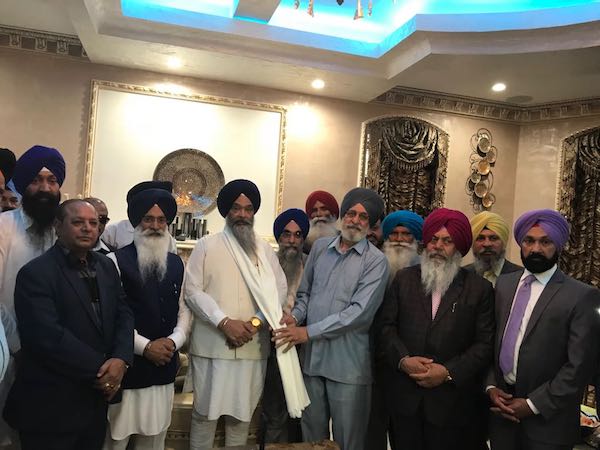
    NEW YORK(TIP): Prof. Prem Singh Chandumajra, Shiromani Akali Dal leader and Parliament Member from the historic Anandpur Sahib Parliamentary constituency visited New York recently and held a meeting with the local Shiromani Akali Dal leaders at the residence of SAD leader Raghbir Singh Subhanpur. A large number of party members attended the lunch meeting.

    Speaking on the occasion, Prof. Chandumajra said that he was aware of the problems the Punjabis, particularly, the Sikhs were having in respect of passport and visa and would take up the issue with the Consul General in New York. He said he had, on his visit to California, where he had gone to attend a wedding, taken up the matter with the Consul General in San Francisco, too. He blamed the government of India for not being sensitive to the difficulties the Sikhs faced for being denied the passport and visa.

    Speaking about the situation in Punjab under the Congress government of Captain Amarinder Singh, he said people were already fed up with the Congress government working. He accused the Punjab government of total inaction and said the State was being pushed in to deeper economic and social morass.

    Prof. Chandumajra with Subhanpur family

    Earlier, welcoming the visiting leader, SAD President Raghbir Singh Subhanpur said that the SAD leaders and workers in the US were always ready to support the party in Punjab. He spoke of the need to getting back in to the driver’s seat in Punjab in order to protect the interests of the Sikhs and the Sikh religion, which he said, was under threat from the present Congress government. He also spoke of the problems in getting passport and visa and requested the visiting leader to take up the issue with appropriate authorities here and in India.

    Speaking on the occasion, Master Mohinder Singh, one of the patrons of the SAD in USA had a long list of the infirmities of various systems in the State of Punjab. He bemoaned lack of basic infrastructure in schools and in hospitals. He spoke of the enormous inconveniences faced by NRI’s in courts in India, where cases were kept pending for long.

    Others who spoke on the occasion included Mohan Singh Khatra, President of New York unit of SAD, Himat Singh Sarpanch, one of the senior leaders of the party, and Kashmir Singh Pehowa, a general secretary of New York SAD.

    Sardar Ajit Singh Subhanpur, father of Raghbir Singh Subhanpur, honored the visiting leader with a siropao.

  • Vaisakhi Celebrated at the Indian Consulate, New York

    Vaisakhi Celebrated at the Indian Consulate, New York

    Punjab’s history and rich culture presented in talk, film, music and dance

    Bidisha Roy

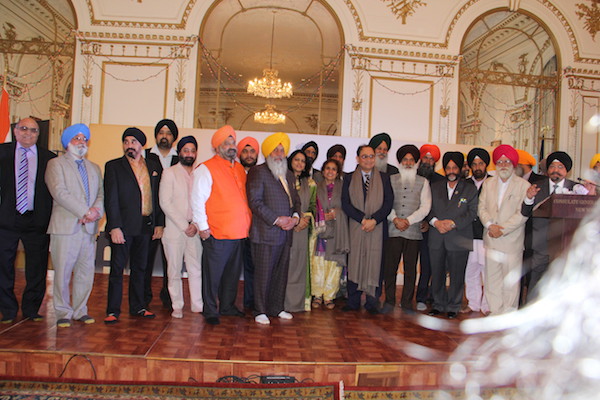
    NEW YORK CITY, NY(TIP): The Consulate General of India New York and The English language weekly newspaper The Indian Panorama teamed up to organize Vaisakhi celebrations at the consulate on May 11.

    The month of Vaisakh in India which corresponds roughly to mid-April to mid-May is full of celebrations in India. it is a harvest period in India which is celebrated widely with a lot of enthusiasm. In some parts of India, it is celebrated as the beginning of a new year.

    For the people of Punjab, and the Sikhs in particular, Vaisakhi holds a very significant and historic importance. Besides being Punjab’s foremost social festival to celebrate good crop, Vaisakhi came to acquire an importance as a historic day when in 1699 the tenth Master of the Sikhs, Shri Guru Gobind Singh created the order of the Khalsa. His followers, 25 million upwards today, are known as Sikhs and are easily distinguishable because of their appearance, the most distinguishable being the turban (the headgear). Sikhism is the youngest and the fifth largest religion in the world.

    Vaisakhi celebration at the Consulate was unique in more than one way. First, the gathering included not only the Sikhs and Punjabis but people hailing from many parts of India and adhering to different religions. Then there was a mix of non-Indians. Also present at the celebrations which lasted almost 2 hours were a few diplomats. A famous Indian classical dance guru Padma Shri Pratap Pawar from London who was in town also graced the occasion on an invitation routed through Malini Shah. Members of management from a number of gurdwaras which included gurdwara Nanak Naam Jahaj in Jersey City, gurdwara Nanak Darbar in Hicksville, and gurdwara Baba Makhan Shah Lobana in Richmond Hill participated.

    Ambassador Sandeep Chakraborty spoke highly of the Sikh community’s contribution to making India a great nation and congratulated them on their achievements abroad

    Ambassador Sandeep Chakraborty, the Consul General of India in New York who began with the Sikh greeting of Waheguru Ji Ka Khalsa, Waheguru Ji Ki Fateh, described Guru Gobind Singh as a great person who changed the course of history. He praised the Sikhs for their valor and their charitable disposition. Expressing his happiness with the presence of the Sikh community to celebrate Vaisakhi, he said the Consulate’s door were open to all to come and celebrate their festivals. He congratulated Sikhs on their birthday.

    Jakiran Saluja Beri and her son Kabir Raj Beri welcomed Ambassador Sandeep Chakraborty with a bouquet

    Ambassador Chakraborty was welcomed with a bouquet presented by Prof. Saluja’s daughter Jaskiran Saluja Beri and her son Kabir Raj Beri.

    Prof. Indrajit S Saluja in his welcome address, described Vaisakhi as the most important festival of Punjab which is also the birthday of the Khalsa, the modern-day Sikhs.

    Earlier, welcoming the gathering, Prof. Indrajit S Saluja, publisher and editor of The Indian Panorama described Vaisakhi as the most important festival of Punjab which is also the birthday of the Khalsa, the modern-day Sikhs. He called upon the gathering to celebrate the birthday of the Khalsa in a befitting manner.

    Dr. Nikky Guninder Kaur Singh makes a point

    The guest speaker, Dr. Nikky Guninder Kaur Singh, head of the Department of Religious Studies at Colby College, Waterville, a great scholar who has authored dozens of books and contributed hundreds of papers/ articles on religion and Sikhism, mesmerized the gathering with her profound knowledge of the subject and her forceful delivery. She spoke about the values held dear in Sikhism and mentioned that the Sikh Gurus were precursors of modern pluralism.

    Dr. Taruna Chakraborty greeted Dr. Nikky with a bouquet

    Dr. Taruna Chakraborty, the First Lady of Indian Consulate greeted Dr. Nikky with a bouquet.

    Prachi Makkar and Surya Makkar initiated Vaisakhi celebrations with a shabad “Deh Shiva Bar mohe ihe….”

    Prachi Makkar, a brilliant scholar and well known for her melodious shabad kirtan and Mata ki Bheta and her equally gifted brother Surya Makkar recited Mool Mantra and sang the shabad “Deh Shiva bar mohe ihe” which had the gathering spellbound.

    Glimpses of Gatka, Sikh martial art. Members of Gurdwara Baba Makhan Shah Lobana, Richmond Hill, New York presented a thrilling display of Gatka
    Glimpses of Gatka, Sikh martial art. Members of Gurdwara Baba Makhan Shah Lobana, Richmond Hill, New York presented a thrilling display of Gatka
    Glimpses of Gatka, Sikh martial art. Members of Gurdwara Baba Makhan Shah Lobana, Richmond Hill, New York presented a thrilling display of Gatka
    Gatka team with Consul General, guests of honor, and organizers

    Children from Gurdwara Baba Makhan Shah Lobana gave an electrifying display of the Sikh traditional martial art called Gatka. This warfare involves use of various weapons, including sticks and swords. Going by the comments of the audience, Gatka performance impressed people the most. Mr. Daler Singh who is the senior most member of the Gatka Club also displayed his skill as did the coach

    Another attraction was a documentary on Vaisakhi produced and directed by Prof. Indrajit S Saluja. The 17-minute documentary traced briefly the 5000-year-old history and civilization of Punjab. It described creation of Khalsa and the celebration of Vaisakhi and finally listed the great Punjabis and their contribution in various fields. The documentary received much appreciation.

    On this occasion, Balwant Hothi who made a major contribution to making of the documentary was recognized.

    Soormay gave a scintillating Bhangra performance

    How can a Punjabi celebration be complete without Giddha or Bhangra? So, to cap it all, there was a thrilling Bhangra performance by the famous Bhangra group Soormay.

    One of the paintings Manoj Vyas exhibited

    Manoj Vyas exhibited his paintings on the occasion.

    Sikhs of the Tri-State are contributed hugely to the successful celebrations of Vaisakhi. Royal Indian Banquet and Restaurant (Mr. Himat S Sarpanch, Mr. Raghbir Singh Subhanpur, Mr. Balbir Singh Pahalwan, Mr. Pritam Singh Gilzian); Singh & Singh Distributors (Mr. Jatinder Singh Bakshi), and Richie Rich Palace (Mr. Jarnail Singh Gilzian) sponsored food and drinks. Pleased with the effort of Prof. Indrajit S Saluja in organizing Vaisakhi celebrations at the Consulate, Mr. Hardeep Singh Goldie, President of Akali Dal, New Jersey donated a sum of $1000.00.

    Mr. Himat Singh Sarpanch was recognized for his cooperation in organizing the Vaisakhi festival. Seen from L to R: Ambassador Sandeep Chakraborty, Himat Singh Sarpanch, Prof. Indrajit S Saluja

    Mr. Himat Singh Sarpanch was recognized for his cooperation in organizing the Vaisakhi festival.

    Mr. Jatinder Singh Bakshi who lent great support in organizing the event (fourth from left), joined the celebrations with his friends. They are seen here with the Consul General (fifth from left).

    While Mr. Himat Singh Sarpanch, a former President of Gurdwara Baba Makhan Shah and his colleagues, Master Mohinder Singh ( founder President), Mr. Raghbir Singh Subhanpur (former President) , Mr. Raghbir Singh Babby, President, Mr. Gurmej Singh (former President) Mr. Dilbagh Singh (former Vice President), with Sikh leaders from New York and New Jersey joining them, presented Shawls to the guest speaker Dr. Nikky Guninder Kaur Singh, Ambassador Sandeep Chakraborty and Mrs. Taruna Chakraborty, Malini Shah, Community liaison to New York City Council Member Paul Vallone presented on behalf of the Council Member, citations from New York City Council to Dr. Nikky and Ambassador Chakraborty. Malini also presented citations to the classical dance guru from London Padma Shri Pratap Pawar, and Prof. Indrajit S Saluja.

    Malini Shah presenting New York City Council Citation to Prof. Indrajit S Saluja

    In his thank you remarks, Prof. Indrajit S Saluja expressed his gratitude to all present. The Fourth Estate -Media which was present in great strength, earned special appreciation and gratitude of the organizers. Those present included Bidisha Roy from The Indian Panorama, Parveen Chopra from the South Asian Times; Sonia Lalwani, Harvinder Singh and Peter from Parikh Worldwide; freelancer Anjali Sharma, Brahm Kanchibhotla; Renee Mehrra and Ashok Vyas from ITV; Jaya Sharma, Davender Singh and Balwant Hothi from PTC TV; Atma Singh from Car Studio; Jus Punjabi TV, TV Asia, and Global Punjab.

  • Punjab CM accepts power minister Rana Gurjit’s resignation

    Punjab CM accepts power minister Rana Gurjit’s resignation

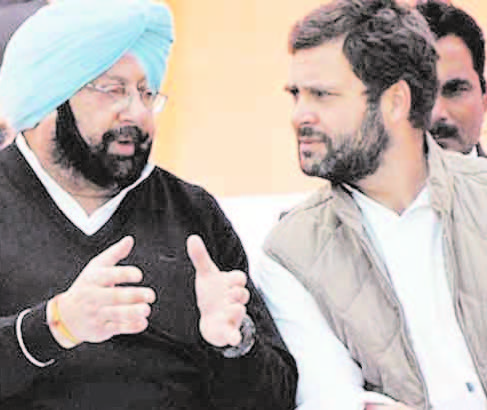
    CHANDIGARH (TIP): Punjab Chief Minister Amarinder Singh has accepted the resignation of power and irrigation minister Rana Gurjit Singh on Jan 18 following a meeting with AICC president Rahul Gandhi.

    Rana Gurjit had submitted his resignation to Amarinder a few days ago. But the CM had not accepted it. He had left it to Rahul to take a call. The decision to accept the resignation was taken after a thorough discussion on the issue during a meeting of CM and Rahul Gandhi in Delhi today morning.

    While sources said Amarinder was still backing his loyalist, Rahul and other leaders in the meeting are learnt to have prevailed upon the CM. PPCC President Sunil Jakhar, General Secretary Incharge Asha Kumari and AICC Secretary Harish Choudhary were also a part of the meeting.

    Rana Gurjit was caught up in a controversy related to sand mine auction in May. His two ex employees had bagged sand mines in the first ever auction done by the Congress-led government. Then CM had then ordered a probe Justice JS Narang (retd) into the case. The commission had however given Rana a clean chit.

  • ‘Paper marriages’ mushroom, but police await complaint

    CHANDIGARH (TIP): It is literally a marriage of convenience. Far away from the infamous phenomenon of abandoned brides that left nearly 30,000 Punjabi women undefended when their NRI grooms deserted them, a cool ‘paper marriage culture’ has developed in the state. There is virtually no police check.

    Sample this: A girl from Mohali belonging to a poor economic background was extremely good in studies, especially in English language. She was excited by an advertisement in a newspaper about paper marriage. The ad seemed to promise a fortune. All she had to do was marry a ‘below average’ youth from a village near Faridkot settled abroad.

    The ‘package’ offered by the prospective groom’s family through a ‘smooth talking’ agent stated the groom’s family would bear all expenses of her education, marriage and settlement in a foreign country. She would be a paper wife only and won’t have to even move to her husband’s house after the wedding. The deal clinched and both are settled in Australia now but with different partners. They got divorced as already agreed. Both have Permanent Residency in that country.

    Everyone doesn’t end up as ‘lucky’.

    The paper marriage is a worrying trend where either partners or both end up being exploited. The sole vow of the marriage in such cases is the commitment to help each other in search for greener pastures in the US, UK, Europe, Australia or New Zealand.

    When the conflict gets serious, the matter lands up with NRI police stations in the state. This is when the police come into picture. The Special NRI Wing, formed to look into marital disputes or fraud against NRIs, does not have any policy or proactive approach to stop such ads. The Punjab Police has no plan at all.

    Though the ads offer such illegal paper marriages, the police just await a formal complaint. IG-NRI Wing Ishwar Singh says the district police must look into such fraudulent ads. The NRI wing comes into picture when the fraud is already committed. “We spread awareness,” he said.

    Director, Bureau of Police Investigation, ADGP IPS Sahota, said the police do crack down “from time to time” on such travel agents. “We do conduct checks, but such ads have not come to our notice.”

    Kamaldeep Singh AIG NRI Wing sees a legal bottleneck. “On the face of it, such a marriage is legal. What can the police do unless there is a complaint? The couple goes through all the rituals of a wedding. Other than the immediate family, no one is aware. Unlike the fraudulent sham marriages scripted by NRIs in the abandoned brides’ case, the parents and baraatis are real. It is all verbal,” he said. Things, he says, get complicated only when money is sought to be refunded. He cites data: Of the 141 FIRs registered against or by NRIs, only 52 were about marital disputes and none of these was about the failure of such a legal marriage. Last year, from the 195 cases, 58 were related to marital disputes and none involved paper marriage.

    There is a hope, if at all. “Sometimes, a paper marriage develops into a real one. Two such cases came to the knowledge of the NRI wing where couples tied in such a contract marriage told their parents they were in love. “The bond developed when they moved abroad. The wedding had already taken place only the vows were exchanged afresh.”

    A look at most of such ads shows that more boys than girls seek a partner through such deals. A teacher with a local academy, which offers preparation courses on IELTS, says “very few boys are able to clear the test.” As most boys are unable to get the requisite grade, they try to migrate with the help of a sponsor or a girl who has cleared the IELTS exams.

    What is IELTS?

    The International English Language Testing System (IELTS) is the world’s most popular English language proficiency test for higher education and global migration. The IELTS assesses all English skills — reading, writing, listening and speaking, and is designed to reflect how a person will use English in one’s studies, work, and at leisure activities, says Wikipedia.

    It says the test is developed by some of the world’s leading experts in language assessment. It has an excellent international reputation, and is accepted by over 9,000 organizations worldwide, including in schools, universities, employers, immigration authorities and professional bodies.

    The candidate is given marks or bands out of 10. Those scoring 6.5 or more have better chances of getting a student or work visa in a foreign country.

  • Pakistani council orders revenge rape of 16-year-old girl

    Pakistani council orders revenge rape of 16-year-old girl

    ISLAMABAD (TIP): Pakistani police have arrested 25 members of an informal village council accused of ordering the rape of a 16-year-old girl as revenge for her brother’s alleged sexual assault of another girl.

    The Supreme Court also requested a report on the case, which echoed a notorious case from 2002 in which another teenager was gang-raped on a local council’s order.

    “A total of 29 people were involved in this ghastly crime, and we have 25 of them in our custody,” Multan City Police Officer Ahsan Younus told Reuters by telephone on July 27.

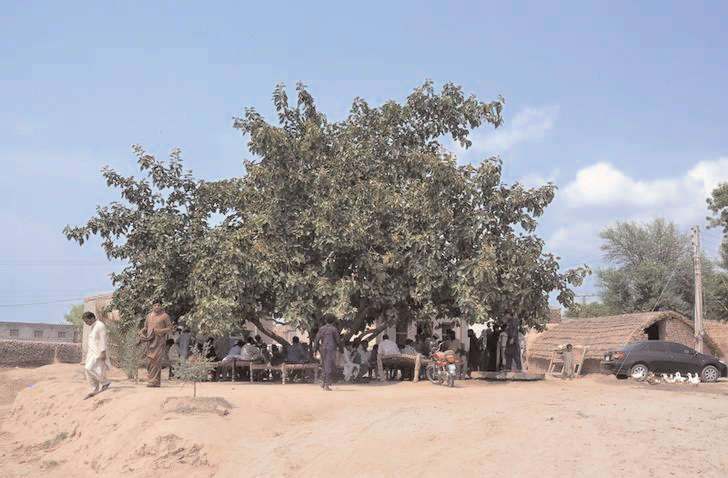
    Earlier this month, a local council in the southern city of Multan was called after a family accused a 16-year-old boy of raping a 13-year-old neighbour. The council ruled that the sister of the boy should be handed over to the victim’s brother to be raped. The punishment was carried out on July 17 after her family handed the girl over.

    The case came to light when both families filed criminal charges with police accusing the other family’s son of rape. Questioning both sides in the cases, however, soon revealed the role of the informal village council, Younus said. “All the village council elders who ordered the revenge rape have been arrested,” he said.

    Both the victims and their mothers have been sent to a women’s protection centre, he added. Pakistan has a centuries-old tradition of quick justice handed down by gatherings of local elders, known as jirgas or panchayats, seen by many villagers as preferable to the often cumbersome and corrupt formal legal system. In most of the country, jirgas are tolerated but not recognised by the formal courts and police.

    The jirgas and the practice of “revenge rape” drew international attention in 2002 when a woman named Mukhtaran Mai was ordered gang-raped by a local council for a male relative’s alleged crime.

    Mai took the rare step of filing criminal charges against her attackers, and six men were convicted and sentenced to death later that year, though five of them were later freed on appeal.

    Mai went on to become a high-profile campaigner for women’s rights in Pakistan. “Another Tribe Court (panchayat) in south Punjab Multan and another girl was raped. We are still in 2002,” Mai said on her official Twitter account this week.

    Speaking to Reuters by telephone, Mai denounced the revenge rape. “If there were any justice in the panchayat, they should have shot the rapist. Why punish an innocent girl instead?” (reuters)

  • SUKHPAL KHAIRA IS LEADER OF OPPN IN PUNJAB ASSEMBLY

    SUKHPAL KHAIRA IS LEADER OF OPPN IN PUNJAB ASSEMBLY

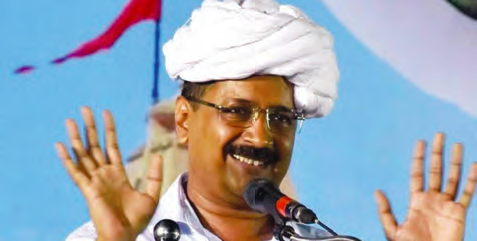
    CHANDIGARH (TIP): Bholath MLA Sukhpal Khaira was chosen as the Leader of Opposition in the Punjab Assembly today, with majority of the 19 other Aam Aadmi Party MLAs recommending his name in a one-on-one meeting with national party convener Arvind Kejriwal in New Delhi.

    HS Phoolka, who had resigned as the Leader of Opposition to focus on fighting cases of the 1984 anti-Sikh riot victims, also backed Khaira. Khaira got preference over other contenders after about 15 MLAs met in Chandigarh on July 17 where they agreed to support him on the ground that he was the only experienced legislator. One of the main contenders, Nazar Singh Mansahia, withdrew his name in Khaira’s favour in the meeting itself.

    Three MLAs, it is learnt, expressed strong reservation against Khaira’s name today, arguing that he would nurture his personal agenda more than toeing the party’s line and ideals. However, when Kejriwal and MP Bhagwant Mann announced that majority of the MLAs were in favour of Khaira, all MLAs gave their consent. The Leader of Opposition gets a Cabinet Minister rank and status. Talwandi Sabo MLA Baljinder Kaur was another contender for the post.

    Party sources said the Delhi leadership felt that the party may get divided if Khaira was not given a chance. Khaira, at present the Chief Whip of the party, had openly protested against the selection of Bhagwant Mann as state party president.

    Khaira faces a daunting task as he has to keep the party flag high in the Assembly, besides ensuring discipline. His first challenge would be to find a way out of privilege action against him by the Speaker. Khaira had during the Budget Session last month gone live on Facebook from the Assembly, against the rules. He was suspended for the session. A privilege committee will hear the allegation against him. Meanwhile, commenting on his election, Khaira said it was a moral victory of hard work and truth against sycophancy and money power. Khaira had remained a Congress MLA from 2007 to 2012. His father Sukhjinder Singh was an Akali leader who remained Education Minister twice.

  • PUNJAB ASSEMBLY BUDGET SESSION – AAP’s Khaira films House ruckus, suspended

    PUNJAB ASSEMBLY BUDGET SESSION – AAP’s Khaira films House ruckus, suspended

    Ajaib Singh Bhatti elected deputy speaker

    The House opened with legislators unanimously electing Congress MLA from Malout, Ajaib Singh Bhatti, a Dalit leader, as deputy speaker of the 15th Vidhan Sabha. Bhatti said his family and he were indebted to CM Amarinder Singh who recommended him for the coveted post.

    Amarinder congratulated Bhatti for his elevation and said that Bhatti’s long administrative and political experience would further enhance the glory of the august chair.

    He said that politics was in Bhatti’s blood, as he inherited it from his father late Arjan Singh, who contested assembly election from the erstwhile combined constituency Nihal Singh Wala in 1957.

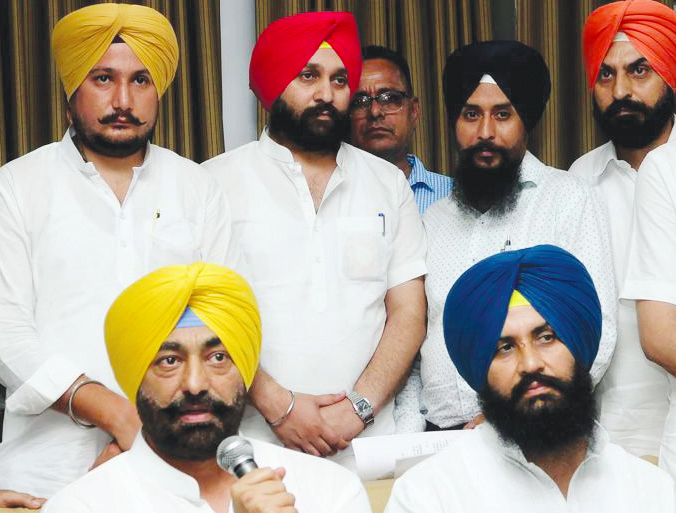
    CHANDIGARH (TIP): Shiromani Akali Dal (SAD) legislators, raising slogans inside the Punjab Vidhan Sabha, on June 16 attacked the Congress government for its “failure” to announce a loan waiver for farmers. Some were seen in a cantankerous spat with Congress MLAs. But it was AAP’s Bholath MLA Sukhpal Khaira who was suspended by Speaker Rana KP Singh for the rest of the session for uploading a video of the unruly scenes on Facebook.

    With Khaira recording the heated exchanges between Akali and Congress MLAs, that ensued after an outburst by Minister for Local Bodies Navjot Singh Sidhu, Congress MLAs, who were led by Kuljit Singh Nagra, raised objections. Subsequently, Minister for Parliamentary Affairs Brahm Mohindra moved a motion and Khaira was suspended for the session. The AAP MLA refused to hand over his cellphone, arguing that other MLAs were carrying phones as well, that House proceedings were not in progress when he had shot the video and that similar incidents had occurred in the past too. As AAP MLAs, led by Leader of the Opposition HS Phoolka, protested the decision, the Speaker adjourned the House.

    “I equate the unfair attitude of the Speaker with the Abdalis, Duranis and Mughals who mercilessly executed people, denying them an opportunity to defend themselves,” a defiant Khaira said. Tempers ran high during question hour as SAD and Congress MLAs entered into a spat over the “unparliamentary” language used for Tourism and Culture Minister. Congress MLAs Amrinder Singh Raja Warring, Nagra, Parminder Singh Pinky and Rana Sodhi stormed into the well of the House and nearly came to blows with Akali members. SAD’s Rozy Barkandi was pushed by Ghanaur MLA Thekedar Madan Lal Jalalpura.

    There were at least two adjournments and two walkouts. Earlier as the session began, SAD-BJP MLAs, including Pawan Kumar Tinu, Ajit Singh Kohar, NK Sharma, HPS Chandumajra and Arun Narang, rushed to the House well, raising slogans over “unkept” poll promises. The protests became louder as Sidhu got up to reply.

    The minister lost his cool while responding to a query on the Harike project after certain remarks were made against him. An enraged Sidhu then spoke of the “illegal activities” of the Badal family, blaming them for the Rs 350 crore PRTC loss.

    Addressing the Assembly on the third day of the Budget session, CM Amarinder Singh reiterated his government’s commitment to fulfilling all poll promises, including a loan waiver and “kurki” (auction) abolition for the debt-ridden farmers. Over repeated disruptions, he said: “The prestige of the Speaker’s office has never been lowered like this by throwing paper missiles at him.”

    Source: The Tribune

  • Embassy of India celebrates Baisakhi

    Embassy of India celebrates Baisakhi

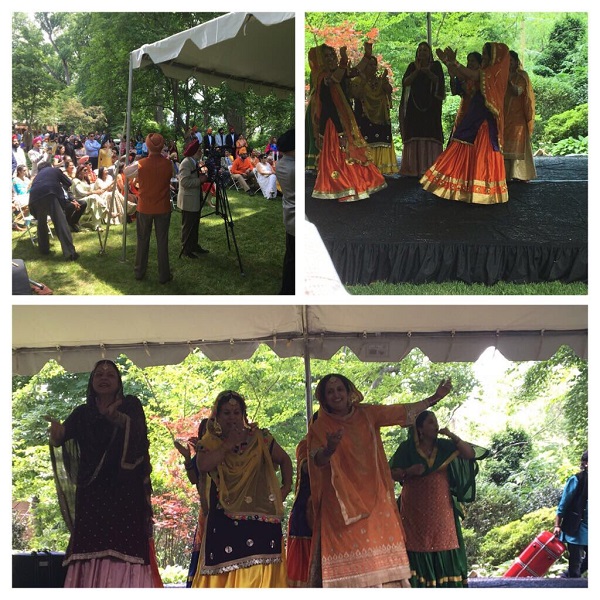
    WASHINGTON (TIP): Embassy of India, Washington DC celebrated Baisakhi on June 3 in the 350th Birth Anniversary year of Guru Gobind Singh ji. The event was attended by around 250 Indian American community members from various parts of United States.

    The celebration was marked by an auspicious beginning with Shabad Kirtan, welcome remarks by Ambassador Navtej Sarna and a cultural performance consisting of Punjabi traditional music and dance (Bhangra and Giddha).

    Sikh scholar Dr. Harbhajan Singh Ajrawat spoke on the teachings of Sikhism and highlighted the significance of Baisakhi.

    The fun and festivity was enjoyed by all the guests.

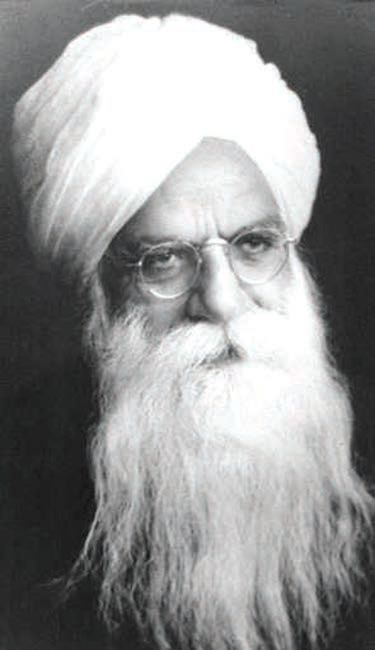
  • Dr. Bhai Vir Singh- The Sixth River of Punjab

    Dr. Bhai Vir Singh- The Sixth River of Punjab

    Remembering the poet, scholar, and theologian of the Sikh revival movement, Dr. Bhai Vir Singh on his 60th death anniversary

    Bhai Vir Singh wrote at a time when Sikh religion and politics and the Punjabi language were under such strong attack by the English and Hindus that the Sikhs had begun to doubt the value of their way of life. With his versatile pen, he extolled Sikh courage, philosophy, and ideals, gathering respect for the Punjabi language as a literary vehicle. The core of his philosophy is that man must overcome his pride or ego before he can realize God. Once the battle of self is won, man can then know God in all of his manifestations.

    Bhai Vir Singh was a poet, scholar and exegete, a major figure in the Sikh renaissance and in the movement for the revival and renewal of Punjabi literary tradition. His identification with all the important concerns of modern Sikhism was so complete that he came to be canonized as Bhai, the Brother of the Sikh Order, very early in his career. For his pioneering work in its several different genres, he is acknowledged as the creator of modern Punjabi literature.

    Born on 5 December 1872, in Amritsar, Bhai Vir Singh was the eldest of Dr Charan Singh’s three sons.The family traces its ancestry back to Diwan Kaura Mall (d. 1752), who rose to the position of vice-governor of Multan, under Nawab Mir Mu’ln ul-Mulk,With the title of Maharaja Bahadur.Baba Kahn Singh (1788-1878) was perhaps the first in the family to be regularly sworn a Sikh. He turned a recluse when he was still in his early teens and spent his entire youth in monasteries at Haridvar and Amritsar acquiring training in traditional Sikh learning. His mother’s affection ultimately reclaimed him to the life of a householder at the age of 40, when he got married. Adept in versification in Sanskrit and Braj as well as in the oriental system of medicine, Baba Kahn Singh passed on his interests to his only son, Dr Charan Singh. Apart from his sustained involvement in literary and scholarly pursuits, mainly as a Braj poet, Punjabi prose-writer, musicologist, prosodist and lexicographer, Dr Charan Singh took active interest in the affairs of the Sikh community, then experiencing a new urge for restoration as well as for change.

    To this patrimony of Bhai Vir Singh was added from his mother’s side a living kinship with another rich tradition of scholarship in exegesis of the Ckiani school, going back to the times of Guru Gobind Singh. His maternal grandfather Giani Hazara Singh compiled a lexicon of Guru Granth Sahib, and wrote a commentary on Bhai Gurdas Varan. As a schoolboy, Bhai Vir Singh used to spend a great deal of his time in the company of Giani Hazara Singh under whose guidance he not only learnt the classical and neoclassical languages, Sanskrit, Persian and Braj, but also received grounding, both theoretical and practical, in the science of Sikh exegesis.

    Bhai Vir Singh was the child of an age in ferment.The extinction of Sikh sovereignty in the Punjab, the decline in the fortunes of Sikh aristocracy, the gradual emergence of urban middle classes, the dissipation of the “national intellectual life” of the Punjab owing to the neglect and decay of indigenous education of the local people from their political destiny aroused among the Sikhs concern for survival and for redefining the boundaries of their faith. Further challenges arose in the shape of modernization, of Christian, Muslim and Hindu movements of proselytization and the agnostic cults such as Brahmo Samaj. Parallel to the developments foreboding gradual appropriation of Sikhism by the Hindu social order emerged a powerful end towards Braj classicism in the Sikh literary and scholarly tradition. Mythologization of the persons of Sikh Gurus, mixing of fiction with historical fact and interweaving of Vedantic and Vaisavite motifs into the essential Sikh teaching were its typical features. The response arose in Sikhism several movements- Nirankari (puritanism), Namdhari (militant Protestantism), Singh Sabha (revivalism and renaissance) and Panch Khalsa Diwan (aggressive fundamentalism).

    Bhai Vir Singh had the benefit of both the traditional indigenous learning as well as of modern English education. He learnt Persian and Urdu from a Muslim Maulawi in a mosque and was apprenticed to Giani Harbhajan Singh, a leading classical scholar, for Sanskrit and Sikh literature. He then joined the Church Mission School, Amritsar and took his matriculation examination in 1891. At school, the conversion of some of the students proved a crucial experience which strengthened his own religious conviction.

    From the Christian missionaries’ emphasis on literary resources, he learnt how efficacious the written word could be as a means of informing and influencing a person’s innermost being.

    Through his English courses, he acquired familiarity with modern literary forms, especially short lyric. While still at school, Bhai Vir Singh was married at the age of 17 to Chatar Kaur daughter of Sardar Narain Singh of Amritsar.

    Unlike the educated young men of his time, Bhai Vir Singh was not tempted by prospects of a career in government service. He chose for himself the calling of a writer and created material conditions for a single-minded pursuit of it. A year after his passing the matriculation examination, he set up a lithograph press in collaboration with Bhai Wazir Singh, a friend of his father’s. As his first essays in the literary field, Bhai Vir Singh composed some Geography textbooks for schools. Bhai Vir Singh began taking active interest in the affairs of Singh Sabha movement. To promote its aims and objects, he launched in 1894 the Khalsa Tract Society. In November 1899, he started a Punjabi weekly, the Khalsa Samachar. He was among the principal promoters of several of the Sikh institutions, such as Chief Khalsa Diwan, Sikh Educational Society (1908) and the Punjab and Sind Bank (1908). Interest in corporate activity directed towards community development remained Bhai Vir Singh’s constant concern, simultaneously with his creative and scholarly pursuits. In this engagement and, at the same time, in his eschewal of political activity, the Christian missionary example was apparently his model.

    In determining the basic parameters of the modern phase of Sikhism, Bhai Vir Singh stressed the autonomy of Sikh faith nourished and sustained by an awakening amongst the Sikhs of the awareness of their distinct theological and cultural identity. Secondly, he aimed at reorienting the Sikhs’ understanding of their faith in such a manner as to help them assimilate the different modernizing influences on their historical memory and cultural heritage. Education of the masses was the first requirement for the fulfilment of these objectives. In the meanwhile, the old educational system which had till then served as a channel for communication of the traditional knowledge to the youth of the race had broken down with the withdrawal, under British dispensation, of state patronage from the indigenous institutions, As if to fill the vacuum as well as to build new channels of intra-community communication, Bhai Vir Singh through his single-minded cultivation of Punjabi language as the medium of his theological, scholarly and creative work, resolved the cultural dilemma which the Sikhs faced at the turn of the century.

    On the one hand was the Sikh literary tradition in Braj language which had collected unmatched riches in multiple directions during the course of its three-centuries-long elitist career, on the other were the compulsions for mobilizing the common Sikhs through their own language. By drawing upon the Sikh tradition of Braj literature for his basic inspiration and cultural motivation and upon the Punjabi literary tradition for its linguistic components Bhai Vir Singh initiated a new literary idiom distinctly different from both.

    The tracts produced by the Khalsa Tract Society introduced a down to earth literary Punjabi remarkable for lightness of touch as well as for freshness of expression. In this writing lay the beginnings of modern Punjabi prose.

    The Khalsa Tract Society periodically made available under the title Nirguniara low-cost publications on Sikh theology, history and philosophy and on social and religious reform. Through this journal Bhai Vir Singh established a living contact with an ever-expanding circle of readers. He used the Nirguniara as a vehicle for his own self-expression and some of his major creative works such as the epic Rana Surat Singh, the novel Baba Naudh Singh, and the lives of the Gurus Sri Guru Nanak Chamatkar and Sri Guru Kalgidhar Chamatkar were originally serialized in its columns.

    In literature,Bhai Vir Singh started as a writer of romances which proved to be the forerunners of the Punjabi novel. His writings in this genre- Sundari (1898), Bijay Singh (1899), Satvant Kaur (published in two parts, I in 1900 and II in 1927)- were aimed at recreating the heroic period (eighteenth century) of Sikh history.Through these novels he made available to his readers typical models of courage, fortitude and human dignity. Subhagji da Sudhar Hathin Baba Naudh Singh, popularly known as Baba Naudh Singh (serialized in Nirguniara from 1907 onwards and published in book form in 1921) shares with Rana Surat Singh (which he had started serializing two years earlier), Bhai Vir Singh’s fascination with the theme of widow’s desperate urge for a re-union with her dead husband. But in Baba Naudh Singh this search is situated in a more mundane setting.

    This makes all the difference. The narrative here is more realistic in tone, and almost contemporary in its appeal. Bhai Vir Singh weaves into the narrative numerous motifs of social reforms moral teaching and religious preaching and depicts several situations of intercommunal and urban-rural confrontation. In 1905, Bhai Vir Singh started serializing through tracts Rana Surat Singh, the first Punjabi epic, written in blank verse of Sirkhand, variety. This long narrative of over 14,000 lines is a striking imaginative evocation of the situation of the Sikhs through a symbolic tale of a widowed queen in quest of her lost paradise. The spiritual voyage of Rani Raj Kaur, the main protagonist of the poem, from external factuality to internal essence has been described by Bhai Vir Singh in the form of a fantasy of spiritual ascension. Apart from living out her earthly destiny of suffering and pain, she symbolized the total ethos of the Sikh people at that historical moment when they were emerging out of their sense of defeat and despair into an era of a fresh beginning.

    Bhai Vir Singh’s quest for new forms of expression continued. Soon after the publication of Rana Surat Singh in book form in 1919, he turned to shorter poems and Lyrics. In quick succession came Dil Tarang (1920), Earel Tupke (1921), Lahiran de Har (1921),Matak Hulare (1922), and Bijlian de Har (1927). Following at some distance was Mere Salan Jio (1953). In this poetry, Bhai Vir Singh’s concerns were more aesthetic than didactic, metaphysical or mystical. He refined the old verse forms and created new ones.

    The metrical patterns Kabir, Soratha, Baint, etc., which he inherited from classical Punjabi literature, were transformed into lights nimble measures. Bhai Vir Singh also naturalized in Punjabi the Rubai which he borrowed from Urdu. By grafting Soratha and Sirkhandv forms on English blank verse, he paved the way for the emergence of Punjabi poem.

    As it happened, the first play written in Punjabi, Raja Lakhdata Singh (1910) also came from the pen of Bhai Vir Singh. Tentative in form, the 1. play did reveal the author’s powers of constructing crisp and witty dialogues Changeover from Braj Bhasa to Punjabi 2. as the main medium of Sikh literary and 3. scholarly expression created the need for new materials such as glossaries, lexicons, encyclopedias and exegetical works. Bhai Vir Singh himself provided several of the tools. He revised and enlarged Giani Hazara Singh’s dictionary, Sri Guru Granth Kosh, originally published in 1898.

    The revised version, published in 1927, gave evidence of Bhai Vir Singh’s command of the science of etymology and of the classical and modern languages. He published critical editions of some of the old Sikh texts such as Sikhan di Bhagat Mala (1912), Prachin Panth Prakash (1914), Puratan Janam Sakhi (1926) and Sakhi Pothi (1950).

    Monumental in size and scholarship was his annotation of Bhai Santokh Singh’s magnum opus, Sri Gur Pratap Suraj Granth, published from 1927 to 1935 in fourteen volumes covering 6668 pages.

    No sooner was the Sri Gur Pratap Suraj Grallth completed than Bhai Vir Singh launched on an even more arduous task. This was a detailed commentary on the Guru Granth Sahib. In a way, exegesis had been his lifelong occupation. Early in his career he had annotated selections from the Holy Book published in 1906 under the title Panj Granth Saiik, and, as he himself declared, all his writing was an exposition of the Sikh Scripture.

    He devoted himself unsparingly to the commentary, but it remained unfinished. A lifetime of unrelieved hard work and the weight of advancing years at last began to tell. In early 1957 signs of fatigue and weakness appeared. He was taken ill with a fever and died in his home in Amritsar on 10 June 1957. The portion of the commentary- nearly one half of the Holy Book- he had completed was published posthumously in seven large volumes.

    Article is based on extracts from the following books: Encyclopedia of Sikhism edited by Harbans Singh , Bhai Vir Singh: Life, Times and Works by Gurbachan Singh Talib, and Attar Singh, ed., Chandigarh, 1973, Bhai Vir Singh by Harbans Singh, Delhi, 1972, Bhai Vir Singh:Poet of the Sikhs. by Harbans Singh and Gurbachan Singh Talib (Source: Sikh-History.com) Encyclopedia Britannica

  • SEHWAG TOP NAME FOR INDIA

    SEHWAG TOP NAME FOR INDIA

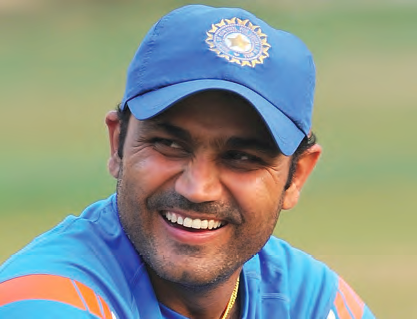
    NEW DELHI (TIP): Former cricketer Virender Sehwag on Friday became the most notable applicant for the Indian cricket team’s chief coach’s post, which would be technically vacant when Anil Kumble’s term comes to an end after the Champions Trophy. While Kumble is an automatic entry into the process, the others in the fray are Australian Tom Moody and Englishman Richard Pybus, who has coached Pakistan earlier.

    The two Indians among applicants are former fast bowler Dodda Ganesh and former India A coach Lalchand Rajput. Moody and Rajput had applied for the chief coach’s job last year also but it was Kumble, who got the nod. However, the entry of Sehwag — considered one among India’s greatest-ever game changers — makes the battle for the position very interesting.

    One of India’s biggest match-winners and a part of two- time World Cup winning team, Sehwag played 104 Tests and 251 ODIs for India scoring 8,586 and 8,273 runs respectively.

    While he doesn’t have any prior coaching experience apart from mentoring IPL franchise Kings XI Punjab recently, it was the BCCI top brass that convinced him to apply for the post.

    It’s the same kind of scenario when Ravi Shastri seemed all set to be retained as coach and Kumble was asked to throw his hat in the ring at the eleventh hour. The BCCI joint secretary Amitabh Chaudhary today on record denied any rift between Kumble and captain Virat Kohli.

    However, the fact that a player of Sehwag’s stature has applied gives enough indication that everything is not right in the Indian dressing room.

    Sehwag will only apply when he knows that he is a serious contender for the top job. It will be interesting if Kumble finally appears for the interview knowing that Sehwag had applied for the post.

    However many in BCCI feel that Sehwag,who is also a social media sensation, may demand an astronomical salary and then Moody, who gave a good presentation last time also, could come into the fray.

    Source: PTI

  • ENGLISH MEDIUM IN 400 PUNJAB SCHOOLS

    ENGLISH MEDIUM IN 400 PUNJAB SCHOOLS

    CHANDIGARH (TIP): Despite more than 1.4 lakh students in Class X and XII failing in English this year, the Punjab Education Department is on its way to introduce English as the medium of instruction in at least 400 government schools, which are yet to be picked. The department has moved a proposal for budgetary provisions for the same.

    “Back-to-back meetings are being held to implement the proposal. Parents prefer private schools only because these have English as the medium of instruction,” explained

    Education Minister Aruna Chaudhary, clarifying the students could opt for English or Punjabi as the medium of instruction. “Separate sections will be carved out for both,” she said.

    Pointing out that 77,000 (24 per cent) Class XII students and 70,000 (21 per cent) Class X students had flunked the English exam this year, DS Punia, general secretary, Democratic Teachers’ Front, said: “Only those nations imparting education in their mother tongue are doing well.

    Hence, Punjabi must remain the medium of instruction.” Opposing the move, Akali leader Tota Singh, who as Education Minister had made English compulsory from Class I, said: “Our decision to introduce English as a subject at the primary level, while retaining Punjabi as the medium of instruction, was an effort to save the Punjabi language.

  • AAP NATIONAL EXECUTIVE TO MEET ON SUNDAY, REDRAW GUJARAT POLL PLAN

    AAP NATIONAL EXECUTIVE TO MEET ON SUNDAY, REDRAW GUJARAT POLL PLAN

    NEW DELHI (TIP): The Aam Aadmi Party (AAP) is likely to redraw its strategy for contesting the Gujarat assembly elections, which is scheduled to be held later this year, and take a few steps back in favour of consolidating its position in Delhi and Punjab.

    Just five months ago, the party launched an elaborate exercise in Prime Minister Narendra Modi’s home state to spread its reach and contest the polls there as a direct challenge to the ruling Bharatiya Janata Party (BJP).

    Its plan was to go all out in the western state, with senior leaders including Delhi’s deputy chief minister Manish Sisodia put in charge of different zones to oversee election preparations. The change in course will be discussed at the meeting of the party’s national executive – the highest. executive body of AAP comprising around two dozen top leaders – on Sunday, an AAP leader said.

    This is the first such meeting after the Delhi municipal polls and the last round of assembly elections in which the AAP fell way short of its expectations of forming a government in Punjab and making electoral gains in Goa.

    A series of crises, including infighting in the Delhi and Punjab units, have hit the party since. The last meeting of the NE was held in April 2016.

    “A final decision on Gujarat will be taken in a meeting of those involved with the party’s expansion in the state with Arvind Kejriwal next week. It is now a question of how many seats to fight in the assembly elections there,” a party leader privy to the deliberations so far said.

    Kejriwal, the party’s national convenor, has called the meeting on June 6. Before that, the party’s top leaders will deliberate on the change in course.

    A senior leader said that the consensus within the party brass is to go slow on Gujarat, and therefore the national expansion plan, and look at “consolidating our position in Delhi and Punjab.” “Gujarat is no longer our priority.

    Regaining lost ground in Delhi is of utmost importance. Punjab has given us a good opportunity by making us the principal opposition party. We need to build on that,” he added. Source: HT

  • Indian-Americans shine at Intel science fair in the US

    Indian-Americans shine at Intel science fair in the US

    WASHINGTON (TIP): While four Indian- Americans received top awards in various categories, an Indian boy has won the world’s largest pre-college science competition in the US in environmental engineering category for his project on biodegradation of pesticides.

    Prashant Ranganathan, a 12th grader from Jamshedpur, alongwith over 20 high school students from various parts of India, participated in the Intel International Science and Engineering Fair. “My project will actually help farmers in biodegrading the pesticide which is plaguing the country,” Prashant told PTI after he was declared winner in the environmental engineering category at this years’ competition.

    In all, more than 1,700 students from across the world participated in the week-long event which concluded here on Friday.

    Student of Carmel Junior College in Jamshedpur, Prashant’s project ‘Biodegradation of Chlorpyrifos using native bacteria’ said that farmers should not use pesticides.

    Prashant who bagged the coveted award for his innovation for fighting against pesticide and getting rid of its side effects through biodegradable use. “In almost all the states, like Uttar Pradesh and Punjab, Haryana and Bihar and Jharkhand, there’s extensive farming. Using excessive amounts of pesticides, is affecting the health and the environment around them,” he said.

    While the topmost Gordon E Moore Award of $75,000 went to Ivo Zell, 18, of Germany for designing and constructing a remote-control prototype of a new “flying wing”, almost every participant of the Indian delegation returned from the annual competition with one award or the other.

    “India really boasts really extraordinary mathematics, science, physics, education,” Maya Ajmera president and CEO of Society for Science and Public, told PTI in an interview. In fact, in every section the award ceremony had the budding Indian scientists on the stage.

    So were the Indian American high schoolers, prompting one of the Intel official to say, “Indians and Indian Americans rock today” as the awards ceremony concluded at the Los Angeles Convention Center in downtown Los Angeles.

    Indian-American Pratik Naidu from Virginia bagged an award in the category of computational biology and bioinformatics, Adam Nayak from Oregon was declared the winner in earth and environmental sciences, Karthik Yegnesh from Pennsylvania in Mathematics and Rahul Subramaniam from Connecticut in the microbiology category.

    As a result, Indians and Indian Americans accounted for nearly one-fifth of the top categories of the awards. “I think that many generations of Indian scientists and engineers and computer scientists, have truly paved the way of this generation of young people doing extraordinary things,” Ajmera said referring to the incredible and innovative projects of Indian students who participated in this year’s science competition.

    For instance, a sister-brother team – Sairandi Sathyanarayanan & Sacheth Sathyanarayanan – from the National Public School in Chennai have invented a gearbox that generates electricity when a fisherman’s boat is lying idle at night, which they said is enough to meet the energy needs of a fisherman’s house for a day.

    The team not only received accolades from the judges but were on the stage on Friday for receiving awards in various categories.

    Shinjini Ghosh, a 12 grader from South Point High School, Kolkata was recognized for developing a language identification kit based on the variations in intonation using discrete markov-chain model.

    Similarly, Sahithi Pingali from Inventure Academy, Bangalore received multiple awards for developing a new approach to monitoring lakes in developing countries in a crowdsourcing environmental science.

    Kunj Siddharth Dedhia, from the Dhirubhai Ambani International School in Mumbai has developed a smartphone application based on user feedback for cyclists to reduce incidence of lower back pain, while Chaitanya & Geeve George from the Little Rock Indian School in Udupi received an award for developing a smartphone-aided multispectral imaging system. (Source: PTI)

  • Miracle plant breeder Dilbagh Athwal passes away at 88

    Miracle plant breeder Dilbagh Athwal passes away at 88

    NEW JERSEY (TIP): Dr Dilbagh Singh Athwal, a “miracle plant breeder” who was among those who laid the foundation of the Green Revolution in the 1960s, passed away in New Jersey (USA), May 15 evening. He was 88. His family, including his two sons, were by his side when he breathed his last.

    Athwal, whose work was much appreciated by Nobel laureate and “father of global Green Revolution”, the late Dr Norman Borlaug, first developed hybrid “bajra” (millet) in the early 1960s and later segregated PV-18 and Kalayan-227, two high-yielding wheat varieties, from the material provided by Mexico’s International Maize and Wheat Improvement Centre, also known as CIMMYT.

    Recipient of Padma Bhushan, Shanti Swarup Bhatnagar Memorial Award and several national and international honors, Athwal was bestowed with the highest honor in 1967, when a wheat variety – Kalyan-227 – was christened after his Kalyan village, located on the outskirts of Jalandhar city.

    The Kalyan variety, commercially released in 1967-68, not only provided the country salvation from hunger, but India also became wheat-surplus soon thereafter. In fact, the production in 1970s went up so rapidly that there was not enough space to stock wheat. As a temporary arrangement, the stock had to be kept on school premises.

    While Athwal was working on the wheat production improvement program at Punjab Agricultural University, Borlaug visited him in Ludhiana. In 1967, he got an offer from the International Rice Research Institute (IRRI), Philippines. Many state leaders and MLAs requested him to stay back at PAU. The then Prime Minister Indira Gandhi even wrote to the Punjab CM to persuade him not to leave India, but he had already made a commitment to the IRRI authorities.

    In 1977, he joined the International Agriculture Development Services created by the Rockefeller Foundation that later merged with Winrok International Institute.

    He retired as a senior vice-president of Winrok in 1991, but remained in touch with Borlaug. Both co-authored some research papers.

  • KINGS XI PUNJAB PIP MUMBAI INDIANS TO STAY IN IPL HUNT

    KINGS XI PUNJAB PIP MUMBAI INDIANS TO STAY IN IPL HUNT

    KINGS XI PUNJAB PIP MUMBAI INDIANS TO STAY IN IPL HUNT

    Wriddhiman Saha’s unbeaten 55-ball 93 powered Kings XI Punjab to 230/3 against Mumbai Indians in an IPL – Indian Premier League 2017 encounter. In reply, MI could score 223/6 in 20 overs.

    MUMBAI (TIP): In a game that swung from one side to the other, Kings XI Punjab came up trumps to record a thrilling seven run win over Mumbai Indians on May 11 (Thursday) and keep their hopes of qualifying for the 2017 IPL playoffs alive.

    Mumbai Indians needed 17 off the final over bowled by Mohit Sharma, and 10 off the last four deliveries. The chances of the former champions reaching the target were good with Kieron Pollard, who had hit a six off the second ball, at the crease. However, Mohit Sharma once again showed his skill at bowling in the death overs as he kept his cool to keep the Trinidadian all-rounder at bay.

    Kings XI Punjab scored a 2017 IPL record 230/3 and restricted Mumbai Indians to 223 for six.

    Wriddhiman Saha struck 11 fours and three sixes in his 55-ball knock of 93, Mumbai Indians vs
    Kings XI Punjab, IPL 2017, Mumbai, May 11.      Photo: BCCI

    STAYING IN TOUCH

    Kings XI Punjab moved to 14 points after the victory at the Wankhede Stadium on Thursday, just one point behind defending champions Sunrisers Hyderabad, who play their last match against Gujarat Lions in Kanpur. Kings XI Punjab’s last match is on Sunday against Rising Pune Supergiant.

    Pollard (50no) would have been disappointed with his effort as at one point, with the help of Hardik Pandya (30) and Karn Sharma (19), had put them on the verge of victory.

    Chasing 231 set by Kings XI Punjab, Mumbai Indians got off to a flying start but lost their way after the powerplay overs and then saw their top-four batsman return to the pavilion with the score at 121 in the 13th over.

    Lendl Simmons (59) and Parthiv Patel (38) gave Mumbai Indians a rollicking start as they started their chase of the season’s highest total. Patel was the first to go but the turning point of the match came in the 10th over when Martin Guptill took a brilliant one handed catch to dismiss Simmons, who was trying to hit another over the boundary, this time off Glenn Maxwell.

    Mumbai skipper Rohit Sharma (5) for the fifth time this season fell to a leg-spinner when he holed out at long on off the bowling of Rahul Tewatia while off-colour Nitish Rana (12) followed him soon after.

    SAHA’S HEROICS

    Wriddhiman Saha mixed caution with aggression to score an unbeaten 53-ball 93 and help Kings XI Punjab post the highest score of 2017 IPL.

    Kings XI Punjab scored 230 to overtake the 214 scored by Delhi Daredevils while chasing against Gujarat Lions earlier in the month. The wicketkeeper-batman was the glue the kept the Kings XI Punjab innings together. He shared 50-plus partnerships with Martin Guptill (36), Glenn Maxwell (47) and Shaun Marsh (25) to help Kings XI Punjab post a mammoth total. He stayed at the wicket till the last ball, hitting 11 boundaries and three sixes. While others around him went hammer and tongs, he was given the role of anchoring the innings. While he didn’t boast the same range of shots like his partners, he played to his strengths, playing with a straight bat and taking the occasional risk to go over the top.

    Source: HT


  • A tech whiz no more

    A tech whiz no more

    A tech whiz no more

    Karan (Kay) Beri, President, RIC Technology & Services Pvt;
    Ltd. Bengaluru; Founder, Opinio Media, Inc. Director, The
    Indian Panorama (7th Jan 1979 to 6th May 2017)

    “Whom the gods love, die young.”

    Karan (Kay) Beri was President of RIC Technology & Services Pvt. Ltd. Bengaluru, and Founder of Opinio Media Inc. as well as a Director of The Indian Panorama newspaper. The only son-in law to Prof. Indrajit S Saluja, Publisher-Editor of The Indian Panorama, Karan Beri, 37, passed away on May 6 in Bengaluru, India, leaving behind wife Jaskiran Beri and a five-year-old son Kabir Raj Beri.

    Karan was born on 7thJanuary 1979 to Ravi Beri and Amita Beri, a wellknown family of Ludhiana. He had his early education in Ludhiana where he studied at Sacred Heart Boys’ School. He studied Business Administration, obtaining his MBA degree from Punjab Agricultural University, Ludhiana.

    He worked with companies like IBM, Convergys, Hero Group and AirTel in various capacities. He was a top performer in every company that he worked with. IBM, pleased with his performance and professional competence selected him for an assignment in the US where he remained on deputation for some time.

    Later, he decided to start his own information technology company and launched, in2011, RIC Technology & Services Pvt. Ltd. with headquarters in Bengaluru.

    With a view to expanding the horizon of his business, in January 2016, he founded Opinio Media Inc in the US, a company to serve media industry, with his father-in-law’s newspaper The Indian Panorama as his first client. The list of Opinio Media’s clients grew phenomenally and the business grew. Karan had plans to move to the US to further expand the company’s business, a responsibility which his wife Jaskiran will now shoulder.

    Baby Karan (left) in the arms of mother Amita Beri and with
    elder sister (right) Roshni Babbar

    Karan was a brilliant student and topped at every level of his educational career. Innovation was always on his mind. He created in the last few years very useful software for media which he was experimenting with at The Indian Panorama to give it the finishing touches of perfection.

    He got married to Jaskiran Saluja in 2006 and the couple were blessed with a wonderful son, Kabir in 2012. His sad and untimely demise is deeply mourned and we pray for eternal peace to the departed soul.

    (Friends, relations, staff at RIC Technology & Services Pvt. Ltd. India, Opinio Media, USA, and The Indian Panorama, USA)


  • Actor-politician Gurpreet Singh Waraich ‘Ghuggi’  resigned from the Aam Aadmi Party

    Actor-politician Gurpreet Singh Waraich ‘Ghuggi’ resigned from the Aam Aadmi Party

    Ghuggi quits AAP after Bhagwant Mann’s elevation as party’s Punjab chief

    CHANDIGARH (TIP): “I cannot work under the leadership of a person who has been appointed on the condition that he will not drink (liquor),” said actor-politician Gurpreet Singh Waraich ‘Ghuggi’ as he resigned from the Aam Aadmi Party (AAP) on May 10 (Wednesday), two days after he was replaced as the Punjab unit convener to make way for Sangrur MP Bhagwant Mann. “I am upset at the way I was removed… With a heavy heart, I resign from the primary membership of the AAP,” he told reporters at a press conference here. His resignation further hits the party which is already facing the heat over allegations by a former Delhi AAP minister that chief minister Kejriwal took a “bribe” of Rs 2 crore. He suggested that the party could have given the post to Patiala MP Dharamvira Gandhi — who remains suspended from the party — or Sukhpal Singh Khaira. “I must admit that (HS) Phoolka Saab was a better choice than Mann,” he added. Ghuggi said that during his tenure as convener he led the party through a crisis and tried to bring in big leaders “who could have made AAP victorious in Punjab… but all of them were stopped from entering the party”. He said there were complaints against the observers stationed in Punjab by the central unit during the assembly elections but the leadership was not willing to listen. He alleged that the party looks to have deviated from its principles, so he did not find it appropriate to be a part of it anymore.

    What was the hurry?

    “The way Bhagwant Mann was reprimanded by Kejriwal at the time of his being made state president — with the condition that if he’s found drinking he will be removed from the party’s top post, and later Mann saying that he will step down if caught drinking — was not the right way of saying things,” said Ghuggi. He said Mann is a good stage performer but is not in a position to hold the reins of the party at this time. “Mann has so much on his hands. He is an MP and was campaign committee in-charge. Also, by not being made convener he wouldn’t have lost anything,” said Ghuggi, asking, “What was the hurry to make Mann president without taking volunteers into confidence?.” Adding to his contention of the day Mann was picked at a meeting of Punjab leaders in Delhi, Ghuggi further said, “If they had to do this, what was the need to indulge in a lengthy exercise? They could have simply removed me and brought in the new person. Because, when I was made the convener removing Sucha Singh Chhotepur, it was simply announced.” Ghuggi, who had joined the party in February last year after a successful Maghi Mela rally turned AAP into a serious contender in Punjab, was made state unit chief in September following Chhotepur’s ouster over a purported bribery sting.

    Where’s Kejriwal?

    Ghuggi also asked why Kejriwal has not come to Punjab after the party’s disappointing show in the state polls, in which it won 20 seats out of the 117 after initially being seen as frontrunner and Congress formed the government. “Almost two months have passed after the poll results (on March 11), but Kejriwal has not come to Punjab to address the people. He used to come to Punjab five times a month, but after the results he doesn’t have five minutes for the state.” Source: HT


  • OBITUARY

    KARAN (KAY) BERI

    7th Jan 1979 to 6th May 2017

    With a heavy heart, we convey the sad news of the sudden demise of Karan (Kay) Beri, President of RIC Technology & Services Pvt. Ltd. Bengaluru, Founder of Opinio Media Inc. and a Director of The Indian Panorama.

    The only son-in law to Prof. Indrajit S Saluja, Publisher-Editor of The Indian Panorama, Karan Beri, 37, passed away on Saturday, May 6 in Bengaluru, India, leaving behind wife Jaskiran Beri and a five-year-old son Kabir Raj Beri.
    Karan was born on 7th January 1979 to Ravi Beri and Amita Beri, a well-known family of Ludhiana.
    He had his early education in Ludhiana where he studied at Sacred Heart Boys’ School. He studied Business Administration, obtaining his MBA degree from Punjab Agricultural University, Ludhiana. He worked with companies like IBM, Convergys, Hero Group and AirTel, in various capacities.
    He was a top performer in every company that he worked with. IBM, pleased with his performance and professional competence selected him for an assignment in the US where he remained on deputation for some time.
    Later, he decided to start his own information technology company and launched, in 2011, RIC Technology & Services Pvt. Ltd. with headquarters in Bengaluru.
    With a view to expanding the horizon of his business, in January 2016, he founded Opinio Media Inc. in the US, a company to serve media industry, with his father in law’s newspaper The Indian Panorama as his first client in the US. The list of Opinio Media’s clients grew phenomenally and the business grew. Karan had plans to move to the US to further expand the company’s business, a responsibility which his wife Jaskiran will now shoulder.
    Karan was a brilliant student and topped at every level of his educational career. Innovation was always on his mind. He created in the last few years very usefuL software for media which he was experimenting with at The Indian Panorama to give it the finishing touches of perfection.
    He got married to Jaskiran Saluja in 2006 and the couple were blessed with a wonderful son, Kabir in 2012.
    We deeply mourn his sad and untimely demise and pray for eternal peace to the departed soul.


    IN GRIEF
    Family, friends, relations &
    staff of RICTS Pvt. Ltd. Bengaluru, India; Opinio Media, Inc., USA; The Indian Panorama, USA
    Prof. Indrajit S Saluja,
    Publisher-Editor, The Indian Panorama
    Cell: 646-247-9458
    Email: salujaindra@gmail.com

  • SUNIL JAKHAR APPOINTED PUNJAB CONG PRESIDENT

    SUNIL JAKHAR APPOINTED PUNJAB CONG PRESIDENT

    NEW DELHI (TIP): Eyes on the 2019 Lok Sabha elections, the Congress on May 4 appointed Sunil Jakhar, former minister and a staunch Capt Amarinder Singh loyalist, as the new president of the Punjab unit. Jakhar, 63, who lost the Assembly election, will replace Capt Amarinder, who took oath as Chief Minister this March 17.

    Jakhar was Capt Amarinder’s choice for the post. Congress president Sonia Gandhi and party vice-president Rahul Gandhi both endorsed it.

    Jakhar said he would act as a bridge between the government and the party and ensure the grassroots connect of the Congress stayed intact.

    Jakhar’s appointment is strategic as the central leadership wants complete coordination between the government and the organisation to ensure a strong footing in the state where the party has only three Lok Sabha seats (Ludhiana, Amritsar and Jalandhar) of 13.

    “We have challenges ahead. The LS poll of 2019 are just two years away. The organisation has to be strengthened. I will endeavour equally to ensure that election manifesto promises are fulfilled,” Jakhar said.

    He said he had sought an appointment with Rahul Gandhi for tomorrow. A former minister in the Amarinder Singh cabinet, a three-time MLA from Abohar, and until recently Congress’ Legislature Party Leader in Punjab, Jakhar has been a diehard Amarinder loyalist.

    On the eve of Punjab elections, he was the one to consistently urge the Congress leadership to replace Partap Bajwa with Capt Amarinder as state chief. When that finally happened a year before the state polls, Jakhar was dropped as the CLP leader and Bajwa as state chief.

    While Rahul Gandhi sent Bajwa to Rajya Sabha, Jakhar was left in the cold only to be unsuitably placated later by being named party’s chief spokesperson in Punjab. In between, on poll eve, Jakhar was sour with his mentor Amarinder Singh, who today redeemed his friend politically.

    In Congress circles, Jakhar is known for his straight talk and is someone who has always spoken his mind frankly even in meetings chaired by Rahul Gandhi. His appointment, sources say, indicates that the Congress won’t ignore regional satraps anymore and will value their opinion. Besides, the move is important as the Congress has given Hindu leaders a pride of place in its Punjab scheme. The state has 45 per cent Hindus, who backed the Congress to victory this time.

    Jakhar, when asked how he saw his appointment, said, “I have received the affection of all communities. It’s up to you to analyse my appointment politically.” As the son of former LS Speaker Balram Jakhar, he realises he has a lot riding on him. His acid test will be organisational strengthening ahead of the 2019 LS poll.

    Source: The Tribune

  • ‘Outsiders’ Sanjay, Durgesh finally exit Punjab AAP

    ‘Outsiders’ Sanjay, Durgesh finally exit Punjab AAP

    CHANDIGARH (TIP): It’s been more than six weeks since the Aam Aadmi Party’s disappointing loss in the Punjab assembly elections, but finally a humiliation in the Delhi civic polls became the trigger for Sanjay Singh and Durgesh Pathak to resign as the party’s bosses for the state on April 27 (Thursday).

    The signs were there immediately after the party lost face in the elections to the municipal corporation of Delhi (MCD) on Wednesday. Punjab AAP legislative party leader HS Phoolka, chief whip Sukhpal Singh Khaira and star campaigner MP Bhagwant Mann had upped the ante and again blamed the central leadership, or “the outsiders”, for the party’s Punjab loss.

    Uttar Pradesh natives Sanjay (Sultanpur) and Durgesh (Gorakhpur) had effectively taken over the Punjab unit in early 2015 — as in-charge and co-incharge — almost 18 months before the state polls. The idea was to reap dividends in Punjab — the state that had given the party all its four MPs in the 2014 Lok Sabha polls — particularly after the party’s historic mandate in the Delhi assembly polls in the February of that year.

    By then, Sucha Singh Chhotepur, who had been picked by party national convener and Delhi chief minister Arvind Kejriwal, had built a structure for the party as the state unit convener. The Sanjay-Durgesh team brought along a 52-member team of observers from Delhi that spread out as an umbrella body over that structure.

    Inside story a mystery

    A dormant fight for dominance blew up when Chhotepur was removed in August 2016 over a “sting operation”, allegedly showing him taking bribe for a ticket. The “sting” was never made public, and thus the real reasons behind Chhotepur’s removal remain a mystery. After Chhotepur floated his own party —significant in the politics of perception— the Congress and Shiromani Akali Dal raised the decibel level on labelling AAP as a party of outsiders.

    Some local faces were given posts, but the duo continued to enjoy primary roles— Durgesh as final authority on tickets and funds to candidates, and Sanjay as the overseeing troubleshooter. Their dominance was even disliked by a number of candidates, but they said little or nothing, hoping for a bigger role in an AAP government.

    Another section in the party kept raking up allegations of Sanjay-Durgesh taking money for tickets, but the party overlooked it all, not realising that opposition parties were cashing in.

    All their doing?

    But can the two be blamed for all the mistakes? A section of AAP leaders in Punjab is asking this question too.

    For instance, the party faced serious flak from within for not announcing a chief ministerial candidate. But who could have been projected when prominent local leaders were competing with each other in being on the right side of the duo?

    On seeing all others getting miffed with one given prominence, the party went into the polls on the back of Brand Kejriwal, but the bubble burst on March 11, the result day, when the party managed to win just 20 seats, plus two of coalition partner Lok Insaaf Party, as against its own claims of 100 out of 117. The Congress won a decisive victory with 77, though the AAP managed to become the prime opposition ahead of the SAD-BJP combined tally of 18.

    Insiders and observers both have also pointed out Kejriwal’s flirtations with Sikh radicals, and theories of his own ambitions to become Punjab CM, as reasons behind the loss; and not just mismanagement by the duo.

    Even party leaders in Punjab are not satisfied by the duo’s ouster alone. Khaira and NRI wing convener Jagtar Sanghera want more heads to role, and Khaira in particular has called for a “free hand” to state leaders. A roadmap for introspection and action is still not clear, and party leaders and volunteers remain confused. The resignations by Sanjay and Durgesh are the culmination of resentment within the AAP, but not the final solution to its troubles in Punjab.

    ‘Victory has many fathers, defeat has none’

    While Durgesh did not dwell, Sanjay again denied that he took money in exchange of poll tickets. “There’s no proof,” he told HT over phone. On being blamed for the Punjab fiasco, he commented, “Victory has many fathers; defeat has none.” Advocating introspection now, Sanjay said he had worked “very hard” to build the party “but the results turned out to be a reversal”. Source: HT

  • 10 held for IS link, one from Jalandhar

    10 held for IS link, one from Jalandhar

    NEW DELHI (TIP): Nine police teams of five states have arrested four suspected terrorists belonging to the ISIS Khorasan module for plotting a strike and detained six more. They were looking for potential recruits in Bihar, Uttar Pradesh and Maharashtra, an officer with the Delhi Police special cell said.

    Raids were jointly carried out this morning in Mumbai, Jalandhar, Narkatiaganj (Bihar), Bijnor and Muzaffarnagar by the Anti-Terrorist Squads of UP and Maharashtra and the police teams of Andhra Pradesh, Punjab and Bihar. Aseem Arun, IG, ATS, Uttar Pradesh, said three persons, all in the age group of 18-25, were arrested for conspiring to launch terror strikes. Mufti Faizan and Tanveer were arrested from Bijnor district

    Raids were jointly carried out this morning in Mumbai, Jalandhar, Narkatiaganj (Bihar), Bijnor and Muzaffarnagar by the Anti-Terrorist Squads of UP and Maharashtra and the police teams of Andhra Pradesh, Punjab and Bihar. Aseem Arun, IG, ATS, Uttar Pradesh, said three persons, all in the age group of 18-25, were arrested for conspiring to launch terror strikes. Mufti Faizan and Tanveer were arrested from Bijnor district. Nazim Shamshad Ahmed (26), who hails from Bijnor, was nabbed from Mumbra township adjoining Mumbai and Muzammil was apprehended from Jalandhar district. Also, six persons were being questioned. They would be produced in a Noida court where the ATS would seek their transit remand.

    “We have recovered documents related to ISIS from them. The accused met on the internet and had been coordinating through the same”. The IG said important papers were seized after the March 7 encounter in Lucknow in which a “terrorist” belonging to the Khorasan module was killed.

    The ATS had inputs that ISIS was expanding network in UP, Mumbai, Punjab and Bihar. One of them was helping the group with finances. A report from Jalandhar said 22-year-old Mazammil alias Gazi Baba had been residing in the city for the past couple of years. A tailor by profession, he had come to Jalandhar with his father from Unnao in UP. He lived in a rented room and seldom spoke to neighbours.


  • Capt says many Sikh Canadian ministers, MPs Khalistani sympathisers; Canada terms it disappointing, inaccurate

    Capt says many Sikh Canadian ministers, MPs Khalistani sympathisers; Canada terms it disappointing, inaccurate

    CHANDIGARH (TIP): Punjab chief minister Captain Amarinder Singh’s statement against Canadian defence minister Harjit Singh Sajjan terming him a “Khalistani sympathiser” has triggered a diplomatic row with the Canadian high commission on April 13 terming it “disappointing and inaccurate”.

    Reacting to the remarks, the Canadian high commission here said Canada greatly values its relationship with the people and the government of Punjab, and look forward to further advancing it. “We regret that the CM of Punjab is unavailable to meet with Canada’s minister of defence. The CM is welcome to visit Canada,” the high commission added.

    However, Amarinder rejected Canada’s defence and said he stood by his principled stand of not associating himself with any “Khalistani sympathiser”. Amarinder reiterated that the Canadian defence minister and several other top leaders in Canada were sympathising with those indulging in anti-India activities, notwithstanding Canada’s claims to the contrary, said a press note issued by his office.

    He named other Canadian political leaders, including Navdeep Bains, Amarjit Sohi, Sukh Dhaliwal, Darshan Kang, Raj Grewal, Harinder Malhi, Roby Sahota, Jagmeet Singh and Randeep Sari, as “well known for their leanings towards the Khalistani movement”.

    Amarinder had on April 12 alleged that Sajjan, like his father, is a “Khalistani sympathiser” and he would not meet him during his scheduled visit to India from April 17 as he (Sajjan) and four other Sikh ministers in the Justin Trudeau cabinet scuttled his visit to Canada before Punjab assembly polls.

    Canadian Defense minister Harjit Singh Sajjan
    Canadian Defense minister Harjit Singh Sajjan

    The CM said while Sajjan was welcome to attend conferences and meets, and even to visit the Golden Temple in Amritsar, he would personally not entertain the Canadian minister. The state government would provide full security to the minister and also ensure that he gets due treatment as per protocol, said Amarinder.

    Amarinder also lashed out at the Aam Aadmi Party (AAP) and the Dal Khalsa for their criticism of his refusal to meet Sajjan.

    In Canadian federal elections of 2015, Jutin Trudeau and his liberal party faced criticism from a section of Punjabi diaspora in Vancouver over World Sikh organisation (WSO), said to be a radical organisation, supporting Punjabi-Sikh candidates in the polls, including Sajjan.

  • Congress needs a winning strategy ‘Captain Model’ may work

    Congress needs a winning strategy ‘Captain Model’ may work

    George Abraham
    George Abraham

    Captain Amarinder Singh is often referred to as ‘Raja’ for his authoritarian style and imposing mannerism dealing with complex issues involving people. However, he has proved once again that a strong and charismatic leadership can inspire confidence in the cadre and motivate them to work hard for the success of the party. That is the basic essence of political leadership, Gandhiji has taught us- the sheer ability to motivate and mobilize the masses,” says the author – George Abraham.

    Amid the talk of the Modi Tsunami in Uttar Pradesh, the election victory by Congress Party in Punjab hasn’t received the needed attention it deserved. Captain Amarinder Singh, the leader of the Congress Party in Punjab scored a very impressive win surprising even the most ardent supporters while embarrassing many pundits in the media who predicted that AAP would form the next Government.

    What is significant about this decisive victory in Punjab is that Captain Amarinder Singh is credited for his charisma, inspiring leadership and simply plain hard work in motivating the party cadre to make this victory possible. Therefore, in the midst of a sea of failures during the 2017 election, Punjab stands out not only as a bright spot for the Congress Party but as a case study in planning for the future.

    There is indeed a rush to judgment when the party loses, often laying the entire blame at the foot of the Gandhi family. Ultimately, the leadership at the top bears a greater responsibility for success or failure of any entity. However, the collective failures of many in the senior leadership who concentrated on self-development while they were in power and marginalization and decimation of the party cadre during the UPA I and UPA II regimes have much more to do with the falling fortune of the party now than anything else.

    However, that does not absolve the tactical errors or strategic failures at the top in dealing with elections and more importantly running the daily operations in a diverse and complex environment. At present, there is too much power concentrated at the top and its inability to communicate in a timely fashion, and failure to address recurring conflicts at the local level, appear to have done some damage to the credibility and standing of the party apparatus. Many in the top leadership, who are decision makers, are said to be living in their own bubble totally detached from real people never having to see them or even ask for their votes.

    If the party has strong leadership at the top – a perception of the public that is critical for influencing events and changing mindsets – similar to the days of Nehru and Indira Gandhi, there would be discipline within the cadre and strict adherence to party directives across the board. However, the current dispensation calls for a rethinking of the status quo with the goal of decentralizing control and ceding more of the decision-making powers to the local level.

    History teaches us that when the party had stronger regional leadership, it has performed better in those States. K. Karunakaran (Kerala), Sharad Pawar (Maharashtra), Kamaraj Nadar (Tamil Nadu) and YSR (Andhra Pradesh) are among some of the notable regional leaders who have managed the party and governed their states with the great success of their own.

    There has been a strong suspicion among the pundits that many in the High Command were not thrilled about strong personalities at the local level. Consequently, ‘groupism’ was allowed to flourish in every State thereby weakening the local leadership and leaving all the decision making powers at the top. Therefore, those local leaders were forced to travel to Delhi for even minor decisions and wait for days to get resolutions to some of their pressing issues and often the same wait merely to get an appointment to air their grievances. Stories have been abounding of people returning home without an appointment, and some have simply left the party in disgust and joined the opposition simply to vent their frustrations. It is common knowledge that many in the top leadership wouldn’t even acknowledge a letter or an email from the grass roots willing to share their ideas to improve the party’s sagging fortune!

    The ‘Introspection’ by the Congress Party after every election is turning into a butt of jokes in many circles simply because little or no action has been accompanied by that process. However, here is an opportunity to look at the Punjab election and re-learn some of the lessons from the past. Captain Amarinder Singh is often referred to as ‘Raja’ for his authoritarian style and imposing mannerism dealing with complex issues involving people. However, he has proved once again that a strong and charismatic leadership can inspire confidence in the cadre and motivate them to work hard for the success of the party. That is the basic essence of political leadership, Gandhiji has taught us- the sheer ability to motivate and mobilize the masses.

    If the party can cultivate a new generation of influential leaders at the local level, it is bound to bounce back.

    Narendra Modi could only keep up with his polarizing and misleading rhetoric for so long, and a day of the reckoning appears to be not too far away. However, Congress needs a new awakening, and it can only happen with some decisive restructuring at the top which will allow a new dynamism to flourish and spread across every facet of the party’s life. Only a reinvigorated Congress Party could defend the vision of an inclusive India envisaged by Nehru and Ambedkar, the founding architects of the modern India.

    Those who have written off the 2019 election already for another Modi sweep may be making a grave error of judgment. History has taught us that in a democracy two years is a long period to sustain any momentum. A lot could happen in these uncertain times between now and April 2019. For example, in a lesson learned for ages, in 2004, the BJP was so sure of its ‘India Shining’ campaign and confident of a big victory yet they fell short of their goals. Therefore, this moment of disappointment is a time to find new resolve and to fight, not to surrender.

    Along with empowering local leadership, Congress party needs go to work urgently with like-minded parties to create a grand coalition, similar to the one that was cobbled up during the election in Bihar. In 2014, BJP was able to collect only 31 percent of the votes cast, and in the just concluded UP election, their vote share zoomed to 42 percent in total. It proves that the plurality of the votes was still cast for secular-minded parties and the Congress Party should do everything in its power to make alliances with regional parties towards a higher index of opposition unity for the ultimate purpose of defeating BJP in 2019.

    Undoubtedly, BJP has won UP on a platform of polarization of religious communities, and if they continue to succeed along those lines while splintering the non-BJP vote, the future of a plural India will be at stake. A gain of a 2/3 majority in both houses would even embolden them to transform the nation from a democratic one to a majoritarian one, and hence, history would never forgive the grand old party for its colossal failure in preserving the very idea of India for which their founding fathers have fought and died. If it takes the ‘Captain model’ of change that we have just witnessed in Punjab to reverse the current tide, go for it!

    (The author is a former Chief Technology Officer of the United Nations and the Chairman of the Indian National Overseas Congress, USA. He is a regular contributor to The Indian Panorama. He can be reached at inocusa@gmail.com)

  • World Bank approves $450 mn assistance to Pakistan

    World Bank approves $450 mn assistance to Pakistan

    ISLAMABAD (TIP): The World Bank today approved a financial assistance worth $450 million to Pakistan to support its efforts to help the poor and most vulnerable people in the country.

    The Finance for Growth Development Policy (FGDP) is a policy credit of $300 million that would assist Pakistan’s efforts in promoting an inclusive and transparent financial sector, a statement by the World Bank (WB) said.

    The bank said the programme aims to raise financial access throughout Pakistan to 50 per cent of adults, including 25 per cent women, by 2020, the Associated Press of Pakistan (APP) reported.

    According to the statement, in the next three years, FGDP aims to boost private sector credit access to small and medium enterprises to 15 per cent from 7 per cent in 2015.

    “Pakistan has made significant progress in the implementation of economic reforms,” WB Country Director for Pakistan Illango Patchamuthu said.

    However, despite the substantial development in the initial reform programmes and recent progress in the financial sector; there remains a significant unfinished reforms agenda as financial access and inclusion remain low, Patchamuthu added.

    An amount of $100 million, under the National Social Protection Programme, will help Pakistan strengthen the national social safety net systems for the poor in a bid to improve their human capital and to promote beneficiary families’ access to complementary social and productive services.

    It will also support the Benazir Income Support Programme for accurately identifying right candidates for cash transfers, other social programmes and incentivise improvements in service delivery systems.

    The WB will also provide an additional sum of $50 million under the Punjab Tourism for Growth Project to strengthen institutions, increase private sector participation and improve infrastructure to support the tourism sector in Punjab.

    The project will allow the private sector to lead the development of the tourism market while ensuring that public institutions help facilitate these processes while fulfilling their respective mandates, said the statement.

    According to the WB, some 100 million adults in Pakistan do not have access to formal and regulated financial services and this number represents about 5 per cent of the world’s unbanked population.

    “This needs to change for Pakistani women and men to realise their aspirations,” Patchamuthu said. The credit is financed from the International Development Association (IDA), the WB Group’s grant and low-interest arm.(PTI)

  • Jubilant crowd in USA welcomes Capt. Amarinder Singh’s landslide victory in the Punjab Vidhan Sabha Elections

    Jubilant crowd in USA welcomes Capt. Amarinder Singh’s landslide victory in the Punjab Vidhan Sabha Elections

    NEW YORK (TIP): A large crowd of the Indian National Overseas Congress, USA officials, members and supporters welcomed the long-awaited news of Capt. Amarinder Singh’s landslide victory (77/117) in the state assembly elections in Punjab.

    Led by Harbachan Singh, Secretary-General of INOC, USA, loud chants of “Congress Party Zindabad, and Capt. Amarinder Singh Zindabad,” resonated in the hall where a large gathering had assembled.

    Harbachan Singh congratulated the gathering andannounced”, “Congress party has scored a phenomenal success. The vibrant Congress spirit is fully focused again. There is no stopping now.”

    Singh, who congratulatedparty president Sonia Gandhi and each MLA for his or her victory, was addressing the assembly in the absence of George Abraham, Chairman and Mohinder Singh Gilzian, President of INOC, USA. who were both in Punjab to welcome the election results.

    Tejinder Singh Gill, Senior Vice President, Karamjit Singh Dhaliwal, Vice President, and Jasvir Singh Nawanshahar, President of Punjab Chapter of INOC, USA greeted the crowd and thanked everyone for their hard work and expressed full confidence in the great leadership of Capt. Amarinder Singh. They believed that the enthusiasm which Capt. Amarinder Singh witnessed in New York during his last visit strengthened his resolve to fight harder for the people. It was acknowledged that Mohinder Singh Gilzian and Tejinder Singh Gill had spent considerable time meeting people in Punjab. Others had kept in touch with their relatives and friends from here.

    Harbachan Singh declared that voters are very educated now and know how to stand for their rights and for what is right. The respect for truth and integrity is on the riseas evidenced by the social media stronghold. “Let’s therefore stand up and roll up the sleeves now and respond to the Capt.’s call, “he added. The Capt. wants to hit the ground running andimmediately begin work on his progressive agenda and with the help of science and technology, bring hope and relief to people. The Congress Party is over 127 years old and has the most experience of all the political parties in India. “Economic recovery is paramount,”the Capt. laid out, “and it is the will of the people that shall guide his administration in all areas, using state of the art strategies, in the creation of jobs, improving health and education system, eliminatingdrugs, increasingdevelopment, dealingseverely with corruption, encouraging industries, modernizing agriculture, transportation and infrastructure, etc.”

    Several prominent community leaders took the rostrum and spoke passionately about the dire needs of Punjab which had been neglected for the past 10 years and which, for sure, will be addressed now. Kulbir Singh, Jagir Singh, Piara Singh Barnala, Harminder Singh Panam, Ms.Malini Shah, Harry Singh, Ms. Jaya Sundaram, John Joseph, BaldevSingh, RajeshAlladad, Ms. Leila Maret, Shangara Singh Rana and Devindra Vora were amongst the many important speakers.