Tag: Punjab

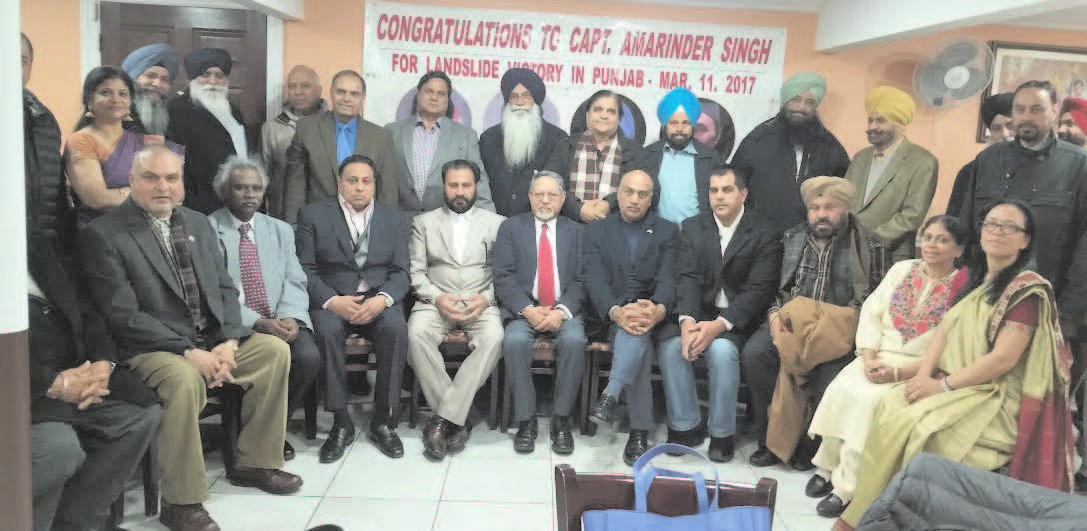
  • Captain Amarinder Singh takes over as the 26th Chief Minister of Punjab

    Captain Amarinder Singh takes over as the 26th Chief Minister of Punjab

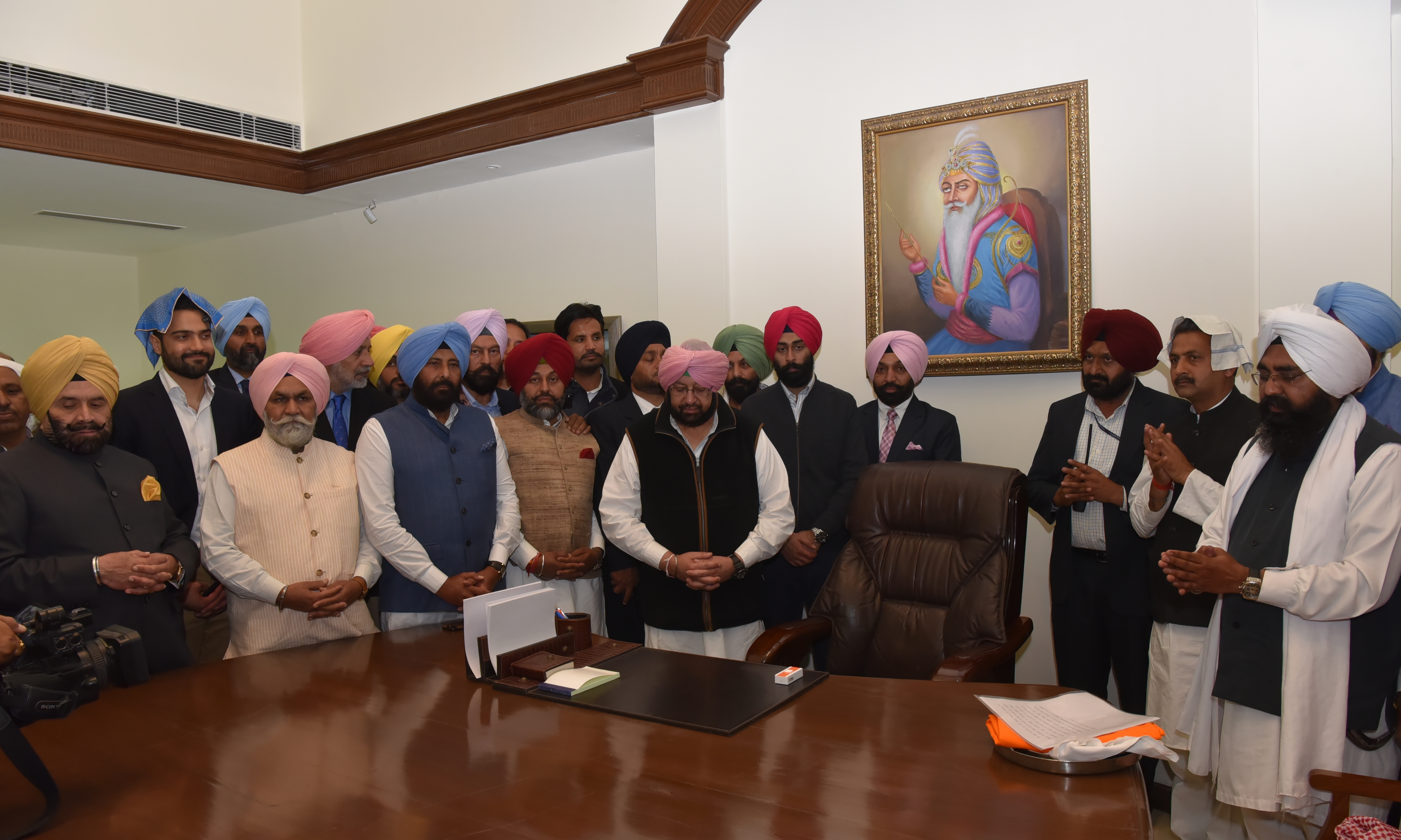
    CHANDIGARH (TIP): Capt Amarinder Singh was on March 16 sworn-in, at a simple ceremony, as the Punjab chief minister for the second time with nine ministers, including Navjot Singh Sidhu also taking the oath. Earlier, he had led the Congress government from 2002 to 2007.

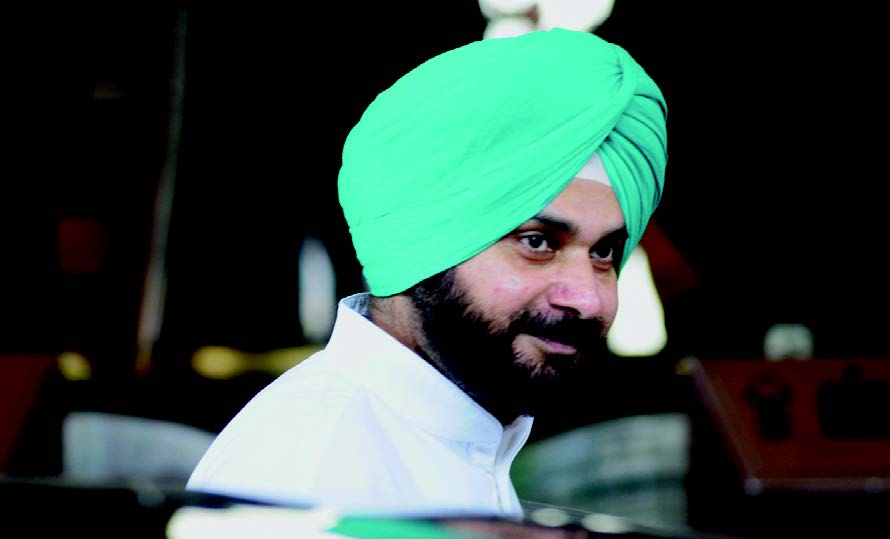
    Navjot Sidhu, the cricketer-turned politician, was second among the list of nine ministers to be sworn in. Brahm Mohindra was sworn in as cabinet minister right after Amarinder.

    Two ministers of State — both women — were sworn in at the ceremony attended among others by former Prime Minister Manmohan Singh and Congress vice-president Rahul Gandhi. The ceremony was held at the Raj Bhawan here and the oath was administered by governor VP Singh Badnore.

    Sporting a black sleeveless jacket adorned with army medals, Amarinder took the oath in English.

    Besides Sidhu those sworn in were Manpreet Singh Badal, estranged nephew of former chief minister Parkash Singh Badal, Sadhu Singh Dharamsot, Tript Rajinder Singh Bajwa, Rana Gurjit Singh and Charanjit Singh Channi.

    Two women MLAs Aruna Chaudhary and Razia Sultana were sworn in as Ministers of State (Independent Charge).

    The Council of Ministers has representation from different castes, regions and religious faiths.

    While Mohindra, the senior-most minister after Amarinder, is a Hindu face in the cabinet hailing from the CM’s home district Patiala, the rest of the cabinet ministers are Sikhs which include Charanjit Singh Channi and Sadhu Singh Dharamsot, both from the Dalit community.

  • Capt Amarinder Singh has team in place: Time to bat for Punjab

    Capt Amarinder Singh has team in place: Time to bat for Punjab

    Capt Amarinder Singh, the new Chief Minister of Punjab, has put together a Cabinet that represents a selection of veterans which, if tea leaves are to be read, portends well for the state. He has managed a delicate balancing act. Although there are some who have been ministers before, many are new to a ministerial assignment. Brahm Mohindra, Manpreet Singh Badal and Tripat Rajinder Singh Bajwa have held ministerial assignments, but the untested Navjot Singh Sidhu, Rana Gurjit Singh and Charanjit Singh Channi are no spring chickens. Some kind of balance has been attempted among Malwa, Majha and Doaba regions. The ministers come from various castes and communities, and two of the Cabinet members are women.

    The new Chief Minister needs to be complimented for weaving together a team of administrators, and the initial selection is of officers known for both integrity and efficiency, essential for working towards all-round development of the state. The temptation for any new political chief is always to seek the familiar. This can often be a mistake, more so in the case of Capt Amarinder Singh, whose coterie politics was widely believed to have been a major cause of discontent during his last term as Chief Minister. His successor, Parkash Singh Badal, succumbed to nepotism, which can equally be the undoing of any power figure.

    Now that Capt Amarinder Singh’s core team is in place, the pressure would be on him from Day 1 to deliver on the promises, which would, of course, include those made behind closed doors as well as those to the public. If he concentrates on the latter, he will be able to ignore the puerile. The relatively simple swearing-in ceremony should set the tone. Punjab has had to bear the burden of ‘adjusting’ political and other ‘leaders’ in public offices rather than appointing capable individuals who may do justice to the responsibilities assigned. Change is expected by the voters, and those who entrusted with delivering it must keep their focus on the larger interests of Punjab, not just political gymnastics that have long been the bane of the state.

  • Assembly Elections 2017 Anti-Incumbency a dominant factor

    Assembly Elections 2017 Anti-Incumbency a dominant factor

    Exit polls find BJP ahead in UP, Goa; Cong & AAP neck-and-neck in Punjab

    NEW DELHI (TIP): Anti-incumbency appears to be a factor in deciding the fate of political parties in the fray in five States of India which have gone to polls. Results are expected on Saturday, March 11. However, exit polls, as in the past, have come up with their assessment of number of seats likely to be won by each of the parties in each of the States. The Bharatiya Janata Party could emerge as the single-largest party in three of five states, including Uttar Pradesh, which voted to elect new assemblies over the past month, exit polls showed on Thursday, March 9.

    The Congress and the Aam Aadmi Party were locked in a tight race in Punjab and the country’s principal opposition party was battling with the BJP to retain power in Manipur and Uttarakhand.

    The results, officially out on Saturday, March 11, will be seen as a referendum on Prime Minister Narendra Modi’s policies, including the shock recall of 500-and 1000-rupee banknotes – a decision that opposition parties slammed as anti-poor and turned into a poll plank.

    The five state polls are also billed as a virtual semi-final to the general elections in two years from now, and the results are likely to shape both upcoming presidential elections and policy formation. If the forecasts come true on March 11, the BJP-led central government could give a fresh impetus to politically unpalatable economic reforms, especially those in the labor sector.

    Exit polls have frequently gone wrong in the past, including in Bihar and Delhi in 2015. Analysts say states with diverse populations and complex caste, community and religious affiliations tend to throw pollsters off.

    Some of the polls predicted ranges of seats while others gave absolute numbers without mentioning any error margin.

    In UP, where the BJP is seeking to regain power after 14 years, all exit polls forecast a hung assembly. Two gave the BJP a clear advantage over its nearest rival, the Samajwadi Party-Congress alliance, while two others predicted a close fight between them.

    The Bahujan Samaj Party (BSP) was seen as a distant third in all four exit polls available for the 403-member house. In the event of the polls throwing a hung assembly in UP, post-poll re-alignments of political forces could not be ruled out.

    In a Facebook Live conversation with BBC Hindi on Thursday, UP chief minister Akhilesh Yadav was ambiguous about the possibility of the SP joining hands with the BSP to keep the BJP out of power.

    “No one will want President’s Rule in UP and that the BJP governs the state through a remote control,” he said in a cryptic reply to a query about the possibility of a post-poll arrangement with the BSP.

    The BJP was seen as surging ahead of the rivals in Goa and Uttarakhand as well.

    In Punjab, all exit polls unanimously predicted a drubbing for the ruling Shiromani Akali Dal-BJP combine. But the polls were divided on whether the Congress or the Aam Aadmi Party, which is fighting its debut assembly election in the state, will form the next government.

    Two exit polls predicted a photo-finish while two others were split between the Congress and the AAP in the 117-member assembly. The halfway mark is 59.

    In Uttarakhand, the BJP looked set to dislodge the Congress as four out of five exit polls gave a clear majority to the saffron party. One poll forecast a close fight in the 70-member legislature.

    Three exit polls suggested that the BJP could retain power in Goa. The AAP, which ran a high-voltage campaign in its debut outing in the state, was seen as failing to have had an impact in the 40-member assembly.

    But polls were split over Manipur, with one giving a majority to the BJP and the other to the ruling Congress.

    (With inputs from agencies)

  • SYL standoff: INLD bid to dig canal foiled; Abhay Chautala, 72 other leaders jailed

    SYL standoff: INLD bid to dig canal foiled; Abhay Chautala, 72 other leaders jailed

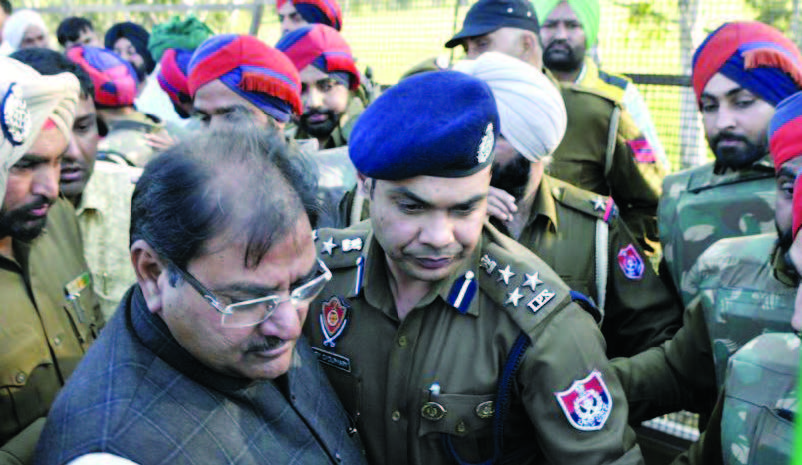
    PATIALA (TIP): Top leaders of the Indian National Lok Dal (INLD), including Abhay Chautala, 18 other MLAs and two MPs, were arrested by Punjab Police at Shambhu barrier on the Punjab-Haryana border on Thursday after they, along with several supporters, entered the state to undertake digging of the Sutlej-Yamuna Link (SYL) Canal.

    They were rounded up for violating prohibitory orders and were sent to Patiala jail in judicial custody till February 27. A case under Section 188 (Disobedience to order duly promulgated by public servant) of the Indian Penal Code (IPC) was registered against Abhay and 72 other party leaders, who courted arrest, after the police refused to allow them to enter the state.

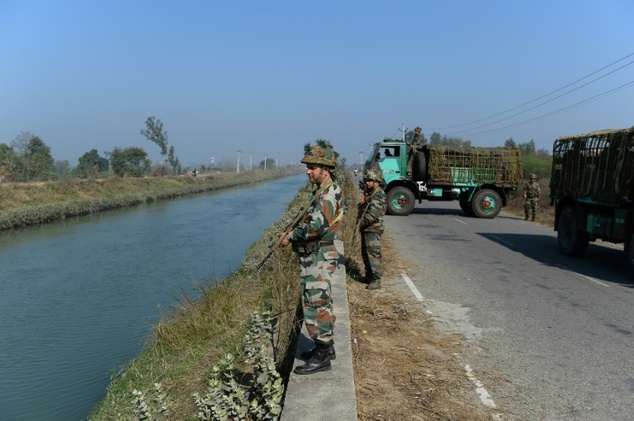
    The INLD leaders had threatened to march into Punjab along with their shovel-carrying supporters towards the contentious canal, but heavy force was deployed to thwart their attempt. Punjab Police responded by constructing a 10-feet high wall of iron barricades and deployed about 5,000 armed personnel to stop the protesters from marching into the state.

    Symbolic digging of the SYL Canal by INLD supporters Photo courtesy: HTWhen the INLD workers reached the Punjab-Haryana border at the Shambhu barrier, they were clearly outnumbered by the police. They first tried to climb up the barricades to cross into Punjab, but failed and symbolically started the digging work of the SYL Canal right there. As slogans of SYL being their legal right rent the air, Abhay delivered a short speech. He accused the Centre of being biased against Haryana, saying that Prime Minister Narendra Modi is not implementing the court decision on the SYL canal.

    After his speech was over, Abhay and his supporters turned to go back, but suddenly stopped to have a brief consultation with party leaders. He then changed his mind and decided to court arrest by entering Punjab. Police officials held brief parleys with the protesters before making an announcement on loudspeaker that whosoever enters Punjab will be arrested for breaching the prohibitory orders. Abhay and other party leaders did not resist the arrest and were taken to the Shambhu Serai where a temporary control room of Punjab Police had been set up.

    After his arrest, Abhay warned that his party would not allow any Punjab leader who is opposed to the SYL Canal to travel through Haryana.

    Earlier in the morning, INLD supporters started gathering at the new grain market in Ambala City for the “Jal Yudh Sammelan”. Though the number of workers at the venue was modest at the start, it began to swell rapidly after 12.30pm.

    The venue was packed by the time Abhay arrived. After a quick round of speeches, they started marching on National Highway-1 (also known as GT Road) towards the Punjab border, about 2km from the rally spot. The party leaders were ferried in tractor-trailers. Though Haryana Police had made heavy bandobust, they did little to stop protesters from entering Punjab.

    No traffic was allowed on the highway from Rajpura onwards and traffic to Ambala was diverted through Sirhind via Landran. They were stopped by Punjab Police which had deployed 10 companies of paramilitary, anti-riot squads at all entry points, besides using a helicopter and drones to keep vigil to avert any untoward situation, director general of police (DGP law and order) Hardeep Dhillon, along with inspector general, Patiala, B Chandra Sekhar, was in command of the operation.

    Meanwhile, Punjab Police also didn’t allow All India Sikh Students Federation and Bains brothers’-led Lok Insaaf Party workers to reach the Punjab-Haryana border as they had announced to take the INLD head-on.

  • India Assembly elections: Change of guard on cards in Punjab, Goa

    India Assembly elections: Change of guard on cards in Punjab, Goa

    NEW DELHI (TIP): Punjab and Goa, which reported high voter turnout for assembly elections on February 4, could be looking at a change, an analysis of past poll data reveals. In around 80% of the state assembly polls whenever voting percentage has been higher than the previous election, there has been a change in the government, election commission data for the last 20 years reveal. The probability of change is even higher when women voters outnumber men.

    Also Read Related Story: PUNJAB RECORDS 77.37% VOTER TURNOUT & Goa notches record 83% turnout

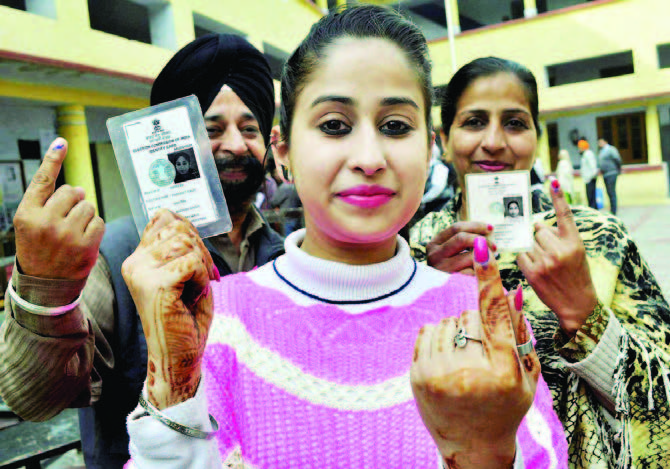
    Punjab reported 77.37% polling, a shade lower than 78.57% in the 2012 election. Goa turnout was 82.23% against 81.73% the last time. In both the states, more women turned up at polling booths than men.

    High voting, a recent phenomenon, has led to change in governments in most states though there are exceptions. Voters in Punjab took everyone by surprise in 2012 when they returned SAD-BJP to power, a first for the state where Akalis and Congress took turns to rule the state.

    Last year, Mamata Banerjee was given a second successive term by voters in West Bengal. When she ended the Left’s three decades of rule in 2011, it was a new voting record for the state. Sheila Dikshit returned as the chief minister of Delhi with a higher majority in 2003.

    “Invariably the enthusiasm at polling booths is for a change,” said Sanjay Kumar of the Centre for the Study of Developing Societies, which has been monitoring voting patterns of assembly elections for the last 20 years.

    Kumar said understanding voting pattern was a complex issue and could vary from state to state in a big country like India, as elections also have caste and community dimensions. “But what we observe from analyzing long-term data is that if people are satisfied with the incumbent government, they normally may not come out in large numbers,” he said.

    In the last 20 years, India has seen voters’ enthusiasm rise. Higher turnouts can primarily be attributed to three factors -weeding out of bogus names from poll rolls, the election commission’s efforts to encourage voting and bring polling stations closer to voters’ homes and adequate security. The number of polling stations has more than doubled in the last two decades. All polling booths now have a central election observer to ensure free and fair polling.

    At least 10% of the names on polls rolls were found to be bogus or duplicate and were struck off, EC has said. “The ECI has worked a lot on this and it is showing results,” former chief election commissioner SY Quraishi said. These factors have helped build voter’s confidence. In around 160 assembly polls, including those for union territories, held since 1990, higher voter turnout was reported in about 122 elections, leading to change in the government in about 79.4% cases. Moreover, data also show that it is getting increasingly difficult for the ruling parties to retain power when compared to early years of Independence.


  • Overseas Indian sportsmen have done their homeland proud

    Overseas Indian sportsmen have done their homeland proud

    By Prabhjot Singh

    The year 1984 may have been a tumultuous year for the Punjabi community in general and Sikh community. It may not be easy for anyone to put behind the dastardly and tragic events that rocked not only Punjab but also the Punjabi community elsewhere. As the community was drowning in gloom, two overseas Punjabis  -Alexi Singh Grewal and Kulbir Singh Bhaura – provided the silver lining by telling the world how enterprising the community was. Not only they entered the history annals as first overseas Indians to win Olympic medals but they also set a new trend in motion that has been kept afloat by enterprising overseas Indian community ever since.

    At the overall overseas Indian community has done exceedingly well in the world of sports, including Olympic games, Commonwealth games and cricket.

    Their heroic deeds scripted a new chapter describing it as the launch of “Brand India”. Before 2016 ended, yet another overseas Indian – Rajeev Ram – kept the “Brand India” flame alive by winning an Olympic medal, a Silver in Rio Olympic games.

    Contribution by overseas Indian community cannot by undermined for it has won cockles of many a heart in the contemporary sports world. In December when a field hockey team from Canada went to play in the 2016 Junior World Cup Hockey Tournament in Lucknow, 11 of its 16 members were of Indian origin.

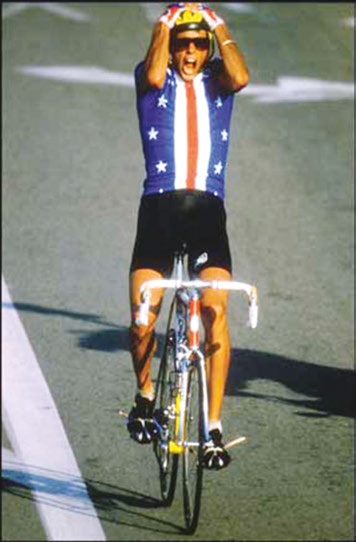
    Alexi Singh Grewal became the first American to win an Olympic gold medal in cycling, at the 1984 Games in Los Angeles. Photo: Todd Buchanan
    Alexi Singh Grewal became the first American to win an Olympic gold medal in cycling, at the 1984 Games in Los Angeles. Photo: Todd Buchanan

    These players -Brandon Pereira, Harbir Sidhu,Parmeet Gill, Rohan Chopra, Rajan Kahlon, Kabir Aujla, Balraj Panesar (captain), Ganga Singh, Gavin Bains, Arshjit Sidhu and Iqwwinder Gill – need to be complemented as they self-financed their participation in the prestigious Lucknow tournament.

    And the Australian team, too, had one player of Indian origin, Kiran Arunasalam. It is after a long time that any player of Indian origin is playing for Australia in hockey.

    At the overall overseas Indian community has done exceedingly well in the world of sports, including Olympic games, Commonwealth games and cricket.

    You name any sport in which the overseas Indian community has not won laurels for the countries of its present abode. Needless to say, that 17 countries, including Canada, the US, Australia, Malaysia, England, Kenya, Uganda and Hong Kong, have been represented by overseas Indians in Olympic games.

    Kulbir Bhaura, who represented Great Britain in field hockey, is the only overseas Indian to have two Olympic medals to his credit, a bronze in Los Angeles and a gold in Seoul.

    Then there is Shiv Jagday, a former Indian Universities colour holder; he had the distinction of working as National Coach of Field Hockey Canada. He also coached the US national team besides being on the panel of the select FIH coaches. His son Ronnie Jagday also played for Canada in Sydney Olympic games. One must not forget the contribution of Malkiat Singh Saund who was one of the best forwards of the 1972 Munich Olympic games. Malkiat represented Uganda. Now he is settled in England.

    Sutinder had the distinction of leading England in one match in the Mumbai World Cup Hockey Tournament in 1981-82. He played for England and Great Britain for a number of years.

    If Australia is a world power in field hockey, it is all because of efforts of Pearce brothers who immigrated to Australia from India and represented their new country of abode in Olympic games.

    Hardial Singh Kular, besides playing for Kenya, also rose to be the Vice-President of the International Hockey Federation (FIH). He was one of many Indian expatriates who represented Kenya in 60s and 70s of the last centenary.

    He stands tall with Alexi Grewal, the first overseas Indian, to win an individual Olympic gold medal. In the 1984 Olympic games, he won the road race event in cycling in style. His father, a Sikh, had migrated to the US.

    Interestingly, Alexi Grewal’s individual gold, though for the US, came 24 years before Abhinav Bindra won the country’s first ever-individual gold medal in Olympic games.

    The latest from the overseas Indian community to get on to the Olympic medallist list is tennis player Rajeev Ram who won a silver medal in mixed doubles in the 2016 Olympic games in Rio.

    While the overseas Indians have done the country and the overseas Indian community proud, the Indian government is yet to reciprocate. Though it started organizing #PravasiBharatiyaDivas (PBD) where outstanding members of the overseas Indian community are felicitated, sportsmen and women are yet to get their due.

    Besides Alexi Singh Grewal, Kulbir Singh Bhaura and Rajeev Ram, there are a large number of other sportsmen and women, who have done the overseas community and India proud.

    Rajeev Ram has to his credit a silver medal. In partnership with Venus Williams,

    Rajeev Ram, finished runners-up in mixed doubles event in Tennis. Thirty-two- year-old Rajeev is first generation American. His parents moved to States in 1981 and Rajeev was born in 1984.

    Rajeev won his first major Tennis title in Chennai in 2009. Rated as one of the top doubles players in tennis, silver in Olympics has been his highest achievement. In the semi-finals, Rajeev and Venus had defeated Sania Mirza and Rohan Bopanna.

    After Rajeev Ram, another athlete of Indian origin doing well for a country other than India is shutter Rajiv Ousef. Born in Indians dominated Hounslow area in England, Rajiv has already qualified for quarterfinals of men’s singles in Rio. On his way to last eight Rajiv have beaten Tommy Sugiarto of Indonesia, Sasaki Sho of Japan and Koukel Petr of Czech. At 30, this has been perhaps best ever performance by him in a major sporting event. He had won a silver medal in the 2010 Commonwealth games in New Delhi.

    Cricket is a game that every person of Indian origin follows. Monty Panesar scripted a new chapter when he became the first turban-wearing player to represent a country other than India in Test cricket. Monty played for England. Ravi Bopara followed him.

    Since I have been following the overseas community closely, I wrote the following piece in The Tribune in November 2010 talking about emerging  “Icons” of the Indian community. My piece was re-read by many as the President-elect, Donald Trump, named Nikki Haley, as the US Ambassador to the United Nations,

    My piece read:

    “What do Nikki Haley Randhawa, Bobby Jindal and Arjan Bhullar have in common?They all belong to the second-generation Punjabi Diaspora of North America.

    While Randhawa and Jindal share the rare distinction of being the first Indian Americans to be Governors in the US, Bhullar has become the first Indo-Canadian to win a gold medal for his adopted homeland in the just- concluded Commonwealth Games in New Delhi.

    They all are now icons of successful second generation young overseas Punjabis — 20-40 age group– who have brought laurels to the motherland of their parents after scripting extraordinary success stories in their chosen fields.

    Interestingly, both Randhawa and Jindal are almost of the same age group — both succeeding in their race for gubernatorial posts even before they turned 40.

    Though Piyush Subhas Chandra Amrit Bobby Jindal created history in 2008 by getting elected as Governor of Louisiana at the age of 37, Nimrata Nikki Haley Randhawa, will be almost 39 when she assumes charge as Governor of Carolina in the New Year.

    Similarities are not only limited to the age group but also extend to other areas. Parents of both Jindal and Randhawa migrated to the US in the early 70s. And fathers of both Jindal and Randhawa were university teachers before they decided to leave India for good.

    While the Jindals belonged to the Malerkotla area in Punjab, Rancheria’s family moved from Amritsar to the United States.

    Mothers of both Jindal and Randhawa have the same first name — Raj. If similarities can be taken a step further, “A” is the initial of their fathers’ first name, Amar Jindal and Ajit Randhawa. Both belonged to the middle-class families before getting lured by the greener pastures of the US.

    Interestingly, Jindal married Supriya Jolly, also an Indian-American, Randhawa married an American, Michael Haley.

    Like their parents, both Bobby and Nikki charted out their own ways to success and glory with their sheer hard work, determination and commitment.

    Bhullar has been on a different turf. Born in a family of wrestlers — his father Avtar Singh Bhullar was a known wrestler of his times who contested against Asian games champion Kartar Singh – in Vancouver in British Columbia, Arjan had to choose between soccer and wrestling in his school days. Now while pursuing higher studies at Simon Fraser University in British Columbia, he is focused on wrestling and wants to make it to the podium at the 2012 Olympic games in London.

    Never before any Indo-Canadian had won a gold medal for his or her adopted homeland in any international meet of the level of Commonwealth Games, Pan American games or the Olympic Games.”

    Now coming to many other sports personalities who also deserve appreciation and honour for flying the Indian flag flying overseas.

    Hockey Olympian Avtar Singh Sohal played for Kenya in 1960, 1964, 1968 and 1972 Olympics, captaining Kenya in the last three editions of the Olympic games. He went to 1984 Olympics as Chief Coach of Kenya Besides Avtar also played for Kenya in the inaugural 1971 World Cup as Captain. In the second World Cup (1973) in Amsterdam, he went as Assistant Coach. Avtar is also the FIH Coach and also a member of the FIH Development and Coaching Committee. No one in the history of Olympic hockey has captained a national team for three consecutive times. In India, Pargat Singh has the distinction of leading India in two Olympic games.

    Avtar Singh was in Rio Olympic games on his own to watch the hockey competition and other events.

    Naaz Shah belongs to select band of Indian women hockey players who played for India in the Olympic games. When India was represented in women’s hockey competition in the Moscow Olympics, she was a member of the team. She was also a member of the gold medal winning Indian team in the 1982 Asian Games. Now settled in Hamilton, NZ she continues to be passionate about hockey.

    Four of her trainees represented New Zealand in the New Delhi Junior World Cup Hockey Tournament. In the 2016 Junior World Cup Hockey Tournament in Lucknow, another batch of her trainees also represented New Zealand. Naaz also went to Rio as a Volunteer where she had the distinction of becoming flag-bearer of Indian hockey team in one of its pool matches. Now she has been a coaching youngster, both boys and girls in Hamilton where she works as a teacher. While she won laurels for India, her contribution to hockey and sports have remained unrecognised.

    Let us talk about the World’s richest league, NBA. It is in this league that members of the overseas Indian community have made dents.

    Gursimran “Sim” Bhullar, Canada born Punjabi boy, has the distinction of becoming the first ever player of Indian origin to play in NBA. Though Satnam Singh Bhamara and Palpreet Singh, both Punjab born basketball players have been subsequently drafted into NBA, they too have brought good name to Indian sports worldwide.

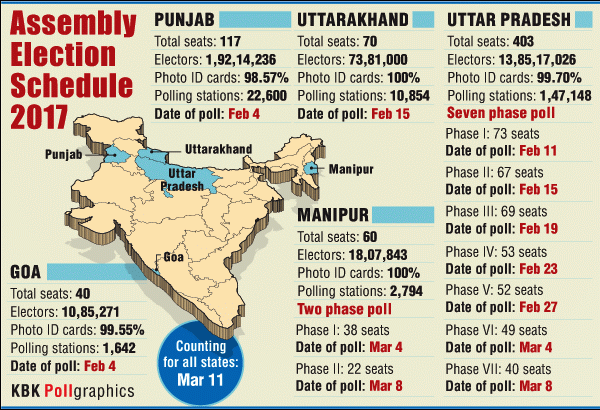
  • Poll schedule for 5 states announced, UP to vote in 7 phases; counting on March 11

    Poll schedule for 5 states announced, UP to vote in 7 phases; counting on March 11

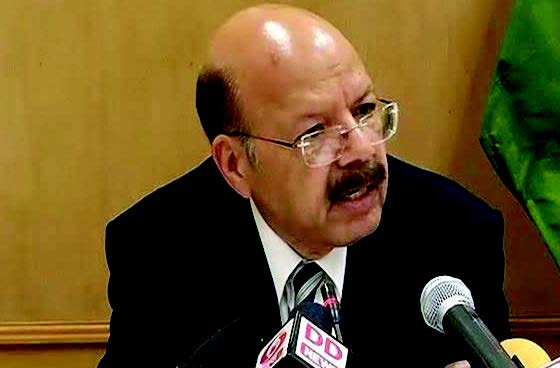
    NEW DELHI (TIP): The Election Commission on January 4 (Wednesday) announced the poll dates for Uttar Pradesh, Uttarakhand, Punjab, Manipur and Goa. Chief Election Commissioner Nasim Zaidi said that the state of Manipur will have a two-phase election and Uttar Pradesh will have a seven-phase election. Counting for all states will be held on 11 March.

    A total of 690 assembly constituencies will go to polls in these elections. Twenty three of these have been reserved from Scheduled Tribes candidates. Over 160 million voters – that’s the size of the electorate in these assembly elections. There will be 1,85,000 polling stations across five states.

    Seven-phase elections in Uttar Pradesh from February 11 to March 8; Punjab and Goa will vote on February 4 while Uttarakhand on Feb 15; results on March 11

    NEW DELHI (TIP): Assembly elections in UP, Punjab, Uttarakhand, Goa and Manipur will be held between February 4 and March 8, the results of which — to be announced on March 11 — are likely to be seen as a referendum on the demonetisation move by PM Narendra Modi.

    The terms of the legislative assembly of Goa, Manipur and Punjab are due to expire on March 18 while that of Uttarakhand expires on March 26. The legislative term of Uttar Pradesh ends on May 27. Goa has 40 assembly seats, Manipur has 60, Punjab has 117, Uttarakhand has 70 while Uttar Pradesh has 403.

    Election Commission made the much-anticipated announcement of dates on January 4 (Wednesday), setting in motion a process that will impact Indian polity in the coming months. The UP polls are already being dubbed as a “semi-final” to the 2019 general elections. These polls are significant for BJP as a good electoral harvest will boost its strength in the Rajya Sabha in the near future. The outcome will also have a bearing on the Presidential elections later this year.

    UP will have a seven phase election, with polling on February 11, 15, 19, 23, 27, March 4 and 8.

    Manipur, which continues to be under a blockade and is facing law and order problems, will have a twophase election with polling on March 4 and 8.

    Seven-phase elections in Uttar Pradesh from February 11 to March 8; Punjab and Goa will vote on February 4 while Uttarakhand on Feb 15; results on March 11Punjab and Goa will vote on February 4 while Uttarakhand on Feb 15. While the Code of Conduct has come into force with the announcement, the state-wise notification process will begin with Punjab and Goa on January 11.

    Demonetisation is likely to be a big issue in these elections, though the polling pattern will be guided by local factors, caste equations and identity politics. With the Centre propagating a less-cash economy, the extent to which money power is at play in these polls will be keenly watched. One of the new rules of these elections allows parties to use cash for campaign payments only up to Rs 20,000.

    Candidates will also have to take oath this time that they have no pending public utility bills. The SC order last week barring political parties and candidates from seeking votes in the name of religion or caste has also added to the worries of the contestants. While SP is seeking to retain power in UP and is facing a challenge from BJP and BSP, Congress is trying to beat anti-incumbency in Uttarakhand and Manipur. BJP is a part of the ruling coalition in Punjab and rules Goa. The caste-ridden politics of UP now has an added dimension with the feud in the first family of SP. CM Akhilesh Yadav is fighting over the symbol, bicycle, with his father and party patriarch Mulayam.

    SAD-BJP combine, which has ruled Punjab for two consecutive terms, has not lost hope, especially if AAP makes it a triangular contest at the expense of Congress. AAP is also making things difficult for BJP and Congress in Goa.

    BJP is still confident of retaining power. BJP is hopeful of defeating Congress in Uttarakhand while CM Harish Rawat is playing the victim card, citing the saffron party’s attempt to topple his government a few months ago. BJP is hopeful of defeating Congress in Manipur currently under Congress rule. Manipur has been facing an economic blockade on its two highways since November 1 over creation of seven new districts.

  • Indian American Balwinder Singh pleads guilty to Khalistan terror movement involvement

    Indian American Balwinder Singh pleads guilty to Khalistan terror movement involvement

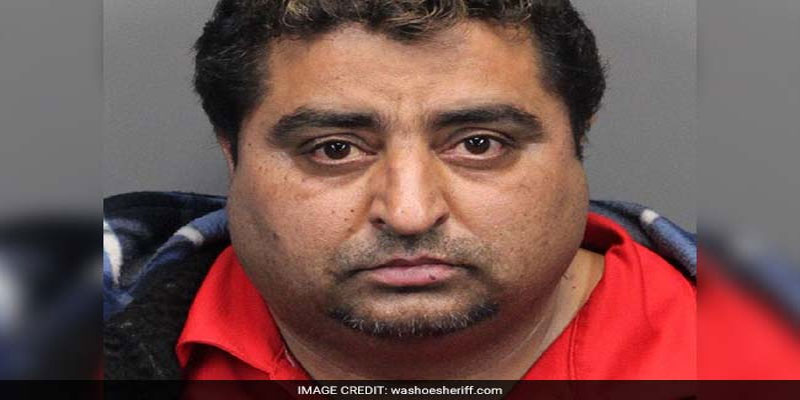
    NEW YORK (TIP):  42 Year old Balwinder Singh, a resident of Nevada, pleaded guilty before US District Judge Larry Hicks to one count of conspiracy to provide material support to terrorists, knowing and intending that such support would be used to carry out terrorist attacks overseas, Acting Assistant Attorney General for National Security Mary McCord said, November 29.

    “Singh attempted to provide material support and resources to terrorists to create violence and disruption abroad,” McCord said.

    “Identifying, thwarting and holding accountable individuals who pursue international terrorism is a top priority of the Department of Justice,” she said.

    A citizen of India and permanent US resident, Singh went by the aliases of “Jhaji”, “Happy” and “Baljit Singh” and has been detained and charged since his arrest in December 2013.

    He faces the statutory maximum penalty of 15 years in prison and deportation following his release. His sentencing was set for February 27.

    His indictment says that Singh obtained asylum in San Francisco using a false identity.

    According to the court filed documents and admissions made in connection with the plea agreement, between September and December 2013, Singh conspired with others to support terrorist attacks in India as part of a movement to create an independent Sikh state.

    Singh communicated with co-conspirators by telephone to discuss these plans and agreed to provide material support by facilitating a co-conspirator’s travel to and within South Asia, providing funding and materials necessary to carry out an overseas attack.

    In October 2013, Singh and the co-conspirators agreed that one of them would travel to India in 2013 and carry out “likely an assassination or maiming of an Indian governmental official.” The final target would be determined after the co-conspirator arrived in South Asia.

    Singh purchased two sets of night-vision goggles, gave them to a co-conspirator who was going to carry out the planned attack.

    In December 2013, the co-conspirator attempted to board a flight from the San Francisco International Airport to Thailand in order to carry out the attack, but was prohibited by the US law enforcement from boarding the flight.

    As a result, the planned attack was never executed.

    After this, Singh and his co-conspirators continued to discuss and plan terror attack in India until he was arrested.

    The defense attorney noted that a clause in the plea agreement would allow Singh to ask to be sent to a third country, not India, under the US Convention Against Torture.


  • Navjot Singh Sidhu’s Wife Navjot Kaur along with Pargat Singh Join Congress

    Navjot Singh Sidhu’s Wife Navjot Kaur along with Pargat Singh Join Congress

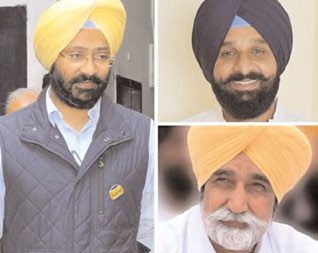
    Former BJP MP Navjot Singh Sidhu’s wife Navjot Kaur Sidhu and former Awaaz-e-Punjab leader Pargat Singh today have formally joined the Congress party in the presence of Punjab Congress chief Amarinder Singh.

    About the joining of Navjot Singh Sidhu in the Congress, Kaur said he would follow suit soon.

    Navjot Kaur clears the air, says, “We are two bodies and one soul, it’s only a matter or time that Navjot Siddhu will also follow suit.”

    Navjot Kaur Sidhu is a former MLA and represented Amritsar in Punjab Assembly. She resigned from the BJP recently after quitting the state assembly on 8 October.

    Pargat Singh is a former hockey player and was formerly associated with the ruling Shiromani Akali Dal (SAD) in Punjab. He represents Jalandhar Cantt constituency in the state assembly.

    On September 8, cricketer-turned-politician Navjot Singh Sidhu formally launched his political party Awaaz-e-Punjab along with Pargat Singh, and the Bains brothers — Simarjit Singh Bains and Balwinder Singh Bains, two former independent MLAs from Ludhiana. But, they were not ready to go out alone in Punjab polls and has expressed its desire to align with like-minded parties.

    The Bains brothers have recently joined the Aam Aadmi Party recently. Elections to the 117 Punjab assembly seats are likely to be held in January or early February in 2017.

  • Dalit to be deputy CM if AAP wins Punjab: Kejriwal at manifesto release

    Dalit to be deputy CM if AAP wins Punjab: Kejriwal at manifesto release

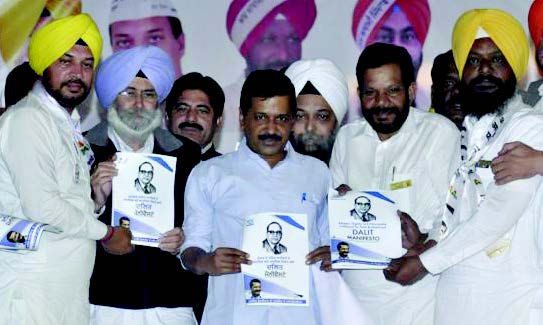
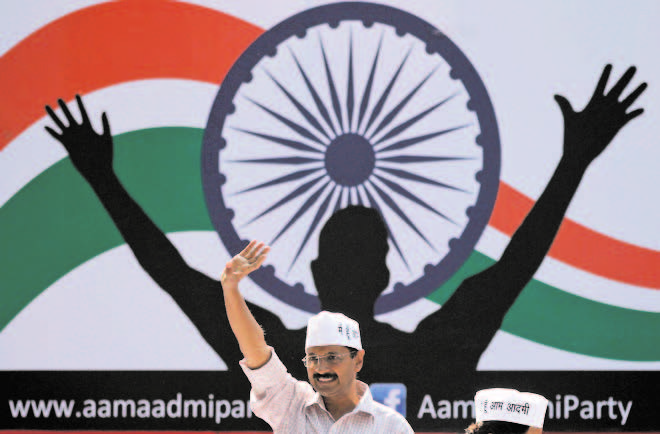
    JALANDHAR (TIP): With an eye on nearly 32% Dalit voters in Punjab, Aam Aadmi Party (AAP) convener Arvind Kejriwal on Friday playing the masterstroke by declaring that if his party formed the government in Punjab, the post of deputy CM will go to a Dalit. The announcement was made at a rally here during which he also unveiled the party’s 19-point manifesto meant exclusively for the Dalits.

    Kejriwal said it was a historic announcement by a political party wherein Dalits have been promised a high place in the corridors of power.

    “Saari partiyan kehti hain hum Daliton ko ye denge, wo denge…lekin koyi kursi nahin deta. They only give you choice for MLAs, that too because of the reservation. But AAP is not here to exploit you for votes. We will share the power with you . Bhim Rao Ambedkar and Kanshi Ram had stated that Dalits can only be brought in the mainstream if power is shared with them,” said Kejriwal, addressing a gathering in Dalit-dominated Doaba region.

    Even as the gathering was less in comparison to other AAP rallies, Kejriwal managed to steal the show with his announcement. AAP’s all Dalit candidates from across the state were present on the stage. He said it will be difficult for the traditional parties

    (Akali Dal and Congress)?to match what AAP has announced for the Dalits.

    The Delhi CM also said that even seven decades after the Independence, the Dalits are deprived off their rights. “Look at the plight of Dalits in Punjab. A journalist just told me that 18 lakh students study in government primary schools in Punjab, of which 14 lakh belong to Dalit families,” said Kejriwal. He said AAP enjoyed full confidence of Dalits in Delhi where it won all the 12 reserved seats. “In Delhi, we delivered what we promised for the Dalits. We have started regularising all safai sewaks,” he said, adding Dalits are being given free education and health care facilities in the national capital.

    Dalit manifesto: Old wine in new bottle?

    Except for promising deptuy chief minister’s post to a Dalit, the Aam Aadmi Party manifesto lacks innovation. Most promises in the document are more or less the same as those of rival parties.

    Concept of ‘mohalla clinic’ in Delhi has a mention in the document under the ‘Modern Pind Sehat Clinic’,, besides ?5 lakh health insurance. The promise to provide free gas connection, along with burner and stove, to all Dalit families is already being implemented in Punjab under the Pardhan Mantri Ujjwala Yojna. The party also announced free education for Dalit girls up to Class 12.

    Why Dalit vote counts

    • ? 32% of Punjab’s population is Dalit – the highest in the country.
    • ? 33 of 117 seats in the state assembly are reserved.
    • ? With 23 seats, the Dalit-dominated Doaba is a decisive factor in power sweepstakes. Source: HT
  • Old and new faces, turncoats figure in SAD’s first list of 69

    Old and new faces, turncoats figure in SAD’s first list of 69

    Greenhorns, turncoats, industrialists and party’s old war horses are all there in the first list of 69 candidates released by the ruling Shiromani Akali Dal on Wednesday for the Assembly elections due early next year. As per seat-sharing arrangement with ally BJP, SAD will contest 94 out of the total of 117 seats. While BJP and Congress are yet to announce their lists, AAP has announced its candidates for 79 seats.

    The first SAD list has focussed on seats reserved for Scheduled Caste candidates where either new faces have been given party tickets or sitting legislators have been shifted to other constituencies.

    Punjab’s Finance Minister Parminder Singh Dhindsa would contest from Lehra instead of Sunam, the constituency he currently represents. All other ministers who figure on SAD’s list on Wednesday will contest from their current constituencies. Chief Minister Parkash Singh Badal, who represents Lambi constituency, and Deputy Chief Minister Sukhbir Badal, who represents Jalalabad constituency, do not figure in the first list.

    Vidhan Sabha Speaker Charanjit Singh Atwal has been dropped from Payal (SC) constituency, from where Isher Singh Meharban has been fielded by SAD. However, in a balancing act to placate Atwal, the party has given ticket to his son and former MLA Inder Iqbal Singh Atwal for Raikot (SC) constituency. Isher Singh Meharban had contested as Congress candidate from Jagraon, also an SC constituency, in the 2012 Assembly polls and lost by merely 206 votes to SAD’s S R Kler.

    SAD has decided to field S R Kler from Nihalsinghwala (SC) constituency, currently represented by Akali MLA Rajvinder Kaur. Kaur had defeated Congress’s Ajeet Singh Shant in the 2012 Assembly polls by a margin of 591 votes. In the run-up to the 2014 Lok Sabha polls, Shant joined SAD in August 2013. Akali Dal will field Shant from Mehal Kalan, the SC reserved seat Akali Dal had lost to Congress in 2012 polls where Harchand Kaur, contesting on Congress ticket, defeated SAD nominee Gobind Singh by a margin of over 7,000 votes.

    With Kler being shifted to Nihalsinghwala, SAD has given ticket to Amarjit Kaur Sahoke for Jagraon. Currently Moga Zila Parishad Chairman, she is contesting Assembly polls for the first time.

    In Phillaur (SC) constituency, SAD has decided to drop sitting MLA Avinash Chander, instead fielding Baldev Singh Khaira, a former BSP heavyweight from Phillaur who joined SAD in July this year. Seth Satpal Mal, a prominent activist of Dera Sachkhand Ballan who had quit Congress as party’s state general secretary in October to join SAD, would be the ruling party’s candidate from another SC reserved constituency of Kartarpur. Mal replaces sitting Akali legislator Sarwan Singh Phillaur. Chander and Phillaur were questioned by Enforcement Directorate in multi-crore Jagdish Bhola drug racket case.

    To consolidate its position on yet another SC constituency that SAD lost badly in 2012 polls, the party has chosen Kabir Das as its candidate from Nabha. Das, formerly with Congress leader and key activist of Dera Sachkhand Ballan, joined SAD only last month. In 2012, SAD nominee Balwant Singh Shahpur had lost to Congress’s Sadhu Singh Dharamsot in Nabha by a margin of over 22,000 votes.

    Replacing its sitting MLA From Balluana (SC) constituency, Gurtej Singh Ghuriana, SAD will field Parkash Singh Bhatti, the current constituency in-charge of Jaito (SC) constituency who had unsuccessfully contested the 2012 Assembly polls from Balluana.

    Meanwhile, SAD has dropped liquor baron and sitting Faridkot MLA Deep Malhotra, replacing him with youth leader and Students Organisation of India coordinator Parambans Singh Bunty Romana, one of the 17 new faces who would contest polls on SAD tickets for the first time.

    Bunty is contesting Assembly polls for the first time. So does Harinderpal Singh Chandumajra who has been given ticket from Sanour in Patiala district. Harinderpal is the son of sitting Lok Sabha MP and senior Akali leader Prem Singh Chandumajra.

    Another new face of Akali Dal is Gurpreet Singh Raju Khanna, who has been fielded from Amloh.

    Dilraj Singh Bhunder, son of Rajya Sabha MP and senior Akali leader Balwinder Singh Bhunder, has also got party ticket from Sardulgarh.

    Punjab Police’s Deputy Inspector General Ranbir Singh Khatra’s son Satbir Singh Khatra would also contest on a SAD ticket for the first time. He has been chosen as the party candidate for Patiala Rural. Khatra was appointed as Patiala Rural constituency in-charge of Sanour by SAD, replacing late Akali stalwart Gurcharan Singh Tohra’s daughter Kuldeep Kaur Tohra, in June this year. Contesting as an Independent in 2012 polls, Khatra had finished third in Patiala Rural segment.

    Hardeep Singh Dimpy Dhillon, who is a transporter, will contest on SAD ticket from Gidderbaha.

    Another new face who would be contesting Assembly polls for the first time is Gurmeet Singh Kular. A big industrialist in Ludhiana, Kular will be party’s bet from Atamnagar constituency. Another noted industrialist from Doaba, Jarnail Singh Wahid, has been given party ticket for Nawanshahr.

    The cabinet ministers who figure in Wednesday’s list of SAD include Bikram Singh Majithia (Majitha), Gulzar Singh Ranike (Attari), Sikander Singh Maluka (Rampura Phul), Janmeja Singh Sekhon (Maur), Sohan Singh Thandal (Chabbewal), Ajit Singh Kohar (Shahkot), Tota Singh (Dharamkot), Daljit Singh Cheema (Ropar) and Adaish Partap Singh Kairon (Patti).

    Source: The Indian Express

  • PUNJAB EX-MINISTER PHILLAUR QUITS SAD, LIKELY TO JOIN CONG

    PUNJAB EX-MINISTER PHILLAUR QUITS SAD, LIKELY TO JOIN CONG

    JALANDHAR (TIP): In a jolt to the ruling Shiromani Akali Dal (SAD), six-time MLA and former minister Sarwan Singh Phillaur has resigned from the party and also as legislator after he was denied ticket from his Kartarpur constituency in the first list of party candidates released on November 16.

    Sources in the Congress said  Phillaur is likely to join the party on Friday in the presence of its state chief Captain Amarinder Singh in Chandigarh. He has been in touch with the Congress for the past few days.

    Phillaur, who had to resign as tourism and jails minister in April 2014 after his son Damanvir Singh’s name cropped up in the Bhola drug case, has been sidelined in SAD for the past two years.

    He was also summoned and quizzed by the Enforcement Directorate (ED) in the drug case twice because of his alleged “business association” with Goraya-based businessman Chunni Lal Gaba, whose properties worth more than `100 crore were attached by the ED in the drug case. The former minister saiud he submitted his resignation as SAD member to party chief Sukhbir Singh Badal and as MLA to assembly speaker Charanjit Singh Atwal on Thursday morning through his “representative”, but did not disclose his future course of action. “I will give all details, especially why I left the SAD, in a press conference in the coming days,” he said.

    Phillaur, who became MLA for the first time in 1977 when he was just 26, was considered among the tallest leaders of the SAD in Doaba region and a staunch loyalist of chief minister Parkash Singh Badal.

    He represented Phillaur constituency of Jalandhar district five times before he was shifted in 2012 to Kartarpur where he managed to win by a narrow margin of around 800 votes.

    Source: HT

  • Tohra’s daughter Kuldeep on AAP’s 5th list of 12 candidates

    Tohra’s daughter Kuldeep on AAP’s 5th list of 12 candidates

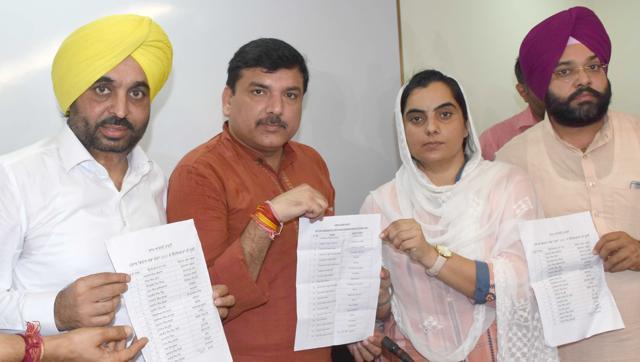
    CHANDIGARH (TIP): Aam Aadmi Party on Thursday declared its fifth list of 12 candidates for the upcoming Punjab assembly polls. Kuldeep Kaur Tohra, daughter of former Akali stalwart late Gurcharan Singh Tohra, secured ticket from Sanour.

    Here is the complete list of candidates:

    1 Raj Kumar Mahajan from Pathankot
    2 Balwinder Singh Sahota from Amritsar (West)
    3 Dr Sanjeev Sharma from Jalandhar (Central)
    4 Narender Sandha from Ferozepur
    5 Malkit Thind from Guru Har Sahai
    6 Giriraj Rajora from Balluana
    7 Kawanlpreet Singh Kaki from Qadian
    8 Harbhajan Singh from Jandiala
    9 Bhupender Singh Bittu from Khadoor Sahib 10 Capt Bikramjeet Singh from Khem Karan
    11. Kuldeep Kaur Tohra from Sanour
    12. GS Kang from Bhagha Purana

  • Now, Punjab wants royalties for its river waters

    Now, Punjab wants royalties for its river waters

    CHANDIGARH (TIP): The Punjab Assembly on November 16 passed a resolution seeking royalties for river water supplied to its non-riparian neighbours Haryana, Rajasthan and Delhi. It urged the government of Parkash Singh Badal to seek the help of the Union government in extracting the dues.

    The demand for royalties for river waters adds another dimension to the Sutlej-Yamuna Link (SYL) canal dispute between Punjab and several of its neighbours. The state has already adopted a hostile stance towards this week’s Supreme Court advice to the President that Punjab had indeed been acting unconstitutionally in scrapping all its previous pledges under the SYL project.

    The Assembly’s stance that royalties would have to be paid for the Sutlej river waters it supplied to its neighbours since 1966 is likely to raise the stakes much higher.

    Moving the resolution in the special session, Parliamentary Affairs Minister Madan Mohan Mittal said seeking royalties for river waters was not anything new. Punjab has in the past demanded and received them. The erstwhile riyasats of Bikaner, Patiala, Nabha and Jind paid such royalties till 1945-46 for using Sutlej waters. A law mandating such riparian royalties was in place during the British Raj since 1873.

    The resolution, passed unanimously, asked the Badal government to seek New Delhi’s help to recover water dues from Rajasthan, Haryana and Delhi since November 11, 1966.

    Chief Minister Parkash Singh Badal moved another resolution directing the state government not to do three things: (a) handing over any land to any agency for construction of the SYL canal; (b) allowing any agency to do any work on the project; (c) cooperating with any agency for the construction of the canal.

    Speaking during the special session, Badal repeated the same oaths he has been uttering since the Supreme Court verdict, “I would rather shed every drop of my blood than allow even a single drop of water to flow out of my state.”

    The resolution reads, “Whereas Punjab has legislative and executive right over the whole land falling under its boundaries as per the entry number 14 and 18 of the state list of the seventh schedule of the Constitution of India.” The house also took notice of the fact that Punjab needs 56 million acre feet (MAF) of water for agriculture, out of which river waters account for only 27 per cent. The Central Ground Water Commission has already declared 105 of the 138 blocks in Punjab as over-exploited.

    Cong to Prez: SYL canal issue may trigger violence

    CHANDIGARH (TIP): A Punjab Congress delegation, led by state party chief Captain Amarinder Singh, urged President Pranab Mukherjee to direct the central government to consider the ground realities and the availability of water in the state before taking any action on the advice of the Supreme Court on the (SYL canal issue. All Punjab Congress MLAs, along with several central party leaders, called on Mukherjee on Thursday evening, to seek his urgent intervention in the matter. The party leaders warned of the possible outbreak of violence in the state, where the situation was “extremely fluid and tense” following the SC verdict. Later speaking to mediapersons, Amarinder accused the Parkash Singh Badal government in Punjab of further “inflaming passions” and aggravating the situation with its irresponsible actions, including the passage of the two “illogical” resolutions in the state assembly.

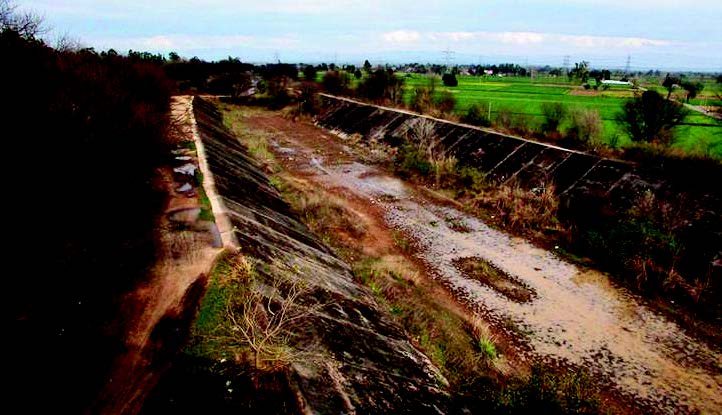
  • DILAPIDATED SATLUJ YAMUNA LINK CANAL AT ROPAR

    DILAPIDATED SATLUJ YAMUNA LINK CANAL AT ROPAR

    An emergency session of the Punjab assembly has been convened on November 16 in light of the Supreme Court’s verdict on the Sutlej-Yamuna Link (SYL) canal project. The announcement was made by deputy chief minister Sukhbir Badal at a press conference on Thursday evening after a cabinet meeting.

    “We have passed a resolution declaring that not a single drop of water from Punjab rivers would be allowed to go out of the state,” Sukhbir Badal told reporters following an emergency meeting of the Punjab government’s cabinet. The deputy CM also said that he has asked the state advocate-general to find out ways to legally challenge SC’s water-sharing verdict.

    Both Sukhbir and his father, chief minister Parkash Singh Badal, concluded the press conference by thumping the table three times, saying, thrice, “We will not give Punjab’s water to anyone.”

    Earlier on Thursday, the Supreme Court had ruled that the SYL canal, which is at the centre of a row between Punjab and Haryana, has to be completed. It also said the state’s 2004 law scrapping water-sharing agreements with other states is unconstitutional. A constitution bench of the court ruled that Punjab could not have taken a

    “unilateral” decision to terminate the agreement with Haryana, Himachal Pradesh, Rajasthan, Jammu and Kashmir, Delhi and Chandigarh to share of the Ravi-Beas river waters.

    But Sukhbir Badal said the govt would not allow the project to go ahead. “A decision taken at an emergency meeting of Punjab cabinet said that the Govt would not allow Sutlej-Yamuna Link to be built at any cost nor a single brick would be allowed to be laid for its construction by any agency,” he said.

    CM Badal said the SAD-BJP govt will not resign over the Supreme Court’s verdict.

    “I will not resign. It will lead to Governor’s rule, clearing the way for implementation of Supreme Court order,” Prakash Singh Badal said. “Haryanvis are our brothers, but we have to take a stand for Punjab, it’s our duty,” the Punjab CM said during the press conference.

    Following the Supreme Court ruling on Thursday, Punjab plunged into a political crisis.

    Congress Punjab unit chief Amarinder Singh demanded imposition of President’s Rule in the state and said he will resign as MP . All Punjab Congress MLAs announced they will resign in protest.

    The party MLAs also sent their resignations to the Speaker, Punjab Assembly, and will meet him on Friday morning to personally hand over their papers.

    Amarinder, who is also former Punjab chief minister, sent his resignation to the Lok Sabha Speaker, copy of which was released to the media, and has also sought a personal meeting with the Speaker next week. Source: HT

  • SYL Canal: Supreme Court deals blow to Punjab, Capt, Cong MLAs resign

    SYL Canal: Supreme Court deals blow to Punjab, Capt, Cong MLAs resign

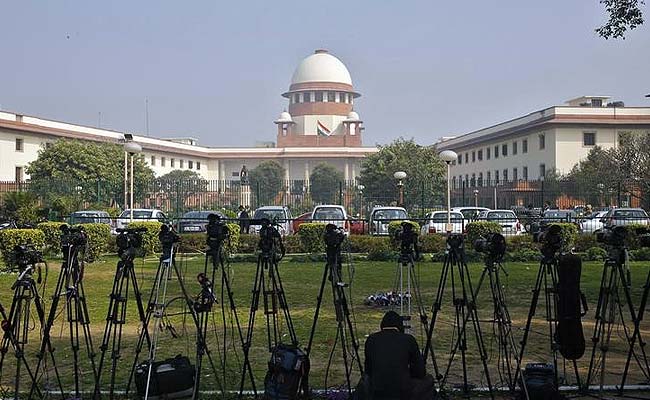
    NEW DELHI/CHANDIGARH (TIP): The Supreme Court on Thursday struck down a 2004 Punjab law terminating all water-sharing arrangements with neighbouring states, a ruling that prompted all Congress MLAs to quit even as the SAD-BJP government vowed to defy it.

    Punjab Congress president Amarinder Singh resigned from the Lok Sabha shortly after the top court declared as illegal and unconstitutional the legislation scrapping the agreements for sharing excess water of the Beas and Sutlej rivers with several northern states, including Haryana, Rajasthan and Delhi.

    At the heart of the dispute is the 212-km-long Sutlej-Yamuna Link (SYL) canal that would bring water from the rivers to the “dry and arid areas” in the southern part of Haryana, which had also moved the top court opposing the 2004 law.

    Punjab’s deputy chief minister Sukhbir Singh Badal declared that “not a single drop of water will be allowed to be taken out of the state”.

    “Whether it be the Union government or (the) Iraqi government or the American government, if anyone comes to snatch our water, we will not let anybody enter Punjab to implement orders against Punjabis,” the deputy chief minister said in Adampur in a hurriedly called press conference.

    Chief minister Parkash Singh Badal said in Jalandhar an emergency session of the assembly will be held on November 16 to discuss the fallout of the court verdict.

    Badal will also meet President Pranab Mukherjee soon, urging him “not to accept the advice” of the Supreme Court while the SAD will launch a statewide campaign from December 8 to protest the “injustice done to Punjab”. SAD’s partner BJP also said, “Punjab does not have any surplus water to share with any other state.”

    Assembly elections are due in the state early next year and opposition parties led by the Congress pounced on the adverse court ruling to attack the SAD-BJP government. Amarinder Singh, whose government had enacted the Termination of River Waters Act in 2004, blamed the Akalis for “bringing the people of Punjab to this pitiable situation, where they face imminent devastation due to acute water scarcity”.

    He said Badal and his team “failed to defend Punjab’s stand in the court, leading to such disastrous consequences”.

    Earlier, a five-judge bench headed by AR Dave said the Punjab law “cannot be allowed to remain”.

    “We are of the view that the Punjab Act cannot be considered to be legal and valid and the state of Punjab can not absolve itself from its duties/liabilities arising out of the agreement in question,” said the bench while responding to a Presidential reference on the validity of the legislation.

    The top court’s ruling came in response to a reference made by former President APJ Abdul Kalam on the request of the Centre.

    Referring to a 1981 water-sharing agreement, the bench said it had legal sanction after the SC upheld it in 2002.

    “Once an arrangement is a binding decree, a party cannot unilaterally act in a manner to nullify the effect of the judgment,” the court said.

  • Poll schedule in 5 states of India after security inputs: CEC

    Poll schedule in 5 states of India after security inputs: CEC

    NEW DELHI (TIP): The Election Commission will take a call on the dates of Assembly elections in Uttar Pradesh, Punjab, Goa, Manipur and Uttarakhand, due early next year, based on the inputs provided by security forces and state law and order machinery, Chief Election Commissioner Nasim Zaidi said here, October 19.

    Zaidi said the schedule will be finalized keeping in mind the weather and examination schedule. “We are trying to assess the requirement of security forces, climate and exam schedule – all these inputs are being taken into consideration. Only then will we be able to say whether they will be staggered or multi-phase,” the CEC told mediapersons on the sidelines of an event.

    “As far as the schedule is concerned, the commission has not given a thought as yet.” On if the EC should get powers to prevent parties from making statements in states where elections have not yet been announced, Zaidi said once the model code came into force, the EC would ensure its compliance. Assembly elections are due early next year in Punjab, Uttarakhand, Uttar Pradesh, Goa and Manipur. The terms of Punjab, Goa, Manipur and Uttarakhand Assemblies end in March, while that of UP ends in May.

  • Punjab sends proposal to Centre for setting up STF to keep vigil on borders

    Punjab sends proposal to Centre for setting up STF to keep vigil on borders

    LUDHIANA (TIP): Punjab’s Deputy chief minister Sukhbir Singh Badal on Thursday said that a proposal has been sent to Centre for setting up a Special Task Force for keeping vigil on the borders to stop inflow of the drugs.

    “We have sent the proposal to the Centre,” Badal said while speaking on the sidelines of a function here.

    Notably, opposition Congress and AAP have made drug menace an issue in Punjab ahead of the assembly polls in the State, which are due early next year.

    Meanwhile, Sukhbir Singh Badal on Thursday set the tone for the celebrations of the 50th anniversary of the ‘Punjabi Suba’. A book titled ‘Dhart Punjab’ was also released which chronicles the cultural, economic and social traditions and environment of Punjab.

    Sukhbir Badal also eulogised the role played by Punjabis in the country’s freedom struggle.

    He said that Punjabi Suba was formed after enormous struggles and sacrifices but even at that time the state was discriminated against allegedly by then Congress government at the Centre.

    He further said that despite this, Punjab marched ahead on the road to prosperity especially under the SAD-BJP government. Lashing out at Punjab Congress President Captain Amarinder Singh, the Deputy chief minister said that the opposition leader was misleading people by making “false promises” of waiving off debt of the farmers. He also said that Captain Amarinder should give an affidavit in the court that he would sell his whole property including palace in Patiala if he fails to waive off the debt in case his party comes to power. Source: PTI

  • Now, Sidhu’s front waiting for invite from AAP, Congress

    Now, Sidhu’s front waiting for invite from AAP, Congress

    CHANDIGARH (TIP): After playing hardball with the Aam Aadmi Party (AAP) and Congress, cricketer-turned-politician and Awaaz-e-Punjab leader Navjot Singh Sidhu is now waiting for an invite from both.

    Sidhu held yet another meeting with his teammates —independent MLAs Simarjeet and Balwinder Bains and Pargat Singh — in Delhi on Thursday.

    Simarjeet said after the meeting that they are waiting for an alliance with the AAP or the Congress. “Our front has made it clear that we will not divide the anti-incumbency vote against the ruling SAD-BJP government. We are waiting for reaching an understanding with either the AAP or Congress,” he said.

    The Congress leaders said no meeting was held on Sidhu between party vice-president Rahul Gandhi and Punjab Congress chief Captain Amarinder Singh.

    “We are not in talks with Sidhu so there was no question of holding a meeting on the issue,” Congress Punjab affairs in-charge Asha Kumari said. Party’s Punjab leaders were in Delhi on Thursday to welcome Rahul who returned from his month-long “kisan yatra” in poll-bound Uttar Pradesh.

    Sidhu’s forum is finding itself in a piquant situation vis-à-vis both the AAP and Congress. The AAP is not willing to buy Sidhu’s bait after burning its fingers last time when he held meetings with party leaders, but was not happy with the deal.

    MAKE ALL FOUR JOIN CONGRESS: BAJWA

    Leaving the final decision to the Congress president Sonia Gandhi, Rajya Sabha MP Partap Singh Bajwa on Thursday advocated taking Navjot Sidhu, Pargat Singh and Bains brothers into the party fold. Contrary to this, state Congress chief captain Amarinder Singh was wary and had shown reluctance to make the four join the party.

    “In the forthcoming polls, every single vote and every candidate in poll fray will matter, so my advice is to take decision wisely,” suggested Bajwa, saying he will also take it up with the party high command.

  • Out of BJP crease, Sidhu dangles his bat before Cong, AAP

    Out of BJP crease, Sidhu dangles his bat before Cong, AAP

    CHANDIGARH (TIP): Cricketer-turned-politician Navjot Singh Sidhu is back in the game of hitting sixes. As if political fronts coming up in Punjab are not enough to tie voters in knots, the former BJP MP is giving a new spin to state politics every week.

    The latest from Sidhu’s not even one-month-old forum, Awaaz-e-Punjab, is a tie-up bait thrown to both the Aam Aadmi Party (AAP) and Congress. The Awaaz forum has set a condition for the Congress — any alliance is only possible minus its state chief Captain Amarinder Singh, who, the forum says, has been in “cahoots with the ruling Badals”.

    Is Sidhu not able to make up his mind or is he a shrewd bargainer, who wants to extract the best deal? Many in the AAP and Congress have a third theory —he (Sidhu) is playing one against the other as his much-hyped forum has failed to gather political mass. No leader or workers from any party have joined his forum, which remains what it was when announced – a confused quartet.

    Though neither the AAP nor Congress have so far given an offer Sidhu cannot refuse, they are trying to catch him, not as much owing to his political equity, but his damage value if he joins the rival camp. Congress poll strategist Prashant Kishor is learnt to have told the party that Sidhu may dent the Congress prospects in Punjab if he goes the AAP way. And many in the AAP feel Sidhu can boost the Congress campaign to the detriment of the party.

    On Amarinder, Sidhu’s close aides say the bad blood between the two runs deep as the former Punjab CM had “played a negative role” in his conviction in a road rage death case by the Punjab and Haryana High Court in December 2006. “Contrary to Amarinder’s claims, his relations with Sidhu’s father, Bhagwant Singh, who was an advocate general in his government, were not cordial,” they say. But there could be more palace intrigues. A lobby within the Congress, which is opposing Amarinder being named as the CM face, is also backing Sidhu. At a time when Captain loyalists are raising the pitch to announce him as the CM candidate and the entire campaign is centred around him, Sidhu can queer the pitch for the state Congress chief.

    Though Amarinder had reacted sharply to the forum’s statement saying: “This game of playing one against the other will not work. Do they think Congress president will throw me out of the party so that they can ally with Awaaz-e-Punjab? They cannot disassociate me with the Congress.”

    Sidhu’s bouncers have also thrown the AAP in a tizzy. Its leaders HS Phoolka and Punjab convener Gurpreet Singh Ghuggi are batting for Sidhu but others like Sangrur MP Bhagwant Mann have said the party cannot have poll alliances.

    Owing to his inconsistent utterances, Sidhu’s bargaining chip has lost much of its value. His shifting stance and ambivalence from a man who calls himself a “protector” of Punjab’s interests but remains incommunicado when he shoots his comedy shows in Mumbai, likes to engage the media in one-way communication through issuing statements and holding press conferences when back in New Delhi, and his meeting Congress and AAP leaders alternatively does not seem to be helping Punjab, Punjabi or Punjabiat, that Awaaz-e-Punjab proudly espouses.


    Source: HT

  • #Uri attack:Punjab traders talk of severing trade ties with Pak

    #Uri attack:Punjab traders talk of severing trade ties with Pak

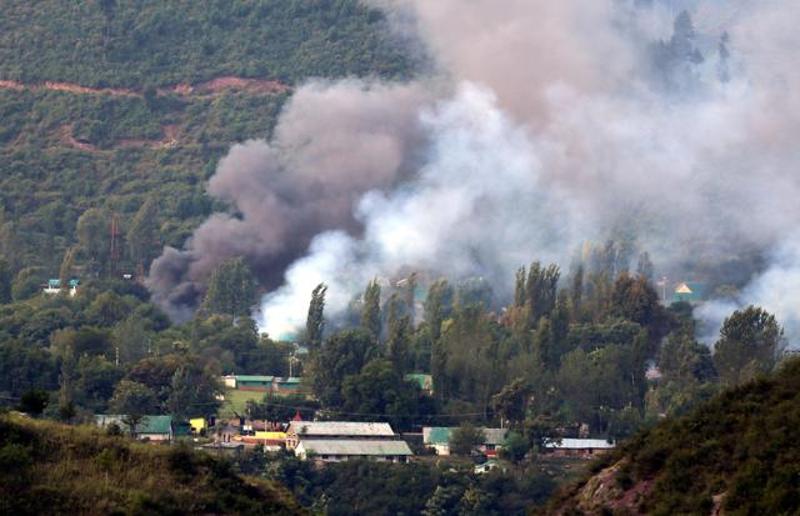
    Chandigarh, Sep 19 (TIP) Punjab traders dealing in import and export of goods with Pakistan today sought a fitting reply in the aftermath of Uri attack, threatening to end Rs 3,000 crore worth of trade with the neighbouring country for the “heinous act”.

    “Time has come for India to take strict and swift action against Pakistan which is responsible for the Uri terror attack that left our several soldiers dead,” Amritsar-based trader and President of Federation of Dry Fruit and Haryana Commercial Association, Anil Mehra, told PTI today.

    “The Modi government should suspend all sorts of ties with Pakistan in response to the terror attack unleashed on Indian soil,” Mehra suggested.

    Noting that there is a great amount of anger against this terror attack, which left 18 soldiers dead, Mehra said traders in Punjab are ready to end trade ties with Pakistan through the Attari-Wagah land route.

    “We urge the Centre to even stop trade with Pakistan through Attar-Wagah land route. We are ready for ending trade ties with the neighbouring country, which is responsible for such an attack. For us, the country comes first and then comes trade. We will do something else for our livelihood,” said Mehra.

    Traders asserted that it is Pakistan which is the most dependent on India for import of goods like vegetables, including tomatoes, ginger, garlic and spices, cotton yarn and the like.

    Pakistan exports cement, gypsum and dry fruits to the country via the Attari-Wagah land route.

    “If we today stop sending tomatoes which has been the major export item to Pakistan, they will face immense shortage of this perishable commodity. Moreover, if we do not import dates from Pakistan, they will not find buyers for this,” he added.

    Traders further said Pakistan had not even allowed export of onions to India last year when the country was facing shortage. India then imported onions from Afghanistan.

    Pakistan allows import of 137 items from India through Attari-Wagah.

    As per estimates, the total volume of trade between the two nations via Attari-Wagah is estimated at Rs 3,000 crore per annum.

    India and Pakistan had resumed cross-border movement of trucks in October 2007 after a gap of sixty years from Attari check post at Amritsar in India to Wagah border in Pakistan.

    An integrated check-post was set up on the Attari-Wagah border in 2012 at an estimated cost of Rs 150 crore for smooth movement of traffic.

  • SC DROPS SEHAJDHARI CASE AS NEW LAW DENIES VOTING RIGHT

    SC DROPS SEHAJDHARI CASE AS NEW LAW DENIES VOTING RIGHT

    NEW DELHI (TIP): The Supreme Court on September 15 disposed of a petition by Shiromani Gurdwara Parbandhak Committee (SGPC) over Sehajdhari Sikhs’ right to vote in SGPC elections as the case had become irrelevant following a new central law taking away their right.

    A Bench comprising Chief Justice TS Thakur and Justice AM Khanwilkar said there was no point in hearing the case just for the sake of “academic interest.” The SGPC had come to the SC challenging the December 20, 2011, judgment of the Punjab and Haryana Court restoring Sehajdharis’ right to vote.

    The HC had ensured this by quashing the Centre’s October 8, 2003, notification disenfranchising the Sehajdharis. The HC had explained that the Centre could not take away the right, given under the Gurdwara Act 1925, through an official notification.

    In the light of the HC judgment, the Centre got the 1925 Act amended in Parliament and notified the new law on May 5, 2016, denying Sehajdharis the right to vote. Subsequently, the SGPC moved an application in the apex court, pleading for allowing its appeal against the HC verdict on the basis of the new law.

    Arguing for the SGPC, senior counsel AK Ganguly and Satinder Gulati pleaded with the Bench to reinstate the committee elected in the September 18, 2011, SGPC elections. But the court did not pass any order.

    On March 30, 2013, the SC had asked the November 2010 executive committee headed by Avtar Singh Makkar to manage the gurdwaras and other SGPC institutions as the Sehajdharis had not been allowed to participate in the 2011 election of the new Board. The SGPC elections are held once every five years.

    Appearing for Sehajdhari Sikhs Federation (SSF), senior counsel Sushil Jain sought liberty to challenge the validity of the amendment to the Gurdwara Act. The Bench said the SSF was free to do so without the court’s nod.

    In view of the HC verdict and the SC’s September 2011 order, the Centre was reluctant to convene the first meeting of the 170-member SGPC Board and came to the SC seeking its clarification despite notifying the new Board on December 17, 2011.

    The SGPC also approached the apex court, seeking a direction to the Centre to convene the first meeting of the new Board and thereby facilitate election of its office-bearers —president, senior vice-president, junior vice-president, general secretary and 11 executive committee members.

  • Chandigarh Airport embarks on global journey

    Chandigarh Airport embarks on global journey

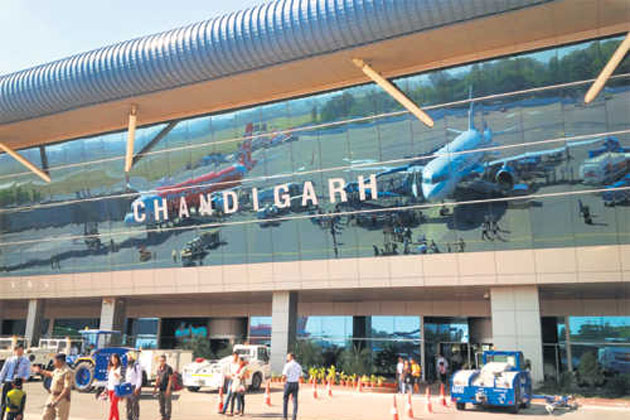
    CHANDIGARH (TIP): At 5.15pm on Thursday (Sept 15), Chandigarh International Airport actually became international as a flight from Sharjah landed with 128 passengers onboard a 186-seater plane. At 6.35pm, an Air India Express plane carrying 182 passengers to Sharjah departed too, this being the first flight from this airport to a foreign destination.

    Union civil aviation minister P Ashok Gajapathi Raju said on the occasion that government-owned carrier Air India will start a flight to Singapore by March.

    Air India chairman Ashwani Lohani added Bangkok to the list.

    These will be thrice a week. Immediately next up, from September 26, IndiGo airlines will start a daily flight between Chandigarh and Dubai.

    In the presence of Punjab chief minister and his deputy Sukhbir Singh Badal, who led a 40-member trade delegation in the flight to Sharjah, Raju said, “Sky is the limit now for Punjab and all Punjabis putting across the world. In India, civil aviation is the fastest-growing industry at 20% a year.”

    He called the airport “a magnificent gift of the NDA government (at the Centre) to Punjabis settled in different parts of the world as it will enable them to stay well-connected with their roots”.

    Meanwhile, as the airport land falls in Punjab’s Mohali (SAS Nagar), the Badals and also many welcome hoardings called it ‘Mohali international airport’, to which Haryana took umbrage as it is a partner in the project. The airport is eventually expected to be named after freedom fighter Bhagat Singh. Raju also said, “The people of the region should not be having any problem if it is called Chandigarh International Airport.”

  • A Party in a Hurry – Aam Aadmi Party

    A Party in a Hurry – Aam Aadmi Party

    Political scientists write with some regret of how a political movement that had tapped the consciousness of lakhs of Indians through sustained and patient mobilization, dissemination of ideology, and shared understanding of what is wrong with our society and what can be done about it atrophied and folded up when it began to rule. The empirical referent is, of course, the Indian National Congress. In the 1970s, the once charismatic and sage leadership of the Congress reduced itself into a bunch of courtiers paying ritualized homage to the leader. In the second decade of the 21st century, India witnessed a contrary phenomenon. A civil society movement against corruption mutated into a political party, and in two consecutive years formed a government in Delhi. The victory of the party showed a mirror to established political parties that increasingly rely on the supposed charisma of one man or woman to win elections.aam-aadmi-party

    Meteoric rise and meltdown

    The Aam Aadmi Party’s (AAP) strategies of connecting with citizens, particularly in the slums of Delhi, put into practice the wisdom of democratic theory: that the task of a party is to arouse political awareness by means other than the dishonorable politics of identity, evoke critical evaluations of power and its misuse, and enable the articulation of everyday needs and aspirations. This sagacity was confirmed the moment the AAP won power in the 2013 and 2014 Assembly elections.

    Even within the limited power that Delhi, not quite a Union Territory but not wholly a State, has been granted, the hope was that the AAP, backed by a massive majority, would perform. The party, however, failed to shrug off the techniques that had brought it fame in its civil society avatar, the politics of accusation, ‘naming and shaming’, and blame, and become a party that concentrates on democratic governance. Arvind Kejriwal’s government has not been allowed to perform, Ministers have been harassed by the police, the Lieutenant Governor has performed a role normally reserved for a Viceroy, and the Opposition, reduced to a pathetic rump in the 2014 elections, has sponsored a number of sting operations and complaints against Ministers.

    But all is not well in the quintessential anti-establishment party. For one, the AAP has failed to priorities a clearly enunciated and well-thought-out belief system that all members can subscribe to, and that distinguishes the party from others. Two, it has developed a leadership cult, and such cults hardly tolerate dissent. Three, this has occurred because the party has failed to establish mechanisms for reconciling difference of opinion among members.

    The AAP should learn from history, for example from the Congress system in the 1950s and early 1960s. Intricate networks to resolve conflict between political interests represented in the Congress ensured that no one interest gained or lost too much. Because the AAP has not established such procedures, we witness the ignominious spectacle of leaders exiting the party in a huff and blasting the dictatorial tendencies of Mr. Kejriwal.

    Delhi rerun in Punjab?

    The same political spectacle is now being re-enacted in Punjab in the run-up to the 2017 State elections. Earlier this year, the AAP effectively challenged the monopoly on political power exercised by the Shiromani Akali Dal-Bharatiya Janata Party (SAD-BJP) alliance on the one hand, and the Congress on the other. Mr. Kejriwal appeared on to the political horizons of Punjab as a swashbuckling Roman gladiator, and metaphorically girded his loins to cure the twin malaise of misgovernance and deprivation in the State. Reeling under two terms of the SAD-BJP alliance, the people of Punjab breathed, or so initial surveys held, a sigh of relief. At last someone who does not carry the historical burdens of Punjab on his shoulders has come to rescue people from non-performing Punjabi politicians.

    Hundreds of volunteers flocked to the party and enabled the leaders to establish contact with the debt-ridden peasantry, and hold dialogues with vulnerable sections to identify the components of the Punjab crisis: serious agrarian distress that has led to farmer suicides, the drug menace, the ominous influence of the liquor and the sand mafias, the lack of access to health and education, acute unemployment, and above all, the completely amoral corruption of those who have ruled and continue to rule Punjab.

    The contact program of the AAP should have made it aware of the scale of the calamities that have hit Punjab since the 1980s. But it is precisely here that the party falters and shows neither initiative nor imagination. Unveiling the AAP’s ‘Farmers and Farm Laborers Manifesto’ on September 11 at Baghapurana village near Moga, Mr. Kejriwal upped his allegations against Ministers belonging to SAD and Congress leaders and promised them jail if voted into power.

    Certainly corruption is a critical issue that stalks high economics and politics as well as everyday life in India. The issue, however, hardly forms the stuff of which an inspired and visionary party manifesto is authored and drafted. Destruction of corruption through administrative means should be an essential precondition for democracy. In India, the ignoble phenomenon has become a surrogate for democracy; an alibi for authoritarian proclivities. In the process, politics has been reduced to management. And a politically imaginative and innovative vision of how complex problems can be resolved has been diminished to populism.

    Populist politics

    It is precisely in these spheres that the AAP has been unable to transcend its origins as an anti-corruption movement. Mr. Kejriwal heaps abuse on politicians deemed to be corrupt and threatens them with imprisonment. What are his solutions to the other problems of the State? Re-enacting the well-worn script of political agendas in Punjab, he promised the status of a holy city to Amritsar and Anandpur Sahib, easing of debts, waiver of bank loans to poor farmers, laborers, Scheduled Castes and Backward Castes, a halt on action by banks against defaulters till the end of 2018, compensation for crop loss, raising of minimum support prices, free electricity, and money grants to farmers on the occasion of the birth/marriage of their daughters.

    As far as populist politics goes, the program rivals the agenda of the two Dravidian parties in Tamil Nadu. But unlike Punjab, Tamil Nadu ranks high on all indicators of social development: it was one of the earliest States to universalize the Public Distribution System, and has brought down poverty over the years. Tamil Nadu spends the highest proportion of the State domestic product, about 10.2 per cent, on literacy. The lesson is that doles are no substitute for social policy and debt is not a cause of the crisis; it is merely an indicator of the magnitude of the problem. The AAP seems to have misread the situation in Punjab.

    Above all, the party is imploding under the weight of too many ticket-seekers. It has taken care to hunt for and recruit candidates of integrity. But the number of people deserting the party outweighs hopeful candidates. Ironically, Punjab, for long a two-party State, today witnesses a proliferation of minor parties formed by deserters from the AAP bandwagon. There is danger that the latest political kid on the block will find itself unable to resolve the same problems it accuses other parties of being incapable of solving. If it fails to learn from the Punjab and the Delhi experience, the AAP will tend to increasingly resemble other parties it is prone to attack and abuse.

    Michael Oakeshott, the conservative English political philosopher, spoke of the politics of the ‘politically inexperienced’. A new ruling class takes decades to learn how to rule. But the crisis that has overcome Punjab is too pressing to wait for a resolution. There was hope that the AAP would step in and provide some lasting solutions to perennial problems. For this the party has to learn to combine the politics of political mobilization with political vision and robust inner-party organization. It cannot be in a hurry.

    (The author is a former Professor of Political Science, Delhi University)

  • Chaos in Punjab assembly, Cong MLA throws shoe at Majithia

    Chaos in Punjab assembly, Cong MLA throws shoe at Majithia

    CHANDIGARH (TIP): As curtains came down on the last assembly session of Punjab ahead of polls, it saw yet another first. After an unprecedented sit-in by Congress MLAs on the floor of the House for two nights, one of them hurled a shoe at the treasury benches over an alleged caste slur.

    Half of party’s 42 MLAs had continued the sit-in, started on Monday (Sept 12) evening after the no-trust vote moved by the party was defeated, through Tuesday (Sept 13) night. When the session began at 10 am on Wednesday, the opposition members were already in the well of the house shouting slogans. Assembly speaker Charanjit Singh Atwal first adjourned the House for 15 minutes and later suspended the question and zero hour and asked the ministers to table reports and bills. Amid the bill-passing spree, agitated opposition members continued shouting slogans and threw bills and paper planes at his chair calling him a “sarkari speaker” for not allowing a debate on the no-confidence motion.

    A huge posse of assembly marshals flanked the chairs of speaker and assembly secretary Shashi Lakhanpal Mishra to ward off the paper missiles. Amid the pandemonium, Congress MLA Tarlochan Singh Soondh hurled a shoe at the treasury benches. The shoe narrowly missed Punjab revenue minister Bikram Singh Majithia, the brother-in-law of SAD president and Punjab Deputy CM Sukhbir Badal. After Majithia stood up and flashed the shoe before the house, Akali Dal and BJP legislators too left their seats. Both sides trained their guns at each other, plunging the house into utter chaos.

    As Majithia instructed assembly marshals to find out the MLA with a missing shoe, the Congress decided to walkout. But Majithia threw Soondh a dare and asked him to “own up” that he hurled the shoe. “The assembly marshals told me Soondh was not wearing shoes. After hurling it, he was standing and shouting slogans from the chair of leader of opposition Charanjit Singh Channi and left his other shoe there. But when they were staging a walkout, I asked Soondh to have the guts to own up that it was him,” Majithia later told HT.

    At 11.36 am, an hour-and-half after the session began, speaker Atwal adjourned the House sine die. Though many senior Congress leaders disapproved of the incident, the party decided to brazen it out and held a hurried press briefing to justify Soondh’s action. Flanked by party MLAs, Soondh admitted to throwing the shoe but claimed it was aimed at SAD MLA Virsa Singh Valtoha who “used expletives and insulted his community”.

    “Valtoha took my name in the House and said ‘ae ne chure, chamara da theka laya ae’ (has he taken responsibility of all churas and chamars in Punjab). I am a proud Dalit and could not tolerate this insult to my community and hurled a shoe at him,” Soondh said. Channi, also a Dalit from the Ravisdassia sect, added that “100 shoes will be hurled if anyone insults Dalits”.

    The Congress later held a mock session in the House and Soondh was made the “speaker”. Interestingly, at the mock session, Channi who had invited the wrath of the ruling benches by calling Badals “thugs”, spoke eloquently without using any offensive words till Congress MLA Jagmohan Kang raised a point of order and reminded him that he was forgetting the words he used inside. But the pun was not lost on senior Congress leaders who said on condition of anonymity that Congress vice-president Rahul Gandhi had passed the baton of the assembly to “inexperienced” young leaders and they had little choice but to go by their decisions.

    Make video public: Valtoha to speaker

    The Akali Dal, too, lost no time to rebut Congress allegations. Soon after Congress media briefing, Valtoha denied abusing Soondh and claimed the assembly video recording would bear him out. He has written to the speaker to make the video public to “expose” the Congress. As is his wont, Valtoha went a step further and issued a statement accusing Congress MLAs of “drinking, eating non-vegetarian fare and singing and cracking jokes “ during their night stay. Congress MLAs Sukhjinder Randhawa and Tripat Bajwa too shot back asking Akalis to go to a gurdwara and say it under oath.

    Punjab Congress chief Captain Amarinder Singh, in a statement, congratulated his party MLAs for

    “bringing Akalis on toes”. He said the he sit-in by the legislators helped in highlighting the issues for which the Congress had sought a debate and which was refused by the Speaker.

    “With an arrogant government and not an impartial speaker, our members were left with no option. This was the beginning of the final assault on the government,” he added.