
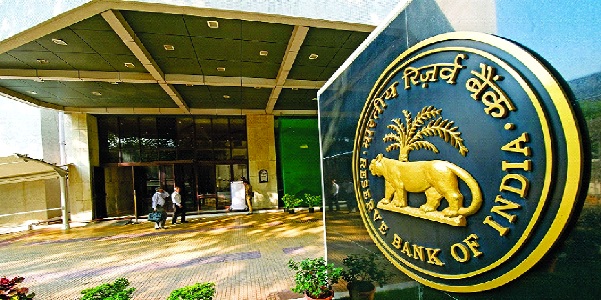

Mumbai (TIP): RBI Governor Sanjay Malhotra preferred to wait for greater certainty on the inflation trajectory, as he and other members of the MPC voted to maintain the existing interest rate earlier this month, according to minutes of the meeting of the rate-setting panel released on Wednesday, August 19.
The Governor-headed six-member Monetary Policy Committee (MPC) decided to keep the benchmark policy rate (repo) unchanged for a fourth consecutive time, opting to wait for greater clarity on whether higher energy costs triggered by the US-Iran conflict feed into broader inflationary pressures.
Despite the conflict in West Asia disrupting supply chains, heightened uncertainty, and an erratic monsoon so far, the Indian economy has performed better than expected in Q1:2026-27, the Governor said as per the minutes.
Monetary response to a supply-side shock is warranted when there are signs of it leading to a generalisation of inflation, de-anchoring of inflation expectations or persistent inflation. While risks remain, evidence of this so far is limited, Malhotra said. “…I would prefer to wait for more certainty to emerge on the inflation trajectory in terms of the persistence of realised prints at these or higher levels, the forecast and the likely levels to which inflation may normalise and settle, for any recalibration of the policy rate,” he said.
The Governor also stressed the need to be watchful as the risks of higher food, fuel and other input prices translating into a broad-based increase in inflation and de-anchoring of expectations persist. “Any evidence of these risks materialising may need policy tightening,” he opined.
Deputy Governor and MPC member Poonam Gupta was of the view that with persistent uncertainty on account of global developments and weather-related risks, the best course of action would be to wait and watch a bit more.
RBI’s problem with revolving credit
A few days ago, the RBI issued a draft direction that defined “revolving credit” and “term loan” and, at the same time, proposed banning all NBFCs (except those authorised to issue credit cards) from offering revolving credit products.
And that’s caused quite a bit of chaos in the market. If you’ve seen stocks of large NBFCs like Bajaj Finance, Tata Capital, Jio Financial Services and others fall over the last few days, well, you can blame this. So let’s understand why this is such a big deal. But before we get there, you need to know what revolving credit actually is and why the RBI wants to pull the plug on NBFCs offering it.
Think of revolving credit as a loan that is sanctioned once, but can be borrowed and repaid repeatedly, as long as you stay within your limit. Just like a credit card. Say you have a Rs 1 lakh limit. You borrow Rs 50,000. After a while, you repay that Rs 50,000. You can then borrow any amount up to Rs 1 lakh again without having to apply for a fresh loan.
That’s very different from a regular term loan. If you take a Rs 1 lakh loan, borrow Rs 50,000 and repay it, you can’t borrow again without submitting a fresh loan application and documents.
But what’s the problem with revolving credit, you ask?
To begin with, there’s something you may have heard in the world of credit: evergreening. For the uninitiated, evergreening is simply using a new loan to repay an old one. And revolving credit can potentially make this easier.
Say a business has taken a Rs 1 lakh flexi loan, which is a type of revolving credit, for working capital (money required for day to day operations). It has drawn Rs 50,000 so far. But the business is under stress and can no longer comfortably service the loan. If it doesn’t repay the interest or principal within 90 days, the loan could risk becoming a Non-Performing Asset (NPA), which could also hurt the business’s credit record.
But it could still do something smart here. Since it still has Rs 50,000 left on its credit line, it could draw more money from that unused limit and use it to repay part of the earlier borrowing.



Be the first to comment