Tag: Russia

  • EXODUS: EUROPE, ASIA, AND BEYOND

    EXODUS: EUROPE, ASIA, AND BEYOND

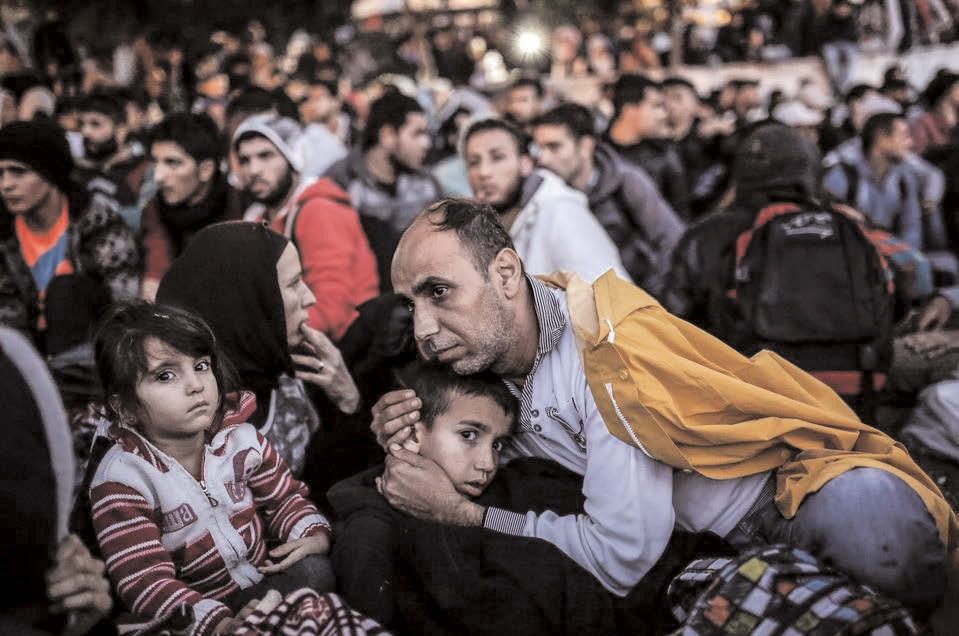
    As the battles raged in Syria and Iraq, millions of innocent civilians have sought refuge elsewhere to escape the dire straits in their home countries. Their prime destination: Europe. They came via planes, trains, ships, boats, cars, and for many, on foot: hundreds of thousands of displaced people fleeing a war no one asked for, leaving behind everything – their careers, property, families, their lives.

    Most of the world, at first, did not seem to notice the crisis. Not until the photo of a boy in a red shirt, lying lifeless, face down on the sands of a Turkish beach, came up in newspapers, websites, and social media.

    Three-year-old Syrian refugee Aylan Kurdi’s death shocked the world into consciousness, and spurred western governments to act on the worsening humanitarian crisis.

    By the end of 2015, more than one million migrants and refugees reached the continent, nearly 970,000 of which made the journey crossing the waters of the Mediterranean. It wasn’t only Syrians and Iraqis fleeing the mess in their home countries; there were also thousands escaping poverty and persecution, mainly from other Mideast and African states.

    Europe and other western countries scrambled to address the exodus, as the crisis became another test for the EU. Following a slew of emergency summits this year, EU leaders have acknowledged they were too slow to carry out a joint strategy to tackle Europe’s worst refugee crisis since World War II. Other countries have also stepped up, like Canada, which has already welcomed its first batch of Syrian refugees.

    Asia, in particular Southeast Asia, also had its own refugee crisis. Impoverished, persecuted, and with nowhere to go, Rohingya took to rickety boats in their bid to escape the quagmire they were in. The crisis came to a head around May, when thousands of these refugees, mainly from Myanmar’s Rakhine state, were left abandoned at sea, setting off a regional crisis. Horror stories of kidnap, coercion, and hunger emerged from the hundreds who staggered ashore or were eventually rescued by Thai, Indonesian, and Malaysian authorities after weeks at sea.

    Refugee exodus is seen as logical outcome of Syrian president's survival strategy.
    Refugee exodus is seen as logical outcome of Syrian president’s survival strategy.

    The crisis has ebbed somehow in the past few months, thanks to some action of regional governments involved, as well as due to the monsoon season. But with the monsoon ending, the crisis might again surge forward into the headlines – and a solution still seems far away.

    Tensions defused? The Iran nuclear deal

    The odds were stacked against it, but on July 14, weary foreign ministers from the US, Britain, France, China, Russia, Germany, the EU, and Iran announced to the world that a deal to curb Iran’s nuclear ambitions had been forged. It was a diplomatic victory for the parties involved, especially for Iran, which has been trying to shake off its long-time image as a pariah state.

    The ministers of foreign affairs of France, Germany, the European Union, Iran, the United Kingdom and the United States as well as Chinese and Russian diplomats announcing the framework for a Comprehensive agreement on the Iranian nuclear programme (Lausanne, 2 April 2015).
    The ministers of foreign affairs of France, Germany, the European Union, Iran, the United Kingdom and the United States as well as Chinese and Russian diplomats announcing the framework for a Comprehensive agreement on the Iranian nuclear programme (Lausanne, 2 April 2015).

    Under the deal, Iran pledged to slash the number of centrifuges – which enrich uranium – from around 19,000 to 6,104, of which 5,060 will still enrich. It also has to change the design of a new nuclear reactor being built and shrink its stock of low-enriched uranium, shipping it to Russia. In return, outside powers will end some of the international sanctions that have severely squeezed the Iranian economy.

    The road to the deal, however, wasn’t an easy one. For years, Iran has maintained that its nuclear program was for peaceful, civilian purposes, but a weary West always eyed it with suspicion. In the past few years, the two sides have see-sawed between coming close to a deal and coming close to conflict. The relative success of the deal was a result of months of non-stop negotiations, as well as the presence of a more moderate government in Tehran, led by President Hassan Rouhani.

    The question now: Will both sides honor the deal?

    Greek tragedyA country teetering on the brink of bankruptcy due to years of financial mismanagement. A hardline, leftist government. An economic bloc avoiding a region-wide collapse. These were the elements of a Greek tragedy that unfolded throughout the better part of 2015, as Greece and the European Union negotiated to save the Balkan nation from crashing out of the eurozone.

    Greek Meltdown Fed up with the hated “troika” – the European Commission, European Central Bank, and the International Monetary Fund -Greeks in January voted into power their first leftist government, led by Alexis Tsipras’ SYRIZA party. Tsipras came into power with the promise to lead the country out of the debt crisis. However, after months of intense, pressure-filled negotiations and despite voters saying “no” to a new deal, Greece caved in to its creditors’ demands and signed its latest bailout deal. The deal, worth 86 billion euros ($93 billion) to be spread out over a 3-year period, ultimately saved the country from crashing out of the eurozone, but it came with strict conditions.

    The fallout: Tsipras resigned August 20 after accepting the deal, reneging on a promise to stand its ground against the country’s creditors. A snap poll in September, however, saw Tsipras and his SYRIZA party hold on to power. Adding to Greece’s economic woes is the refugee crisis, with the country acting as migrants’ main gateway to the EU, straining the already burdened nation.

    Russia and China: Show of force

    From ISIS to Iran, Russia – long overshadowed by richer and more influential countries in the West – continued to assert itself as it seeks to revive its power and influence. From Ukraine to Syria, it has made its presence felt, mostly through its military. It has been steadily fortifying its army, building and expanding bases in the Arctic, growing its defense budget, and taunting its neighbors with its planes, submarines, and ships with clandestine – and in one case, deadly – side trips outside its territory.

    China: Show of force.
    China: Show of force.

    Russia has also been making inroads on the political front, participating in some of the year’s major diplomatic issues, such as the Iran nuclear deal. But the centerpiece in the past 12 months has been Syria, as President Vladimir Putin’s government seeks to keep and gain more influence in the Middle East.

    Meanwhile, China has also made aggressive moves economically, diplomatically, and militarily. As other world powers became stuck in other issues, bogged down by economic and political matters, the Middle Kingdom continued to expand its reach, primarily through billions of dollars in economic aid and infrastructure projects.

    Despite winning a lot of new friends, China has one major thorn on its side: its long-simmering maritime and territorial disputes with its Asian neighbors. The East and South China Seas have become sensitive spots in the region – particularly the Spratlys, where Beijing has been building artificial islands in its attempt to bolster its claims in the area. The waters are now being tested by militaries from other countries, including the US and Australia, with an increasing number of confrontations near the disputed “islands.” China also lost in round one of an arbitration case lodged by the Philippines at the global maritime tribunal.

  • INDIA IMPROVES ties with neighbors

    INDIA IMPROVES ties with neighbors

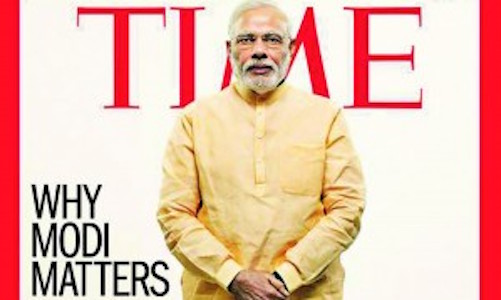
    Building upon Prime Minister Narendra Modi’s initiative of inviting all SAARC leaders to his swearing-in ceremony in May 2014, the neighbourhood continued to be the primary focus of India’s foreign policy in 2015. While relations with Pakistan and Nepal remained on a tricky path, there was some forward movement in the ties with Bangladesh, Afghanistan, Bhutan, Maldives and Myanmar. Relations between India and Sri Lanka more or less maintained a status quo.

    Nepal

    It began with an upswing in the ties but the relationship were strained by the time the year came to an end. Bilateral ties with Nepal took a hit after the neighbouring country promulgated a new Constitution. India argued that the new Constitution did not take into account the concerns of all sections of the population, particularly the Madhesis who enjoy close ties with India. However, Nepal did not pay heed to India’s protests and rebuked it for interfering in the country’s internal affairs.

    Earlier when Nepal was hit by a massive earthquake on April 25, India responded to the calamity and helped Nepal by launching its largest disaster response abroad, Operation Maitri. During External Affairs Minister Sushma Swaraj’s visit to Kathmandu in June, India pledged $1 billion grant for the reconstruction of the quake-hit country.

    Pakistan

    File image of Narendra Modi with Pakistan PM Nawaz Sharif
    File image of Narendra Modi with Pakistan PM Nawaz Sharif

    Ties with Pakistan did not see any forward movement in the past one year despite two meetings between Modi and his Pakistani counterpart Nawaz Sharif. While pushing for better relations, India has maintained that talks are possible only in an atmosphere that is free of terror and violence.

    Sharif and Modi first met on the sidelines of the BRICS summit in Ufa in Russia. The two sides unveiled a five-point agenda to address concerns on terrorism and to promote people-to-people contact. Despite a number of hurdles including on account of terror attacks in the aftermath of Ufa, and cancellation of initial round of NSA-level talks, a significant breakthrough was achieved in December with the NSAs meeting in Bangkok, followed by Swaraj’s visit to Islamabad for the Heart of Asia Conference.

    Bangladesh

    Prime Minister Narendra Modi and Bangladesh Prime Minister Sheikh Hasina shake hands in Dhaka, Bangladesh, Saturday, June 6, 2015.
    Prime Minister Narendra Modi and Bangladesh Prime Minister Sheikh Hasina shake hands in Dhaka, Bangladesh, Saturday, June 6, 2015.

    Modi’s visit to Bangladesh in June saw the exchange of instruments of ratification of the landmark land boundary agreement. It was a relief for over 50,000 people living in 162 enclaves across both countries as India and Bangladesh swapped enclaves, bringing to an end the 68-year-old boundary dispute. The June 6-7 visit of PM Modi also saw India-Bangladesh developmental cooperation scaling new heights, with India pledging a $2 billion Line of Credit for Bangladesh. The two countries took a host of steps to enhance trade and connectivity, including the launch of two new bus services. The two countries are a part of the sub-regional cooperation between Bangladesh, Bhutan, India and Nepal to enhance connectivity and regional integration.

    Sri Lanka

    Not much change taken place in the ties between India and Sri Lanka in the year gone by. Within months of the newly-elected Sri Lankan President Maithripala Sirisena taking charge of the island nation, two-way visits were held by the leaders and foreign ministers of the two countries. During Modi’s visit to Sri Lanka in March, India pledged $318 million Line of Credit for railway upgradation (New Delhi’s development assistance is already about $1.6 billion), unveiled a currency swap agreement of US $1.5 billion to help stabilise the Sri Lankan rupee and to develop Trincomalee as a regional petroleum hub with the cooperation of Lanka IOC (Indian Oil Corp’s subsidiary in Sri Lanka) and Ceylon Petroleum Corporation.

    Both countries also signed four pacts regarding visa exemption for official passport holders, youth exchanges, customs agreement (to address trade concerns and reduce non-tariff barriers) and the construction of the Rabindranath Tagore auditorium at the Ruhuna University with India’s aid.

    Afghanistan

    Amid the backdrop of the unfolding transition in Afghanistan, India sustained its engagement with the war-torn country. During the visit of Afghan President Ashraf Ghani in April 2015, India reiterated its commitment to the reconstruction of the strife-torn country. The two sides focused on working towards a more liberalised business visa regime. Afghanistan welcomed India’s decision to extend the 1000 scholarships per year scheme by another 5 years as part of capacity building initiatives. India continues its assistance to the construction of the India-Afghanistan Friendship (Salma) Dam in Herat, expected to be completed in the first half of 2016. The Parliament Building in Kabul constructed with Indian assistance has already been completed as well as on the Doshi and Charikar power stations. But the resurgence of Taliban and Pakistan’s continued support to the group remain a huge hindrance. Taliban has regained control of large swathes of land in Afghanistan in the last few months and is now in a position to threaten the elected government once again.

    Bhutan

    India’s all-weather friendship with Bhutan continued on an upward curve. The visit of Bhutan’s Prime Minister Tshering Tobgay to India in January focused on optimising cooperation in the field of hydropower – the centerpiece of economic cooperation between the two countries. The two sides reiterated their commitment to the 10,000 MW initiative and in this context, to the early implementation of the four JV-model projects, totaling 2120 MW.

    Maldives

    India also engaged with the Maldives leadership despite political volatility in the island country. This was reflected in the meeting between the foreign ministers of India and the Maldives on the sidelines of the UN summit in New York in September. External Affairs Minister Sushma Swaraj followed it up with a visit to the island nation from October 10-11 to reinvigorate ties.

    Myanmar

    Bilateral relations with Myanmar improved with the first India-Myanmar Joint Consultative Commission (JCC) meeting held in New Delhi on July 16, 2015. Steps were taken to further enhance the existing air connectivity, extending a$500 million Line of Credit to the Government of Myanmar for development priorities, and a commitment to enhance the regional and sub-regional cooperation under the BCIM-EC and the BIMSTEC framework. India also played an instrumental role in providing disaster relief support to Myanmar in response to widespread floods and landslides caused by Cyclone Komen.

  • 2015: A Year of Work-in-Progress for Defense

    2015: A Year of Work-in-Progress for Defense

    One does not know what the Ministry of Defense (MoD) set out to achieve in the calendar year 2015 or the current financial year that will draw to a close in another three months (in March, 2016). But if one were to hazard a guess, the objective would have been to take steps, if not to completely resolve, at least address the issues that kept the MoD in the news throughout the year. A quick survey of where we stand on those issues at the end of the year would be instructive.

    To cut to the chase, the issues confronting the defense establishment at the beginning of the year broadly related to defense policy, human resource management and operational preparedness, though not necessarily in that order.

    The policy-related issues are not new. Questions about India’s national security objectives and defense strategy, in all their manifestations, have persisted for long. To be fair, these larger issues were not in the forefront at the beginning of the year but a related issue was. It concerned the appointment of a Chief of Defense Staff (CDS) or Permanent Chief of the Chiefs of Staff Committee (PC COSC). The year has gone by without one being appointed. If anything, the excitement seems to have somewhat ebbed over the past few months.

    It will take some doing to create this institution with clearly defined responsibilities and an appropriate support structure. Assuming that the present system of three-tiered defense planning will continue and, among other things, the CDS/PC COSC will be responsible for defense planning, it is time the issue is taken up on priority as the 13th Defense Five-year Plan is to commence from April 1, 2017.

    In contrast, it has been a year of palpable vibrancy in defense diplomacy, with India simultaneously engaging the United States, Russia, Japan, France, the United Kingdom, Germany and others at one level and countries in the neighborhood at another. But the tangible outcome of this outreach is awaited. The contract for the medium multi-role aircraft, which was the highlight of the prime minister’s visit to France earlier this year, is yet to be finalized. There has been little progress on the ‘pathfinder projects’ or other technologies offered by the United States. The US-2 amphibious aircraft project with Japan continues to hang fire, and so does the FGFA project with Russia. There will be many other projects of this kind. It is necessary to wrap up some of these programs to establish credibility and lay the foundations for a more meaningful engagement.

    The most significant development has been the recent outreach to Pakistan after the cancellation of the NSA-level talk in August 2015. It would be naive to expect immediate results but this is the only way forward for both the countries. There is absolutely no alternative to talks. Sustaining this engagement in the coming year without raising expectations of a breakthrough in respect of any of the several contentious issues will be a great achievement.

    As for issues concerning human resources management, the one-rank-one-pension (OROP) log-jam and the reaction of the armed forces to the recommendations of the seventh central pay commission eclipsed all other issues, reinforcing perceptions of deteriorating civil-military relations. The vitriol underlying the discourse on these issues does not bode well for a country that has one of the largest armed forces in the world. In today’s world, perception management is as important as resolving the core issues underlying those perceptions.

    Going by the coverage it got in the media in 2015, the MoD invested a tremendous amount of effort in addressing the issues concerning operational preparedness with a clear emphasis on promoting self-reliance in defense production through greater participation of the Indian private sector, coupled with the decision to go ahead with some off-the-shelf procurements, especially from the United States through the Foreign Military Sales (FMS) route.

    The finance minister gave a glimpse of the government’s thinking on this approach when he said the following in his budget speech of 28 February 2015:

    “86. Defense of every square inch of our mother land comes before anything else. So far, we have been over dependent on imports, with its attendant unwelcome spin-offs. Our Government has already permitted FDI in defense so that the Indian-controlled entities also become manufacturers of defense equipments, not only for us, but for export. We are thus pursuing the Make in India policy to achieve greater self-sufficiency in the area of defense equipment, including aircraft. Members of this august House would have noted that we have been both transparent and quick in making defense equipment related purchase decisions, thus keeping our defense forces ready for any eventuality.”1

    The gamble did not pay off, however, prompting the government to put FDI up to 49 per cent on the automatic route, while FDI beyond that limit would now require the approval of the Foreign Investment Promotion Board (FIPB) rather than the Cabinet Committee on Security (CCS). This might help but promoting self-reliance in defense would require simultaneous movement on three other fronts.

    One, the key to involving the Indian industry in defense manufacturing is to offer it with a business case. Two, it needs to be ensured that the procurement proposals do not get entangled in procedural complexities and bureaucratic indolence. And three, an industry-friendly eco-system is required to galvanize the industry.

    The year saw many efforts being made at easing the procedural rigors, as in the case of creating a level-playing field for the private sector vis-a-vis the public sector and easing the offset norms. But these efforts were disjointed. The big bang reforms in the procurement procedure based on the recommendations of the committee of experts set up by the MoD did not fructify. Measures such as setting up of a Defense Technology Fund announced in the budget speech of 2014 were not on the radar in 2015.

    The new Defense Procurement Procedure, with a revamped policy on offsets and ‘Make’ projects, continues to be eagerly awaited after having missed a few deadlines. In particular, the policy on ‘Make in India’ in defense remained the subject of much speculation in 2015. How is the new initiative different from what the MoD has been doing all these years? Where do the foreign vendors figure in this new matrix and what role they are expected to play?

    The Defense Acquisition Council would have accorded Acceptance of Necessity (AoN) for procurement proposals for more than INR 100,000 crore during the year. Their fate is not known, but considering that AoN lapses if the Request for Proposal (RFP) is not issued within a year of the date on which it is accorded, the advantage of having cleared so many proposals would be lost if it is not ensured that the RFPs get issued within time.

    The Defense Procurement Board (DPB) could play an important role in not only monitoring the situation but also proactively steering every procurement proposal at the post-AoN stage till the signing of the contract, as well as monitoring the progress of the ongoing contracts.

    Lastly, there is the question of budgetary support. The gap between the requirement projected by MoD and the allocation made in the union budget halved this year but was still more than INR 40,000 crore. The share of pay and allowances in the revenue segment of the defense budget has been increasing and presently stands at 66 per cent. This could increase further next year on account of implementation of the recommendations of the seventh pay commission, adversely affecting availability of funds for procurement of ordnance stores, spares and ammunition, among other things. On the other hand, the capital budget ironically generally remains underutilized. The trend this year so far does not show a significant improvement.

    The pension budget (INR 54,500 crore for the current year) will also go up for the same reason, as also on account of OROP. Though it is not a part of the defense budget, it could impact the government’s ability to increase the defense budget in any substantial manner next year.

    The current year has been a year of work-in-progress on several fronts. There is no reason to doubt that the coming year will witness the beginning of a transformative phase in the management of defense with all these efforts reaching fruition

    (Source :IDSA )

  • RUSSIA, INDIA NEGOTIATING ON MORE PROJECTS

    RUSSIA, INDIA NEGOTIATING ON MORE PROJECTS

    MOSCOW (TIP): Russia’s decision to open up its oil and gas sector to Indian companies will significantly boost bilateral trade and the two sides are negotiating on some more acquisitions and projects in the hydrocarbons sector, India’s envoy here PS Raghavan has said.

    He said Russia considers its huge oil and gas reserves as strategic resources and is allowing Indian firms “extensive exposure” to them in sync with close bilateral ties.

    “This is really a rush by India into Russia’s hydrocarbons sector,” he told PTI.

    He said Russia’s decision to open up its oil and gas sector to Indian companies will significantly boost bilateral annual trade which is currently around $10 billion.

    A number of deals were struck between Indian and Russian oil firms during Prime Minister Narendra Modi’s visit here last week.

    The deals sealed in the oil sector include ONGC Videsh Ltd buying a 15 per cent stake in Russia’s Vankorneft oil field for close to $1.3 billion. Vankorneft is Russia’s second biggest oil field and is owned by oil behemoth Rosneft.

    India, considered one of world’s fastest growing energy markets, has been eyeing greater access to major gas and oil exploration projects in Russia and central Asian countries.

    Raghavan said New Delhi had pressed Russia to open its oil and gas sector to Indian companies during summit talks between President Vladimir Putin and Modi in December last year and the Russian side now has heeded to the request.

    “Russia is a major hydrocarbon power. We are a major hydrocarbon consumer. Our energy security depends on hydrocarbons. So there was a conscious decision that India should increase its footprint in Russia’s hydrocarbons industry,” Raghavan said. He said ONGC Videsh Ltd is exploring more acquisitions in Russian oil fields besides working on some other proposals.

    “Russia has been very careful in its process of disinvestment in the oil industry as it considers oil as a strategic resource. It has been very careful in its disinvestment,” said Raghavan. Sounding confident of Indian companies in oil and gas sector expanding their operation in Russia, the envoy said economic relations between the two countries are on an upswing which is going to boost bilateral trade volume significantly.

    Asked about the amount of possible investment Indian companies were planning to make in Russia’s hydrocarbons sector, he said negotiations are underway on various proposals and that it was difficult to put a specific number.

    Referring to four deals and agreements finalized during Modi’s visit, he said these are examples of “extensive exposure” to Indian companies to Russia’s hydrocarbons sector.

    India is the the third largest oil importer after the US and China, while Russia is one of the top oil producers globally and has huge reserves of natural gas.

    Russia’s economy has been hit hard by sanctions by the West following annexation of Crimea and Putin is keen to enhance economic engagement with time-tested ally India.

    Besides the deal by OVL to pick up 15 per cent stake in Vankor oil field owned by Rosneft, Oil India Ltd and Indian Oil Corporation signed a non-binding agreement with the Russian oil behemoth setting a time-frame for finalising a pact to pick up stakes in Taas-Yuryakh Neftegazodobycha oil field, which is another major oil field in Siberia.

    Raghavan said Essar has also “concluded some details of a deal” under which it will pick up 10 million tonnes of crude from Roseneft.

    Roseneft will pick up 49 per cent stakes in India’s second largest oil refinery in Vadinar in Gujarat. As per the deal, crude oil from Russia will be refined at Vadinar refinery.

    Raghavan said GAIL and Gasprom have struck an agreement for supply of LNG for a long term period beginning 2017.


  • Finding a Niche in the Emerging World Order

    Finding a Niche in the Emerging World Order

    Prime Minister Narendra Modi’s apparently impromptu visit to Lahore on Christmas day is readily explained by the need to contain the Taliban and ensure regional stability and connectivity in the ‘Heart of Asia’ after the US-led International Security Assistance Force withdraws next year. The visit follows growing realization in capitals across the region that mutual security interests must supersede Cold War alliances or ideological mindsets to avoid the fate of nations like Iraq and Syria. The Taliban and/or its mutants cannot be permitted to spread in the Afghan neighborhood, which includes Central Asia, Iran, Pakistan and India, an effort that calls for convergence between Kabul, Islamabad and New Delhi. One can discern the benign presence of Moscow and Beijing as both have huge stakes in a revitalized Asian economic boom independent of Western hegemony.

    Besides China’s Silk Road project, several multi-nation projects centre on Afghanistan, viz, the Turkmen railways, transmission lines, highways, oil pipelines and gas pipelines including the Turkmenistan-Afghanistan-Pakistan-India pipeline. India wants to join the Afghanistan-Pakistan trade and transit agreement so that Afghan products can directly enter India and its products reach Afghan and Central Asian markets.

    These mega-development prospects doubtless prompted Mr. Modi to engage with Pakistani Prime Minister Nawaz Sharif on the sidelines of the Paris climate conference in late November. Thereafter the National Security Advisors met in Bangkok and smoothened the way for External Affairs Minister Sushma Swaraj’s visit to Islamabad for the Heart of Asia-Istanbul Process conference on Afghanistan. India has huge stakes in the integration of Central Asia, East Asia and West Asia.Though not opposed, India does not expect a lasting peace to emerge from talks between the Afghan Government and Afghan Taliban groups. A better option is state-level engagement which Kabul too prefers. Hence, it is inconceivable that as he went through his Kabul engagements – inaugurating the India-built $90 million Parliament House, gifting three Mi-25 attack helicopters and 500 new scholarships for children of martyrs of Afghan security forces -Mr. Modi would not have discussed the Lahore stopover with President Ashraf Ghani and CEO Abdullah Abdullah. It seems equally likely he mentioned it to Russian President Vladimir Putin before departing from Moscow. It may be relevant to note that since Russia began bombing IS positions in Syria, Pakistan does not favor regime change in Damascus.

    Pakistan Tehreek-e-Insaaf party leader Imran Khan’s presence in India (possibly to deliver the Sharif family wedding invitation) and the mature welcome to Mr. Modi’s stopover by Pakistan political parties (as opposed to the Congress’s petty squabbling) suggests that the Pakistani polity may have achieved some degree of cohesion in tackling terrorism. The Peshawar school attack last year is a grim warning of the danger from non-state actors.

    Mr. Modi’s first state visit to Russia, as part of the 16th Annual Bilateral Summit, has revitalized India’s most tried and trusted friendship and sent a signal to the international community that President Putin cannot be downsized by Western machinations. Mr. Modi secured Mr. Putin’s backing for India’s permanent membership of the UN Security Council and reiterated the commitment of both nations to a multipolar world order. Both nations already cooperate in forums like Brics and the Shanghai Cooperation Organisation (where Russia helped in India’s full membership), the G20 and the East Asia Summit.

    Syria, Afghanistan and the common threat posed by terrorism figured in the talks, but the summit’s main takeaway was Russia’s big bang return to India’s defense and nuclear energy sectors. Mr. Modi’s Make in India project in the defense sector got a major boost with the deal to jointly manufacture 200 Kamov-226T light military helicopters.

    The real triumph is the acquisition of five S- 400 Triumf surface-to-air missile systems (and 6,000 missiles). Literally the ‘crown jewels’ of Russia’s defense capability, the S-400 can destroy aircraft that use stealth technology, other fighter aircraft, cruise missiles and tactical missiles from up to 400 kilometers away, as effectively demonstrated earlier this month when Russia deployed the system to protect its Hmeimim airbase in Syria after Turkey downed a Russian jet.

    This will give India the ability to engage multiple targets at long range and restore the strategic balance with China and Pakistan. With Prime Minister Modi reportedly budgeting $150 billion to upgrade India’s military, with the Navy planning to order three Russian frigate warships and a possible joint development of a fifth generation fighter aircraft, New Delhi could be Moscow’s salvation as the latter faces a second year of recession amid Western sanctions.

    With the Paris climate conference failing to yield a comprehensive deal, the burden of combating global warming with clean energy expectedly fell upon individual nations. Mr. Modi having previously identified nuclear energy as pollution-free, the two nations are moving ahead with plans to build at least 12 nuclear power plants in India with the highest safety standards in the world, over the next 20 years. Two plants are slated to come up in Andhra Pradesh under the Make in India program. A vibrant partnership, however, calls for deeper economic integration. The Indian Prime Minister hopes to take advantage of the US-led Western sanctions against Russia to meet the latter’s demand for dairy products, seafood, and other goods and to attract Russian cash-rich billionaires to invest in India’s infrastructure fund, since they are no longer welcome in the old European financial havens due to Mr. Putin’s resistance to Western geo-political agendas to dismember West Asian and African countries on the lines of the old Yugoslavia.

    Access to Russian capital for his Make in India campaign would empower Mr. Modi’s drive to build a strong indigenous manufacturing base to generate employment and export revenues. Given the sharp downturn in Russo-Turkey relations, Mr. Modi hopes that Russian tourists will flock to India (not just in Goa) and tasked the tiny Indian community in Russia to motivate Russian families to discover India.

    Another gain is Russia’s commitment to ship 10 million ton of oil annually to energy-starved India in the next 10 years. Both countries plan to intensity collaboration in developing space exploration, rocket manufacture and engine manufacture, nano-technology, metallurgy, optics and software sectors. In substance, the visit announced that the Asian quest to forge a rational world order has moved to a new level. Mr. Modi’s short and informal visits to Afghanistan and Pakistan may be read as an invitation to take a seat of honor at the evolving new world concert.

    (The author is a social development consultant and a columnist with The Pioneer, a leading newspaper of Delhi).

  • Saudi Arabia in Recession | Cuts Spending to Shrink Deficit

    Saudi Arabia in Recession | Cuts Spending to Shrink Deficit

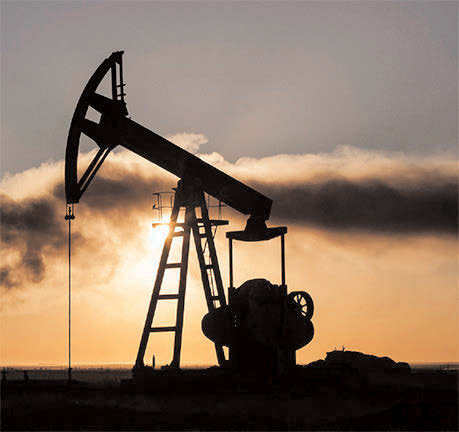
    A glut of oil, the demise of OPEC and weakening global demand combined to make 2015 the year of crashing oil prices. The cost of crude fell to levels not seen for 11 years – and the decline may have further to go with Iran’s supplies joining the global supply pool in 2016.

    Pressured by low oil prices and costly wars in the Middle East, Saudi Arabia announced a sharp reduction in its 2016 budget to control a worsening deficit, which is steadily draining the kingdom’s financial reserves.

    The official Saudi news media reported that the Finance Ministry would cut spending, adopt new taxes and reduce price subsidies for fuel, water and power.

    The cost of some grades of domestic gasoline, among the first to be affected, could rise as much as 50 percent, a potentially unsettling spike in a country where mass transit does not exist and cars are a basic necessity.

    The IMF has raised the prospect that Saudi Arabia could go bankrupt in five years without changes to its economic policy, cuts in support to foreign allies seem inevitable.

    In our next issue – How the Oil powers have been affected

    The price of oil, Saudi Arabia’s most important export, has tumbled this year because of reduced global demand and fierce competition by producers — including the Saudis — to keep their share of the market. The market is expected to be increasingly competitive because Iran could soon be free to sell its oil under relaxed international sanctions after Tehran’s nuclear agreement with world powers. In the summer of 2014, oil exceeded $100 a barrel, but it is now trading well below $40.

    The falling price has benefited oil-consuming nations while putting severe financial pressure on exporters like Saudi Arabia, Russia and Venezuela.

    At the same time its revenue has slowed, Saudi Arabia has increased military spending, financing rebels in Syria and intervening in Yemen, where Saudi warplanes have been bombing the insurgent Houthi movement since March.

    The Saudi kingdom has been spending more than it takes in, and by some estimates it could exhaust its foreign exchange reserves, now roughly $640 billion, by 2020 without deep cuts in spending, a big rise in the price of oil, or a combination of both.

    The government ran a record deficit of about 367 billion riyals, or roughly $98 billion, in 2015, according to the Saudi-owned Al Arabiya news channel. Under the 2016 budget, the goal is to reduce the deficit to 326 billion riyals, or about $87 billion.

    The Finance Ministry projected the 2016 budget to be about 840 billion riyals, down from 975 billion riyals this year, Al Arabiya reported.

    Analysts examining the budget said the Saudis were assuming that a barrel of oil would average about $45 in 2016. But some said even that projection was overly optimistic.

  • Putin rules out reconciliation with Turkey

    Putin rules out reconciliation with Turkey

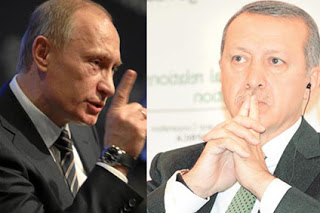
    MOSCOW (TIP): Russian President Vladimir Putin fired off an angry tirade against Turkey on Dec 17, ruling out any reconciliation with its leaders and accusing Ankara of shooting down a Russian warplane to impress the United States.

    In comments littered with crude language, Putin dismissed the possibility that the downing of the warplane over the Turkey-Syria border last month was an accident, calling it a “hostile act”. “We find it difficult if not impossible to come to an agreement with the current leadership of Turkey,” the Kremlin strongman said at his annual news conference. “On the state level, I don’t see any prospects of improving relations with the Turkish leadership,” he said of Turkish counterpart Recep Tayyip Erdogan. Ties between Russia and the NATO member have hit rock bottom since the November 24 incident, which led to deaths of two Russian military officers.

    Turkey has said the Russian jet strayed into its airspace and ignored repeated warnings, but Moscow insists it never left Syrian territory. Putin said he did not rule out that Ankara was acting with tacit approval from Washington, possibly so that the United States would look the other way to let Turkey “go onto Iraqi territory and occupy part of it”.

    “I don’t know if there was such a trade-off, maybe there was,” Putin said.

    “If somebody in the Turkish leadership decided to lick the Americans in one place… I don’t know, if they did the right thing,” he added. “Did they think we would run away now? Russia is not that kind of country,” Putin said, speaking of Moscow’s increased military presence in Syria.

    “If Turkey flew there all the time before, breaching Syrian airspace, well, let’s see how they fly now.”

    Turkey has voiced concern about Russian air raids in northern Syria because of the Turkmen minority in the area, a Turkic-speaking people who have had an uneasy relationship with the regime of President Bashar al-Assad.

    (AFP)

  • India to buy Russia missiles for Rs 39k crore

    India to buy Russia missiles for Rs 39k crore

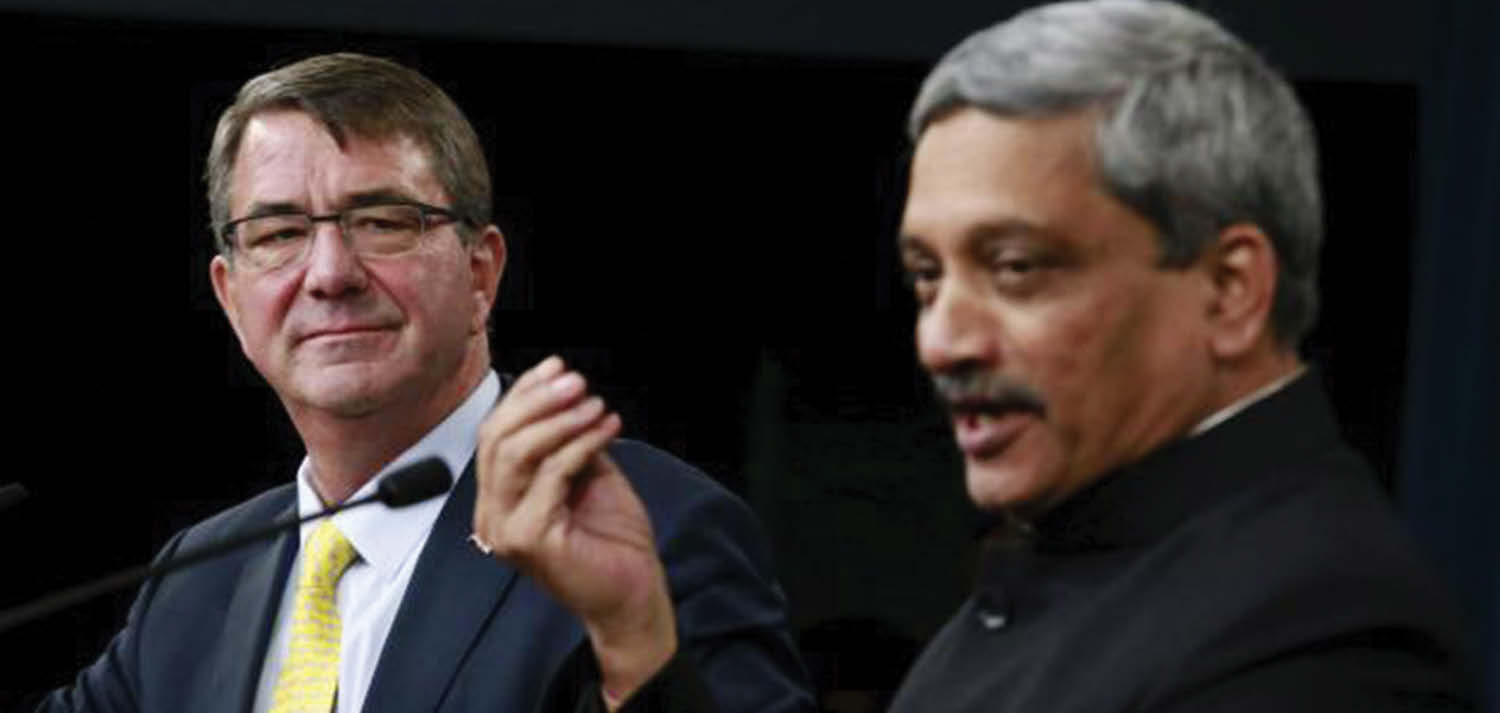
    NEW DELHI (TIP): The government on December 17 approved the Rs 39,000-crore acquisition of five advanced Russian S-400 Triumf air defence missile systems, which have even rattled NATO countries because they can destroy incoming hostile aircraft, stealth fighters, missiles and drones at ranges of up to 400 km.


    The decision by the Manohar Parrikar-led defence acquisitions council (DAC), which will take some time to materialize into an actual deal after commercial negotiations, comes just ahead of PM Narendra Modi’s summit with Russian President Vladimir Putin in Moscow on December 24.


    HIGHLIGHTS

    • Govt approved the Rs 39,000-crore acquisition of five advanced Russian S-400 Triumf air defence missile systems
    • The decision by the Manohar Parrikar-led defence acquisitions council comes just ahead of PM Modi’s summit with Russian President Vladimir Putin in Moscow on December 24.

    The DAC approval is just an “acceptance of necessity (AoN)” for Indian experts to now formally negotiate the government-to-government deal with their Russian counterparts. “It will take a few years for the S-400 systems to be actually inducted. The plan is to deploy three in the west (read Pakistan) and two in the east (read China) to seriously bolster the nation’s air defence capability,” said a source.

    With the IAF trying to steadily plug gaping holes in the country’s air defence coverage, including protection of strategic assets like nuclear reactors, the S-400 will come as a major shot in the arm for the force. India will be the second foreign customer for the S-400, which is designated ‘SA-21 Growler’ by NATO. China is slated to get deliveries of six S-400 batteries from 2017 onwards after a $3 billion deal inked with Russia last year.

    The DAC on Thursday also cleared other modernization proposals worth Rs 25,985 crore, including the Rs 14,600-crore acquisition of six more regiments of the indigenous Pinaka multiple-launch rocket systems. The army already has two regiments of the 40-km range Pinaka systems, while two more were approved earlier. But the S-400 was the clear takeaway to add “real defence substance” to Modi’s visit to Russia, which will also see the two countries ink the inter-governmental agreement for the over$1 billion project to manufacture 200 Russian Kamov Ka-226T light utility helicopters under the ‘Make in India’ policy.

    India is also on course to acquire a second nuclear-powered submarine on a $1.5 billion lease from Russia. Indian Navy had inducted the first Akula-II submarine, christened INS Chakra, on a 10-year lease from Russia in April 2012, under a secret $900 million deal inked way back in January 2004.

    When the S-400 contract is actually inked, it will among the largest-ever deals with Russia, which has been displaced by the US as India’s largest defence supplier over the last four years. The other big deals inked with Russia include the ones for 272 Sukhoi-30MKI fighters (over $12 billion) and INS Vikramaditya ($2.33 billion for the aircraft carrier and another $2 billion for 45 MiG-29Ks to operate from its deck).

  • Assad Can Stay, for Now | US changes stance for peace

    Assad Can Stay, for Now | US changes stance for peace

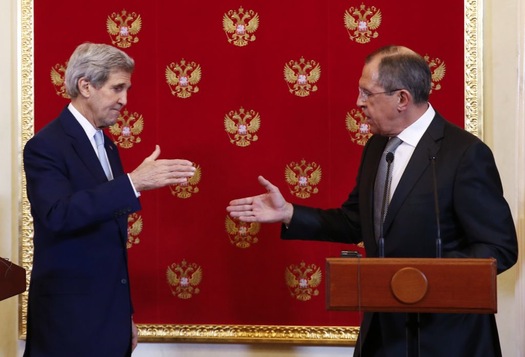
    WASHINGTON (TIP): U.S. Secretary of State John Kerry on Tuesday, December 15, accepted Russia’s long-standing demand that President Bashar Assad’s future be determined by his own people, as Washington and Moscow edged toward putting aside years of disagreement over how to end Syria’s civil war.

    Kerry announced this critical shift in Moscow where he met Russian President Vladimir Putin and Foreign Minister Sergey Lavrov to discuss the ongoing conflicts in Ukraine and Syria.

    “The United States and our partners are not seeking so-called regime change,” Kerry told reporters in the Russian capital after meeting President Vladimir Putin.

    This means Assad can stay in power for a bit longer if Russia and America cooperate together in overseeing the transition from Assad’s chaos to peace.

    A major international conference on Syria would take place later this week (Friday) in New York, Kerry announced.

    Assad is the very kind of “dictator” the US prides itself in fighting to remove. For the past four years, President Obama has called for Assad to step down. From Assad’s alleged use of chemical gas to barrel bombs to ISIS overtaking Syrian territory, Assad attracts a very diverse response from world leaders on how to achieve peace because the situation in Syria is so complex.

    But after a day of discussions with Assad’s key international backer, Kerry said the focus now is “not on our differences about what can or cannot be done immediately about Assad.” Rather, it is on facilitating a peace process in which “Syrians will be making decisions for the future of Syria.”

    Within the United States, where political debates are increasingly revolving around foreign policy — especially to do with Assad and ISIS — the presidential candidates (as well as politicians in general) find themselves equally divided on the Syrian solution. In fact, shifting positions on Assad seems to be the norm.

    The world is better off when Russia and the U.S. work together, Kerry added, calling Obama and Putin’s current cooperation a “sign of maturity.”

    “There is no policy of the United States, per se, to isolate Russia,” Kerry stressed.

    Below is a brief timeline of major American politicians on their stances regarding Assad and Syria, especially in relations to Putin and Russia.
    August 2011

    Secretary of State Hillary Clinton tells the press “it’s not going to be any news if the United States says, ‘Assad needs to go.’”

    A week later, US President Barack Obama announces for the first time — after weeks of political pressure — that Assad “must step down”.

    The American announcement happened in coordination with key allies’ announcements: Germany, France, and the UK, amongst others, also called for Assad’s departure from his presidency position around this time.

    February 2012

    Western powers reportedly ignore a Russian proposal to securely remove Assad from his position, as the US, French, and British leaders believe the Syrian president would not last much longer in power.

    September 2013

    President Obama addresses the nation, detailing the brutalities of the Assad regime and announces the US will strike Assad’s forces to deter the regime from the use of chemical weapons.
    The US and Russia then pushed for Syria to become party to the Chemical Weapons Convention, which banned the use of chemical and biological weaponry in warfare.

    November 2014

    President Obama states at the G20 press conference that “there’s no expectation that we are going to in some ways enter an alliance with Assad. He is not credible in that country.”

    The US president continues on to say that “we are looking for a political solution eventually within Syria that is inclusive of all the groups who live there — the Alawite, the Sunni, Christians. And at some point, the people of Syria and the various players involved, as well as the regional players — Turkey, Iran, Assad’s patrons like Russia — are going to have to engage in a political conversation.”

    August 2015

    Four years later, increased diplomacy between major powers — especially the US and Russia — start to cause US leaders to soften their “Assad must go” position.

    The New York Times quotes an unnamed senior American official as saying, “It’s encouraging, but we’re still a long ways off [on a solution for Assad].”

    September 2015

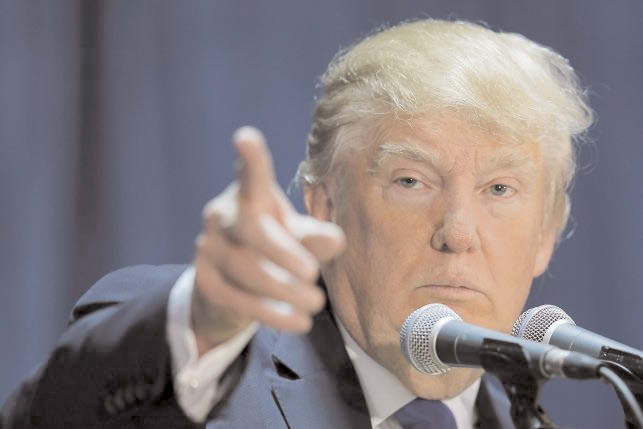
    Donald Trump tells Americans to let Russia take care of Assad and ISIS.

    “Let Syria and ISIS fight. Why do we care? Let ISIS and Syria fight. And let Russia, they’re in Syria already, let them fight ISIS. Look, I don’t want ISIS. ISIS is bad. They are evil. When they start doing with a head chopping … these are really bad dudes. … Let Russia take care of ISIS. How many places can we be? … Russia likes Assad seemingly a lot. Let them worry about ISIS. Let them fight it out.”

    October 2015

    Hillary Clinton, now a presidential candidate and no longer Secretary of State (since 2013), states removing Assad is America’s top priority, four years after she said it wouldn’t make US news.

    December 2015

    A month after the Paris attacks, a week after the San Bernardino attack, the day Los Angeles shut down its public schools due to a bomb threat, and the last Republican debate of the year before the holidays. Also the day Kerry meets Putin and Lavrov in Moscow.

    The Secretary of State officially reverses the position of the US on Assad, while Republican contenders for the 2016 election spar over what to do. The more memorable quotes are anti-Russian and anti-intervention.

    Donald Trump: “Spend the money [used in striking in the Middle East] in the US… It’s a tremendous disservice to humanity, and for what? [The Middle East is] a mess, [a] total and complete mess.”

    John Kasich: “In regard to Syria, understand that Assad is an ally of Iran who wants to extend that Shi’i radicalism all the way across the Middle East. He has to go. And for the Russians, frankly, it’s time to punch the Russians in the nose. They’ve gotten away with too much in this world, and we need to stand up against them, not just there, but also in Eastern Europe where they threaten some of our most precious allies.”

    Rand Paul: “We need to confront Russia from a position of strength.”

    Chris Christie: “Reckless was inviting Russia into Syria.”


    As of now, President Obama has yet to make an official statement confirming Kerry’s comments in Moscow. Kerry maintained that it is in the best interest for the world when Russia and the US cooperate, and that this cooperation is “a sign of maturity” between the two presidents.

    While it’s great for the US and Russia to be on slightly better terms again, time will only tell if this rekindling of relations will bring Assad to justice and peace to the Syrian people.

  • Turkey president Erdogan hits back at Russia after being accused of buying oil from ISIS

    Turkey president Erdogan hits back at Russia after being accused of buying oil from ISIS

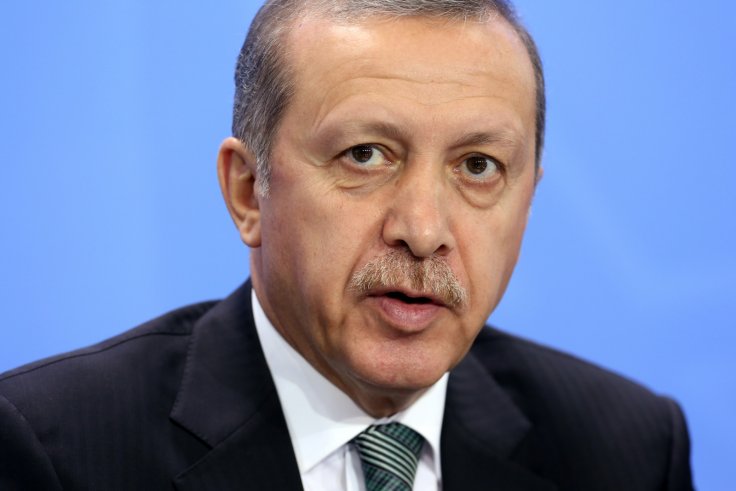
    President Recep Tayyip Erdogan accused Russia of “slander” over Moscow’s allegations Turkey had bought oil from Islamic State (IS) jihadists in Syria. “No one has a right to engage in slander against Turkey by saying that Turkey is buying oil from Daesh (IS),” Erdogan said in comments broadcast by Turkish television on a visit to Qatar. He was speaking after the Russian defence ministry claimed Erdogan and his family were involved in the illegal oil trade with IS, raising the stakes in a week-long standoff after Turkey shot down a Russian war plane on the Syrian border.

    Erdogan reaffirmed that he would resign if the allegations were proven to be true and appeared to suggest that Russian President Vladimir Putin should also consider his position. “I won’t stay in the seat of president for even one minute if Russia proved its claims. But those who spread this slander shouldn’t retain their seats either.””Turkey has not lost its moral values so as to buy oil from a terrorist organisation,” he added.

    Erdogan added that Turkey had no intention of escalating the crisis and said the two countries still have potential for cooperation. “We will use whatever diplomatic language international diplomacy requires. We don’t want this problem to hurt our current relations or potential any further.”

  • Russia hits back at Turkey

    Russia hits back at Turkey

    Since the shootdown of a Russian Su-24 by the Turkish Air Force on the 24th of November, Russia has escalated its bombing campaign in Syria against rebel groups in the north of Syria, including ones the US calls ‘moderate forces’.

    Some of these groups have the backing of the US & Turkey and have been actively fighting against both the Assad regime and ISIS for some time.

    Russia is striking back after a “stab in the back by an accomplice to terrorists” by changing the “game” in Syria.

    Ankara never received international backing for a safe zone across its border, but Russia has now ruled that out.

    The deployment of S-400 anti-air missiles means Russia has effectively imposed a no-fly zone over Syria.

    Aside from indirect military deployments, Russia has been hitting back at Turkey in other ways, such as arresting Turkish businessmen, banning Russian football clubs from signing Turkish players and seizing Turkish cargo ships. The Russian government has even gone so far as to pursue economic sanctions against Turkey, and discouraging Russian tourists from visiting.

    Moscow’s retaliation is not just about severing economic and diplomatic ties. It is pursuing a policy that could tie Turkey’s hands in Syria.

    Moscow seems to be moving closer to a group that has been the US-led coalition’s main ground force in Syria – a group which Turkey, itself a member of that coalition, calls “terrorists”.

    The Syrian Kurdish forces (YPG) is a US-backed Kurdish group that has pushed the Islamic State of Iraq and the Levant (ISIL) back from areas along the border with Turkey.

    In an attempt to change the solely “Kurdish face” of anti-ISIL ground troops, it aligned with some Arab brigades to form “the Syria Democratic Forces” (SDF).

    No doubt a further strengthened YPG will anger Turkey, which has long feared that Kurdish autonomy in northern Syria would stir up similar sentiments among its own Kurdish population.

    The SDF are now engaged in a fierce battle with Turkey-backed opposition factions in what is considered to be an important corner of Syria – the northern countryside of Aleppo.
    To be more specific: the area west of the Euphrates River, which Turkey calls a red line.

    The SDF captured some opposition-controlled towns close to the Turkish border of Kilis – known in Syria as Bab al-Salameh, an important lifeline for rebel groups.

    In the latest salvo in the war of words between the two countries,Russia publishes ‘proof’ Turkey’s Erdogan is smuggling Isis oil across border from Syria

    Russia has unveiled what it describes as proof that Turkish president Recep Tayyip Erdogan and his family have benefited from the illegal smuggling of oil from Isis-held territory.

    Moscow defence ministry officials released satellite images they claim shows columns of tanker trucks loading with oil at an installation controlled by Isis in Syria, before crossing the border into Turkey.

    Footage was also sent out by the Kremlin that purported to show a flow of lorries crossing the Turkey-Syria border with no restrictions at the Reyhanli checkpoint.

    Russia officials did not specify what direct evidence they had of the involvement of Mr Erdogan and his family, an allegation the Turkish president has vehemently denied.

    Anatoly Antonov, Russia’s deputy defence minister, said: “Turkey is the main consumer of the oil stolen from its rightful owners, Syria and Iraq.

    “According to information we’ve received, the senior political leadership of the country – President Erdogan and his family – are involved in this criminal business.”

    Mr Antonov admitted that he may have been “too blunt” in levelling the allegations, adding: “In the West, no one has asked questions about the fact that the Turkish president’s son heads one of the biggest energy companies, or that his son-in-law has been appointed energy minister. What a marvellous family business.”


  • Russia delivers missile systems to Iran: Report

    Russia delivers missile systems to Iran: Report

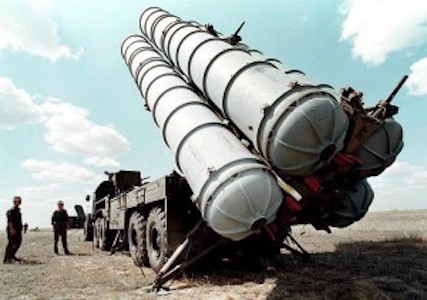
    MOSCOW (TIP): The arms trade adviser to President Vladimir Putin says Russia has begun delivering S-300 air defense missile systems to Iran, according to the Russian state news agency Tass.

    Tass quoted Vladimir Kozhin as saying Thursday that the implementation of the contract for the delivery of the S-300s has begun and the deliveries have started. He didn’t provide any specifics.

    Russia in 2010 froze a deal to supply advanced long-range S-300 missile systems to Iran, linking the decision to UN sanctions.

    President Vladimir Putin lifted the suspension earlier this year following Iran’s deal with six world powers that curbed its nuclear program in exchange for relief from international sanctions.

    Officials said last month that Russia and Iran finalized the contract for their delivery.

    The S-300 deal has long worried Israel and other countries in the region, as well as the US, which see it as destabilizing. (AFP)

  • Putin swears to make Turkey regret plane downing

    Putin swears to make Turkey regret plane downing

    MOSCOW (TIP): Russian President Vladimir Putin, on December 3, vowed Turkey’s leadership would be made to regret the downing of one of Moscow’s warplanes as the top diplomats from both countries held their first high-level meeting since the incident.

    Moscow announced a halt to talks on a major gas pipeline with Nato member Ankara as Putin fired another salvo in their war of words, while Turkish leader Recep Tayyip Erdogan shot back by claiming he had “proof” Russia was involved in illegal oil trading with the Islamic State group.

    Turkey has become Moscow’s prime international sparring partner after it shot down a Russian jet on its border with Syria on November 24 — sparking fury and economic sanctions from the Kremlin. (PTI)

  • Moscow cuts coal supply to Kiev

    Moscow cuts coal supply to Kiev

    KIEV (TIP): Russia has begun to restrict coal supplies to Ukraine, energy minister Volody myr Demchyshyn told Ukrai ne’s parliament on Friday days after the Kremlin threa tened to punish Kiev for a po wer blackout of Russian-an nexed Crimea.

    Demchyshyn said pro Russian separatists who cont rol coal mines in eastern Uk raine had also halted coal supplies. He said Kiev had one month of its own coal supplies left and was seeking alternative supplies from So uth Africa.

    “Coal supplies ha ve been restricted from un controlled territory (Don bass) and from Russia,” said Demchyshyn.

    “Right now our power stations have enough coal reserves in storage to last for at least one month. But in the long-term problematic questions will arise.” Russian energy minister Alexander Novak said on Tuesday that Russia might cut coal supplies to punish Ukraine for what he said was its deliberate refusal to help rebuild power lines to Crimea, which were blown up by unknown saboteurs. Russia seized Crimea from Ukraine in March last year, plunging relations between the one-time allies into crisis.

    Minor repair work has been carried out on the sabotaged pylons and power lines in southern Ukraine which supply Crimea, but none of the four pylons which were destroyed are operational.

    Ukraine depends on coal to fulfil around 44% of its po wer needs. Nuclear energy makes up about the same proportion, with the rest of its needs being met by renewable sources.

  • ISIS: Muslim-majority countries across the world overwhelmingly detest terrorist group

    ISIS: Muslim-majority countries across the world overwhelmingly detest terrorist group

    LONDON (TIP): ISIS is almost universally detested across the Middle East, Asia and Africa, even in Muslim-majority countries, a new poll has shown.

    Despite rhetoric about supposed “sympathy” for the terrorist group among Muslims in the UK and around the world, research by the Pew Research Centre indicated almost non-existent support in 11 surveyed countries and territories.

    In Lebanon, where ISIS’ recent bombing in Beirut killed 43 people, 99 per cent of respondents said they had a “very unfavourable” opinion of the group, while 94 per cent of Israelis and 89 per cent of Jordanians felt the same.

    In the Palestinian territories, 84 per cent of people had a negative view of ISIS, both in the Gaza Strip (92 per cent) and the West Bank (79 per cent).

    Chris Doyle, director of the Council for Arab-British Understanding (Caabu), told The Independent that the results were no surprise.

    “I think it emphasises that ISIS are seen as a threat to communities across the Arab world – Muslims have been their primary victims after all, as was the case with al-Qaida,” he said.

    “The brutal nature of their rule, the way they have treated women, all the beheadings, have not endeared them to people.

    “(Respondents) also know that by their actions, ISIS are trying to turn the non-Muslim world against them.”

    Mr Doyle said that while all the surveyed areas had experience of jihadist groups, Lebanon was particularly conscious of the carnage next door in Syria, which has driven hundreds of thousands of refugees across its borders.

    In no country surveyed did more than 15 per cent of the population declare support for ISIS, but in Pakistan views appeared more mixed.

    The majority of respondents – 62 per cent – said they did not know how they felt, while almost a third held negative opinions and around nine per cent thought positively of the group.

    Mr Doyle said the high proportion of “don’t knows” could be a sign of reluctance to answer the question.

    “ISIS don’t have as much of presence there so I would like to see further analysis,” he added.

    Opinions differed across religious groups in some areas including Nigeria, where Boko Haram declared allegiance to ISIS earlier this year while attempting to establish its own “caliphate” with a bloody insurgency.

    Around three quarters of Nigerian Christians had an unfavourable view of ISIS, as did 61 per cent of Nigerian Muslims, although a fifth of the same group supported the so-called Islamic State.

    The Pew Research Centre took the figures from its Global Attitudes Survey conducted in spring this year, before ISIS’ latest round of atrocities targeting France, Russia, Lebanon, Egypt, Tunisia, Iraq and Syria.

    Its latest findings came after The Sun was criticised for claiming that one in five British Muslims “have sympathy” for extremists going to fight with ISIS in Syria.

    One in five respondents to the poll did say they had “some” or “a lot” of sympathy with people going to Syria but did not specify who they would be fighting for, following high-profile coverage of volunteers going to combat ISIS with the Kurds and other forces.

    It was also pointed out that the word “sympathy” does not necessarily indicate approval. (Source: Reuters)

  • Fighting the Islamic State: Role of the P-5 Nations and India

    Fighting the Islamic State: Role of the P-5 Nations and India

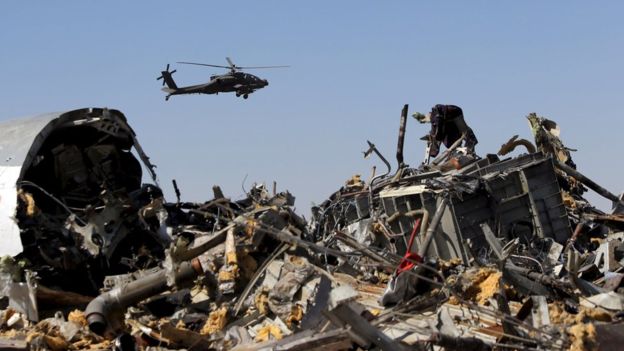
    In the course of one week in November 2015, militants from Abu Bakr Al-Baghdadi’s self-proclaimed Islamic Caliphate – also called ISIS, ISIL and Daesh – struck multiple targets in Beirut, Paris and Mali. Earlier, on October 31, ISIS claimed to have brought down a Russian civilian aircraft flying from Sharm al-Sheikh to St. Petersburg.

    The ISIS militia, numbering between 20,000 and 30,000, now controls approximately 300,000 square kilometre of territory straddling the Syria-Iraq border. Its brand of fundamentalist terrorism is gradually spreading beyond West Asia and the militia is slowly but surely gaining ground. In Africa, ISIS fighters and their associates have been active in Algeria, Lebanon, Libya, Mali, South Sudan and Tunisia in recent months. Boko Haram, the militant Islamist group in Nigeria, has pledged allegiance to ISIS.

    Fighting Back
    Recent acts of terrorism have steeled the resolve of the international community. Significant help is being provided to the government of Iraq by the US and its allies. The Peshmerga, forces of the Kurdistan Regional Government (KRG) which had captured oil-rich Kirkuk, have joined the fight against the ISIS and recaptured the Syrian (Kurdish) border town of Kobani.

    The US began launching air strikes against the ISIS militia about a year ago, while simultaneously arming anti-Assad forces like the Free Syrian Army with a view to bringing about a regime change in Syria. The US has been joined in this endeavour by Australia, Britain, Canada, Denmark, France and Netherlands as well as five Arab countries (Bahrain, Jordan, Saudi Arabia, Qatar and the United Arab Emirates). The air strikes have resulted in substantial collateral damage. It is being gradually realised that the ISIS militia cannot be defeated from the air alone.

    Putin’s Russia joined the fight on September 30, 2015 with the twin aims of defeating the ISIS and destroying anti-Assad forces. However, the initial air strikes launched by the Russian Air Force were directed mainly against the forces opposed to President Assad of Syria. Russian ground troops are also expected to join the fight soon. The Russians have also descended on Baghdad to establish a military intelligence coordination cell jointly with Iran, Iraq and Syria – a move that has not been appreciated by the Americans.

    In a rare show of unity after the Paris attacks, the United Nations Security Council passed a unanimous resolution stating that “The Islamic State in Iraq and the Levant constitutes a global and unprecedented threat to international peace and security,” and called upon all member states to join the fight against the ISIS.

    Diplomatic moves have been initiated to coordinate operations and work together for peace and stability in the region. The US and Russia agree that the objective of their interventions should be to end the civil war in Syria through a political deal and that both Iraq and Syria should retain their territorial integrity. They also agree that the ISIS extremists must be completely eliminated. Iran has agreed to join the negotiations to resolve the conflict in Syria. However, while the political objectives are similar, the methods being used to achieve them are different and are designed to extend the influence of each of the protagonists in the region.

    Implications for South Asia
    Al-Baghdadi has openly proclaimed the intention of ISIS to expand eastwards to establish the Islamic state of Khorasan that would include Afghanistan, the Central Asian Republics, eastern Iran and Pakistan. The final battle, Ghazwa-e-Hind – a term from Islamic mythology – will be fought to extend the caliphate to India. An ISIS branch has already been established in the Subcontinent. It is led by Muhsin al Fadhli and is based somewhere in Pakistan. Some factions of the Tehrik-i-Taliban Pakistan have declared their allegiance to al-Baghdadi. Afghanistan’s new National Security Adviser, Mohammad Hanif Atmar, has said that the presence of Daesh or the ISIS is growing and that the group poses a threat to Afghan security. And, some ISIS flags have been seen sporadically in Srinagar.

    Instability and major power rivalry in West Asia do not augur well for India’s national security and economic interests. Combined with the increase in force levels in the Indian Ocean, the heightened tensions in West Asia may ultimately lead to a spill-over of the conflict to adjacent areas. India now imports almost 75 per cent of the oil required to fuel its growing economy and most of it comes from the Gulf. The long-drawn conflicts of the last two decades of the 20th century had forced India to buy oil at far greater cost from distant markets, with no assurance of guaranteed supplies. The 1991 oil shock had almost completely wrecked India’s foreign exchange reserves. The situation could again become critical. Oil prices had shot up to USD 115 per barrel in June 2014, soon after the Caliphate was proclaimed, but have since stabilised around USD 50 to 60 per barrel.

    Since the early 1970s, Indian companies have been winning a large number of contracts to execute turnkey projects in West Asia. The conflict in the region has virtually sealed the prospects of any new contracts being agreed to. Also, payments for ongoing projects are not being made on schedule, leading to un-absorbable losses for Indian firms involved, and a dwindling foreign exchange income from the region.

    India also has a large Diaspora in West Asia. A large number of Indian workers continue to be employed in West Asia and their security is a major concern for the government. Some Indian nurses had been taken hostage by ISIS fighters, but were released unharmed. All of these together constitute important national interests, but cannot be classified as ‘vital’ interests. By definition, vital national interests must be defended by employing military force if necessary.

    US officials have been dropping broad hints to the effect that India should join the US and its allies in fighting ISIS as it poses a long-term threat to India as well. India had been invited to send an infantry division to fight alongside the US-led Coalition in Iraq in 2003. The Vajpayee government had wisely declined to get involved at that time as it was not a vital interest.

    It must also be noted that India has the world’s third largest Muslim population. Indian Muslims have remained detached from the ultra-radical ISIS and its aims and objectives, except for a handful of misguided youth who are reported to have signed up to fight. This could change if India sends armed forces to join the US-led coalition to fight the ISIS militia.

    Prime Minister Narendra Modi proposed at the G-20 summit in Antalya last week that the war against terrorism must isolate and contain the sponsors and supporters of terrorism. He clearly implied that India is willing to join the international coalition against the ISIS and other non-state actors. Besides contributing to the global war against terrorism, India’s participation would help to isolate the Pakistan Army and the ISI – the foremost state sponsors of terrorism.

    Direct Indian military intervention against the ISIS militia would depend on the manner in which the situation unfolds over the next one year. It could become necessary if ISIS is able to extend the area controlled by it to the Persian Gulf as that would affect the supply of oil and gas from the Persian Gulf to India – clearly a vital national interest. For the time being, India should cooperate closely with the international community by way of sharing information and intelligence and providing logistics support like port facilities if asked for. India should also provide full diplomatic support and work with the United Nations for evolving a consensual approach in the fight against the ISIS.

    A concerted international effort is needed to first contain and then comprehensively defeat the ISIS and stabilise Iraq and Syria, failing which the consequences will be disastrous not only for the region, but also for most of the rest of Asia and Europe. Helping the regional players to gradually eliminate the root causes of instability will not be an easy challenge for the international community to address. As an emerging power sharing a littoral with the region, India has an important role to play in acting as a catalyst for West Asian stability.


  • Russia, France push UN resolutions on fighting IS

    Russia, France push UN resolutions on fighting IS

    UNITED NATIONS (United States) (TIP): Russia submitted a revised draft UN resolution Nov 19 on fighting the Islamic State group that France said could be partially included in its own Security Council measure following the Paris attacks.

    Agreement from the 15-member council on a single draft resolution that lays out the international approach to defeating IS extremists would mark a significant step after months of disagreements between the West and Russia.

    The Russian draft text was first presented to the Security Council in late September but was rejected by the United States, Britain and France over a provision that calls for battling the IS extremists with the consent of the Syrian regime — a Moscow ally.

    The new draft resolution still contains that provision, said Russian Ambassador Vitaly Churkin, but he downplayed disagreements.

    “We are calling for closer cooperation than we currently have now among all those fighting in Syria and Iraq,” Churkin told reporters following a closed-door meeting of the council.

    “One thing which was heard loud and clear in our discussions in the council is that there should be unity of the council. I don’t see it as a huge gap.”

    French President Francois Hollande has called on the Security Council to quickly adopt a resolution to strengthen the fight against IS jihadists in the wake of the Paris attacks.

    Hollande is due to meet President Vladimir Putin in Moscow on November 26, two days after talks in Washington with President Barack Obama aimed at stepping up the campaign against the extremists.

    French Ambassador Francois Delattre said he was working “to prepare a text that will be short, strong and focused on the fight against our common enemy, Daesh
    (IS).”

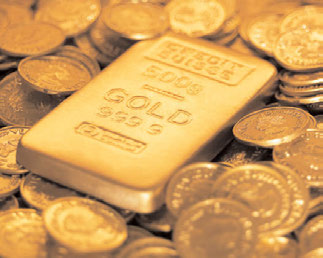
  • GLOBAL GOLD DEMAND HITS MORE THAN  TWO-YEAR HIGH IN Q3: WGC

    GLOBAL GOLD DEMAND HITS MORE THAN TWO-YEAR HIGH IN Q3: WGC

    LONDON (TIP): Global gold demand hit its highest in more than two years in the third quarter as July’s price drop boosted buying of jewellery, coins and bars, the World Gold Council said.

    Overall demand reached 1,121 tonnes in the last quarter, up 8 percent year on year to its highest since the second quarter of 2013. The rise was tempered by increased outflows from bullion-backed exchange-traded funds, however.

    Bar and coin buying more than tripled in the United States to a five-year high of 32.7 tonnes, and also rose 70 percent in China and 35 percent in Europe. That followed a more than 6 percent slide in spot gold prices in July, their biggest monthly drop in two years.

    “The price dip represented a buying opportunity for people to dive into the market and increase their gold exposure,” Alistair Hewitt, the World Gold Council’s (WGC) market intelligence manager, said.

    “The additional degree of uncertainty that has been imbued within people as a result of the financial crisis underpins people’s desire for gold bars and coins. When you have that as an underlying factor, and you see a price dip, that represents an opportunity for you to increase your gold holdings.”

    European demand was also lifted by concerns over Greece’s financial position and geopolitical tensions in eastern Europe, the WGC said. Chinese demand, meanwhile, was boosted by the devaluation of the yuan.

    Jewellery buying, the largest segment of demand, was buoyant in number one consumer India, which vies for that position with China. Consumption rose 15 percent in the last quarter to 211 tonnes, while Chinese jewellery demand climbed 4 percent to 203 tonnes.

    Buying fell in some smaller key markets such as Russia and Turkey, however. Turkish jewellery demand fell 29 percent to 12.1 tonnes, while Russian buying dropped 19 percent to 13.5 tonnes.

    However, outflows from gold ETFs –popular investment vehicles which issue securities backed by physical metal –increased by 24 tonnes year on year to 65.9 tonnes, helping to offset the rise in demand elsewhere.

    Central bank buying, while remaining firm, also retreated 4.5 tonnes to 175 tonnes in the third quarter.

    Supply edged up 1 percent, driven by fresh producer hedging, though both mine and recycling supply retreated.

    For the full year, the WGC is maintaining its forecast for global gold demand of 4,200-4,300 tonnes, close to last year’s four-year low of 4,217 tonnes, Hewitt said.

    Chinese demand is still expected to total 900-1,000 tonnes, though the WGC has downgraded its expectations for Indian demand from that level to 850-950 tonnes.

    “We have ongoing issues within the rural community with the monsoon. In the first half of the year it was quite clear that unseasonal rains had affected agricultural incomes, and (rural) demand was softer than expected,” Hewitt said. “We also have the factor of prices … increasing later on in the quarter.”

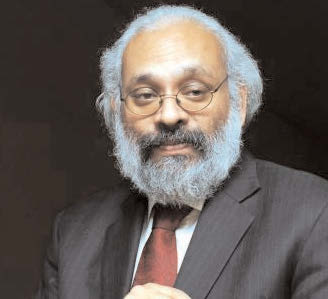
  • SUBIR GOKARN IS EXECUTIVE DIRECTOR AT IMF

    SUBIR GOKARN IS EXECUTIVE DIRECTOR AT IMF

    NEW DELHI: Former RBI Deputy Governor Subir Gokarn was on November 12 appointed as an Executive Director on the board of the International Monetary Fund (IMF).

    Gokarn will represent India, Bangladesh, Sri Lanka and Bhutan on the Washington-based IMF’s Executive Board, which is responsible for conducting the day-to-day business of the multilateral institution.

    The name of 56-year-old economist was cleared by Appointments Committee of Cabinet headed by Prime Minister Narendra Modi, as per an order issued by the Department of Personnel and Training.

    On the IMF Executive Board, Gokarn will replace Rakesh Mohan, whose three year tenure ends this month. The order did not mention the tenure for Gokarn.

    Mohan has also been a Deputy Governor at RBI. The current RBI Governor Raghuram Rajan has incidentally been Chief Economist at IMF.

    The Board is composed of 24 Directors, who are appointed or elected by member countries or by groups of countries, and the Managing Director, who serves as its Chairman. The Board meets several times each week and carries out its work largely on the basis of papers prepared by IMF management and staff.

    The grouping of India, Bangladesh, Sri Lanka and Bhutan would be represented by Gokarn with a total casting vote of 2.8 per cent. This includes more than 2.3 per cent for India.

    The US, Japan, Germany, France and UK are among the major countries with individual representatives, while the highest vote is for the US at 16.74 per cent. Other countries with individual representatives on the Board include China, Russia and Saudi Arabia.

    Rated as one of the finest economists, Gokarn has in past served as Deputy Governor of the Reserve Bank of India, Chief Economist of global rating agency Standard and Poor’s (S&P) and head of CRISIL’s Research and Information business and also a nominee Board Member of the State Bank Of India.

    He was appointed Deputy Governor of RBI in 2009 for a term of three years and had a distinction of being the youngest Deputy Governors of the central bank at that time.

  • India, APEC and the US

    India, APEC and the US

    The major focus during the Asia Pacific Economic Cooperation (APEC) meeting in Manila, Philippines on November 18th and 19th would be on the Paris terror attacks though it is a trade promotion group that does not delve into security issues. The regional tensions in the South China Sea would be coming to some sort of attention indirectly despite Chinese efforts to block any discussion.  The issue of enlarging the membership and India’s pending membership application will most probably again be relegated to the background. Both China and the US will raise their pitch to sell their version of free trade blocks. China will try to sell its proposal for the Free Trade Area for Asia-Pacific (FTAAP) which excludes India and the US will do the same for the Trans-Pacific Partnership (TPP) which currently excludes China. Prime Minister Narendra Modi had raised the issue of Indian membership in the APEC with President Barack Obama in January 2015, when Obama visited India as the guest of honor for India’s Republic Day parade. President Obama expressed verbal support for India’s membership in the APEC at that time.


    The APEC was initially floated in 1989 by an Australian initiative and had 12 founding member economies: Australia, Brunei Darussalam, Canada, Indonesia, Japan, Korea, Malaysia, New Zealand, the Philippines, Singapore, Thailand and the United States. In 1991, China, Hong Kong, China and the Chinese Taipei (Taiwan) joined the APEC as a regional package. Mexico and Papua New Guinea followed in 1993. Chile was allowed to join the APEC in 1994.  Peru, Russia and Viet Nam joined the APEC in 1998, taking its full membership to 21 economies. The group acts with consensus in making decisions. APEC is more a trade promotion group and its recommendations are not binding on the member economies.


    The APEC’s mission statement reads: “Our primary goal is to support sustainable economic growth and prosperity in the Asia-Pacific region. We are united in our drive to build a dynamic and harmonious Asia-Pacific community by championing free and open trade and investment, promoting and accelerating regional economic integration, encouraging economic and technical cooperation, enhancing human security, and facilitating a favorable and sustainable business environment. Our initiatives turn policy goals into concrete results and agreements into tangible benefits.”


    The APEC put a moratorium on new memberships in 1997 for a period of 10 years though India’s membership application was pending. The moratorium was extended for another three years in 2007. However, for inexplicable reasons the APEC economies have not bothered to deal with the issue of further enlargement.  Especially India’s application for the membership has been pending with the APEC for last 20 years without approval. Every year since 2010, India has been looking expectantly for the APEC to consider India’s application for membership but nothing concrete has materialized owing to passive obstruction and stonewalling.


    Mainly, two arguments are used against India’s membership that India is not part of Asia-Pacific region and that India has proved to be an obstacle during negotiations in various international trade reforms/regimes. India had bargained tough during the Doha round and the Bali round of the WTO negotiations. Both these arguments are fallacious and self-serving. One fails to understand where countries like Thailand and Brunei have either land or sea borders with the Pacific Ocean? Or being a member of the ASEAN qualifies these two countries for the APEC membership! One also needs to ask a rhetoric question if India is an Asian country or not?  India is not located on the moon! Since the concept of Asia-Pacific has already been substituted by a larger strategic concept of the Indo-Pacific, there is no reason to continue to withhold India’s membership of the APEC on geographical grounds alone. Without India’s participation, there is no Indo-Pacific economy and hence no Asia-Pacific economy!


    India introduced market reforms initially in 1991 when China was allowed to join as a member. India has gradually introduced more market reforms & liberalization and that is the reason India applied for the membership of the APEC. It is true that Indian economy was largely socialistic prior to 1991 but so were China’s, Russia’s and Vietnam’s. Indian membership of the APEC would provide an incentive to continue further deeper economic liberalization. India has been a founding member of the WTO as well as of its previous incarnation of the GATT (General Agreement on Trade and Tariffs) since its inception. Interestingly, Russia is a part of the APEC since 1998 though it still does not qualify for the WTO membership as a market economy. China was allowed to join the WTO only in year 2000 despite being a member of the APEC since 1991. There seems to be some sort of unstated cooperation between both the US and China to continue to go slow on India’s membership of the APEC.

    A number of US based analysts have exhorted the US to champion India’s cause in the APEC for membership as a step toward eventual inclusion in the TPP.  Kevin Rudd, the former Australian PM and head of the CII-Asia Society Task Force  opined that the APEC misses much by not having India on board. Clarifying that APEC is not a free-trade body, Rudd said, “APEC is not a platform for market access negotiations, or a trade negotiating forum, but voluntary association of economies”. We, in India, can understand China’s reflexive and habitual pattern of opposition to India’s membership for any international arrangement with strategic implications because China is an adversary and a strategic threat. India does not perceive the US as an adversary in the post-cold war scenario. In fact, Pew Research on public opinion has consistently shown Indian public considering the US as one of the most  friendly nations.


    The US Deputy Assistant Secretary of State and Senior Official for the APEC Matt Matthews on November 2nd 2015 dampened cold water on India’s membership by categorically stating that it is not on the agenda of the APEC meeting in Manila in Philippines, on November 18 and 19. He further stated: “I do not believe there is any active consideration within APEC for expanded membership in the current time”. When reminded that President Obama had “supported” India’s desire for membership of the APEC during his 2015 visit to India on Republic Day, Matthews said the US had so far only welcomed “India’s interest” in joining the APEC. “It is important to be careful and accurate about describing President’s comment. President welcomed India’s interest in the APEC. That speaks for itself. We welcome India’s examination of APEC. We have not entered [into any] discussion about it. I do not believe India is formally pressing for actual membership now in APEC,” he said.


    India needs to hold the US to its words. The US must stop playing word games like China. The US expects too many unilateral concessions from India without delivering anything in return. The US, after signing the civil nuclear deal in 2005 and after ratifying the same in 2008, has not been able to shepherd India’s membership of the NSG, the MTCR, The Australia Group and the Wassenaar arrangement. The US has also made verbal promises to support India’s permanent membership of the UNSC. However, there is no concrete effort or will to make it implemented into reality despite a lot of rhetoric from the US. The proof of the US goodwill should reflect in active and actual support for India’s membership for the most benign of these international arrangements. Being an active member of the APEC will help India transform its domestic economy into full-fledged market economy. It will also prepare India for additional economic reforms so to obtain eventual membership of the RCEP or the TPP or the FTAAP.


    India and the US have had a legacy of trade disputes within the WTO. US trade representatives have invoked the Special 301 Priority Foreign Country designation for India. If the US continues to show a pattern of passive indifference and obstruction to India’s membership of the APEC while using the flowery rhetoric akin to China, India may have to utilize more aggressive marketing and trading strategies. Let it be known to everyone including the US that trade wars and denial of market access is as a detrimental as a hot war in the modern context. If you don’t support us, you are against us in our pursuit of market access. Since India and the US have now formalized an annual Strategic and Commercial dialogue, perhaps, the US performance in its active support to India’s membership of the APEC needs to be carefully monitored annually. Preferential trade access to Indian market for the US must be made contingent upon US behaviors towards India’s membership in the APEC and other free trade groups.

    To paraphrase and plagiarize Carla Anderson Hills, the former US trade representative: We (India) will be ready to open the APEC and other trade-blocks with a crowbar if necessary, but with a Namaste if possible!


    (The author is President, The Council for Strategic Affairs, New Delhi, India, an independent and privately funded Indian think-tank. He can be contacted at adityancsa@gmail.com)

  • China, India taking advantage of US: Donald Trump

    China, India taking advantage of US: Donald Trump

    WASHINGTON (TIP): Terming China as “number-one abuser”, leading Republican presidential candidate Donald Trump has alleged that the Communist nation, along with India, is taking advantage of the US through its economic policies.

    Trump said China was becoming a “major force” and is now creating problems both economically and through its behaviour in the South China Sea.

    “If you look at the way China and India and almost everybody takes advantage of the US – China in particular, because they’re so good. It’s the number-one abuser of this country,” Trump said during the fourth debate of the party.

    “China is a problem, both economically in what they’re doing in the South China Sea, I mean, they are becoming a very, very major force,” Trump said.

    He said that it was through “currency manipulation” that does not even find a mention in almost 6,000-page (TPP) agreement that the countries were taking advantage of the US.

    While several other Republican candidates joined Trump on the China issue, there were no takers for his allegations against India, which was mentioned only once in the debate.

    “We lose a fortune on trade. The US loses with everybody. We’re losing now over USD 500 billion in terms of imbalance with China, USD 75 billion a year imbalance with Japan,” Trump said.

    John Kasich, governor of Ohio, said China did not own the South China Sea.

    “I give the (US) President some credit for being able to move a naval force in there to let the Chinese know that we’re not going to put up with it any more,” he said.

    Russia and president Vladimir Putin too figured prominently during the debate.

    “What we have to recognise is that Putin is trying to really spread his influence throughout the Middle East. This is going to be his base. And we have to oppose him there in an effective way,” said presidential candidate Ben Carson.

    “We also must recognise that it’s a very complex place. You know, the Chinese are there, as well as the Russians, and you have all kinds of factions there,” he said.

    Jeb Bush said President Barack Obama and Hillary Clinton both do not believe the US has a leadership role to play.

    “And we are now paying a price, and it will have a huge impact on the economy of this country if we don’t deal with this,” he said.

    He favoured a no-fly zone in Syria.

    “We should have a support for the remnants of the Syrian Free Army, and create safe zones. If you want to deal with the four million refugees that are leaving Syria because of the devastation there, then we ought to create safe zones for them to stay in the region rather than go to Europe. And, that requires American leadership,” Bush said.

    (Source: PTI)

  • Russian airplane crashes in Egypt’s Sinai peninsula

    Russian airplane crashes in Egypt’s Sinai peninsula

    CAIRO: A Russian passenger plane with 224 people on board crashed in a mountainous part of Egypt’s Sinai Peninsula on Saturday, leaving no survivors, officials said. The chartered plane had taken off from the south Sinai resort of Sharm el-Sheikh bound for Saint Petersburg and lost contact with air traffic control 23 minutes later before crashing in the restive peninsula.

    Victor Sorochenko, the head of Russia’s Interstate Aviation Committee, said it was too early to conclude what caused the crash on Saturday, October 31. He told reporters debris was found across a 20sq km-wide area of Sinai. So far 163 bodies have been found. The plane’s black boxes have been found and sent for analysis, officials said.

    Mr Sorochenko spoke after visiting the site of the debris, near the village of Hasana. The head of Russia’s Air Transport Agency, Aleksandr Neradko, said that “all signs attest to the fact that the aircraft disintegrated in the air at a high altitude”.

    Russian airliner 'broke up in mid-air'

    ISIS UNIT CLAIMS RESPONSIBILITY – Read More 

  • Pakistan PM fails to win US support against India

    Pakistan PM fails to win US support against India

    WASHINGTON (TIP): Pakistan Prime Minister must be a disappointed man. His bilateral with US President Barack Obama is being viewed as a diplomatic failure. India has watched the Sharif-Obama summit in Washington keenly, and while it is clear that Prime Minister Nawaz Sharif returns to Islamabad without any big announcement to show for the bilateral, and no progress on US-Pakistan civil nuclear negotiations, there are many parts to the 2015 joint statement issued by the two that could  be worrisome for India.

    Here are the key statements in the US-Pakistan joint statement which may cause concern to India.

    1.  Hydroelectric projects in PoK/Gilgit-Baltistan 

    President Obama expressed support for Pakistan’s efforts to secure funding for the Diamer Bhasha and Dasu dams to help meet Pakistan’s energy and water needs.

    India has opposed the construction of hydro-electric projects in the disputed region of Kashmir that includes PoK and Gilgit-Baltistan. Most recently, External Affairs Minister Sushma Swaraj had called the China-Pakistan Economic Corridor (CPEC) unacceptable because it includes these projects, while India had told the UNGA that “India’s reservations about the proposed China-Pakistan Economic Corridor stem from the fact that it passes through Indian territory illegally occupied by Pakistan for many years.”

    In recent years, the 4,500 m W Diamer Bhasha dam (DBD) project, that the Pakistan government says will halve its electricity shortfall when constructed, had come to a standstill over funding. In 2013, prospective investors – the ADB, China and Russia – had asked Pakistan to obtain an NOC (No objection certificate) from India before they could proceed on loans. Even after the announcement of the China-Pakistan Economic Corridor by President Xi Jinping for projects including dams in PoK in April 2015, China has shown a preference for the $1.6 billion Karot project, rather than DBD, which would now cost an estimated $14 billion. It is significant that the US wants to play ‘White Knight’ on these two dams, and for India, the construction of major projects like these endorsed by the US would be a blow to its claim on PoK. Earlier this month, reports suggested India had protested over a USAID event aimed raising funding for DBD, where US firm Mott McDonald has been contracted to perform a technical engineering review.

    2.  Talks with the Taliban
    President Obama commended Pakistan for hosting and facilitating the first public talks between the Afghan government and the Taliban in July 2015 and highlighted the opportunity presented by Pakistan’s willingness to facilitate a reconciliation process that would help end insurgent violence in Afghanistan.

    India has felt cut out of the Taliban peace process, and relations with President Ghani’s government underwent a strain when New Delhi learned that Pakistan would be allowed to host the talks in Murree. “This is an open acknowledgement that Pakistan controls the Taliban,” a senior official had told The Hindu at the time, “And rather than castigate Pakistan for not curbing the Taliban’s violence, these talks will legitimize its actions.”

    When the talks collapsed over the announcement of Mullah Omar’s death, it was felt Pakistan’s claim of being a ‘peacemaker’ rather than a sponsor of Taliban-terror would end. However, despite a surge in violence by the Taliban, including the brutal siege of Kunduz that was overthrown by Afghan and US special forces last month, the Joint statement seems to indicate the US is prepared to let Pakistan host the talks again.

    3.  Resume India-Pakistan talks
    President Obama and Prime Minister Sharif stressed that improvement in Pakistan-India bilateral relations would greatly enhance prospects for lasting peace, stability, and prosperity in the region. The two leaders expressed concern over violence along the Line of Control, and noted their support for confidence-building measures and effective mechanisms that are acceptable to both parties. The leaders emphasized the importance of a sustained and resilient dialogue process between the two neighbors aimed at resolving all outstanding territorial and other disputes, including Kashmir, through peaceful means and working together to address mutual concerns of India and Pakistan regarding terrorism.

    For over a decade, the US has stayed away from openly pushing India towards talks with Pakistan. In the period between 2003-2008, this was because India and Pakistan were engaging each other, and both the composite dialogue and back-channel diplomacy yielded many important confidence building measures between them. After the Mumbai 26/11 attacks, the US recognized India’s legitimate anger over the attacks being planned and funded in Pakistan, and abstained from making any comments on the resumption of India-Pakistan dialogue, restricting itself only to “welcoming” talks between their leaders in Thimphu, Delhi, New York and Ufa. The US-Pakistan joint statement doesn’t just put the importance of “sustained and resilient dialogue process” (codeword for comprehensive dialogue) back in focus, it makes a new mention of “violence along the LoC” which India squarely blames Pakistan for initiating. India believes ceasefire violations are aimed at “infiltrating terrorists”, a charge the government repeated when the NSA talks were cancelled. Of particular worry for India will be the US-Pakistan joint statement’s reference to “mutual concerns of terrorism”, as it comes in the wake of Pakistan’s latest claims of Indian support to terrorism inside Pakistan. Pakistan NSA Sartaj Aziz had told the press that Indian agency “involvement” in Balochistan and FATA would be taken up during the summit.

    4.  Action on LeT?
    In this context, the Prime Minister apprised the President about Pakistan’s resolve to take effective action against United Nations-designated terrorist individuals and entities, including Lashkar-e-Tayyiba and its affiliates, as per its international commitments and obligations under UN Security Council resolutions and the Financial Action Task Force.

    Action against the LeT has been India’s most sustained demand from Pakistan, especially after the 26/11 attacks, when the LeT’s top leadership was charged with planning and executing the carnage in Mumbai. Yet years later, chief Hafiz Saeed is free, LeT operations chief Zaki Ur Rahman Lakhvi is out on bail, and there seems little evidence that Pakistani forces have conducted any sort of crackdown on the Lashkar e Toiba, especially when compared to action against other groups after the Peshawar school attack of December 2014. While the US-Pakistan joint statement doesn’t note President Obama’s acceptance of Pakistan’s claims of keeping its “international commitments and obligations”, it is significant that the US has not raised the obvious violation of the UNSC and FATF requirements earlier this year during the bail process of Lakhvi. Despite Indian representations to the US and UN, there has been little pressure on Pakistan how Lakhvi raised the funds when according to the UNSC 1267 Committee rules, a designated terrorist cannot be allowed recourse to finances.

    5.  Nuclear talks
    The leaders noted Pakistan’s efforts to improve its strategic trade controls and enhance its engagement with multilateral export control regimes. Recognizing the importance of bilateral engagement in the Security, Strategic Stability and Non-Proliferation Working Group, the two leaders noted that both sides will continue to stay engaged to further build on the ongoing discussions in the working group.

    Both, the US and Pakistan, have denied a report in the Washington Post that they had planned what it called a “diplomatic blockbuster”: negotiations over a civil nuclear deal on the lines the US and India signed in 2005. Pakistan’s foreign secretary reacted to the report with a detailed account of Pakistan’s “low-yield tactical nuclear weapons” aimed at India, to calm fears in Pakistan that the government was giving up its weapons program. Even so the details in the Post have left lingering doubts over what the US intends, including pushing for a possible NSG waiver for Pakistan in exchange for limiting Pakistan’s missile capability. The report goaded the MEA into counseling the US on taking a closer look at Pakistan’s past on supplying nuclear weapons to North Korea and Iran, “Whosoever is examining that particular dossier should be well aware of Pakistan’s track record in proliferation. And when India got this particular deal, it was on the basis of our own impeccable non-proliferation track record,” the MEA spokesperson said on October 9, given that India will watch this space closely, particularly the phrase on “engagement with multilateral export regimes” mentioned in the US-Pakistan joint statement.

  • Iran to begin full implementation of nuclear deal

    TEHRAN, IRAN (TIP): The Iranian government will begin fully implementing the landmark nuclear deal reached with world powers “with good will,” and the work will be done while keeping in mind concerns voiced by Iran’s supreme leader, President Hassan Rouhani said on Oct 22. A letter posted on Rouhani’s website, president.ir, addressed to supreme leader Ayatollah Ali Khamenei said Iran will be keeping close watch to make sure other parties to the deal fulfill their obligations.

    “The government of the Islamic Republic of Iran will start `full implementation’ of the Joint Comprehensive Plan of Action with good will and based on Your Excellency’s considerations and requirements and the decisions of the Supreme National Security Council and the Parliament,” Rouhani said in the letter.

    “The other side’s fulfillment of its obligations will be vigilantly monitored and the Supreme National Security Council will adopt the needed decision to take the proper course of action,” he said.

    Khamenei on Wednesday endorsed the deal but warned the government to be vigilant, saying the United States cannot be trusted. He also said the agreement “suffers from multiple structural weaknesses and ambiguous points that can lead to present and future great harms to the country in the absence of precise and constant vigilance.” He added that “any remarks saying the structure of sanctions will remain in place are considered a breach” of the agreement.

    The agreement reached in July with the U.S., Britain, France, China, Russia and Germany curbs Iran’s nuclear activities in exchange for lifting crippling international sanctions. Western nations have long suspected Iran of pursuing nuclear weapons alongside its civilian program, charges rejected by Tehran, which insists its program is entirely peaceful. The agreement has been the subject of fierce debate within Iran, with hard-liners arguing that the negotiators gave up too much ground. They also fear the agreement could lead to a broader rapprochement with the United States, which they deride as the “Great Satan.”

  • Backed by Russian jets, Syrian troops attack rebel-held towns in Homs

    Backed by Russian jets, Syrian troops attack rebel-held towns in Homs

    BEIRUT/AMMAN (TIP): Syrian troops and their allies, backed by Russian jets, attacked rebel-held towns north of the city of Homs on Thursday, targeting a long-held and strategic enclave of opposition to President Bashar al-Assad.

    The offensive that began before dawn builds on over a week of ground attacks launched with Russian air support in areas of western Syria that are crucial to Assad’s survival and held by rebel groups other than Islamic State.

    Syrian state television, quoting a military source, said the army had begun a military operation in the area after heavy air strikes and artillery barrages early on Thursday.

    The Syrian Observatory for Human Rights, a UK-based group which monitors Syria’s four-year-old civil war, said at least five civilians and six insurgents had been killed in Teir Malla, about 3 miles (5km) north of Homs city. A resident said at least 25 people were killed including, Rawad al Aksah, a commander of insurgent group Liwaa al-Tawhid.

    A few miles further north, there were heavy air strikes around the town of Talbiseh and other villages in the area, the Observatory said, as well as fierce clashes on the southern edges of the town and nearby villages.

    Recapturing the area north of Homs would help reassert Assad’s control over the main population centres of western Syria and secure territory linking Damascus to the coastal heartland of his minority Alawite sect.

    “The regime is actually getting its forces ready in all Homs’s northern countryside … What we fear is that they will follow the same strategy they had in Hama countryside. They actually attacked the fighters in all fronts at once,” said local media activist Hassan Abou Nouh.

    The Syrian army, supported by foreign allies including Iran, has launched several ground offensives to retake insurgent-held territory since Russian jets started air strikes against rebel targets — mainly in western Syria— two weeks ago.

    The army operations include a campaign to recapture rebel-held land in Hama, Idlib and Latakia provinces in the northwest. Regional officials have also said the army, backed by Iranian reinforcements, is preparing for a ground operation around the city of Aleppo, close to the Turkish border.

    The Syrian military source quoted by state television said the army and its allies had taken control of the villages of Khalidiya and Dar Kabira, between Homs and Teir Malla.

    The observatory said the army had advanced in Khalidiya, but there was still heavy fighting there.

    “There are very heavy air strikes in Homs on the frontlines. There are civilian casualties. The aim is to apply military pressure, and the regime’s intention is to storm the area,” said the leader of one rebel group operating in the area.

    He said the number killed was not confirmed but gave the names of five documented dead including a girl and two women.

    A resident of Talbiseh said four civilians had been killed there and that a school was hit at around 6am, before classes started. He said jets were still flying in the area.

    “There’s no end to the aerial observation and the bombardment,” said Abdul Rahim Duhaik, a teacher in Talbiseh.

    “People are busy digging shelters. No one has any intention of leaving. We will die in our land rather than be evicted.”

    Responding to the reports of civilian deaths, the Syrian military source said Syrian forces and Russian jets do not target areas where civilians are present. He accused al-Qaida’s wing in Syria, the Nusra Front, of carrying out a massacre on Thursday so it could blame the deaths on the bombardment.

    The source, quoted by state television, said the army had begun a military operation in the north Homs countryside after “concentrated air strikes and heavy preparatory artillery shelling on the terrorist groupings and their bases”.