Tag: SBI

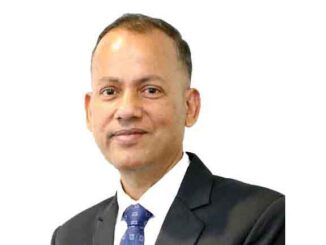
  • Know Mr. Prasanta Kumar Tripathy

    Know Mr. Prasanta Kumar Tripathy

    Chief Executive Officer, State Bank of India, New York Branch

    Mr. Prasanta Kumar Tripathy is a career Banker, who joined the State Bank of India as Probationary Officer in 1995. He has been a versatile banker across geographies with vast experience in areas of Retail, SME, Government Business, Corporate Banking, International Banking, Treasury Management, Risk Management, Human Resources Management, etc. Based on his extensive banking experience coupled with his exemplary leadership skills, the responsibility of steering Bank’s flagship operations at SBI, New York Branch was entrusted to him in June 2021 and since then, he is at the helm of affairs as CEO of SBI, New York Branch.
    His prior assignments include, Deputy General Manager of New Delhi Main Branch, Delhi. Where he was responsible for growth in deposits, Forex Business, Govt. Business, oversee Accounts of Ministry of External Affairs, Ministry of Finance, etc. His important task was to keep track of the PM CARES FUND ACCOUNT, which required direct reporting to Prime Minister’s Office. He has worked as DGM and Chief Development Officer at Local Head Office, New Delhi as Head of HR department having 17000 staff members with responsibilities of hiring, training, industrial relations, business conduct & discipline management. He has also previously worked at Commercial Bank of India LLC, Moscow as Vice President (Credit) supervising Loan Syndications & Bi-lateral loans and Credit.

  • Living in denial about unemployment

    Living in denial about unemployment

    Public confusion over the extent of unemployment is a result of the differences in the various data bases used

    “The ground-level situation of unemployment is apparent from the frequent reports about the youth struggling to get work and facing issues in examinations. But the government is in denial. Recently, the officials have denied the problems of using data that have holes in them or of citing KLEMS data from the RBI, which does not independently estimate employment. Why not admit the problem and act, lest the growing youth frustration boil over?”

    By Arun Kumar

    Recently, citing a Reserve Bank of India (RBI) report that said that 8 crore jobs have been created in the last 3-4 years, Prime Minister Narendra Modi accused the Opposition of creating false narratives about unemployment. He also said that a lot of infrastructure projects are coming up, which will create more jobs. This was not only an attempt to counter the narrative of high unemployment which has been bothering the ruling party, but also a response to a flurry of reports from financial institutions, such as Citigroup, in July, which pointed to inadequacy of employment generation in India.

    Mr. Modi quoted an RBI ‘Data Manual’ released on July 7, called ‘The India KLEMS Database’, which “…describes the procedures, methodologies and approaches used in the construction of India KLEMS database version 2024. The dataset includes measures of Gross Value Added, Gross Value of Output, Labor Employment, Labor Quality, Capital Stock, Capital Composition… The database covers 27 industries comprising the entire Indian economy.”

    Soon after the RBI released this, the State Bank of India (SBI) came out with its own report to counter the financial institutions’ reports. It said, “Even if we exclude Agriculture, the total number of jobs created in manufacturing and services is at 8.9 crore during FY14-FY23 and 6.6 crore during FY04-FY14.” It added, “The total labor force in India is at 59.7 crore, which is nearly equivalent to 56.8 crore as per the recently released ASUSE [Annual Survey of Unincorporated Sector Enterprises] survey. This total number of labor force is significantly different from private employment surveys.”

    However, the Centre for Monitoring Indian Economy (CMIE), a private data-gathering agency which publishes data on employment and unemployment, reported in July that in June 2024, the unemployment rate had risen to an eight-month high of 9.2% up from 7% in the previous month. This was contrary to the official narrative of massive employment generation.

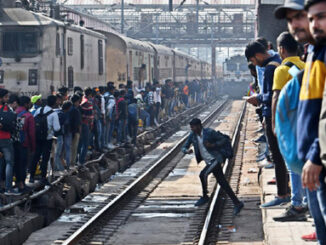
    What is a citizen to make of these conflicting reports and statements? Ground reports suggest that unemployment is a major issue. In February, about 47 lakh applicants appeared for an exam to select around 60,000 constables in Uttar Pradesh. In 2022, 1.25 crore aspirants applied for the Railway Recruitment Board’s Non-Technical Popular Categories recruitment exam. There were protests in Bihar, Uttar Pradesh and other States when the Agnipath scheme was announced in 2022. Indeed, the situation for the educated youth is grim, yet we expect them to be in the vanguard of ‘demographic dividend’.

    Opposition flags video from Gujarat, slams Modi government over ‘disease of unemployment’

    Public confusion over the extent of unemployment is a result of the differences in the various databases used. Let us examine these.

    KLEMS data

    The most recently cited KLEMS data is “a comprehensive measurement tool to monitor and evaluate productivity growth in the Indian economy”. It does not estimate employment but uses the official data available. For labor input it uses the Employment and Unemployment Surveys (EUS) by the National Sample Survey Office (NSSO), conducted between 1983 and 2011-12, and the Periodic Labor Force Survey (PLFS).” Clearly, the KLMS data is based on official data from the PLFS, the ASUSE survey, etc. Given this, why would the employment series from KLEMS differ from the total employment figure given by government agencies? So, neither the Prime Minister nor the SBI should present KLEMS data as an independent source of employment data. Clearly, the officers and economists briefing Mr. Modi misguided him.

    Why do different sources give widely varying estimates of employment? This is due to the highly complex structure of the Indian economy and the paucity of reliable data. India consists of the organized and the unorganized sectors. The data for the organized sector is available from statutorily published annual data. That is not the case for the unorganized sector, which employs 94% of the labor force. No other big country has such a huge unorganized sector for which data are sparse. This sector consists of possibly 11 crore farms and 6.5 crore MSME units. Surveying them annually is difficult. Data have been collected periodically via the Census every 10 years and the ASUSE survey every five years. The government is now committed to bringing out the ASUSE survey annually. But ASUSE survey data in turn depend on data from the Census and the Urban Frame Survey (UFS). There has been no Census since 2011 and UFS data apparently pertain to 2012-17. So, outdated data are being used.

    Normally, in the absence of current data, earlier data should be acceptable. But 2016-2024 was an abnormal period with four shocks to the economy: demonetization in 2016, introduction of the Goods and Services Tax, the Non-Banking Financial Companies crisis, and the COVID-19 pandemic. When shocks occur, use of pre-shock data for sampling creates problems due to structural changes. These four shocks specifically impacted the unorganized sector, the one that the ASUSE survey seeks to estimate. Many units closed down due to lack of working capital. People migrated, the size of towns and villages changed. Thus, a sample based on the 2011 Census would not be appropriate. Closures will not be captured and only the surviving units will be a part of the sample. The ASUSE 2024 Report says, “… 16,382 FSUs (8,495 in rural and 7,887 in urban) have been surveyed; and the total number of establishments surveyed has been 4,58,938 (2,58,296 in rural areas and 2,00,642 in urban areas). ASUSE 2022-23 gives an estimate of 6.50 crore establishments…”

    Due to the shocks, the rural-urban ratio and the ratio of smaller and larger units would have changed. This could give an upward bias to the number of establishments and their employment.

    Differences in PLFS and CMIE

    PLFS is the other official data source quoted widely. It differs greatly from the CMIE data. This has to do with differences in definitions, such as who is counted as employed. The CMIE adopts the International Labor Organization definition and counts only those who get an income from work as employed. PLFS counts those who are working even if they do not get an income from it. So, those giving free labor or those who sit in fields but have no work also get counted as employed by PLFS. Consequently, in the last few years, PLFS has given around 50%-55% labor force participation, while CMIE says the figure stands at 40%-45%. That means there is a huge difference of about 90 million between the two. The question then is, doesn’t nearly everyone do something or the other? There are millions of home makers doing work, for example. Further, PLFS counts the disguised unemployed and the under-employed. So, as far as PLFS is concerned, almost no one is unemployed, while CMIE tells us how many have simply given up looking for work. That is also unemployment, which the official data do not recognize.

    The ground-level situation of unemployment is apparent from the frequent reports about the youth struggling to get work and facing issues in examinations. But the government is in denial. Recently, the officials have denied the problems of using data that have holes in them or of citing KLEMS data from the RBI, which does not independently estimate employment. Why not admit the problem and act, lest the growing youth frustration boil over?

    (Arun Kumar is a retired professor of economics, Jawaharlal Nehru University, and author of Indian Economy’s Greatest Crisis: Impact of the Coronavirus and the Road Ahead)


  • Electoral bonds disclosure: Contempt plea against SBI for ‘defying’ Supreme Court order

    Electoral bonds disclosure: Contempt plea against SBI for ‘defying’ Supreme Court order

    NEW DELHI (TIP): The Association for Democratic Reforms (ADR) on Thursday, March 7, moved the Supreme Court with a contempt petition against the State Bank of India (SBI) for failing to disclose by March 6 details of electoral bonds encashed by political parties and instead seeking four months for it.

    Advocate Prashant Bhushan mentioned the ADR’s plea before a Bench led by CJI DY Chandrachud, which agreed to consider it after the petitioner completed the filing formalities. The matter was likely to be taken up on Monday.

    Citing “certain practical difficulties”, the SBI had on Monday, March 4, moved the Supreme Court seeking time till June 30 to disclose details of each electoral bond issued and encashed. “The timeline of three weeks fixed by the court in its judgment dated February 15 would not be sufficient for the entire exercise to be completed,” the SBI said in an application filed in the top court. In a landmark verdict, a five-judge Constitution Bench led by Chief Justice of India DY Chandrachud had on February 15 declared unconstitutional the electoral bonds scheme that allowed individuals and companies to make unlimited anonymous donations to political parties. Acting on a PIL filed by ADR, the top court had ordered the SBI to stop issuing electoral bonds immediately and submit all details by March 6 to the Election Commission which shall make all donations public by March 13.

  • RBI ups weight of SBI, HDFC Bank in too-big-to-fail list

    RBI ups weight of SBI, HDFC Bank in too-big-to-fail list

    Mumbai (TIP)- The Reserve Bank of India has upgraded the weightage of SBI and HDFC Bank on its list of three Domestic Systemically Important Banks (D-SIBs) for 2023 which includes ICICI Bank as well. The RBI said on Thursday, December 28, that while ICICI Bank continues to be in the same bucket structure as last year, SBI and HDFC Bank move to higher buckets – SBI shifts from bucket 3 to bucket 4 and HDFC Bank shifts from bucket 1 to bucket 2.
    The three D-SIBs are require closer regulation under which they need to set aside more capital to avoid risk because if they fail this could have a disastrous effect on the country’s entire economy. These banks are also classified as “too-big-to-fail”.
    For SBI and HDFC Bank, the increase of 0.2 per cent in D-SIB buffer requirements on account of the bucket increase will be effective from April 1, 2025.
    The additional Common Equity Tier 1 (CET1) requirement will be in addition to the capital conservation buffer, the RBI said.
    The current update is based on the data collected from banks as on March 31, 2023 and factoring in the increased systemic importance of HDFC Bank post the merger of erstwhile HDFC Limited into HDFC Bank on July 1, 2023, RBI said.
    The D-SIB framework requires the RBI to disclose the names of banks designated as D-SIBs starting from 2015 and place these banks in appropriate buckets depending upon their Systemic Importance Scores (SIS). Based on the bucket in which a D-SIB is placed, an additional common equity requirement has to be applied to it.
    In case a foreign bank having branch presence in India is a Global Systemically Important Bank (G-SIB), it has to maintain additional CET1 capital surcharge in India as applicable to it as a G-SIB, proportionate to its Risk Weighted Assets (RWAs) in India, i.e., additional CET1 buffer prescribed by the home regulator (amount) multiplied by India RWA as per consolidated global Group books divided by total consolidated global Group RWA. Source: IANS

  • India to be 3rd largest economy by 2027: SBI

    Economists at the country’s largest lender SBI on Thursday, July 27, advanced their estimate on the Indian economy becoming the third largest in the world by two years to 2027.
    In a note that comes a day after Prime Minister Narendra Modi exuded confidence of winning a third term and India galloping to being the third largest till 2029, SBI economists said India’s real GDP will grow at over 6.5% in FY24.
    “The path taken by India since 2014 reveals that India is likely to get the tag of the third largest economy in 2027 (or FY28) based on actual GDP data as on March 2023, a movement of 7 places upwards since 2014, when India was ranked 10th and two years earlier than our previous forecast of 2029,” the economists said in the note.
    The RBI estimates the real GDP to grow at 6.5%, which is one of the highest estimates by any watchers. At present, India is the fifth largest economy in the world.
    The SBI report said the GDP will grow at 8.1% in the first quarter of FY24, which ensures that the overall expansion surpasses 6.5%. It also added that growing at 6.5-7% is the new normal for the country.
    Stating that the economy is in a “sustained goldilocks” period, the economists said becoming the third largest economy will be a “remarkable achievement by any standards” for India. Source: PTI

  • Short seller Hindenburg accuses billionaire Gautam Adani of ‘largest con in corporate history’

    Short seller Hindenburg accuses billionaire Gautam Adani of ‘largest con in corporate history’

    I.S. Saluja

    NEW YORK (TIP): It may be the biggest scandal in corporate history in India in recent times. The Hindenburg report on Adani conglomerate has created shockwaves in the financial world. Nobody can wish away or wash away the findings of the Hindenburg investigation. It is not the first time that Hindenburg has investigated a corporate .

    Earlier, in 2020, Hindenburg published a report detailing malfeasance at the electric vehicle firm Nikola Corp.   Hindenburg said Nikola had engaged in an “intricate fraud,” including an instance in which the company faked a video that appeared to show one of its electric trucks driving down a highway. In actuality, the company “simply filmed it rolling down the hill.” Nikola founder Trevor Milton was later found guilty of securities fraud after Hindenburg’s allegations prompted an investigation

    A New York Post report of January 25 quoted  Hindenburg Research Group as alleging  that Gautam Adani, Asia’s richest man, is pulling “the largest con in corporate history” through his India-based conglomerate Adani Group”

    Hindenburg — whose previous targets have included electric truck makers Nikola and Lordstown Motors — revealed in a research note late Tuesday it had taken a short position in Adani Group and alleged that Adani’s rise in wealth was fueled by a variety of illegal misdeeds, The New York Post said.

    “We have uncovered evidence of brazen accounting fraud, stock manipulation and money laundering at Adani, taking place over the course of decades,” Hindenburg claimed in the note.

    Adani, 60, amassed a fortune estimated by Forbes at $125.5 billion before the Hindenburg report — overseeing a sprawling network of companies with holdings across several industries, including control of major ports and airports, energy, real estate and cement.

    “Adani has pulled off this gargantuan feat with the help of enablers in government and a cottage industry of international companies that facilitate these activities,” the firm added.

    He began Wednesday, January 25,  trailing only French luxury goods magnate Bernard Arnault and Tesla CEO Elon Musk in overall wealth, according to Forbes. But Adani lost an estimated $6.5 billion during the day after the Hindenburg report, dropping him to fourth behind Amazon founder Jeff Bezos.

    The firm noted that Adani Group has “previously been the focus of 4 major government fraud investigations” alleging money laundering, corruption and theft of taxpayer money.

    Hindenburg said it conducted a two-year investigation of the Adani business empire — with research that included dozens of interviews, including some with former company executives, as well as an analysis of internal documents and due diligence visits at company-controlled sites.

    The report alleged that Adani, several family members and other company executives oversee a network of offshore shell companies located in tax havens across Mauritius, the United Arab Emirates and the Caribbean.

    Hindenburg alleged that some of the shell companies appeared to be hastily cobbled together, with websites “featuring only stock photos, naming no actual employees and listing the same set of nonsensical services.”

    Hindenburg alleged that many of the shell companies are reportedly operated by Adani’s older brother, Vinod, or his “close associates.”

    “The Vinod-Adani shells seem to serve several functions, including (1) stock parking / stock manipulation (2) and laundering money through Adani’s private companies onto the listed companies’ balance sheets in order to maintain the appearance of financial health and solvency,” Hindenburg said.

    Hindenburg included a list of 88 questions about company operations that “we hope the Adani Group will be pleased to answer.” “Even if you ignore the findings of our investigation and take the financials of Adani Group at face value, its 7 key listed companies have 85% downside purely on a fundamental basis owing to sky-high valuations,” Hindenburg said.

    The short seller stressed that its report “represents our opinion and investigative commentary” and urged readers to draw their own conclusions about Adani Group.

    Adani Group has dismissed the report as baseless. Adani Group CFO Jugeshindar Singh said the company was “shocked” by Hindenburg’s allegations and issued a firm denial.

    “The report is a malicious combination of selective misinformation and stale, baseless and discredited allegations that have been tested and rejected by India’s highest courts,” Singh said.

    “The timing of the report’s publication clearly betrays a brazen, mala fide intention to undermine the Adani Group’s reputation,” Singh added.

    Billionaire investor Bill Ackman was all praise for U.S. short-seller Hindenburg Research’s report on Indian conglomerate Adani Group, calling it “highly credible” and “extremely well researched.”

    Billionaire investor Bill Ackman was all praise for U.S. short-seller Hindenburg Research’s report on Indian conglomerate Adani Group, calling it “highly credible” and “extremely well researched.”

    Hindenburg’s report on Wednesday accused the conglomerate of improper use of offshore tax havens and stated it held short positions in the company via its U.S.-traded bonds and non-Indian-traded derivative instruments.

    Adani group loses $48 billion since January 25; FPO takes a hit in light of Hindenburg report

    Adani Enterprises Ltd began a record $2.45 billion (₹20,000 crore) secondary share sale for retail investors on Friday, as a heavy selloff in Adani group companies intensified after an attack by a U.S.-based short seller.

    Seven listed companies of the Adani conglomerate — controlled by one of the world’s richest men Gautam Adani — have lost a combined $48 billion in market capitalization since Wednesday, January 25,  and saw falls in its U.S. bonds after Hindenburg Research flagged concerns in a report about debt levels and the use of tax havens.

    Adani Enterprises aims to use the share sale proceeds for capital expenditure and to pay debt. The anchor portion of the sale saw participation from investors including the Abu Dhabi Investment Authority on Wednesday.

    Bidding for the Adani Enterprises share sale for retail investors started on Friday and will close on January 31. The firm has set a floor price of ₹3,112 ($38.22) a share and a cap of ₹3,276. But on Friday the stock slumped to as low as ₹2,721.65, well below the lower end of the price offering.

    Adani group stocks took a beating, falling up to 20% after Hindenburg Research’s damaging allegations. The group’s flagship Adani Enterprises, which launched the ₹20,000 crore FPO on Friday, tanked 18.52%. Adani Ports plunged 16%, Adani Power by 5%, Adani Green Energy by 19.99%, and Adani Total Gas by 20%.

    In two days, the Adani group firms have lost a whopping ₹4,17,824.79 crore from their market valuation. The market valuation of Adani Total Gas plummeted ₹1,04,580.93 crore while that of Adani Transmission by ₹83,265.95 crore. Adani Enterprises market capitalization fell by ₹77,588.47 crore, Adani Green Energy lost ₹67,962.91 crore and Adani Ports by ₹35,048.25 crore.

    The market valuation of Ambuja Cements declined by ₹23,311.47 crore, Adani Power by ₹10,317.31 crore, ACC by ₹8,490.8 crore and Adani Wilmar by ₹7,258.7 crore. The rout took shares of Adani Enterprises, the group’s flagship company, well below the offer price of its secondary sale, which had initially been offered at a discount.

    In its report, Hindenburg said key listed Adani Group companies had “substantial debt”, putting the conglomerate on a “precarious financial footing”, and that “sky-high valuations” had pushed the share prices of seven listed Adani companies as much as 85% beyond actual value.

    Billionaire U.S. investor Bill Ackman said on Thursday, January 26,  that he found the Hindenburg report “highly credible and extremely well researched”.

    Hindenburg said it held short positions in Adani through its U.S.-traded bonds and non-Indian-traded derivative instruments, meaning it is betting that their price would fall.

    The Hindenburg report has encouraged political parties in India to demand a thorough investigation into the working  and practices of the Adani Group.

    Congress has demanded a  ‘serious investigation’ by RBI and SEBI into allegations levelled against the Adani Group. In a strongly worded statement, Congress general secretary in-charge of communication Jairam Ramesh asserted that exposure of financial institutions like the Life Insurance Company of India (LIC) and the State Bank of India (SBI) to the Adani Group would have implications for the country’s financial stability and crores of depositors “whose savings are stewarded by these pillars of the financial system”.

    “Normally a political party should not be reacting to a research report on an individual company or business group prepared by a hedge fund. But the forensic analysis by Hindenburg Research of the Adani Group demands a response from the Congress party,” Ramesh said, adding, ”This is because the Adani Group is no ordinary conglomerate: it is closely identified with Prime Minister Narendra Modi since the time he was Chief Minister”.

    The ports-to-power conglomerate, however, had said the charge against the Adani Group was “malicious, unsubstantiated, one-sided, and was timed to ruin the public listing of its shares”.

    “The allegations require serious investigation by those who are responsible for the stability and security of the Indian financial system, viz. the Reserve Bank of India (RBI) and the Securities and Exchange Board of India (SEBI),” Ramesh said.

    “The allegations of financial malfeasance would be bad enough, but what is worse is that the Modi government may have exposed India’s financial system to systemic risks through the liberal investments in the Adani Group made by strategic state entities like LIC, SBI and other public sector banks,” he added.

    The Congress leader said as much as 8% of LIC’s equity assets under management, amounting to a sum of ₹74,000 crore, are invested in the Adani Group of companies, while public sector banks have lent to the Adani Group twice as much as the private banks, with 40% lending being done by SBI. “Indians are increasingly aware of how the rise of Modi’s cronies has exacerbated the problem of inequality, but need to understand how this has been financed by their own hard-earned savings. Will the RBI ensure that risks to financial stability are investigated and contained? Are these not clear-cut cases of “phone banking”?” asked Ramesh.

    Asking if there is a quid pro quo between the Modi government and the Adani Group, the Congress leader alleged, “In perhaps, the most egregious case of crony capitalism, the previous operator of Mumbai’s Chhatrapati Shivaji Maharaj International Airport, India’s second busiest airport, was raided by the Enforcement Directorate (ED) and the Central Board of Investigation (CBI) after it rejected an offer by the Adani Group”.

    “The operator agreed to sell the airport to Adani a month later and it is a mystery what happened to the ED and CBI cases thereafter,” Ramesh added.

    Lok Sabha member Manish Tewari said on Twitter that if the Hindenburg report was even partially correct, “it merits both a Joint Parliamentary Committee-much like the 1992 JPC & a Supreme Court Monitored investigation to get to the bottom of the matter. The Budget Session of Parliament begins 31st Jan 2023”.

    Congress Rajya Sabha member Randeep Surjewala tweeted, ”Exposure of #LIC in Adani Group is ₹77,000 CR. LIC has today lost ₹23,500 CR in invest value in Adani Group i.e. at ₹53,000 CR against ₹77,000 CR. LIC is money of People of India. In any other country, heads would have rolled including that of FM# HindenburgReport.”

    (Source: New York Post, Agencies)

  • SBI to give $1-billion loan to Sri Lanka for food, medicine and other essential items

    SBI to give $1-billion loan to Sri Lanka for food, medicine and other essential items

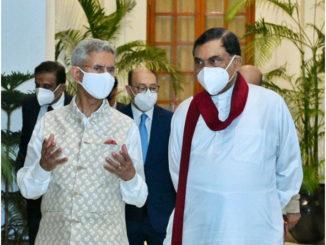
    Colombo/New Delhi (TIP): The State Bank of India on March 17 signed an agreement for extending a credit line of $1 billion to Sri Lanka enabling it to buy food, medicine and other essential items. The agreement was signed after Union Ministers S Jaishankar and NirmalaSitharaman held discussions on economic cooperation and “issues of mutual interest’’ with Sri Lanka Finance Minister Basil Rajapaksa, said an official news release. Basil Rajapaksa visited India for financial assistance which will temporarily enable the cash-strapped Sri Lanka to stave off an unprecedented economic crisis.

    On the eve of his visit, Colombo sent a positive signal by signing a joint venture with India three days back for a 100 mw solar power plant at Sampur in Trincomalee to compensate for the scrapping of an Indo-Japan coal power project on environmental grounds. On the security side, Colombo last week hosted another conference of NSAs of regional countries for a collective approach to maritime security.

    In January, India had bailed out Sri Lanka from its balance of payments difficulties by extending a $400 million swap facility and deferring the settlement of $515.2 million. Thus, the help extended by India is worth over $900 million and about $1.5 billion more is in the pipeline.

    Basil Rajapaksa had met PM NarendraModi for the assistance provided to Sri Lanka at this critical time. The two leaders discussed a wide range of issues pertaining to the bilateral relationship. These included agriculture, renewable energy, digitalisation, tourism and fisheries among others, said a release from the Sri Lanka High Commission.

    Basil Rajapaksa also held talks with Jaishankar the same evening, which were followed by a working dinner. Rajapaksa was accompanied to the meeting by Sri Lanka’s High Commissioner to India MilindaMoragoda, Secretary to the Ministry of Finance S.R. Attygalle and Sri Lanka’s Deputy High Commissioner to India NilukaKadurugamuwa. (TNS)

  • Banks can sell Mallya’s properties, shares worth Rs 5,646 cr to recover dues

    Banks can sell Mallya’s properties, shares worth Rs 5,646 cr to recover dues

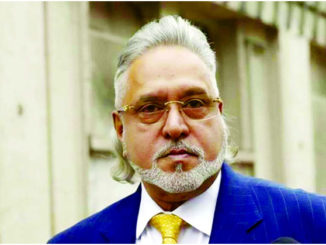
    New Delhi (TIP): Armed with court order, a consortium of lenders led by SBI can now sell certain real estate properties and securities belonging to fugitive Vijay Mallya to recover loans turned bad with failure of Kingfisher Airlines.

    A consortium of 11 banks that gave Mallya loans, led by State Bank of India (SBI), had approached a special Prevention of Money Laundering Act (PMLA) court seeking restoration of his properties seized by the Enforcement Directorate.

    The special PMLA court in Mumbai on Tuesday allowed the restoration of properties worth Rs 5,646.54 crore to banks.

    According to an official of lead bank SBI, symbolic possession of properties mentioned in the order would be taken by lenders after following due legal process.

    Recovery process in banks are guided by Securitisation and Reconstruction of Financial Assets and Enforcement of Security Interest (SARFAESI) Act, 2002, the official said, adding that auction or sale of those properties would be done as per the guidelines in due course of time.

    SBI has the highest exposure of Rs 1,600 crore out of original loan of Rs 6,900 crore to the defunct Kingfisher Airlines.

    Other banks that have exposure to the airline include Punjab National Bank (Rs 800 crore) and IDBI Bank (Rs 800 crore), Bank of India (Rs 650 crore), Bank of Baroda (Rs 550 crore), Central Bank of India (Rs 410 crore).

    Mallya is accused of fraud and money laundering allegedly amounting to around Rs 9,000 crore, which involved his defunct Kingfisher Airlines.

    Last year, Mallya offered to pay back 100 per cent of “public money” to various Indian banks and urged the government to accept his offer, days ahead of a UK court’s decision on his plea not to extradite him to India.

    The 65-year-old former Kingfisher Airlines boss has been on bail in the UK on an extradition warrant since his arrest in April 2019.

    Mallya’s extradition was ordered by former Britain Home Secretary Sajid Javid, in February 2019, after a prima facie case of fraud and money laundering was upheld by the UK courts, including on appeals. He remains on bail in Britain while a confidential legal matter, believed to be related to an asylum application, is resolved.

    Noting that banks have suffered losses, the PMLA Court on Tuesday said it was impossible to conclude the exact “quantifiable loss” at this stage.

    The court, however, said that the banks’ claim of losses of over Rs 6,200 crore was not “imaginary”.

  • 2nd wave of Covid-19 in India could last up to 100 days, peak in April: Report

    2nd wave of Covid-19 in India could last up to 100 days, peak in April: Report

    New Delhi (TIP): India is in the midst of a second wave of the Covid-19 pandemic. Considering the duration from the present level of daily new cases to the peak India saw last year, the country is expected to reach the high in the second half of April. The second wave, which could last until the end of May, could see an addition of 25 lakh cases if trends till March 23 are taken into consideration.

    These projections are part of findings of a State Bank of India (SBI) research report titled ‘The second wave of infections: The beginning of the end’ by Chief Economic Advisor Soumya Kanti Ghosh.

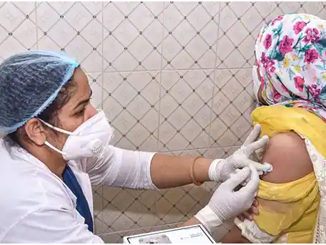
    In the report, Ghosh assessed that the duration of the second Covi-19 wave might last up to 100 days starting from Feb 15, while he added that vaccination is a more effective way than lockdown to beat the pandemic.

    “Though global Covid-19 experience shows the second wave much higher in intensity than the first wave, presence of vaccine makes the difference currently. But India will be able to manage the situation better,” the report said.

    India reported 53,476 cases in a day on March 25, the highest since November 6, 2020 — Maharashtra and Punjab being the worst-affected states.

    The daily spike in coronavirus cases during the peak in the second wave could be much higher than last year, the report warns as it cites France which saw the peak of daily cases around 11.5 times more than the first wave.

    The only silver lining this time, according to the report, is the availability of vaccines against Covid-19.

    The report argued that if one considers the number of days taken to reach the current level from the lowest level of daily new cases witnessed on February 21, the time it took for the second Covid-19 wave to hit India is similar to what happened in the first wave.

    “However, the difference lies in the speed of spread of infection in states like Gujarat, MP, Maharashtra, Punjab and Chhattisgarh, where the cases have increased at a much faster pace during the current second wave,” the report stated.

    Considering the number of days from the current level of daily new cases to the peak level during the first wave, India might reach the peak in the second half of April, the report says and adds that the entire duration of the second wave might last up to 100 days counted (from Feb 15). A district-wise analysis in the report revealed that cases have again started rising in the top 15 districts of India, mostly urban, while the spread in rural districts is almost stable.

    It says that cases are largely localised and concentrated and while Rajasthan, Gujarat, Kerala, Uttarakhand, Haryana have vaccinated more than 20 per cent of their elderly population, other states with a higher elderly population (>60 years) like Punjab, Tamil Nadu, Andhra Pradesh, Maharashtra and West Bengal have vaccinated a lesser percentage.

    The report points out that Kerala had the maximum number of worst-affected districts in January 2021. However, all districts in this top-10 list are now rural districts of Maharashtra.

    Recommending a strong push to the vaccination programme, the report says, “If the daily vaccine inoculation increases to 40-45 lakh from the current maximum level of 34 lakh, then we can vaccinate our population above 45 years in four months from now.”

    The SBI report also proposes restrictions to prevent the spread of Covid-19. “Air travel has slowly inched towards the level it was at…However, a plethora of new variants emerging still make a case for being wary about the overall recovery in air travel,” the report noted.

    Source: India Today

  • NPAs continue to bite: Banks have lost Rs 1.76 lakh crore in the last three years

    NPAs continue to bite: Banks have lost Rs 1.76 lakh crore in the last three years

    The RTI replies demonstrate a constant surge in the amount written off by the scheduled commercial banks, which include public sector banks and private banks in the country, since 2014-15.

    While banks claim that the recovery measures continue even after write-offs, sources say not more than 15-20 per cent is recovered.

    In the last three years, Indian banking system has lost Rs 1.76 lakh crore on account of writing off  non-performing loans of 416 defaulters — each owing Rs 100 crore or more.

    On an average, the amount declared as bad loans turns out to be around Rs 424 crore per borrower.

    This the first time data relating to big loans and biggest defaulters –owing at least Rs 100 crore – has come to light.

    The statistics showed that 109 unique borrowers had their loans to the tune of Rs 40,798 crore written off.

    Following a norm issued by the RBI to all the scheduled commercial banks to come clear on the amount to be prudentially written off and set the accounts right, the data has been exclusively accessed by the CNN-News18 by filing a series of RTI applications.

    The RTI replies demonstrate a constant surge in the amount written off by the scheduled commercial banks, which include public sector banks and private banks in the country, since 2014-15.

    Between 2015 and 2018, a total of Rs 2.17 lakh crore were written off as bad debts by the scheduled commercial banks.

    The statistics showed that 109 unique borrowers had their loans to the tune of Rs 40,798 crore written off.

    This number grew to 199 unique borrowers as on March 31, 2016 with a total of Rs 69,976 crore as amount written off.

    The next two years – post demonetization, however, witnessed the sharpest increase in the amount being written off for the borrowers.

    The RBI collects credit information of large borrowers with exposure of Rs 5 crore and above, which contain data on borrowers with amount technically/prudentially written off.

    The number of unique borrowers grew to 343 – an addition of 144 more, i.e. a 72 percent rise in number of such loanees.

    For this period, the amount written off also jumped from Rs 69,926 to Rs 1, 27, 797 crore.

    This amounted to a rise by Rs 57,821 crore as compared to Rs 29,178 of the preceding financial year. It also meant a whopping hike by almost 83 percent in the total amount written off by the scheduled commercial banks in the year immediately following the demonetization.

    The story remained the same for the next financial year.

    As on March 31, 2018, there happened to be 525 unique borrowers – this was an addition of 182 borrowers whose big loans were written off.

    The total amount written off as bad debts shot up from 1.27 lakh crore to Rs 2.17 lakh crore – an increase of Rs 89,324 crore – another huge jump by almost 70 percent.

    The RTI reply pointed out that the data prior to September 2014 for number of write-offs to the tune of at least Rs 100 crore is not available.

    The constant spurt in bad loans has prodded the government into stepping in time and again to bail out banks by recapitalizing them.

    While banks claim that the recovery measures continue even after write-offs, sources say not more than 15-20 per cent is recovered.

    The RBI collects credit information of large borrowers with exposure of Rs 5 crore and above, which contain data on borrowers with amount technically/prudentially written off.

    The information accessed by the CNN-News18 is a first in getting the exact number of unique borrowers in respect of which an amount of Rs 100 crore and above were written off.

    The information also uniquely depicts the pattern between 2014 and 2018 when such numbers grew, especially post demonetization.

    SBI writes off Rs 76,600 crore of 220 defaulters, RTI query reveals

    Similarly, Central Bank of India and Indian Overseas Bank had 4 defaulters each, owing more than Rs 500 crore when their loans were written off.

    The data has been accessed by the CNN-News18 through a series of RTI applications, following the Supreme Court judgments that directed the RBI to disclose relevant information on the NPAs and bad debts under the RTI Act.

     India’s largest bank, State Bank of India (SBI) has written off bad loans worth Rs 76,600 crore of 220 defaulters, who owed more than Rs 100 crore each.

    As on March 31, 2019, the SBI has declared as unrecoverable outstanding worth Rs 37,700 crore that 33 borrowers, with loans of Rs 500 crore and more, owed to it.

    In a first, the latest information, furnished by the RBI to CNN-News18 under the Right To Information Act, has disclosed the bank-wise break up where loans more than Rs 100 crore and Rs 500 crore were written off by the banks as on March 31, 2019.

    A total of Rs 2.75 lakh crore has been written off for entities that borrowed Rs 100 crore or more from scheduled commercial banks. The latest statistics divulge that Rs 67,600 crore were declared as bad debts for those given loans of Rs 500 crore and more.

     As on March 31, 2019, the SBI has declared as unrecoverable outstanding worth Rs 37,700 crore that 33 borrowers, with loans of Rs 500 crore and more, owed to it.

    As many as 980 borrowers have been enlisted by the RBI whose debts of more than Rs 100 crore each had to be written off by the banks. Out of these, 220 accounts – more than one-fifth of the total number – belonged to SBI. An average of Rs 348 crore was waived off in respect of each such account.

    Out of 71 total accounts reported as having defaulted in loans of over and above Rs 500 crore each, SBI’s share turned out to be 33 to 46 per cent of the total.

    Similarly, as on March 31, Punjab National Bank (PNB) had waived off debts of at least Rs 100 crore each in respect of 94 borrowers. The gross amount came out to be Rs 27,024 crore, with an average of Rs 287 crore per account.

    PNB also wrote off loans of Rs 500 crore or more for 12 biggest defaulters, totaling Rs 9,037 crore.

    While SBI and PNB topped the list among the public sector banks, IDBI stood at the top among the private banks. IDBI also came third among all the scheduled commercial banks in declaring bad debts of Rs 100 crore or more.

    IDBI had 71 borrowers of Rs 100 crore and more, with a total outstanding of Rs 26,219 crore written off.

    Canara Bank too had 63 accounts with outstanding of Rs 100 crore and more, and another 7 accounts with borrowings of Rs 500 crore and more, in respect of which loans worth Rs 27,382 crore.

    The list of borrowers with Rs 100 crore and more as outstanding having been declared as bad loans is followed by Bank of India with 56 accounts, Corporation Bank with 50 accounts, Bank of Baroda with 46 accounts and Central Bank of India with 45 accounts.

    Among the private banks, Axis Bank had 43 such borrowers, followed by ICICI Bank having 37 such accounts.

    Similarly, Central Bank of India and Indian Overseas Bank had 4 defaulters each, owing more than Rs 500 crore when their loans were written off.

    The data has been accessed by the CNN-News18 through a series of RTI applications, following the Supreme Court judgments that directed the RBI to disclose relevant information on the NPAs and bad debts under the RTI Act.

    (Source; CNN -News 18)