
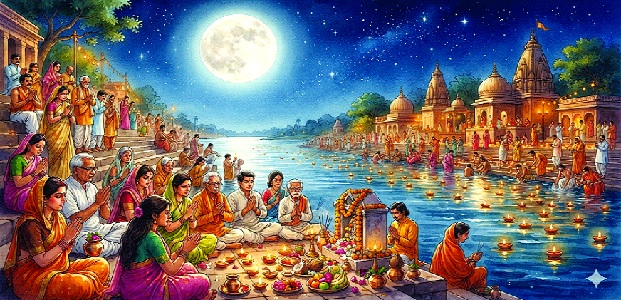

The full moon of Shravan, known as Shravan Purnima or Sawan Purnima, is one of the most sacred occasions in the Hindu calendar. Arriving in July or August, during the heart of the monsoon, it marks the culmination of a month traditionally devoted to prayer, fasting, worship and spiritual reflection. Shravan is considered especially dear to Lord Shiva, and the full moon is regarded as an auspicious time to seek divine blessings, perform sacred rituals and renew one’s spiritual commitments.
What makes Shravan Purnima particularly remarkable is its many regional expressions. The same full moon is celebrated as Narali Purnima along the Maharashtra and Konkan coast, Avani Avittam among Yajurveda-following Brahmin communities, Kajari Purnima in parts of central India, Raksha Bandhan across much of northern India and Pavitropana in Gujarat. Each tradition has its own rituals, stories and cultural setting, yet all are woven into the larger spiritual fabric of Shravan.
The festival thus offers a vivid reflection of India’s religious diversity, where one sacred occasion can acquire different meanings while retaining a shared foundation of faith, gratitude and renewal.
A Sacred Full Moon
Purnima has long been regarded as an important day in Hindu spiritual practice. The full moon represents completeness and fullness, while its gentle light has traditionally been associated with calmness and contemplation.
Shravan gives this full moon an additional spiritual significance. The month coincides with the monsoon, a season of transformation when rain revives the land after the intense heat of summer. Rivers begin to flow more strongly, fields turn green and nature appears renewed.
This transformation outside becomes a metaphor for renewal within. Shravan Purnima encourages devotees to cleanse themselves of negative thoughts, practise restraint and turn towards prayer and self-reflection.
The month is particularly associated with Lord Shiva. Devotees observe fasts, visit temples and perform Jalabhishek, offering water to the Shiva lingam. On Shravan Purnima, these practices acquire special significance as devotees seek the blessings of Shiva and pray for peace, prosperity and spiritual well-being.
Narali Purnima: Honoring the Sea
On the Maharashtra and Konkan coast, Shravan Purnima is celebrated as Narali Purnima. The festival is especially significant for fishing communities whose lives and livelihoods are closely connected with the sea.
Devotees offer coconuts, rice and flowers to Varuna, the deity associated with water and the sea. Fishermen decorate their boats and offer prayers for safety, a prosperous fishing season and protection from the forces of nature.
The festival reflects an old and deeply rooted Indian understanding that human prosperity depends upon harmony with nature. The sea provides livelihood, but it also commands respect. Before returning to their work, fishing communities seek divine protection and express gratitude for the bounty of the waters.
The coconut has special significance in Hindu worship. Its three markings are traditionally associated with the three eyes of Lord Shiva. Offering a coconut is also considered a symbolic act of surrendering one’s ego and seeking divine blessings before undertaking something important.
Narali Purnima therefore combines devotion with gratitude and reminds us that nature is not merely a resource to be used but a force to be respected.
Avani Avittam: The Renewal of
Sacred Learning
For Yajurveda-following Brahmin communities in Tamil Nadu, Kerala, Odisha and Maharashtra, Shravan Purnima is observed as Avani Avittam.
The day is marked by rituals of purification and the changing of the sacred thread, or Yagyopavita. Devotees take ritual baths, perform prayers and reaffirm their commitment to sacred learning and religious discipline.
The changing of the thread has a deeper significance. It symbolises a fresh beginning and a renewed sense of responsibility. The sacred thread serves as a reminder that knowledge must be accompanied by discipline, duty and ethical conduct.
Avani Avittam is also traditionally associated with the study and recitation of the Vedas. Hindu tradition connects the day with Lord Vishnu in his Hayagriva form, who is revered as a divine embodiment of knowledge and learning.
The festival consequently places education at the centre of spiritual life. Knowledge is not seen merely as a means of worldly success but as a path towards wisdom and self-understanding.
Kajari Purnima: Fertility,
Family and Rural Life
In Madhya Pradesh, Chhattisgarh and parts of Uttar Pradesh, Shravan Purnima is observed as Kajari Purnima.
The preparations begin with Kajari Navami. Women traditionally collect soil from agricultural fields and place it in leaf containers or small vessels, where barley is sown. The growing shoots symbolise fertility, life and the agricultural cycle.
On the day of Kajari Purnima, women carry the barley shoots in a procession and immerse them in a nearby pond or river. Traditional prayers are offered for the well-being and longevity of family members, particularly sons.
The festival reflects the close connection between rural life, agriculture, women and the rhythms of nature. The growing barley becomes a symbol of hope and prosperity, while its immersion connects the agricultural cycle with the sacred waters of the monsoon.
Pavitropana: A Day of Shiva Worship
In Gujarat, the full moon of Shravan is associated with Pavitropana, an important observance dedicated to Lord Shiva.
Devotees perform special prayers and offer sacred materials to Shiva. One of the distinctive rituals involves offering cotton threads or wicks prepared with Panchagavya.
As with many Shravan traditions, the underlying theme is purification. The festival encourages devotees to seek forgiveness, renew their devotion and strengthen their relationship with the divine.
Since the entire month of Shravan is considered especially auspicious for Shiva worship, Shravan Purnima becomes a natural culmination of the month’s devotional practices.
Raksha Bandhan: Celebrating Human Bonds
Across northern and many other parts of India, Shravan Purnima is celebrated as Raksha Bandhan.
The tying of the rakhi represents affection, trust and a promise of mutual care. Traditionally associated with the bond between brothers and sisters, the festival has acquired a broader meaning over time, becoming a celebration of family relationships and emotional bonds.
Its spiritual significance lies in the idea that relationships carry responsibilities. Love is not simply an emotion; it also involves care, protection, respect and standing beside one another through difficult times.
In this sense, the sacred thread becomes a powerful symbol. Though physically delicate, it represents a bond that families hope will remain strong through the changing circumstances of life.
The Story of King Tungadhwaj
One traditional story connected with the worship of Lord Satyanarayan tells of King Tungadhwaj, whose pride brought him misfortune.
According to the legend, the king was once hunting in a forest when he encountered villagers performing a Satyanarayan worship. The villagers respectfully offered him prasad, but the king, overcome by pride, refused to accept it.
After returning to his kingdom, the king discovered that his fortunes had dramatically changed. His kingdom had been attacked and his possessions had been lost.
Realising that his disrespect towards the sacred offering had been a grave mistake, he returned to the villagers. He acknowledged his error and accepted the prasad with humility.
The traditional story says that the king was forgiven and his lost prosperity was restored.
The deeper message of the story is not simply about material prosperity. It is a reminder that arrogance can blind an individual, while humility allows one to recognise one’s mistakes and seek forgiveness.
Prasad represents divine grace, and accepting it with reverence symbolises acceptance of that grace.



Be the first to comment