Tag: Sikh News

  • The Sikh Awards 2016 to honor global Sikh excellence given away in London

    The Sikh Awards 2016 to honor global Sikh excellence given away in London

    LONDON (TIP): Mr. Bob Singh Dhillon, Founder, President and CEO of Mainstreet Equity Corp, Canada’s highest performing real estate company with assets valued over $1.5 billion, was named Business Man of the Year at the 7th annual The Sikh Awards 2016 on Saturday, 19th November 2016 at Park Plaza Hotel, London. The coveted award is in recognition of an organization or individual that has best demonstrated how they have made exceptional financial returns, shown strong growth, innovative strategies and clear market leadership in the sector.

    Mr. Dhillon Founded Mainstreet which consists of nearly 10,000 apartment units in Western Canada. He sits on the Canadian Mortgage and Housing Corporation Board and is also the Honorary Consul General for Belize, owning a private 3,000-acre island in Belize. Mr. Dhillon is also the owner of National Payments, a Visa and MasterCard approved merchant processing business. He has been the recipient of numerous awards, the Ernst & Young 2015.

    Entrepreneur of the Year, The Queen’s Diamond Jubilee Medal, one of Alberta’s 50 Most Influential People and recognized as one of the 25 Most Influential Indians in North America.

    A major philanthropist donating $500,000 to the town of San Pedro, Belize, he raised $60,000 for underprivileged children in San Pedro and donated free apartment suites to victims of the Slave Lake, Fort McMurray Alberta fires.

    Other high profile winners this year included:

    Ms Kiran Singh (UK) – Business Woman award; Mr. Supreet Singh Manchanda (USA) – Entrepreneur Award; Khalsa Aid (UK) – Sikhs in Charity;  Dr Brinder Singh Mahon (UK) – Sikhs in Education; Mrs. Manika Kaur (Dubai) – Sikhs in Entertainment;  Akaal Television / Mr. Amrik Singh Kooner (UK) – Sikhs in Media;  Mr. Jaspal Singh Bindra (India) – Sikhs in Profession;  Mr. Gurmeet Singh (India) – Sikhs in Seva;  Mr. Ram Singh Nayyar (Canada) – Sikhs in Sport;  Natasha Kaur Mudhar (UK) – The Sikh People’s Choice Award; Sant Baba Iqbal Singh Ji (India) – The Sikh Lifetime Achievement Award; and His Highness Sheikh Mohammed Bin Rashid Al Maktoum (Dubai) – The Special Recognition Award.

    Hosted by Ranvir Singh, a journalist and broadcaster, best known for her presenting role on the ITV Breakfast program ‘Good Morning Britain’, The Sikh Awards recognizes the pivotal contributions made by the Sikh community across a variety of fields, from business, charity, education, entertainment, professional services, seva (selfless service), and sport, with winners selected across the globe from Asia, USA, Canada, Australia, Europe, Africa and the Middle East.

    The prestigious event saw 750 guests in attendance from elite international dignitaries to public figures, community heroes, sports stars and celebrities.


  • Hate Crime Charges Slapped On Man For Throwing Drink On Sikh

    Hate Crime Charges Slapped On Man For Throwing Drink On Sikh

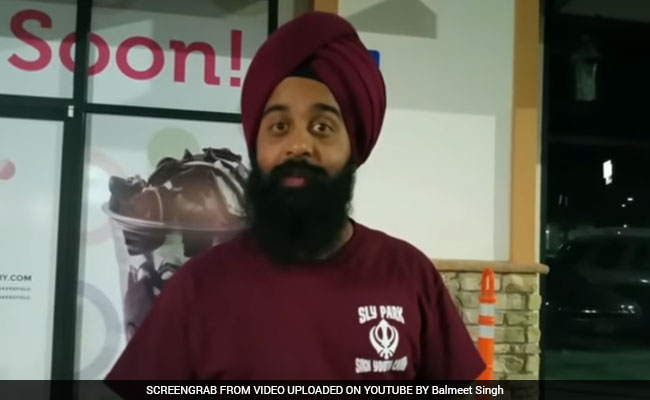
    Los Angeles:  Hate Crime charges have been filed against a 40-year-old man who racially abused a Sikh and threw a drink at him, mistaking him for a Muslim.

    The Kern County District Attorney’s Office filed misdemeanor charges against David Scott Hook from Bakersfield for allegedly accosting Balmeet Singh outside a California Avenue restaurant last month, cursing him, threatening him and drenching him with a drink.

    Mr Singh, while narrating the incident, had said that he and his friends were out to dinner at the Habit Burger in Bakersfield, California. He decided to step outside of the restaurant to make a phone call and that is when the incident unfolded.

    Mr Singh said in the middle of his conversation, a man walked out of Blaze Pizza and headed straight toward him.

    “He says you’re trying to blow up this country, I should kill you. I’m going to kill you right now. And he used a lot of curse words and he seemed very angry,” Singh was quoted as saying by KERO-TV.

    Mr Singh said he yelled back at the man that he was a racist and he was the problem. Singh said the man continued to yell and then threw a drink at him.

    According to a statement from the District Attorney’s office, Hook was charged on Saturday with one count of interference with the exercise of a civil right and one count of battery.

    Kern County District Attorney Lisa Green was quoted by The Bakersfield Californian as saying that the civil rights charge falls under the legal category of a hate crime.

    “It is alleged defendant David Hook threw liquid on another individual because he appeared to be of a different religion or race,” the statement said.

    The alleged attacker “said I was a threat to the country I grew up in, the country I was born in,” Mr Singh had told hundreds who gathered last week at a gurdwara in southwest Bakersfield.

    The event, which included several guest speakers, was called a “dialogue against hate.”

    In a conversation with a Bakersfield Police Department investigator, Singh said he was told the man was identified and questioned. The man told police he thought Mr Singh was a Muslim.

  • Sikh Techie Beaten, Hair Cut With Knife In Alleged Hate Crime In California

    Sikh Techie Beaten, Hair Cut With Knife In Alleged Hate Crime In California

    RICHMOND (KTVU) — A national group is urging that authorities pursue hate charges for two men who allegedly attacked a Richmond man apparently because of his religious beliefs.

    The Sikh Coalition, a national group, sent a letter Friday to the Richmond police chief and the Contra Costa District Attorney, urging them to investigate the attack last month on Maan Singh Khalsa.

    Khalsa, 41, is a member of the Sikh Center in El Sobrante and a U.S. citizen who works for the Social Security Agency.

    Harsimran Kaur, the Sikh Coalition legal director, said Maan Singh Khalsa was attacked near the Hilltop Mall at Blume and Hilltop Drive about 9 p.m. on Sunday Sept. 25. He told police that a white Ford F-150 with as many as six men pulled up and someone threw a beer can at him. When he turned toward Interstate 80 and stopped at a light, he said the suspects approached the car and grabbed him through the window.

    Authorities said Chase Little, 31, of Beaumont, Texas, and Dustin Albarado, 35, of Louisiana, were arrested in connection with the incident on felony assault charges. The two posted bail and were released. The Contra Costa County district attorney’s office has not yet said if it will pursue hate crime charges against the suspects.

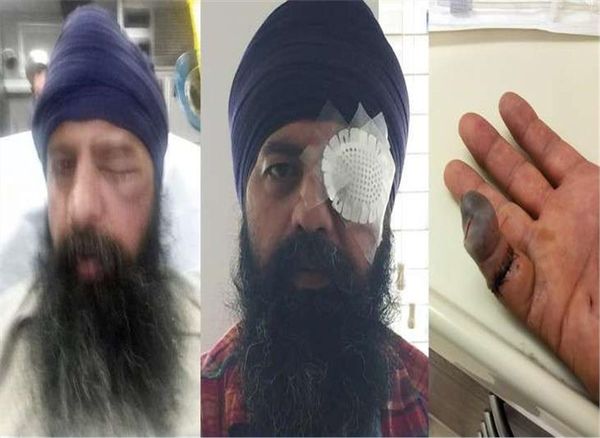
    “They started beating him in the face. They took a knife. His turban got knocked off. They ended up cutting off part of his hair. They said cut his f–ing hair,’” said Kaur, who says Khalsa received severe injuries.

    Photos show him with a patch over one eye that is seen in another photo swollen shut. A third photo shows a blackened finger with stitches.

    “He may need three root canals, his finger was severely cut by the knife,” Kaur said. “It may need to be amputated. He got a black eye and other cuts and bruises.”

    The Sikh Center’s leaders say emotionally, too, is the pain of having one’s hair cut which violates Sikh beliefs.

    “We are not supposed to cut our hairs ever. It’s one of our five articles of faith,” said Karanbir Singh, vice-president of the Sikh Center, who says the entire community is stunned.

    “He is a very nice man, a very good man. He never fights with anybody,” said Tarlok Singh, a Sikh Center member, who was surprised to see his fellow worshiper’s injuries following the attack.

    Khalsa called 911 during the assault and Richmond police arrested Little and Albarado.

    “My concern is they said ‘cut his f—ing hair’. so I don’t understand why someone would say that unless that they were they were specifically targeting a person,” said Kaur, who added that Maan Singh Khalsa reported that there were other men in the truck who have not been arrested.

  • Sikh man shot dead in Afghanistan

    Sikh man shot dead in Afghanistan

    PESHAWAR (TIP): A Sikh man was abducted from his home and gunned down by suspected militants in Afghanistan’s restive Nangarhar province bordering Pakistan, a media report said. Sardar Rawail Singh, who lived in Jalalabad, was abducted from his house by militants wearing military fatigues and killed in Khalis Famil area.

    The incident triggered a massive protest by the minority Sikh community who staged a demonstration by placing the body of Singh in front of the provincial governor’s house in Jalalabad and demanded the arrest of the killers.

    They accused security forces of negligence in arresting the killers and asked the government to bring to justice the killers as soon as possible.

    Later, deputy governor Mohammad Hanif Gardiwal met the protesting Sikhs and pacified them. He said a case has been filed and a manhunt launched to nab the culprits.

    The insurgents abducted Singh from his home at about 7:20 AM (local time) yesterday and gunned him down at Khalis Famil area, provincial governor’s spokesman Attaullah Khogyani was quoted as saying by Pajhwok Afghan News. Rawinder, one of the protesters, said Singh had a dispute with his neighbour on Friday Next morning, the neighbour came along with some gunmen and abducted Singh from his home before killing him, he said, adding that Singh had invited his friends for a party at his home when his neighbour objected. (TNN)

  • No Exception On Helmet Rules For Sikh Workers In Canada: Quebec Court

    No Exception On Helmet Rules For Sikh Workers In Canada: Quebec Court

    TORONTO: Three Sikh truck drivers have been ordered to wear hard hats at work by a Canadian court which ruled that no exception can be made for them as the men lost a 10-year-long legal battle against religious discrimination.

    Three Sikh men who drove container trucks at the Port of Montreal had argued they had a right to wear a turban instead of a helmet based on Quebec and Canadian charter rights protecting freedom of religion.

    In a ruling released Wednesday, Quebec Superior Court Justice Andre Prevost recognised that the requirement to wear helmets violated the mens’ charter rights but ruled that safety should trump religion in this case, the Canadian Press reported.

    He ruled the port’s rules were justified because they protect workers against head injuries.

    “The risks are not lower because the claimants are Sikh and wear turbans,” he wrote in his decision.

    “The safety obligations of the defendants are not less stringent, either, towards the claimants than towards other workers,” the judge was quoted as saying.

    In a case dating back to 2006, the men had argued they were victims of religious discrimination after they were no longer allowed to enter the port’s terminals without protective headgear. The safety measures were put in place in 2005.

    Originally an accommodation was put in place allowing the drivers to stay in their trucks while containers were loaded, but that was eventually deemed not commercially viable because it increased the loading time.

    Julius Gray, the lawyer representing the three men, said he was disappointed by the decision but was encouraged that the judge recognised his client’s charter rights had been violated.

    Gray said he would meet with his clients next week to decide whether to appeal the decision.

    “I personally believe it’s a case that can be very easily and effectively appealed, so I hope that’s what they’ll do,” he said.

  • Indian American Sikh Woman Soldier is Army’s ‘Un-official Diplomat’

    Indian American Sikh Woman Soldier is Army’s ‘Un-official Diplomat’

    CHAUBATIA, UTTARAKHAND (TIP): An Indian American US Army staffer Balreet Kaur Khaira is changing the way Indians are seen and has grown more than an asset for the force, especially when they are in conflict zones in Iraq or Afghanistan or in India for a joint military exercise.

    Her expertise in Hindi and Urdu has helped her act as an interpreter between US and Indian forces, and locals which in turn has given her the unofficial tag of a Diplomat.

    More than 400 US Army personnel and the Congo Brigade of the Indian Army are getting familiar with each other’s organizational structure, weapons, equipment and tactical drills at the 12th edition of ‘Yudh Abhyas’, the joint military exercise between the forces at Chaubatia in Uttarakhand.

    In addition to her tasks as a staffer, Balreet doubles up as an interpreter between US and Indian soldiers.

    Soldiers from either side look for her whenever they have problems communicating with their counterparts.

    Born in Moga in Punjab, and raised in Chandigarh, the 27-year-old’s fluency in Urdu came handy during her posting in strife-torn Iraq and Afghanistan.

    “I know Hindi and Urdu, and that helped me a lot in Afghanistan. I was able to connect with the locals and they too were happy to communicate,” Balreet told HT.

    Fellow troopers have nicknamed her and her sister Jasleen, who also works in the force, as ‘cultural diplomats’.

    But it has not been an easy journey for her in the US force, being an Indian and a woman. “Then there were only few Indians working in the US force (when I joined in 2004). Being a woman, it was not easy to adjust.”

    Her family moved to the US a week before the September 9, 2001, attack on the two World Trade Centres in New York. Balreet was 14 and Jasleen 12 then.

    “My father is in port business and kept on moving to different countries before deciding to finally settle down in the US. We reached America a week before 9/11. Post the attack, Indians and Sikhs in particular faced lots of issues,” she said.

    Raised in Chandigarh for most of their childhood, it took the young girls a while before they adopted the American culture while not forgetting their Indian traditions.Balreet joined the US Army’s medical wing at the age of 16 as a soldier and later moved to the infantry division.

    Jasleen followed her sister’s footsteps. Over the years, Balreet has been promoted to the rank of staffer.

    Kaur sisters had participated in three joint military exercises — one in US, two in India — including the one held at Chaubatia in 2014.

    As the army’s ‘diplomat’, Balreet is happy that perceptions towards Indians have changed, at least among their colleagues.

  • Ex-Soldier Jailed For Racially Abusing Sikh Neighbours In UK

    Ex-Soldier Jailed For Racially Abusing Sikh Neighbours In UK

    A 51-year-old former British soldier has been jailed for 10 months for racially abusing his women Sikh neighbours by calling them “ISIS slags” and “dirty Pakis”.

    Christopher Blurton was found guilty at Derby Crown Court after he was charged with racially aggravated harassment against two women neighbours in Manchester Street, Derby. He has been jailed for 10 months, Derby Telegraph reported.

    The abusive man sent the two Sikh women a note whinging about the state of their garden, in which he claimed they were members of ISIS, it said.

    Blurton initially denied racially aggravated harassment between June 28 and August 19 last year but was found guilty on Friday.

    “You frightened these two young women. They felt that they needed to move out. Your criminal record shows that you have resorted to violence in the past and had committed offences when drunk,” Recorder Adrian Redgrave said while sentencing Blurton.

    Blurton acted in that way towards the women because they were Asian, he added.

    The court heard the victims moved into the home in 2014 but the problems began in June last year and lasted around two months.

    Blurton hurled abuse from his yard and his home, yelling “dirty Pakis”, “ISIS slags” and threatening to “slice them up”.

    “(It) will be quiet and then we would hear racist remarks such as hope the dirty Pakis die,” a neighbour said. But he claimed he was just shouting at his TV and a probation officer said he would drink five times a week.

  • A look at Racial Attacks on Sikhs post 9/11

    A look at Racial Attacks on Sikhs post 9/11

    September 15, 2001: Balbir Singh Sodhi, a 49-year-old Sikh man in Mesa, Arizona, is shot and killed outside his gas station. The shooter, Frank Silva Roque, sought revenge for the 9/11 attacks and mistook Sodhi for a Muslim.

    October 2001: While stopped at a red light in San Diego, Swaranjit Kaur Bhullar is stabbed by two men on a motorcycle who say: “This is what you get for what you’ve done to us.”

    November 18, 2001: Three teens burn down a gurdwara, or temple, named Gobind Sadan in Palermo, New York, because they thought it was named for Osama bin Laden.

    December 12, 2001: Surinder Singh Sidhu is beaten with metal poles by two men who walk into his Los Angeles liquor store and accuse him of being Osama bin Laden. Sidhu had taken to wearing American flag turbans after 9/11.

    May 20, 2003: Truck driver Avtar Singh Cheira is shot in his 18-wheeler while waiting for his son to pick him up in Phoenix, Arizona. The shooter yelled: “Go back to where you came from.”

    March 13, 2004: A gurdwara in Fresno, California, is vandalized with graffiti messages: “Rags Go Home” and “It’s Not Your Country.”

    July 12, 2004: Cousins Rajinder Singh Khalsa and Gurcharan Singh are beaten by two men. The attackers call Gurcharan Singh’s turban a “curtain” and taunt him. Khalsa tries to explain the significance of a turban and is beaten unconscious. The attackers yell “Go back to your country.”

    July 2, 2006: Iqbal Singh is stabbed in the neck in front of his home in San Jose, California. The assailant says he wanted to “kill a Taliban.”

    May 24, 2007: A 15-year-old student’s hair is forcibly cut by an older student at his high school in Queens, New York. The older student had a ring with Arabic writing and said: “This ring is Allah. If you don’t let me cut your hair, I will punch you with this ring.”

    May 30, 2007: U.S. Navy veteran Kuldip Singh Nag is approached by a police officer outside his home in Joliet, Illinois, for an expired vehicle registration tag. The officer reportedly assaults Nag with pepper spray while shouting anti-immigrant expletives.

    January 14, 2008: Baljeet Singh’s jaw and nose are broken in an attack outside his gurdwara in New Hyde Park, New York.

    April 11, 2008: A Sikh graduate student at Texas A&M University is called a terrorist before he is attacked and has his turban knocked off his head.

    June 5, 2008: A ninth grade Sikh student in Queens, New York, is attacked by another student who tried to remove his under-turban and has a history of bullying the boy.

    June 5, 2008: A Sikh family in Albuquerque, New Mexico, awakes to see their car defaced with the message “F*** Allah!” and a picture of male genitalia.

    January 30, 2009: Three men attack Jasmir Singh outside a Queens, New York, grocery store. The attackers hurl racial slurs and use a broken glass bottle. Singh loses vision in his left eye.

    November 28, 2010: Harbhajan Singh, a Sacramento, California, cab driver, is beaten and left bleeding by two men after dropping them off. One of the men asks if Singh is Osama bin Laden.

    March 6, 2011: Two elderly Sikh men in traditional garb, out for their daily afternoon walk in Elk Grove, California, are shot and killed. The motive of the perpetrators is thought to be anti-Muslim.

    May 30, 2011: New York transit worker Jiwan Singh is attacked on the A train and accused of being the brother of Osama bin Laden. He loses three teeth. His son, Jasmir Singh, was attacked in 2009 by three men using racial slurs outside a grocery in Queens.

    February 28, 2012: A Sikh family in Sterling, Virginia, receives a letter containing death threats addressed to “Turban Family” that says: “We ask you to leave the country as soon as possible otherwise one of our people is going to shoot you dead.”

    February 6, 2012: A gurdwara in Sterling Heights, Michigan, is defaced with graffiti that includes a gun and references to 9/11.

    August 5, 2012: A gunman opens fire in a gurdwara in Oak Creek, Wisconsin, during prayer services. Six people are killed. Police shoot the gunman dead.

    May 5, 2013: Piara Singh is beaten with a steel pipe outside a gurdwara in Fresno, California. Police call it a hate crime.

    July, 30, 2013: A gurdwara in Riverside, California, is vandalized with the words “Terrorist” and “Terrist!” (sic) scrawled on its walls and parking lot.

    September 21, 2013: Dr. Prabhjot Singh and a friend are beaten by a large group of teenagers and young men near New York’s Central Park. Singh says he heard someone yell: “Terrorist, Osama, get him.”

    September 8, 2015: Inderjit Singh Mukker is assaulted in the Chicago suburb of Darien by a teenager who yells: “Terrorist, go back to your country” and “Bin Laden!” Mukker is left unconscious and has to be hospitalized after the beating.

    November 6, 2015: Los Angeles County bus driver Balwinder Jit Singh is attacked on his bus by a man who called Singh a “terrorist” and a “suicide bomber.” Singh is left with a disfigured face.

    December 6, 2015: A Buena Park, California, Sikh center is defaced with graffiti including an expletive and the word “ISIS.”

    December 26, 2015: Amrik Singh Bal is beaten and run over by a car in Fresno, California.

    March 2, 2016: A gurdwara in Spokane, Washington, is vandalized and the temple’s holy book desecrated. The attacker told police he thought the gurdwara was a mosque connected to ISIS.

    Sources: Sikh Coalition, SALDEF, Southern Poverty Law Center

  • A 62-Year-Old Sikh Cab Driver Models for a Fashion Brand and Rocks it!

    A 62-Year-Old Sikh Cab Driver Models for a Fashion Brand and Rocks it!

    NEW YORK CITY (TIP): Very rarely do we see people picked up at random from the streets for a modelling gig for a big fashion brand. We might be secretly wishing for the same, but it rarely happens. But success comes to those who do not expect the fruit.

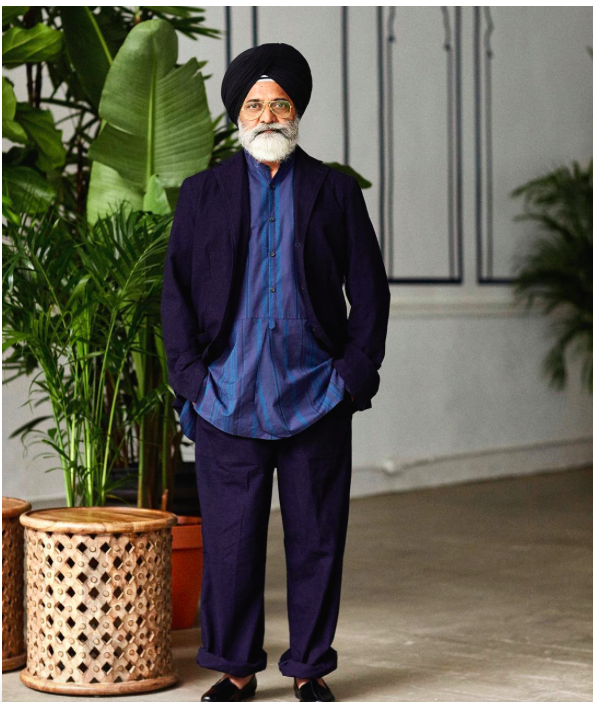
    Take Ajit Singh Bharth, for example. He’s a 62-year-old cab driver in New York City. On one trip, he dropped off a passenger in Midtown Manhattan and was spotted by Quinton Clemm from Eidos Fashion, a luxury fashion brand for men.

    “I ONLY CAUGHT A GLIMPSE OF HIS PROFILE, BUT AS THE CAB PULLED OFF FROM THE CURB AND INTO THE TRAFFIC, I KNEW THAT I HAD TO CATCH THIS CAB. AFTER JOGGING TWO BLOCKS AFTER THE VEHICLE, BHARTH CAUGHT A TRAFFIC LIGHT AND I HOPPED INTO THE BACK OF HIS CAB.”

    Quinton got to talk to him. He asked him if he could come down for a trial fitting. Co-incidentally, Antonio Ciongoli, Creative Director of Eidos was present later that day, and they put together an ensemble for Bharth to try on.

    Clemm also said that Antonio wanted to feature only people of Indian origin for Eidos’ 2017 Spring/Summer Collection, and he got the idea from a tour of Rajasthan earlier this year. Bharth and his turban really stood out, which is why he chose him to be featured.

    “EVERYTHING FROM HIS GLASSES AND FULL WHITE BEARD, TO THE OFF-WHITE SPREAD COLLAR SHIRT THAT HE WAS WEARING WHEN WE MET MADE IT CLEAR THAT BHARTH BELONGED IN OUR PRESENTATION.”

    Clemm said Bharth was very polite and accommodating during the whole process. Many international publications and reviewers gave a positive opinion about the collection and Antonio’s idea bore fruit.

    You never know when the Universe decides to bless you!

  • Guinness World Record for bearded woman Harnaam Kaur

    Guinness World Record for bearded woman Harnaam Kaur

    SLOUGH, UK (TIP): A model with six-inch long facial hair has become the youngest woman in the world to have a full beard, according to the Guinness World Records.

    Body positivity campaigner Harnaam Kaur, 24, from Slough, Berkshire, United Kingdom said it was “humbling” to be included.

    She described her beard as part of her quest to overcome years of bullying to cope with her appearance.

    “I’m confident and I love myself,” said Kaur to BBC Asia back in 2014.

    In March 2016 she became the first female with a beard to walk the runway at London Fashion Week.

    Ms Kaur has polycystic ovary syndrome, a hormonal condition that can result in the growth of excess facial hair, and was 11 when a beard started to appear on her face and the hair quickly spread to her chest and arms.

    The condition made her the victim of bullying, she said: “All through secondary school I was bullied by I would say the whole school. “It was absolutely horrible. I hated waking up.”

    HARNAAM, WHO SAYS SHE HAD A LOT OF SUPPORT FROM HER YOUNGER BROTHER AND FRIENDS, STOPPED USING HER RAZOR FOR GOOD AFTER BEING BAPTISED AS A SIKH AT 16.

    She said that her religion has given her a lot more confidence.

    “I think I had finally found myself in my natural form.

    The practice of allowing hair to grow naturally, without cutting it, is seen as a symbol of respect for the perfection of God’s creation.

  • Sikh faith Exhibition to open in NY as US marks 9/11 anniversary

    Sikh faith Exhibition to open in NY as US marks 9/11 anniversary

    NEW YORK CITY (TIP): A Sikh subway driver who saved countless lives by reversing a train headed for ground zero on 9/11 and a decorated Sikh-American Army veteran are among the several men and women from the community profiled in an art exhibition to showcase their perseverance in the face of backlash against them after the terror attack.

    As the US commemorates the 15th anniversary of the September 11 attacks on Sunday, September 11, 2016, the photography exhibition ‘Sikh Project’ will run from September 17-25 here to highlight the aesthetic of the Sikh articles of faith, including the turban and beard.

    The exhibition is a collaboration between civil rights group ‘The Sikh Coalition’ and acclaimed British photographers Amit and Naroop.

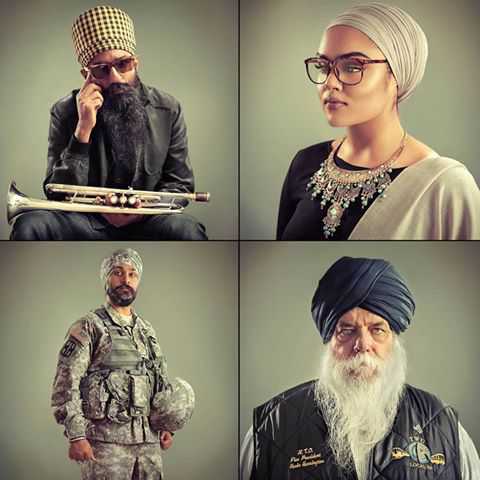
    Featuring nearly 40 powerful portraits of Sikh-Americans of various ages, the exhibition will tell the story of the triumphs and perseverance of the community that has overcome great challenges in the 15 years since the attacks in 2001.

    Among those featured in the exhibition are Sat Hari Singh, a New York City train operator who saved countless lives on the fateful day of 9/11 when he reversed the train headed for ground zero, sending it in the opposite direction.

    It also features renowned Sikh-American designer and actor Waris Ahluwalia, who was not allowed to board a plane from Mexico City in February this year because of his turban.

    Also profiled in the exhibition is Ishprit Kaur, a nursing student in Connecticut and Major Kamaljeet Singh Kalsi, a Bronze Star Medal recipient and the first Sikh American to be granted a religious accommodation to serve in the US military since the ban on Sikhs in the 1980s.

    Amit and Naroop, in an email response to PTI, said through the exhibition they want to “break the ignorant stereotypes made in the US that all Sikhs look like terrorists.”

    “In this day and age, with all the technology, information and resources available to us, for someone to still make that assumption is unbelievable. But yet it happens. It’s shocking,” they said.

    The duo added that the exhibition wants to enlighten people about the Sikh faith and encourage them to embrace their identity with pride, celebrating diversity.

    “We have become a society that conforms to trends dictated by celebrities or what we see on social media, TV and magazines. People are too afraid to be who they are. We have tried to show each individual with a sense of pride in their appearance, in who they are,” they said.

    The duo said it was left inspired by the subjects of the exhibition.

    “The Sikhs we have photographed have all faced abuse, some verbal, some physical, and yet their resolve to keep their identity has not wavered. This inner strength was inspiring,” they said.

    Those featured in the exhibition wanted to send the message that they proudly wear a turban and are patriotic Americans.

    The Sikh Coalition said the Sikh Project, the first-ever Sikh-American photography exhibition in the US, comes not only as America commemorates the 9/11 anniversary, but at a time when minority communities face divisive rhetoric and hate because of their faith and identity.

    While there are an estimated 5,00,000 Sikh-Americans in the US, who have been an integral part of the American fabric for generations, the first post-9/11 fatal hate crime victim was a Sikh.

    (Source: PTI)

  • HARDEEP WALIA TO BE THE KEYNOTE SPEAKER AT ECOSIKH GALA EVENT IN WASHINGTON

    HARDEEP WALIA TO BE THE KEYNOTE SPEAKER AT ECOSIKH GALA EVENT IN WASHINGTON

    WASHINGTON DC (TIP): Hardeep Singh Walia, CEO of Motif, based in the Silicon Valley, will be the Keynote Speaker at the EcoSikh Gala event in Washington, DC, on September 18, 2016. EcoSikh Gala gathers over 300 people from all over Washington and the nation every year to support its work on environment and climate change on behalf of the community.

    Hardeep is founder and CEO of Motif, a next-generation online broker whose mission is to simplify complex investment products and make them universally accessible. The company’s flagship product allows individual investors to act intuitively on their insights by turning them into a “motif” of stocks. Hardeep also serves as CEO of Motif Capital, an institutional investment advisor that develops thematic models for clients such as Goldman Sachs, Global Atlantic, and US Bank’s UHNW arm Ascent Private Capital Management.

    Hardeep Walia grew up in Kuwait and in the aftermath of the Gulf War has seen firsthand the devastating impact of man-made war on the environment. He said, “I’m honored to be the keynote speaker at this year’s EcoSikh Gala. Conversations about humanity’s impact on the environment needs to be a priority and I’m passionate about continuing the efforts towards a more sustainable planet.”

    Dr. Rajwant Singh, President of Washington based EcoSikh, said, “We are thrilled that Silicon Valley leaders like Hardeep Walia are causing a real shift in the business world to become conscious of our planet’s future. This sector can have a major impact in changing the course of humanity. We are looking forward to welcoming him and hearing him at the Gala.”

    EcoSikh, since its inception in 2009, has engaged the Sikh community in Punjab and around the globe to work on environmental and climate change issues. It has recently been able to work with the SGPC to make the langar (free meal to 100,000 daily) at the Golden Temple in Amritsar to go organic. It has been invited by the White House and also by the United Nations and the French Government during the climate change deliberations last year in Paris. It maintains four-member staff in Washington and in Punjab. It is also involved in increasing green cover in the sacred city of Amritsar and in educating farmers on the effects of overuse of chemicals in Punjab. EcoSikh has also started and popularized the Sikh Environment Day which is now marked by Sikh institutions on March 14 every year.

    Prior to Motif, Hardeep spent more than six years at Microsoft, where he was General Manager of the company’s enterprise services business. He also served as Director of Corporate Development and Strategy, helping to oversee Microsoft’s investments and acquisitions. He started his career at The Boston Consulting Group. Hardeep holds a BS in Economics and Engineering from Yale University and an MBA from the Wharton School of Business.

    He serves on FINRA’s Technology Advisory Committee and is on the Advisory Boards of US Bank’s ultra high net worth arm Ascent Private Capital Management and real estate startup PeerStreet. He is a featured contributor for LinkedIn, and a frequent guest on CNBC.

    He lives in the Bay Area, with his wife, two daughters and their amazing golden retriever Karma.

    Harmeet Singh, Head of the EcoSikh Washington Team, said, “We are certainly encouraged by the positive response from the community this year for the cause. Every faith community is challenged by this threat facing the world and this is an important cause.”

  • Indian American couple donates for Sikh, Punjabi culture research in US

    Indian American couple donates for Sikh, Punjabi culture research in US

    WASHINGTON: An Indian-American couple has donated $100,000 to a top American university to support graduate students studying Sikh and Punjabi culture there.

    The endowment by Harkeerat and Deepta Dhillon to University of California, Riverside, will help attract graduate students with an interest in Sikh and Punjabi culture, and support fieldwork on Sikh communities in the United States, the univestity said in a statement.

    “This gift is a testament to their commitment to higher education, their passion for the arts and humanities, and their desire to expand the knowledge base about Sikh and Punjabi culture,” said Milagros Pena, dean of the College of Humanities, Arts, and Social Sciences.

    The Harkeerat and Deepta Dhillon Endowed Research Award for Sikh and Punjabi Studies in the Arts and Humanities will provide much-needed support for dissertation research and writing on arts and humanities topics that relate to Sikh and Punjabi culture, said Pashaura Singh, professor and Jasbir Singh Saini Endowed Chair of Sikh and Punjabi Studies and chair of the Department of Religious Studies.

    Dhillon, a prominent Riverside orthopaedic and hand surgeon, had earlier helped raise funds needed to launch the endowed chair in Sikh Studies in 2008.

    “We are grateful to Dr. Dhillon and his wife, Deepta, for their generous gift. This award will help UCR attract new graduate students interested in Sikh and Punjabi music, history of Sikh settlers in California, film and media studies, and ethnographic fieldwork on various Sikh communities in the United States,” he explained. “Dr. Dhillon has contributed energetically in many ways to build the new program in Sikh Studies at UC Riverside. His selfless and untiring support has put the field of Sikh Studies on the academic map of North American universities.”

    Dr. Dhillon, a prominent Riverside orthopedic and hand surgeon, and Deepta Dhillon, who worked as an architect in India and London, said the graduate student research award will raise the profile of UCR nationally in the field of Sikh and Punjabi studies.

    “UCR is justly proud of and known nationally for its diverse student population,” said Dr. Dhillon, who has been a member of the UCR Foundation Board of Trustees for 14 years and helped raise the funds needed to launch the endowed chair in Sikh Studies in 2008. “We believe that establishing this award will enhance the belief that this is an educational institution that recognizes diversity and teaches diversity. The fact that an institution with the reputation of UCR’s is supporting this kind of  research will give the Sikh community in the United States confidence that mainstream America wants to know about us.”

    The fifth-largest organized religion in the world, Sikhism has more than 25 million adherents. About 80 percent of the world’s Sikhs live in the Indian province of Punjab. More than 500,000 live in the United States, about half of them in California. Sikhs have lived in the U.S. for more than a century, but their culture and religious practices remain unfamiliar to a majority of Americans.

    Sikhism is a monotheistic religion that originated in the Punjab province of India about 500 years ago. Sikhs believe in the equality of all people, emphasize the family, and advocate service to others and living in the world without being worldly.

    Dr. Dhillon said he hopes that graduate-level research supported by the award over time will embrace all aspects of Sikh culture, from music and history to the Sikh diaspora and the influence of Sikhs in global politics.

    “It’s important to add this dimension to Sikh Studies,” he said. “We hope this gift will spread the global influence of UCR and stimulate more positive energy for the university. When you fund something like this, you can see what our graduate students can do, and their potential. We want to give back to this community, and pass something on to the next generation of teachers and leaders.”

  • Sikh-Americans Welcome Removal Of 225 Sikhs From Blacklist

    Sikh-Americans Welcome Removal Of 225 Sikhs From Blacklist

    WASHINGTON: Calling it a “step in the right direction”, Sikh-Americans have welcomed the Indian government’s decision of removing the names of 225 Sikhs from a blacklist.

    “This is a step in the right direction and a promise fulfilled by the Modi government,” said Mr Jasdip Singh Jasse, founder of Sikhs of America, at a joint news conference with the Overseas Friends of BJP-USA, which was attended by leaders of Sikh American community.

    Last year, a delegation of Sikh-Americans led by Mr Singh had submitted a memorandum to Prime Minister Narendra Modi when he visited the Silicon Valley.

    Mr Singh, along with a delegation of OFBJP-USA, had also submitted a similar memorandum to Home Minister Rajnath Singh last year.

    Names of 225 Sikhs, chronicled in the government’s blacklist for their alleged involvement in subversive or anti-India activities, have been removed over the last four years.

    The pruning has been done in a list of 298 Sikhs which was prepared at different levels by security agencies since 1980s.

  • US Sikhs Raise $125,000 For National Awareness Campaign

    US Sikhs Raise $125,000 For National Awareness Campaign

    DALLAS, US:  The Sikhs in the US city of Denver have raised USD 125,000 for a national campaign to raise awareness about the community, taking the total amount raised so far to USD 575,000.

    National Sikh Campaign (NSC) has engaged President Barack Obama’s media team, AKPD, to develop 30 second ads on Sikhs to run on national and local TV channels and social media, a statement said.

    This was done under a strategic plan designed by Hillary Clinton’s former Chief Strategist Geoff Garin, who also develops strategic plan for the Harvard University and the World Bank.

    In the next few weeks, it is also launching a high-level website on Sikhs.

    “We are thrilled by the response of the community in Denver. It has helped NSC come closer to its goal of raising 1.3 Million for the entire campaign budget,” said Dr Rajwant Singh, co-founder of the NSC and its senior advisor.

    Sikhs have faced several incidents of violence and hate in the recent months in America due to a widespread ignorance about their tradition and because the Sikh turban and beard is confused with Taliban and ISIS.

  • SIKH TEMPLE FILES FEDERAL LAWSUIT AGAINST TOWN OF OYSTER BAY, NY

    SIKH TEMPLE FILES FEDERAL LAWSUIT AGAINST TOWN OF OYSTER BAY, NY

    PLAINVIEW, NY (TIP): The Guru Gobind Singh Sikh Center of Plainview, New York (the “Temple”) filed, on June 30, 2016, a lawsuit against the Town of Oyster Bay, N.Y., its Town Board, and the individual members of the Board challenging the Town’s zoning regulations and the Board’s targeted “Resolution” effectively prohibiting the Temple’s constitutionally protected religious worship.

    The Complaint alleges violations of the First and Fourteenth Amendments to the U.S. Constitution, the federal Religious Land Use and Institutionalized Persons Act (“RLUIPA”) and the New York Constitution. It describes the Town’s arbitrary, capricious and illegal actions taken to prevent the Sikh congregation from continuing to worship as it has since 1987, on the same property in a new replacement Temple building.

    In 2014, the Temple applied to the Town to replace its aging house of worship with a modern facility, located at 1065 Old Country Road, Plainview, NY. In 2014 the Town approved the Temple’s site plan and a building permit was issued on March 7th, 2014. The Temple then demolished its existing building, and in October 2014, construction of the new Sikh Temple building commenced.

    In direct response to local residents’ complaints, the Town issued a Stop Work Order on July 2, 2015, when construction was nearly complete. The Complaint asserts that such unfounded order was generated by local resident hostility against the Temple and its congregants. In order to accommodate a resolution, the Temple submitted a new site plan that was approved and then nullified by the Town Board, which then directed the Temple to re-apply for site plan approval. This would have left the Temple and its Congregation without a house of worship for several years.

    Paul Savad, lead attorney for the Temple said: “Unless the Town can quickly come to terms with the Temple, we will proceed to a jury trial, and will recover substantial money damages, with the plaintiff’s legal fees also reimbursed by the Town.” “The Town issued illegal and improper stop work orders based upon political, biased, improper, non-existent offsite parking and environmental review issues.” “The approved site plan, for which a building permit was issued, provides 64 onsite parking spaces, although the Town Zoning Ordinance requires 21 onsite spaces; and no environmental review for the project was or is required because the new temple is a nearly complete replacement of a structure, in kind, on the same site”

    Roman Storzer, co-counsel for the Temple said: “I’ve never seen a violation of RLUIPA as blatant as this.” “To process the Temple’s applications, accept their fees, approve the building, allow them to spend enormous sums for construction, and then to prevent its completion, is as significant a burden on constitutionally protected religious worship as I’ve ever seen.”

    Religious land uses are protected from undue burdens, discrimination and arbitrary treatment under RLUIPA, which was passed by Congress in 2000 to prevent discrimination against religious institutions in land use regulation.

    Along with litigator and trial lawyer, Paul Savad of Savad Churgin, LLP, based in Nanuet, New York, Plaintiff is represented by Roman Storzer of Storzer and Associates, P.C., based in Washington, DC. Mr. Storzer has successfully represented scores of religious entities in RLUIPA and First Amendment cases throughout the United States. He is also the former Director of Litigation for the Becket Fund for Religious Liberty.

  • New Art Exhibit in NYC To Explore Sikh Identity In Post-9/11 US

    New Art Exhibit in NYC To Explore Sikh Identity In Post-9/11 US

    NEW YORK:  A first-ever exhibition exclusively featuring contributions of the Sikh-Americans to the US will open in New York next month aiming to spread awareness about Sikhs in the wake of numerous hate crimes against the community after the 9/11 attacks.

    The photography exhibition titled the ‘Sikh Project’ is a collaboration between advocacy group the Sikh Coalition and acclaimed British photographers Amit and Naroop and will open on September 16.

    The exhibition will highlight the aesthetic of the Sikh articles of faith, including the turban and beard.

    Nearly 40 photo portraits of Sikh-Americans of various ages and genders will embody the triumphs and perseverance of a community that has overcome great challenges in the 15 years since the September 11 terror attacks.

    The exhibition will “visually tell” some of the most interesting Sikh American stories – from the longest serving female Sikh turbaned police officer to the first major Sikh movie star to the Sikh subway driver who reversed a train headed for ground zero on September 11, saving passengers from the violent chaos, the photographers said in a statement.

    The duo, Amit and Naroop, launched the original British version of the highly-celebrated photography exhibition titled The Singh Project in 2014.

    The group said the Sikhs’ article of faith – the turban and beard – have been falsely associated with terrorism in the wake of the 9/11 attacks.

    While there are an estimated 500,000 Sikh-Americans in the US, who have been an integral part of the American fabric for generations, the first post-9/11 fatal hate crime victim was a Sikh.

    In the wake of recent terrorist attacks, the problem has seen a new alarming rise.

    “The rise in xenophobic backlash following recent horrific attacks all over the globe, including the tragic Orlando shooting, makes this a crucial moment for educating the broader American public by highlighting these diverse Sikh American stories,” said Sikh Coalition Executive Director, Sapreet Kaur.

  • ‘They Called Me Osama’:  An Amazing Sikh Documentary, to teach people about Sikh Religion

    ‘They Called Me Osama’: An Amazing Sikh Documentary, to teach people about Sikh Religion

    NEW YORK (TIP): Sikhs have had to deal with racism and discrimination ever since members of the faith arrived in America more than 125 years ago. But prejudice against this religious group has taken an ugly turn in recent years, as Sikhs are swept into the rising tide of Islamophobia.

    Some of this hate stems from ignorance. Statistics show that many in the country know little or nothing about Sikh Americans.

    Maneetpaul Singh, a 22-year-old Sikh filmmaker from Connecticut, is hoping to help change that. He recently took to the streets of New York City with YouTuber Jagraj Singh to see just how much people knew about Sikhism and to help them learn more about its origins, principles, and people.

    JSSpokeToStrangersSome of the people Jagraj spoke to in New York’s Times Square had never heard of the religion before. Maneetpaul told The Huffington Post that it is these folks that he’s hoping to reach.

    “This film is truly intended for those who have never heard of a Sikh before,” Maneetpaul told The Huffington Post. “It is to show people we are an independent religion, separate from Islam or Hinduism. However, at the same time, the goal is not to shift blame to Muslims or any other religious group. The film aims to showcase that it is simply not right to judge someone based on their appearance.”

    In the video, Jagraj takes a few people aside and leads them through a crash course on the religion.

    The resulting short documentary, “They Called Me Osama,” covers everything from Sikhism’s founding in Punjab, India in 1469 to its core belief in the equality of all people, to what it’s like to be Sikh in America today.

    Although Maneetpaul said he was fortunate enough to go through school without having any major problems with bullying or racism, he still feels he can’t leave the house “without receiving some sort of ‘look’, double-take, or flat out inappropriate comment.”

    “I feel that having a Sikh identity comes with a certain degree of responsibility,” Maneetpaul wrote. “It is our job to make that first impression, and put ourselves out there. The only way misperceptions towards Sikhs will change, is if we engage with our communities and show the world what our real beliefs are.”

    Sikhism is the fifth largest religion in the world. It is a monotheistic faith. Unshorn hair is one of the five elements of the Sikh faith. It is an outward sign of their faith and a way for Sikhs to allow their body to grow in the way that nature intended it. Some Sikhs wrap their hair in a turban, or dastaar, which is a reminder of the equality and royalty of all people.

    Some Sikhs who wear turbans have become targets of discrimination, hate crimes, and bullying, often by people who mistakenly associate the turbans with Islam.

    Maneetpaul interviewed several Sikh Americans who have been victims of discrimination in the past. Dr. Prabhjot Singh, a New York physician and academic, recounted how he was physically assaulted by a group of people who shouted Islamophobic statements at him. Japjee Singh, a student from Georgia, spoke about how he was bullied throughout his school years. Balpreet Kaur, a Sikh woman who has chosen not to trim her facial hair in accordance with her religion’s beliefs, spoke about how a Redditor posted a photo of her online, mocking her for her appearance — and about how the cyberbully eventually apologized for his post.

    In the documentary, Kaur said that she hopes the incident helped teach people that it’s okay to step out of your comfort zone to get to know people who are different.

    “The whole incident hopefully taught not only me but others how to embrace diversity and offers a glimpse of the sheer amount of diversity we have in our world,” Kaur said.


  • Mobile App On Sikh Heritage In Singapore Launched

    Mobile App On Sikh Heritage In Singapore Launched

    SINGAPORE:  A mobile app exploring Sikhs’ history in Singapore has been launched in Singapore, according to media reports.

    Partially funded by the National Heritage Board, the Sikh Heritage Trail app was developed by Ishvinder Singh, a 29-year-old project engineer in an aerospace company, and was launched yesterday, The Sunday Times reported.

    Available both on the Android Google play store and the Apple app store, the SGD 20,000-app covers a trail of Sikh imprisoned in 1850 in Singapore, then a penal colony of British Empire.

    The late Maharaj Singh is revered for his bravery and for planning a revolt with his followers against the British Raj in Punjab.

    Bhai Maharaj Singh, Sikh martyr, was jailed in 1850 at the now-defunct Outram Prison. He died in Singapore in 1856.

    His unmarked tomb in the forested grounds, where Singapore General Hospital is today, was relocated to the Silat Road Sikh Temple (Gurdwara) in 1966.

    Among other trails, the app has the Sepoy Lines area around Outram Road and Cantonment Road where the sepoys, or Indian soldiers in the British Raj, built their barracks.

    The app trail through Bukit Brown Cemetery and its surrounding cemeteries, home to 30 pairs of Sikh guard statues, is also featured in the app.

    Other sites featured include the Upper Barracks and Lower Barracks on Pearl’s Hill, which were built in 1934 for the Sikh Contingent of the Straits Settlement Police to live in.

    Ishvinder Singh and his team of two full-time app developers Chris Cai, 29, and Melody Ho, 24, as well as head researcher Vithya Subramaniam, 27, a South Asian studies graduate student at Columbia University, spent about three years putting together the app.

    Their research involved site visits, conducting interviews with heads of Sikh temples in Singapore, and browsing materials from the National Archives of Singapore as well as overseas libraries.

  • In a First, Sikh Sworn-In As Police Officer In Modesto, California

    In a First, Sikh Sworn-In As Police Officer In Modesto, California

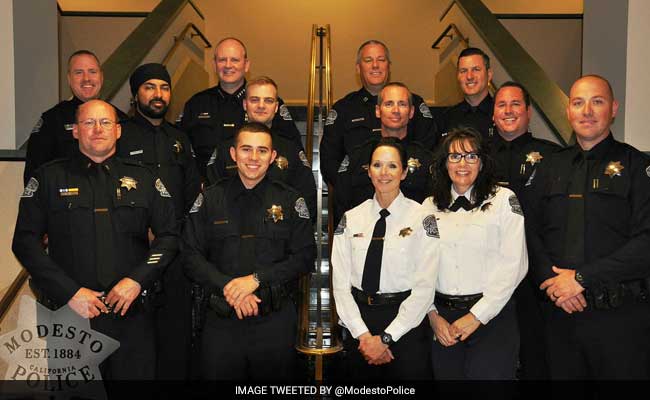
    A 28-year-old Sikh man has been sworn in as the first officer from the community who can wear his turban and beard on work despite grooming policy that requires officers to be clean shaven in the Modesto Police Department, California.

    Varinder Khun Khun, who was born in India, graduated from the Napa Police Academy on June 11 along with two other officers. He is one of 33 officers hired by the department so far this year, The Modesto Bee reported.

    “I’ve never seen police officers wearing a turban before; I didn’t know if I would get a chance (to be a police officer)… I am thankful for the department for giving me the opportunity,” Khun Khun said before the swearing-in ceremony in Modesto.

    The Modesto Police Department’s grooming policy requires officers be clean shaven, allowing only for a mustache that extends to the edge of the lip.

    Khun Khun approached Police Chief Galen Carroll a year ago about applying for the job and the requirement that he have a beard and wear a turban, it said.

    “I told him that that didn’t matter, that we would make accommodations for his religious beliefs and that, more importantly, we were looking for people with high character standards and he would be an addition to the Police Department as a segment of the community that is not represented in the Police Department,” Carroll said.

    “You want to have a police department that mirrors the community as much as possible. When you call an officer and nobody looks like you… you don’t feel like they can understand you or relate to you, so it is important to have that so you build stronger ties with the community,” Carroll added.

    In 2012, California Governor Jerry Brown signed a law that added to California’s Fair Employment Act protection against discrimination for religious dress and grooming practices.

    In April, three Sikh US Army enlistees won permission to wear beards and turbans after filing federal lawsuits that seek to force the Pentagon to accommodate those who wear beards for religious purposes.

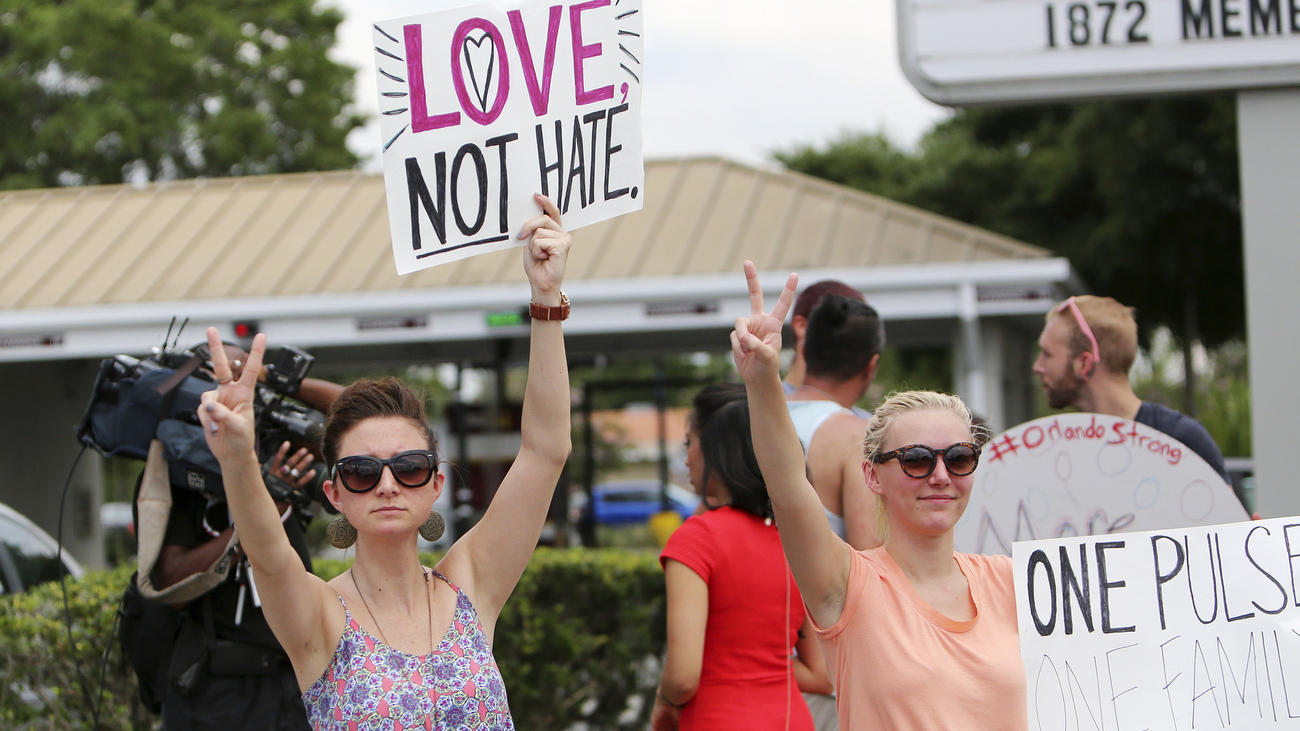
  • Sikh-Americans fear backlash after Orlando shooting

    Sikh-Americans fear backlash after Orlando shooting

    Sikh-Americans, who have faced hate crimes after every major terror attack, are fearing a backlash following the Orlando gay club shooting, even as the Obama Administration has assured them of their safety.

    In a bid to allay growing concerns within the community, the White House sent one of its top officials to a gurdwara in the suburb of Washington DC yesterday to meet members of the Sikh community and local leadership to assure them about their safety and interest.
    (Follow The Tribune on Facebook; and Twitter @thetribunechd)

    “We know, this is a time when some in the community fear unease,” Cecilia Munoz, Director of the Domestic Policy Council at the White House, said after her interaction with the Sikh community at the oldest gurdwara of Maryland—Guru Nanak Foundation of America. She also attended ‘sangat’ with its members.

    “I shared the work that the federal government is doing to make sure that every child is safe and secure, every person is feeling safe and secure in the places of worship and the places where they work and the places where they study,” Munoz said, adding that there was no need to be fearful.

    Her visit to the gurdwara was planned a few days ago but her presence was very timely in terms of the new wave of fear that has gripped the community because of the Orlando incident—the deadliest mass shooting in America’s history.

    Omar Mateen, an Afghan-origin gunman who carried an assault rifle and a pistol into the gay club in Orlando in the wee hours of yesterday and killed 50 people while injuring 53 others, was later shot dead by the police.

    “This is a country of great diversity. We cherish that diversity. We celebrate it. We feel great gratitude to the Sikh community for the many, many contributions to the United States,” Munoz said.

    “It is fundamental to our democracy that people have freedom of worship, but also have freedom from fear,” she said, adding that the Obama Administration has taken steps to address these challenges.

    Paramvir Singh Soni, chairperson of the Guru Nanank Foundation of America, acknowledged that there is a sense of fear in the community and said the Sikh-Americans are touched by the steps being taken by US President Barack Obama in this regard.

    “We are still looking for stronger actions against hate crimes. I think there we need to do some more work, but we are making progress,” he said.
    Singh said the community wants to have the next President as one who can address its challenge.

    “Someone who is more open to the Sikh community, somebody who is more engaged,” he said.

    Dr Rajwant Singh, Washington-based chairman of the Sikh Council on Religion and Education, said the Sikh community is very concerned about the possible backlash from the Orlando killings.

    “We are thankful to the White House for sending Cecilia Munoz to the Sikh congregation in Silver Spring in Maryland. As we were thrilled by this kind gesture, our hearts were broken with the terrible news about the merciless killings of so many innocent people in Orlando,” Singh said.

    “We have had several incidents of violence after the San Bernardino killings last December. We are praying for the victims but at the same time very concerned that how this would impact the Sikh community across the nation,” he said.

    “We have conveyed that this needs to be spelled out by the White House and we request that President Obama include and mention Sikhs, particularly in his remarks, while issuing a statement about the Orlando tragedy. Sikh congregations across the world need some security assistance and capacity building resources,” Singh said.

    The Sikh Coalition in a statement condemned the Orlando shooting as a terrible act of terror, hate and bias-based violence and bigotry against minority communities, including the LGBTQ community.

    “In the aftermath of such events, minority religious communities are acutely vulnerable to backlash, and we urge every Sikh to exercise extra vigilance and caution during this period of heightened anxiety,” it said.

    In another statement, the Sikh American Legal Defence and Education Fund (SALDEF) condemned the hateful attack on the lesbian, gay, bisexual,and transgender (LGBT) community in Orlando Florida.

    American Sikh Council (ASC) said it is extremely distressed by the indescribable act of mass murder at the ‘Pulse’ nightclub in the city of Orlando

    “As a result of such events, religious communities like the Sikh-Americans are acutely vulnerable to backlash, and we urge everyone to exercise vigilance and caution during this period of heightened anxiety. Please notify the local law enforcement in case of any threats of violence,” it said in a statement.

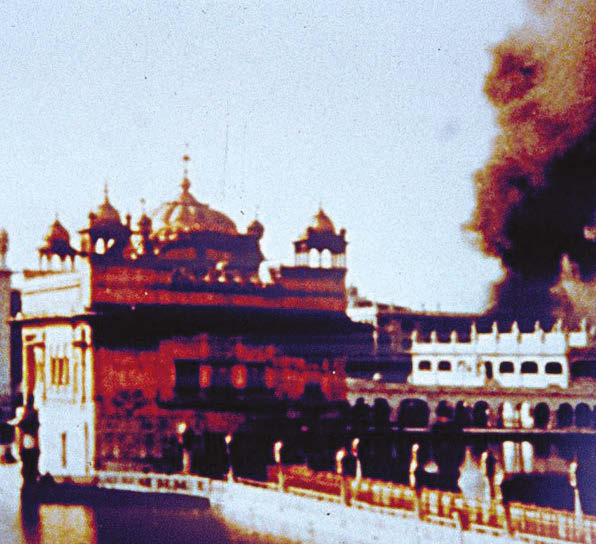
  • OPERATION BLUESTAR: 32 YEARS ON, PAINFUL SCARS REMAIN

    OPERATION BLUESTAR: 32 YEARS ON, PAINFUL SCARS REMAIN

    It’s often described as a watershed moment in Indian history-the government of the day ordering a military assault on Sikhism’s holiest shrine, unleashing a chain of events that included a rare revolt in the disciplined Indian Army and the assassination of then Prime Minister Indira Gandhi followed by sectarian violence.

    After 32 years of Operation Bluestar-the military code name for the mission to reclaim the Golden Temple in-from a group of armed Sikh militants led by Jarnail Singh Bhindranwale who had called for the creation of a separate Sikh state of Khalistan.

    More than three decades on, the Golden Temple reveals the existence of physical and psychological scars that seared the psyche of the Sikh minority in India. Deep holes created by high-velocity bullets and shells slamming into marble and brick still pockmark some walls and stairwells of the temple complex that sees thousands of visitors walking through its portals every day.

    Kulwant Singh, a volunteer at the Golden Temple, readily points out the bullet holes and parts of a collapsed façade as reminders of the army assault. Though born five years after Operation Bluestar, Singh has heard innumerable details of the assault from his elders. “Each detail I have heard is etched in my mind,” he says. When asked if he has forgiven the state for the assault, he shrugs.

    The in-charge of a museum inside the temple complex says he lived through the moments that still evoke a complex mix of emotion that include grief, anger and humiliation. In 1984, he was a member of the All India Sikh Student Federation (AISSF), which also supported the call for a separate Sikh state.

    On 5-6 June, he says he was in the langar (community kitchen) area. He brushes off questions about how he survived those heart-stopping hours. “The main thing is I survived; it’s all thanks to the almighty.”

    The community kitchen is a long rectangular building that lines one side of the amrit sarovar (pool of nectar) that surrounds the Golden Temple, also known as Harmandir Sahib. The devout reach the temple following the parikrama, or square pathway, that circumscribes the sacred pool in a clockwise direction. Connecting the pathway with the Hari Mandir is a marble causeway. The other buildings that line the sides of the sarovar include the museum, a library which had old texts and manuscripts and the Akal Takht (throne of the immortal) that stands in front of the causeway leading to the Harmandir Sahib.

    He recalls that Bhindranwale and some of his supporters moved into a sarai (hostel) in the temple complex some time in 1982. Bhindranwale was not yet regarded as a terrorist though his influence was growing across Punjab. He was a “charismatic preacher” with an arresting personality, “over 6ft tall, with mesmerizing eyes, a fiery preacher who could draw crowds,” he says. “When he set out to do something, he did it. There were some bus drivers who he heard were under the influence of alcohol in Sirhind (in Fategarh district). The sant (Bhindranwale) called them in and spoke to them. They immediately quit, such were his persuasive skills,” he recalls.

    “We will always be proud of him,” says Gurpura Singh. That there is a cenotaph inside the temple complex dedicated to Bhindranwale is testimony that Gurpura Singh is not alone in his beliefs.

    The museum has among its exhibits a portrait gallery of martyrs of the faith. The lineup includes Bhindranwale, Bhai Amrik Singh, head of the AISSF, and major general Shabeg Singh, a veteran of the 1971 India-Pakistan War, dishonorably dismissed from the Indian Army and who later joined Bhindranwale.

    From all accounts, it was Shabeg Singh who planned the defense of the temple complex-fortified bunkers inside strategically located towers and heights, marked-out sniper positions, laid-out communication lines and positioned men armed with light machine guns in underground passages who took out Indian army commandos as they launched the assault on the night of 5 June.

    Bhindranwale grew in stature after he took on the state government following the 1981 assassination of Lala Jagat Narain, founder of the Punjab Kesari group. Bhindranwale was arrested in the case and then let off for want of evidence, catapulting him from murder suspect to a hero within the space of a month, notes Ramachandra Guha in his book “India After Gandhi”.

    Emboldened, he began speaking of a separate Sikh state, after having earlier called Sikhs slaves in India. There are reports that he also turned to Pakistan for help. This rang alarm bells in Delhi. The central government reached out to its arch foe the Akali Dal on its long pending charter of demands-making Chandigarh the capital of Punjab, declaring Amritsar a holy city, a greater share of the waters of the rivers Beas and Sutlej and greater autonomy for the state-first put together in 1973.

    The talks did not lead anywhere. In the meantime, Bhindranwale was courted by the Akalis, who saw him as a threat to their influence, say news reports. Bhindranwale’s brother Harcharan Singh Rode says Akali leader Gurcharan Singh Tohra invited Bhindranwale to stay at the sarai inside the temple complex in the early 1980s. Bhindranwale moved into the Akal Takht in December 1983 when he was convinced that the government would launch an operation to evict him.

    A report in the latest issue of Caravan magazine says Indira Gandhi was opposed to a military operation to clear the temple complex, but arguments presented by her advisors who included her elder son Rajiv and army general K. Sundarji persuaded her.

    Noted journalist and author Kuldeep Nayar says he “suspects” that Rajiv and his close advisers persuaded his mother on the grounds that a military operation would help the Congress win elections that were due in Punjab. “Mrs Gandhi consulted me about the operation through one of her confidantes. I said clearly that the military should not be sent in… This advice was not taken,” Nayar says.

    On the night of 5-6 June, Sohan Singh and Gurpura Singh recall they were in the langar area when Operation Blue Star was launched. On 2 June, Gurpura Singh says a curfew was imposed in the state, which meant that “those like me who were inside the complex could not go out. They also cut off communications links and stopped traffic.”

    The next day, being the martyrdom day of Sikhism’s fifth guru Arjan Dev who died in the early 17th century, the authorities relaxed the curfew to allow people inside.

    “As a result, there were many hundreds of people inside the temple. Many of those inside the temple were killed when on the morning of 4 June, there was firing without any warning. There was total chaos as people began desperately to seek safety. The worst casualties were among the women and children,” says Gurpura Singh. The museum has two boards listing more than 700 people it says were killed in the temple complex on 4 June by the firing.

    “The fact that they (Indian Army and government) started the operation on the day of the guru’s martyrdom shows they did not care for us or our sentiments,” says 58-year-old Satbir Singh, a hardware store owner in Amritsar. “We Sikhs have shed blood for this country.”

    The late Sikh historian and author Khushwant Singh talks of the “notable role” played by the Sikh peasantry in helping Indian troops on the front line in the 1965 war with Pakistan in an essay in the book The Punjab Story.

    The bodies of Bhindranwale and Shabeg Singh were discovered in the Akal Takht, narrates lieutenant general K.S. Brar in his book Operation Blue Star: The True Story.

    Thirty one-year-old Jagjit Singh, a resident of Amritsar, says that though he was just a year old when Operation Blue Star took place, “I feel angry when I think about it. Those who lived through it must have felt much worse, which is why Mrs Gandhi was killed (by her Sikh security guards) in revenge. We (Sikhs) have always avenged our insults,” he says. Gandhi’s assassination was followed by a massacre of Sikhs across North India, something the government of the day did little to stop.

    News of the damage to the Akal Takht also triggered a revolt in sections of the Indian Army. According to Brar’s book, just 3% of the army, a majority of whom were young and unseasoned, were involved in these revolts and mutinies.

    Nayar says that Sikhs felt all the more insulted by Operation Blue Star and the sectarian violence “as they felt this happened as they are in minority.” The 2001 census pegs the number of Sikhs at less than 2% of India’s billion plus population.

    Jaskiran Singh, a professor of defence and national security studies at Punjab University, is of the view that “it was Operation Blue Star and the violence that followed, that militancy grew in Punjab. It took almost a decade to quell it.”

    Three decades on, tensions between Hindus and Sikhs triggered by Operation Blue Star are gone, says Ashutosh Kumar, a professor of political science at Panjab University.

  • Canada’s Prime Minister Justin Trudeau Apologizes in House of Commons for the Komagata Maru incident more than a century ago

    Canada’s Prime Minister Justin Trudeau Apologizes in House of Commons for the Komagata Maru incident more than a century ago

    OTTAWA (TIP): Prime Minister Justin Trudeau has formally apologized in the House of Commons for the Komagata Maru incident in 1914, in which hundreds of Sikh, Muslim and Hindu passengers were denied entry to Canada and forced to return to an uncertain and ultimately violent fate in India.

    On May 23, 1914, a steamship arrived in Vancouver. The 376 passengers had hopes for a new life in Canada, were of Sikh, Muslim, and Hindu origin. They were denied entry into Canada due to the laws in existence. On May 18, 2016, the Canadian PM delivered a formal apology in the House of Commons, in front of descendants of those directly affected by the incident.

    Opposition Leader Rona Ambrose, NDP Leader Tom Mulcair, BQ Leader Rheal Fortin and Green Party Leader Elizabeth May also rose to add their voices to the apology and to offer their own remarks.

    “Canada does not bear alone the responsibility for every tragic mistake that occurred with the Komagata Maru and its passengers, but Canada’s government was without question responsible for the laws that prevented these passengers from immigrating peacefully and securely, for that, and for every regrettable consequence that followed, we, are, sorry,” Trudeau said.

    Here is the text of Prime Minister Trudeau’s apology in the House of Commons.

    “Mr. Speaker, I would like to begin by acknowledging the hard work done by many of my colleagues. From my own caucus, I’d like to thank the members from Surrey-Newton and Winnipeg North for their tireless advocacy. They have petitioned the Canadian government for years to make the apology that will be made today. I thank them for their commitment to this cause.

    “From the Opposition benches, special mention must be made of the members from Calgary Heritage, Calgary Midnapore and the former member for Surrey North. Each deserves recognition for the work they have done to seek resolution for victims and their families.

    “As do the many organisations that have sought the same, in particular, the Professor Mohan Singh Memorial Foundation.

    “Mr. Speaker, today I rise in this House to offer an apology on behalf of the government of Canada, for our role in the Komagata Maru incident.

    “More than a century ago, a great injustice took place. On May 23, 1914, a steamship sailed into Burrard Inlet in Vancouver. On board were 376 passengers of Sikh, Muslim and Hindu origin. Those passengers, like millions of immigrants to Canada since, came seeking better lives for their families. Greater opportunities. A chance to contribute to their new home.

    The Komagata Maru was forced to return to India where some of the passengers were killed in a clash with police.
    The Komagata Maru was forced to return to India where some of the passengers were killed in a clash with police.

    “Those passengers chose Canada. And when they arrived here, they were rejected.

    “Mr. Speaker, Canada cannot solely be blamed for every tragic mistake that occurred with the Komagata Maru and its passengers. But Canada’s government was, without question, responsible for the laws that prevented these passengers from immigrating peacefully and securely.

    “For that, and for every regrettable consequence that followed, we are sorry. … I apologise, first and foremost, to the victims of the incident.

    “No words can fully erase the pain and suffering they experienced. Regrettably, the passage of time means that none are alive to hear our apology today.

    “Still, we offer it, fully and sincerely. For our indifference to your plight. For our failure to recognise all that you had to offer. For the laws that discriminated against you, so senselessly. And for not formally apologising sooner. For all these things, we are truly sorry.

    “I also wish to apologise to the descendants of the passengers of the Komagata Maru, including those who are here with us here today. We can never know what your lives would have been like had your relatives been welcomed to Canada.

    “The ways in which your lives would have been different. The ways in which Canada would have been enriched. Those possibilities are lost to history.

    “For that — and to you — we apologise. Just as we apologise for past wrongs, so too must we commit ourselves to positive action — to learning from the mistakes of the past, and to making sure that we never repeat them. That is the unique promise and potential of Canada. …

    “Mr. Speaker, before I finish, I would like to acknowledge one more member who has helped to bring the Komagata Maru incident to our national attention — the Minister of National Defence. Before entering political life, the Minister was the commanding officer of the British Columbia Regiment Duke of Connaught’s Own — the same regiment that once forced out the Komagata Maru. A century ago, the Minister’s family might well have been turned away from Canada. Today, the minister sits beside us, here, in this House.

    “In a House that includes immigrants. That includes the daughters and sons — the granddaughters and grandsons — of immigrants. The very makeup of this House should remind all of us that when we have the choice between opening our arms to those in need or closing our hearts to them, we must always choose the more compassionate path.

    “When we see injustice, we must speak up, and attempt to make things right. When we make mistakes, we must apologise, and recommit ourselves to doing better.

    “Mr. Speaker, Canada is a country unlike any other. We are blessed to call it home. Let us always endeavour to do better, and to be better. Let us do that in honour of the victims of the Komagata Maru incident, and every courageous person who leaves behind family and familiar things, to bring to Canada the very best of who they are.

    Thank you.”

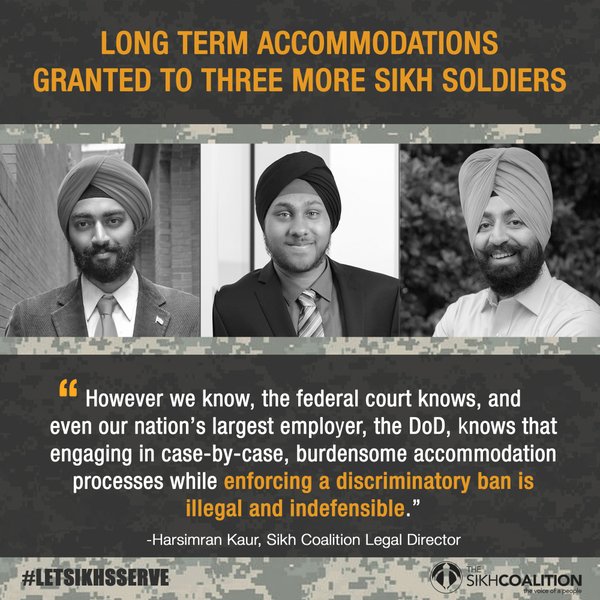
  • U.S. Army Acquiesces, Grants Accommodations to Three More Sikh Soldiers

    U.S. Army Acquiesces, Grants Accommodations to Three More Sikh Soldiers

    The U.S. Army granted three observant Sikh American soldiers religious accommodation April 8, permitting them to serve with their articles of faith intact.

    The recent enlistees had sued the Army and the Pentagon to get an answer on their religious accommodation requests prior to starting basic combat training in May.

    Two have been accommodated in the Army National Guard, and one in the U.S. Army Reserve. With the Army’s recent approval of a decorated Sikh-American Army captain, in just over a week, four Sikh soldiers have received landmark religious accommodations to serve their country without being forced to compromise their faith.

    “We commend the U.S. Department of Defense for its decision to allow these soldiers to serve with their religious turbans and beards,” said Sikh Coalition Legal Director Harsimran Kaur. “However we know, the federal court knows, and even our nation’s largest employer, the DoD, knows that engaging in case-by-case, burdensome accommodation processes while enforcing a discriminatory ban is illegal and indefensible.”

    “After months of waiting, I’m ecstatic that I can finally serve both God and country,” Private Arjan Singh Ghotra, one of the plaintiffs, said in a written statement. “I will be forever grateful to the Army for at least letting me go to boot camp. I look forward to proving that I can serve as well as anyone and am hopeful the Army will extend my accommodation afterward.”

    Ghotra is a 17-year-old high school senior who enlisted with the Virginia Army National Guard.

    Religious accommodations were also granted to Specialist Kanwar Singh, who joined the Massachusetts Army National Guard after seeing its response to the Boston Marathon bombing, and Specialist Harpal Singh, who joined the U.S. Army Reserve through the Military Accessions Vital to the National Interest program, which allows legal noncitizens who have in-demand skills to join the Army in exchange for expedited citizenship.

    Devout followers of Sikhism, a South Asian religion, wear turbans and have unshorn hair.

    Under a 2014 rule change, the armed services will accommodate religious requests for individual service members unless the request would interfere with military readiness, a mission or unit cohesion.

    The religious accommodations for Ghotra, Kanwar Singh and Harpal Singh will be reevaluated after their training, according to Army memos released by their lawyers.

    “I may withdraw or limit the scope of your accommodation for reasons of military necessity, including if I cannot confirm that Army protective equipment (to include [Army combat helmet] and protective mask) will provide you the intended degree of protection against the hazards presented by the duties or areas to which you will be assigned,” Assistant Secretary of the Army Debra Wada wrote in the memos.

    Their turbans will have to be black or camouflage, depending on the situation, according to the memo. Also, their beards must be rolled or tied to no longer than two inches while in garrison or one inch when in the field or during physical training. And their hair cannot cover their ears or eyebrows or touch their uniforms’ collars.

    Lawyers for the three men applauded the Army’s decision but said the case-by-case accommodations are still discriminatory.

    “We commend the U.S. Department of Defense for its decision to allow these soldiers to serve with their religious turbans and beards,” Sikh Coalition Legal Director Harsimran Kaur said in a written statement. “However, we know, the federal court knows, and even our nation’s largest employer, the DoD, knows that engaging in case-by-case, burdensome accommodation processes while enforcing a discriminatory ban is illegal and indefensible.”

    The soldiers are represented by the Sikh Coalition, the Becket Fund for Religious Liberty and the law firm of McDermott Will & Emery.


    For more information about the Sikh Coalition’s military campaign and the facts surrounding the military ban, click here. To schedule interviews with legal and policy experts from the Sikh Coalition, McDermott Will & Emery, or the Becket Fund, please contact Mark Reading-Smith or Jagmeet Singh.
  • Elderly Sikh couple attacked in US; robbery suspected

    Elderly Sikh couple attacked in US; robbery suspected

    San Francisco, April 6 | In yet another case of violence against Sikhs in California’s Fresno city, a elderly Sikh man was left bloodied and bruised after armed robbers attacked him while he was taking a walk along with his wife.

    However, police said it was not a case of hate crime but seemed like robbers picking on older people.

    The robbers struck on Monday night on the northwest side of the Fresno town.

    The victims, the man and his 69-year-old wife who have not been named, were taking their nightly walk when they noticed three young men walking towards them.

    Two of those men caught up and one of them was armed.

    “He pulled out a folding knife and told the male victim he wanted money and his cell phone. He repeated that three times,” Fresno police Lt Joe Gomez was quoted as saying by KFSN-TV.

    The man did not have any money, but he gave up his phone.

    As soon as he did, the guy without a knife launched an attack.

    “He just rushes and kind of cold cocks the victim in the face, really for no reason,” Gomez said.

    The elderly man fell to the ground as blood spilled all over his clothes. The robbers then patted down his wife to make sure she had nothing of value and then they took off.

    “It looks like young robbers picking on older people. That’s what the motivation is here,” Gomez said while stating that it was not a hate crime.

    Just a couple blocks from the scene of the attack is a new Gurdwara and members there have been on high alert in light of recent assaults classified as hate crimes against Sikhs.

    A 68-year-old Sikh man was stabbed to death in Fresno city on January 1 this year.

    Alexis Mendoza and Daniel Wilson are charged with a hate crime for attacking Amrik Singh Bal, including by running him down in a car — an act caught on surveillance video from a home in the area in December.

    Last September, Gilbert Garcia was convicted of attacking 82-year-old Piara Singh because of his cultural appearance.