
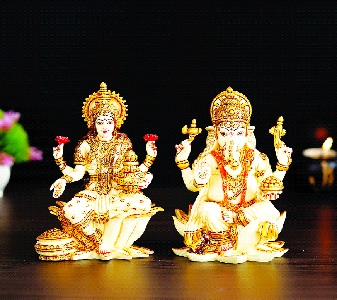

Diwali is traditionally associated with the return of Lord Rama, Goddess Sita and Lakshmana to Ayodhya after 14 years of exile and the victory of righteousness over evil. However, there is an interesting spiritual aspect of Diwali that often makes people curious: if the festival celebrates the homecoming of Lord Rama, why are Goddess Lakshmi and Lord Ganesha worshipped together instead of Lord Vishnu?
The answer lies in an interesting mythological story that explains the special bond between Goddess Lakshmi and Lord Ganesha and the significance of their worship during Diwali.
Goddess Lakshmi is revered as the deity of wealth, fortune, abundance and prosperity, while Lord Ganesha is worshipped as the remover of obstacles and the god of wisdom, intellect and new beginnings.
According to Hindu tradition, Diwali Lakshmi Puja is an occasion to invite prosperity, happiness and auspiciousness into one’s home. However, wealth alone cannot bring lasting happiness. Wisdom is equally important to ensure that prosperity is used in the right way.
This is why Goddess Lakshmi and Lord Ganesha are worshipped together. Their divine association symbolizes the importance of balancing wealth with wisdom, material prosperity with spiritual understanding, and success with humility.
Diwali Lakshmi Puja traditionally involves the worship of five deities:
n Goddess Mahalakshmi: The goddess of wealth, prosperity and abundance.
n Lord Ganesha: The remover of obstacles and the deity of wisdom and auspicious beginnings.
n Goddess Mahasaraswati: The goddess of knowledge, learning and wisdom.
n Goddess Mahakali: The divine form associated with strength and the destruction of negativity.
n Lord Kubera: The celestial treasurer and guardian of wealth.
Together, these deities represent the blessings required for a prosperous, meaningful and harmonious life.
The Mythological Story Behind Lakshmi and Ganesha’s Association
According to a popular traditional legend, once Goddess Lakshmi and Lord Vishnu were having a conversation in Vaikuntha. Goddess Lakshmi was praising her divine powers and explaining how her blessings could bring wealth, luxury, happiness and prosperity to the world.
Listening to her, Lord Vishnu gently reminded her that although she possessed all the divine qualities, she had not experienced the joy of motherhood. He explained that motherhood was considered one of the most beautiful experiences in a woman’s life. Goddess Lakshmi felt saddened by these words and decided to visit her dear friend, Goddess Parvati, to share her feelings. After listening to her, Goddess Parvati asked how she could help. Goddess Lakshmi expressed her desire to experience motherhood and requested Parvati to give her one of her sons.
Goddess Parvati had two sons, Lord Kartikeya and Lord Ganesha. She initially hesitated, explaining that Kartikeya had his own needs and Ganesha was quite playful and mischievous. She wondered how Goddess Lakshmi, who was always moving between different places, would take care of a child.
Goddess Lakshmi lovingly assured her that she would shower the child with affection and provide him with every comfort. She promised that all the divine attendants would look after him and that he would always remain close to her heart.
Moved by her affection, Goddess Parvati agreed to give Lord Ganesha to Goddess Lakshmi as her adopted son.
Overjoyed, Goddess Lakshmi declared that she would bless Ganesha with all her wealth, accomplishments, luxuries and prosperity. She also promised that her blessings would never be complete without his worship.
She further declared that whoever worshipped her without worshipping Lord Ganesha would not receive her complete blessings. From that day onwards, according to this popular legend, Lord Ganesha became an inseparable part of Goddess Lakshmi’s worship.
This is one of the traditional stories associated with the practice of worshipping Goddess Lakshmi and Lord Ganesha together during Diwali.
The Spiritual Message Behind Lakshmi-Ganesha Puja
The worship of Goddess Lakshmi and Lord Ganesha together carries a beautiful spiritual message.
Goddess Lakshmi represents wealth, abundance and material comfort, while Lord Ganesha represents wisdom, intelligence and the ability to overcome obstacles.
Their combined worship reminds us that wealth without wisdom can lead to arrogance, greed and unhappiness. Similarly, wisdom without the means to fulfil our responsibilities can make life challenging.
The true meaning of prosperity lies in maintaining a balance between the two.
Diwali teaches us that before inviting wealth into our homes, we must also invite wisdom into our minds and purity into our hearts. It reminds us to use our resources responsibly, help those in need and remain humble even when life blesses us with abundance.
Diwali Vrat Katha: The Story of the Seven Brothers and Their Youngest Sister-in-Law
An important part of Diwali celebrations in many households is listening to traditional Lakshmi Puja stories. One such popular folk tale is the story of seven brothers and their youngest sister-in-law, which conveys the importance of faith, determination and devotion.
Once upon a time, seven brothers lived together in a village. Their family was extremely poor and struggled to meet even its basic needs. One day, the youngest brother got married and brought his wife home.
As Diwali approached, the youngest daughter-in-law decided to change the family’s circumstances. She gathered all the brothers and encouraged them to go out and work. She asked each of them to bring home whatever they could earn or find. The brothers agreed and went out in search of work.
The youngest daughter-in-law began cleaning the house. By evening, the brothers returned with different things. One brought cow dung, another brought a dead snake, while the others brought milk, vegetables, a broom, paddy grains and wheat.
The young woman accepted everything and used the available ingredients to prepare a meal for the family.
The following day, an announcement was made throughout the kingdom. The queen had lost her precious nine-lakh necklace while bathing in a river. Whoever found and returned the necklace would receive a generous reward from the king.
Meanwhile, an eagle carrying the necklace flew over the brothers’ house. Seeing the dead snake on the roof, the eagle dropped the necklace, picked up the snake and flew away.
The brothers were delighted when they discovered the necklace. They wanted to return it to the queen, but the youngest sister-in-law insisted that she would personally take it to the palace.
When she reached the palace and returned the necklace, the king was extremely pleased. He offered her a reward and asked what she desired.
The clever woman requested something unusual. She asked the king to ensure that the entire city remained dark on Diwali night, with no lamps or lights except in her own home.
The king granted her wish.
On the night of Diwali, the entire city remained dark, while the young woman’s house was beautifully illuminated. She had cleaned and decorated her home, leaving one room dark.
As Goddess Lakshmi arrived in the city, she searched for a place where a lamp was burning. Seeing the beautifully illuminated house, she approached its entrance and knocked on the door.
The young woman asked who was there. Goddess Lakshmi replied that she was Lakshmi herself and requested permission to enter, explaining that the entire city was dark.
The daughter-in-law initially refused to open the door. She said that Goddess Lakshmi was known to move from one place to another, and there was no guarantee that she would stay in their home. Goddess Lakshmi assured her that she would remain there forever and bless the household with prosperity.
Satisfied with this promise, the young woman welcomed the goddess with great devotion and offered her the finest place in the house.
She then entered the dark room and drove away Daridra, the personification of poverty and misfortune, symbolizing the removal of negativity and hardship from the household.
According to the message of this folk tale, Goddess Lakshmi blesses the home where there is cleanliness, devotion, determination and a sincere desire to overcome hardship.



Be the first to comment