
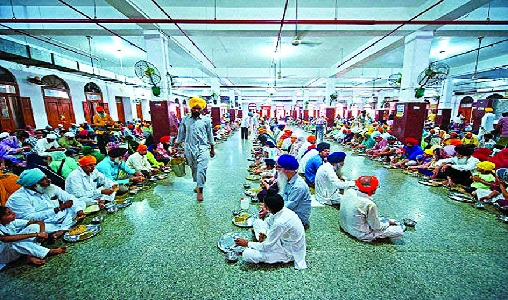

In a world that still grapples with hunger, inequality, and division, the simple act of sharing a meal can become a spiritual revolution. Over five hundred years ago, Guru Nanak Dev Ji, the founder of Sikhism, envisioned such a revolution – one that would begin not in palaces or temples, but in a humble kitchen. His idea was Langar, a free community kitchen that fed anyone and everyone, without discrimination.
Today, from the corridors of the Golden Temple in Amritsar to makeshift tents in disaster zones, from city streets to refugee camps, Langar continues to serve millions of meals every single day – a living embodiment of equality in action.
The Origins: A Meal That
Challenged Caste and Creed
To understand the Langar, one must return to the 15th century – a time when India was divided by rigid caste hierarchies and religious divisions. People were categorized not by their humanity, but by birth, occupation, and belief. The privileged ate separately, while the marginalized often went hungry.
Amid this injustice, Guru Nanak Dev Ji (1469-1539) emerged as a voice of divine compassion and moral courage. From a young age, he questioned meaningless rituals and hypocrisy in religion. His defining moment came during his youth, when his father, Mehta Kalu, gave him 20 rupees to start a business – a test of his responsibility.
Instead of seeking profit, Nanak spent the money feeding a group of hungry ascetics. When reprimanded, he calmly replied,
“This was Sacha Sauda – the True Trade.”
That act – choosing compassion over commerce – marked the seed of Langar. Years later, as Guru Nanak established the first Sikh commune at Kartarpur Sahib, he institutionalized the Langar as a permanent part of Sikh practice. Everyone, regardless of caste, gender, or religion, would sit together and eat the same food, symbolizing oneness before God.
Langar: A Radical Act of Equality
Langar was far more than charity; it was a spiritual declaration. In a society where upper castes refused to eat with “lower-born” individuals, Guru Nanak’s Langar erased all such distinctions. The concept of sitting together in a pangat (row) to share a simple meal was an act of rebellion against social inequality and a profound expression of humility.
Mata Khivi: The First Lady of Langar
An often-overlooked yet central figure in the Langar tradition is Mata Khivi Ji, wife of Guru Angad Dev Ji (the second Sikh Guru). She is lovingly remembered in the Guru Granth Sahib for her graciousness and dedication in managing the Langar at Khadoor Sahib.
She organized, expanded, and systemized the community kitchen – ensuring that every visitor received warm food, kindness, and respect. Under her care, Langar became an institution of dignity, where both men and women served equally. Mata Khivi’s example established seva (selfless service) as the heartbeat of Sikh communal life.
Langar Through the Centuries
The Gurus who followed Guru Nanak strengthened the Langar tradition. Guru Amar Das Ji made participation in Langar a precondition for audience with him – even emperors had to sit in the pangat before meeting the Guru. This simple act symbolized humility and the breaking down of hierarchy.
By the time of Guru Arjan Dev Ji, Langar was a defining identity of the Sikh community. The tradition became inseparable from the Gurdwara (Sikh temple), ensuring that no one would leave hungry from the house of God.
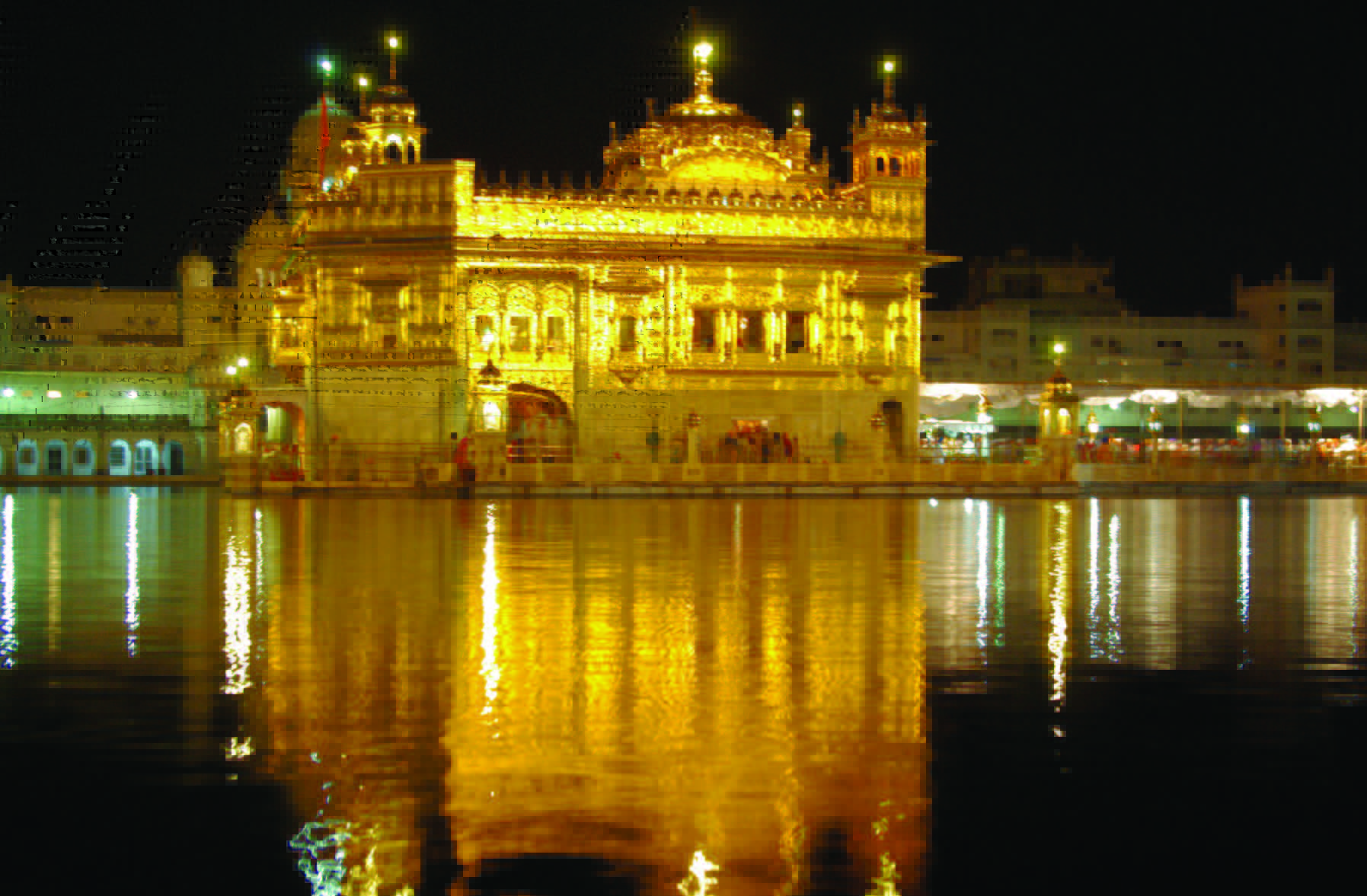
When the magnificent Golden Temple (Harmandir Sahib) was constructed, the Langar became its soul. To this day, the Golden Temple serves over 100,000 free meals daily, using nearly 50 quintals of wheat flour, 18 quintals of dal, and 12 quintals of rice – all prepared and served by volunteers.
The Spirit of Seva: Service Without Self
The essence of Langar lies not only in the food but in the spirit of seva. Every task – from peeling onions to washing dishes – is done as a spiritual offering, without expectation of reward or recognition.
Volunteers, known as sevadars, come from all walks of life: farmers, doctors, homemakers, students, even tourists. All cover their heads, remove their shoes, and work shoulder-to-shoulder in humility. In the eyes of the Guru, all are equal. There is no hierarchy in Langar – only harmony.
Global Reach: Langar Without Borders
What began in a small village on the banks of the River Ravi has now become a global humanitarian movement. Wherever Sikhs have settled, they have carried the tradition of Langar with them – to Canada, the UK, the US, Australia, Kenya, and beyond.
During times of crisis, Langar becomes a lifeline.
During the COVID-19 pandemic, Gurdwaras across the world delivered meals to hospitals, stranded workers, and the homeless.
Khalsa Aid, inspired by Guru Nanak’s teachings, set up mobile kitchens in war-torn regions like Iraq, Syria, and Ukraine.
In London, the “Midnight Langar” at Trafalgar Square feeds the homeless every weekend.
In Melbourne and Toronto, Sikh youth organizations distribute food in public parks and train stations.
Each meal served is a continuation of Guru Nanak’s vision – spirituality through action, compassion beyond boundaries.
Why Langar Matters Today
In an age defined by social media excess, food waste, and growing inequality, the Langar stands as a beacon of simplicity and sustainability. It teaches that the greatest form of worship is not chanting prayers in isolation, but feeding a hungry soul with love.
It also challenges modern notions of charity. Langar is not about giver and receiver – it’s about shared humanity. Both the one who serves and the one who eats are spiritually nourished.
Even in 2025, the relevance of Guru Nanak’s Langar is profound:
– It fosters interfaith harmony by welcoming all.
– It combats hunger and food insecurity in practical ways.
– It teaches environmental responsibility through minimal waste and community cooking.
– And it inspires volunteerism and humility in a world driven by self-interest.
A Meal of the Soul
Langar is more than food – it is faith served on a plate. Each roti rolled, each dal stirred, and each thali washed carries the message of Ik Onkar – One Universal Creator. It dissolves the illusion of separateness and reminds us that divinity dwells in every being.
As Guru Nanak taught:
“Recognize the Lord’s light within all, and do not consider social class or status.
There are no strangers – no one is high or low.”
The Eternal Table of Humanity
Five centuries later, the aroma of Langar still rises from Gurdwaras across continents – a fragrance of equality, humility, and love. Beneath that fragrance lies the timeless wisdom of Guru Nanak Dev Ji: that spirituality is not an escape from the world but a transformation of it.
In every grain cooked and shared in Langar lives the heartbeat of humanity. In every hand that serves and every hand that receives, God is found.


Be the first to comment