

As spring approaches and anticipation for Holi begins to build, the Hindu calendar marks a spiritually intense phase known as Holashtak. Observed during the eight days preceding Holika Dahan in the bright fortnight of Phalguna, Holashtak is traditionally regarded as a period when auspicious ceremonies such as weddings and housewarmings are avoided. However, beneath this cultural restraint lies a profound spiritual narrative rooted in devotion, endurance, and purification. Holashtak is not merely a pause in celebration – it is a sacred preparation for renewal.
Mythological Origins: Prahlada’s Unshaken Faith
The foundation of Holashtak is found in the legend of Prahlada, whose devotion to Vishnu remains one of the most powerful expressions of bhakti in Hindu scriptures. Prahlada was the son of the powerful asura king Hiranyakashipu, who, intoxicated by a boon that made him nearly invincible, demanded to be worshipped as supreme.
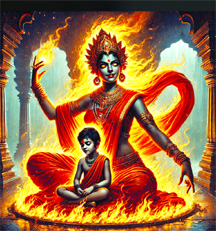
Prahlada’s refusal to abandon Vishnu angered his father, leading to a series of brutal trials. Traditional belief associates these ordeals with the eight days of Holashtak. The child was poisoned, thrown from heights, trampled by elephants, and finally seated on a blazing pyre with his aunt Holika, who possessed a boon protecting her from fire. Yet divine grace shielded Prahlada each time.
The story culminates with Vishnu manifesting as Narasimha, the fierce half-man, half-lion incarnation, who destroyed Hiranyakashipu at twilight, thereby restoring cosmic balance. Holashtak thus commemorates the triumph of unwavering faith over arrogance and tyranny.
Astrological Significance: A Period of Cosmic Turbulence
In many North Indian traditions, Holashtak is considered astrologically sensitive. It is believed that certain planetary alignments during these eight days generate unstable energies, making new beginnings less favorable. As a result, marriages and other major ceremonies are postponed until after Holika Dahan.
Yet the deeper symbolism transcends astrology. The perceived turbulence mirrors the chaos created by Hiranyakashipu’s ego. Just as divine intervention ultimately restored order, the sacred fire of Holika Dahan represents the reestablishment of harmony.
Spiritual Interpretation: Confronting the Inner Ego
Beyond mythology and astrology lies the psychological dimension of Holashtak. Hiranyakashipu symbolizes ego, pride, anger, greed, and attachment – qualities that disturb inner peace. Prahlada represents faith, surrender, and resilience.
Each of the eight days can be viewed as a step in confronting personal weaknesses. Devotees often dedicate this time to chanting Vishnu Sahasranama, reciting passages from the Bhagavata Purana, observing simple diets, practicing charity, and engaging in devotional singing. Rather than being a time of fear, Holashtak becomes an opportunity for self-examination and spiritual discipline.
Regional Observances and Cultural Practices
Holashtak holds particular significance in states such as Punjab, Haryana, Uttar Pradesh, Rajasthan, and Bihar. Families traditionally avoid planning auspicious events during this period. Temples organize satsangs and narrate Prahlada’s story, reinforcing the message of steadfast devotion. Preparations for Holika Dahan often begin during these eight days, including the collection of wood for the ceremonial bonfire. This physical preparation mirrors the inner cleansing devotees are encouraged to undertake.
Holika Dahan: The Fire of Purification
The culmination of Holashtak occurs on the full moon night with Holika Dahan. Devotees gather around the sacred fire, offering grains and symbolic negativity into the flames. The ritual represents the burning of illusion, ego, and accumulated impurities.
Only after this purification does Holi erupt in vibrant celebration the following day. The sequence is spiritually meaningful – first cleanse, then celebrate.
A Sacred Pause Before Celebration
In today’s fast-paced world, Holashtak offers a rare spiritual rhythm. It reminds us that true joy is most meaningful when preceded by reflection. The colors of Holi symbolize renewal and liberation, but they gain depth when the heart has first been purified. Holashtak, therefore, is not a period of misfortune but a sacred bridge between trial and triumph. It teaches that faith withstands adversity, humility overcomes arrogance, and light inevitably follows even the darkest nights.


Be the first to comment