
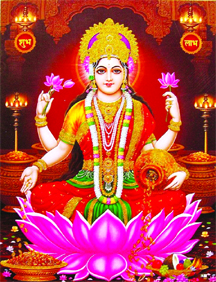

On the moonless night of Diwali, when darkness seems most complete, millions of homes across India come alive with shimmering lamps. Amidst the radiance, devotees welcome the presence of Goddess Lakshmi-the eternal embodiment of prosperity, abundance, and grace. As bells ring and prayers rise, her golden form, seated upon a blooming lotus, symbolizes the triumph of purity over greed, effort over chance, and wisdom over material illusion. Lakshmi is not merely the goddess of wealth-she is the divine feminine principle that sustains life’s harmony, balance, and beauty.
The Radiant Origin of Lakshmi
The story of Lakshmi’s birth is as luminous as the goddess herself. According to the Puranas, during the Samudra Manthan-the cosmic churning of the ocean by gods and demons in search of amrita (nectar of immortality)-Lakshmi emerged from the depths of the ocean, radiant and resplendent, seated on a lotus and holding a lotus in her hand. Her appearance was the manifestation of divine equilibrium, born of effort, faith, and cooperation between opposing forces.
Her emergence signified that wealth and prosperity-spiritual and material-arise only when there is harmony, diligence, and alignment with cosmic law. In that moment, the universe revealed that beauty, abundance, and fortune are not accidental gifts but the fruits of balance and devotion.
The Vishnu Purana describes her as the eternal consort of Lord Vishnu, the Preserver in the Hindu Trinity, symbolizing that prosperity (Lakshmi) can only endure where preservation, order, and righteousness (Vishnu’s dharma) prevail.
The Symbolism of Lakshmi
Every aspect of Lakshmi’s iconography speaks in layers of symbolism.
– Lotus Seat: Lakshmi is always depicted seated or standing upon a lotus-symbolizing purity that blooms even in the muddiest waters. It represents spiritual detachment, reminding devotees that true wealth flourishes when the soul remains unstained by greed or ego.
– Four Hands: Her four arms denote the four aims of human life (Purusharthas): Dharma (righteousness), Artha (wealth), Kama (desire), and Moksha (liberation). Together, they teach that material prosperity must harmonize with virtue, pleasure with discipline, and abundance with enlightenment.
– Gold Coins: Flowing from her palm are golden coins, the symbols of endless generosity and the divine cycle of giving and receiving. They remind us that wealth is not meant to stagnate, but to circulate-to nurture, to serve, and to uplift.
– Elephants Showering Water: Often depicted beside her are elephants pouring water from their trunks, symbolizing royal power, wisdom, and the ceaseless flow of auspicious energy. They represent spiritual strength that sustains prosperity.
– Owl (Ulooka): Her vehicle, the owl, signifies vigilance and wisdom, teaching that wealth without awareness can lead to downfall. The owl sees through darkness-just as one must remain awake amidst the illusions of material life.
Lakshmi and the Feminine Principle
Lakshmi is more than a goddess-she is Shakti, the vital energy that animates creation. As the consort of Vishnu, she complements the principle of preservation with the power of sustenance. Without her, the universe would lack beauty, nourishment, and order. In philosophical terms, Lakshmi represents Sri, the subtle cosmic force that pervades everything-from the rhythm of the cosmos to the flow of prosperity in a household. Her presence in mythology and life signifies the divine feminine’s indispensable role in maintaining balance between spirit and matter.
She is both gentle and powerful-Saumya in form, yet Mahashakti in essence. In her, tenderness meets resilience, grace meets purpose, and compassion meets discipline.
Lakshmi in the Scriptures
The Rig Veda, one of the oldest known scriptures, extols her as Sri-the radiant goddess of abundance, light, and auspiciousness. The Sri Sukta, a hymn of 15 verses, venerates her as the giver of both material prosperity and spiritual illumination. In these verses, she is invoked not just for wealth, but for health, strength, fame, and purity of mind.
Later texts such as the Padma Purana and Devi Bhagavata Purana expand her stories, linking her with the cyclical nature of existence-ever manifest, ever renewing. In the Vishnu Sahasranama, Vishnu is called Lakshmipati, emphasizing that divine wealth belongs to those aligned with truth and righteousness.
The Lakshmi of Diwali Night
Among the five days of Diwali, Lakshmi Puja on the third day is the most auspicious. It falls on the new moon night of Kartika Amavasya-a time when the absence of natural light calls forth the need for inner and outer illumination.
As dusk falls, homes are cleaned, purified, and adorned with lamps, flowers, and rangolis. The act of sweeping and decorating symbolizes the clearing of negative energies and inviting the divine into one’s space. Doors are kept open to welcome the goddess, while lamps are placed on thresholds and windowsills so that no corner remains in darkness.
In business households, ledgers and accounts (bahi-khatas) are ritually opened and offered to the goddess, marking the start of a new financial year. Families chant Lakshmi Ashtottara Shatanamavali-the 108 names of the goddess-and offer sweets, fruits, and coins. The belief is that on this night, Lakshmi visits the earth and blesses homes that are clean, peaceful, and full of devotion.
The quiet reverence of Lakshmi Puja contrasts beautifully with the noise of fireworks outside-it is a reminder that true abundance arises from calmness, gratitude, and integrity.
Stories and Myths of Lakshmi’s Grace
Lakshmi’s myths reflect the human relationship with wealth-its promise, peril, and potential. One legend tells how she once left the gods due to their arrogance, plunging heaven into darkness and despair. Only when humility and cooperation were restored did she return, bringing abundance with her. Another story describes her test of King Bali. When Vishnu, in his Vamana avatar, asked the demon king for three paces of land, Bali gave away everything he possessed. Moved by his sacrifice, Lakshmi declared that wherever humility and generosity dwell, there she would reside eternally.
These stories underline a timeless truth: prosperity follows righteousness, not the other way around.
Lakshmi and the Human Spirit
Lakshmi’s worship is not merely about the accumulation of wealth but about cultivating the right relationship with it. She embodies the idea that prosperity must be earned through effort, maintained through ethics, and shared through compassion.
The lotus she stands upon teaches spiritual detachment-live amidst abundance, but remain rooted in purity. Her calm demeanor amidst opulence reminds us that true wealth is inner peace. Her ever-smiling face reflects that joy flows not from possession but from gratitude.
In the Bhagavad Gita, Krishna says, “Wherever there is wealth, glory, or power, know it to be a manifestation of my divine Lakshmi.” Thus, Lakshmi is not confined to rituals; she dwells wherever there is harmony, charity, and beauty of thought.
Lakshmi in Today’s World
In today’s fast-paced, material-driven world, Lakshmi’s message feels more relevant than ever. Her ancient wisdom challenges modern excess, reminding us that prosperity is not merely a number in a bank account but a state of balance-between giving and receiving, work and rest, ambition and peace.

Be the first to comment