

The Crease | Sports & Politics | By The Indian Panorama Staff
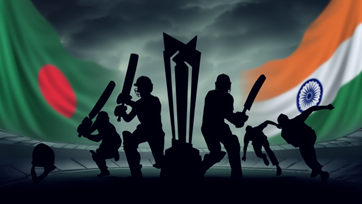
In the delicate, often volatile architecture of South Asian diplomacy, cricket has long served as both a bridge and a barrier. However, as we witness the unfolding crisis of early 2026, the barrier seems to have grown insurmountable. The recent “T20 World Cup Standoff” is not merely a scheduling conflict or a safety debate; it is a profound rupture in the sporting fabric of the subcontinent, triggered by a chain of events that began with a single player’s contract and ended with the expulsion of a national team from a global stage.
The controversy ignited on January 3, 2026, when the BCCI reportedly instructed the Kolkata Knight Riders (KKR) to drop Bangladeshi pacer Mustafizur Rahman from the IPL 2026 roster. Mustafizur, affectionately known as “The Fizz,” had been secured for a record ₹9.20 crore—the highest ever for a Bangladeshi player—bringing with him the hopes of millions of fans in Dhaka and Kolkata alike. While the move was framed as a security precaution following regional tensions and “developments all around,” it sparked a fierce and immediate backlash in Bangladesh, setting off a diplomatic wildfire that no one seemed able or willing to extinguish.
The Chain Reaction: From Franchise to Frontline
What started as a franchise-level decision quickly metastasized into an international crisis. For the youth in Dhaka and the diaspora in New York and London, the removal of Mustafizur was perceived as a slight against national dignity. The response was swift and uncompromising. Within forty-eight hours of the KKR announcement, the Bangladesh government ordered an indefinite ban on IPL broadcasts and promotions, citing “public interest.”
But the real shockwave hit the ICC. Citing the BCCI’s own logic—that if a single player could not be safely integrated into an IPL team, then an entire national squad could not be safely hosted for a World Cup—the Bangladesh Cricket Board (BCB) formally requested the relocation of their T20 World Cup matches from India to Sri Lanka. The standoff was no longer about a paycheck or a purple jersey; it was about the fundamental right to play on equal terms.
The Standoff at the ICC: A Clash of Sovereignties
The International Cricket Council (ICC) found itself in an unenviable position. After commissioning independent security assessments, the global body concluded there was “no credible or verifiable security threat” to the Bangladesh team in India. However, the BCB, backed by their interim government, stood firm. The rhetoric intensified, with Bangladesh’s Youth and Sports Adviser, Dr. Asif Nazrul, declaring that “the days of slavery are over,” signaling that Bangladesh would not be bullied into participating under conditions they deemed unsafe or undignified.
By January 19, the ICC issued a final ultimatum: confirm participation by January 21 or face replacement. When the deadline passed without a white flag from Dhaka, the inevitable happened. On January 24, 2026, the ICC officially announced that Bangladesh would be replaced by Scotland in the T20 World Cup. This marks the first time in history that the tournament will be played without Bangladesh, a team that has featured in every single edition since 2007.
| Event Timeline (Jan 2026) | Action Taken | Strategic Consequence |
| January 3 | KKR releases Mustafizur on BCCI directive. | Sparked immediate diplomatic and public outrage in Dhaka. |
| January 5 | Bangladesh bans IPL telecasts nationwide. | Total media blackout of the world’s richest cricket league. |
| January 7 | ICC rejects BCB request for venue change. | Hardened the BCB’s stance on non-participation. |
| January 24 | Scotland replaces Bangladesh in World Cup. | A historic exclusion that fractures Asian cricket unity. |
The “Kolkata Void” and the Diaspora’s Dilemma
For the fans in Kolkata, the news is particularly somber. Eden Gardens was scheduled to host Bangladesh for three crucial group-stage matches. The city, which shares a linguistic and cultural soul with Dhaka, was prepared for a carnival of cricket that transcended borders. Instead, those matches will now feature Scotland, a fine team, but one that lacks the raw, emotional “local” rivalry that only a Bengal-derby atmosphere could provide.
For the diaspora in the United States, particularly in neighborhoods like Jackson Heights in New York or Devon Avenue in Chicago, the standoff is a tragic reminder of how thin the line is between the playing field and the political arena. We see the “Mustafizur issue” as a missed opportunity for sports to act as a healer. Instead, cricket has been used as a tool of statecraft, leaving fans caught in the crossfire. The absence of “The Fizz” and the potential World Cup boycott leave a void that no replacement player, no matter how talented, can fill.
A Fragile Future for South Asian Cricket
At The Indian Panorama, we believe that the true casualty of this standoff is the spirit of the game. When administrative rigidity meets national pride, the loser is always the fan. The precedent set here is dangerous: it suggests that if bilateral relations sour, the global cricket calendar is fair game for disruption.
As we look toward the T20 World Cup starting this February, the tournament feels incomplete. A World Cup without the “Tigers” of Bangladesh is a tournament without its heartbeat. While Scotland will bring their own grit and passion to the field, the ghost of this controversy will linger over every boundary hit in Kolkata and Mumbai. We can only hope that the administrators on both sides of the border realize that while borders are made of wire and stone, the love for cricket is made of something much more resilient—and it deserves to be protected from the winds of politics.


Be the first to comment