Tag: Sri Lanka

  • Rajapaksa’s brother indicted by anti-graft commission

    Rajapaksa’s brother indicted by anti-graft commission

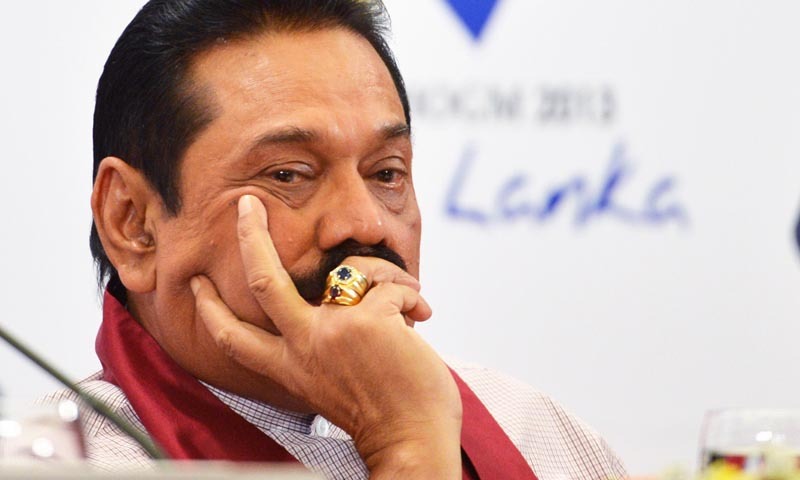
    COLOMBO (TIP): The brother of former President Mahinda Rajapaksa was among eight persons against whom the Sri Lankan graft commission filed a corruption case on for causing a loss of nearly US$ 75 million to the country.

    Gotabhaya Rajapaksa, 67, was the powerful secretary to the Ministry of Defence under his brother’s rule. He and seven others were implicated in the case they had caused a loss of over 11 billion Sri Lankan rupees (USD 74.93 million) to the state.

    The floating armory was seized by the police after Rajapaksa lost the presidential election in January, 2015 and the operation was later handed back to the navy.

    The Rajapaksa family has faced many cases of alleged wrongdoings during the decade when they were in power. They have dubbed all cases as politically motivated to extract revenge from them.

    (PTI)

  • NEW SRI LANKA CONSTITUTION COULD BE PRESENTED IN PARLIAMENT BY NOVEMBER

    NEW SRI LANKA CONSTITUTION COULD BE PRESENTED IN PARLIAMENT BY NOVEMBER

    COLOMBO (TIP): Sri Lanka’s new draft Constitution could be presented in Parliament before the next budget which would be announced by mid-November this year, Foreign Minister Mangala Samaraweera has said while hoping that it will celebrate the country’s diversity.

    “We hope to be able to present that (Constitution) in parliament before the next budget,” Samaraweera said while addressing a gathering in Point Pedro in the northern province on Sunday.

    The 2017 government budget is expected to be presented in Parliament mid-November.

    It was important to recognize the religious diversity in Sri Lanka in formulating the new Constitution, Samaraweera said.

    “We have been busy creating or placing a foundation for a new Sri Lanka based on the three pillars of democratization, reconciliation and development,” the minister said. The process of finalizing the new Constitution is underway and it will hopefully celebrate the diversity of the country, he said. Samaraweera said, it is time to come to terms with the fact that Sri Lanka is a multi-racial, multi-religious, multi-lingual country. The Maithripala Sirisena government had set in the process of making a new Constitution since January this year. A 21-member steering committee consisting of parliamentarians from across all political parties has been set up. The aim is to replace the existing 1978 constitution. In the new Constitution, the Prime Minister will hold the supreme executive power. (PTI)

  • Former RBI Deputy Governor Rakesh Mohan Named Senior Fellow At Yale Institute

    Former RBI Deputy Governor Rakesh Mohan Named Senior Fellow At Yale Institute

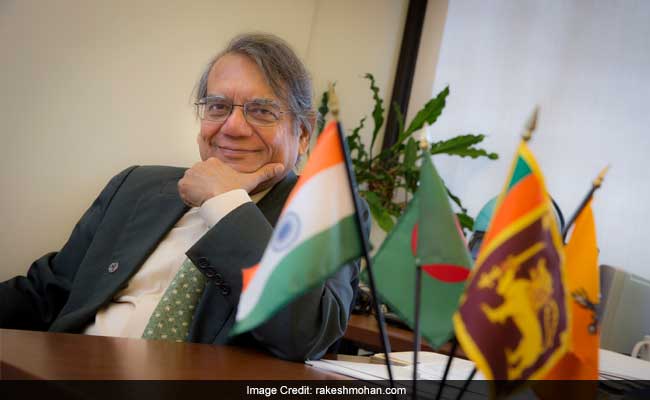
    NEW YORK: Top economist and RBI’s former deputy governor Rakesh Mohan has been named senior fellow at the prestigious Yale University’s institute for global affairs.

    Mr Mohan will join the 2016-2017 class of 15 Senior Fellows at The Yale Jackson Institute for Global Affairs. Senior Fellows are leading practitioners in various fields of international affairs who spend a year or semester at Yale teaching courses and mentoring students.

    At Jackson, Mr Mohan will teach courses on central banking and the Indian economy, the institute said in a statement.

    The institute described Mr Mohan as one of India’s “senior-most economic policymakers” and an expert on central banking, monetary policy, infrastructure and urban affairs.

    Most recently he was executive director at the International Monetary Fund in Washington, representing India, Sri Lanka, Bangladesh and Bhutan, and chairman of the Indian government’s National Transport Development Policy Committee.

    Reserve Bank of India’s deputy governor Urjit Patel has been appointed as the next Governor of the central bank after Mr Rajan demits office on September 4. However, Mr Mohan was reportedly among the front-runners to bag the coveted job.

    Mr Mohan has previously taught at Yale as Professor in the Practice of International Economics of Finance at its School of Management. He has also been a past Senior Fellow at the Jackson Institute.

    As deputy governor of India’s central bank from September 2002 to October 2004 and July 2005 to June 2009, he was in charge of monetary policy, financial markets, economic research and statistics.

    In addition to serving in various posts for the Indian government, including representing India at a variety of international forums such G20, Mr Mohan has worked for the World Bank and headed prestigious research institutes. He is also a Non Resident Senior Research Fellow of Stanford Centre for International Development, Stanford University, and Distinguished Fellow of Brookings India.

    Mr Mohan holds a B Sc in Electrical Engineering from Imperial College, University of London, a BA from Yale University and a PhD in Economics from Princeton.

    During the period October 31, 2004, to July 2, 2005, he was Secretary, Department of Economic Affairs. He has held several positions in the Indian government and was Chief Economic Advisor in 2001-02.

    The other senior fellows include Blair Miller, who leads impact investing for the office of Ray Chambers, the UN Secretary-General’s Special Envoy for Malaria, where they are developing a large scale impact investment fund for emerging markets and Ambassador Dennis Ross, former special assistant to President Barack Obama and National Security Council senior director for the Central Region.

    The new fellows will be joining returning fellows — Director of the Financial Stability Department at the Central Bank of Iceland Sigridur Benediktsdottir, former CEO of the Clinton Foundation Eric Braverman, New York Times op-ed columnist David Brooks, former US Deputy Permanent Representative to the United Nations Ambassador Rosemary DiCarlo, former Ambassador to Syria Ambassador Robert Ford, former International President of Doctors Without Borders Unni Karunakara and former Chairman of Morgan Stanley Asia Steve Roach.

    The Jackson Institute for Global Affairs promotes education and scholarship on global affairs at Yale.

    It serves the entire university through courses and core teaching programmes in global affairs, career counselling, and public lectures, according to the institute’s website.

  • Sri Lanka arrests son of former leader Rajapaksa in money laundering case

    Sri Lanka arrests son of former leader Rajapaksa in money laundering case

    COLOMBO (TIP): Sri Lankan financial crime police arrested the eldest son of former president Mahinda Rajapaksa on August 15 on suspicion of laundering money, his lawyer said, the latest legal difficulty for the once-powerful family. Sri Lanka’s new president, Maithripala Sirisena, faces pressure to act on allegations of corruption dating back to the Rajapaksa era, especially from civil society organisations who backed his successful bid to oust Rajapaksa last year.

    The son, Namal Rajapaksa, who is also a member of parliament, had been questioned by officers from the Financial Crimes Investigations Division investigating some money he had invested in two companies, the lawyer said.

    “He was arrested by police under the anti-money laundering act. He will be produced before a court in a while,” lawyer Premanath C. Dolawatta told Reuters.

    Neither Namal Rajapaksa nor family members were immediately available for comment but they have in the past all publicly denied wrongdoing. It was the second time he had been arrested. In July, he was arrested in connection with a separate case on suspicion of misappropriating of funds in a$650-million apartment project and was released on bail after seven days in detention on remand. (Reuters)

  • Sri Lanka seeks further cooperation with Huawei

    Sri Lanka seeks further cooperation with Huawei

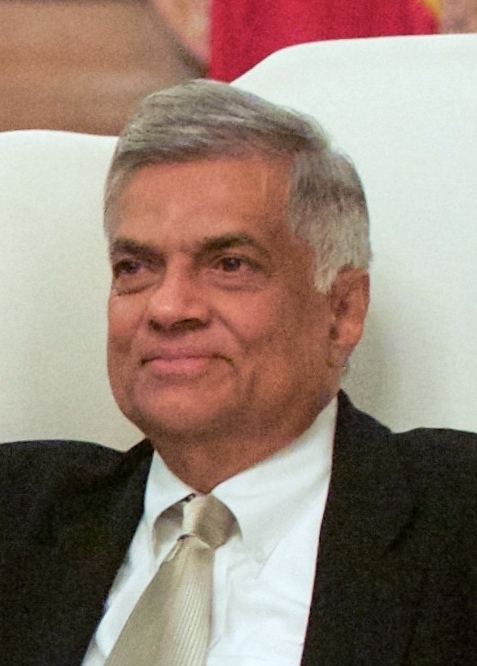
    COLOMBO (TIP): Sri Lanka signed a memorandum of Understanding (MoU) on ICT cooperation between the Sri Lankan Ministry of Telecommunication and Digital Infrastructure and Huawei Sri Lanka during the visit to Huawei’s headquarters in Shenzhen by Prime Minister Ranil Wickremesinghe. The MoU demonstrates the Sri Lankan government’s commitment to furthering its cooperation with Huawei. PM Wickremesinghe said the Sri Lankan government seeks further cooperation with Huawei. Huawei senior vice president Li Jinge said they will actively respond to the Prime Minister’s call. “Huawei will continue contributing to ICT development and digital economy in Sri Lanka. We are pleased to bring our global experience in ICT industry and provide leading ICT solutions and consumer devices to Sri Lanka.” “We will accelerate the local ICT talent development. This year, we will also establish a Customer Solution Integration and Innovation Center in Sri Lanka.” (Dailt News)

  • India’s Independence Day belongs to all Indians and all people who wish India well

    India’s Independence Day belongs to all Indians and all people who wish India well

    As an American proud of my Indian ancestry, and my name unchanged, I am more than merely delighted that these United States and India have found a durable rhythmic tune, geopolitical and strategic in nature, bound by common notes and dreams of our bilateral citizenry in their enlightened self-interest-based pursuit of happiness guaranteed by separated powers regimes.

    2015 is special for many reasons. We overcame the unexpected bilateral pain that became known as the Devyani incident with Hours of Immunity successfully negotiated by FM Salman Khurshid with Secretary John Kerry, to then witness PM Modi rock Madison Square Garden. Later, as I wished, President Barack Obama held a Chai Summit in India. But, then it got better. President Obama did for Indian-Americans and India what he did for Chinese-Americans and China – as he had appointed Gov. Gary Locke as our ambassador to China in 2011, in the past year he appointed Senate Leader Harry Reid’s right hand Richard Rahul Verma as our ambassador to India. For good measure, he also appointed talented diplomat Atul Keshap as our ambassador to Sri Lanka. Recently, Nisha Desai Biswal, Assistant Secretary of State for Central and South Asia, visited India’s Consulate General in New York to personally plant eternal-goodwill where Devyani used to be DCG. Such an act serves to repair even frayed feelings and is worthy geometrically – as there is an implied promise that all will be well between our two nations.

    That India produced a man such as Dr. Kalam – who rose to be India’s 11th President – an Indian Muslim – and who was so loved by Indians and who so loved India -seems to me to be a clarion call for all good people everywhere to stand up to religious oppression everywhere with humility-based good deeds that serve their nation above all else, and with respect for all faiths. Earlier, the world experienced the slaughter and splatter of precious ink at Charlie Hebdo – the home of cherished Voltaire who prodded many a monarch to better serve the public good – and Paris became Ground Zero for unity of all nations’ leaders walking arm-in-arm seeking tolerance of free speech as a “core” right and obligation of global citizenship. Dr. Kalam, methinks, singlehandedly well honored Mahatma Gandhi’s love for Muslim Indians, Christian Indians, Buddhist Indians, Jewish Indians and inter alia, Hindu Indians. 68 years ago Pandit Jawaharlal Nehru rose to say these immortal words: “Long years ago we made a tryst with destiny, and now the time comes when we shall redeem our pledge, not wholly or in full measure, but very substantially. At the stroke of the midnight hour, when the world sleeps, India will awake to life and freedom. A moment comes, which comes but rarely in history, when we step out from the old to the new, when an age ends, and when the soul of a nation, long suppressed, finds utterance.”

    Dr. Kalam answered India’s Tryst With Destiny – excellence with humility, nation above religion, peace above war. India belongs to everyday Indians who recall the sacrifices made by so many to be a free nation, and live their lives as homage to those who sacrificed so much.

    That Indian Tea played a starring role in the Boston Tea party of 1773, and today India and United States find themselves in a vortex that cannot be denied – of unity of interest – one may be forgiven to say it was so decreed even by natural law without the need of being a Calvinist. May we continue to be worthy of God’s grace at the stroke of the midnight hour and every hour thereafter.”

  • Ganguly and Lodha helped Kumble topple Shastri

    Ganguly and Lodha helped Kumble topple Shastri

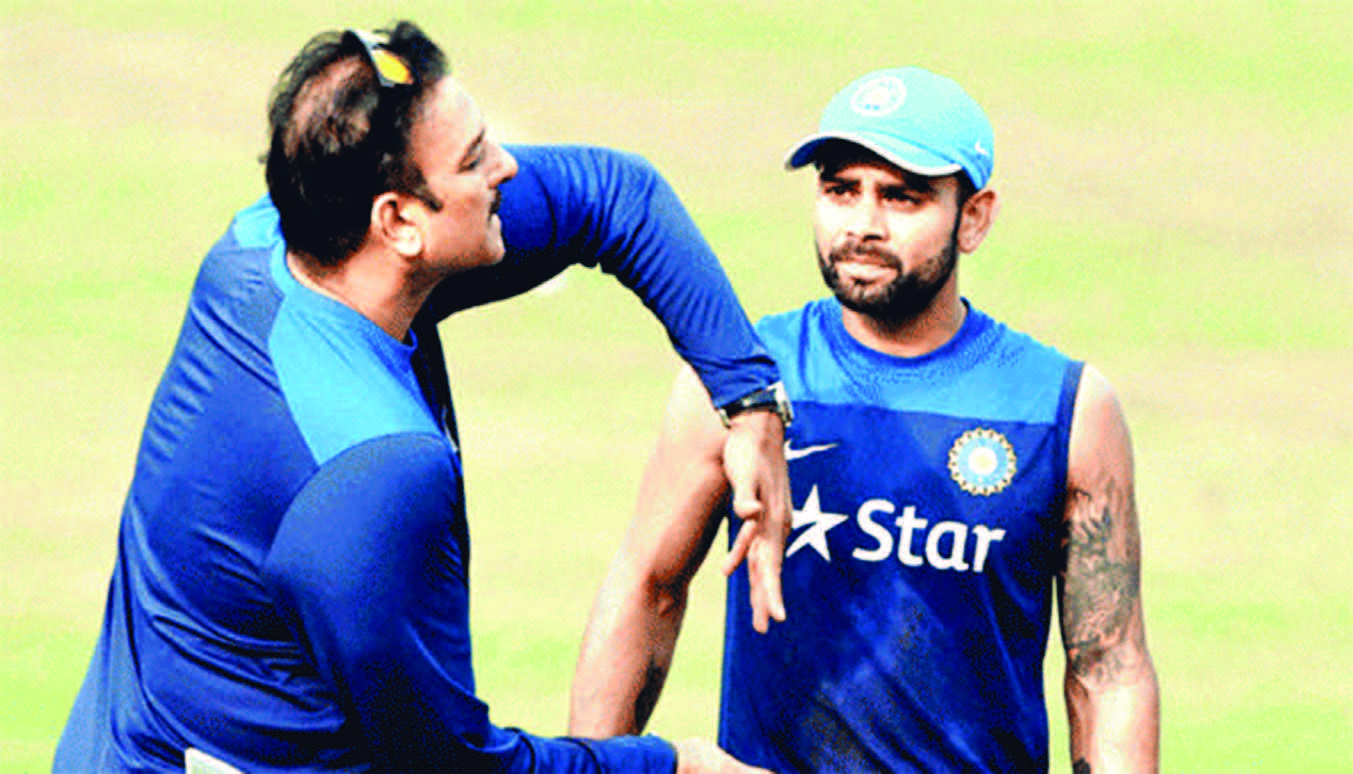
    BANGALURU (TIP): Cricket Association of Bengal chief and former India captain Sourav Ganguly and former chief justice of India RM Lodha played a big role in the appointment of Anil Kumble as Team India coach replacing incumbent Ravi Shastri on June 23.

    While Ganguly, who had one year ago lost to Shastri in his own quest to become the coach, spared no effort to ensure that the latter did not get a second term, Justice Lodha, who, as the head of Supreme Court appointed committee, has recommended sweeping reforms in the Board of Control for Cricket in India (BCCI), played an indirect role in Kumble’s ascension.

    Justice Lodha, among his many antidotes for the ills besetting the cricket board had recommended setting up of a players’ association and suggested that Kumble be made its member. The BCCI by appointing Kumble India coach hit two targets with one stone – it killed the possibility of him becoming a member of the players’ body and also asserted its independence in taking decisions.

    Shastri would have in all likelihood won a second term had it not been for Ganguly’s relentless campaigning for Kumble. In fact, Shastri deserved an extension after having turned the Men in Blue world beaters in the 18 months he was the coach. India, under his stewardship, became the world’s No. 1 Test team, bagged the no. 2 slot in ODIs, and T20s. He also took India to the semi-final stage of the World Cup and the World Twenty20. Asia Cup title, series win against South Africa at home and a rare away series win against Sri Lanka were some of his other achievements. But what he could never win was Dada’s confidence.

    Ganguly and Shastri were never the best of buddies. When the latter bagged the coaching job in 2015 despite Ganguly wanting it for himself, the gulf widened. Ganguly was not even present when Shastri made his presentation to the Cricket Advisory Committee (CAC) two days back. This despite the venue of the CAC deliberations being shifted from Mumbai to Kolkata on his insistence.

    When Shastri was hooked via video link from Bangkok, where he is currently holidaying, Ganguly was conspicuous by his absence in the Taj Bengal conference room. The BCCI members say it was because Ganguly had to attend his book release function elsewhere in the city. The former team director was interviewed by Sachin Tendulkar, VVS Laxman, and Sanjay Jagdale, the other three members of the CAC.

    (PTI)

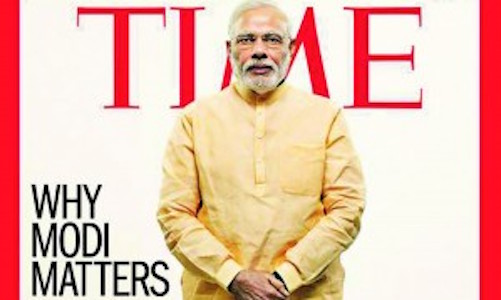
  • Modi’ in US: Standard templates unable to paint grand vision

    Modi’ in US: Standard templates unable to paint grand vision

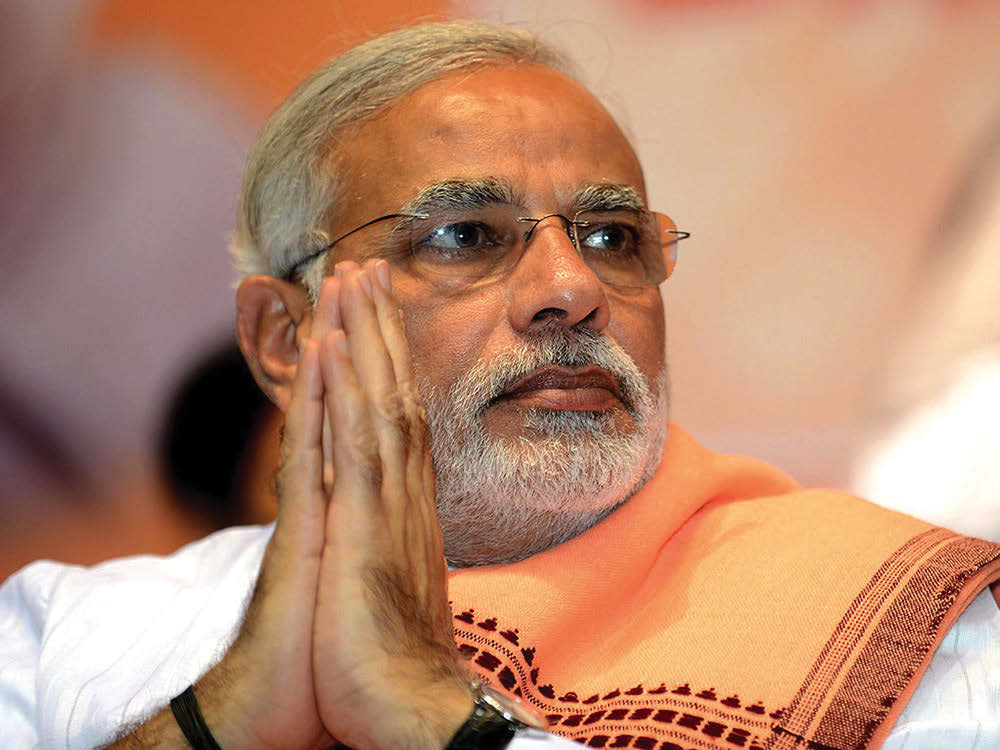
    Prime Minister Narendra Modi had his biggest outing of the year in addressing the US Congress in Washington on Wednesday. Shorn of the atmospherics, Modi seems to have missed the moment to get counted as the world’s leading statesmen. True, there was a surfeit of platitudes and catchy phrases such as the Indo-US relationship having “overcome the hesitations of history”. Modi also provided a preview of how India sees today’s world — “(India is) already assuming her responsibilities in securing the Indian Ocean region” — and the problems — “absence of an agreed security architecture in Asia creates uncertainty”. The world by now is well acquainted with Brand Modi — words rolling out fluently, a commanding stage presence and an innovative twist at every show.

    But a Prime Minister on his fourth visit to the US should have been more forthcoming about his vision of India than could be gleaned from his party’s election manifestoes. Modi can hardly hope to excite American businessmen with an anodyne rendering of his government’s priorities or talking about the snakes in the terrorist pit next door which managers of American security and their accomplices had incubated. His take on social harmony — “all the 1.25 billion of our citizens have freedom from fear, a freedom they exercise every moment of their lives” — too sounded a shade hollow when juxtaposed against the under-reported Human Rights Commission hearing at which US Congressmen slammed his government for violence against minorities.

    However, after all the hits and misses are tallied, Modi accomplished his primary purpose of assuring the Americans that there is permanency in India’s affinity with the US in security, defense and climate change. He also managed to convey to the ordinary US politician, the country’s indispensability in the region — India was the first responder during natural calamities in Nepal, the Maldives and Sri Lanka — as well as its disagreement with the current global structures. Despite his dexterity as a communicator, Modi missed a trick or two in painting India as a country whose time has come.

  • YOUR DAILY BREAD MAY LEAD TO CANCER: CSE STUDY

    YOUR DAILY BREAD MAY LEAD TO CANCER: CSE STUDY

    NEW DELHI (TIP): The pre-packaged bread may be a silent killer as it is laced with chemicals suspected to cause cancer, a new study has warned.

    Most of the breads made by the Indian companies are found to contain potassium bromate and potassium iodate — chemicals banned in many countries for their adverse effects on human health, a study conducted by the Centre for Science and Environment (CSE) said.

    Potassium bromate is a powerful oxidizing agent, use of which makes bread fluffy, soft and gives it a good finish.

    The food safety regulations of India allow use of potassium bromate as flour treatment agent in bread and other bakery products.

    However, several bread companies and fast food chains have denied using these chemicals.

    “The use of these chemicals in the bread-making sector has been banned in many countries because they are listed as hazardous for public health: One is a category 2B carcinogen and the other could trigger thyroid disorders,” the CSE report said.

    The CSE tested 38 commonly available branded varieties of pre-packaged breads, ‘pav’ and buns, ready-to-eat burger breads and ready-to-eat pizza breads of popular fast food outlets from Delhi.

    “We found 84 percent samples positive with potassium bromate or iodate. We re-confirmed the presence of chemicals in a few samples through an external third-party laboratory. We checked labels and talked to industry and scientists,” CSE’s deputy director general Chandra Bhushan said.

    In 1999, the International Agency for Research on Cancer (IARC) classified potassium bromate as possibly carcinogenic (cancer causing) to humans. It was found to cause tumours of the kidney, thyroid and cancer of the abdominal lining in laboratory animals.

    The European Union had banned its use in 1990. The other countries which have banned potassium bromate include Britain, Canada, Australia, New Zealand, China, Sri Lanka, Brazil, Nigeria, Peru and Columbia.

    “Globally, potassium bromate was allowed to be used on the assumption that the bromate residues would not be present in the end product. This assumption failed across the world. Residues were being detected even after reducing the permissible limits of use, and therefore countries started banning it,” Bhushan said.

    “Our study confirms that residues of potassium bromate are present in bread sold in India,” he added.

    Interestingly, only one company was found to be labelling the use of potassium bromate on its pre-packaged products.

    The CSE results showed high levels of potassium bromate or iodate in sandwich bread, ‘pav’, bun and white bread. Products of Harvest Gold, Britannia and Perfect Bread were those with higher levels, according to CSE.

    “Of these, only Perfect Bread labels the use of potassium bromate. No maker among those tested labels potassium iodate. Only Britannia denied use of potassium bromate or iodate,” the study said. “Products of all five popular multinational fast food outlets selling pizza and burger were found positive with potassium bromate/iodate. These include KFC, Pizza Hut, Domino’s, Subway and McDonald’s. Except Domino’s, others have denied use in a response to CSE,” it added.

    Samples of two other fast food outlets — Nirula’s and Slice of Italy — also tested positive for potassium bromate/iodate. Slice of Italy denied use of the chemicals to CSE.

    Read More

  • Modi keeps hope alive

    Modi keeps hope alive

    In the advertisement campaign unleashed on completing two years in office Prime Minister Modi claims: “My country is changing, moving forward”. Half the population of the country does not share his optimism, going by a survey by the Centre for Media Studies. While 49 per cent of those surveyed saw “no change” in their lives, 15 per cent complained of deterioration. Change is yet to happen in rural India. Bharat does not know how to cope with a drought. Business sentiment is lower than it was in 2014. Still, Modi enjoys a high approval rating (74 per cent). Credit for this goes to his successful strategy for marketing. With a clear majority and no coalition partners pulling in different directions, the Modi government could still have done a lot better.

    The BJP government enters the third year on a feel-good note. A good monsoon forecast has lifted the national mood. Drought and its mishandling would soon be forgotten as a bad memory. The Assam success has wiped out bad memories of Delhi and Bihar. Assam happened because after Modi-Shah arrogance took a hit, the duo recognized the worth of regional leaders. The Congress meltdown has enabled the BJP to stake claim to being a national party. That also brings on the national party a duty to conduct itself responsibly, rein in the fringe elements and avoid stoking communal fires in the run-up to the UP elections.

    The Western media has called Modi “a superb salesman”. He has dusted UPA initiatives and repackaged them brilliantly -something the UPA could never do. His own ideas have elicited a mixed response. “Swachh Bharat”, Digital India, smart cities and bullet trains are still at the slogan level but can be put on the ground. The Jan Dhan Yojana has delivered and Aadhaar will put subsidies in right pockets and plug leakages in the PDS and MGNAREGA. Toilets are coming up in schools. The thrust on low-cost housing will create not just shelter for the homeless but also jobs for the needy apart from lifting the fortunes of steel, plastic and cement industries. “Make in India” is still a work in progress.

    Despite opposition resistance the government has got a few things moving: a real estate regulator is in place, the Mauritious treaty will check tax evasion and a bankruptcy code has replaced the archaic solvency laws, making it easier for firms to close down. Modi has asserted that the GST will roll out on April 01, 2017. After a directionless first budget, Jaitley changed tracks and presented a pro-farmer, pro-rural India budget. He boasts of three things: sticking to the fiscal deficit, having an expenditure reforms commission and a monetary agreement with the RBI on inflation. Raghunath Rajan has uncovered bad bank loans which the government and banks had happily swept under the carpet. Banks need more money to lend and debt-ridden corporates have no extra capital to invest, which means growth and job creation will be largely driven by government spending with savings from oil.

    Modi has proved to be the most peripatetic PM. The chutzpah and verve that marked his touchdowns in Western capitals made him the best recognized Indian Prime Minister. While the fruits of the serenading in the West are yet to accrue, there are doubts whether Modi has been adroit in balancing this relationship with the other two powers, China and Russia. In the neighborhood he had a mixed record. He was unable to tame Pakistan, has antagonized Nepal and allowed the Maldives to drift. But Modi turned around ties with Sri Lanka, maintained harmony with Bangladesh and made Seychelles a part of India’s security periphery.

    Modi’s style of functioning has its admirers as well as critics. Arun Shourie says “President Modi runs a one-man show”. He has centralized decision-making and marginalized ministers. Decisions are taken in a hurry, leaving loose ends untied sometimes. Modi has abolished the Planning Commission without thinking through what NITI Aayog is to do. Abandoning his own slogan of “minimum government”, Modi has packed his large ministry with lightweights, barring a handful like Arun Jaitley, Suresh Prabhu, Piyush Goel and Dharmendra Pradhan.

    Greed for more power and political expediency earned Modi judicial rebuffs. The embarrassment over the NJAC (National Judicial Appointments Commission) as well as President’s rule in Uttarakhand was avoidable. The saffron agenda too had its consequences. With help from the Home Minister, the HRD Minister created trouble where none existed: Hyderabad Central University, JNU and the NIT, Srinagar. Taking u-turns is a defining feature of the government. There were flip-flops on issues like tax on EPF withdrawals, land acquisition, MGNREGA, capital infusion for banks, foreign travel details in income tax return forms, licensing for GM seed technology and ban on porn sites. Things are seen as happening, even if they sometimes go wrong. More than rhetoric, Modi needs to show results on the ground. He needs to work and behave more like a Prime Minister than a perpetual political campaigner.

  • BUDDHA PURNIMA

    BUDDHA PURNIMA

    Buddha Purnima is traditionally known as Vesak or Vesakha since it falls in the month of Vaishakh according to lunar calendar. It is a festival that marks the birth, enlightenment and death of Gautam Buddha. This day usually falls on the day of full moon (Purnima) in the month of May, hence it is also known as ‘Buddha Purnima’. Many of us may not know the amount of divinity that goes into celebrating this festival, therefore, lets enlighten ourselves.

    On this day devout Buddhists and followers assemble in various temples before dawn for the ceremonial and honourable hoisting of the Buddhist Flag.

    Devotees bring simple offerings of flowers, candles and joss-sticks to lay at the feet of their teacher. They come together to make a special effort to refrain from killing of any kind and are encouraged to partake in vegetarian food for this day.

    Certain temples observe the practice of displaying a small statue of Buddha in front of the altar in a basin filled with water and decorated with flowers. Devotees are allowed to pour water over the statue as a symbol of cleansing bad karma.

    Buddha Purnima also includes talks given by monks who engage in reciting verses uttered by Buddha 25 centuries ago to invoke peace and happiness.

    Celebrating this day does not involve festivities unlike other events, but works as a mean of making special efforts to bring happiness to the unfortunate, the aged, the handicapped and the sick.

    Vesak around the world

    Japan Sadly, Japan does not have public holiday on this occasion. The festival here, is based on a different legend that says, a dragon appeared in the sky on Buddha’s birthday and poured soma over him, which is a Vedic ritual drink. In the modern arena, Japan celebrates Vesak by pouring amacha, a sweet tea on statues.

    Nepal Nepal is home to Lumbini-birthplace of Buddha, and Swayambhu-the holy temple for Buddhists also known as the Monkey Temple. The main door of Swayambhu is opened only on this day; hence, people from all over Kathmandu valley are stimulated by the event. Pilgrims across the world gather in thousands to celebrate Buddha’s birthday at his birthplace.

    Sri Lanka Sri Lanka celebrates Vesak for about one week! During this time, the selling of alcohol and fresh meat is prohibited with abattoirs also being closed. The celebrations here include giving of alms and erection of pandals wherein each pandal illustrates a story from the Jataka Tales. Food stalls are set up by Buddhist devotees that provide eatables and drinks to passersby. Also birds, insects and animals are released by the thousands in what is known as a ‘symbolic act of liberation’; of giving freedom to those who are in captivity, imprisoned, or tortured against their will. Apart from these, other Asian countries like Korea, Vietnam, Malaysia, Indonesia, and Singapore also participate in processions and prayers by monks and make this day a true symbol of spirituality.

    What Do People Do? Many Buddhists visit temples on Vesak to listen to monks give talks and recite ancient verses. Devout Buddhists may spend all day in one or more temples. Some temples display a small statue of Buddha as a baby. The statue is placed in a basin filled with water and decorated with flowers. Visitors to the temple pour water over the statue. This symbolizes a pure and new beginning. Many Buddhists pay special attention to Buddha’s teachings during Vesak. They may wear white robes and only eat vegetarian food on and around Vesak. Many people also give money, food or goods to organizations that help the poor, the elderly and those who are sick. Caged animals are bought and set free to display care for all living creatures, as preached by Buddha.

    Public Life Government offices, post offices and banks are closed in India on Vesak. Stores and other businesses and organizations may be closed or have reduced opening hours. Transport is usually unaffected as many locals travel for religious celebrations.

    Background Gautama Buddha was a spiritual teacher in India. Many scholars are uncertain when he lived. It is believed that Buddha was born at some time between sixth and fourth centuries BCE. Opinions among scholars are generally divided between those who place Buddha’s death about 480 BCE and those who place it as much as a century later.

    Buddha was an influential spiritual teacher during and after his lifetime. Many Buddhists see him as the Supreme Buddha. Festivals to honor Buddha were held for many centuries. The decision to celebrate Vesak as the Buddha’s birthday was formalized at the first conference of the World Fellowship of Buddhists. This conference was held in Colombo, Sri Lanka, in May, 1950. The date was fixed as the day of the full moon in May.

    Different Buddhist communities may celebrate Vesak on different dates in years when there are two full moons in May. This is because the Buddhist lunar calendar can be interpreted in different ways.

    Symbols The dharmacakra or dharma wheel is a symbol often seen during Vesak. It is a wooden wheel with eight spokes. The wheel represents Buddha’s teaching on the path to enlightenment. The eight spokes symbolize the noble eightfold path of Buddhism.

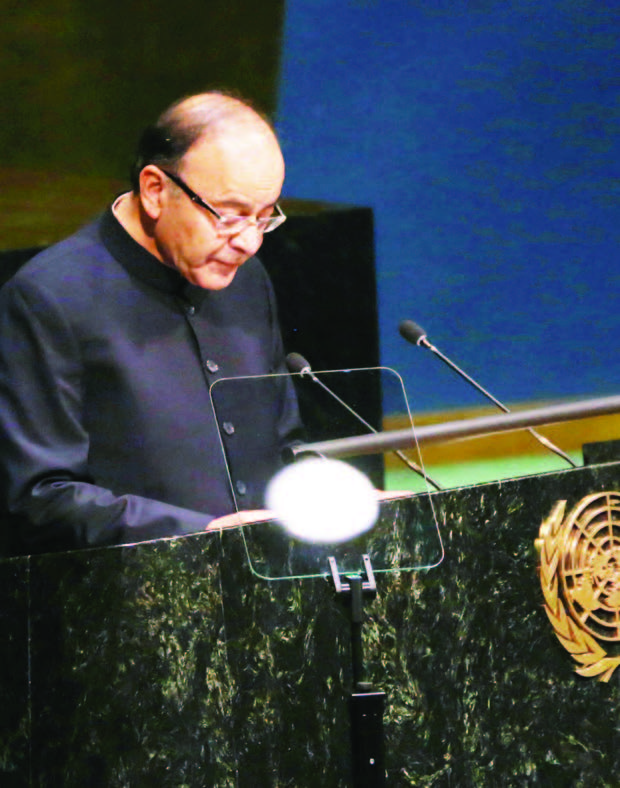
  • India’s Finance Minister Arun Jaitley calls upon UNGA to toughen fight against drug-terror nexus

    India’s Finance Minister Arun Jaitley calls upon UNGA to toughen fight against drug-terror nexus

    UNITED NATIONS (TIP): India has asked the global community to toughen its collective fight against the growing nexus of organized drug trafficking and terrorist networks by disrupting their financial flows, as these evils threaten peace, security and stability across regions.

    “Terrorism constitutes one of the most dangerous threats to civilized societies today. Terrorism knows no borders and terrorists continue to strike cities and innocent civilians across continents,” Finance Minister Arun Jaitley said in his address to a special UN General Assembly session on the drug problem on Tuesday.

    The “growing nexus of drug trafficking and terrorist networks endangers peace, security and stability across regions,” Jaitley stressed.

    In a clarion call to the international community, he said, “we have to continue and toughen our collective fight against these evils.” “The criminal networks and drug syndicates can only be effectively busted by disrupting their financial flows,” he said at the three-day session that kicked off with the adoption by the 193-member body of the new framework on countering the world drug problem, drafted last month in Vienna by to UN body the Commission on Narcotic Drugs (CND). Jaitley had last week participated in the spring meetings of the International Monetary Fund and the World Bank in Washington and had held meetings with investors in the city.

    Addressing the 30th Session of the UN General Assembly on World Drug Problem, Jaitley said the drug problem has global dimensions and requires collaboration across borders as it impacts nations’ ability to attain the objectives of the 2030 development agenda. He voiced India’s firm commitment to the three UN conventions on drug matters, emphasizing that as a supplier of licit opiate raw material to the world and a traditional licit opium cultivator, India is “fully conscious” of its own responsibility to eradicate any illicit cultivation, reduce demand and put in preventive and enforcement measures.

    “National efforts, however intense and sincere, cannot adequately deal with the drug problem. Bilateral, regional and international cooperation is essential in this area,” he said. He pointed out that the three conventions adopted by the international community have served well in limiting and managing the drug problem and provide sufficient flexibilities to Member States to fine tune their domestic laws so as to be commensurate with the realities and challenges of 21st century.

    “We strongly believe in the centrality of the three international drug control conventions in addressing and countering the world drug problem. He said several steps are being taken for strengthening supply and demand reduction activities as well as treatment and after-care facilities through a public health approach.

    He said India is committed to ensuring the availability of controlled substances for medical and scientific purposes, while preventing their diversion, abuse and trafficking and ensure availability of drugs for palliative care, pain relief and opioid substitution therapy for cancer patients and drug abuse victims. Further augmenting regional cooperation to combat crimes related to drug and money laundering, Jaitley said India in coordination with UN Office on Drugs and Crime is in advanced stages of setting up a regional coordination center for South Asia named SARICC (South Asia Regional Intelligence and Coordination Centre) with India, Nepal, Bhutan, Myanmar, Bangladesh, Sri Lanka, and Maldives as founding members.

    “The task ahead, especially in the next three years, is arduous indeed. I am confident that this session and its outcome will give a new impetus to the national, bilateral, regional and international action towards realizing a world free of drug abuse in our lifetime and achieve the’sustainable future we want’,” he said.

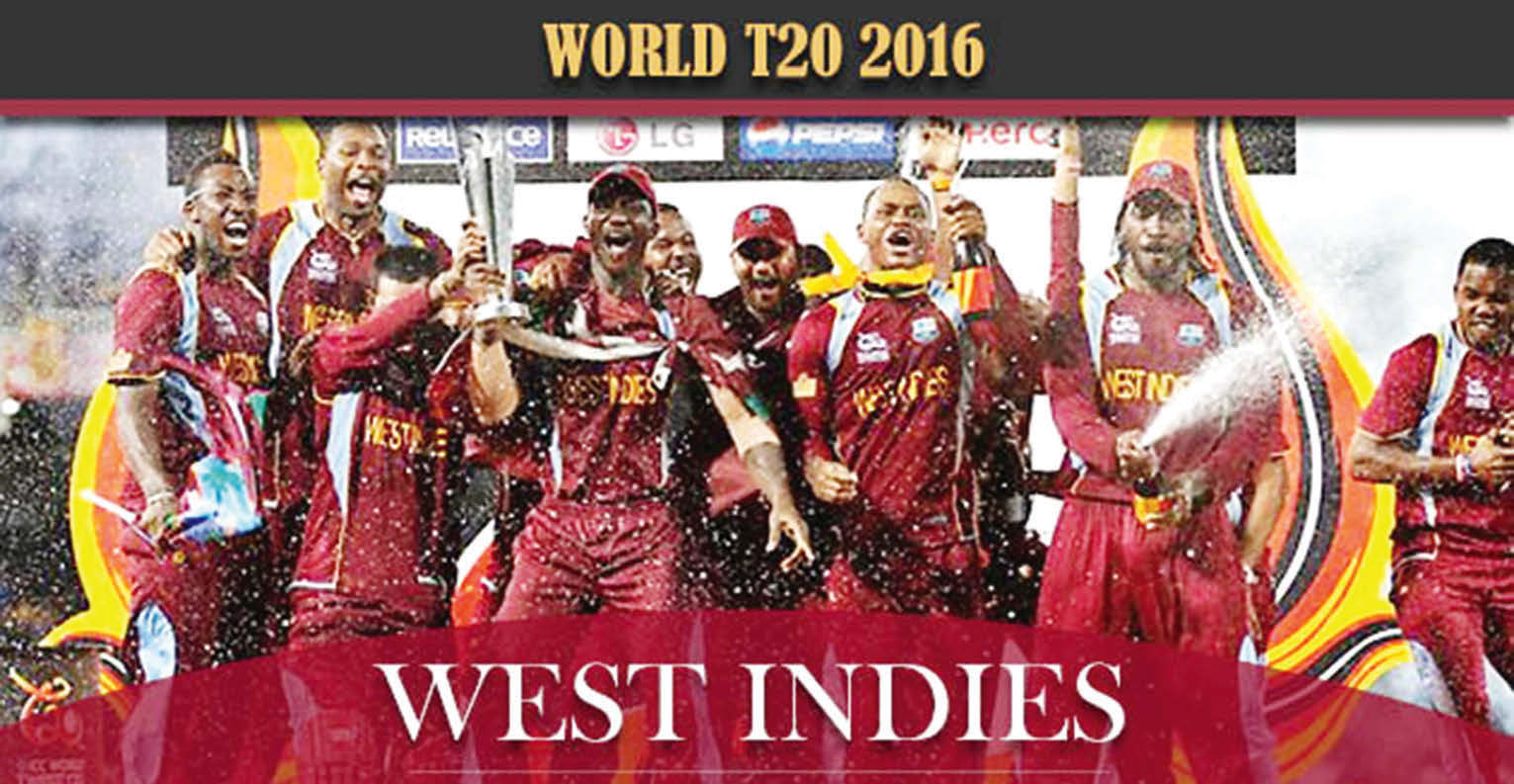
  • World T20: Three titles in 2016

    World T20: Three titles in 2016

    Unbelievable. An astonishing end to a remarkable match. A thoroughly entertaining, enthralling competition was given a fitting finale with a display of stupendous strokes from West Indies’ Carlos Brathwaite.

    All great tournaments should end with a fireworks display. Brathwaite’s final-over flourish provided the pyrotechnics — without the need for a closing ceremony.

    With 19 required from the game’s last over, young Carlos rattled off the necessary runs in four clean, successive strikes that took the West Indies to the title.

    Given the match situation, I doubt any of us has ever seen anything quite like it before.

    The closest I can recall is the incredible assault of India’s Kapil Dev in the Lord’s Test vs England in 1990.

    Faced with a deficit of twenty-four to avoid the follow-on, and with his side nine down –and only the feeble support of Narendra Hirwani at the non-striker’s end — Kapil targeted off-spinner Eddie Hemmings.

    Back down the pitch he calmly prodded Hemmings’s first two deliveries of the over. Mere sighters. He was lining him up. Then bang: Six! Six!! Six!!! Six!!!! The last four balls of the over he drove high and mighty back over the bowler’s head into the ‘under-construction’ new Compton and Edrich stands at the nursery end. The crisis was averted; and Hirwani was lbw the very next ball.

    “Only Kapil Dev could do that! Only Kapil Dev!!” exclaimed Sunil Gavaskar, commentating for BBC television. He was right of course — then. In Sunday’s breathtaking World T20 final a young Barbadian emulated him — arguably, at an even most testing moment.

    Crisis? What crisis? West Indies cricket, we are told, is in turmoil. It is in the mire. Yet, how many international teams wish right now that they had Windies’ problems — and West Indies’ trophies?

    Three titles in 2016 West Indies Cricket 3Their recent Under-19 World Cup victory in Bangladesh was totally unexpected. Their women XI’s superb chase-down of Australia’s challenging total in Sunday’s earlier World T20 Women’s event was a huge upset. And their amazing victory later that night over England in the men’s version was a stupendous hat-trick.

    Three titles in 2016 West Indies Cricket 2Contract wrangles and disputes have spilled over into the public arena, severely disrupting tours and inconveniencing fellow cricket countries. Internal squabbles over the structure of the West Indies Cricket Board have gone so far as to involve the Prime Ministers of the Caribbean nations. Damning reports have emerged — the most recent calling for the immediate dissolution of the WICB.

    Having now won the last three ICC World trophies across a variety of ages, sexes and formats, is that evidence of the absolute decline of Caribbean cricket still sound? If failure was proof positive of the WICB’s incompetence, then surely these triumphs are indicative of its effectiveness?

    Some critics of the West Indies, will, sadly, not rejoice in this win because the West Indies Cricket Board will be understandably triumphalist. That is a shame. Politics, and confrontation between the opposing factions, ought to be put to one side. Tonight,tomorrow night — and for a few more evenings yet —calypso parties in the region should abound, wallowing in the win, soaking up the golden rays of glory.

    Picture the scenes, if you will, unfolding in Bridgetown, Kingston, Port-of-Spain, Georgetown — indeed, throughout the whole Caribbean Islands. Imagine the dancing in the streets; hear the beat of the drums; sway with the reggae vibe; feel the rhythm of the celebration; taste the manna of victory; inhale the sweet smell of success.

    That sensation can’t be taken away from them. They’ve earned it: the players, the supporters, the people. They can’t be denied. And they have every right to their revelry.

    On the pages of Firstpost yesterday I said there was a good chance that a Bajan might be the match winner. It turned out that way. I also previously said that this was no ‘one-man team’. That was proved repeatedly. I also reported how several shrewd judges in the Caribbean seriously doubted whether Marlon Samuels still had it in him. How wrong we were.

    The Man-of-the-Match did it again. In the World T20 final of 2012 he rescued his side from a dreadful start against Sri Lanka, posting 78 to take West Indies to a total of 137- 6 that proved to be enough. Back then, he added 59 for the third wicket with Dwayne Bravo in a sensible, measured, re-building operation. Four years on, it was these two again that did the spade work, digging the West Indies out of a hole of their own making— and keeping them in the game.

    Samuels is an enigma. He distanced himself from his team-mates when he publicly declared he’d opposed the side’s ‘withdrawal of labour’ on the 2014 ODI tour of India. He was a reluctant, disengaged presence in their lacklustre late-2015 Test tour of Australia. And his form in general for the last 18 months has been woeful.

    In this final, he brought out an array of dazzling shots, singlehandedly keeping West Indies alive, giving them a chance. He unfurled a series of thunderous straight-drives for four or six; he stepped-to-leg and made sufficient room to cut crucial boundaries; and he even managed to dip into the arcane: playing a late-adjusted ‘dog shot’ to force Liam Plunkett to the square-leg boundary — whipping the ball between his legs to find the fence. Nicholas Felix, a regular purveyor of this stroke (and its illustrator in his 1840’s batting manual), would have purred with delight.

    Bravo, by contrast, did not have his best day. His bowling was below his usual high standards, and he was more expensive than his colleagues would expect. Likewise, Sulieman Benn. He’d bowled excellently throughout the tournament, but this was an off-day for him. So costly was his left-arm spin than captain Darren Sammy had to call upon himself to make up his quota: that over cost 14 runs. West Indies won the tournament, but I will always maintain that WI were a bowler short. Pragmatic supporters will say: ‘who cares?’

    Elsewhere, Badree was superb; and Brathwaite and Andre Russell, the weak links in the attack, did sterling work, returning excellent figures. Batting wise, Gayle failed again; as did Johnson Charles, Lendl Simmons, Russell and Sammy. Collectively, those five batsmen made eight runs between them. Gayle’s figures for the tournament make for odd reading: 100 not out, did not bat, 4, 5, 4. Perhaps, even more curiously, the two semi-final match-winners, Simmons and England’s Jason Roy both scored 0 and faced three balls between them.

    But this was the most unpredictable of finals; and the most fabulous of finishes.

    What else could we have expected?

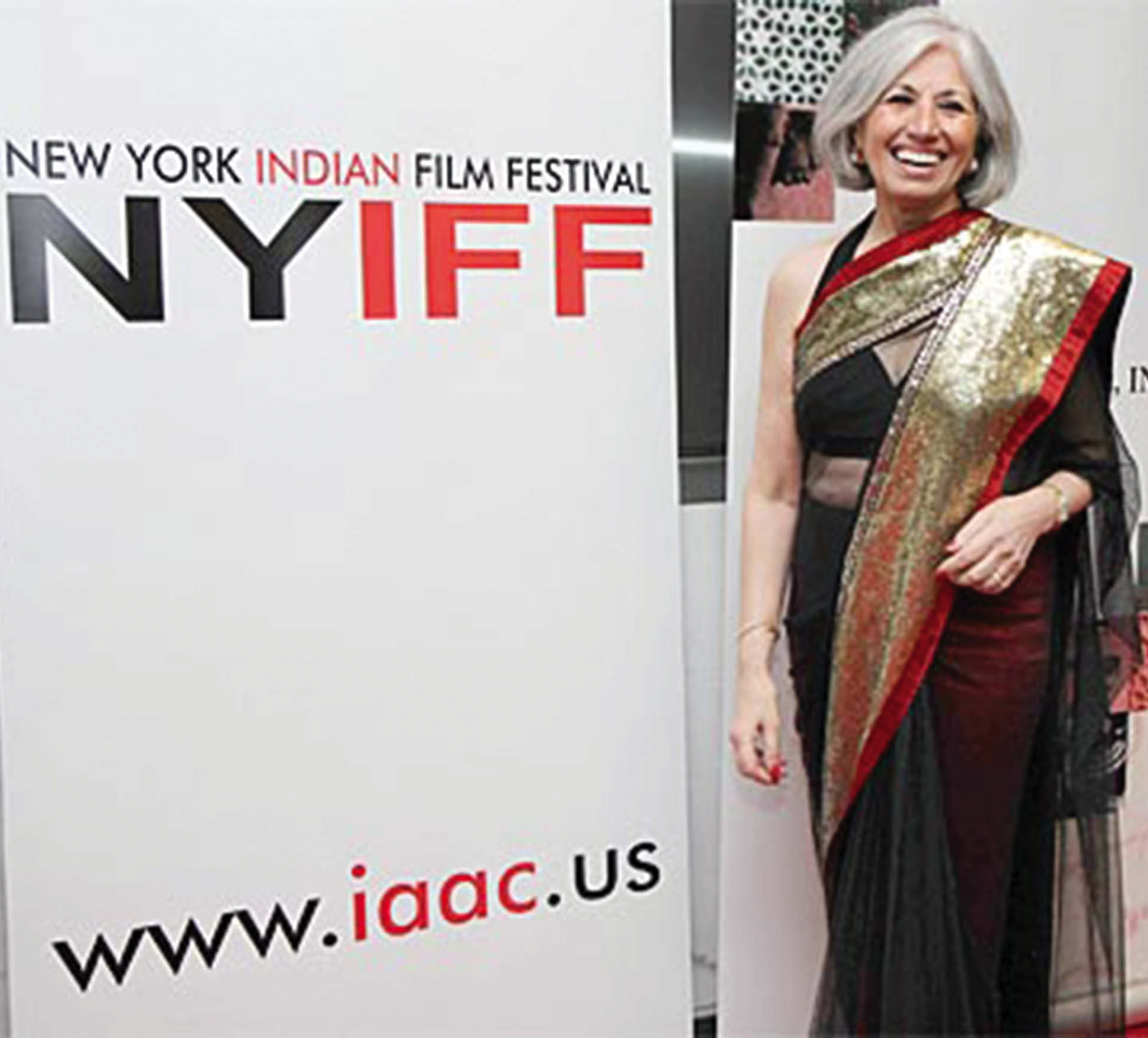
  • The New York Indian Film Festival

    The New York Indian Film Festival

    The New York Indian Film Festival was the first festival in the United States devoted to Indian films and has grown to be the largest and most influential, helping to set up several other Indian Film festivals in the US. Claus Mueller speaks with the New York Film Festival Executive Director Aroon Shivdasani on the progress story and the problems encountered.


    Celebrating its 16th anniversary from May 7-14, 2016,the New York Indian Film Festival was the first festival in the United States devoted to Indian films and has grown to be the largest and most influential, helping to set up several other Indian Film festivals in the US. It is part of a comprehensive program in the arts offered by the New York based Indo-American Arts Council. As other specialty or niche festivals, the NYIFF has a unique programming profile devoted to features,documentaries and shorts made in the Indian Diaspora, or by Indian independent film makers. Its goal is to foster an understanding of India and its culture and to contribute to improving US Indian relations. The festival is attracting a growing number of Americans. Individuals of Indian ancestry account for 60%of the audience. That group encompasses about 700.000 persons in the tristate area. As other Indian Americans they are characterized, according to census data, by a very high educational achievement and part of the richest ethnic group in the US with an average household income of about $100,000. As other programs initiated and organized by the IndoAmerican Arts Council theNew York Indian Film Festival has been growing. Whereas 53 films were screened in 2015 this year’s edition will show 79 films and added two more screening days. Yet in spite of this expansion of the program, inclusion of production from other South Asian countries and an opinion shaping upscale audience the festival faces challenges common to other niche festivals. First there is the perennial funding problem and second is the question of how to best serve the Indian American community and others interested in Indian culture. This interview with the festivals driving spirit, its executive director, Aroon Shivdasani, presents her perspectives.

    Claus Mueller:  What is the status of the New York Indian Film Festival?

    AroonShivdasani, the festival's driving spirit and its executive director
    AroonShivdasani, the festival’s driving spirit and its executive director

    Aroon Shivdasani: We started this film festival in 2001 because we wanted to showcase Indian Independent and Diaspora films in the US -something that had not been done before. Less than two decades ago, nobody knew about real Indian Cinema in North America. We are the oldest Indian film festival in the US – older than any of the other Indian film festivals that have now cropped up all over the country, like those in Los Angeles, Chicago, Atlanta, Seattle, and many others. We started as an Indian Diaspora film festival screening films made by Indians living all over the world – outside India. We conceived of a program to which the North American audience could relate -before bringing in Indian independent, alternate and art house films. Our first festival opened with the Godfather of Indian diaspora cinema, Ismail Merchant. The Merchant-Ivory film SHAKESPEAREWALLAH had won a Silver Bear at the Berlin Film Festival and featured Madhur Jaffrey and Shashi Kapoor. We closed the festival with Mira Nair’s Monsoon Wedding to a packed audience of people sitting in the aisles and standing at the back.

    CM: When you focused on a target audience whom did you start with?

    AS: We wanted mainstream America to see these films. However, the first festival had an 80%audience from the Indian subcontinent.

    C M: Is it currently still that high?

    AS: No, it now reaches out to all film aficionados. However, we still have a South Asian audience of approximately 60% – the rest of the 40% is American. You must remember that I am including the second generation Indian-American in the South Asian audience. This demographic is actually American – people like my children who were born in the US.

    CM: Has there been a significant change?

    AS: Certainly, but there have been several other dramatic changes. The first couple of years most of the diaspora films we received were still immature. Less than two decades ago there were a handful of good Indian Diaspora film makers. Our first film festival had only twelve films because that was the number of good diaspora films we showed that year. Indian diaspora filmmakers have matured over the last 15 years and we now have a plethora of films submitted to our festival. However, we have also added films from all over the Indian subcontinent (India, Pakistan, Sri Lanka, Nepal, Bhutan, Bangladesh, and Afghanistan) which increased our annual submission rise to over 300 for each festival – giving us a problem that we enjoy – plenty of good films from which to choose our final program.

    CM; So what is the mix of productions you show this year?

    AS: We will screen 35 feature narratives, 36 short narratives, 5 feature documentaries and 3 short documentaries. Now we have more independent films than Diaspora films. Probably 60% are independent/art house/alternative productions and the remainder is from the Diaspora. Over the last years there have been great increases of independent films submitted from India and the rest of the Indian subcontinent, which are quite remarkable in content and quality as well as growth in the number of productions.

    CM: How many films were submitted this year, including shorts?

    AS: 190 productions were submitted

    CM: Do you carry in your festival traditional commercial Indian films such as Bollywood productions?

    AS: No – unless we were to program a retrospective of a great Indian Director who has made a significant contribution to Indian cinema. Our mission is to show the real India through our films, to give socially conscious films a platform, to encourage audiences to view a different kind of cinema. Bollywood does not need us to do this for them. They have a large captive audience of their own. We often screen films that have commercial Indian cinema stars or directors – however those films are in the independent stream – smaller budgets, socially conscious plots or plots reflecting real lives and stories. We screen features, documentaries and shorts. I would love to screen Aamir Khan films – I do believe he has turned the tide of popular Indian cinema. Bollywood audiences respond to his films because he is of that world despite the fact that he now produces films in the independent genre which means his independent films receive mass audiences. In addition, there seems to be a turning tide in Bollywood too.several commercial films are also looking at real issues in the Indian subcontinent.

    CM: Let’s take another area. If you check the box office results of Indian films in the US, it seems to be limited. Among the top scoring 100 foreign language films ranked since 1980 by Mojo, you will find only three Indian titles, MONSOON WEDDING.PK and OM SHANTI OM. So what is the contribution of your festival to get high quality independent productions and Diaspora films into distribution in the US?

    AS: First let us qualify your comment. High quality Indian independent and Diaspora films fall into the same category as the films shown in special venues such as the Film Forum, Lincoln center, IFC, Quad Cinemas, Sunshine and the Angelika. One cannot place “foreign” films in the same category as the top grossing American films – their markets are completely different. If we are talking about distribution, we need to keep in mind that our films are part of the foreign language film group that play in art house theaters, the alternative or specialty film markets. Both known and unknown Indian Diaspora films have had successful screenings in these theatres: Mira Nair’s Monsoon Wedding & Namesake, Deepa Mehta’s Water, Gurinder Chadha’s Bride & Prejudice, David Kaplan’s Today’s Special, Vikram Gandhi’s Kumare and a host of others. In fact, I would place Danny Boyle’s Slumdog Millionaire in the same category. We premiered it and it then became a runaway success!!

    CM: But that market is also rather small. Foreign language films with box office receipts of more than$100,000 grossed only $ 63.9 million out of a total box office of $10.3 billion in 2014. In 2015 there was a decline. But it is significant that of all foreign language films released to date in 2015 and 2016 those from Indiahad with $16.63 million higher receipts than French and German films respectively. Indian films have a brief theatrical exposure rarely exceeding two weeks. Overall US box officereached $13.9 billion during the same period. Foreign language films continue to lose ground, possibly in part due to use of other platforms but there are no hard data as to their financial returns in alternative distribution.

    It is indeed a specialty market. But looking at specialty distribution, have you been able to track the films you are showing with respect to their subsequent use by art houses or theaters specializing in foreign and/or Indian Films?

    AS:Yes, recently we have started to track our films. It is still a rather small percentage of Indian films that have received distribution here. I mentioned some of them above – others include Mathew Joseph’s BOMBAY SUMMER, Rajnesh Domalpali’s VANEJA, Srinivas Krishna’s GANESH BOY WONDER, and Shonali Bose’s AMU. Several notable independent films from our program have been screened in mainstream independent cinemas – Mira Nair’ s RELUCTANT FUNDAMENTALIST, Deepa Mehta’s MIDNIGHT CHIDREN, Anurag Kashyap’s GANGS OF WASSEYPUR. I am sure many films from our 2013 & 2014 festivals will soon be in the cinemas such as Nitin Kakkar’s FILMISTAAN, Feroz Khan’s DEKH TAMASHA DEKH, Anurag Kashyap’s UGLY and Hansal Mehta’s SHADID.

    CM: In some cases, did they have prior distribution deals?

    AS: Absolutely! And, in other cases distributors picked them up at our festival e.g. VANEJA, GANESH BOY WONDER, TODAY’S SPECIAL, BOMBAY SUMMER, AMU, UGLY, GANGS OF WASSEYPUR ……actually a large percentage of films screened at our festivals for the last few years have wound up in theatres.

    CM: Is there is a general problem cracking the specialty market, even if marketing support is provided?

    AS: Correct, we encourage film makers to bring their contacts from the industry. We provide passes to distributors and film financiers but also use the festival to reinforce audience appeal, and work the media. Further the festival program ensures that there is always a post-screening discussion which gives filmmakers a chance to talk to the audience about their films and allows the industry to recognize and approach them.

    CM: But you do have an advantage over let’s say Italian or French festival films? There is a sub circuit of Indian film theaters in the US films, not only lots of the mom and pop operations but also theaters that were acquired by the Reliance Theatre Circuit. I understand that the success of these theaters with the Indian language audience has led to neighboring main line theaters to play Indian films now.

    AS : No, I don’t think so. For one, mainstream America is already familiar with Italian and French films and filmmakers. Indian Independent filmmakers are still in their infancy with regard to visibility in the “foreign film” audience. With regard to Indian mom and pop theaters – they are reluctant to play the productions we offer because they are not confident of the recurring audiences they get with Bollywood films. Reliance has closed most of their theatres!

    CM: What if you have a commercially viable product?

    AS: Well, I believe we have to start inviting movie theatre owners to our festival to show them the sold out houses for our films – in English, Hindi as well as all the other Indian regional languages. In fact, we have long lines of wait lists for several of our films.

    CM: What about new distribution platforms, Video on Demand, Netflix, Hulu, special cable or satellite channels aimed at the Indian Diaspora audience, specialized circuits? Reliance figures that there are millions of people in this country speaking Indian languages. Have you ever explored these new platforms?

    AS: Yes, we are increasingly aware of these platforms. I believe Star TV, Netflix and several other established online distribution platforms are already screening Indian films. Netflix carries about 70 feature films from India, though mostly Bollywood productions, they still have to recognize Indian independent productions. Several smaller ones have approached us to stream our films through them. In 2015 we continue to move in that direction. In 2012 Mela attended our festival to invite filmmakers to stream their films through them; Republic of Brown has approached our filmmakers as are big companies like SONY and MTV. Several small distribution companies have started checking out our festival to acquire films. The large ones have very strict rules of compliance whereas the smaller ones are more laissez faire. We have important Indian film content that can garner a whole new audience of film aficionados for these channels. These companies have approached us because they realize that we have become an important entry point for Indian content. I have heard Rediff.com is thinking along those lines too although I wouldn’t swear to that. Companies realize that there is a huge potential market in streaming good films that are not easily available after a one time screening at our film festival. The Asian Indian population is one of the fastest growing ethnic groups in the US, amounting to more than 3 million people now. People attending our festival frequently ask where they and their friends or relatives can view our films. We hope to give them concrete answers after our 2016 film festival.

    CM: What about other exposure?

    AS: We have been approached by the Museum of the Moving Image, the Indians of Long Island, EKAL, and the Indian Cultural Council of Greenwich to show a few of our NYIFF 2016 films at their venues immediately following our screenings. Also, all of the local Indian media cover the festival, TV Asia, ITV, India Abroad, News India Times, and several others.

    CM: What is your current principal problem?

    AS: Money. Funding has become a major problem. Indian and US corporations don’t seem particularly interested. We made some small steps this year. I hope their experience with our festival leads them to get more involved next year. They were really happy with the exposure they received, the festival itself, as well as our audiences. Limited funding precludes expansion and, equally important, it prevents providing better services to our audiences.

    CM: What about public funding?

    AS:We receive small amounts from the federal, state and city governments. However, they are extremely small amounts to start with, and have been further slashed due to the economy.

    CM:  Can you identify other potentials sources?

    AS:We have approached several corporations; I hope some of them come through. Individual giving has, to date, been extremely important. This means individuals who believe in our organization, its mission and are equally pleased with the execution and results.

    CM: What about official Indian agencies? They come to mind since I had a very positive response by government and private sector officials to a presentation I gave in New Delhi several years ago in New Delhi on the important role of Indian films in propagating Indian culture overseas through public diplomacy projects.

    AS: ICCR (Indian Council for Cultural Relations) and the Consulate General of India. The ICCR used to send us artists – that has changed with new Indian and US Government rules. The Indian Consulate General gives us in-kind support by hosting some receptions, and the Indian Tourist Office (Incredible India) has, in the past, sponsored us with small amounts of cash. However, that too has stopped as per new orders from India. There is no significant monetary support from Indian Government agencies.

    CM: Do you detect any shifts since India is rapidly becoming a major international power?

    AS:Unfortunately, I don’t see any visible signs of change. In fact, besides verbal bravado, the small amounts of funding we previously received have also been cut off.

    CM: Well, I do hope that this will be different in the future. Thank you very much for your reflections.

    (Claus Mueller can be reached at filmexchange@gmail.com)


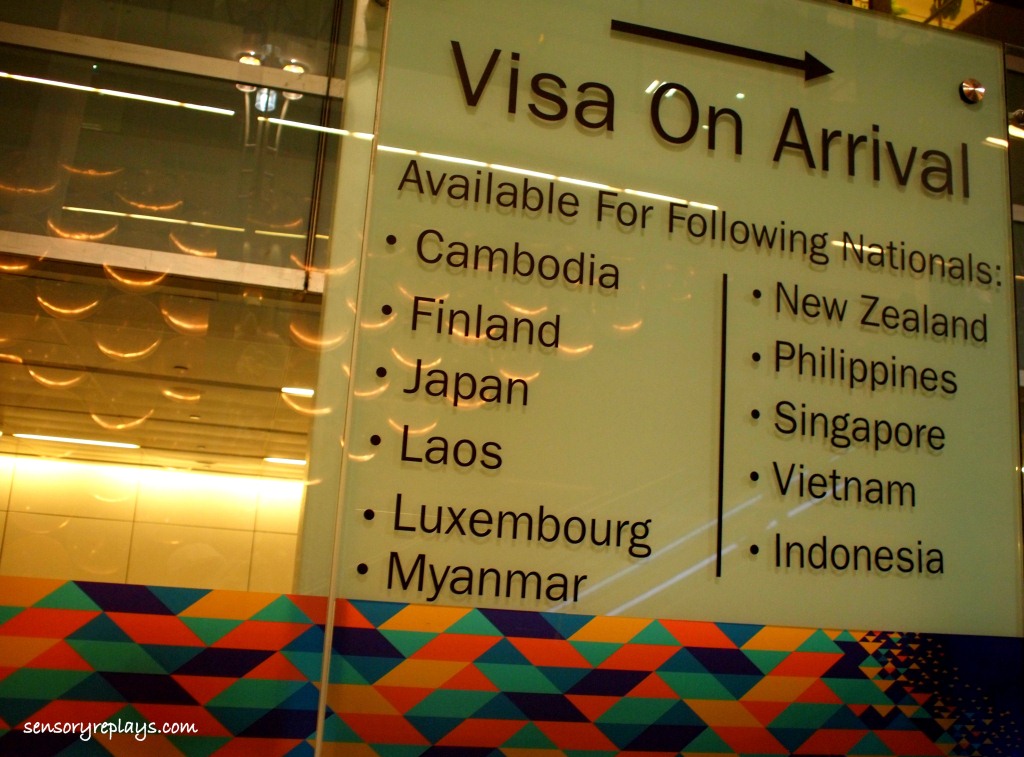
  • Special visa for SAARC businessmen from April

    Special visa for SAARC businessmen from April

    NEW DELH: India is all set to issue multi- city, multiple-entry business visa to businessmen of SAARC nations including Pakistan, beginning April 1, 2016.

    The business visa, to be called ‘India Business Card’ is expected to be granted for up to five years or less, as per the requirement. “Printing of the ‘India Business Card’ has been ordered in the India Security Press in Nashik. We are planning to launch it by April 1,” a senior Home Ministry official said.

    There will be some special conditions for businessmen from Pakistan. But no visa conditions will apply for those from countries like Sri Lanka, Bangladesh and Maldives. Nationals from Bhutan and Nepal do not require a visa to enter India.

    Pakistani entrepreneurs should run an enterprise worth one crore Indian rupees and have an annual income of at least 10 lakh Pakistani rupees to apply for a three-year multiple entry card. Also, the applicant should be a member of any Chamber of Commerce in Pakistan recognised by India.

    Currently, they are eligible for grant of multiple-entry business visa for a maximum period of one year and can only travel to 10 places. Under the new scheme Pakistani entrepreneurs will be exempted from reporting at the local police station.

    Prime Minister Narendra Modi had, during the SAARC summit in Kathmandu in 2014, announced business visas with 3-5 years’ validity for citizens of all SAARC nations.

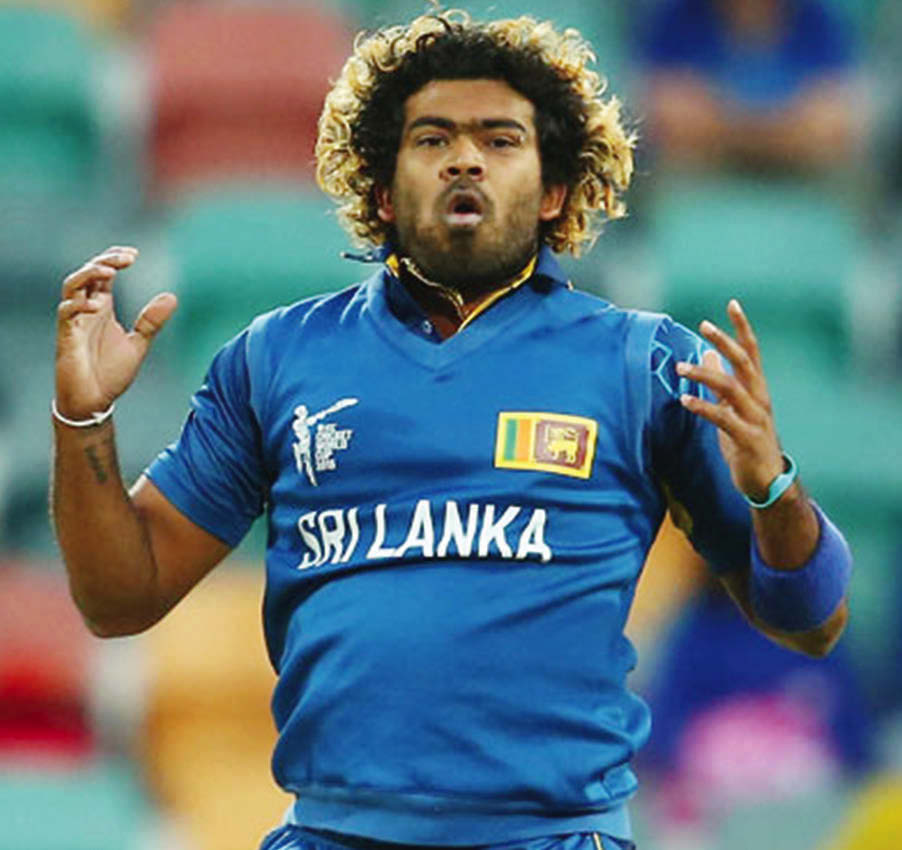
  • I might retire after World T20, hints Lasith Malinga

    I might retire after World T20, hints Lasith Malinga

    MIRPUR (TIP): Sri Lanka’s T20 captain and strike bowler Lasith Malinga has hinted that he might call time on his international career after the ICC World T20 in India as he is finding it difficult to manage a grave knee injury.

    At the post-match media conference, Malinga was asked if he would like to quit after the upcoming edition of World T20, just like Mahela Jayawardene and Kumar Sangakkara did after winning the last edition, he replied: “Might be”.

    The Lankan slinger elaborated that his current injury is so bad that complete recuperation might take close to two years, which effectively ends his career now that he is nearly 33.

    “I have played 12 years for the national team. I am now 32 and will soon be 33. I have had a bad injury and if at this stage I have to take one or one and half years of rest, I would rather have to finish my career. If I need to play tough cricket for my country, I don’t think I can then totally recover from the injury. That’s why I am saying I don’t know how many months or years are left in me. Whatever little I play, I want to serve the national team and my IPL team (Mumbai Indians) well,” Malinga said.

    For Malinga, he is ready to play through pain for the national team as the defending champions need him in the big event.

    “This is not the right time to rest. We have the T20 World Cup and I am the most experienced bowler for Sri Lanka in this format. Whatever painkillers and injections that needs to be used, I will use as this is the end of my career. If I can do something for the team, I will do in these last few months may be. I am still only 60-70 per cent of where I want to be. But I am happy with the result against UAE though,” said Malinga, who led from the front with a four wicket haul in a low-scoring game. (PTI)

  • Sri Lanka willing for international probe on war crimes, says Lankan PM Ranil Wickremesinghe

    Sri Lanka willing for international probe on war crimes, says Lankan PM Ranil Wickremesinghe

    COLOMBO (TIP): Sri Lankan Prime Minister Ranil S Wickremesinghe on Feb 19 made it clear that his government was not averse to international participation in investigating the alleged war crimes in his country, but said “final judgment will be made by the internal judicial system.”

    Wickremesinghe who was in Guruvayur to offer prayers at the famous Sree Krishna Temple made these observations while talking to reporters. The Sri Lankan prime minister said representatives of the neighbouring countries like India, Pakistan, Bangladesh and Afghanistan as well as that of the US and human rights organisations can participate in the discussions on the war crimes in Sri Lanka. He said Sri Lanka wanted to ensure that those responsible to the death of the civilians whether they were military personnel or the organizations like the LTTE, adding, a UN investigation had earlier said it was possible up to 40,000 people had been killed in the final five months alone.

    “It was not clear how many of them were killed by the (Lankan) army or whether the LTTE had moved the people to the war zones which led to the death of some of them. We may not have the full expertise to identify the exact factors that led to those casualties. So international participation is welcome for determining such causes,” the Sri Lankan prime minister said.

    “But the right to make the final judgment who was responsible for the deaths and on the nature of punishment should rest with the judicial system of Sri Lanka. The judicial system in Sri Lanka was in shambles earlier, but now it is returning to normal. The sovereignty of each country must be respected in such issues,” he added.

    (PTI)

  • On Independence Day, Lanka lifts unofficial ban on Tamil national anthem

    On Independence Day, Lanka lifts unofficial ban on Tamil national anthem

    COLOMBO (TIP): Lifting an unofficial ban, Sri Lanka’s national anthem was on Thursday sung in Tamil at a ceremony here to mark the the country’s independence day, in an effort to achieve reconciliation with the ethnic minority community.

    School children rendered the Sinhala and Tamil versions of the national anthem at a celebration to mark the 68th anniversary of Sri Lanka’s independence from Britain. The move, despite opposition from some quarters, is being seen as an effort by the government to reach out to the Tamil minority after the nearly 26-year war with the Liberation Tigers of Tamil Eelam (LTTE) that ended in 2009. About 100,000 people were killed during the civil war.

    “A new journey begins by reinstating the singing of the national anthem in Tamil,” said deputy minister for public enterprise development Eran Wickramaratne.

    Deputy foreign minister Harsha de Silva in a Facebook post said: “A first in my lifetime. After many years the Independence Day celebrations came to a close with the national anthem sung in Tamil.” President Maithripala Sirisena since becoming President in 2015 has begun several actions to win back the Tamils in the reconciliation process.

  • Tug of War on Garbage Tarnishing Clean Delhi Image Worldwide: Jolly

    Tug of War on Garbage Tarnishing Clean Delhi Image Worldwide: Jolly

    NEW DELHI (TIP): Continued tug-war on garbage politics in the capital has tarnished the “Clean Delhi City” image worldwide, stated Senior BJP leader Vijay Jolly at New Delhi February 2, 2016.

    Foreign tourists especially Non Resident Indians (NRI’s) are baffled, surprised and shocked over the recent course of “Govt. & Civic” tussle in Delhi. Cancelation of travel to Delhi by foreign & domestic travelers is causing a tremendous loss to tourism revenue, deplored BJP leader Mr. Jolly.

    Due to piling garbage all over Delhi, foreign tourist arrivals are on the decline, said Jolly. The last quarter of year 2015 registered a growth of 6.1% in FTA in India. Delhi port recorded the highest FTA of 30.08% followed by Mumbai 17.21%, Chennai 8.91%, Bengaluru 6.5%, Kolkata 4.02% etc. The maximum number of foreign tourist arrivals last year were from 15 countries namely Bangladesh 18.81%, USA 10.99%, UK 7.96%, Malaysia 4.72% Sri Lanka 4.69%, China 3.37%, Pakistan 1.61% etc. But early January & February, the FTAs from these countries have considerably reduced, stated the Delhi BJP leader.

    Tussle over financial jugglery, safai karamcharies strike, followed by doctors & teachers strike, non-payment of civic salaries, scattered garbage, over flowing dustbins, stoppage of mid-day meals to children, failure of PWD to clean up Delhi & absence of CM Kejriwal from Delhi are spreading fears of epidemic in Delhi soon, stated BJP leader Mr. Jolly. Conciliation and not confrontation alone can save Delhi. Early bail-out and payment of 2 months pending salaries of civic staff by Arvind Kejriwal govt. is the only -solution stated Mr. Jolly.

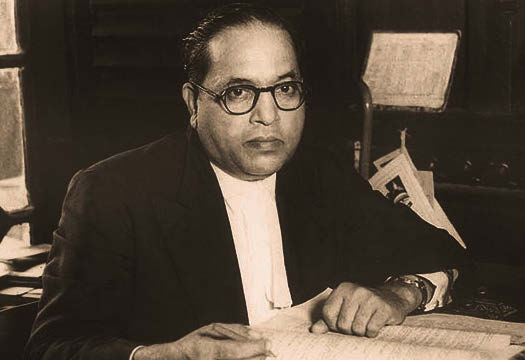
  • ARCHITECT OF INDIA’S CONSTITUTION DR. BHIMRAO AMBEDKAR

    ARCHITECT OF INDIA’S CONSTITUTION DR. BHIMRAO AMBEDKAR

    Dr B R Ambedkar, popularly known as Babasaheb Ambedkar, was one of the architects of the Indian Constitution. He was a well-known politician and an eminent jurist. Ambedkar’s efforts to eradicate the social evils like untouchablity and caste restrictions were remarkable. The leader, throughout his life, fought for the rights of the dalits and other socially backward classes. Ambedkar was appointed as the nation’s first Law Minister in the Cabinet of Jawaharlal Nehru. He was posthumously awarded the Bharat Ratna, India’s highest civilian honor in 1990.

    “Unlike a drop of water which loses its identity when it joins the ocean, man does not lose his being in the society in which he lives. Man’s life is independent. He is born not for the development of the society alone, but for the development of his self.”

    Bhimrao Ambedkar was born to Bhimabai Sakpal and Ramji on 14 April 1891 in Madhya Pradesh. He was the fourteenth child of his parents. Ambedkar’s father was a Subedar in the Indian Army and posted at Mhow cantonment, MP. After the retirement of his father in 1894, the family moved to satara. Shortly after, his mother passed away. Four years later, his father remarried and the family shifted to Bombay, where he cleared his matriculation in 1908. His father Bhimabai Sakpal died in Bombay, in 1912.

    Ambedkar was a victim of caste discrimination. His parents hailed from the Hindu Mahar caste, which was viewed as “untouchable” by the upper class. Due to this, Ambedkar had to face severe discriminations from every corners of the society. The discrimination and humiliation haunted Ambedkar even at the Army school, run by British government. Fearing social outcry, the teachers would segregate the students of lower class from that of Brahmins and other upper classes. The untouchable students were often asked by the teacher to sit outside the class. After shifting to Satara, he was admitted to a local school but the change of school did not change the fate of young Bhimrao. Discrimination followed wherever he went. In 1908, Ambedkar got the opportunity to study at the Elphinstone College. Besides clearing all the exams successfully Ambedkar also obtained a scholarship of twenty-five rupees a month from the Gayakwad ruler of Baroda, Sayaji Rao III. Political Science and Economics were the subjects in which he graduated from the Bombay University in 1912. Ambedkar decided to use the money for higher studies in the USA.

    “Political tyranny is nothing compared to the social tyranny and a reformer who defies society is a more courageous man than a politician who defies Government.”

    After coming back from the US, Ambedkar was appointed as the Defense secretary to the King of Baroda. Even, there also he had to face the humiliation for being an ‘Untouchable’. With the help of the former Bombay Governor Lord Sydenham, Ambedkar obtained the job as a professor of political economy at the Sydenham College of Commerce and Economics in Bombay. In order to continue his further studies, in 1920 he went to England at his own expenses. There he was awarded honor of D.Sc. by the London University. Ambedkar also spent few months at the University of Bonn, Germany, to study economics. On 8 June, 1927, he was awarded a Doctorate by the University of Columbia.

    After returning to India, Bhimrao Ambedkar decided to fight against the caste discrimination that almost fragmented the nation. Ambedkar opined that there should be separate electoral system for the Untouchables and lower caste people. He also favored the concept of providing reservations for Dalits and other religious communities.

    Ambedkar began to find ways to reach to the people and make them understand the drawbacks of the prevailing social evils. He launched a newspaper called
    “Mooknayaka” (leader of the silent). It was believed that, one day, after hearing his speech at a rally, Shahu IV, an influential ruler of Kolhapur dined with the leader. The incident also created a huge uproar in the socio-political arena of the country.

    In 1936, Ambedkar founded the Independent Labor Party. In the 1937 elections to the Central Legislative Assembly his party won 15 seats. Ambedkar oversaw the transformation of his political party into the All India Scheduled Castes Federation, although it performed poorly in the elections held in 1946 for the Constituent Assembly of India.

    “For a successful revolution it is not enough that there is discontent. What is required is a profound and thorough conviction of the justice, necessity and importance of political and social rights.”

    Ambedkar objected to the decision of Congress and Mahatma Gandhi to call the untouchable community as Harijans. He would say that even the members of untouchable community are same as the other members of the society. Ambedkar was appointed on the Defense Advisory Committee and the Viceroy’s Executive Council as Minister for Labor. His reputation as a scholar led to his appointment as free India’s first, Law Minister and chairman of the committee responsible to draft a constitution.

    Bhimrao Ambedkar was appointed as the chairman of the constitution drafting committee. He was also a noted scholar and eminent jurist. Ambedkar emphasized on the construction of a virtual bridge between the classes of the society. According to him, it would be difficult to maintain the unity of the country if the difference among the classes were not met.

    In 1950, Ambedkar traveled to Sri Lanka to attend a convention of Buddhist scholars and monks. After his return he decided to write a book on Buddhism and soon, converted himself to Buddhism. In his speeches, Ambedkar lambasted the Hindu rituals and caste division. Ambedkar founded the Bharatiya Bauddha Mahasabha in 1955. His book “The Buddha and His Dhamma” was published posthumously.

    On October 14, 1956 Ambedkar organized a public ceremony to convert around five lakh of his supporters into Buddhism. Ambedkar traveled to Kathmandu to attend the Fourth World Buddhist Conference. He completed his final manuscript, “The Buddha or Karl Marx” on December 2, 1956.

    Since 1954-55 Ambedkar was suffering from serious health problems including diabetes and weak eyesight. On 6 December, 1956 he died at his home in Delhi. Since, Ambedkar adopted the Buddhism as his religion, a Buddhist-style cremation was organized for him. The ceremony was attended by hundreds of thousands of supporters, activists and admirers.

  • Sri Lanka government proposes new constitution to devolve power

    Sri Lanka government proposes new constitution to devolve power

    COLOMBO: Sri Lanka’s new government on Saturday presented its plan for a new constitution aimed at devolving power and preventing the sort of ethnic tensions that led to a long and bitter civil war that ended in 2009.

    (REUTERS)

  • INDIA IMPROVES ties with neighbors

    INDIA IMPROVES ties with neighbors

    Building upon Prime Minister Narendra Modi’s initiative of inviting all SAARC leaders to his swearing-in ceremony in May 2014, the neighbourhood continued to be the primary focus of India’s foreign policy in 2015. While relations with Pakistan and Nepal remained on a tricky path, there was some forward movement in the ties with Bangladesh, Afghanistan, Bhutan, Maldives and Myanmar. Relations between India and Sri Lanka more or less maintained a status quo.

    Nepal

    It began with an upswing in the ties but the relationship were strained by the time the year came to an end. Bilateral ties with Nepal took a hit after the neighbouring country promulgated a new Constitution. India argued that the new Constitution did not take into account the concerns of all sections of the population, particularly the Madhesis who enjoy close ties with India. However, Nepal did not pay heed to India’s protests and rebuked it for interfering in the country’s internal affairs.

    Earlier when Nepal was hit by a massive earthquake on April 25, India responded to the calamity and helped Nepal by launching its largest disaster response abroad, Operation Maitri. During External Affairs Minister Sushma Swaraj’s visit to Kathmandu in June, India pledged $1 billion grant for the reconstruction of the quake-hit country.

    Pakistan

    File image of Narendra Modi with Pakistan PM Nawaz Sharif
    File image of Narendra Modi with Pakistan PM Nawaz Sharif

    Ties with Pakistan did not see any forward movement in the past one year despite two meetings between Modi and his Pakistani counterpart Nawaz Sharif. While pushing for better relations, India has maintained that talks are possible only in an atmosphere that is free of terror and violence.

    Sharif and Modi first met on the sidelines of the BRICS summit in Ufa in Russia. The two sides unveiled a five-point agenda to address concerns on terrorism and to promote people-to-people contact. Despite a number of hurdles including on account of terror attacks in the aftermath of Ufa, and cancellation of initial round of NSA-level talks, a significant breakthrough was achieved in December with the NSAs meeting in Bangkok, followed by Swaraj’s visit to Islamabad for the Heart of Asia Conference.

    Bangladesh

    Prime Minister Narendra Modi and Bangladesh Prime Minister Sheikh Hasina shake hands in Dhaka, Bangladesh, Saturday, June 6, 2015.
    Prime Minister Narendra Modi and Bangladesh Prime Minister Sheikh Hasina shake hands in Dhaka, Bangladesh, Saturday, June 6, 2015.

    Modi’s visit to Bangladesh in June saw the exchange of instruments of ratification of the landmark land boundary agreement. It was a relief for over 50,000 people living in 162 enclaves across both countries as India and Bangladesh swapped enclaves, bringing to an end the 68-year-old boundary dispute. The June 6-7 visit of PM Modi also saw India-Bangladesh developmental cooperation scaling new heights, with India pledging a $2 billion Line of Credit for Bangladesh. The two countries took a host of steps to enhance trade and connectivity, including the launch of two new bus services. The two countries are a part of the sub-regional cooperation between Bangladesh, Bhutan, India and Nepal to enhance connectivity and regional integration.

    Sri Lanka

    Not much change taken place in the ties between India and Sri Lanka in the year gone by. Within months of the newly-elected Sri Lankan President Maithripala Sirisena taking charge of the island nation, two-way visits were held by the leaders and foreign ministers of the two countries. During Modi’s visit to Sri Lanka in March, India pledged $318 million Line of Credit for railway upgradation (New Delhi’s development assistance is already about $1.6 billion), unveiled a currency swap agreement of US $1.5 billion to help stabilise the Sri Lankan rupee and to develop Trincomalee as a regional petroleum hub with the cooperation of Lanka IOC (Indian Oil Corp’s subsidiary in Sri Lanka) and Ceylon Petroleum Corporation.

    Both countries also signed four pacts regarding visa exemption for official passport holders, youth exchanges, customs agreement (to address trade concerns and reduce non-tariff barriers) and the construction of the Rabindranath Tagore auditorium at the Ruhuna University with India’s aid.

    Afghanistan

    Amid the backdrop of the unfolding transition in Afghanistan, India sustained its engagement with the war-torn country. During the visit of Afghan President Ashraf Ghani in April 2015, India reiterated its commitment to the reconstruction of the strife-torn country. The two sides focused on working towards a more liberalised business visa regime. Afghanistan welcomed India’s decision to extend the 1000 scholarships per year scheme by another 5 years as part of capacity building initiatives. India continues its assistance to the construction of the India-Afghanistan Friendship (Salma) Dam in Herat, expected to be completed in the first half of 2016. The Parliament Building in Kabul constructed with Indian assistance has already been completed as well as on the Doshi and Charikar power stations. But the resurgence of Taliban and Pakistan’s continued support to the group remain a huge hindrance. Taliban has regained control of large swathes of land in Afghanistan in the last few months and is now in a position to threaten the elected government once again.

    Bhutan

    India’s all-weather friendship with Bhutan continued on an upward curve. The visit of Bhutan’s Prime Minister Tshering Tobgay to India in January focused on optimising cooperation in the field of hydropower – the centerpiece of economic cooperation between the two countries. The two sides reiterated their commitment to the 10,000 MW initiative and in this context, to the early implementation of the four JV-model projects, totaling 2120 MW.

    Maldives

    India also engaged with the Maldives leadership despite political volatility in the island country. This was reflected in the meeting between the foreign ministers of India and the Maldives on the sidelines of the UN summit in New York in September. External Affairs Minister Sushma Swaraj followed it up with a visit to the island nation from October 10-11 to reinvigorate ties.

    Myanmar

    Bilateral relations with Myanmar improved with the first India-Myanmar Joint Consultative Commission (JCC) meeting held in New Delhi on July 16, 2015. Steps were taken to further enhance the existing air connectivity, extending a$500 million Line of Credit to the Government of Myanmar for development priorities, and a commitment to enhance the regional and sub-regional cooperation under the BCIM-EC and the BIMSTEC framework. India also played an instrumental role in providing disaster relief support to Myanmar in response to widespread floods and landslides caused by Cyclone Komen.

  • Kumar Sangakkara, Mahela Jayawardene apologise for ‘sexy’ Enrique Iglesias concert

    Kumar Sangakkara, Mahela Jayawardene apologise for ‘sexy’ Enrique Iglesias concert

    COLOMBO (TIP): Legendary Sri Lanka cricketers Kumar Sangakkara and Mahela Jayawardene have apologised for ‘unruly scenes’ witnessed during an Enrique Iglesias concert in Colombo on December 20. The concert of the pop star was organised by Live Events – a company co-owned by the two former cricketers.

    Even though both Sangakkara and Jayawardene are in Australia playing the Big Bash, the two took to Facebook on Monday to issue an apology. A day earlier, Sri Lankan President Maithripala Sirisena had said that “the organisers should be whipped” after reports that many women shed their underwear during the concert – part of the Spanish singer’s world tour called Love and Sex. There were also reports that the event as a whole was mismanaged, with the event beginning after the scheduled start and other security-related issues. “We wish to apologise to all of you for your negative experience at the recently concluded Enrique Concert,” wrote Sangakkara on Facebook. “We were shocked and saddened to hear of the events that transpired.” Jayawardene too posted the same lengthy apology on his page.

    There was significant backlash in the country after the event. “I don’t advocate that these uncivilised women who removed their brassieres should be beaten with toxic stingray tails, but those who organised such an event should be,” President Sirisena had said.

    Tickets were bought by fans for 5,000 rupees to 50,000 rupees ($350) and the organisers are now planning to refund the same.

  • 2nd South Asian film fest kicks off in Dallas (DFW)

    2nd South Asian film fest kicks off in Dallas (DFW)

    DALLAS, TX (TIP): The 2nd annual DFW South Asian Film Festival kicks off its programming
    from February 19th to 21st, 2016, at locations in downtown Dallas and Plano. The opening night film, Miss India America, will screen on Friday, Feb. 19th at the Hoglund Foundation Theater of the Perot Museum of Nature and Science, followed by a red carpet and cocktail reception at the T. Boone Pickens Life Then and Now Hall (4th floor of the Perot Museum). The rest of the specially-curated line-up will be showcased at the Angelika Film Center in Plano (Shops at Legacy) on Feb. 20th and 21st, followed by panel discussions with attending filmmakers, after-parties and networking events, all taking place in Plano.

    JINGO Media, a Dallas and NYC-based, public relations and events management boutique firm, produces the annual festival of South Asian independent cinema in North Texas. The second iteration of the festival boasts more than a dozen curated shorts, documentaries and feature films that focus on issues affecting the South Asian (India, Pakistan, Nepal, Bangladesh and Sri Lanka) sub-continent, as well as explore the lives and stories of the South Asian Diaspora in the United States.

    “In our second year, we are stepping up our game,” said JINGO Media Principal/CEO Jitin Hingorani. “Our team of curators has spent the year traveling to other South Asian film festivals around the world, including Toronto, New York, Chicago, Los Angeles and Goa, India, to secure the most meaningful and relevant programming for North Texas audiences. We are certain that our community will leave these films entertained, elated and educated.”

    The festival’s opening night film is the Texas premiere of wife/husband creative team Meera Simhan (actor/co-writer) and Ravi Kapoor’s (director/co-writer) award-winning, cross-cultural comedy Miss India America. Set against the backdrop of the Indian beauty pageant world in Los Angeles, the film stars Texas native Tiya Sircar and Hannah Simone (of television series New Girl fame), along with a supporting cast of talented South Asian actors. Produced by Megha Kadakia and Saurabh Kikani, the film “establishes an authentic tone that pays respect to Indian cultural norms, while poking gentle fun at these traditions,” raves The Hollywood Reporter.

    In addition to the opening night, centerpiece and closing night films, the festival will also showcase thought-provoking, edgy shorts and docs, along with women’s programming, men’s programming, LGBT programming and family programming. “All-access” festival passes, which provide admission to all of the films, networking events and after parties, are currently available on www.dfwsaff.com for the early-bird price of $125 before January 15th, after which the price increases to $150. Individual screenings are $15 per person, but limited tickets will be available at the theater. Every week starting in December, ONE film from the line-up will be revealed on the festival’s Facebook page and the entire festival lineup will be available by mid-January on the festival’s web site.

  • 4 Persons of Indian Origin Named in Foreign Policy Magazine’s List of 100 Leading Global Thinkers

    4 Persons of Indian Origin Named in Foreign Policy Magazine’s List of 100 Leading Global Thinkers

    WASHINGTON (TIP): Four persons of Indian origin are featured in Foreign Policy magazine’s list of 100 Leading Global Thinkers who have generated ideas that could promise humankind a better future.

    Featured among ‘Innovators’ whose work has advanced “progress in global health, human rights, security, and more” is Nina Tandon, co-founder of Epibone, New York City, “For healing broken bones by growing new ones.”

    Typically, to reconstruct bone, surgeons must take bone either from somewhere else in a patient’s body, necessitating a double surgery, or from an outside source, such as a prosthesis or a donor.

    But Nina Tandon has created a third way: Growing new bones. A patient’s stem cells are placed in a bone-shaped mold, which is then put into a special chamber that simulates the body’s temperature, nutrient composition, and other conditions.

    After three weeks, the cells have essentially formed a new bone. This method requires only one surgery and avoids implanting foreign materials, thereby reducing pain and complications, Foreign Policy noted.

    EpiBone has successfully replaced the jaw of a pig and is gearing up to start its first clinical trials, to be held within two years.

    Among the ‘Moguls’ who have “showed that progress is possible, whether in corner offices or on factory floors” are Rajan Anandan, managing director of Google, Southeast Asia and India, and Ayesha Khanna, founder of the Civic Accelerator, an investment fund for socially conscious enterprises.

    While Sri Lanka-born Rajan Anandan is included “For lobbying on behalf of the unconnected”, Ayesha Khanna gets in “For nudging women into the corner office”.

    Mr Anandan “has used his stewardship of Google in India to greatly improve tech access for the poor by successfully lobbying Indian manufacturers to launch low-cost phones, pushing carriers to bring down the prices of data plans, and increasing the translation of Google products into many Indian languages.”

    “Beyond that, he’s also one of the country’s most active tech investors: Between January 2014 and June 2015, he was the most prolific, according to Quartz, investing in 15 start-ups.”

    “Anandan’s work simply proves that good business doesn’t have to be at odds with good citizenry,” FP said.

    In November 2014, Ayesha Khanna and Shannon Schuyler, head of corporate responsibility at PricewaterhouseCoopers (PwC), pooled resources to help women gain access to capital.

    This spring, with PwC funding, Civic Accelerator’s cohort of 13 US start-ups -all of which had at least one female founder, and 11 of which were started entirely by women – participated in a 10-week boot camp to test ideas and connect with investors.

    Ayesha Khanna and Shannon Schuyler have pledged that at least half of future Accelerator-supported ventures will be owned by women.

    Featured among ‘Challengers’ who have “proved that even sacred cows can be toppled” is India-born Zainab Ghadiyali “For cracking the STEM ceiling.”

    In Menlo Park, California, Ghadiyali and Erin Summers, both engineers at Facebook, are running “wogrammers,” a movement to end the “brogrammer” stereotype and highlight the technical accomplishments of their peers.

    In its first year, wogrammers highlighted 50 female engineers from around the globe.