COLOMBO (TIP):
The term of a Sri Lankan government-appointed panel probing the cases of missing persons during the three-decade war with the LTTE has been extended by nearly seven months.President Mahinda Rajapaksa extended the term of the commission investigating disappearances in the North and East until February 15, 2015.Its term was to expire at the end of this month, said commission’s secretary HW Gunadasa.Rajapaksa yesterday announced he may add three more international experts to the existing three-member panel.
Last month, he had named a three-member international advisory panel comprising Sir Desmond de Silva, Sir Geoffrey Nice and Professor David Crane to advise the disappearances commission headed by ex-Sri Lankan judge Maxwell Paranagama. The members of the panel Desmonde Silva and Nice are from Britain while David Crane is a US national.
The probe panel was set up in August 2013 and mandated to probe disappearances of persons between 1990 to May 2009 when the war with Liberation Tigers of Tamil Eelam (LTTE) ended. It was set up as a recommendation of the Lessons Learnt and Reconciliation Commission (LLRC),which again was Sri Lanka’s answer to calls for reconciliation with the Tamil minority after the end of the bitterly fought conflict.
Tag: Sri Lanka
-

Sri Lanka disappearances probe panel term extended
-

Sri Lanka disappearances probe panel term extended
COLOMBO: The term of a Sri Lankan government-appointed panel probing the cases of missing persons during the three-decade war with the LTTE has been extended by nearly seven months. President Mahinda Rajapaksa extended the term of the commission investigating disappearances in the North and East until February 15, 2015. Its term was to expire at the end of this month, said commission’s secretary HW Gunadasa.
Rajapaksa yesterday announced he may add three more international experts to the existing three-member panel. Last month, he had named a three-member international advisory panel comprising Sir Desmond de Silva, Sir Geoffrey Nice and Professor David Crane to advise the disappearances commission headed by ex-Sri Lankan judge Maxwell Paranagama.
The members of the panel Desmonde Silva and Nice are from Britain while David Crane is a US national. The probe panel was set up in August 2013 and mandated to probe disappearances of persons between 1990 to May 2009 when the war with Liberation Tigers of Tamil Eelam (LTTE) ended. It was set up as a recommendation of the Lessons Learnt and Reconciliation Commission (LLRC), which again was Sri Lanka’s answer to calls for reconciliation with the Tamil minority after the end of the bitterly fought conflict.
Sri Lanka faces an international probe over allegations that government forces killed about 40,000 Tamil civilians in the final months of fighting, a charge refuted by Colombo. The panel has so far entertained nearly 19,000 complaints, including from the members of the LTTE and the government troops.
Alongside the appointment of the experts, the mandate of the disappearances commission was also expanded to include if any person, group or institution had been responsible for any violations of international humanitarian law or international human rights law. The UNHRC in late March had mandated the appointment of an international investigation team to probe Sri Lanka’s rights accountability. -

Sri Lanka President Skips CWG 2014 Citing Poor Security in Glasgow
COLOMBO (TIP):
Sri Lanka’s president decided to stay away from the Commonwealth Games despite being chair of the bloc because Colombo was unhappy with Britain’s security arrangements, a minister said on July 31.Information minister Keheliya Rambukwella said Mahinda Rajapakse wanted to attend the Games in Glasgow but was concerned about being targeted by ethnic Tamil protesters who accuse him of war crimes. Asked if the government was unhappy with the level of protection offered by the British authorities, Rambukwella said: “Of course. it happened (not enough security) last time also.
” Rambukwella said Rajapakse had an “unpleasant experience” when angry Tamils protested outside his hotel in London when he attended Queen Elizabeth II’s Diamond Jubilee in June 2012.”Security (of the president) is of utmost importance,” Rambukwella told reporters in Colombo. “If the president’s security (unit) is concerned about his safety, we take that advice seriously and he won’t go.
“Rajapakse’s office previously denied he stayed away because of the threat of demonstrations, saying no visit had been scheduled.Rajapakse hosted a summit of Commonwealth leaders last November and took over the rotating office-in-chair of the 53- nation bloc. Canada suspended its funding to the Commonwealth for the two years that Rajapakse is in charge over the country’s war crimes allegations.
Sri Lanka is accused of killing at least 40,000 Tamil civilians in the final stages of the decadeslong war between the military and Tamil rebels fighting for a separate homeland.Sri Lanka denies it killed civilians during the conflict that ended in 2009. Despite the military’s emphatic victory, Colombo maintains that Tamil diaspora groups still pose a serious threat. Former Sri Lankan president Ranasinghe Premasdasa was assassinated by a Tamil suicide bomber in May 1993 while president Chandrika Kumaratunga was wounded and lost her right eye in a suicide bombing in December 1999. -

Army chief Gen Dalbir Singh Suhag warns Pakistan on beheading-like incident
Dalbir Singh Suhag takes over as new Army chief
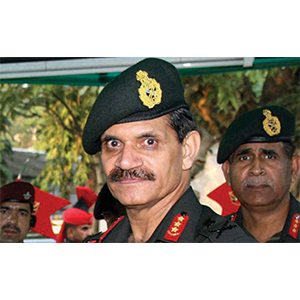
Lt Gen Dalbir Singh Suhag has taken over as the head of the 1.3 million strong Indian Army, succeeding General Bikram Singh. Suhag, whose appointment had kicked up a row, was designated as Army chief in May by the outgoing UPA government ignoring protests from his predecessor Gen VK Singh and BJP. 59-year-old Lt Gen Suhag, a Gurkha officer who had participated in the 1987 Indian Peace Keeping Force (IPKF) operation in Sri Lanka, is currently the Vice Chief of Army Staff. He will have a tenure of 30 months as the 26th Chief of the armed forces. Suhag was made the Vice Chief of Army Staff in December last year.
Earlier, he had taken over as the Eastern Army Commander on June 16, 2012. He was at the centre of a controversy triggered by ‘Discipline and Vigilance’ ban imposed on him by the then army chief Gen VK Singh in connection with an intelligence operation in Assam earlier. The ban on Suhag, the then 2 Corps Commander, was lifted soon after Gen Bikram Singh took over in May, 2012. BJP had questioned the “hurry” in making the appointment and insisted that the matter be left to the next government. However, soon after the NDA government took over, defence minister Arun Jaitley said the new dispensation will continue with the appointment made during UPA rule.
NEW DELHI (TIP): On his first day in office, Army chief Gen Dalbir Singh Suhag on August 1 warned Pakistan that India’s response to any beheading-like incident in future would be “more than adequate, intense and immediate”. “I can tell you that our response to any such act will be more than adequate in future. It will be intense and immediate,” he told reporters after his welcome guard of honour as chief of Army staff.
The new Army chief was asked how did India give a ‘befitting reply’ to Pakistan after the beheading of Indian soldier Lance Naik Hemraj along the line of control in Poonch sector on January 8, last year by Pakistani troops. Previous Army chief Gen Bikram Singh had on July 31 stated that India had given a befitting reply to Pakistan after the beheading incident. “It has been done. Please understand that when we use force, that use is from tactical to operational to strategic levels.
“When I mention that during that incident, it was aimed at operations at the tactical level, which have been undertaken. I think this has been done by the local commander, the chiefs have nothing to do with it,” Gen Singh had said. Pakistani Special Forces under the Border Area Teams (BAT) had carried out the operation of beheading Hemraj and mutilitating the body of Lance Naik Sudhakar Singh. Later in August, they had also killed five Indian troops in the same sector in a joint attack by Pakistani Special Forces and LeT terrorists. -

INDIA FUNDS CRECHES FOR TAMILS OF INDIAN ORIGIN IN SRI LANKA
COLOMBO (TIP): India on July 22 said it will upgrade 70 creches in the plantation areas in several parts of Sri Lanka so that mothers working in tea estates can leave their children in a safe environment. The project is to be implemented at a cost of 58 million Sri Lankan Rupees and will be taken up in seven estate regions of Hatton, Galle, Kandy, Ratnapura, Galle, Badulla, and Kegalle, Indian high commission said.
Lankan Tamils of Indian origin are the main workers employed in these seven estates where India plans to implement the project. Ten child development centres have been identified for renovation in each estate region.Apart from renovating the buildings, the government of India will also provide furniture to the creches to assist children to grow in a safe and hygienic learning atmosphere.
The project is expected to enable mothers engaged in the tea estates to go to work with the assurance that their children are in a safe environment. This will contribute to the economic empowerment of women and assist families in the estate sector. India has been implementing a number of projects for the estate people of Central and Uva Provinces. -

Hardline Buddhists want Pope Francis to apologize
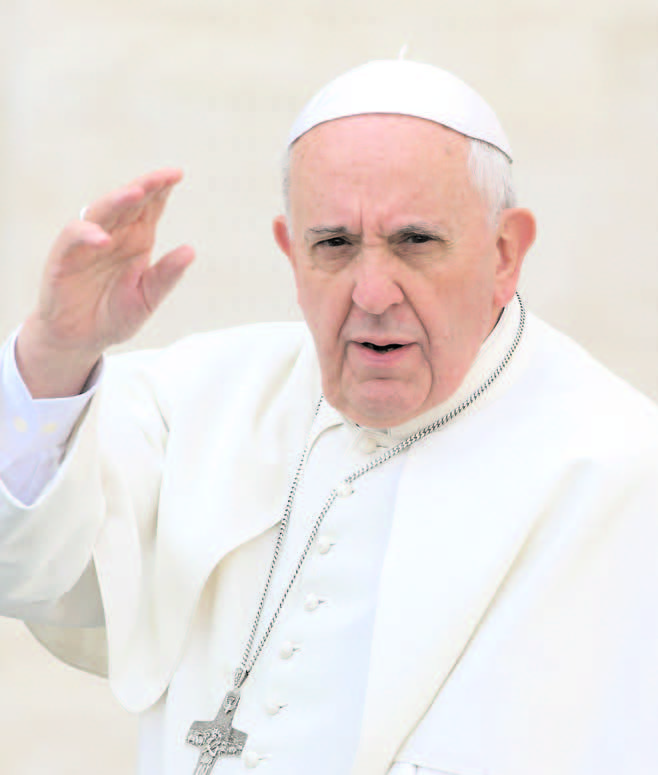
COLOMBO (TIP): A Buddhist group accused of instigating recent attacks on Muslims in Sri Lanka says Pope Francis must apologize to Buddhists for atrocities allegedly committed by Christian colonial rulers of the South Asian island nation when he visits next year. “We are waiting till the Pope comes to see what he is going to say about the crimes here,” Rev. Galagoda Atte Gnanasara, a leader of Bodu Bala Sena, or Buddhist Power Force group, told a meeting with foreign correspondents.
“The Portuguese, Dutch and the British are all the same to us,” he said referring to the countries that had established colonies in Sri Lanka one after another from 1505 to 1948. Roman Catholicism was established in Sri Lanka by the Portuguese, while the Dutch and the British established their own Christian denominations. “Previous Popes had made public apologies to certain countries because they destroyed, they killed.We had a similar situation, most of the Buddhist temples were destroyed by them (they) killed Buddhist monks.We would like to see that public apology from him,” said Gnanasara, whose comments were made June 8 but embargoed until July 9. -

EU alarmed by anti-Muslim violence in Sri Lanka
COLOMBO, SRI LANKA (TIP): The European Union expressed alarm on June 18 at recent violence against Muslims in Sri Lanka in which three people died and more than 50 were injured, and urged the government to ensure that the rule of law is upheld. “Incitement of communal violence and hatred can only be counterproductive to Sri Lanka’s stability,” the EU delegation in Colombo said in a statement.
Hard-line Buddhists hurled gasoline bombs and looted homes and businesses in attacks on Sunday evening in several towns in southwestern Sri Lanka. The attacks were led by a mob from Bodu Bala Sena, or Buddhist Power Force, which rails against the country’s Muslim minority. The group has been gaining followers and is believed to enjoy state support. Gotabhaya Rajapaksa, Sri Lanka’s powerful defense secretary and the president’s brother, once made a public appearance supporting the group’s cause.
Muslim residents say armed mobs broke into their houses and burned them after stealing jewelry and money. Associated Press journalists who visited the attacked towns saw dozens of shops gutted, and motorbikes and bicycles piled up and set on fire. Residents said mosques were also defaced. A curfew imposed on the towns after the violence was lifted Wednesday.
Galagoda Atte Gnanasara, the leader of Bodu Bala Sena, said the Buddhists were angry over an alleged attack on the driver of a Buddhist monk. Sri Lanka is still deeply scarred by its 1983-2009 civil war between the Buddhist Sinhalese majority and ethnic Tamil rebels, who are largely Hindu, but Buddhist- Muslim violence has been relatively rare. The US embassy in Colombo on Monday condemned the violence and urged restraint by all sides.
-

Rajat Gupta loses appeal of $13.9 million fine, sent to prison
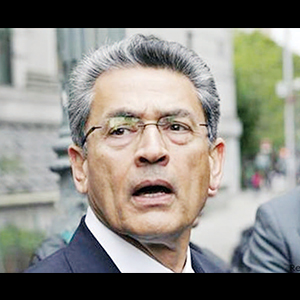
NEW YORK (TIP): Former Goldman Sachs Group Inc director Rajat Gupta on Tuesday, June 17, lost his challenge to a $13.9 million civil penalty and a permanent ban from acting as an officer for a public company, the same day he was scheduled to begin serving a two-year prison sentence. In a brief order, the 2nd US circuit court of appeals rejected Gupta’s claim that the penalty and ban were excessive. A federal jury convicted the 65-year-old in June 2012 of passing confidential information he learned from Goldman board meetings to Raj Rajaratnam, the former billionaire and founder of the Galleon Group hedge fund. Ironically, Gupta is being sent to a prison that has as its inmate Raj Rajaratnam, founder of the New York hedge fund Galleon Group, the man to whom he was convicted of giving insider information on a raft of companies including Goldman Sachs.
The Sri Lanka born Rajaratnam, who is serving an 11-year sentence, is a diabetic and is at the FMC Devens’ medical unit because he has to undergo dialysis. Gupta himself will undergo a medical check-up soon after reporting at the prison before he is lodged in the satellite camp, which reportedly has some 130 inmates. Over the past few weeks, Gupta is reported to have spent time with his family, including going on short holidays with his four daughters, in anticipation of serving his sentence.
However, prison guidelines will enable them to visit him on Fridays between 2:30 pm and 8:30 pm and on Saturdays, Sundays and federal holidays between 8:30 am to 3:00 pm. One of IIT’s best known graduates, Gupta is said to be writing a book about his ordeal and also planning a visit to India as soon as he is released from prison, according to Anita Raghavan, author of “The Billionaire’s Apprentice: The Rise of the Indian-American Elite and the Fall of the Galleon Hedge Fund,” a book about the white collar case that rocked Wall Street and corporate America.
“Gupta will have no trouble lining up consulting assignments from Indian companies. But his sterling calling card – offering Indian executives unparalleled access to American chief executives and politicians – will be badly tarnished,” Raghavan wrote in NYT’s Dealbook last week.
-

GOPIO’s 25th Anniversary Jubilee Convention a historic success
PORT OF SPAIN (TIP): The Global Organization of People of Indian Origin (GOPIO International) concluded its 25th Anniversary (Jubilee) Convention 2014 in Port of Spain in Trinidad & Tobago, with a memorable and highly successful celebration from 27th May through 30th May, 2014 coinciding with the 169th anniversary of Indian Arrival Day commemoration in Trinidad & Tobago.
The convention was a historic event in the Indian Diaspora attended by delegates from several countries where GOPIO is prominent and where persons of Indian origin reside in substantial numbers and even small numbers. Countries include: Australia, New Zealand, Fiji, Malaysia, Mauritius, Sri Lanka, India, South Africa, Netherlands and other countries of the European Union (EU), UK, Canada, USA, and the Caribbean region: Guyana, Trinidad & Tobago, Suriname, Belize, St. Vincent, Guadeloupe, Martinique, Grenada and St Lucia.
Among the many events of the convention, some of the notable highlights include: Welcome reception at the Diplomatic Centre residence of Hon. Kamla Persad-Bissessar, Prime Minister of Trinidad & Tobago, GOPIO’s elections for new officers, all-day academic conference, special guests at cultural performances held at National Cultural of Indian Culture (NCIC), and unveiling of arrival monument marking the first arrivals of indentured Indian laborers in Trinidad.
A significant highlight of GOPIO’s 25th Anniversary Jubilee Convention was the special welcome reception of GOPIO delegates at the Diplomatic Centre residence of the Hon Prime Minister Kamla Persad Bissessar on 28th May. The reception was hosted by Ministry of National Diversity and Social Integration with Minister Dr Roger Samuel making the initial remarks, followed by GOPIO International president Ashook Ramsaran and presentation of gifts.

GOPIO Jubilee Recognition Recipients with GOPIO officials, Indian High Commissioner G. Gupta,Trinidad & Tobago’s Minister Dr. Vasant Bharath MP and Minister Ramona Ramdial MP.
Hon Prime Minister Kamla Persad Bissessar formally welcomed GOPIO’s delegates, recounted GOPIO’s special reception/dinner during the visit to the Kolkata Memorial on 12th January, 2012 and thanked GOPIO for holding its 25th Anniversary Jubilee Convention in Trinidad & Tobago. In attendance were several ministers and members of parliament of the Government of Trinidad & Tobago as well as the Indian High Commissioner HE Gauri Gupta. The evening included a special celebratory treat of Caribbean and Indian music with delegates joining in dancing. On 28th May, a Business-to-Business seminar featuring prominent scholars and business leaders was held at the Radisson Hotel.

Some of the Legacy Generation Residents of Trinidad & Tobago with GOPIO officials, Indian High Commissioner HE Gauri Gupta, With Trinidad & Tobago’s Min. Dr. Suruj Rambachan, Min. Ramona Ramdial, Counselors Abdool & Seepersad, Couva Regional Chairman Henry Awong. Unveiling of Indian Arrival Monument at Waterloo-by-the-Sea
It was sponsored by Trinidad & Tobago’s Ministry of Trade & Investment. Sessions include: Investment & Trade Opportunities in Trinidad & Tobago; Investment & Trade Opportunities in St Vincent & Grenadines; Investment & Trade Opportunities in Guyana; Success Stories of Doing Business in the Caribbean; Free Enterprise, Market Economy and Business Successes; The Growth of Education and Medical Services for Bi-Lateral Trade; Media as Marketing Tool in Emerging Economies The Academic Conference segment of the convention was a full 1-day event held on 29th May at the Radisson Hotel.
There were several sessions designed round the convention theme of “Indian Diaspora Today & Tomorrow” The chief guest at the Inaugural Session was Indian High Commissioner HE Gauri Gupta and the keynote speaker Dr Mahin Gosine, Professor of Sociology and Anthropology at SUNY, New York, USA. Prof Kumar Mahabir, Assistant Professor at University of Trinidad and Tobago, concluded the session. Other sessions with prominent and suitably qualified speakers from several countries were: Global & Regional Diaspora Investments & Economic Opportunities; The Indian Diaspora: Issues, Challenges & Opportunities; Diaspora’s Youth, Children, Gender & Inter-Generational Issues; Multi- Cultural Diversity & Inter-Ethnic Cooperation in the Indian Diaspora; Education, Science & Technology as Significant Assets in the Indian Diaspora; Health, Wellness, Lifestyle & Nutritional Factors in the Indian Diaspora; GOPIO’s 25th Anniversary Resolutions; Wrap-up & Conclusion. Elections were held by GOPIO International Council for several positions in GOPIO at the international level.
The following officials were elected by unanimous vote: President – Ashook Ramsaran; Executive Vice President – Sunny Kulathakal; Senior Vice President – Dr. Piyush Agrawal; International Coordinator North America – Dr. Renuka Misra; and International Coordinator Caribbean, Dr. Arnold Thomas. Chairman Inder Singh was elected for another term. The Jubilee Recognition Gala was another highlight of GOPIO’s 25th Anniversary (Jubilee) Convention 201, held on 29th May, 2014 in the Grand Ballroom at the Radisson Hotel in Port of Spain. In attendance was Indian High Commissioner HE Gauri Gupta, Trinidad & Tobago’s Minister of Trade & Investment, Dr. Vasant Bharath; and Min. Ramona Ramdial, Minister in the Ministry of Environment & Water Resources. The event was emceed by prominent radio and television host Zelisa Boodoosingh.
GOPIO’s Jubilee Recognition for outstanding achievements in selected categories were awarded to several persons “who contributed to the betterment of people of the Indian Diaspora. The Jubilee Recognition recipients achieved significant and prominent levels of stature and recognition in their respective fields of endeavor and have served interests of people in their respective countries of domicile and others as well, in addition to generating pride and respect among the Indian Diaspora and others in country of birth or domicile”. Posthumous: Henri Sidambaron (Guadeloupe); Dr. Najma Sultana (USA); Baleshwar Agrawal (India); Lall Paladee (Trinidad & Tobago). Friend of GOPIO: HE Dr. Ralph Gonsalves, Prime Minister of St. Vincent & Grenadines.
Professional, Civic, Culture, Entrepreneurship, Media, Philanthropy: National Indian Cultural Centre (Trinidad & Tobago); John Barath (Trinidad & Tobago); Brenda Gopeesingh (Trinidad & Tobago); Dr. Hans Hanoomansingh (Trinidad & Tobago); Sattaur Gafoor (Guyana); Dr Yesu Persaud (Guyana); Chief Justice Carl Singh (Guyana); Dr. C. Baidjnath Misier (Netherlands); Dr. Lakshmi Persaud (United Kingdom); Ishwar Ramlutchman (South Africa); Nicole Vaitylingon (Guadeloupe); Dr. Vivian Rambihar (Canada); Dr. Parmatma Saran (USA); Dr. Sudhir Parikh (USA); TV Asia H R Shah (USA); India Abroad (USA); Kedar N. Gupta (India); Israel Khan (Trinidad & Tobago); Ashok Motwani (India). In addition to recognition of those who contributed to GOPIO’s formation in 1989 as well as all previous life members, GOPIO recognized the newest life members since 6th January, 2014 in attendance: Yamonee Barbaro (USA); Balkrishna Naipaul (Canada); Deo Gosine (Trinidad & Tobago); Sasenarine Sankar (Guyana); Claude Sheikboudhou (Guadeloupe); Elie Shitalou (Guadeloupe); Shaji SM Alex (India); Shaji Baby John (India). The National Council of Indian Culture (NCIC) hosted GOPIO delegates at its major events held at its Diwali Nagar in Chaguanas.
NCIC president Dr. Deokinanan Sharma and Mr Surujdeo Mangaroo graciously welcomed GOPIO delegates as special guests. Special events were: 27th May: Concert — famous Bhojpuri singer, Kalpana Patowary from Assam, India; 29th May – Indian Arrival Day commemoration with a special treat of music, songs, dances, recitals and authentic Caribbean and Indian foods. GOPIO 25th Anniversary Jubilee souvenir brochure is 112-page bound, elaborate keep sake publication distributed at no cost to all convention delegates and visitors, as well as mailed subsequently to worldwide officials, businesses, organizations.
The brochure messages of congratulations and well wishes, articles, program details, convention and international team, facts about GOPIO, its formation and history, as well as an extensive photo gallery. The convention team organized around the GOPIO chapter in Trinidad & Tobago, working diligently with dedicated and focused efforts to plan, coordinate and hold a magnificent GOPIO milestone convention in a country distant from the other regular venues which GOPIO has used over the years for its major events. Convention Convener: Ena Maraj, president of GOPIO International chapter of Trinidad & Tobago; General Convener: Dr. Arnold Thomas, GOPIO International Coordinator Caribbean; several chapter members serving in various capacities. The convention was endorsed and supported by a wide cross section of public and private sectors as well as civic and cultural organizations, academicians and academic institutions, media and others.
In addition, prominent persons of Indian origin and several Pravasi Samman Awardees also participated in the convention. HE Shri Gauri Gupta, Indian High Commissioner to Trinidad and Tobago, provided unwavering support and participated as chief guest in several major events of the convention. The National Council of Indian Culture (NCIC) provided meeting facilities during the planning stages. Special support by various ministries of the Government of Trinidad & Tobago, as well as National Council of Indian Culture (NCIC). Grand patrons: Deo Gosine (Labidco Port Services Ltd, Trinidad & Tobago); Dr. Chandrikaersad Baijnath Misier (Surichange NV, Netherlands). Indian Arrival Monument at Waterloo-by-the- Sea The Indian Arrival Monument at Waterloo-bythe- Sea was unveiled on 30th May 2014, the 169th anniversary of Indian Arrival Day in Trinidad & Tobago, another significant and historic marker of the journey of Indian migration to other lands for better livelihood.
The monument is another commemorative milestone marker in honored tribute and well deserved recognition of the first arrivals of indentured Indian laborers in Trinidad & Tobago. This unveiling was attended by Trinidad & Tobago’s Ministers Dr. Suruj Rambachan MP, supporter Mininister Ramona Ramdial, Counselors Abdool and Seepersad, Couva Regional Chairman Henry Awong, among many others officials. GOPIO International President Ashook Ramsaran and Indian High Commissioner HE Gauri Gupta unveiled the monument in the presence of hundreds of people including several “legacy generation” persons, a few over 100 years old.
This was followed by an authentic Indian lunch served Caribbean style. The inscription, patterned after the Kolkata Memorial in India and Indian Arrival Monument at Highbury in Guyana, read as follows: In honour of Indian indentured labourers whose arrival in Trinidad and Tobago began on 30th May 1845. In recognition of their pioneering spirit, sacrifices, endurance and determination to seek better livelihoods for themselves and their descendants.
In gratitude for their invaluable contribution to the social, spiritual, cultural, economic and political development of Trinidad and Tobago”. Remarked GOPIO International Chairman Inder Singh, “this is the best GOPIO convention since its formation in 1989”. GOPIO International President Ashook Ramsaran added that, “this silver jubilee convention is unparalleled in historical significance, with the special welcome, warmth and hospitality of the people of Trinidad & Tobago”. For more information, please contact GOPIO International at +1-718-969-8206, Email: ramsaran@aol.com. (Based on a press release).
-

It’s a new era in India’s foreign policy as countries compete to woo Modi
“The new majority government in power in New Delhi, freed from debilitating coalition politics and attaching priority to economic development, has aroused external interest”, says the author.
In foreign policy, Prime Minister Modi has hit the ground running, taking unexpected initiatives. He reached out to our neighbors, taking the unprecedented step of inviting their leaders to his swearing-in ceremony. While invitations to Bangladesh, Nepal, Bhutan, Maldives and Afghanistan carried only positive connotations, those to Prime Minister Nawaz Sharif and President Rajapakse carried mixed political implications. It was felt that the plus points in extending invitations to Pakistan and Sri Lanka outweighed the negatives.
Engagement
In Pakistan’s case the dilemma is whether we should engage it at the highest level without any ground-clearing move by Nawaz Sharif on terrorism, the Mumbai trial and trade. The Pakistani premier has been, on the contrary, aggressive over Kashmir, invoking the UN resolutions and self-determination as a solution, seeking third party intervention, permitting tirades by Hafiz Saeed against India, maintaining the pitch on water issues and reneging on granting MFN status even under a modified nomenclature.
In these circumstances, the move to invite him risked suggesting that, like the previous government, the new government too was willing to open the doors of a dialogue in the hope of creating a dynamics that would yield some satisfaction on the terrorism issue. In other words, practically delinking dialogue from terrorism, despite having taken a position to the contrary while in opposition.
In Sri Lanka’s case, the whipped-up sentiments in Tamil Nadu against President Rajapakse for his triumphalist rather than reconciliatory policies on the Tamilian issue have upset the overall balance of India’s foreign policy towards Sri Lanka that requires that we adequately weigh the need to counter powerful adversarial external forces are at play there against our interests. Inviting President Rajapakse to New Delhi obviously risked provoking a strong reaction in Tamil Nadu, but the new government had to decide whether, like its predecessor, it would get cowed down by such regional opposition, or it would act in the greater interest of the country even when according importance to the sentiments of a section of our population.
This dramatic outreach to the neighbors has elicited praise internally and externally, primarily focused on the invitation to the Pakistan president and its implication for the resumption of the Indo-Pak dialogue. Internally, those pro-dialogue lobbies that have espoused the previous government’s placative policies towards Pakistan have naturally welcomed the surprise move by Modi. Externally, India has always been counseled to have a dialogue with Pakistan irrespective of its conduct and its terrorist links, the argument being that these two South Asian nuclear armed neighbors with unresolved territorial conflicts risked sliding into a nuclear conflict unless they found a way to settle their differences for which a dialogue was an inescapable necessity. Such praise from within and without from predictable quarters should neither be surprising nor worth much attention.
Outreach
The new majority government in power in New Delhi, freed from debilitating coalition politics and attaching priority to economic development, has aroused external interest. The sentiment outside the country- as well as inside it – has been that the previous government lost its way, leading India into the quagmire of high fiscal deficits and tumbling growth, belying international expectations about its economic rise paralleling that of China.
If India can be steered back into a high growth trajectory with stronger leadership and improved governance, more economic opportunities will open up for our foreign partners. This would also draw renewed attention to India’s geo-political importance which, though an accepted reality now, has receded from the foreground lately.
Reassurance
Modi is seen as the man of the moment. This would explain the telephone calls from world leaders to Modi and the invitations given and received. India is being courted, and Modi’s choice of the countries he first visits or foreign leaders he first receives, is drawing external attention as an indication of his diplomatic priorities.
On this broader front too, Modi is following an unanticipated script of his own. He is being generous to the US despite its reprehensible conduct in denying him a visa, by prioritizing national interest over his individual feelings. He has not waited for the stigma of visa refusal to be erased by a US executive order removing his name from the State Department black-list. He is planning to meet President Obama in Washington in September – the first external visit to be announced – quickly relieving the Americans of fears that the visa issue could become a hurdle in engaging him.
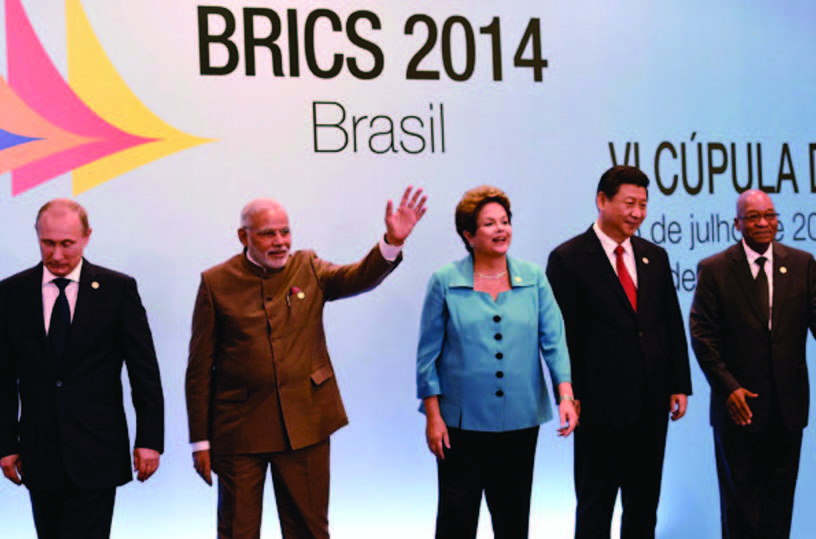
In another remarkable gesture that the State Department would have noted for its political import, he has agreed to a book launch by an American think-tank at Race Course Road. China wants to complicate moves by Japan to strengthen strategic ties with India. Its decision to send its Foreign Minister to India after the swearing-in seems to have been motivated by this rivalry, apart from seeking to build on the personal contacts established by China with Modi when he was Chief Minister. If the Chinese FM was allowed to be the first consequential foreign leader to meet Modi, it appears Japan may be the first foreign country – barring Bhutan – the latter may visit en route to the BRICS meeting in July in Brazil.
The Bhutan visit underscores the importance Modi intends attaching to neighbors. Russia’s Deputy Prime Minister is visiting Delhi on June 18. It would seem that Modi’s immediate priority is to reassure all his important interlocutors, friends or adversaries, that they should have no misgivings about him and the direction of his policies, and that he seeks to engage with all power centers in a balanced manner.
-

Floods displace over 100,000 in Sri Lanka
COLOMBO (TIP): Floods caused by days of torrential rain have displaced over 100,000 people in Sri Lanka, latest government data showed on Friday. The Disaster Management Centre said that 26,688 families comprising 109,075 people have been affected by the rain, floods and landslides as of Friday afternoon, Xinhua reported.
At least 23 people were killed and one person remains missing. Over 40 houses have been completely destroyed due to heavy rainfall and subsequent flooding in six districts while 101 more homes have been partially damaged. Most of the deaths and damage have been reported from the Kalutara district in Western Province and relief efforts are going on, disaster management minister Mahinda Amaraweera told reporters. “We are providing compensation of SLRs 15,000 (about $115) to people who have lost family members.
There has been criticism this is not enough but this is all that has been allocated from the finance ministry,” he said. In Western Province 148 schools re-opened after being closed due to adverse weather conditions earlier in the week, the provincial council said. President Mahinda Rajapaksa tweeted on Monday that he had instructed his officials to “expedite relief measures to communities affected by the bad weather”. Security forces and police have initiated flood relief measures to rescue people trapped or marooned due to rising water levels and roads being inundated.
-

Sri Lanka reacts strongly to Jayalalithaa’s genocide remarks
COLOMBO (TIP): Sri Lanka on Thursday reacted strongly against the genocide remarks made by Tamil Nadu chief minister J Jayalalithaa against the country over the Tamil issue and said it will make formal objections to India over her comments. “It is very much in keeping with the character of this politician to make wild allegations against Sri Lanka,” the government spokesman and minister of information Keheliya Rambukwella told reporters.
He was reacting to the Tamil Nadu chief minister’s memorandum to Prime Minister Narendra Modi which carried word “genocide” on the Sri Lankan Tamil issue. She had demanded that India should sponsor a resolution in the United Nations condemning the genocide in Sri Lanka. “I request that India should sponsor a resolution in the United Nations condemning the genocide in Sri Lanka and to hold to account all those responsible for the genocide and thereby render justice to Tamils in Sri Lanka,” the Tamil Nadu chief minister had said in the memorandum submitted to the Prime Minister.
“It is very wrong to use words like genocide to describe what happened in Sri Lanka,” he said. Rambukwella said Sri Lanka was to make formal objections to the Indian government over Jayalalithaa’s comments. Sri Lanka is happy that Modi won outright control of the Lok Sabha without having to rely on the support from Jayalalithaa. “We are happy that there is a very stable government in India.
That is what I said even before the election, that a stable government in Delhi is good for Sri Lanka. Today Jayalalitha does not have the same influence over New Delhi as she would have had before. We are happy about that,” Rambukwella stressed. “We hope Prime Minister Modi will stand on the right side, that is Sri Lanka,” Rambukwella said.
-

BJP leaders greet SAARC Presidents and Prime Ministers
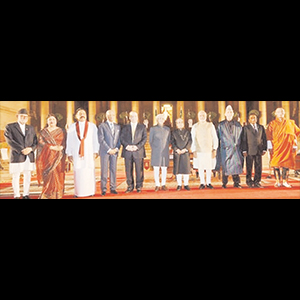
NEW DELHI (TIP): OFBJP Global Convener Vijay Jolly stated, May 28, that the visiting SAARC Presidents & Prime Ministers at the Indian Prime Minister Narendra Modi’s oath taking ceremony, were separately welcomed & greeted with courtesy calls by senior Bharatiya Janata Party leaders in New Delhi.
BJP General Secretary (Organization) Ram Lal, BJP MP Vijay Goel, BJP Spokeswomen Meenakshi Lekhi (MP) & Nirmala Seetharaman (now Union State Minister), senior RSS Pracharak Indresh Kumar, OFBJP Co- Conveners Dr. Rajni Sarin & Amit Thakar accompanied by Vijay Jolly called on the visiting SAARC leaders in New Delhi recently.
SAARC leaders President of Maldives Abdulla Yameen Abdul Gayoom, Prime Minister of Bhutan Tshering Tobgay, Prime Minister of Nepal Sushil Koirala, Speaker of Bangladesh Parliament Shirin Sharmin Chowdhury, Prime Minister of Pakistan Nawaz Sharif, Prime Minister of Mauritius Dr. Navin Ramgoolam, President of Sri Lanka Mahindra Rajapaksa & President of Afghanistan Hamid Karzai attended the oath taking ceremony of BJP & Prime Minister Mr. Narendra Modi govt.
The BJP leaders conveyed to the visiting SAARC leaders the strong resolve of the party to strengthen ties with India’s neighboring friendly nations. The historic decision to invite all the SAARC leaders by Prime Minister Modi will promote friendship, understanding, businesscommerce & enhance regional ties in the region, stated OFBJP Convener.
OFBJP leaders from 35 nations of the world attended the oath taking ceremony. Nearly 95 overseas delegates attended a specially convened meeting at the BJP headquarters to honor them. They were presented with “Ganesh statues” & “safron lotus scarfs”. BJP leaders Ram Lal and Vijay Jolly addressed & greeted them for their special efforts to visit India and witness the historic event of BJP govt. formation in New Delhi.
-

Trains collide head-on in Sri Lanka; 68 injured
COLOMBO, SRI LANKA (TIP): Two trains have collided headon in northwestern Sri Lanka, injuring 68 people. Police spokesman Ajith Rohana says the crash took place on April 30 at the railroad station in Pothuhera, about 90 kilometres (56 miles) northeast of Colombo, Sri Lanka’s capital.
He says a train from Colombo traveling to Pallai in the north crashed into a southbound train that was stopped at the station. The cause of the crash is under investigation. Rohana says four of the injured passengers are in serious condition. Trains are a popular mode of transport in the island nation, and are generally considered safe.
-

Fear and loathing in Washington
The known unknowns about Modi are perfect catalysts for a reset of India-US relations
Over the past three years, Washington has also come to believe it did India too big a favor with the nuclear deal and received little payback. This premise conveniently ignores the many tangibles (Indian purchases of US defense platforms to the tune of $10 billion in less than a decade) and intangibles (India’s decision not to criticize wholesale spying by NSA). A strong government in New Delhi is unlikely to be as patient or as yielding
The American establishment is registering a measure of fear while the liberal academic-NGO community a sense of loathing at the prospect of Narendra Modi becoming India’s next PM. They are full of questions with no real answers. If elected, how would a state CM play the national and international game? How would he deal with a US administration whose policy lately has been to hit India on multiple fronts to extract concessions? More importantly, how would he look at a country that denied him a visa and had no contact with him for seven years?
The anti-Modi coalition of Christian evangelists, left-leaning Indian Americans and Muslim activists is gearing up to mount pressure through the US Congress. They will keep the heat on even though the old fervor is gone, especially among Republicans. The uncertainties, the ambiguities and the “known unknowns” about Modi are actually perfect catalysts for a “reset” of India-US relations currently running at a low. They can create the new chemistry necessary for a more balanced equation better suited to the times.
It cannot be the responsibility of one partner to create equilibrium, constantly ignore provocations and appease. A good relationship bears traffic in both directions. Actually the reset has already begun. Ironically, the button was pushed by the Khobragade affair. Needless provocation sparked a strong Indian response and washed the fuzziness off the relationship. Dialogue has gained in clarity since. The defensive tone has been replaced by a confident articulation of Indian expectations from the relationship. It is neither arrogant nor whiney. Terms of engagement will change further if Indian voters give a clear mandate.
Unfortunately, the last phase of the UPA government left the impression that India will reverse its policies in the face of pressure and noise from Washington. It did so on preferential market access and transfer pricing. This has emboldened US lobbies out to draw more blood. After all who wouldn’t use a tactic that works? Over the past three years, Washington has also come to believe it did India too big a favor with the nuclear deal and received little payback. This premise conveniently ignores the many tangibles (Indian purchases of US defense platforms to the tune of $10 billion in less than a decade) and intangibles (India’s decision not to criticize wholesale spying by NSA). A strong government in New Delhi is unlikely to be as patient or as yielding. Piling on public pressure is bad strategy for the general health of the relationship.
It reduces the Indo-US story to one of trade and investment disputes and blurs the original idea for coming together – a geostrategic convergence of interests. The new government will realize soon enough that an inward-looking Obama administration has had only fitful engagement with the world. That it has paid no special homage to strategic vision, and instead allowed a disaggregation of the India-US relationship. Then it has come after New Delhi issue by issue. It has attacked India at the behest of big pharma and other business interests whose maximalist agenda has been repeatedly exposed.
Their game is to scotch any serious attempt to keep medicine affordable while discrediting India’s generic drugs industry through means both fair and foul. In their calculation, if India bends, it would scare smaller, weaker countries from ever contemplating a compulsory license US pharma’s brutal overreach has even put the much-touted Trans-Pacific Partnership under a cloud as negotiating countries discover the traps set for them under the guise of protecting intellectual property and copyrights. If the US Trade Representative reviewing India’s intellectual property regime downgrades it and puts it on the list of ‘Special 301’ countries, this will add another twist to an already twisting relationship. Such naming and shaming could lead to sanctions.
Pushing the business agenda of demands drafted by the US Chamber of Commerce at a time when the US is losing international partners faster than it is acquiring them is unwise. Especially when Obama’s signature foreign policy effort – the pivot to Asia – keeps reincarnating in lesser and lesser avatars. Obama had also pledged to strengthen bonds with emerging economies but today all Brics are piled up against America for various reasons. India, Brazil, China and South Africa abstained on a UN resolution condemning the fifth partner Russia’s annexation of Crimea. India also abstained on a US-sponsored resolution against Sri Lanka’s human rights situation.
This reflects a post-Khobragade realism, a push-back, even a new equilibrium. India will give but also take. For every US demand to open the Indian economy, there would be an equal and opposite demand on completing a “tantalization agreement”. India may find it useful to cross-link and leverage defense contracts for something tangible. Surely $10 billion worth of arms can buy relief on H-1B visas or a more honest policy towards a certain neighbor that remains the hub of terrorism. The truth is if Washington can be transactional, so can others. But this new phase should not obscure the larger logic behind India and the US coming together because the many reasons for convergence remain. Those with a wider window than a four-year election cycle understand that. Equally importantly, those who make national security policy in India know what balance of power is more beneficial.
-

Sri Lanka justifies troop presence in former war zones
COLOMBO (TIP): A day after three key operatives of the banned LTTE were killed in a major military operation in Sri Lanka’s north, the government on April 19 justified maintaining troops in the former war zones.
President Mahinda Rajapaksa’s special envoy on human rights and government minister Mahinda Samarasinghe said Friday’s incident has underlined the need to keep the military on alert. “We were asked and criticized about the presence of the military in the north and the need to scale down its presence by the international governments at the Geneva UN human rights council … We explained to them the need to keep the military going as it was a decision for a sovereign government to take in view of the national security needs,” he said.
“Yesterday’s incident was clear evidence of that,” Samarasinghe said after briefing the outcome in Geneva to the Buddhist high priests in the central town of Kandy on Saturday. The army said three armed suspects who attempted to escape the troops were killed in a cordon and search operation in the area of Padaviya in North Central Province on April 11. This is the biggest security incident in the north since the military brutally crushed the LTTE in 2009, bringing an end to nearly the three-decade-long civil war.
The three had been operating under the directives of the LTTE’s Europe-based leaders — Nediyavan and Vinayagam. Samarasinghe reiterated the call made by Sri Lankan external affairs minister GL Peiris. He said Sri Lanka would not cooperate with the UNHRC in implementing the resolution adopted late March which was aimed at setting up an international investigation on the country’s alleged human rights abuses during the final phase of the war with the LTTE.
“We will not participate as we have no confidence in such a process. We are a government which is committed to achieving reconciliation through credible local mechanisms,” Samarasinghe said. He said Sri Lanka would not give into attempts by the pro- LTTE diaspora to destabilise the country. The Sri Lankan government claimed that pro-LTTE diaspora is moving the Western governments to act against it.
-

Sri Lanka government ally doubts Indian motives on UNHRC vote
COLOMBO (TIP): The National Freedom Front (NFF), a key ally of President Mahinda Rajapaksa expressed doubts over India’s motives in abstaining at the UNHRC vote against Sri Lanka.”We have to closely examine why India abstained,” Mohamed Muzammil, the NFF spokesman told reporters.
“India not only voted in favour of the resolution in 2012 and 2013, they played a leading role in getting votes in favour of the US resolutions each year,” Muzammil stressed. “This year they abstained. We think that they now want to force Sri Lanka to implement the thirteenth amendment.” Despite the concerns of his nationalist ally, President Rajapaksa, bouyed by India’s decision, ordered the immediate release of all Indian fishermen held in Sri Lankan custody for alleged poaching.
-

UN asks Lanka to cooperate with UNHRC
UNITED NATIONS (TIP): UN chief Ban Ki-moon has asked Sri Lanka to engage “constructively” and cooperate with its human rights body to implement a resolution calling for an international inquiry into alleged war crimes committed during the final stages of the country’s civil war.
Ban has “consistently underlined the importance of an accountability process for addressing violations of international humanitarian and human rights law in Sri Lanka,” the UN Secretary General’s Deputy Spokesman Farhan Haq told reporters here yesterday. “He welcomes the determination by the High Commissioner for Human Rights to advance accountability and promote lasting peace and reconciliation in the country,” he said.
Haq said Ban “calls on the government of Sri Lanka to constructively engage and cooperate with the Office of the High Commissioner (for Human Rights) on the implementation of the resolution adopted last week by the Human Rights Council.” Haq was responding to a question on comments by Sri Lankan Minister Mahinda Samarasinghe that Sri Lanka would not participate or cooperate in the investigations into human rights violations.
The Council had on March 27 voted to open an international inquiry into alleged war crimes committed by the Sri Lankan government and the Liberation Tigers of Tamil Eelam (LTTE) in the final stages of a decades-long conflict that ended in 2009. India had abstained from voting on the resolution which was adopted by a vote of 23 in favour to 12 against.
The Geneva-based Council requested the Office of the UN High Commissioner for Human Rights (OHCHR) to undertake a “comprehensive investigation” into alleged serious violations and abuses of human rights and related crimes by both parties, and to establish the facts and circumstances of such alleged violations “with a view to avoiding impunity and ensuring accountability”. Haq said Ban recalled the commitments made to him on accountability by the President of Sri Lanka in their joint statement of 2009. The United Nations will remain engaged with Sri Lanka to support Sri Lanka’s efforts to make progress in accountability, reconciliation and a lasting political solution,” Haq added.
The resolution had also called on the Sri Lankan government to release publicly the results of its investigations into alleged violations by security forces, including the attack on unarmed protesters in Weliweriya in August 2013, and the report of 2013, by the court of inquiry of the Sri Lanka Army. UN High Commissioner for Human Rights Navi Pillay had stressed the need to ensure justice and accountability, including through the establishment of an independent and credible investigation, saying: “This is essential to advance the right to truth for all in Sri Lanka and create further opportunities for justice, accountability and redress.”
-

India ranks 102 out of 132 nations on social development index
NEW DELHI (TIP): India ranks 102nd among the 132 countries on the Social Progress Index, a measure of human wellbeing that goes beyond traditional economic measures such as GDP or per capita income. Of the BRICS countries — Brazil, Russia, India, China and South Africa — only India ranked lower than the 100th position on the list of the Social Progress Index 2014 compiled by USbased non-profit group Social Progress Imperative. China was next lowest of the five, in the 90th position, and Brazil was the highest, at 46th.
Using measures of access to basic human needs such as food and shelter and of equality of opportunity such as education and personal freedom, the index aims to measure quality of life throughout the globe. Last year the first Social Progress Index ranked 50 countries. This year, its ranking includes 132 countries around the world. New Zealand tops the list followed by Switzerland, Iceland and Netherlands. Chad ranks the lowest in the index.
India ranks 102nd on social progress with challenges across all three dimensions with particularly low scores on shelter (39.77) in the basic human needs dimension, access to information (39.87) in the foundations of wellbeing dimension, and tolerance and inclusion (21.54) in the opportunity dimension. The basic human needs dimension comprises parametres of nutrition and basic medical care, water and sanitation, shelter and personal safety.
The foundations of wellbeing includes parametres of access to basic knowledge, information and communications, health and wellness and ecosystem sustainability, while opportunity dimension includes personal rights, freedom and choice, tolerance and inclusion and access to education. The report said that while the BRICS are generally seen as areas of great economic growth potential, social progress performance is mixed at best.
Only Brazil (46th) ranks better on social progress than it does on GDP per capita (57th). Russia has a higher GDP than Brazil (39th) yet ranks lower on the Social Progress Index (80th); South Africa is 58th on GDP and 69th on social progress; China is 69th on GDP and 90th on social progress; and India is 94th on GDP and 102nd on social progress. Central and South Asia trails all regions but Sub-Saharan Africa in terms of overall index performance.
The top performers for the region are Sri Lanka (85th), Kazakhstan (86th) and Mongolia (89th). The worst performance belongs to Pakistan, which is ranked 124th. “Tracking social progress trends over time will be important for understanding the speed with which social progress responds to changes in economic performance.
It remains to be seen how quickly fast-growing economies such as India and China, that currently underperform on social progress relative to their GDP per capita, can turn economic success into improving social conditions,” the report said. “The Social Progress Index provides evidence that extreme poverty and poor social performance often go hand-inhand,” it said.
-

India abstains on human rights vote on Sri Lanka, rescues foreign policy
NEW DELHI (TIP): In a brave decision marking the reclamation of foreign policy from narrow political interests, India abstained from voting on a USsponsored resolution on human rights situation in Sri Lanka. While India had supported the resolution in 2012 and 2013, the latest resolution was much tougher, calling for an independent investigation into Sri Lanka.
The resolution passed with 23 votes for, 12 against and 12 abstentions. India’s abstention comes after MEA raised red flags about the resolution, saying it would be creating precedents that would be difficult to withstand. Sri Lanka too had mounted a strong diplomatic offensive with the Indian leadership, including long meetings with the national security adviser, Shivshankar Menon. Pakistan did its best to help Sri Lanka by proposing a separate vote on the operative paragraph 10 (deemed most offensive) hoping to remove it totally from the resolution — it failed 16 votes to 25.
BJP leader Subramanian Swamy today congratulated Prime Minister Manmohan Singh for India not supporting the resolution. “I congratulate PM Manmohan Singh for ordering the Indian delegation in UNHCR not to support the dangerous US resolution seeking international probe into the so called human rights violations during 2009 anti-LTTE war by Sri lanka,” Swamy said in a statement. In 2013, Menon and MEA failed to prevail against a determined Congress offensive led by finance minister P Chidambaram to punish Sri Lanka. Sources said this had a lot to do with the ruling UPA government’s sensitivity to Tamil parties. This time, Chidambaram is not fighting an election, and the government has been free to take a decision based on India’s foreign policy interests.
If India had voted against Sri Lanka, the government could have opened itself to the charge that it was influencing the Tamil vote. Besides, it would have dealt a body blow to relations with a neighbour that is arguably India’s closest economic and security ally in South Asia. The abstention gives India greater flexibility with Sri Lanka, greater ability to push for changes that Mahinda Rajapakse needs to undertake. Rajapakse has taken several steps in the last year like holding provincial council elections in the north which did not happen because of the HRC vote, but because of intensive Indian diplomacy. “Things will go in the right direction now,” said diplomatic sources following relations with the island nation.
If India had failed to stand with Sri Lanka at this time, it would not be able to stop Chinese influence spreading in the country. Moreover, the government has concluded that many countries pushing the resolution are being pressured by their Tamil-Lankan diaspora. India is wary of allowing its policies to be dictated by such interests, though in the past couple of years the UPA government has caved in to short-sighted tamil politics endangering India’s foreign policy. This year marks a correction in what most foreign policy analysts called a downward trajectory.
Explaining why it abstained from the vote, MEA said, “It has been India’s firm belief that adopting an intrusive approach that undermines national sovereignty and institutions is counterproductive…. any external investigative mechanism with an openended mandate to monitor national processes for protection of human rights in a country, is not reflective of the constructive approach of dialogue and cooperation envisaged by UN General Assembly resolution 60/251 that created the HRC in 2006 as well as the UNGA resolution 65/281 that reviewed the HRC in 2011.” The passage of the resolution was welcomed by human rights groups. Meenakshi Ganguly of Human Rights Watch said, “This is a welcome decision, and one that will encourage victims and activists in Sri Lanka who have strived so courageously for accountability and justice.
-

UNHRC members under US pressure on resolution: SRI LANKA
COLOMBO (TIP): Sri Lanka on March 19 claimed that most of the 47 member countries of the UN Human Rights Council are under pressure to back a tough US-sponsored resolution that has called for an international probe into alleged rights abuses during the country’s war with Tamil Tiger rebels.
“Countries have told us they do not want to pursue Sri Lanka’s case. But they want to be seen with the US. Some of them have defence pacts with the US and wider trade links,” External affairs minister G L Peiris said. He said the pro-LTTE diaspora possess large sums of money to run the anti-Sri Lanka campaign in order to win over the Western countries.
“They collected large sums of money during the war. They still own businesses in many countries,” Peiris said. Sri Lanka accused the pro-LTTE diaspora of creating pressure on the UN system to act against it for political reasons. The US-moved resolution, the third in as many years, is to be put to vote at the UN rights body later this month. Sri Lanka has condemned the move as a gross interference on its sovereignty.
In the resolution, the US has endorsed recommendations by UN rights chief Navi Pillay for an external probe into charges that Sri Lankan troops killed up to 40,000 civilians during the final months of nearly quarter century civil war against the LTTE that ended in 2009.
The previous two resolutions by the US were adopted with India’s support. Speaking in parliament earlier in the day, Peiris said that Sri Lanka could easily have avoided action at the UN Human Rights Council had it given in to international pressures. “We have a national pride. So we cannot give in,” he said. Meanwhile, the US explained the revised draft text of the resolution to other members and sought their views.
-

Sri Lanka bows to international pressure, releases rights activists
COLOMBO (TIP): Under international pressure ahead of voting on a resolution against Sri Lanka at the UNHRC, the authorities here have released two leading rights activists after their detention under antiterrorism laws.
Father Praveen Mahesan, a Catholic priest, and Ruki Fernando of the Colombo-based INFORM advocacy group were arrested on Sunday in the former LTTE stronghold of Kilinochchi in the north as they met Tamils who lost loved ones during the separatist conflict.
They were detained under Prevention of Terrorism Act for inciting communal disharmony and dissent. “They were produced last night before the lady magistrate at court No 2 in Hulfsdorp. She ordered their release,” police spokesman Ajith Rohana said on Wednesday.