Tag: Supreme Court

  • Supreme Court of India curbs ED’s powers of arrest

    Supreme Court of India curbs ED’s powers of arrest

    NEW DELHI (TIP): A person accused of money laundering can’t be arrested by the Enforcement Directorate after the special court has taken cognizance of the probe agency’s complaint (chargesheet) and has issued summons to him under the Prevention of Money Laundering Act (PMLA), 2002, the Supreme Court ruled on Thursday, May 16, a TNS report said. A Bench led by Justice AS Oka, however, said: “If the ED wants custody of the accused who appears after service of summons for conducting further investigation in the same offence, it will have to seek custody of the accused by applying to the special court.”

    Must take court nod for custody

    Bench said if ED wanted custody, it could move a plea before special court, which could grant custody if satisfied custodial interrogation was required
    If ED wanted to conduct further probe for same offence, it could arrest person not shown as accused in complaint, provided requirements of Section 19 were met
    In case, an accused appeared before special court in response to summons after filing of ED complaint, he needn’t satisfy stringent twin test for bail
    Twin conditions for bail require court to first hear out public prosecutor; if satisfied accused isn’t guilty & won’t commit offence, court can grant bail.

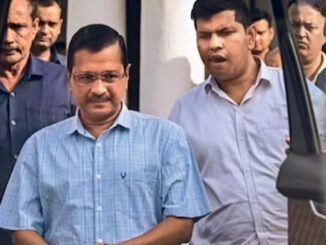
    Amid criticism of its order granting 21-day interim bail to Delhi CM Arvind Kejriwal in a money laundering case linked to the excise scam, the Supreme Court on Thursday, May 16, said it didn’t make any exception for him. “We welcome critical analysis of the verdict… We specifically said we are not making an exception for anybody,” it said, refusing to go into charges and counter-charges made with regard to bail order.

    The Bench, which also included Justice Ujjal Bhuyan, said: “After hearing the accused, the special court must pass an order on the application by recording brief reasons. While hearing such an application, the court may permit custody only if it is satisfied custodial interrogation at that stage is required, even though the accused was never arrested under Section 19.”

    However, the top court said: “When the ED wants to conduct further investigation concerning the same offence, it may arrest a person not shown as an accused in the complaint already filed under Section 44(1)(b), provided the requirements of Section 19 are fulfilled.” It said: “If the accused was not arrested by the ED till the filing of complaint, while taking cognizance of a complaint under Section 44(1)(b), as a normal rule, the court should issue a summons to the accused and not a warrant. Even in a case where the accused is on bail, a summons must be issued.” The verdict came on a petition filed by Tarsem Lal challenging a Punjab and Haryana High Court order in a PMLA case against him. The HC had on December 19, 2023, dismissed his anticipatory bail plea, saying he didn’t satisfy one of the conditions under Section 45 of the PMLA.

    Section 45 requires the prosecutor to be given an opportunity to oppose the bail plea and says the court can grant bail to an accused only if it’s satisfied there are reasonable grounds for believing the accused is not guilty of such offence and that he is not likely to commit any offence while on bail.

    While setting aside the HC verdict, the top court cancelled the non-bailable warrants issued against Lal and asked him to furnish bonds before the special court and take part in the trial proceedings, unless specifically exempted.

    The Bench made it clear in cases where the accused has appeared before the special court in response to summons issued to him after filing of the ED complaint, he need not satisfy the stringent twin test for grant of bail under Section 45 that made it difficult for accused persons to get bail in money laundering cases.

    Noting that a bail bond furnished in terms of Section 88 of the Criminal Procedure Code (CrPC) was only an undertaking, the top court said an order accepting the bond didn’t amount to grant of bail and, therefore, the twin conditions of Section 45 of the PMLA were not applicable in such cases.

    “If the accused appears before the special court by summons, it can’t be treated that he is in custody… He is not required to apply for bail, and thus twin conditions of Section 45 of the PMLA are not applicable,” it said.

  • ED can’t arrest accused after special court has taken cognisance of complaint: SC

    ED can’t arrest accused after special court has taken cognisance of complaint: SC

    New Delhi (TIP)- The Supreme Court Thursday, May 16, held that the Enforcement Directorate (ED) cannot arrest an accused under Section 19 of the Prevention of Money Laundering Act (PMLA) after a special court has taken cognisance of the complaint of money laundering.
    A bench of justices Abhay S Oka and Ujjal Bhuyan said when an accused appears before a court in pursuance of a summons, the agency will have to apply to the court concerned to get his custody.
    “After cognisance is taken of the offence punishable under Section 4 of the PMLA based on a complaint under Section 44 (1)(b), the ED and its officers are powerless to exercise power under Section 19 to arrest a person shown as an accused in the complaint,” the top court said. If the accused appears before the special court by summons issued by the court, it cannot be treated that he is in custody, it said.
    “Accused who appeared before the court pursuant to the summons not required to apply for bail, and thus twin conditions of Section 45 of PMLA are not applicable,” the bench said in its judgment.
    The twin conditions state that when an accused in a money laundering case applies for bail, the court has to first allow the public prosecutor to be heard and only when it is satisfied that the accused is not guilty and unlikely to commit a similar offence when released, can bail be granted.
    The top court noted the submission that some of the special courts under the PMLA are following the practice of taking the accused into custody after they appear pursuant to the summons issued on the complaint.
    Therefore, the accused are compelled to apply for bail or for anticipatory bail apprehending arrest upon issuance of summons, it said.
    “We cannot countenance a situation where, before the filing of the complaint, the accused is not arrested; after the filing of the complaint, after he appears in compliance with the summons, he is taken into custody and forced to apply for bail. Hence, such a practice, if followed by some Special Courts, is completely illegal.
    “Such a practice may offend the right to liberty guaranteed by Article 21 of the Constitution of India. If the ED wants custody of the accused who appears after service of summons for conducting further investigation in the same offence, the ED will have to seek custody of the accused by applying to the Special Court,” the bench said.
    The apex court said the special court must pass an order on the application by recording brief reasons after hearing the accused.
    “While hearing such an application, the Court may permit custody only if it is satisfied that custodial interrogation at that stage is required, even though the accused was never arrested under Section 19. However, when the ED wants to conduct a further investigation concerning the same offence, it may arrest a person not shown as an accused in the complaint,” it said.
    The apex court judgment was pronounced on a question of whether an accused in a money laundering case has to meet the stringent twin test for bail even in cases where the special court takes cognisance of the offence.
    Issuing a slew of directions, the top court said once a complaint is filed, it will be governed by Sections 200 to 205 of the CrPC as none of the said provisions are inconsistent with any of the provisions of the PMLA.
    “If the accused was not arrested by the ED till filing of the complaint, while taking cognizance on a complaint under Section 44(1)(b), as a normal rule, Court should issue a summons to the accused and not a warrant. Even in a case where the accused is on bail, summons must be issued. “After a summons is issued under Section 204 of the CrPC on taking cognizance of the offence punishable under Section 4 of the PMLA on a complaint, if the accused appears before the Special Court pursuant to the summons, he shall not be treated as if he is in custody. Therefore, it is not necessary for him to apply for bail,” the bench said.

  • Supreme Court of India grants temporary bail to Delhi chief minister  Kejriwal to campaign in elections

    Supreme Court of India grants temporary bail to Delhi chief minister Kejriwal to campaign in elections

    NEW DELHI, May 10 (TIP): The Supreme Court of India granted temporary bail to Delhi Chief Minister Arvind Kejriwal in the money laundering case on Friday, May 10, to let him campaign in the ongoing general elections. The court said the temporary bail would last until June 1, the last day of the seven-phase vote, and Kejriwal would have to surrender on June 2.

    The poll has been marred by charges that Prime Minister Narendra Modi’s government is using investigating agencies to hurt rivals, accusations the government denies.

    The Enforcement Directorate, India’s financial crime-fighting agency, arrested Kejriwal – a staunch critic of Modi and a key opposition leader – on March 21 in connection with corruption allegations related to the capital territory’s liquor policy.

    Kejriwal’s government and his Aam Aadmi Party have denied the corruption allegations. Modi and his Bharatiya Janata Party say that the investigating agencies are only doing their job and the government is not influencing them.

    Kejriwal has been in pre-trial detention since April 1, and his wife Sunita has stepped in to campaign for his decade-old party in his absence.

    India began voting on April 19 and elections to more than half of the total 543 seats were completed with the third phase on May 7. The national capital territory will vote on May 25.

    Voting concludes on June 1 and counting is set for June 4.

    The Supreme Court, while hearing an appeal against Kejriwal’s arrest last week, said that it “may” consider granting “interim bail” or temporary bail to the high-profile leader “because of the elections” as the appeal against his arrest could take a while to conclude.

    Kejriwal argued that he was arrested just before the vote to stop him from campaigning against Modi. His lawyer said Kejriwal is a serving chief minister, not a “habitual offender”.

    ED lawyers argued that giving bail to a politician just to campaign will send a wrong message that there are different standards for them and other citizens. Kejriwal had to be arrested as he refused nine ED summons over six months to appear for questioning, they added.

    The INDIA alliance of more than two dozen opposition parties has called the action against Kejriwal and other opposition leaders politically motivated to deny them a level playing field in the polls, accusations Modi and BJP reject.

    Kejriwal’s arrest had drawn international attention, with Germany and the United States calling for a “fair” and “impartial” trial.
    (With input from agencies)

  • India Gears Up for Historic General Elections: A Test of Democracy’s Integrity

    By Prof. Indrajit S Saluja

    As India braces itself for what is anticipated to be the largest and longest general election in its history, the significance of the democratic process reverberates not only within the nation’s borders but resonates globally. With the Election Commission’s notification for the 18th Lok Sabha elections, slated to span from 19th April 2024 to 1st June 2024, India is poised to witness a monumental exercise in democratic participation.

    The sheer scale of these elections is unprecedented. Covering a vast electorate of approximately 960 million eligible voters out of a population of 1.4 billion, this election surpasses any previous in terms of sheer magnitude. Seven phases will unfold over 44 days, excluding the first general election in 1951–52, marking a testament to the democratic ethos entrenched within the Indian polity.

    Key to this election is the incumbent Prime Minister Narendra Modi, seeking a third consecutive term in office. Having completed two terms, Modi’s leadership faces scrutiny and endorsement from the Indian electorate once again. However, amidst the fervor of electoral campaigns and political rallies, a crucial aspect has emerged — the integrity of the electoral process.

    In recent times, doubts have been cast upon the fairness of elections, with concerns surrounding Electronic Voting Machines (EVMs) and allegations of tampering to sway electoral outcomes. The Election Commission, tasked with safeguarding the sanctity of the electoral process, has faced mounting pressure to address these concerns. Calls for voter verification mechanisms and enhanced transparency in the electoral process have gained traction, echoing across the political spectrum.

    Even India’s sitting Supreme Court Chief Justice, Chandrachud, has underscored these concerns, emphasizing the imperative of ensuring a transparent and accountable electoral process. In a democracy, elections serve as the cornerstone of representation, reflecting the will of the people. Thus, ensuring the integrity and fairness of elections is paramount to upholding the democratic fabric of the nation.

    Simultaneously, the general elections coincide with legislative assembly elections in several states, including Andhra Pradesh, Arunachal Pradesh, Odisha, and Sikkim. These concurrent elections further underscore the magnitude and complexity of the electoral exercise, as millions of voters across the country prepare to cast their ballots. Moreover, the inclusion of by-elections for 35 seats across 16 states adds another layer of significance to the electoral landscape. These by-elections present an opportunity for constituents to voice their preferences and influence the composition of legislative bodies at both the state and national levels.

    As the world watches with anticipation, the spotlight shines brightly on India, heralded as the largest democracy in the world. The forthcoming elections are not merely a domestic affair but hold implications for global democracy and governance. The manner in which India conducts its elections sets a precedent for other democracies worldwide, reaffirming the principles of transparency, accountability, and electoral integrity.

    In the lead-up to the elections, political parties are engaged in a frenetic battle of ideas, canvassing support and articulating their vision for the future of the nation. From grassroots mobilization to high-profile rallies, the electoral landscape is awash with fervent political discourse and spirited campaigning.

    However, amidst the cacophony of electoral politics, it is imperative to prioritize the integrity of the electoral process. Electoral malpractices, tampering with EVMs, and disenfranchisement of voters undermine the very foundation of democracy. Therefore, all stakeholders, including political parties, the Election Commission, and the incumbent government, must demonstrate a collective commitment to ensuring free, fair, and transparent elections.

    Furthermore, the role of civil society, media, and international observers assumes heightened significance in safeguarding the integrity of the electoral process. Vigilance, accountability, and transparency must be upheld at every stage of the electoral cycle, from voter registration to the declaration of results.

    The forthcoming general elections in India represent a pivotal moment in the nation’s democratic journey. As the world’s largest democracy, India has a responsibility to uphold the sanctity of the electoral process and set a precedent for democratic governance globally. With the eyes of the world upon it, India stands at the cusp of history, poised to reaffirm its commitment to democracy, justice, and the rule of law. As the electorate prepares to exercise its franchise, let us collectively strive to ensure that these elections reflect the true spirit of democracy — a celebration of diversity, inclusion, and the power of the people.

  • Supreme Court slams ‘silence of state’ on ‘vicious circle’ of hate against minorities

    Supreme Court slams ‘silence of state’ on ‘vicious circle’ of hate against minorities

    “The moment religion is separated from politics, all this will stop,” says Justice Joseph

    NEW DELHI (TIP): The Supreme Court on March 29 slammed the “silence of the state” to spiraling incidents of hate speeches made against minority communities, including Muslims, but the Centre pushed back, asking the court why it did not take suo motu cognizance of a video clip from Kerala showing a child being made to threaten Hindus and even Christians. When a Bench of Justices K.M. Joseph and B.V. Nagarathna asked the Maharashtra government for an explanation about hate speech incidents in the State, Solicitor General Tushar Mehta asked the court to take a moment and see what was happening in other States like Kerala and Tamil Nadu.

    “A spokesperson of DMK party says that if you want equality you should butcher all the Brahmins…. No FIR has been registered. He continues to be a spokesperson of the party… Now, please hear this clip from Kerala. This is shocking. It should shock the conscience of this court. A child has been made to say this. We should be embarrassed. He says, ‘Hindus and Christians should prepare for final rites’,” Mr. Mehta addressed the court.

    “Yes, we know,” Justice Joseph responded. “Then Your Lordships should have taken suo motu cognizance,” Mr. Mehta said. Justice Joseph said the country was caught in a “vicious circle of hate” and the solution lay in expunging religion from politics. The moment religion is separated from politics, all this will stop,” Justice Joseph said.

    But Mr. Mehta refused to agree that hate had anything to do with politics.

    “No, this has everything to do with politics. Politicians make use of religion,” Justice Joseph stood firm.

    Justice Nagarathna said hate speeches have made cracks in the idea of fraternity. She said hate speeches were made by “fringe elements” of all sides who have “no stuff in them”.

    “When Vajpayee and Nehru spoke, people came from rural areas to hear them… Unfortunately, now, people with no stuff in them, fringe elements from every side are making these hate speeches… where are you taking India? Now are we going to start taking contempt action against every person in India… where are we taking this court… is there no restraint on freedom of speech… If there is intellectual deprivation, you can never take this country to the number one position in the world. Intellectual deprivation comes only when there is intolerance, lack of knowledge and lack of education. That is where we should concentrate first… We should as a society take a pledge to restrain ourselves from saying these things,” Justice Nagarathna said.

    Justice Joseph said “before we think of trying to be a superpower, we should first follow the rule of law”.

    The court said hate speech strikes a mortal blow to dignity.

    “The most important thing is dignity. If it is demolished on a regular basis… look at the statements being made ‘Go to Pakistan’… They are people who chose this country. They are like your brothers and sisters. Remember what you pledged in school ‘All Indians are my brothers and sisters… Maybe I am too old-fashioned… I am retiring in four months, turning 65… Seventy-five years ago we as a nation started a journey. Our objective was to be a country that will follow the rule of law… We should never go down to that level of hate,” Justice Joseph said.

    To this, advocate P.V. Yogeshwaran, appearing for a Hindu party, assured “it will never be as long as my client is the majority in this country”.

  • UAPA: SC restores ‘guilty by association’ doctrine

    UAPA: SC restores ‘guilty by association’ doctrine

    New Delhi (TIP) – The Supreme Court on Friday, March 24, restored the doctrine of “guilt by association” in criminal jurisprudence in India, as it overruled a bunch of its 2011 judgments and declared that mere membership of a banned organisation will be a crime under country’s anti-terror law — Unlawful Activities (Prevention) Act (UAPA), 1967. A three-judge bench headed by justice MR Shah affirmed the constitutional validity and the rationale of Section 10(a)(i), which makes continued membership of a banned organisation a crime punishable with a jail term up to two years. “It is observed that the object and purpose of the enactment of UAPA is to provide for more effective prevention of certain unlawful activities. To punish such a person who is continued as a member of such unlawful association which is declared unlawful due to unlawful activities can be said to be in furtherance of providing for effective prevention of the unlawful activities,” said the bench, which also included justices CT Ravikumar and Sanjay Karol.
    It held that the three judgments of 2011 were “not a good law” in ruling that mere membership of a banned organisation would not incriminate people unless they resort to violence; incite people to violence or do any other overt act to disturb public tranquility.
    Noting that the two-judge benches of the Supreme Court erred in reading down the UAPA provision in individual criminal cases on bail when there was neither any challenge to the law, nor an opportunity for the Union government to present its version before the verdict.
    “It is true that it is ultimately for the court to interpret the law and/or particular statute. However, the question is not the power of the courts. The question is whether it be done without hearing the Union of India? When any provision of Parliamentary legislation is read down in the absence of Union of India it is likely to cause enormous harm to the interest of the State,” the court noted in its 144-page judgment.
    In 2011, three separate judgments by the top court relating to cases involving charges under UAPA and the now-repealed Terrorist and Disruptive Activities (Prevention) Act (TADA), declared that mere membership of a banned organisation would not ascribe criminal liability on the accused unless there is material to show specific intent to further the illegal aims of the organisation or some overt unlawful acts. In doing so, the apex court heavily relied on US Supreme Court judgments which outrightly dismissed the doctrine of “guilt by association” and cited the right to free speech.
    The Union government sought a review of the 2011 judgments, complaining that not only it was imperative for the two-judge benches to seek the Centre’s views at the time of hearing these cases but that reading down of the TADA and the UAPA provision impacted the prosecution of cases for unlawful association with banned outfits. Solicitor general Tushar Mehta appeared for the Centre.
    Allowing the Centre’s plea on Friday, the three-judge bench disapproved of the previous views stating that before following American decisions, Indian courts are required to consider the difference in the nature of the laws applicable in the respective countries.
    Even otherwise in absence of any challenge to the constitutional validity of Section 10(a)(i) of the UAPA, the top court said, there was no question of reading down of the said provision by the court in 2011, particularly in the wake of the legislative history and objective of UAPA.
    The aim and object of enactment of UAPA is also to provide for more effective prevention of certain unlawful activities, said the court, pointing out that a particular association is declared unlawful only after the central government is satisfied that such association is indulging in unlawful activity and the same is against the sovereignty and integrity of India. Source: HT

  • Hindenburg: SC sets up six-member probe panel, wants report in 2 months

    Hindenburg: SC sets up six-member probe panel, wants report in 2 months

    NEW DELHI (TIP): The Supreme Court on Thursday, March 2, set up a six-member expert committee headed by former SC judge Justice AM Sapre to investigate if there had been a regulatory failure in dealing with the alleged contravention of laws pertaining to the securities market in relation to the Adani Group or other companies in the wake of the Hindenburg Research report. A three-judge Bench led by Chief Justice of India DY Chandrachud asked the committee to suggest measures to strengthen the regulatory framework and secure compliance with the existing framework for the protection of investors.
    “To protect Indian investors against volatility (in the securities market) of the kind that has been witnessed in the recent past, we are of the view that it is appropriate to constitute an expert committee for the assessment of the regulatory framework and for making recommendations to strengthen it,” said the Bench, which had earlier refused to accept the names suggested by the Centre for the expert committee. Other members of the committee are former SBI chairman OP Bhatt, former Bombay High Court judge JP Devadhar, Infosys co-founder Nandan Nilekani, former chief of New Development Bank of BRICS KV Kamath and advocate Somasekhar Sundaresan, who was recently recommended for appointment as a judge of the Bombay High Court. The Bench, which included Justice PS Narasimha and Justice JB Pardiwala, asked the expert committee to submit its report in a sealed cover to it in two months. The top court also directed market regulator SEBI to investigate if there was any manipulation of stock prices in contravention of existing laws. It took note of the fact that SEBI was already investigating the allegations made in the January 24 Hindenburg Research report. On February 20, it had said it couldn’t start with the presumption of a regulatory failure.
    “The above directions shall not be construed to limit the contours of the ongoing investigation. SEBI shall expeditiously conclude the investigation within two months and file a status report,” the Bench clarified.
    “Further, SEBI shall apprise the expert committee of the action taken in furtherance of the directions of this court as well as steps taken in furtherance of its ongoing investigation. The constitution of the expert committee does not divest SEBI of its powers or responsibilities in continuing with its investigation into the recent volatility in the securities market,” it further clarified.

  • Defend Constitution against predatory politicians

    Defend Constitution against predatory politicians

    “The issue of the ‘basic structure’ of the Constitution is a fight about the fundamental rights included in Part III of the Constitution. The Kesavananda Bharati case also shows that there is no conflict between the fundamental rights of Part III and the directive principles of state policy of Part IV, and that fundamental rights do not have to give way to create an egalitarian polity. The Preamble eloquently states the ideals of justice, liberty, equality and fraternity. The legal hair-splitting over the status of the Preamble, whether it is part of the Constitution or not seems unnecessary. The Constitution has served as a torchbearer of democratic freedoms in the last 72 years, and it is necessary to defend the Constitution against predatory politicians.”

    By Parsa Venkateshwar Rao Jr.

    Addressing the 83rd Presiding Officers’ Conference in Jaipur last month, Vice-President and Rajya Sabha Chairman Jagdeep Dhankhar said the legislature’s autonomy could not be encroached either by the judiciary or the executive. And it is in this context that he questioned the ‘basic structure’ doctrine that the Supreme Court had expounded in the 1973 Kesavananda Bharati case.

    Without offending the constitutional status that he holds as the Chairman of the Rajya Sabha, it seems that Dhankhar has misunderstood the intent and purport of the Kesavananda Bharati case, which spelt the ‘basic structure’ of the Constitution principle, and sought to make it into a criterion for reviewing the constitutional amendments passed by Parliament. It is not about the courts coming in the way of legislature and restricting the scope of the legislatures to enact laws. It is not about Parliament pitted against the judiciary or the other way round. It might sound like a doctrine, but it is not one. It is a thumb rule evolved by the Supreme Court for purposes of judicial review.

    The Kesavananda Bharati case also did not set out a new principle of interpretation. It was following the distinctions made in the earlier pronouncements of the Supreme Court in the cases of Sankari Prasad Deo vs Union of India and State of Bihar (1952), Sajjan Singh vs State of Rajasthan (1965), and the definitive direction laid down in the IC Golaknath vs State of Punjab (1965) case. The issue was whether Parliament can amend the fundamental rights of Part III of the Constitution. There were no unanimous answers from the court. While some of the judges felt that that powers of Parliament to amend the Constitution given in Article 368 were unrestricted, and that Parliament can abridge, and even abrogate, fundamental rights, there were others who felt that the fundamental rights should remain inviolable.

    It is necessary to remember that all these cases arose from challenges to the land reforms legislation in different states, and these laws were passed by the state legislatures, and these were protected by the constitutional amendments brought in by Parliament.

    Article 31, which was about the right to property, and which was part of Part III or fundamental rights, was removed from the section through the 44th Amendment of the Constitution in 1978, but the questions that came up before the court in the above cases were related to the ‘right to property’. The courts discussed it in terms of fundamental rights and not specifically about the right to property.

    In the Sajjan Singh case of 1965, then Chief Justice PB Gajendragadkar, who wrote the majority judgment, said: “The power conferred by Article 368 includes the power to take away the fundamental rights guaranteed by Part III…The fundamental rights guaranteed by Part III could not have been intended to be eternal, inviolate and beyond the reach of Article 368 for, even if the powers to amend the fundamental rights were not included in the Article, Parliament can by a suitable amendment of the Article take those powers.” It would seem that Gajendragadkar and the court were concerned about the social and economic challenges faced by a government in a developing country, and the view was that necessary social and economic reforms should not be obstructed by taking shelter behind fundamental rights. It was a dangerous position that the Gajendragadkar court had adopted. Fundamental rights were not just about the right to property.

    It is in the Golaknath case that the court of Chief Justice Koka Subba Rao took a firm position on the issue of fundamental rights, or was it confined to the issue of the right to property? The majority statement delivered by Subba Rao is crystal clear on the issue: “Our Constitution accepted the theory that the right to property is a fundamental right though perhaps it was an error to do so if socialization was desired. It treated property rights as inviolable except through law for public good and payment of compensation….As there is apprehension that the erosion of right to property may be practiced against other fundamental rights, it is necessary to call a halt. An attempt to abridge or take away fundamental rights by a constituted Parliament even through an amendment of the Constitution can be declared void. The court has the power and the jurisdiction to do so. The opposite view expressed in the Sajjan Singh’s case is wrong.”

    In the Kesavananda Bharati case, Chief Justice Sikri reiterated the essential point of the Golaknath case that fundamental rights are important and though Parliament has extensive powers to amend the Constitution, it cannot encroach upon the fundamental rights of the people. Sikri delivering the majority judgment wrote: “On a careful consideration of the various aspects of the case, we are convinced that Parliament has no power to abrogate or emasculate the basic elements or fundamental features of the Constitution such as the sovereignty of India, the democratic character of our polity, the unity of the country and the essential features of the individual freedoms secured to the citizens. Nor has Parliament the power to revoke the mandate to build a welfare state and egalitarian society. These limitations are only illustrative and not exhaustive.”

    Between Golaknath and Kesavananda Bharati judgments, it is the Golaknath judgment that underscores fundamental rights as the raison d’etre of a democratic polity in an unambiguous language. Indians will have to choose between Gajendragadkar who had argued that fundamental rights are not eternal and not inviolable on the one side, and Subba Rao and Sikri on the other who had underlined the importance of democratic rights of people against the potential political tyranny of parliamentary majorities.

    The issue of the ‘basic structure’ of the Constitution is a fight about the fundamental rights included in Part III of the Constitution. The Kesavananda Bharati case also shows that there is no conflict between the fundamental rights of Part III and the directive principles of state policy of Part IV, and that fundamental rights do not have to give way to create an egalitarian polity. The Preamble eloquently states the ideals of justice, liberty, equality and fraternity. The legal hair-splitting over the status of the Preamble, whether it is part of the Constitution or not seems unnecessary. The Constitution has served as a torchbearer of democratic freedoms in the last 72 years, and it is necessary to defend the Constitution against predatory politicians.

    (The author is a senior journalist)

  • Admonishments that endanger the Constitution

    Admonishments that endanger the Constitution

    To suggest that the basic structure doctrine is by itself unsanctioned is to place the Constitution at the legislature’s whim

     “Since its judgment in Kesavananda, the Supreme Court has identified several features that are immutable. There is no doubt that on occasion, the Court’s interpretation of these features has suffered from incoherence. But to suggest that the basic structure doctrine is by itself unsanctioned is to place the Constitution at the legislature’s whim. When taken to its extreme, accepting the Vice-President’s claims would mean that, in theory, Parliament can abrogate its own powers and appoint a person of its choice as the country’s dictator. Consider the consequences. 

    By Suhrith Parthasarathy

    Come April and it will be 50 years since the Supreme Court of India delivered its verdict in Kesavananda Bharati vs State of Kerala. The judgment is widely recognized as a milestone in India’s history. In holding that Parliament’s power to amend the Constitution was not plenary, that any change that damages the document’s basic structure would be declared void, the Court, it was understood, had helped preserve the essence of our republic.

    In the years since the verdict – if not in its immediate aftermath – its importance has been recognized by successive governments. During this time, most criticism of the doctrine has been confined to the manner of its application rather than its legitimacy. But last week, India’s Vice-President Jagdeep Dhankhar launched a salvo of attacks at the Supreme Court, by calling into question the ruling’s correctness. Faced as we are with far greater issues of civic concern, this debate might well be regarded as tedious, if only the arguments made against the judgment were not part of what appears to be a concerted effort at undermining the judiciary’s importance.

    Collegium as target

    Over the course of the last few months, not a day has gone by without one member or the other of the political executive excoriating the Court over its apparent excesses. Much of this criticism has been aimed at the functioning of the collegium — a body of senior judges that makes binding recommendations on appointments and the transfer of judges. The Union Minister of Law and Justice, Kiren Rijiju, and indeed Mr. Dhankhar, have repeatedly doubted the Court’s judgment in 2015, in which it struck down efforts to replace the collegium with a National Judicial Appointments Commission (NJAC). That criticism has now turned sharper, with the Vice-President’s diatribe against Kesavananda.

    In his maiden address to the Rajya Sabha in December 2022, Mr. Dhankhar claimed that the striking down of the NJAC had no parallels in democratic history. A “duly legitimized constitutional prescription,” he claimed, “has been judicially undone.” Speaking on January 11 at the 83rd All India Presiding Officers (Assembly Speakers) Conference in Jaipur, Rajasthan, he said that “in a democratic society, the basic of any basic structure is supremacy of people, sovereignty of parliament…The ultimate power is with the legislature. Legislature also decides who will be there in other institutions. In such a situation, all institutions must confine to their domains. One must not make incursion in the domain of others.”

    Mr. Dhankar then heightened his criticism by doubting the legitimacy of the basic structure doctrine. The correctness of the Court’s view, he said, “must be deliberated…Can Parliament allow that its verdict will be subject to any other authority? In my maiden address after I assumed the office of Chairman of Rajya Sabha, I said this. I am not in doubt about it. This cannot happen.”

    To be sure, genuine criticism of both the Collegium’s functioning and the Court’s judgment upholding the body’s legality ought to be welcomed. But seeing as the Government, as Mr. Rijiju confirmed in Parliament last month, has no plans to implement any systemic change in the way we appoint judges, and given that the Government itself has done little to promote transparency in the process, the present reproach is, at its best, unprincipled, and, at its worst, an attempt at subverting the judiciary’s autonomy. That it is likely the latter is clear from the fact that the Vice-President has now carried his denunciation to a point where his admonishments are reserved not just for the collegium but also for the ruling in Kesavananda.

    The foundation of the Constitution

    Were we to begin with the elementary premise that India’s Constitution, as originally adopted, comprises a set of principles that together lend it an identity, we will see that the raison d’etre for the basic structure doctrine is not difficult to grasp. On any reasonable reading of constitutional history, one can see that the Constitution is a product of a collective vision. That vision was built on distinct, if interwoven, ideals: among others, that India would be governed by the rule of law, that our structure of governance would rest on Westminster parliamentarianism, that the powers of the legislature, the executive and the judiciary would be separate, that the courts would be independent of government, and that our States would have absolute power over defined spheres of governance.

    Now, ask yourself the following questions: what happens when an amendment made to the Constitution harms one or more of these principles in a manner that alters the Constitution’s identity? Would the Constitution remain the same Constitution that was adopted in 1950? Should Parliament amend the Constitution to replace the Westminster system with a presidential style of governance, would the Constitution’s character be preserved? Or consider something rather more radical: can Parliament, through amendment, efface the right to life guaranteed in Article 21? Would this not result in the creation of a document of governance that is no longer “the Constitution of India?”

    It is by pondering over questions of this nature that the majority in Kesavananda found that there was much that was correct in the German professor Dietrich Conrad’s address in February 1965 at the Banaras Hindu University, Varanasi. There, Conrad had pointed out, that “any amending body organized within the statutory scheme, howsoever verbally unlimited its power, cannot by its very structure change the fundamental pillars supporting its constitutional authority”.

    On ‘amendments’

    As the Court would later explained in Minerva Mills vs Union of India (1980) — and incidentally at stake there was the very survival of the idea that fundamental rights are inviolable — “Parliament too is a creature of the Constitution”. Therefore, it can only have such powers that are expressly vested on it. If those powers are seen as unlimited, Parliament, the Court found, “would cease to be an authority under the Constitution”; it would instead “become supreme over it, because it would have power to alter the entire Constitution including its basic structure”. In other words, the principle that Parliament is proscribed from changing the Constitution’s essential features is rooted in the knowledge that the Constitution, as originally adopted, was built on an intelligible moral foundation.

    On this construction, it is possible to see the basic structure doctrine as implicit on a reading of the Constitution as a whole. But it is also deductible, as Justice H.R. Khanna wrote in his controlling opinion in Kesavananda, through an interpretation of the word “amendment”. The dictionary defines “amendment” to mean a “minor change or addition designed to improve a text”. As Justice Khanna saw it, when the Constitution that emerges out of a process of amendment as stipulated in Article 368 is not merely the Constitution in an altered form but a Constitution that is devoid of its basic structure, the procedure undertaken ceases to be a mere amendment.

    Since its judgment in Kesavananda, the Supreme Court has identified several features that are immutable. There is no doubt that on occasion, the Court’s interpretation of these features has suffered from incoherence. But to suggest that the basic structure doctrine is by itself unsanctioned is to place the Constitution at the legislature’s whim. When taken to its extreme, accepting the Vice-President’s claims would mean that, in theory, Parliament can abrogate its own powers and appoint a person of its choice as the country’s dictator. Consider the consequences.

    (Suhrith Parthasarathy is an advocate practising in the Madras High Court)

  • Collegium junks objections to Kirpal’s appointment: Reiterates names for appointment in Madras, Bombay High Courts

    Collegium junks objections to Kirpal’s appointment: Reiterates names for appointment in Madras, Bombay High Courts

    NEW DELHI (TIP): In a fresh round of confrontation with the Centre, the Supreme Court Collegium has rejected the Centre’s objections to the proposed elevation of senior advocate Saurabh Kirpal, an openly gay person, as a judge of the Delhi High Court and reiterated its recommendations for four other appointments.

    Maintaining that Kirpal’s appointment would “add value to the Bench and provide inclusion and diversity,” the Collegium has reiterated its November 11, 2021, recommendation for his appointment.

    “The fact that Mr Saurabh Kirpal has been open about his orientation is a matter which goes to his credit. As a prospective candidate for judgeship, he has not been surreptitious about his orientation. In view of the constitutionally recognized rights which the candidate espouses, it would be manifestly contrary to the constitutional principles laid down by the Supreme Court to reject his candidature on that ground,” a three-judge Collegium led by Chief Justice of India DY Chandrachud said.

    Brushing aside the IB reports, the Collegium reiterated its recommendations for appointment of advocate R John Sathyam as a judge of the Madras High Court and advocate Somasekhar Sundaresan as a judge of the Bombay High Court. Sathyan had posted certain material on social media, including one critical of the PM, while Sundaresan was “selectively critical” on social media on important policies, initiatives and directions of the government. “Expression of views by a candidate does not disentitle him to hold a constitutional office so long as the person proposed for judgeship is a person of competence, merit and integrity,” said the three-member Collegium – which also includes Justice SK Kaul and Justice KM Joseph.

    It made a second reiteration of its recommendation to elevate advocates Amitesh Banerjee and Sakya Sen as judges of the Calcutta High Court.

    “…after the Supreme Court Collegium reiterated the proposal on 01 September 2021, it was not open to the Department (of Justice) to repeatedly send back the same proposal which has been reiterated by the Supreme Court Collegium after duly considering the objections of the government,” it said regarding the recommendations for two appointments to the Calcutta High Court.

    The Delhi High Court Collegium had on October 13, 2017, unanimously recommended Kirpal – son of former CJI BN Kirpal – for elevation to the Bench and it was approved by the Supreme Court Collegium on November 11, 2021. However, the Law Ministry sent back the recommendation to the Collegium on November 25, 2022, for reconsideration, raising objections about his partner being a Swiss national and his sexual orientation.

    Noting that Kirpal possessed “competence, integrity and intellect”, the Collegium said his “conduct and behavior have been above board. The Collegium said, “…it needs to be noted that the decisions of the Constitution Bench of this court have established the constitutional position that every individual is entitled to maintain their own dignity and individuality, based on sexual orientation.” The Collegium, however, said it may have been advisable for the candidate (Kirpal) not to speak to the press regarding the reasons which may have weighed in the recommendations of the Collegium being sent back for reconsideration

    In a letter dated April 1, 2021, the Law Minister had said: “Though homosexuality stands de-criminalized in India, nonetheless same-sex marriage still remains bereft of recognition either in codified statutory law or uncodified personal law in India”. Moreover, it had been stated that the candidate’s “ardent involvement and passionate attachment to the cause of gay rights” would not rule out the possibility of bias and prejudice.”

    (With inputs from TNS and PTI)

  • GST Council’s proposals not binding on Centre, States: SC

    GST Council’s proposals not binding on Centre, States: SC

    New Delhi (TIP)- The Supreme Court on Thursday, May 19, in a judgment championing the importance of “cooperative federalism” for the well-being of democracy, held that Union and State legislatures have “equal, simultaneous and unique powers” to make laws on Goods and Services Tax (GST) and the recommendations of the GST Council are not binding on them. The apex court’s decision came while confirming a Gujarat High Court ruling that the Centre cannot levy Integrated Goods and Services Tax (IGST) on ocean freight from Indian importers.

    “The recommendations of the GST Council are the product of a collaborative dialogue involving the Union and the states. They are recommendatory in nature… The recommendations only have a persuasive value. To regard them as binding would disrupt fiscal federalism when both the Union and the states are conferred equal power to legislate on GST,” a Bench led by Justice D.Y. Chandrachud held.

    The court emphasised that Article 246A (which gives the States power to make laws with respect to GST) of the Constitution treat the Union and the States as “equal units”. “It confers a simultaneous power (on Union and States) for enacting laws on GST… Article 279A, in constituting the GST Council, envisions that neither the Centre nor the states are actually dependent on the other,” Justice Chandrachud interpreted.

    He said the Centre and the States were “autonomous, independent and even competing units” while making GST laws. “Cooperative federalism is treated like a marble cake federalism due to the integrated approach of the federal units,” he compared. The judgment said that though the Centre may have a larger share of power in certain instances to prevent chaos and provide security, the States still wielded power. “India is a multi-party system. It is possible that the party in power in the Centre may or may not be in power in other States… Even if the States have been given lesser power [in certain situations], they can still resist the mandates of the Union by using different forms of political contestations permitted by the Constitution… It is not imperative that one of the federal units [Centre or the States] must always possess a higher share of power over the other units,” the court stated.

              Source: The Hindu

  • Supreme Court refuses to stay delimitation process in J&K

    New Delhi (TIP)-  The Supreme court on Friday refused to stay the ongoing delimitation process in the Union Territory of Jammu and Kashmir. Two Kashmir residents had challenged the government’s decision to constitute a delimitation commission for redrawing the assembly and Lok Sabha constituencies in the Union Territory.

    The delimitation panel had recommended increasing the assembly seats from 83 to 90 in the union territory.

    A bench of Justices Sanjay Kishan Kaul and MM Sundresh also issued notice to the Centre and Election Commission of India and sought their responses within six weeks and said that the rejoinder affidavit shall be filed in two weeks thereafter.

    The court has slated the hearing for August 30.

    During the hearing, Justice S K Kaul asked the Senior Advocate Ravi Shankar Jandhyala who was appearing for the petitioner, as to why the petition had raised issues on abrogation of article 370, which has essentially challenged the delimitation exercise undertaken in J&K pursuant to the notifications of 2020, 2021 and 2022.

    Justice Kaul stopped the counsel and said, “Be mindful of the language you use. Kashmir has always been a part of the country! Just a special provision was removed.” The bench then noted that the petitioners have not challenged the abrogation of Article 370 of the Constitution and therefore pleadings concerning Article 370 are to be ignored.

    The Court also asked Jandhyala as to why he had not challenged the constitution of delimitation that was formed two years ago. The counsel responded to this by saying that delimitation is a process to be undertaken only by the Election Commission and not by any other body.

  • Supreme Court refuses to stay delimitation process in J&K

    Supreme Court refuses to stay delimitation process in J&K

    New Delhi (TIP)-  The Supreme court on Friday refused to stay the ongoing delimitation process in the Union Territory of Jammu and Kashmir. Two Kashmir residents had challenged the government’s decision to constitute a delimitation commission for redrawing the assembly and Lok Sabha constituencies in the Union Territory.

    The delimitation panel had recommended increasing the assembly seats from 83 to 90 in the union territory.

    A bench of Justices Sanjay Kishan Kaul and MM Sundresh also issued notice to the Centre and Election Commission of India and sought their responses within six weeks and said that the rejoinder affidavit shall be filed in two weeks thereafter. The court has slated the hearing for August 30.

    During the hearing, Justice S K Kaul asked the Senior Advocate Ravi Shankar Jandhyala who was appearing for the petitioner, as to why the petition had raised issues on abrogation of article 370, which has essentially challenged the delimitation exercise undertaken in J&K pursuant to the notifications of 2020, 2021 and 2022.

    Justice Kaul stopped the counsel and said, “Be mindful of the language you use. Kashmir has always been a part of the country! Just a special provision was removed.” The bench then noted that the petitioners have not challenged the abrogation of Article 370 of the Constitution and therefore pleadings concerning Article 370 are to be ignored.

    The Court also asked Jandhyala as to why he had not challenged the constitution of delimitation that was formed two years ago. The counsel responded to this by saying that delimitation is a process to be undertaken only by the Election Commission and not by any other body.

  • Dangerous deceptions: On Jahangirpuri demolition drive

    Demolition drive betrays use of state machinery to harass Muslims

    The bulldozer has now emerged as a dominant symbol of state-backed intimidation of Muslims in the country. After Khargone in Madhya Pradesh, Jahangirpuri in Delhi has seen the use of demolition of shops and houses seemingly as a punitive measure in the wake of a riot that followed a provocative religious procession. The Jahangirpuri demolitions, halted by an order of status quo passed by the Supreme Court, one which had to be reiterated as the drive went on for more than an hour after the order, represent an egregious violation of the rule of law. Even though described as part of a demolition process that had begun a few months ago, and done after prior notice, few would believe that the drive in Jahangirpuri had anything to do with ‘encroachment’, coming as it does in the wake of communal disturbances and in the middle of Ramzan. By intervening in time, the Court may have halted what could have been a series of demolitions of small businesses and households belonging to some of the poorest residents of the capital. CPI(M) leader Brinda Karat, who was present at the site, has highlighted the continuance of the demolition even after the court order was made known to the authorities. The Supreme Court should deal with this contumacious behavior as part of the ongoing proceedings, in which its main concern, of course, ought to be to push back against the dangerously divisive and partisan manner in which authorities are responding to law and order issues. There are aspects to the controversy that betray an emerging pattern of the use of state machinery to inflict misery on Muslims. One is the role of the ruling BJP, whose Delhi chief wrote to the North Delhi Municipal Corporation to carry out the demolition targeting ‘rioters’ who had allegedly thrown stones at a Hindu religious procession in the vicinity of a mosque. As the counsel contended in the court, this wish seems to have been treated as a command, and police force mobilized within a day to carry it out. Another aspect is the attempt to conflate the legal consequences of rioting and communal violence with administrative measures to deal with encroachments in public spaces. The official line leans towards the theory of clearing encroachments even as the political message is that ‘rioters’ will be dealt with. It is of concern that the Aam Aadmi Party, which while blaming the BJP on the one hand, has also made an unsubtle insinuation that those fomenting trouble are ‘Bangladeshis’ and ‘Rohingya’, terms that will render the residents of the area vulnerable to denial of their rights. The most dismal aspect is the apparent enjoyment that the BJP’s communal constituency derives from the infliction of suffering on the ‘other’. The challenge before the country’s political opposition is not only to take on the unlawful ways of the state but also to reverse this polarizing slide in the wider society.

    (The Hindu)

  • Judge Jackson becomes the first Black woman to make it  to the Supreme Court

    Judge Jackson becomes the first Black woman to make it  to the Supreme Court

    US Senate confirms  Jackson by 53 to 47 votes

    WASHINGTON, D.C. (TIP): Judge Ketanji Brown Jackson’s confirmation makes her the first Black woman to be elevated to the nation’s highest court. Three Republicans joined Democrats in supporting her.

    The Senate on Thursday, April 7 confirmed Judge Ketanji Brown Jackson to the Supreme Court, making her the first Black woman to be elevated to the pinnacle of the judicial branch in what her supporters hailed as a needed step toward bringing new diversity and life experience to the court, a New York Times report says.

    Overcoming a concerted effort by conservative Republicans to derail her nomination, Judge Jackson was confirmed on a 53-to-47 vote, with three Republicans joining all 50 members of the Democratic caucus in backing her. The vote was a rejection of Republican attempts to paint her as a liberal extremist who has coddled criminals. Dismissing those portrayals as distorted and offensive, Judge Jackson’s backers saw the confirmation as an uplifting occasion, one where a representative of a group often pushed into the background instead moved to the forefront.

    The vote put her in line to replace Justice Stephen G. Breyer when he retires at the end of the court’s session this summer. “Even in the darkest times, there are bright lights,” Senator Chuck Schumer of New York, the majority leader, said on the Senate floor. “Today is one of the brightest lights. Let us hope it’s a metaphor, an indication of many bright lights to come.”

    He added, “How many millions of kids in generations past could have benefited from such a role model?” At the Capitol, the galleries to witness the historic vote, closed for much of the pandemic, were full of supporters. The chamber erupted in cheers, with senators, staff and visitors all jumping up for a lengthy standing ovation, after the vote was announced.

    Not everyone shared in the joy of the day. As applause echoed from the marbled walls, Senator Mitch McConnell, Republican of Kentucky and the minority leader, turned his back and slowly walked out, as did most of the few Republicans remaining on the floor, leaving half of the chamber empty as the other half celebrated in a stark reflection of the partisan divide.

    “When it came to one of the most consequential decisions a president can make, a lifetime appointment to our highest court, the Biden administration let the radicals run the show,” Mr. McConnell had said earlier, making one last argument against the judge, whose nomination he framed as an example of extremists taking control of the Democratic Party. “The far left got the reckless inflationary spending they wanted. The far left has gotten the insecure border they wanted. And today, the far left will get the Supreme Court justice they wanted.”

    Three Republicans — Senators Susan Collins of Maine, Lisa Murkowski of Alaska and Mitt Romney of Utah — crossed party lines to support Judge Jackson, lending a modicum of bipartisanship to an otherwise bitterly polarized process.

    Vice President Kamala Harris, the first Black woman to hold the position and one of just 11 Black senators in American history, presided over the vote — one historic figure presiding over the elevation of another — as senators stated their positions from their desks in a reflection of the magnitude of the moment. More than a dozen members of the Congressional Black Caucus, including Representatives Hakeem Jeffries of New York and Joyce Beatty of Ohio, clustered on the Senate floor to mark the occasion.

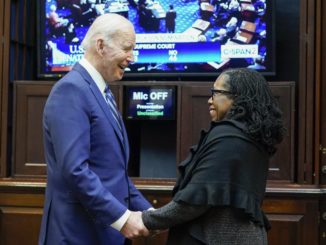
    At the White House, Mr. Biden and Judge Jackson watched the vote together from the Roosevelt Room. Officials said the two would appear at an event on Friday to mark Judge Jackson’s confirmation, though she will not be sworn in for months.

    “I’m overjoyed, deeply moved,” Ms. Harris told reporters after the vote. “There’s so much about what’s happening in the world now that is presenting some of the worst of this moment and human behaviors. And then we have a moment like this.”

  • SC dismisses former Fortis promoter Shivinder Mohan Singh’s bail plea

    SC dismisses former Fortis promoter Shivinder Mohan Singh’s bail plea

    The Supreme Court on Wednesday dismissed an interim bail plea of former Fortis promoter Shivinder Mohan Singh — accused of misappropriating Rs 2,397 crore of Religare Finvest Ltd in connivance with others. “We are of the opinion that the presence of the accused was not a must..,” a Bench led by Justice MR Shah, dismissing the petition of Singh who had sought an interim bail on “humanitarian grounds” to help his ailing mother to take part in the last rites of his maternal uncle, who died on March 8. The rejection order came after Solicitor General Tushar Mehta said there was something suspicious about Singh’s plea. “He is accused of Rs 2,400-crore liabilities and a flight risk,” Mehta said.

  • Supreme Court refuses to intervene on Karnataka hijab row

    Supreme Court refuses to intervene on Karnataka hijab row

    NEW DELHI (TIP): The Supreme Court on Friday, February 11, refused to intervene in the Karnataka hijab controversy, saying “We will take it up at an appropriate time.” “You should think if such issues should be brought at the national level,” a Bench led by CJI NV Ramana told senior advocate Devdatt Kamat.

    Seeking to challenge the Karnataka High Court’s interim order restraining students from wearing religious dress till it decided the issues arising out of the hijab controversy, Kamat urged the top court to take up the matter on Monday.

    But the CJI refused to oblige him. “We are also watching what’s happening in the state… Constitutional rights are for everybody, and this court will protect it. We will list at appropriate time,” the CJI said.

    Solicitor General Tushar Mehta opposed Kamat’s submission, saying the issue shouldn’t be politicized. The high court order was not available, he pointed out.

    One of the advocates pointed out that examinations were scheduled to commence from February 15 and the petitioners had to choose between the examinations and their faith. But the Bench wasn’t impressed.

    This is the second time in as many days that the top court has refused to intervene.

    On Thursday, February 10, senior advocate Kapil Sibal had urged CJI Ramana to take up a petition filed by Fatima Bushra – a student of Government PU College, Udupi – in view of its pan-India ramifications.

    “The problem is that schools and colleges are closed…Girls are being stoned. It’s spreading across the country,” Sibal had said.

    “Please wait…let the high court decide… They’re hearing it,” the CJI had told Sibal, refusing an urgent listing.

    After hearing the matter on Thursday, a three-judge Bench led by Karnataka High Court Chief Justice Ritu Raj Awasthi had asked students not to go to educational institutes in religious dress.

    “It’s a matter of a few days. Please cooperate, Chief Justice Awasthi had said, posting the matter for Monday. “We will restrain everyone from adopting religious practices while we are hearing…But till the matter is pending consideration…these students and all the stakeholders shall not insist on wearing religious garments, may be headdress or saffron shawl. We will restrain everyone. Because we want peace and tranquility in the state,” the high court had said.There are three petitions filed in the top court. The petitioners have contended that despite the freedom of conscience and the right to religion guaranteed by Article 25(1) of the Constitution, she and other girl students were not allowed to wear hijab.

    They said there was a direct infringement of fundamental rights and also as events are happening in multiple states and likely to spread further, it would be better and proper that the apex court took cognizance of the issue.

    They wanted the top court to decide the issue to avoid conflicting decisions by different high courts.

    (With inputs from agencies)

  • ‘Reservation not at odds with merit’: Supreme Court upholds 27% OBC quota in NEET

    ‘Reservation not at odds with merit’: Supreme Court upholds 27% OBC quota in NEET

    New Delhi (TIP)- The Supreme Court on Thursday, Jan 20,  said that reservation for backward classes is not at odds with merit but furthers its distributive impact while upholding the 27 per cent quota for Other Backward Classes (OBC) in the National Eligibility cum Entrance Test (NEET) undergraduate and postgraduate medical admissions (all-India quota). On January 7, a bench of Justices D Y Chandrachud and A S Bopanna in a brief order upheld the constitutional validity of the OBC reservation and approved for the current admission cycle, the Rs 8 lakh annual income limit set for identifying those eligible for the quota for Economically Weaker Sections (EWS). The court had then said that it would soon come out with a detailed order giving reasons for its decision.

    In the detailed order pronounced Thursday, the bench said that competitive exams do not reflect the economic social advantage accrued to some classes over a period of time and that merit should be socially contextualised.

    “Articles 15(4) and 15(5) are facets of substantive equality. Competitive exams do not reflect (the) economic social advantage which is accrued to some classes. Merit should be socially contextualised. Reservation is not at odds with merit but furthers its distributive impact,” the court said.

    Upholding the Centre’s decision to allow the quota, the court said that the government was not required to seek its permission before granting reservation in the all-India quota seats and its decision was therefore correct.

    Pointing out that any intervention by the court would have further delayed the admission process for the current year, the bench said that judicial propriety would not permit it to stay the quota when the counselling is pending, especially when constitutional interpretation is involved. The court underlined the dire need to have more doctors working in hospitals given the Covid-19 pandemic situation and said that any change in the eligibility qualification would have delayed the admission process and led to cross litigation.

    The court will hear the question of the EWS reservation in detail in the third week of March.

    Petitioners in the matter had challenged the July 29, 2021 notification of the Medical Counselling Committee (MCC) providing 27 per cent reservation for OBCs and 10 per cent quota to the EWS category in the NEET UG and PG (all-India quota) admissions. Hearing the petitions, the Supreme Court had asked the Centre to explain what exercise it had undertaken to arrive at Rs 8 lakh criteria. Responding to this, the Centre told the court on November 25, 2021, that it would revisit the criteria and sought four weeks to complete the exercise. Subsequently, the Centre appointed a three-member committee comprising former finance secretary Ajay Bhushan Pandey, member secretary ICSSR V K Malhotra and principal economic advisor to the Indian government Sanjeev Sanyal.

    The committee submitted its report on December 31 recommending that the Rs 8 lakh limit which has continued since 2019 be retained, but suggested some changes to how to apply the same.

    It also favoured continuing with the existing system as the admission process was already on and that if disturbed at the end or fag-end of the process, it would create more complications than expected both for the beneficiaries as well as for the authorities.

    The petitioners opposed the recommendation saying the report was an admission that the government had not conducted any study before fixing the Rs 8 lakh limit for the EWS in 2019.

  • Hate speeches: Onus on Supreme Court, ECI to stem the rot

    Hate speeches have come under judicial scrutiny, with the Supreme Court agreeing to hear a public interest litigation (PIL) seeking an ‘independent, credible and impartial’ investigation by an SIT into the inflammatory remarks made by speakers at last month’s Dharma Sansad in Hardwar and an event in New Delhi. The petitioners have claimed that no effective steps have been taken by the Uttarakhand and Delhi police to arrest those who targeted the Muslim community in their speeches. Another petition, filed by the Jamiat Ulama-i-Hind in the apex court, has sought a ban on anti-Muslim speeches and programs, saying that ‘it is not just a matter of religion but of the Constitution, law, unity and integrity of the country.’

    Uttarakhand is among the five states going to the polls next month. The Election Commission of India (ECI) has already cautioned political parties over hate speeches and said that it is keeping tabs on social media posts. Even as a SIT formed by the BJP government in the hill state is probing the Hardwar case, the ruling party is being accused of dragging its feet on the sensitive issue due to electoral considerations. What seems to have emboldened the hate-mongers is the silence of the Central and state governments on the ‘genocidal’ speeches, which were also delivered at a recent conclave in Raipur, Chhattisgarh.

    ‘Practise your religion but don’t abuse and indulge in hate speech and writings’ — that’s what Vice President M Venkaiah Naidu said at an event held in Kerala last week to mark the 150th death anniversary of Saint Kuriakose Elias Chavara, a 19th-century Catholic priest and social reformer. His strong disapproval of attempts to ridicule other religions and create dissensions in society ought to spur politicians of all hues to call out the black sheep. However, most of them are preferring to remain mute spectators with an eye on their vote banks. With the political class generally reluctant to condemn bigotry and intolerance, the courts and the ECI would have to go the extra mile to ensure exemplary action against those spreading hatred and inciting violence in the name of religion.

    (Tribune, India)

  • Supreme Court favors regulation of OTT platforms

    Supreme Court favors regulation of OTT platforms

    The Supreme Court on Thursday, March 4, made it amply clear to OTT (over-the-top) platforms like Netflix and Amazon that it is in favor of “screening” content shown by them. It said some of the films hosted by the platform were pornographic. “Traditional film viewing has become extinct. Now films and web series are viewed by the public on these platforms. Should there not be some screening? We feel there should be some screening… There is pornography in some films,” Justice Ashok Bhushan, leading a Bench, also comprising Justice R. Subhash Reddy, observed. Senior advocate Mukul Rohatgi, appearing for Amazon producer Aparna Purohit’s bail, said this “was not about pornography but the right to freedom of expression”.

    “But a balance has to be struck,” Justice Bhushan retorted.

    Solicitor General Tushar Mehta said the content included “filthy abuses”. The hearing was based on a plea by Purohit, Amazon Prime’s commercial head, against the Allahabad High Court decision to deny her pre-arrest bail in connection with the probe into Tandav, a web series hosted by the platform. The FIR said the series ridiculed Hindu gods and the country’s political power corridors.

    Justice Bhushan said the court wanted to consider Purohit’s case in the light of the new guidelines notified by the government to hold social media and OTT platforms accountable for their content. The Bench asked the guidelines to be placed on record and scheduled a hearing for March 5.

    The Information Technology (Guidelines for Intermediaries and Digital Media Ethics Code) Rules of 2021 requires streaming platforms to comply with a new three-tier self-regulatory complaint redressal system. It also includes an independent self-regulatory body headed by a retired high court or Supreme Court judge, which will decide on matters related to content.

    Meanwhile, the Information & Broadcasting Ministry on March 4, clarified that none of the OTT platforms will have to register with the government and no government nominee will be present in the self-regulatory body. The statement was issued after I&B Minister Prakash Javadekar had an interaction with representatives of OTT platforms.

  • Dissent is not sedition

    Supreme Court lays down norm; time to erase colonial-era law

    The Supreme Court of India deserves unreserved praise for its decision to dismiss a sedition petition against former Jammu and Kashmir Chief Minister Farooq Abdullah with a fine of Rs 50,000. The Bench of Justices Sanjay Kishan Kaul and Hemant Gupta has laid down a much-needed norm when it ordered that dissent is not sedition. Unfortunately, the colonial-era law, which says that ‘whoever by words, either spoken or written, or by signs, or by visible representation or otherwise brings or attempts to bring into hatred or contempt, or excites or attempts to excite disaffection towards the government shall be punished with imprisonment for life’, still remains as Section 124 A of the Indian Penal Code. None of the founding fathers or the subsequent liberal governments found this vague and draconian provision distasteful enough to get it removed from the statute book. Hence, the constitutional court’s order assumes the status of a touchstone for the legality of the application of 124 A.

    The learned judges have made it clear that dissent or disagreement with the decisions of the Central government is not sedition. So, Disha Ravi and Farooq Abdullah cannot be prosecuted simply because they do not agree with the government on farm laws or the abrogation of Article 370. There is no democracy without dissent and debate. The court has correctly identified the petitioners’ attempt as ‘publicity interest litigation’, and by imposing the fine it has sent a cautionary message out to frivolous and politically motivated litigants. That the order came the very same day a Washington-based think tank, Freedom House, downgraded India’s status from ‘free’ to ‘partly free’ points to two conflicting facets of India’s present-day predicament. While our institutions try to remain free, there is an attempt by those like the petitioners in the Abdullah case to make the country ‘partly free’ by gagging dissent using those very institutions. The government should ensure that its image does not get sullied any further by its police or vigilante groups, and it is in its interest to showcase India’s free media and all other democratic institutions.

    (Tribune, India)


  • Supreme Court refuses interim protection from arrest to makers of ‘Tandav’

    Supreme Court refuses interim protection from arrest to makers of ‘Tandav’

    A total of three separate petitions were heard by a three-bench judges

    NEW DELHI (TIP): ‘Tandav’, released on January 15, is a nine-episode political thriller. The web series landed in controversaries on allegedly hurting religious sentiments, The Supreme Court on Wednesday, January 27, has refused to provide interim protection from arrest to Tandav’s director Ali Abbas Zafar and others who are seeking quashing of issued notices and FIRs against them by Uttar Pradesh, Madhya Pradesh and other states for allegedly hurting Hindu’s religious sentiments. A total of three separate petitions of Zafar, Amazon Prime India head Aparna Purohit, producer Himanshu Mehra, the show’s writer Gaurav Solanki and actor Mohammed Zeeshan Ayyub was heard by a bench including justices Ashok Bhushan, R Subhash Reddy and M R Shah.

    Besides seeking quashing of the FIRs, the pleas have requested clubbing of FIRs, reported PTI.

    The bench of three has asked responses from states including UP, MP, Karnataka, Maharashtra, Bihar and Delhi on the pleas. “Tandav”, released on January 15, is a political thriller, featuring Bollywood stars like Saif Ali Khan, Dimple Kapadia, Mohd Zeeshan Ayyub, Sunil Grover and Gauahar Khan.

    The nine-episode web series, since its release on Amazon Prime Video, has landed itself into a political controversy on their two scenes. In one scene, actor Zeeshan Ayyub’s character plays Lord Shiva in a college play. However, he doesn’t don Lord Shiva’s traditional look and speaks about issues plaguing the society.

    Another scene shows actor Sandhya Mridul’s character who tells her boyfriend and the father of her child, a Dalit political leader played by actor Anup Soni, that a man from the lower caste always takes advantage when he is involved with a woman from the upper caste. Several leaders, including members of the ruling party BJP, have demanded the streaming platform to remove the show as it allegedly hurts religious sentiments and ridicules Hindu gods. ‘Tandav’ makers had already issued an apology after complaints were registered with Police in Maharashtra and Uttar Pradesh.

    (Courtesy / PTI- OPOYI)

  • The fall of the ‘last Citadel’ of justice: Supreme Court of India

    The fall of the ‘last Citadel’ of justice: Supreme Court of India

    Former Chief Justice of India (CJI) Ranjan Gogoi takes oath as Rajya Sabha MP during the ongoing Budget Session of Parliament, in New Delhi, Thursday, March 19, 2020. (RSTV/PTI Photo)(PTI19-03-2020_000012B)

    “I am surprised as to how Justice Ranjan Gogoi, who once exhibited such courage of conviction to uphold the independence of the judiciary, has compromised the noble principles on the independence and impartiality of the judiciary,” said retired Justice Kurian Thomas.

    He was reacting to the appointment of recently retired Chief Justice of the Supreme Court to the Rajya Sabha by the Modi Administration. “Mr. Gogoi’s decision to accept the nomination to Rajya Sabha has certainly shaken the confidence of the common man on the independence of the judiciary,” Mr. Joseph added.

    It is to be noted that not so long ago, on January 12, 2018, to be exact, Mr. Gogoi was part of the four-member Supreme Court Justices along with Justice Kurian Joseph, who held an unprecedented news conference to warn about dangers of political interference in the judiciary. “The four of us are convinced that unless this institution is preserved and it maintains its equanimity, democracy will not survive in this country,” Justice Jasti Chelameswar said during the press conference held at his home.

    Since independence, the Supreme Court remained a firewall against abuse of power by the Executive branch or the elites in the ruling class. The integrity of judges has been a critical component in rendering impartial decisions that have far-reaching effects on every segment of society. Judicial independence is vital in reassuring the public that judges would dispense cases with honesty and impartiality only in accordance with the law and evidence presented to them. The Supreme court must be free of fear and favor from the Executive, then only it would be trusted by the public.

    If we look at the record of Gogoi as the Chief Justice, he has headed a five-member constitution bench that delivered a historical and unanimous judgment deciding the fate of the Babri Masjid land in Ayodhya in favor of Hindus and also headed the bench that put SC’s stamp of approval on the Rafale fighter jet deal between India and France clearing the BJP government of serious corruption charges from the Opposition. Moreover, Supreme Court headed by Gogoi appeared to have dragged its feet in setting up a quick hearing on the violations of the civil rights of Indian citizens in Kashmir after the abrogation of Article 370 by the Modi Administration.

    Therefore, his nomination to the Rajya Sabha raises a serious question of quid pro quo that would have a diminishing effect on the judges who serve in the Court and debilitating impact on the Institution and its Independence the public have come to rely on for its final word. One may argue that Mr. Ranjan Gogoi’s nomination to Rajya Sabha is not unprecedented as it has happened under the rule of the Congress Party as well. When Justice Rangnath Mishra, the former Chief Justice of India, was nominated to Rajya Sabha in 1998, most observers also saw it as a case of quid pro quo. Two wrongs don’t make it right.

    There are indeed widespread criticisms around this nomination, and some of the prominent citizens have spoken out loud. “What concerns me is that Justice Gogoi had relinquished charge as the CJI as recently as on November 17, 2019, exactly four months ago. In my view, offering the higher members of the judiciary nominated positions such as the Governor of a State or a Membership in the Rajya Sabha undoubtedly sets an unhealthy precedent, as it tends to weaken the institution of the judiciary,” wrote E.A.S Sarma, a former IAS officer of 1965 batch in a letter written to President Ram Nath Kovind.

    Some others are also wondering about the evolution of Ranjan Gogoi from an independent justice who has spoken out against the tyranny of the executive interference in the judiciary to a vassal of a Machiavellian ruling hierarchy that is hellbent on controlling the judicial process promoting their political agenda. As soon as Mr. Gogoi was nominated to the position of CJI, a 35-year-old junior court assistant wrote to 22 Justices in the Supreme Court, accusing him of sexual harassment. Later, a three-member Supreme Court panel investigating the allegations gave a clean chit to Gogoi in the matter. The woman who filed the charges was fired, and her family was said to be harassed. In a statement, the complainant said, “Today, my worst fears have come true, and all hopes of justice and redress from the highest Court of the land have been shattered. “However, in a curious and shocking twist and turn to the whole story, the woman was magically reinstated after Gogoi has vacated his office. One indeed wonders who is behind this entire drama and how the justice may have been compromised!

    When those four justices, including Gogoi, conducted that famous 2018 press conference, they were expressing their disapproval about how then Chief Justice Dipak Misra was assigning the cases, especially the one pertaining to a petition seeking an independent investigation into the mysterious circumstances surrounding the death of BH Loya in 2014. At the time of death, Loya was presiding over the Sohrabuddin encounter case, in which the current Home Minister was a prime accused. In November 2017, the caravan reported the shocking claims raised by the family of Judge Loya.

    In Expressing their strong disapproval of the process, on behalf of the four Justices, Mr. Chelameswar said “they don’t want another twenty years later some very wise men in the country to say that Chelameswar, Ranjan Gogoi, Madan Lokur and Kurian Joseph sold their souls; they didn’t take care of their institution; they didn’t think of the interest of the nation. So, we place it before the people of the country,”

    Only time will tell whether Mr. Ranjan Gogoi has sold his soul or compromised the noble principles. Still, his actions during his tenure as CJI and now his acceptance of Rajya Sabha seat from BJP has indeed cast a cloud suspicion around him and may have irreparably damaged the independence of the institution he was sworn to protect and proclaimed to defend. Moreover, for the people India, it is a steep and tragic fall of the ‘last citadel’ of justice and a threat to freedom itself!

    (Writer is a former Chief Technology Officer of the United Nations and Vice-Chairman of the Indian Overseas Congress, USA)

  • 4 Nirbhaya convicts executed in Tihar Jail

    4 Nirbhaya convicts executed in Tihar Jail

    NEW DELHI (TIP): The four men convicted of the gang-rape and murder of a Delhi woman on December 16, 2012 were hanged in the darkness of pre-dawn on Friday, March 20,  ending a horrific chapter in India’s long history of sexual assault that had seared the nation’s soul.

    Mukesh Singh (32), Pawan Gupta (25), Vinay Sharma (26) and Akshay Kumar Singh (31) were executed at 5.30 am for the savage assault in an empty moving bus on the 23-year-old physiotherapy intern who came to be known the world over as Nirbhaya, the fearless one.

    “The doctor has examined the bodies and declared all four dead,” Director General of Tihar Jail Sandeep Goel said.

    Jail officials said the bodies were kept hanging for half an hour, a mandatory procedure after execution as per the prison manual.

    This is the first time that four men have been hanged together in Tihar Jail, South Asia’s largest prison complex that houses more than 16,000 inmates. The executions were carried out after the men exhausted every possible legal avenue to escape the gallows. Their desperate attempts only postponed the inevitable by less than two months after the first date of execution was set for January 22.

    In last-ditch efforts, one of the convicts knocked on the doors of the Delhi High Court and the Supreme Court hours before the hanging.

    Hours before the execution, Pawan Kumar Gupta approached the Supreme Court challenging rejection of the second mercy petition by the President.

    In an unprecedented late-night hearing that began at 2.30 am and lasted an hour, a Supreme Court bench dismissed his last plea, paving the way for the execution.

    It also refused to pass any direction allowing Gupta and Akshay Singh to meet their families just before they were sent to the gallows.


    Relieved that their daughter finally got justice after a seven-year-long legal struggle, Nirbhaya’s parents said they would continue their “fight for India’s daughters”.

    “We finally got justice. We will continue our fight for justice for India’s daughters. Justice delayed, but not denied,” her mother told reporters after the hanging.

    She added that women would definitely feel safer after the execution of the convicts.

    The mother said the entire country was awake and waiting for justice.

    There was cheer after the hanging as hundreds of people, carrying the national flag and shouting slogans of ‘long live Nirbhaya’ and ‘Bharat Mata ki jai’, gathered outside Tihar Jail since early hours of Friday.

    Some of them distributed sweets after the four convicts were executed.

    Among the people who gathered outside the jail was social activist Yogita Bhayana. She held a poster which read ‘Nirbhaya has got justice. The other daughters still await’.

    “Justice has been delivered finally,” she said, adding it was a victory of the legal system.

    Sana, a resident of west Delhi, said, “Nothing will change after this hanging in our society, but we are happy that the four convicts have been hanged and the justice was delivered to Nirbhaya.”

    After raping and brutalizing Nirbhaya, the men, one of whom was a juvenile at the time, dumped her on the road and left for dead on the cold winter night. Her friend who was with her was also severely beaten and thrown out along with her. She was so severely violated that her insides were spilling out when she was taken to hospital. She died in a Singapore hospital after battling for life for a fortnight.

    Six people, including the four convicts and the juvenile, were named as accused.

    While Ram Singh allegedly committed suicide in Tihar Jail days after the trial began in the case, the juvenile was released in 2015 after spending three years in a correctional home.

    The road to the gallows was a long and circuitous one, going through the lower courts, the High Court, the Supreme Court and the President’s office before going back to the Supreme Court that heard and rejected various curative petitions.

    The death warrants were deferred by a court thrice on the grounds that the convicts had not exhausted all their legal remedies and that the mercy petition of one or the other was pending before the President.

    On March 5, a trial court issued fresh death warrants for March 20 at 5.30 am as the final date for the execution.

    (Source: PTI)

  • Maharashtra Mahabharat :  Devendra Phadnavis Announces his Resignation as Chief Minister

    Maharashtra Mahabharat : Devendra Phadnavis Announces his Resignation as Chief Minister

    MUMBAI(TIP):  The beleaguered Devendra Fadnavis announced at a press conference here on November 26 that he will submit his resignation to the Governor.

    Fadnavis in his statement said that the people of Maharashtra had given a clear mandate to BJP- Shiv Sena combine to form a government. But Shiv Sena claimed chief minister’s position with BJP on a rotational basis, something BJP had never agreed to. BJP made all efforts to have its old alliance partner to drop the demand but was stonewalled. Shiv Sena chose the parties it had always opposed.

    NCP offered BJP support to form a government and a claim of majority was submitted to the governor who invited Fadnavis to form the government.

    However, situation has changed.  “We do not have majority. We will sit in the opposition”, said Fadnavis.

    All eyes are now on Maharashtra Governor who is expected to accept the resignation of Fadnavis and invite the leader of the legislature party of Shiv Sena-NCP-Congress alliance to form a government.

    (It is a developing story)