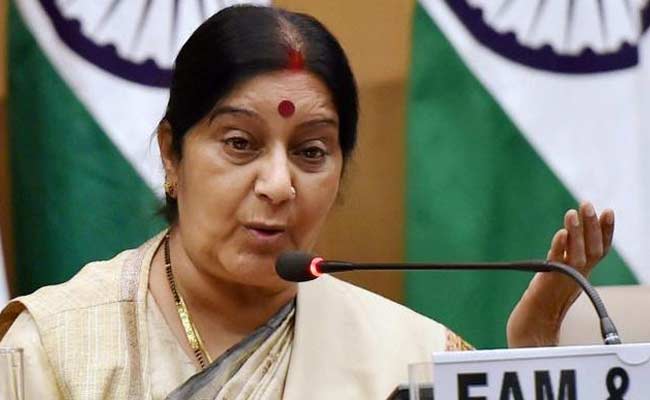
Tag: Sushma Swaraj

  • International Women’s Day

    International Women’s Day

    Consider a world where men and women are treated equally. A world without bias, stereotypes, or discrimination. A diverse, equal, and inclusive world. A world in which diversity is valued and appreciated. We can achieve women’s equality by working together.

    International Women’s day is observed on March 8 every year on a global scale. It is all about celebrating the social, political, economic and cultural achievements of women around the world. It calls to arms all the women of the world to come together to fight against gender disparity and establish themselves as the invaluable members of society that they are. People all over the world are called to witness the incredible achievements of women and participate in activities and rallies that are targeted towards greater equality.

    History : In the modern world, it is easy to forget just how far we have come in the fight for equality and recognition, not just as women but as equal and productive members of society and the human race. Whether it was during times of economic depression or the world wars, women stepped to fill roles that they were previously denied. Agitated at being denied a seat at the proverbial table, Theresa Malkiel suggested to the ‘Socialist Party of America’ that they organise the first ever ‘National Women’s Day’ in 1909. A group of 15,000 women marched through the streets of New York, demanding shorter working hours, better pay and voting rights. Following this in 1910, an international conference for working women was held in Copenhagen. It was during this conference that Clara Zetkin, Kate Duncker, Paula Thiede and others proposed an annual commemoration of ‘Women’s Day’, in order to promote equal rights.

    In the following year, on March 19, 1911, the first ever ‘International Women’s Day’ was organised by over a million people from countries like Austria, Denmark, Germany, and Switzerland. Much later, in 1975, the United Nations finally acknowledged ‘International Women’s Day’ on a global scale and its celebration.

    Significance : International Women’s Day has become more than just a commemorative event over the years. It highlights the stories and extraordinary achievements of women that have on many occasions been erased. Each year, in celebration of this day, we look back to our mentors through history and work towards furthering the goal that they had set. Conferences, rallies, debates and discussions are organised and women from around the world participate in order to share their stories and make their voices heard.

    What is the theme this year for International Women’s Day?

    The theme for the International Women’s Day 2022 was announced by UN Women in December: “Gender equality today for a sustainable tomorrow.” A key mission this year is to advance gender equality in the time of the climate crisis through women’s leadership. The hashtag #BreakTheBias is a focal point for this year’s campaign to raise awareness and rally for gender equality.

    International Women’s Day 2022: Colors

    The colors of International Women’s Day are purple, green, and white. Purple is the color of justice and dignity. Green is the color of hope. White is a contentious concept that denotes purity.

    Status of Women in India

    Going back to our origins, we can see how vital women are to society, not only biologically, but also culturally. Women have been mentioned in our Vedas and ancient books since ancient times, and they have been assigned important positions. Because of the contributions of women, the texts of Ramayana and Mahabharat have been tremendously influenced and due to women, they may have become the most sacred of all. Previously, women were referred to as housekeepers. It was thought and passed down to others that women are meant to marry, take care of the house and their in-laws, and sacrifice all of their aspirations in order to realise the dreams of their husbands and children. Furthermore, women were kept out of school because families believed that only boys deserved to be educated and follow their aspirations. Women were married off at a young age, and occasionally without their consent. They have also been subjected to a slew of dehumanising practises, societal neglect, and rituals designed to limit them, and they are frequently considered commodities rather than human beings.

    However, things have changed over the years. Women today are eager to take up professions and work. Thus, they enjoy equal respect and dignity in the family. Women in free India also enjoy equal pay for equal work in comparison to men. Also, there are provisions for maternity leave for them. Furthermore, females are provided equality of opportunity under Article 16 of the Constitution of India.

    The girls in urban areas are almost at par in education with the boys. But there is a less educated female population in rural areas. This has also affected the social and economic development of rural India. The poor (hygienic facilities) facilities at school and lack of female staff have affected education. Kerala and Mizoram have a universal literacy rate.

    Following the development of the freedom movement across the nation, the ladies of the society began to emerge and burst through their shells. A larger proportion of women began to be given the opportunity to study and seek education. Currently, India does not have a shortage of women in the medical, technical, teaching, legal, or any other profession. India has seen an increase in the number of empowered women holding higher positions in various offices and organisations.

    Women are involved in a variety of occupations and compete alongside males in a variety of disciplines such as technology, law, administration, teaching, and so on. Apart from traditional occupations, we have women who thrive in sports, such as P.T. Usha, Sania Mirza, P.V Sindhu, Mithali Raj, Mary Kom, Saina Nehwal, Dipa Karmakar, and others, who have represented and inspired many aspiring sportswomen in India. We also have women who have had a significant impact on the art and entertainment industries since their inception, as well as cultural icons in many schools of art. Indira Gandhi, Vijay Lakshmi Pandit, Annie Besant, Mahadevi Verma, Nita Ambani, Sachet Kripalani, Amrita Pritam, Sushma Swaraj, Padmaja Naidu, Kalpana Chawla, Mother Teresa, Subhadra Kumari Chauhan, and others are some of the great Indian women leaders, social reformers, social workers, administrators, and literary personalities who have significantly changed the women’s status.

    There has been a steady transformation in the status of women in comparison to earlier periods. Women of today take part completely in areas such as politics, status, military sectors, economic, service, and technology sectors. Moreover, they have contributed wholly to sports too. Thus, they have occupied a dignified position in family and society.

    However, ending crimes against women is still a challenge. Even after significant advancements in women’s rights in India, they are still exploited, harassed, and abused in a variety of ways such as rape, sex discrimination, and so on. We can prevent ills by ensuring women’s autonomy, also increasing participation and decision making power in the family and public life.

  • Sushma Swaraj -the best specimen of “Matri Shakti”

    Sushma Swaraj -the best specimen of “Matri Shakti”

    By Prof I.S.Saluja

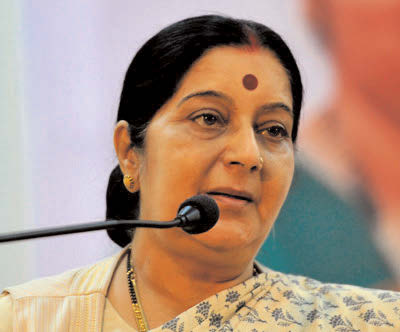
    Sushma Swaraj (Sharma before her marriage to Swaraj Kaushal) was born on  14 February 1952  at Ambala Cantt, Haryana to Hardev Sharma and Shrimati Laxmi Devi. Her father was a prominent Rashtriya Swayamsevak Sangh member. Her parents hailed from the Dharampura area of Lahore, Pakistan.

    Sushma was educated at Sanatan Dharma College in Ambala Cantonment and earned a bachelor’s degree with majors in Sanskrit and Political Science. She studied law at Panjab University, Chandigarh.

    She  was a lawyer by profession. A senior leader of Bharatiya Janata Party, Swaraj served as the Minister of External Affairs of India in the first Narendra Modi government (2014–2019). She was the second woman to hold the office, after Indira Gandhi. She was elected seven times as a Member of Parliament and three times as a Member of the Legislative Assembly. At the age of 25 in 1977, she became the youngest cabinet minister of Indian state of Haryana. She also served as 5th Chief Minister of Delhi for a short duration in 1998.

    Swaraj was hailed as India’s “best-loved politician” by the US daily Wall Street Journal . In view of her failing health , she decided not to contest the 2019 Indian general election. She was not much seen in public. On August 6, 2019 she succumbed to a cardiac arrest, according to the doctors at the  AIIMS , New Delhi.

    The world grieved over her loss, as we do at The Indian Panorama. We grieve for her, the unreturning friend and benefactor.

    We received condolences from many people in India and abroad. In the short space available with us, we will carry excerpts from the condolences offered by them.

    A Diplomat Remembers Sushma Ji

    Aformer diplomat Asoke Kumar Mukerji was the Permanent Representative of India to the UN when Sushma Swaraj visited the United Nations for the first time as External Affairs Minister. He said in his condolence posted on Facebook

    “Deeply saddened by the untimely demise of Smt. Sushma Swaraj-ji, who was External Affairs Minister of India when I was finishing my innings in the Indian Foreign Service as Permanent Representative of India to the United Nations in New York. Her enthusiasm was infectious, and her attention to detail was astounding. Despite the challenging schedule that she committed herself to during her visits to the United Nations, she constantly radiated positive energy.

    The symbol of Indian mother, sister, daughter, bahu-the best face of an Indian Sushma Ji with UNSG Ban Ki-Moon, whose “India-connections” extended from his personal to his professional life
    Photo / Courtesy Asoke Mukerji

    I first received her as External Affairs Minister in New York on 24 September 2014, when she arrived just before our Prime Minister Shri Narendra Modi-ji’s first historic visit. It was her sagacity and support that ensured we were able to implement the Prime Minister’s idea for the UN General Assembly to declare June 21 every year as the International Day of Yoga in record time and with a record number of co-sponsoring countries. She participated in the First International Yoga Day in New York in 2015.  She placed the UN’s decision on the International Yoga Day in the context of India’s ability to set the global agenda at the last public function I participated in with her in New Delhi in March this year. The video of her remarks may be seen at

    http://www.fpap.in/video/modi-govts-sets-the-global-agenda/

    Her interest in the Holy Grail of India’s multilateral diplomacy, revolving around our efforts to reform the UN Security Council, was deep and focused, as was her interest in the welfare and effectiveness of the thousands of Indian soldiers serving in UN Peace Operations.

    She saw both as integral to India’s core national interests. She built a special rapport with President of the General Assembly Foreign Minister Sam Kutesa of Uganda to push for tabling a text to reform the Security Council, as well as to implement the UN General Assembly’s decision to construct a Permanent Memorial Wall to UN Peacekeepers on the grounds of the UN Headquarters in New York.

    The last time Ambassador Mukerji met Sushma-ji was at a function at the Nehru Memorial Museum and Library in March 2019, when she spoke extempore on the Modi Government’s Foreign Policy. From left to right: Dr Anirban Ganguly, Director of the SPMRF, External Affairs Minister Sushma Swaraj-ji, Ambassador Amar Sinha and Shri Vijay Chauthaiwale, In Charge of BJP’s Foreign Affairs Department.
    Photo / Courtesy Asoke Mukerji

    She leaves behind many memories. May God give her departed soul everlasting peace. Om Shanti!

    A New Yorker Misses his Sister

     New York based  BJP activist Jagdish Sewhani who knew Sushma ji for a long time , sent this condolence message on the passing away of Sushma ji.

    “Deeply saddened and Shocked at the sudden passing away of Sushma Swaraj ji, one of the tallest political leaders of her generation who had given more  than four decades of public service.

    Sushmaji had this amazing quality of connecting with People . She was people’s Minister and most loved politician, respected across the Party lines.

    She was great orator and great administrator.

    At personal level she was like a sister to me and always used to call me Bhai.”

    OFBJP-USA Pays Rich Tribute to Smt. Sushma Swaraj

    “Overseas Friends of BJP (OFBJP) – USA is shocked and deeply saddened to learn about the sudden demise of Smt.  Sushma Swaraj. It is indeed a huge loss to the nation as 1.3 billion people remember her yeomen service to the country. Her unmatched oratory skills and her human touch always mesmerized the people across all walks of life.

    Born into RSS family, Sushma Didi as she was fondly called had started her political journey with ABVP and during this journey, she broke many glass ceilings. She became the youngest cabinet minister in Haryana at the age of 25 and was the first woman Chief Minister of Delhi. She accomplished many firsts during her political career, including first full-time Foreign Minister. She was elected to the parliament for seven times. While she was an opposition leader, she won the accolades from both friends and foes. She had friends across the aisle and from all ideologies which speak volumes about her human interactions and outreach.

    She was a remarkable leader who devoted her life to the public service and was instrumental in affecting process changes in the Indian consulates across the globe aimed to help NRIs and India diaspora. She was just Twitter away in helping the distressed people.  Her quick wit and forever helping hand made her extremely popular in the community of Indian Diaspora.”

    GOPIO Recall their Association with Sushma Ji

    GOPIO Delegation with External Affairs Minister Sushma Swaraj in New York, Sept. 23, 2018

    Global Organization of People of Indian Origin conveys its heartfelt condolences in passing away of Smt. Sushma Swaraj, who served as External Affair Minister with Prime Minister Modi from 2014 to 2019. As minister looking after the Overseas Indian Affairs, GOPIO have had a close working relation and cooperation on many of the NRI and PIO issues as well as on new initiatives from her ministry.

    We have been working with Sushmaji since she has been the leader of BJP in the Rajya Sabha.

    In her passing away, we will miss a Statesman as well as a sincere and able political leader.

    GOPIO International conveys its heartfelt condolences. May her soul rest in peace.

    AAPI  Mourns the demise of Sushma Ji

    During the many years of public service to the nation, Ms. Sushma Swaraj brought her innate grace and charm into her work. She made her mark in her own way – connecting with the diaspora far and wide and reaching out to help them. She would respond to every appeal for assistance, and make sure the Indian missions responded to the requests. In this way she gave the human touch to the Ministry of External Affairs and won millions of admirers across the world.

    (TIP Bureau)

  • Narendra Modi  Takes Oath as Prime Minister of India for the Second Term

    Narendra Modi Takes Oath as Prime Minister of India for the Second Term

    *  36 ministers sworn in for a second term

    *  20 MPs take oath of office as cabinet ministers for the first time

    *  24 cabinet ministers, ministers of state sworn in

    *  Nine sworn in as MoS (Independent charge)

    *  Smriti Irani, 5 other women in Modi government

    NEW DELHI (TIP): Narendra Modi took oath of office and secrecy as the Prime Minister of India for a second consecutive term amid thunderous applause from a select gathering in the sprawling forecourt of the Rashtrapati Bhavan,  May 30th evening.

    President Ram Nath Kovind administered the oath to Modi, 24 Cabinet colleagues, nine Ministers of State (Independent Charge) and 24 Ministers of State. The loudest cheer was reserved for BJP chief Amit Shah, whose induction means the party will have to elect a new president.

    The event was marred by ally Janata Dal (United) deciding not to take oath even as party chief Nitish Kumar marked his presence by attending the ceremony. Among the allies, Lok Janshakti Party chief Ram Vilas Paswan retained his place in the Cabinet, as did Harsimrat Kaur Badal of the SAD.

    Arvind Sawant, who defeated Milind Deora in South Mumbai, made it from the Shiv Sena quota. There was no representation from Tamil Nadu. Tamil-speaking Nirmala Sitharaman, who took oath as a Cabinet minister, represents Karnataka in Rajya Sabha.

    Besides Shah, the new members from the BJP include Prahlad Joshi, former Chief Ministers Ramesh Pokhriyal Nishank and Arjun Munda, while party’s UP chief Mahendra Nath Pandey makes a comeback into the Council of Ministers and has been elevated to Cabinet rank, as was Giriraj Singh, who was MoS (Independent Charge) earlier.

    Former Foreign Secretary S Jaishankar was the lone surprise inductee into the Cabinet, becoming the second former ranking Indian Foreign Service officer to be drafted into the new team led by Modi. Modi has retained former diplomat Hardeep Singh Puri as Minister of State (Independent Charge).

    Missing among the Cabinet ministers from the outgoing government were Arun Jaitley and Sushma Swaraj. While the former opted out, Swaraj did not contest the polls, both citing health concerns.

    Similarly, missing from the MoS (Independent Charge) list were Dr Mahesh Sharma, Rajyavardhan Singh Rathore and K Alphons, while Manoj Sinha failed to make the cut as he lost the election.

    The new Ministers of State include Nityanand Rai, Suresh Angadi and first-time MPs G Kishan Reddy (Telangana), Debosree Chowdhury (West Bengal) and Pratap Chandra Sarangi (Odisha).

    PM Narendra Modi has dropped parliamentarians and key economic ministers in the previous NDA government like Suresh Prabhu, Jayant Sinha and Manoj Sinha. The name of Rajyavardhan Singh Rathore was also missing from the list of ministers who took oath.

  • 200 Indian Students Trapped in Flood-Hit Houston, Rescue Efforts on: Tweets Sushma Swaraj

    200 Indian Students Trapped in Flood-Hit Houston, Rescue Efforts on: Tweets Sushma Swaraj

    HOUSTON, TX (TIP): Union minister Sushma Swaraj tweeted, August 30th that 200 Indian students have been trapped in Houston — one of the biggest cities in the US — which is witnessing devastating floods after Hurricane Harvey, one of the worst storms in decades, hit the area last week.

    In a series of tweets the foreign minister, who is known for her prompt interventions, said every effort is being made to rescue the students. She said she is in touch with the Consul General of India in Houston, Anupam Ray, who is in charge of the rescue operations.

    The students, the minister said, are at the campus of the University of Houston, an area under neck-deep water. The US Coast Guard did not allow India to send them food and other relief material, as boats are needed to reach the affected areas, she said. Currently, the local police, along with the US national and state guards, are carrying out the relief work. Texas Governor Greg Abbott has pushed in 4,000 troops for rescue and recovery missions in the floods, which he described as “epic and catastrophic”.

    Two of the students, she tweeted, are unwell and have been hospitalized. The ministry is ensuring that their relatives reach them as soon as possible.

    Hurricane Harvey, which made landfall on Friday, has been the most powerful hurricane to hit Texas in more than 50 years. The authorities say the region has witnessed a year’s worth of rain in just one week. Two persons have died in the resulting floods. The local media reported that the authorities expect the toll to rise as the storm triggers tidal surges and tornadoes.

    The locals in Houston and other areas of Texas have been asked not to leave their flooded homes as the roads are deep under water and completely impassable.

    The local media reported that over the weekend, there have been 1000 calls for rescues. Most people have been forced to take refuge in rooftops or higher grounds. Around 30,000 people will shelter, the state authorities have said.

  • Pakistan man thanks India for son’s successful cardiac surgery

    Pakistan man thanks India for son’s successful cardiac surgery

    HYDERABAD (TIP): Lahore-bound 34-year-old Kamal Siddiqui is getting home but with good memories, floored by the generosity and kindness of the Indian people. His infant son Rohaan underwent a complex heart surgery in India, thanks to external affairs minister Sushma Swaraj, who heard his plea and granted a visa to the Pakistan family to visit India for treatment.

    “My experience in India has been very nice. The reception we got was more warm than expected,” Kamal Siddiqui told TOI. “Rohaan is fine,” he said after the infant got operated upon at a hospital at Noida.

    In May this year, Kamal Siddiqui had made a fervent plea to the minister to grant his family a visa so that his son Rohaan could be brought for medical treatment to India. Sushma responded to Siddiqui and a visa was granted to the family.

    On July 21, Rohaan underwent a successful cardiac surgery. “Today Rohan underwent a complex but successful cardiac surgery. Thankful to Jaypee Hospital and people of India for their support and care,” Kamal had said.

    “Had a great day today. Rohaan was discharged from hospital,” Siddiqui said on Tuesday thanking Sushma Swaraj, Dr Rajesh and Jaypee. “Thank you India. God bless all,” he added. (PTI)

  • International Court of Justice, The Hague stays Jadhav execution

    International Court of Justice, The Hague stays Jadhav execution

    Diplomatic victory for India as ICJ asks defiant Pakistan to implement ruling

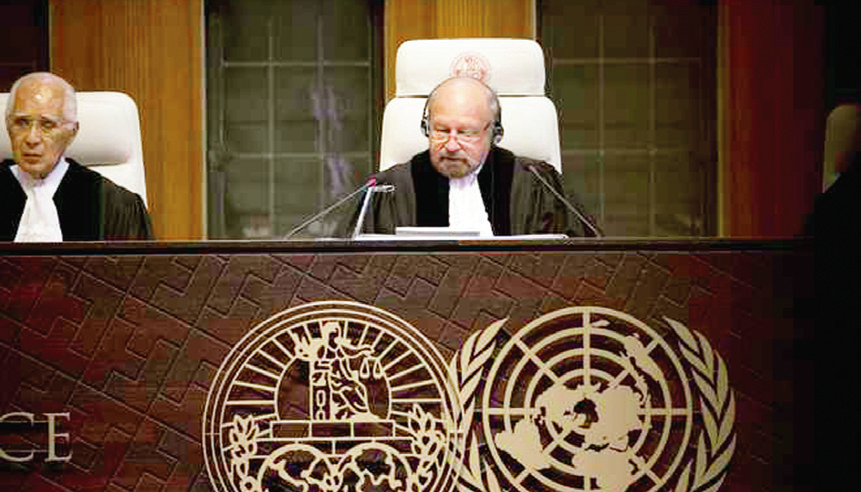
    NEW DELHI (TIP): The International Court of Justice (ICJ), on May 18, stayed the execution of Kulbhushan Jadhav until it rules on the merits of the case. The stay passed unanimously by the court is a diplomatic victory for India as  it upheld its argument that Pakistan has violated the Vienna Convention. For Pakistan, it comes as a setback since the court did not accept its arguments that the 2008 bilateral agreement between India and Pakistan on consular access takes precedence over the Vienna Convention.

    While India welcomed the decision and said it was a matter of relief for everyone, Pakistan was quick to say that the United Nations’ highest court has no jurisdiction in national security matters.

    The Ministry of External Affairs said the ICJ order was “unanimous, favorable, clear and unambiguous”. MEA spokesperson Gopal Baglay said the “provisional relief provided by the ICJ is the first step towards ensuring justice”.

    A statement by the office of Pakistan’s attorney general was in line with the position taken by their foreign office that the order of the ICJ did not change the status of Jadhav in any manner. “We are determined to pursue this case to its logical end,” said the statement.

    Pakistan foreign office spokesman Nafees Zakaria said India had been “trying to hide its real face” by taking the case of Jadhav to the ICJ.

    Kulbhushan Jadhav
    gets reprieve

    The ICJ, in its stay today, upheld India’s argument on the “urgency” of the issue. “Without prejudging the result, the ICJ considers that the risk or irreparable prejudice, the mere fact that Jadhav is under such a sentence and might be executed, is sufficient to demonstrate such a risk. There is considerable uncertainty as to when the decision on any appeal is rendered or when Jadhav will be executed,” said ICJ President Judge Ronny Abraham.

    What might make matters tough for Pakistan are the court’s observations that its orders are legally binding. Pakistan claims to have arrested Jadhav from the restive Balochistan in March last year for “espionage”. While India has accepted that Jadhav is a former naval officer, it has rubbished claims of his being a spy. “Satisfied at ICJ order staying the execution of Kulbhushan Jadhav. Satisfied at the efforts of Harish Salve for presenting Indian case effectively. -Narendra Modi, PM

    “The ICJ order has come as a great relief…We are grateful to Harish Salve for presenting India’s case so effectively before ICJ. I assure that under the leadership of PM Modi, we will leave no stone unturned to save (him). -Sushma Swaraj, External Affairs Minister

    “As a lawyer for 40 years, you get a feel of how judges are reacting. I felt a positive energy when I was arguing the case. I felt judges were connecting. I felt gratified. I did not feel that connection when the other side was arguing. -Harish Salve,

    Counsel for India. (Source: Tribune India)

  • US reaffirms India’s designation as major defence partner as Modi meets US NSA

    US reaffirms India’s designation as major defence partner as Modi meets US NSA

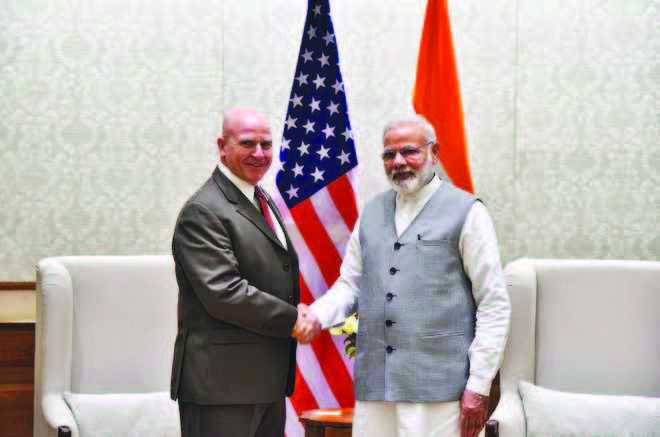
    NEW DELHI (TIP): US National Security Adviser HR McMaster and Indian NSA held a two-hour long meeting in New Delhi today.

    According to sources from the government – the issue of terrorism and Indo-US Cooperation was prominently discussed. India and US agreed to increase military cooperation and more active information exchange on counter terror operations.

    McMaster also discussed regional security issues with his Indian counterpart Ajit Doval.

    Indian side emphasized that the terrorism emanating from Pakistan is posing serious threat to regional stability and security. India and US have very good cooperation.

    McMaster  also to met Prime Minister Narendra Modi at Lok Kalyan Marg. He may also meet External Affairs Minister Sushma Swaraj. McMaster arrived in Islamabad, Pakistan on Monday, barely a day after the United States reinstated its tough stance on Pakistan.

    Incidentally, this was the first visit by a top member from the Donald Trump administration. McMaster arrived in Pakistan after a brief stop in Afghanistan.

    Following the meet in Pakistan, Prime Minister Nawaz Sharif’s office issued a statement saying that McMaster had assured the PM that the Trump administration was dedicated to strengthening bilateral relations and working with Pakistan.

    New Delhi hopes discussions with Herbert Raymond McMaster will provide clarity on US President Donald Trump’s policy for South Asia.

  • Deserted by NRI Husband, Punjabi Woman Seeks Sushma Swaraj’s Help

    Deserted by NRI Husband, Punjabi Woman Seeks Sushma Swaraj’s Help

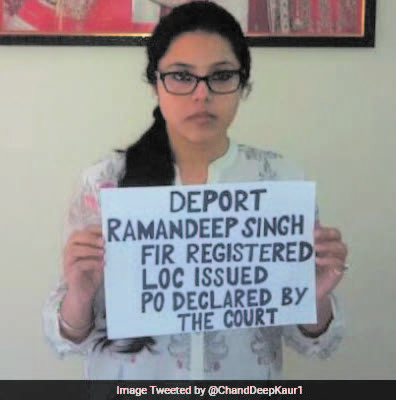
    KAPURTHALA (TIP): A 29-year-old woman who has been deserted by her NRI husband has sought help from External Affairs Minister Sushma Swaraj. She has requested the minister to get him deported from New Zealand. Though her husband, Ramandeep Singh, has been declared a proclaimed offender by the Punjab Police, Chand Deep Kaur has requested Ms Swaraj for help, saying that she wants to set an example so that no other Non-Resident Indian cheats his wife.

    “I have sought (Sushma) Swaraj’s help in getting my husband deported. He is in New Zealand,” Ms Kaur, who is based in Kapurthala, said.

    She also wants her husband’s passport to be cancelled. “I want to set an example so that no other NRI husband can ever dare to cheat a woman. I also want stringent laws in place to check such men,” she said.

    Ms Kaur said she has received a call from the ministry to send relevant documents in connection with her case. “I want him back here for divorce so that I can start my life afresh,” she said.

    Chand Deep Kaur married Ramandeep Singh, who was working as an accountant in Auckland, in July 2015. “Soon after our wedding he returned to New Zealand, in August 2015,” Ms Kaur said. “I stayed with him at his family’s house in Jalandhar,” she said. “He returned to India briefly in December 2015 and went back to New Zealand in January 2016,” she said.

    “I spent just 40-45 days with my husband,” she said. She alleged that the behavior of her in-laws changed after marriage. “They told me that they had disowned Ramandeep so I should move back with my parents,” Ms Kaur claimed.

    “I tried calling my husband repeatedly, but he did not respond. I even tried to contact members of my in-laws’ family but they also refused to respond, and blocked my number instead,” she said.

    She then lodged a complaint against her husband in August 2016. He was booked under charges of criminal breach of trust, among other sections of the Indian Penal Code. A look-out circular was also issued against Ramandeep, she said.

    A police official in Jalandhar later said Ramandeep was declared a proclaimed offender in February 2017.

  • TWO DELHI CLERICS GO MISSING IN PAKISTAN

    TWO DELHI CLERICS GO MISSING IN PAKISTAN

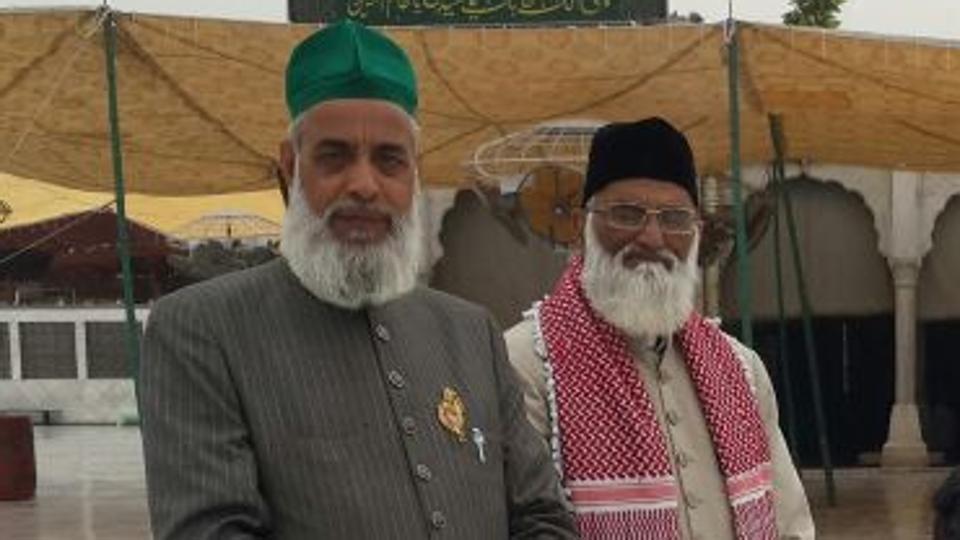
    NEW DELHI (TIP): External Affairs Minister Sushma Swaraj on March 17 (Friday) said that she has spoken to the Pakistani authorities about the two Indian Sufi clerics who went missing in the country.

    “Indian nationals Syed Asif Ali Nizami, 80, and his nephew Nazim Ali Nizami went to Pakistan on March 8,” she tweeted. “We have taken up this matter with the government of Pakistan and requested them for an update.” The two clerics from Delhi’s Hazrat Nizamuddin Dargah, Syed Asif Ali Nizami and Nazim Ali Nizami, visited Lahore on March 13 to offer a “chadar” at Baba Farid’s shrine.

    On March 14, they offered another “chadar” at the Data Darbar Sufi shrine also in Lahore.

    The next day when they reached the airport to take a return flight for Karachi, Nazim Ali Nizami was stopped to clear some documentation and Syed Asif Ali Nizami was asked to board the flight. He reached Karachi airport and asked his relatives to pick him up but he did not come out.

    Since then, their mobile phones have been switched off and their family in India has not been able to get in touch with them. Source: IANS


  • Pravasi Bharatiya Divas 2017: Redefining Engagement with Indian Diaspora

    Pravasi Bharatiya Divas 2017: Redefining Engagement with Indian Diaspora

    “I personally extend my warm greetings to you. Please do come. This day is being celebrated in your honor. This day is dedicated to overseas Indians who, through heroic achievements, have made a mark in the world. We also dedicate this day to all overseas Indians who through their hard work have kept India’s flag flying high”. Sushma Swaraj, External Affairs Minister.

    • Register online for participating in the 14th Pravasi Bharatiya Divas Convention
    • Last Date for Registration: 22 December, 2016.
    • Special Discounts in Registration Fees for Young Delegates and Group Registrations

    Pravasi Bharatiya Divas (PBD) is celebrated on 9 January every year to mark the contribution of Overseas Indian community in the development of India. January 9 was chosen as the day to celebrate this occasion since it was on this day in 1915 that Mahatma Gandhi, the greatest Pravasi, returned to India from South Africa, led India’s freedom struggle and changed the lives of Indians forever.

    PBD conventions are being held every year since 2003. These conventions provide a platform to the overseas Indian community to engage with the government and people of the land of their ancestors for mutually beneficial activities. These conventions are also very useful in networking among the overseas Indian community residing in various parts of the world and enable them to share their experiences in various fields.

    During the event, individuals of exceptional merit are honored with the prestigious Pravasi Bharatiya Samman Award to appreciate their role in India’s growth. The event also provides a forum for discussing key issues concerning the Indian Diaspora.

    The 14th Pravasi Bharatiya Divas Convention will be held from 7 to 9 January, 2017 at Bengaluru in Karnataka.The theme of 2017 PBD is “Redefining Engagement with Indian Diaspora”. It will see close to 3000 Non-Residential Indians (NRI) and PIO delegates from across the world.

    The PBD Convention features Plenary Sessions; an Exhibition; Cultural programs and provides an opportunity to interact with other Overseas Indians, Policy makers, Political leadership and others. The highlight of the PBD convention is the inaugural address by the Prime Minister. Chief Ministers of several states also participate and address the delegates on opportunities available in their respective states. The last day of PBD features the valedictory address by the President of India, who will also confer the Pravasi Bharatiya Samman Awards on Overseas Indian for their achievements and contribution both in India and abroad. 

    Objectives of PBD 2017:

    • PBD 2017 will focus on the theme “Redefining the engagement with the Indian Diaspora”.
    • To strengthen Diaspora engagement and provide a platform for networking with the Diaspora.
    • To recognize the Diaspora’s contribution to India and know their expectations and concerns.
    • To deepen engagement with young Diasporas, to help them know more about their roots.

    Dr. António Costa, Prime Minister of the Republic of Portugal has accepted an invitation from Prime Minister Shri Narendra Modi, to be the Chief Guest at the 14th Pravasi Bharatiya Divas Convention. He will participate in the inaugural session of the PBD Convention on 8 January and address the delegates.

    Mr. Michael Ashwin Satyandre Adhin (36 years), Vice President of the Republic of Suriname will be the Special Guest at the Youth Pravasi Bharatiya Divas (PBD) to be held on 7 January. He will address the young overseas Indian delegates at the inaugural session of the Youth PBD, along with Minister of External Affairs Smt Sushma Swaraj and Minister of State for Youth Affairs and Sports Shri Vijay Goel. Youth Pravasi Bharatiya Divas is a platform to connect with the youth, the new generation of Pravasis growing up all over the world, confident, aspirational and transcending the old boundaries of caste and class. The government is keen to enable young Diaspora to know more about their roots and the place from where their fathers or forefathers originated. They can discover many features of India, its tradition, rich art and culture and also many facets of contemporary India.

    The Government has put in place many schemes and programs to connect with the young Diaspora.

    The ‘Know India Program’, conducted every year, familiarizes Indian Diaspora youth with India and KIP provides an exclusive forum for students and young professionals of Indian origin to visit India, share their views, expectations and experiences and to bound closely with contemporary India. 35 editions of KIP have been held so far.

    In 2015 “Bharat Ko Jaano” quiz online was launched for young overseas Indians in which we saw enthusiastic participation of young NRIs and PIOs. The final round of quiz will be held in Delhi on 2nd October 2016.

    The Youth PBD is the flagship initiative for our engagement with young Diaspora and provides forum to discuss issues and concern to Young Diaspora. The delegates of the Youth PBD will have the opportunity to interact with young Indian students pursuing programs in Bengaluru, and network with them. They will visit the Exhibition at the PBD conventions which showcases the government achievements in various sector, flagship programs, state governments’ initiative and policies; Indian corporate sectors and craft and cultural bazaar. In the evening of 7th January, the young delegates will enjoy an enthralling cultural performances organized by the state government of Karnataka. Youth PBDs overseas Indian delegates can also participate in the PBD convention on 8th January.

    The Youth PBD 2017 will focus on “Redefining engagement with the Indian Diaspora”. Nearly 300-400 overseas Indian youth are expected to participate in the Youth PBD, including nearly 150 PIOs who will be visiting India for the Know India program. The Youth PBD in 2017 will include plenary sessions on:

    1. Problems faced by Indian students abroad.
    2. Problems faced by NRI students in India.
    3. Startups and Innovation which have a social impact in India.

    In a message addressing the NRIs, Minister of External affairs, MsSushmaSwaraj said, “I personally extend my warm greetings to you. Please do come. This day is being celebrated in your honor. This day is dedicated to overseas Indians who, through heroic achievements, have made a mark in the world. We also dedicate this day to all overseas Indians who through their hard work have kept India’s flag flying high.”

    Chief Minister of Karnataka Shri Siddaramaia said in a message, “Pravasi Bharatiya Divas is the largest gathering of overseas Indian Community in India. It is an important platform for the government of India to hear the views of the diaspora, have a direct dialogue with them and inform them about opportunities to contribute to their country of origin.”

    Register online for participating in the 14th Pravasi Bharatiya Divas Convention

    Last Date for Registration: 22 December, 2016.

    Special Discounts in Registration Fees for Young Delegates and Group Registrations

    For further information, please visit www.theindianpanorama.news  and www.pbdindia.gov.in

  • Isolate nations which nurture, peddle and export terrorism: Indian foreign minister at UNGA

    Isolate nations which nurture, peddle and export terrorism: Indian foreign minister at UNGA

    UNITED NATIONS: Indian Minister for External Affairs Sushma Swaraj, speaking at the 71st United Nations General Assembly, said on Monday that it was time to identify nations who nurture, peddle and export terrorism and isolate them if they don’t join the global fight against terrorism.

    “In our midst, there are nations that still speak the language of terrorism, that nurture it, peddle it, and export it,” said Swaraj in a veiled reference to Pakistan.

    The harsh India rhetoric at the UNGA comes after the attack on an Indian army base in India-held Kashmir earlier this month. The attack killed 18 Indian army personnel. India immediately blamed Pakistan for the attack.

    The Indian minister added it had become the calling card of such nations to shelter terrorists, and urged the United Nations (UN) to hold such nations to account.

    “These nations, in which UN declared terrorists roam freely, lead processions and deliver their poisonous sermons of hate with impunity, are as culpable as the very terrorists they harbour,” said Swaraj.

    She also said that “such countries should have no place in the comity of nations”.

    Swaraj referred to the speech of Prime Minister Nawaz Sharif at the UNGA, and said the allegations levelled against India were “baseless”.

    “Prime Minister of Pakistan used this podium to make baseless allegations about human rights violations in my country.”

    The Indian foreign minister stated that Pakistan should introspect and see the abuses being carried out in Balochistan.

    She also added that the “brutality against the Baloch people represents the worst form of state oppression”.

    It is pertinent to mention that the brutal and heavy-handed tactics used by Indian security forces in India-held Kashmir has led to the deaths of more than 100 people, hundreds have been blinded by ‘non-lethal pellet guns’ and over a thousand people have been injured.

    Swaraj claimed that India had no preconditions for talks with Pakistan and said India wants to resolve issues not on the basis of conditions, but on the basis of friendship.

    She further alleged that India did not receive the appropriate response from Pakistan and instead got a reply in the form of “Pathankot, Bahadur Ali, and Uri”.

    “Bahadur Ali is a terrorist in our custody, whose confession is a living proof of Pakistan’s complicity in cross-border terror,” claimed the foreign minister.

    Referring to Kashmir, she ‘advised’ Pakistan to abandon the dream of having control of India-held Kashmir.

    “My firm advice to Pakistan is: abandon this dream. Let me state unequivocally that Jammu and Kashmir is an integral part of India and will always remain so,” Swaraj said.

    ‘India not serious about resolving Kashmir issue’
    Chief of Army Staff General Raheel Sharif, while addressing a US CENTCOM conference in Germany, said India is not serious about resolving the issue of Kashmir.

    “Pakistan has suffered the most by terrorism losing lives more than any other country in the world,” said the army chief.

    General Raheel added that terrorists could move across borders because of no effective border management systems in place and it is exploited by anti-Pakistan intelligence agencies such as RAW.

  • Secretary Kerry’s visit: India unfurls its big power vision

    Secretary Kerry’s visit: India unfurls its big power vision

    The military agreement signed with the US (LEMOA) has stolen all the thunder in two recent high-level interactions with the US. The spin seems to make the agreement the epitome of Indo-US ties because of its outsized political weight. The Americans had actually offered a palette of four military agreements. India had earlier signed the end-user verification agreement which is theoretically more intrusive. The real test of Indo-US strategic closeness will be the other two military agreements that have been opposed by the Indian military.

    But the LEMOA, despite its strategic ordinariness, has created a climate of freshness in Indo-US ties. Its timing should give India considerable political capital when a new US President takes office. In India, US Secretary of State John Kerry uttered platitudes on terrorism that India likes to hear but Sushma Swaraj also evoked a phrase that is music to American ears — India’s willingness to be a net provider of security to the region. In other words, it means the Indian military will rise to the occasion in case of any trouble in the region. In the diplomatic world of give and take, US President Barack Obama has already assured US backing to India’s renewed quest for Nuclear Suppliers’ Group membership.

    That is not all. Kerry’s surprise suggestion of an India-US-Afghanistan trilateral can bring New Delhi back into the Kabul game. It also suggests increasing American exasperation with Pakistan that has been reflected in the US holding back funds for F-16 fighter jets as well as $300 million in military aid. And in a reminder to the world that India should not be hyphenated with Pakistan, India stood up to its G-20 stature when Sushma Swaraj reminded the Americans about the pending transfer of $100 billion to developing countries to battle climate change. The agreement for joint Indo-US research in the Arctic may not turn many heads but this will be the arena for resource grab in the coming decades. Taken together — net provider of security, NSG, Afghanistan, climate change and the Arctic — signal India’s long-term vision on the world stage in the coming years.

  • US daily calls Sushma Swaraj ‘supermom’, praises her social media presence

    US daily calls Sushma Swaraj ‘supermom’, praises her social media presence

    NEW DELHI (TIP): We all have appreciated our external affairs minister Sushma Swaraj’s timely interventions and speedy responses on social media. She’s one of the most active foreign ministers in the world on Twitter with 5.63 million followers. She replies to tweets of Indians abroad, facilitates passport and visa problems and sometimes also offers a word of advice to people with faulty refrigerators. Her interaction on social media with common citizens is indeed a refreshing change.

    And now, a US daily, The Washington Post, has showered praises on our minister for her proactive role on Twitter, calling her ‘Supermom of the State’. In an article titled ‘India’s foreign minister is cast as Supermom of State’, the newspaper enlists her Twitter achievements. The article recounts her efforts to help Indians abroad, like arranging food for Indian workers in Saudi Arabia, as well as helping a husband and wife reunite on their honeymoon.

    “Since she took on the job two years ago, Sushma Swaraj, 64, has carved out an unlikely role for herself as a crusading Supermom of State, solving the problems of distressed Indians around the world who send her their concerns via Twitter,” the Washington Post said.

    Last month, when a man tweeted an image of unemployed workers in Saudi Arabia who were rendered homeless and were starving, Swaraj responded in no time and within hours the Indian consulate in Doha tweeted pictures of those workers being given food items. Thanks to Swaraj’s prompt perusal. (PTI)

  • AMID INDIA-PAK TENSION, RAJNATH SINGH TO VISIT ISLAMABAD NEXT WEEK

    AMID INDIA-PAK TENSION, RAJNATH SINGH TO VISIT ISLAMABAD NEXT WEEK

    NEW DELHI (TIP): Home minister Rajnath Singh will visit Islamabad on August 3 and 4 to attend the meeting of home ministers and interior ministers of South Asian Association for Regional Cooperation (Saarc)?nations.

    This will be the first visit by a top Indian political functionary to Pakistan after the January 2 Pathankot airbase attack carried out by militants believed to be from across the border.

    It also comes at a time ties between the two nuclear-armed neighbours are seeing a chill in the aftermath of the killing of Hizbul Mujahideen commander Burhan Wani.

    Kashmir has been on the boil since the death of 22-year-old Wani on July 8 in an encounter in southern Kashmir. His death sparked violent protests in the Valley that killed more than 40 people and wounded hundreds.

    Pakistani leaders have criticised India over the Kashmir unrest, and the country observed on July 20 a “black day” to protest against the killings. The move drew angry reaction from India, which accused Islamabad of interfering in New Delhi’s internal affairs and backing terrorism.

    Sources said the home minister may have bilateral meetings with Pakistani politicians during the visit.

    At the 13th Saarc Summit held in Dhaka in November 2005, the heads of states decided that Saarc interior/home ministers will meet annually preceded by a meeting of the interior/home secretaries to strengthen counter-terrorism cooperation.

    “As far as the home minister’s visit to Islamabad is concerned, he will leave on August 3 and come back the next day,” said a home ministry official.

    Singh is likely to take up with the Pakistani leadership the issue of a reciprocal visit of the National Investigation Agency (NIA) to Islamabad for the Pathankot probe. A Pakistani joint investigation team visited India earlier this year, and the NIA shared the details of its investigation with it.

    A week before the Pathankot attack that killed seven securitymen, Prime Minister Narendra Modi made a brief stopover in Lahore while returning to India from Afghanistan and Russia. Three weeks before Modi’s visit, external affairs minister Sushma Swaraj visited Pakistan for a conference. Source: HT

  • US, India discuss Pakistan and the Pink Flamingo scenario

    US, India discuss Pakistan and the Pink Flamingo scenario

    WASHINGTON (TIP): The United States and India have begun conversations about Pakistan’s runaway nuclear weapons program, including its development and deployment of battlefield tactical nuclear weapons, in the backdrop of the nuclear security summit that opens here on March 31.

    Prime Minister Narendra Modi is expected in the US capital on Thursday morning, but ahead of his arrival, National Security Advisor Ajit Doval and his US counterparts and other senior American interlocutors have been discussing the progress in India’s ties with Pakistan, including complications arising from the patronage of terrorist groups by sections of the Pakistani establishment, and its nuclear posture.

    The Pakistani headache featuring in talks with Doval was revealed by US Secretary of State John Kerry, when he referred cryptically to Washington having “serious questions” about “some choices” being made in the region that “may accelerate possible arms construction.”

    “We’ve raised them with various partners in the region. So our hope is that this Nuclear Security Summit will contribute to everybody’s understanding about our global responsibilities and choices,” Kerry said, without directly naming Pakistan.

    There was little doubt Kerry’s remarks were directed at Pakistan, which has bailed out of the summit citing the terrorist attack in Lahore, one of dozens in the country over the past decade that has not persuaded its establishment to jettison a policy of fostering extremist groups.

    ”India has a very important role to play with respect to responsible stewardship of nuclear weapons and nuclear materials. India has a long record of being a leader, of being responsible, and it is particularly important right now at a time when we see in the region some choices being made that may accelerate possible arms construction, which we have serious questions about,” Kerry, with Doval beside him, said in a vote-of-confidence in New Delhi.

    Earlier, President Obama telephoned Pakistan’s Prime Minister Nawaz Sharif to condole the death of more than 70 persons n the Lahore bombing, while also “expressing his understanding of Sharif’s decision to cancel his visit to the United States and remain in Pakistan following this terrorist attack,” according to the White House.

    ”This callous and appalling attack against innocent civilians, many of them women and children, underscores the critical danger that terrorism poses inside Pakistan, throughout the region, and around the globe,” a White House readout of the call quoted Obama as saying.

    Pakistan has sent a low-level representation to the summit, evidently apprehensive about having to explain its decision to build tactical battlefield nuclear weapons in a situation where its home grown terrorists and mutinous extremist military personnel have attacked several military installations in the country, including the army headquarters and navy and air force bases.

    The possibility of a nuclear conflagration between India and Pakistan had been dubbed a ”pink flamingo” scenario, from a term coined by security analyst Frank Hoffman to describe events that are predictable and fully visible, but almost entirely ignored by policymakers (as opposed to Black Swans, which are unpredictable and unforeseen).

    Evidently, THIS pink flamingo is not something that will remain unnoticed or unaddressed.

    The choice of Doval to play Sherpa to the Prime Ministerial visit rather than external affairs minister Sushma Swaraj suggests the New Delhi and Washington are developing a deep security relationship in addition to extensive military and diplomatic ties. Enigmatic comments and cryptic statements bear this out without shedding too much light on the depth of the engagement.

  • Sushma Swaraj appeals to all Indians living in danger zones to return

    Sushma Swaraj appeals to all Indians living in danger zones to return

    NEW DELHI (TIP): In the wake of death of four Indian women in strife-torn Yemen’s Aden city, external affairs minister Sushma Swaraj on March 4 appealed to all Indians living in “danger zones” to return home.”I appeal to all Indians in such danger zones to please come back to India,” she tweeted. She said the nurses stayed back in Yemen, ignoring advisories by the government. “Yemen – Four Indian nurses have been killed in a terrorist attack today. I am sorry the nurses stayed back/returned ignoring our advisories,” she said in another tweet.The four Indian women were among 16 people killed in Aden city today when a group of terrorists stormed a elderly care home run by a Kolkata-based Missionaries of Charity and sprayed bullets at the residents.

    Source: TOI

  • INDIA IMPROVES ties with neighbors

    INDIA IMPROVES ties with neighbors

    Building upon Prime Minister Narendra Modi’s initiative of inviting all SAARC leaders to his swearing-in ceremony in May 2014, the neighbourhood continued to be the primary focus of India’s foreign policy in 2015. While relations with Pakistan and Nepal remained on a tricky path, there was some forward movement in the ties with Bangladesh, Afghanistan, Bhutan, Maldives and Myanmar. Relations between India and Sri Lanka more or less maintained a status quo.

    Nepal

    It began with an upswing in the ties but the relationship were strained by the time the year came to an end. Bilateral ties with Nepal took a hit after the neighbouring country promulgated a new Constitution. India argued that the new Constitution did not take into account the concerns of all sections of the population, particularly the Madhesis who enjoy close ties with India. However, Nepal did not pay heed to India’s protests and rebuked it for interfering in the country’s internal affairs.

    Earlier when Nepal was hit by a massive earthquake on April 25, India responded to the calamity and helped Nepal by launching its largest disaster response abroad, Operation Maitri. During External Affairs Minister Sushma Swaraj’s visit to Kathmandu in June, India pledged $1 billion grant for the reconstruction of the quake-hit country.

    Pakistan

    File image of Narendra Modi with Pakistan PM Nawaz Sharif
    File image of Narendra Modi with Pakistan PM Nawaz Sharif

    Ties with Pakistan did not see any forward movement in the past one year despite two meetings between Modi and his Pakistani counterpart Nawaz Sharif. While pushing for better relations, India has maintained that talks are possible only in an atmosphere that is free of terror and violence.

    Sharif and Modi first met on the sidelines of the BRICS summit in Ufa in Russia. The two sides unveiled a five-point agenda to address concerns on terrorism and to promote people-to-people contact. Despite a number of hurdles including on account of terror attacks in the aftermath of Ufa, and cancellation of initial round of NSA-level talks, a significant breakthrough was achieved in December with the NSAs meeting in Bangkok, followed by Swaraj’s visit to Islamabad for the Heart of Asia Conference.

    Bangladesh

    Prime Minister Narendra Modi and Bangladesh Prime Minister Sheikh Hasina shake hands in Dhaka, Bangladesh, Saturday, June 6, 2015.
    Prime Minister Narendra Modi and Bangladesh Prime Minister Sheikh Hasina shake hands in Dhaka, Bangladesh, Saturday, June 6, 2015.

    Modi’s visit to Bangladesh in June saw the exchange of instruments of ratification of the landmark land boundary agreement. It was a relief for over 50,000 people living in 162 enclaves across both countries as India and Bangladesh swapped enclaves, bringing to an end the 68-year-old boundary dispute. The June 6-7 visit of PM Modi also saw India-Bangladesh developmental cooperation scaling new heights, with India pledging a $2 billion Line of Credit for Bangladesh. The two countries took a host of steps to enhance trade and connectivity, including the launch of two new bus services. The two countries are a part of the sub-regional cooperation between Bangladesh, Bhutan, India and Nepal to enhance connectivity and regional integration.

    Sri Lanka

    Not much change taken place in the ties between India and Sri Lanka in the year gone by. Within months of the newly-elected Sri Lankan President Maithripala Sirisena taking charge of the island nation, two-way visits were held by the leaders and foreign ministers of the two countries. During Modi’s visit to Sri Lanka in March, India pledged $318 million Line of Credit for railway upgradation (New Delhi’s development assistance is already about $1.6 billion), unveiled a currency swap agreement of US $1.5 billion to help stabilise the Sri Lankan rupee and to develop Trincomalee as a regional petroleum hub with the cooperation of Lanka IOC (Indian Oil Corp’s subsidiary in Sri Lanka) and Ceylon Petroleum Corporation.

    Both countries also signed four pacts regarding visa exemption for official passport holders, youth exchanges, customs agreement (to address trade concerns and reduce non-tariff barriers) and the construction of the Rabindranath Tagore auditorium at the Ruhuna University with India’s aid.

    Afghanistan

    Amid the backdrop of the unfolding transition in Afghanistan, India sustained its engagement with the war-torn country. During the visit of Afghan President Ashraf Ghani in April 2015, India reiterated its commitment to the reconstruction of the strife-torn country. The two sides focused on working towards a more liberalised business visa regime. Afghanistan welcomed India’s decision to extend the 1000 scholarships per year scheme by another 5 years as part of capacity building initiatives. India continues its assistance to the construction of the India-Afghanistan Friendship (Salma) Dam in Herat, expected to be completed in the first half of 2016. The Parliament Building in Kabul constructed with Indian assistance has already been completed as well as on the Doshi and Charikar power stations. But the resurgence of Taliban and Pakistan’s continued support to the group remain a huge hindrance. Taliban has regained control of large swathes of land in Afghanistan in the last few months and is now in a position to threaten the elected government once again.

    Bhutan

    India’s all-weather friendship with Bhutan continued on an upward curve. The visit of Bhutan’s Prime Minister Tshering Tobgay to India in January focused on optimising cooperation in the field of hydropower – the centerpiece of economic cooperation between the two countries. The two sides reiterated their commitment to the 10,000 MW initiative and in this context, to the early implementation of the four JV-model projects, totaling 2120 MW.

    Maldives

    India also engaged with the Maldives leadership despite political volatility in the island country. This was reflected in the meeting between the foreign ministers of India and the Maldives on the sidelines of the UN summit in New York in September. External Affairs Minister Sushma Swaraj followed it up with a visit to the island nation from October 10-11 to reinvigorate ties.

    Myanmar

    Bilateral relations with Myanmar improved with the first India-Myanmar Joint Consultative Commission (JCC) meeting held in New Delhi on July 16, 2015. Steps were taken to further enhance the existing air connectivity, extending a$500 million Line of Credit to the Government of Myanmar for development priorities, and a commitment to enhance the regional and sub-regional cooperation under the BCIM-EC and the BIMSTEC framework. India also played an instrumental role in providing disaster relief support to Myanmar in response to widespread floods and landslides caused by Cyclone Komen.

  • Netanyahu, Abbas may visit India in 2016

    Netanyahu, Abbas may visit India in 2016

    India’s relation with the West Asian region is expected to be in focus during the first few months of 2016 as South Block appears set to host top Israeli and Palestinian leaders.

    Sushma_swaraj_MEA_PTI_360x270Diplomatic sources told The Hindu on Tuesday that both Israel Prime Minister Benjamin Netanyahu and President of Palestinian Authority Mahmoud Abbas, have been invited by India and External Affairs Minister Sushma Swaraj will hold talks with both Israeli and Palestinian leaders during her January 16 to 19 trip to Israel-Palestine to firm up the dates for the visits.

    Diplomatic sources also informed that Syrian Foreign Minister Walid Moalem is expected to visit New Delhi soon. The Hindu had earlier reported that Ms. Swaraj and Mr. Moalem had invited each other during their meeting on the sidelines of the UN General Assembly session in New York.

    The high power political engagement plan for West Asia by the South Block will be in line with Ms. Swaraj’s May 31 annual press conference when she had announced a first ever visit to Israel by Prime Minister Narendra Modi. A visit by Mr Modi will be symbolically significant as Israel has not been visited by Indian Prime Ministers since both sides established full and normal diplomatic ties in January 1992. Analysts say that a visit by Prime Minister Netanyahu will also be symbolically significant as the last Israeli Prime Minister to visit India was Ariel Sharon in 2003.

    Ms. Swaraj had earlier cancelled her January visit plan for Israel due to Israeli election season. Subsequently, President Pranab Mukherjee visited Israel and Palestine in October re-starting the chain of high level engagements. “As a result of President Mukherjee’s visit to Israel, it is now the turn of Israel to reciprocate suitably,” a source told The Hindu.

    There is also a possibility that Israel might send President Reuven Rivlin to India later during 2016 as President Mukherjee had extended invitation to President Rivlin to visit Delhi. However, the diplomatic season will be kick-started a few days before Ms. Swaraj’s arrival in Israel by her colleague Agriculture Minister Radha Mohan Singh who will hold discussion with his counterpart for greater Israeli scientific support for meeting Indian agricultural production goals.

    Preparation is also on to welcome Ms. Swaraj in Ramallah where her counterpart Riyad Al Maliki has been interacting with Indian diplomats to finalise commercial, educational and regional diplomatic plans for Ms. Swaraj. Ms. Swaraj had earlier told the media that Palestinians had been helpful in getting information about the 39 Indians kidnapped in Iraq.

  • Finding a Niche in the Emerging World Order

    Finding a Niche in the Emerging World Order

    Prime Minister Narendra Modi’s apparently impromptu visit to Lahore on Christmas day is readily explained by the need to contain the Taliban and ensure regional stability and connectivity in the ‘Heart of Asia’ after the US-led International Security Assistance Force withdraws next year. The visit follows growing realization in capitals across the region that mutual security interests must supersede Cold War alliances or ideological mindsets to avoid the fate of nations like Iraq and Syria. The Taliban and/or its mutants cannot be permitted to spread in the Afghan neighborhood, which includes Central Asia, Iran, Pakistan and India, an effort that calls for convergence between Kabul, Islamabad and New Delhi. One can discern the benign presence of Moscow and Beijing as both have huge stakes in a revitalized Asian economic boom independent of Western hegemony.

    Besides China’s Silk Road project, several multi-nation projects centre on Afghanistan, viz, the Turkmen railways, transmission lines, highways, oil pipelines and gas pipelines including the Turkmenistan-Afghanistan-Pakistan-India pipeline. India wants to join the Afghanistan-Pakistan trade and transit agreement so that Afghan products can directly enter India and its products reach Afghan and Central Asian markets.

    These mega-development prospects doubtless prompted Mr. Modi to engage with Pakistani Prime Minister Nawaz Sharif on the sidelines of the Paris climate conference in late November. Thereafter the National Security Advisors met in Bangkok and smoothened the way for External Affairs Minister Sushma Swaraj’s visit to Islamabad for the Heart of Asia-Istanbul Process conference on Afghanistan. India has huge stakes in the integration of Central Asia, East Asia and West Asia.Though not opposed, India does not expect a lasting peace to emerge from talks between the Afghan Government and Afghan Taliban groups. A better option is state-level engagement which Kabul too prefers. Hence, it is inconceivable that as he went through his Kabul engagements – inaugurating the India-built $90 million Parliament House, gifting three Mi-25 attack helicopters and 500 new scholarships for children of martyrs of Afghan security forces -Mr. Modi would not have discussed the Lahore stopover with President Ashraf Ghani and CEO Abdullah Abdullah. It seems equally likely he mentioned it to Russian President Vladimir Putin before departing from Moscow. It may be relevant to note that since Russia began bombing IS positions in Syria, Pakistan does not favor regime change in Damascus.

    Pakistan Tehreek-e-Insaaf party leader Imran Khan’s presence in India (possibly to deliver the Sharif family wedding invitation) and the mature welcome to Mr. Modi’s stopover by Pakistan political parties (as opposed to the Congress’s petty squabbling) suggests that the Pakistani polity may have achieved some degree of cohesion in tackling terrorism. The Peshawar school attack last year is a grim warning of the danger from non-state actors.

    Mr. Modi’s first state visit to Russia, as part of the 16th Annual Bilateral Summit, has revitalized India’s most tried and trusted friendship and sent a signal to the international community that President Putin cannot be downsized by Western machinations. Mr. Modi secured Mr. Putin’s backing for India’s permanent membership of the UN Security Council and reiterated the commitment of both nations to a multipolar world order. Both nations already cooperate in forums like Brics and the Shanghai Cooperation Organisation (where Russia helped in India’s full membership), the G20 and the East Asia Summit.

    Syria, Afghanistan and the common threat posed by terrorism figured in the talks, but the summit’s main takeaway was Russia’s big bang return to India’s defense and nuclear energy sectors. Mr. Modi’s Make in India project in the defense sector got a major boost with the deal to jointly manufacture 200 Kamov-226T light military helicopters.

    The real triumph is the acquisition of five S- 400 Triumf surface-to-air missile systems (and 6,000 missiles). Literally the ‘crown jewels’ of Russia’s defense capability, the S-400 can destroy aircraft that use stealth technology, other fighter aircraft, cruise missiles and tactical missiles from up to 400 kilometers away, as effectively demonstrated earlier this month when Russia deployed the system to protect its Hmeimim airbase in Syria after Turkey downed a Russian jet.

    This will give India the ability to engage multiple targets at long range and restore the strategic balance with China and Pakistan. With Prime Minister Modi reportedly budgeting $150 billion to upgrade India’s military, with the Navy planning to order three Russian frigate warships and a possible joint development of a fifth generation fighter aircraft, New Delhi could be Moscow’s salvation as the latter faces a second year of recession amid Western sanctions.

    With the Paris climate conference failing to yield a comprehensive deal, the burden of combating global warming with clean energy expectedly fell upon individual nations. Mr. Modi having previously identified nuclear energy as pollution-free, the two nations are moving ahead with plans to build at least 12 nuclear power plants in India with the highest safety standards in the world, over the next 20 years. Two plants are slated to come up in Andhra Pradesh under the Make in India program. A vibrant partnership, however, calls for deeper economic integration. The Indian Prime Minister hopes to take advantage of the US-led Western sanctions against Russia to meet the latter’s demand for dairy products, seafood, and other goods and to attract Russian cash-rich billionaires to invest in India’s infrastructure fund, since they are no longer welcome in the old European financial havens due to Mr. Putin’s resistance to Western geo-political agendas to dismember West Asian and African countries on the lines of the old Yugoslavia.

    Access to Russian capital for his Make in India campaign would empower Mr. Modi’s drive to build a strong indigenous manufacturing base to generate employment and export revenues. Given the sharp downturn in Russo-Turkey relations, Mr. Modi hopes that Russian tourists will flock to India (not just in Goa) and tasked the tiny Indian community in Russia to motivate Russian families to discover India.

    Another gain is Russia’s commitment to ship 10 million ton of oil annually to energy-starved India in the next 10 years. Both countries plan to intensity collaboration in developing space exploration, rocket manufacture and engine manufacture, nano-technology, metallurgy, optics and software sectors. In substance, the visit announced that the Asian quest to forge a rational world order has moved to a new level. Mr. Modi’s short and informal visits to Afghanistan and Pakistan may be read as an invitation to take a seat of honor at the evolving new world concert.

    (The author is a social development consultant and a columnist with The Pioneer, a leading newspaper of Delhi).

  • A NEW BEGINNNING BY INDIA, PAK: SWARAJ ON BILATERAL DIALOGUE

    A NEW BEGINNNING BY INDIA, PAK: SWARAJ ON BILATERAL DIALOGUE

    NEW DELHI (TIP): A new beginning has been made by India and Pakistan as the two countries have agreed on a new bilateral comprehensive dialogue to address all outstanding issues through peaceful means, External Affairs Minister Sushma Swaraj said on December 17.

    To a question in Rajya Sabha on whether India has raised the issue of Pakistan Occupied Kashmir in international fora, Swaraj replied in affirmative and said government’s principled and consistent position on the issue of Jammu and Kashmir has been that the entire state is an integral part of India.

    “A new beginning has been made in the form of the agreement of the two countries on a new bilateral comprehensive dialogue to address all outstanding issues between them through peaceful means,” she said.

    During her visit to Islamabad earlier this month to attend a multilateral meet on Afghanistan, both India and Pakistan announced that they have decided to engage in a “comprehensive” dialogue.

    Replying to a query, she said the Permanent representative of Pakistan to the UN has recently written three letters to the President of the UN Security Council which referred to the issue of Jammu and Kashmir and asked the top decision making body to take note of situation along the Line of Control.

    To a separate question, Swaraj, who is also Overseas Indian Affairs Minister, said it was aware of an Amnesty International report which said that 279 Indian migrant workers died in Qatar in 2014.

    “The report also states that these figures are of migrant workers deaths from all causes, including fatalities, not directly related to labour conditions,” she said.

  • Are Attempts being made to derail the talks between India & Pakistan?

    Are Attempts being made to derail the talks between India & Pakistan?

    As the governments of India and Pakistan work towards normalizing ties between the two countries, anti-humanity groups (JuD) start with their rants in hopes of destabilizing future talks.

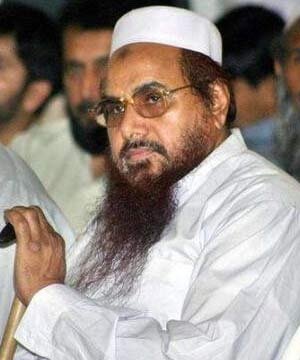
    Hafiz Saeed questions India on 26/11, says no concrete proof in 26/11 attacks even after 7 years

    Jamaat-ud-Dawah (JuD) chief and 26/11 plotter Hafiz Saeed has dared India over the Mumbai attacks probe days after Sushma Swaraj’s visit to Islamabad.

    This rant comes after a joint declaration where India and Pakistan agreed to a composite dialogue as well as to expedite the trial of 26/11; In a speech, the JuD chief Saeed says, “Our government remained silent, but let me respond to Sushma. It’s been seven years but they could not prove who was behind the Mumbai attacks and Insha Allah (if Allah wills it) they will never be able to prove it until eternity.”

    He also mocked New Delhi for failing to establish any concrete proof in the seven years after 26/11 and claiming that India would never be able to establish his complicity in the attack.

    Earlier JuD chief had slammed Pakistan Prime Minister Nawaz Sharif for holding a meeting with Narendra Modi during the Paris climate change conference.

    “Nawaz Sharif should not have met with Narendra Modi and exchanged smiles with him in Paris. It has hurt the sentiments of the Kashmiri Muslims,” Saeed said at a seminar titled ‘Kashmir Issue and Rise of Hindu Extremism in India’ at the Lahore High Court on December 2 organised by the Pakistan Justice Party.

    He said Sharif should sever relations with India till resolution of the Kashmir issue.

    “Nawaz Sharif should announce that there will be no talks with India till it ends atrocities against Kashmiri and Indian Muslims,” he said adding that till the resolution of the Kashmir dispute there should be no trade, no cricket and no talks with India.

    Saeed said “When they are not in power they talk about the oppressed Kashmiri people as if they are the champion of the Kashmir cause. But when they are in power they forget them”.

    Saeed founded the LeT whose operatives carried out the 2008 Mumbai attack that killed 166 people.

    Also read: Congress Questions Centre Over Hafiz Saeed's Rant
  • INDIA-PAKISTAN TALKS BACK ON TRACK

    INDIA-PAKISTAN TALKS BACK ON TRACK

    ISLAMABAD (TIP): As External Affairs Minister Sushma Swaraj walked past the Pakistani media waiting in the Foreign Office corridor on Dec 9 evening, she was asked, “Ma’am, koi breakthrough hai.” Standing behind a lectern, she didn’t disappoint. “I was being asked whether there is a breakthrough or big news,” she began in chaste Hindi, adding “Hum dono deshon ne samagra vaarta prarambh karney ka faisla le liya hai.” When her audience, mostly from Pakistan, couldn’t follow her Hindi and protested mildly, she said, “Let me finish. What was being done as composite dialogue, and was later called the resumed dialogue, will now be called the comprehensive bilateral dialogue.”

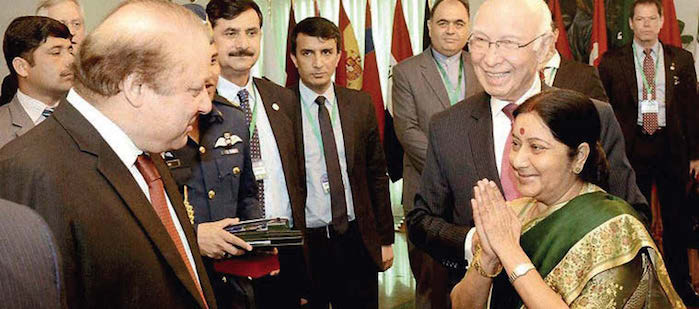
    Sushma Swaraj with Nawaz Sharif and Sartaj Aziz in Islamabad on December 9.
    Sushma Swaraj with Nawaz Sharif and Sartaj Aziz in Islamabad on December 9.

    Sartaj Aziz, the Pakistan Prime Minister’s adviser on foreign affairs, also standing behind a lectern, did not add anything and let the joint statement do the talking. Qazi M Khalilullah, spokesperson of the Pakistan Ministry of Foreign Affairs, fished out the one-page document for the cameras. Almost three years after the “resumed dialogue” was stalled following the killing of Indian soldiers, including one who was beheaded, India and Pakistan agreed to restart the dialogue process under the new rubric of “Comprehensive Bilateral Dialogue”. The composite dialogue was stopped after the Mumbai terror attacks in 2008. The comprehensive bilateral dialogue will have all the “pillars” of Indo-Pak relationship and will include confidence building measures (CBMs), Siachen, Sir Creek, Wullar barrage/Tulbul navigation project, economic and commercial cooperation, counter-terrorism, narcotics control, people-to-people exchanges. Two new pillars have been added— humanitarian issues and religious tourism.

    Sources said the idea was not to “disown the past” but make it more contemporary: “After the Geeta and Salman cases have come to light, humanitarian issues have been made another pillar of the relationship.” Swaraj said foreign secretaries of the two countries will meet to decide modalities and schedule of the dialogue. Buoyed by the “success” of the Bangkok meeting, the National Security Advisors will continue to keep talking on “terrorism” — on a parallel track. “We will figure out how it doesn’t duplicate,” a source told The Indian Express, since home secretaries handled counter-terrorism in previous dialogues. From India’s perspective, the Pakistan government’s realisation and acceptance of terrorism as the major challenge was the reason for resumption of the dialogue process. The three-para joint statement gave primacy to terrorism. The second paragraph underlined: “The EAM and the Adviser condemned terrorism and resolved to cooperate to eliminate it. They noted the successful talks on terrorism and security-related issues in Bangkok by the two NSAs and decided that the NSAs will continue to address all issues connected to terrorism. The Indian side was assured of the steps being taken to expedite the early conclusion of the Mumbai trial.”

    Hours before she announced the breakthrough, Swaraj had a “warm” meeting with Prime Minister Nawaz Sharif. Receiving the Indian delegation at his residence, Sharif was at his humorous best. As he introduced Foreign Secretary Aizaz Ahsan Chaudhary, he said, “Yeh hamaare Foreign Secretary hain joh dheeme se muskura rahe hain (this is our Foreign Secretary, he has a faint smile).” Swaraj and Sharif, sources said, chatted a lot in Punjabi. And she met four generations of Sharifs — his mother, daughter Maryam, and his granddaughters. A source privy to the conversation said Sharif gave an “assurance” to Swaraj on speedy conclusion of the Mumbai attack trial. Sources said during the meeting it became clear that Pakistan accepted terrorism as a reality that needs to be confronted and addressed. Sharif told Swaraj that he and Prime Minister Narendra Modi — they met briefly in Paris last month— are “very determined” to take the process forward. Swaraj, in turn, replied that the Bangkok meeting between the two NSAs showed that the two sides can engage on “difficult issues” in a “constructive” and “non-accusatory” manner. Sources said Swaraj discussed the Mumbai attack trial with both Sharif and Aziz, and they both dwelt on the issue for a while. “After all, terrorism colours public perception of Pakistan. So, it appears that they have accepted it as a challenge and are ready to accept it, and address. This was not the case before,” an Indian source, familiar with the bilateral conversations, said. The source also said India was not here to win the war of words against Pakistan. “We are here to bring the relationship back on track,” the source said. But the source was cautious and did not declare that Modi will visit Pakistan next year for the SAARC summit, although Swaraj confirmed it earlier in the day. “Thoda bahut change aaya hai… We don’t say it is permanent. So, we will not predict the future. PM has accepted the invitation in Ufa. There’s still some time.” Earlier in the day, Swaraj said it was time for India and Pakistan to display “maturity and self-confidence to do business with each other”. “Let me take this opportunity to extend our hand to Pakistan as well. It is time that we display the maturity and self-confidence to do business with each other and strengthen regional trade and cooperation.

  • Reviving Indo-Pak talks

    Reviving Indo-Pak talks

    The lessons learnt from the Indo-Pak joint statement at Ufa finally produced a breakthrough in Islamabad. The clincher was the hush-hush meeting in Bangkok. It produced a joint statement clearly spelling out all issues both sides plan to discuss. As in Bangkok, the Ufa statement had all the ingredients to move the dialogue process forward. But it failed to clearly spell out that “all outstanding issues” also meant Kashmir. The Indian media, present in strength in Ufa, immediately hailed – with a gentle nudge from South Block – the statement as a victory for India. This foray into a kind of triumphalism triggered an opposite reaction in Pakistan. And that terminated the Ufa breakthrough. Two other opportunities went abegging because India drew red lines that Pakistan could not have honoured.

    This time the dialogue platter has more subjects than the comprehensive dialogue process that began in 1997. It endured despite being buffeted by the Kargil conflict in 1999, the Parliament House attack in 2001 and a change in government in 2004. But the Mumbai attacks finally killed the spirit behind it just when a breakthrough was imminent. This time, statements by leaders from both countries seem to indicate they intend staying the course. Foreign Minister Sushma Swaraj promised to move at a pace Pakistan is comfortable with and Pakistani Prime Minister Nawaz Sharif maintained that working for the achievement of a peaceful neighborhood is a “cardinal principle” of Pakistan’s foreign policy.

    On a wider geo-political plane, the gesture has travelled far and wide. At hand in Islamabad were high-ranking delegations from 18 countries, assembled to bring closure to the Afghan conflict. Thus the filling of the Indo-Pak breach raises India’s stock for responding to Pakistan’s overtures despite no movement to accelerate the trial of its citizens accused of masterminding the Mumbai attacks. If carried forward with perseverance, it will not just outflank the spoilers in India and Pakistan, but Afghanistan as well. The NSAs of both countries now need to put the rowdier elements under strict vigilance to maintain a conducive environment.

  • Government Reaches Out to Indians Abroad for Fund Raising Flagship Schemes

    Government Reaches Out to Indians Abroad for Fund Raising Flagship Schemes

    NEW DELHI:  Non-resident Indians, especially those living in the UK and Qatar, will be reached out to by a government-supported trust to raise funds for ‘Swachh Bharat’ and ‘Clean Ganga’ projects.

    India Development Foundation of Overseas Indians (IDF-OI), the not-for-profit trust, will also create a focus group for facilitating contributions by NRIs in the forthcoming Pravasi Bhartiya Divas Conference, 2016.

    This was discussed during the fifth meeting of the board of trustees of IDF-OI, chaired by Minister for Overseas Indian Affairs Sushma Swaraj, in New Delhi yesterday.

    The board reviewed the progress made by IDF-OI on the revised mandate given in its last meeting on May 23, 2015 i.e. to promote among the overseas Indians the flagship programmes of Government of India — Swachh Bharat Mission and National Mission for Clean Ganga; projects identified by the state governments and donor advised projects.

    “The board directed that IDF-OI may enhance its outreach among overseas Indians, through visits to the UK and Qatar.

    “In the forthcoming Pravasi Bhartiya Divas conference 2016, there will be a focus group on facilitating contributions by overseas Indians through IDF-OI,” a press release issued today by the government said.

    Sushma Swaraj is the Chairperson of IDF-OI, set-up by the Ministry of Overseas Indian Affairs to facilitate philanthropic contributions by overseas Indians to social and development projects in India.

    During the meeting, IDF-OI informed the board that under the Swachh Bharat Mission, overseas Indians were invited to fund construction of household, community and public toilets in both urban and rural areas.

    “IDF has also invited contributions for the National Mission for Clean Ganga. In response to IDF-OI’s request, several state governments have identified social and development projects in their respective states in areas such as sanitation, education, drinking water, women’s empowerment etc which are available for funding through IDF-OI,” it said.

    IDF-OI also conducted an outreach in UAE in October 2015 as a result of which many overseas Indians made commitments to funding projects especially those under the Swachh Bharat Mission.

    The board meeting was attended by prominent Indians and NRIs including Yusuff Ali, Subhash Jindal, B K Agnihotri,Ashok Chowgule, Ritu Beri and Bindeshwar Pathak.

    Senior officials from Ministries of Home Affairs, External Affairs, Niti Aayog and Finance were also present.

  • Sushma Swaraj may visit Pak for Talks

    Sushma Swaraj may visit Pak for Talks

    External Affairs Minister Sushma Swaraj may travel to Islamabad next week to attend a multilateral conclave on Afghanistan.

    Though the government has not yet officially announced Swaraj’s visit to Islamabad, sources said she herself might travel to the capital of the neighbouring country for a day or two to attend the “Heart of Asia” meet on Afghanistan, instead of asking Minister of State for External Affairs V K Singh to represent her and lead the delegation from India.

    Sources said that New Delhi would factor in Prime Minister Narendra Modi’s “brief but good discussions” with his Pakistani counterpart Nawaz Sharif on the sidelines of the UN climate change summit COP 21 in Paris on Monday to arrive at a decision on the External Affairs Minister’s visit to Islamabad.