Tag: Tennis

  • Amanda Anisimova, Iga Swiatek to face off in Wimbledon final

    Amanda Anisimova, Iga Swiatek to face off in Wimbledon final

    London (TIP)- After two very contrasting semifinals, American Amanda Anisimova and Poland’s Iga Swiatek will face each other in the Wimbledon final on Saturday, July 12. Anisimova came through a long and grueling match against world No. 1 and fellow big-hitter Aryna Sabalenka, triumphing 6-4, 4-6, 6-4 after a tense and often unpredictable deciding set.
    The upset victory is a landmark moment in Anisimova’s career, coming 18 months after she returned from an extended break to prioritize her mental health. That time away from the sport will now seem worth it.
    The 23-year-old has played some of the best tennis of her career at Wimbledon, much of which was on display against Sabalenka.
    For Swiatek, it was a different story. She needed just an hour and 12 minutes – less than half the time of the first semifinal – to cruise to a 6-2, 6-0 victory over Belinda Bencic.
    But like Anisimova, the five-time grand slam winner is also an unlikely finalist having historically toiled on grass courts, her game much more suited to the clay of Roland-Garros.
    Something, however, has clicked for Swiatek at this year’s tournament, and against Anisimova she has the advantage of having played in five previous grand slam finals – winning them all.
    Needless to say, it will be a fascinating contest when both players return to Centre Court on Saturday with a first Wimbledon title on the line.
    Given her incredible achievement, Amanda Anisimova was in a remarkably relaxed mood during her post-match press conference.
    Just as the media session began, Iga Swiatek booked her place in Saturday’s Wimbledon final and Anisimova said she was looking forward to testing herself against the Polish player.
    The pair have not played against each other on the senior tour, last playing when they were both juniors.
    “Iga is such an unbelievable player and she’s also been an inspiration to me. Her work ethic and all of her achievements have been really inspiring,” she said.
    “I’m sure it’ll be an amazing match. Getting to compete against an unbelievable player again is going to be super special. Hopefully, I can bring some high quality tennis and make it a battle out there.
    “But I’m just gonna go out and enjoy every moment and try to not think about what’s on the line.”
    Anisimova also spoke about how important her prolonged break from tennis was back in 2023, when she was able to prioritize her mental health.
    “A lot of people told me that you would never make it to the top again if you take so much time away from the game,” she said. “And that was a little hard to digest, because I did want to come back and still achieve a lot.
    “So just me being able to prove that you can get back to the top if you prioritize yourself, that’s been incredibly special to me.”
    Coming into this year’s Wimbledon, few would have earmarked Iga Swiatek as a potential finalist, even with her status as a five-time grand slam winner.
    A clay-court specialist with four French Open titles to her name, Swiatek has struggled on grass throughout her career, only once advancing beyond the fourth round at Wimbledon prior to this year.
    Moreover, she has struggled for form of late, failing to add to her 22 WTA titles since her French Open victory in 2024. But, as the Pole said herself after the impressive win against Belinda Bencic, tennis can always finds a way to surprise you.

  • King and queen of hearts :  Federer, Serena leave behind lasting legacies, sport enters twilight of golden era

    King and queen of hearts :  Federer, Serena leave behind lasting legacies, sport enters twilight of golden era

    London (TIP)- As Roger Federer joined Serena Williams in bringing down the curtain on an illustrious career, tennis moved ever closer to the end of a golden era. Williams’ emotional goodbye at the US Open earlier this month was followed by Federer’s announcement on Thursday that next week’s Laver Cup in London would be his last professional outing. Both players had taken their sport to new levels and been proclaimed the best to ever wield a racquet, with 43 Grand Slam singles titles between them.

    Their departures, along with the fact that Federer’s great rivals Rafa Nadal and Novak Djokovic aren’t getting any younger, have left fans looking back wistfully at a glorious period in the sport’s history.

    The 41-year-old Federer’s decision was not unexpected given his recent struggles with injuries and form, but it was still met with an outpouring of sadness by tennis fans and former players.

    “I wanted to find the perfect way to say this, as you so eloquently put this game to rest — perfectly done, just like your career,” Williams said in an Instagram post, reacting to Federer’s retirement. “I have always looked up to you and admired you. Our paths were always so similar, so much the same. You inspired countless millions and millions of people — including me — and we will never forget. Welcome to the retirement club.”

    Like the 23-time Grand Slam singles champion Williams, who in 10 days will also turn 41, the triumvirate of Federer, Nadal and Djokovic have dominated their sport for the last two decades.

    And despite spending so many years on the tour, they continue to lure fans to the stands and television screens while their commercial pull still mesmerises brands and advertisers. Williams’s place in the sport was underlined by the fact that her final match at Flushing Meadows was the most-watched tennis telecast in ESPN’s 43-year history, while the 2022 edition broke the tournament’s all-time attendance record.

    Big three

    The so-called men’s ‘Big Three’ revolutionized the sport with their own achievements and riveting rivalries. They won a combined 63 Grand Slam singles titles between them. Federer played Nadal 40 times while Djokovic faced the Swiss in 50 matches as the trio boosted each other and along with it the sport as a whole and brought in new and old fans. Yet in recent years injuries to Williams, Federer and Nadal have brought their retirement into sharper focus. Fans and pundits have wondered how the sport would cope with the prospect of losing their most marketable athletes. With the exit of Williams and Federer in the space of three weeks, the answers could be at hand.

    Source: Reuters

  • GOPIO-CT holds Annual Holiday Party; Raises funds for local charity Grassroots; Elects new team

    GOPIO-CT holds Annual Holiday Party; Raises funds for local charity Grassroots; Elects new team

    STAMFORD, CT (TIP):  GOPIO-CT organized its General Body Meeting (GBM) and elected a new team on December 5th held at the Hampton Inn suite in Stamford. In its report to the GBM, President Ashok Nichani said, “In spite of the Corona Virus pandemic, GOPIO-CT did several virtual programs in the beginning of the year on Zoom including a New Year Party which served as a fundraiser in support of soup kitchens, a Holi Celebration, interactive meetings with CT lawmakers and raising funds for sending Oxygen Concentrators to India.”

    “As the pandemic was coming down in the year, the chapter organized several programs with physical presence participating with other ethnic communities celebrating Stamford’s founding, and organizing Indian and American flag hoisting at Govt. Center in Stamford to celebrate India’s 75th Independence Day which was followed by an India Festival at the Mill River Park, hosting UConn Indian students for a Networking Welcome Dinner, an interactive session with India’s Minister of State for External Affairs V. Muraleedharan, Hosting a Conversation with Indra Nooyi and a Diwali fundraiser for local charities,” added President Nichani.

    Secretary Prachi Narayan listed all major activities for the year which included major initiatives for serving the local community and institutions during the pandemic and lockdown. These included donating cash and replenishing food items for the homeless and needy at the New Covenant House in Stamford and Food Bank of Lower Fairfield. Two other service organizations were supported by GOPIO-CT in 2021, Future 5 which helps and counsel needy students at Stamford High Schools and Building One Community which serves new immigrant communities. The chapter also held a virtual interactive meeting with Connecticut Attorney General William Tong.

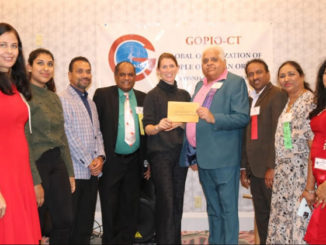
    IT Serve Alliance official Prasad Chintalapudi presenting a check to Grassroots.
    From L to R: Jayashri Chintalapudi, Samantha Hayes and Prasad Chintalapudi.

    The GBM also conducted its annual election for 2021. Mr. Ashok Nichani was re-elected as the President for one more term. Other elected officials are Mr. Prasad Chintalapudi as Executive Vice President, Dr. Jaya Daptardar as Vice President, Ms. Prachi Narayan as Secretary, Ms. Mahesh Jhangiai as Joint Secretary and Mr. Srinivas Akarapu as Treasurer. GBM also reelected two trustees, Mr. Joseph Simon and Mr. Shailesh Naik. Following the GBM, Annual Holiday Party was held which served as a fundraiser for a service organization.

    The fundraiser netted $5,500 to give to the local service organization Grassroots Tennis and Education, a youth development non-profit organization that uses sports of tennis to engage youth in out-of-school time programming in Norwalk and Stamford. The group’s volunteers teach tennis and helps students in education. Grassroots’ representative Ms. Samantha Hayes spoke about the organization and thanked GOPIO-CT for its generosity in raising funds for Grassroots. Another organization IT Serve Alliance also presented a check of $2,000 to Grassroots.

    Singers and organizers at the GOPIO-CT Holiday Party Fundraiser.
    From L to R: Shree Kanaskar, Dhilan Shah, Trupti Shah, Shilpa Kulkarni, Dr. Jaya Daptardar, Dr. Thomas Abraham, Srinivas Gunupuru, Kashyap Jani and Mike Patel.

     A musical evening followed and was organized by GOPIO-CT Vice President Dr. Jaya Daptardar. Singers at the evening were Srinivas Gunupuru, Kashyap Jani, Shilpa Kulkarni, Trupti Shah, Mike Patel and Dhilan shah. GOPIO-CT Executive Vice President Prasad Chintalapudi concluded the program and thanked everyone for making the program a success.

    Dr. Thomas Abraham, Chairman of GOPIO International said that GOPIO-CT is the most active chapter among over one hundred GOPIO chapters worldwide.

    About GOPIO-CT

    Over the last 14 years, GOPIO-CT, a chapter of GOPIO International has become an active and dynamic organization hosting interactive sessions with policy makers and academicians, community events, youth mentoring and networking workshops, and working with other area organizations to help create a better future. GOPIO-CT – Global Organization of People of Indian Origin – serves as a non-partisan, secular, civic and community service organization – promoting awareness of Indian culture, customs and contributions of PIOs through community programs, forums, events and youth activities. It seeks to strengthen partnerships and create an ongoing dialogue with local communities.

  • New Jersey Gradually Lifting Lockdown Restrictions for Strategic Economic Restart

    New Jersey Gradually Lifting Lockdown Restrictions for Strategic Economic Restart

    Bidisha Roy

    TRENTON, NJ (TIP): New Jersey continues to rank second in the country after New York with at least 151,472 cases and 10,843 deaths attributed to COVID-19 since the outbreak began March 4. On May 21, Officials reported 98 new deaths and 1,304 new positive tests, which is, according to the Governor ‘way down from our peaks.’

    With Garden state’s outbreak showing signs of slowing and the economy continuing to suffer, New Jersey Governor Phil Murphy has been slowly lifting restrictions. He unveiled a multi-stage approach to execute a responsible and strategic economic restart to put New Jersey on the road back to recovery from COVID-19. The multi-stage blueprint, guided by the Governor’s Restart and Recovery Commission and complementary Advisory Councils, plans for a methodical and strategic reopening of businesses and activities based on level of disease transmission risk and essential classification.

    “Through our combined efforts, we have flattened the curve of COVID-19 cases, and we are well-positioned to continue our restart and recovery process,” said Governor Murphy. “Our multi-stage approach uses science, data, and facts to determine which businesses and activities can reopen according to their risk level and challenges they face to safeguard public health. Additionally, we will be guided by our ability to protect against a new COVID-19 outbreak with expanded testing and contact tracing, and clear social distancing safeguards in place. We are currently in Stage 1, and we will aim to move through each stage quickly, but also judiciously, with the public health of our communities and all New Jerseyans in mind.”

    More indoor businesses such barbershops, salons, and gyms in the Garden State may be allowed to reopen, with restrictions, in “a matter of weeks, not months,” Murphy said during an appearance on CNBC’s “Squawk Box.” The Governor said that he’s hopeful schools will be able to physically reopen for the beginning of the next academic year in September. Schools are closed in New Jersey through the end of the year, with students learning remotely.

    Earlier on May 18, Murphy signed Executive Order No. 147, allowing certain outdoor activities at recreational businesses, including archery ranges, batting cages, golf driving ranges, horseback riding, shooting ranges, and tennis clubs as well as community gardens to open with required social distancing measures in place. The Order takes effect on Friday, May 22 at 6:00 a.m.


  • 13Year Old Indian Origin Boy Gets Top Score in Mensa IQ

    13Year Old Indian Origin Boy Gets Top Score in Mensa IQ

    Dhruv Garg achieved 162 in his entry IQ test – the maximum possible, which places him in the top one per cent of people in the world, a report said.

    “I’m really looking forward to the new school year, I really like school and want to use the app to help people,” Garg said.

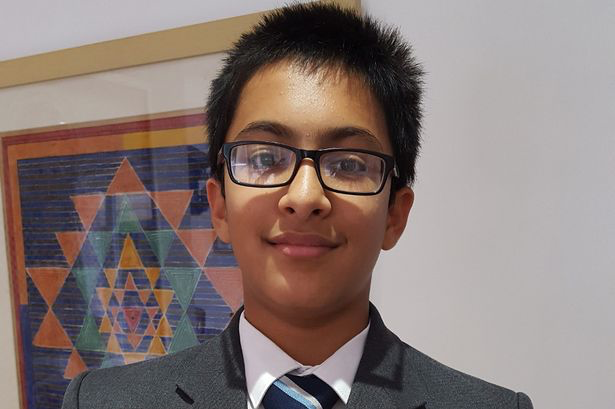
    LONDON (TIP): A 13-year-old Indian-origin boy in the UK has got the highest possible score of 162 on a Mensa IQ test, placing him in the top one per cent people in the world who achieved this feat.

    Dhruv Garg, from Wokingham in south east England, was looking for something to occupy his time during the summer holidays and decided to try out for the intellectual society.

    The schoolboy achieved 162 in his entry IQ test – the maximum possible, which places him in the top one per cent of people in the world, the Daily Mirror reported.

    He also scored in the highest mark in the second test, known as the Culture Fair scale, getting 152.

    This score qualifies him amongst the rare one per cent of the population who take the Mensa exam worldwide in both the exams.

    Garg, who goes to Reading School, a grammar in Berkshire, has also been developing an app to combat social isolation by helping lonely people meet up.

    The app connects people who live in the same area who want to meet new people.

    “I was just so surprised to get the result. I was looking for something to do over the summer holidays and so I thought I’d try taking the test, but did not expect to do so well,” he said.

    “I’m really looking forward to the new school year, I really like school and want to use the app to help people,” Garg said.

    His mother, Divya, said the whole family is proud of their young prodigy, whose favorite subjects are maths and chemistry.

    “When he got the maximum score, they told me it’s the highest mark possible but I didn’t realize what it meant. It was only when I spoke to Mensa that they told me I said, ‘oh my God’ this is special, this is really something worth celebrating,” she said.

    A keen cricketer and table tennis player, Garg can also complete a Rubik’s Cube in under 100 seconds.

    “In year, one was when we started to realize he was gifted as his teachers said he was very sharp and had to have special lessons, so all along he was always special. He is an avid reader and reads a lot of journals,” Garg’s mother said.

    Mensa is believed to be the largest and oldest high IQ society in the world. Membership is open to anyone who can demonstrate an IQ in the top two per cent of the population, measured by a recognized or approved IQ testing process.


  • Indian-American high school athletes among 20 Foot Locker scholarship recipients

    Indian-American high school athletes among 20 Foot Locker scholarship recipients

    NEW YORK (TIP): TWO Indian- American high school athletes Malika Jain and Puneet Kaur were among 20 athletes nationwide named as 2016-2017 ‘Foot Locker Scholar Athletes’. Both have earned a USD 20,000 scholarship each.

    Malika Jain

    The 20 winners were selected from among 37,000 applicants. Jain, also the captain of her school’s varsity soccer, golf and tennis teams, placed third this year in her tennis league and went to the tennis division finals. Her leadership skills are apparent in her athletics. She recruited girls to join the tennis team and supported them throughout the season and in her community involvement as student body president, president of the Key Club and a strategy member of the Robotics Club at her high school, Foot Locker said in her bio.

    Jain has received several awards, including the Girl Scouts Gold Award, the President’s Award for Education and Excellence, and the Duke of Edinburgh International Gold Award for Leadership and Service. She held a 4.0 GPA in high school and will attend the University of Southern California in the fall.

    Puneet Kaur

    Kaur is a four-year varsity basketball and track athlete. She was the first in her family to be born in the US, and will be the second in her family to go to college, Foot Locker said.

    After multiple students at her high school committed suicide, Kaur sought to create some type of support for them, starting a school-wide walk to raise awareness about mental health issues, which was featured on many national media platforms, it added. She is also the president and creator of the We’re All Human Club, which helps kids dealing with suicide and aims to decrease the stigma around mental health.

    Kaur earned a 3.75 GPA in high school and plans to attend George Mason University in the fall.

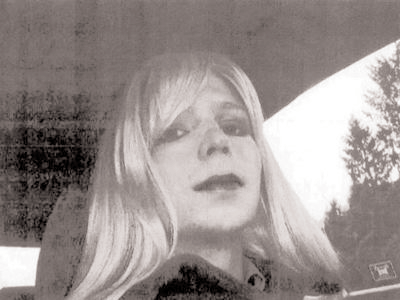
  • Newly freed Chelsea Manning: ‘I’m figuring things out’

    Newly freed Chelsea Manning: ‘I’m figuring things out’

    KANSAS CITY (TIP): Pvt Chelsea Manning, the soldier who was sentenced to 35 years in a military prison for giving classified materials to WikiLeaks, said today that she’s excited about what lies ahead, just hours after she walked free after serving seven years behind bars.

    “I’m figuring things out right now – which is exciting, awkward, fun, and all new for me,” Manning said in an emailed statement. She tweeted a picture of her feet in tennis shoes – with the caption “First steps of freedom!!” – after walking away from the Fort Leavenworth lockup in Kansas.

    Manning’s immediate plans, including living arrangements, remained unclear. Manning tweeted after then-President Barack Obama granted her clemency in January that she planned to move to Maryland, where she has an aunt. Manning originally comes from Crescent, Oklahoma.

    “After another anxious four months of waiting, the day has finally arrived,” Manning said in Wednesday’s statement. “I am looking forward to so much! Whatever is ahead of me is far more important than the past.” Manning, who is transgender and was known as Bradley Manning before she transitioned in prison, was convicted in 2013 of 20 counts, including six Espionage Act violations, theft and computer fraud. She was acquitted of the most serious charge of aiding the enemy.

    Manning, a former intelligence analyst in Iraq, has acknowledged leaking the materials, which included battlefield video. She said she wanted to expose what she considered to be the US military’s disregard of the effects of war on civilians and that she released information that she didn’t believe would harm the US.

    Critics said the leaks laid bare some of the nation’s most-sensitive secrets and endangered information sources, prompting the State Department to help some of those people move to protect their safety. Several ambassadors were recalled, expelled or reassigned because of embarrassing disclosures.

    Manning, who was arrested in 2010, filed a transgender rights lawsuit in prison and attempted suicide twice last year, according to her lawyers. “We can all finally truly celebrate the strength and heroism she has shown in surviving and sharing her truth and life with all of us,” Chase Strangio, Manning’s attorney with the American Civil Liberties Union, said in today’s statement that included Manning’s post-release comments. (AP)

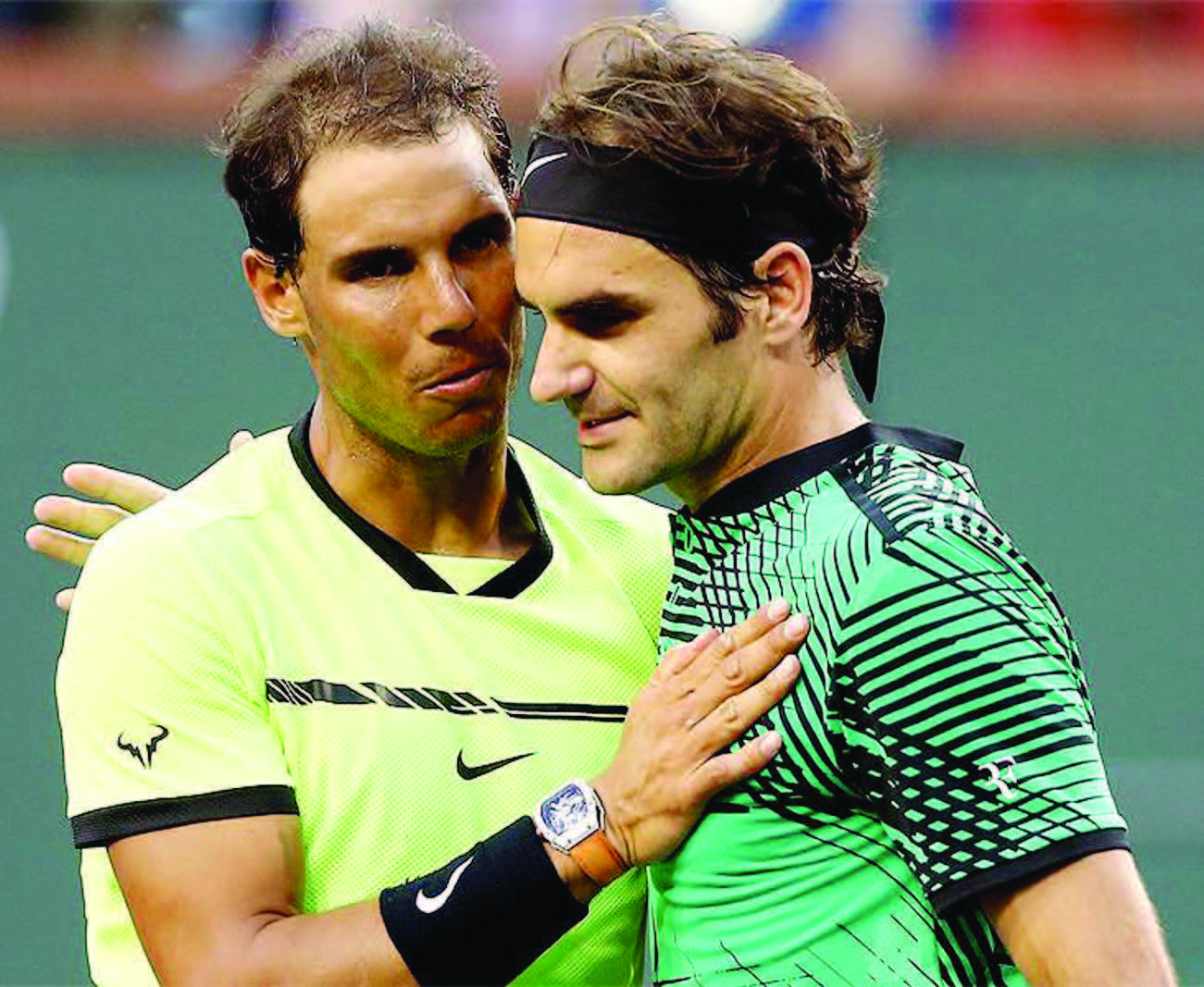
  • Federer beats Nadal to reach Indian Wells quarter-finals

    Federer beats Nadal to reach Indian Wells quarter-finals

    INDIAN WELLS (TIP): Roger Federer reprised his Australian Open triumph over Rafael Nadal on March 15, sweeping past the Spaniard 6-2, 6-3 to reach the quarter-finals of the ATP Indian Wells Masters.

    In the 36th career meeting between the two superstars, Federer needed just 68 minutes to advance to a meeting with Australian Nick Kyrgios, who toppled five-time Indian Wells champion Novak Djokovic 6-4, 7-6 (7/3).

    The victory marked the first time in a rivalry stretching back to 2004 that Federer has strung together three straight wins over Nadal. He beat him in the final at Basel in 2015 and in an epic Australian Open final in January in their two most recent previous contests.

    Federer, who added another chapter to a storied rivalry with Nadal with an epic Australian Open triumph in January, dismantled the Spaniard 6-2, 6-3 to advance.

    It was the first time since their first meeting in 2004 that Federer and Nadal had met before the quarter-finals of a tournament, and oddity of the rankings that had them and Djokovic –with 44 Grand Slam titles among the three of them — all grouped in the same quarter of the draw.

    Federer broke Nadal to open the match, and seized a second break and 4-1 with a blistering backhand service return winner.

    A forehand volley sealed the set, and another forehand winner put Federer up a break at 2-1 in the second.

    Federer was firmly in control as Nadal served to save the match at 5-3. An unlucky net cord bounce, when Nadal’s forehand clipped the net and rolled back, gave Federer a double match point, and with a backhand return down the line the 36th meeting between the two was his.

    The win marks the first time in the rivalry that Federer has strung together three wins over Nadal.

    He beat him in the final at Basel in 2015 and in an epic Australian Open final in January in their two most recent previous contests.

    “In Australia was a very close match,” Nadal said. “I had good chances to win. Today, not. Today he played better than me. I didn’t play my best match, and he played well. These kind of matches, when you’re not playing your match, it’s impossible to win.”

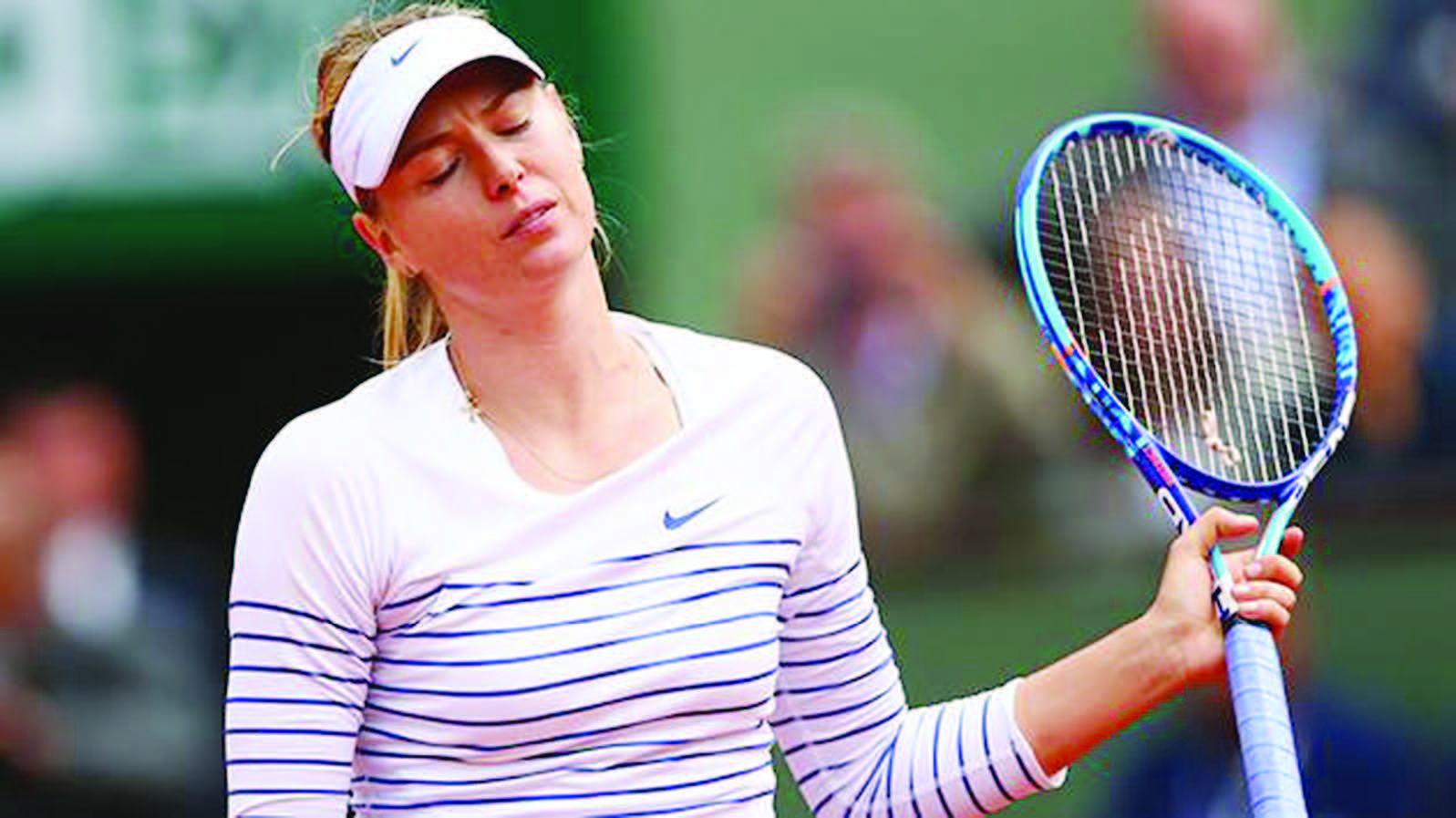
  • Players divided on Maria Sharapova wild cards

    Players divided on Maria Sharapova wild cards

    The wild card tournament invitations awaiting Maria Sharapova when she returns from a 15-month doping ban next month divided opinion among players at Indian Wells.

    “This is, all over, a strange situation,” Germany’s Angelique Kerber said of the Stuttgart WTA tournament’s decision to issue a wild card to Sharapova, who will play her first match since the 2016 Australian Open on April 26 — just hours after her ban for using meldonium ends.

    “I don’t know what to say about this because it’s a little bit strange for the other players that somebody can just walk on site Wednesday and play Wednesday,” added Kerber, who is set to return to number one in the world after Serena Williams’ withdrawal from the tournament in the California desert.

    “This is a German tournament,” said Kerber, the reigning Stuttgart champion who indicated that there were plenty of German players who could benefit from a wild card.

    Sharapova, without any world ranking to gain direct access to tournaments in the wake of her ban, has also been issued wild cards to play in Rome and Madrid.

    She was also to meet with the French Tennis Federation to plead her case for a wild card at Roland Garros, where she is a two-time champion, although federation officials have voiced reservations about issuing a wild card to someone convicted of a doping offense.

    France’s world number eight Jo-Wilfried Tsonga said he didn’t think five-time Grand Slam winner Sharapova should get a French Open wild card.

    “I would not do it,” he said. “It’s like if you give a sweet to a kid who did a bad thing, it’s going to do it again. It sends the wrong message.”

    Men’s number one Andy Murray hit out at the wild cards already issued Sharapova, telling The Times last week that he believed a player “should have to work your way back” from a drugs ban.”

    Asked about it again at Indian Wells, Murray acknowledged that the logistics of accommodating a star of Sharapova’s magnitude could be difficult for the lower-level tournaments she would need to play to rebuild her ranking.

    “The tournaments are well within their rights to give a wild card, there’s nothing saying they can’t,” he said.

    “There’s no rule in place, so the tournaments are going to do what they think is best for their event. But should you get a wild card into every event when you come back? I’m not sure about that. That’s something that maybe should be looked at.”

    Romanian Simona Halep thinks Sharapova’s past achievements justify the wild cards.

    “She was number one in the world and won Grand Slam titles,” Halep said. “But even without wild cards she could come back easily.

    “Her return is good for tennis. She is impatient, she wants to play and win.”

    But a tweet from the WTA, since taken down, indicating that Sharapova’s fellow players were all eagerly awaiting her return, drew a sharp response from French player Alize Cornet who tweeted: “@WTA excuse me ….??”

    Cornet’s tweet was also deleted — a sign perhaps of the divisiveness of the issue.

    “The question of wild cards is complicated, I’m glad I’m not in charge of their attribution,” said Russian veteran Svetlana Kuznetsova. (AP)

  • Overseas Indian sportsmen have done their homeland proud

    Overseas Indian sportsmen have done their homeland proud

    By Prabhjot Singh

    The year 1984 may have been a tumultuous year for the Punjabi community in general and Sikh community. It may not be easy for anyone to put behind the dastardly and tragic events that rocked not only Punjab but also the Punjabi community elsewhere. As the community was drowning in gloom, two overseas Punjabis  -Alexi Singh Grewal and Kulbir Singh Bhaura – provided the silver lining by telling the world how enterprising the community was. Not only they entered the history annals as first overseas Indians to win Olympic medals but they also set a new trend in motion that has been kept afloat by enterprising overseas Indian community ever since.

    At the overall overseas Indian community has done exceedingly well in the world of sports, including Olympic games, Commonwealth games and cricket.

    Their heroic deeds scripted a new chapter describing it as the launch of “Brand India”. Before 2016 ended, yet another overseas Indian – Rajeev Ram – kept the “Brand India” flame alive by winning an Olympic medal, a Silver in Rio Olympic games.

    Contribution by overseas Indian community cannot by undermined for it has won cockles of many a heart in the contemporary sports world. In December when a field hockey team from Canada went to play in the 2016 Junior World Cup Hockey Tournament in Lucknow, 11 of its 16 members were of Indian origin.

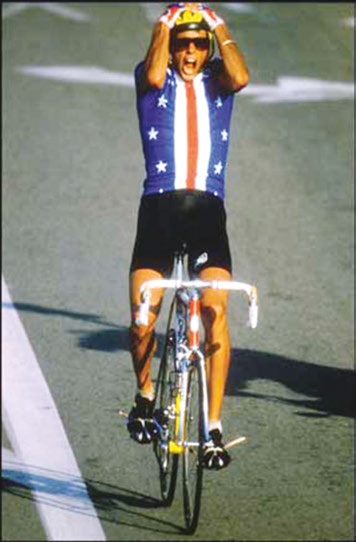
    Alexi Singh Grewal became the first American to win an Olympic gold medal in cycling, at the 1984 Games in Los Angeles. Photo: Todd Buchanan
    Alexi Singh Grewal became the first American to win an Olympic gold medal in cycling, at the 1984 Games in Los Angeles. Photo: Todd Buchanan

    These players -Brandon Pereira, Harbir Sidhu,Parmeet Gill, Rohan Chopra, Rajan Kahlon, Kabir Aujla, Balraj Panesar (captain), Ganga Singh, Gavin Bains, Arshjit Sidhu and Iqwwinder Gill – need to be complemented as they self-financed their participation in the prestigious Lucknow tournament.

    And the Australian team, too, had one player of Indian origin, Kiran Arunasalam. It is after a long time that any player of Indian origin is playing for Australia in hockey.

    At the overall overseas Indian community has done exceedingly well in the world of sports, including Olympic games, Commonwealth games and cricket.

    You name any sport in which the overseas Indian community has not won laurels for the countries of its present abode. Needless to say, that 17 countries, including Canada, the US, Australia, Malaysia, England, Kenya, Uganda and Hong Kong, have been represented by overseas Indians in Olympic games.

    Kulbir Bhaura, who represented Great Britain in field hockey, is the only overseas Indian to have two Olympic medals to his credit, a bronze in Los Angeles and a gold in Seoul.

    Then there is Shiv Jagday, a former Indian Universities colour holder; he had the distinction of working as National Coach of Field Hockey Canada. He also coached the US national team besides being on the panel of the select FIH coaches. His son Ronnie Jagday also played for Canada in Sydney Olympic games. One must not forget the contribution of Malkiat Singh Saund who was one of the best forwards of the 1972 Munich Olympic games. Malkiat represented Uganda. Now he is settled in England.

    Sutinder had the distinction of leading England in one match in the Mumbai World Cup Hockey Tournament in 1981-82. He played for England and Great Britain for a number of years.

    If Australia is a world power in field hockey, it is all because of efforts of Pearce brothers who immigrated to Australia from India and represented their new country of abode in Olympic games.

    Hardial Singh Kular, besides playing for Kenya, also rose to be the Vice-President of the International Hockey Federation (FIH). He was one of many Indian expatriates who represented Kenya in 60s and 70s of the last centenary.

    He stands tall with Alexi Grewal, the first overseas Indian, to win an individual Olympic gold medal. In the 1984 Olympic games, he won the road race event in cycling in style. His father, a Sikh, had migrated to the US.

    Interestingly, Alexi Grewal’s individual gold, though for the US, came 24 years before Abhinav Bindra won the country’s first ever-individual gold medal in Olympic games.

    The latest from the overseas Indian community to get on to the Olympic medallist list is tennis player Rajeev Ram who won a silver medal in mixed doubles in the 2016 Olympic games in Rio.

    While the overseas Indians have done the country and the overseas Indian community proud, the Indian government is yet to reciprocate. Though it started organizing #PravasiBharatiyaDivas (PBD) where outstanding members of the overseas Indian community are felicitated, sportsmen and women are yet to get their due.

    Besides Alexi Singh Grewal, Kulbir Singh Bhaura and Rajeev Ram, there are a large number of other sportsmen and women, who have done the overseas community and India proud.

    Rajeev Ram has to his credit a silver medal. In partnership with Venus Williams,

    Rajeev Ram, finished runners-up in mixed doubles event in Tennis. Thirty-two- year-old Rajeev is first generation American. His parents moved to States in 1981 and Rajeev was born in 1984.

    Rajeev won his first major Tennis title in Chennai in 2009. Rated as one of the top doubles players in tennis, silver in Olympics has been his highest achievement. In the semi-finals, Rajeev and Venus had defeated Sania Mirza and Rohan Bopanna.

    After Rajeev Ram, another athlete of Indian origin doing well for a country other than India is shutter Rajiv Ousef. Born in Indians dominated Hounslow area in England, Rajiv has already qualified for quarterfinals of men’s singles in Rio. On his way to last eight Rajiv have beaten Tommy Sugiarto of Indonesia, Sasaki Sho of Japan and Koukel Petr of Czech. At 30, this has been perhaps best ever performance by him in a major sporting event. He had won a silver medal in the 2010 Commonwealth games in New Delhi.

    Cricket is a game that every person of Indian origin follows. Monty Panesar scripted a new chapter when he became the first turban-wearing player to represent a country other than India in Test cricket. Monty played for England. Ravi Bopara followed him.

    Since I have been following the overseas community closely, I wrote the following piece in The Tribune in November 2010 talking about emerging  “Icons” of the Indian community. My piece was re-read by many as the President-elect, Donald Trump, named Nikki Haley, as the US Ambassador to the United Nations,

    My piece read:

    “What do Nikki Haley Randhawa, Bobby Jindal and Arjan Bhullar have in common?They all belong to the second-generation Punjabi Diaspora of North America.

    While Randhawa and Jindal share the rare distinction of being the first Indian Americans to be Governors in the US, Bhullar has become the first Indo-Canadian to win a gold medal for his adopted homeland in the just- concluded Commonwealth Games in New Delhi.

    They all are now icons of successful second generation young overseas Punjabis — 20-40 age group– who have brought laurels to the motherland of their parents after scripting extraordinary success stories in their chosen fields.

    Interestingly, both Randhawa and Jindal are almost of the same age group — both succeeding in their race for gubernatorial posts even before they turned 40.

    Though Piyush Subhas Chandra Amrit Bobby Jindal created history in 2008 by getting elected as Governor of Louisiana at the age of 37, Nimrata Nikki Haley Randhawa, will be almost 39 when she assumes charge as Governor of Carolina in the New Year.

    Similarities are not only limited to the age group but also extend to other areas. Parents of both Jindal and Randhawa migrated to the US in the early 70s. And fathers of both Jindal and Randhawa were university teachers before they decided to leave India for good.

    While the Jindals belonged to the Malerkotla area in Punjab, Rancheria’s family moved from Amritsar to the United States.

    Mothers of both Jindal and Randhawa have the same first name — Raj. If similarities can be taken a step further, “A” is the initial of their fathers’ first name, Amar Jindal and Ajit Randhawa. Both belonged to the middle-class families before getting lured by the greener pastures of the US.

    Interestingly, Jindal married Supriya Jolly, also an Indian-American, Randhawa married an American, Michael Haley.

    Like their parents, both Bobby and Nikki charted out their own ways to success and glory with their sheer hard work, determination and commitment.

    Bhullar has been on a different turf. Born in a family of wrestlers — his father Avtar Singh Bhullar was a known wrestler of his times who contested against Asian games champion Kartar Singh – in Vancouver in British Columbia, Arjan had to choose between soccer and wrestling in his school days. Now while pursuing higher studies at Simon Fraser University in British Columbia, he is focused on wrestling and wants to make it to the podium at the 2012 Olympic games in London.

    Never before any Indo-Canadian had won a gold medal for his or her adopted homeland in any international meet of the level of Commonwealth Games, Pan American games or the Olympic Games.”

    Now coming to many other sports personalities who also deserve appreciation and honour for flying the Indian flag flying overseas.

    Hockey Olympian Avtar Singh Sohal played for Kenya in 1960, 1964, 1968 and 1972 Olympics, captaining Kenya in the last three editions of the Olympic games. He went to 1984 Olympics as Chief Coach of Kenya Besides Avtar also played for Kenya in the inaugural 1971 World Cup as Captain. In the second World Cup (1973) in Amsterdam, he went as Assistant Coach. Avtar is also the FIH Coach and also a member of the FIH Development and Coaching Committee. No one in the history of Olympic hockey has captained a national team for three consecutive times. In India, Pargat Singh has the distinction of leading India in two Olympic games.

    Avtar Singh was in Rio Olympic games on his own to watch the hockey competition and other events.

    Naaz Shah belongs to select band of Indian women hockey players who played for India in the Olympic games. When India was represented in women’s hockey competition in the Moscow Olympics, she was a member of the team. She was also a member of the gold medal winning Indian team in the 1982 Asian Games. Now settled in Hamilton, NZ she continues to be passionate about hockey.

    Four of her trainees represented New Zealand in the New Delhi Junior World Cup Hockey Tournament. In the 2016 Junior World Cup Hockey Tournament in Lucknow, another batch of her trainees also represented New Zealand. Naaz also went to Rio as a Volunteer where she had the distinction of becoming flag-bearer of Indian hockey team in one of its pool matches. Now she has been a coaching youngster, both boys and girls in Hamilton where she works as a teacher. While she won laurels for India, her contribution to hockey and sports have remained unrecognised.

    Let us talk about the World’s richest league, NBA. It is in this league that members of the overseas Indian community have made dents.

    Gursimran “Sim” Bhullar, Canada born Punjabi boy, has the distinction of becoming the first ever player of Indian origin to play in NBA. Though Satnam Singh Bhamara and Palpreet Singh, both Punjab born basketball players have been subsequently drafted into NBA, they too have brought good name to Indian sports worldwide.

  • Paes-Bhupathi rollercoaster part II?

    Paes-Bhupathi rollercoaster part II?

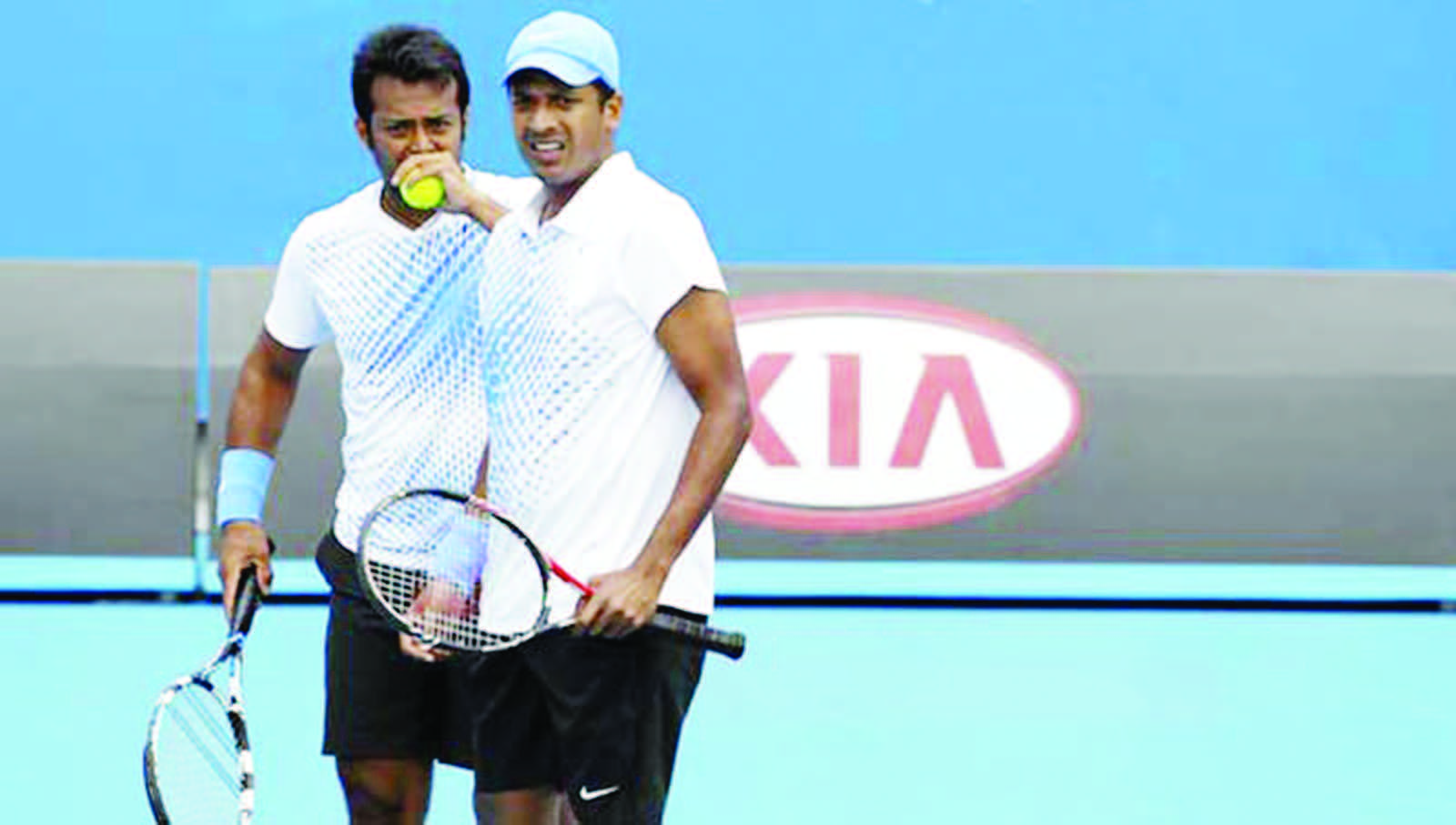
    PUNE (TIP): The scintillating partnership that took Indian tennis to dizzying heights is set to return in a new avatar as Mahesh Bhupathi was on Thursday appointed the non-playing captain of the Davis Cup team for 2017-18.

    Bhupathi, the former World No. 1 doubles star who won three men’s doubles Grand Slam titles with Leander Paes and one more with Belarussian Max Mirnyi, will take over the reins of the Indian team from April and will be at the helm till December 2018.

    Incumbent Anand Amritraj, whose term comes to an end December 31, has been given an extension till the AsiaOceania Group 1 tie against New Zealand to be held here from February 3 to 5. Zeeshan Ali will continue as coach of the team that comprises Yuki Bhambri, Ramkumar Ramanathan and Saketh Myneni besides Paes.

    Myneni and Paes are expected to play doubles in the Pune tie. How Bhupathi and Paes get along will be keenly watched. The two have had a ‘blow-hot blow-cold’ partnership with the most recent memory being their bickering over who should partner Rohan Bopanna at the London Olympics in 2012.

    But their bonding at its best has given some memorable moments to Indian sport. And despite some vitriolic verbal exchanges over the years, the two have mutual respect for each other. It is this undying chemistry between the two that the All India Tennis Association seems to be banking on as it plans to build a team for the future.

    “Both Leander and Mahesh have given a lot to Indian tennis. Both get along well with the younger players and we felt that Mahesh should be given a chance,” AITA chief executive Hironmoy Chatterjee said on Thursday. “Besides, he has immense experience in Davis Cup, which plays a big part,” he added.

    Bopanna dropped

    The national selection committee, which met in New Delhi on Thursday, decided to leave out Bopanna for the February tie. The reasons for Bopanna’s omission were both tennis and non-tennis.

    Besides the return of Bhambri, the team’s performance against New Zealand when they clashed in Christchurch last year as well as Bopanna’s stormy relationship with Paes were considered while finalising the team. SP Misra, the chairman of selectors, also said that picking three singles players would be the norm going forward.

    “In the last match against New Zealand, the combination of Rohan and Saketh lost the doubles rubber. Whereas, Leander and Saketh played an incredible match against Spain (in the World Group playoff this September),” Misra said. “Both Bopanna and Saketh are left-court players. And when you don’t gel well… not to mention that we will be sacrificing a singles player in the process. The AITA executive committee has made it a norm that in future we should be fielding three singles and one doubles player,” Misra added.

    So, despite Bopanna being ranked higher at 29 as against Paes’ 59, the question arose as to who will partner the 43-year-old veteran. Though Myneni and Ramkumar are India No. 1and 2 players, Bhambri, who was ranked as high 88 late last year, could get the nod for the opening singles. “It will be the captain’s call on that day,” Misra said.

  • Cilic recovers to give Croatia Davis Cup edge

    Cilic recovers to give Croatia Davis Cup edge

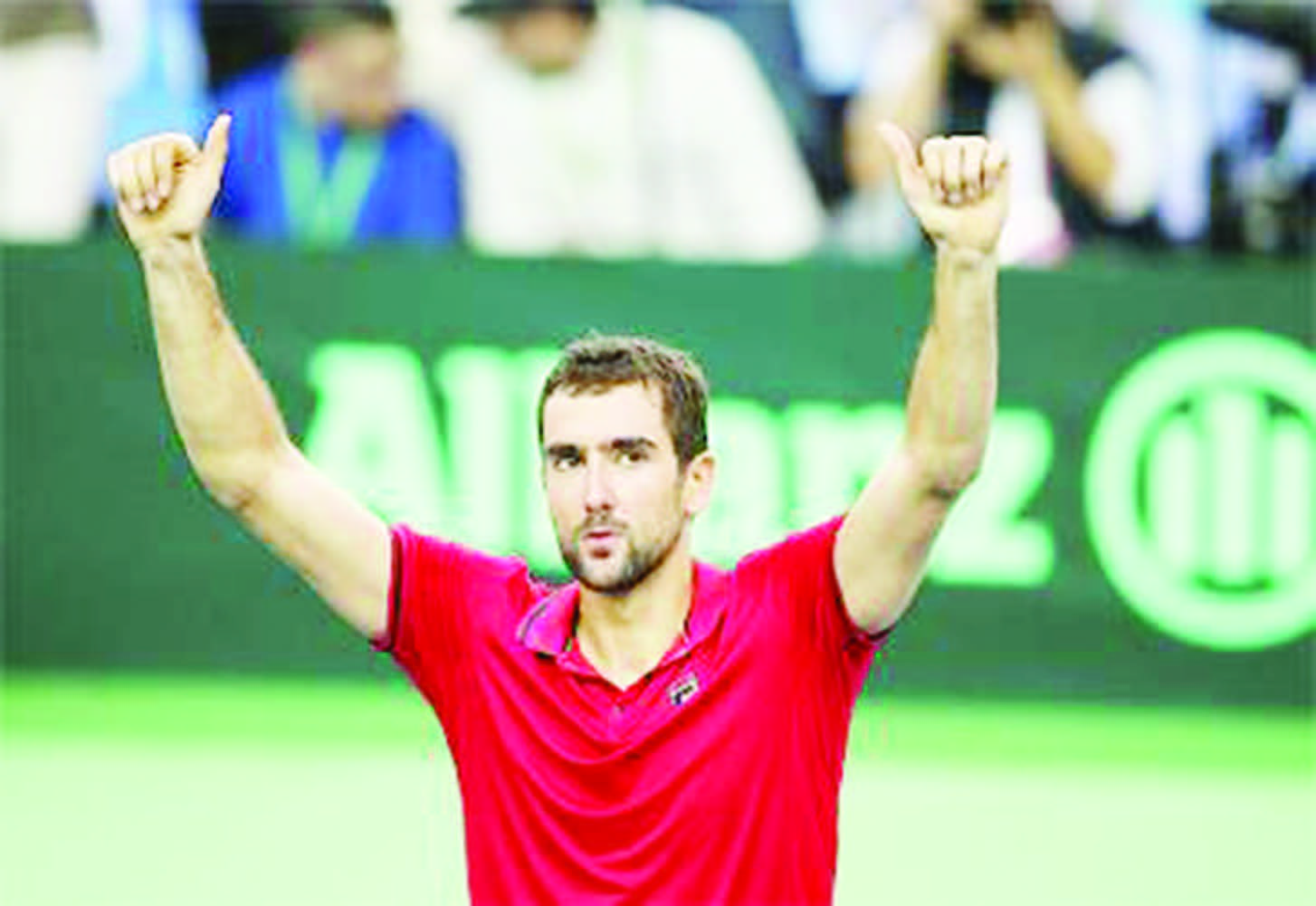
    ZAGREB (TIP): Croatia’s Marin Cilic battled back from a mid-match collapse to beat Federico Delbonis of Argentina 6-3, 7-5, 3-6, 1-6, 6-2 in the opening rubber of the Davis Cup final in Zagreb on Nov 26.

    Former US Open champion Cilic appeared to be cruising towards a routine victory at the Zagreb Arena only to lose his way after storming into a two-set lead over the world number 41.

    Sixth-ranked Cilic, who made his second appearance at the ATP Tour Finals last week, secured the first two sets with a single break in each, but Delbonis claimed the third before racing through the fourth to force a decider.

    Backed by an impassioned crowd Cilic regained his nerve in the final set, breaking his opponent in the first game and building on that momentum to eventually close out victory in three hours and 30 minutes.

    Later, 2009 US Open champion and Olympic silver medallist Juan Martin del Potro takes on 37-year-old Ivo Karlovic in the second singles match.

    Del Potro, 28, is a veteran of two losing finals — both against Spain in 2008 and 2011 — while Karlovic is the oldest player to feature in a Davis Cup singles match since 43-year-old Australian NormanBrookes in 1920.

    Four-time runners-up Argentina are chasing a first title, while Croatia are looking to emulate their 2005 triumph over Slovakia.

    (AFP)

  • Djokovic says restructuring Davis Cup is ‘no brainer’

    Djokovic says restructuring Davis Cup is ‘no brainer’

    LONDON (TIP): Novak Djokovic says changing the format of the Davis Cup is a “no brainer” and has repeated his plea to the International Tennis Federation to make structural changes to the team event.

    “This format is not working for the top players… because it’s just completely at the wrong time in the schedule,” world number two Djokovic told reporters at the ATP World Tour Finals on Thursday. “If you go back … five, six years, you see the amount of the top players that played at the later stages of the Davis Cup (has gone down), you see that it lost value.”

    Currently the Davis Cup is run throughout the year with the World Group first round immediately after the Australian Open, the quarter-finals on the back of Wimbledon and the semi-finals hot on the heels of the US Open.

    Even the final is the week after the Tour Finals, posing a dilemma for a player involved in both.

    Djokovic led Serbia to the title in 2010 but has played two ties in the last two years, the same as Spain’s Rafael Nadal.

    Roger Federer, nursing a back injury, pulled out of playing in the title match of the 2014 Tour Finals just a week before helping Switzerland to win the team competition in 2014. However, his Davis Cup participation before and after 2014 has been sporadic. Britain’s Andy Murray is the exception amongst the big guns, shouldering an enormous burden for his country in recent years, including winning the trophy almost single handedly last year in Belgium.

    Djokovic said the format should be streamlined.

    “Of course, they have to change,” he said. “The only way to work, is once a year, (dedicate) one or two weeks, have a round-robin format, four, five, six groups, have teams play in different locations, then come together in one location and play a knockout stage, quarter-finals, semi-finals, final four, whatever. It’s a no-brainer. “I think they should cut it down to two days, best-of-three. Have two singles and one doubles, those kind of things.” ITF president David Haggerty has voiced his support for a change to the organisation’s blue riband team event, pitching the idea of a “final-four” showdown at a neutral venue.

  • Djokovic congratulates Murray for becoming World No. 1

    Djokovic congratulates Murray for becoming World No. 1

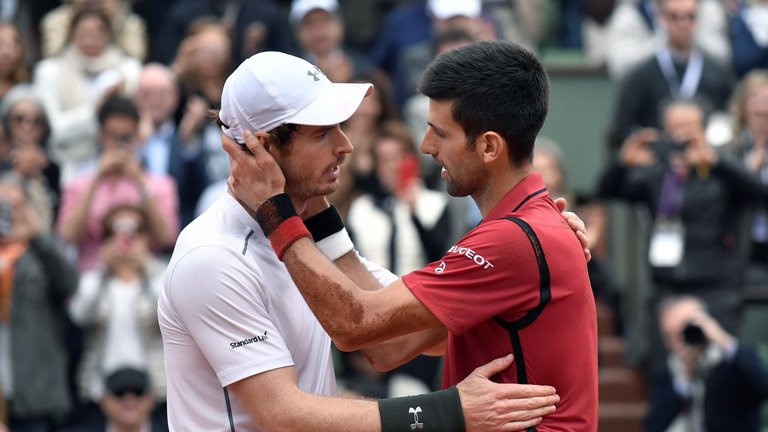
    LONDON: Serbian Novak Djokovic has congratulated his successor Andy Murray after the Scotsman dethroned him as the World No.1 men’s tennis player.

    Djokovic was removed from the No.1 spot for the first time in 122 weeks.

    “Congratulations Andy Murray! Very well deserved and hard fought milestone,” Djokovic wrote on his Facebook page on Monday.

    Murray claimed the top spot last Sunday (6 November) by winning his eighth title of the year at the Paris Masters.

    His elevation ensured he will be the top seed in the season-ending World Tour Finals in London.

    Djokovic began the year strongly with wins at the Australian Open and the French Open but has suffered an alarming dip in form recently.

    It allowed Murray to take advantage of his form loss and claim the summit spot in the rankings.

    Djokovic praised Murray for his relentless pursuit but said he is looking forward to the November 13 starting London tournament to regain his form.

    “Your dedication and passion has paid off, and I am really happy to be in the same era with you! As to all my fans, thank you for being there for me. I am working hard and will see you all in London! I am always game when it comes to good challenges and final 8 is exactly that. See you in a few days,” he wrote. (IANS)

  • Sharapova to return as UN goodwill ambassador in April

    Sharapova to return as UN goodwill ambassador in April

    UNITED NATIONS (United States) (TIP): Maria Sharapova will once again be a UN goodwill ambassador when her doping ban expires in April and she returns to international tennis competition, a UN statement said on Nov 10.

    The United Nations had suspended Sharapova’s role as goodwill ambassador in March after she failed a drug test, putting a hold on a nine-year partnership with the UN Development Programme.

    “UNDP was glad to learn that Maria Sharapova can return to the sport she loves sooner than expected and we will lift the suspension of her role as our goodwill ambassador once the reduced ban expires in April 2017,” said a UNDP spokesperson.

    “We understand that Ms. Sharapova will be focused on resuming her tennis career and we look forward to discussing her role and engagement with UNDP at an appropriate date.”

    Last month, the Russian star’s 24-month ban for testing positive for meldonium was cut to 15 months by the Lausanne-based Court of Arbitration for Sport.

    Sharapova, 29, had admitted using meldonium for 10 years to help treat illnesses, a heart issue and a magnesium deficiency.

    As a goodwill ambassador, Sharapova has been active in helping recovery efforts after the 1986 Chernobyl disaster.

    The tennis sensation has made visits to Belarus and donated $100,000 to support youth projects in rural areas that suffer from the after-affects of the Chernobyl nuclear accident.

    Sharapova’s family fled the city of Gomel in Belarus in 1987 after the Chernobyl disaster, moving to Siberia where the tennis star was born.

    The family lived in Nyagan, Siberia for two years and then moved to Sochi on the Black Sea where Sharapova took her first tennis lessons. (AP)

  • ITF hits back at criticism over their handling of Maria Sharapova issue

    ITF hits back at criticism over their handling of Maria Sharapova issue

    LONDON (TIP): The International Tennis Federation (ITF) hit back on Oct 6  at criticism over its handling of Maria Sharapova’s drugs ban for meldonium.

    The administrator of the Tennis Anti-Doping Programme denied it had sought a four-year ban for the former world number one and, in a statement, rejected suggestions by the Russian that its independent tribunal was “not neutral”.

    The ITF also emphasised it had not known, prior to this year when the drug was put on the banned list, that meldonium was in common use by eastern European athletes.

    Five-times grand slam winner Sharapova was cleared by the Court of Arbitration for Sport to return to action in April after her two-year suspension was reduced to 15 months on Tuesday.

    The 29-year-old said then that other sports federations had been more effective at communicating with athletes and hoped the ITF would take note.

    Her lawyer John Haggerty described the ITF’s procedure for relaying rule changes as a “night and day difference” to the “vivid and direct warnings” from others.

    “The ITF did not try to ban Ms. Sharapova for four years, as has been suggested,” the tennis governing body said. “The ITF stated clearly that it was the responsibility of the Independent Tribunal — and subsequently the CAS Panel — to determine what the appropriate sanction should be.

    “Ms. Sharapova has stated that the Independent Tribunal was ‘not neutral’,” it added.

    “Ms. Sharapova’s legal team was given the opportunity to object to the appointment of any member of that Tribunal in advance of the hearing, and they agreed in writing that they had no such objection.”

    The ITF believed it had taken appropriate steps to publicise changes to the prohibited list and it was “not true” to say that it was aware of widespread use of meldonium in Eastern Europe and should have given specific notice.

    “In fact, it was accepted by Ms. Sharapova in the hearing before CAS that the ITF did not know before 2016 about the extent to which meldonium was used by athletes from any region, or that Ms. Sharapova herself was using meldonium,” it said.

    The ITF pointed out that the WADA monitoring programme is conducted anonymously and WADA

    “does not inform any anti-doping organisation about the prevalence of such use until it publishes the results of the monitoring programme.”

    It said that was May 2016 for the 2015 monitoring programme.

  • Serena Williams crashes out of US Open, loses No. 1 ranking

    Serena Williams crashes out of US Open, loses No. 1 ranking

    NEW YORK (TIP): Serena Williams crashed out of the US Open, her semi-final defeat to Karolina Pliskova costing her a shot at a 23rd Grand Slam title and a record 187th straight week at number one. Pliskova, the 10th-seeded Czech playing in her first Grand Slam semi-final, triumphed 6-2, 7-6 (7/5) and will face Angelique Kerber, who will supplant the American atop the summit when the new world rankings are released on Sept 5. “I don’t believe it,” said Pliskova, who had never made it past the third round of a Grand Slam in 17 prior attempts.

    “I knew I had the chance to beat anyone if I played my game. I am excited to be in the final and to beat Serena as she is such a great champion.

    “Even when she was down a set and break she was still fighting. I had to fight hard to win.”

    Williams said she had been hampered by a sore left knee since earlier in the tournament. Although it was a distraction, she said Pliskova earned her victory.

    “Karolina played great today. I think if she had played any less then maybe I would have had a chance,” said Williams, who with one more Grand Slam title will move out of a tie with Steffi Graf for most in the Open Era.

    “So I think I wasn’t at 100 percent, but I also think she played well. She deserved to win today.”

    Pliskova, who survived a match point en route to a fourth-round victory over Venus Williams, was nearly betrayed by her nerves as up 3-0 in the tiebreaker she produced three errors, including a double fault. Williams led 4-3 and 5-4 in the decider but couldn’t hang on, Pliskova taking it when Williams delivered her sixth double-fault of the match. While Williams’s serve has long been reckoned the most powerful weapon in women’s tennis, 11th-ranked Pliskova came into the contest boasting a tour-leading 439 aces. In a duel of power-hitters where protecting serve was crucial, Pliskova gained the upper hand with a break for 2-1 in the first set and Williams gave her a chance to serve it out with a shocking seventh game that started with a double-fault and continued with three errors to grant Pliskova a 5-2 lead.

  • US Open ~ Leander Paes, Rohan Bopanna crash out

    US Open ~ Leander Paes, Rohan Bopanna crash out

    NEW YORK – India’s Rohan Bopanna and his Canadian partner Gabriela Dabrowski went down fighting in the quarter-finals of the mixed doubles competition at the US Open tennis tournament here on Sept. 5.

    Bopanna and Dabrowski enjoyed a strong start before going down 6-1, 2-6, 8-10 to Robert Farah of Columbia and Germany’s Anna-Lena Groenefeld in 58 minutes.

    In the opening set, the first three games went with the serve until Bopanna and Dabrowski clinched a service break to take a 3-1 lead.

    They then held their serve before forcing consecutive service breaks to win the first set.

    Farah and Groenefeld staged a strong comeback in the second set, breaking their opponents in the fourth game to take the upper hand. The earned another service break in the eigth game to win the second set and draw level.

    In the tie-breaker, the Indo-Canadian combination started strongly, taking a 4-0 lead before Farah and Groenefeld won four consecutive points to draw level.

    Bopanna and Gabriela regained the lead at 7-5 but Farah and Groenefeld fought back, winning three points on the trot to take the lead.

    Although Bopanna and Dabrowski levelled the score once again, Farah and Groenefeld won back-to-back points to wrap up the issue.

    Two days earlier, veteran Leander Paes’ U.S. Open campaign came to an end as he was beaten in a second-round mixed doubles match at Flushing Meadows.

    Paes-Hingis were beaten 6-7 (1), 6-3, 11-13 by American seventh seeds Rajeev Ram and Coco Vandeweghe at Court 5 here Sept. 3.

    The match was closely fought. Paes-Hingis led 8-4 in the match deciding tie-breaker but then fell apart.

    The defeat ended Paes’ US Open campaign as he lost in the men’s doubles tournament with Andre Begemann on Sept. 2.

  • Abhinav Bindra to head NRAI review committee on Rio debacle

    Abhinav Bindra to head NRAI review committee on Rio debacle

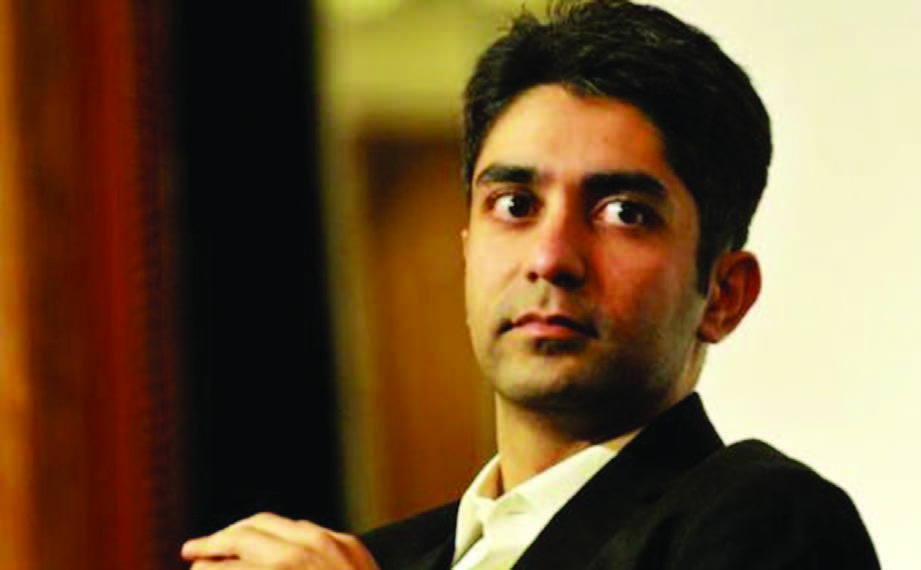
    NEW DELHI (TIP): India’s first and only individual Olympic gold-medallist Abhinav Bindra was on Thursday named chairman of a five-member review committee to probe the shooters’ Rio Games debacle but has recused himself from questioning them as he was himself a part of the team.

    The National Rifle Association of India (NRAI) said the mandate of the committee is to “examine and identify in a cold and ruthless manner” the causes behind shooting not securing any medals at the Rio Olympics.

    The committee is also mandated to recommend concrete steps that NRAI must immediately undertake to ensure that this is not repeated in future Olympics.

    Bindra, who retired from the sport after his fourth-place finish in Rio, has told NRAI that though he would not question any of his teammates, he would remain open to any assessment by the review committee.

    The NRAI order states that only in “matters specifically pertaining to the interview or findings/conclusions if any against or in favour of any Olympic team athlete that maybe examined by the committee, the Chairman of the committee shall be exempt participation in toto from such tasks by recusal, however upon his own request he too shall make himself available for interview by the remainder of the panel.”

    The order further states that, “for this specific issue only, the remaining members of the commission shall officiate jointly, where majority view shall prevail”.

    Other members of the committee include former tennis player Manisha Malhotra, who has also been appointed convenor of the committee, NRAI Secretary Rajiv Bhatia and two journalists.

    The order empowers the committee to go into a wide range of factors affecting the performance of the athletes. Also, as per the order, the NRAI Review Committee has been asked to submit its report to the President within a maximum period of four weeks.

    The committee is expected to hold its first meeting on the August 30 or 31 and it has also been allowed the use of all available technology to help conduct its work smoothly.

  • Kanak Jha, the youngest member of Team USA in Rio

    Kanak Jha, the youngest member of Team USA in Rio

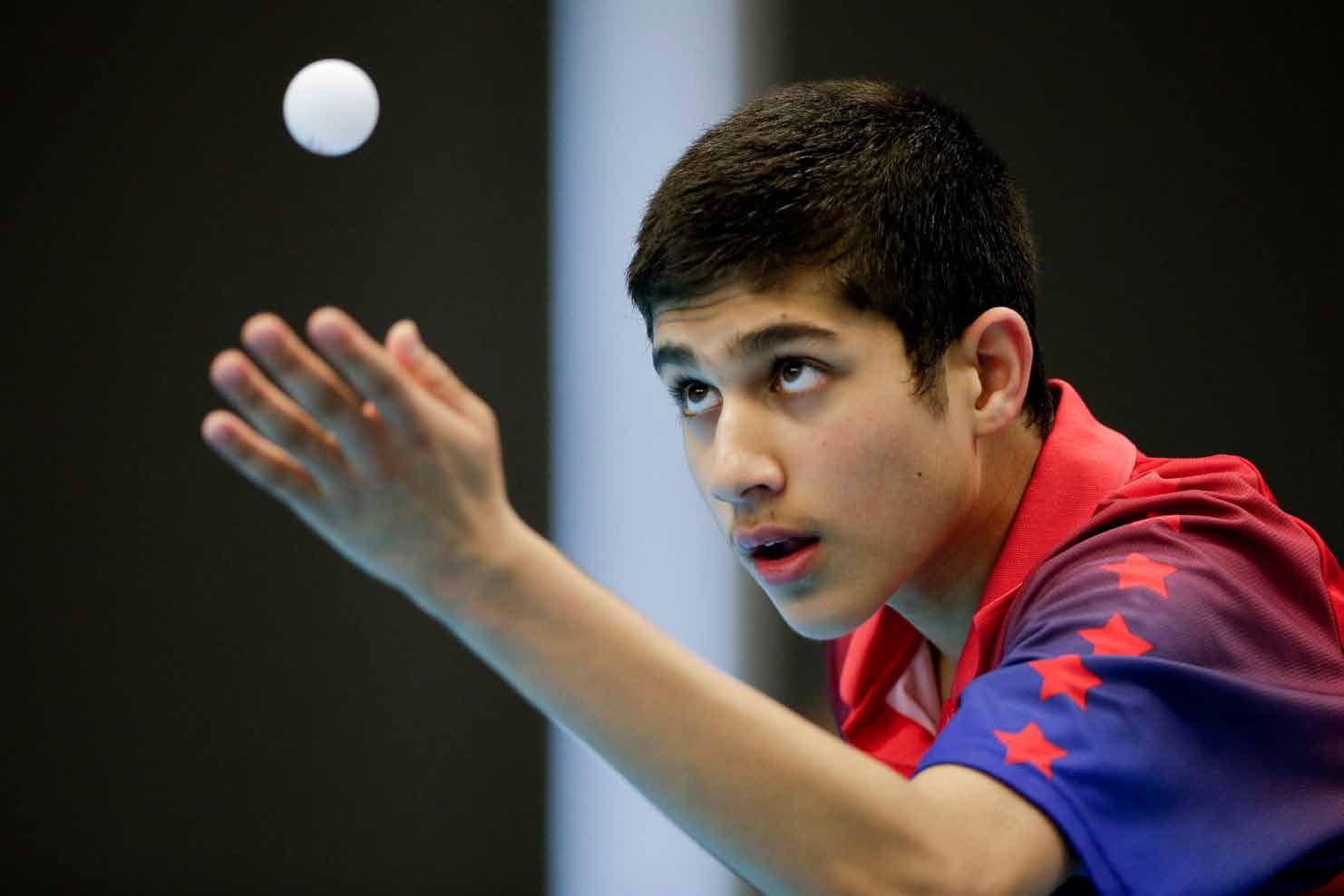
    For someone born on June 19, 2000, Kanak Jha has done well to fit in with the older crowds. This year, 16-year-old Kanak Jha picked up the paddle as the youngest member of the United States’ Olympic team in Rio. He is the first American born in the 2000s to qualify for the Olympics. He’s also the youngest person in the history of the sport of table tennis to qualify for the Olympics.

    His final win at the Olympic qualifier was the reason why U.S. table tennis gets to compete in the team event. While California-born, he trains in Sweden because the sport is more competitive and popular in Europe. He’s going into his junior year of high school, though he won’t be going into a “traditional secondary school environment,” NBC Olympics reports. He takes online classes.

    Kanak, who had begun playing table tennis at age 5, didn’t start taking the sport more seriously until he was 9 or 10, when he stopped calling it “ping-pong” and started calling it table tennis. Kanak competed in both singles, and team competitions at the Olympics.

    He believes age is just a number when it comes to his abilities. “I don’t think about it at all,” he tells NBC Olympics. “I’m just trying to prepare for the Olympics. In the end, it doesn’t really matter how old you are.”

    He’s one of the 16-year-olds going to the Olympics for Team USA this year, including Laurie Hernandez, a gymnast. His 19-year-old sister, Prachi, is also talented at table tennis — she’s also a national team member.

    “It’s definitely a very great experience,” Jha says. “I didn’t know the atmosphere would be as good as it was in this match.”

    He knows what a VHS is and grew up watching a few video tapes. Before Pokémon took off on people’s iPhones, he remembers collecting stacks of the trading cards. His iPod includes classics by Michael Jackson  and Queen. Jha is still a kid but he also holds the distinction of being the first U.S. Olympian born in 2000 to compete at the Summer Games. He competed in Thursday’s preliminary round of table tennis, losing 4–1 to 23-year-old Nima Alamian of Iran.

    The 16-year-old isn’t quite finished yet—he’ll compete in the team event on Aug. 12—but he’s here to enjoy his first Olympics. He did a good job of doing just that on Friday night at the Opening Ceremony, which included selfies with the U.S. men’s basketball team, Michael Phelps, Jordan Burroughs and several other athletes that he gets to call teammates. At this point, his phone is packed with photos of these famous encounters, as he also snapped away at Olympic team processing, taking photos with members of the track team and gold-medalist fencer Mariel Zagunis.

    The son to immigrant parents from India, Jha started playing at five years old and has never been a stranger to facing much older competition. When he was seven, he played someone 10 times his age but still came away with the victory over the 70-year-old, his father Arun recalls.

    “I didn’t really have too many expectations going into that semifinals match and it was kind of a dream that I played so well,” Jha says. “It gave me a lot of confidence and I started to think about the Olympics more.”

    In 2013, Jha had a very successful season, winning 27 of his 28 matches. That’s when he made his first trip out to Sweden to explore his options playing table tennis at an elite level. “We had all two years planned out with the Olympics as the final moment of the goal and decided to give it a shot,” Arun says. “For Kanak to go into very formalized training with league matches, he would have to stay in Europe. The realization of the Olympics was in 2013.”

    In table tennis, it’s common for American players to head over to Europe or Asia to train and dedicate most of their life to the game. So in 2015, at just 15 years old, Jha made the move to Hamlstad, Sweden, with his sister, Prachi. Table tennis remains Jha’s sole focus as he takes online classes and will enter his junior year of high school in the fall. When he’s not practicing, he’s your typical 16-year-old hanging out with friends, playing with his dog Shadow or watching Breaking Bad on Netflix—which he watched sometimes hours at a time.

    “I see these athletes and so many of them are gold medalists in their sport,” Jha told the media in late July. “It’s humbling to be around them. Many of them don’t know I’m 16.”

  • Nadal will be ready for Rio: Spanish Olympic chief

    Nadal will be ready for Rio: Spanish Olympic chief

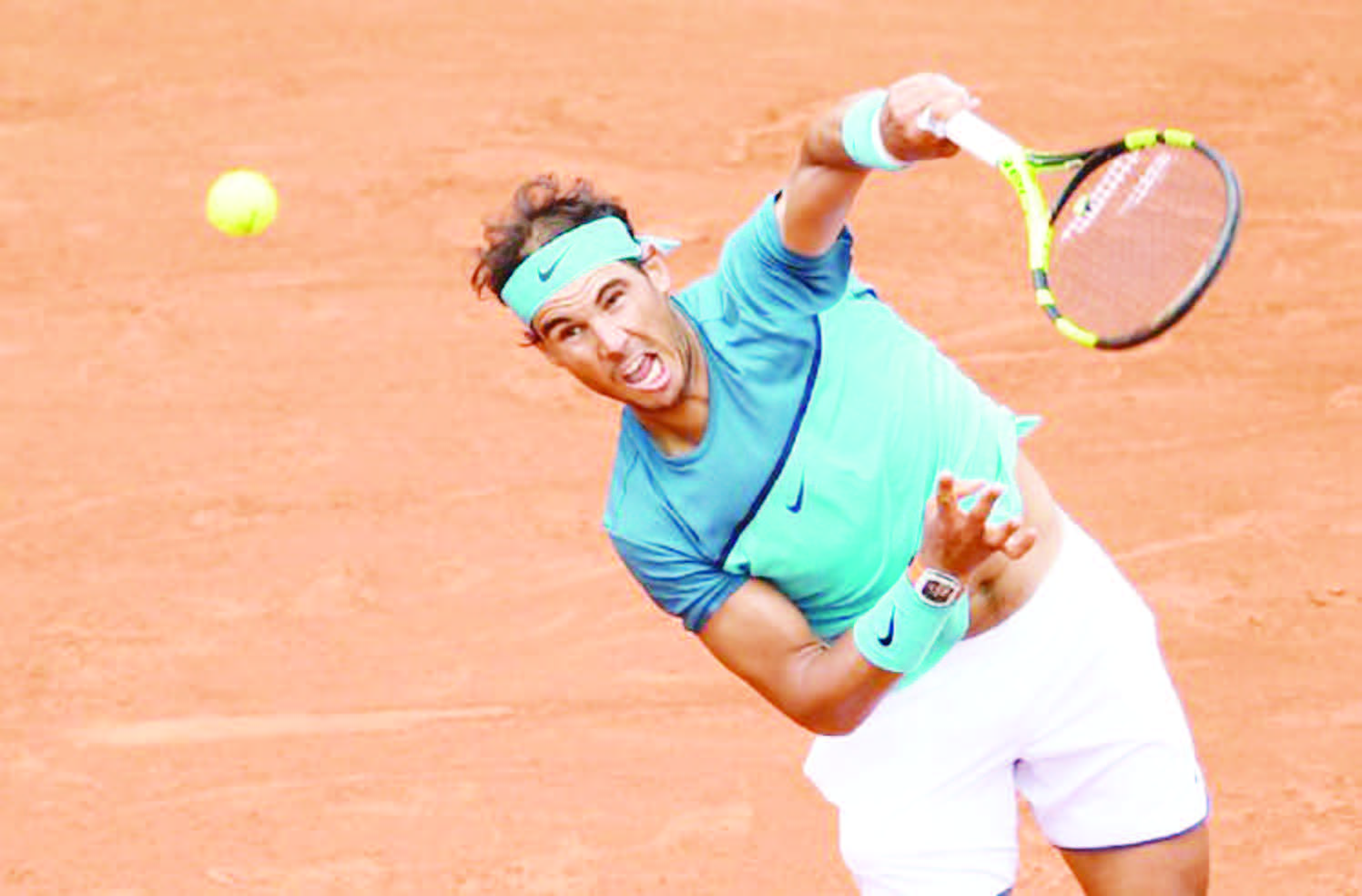
    MADRID (TIP): Rafael Nadal will be fit and ready for Rio, the head of the Spanish Olympic Committee insisted July 14, even though the 14-time Grand Slam title winner is still sweating on his place in the squad.

    Nadal was the Olympic champion at Beijing in 2008 but missed the London Games with a knee injury four years later.

    The 30-year-old is due to be Spain’s flag-bearer at the opening ceremony in Rio on August 5 but still needs the go-ahead from the International Tennis Federation after he failed to meet qualifying criteria.

    “Nadal’s commitment is total and he will go to Rio to participate,” said Alejandro Blanco, the president of the country’s Olympic committee (COE).

    “I have no doubts over his participation. He is training regularly in order to achieve what he wants — a medal.”

    Nadal is due to play singles and also the mixed doubles with French Open champion Garbine Muguruza at Rio.

    However, he is still recovering from a left wrist injury which caused an early withdrawal from the French Open as well as forcing him to sit out Wimbledon.

    (AFP)

  • Yoga for Health & Fitness

    Yoga for Health & Fitness

    Yoga and Stress Yoga minimizes the impact of stress on the individual. Yogic science believes that the regular practice of asanas and pranayama strengthens the nervous system and helps people face stressful situations positively.

    We have all experienced the way unrelieved tension results in both mental disorders and physical ill-health. This is not a modern phenomenon. In the centuries-old Yoga Sutras, the sage Patanjali attributed the causes of mental affliction to the ego, spiritual ignorance, desire, hatred of others, and attachment to life. He called these kleshas or “sorrows”.

    Origins of stress Through advances in science and technology, modern civilization has been able to conquer ignorance in many fields, but its pride in technological achievement is excessive and misplaced. It has triggered widespread feelings of competitiveness and envy. Financial tensions, emotional upheavals, environmental pollution and, above all, a sense of being overtaken by the speed of events have all increased the stress of daily life.

    All these factors strain the body, causing nervous tension, and adversely affecting the mind. This is when feelings of isolation and loneliness take over.

    To deal with this, people turn to artificial solutions to cope with the pressures of daily life. Substance abuse, eating disorders, and destructive relationships are some of the substitutes people grasp at in their desperate search for consolation. But while these measures may provide temporary distraction or oblivion, the root cause of unhappiness – stress -remains unresolved.

    Yoga is not a miracle cure that can free a person from all stress, but it can help to minimize it. The worries of modern life deplete our reserves of bioenergy, because we draw on our vital energy from the storehouse – the nerve cells. This can, ultimately, exhaust our energy reserves and lead to the collapse of mental and physical equilibrium. Yogic science believes that the nerves control the unconscious mind, and that when the nervous system is strong, a person faces stressful situations more positively. Asanas improve blood flow to all the cells of the body, revitalizing the nerve cells. This flow strengthens the nervous system and its capacity for enduring stress.

    Relieving stress  The diaphragm, according to yogic science, is the seat of the intelligence of the heart and the window to the soul. During stressful situations, however, when you inhale and exhale, the diaphragm becomes too taut to alter its shape. Yogic exercises address this problem by developing elasticity in the diaphragm, so that, when stretched, it can handle any amount of stress, whether intellectual, emotional, or physical.

    The practice of asanas and pranayama helps to integrate the body, breath, mind, and intellect. Slow, effortless exhalation during the practice of an asana brings serenity to the body cells, relaxes the facial muscles, and releases all tension from the organs of perception: the eyes, ears, nose, tongue, and skin.

    When this happens, the brain, which is in constant communication with the organs of action, becomes shunya, or void, and all thoughts are stilled. Then, invading fears and anxieties cannot penetrate the brain. When you develop this ability, you perform your daily activities with efficiency and economy. You do not dissipate your valuable bioenergy. You enter the state of true clarity of intellect. Your mind is free of stress and is filled with calm and tranquility.

    Yoga and Fitness Most types of exercise are competitive. Yoga, although non-competitive, is nevertheless challenging. The challenge is to one’s own willpower. It is a competition between one’s self and one’s body.

    Exercise usually involves quick and forceful body movements. It has repeated actions that often lead to exertion, tension, and fatigue. Yoga asanas, on the other hand, involve movements that bring stability to the body, the senses, the mind, the intellect, the consciousness, and finally, to the conscience. The very essence of an asana is steady movement, a process that does not simply end, but finds fulfilment in tranquility.

    Most diseases are caused by the fluctuations in the brain and in the behavioral pattern of the body. In yogic practice, the brain is quietened, the senses are stilled, and perceptions are altered, all generating a calm feeling of detachment. With practice, the student of yoga learns to treat the brain as an object and the body as a subject. Energy is diffused from the brain to the other parts of the body. The brain and the body then work together and energy is evenly balanced between the two. Yoga is thus termed sarvanga sadhana or “holistic practice”. No other form of exercise so completely involves the mind and self with the body, resulting in all-round development and harmony. Other forms of exercise address only particular parts of the body. Such forms are termed angabhaga sadhana or “physical exercise”.

    Stimulative exercise  Yoga asanas are stimulative exercises, while other endurance exercises are irritative. For instance, medical experts claim that jogging stimulates the heart. In fact, though the heartbeat of the jogger increases, the heart is not stimulated in the yogic sense of being energized and invigorated. In yoga, back bends, for example, are more physically demanding than jogging, but the heart beats at a steady, rhythmic pace.

    Asanas do not lead to breathlessness. When practicing yoga, strength and power play separate roles to achieve a perfect balance in every part of the body as well as the mind. After such stimulating exercise, a sense of rejuvenation and a fresh surge of energy follow.

    Exercise can also be exhausting. Many forms of exercise require physical strength and endurance, and can lead to a feeling of fatigue after 10-15 minutes of practice. Many such exercises improve energy levels by boosting nerve function, but ultimately, this exhausts the cellular reserves and the endocrine glands. Cellular toxins increase, and though circulation is enhanced, it is at the cost of irritating the other body systems and increasing the pulse rate and blood pressure. Ultimately, the heart is taxed and overworked.

    An athlete’s strong lung capacity is achieved by hard and forceful usage, which is not conducive to preserving the health of the lungs. Furthermore, ordinary physical exercise, such as jogging, tennis, or football, lends itself to repetitive injuries of the bones, joints, and ligaments.

    Such forms of exercise work with – and for – the skeletal and muscular systems. They cannot penetrate beyond these limits. But asanas penetrate each layer of the body and, ultimately, the consciousness itself. Only in yoga can you keep both the body and the mind relaxed, even as you stretch, extend, rotate, and flex your body.

    Yoga, unlike other forms of exercise, keeps the nervous system elastic and capable of bearing stress. Although all forms of exercise bring about a feeling of well-being, they also stress the body. Yoga refreshes the body, while other systems exhaust it. Yoga involves the equal exertion of all parts of the body and does not overstrain any one part.

    In other forms of exercise, the movements are restricted to a part or parts. They are reflex actions, which do not involve the intelligence in their execution. There is little space for precision and perfection, without extra expenditure of energy.

    Yoga can be practiced at any age  With advancing age, physically vigorous exercises cannot be performed easily because of stiffening joints and muscles that have lost tone. Isometric exercises, for example, cannot be practiced with increasing age, as they lead to sprained muscles, painful joints, strained body systems, and the degeneration of organs. The great advantage of yoga is that it can be practiced by anyone, irrespective of age, sex, and physical condition.

    In fact, yoga is particularly beneficial in middle age and after. Yoga is a gift to older people when the recuperative power of the body is declining and resistance to illness is weakened. Yoga generates energy and does not dissipate it. With yoga one can look forward to a satisfying, healthier future, rather than reflecting on one’s youthful past.

    Unlike other exercises, yoga results in the concentration of immunity cells in areas affected by disease, and thus improves immunity. That is why the ancient sages called yoga a therapeutic as well as a preventive science.

  • French Open: It’s Paes-Hingis vs Sania-Dodig in mixed doubles final

    French Open: It’s Paes-Hingis vs Sania-Dodig in mixed doubles final

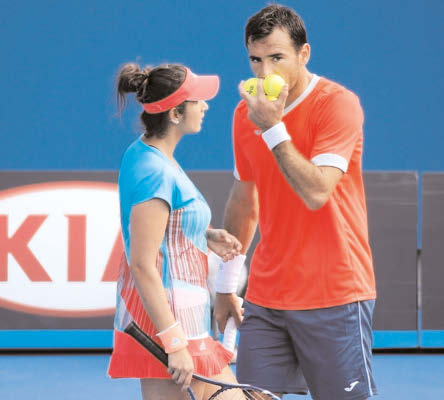
    NEW DELHI (TIP): Indian tennis stars Leander Paes and Sania Mirza set up mixed doubles final at the French Open after winning their respective semi-final matches in Paris on June 2. Paes and Sania also played their last eight matches earlier in the day.

    Paes with his Swiss partner Martina Hingis scored a fighting 6-3, 3-6, 10-7 victory over sixth seeds Edouard Roger-Vasselin-Andrea Hlavackova to reach the final. The unseeded Indo-Swiss pair defeated fifth seeds Elena Vesnina and Bruno Soares in the quarter-finals.

    Sania along with her Croatian partner Ivan Dodig overcame a gruelling battle against the third seed duo of Kristina Mladenovic and Pierre-Hugues Herbert before emerging victorious 4-6, 6-4, 12-10.

    The second seed pair of Sania and Dodig recorded victory over Yung-Jan Chan and Max Mirnyi 6-1, 3-6, 10-6 in their quarter-final on June 2. (AP)

  • PADMA AWARDS 2016

    PADMA AWARDS 2016

    NEW DELHI (TIP): Former Comptroller and Auditor General of India Vinod Rai, actor Rajinikanth, spiritual guru Sri Sri Ravishankar and tennis player Sania Mirza are on the list of 112 Padma awardees whose names were announced on Monday by the government.

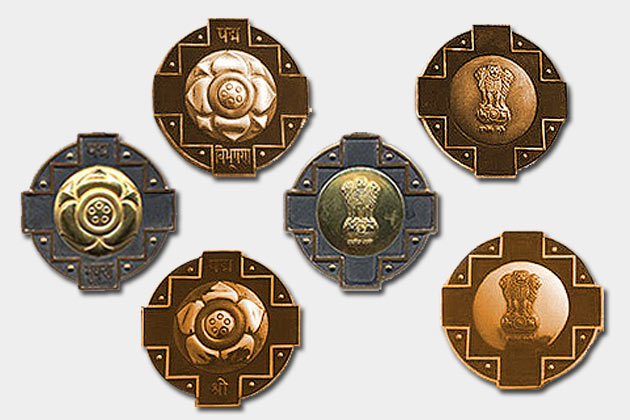
    The awards will be given across three categories: the Padma Vibhushan, Padma Bhushan and Padma Shri. These awards are given on Republic Day, for the over six decades now, to people who the government recognises have excelled in their fields.

    Padma Vibhushan

    1. Shri Rajinikanth    Art-Cinema    Tamil Nadu
    2. Ms. Yamini Krishnamurthi Art- Classical dance Delhi
    3. Smt. Girija Devi    Art-Classical Vocal    West Bengal
    4. Shri Ramoji Rao    Literature & Education-Journalism   Andhra Pradesh
    5. Dr. Viswanathan Shanta    Medicine- Oncology    Tamil Nadu
    6. Shri Shri Ravi Shankar    Others-Spiritualism    Karnataka
    7. Shri Jagmohan    Public Affairs    Delhi
    8. Dr.Vasudev Kalkunte Aatre    Science & Engineering    Karnataka
    9. Shri Avinash Dixit (Foreigner)    Literature & Education
    10. Late Shri Dhiru Bhai Ambani (Posthumous)    Trade & Industry    Maharashtra

    Padma Bhushan

    11. Shri Anupam Kher Art-Cinema Maharashtra
    12. Shri Udit Narayan Jha Art-Playback Singing Maharashtra
    13. Shri Ram V. Sutar Art-Sculpture Uttar Pradesh
    14. Shri Heisnam Kanhailal Art-Theatre Manipur
    15. Shri Vinod Rai Civil Service Kerala
    16. Dr. Yarlagadda Lakshmi Prasad Literature & Education Andhra Pradesh
    17. Prof. N. S. Ramanuja Tatacharya Literature & Education Maharashtra
    18. Dr. Barjinder Singh Hamdard Literature & Education – Journalism Punjab
    19. Prof. D. Nageshwar Reddy Medicine-Gastroenterology Telangana
    20. Swami Tejomayananda Other-Spiritualism Maharashtra
    21. Shri Hafeez Contractor Others-Architecture Maharashtra
    22. Shri Ravindra Chandra Bhargava Public Affairs Uttar Pradesh
    23. Dr.Venkata Rama Rao Alla Science & Engineering Andhra Pradesh
    24. Ms. Saina Nehwal Sports-Badminton Telangana
    25. Ms. Sania Mirza Sports-Tennis Telangana
    26. Ms. Indu Jain Trade & Industry Delhi
    27. Late Swami Dayanand Sarawasati (Posthumous) Others- Spiritualism Uttarakhand
    28. Shri Robert Blackwill (Foreigner) Public Affairs USA
    29. Shri Pallonji Shapoorji Mistry (NRI/PIO) Trade & Industry Ireland

    Padma Shri

    30. Smt. Prathibha Prahlad Art- Classical Dance Delhi
    31. Shri Bhikhudan Gadhvi Art- Folk Music Gujarat
    32. Shri Sribhas Chandra Supakar Art- Textile Designing Uttar Pradesh
    33. Shri Ajay Devgn Art-Cinema Maharashtra
    34. Ms. Priyanka Chopra Art-Cinema Maharashtra
    35. Pt. Tulsidas Borkar Art-Classical Music Goa
    36. Dr. Soma Ghosh Art-Classical Vocal Uttar Pradesh
    37. Shri Nila Madhab Panda Art-Film Direction and Production Delhi
    38. Shri S.S. Rajamouli Art-Film Direction and Production Karnataka
    39. Shri Madhur Bhandarkar Art-Film Direction and Production Maharashtra
    40. Prof. M. Venkatesh Kumar Art-Folk Artist Karnataka
    41. Ms. Gulabi Sapera Art-Folk Dance Rajasthan
    42. Smt. Mamta Chandrakar Art-Folk Music Chhattisgarh
    43. Ms. Malini Awasthi Art-Folk Music Uttar Pradesh
    44. Shri Jai Prakash Lekhiwal Art-Miniature Painting Delhi
    45. Shri K. Laxma Goud Art-Painting Telangana
    46. Shri Bhalchandra Dattatray Mondhe Art-Photography Madhya Pradesh
    47. Shri Naresh Chander Lal Art-Theatre & Cinema Andaman & Nicobar
    48. Shri Dhirendra Nath Bezbaruah Literature & Education Assam
    49. Shri Prahlad Chandra Tasa Literature & Education Assam
    50. Dr.Ravindra Nagar Literature & Education Delhi
    51. Shri Dahyabhai Shastri Literature & Education Gujarat
    52. Dr.Santeshivara Bhyrappa Literature & Education Karnataka
    53. Shri Haldar Nag Literature & Education Odisha
    54. Shri Kameshwaram Brahma Literature & Education – Journalism Assam
    55. Prof. Pushpesh Pant Literature & Education-Journalism Delhi
    56. Shri Jawaharlal Kaul Literature & Education-Journalism Jammu & Kashmir
    57. Shri Ashok Malik Literature &Education Delhi
    58. Dr.Mannam Gopi Chand Medicine-Cardio Thoracic Surgery Telangana
    59. Prof. Ravi Kant Medicine-Surgery Uttar Pradesh
    60. Prof. Ram Harsh Singh Medicine- Ayurveda Uttar Pradesh
    61. Prof. Shiv Narain Kureel Medicine- Paediatric Surgery Uttar Pradesh
    62. Dr.Sabya Sachi Sarkar Medicine -Radiology Uttar Pradesh
    63. Dr. Alla Gopala Krishna Gokhale Medicine-Cardiac Surgery Andhra Pradesh
    64. Prof. T.K. Lahiri Medicine-Cardio Thoracic Surgery Uttar Pradesh
    65. Dr. Praveen Chandra Medicine-Cardiology Delhi
    66. Prof. (Dr) Daljeet Singh Gambhir Medicine-Cardiology Uttar Pradesh
    67. Dr.Chandrasekar Shesadri Thoguluva Medicine- Gastroenterology Tamil Nadu
    68. Dr. (Mrs.) Anil Kumari Malhotra Medicine-Homeopathy Delhi
    69. Prof. M.V. Padma Srivastava Medicine-Neurology Delhi
    70. Dr. Sudhir V. Shah Medicine-Neurology Gujarat
    71. Dr. M. M. Joshi Medicine-Ophthalmology Karnataka
    72. Prof. (Dr) John Ebnezar Medicine-Orthopaedic Surgery Karnataka
    73. Dr. Nayudamma Yarlagadda Medicine-Paediatric Surgery Andhra Pradesh
    74. Shri Simon Oraon Other -Environment Conservation Jharkhand
    75. Shri Imitiaz Qureshi Other-Culinary Delhi
    76. Shri Piyush Pandey Others-Advertising & Communication Maharashtra
    77. Shri Subhash Palekar Others-Farming Maharashtra
    78. Shri Ravinder Kumar Sinha Others-Wildlife Conservation Bihar
    79. Dr. H.R. Nagendra Others-Yoga Karnataka
    80. Shri M. C. Mehta Public Affairs Delhi
    81. Shri M. N. Krishna Mani Public Affairs Delhi
    82. Shri Ujjwal Nikam Public Affairs Maharashtra
    83. Shri Tokheho Sema Public Affairs Nagaland
    84. Dr. Satish Kumar Science & Engineering Delhi
    85. Dr.Mylswamy Annadurai Science & Engineering Karnataka
    86. Prof. Dipankar Chatterji Science & Engineering Karnataka
    87. Prof.(Dr.) Ganapati Dadasaheb Yadav Science & Engineering Maharashtra
    88. Smt. (Prof.) Veena Tandon Science & Engineering Meghalaya
    89. Shri Onkar Nath Srivastava Science and Engineering Uttar Pradesh
    90. Ms. Sunita Krishnan Social Work Andhra Pradesh
    91. Shri Ajoy Kumar Dutta Social Work Assam
    92. Shri M. Pandit Dasa Social Work Karnataka
    93. Shri P. P. Gopinathan Nair Social Work Kerala
    94. Smt. Madeleine Herman de Blic Social Work Puducherry
    95. Shri Srinivasan Damal Kandalai Social work Tamil Nadu
    96. Shri Sudhakar Olwe Social Work Maharashtra
    97. Dr. T.V. Narayana Social Work Telangana
    98. Shri Arunachalam Murugantham Social Work Tamil Nadu
    99. Ms. Deepika Kumari Sports-Archery Jharkhand
    100. Shri Sushil Doshi Sports-commentary Madhya Pradesh
    101. Shri Mahesh Sharma Trade & Industry Delhi
    102. Shri Saurabh Srivastava Trade & Industry Delhi
    103. Sh Dilip Sanghvi Trade & Industry Maharashtra
    104. Dr. Keki Hormusji Gharda Trade & Industry Maharashtra
    105. Late Shri Prakash Chand Surana (Posthumous) Art – Classical Music Rajasthan
    106. Late Shri Saeed Jaffrey (NRI/PIO/Posthumous) Art- Cinema UK
    107. Shri Michael Postel (Foreigner) Art-Archaeology France
    108. Shri Salman Amin Sal Khan (NRI/PIO) Literature & Education USA
    109. Smt. Hui Lan Zhang (Foreigner) Others-Yoga China
    110. Shri Predrag K. Nikic (Foreigner) Others-Yoga Serbia
    111. Dr.Sundar Aditya Menon (NRI/PIO) Social Work UAE
    112. Shri Ajaypal Singh Banga (NRI/PIO) Trade & Industry USA

  • Remaining mentally strong is key against Djokovic: Wawrinka

    Remaining mentally strong is key against Djokovic: Wawrinka

    CHENNAI (TIP): Stanislas Wawrinka eked out the “biggest win” of his career when he downed Novak Djokovic in the final of the 2015 French Open and the Swiss champions says staying mentally strong is always key against the Serbian giant.

    Looking back at that final in which he struck 59 winners, almost twice as many as Djokovic, the Swiss player still relishes the win.

    “For sure winning Roland Garros was my biggest win. Novak is an unbelievable player, he has played so strong during the whole year and deserves to be number 1. Beating him in the final meant a lot to me, it made me very proud. I played amazing tennis on that day and managed to find a solution against him,” Wawrinka, who will open his 2016 season at Chennai Open next week, said.

    “I’ve played several tough matches against Novak in Grand Slams recently. I know that I have my chance if I play my very best tennis. I’ve beaten him before and you have to remain mentally strong when you face him and especially in such an important match,” Wawrinka said.

    The Swiss world number four is a two-time defending champion at Chennai Open and he was eyeing a hat-trick of titles.

    “I’ve always enjoyed coming to Chennai. The tournament is a nice way to start the season, the fans are great and I like the atmosphere in the stadium. Of course I would love to defend my title, but I will have to go match by match,” he said.

    Talking about his coach Magnus Norman, Wawrinka said, “I really enjoy his vision of the game; the way he communicates. He’s very natural and he was a great player himself so he knows how it feels to step on a crowded center court or to be in a Grand Slam final.”

    “I saw how he worked with Robin Soderling and had a feeling that he could be the right coach for me. He’s also great working with the other members of my team like my fitness coach Pierre Paganini or Severin Luthi, our Davis Cup captain who has been helping me a lot as well.”

    Reviewing the year behind, and looking into the start of yet another season on the tour, Wawrinka said, “I want to continue to do well, win tournaments and go deep at the Slams. And hopefully I get a great start into the season in Chennai again.”

    “I’m somebody who really likes to work hard. I like to get up early in the morning and enjoy practising a lot. That helps me a lot, because a tennis career is very much about working hard and enjoying what you do.”

    (PTI)