

When code changes but the user manuals have not yet been updated, the software becomes the rulebook

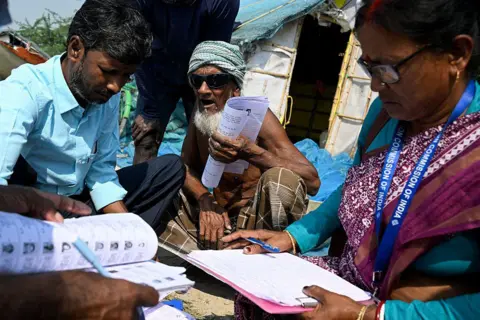
Much of the public argument over the Special Intensive Revision (SIR) of India’s electoral rolls is around law, power and politics. The autonomy of the Election Commission of India (ECI), the list of acceptable documents, and the burden placed on voters to prove eligibility are the key focus issues. There is, of course, no doubt that these questions matter. But a quieter, less spoken-about story runs underneath them. The 2025-26 SIR is the first revision of this scale to be run through a centralized digital platform, and the technology itself has become a source of exclusion. Viewed as a nationwide digital transformation project, the SIR fails on several counts that any student of technology would immediately recognize.
The irony stares right at us. India presents itself, with ample reasons to do so, as a leader in digital public infrastructure. From the IRCTC’s (Indian Railway Catering and Tourism Corporation) ticketing system and the income tax department’s e-filing to Aadhaar authentication, UPI, DigiLocker etc., India holds up proof, at home and abroad, that it can build technology that works at scale.
Yet when it came to one of the most fundamental processes of any democracy, that is, the revision of electoral rolls, India has failed to utilize that capability. The irony is sharper because the above-mentioned successes were not built in weeks. They came from years of piloting, iteration and published specifications — the very peer-backed disciplines that seem to have been omitted when it came to the SIR.
Age and name discrepancies
Let’s begin with how voters are flagged. A large share of notices to voters across States have been issued under the head of ‘logical discrepancy’ — a term that reflects little to no context sensitivity. Flags were generated centrally by ERONet, the ECI’s roll management platform, using filters such as parent-child age gap, the number of children linked to one parent and the like. It is generally known that the ages mentioned on Indian electoral rolls are often approximate, especially for older citizens born at home. Therefore, rules that treat them as precise are bound to misfire.
An analysis of Delhi’s draft roll by The Hindu found that family-size checks flagged Muslim electors at a markedly higher rate. The Supreme Court has clarified that it has not yet ruled on the legality of the ‘logical discrepancy’ category; it had allowed it in West Bengal only as an interim arrangement.
Additionally, a rule coded into the software platform decides who must appear for a hearing. This rule has never been published by the Commission; it varies from State to State, and the burden of contesting its outcome falls largely on the voters themselves.
Second, the platform relies on matching techniques that were not validated at scale. Linking a voter to a parent on the 2002 roll means comparing family names across decades. West Bengal’s 2002 rolls which were in the Bengali language had to be digitized and rendered into English from old, printed records, reportedly with machine tools. Many names that were correct on paper reached the software garbled. Over 1.3 crore entries in West Bengal were flagged, and the counsel told the Supreme Court that more than half the ‘logical discrepancy’ cases were name variations. Similar problems have surfaced in Telangana and Karnataka as well. The ECI’s own search portal suggests trying different spellings, indicating that the difficulty was not unknown. Matching Indian names across scripts is a well-documented difficulty, given the ambiguity and variation. Pilots in a handful of constituencies across different States would have exposed it before it reached lakhs of households.
Overarching power
Third, the system and its features were repeatedly changed while the SIR was in progress. The ECI has in the past used de-duplication software to flag people who may hold more than one voter ID. It was not used in Bihar, and in late 2025, the Commission had told the Supreme Court that results from the software could not be relied on. However, it was switched back on in some States and Union Territories where the revision was underway. This is a failure of digital governance.
Another algorithm, which checks how voters are “mapped” to relatives on the old electoral roll, appeared on the app in some States, forcing Booth Level Officers (BLOs) to redo work that was already completed. If the app was being loaded with new protocols frequently, then it is only understandable that the key users of the app, the BLOs, experienced tremendous stress and frustration. In any well-run deployment of such scale, a live operation of this sensitivity would be under a change freeze, with new features being tested and documented before release.
Fourth, the encoded rules travelled by video rather than in writing. In October, some newly introduced ERONet options allowing Electoral Registration Officers (EROs) to dispose of notice cases without hearings were explained through demonstration videos. Interim instructions such as these often came through video conferences and WhatsApp groups with the software already reconfigured to enforce them. When code changes but the user manuals have not yet been updated, the software becomes the rulebook. The BLOs and EROs, as statutory custodians of the electoral roll, are left implementing decisions they are not privy to while citizens, on the other hand, have nothing to cite on appeal. Officials in some States have asked for the restoration of the discretion that the centrally controlled platform had taken from them, including the power to decide which flagged cases need a hearing.
Fifth, the digital workflow and legal forms seem to have drifted apart. The online Form 6 carried an SIR-related declaration about parents and grandparents that applicants could not skip, although it was not part of the statutory form. The Supreme Court said it had never approved that modification. In Delhi, voters whose enumeration forms were not received but were earlier on the roll were directed to submit Form 6, meant for first-time voters. The court has called this a “structural incongruity”.
However, both are also system design failures. The screen a citizen sees should not demand what the law and the approved process do not.
Questions of timing
Time compounds these challenges. In Delhi, where no election is due, the Supreme Court questioned the need for a tight deadline. Voters in Tamil Nadu and West Bengal had no such cushion. In those States, enumeration went on for about six weeks with the final rolls being released in February while the polls were scheduled for April. West Bengal’s final roll was published with over half-a-crore names still marked “under adjudication”. In a system rollout, time is always a design parameter, not a backdrop. Here, it was set by the electoral calendar rather than by the system’s and the context’s readiness.
None of this is unique to elections. Validating ‘business’ rules against real data, testing name matching in different languages, freezing a system during live operations, issuing written SoPs (Standard Operating Procedures) prior to user training and keeping digital forms aligned with statutory ones are the ordinary, time-tested disciplines of digitizing a manual process. Lawrence Lessig’s warning over two decades ago, that “code is law” has rarely been more literal. With the SIR, rules written into software decided what statute did not.
In any such transformation, many of these failures could have been envisaged. Whether they were anticipated and set aside or not anticipated at all is an open question. Neither answer can ever reassure the citizens whose voting rights are on the line.
(Priya Seetharaman is Professor, Management Information Systems Group, Indian Institute of Management Calcutta. Views are personal)

Be the first to comment