Tag: Theresa May

  • Ukraine War, Chinese Protest, Imran Khan’s Ouster; top global Events in 2022

    The year 2022 has been a tumultuous one, with many uprisings, new faces coming to prominence and dictators losing hold of power. It has been a year of economic shockers, from the West to the East. Needless to say, it has been a year of clashes and of new alliances.

    This year saw a significant rise of leaders like Ukraine President Zelensky, French President Macron and Chinese leader Xi Jinping. On the other hand, prominent international leaders, considered to have clout, including former US President Trump and Brazilian President Bolsonaro lost their power.

    There were several prominent events which shaped 2022 in their own ways. To name a few, the Ukraine War, Sri Lankan Economic crisis and the unprecedented protests in China defined the year in their unusual ways.

    UKRAINE WAR

    The Russian invasion of Ukraine, which began earlier this year in February, has entered its 300th day this month, proving to be a tough challenge for both Russia and Ukraine. Russian President Vladimir Putin, who began a blitzkrieg assault on Kyiv taking over the eastern and southern part of the country, is now facing challenge to keep the war going amid reports of ailing health and internal strife.

    So far, over 100,000 Russian and 100,000 Ukrainian soldiers have been killed or injured in the war in Ukraine. For the Ukrainians, this winter is going to be tough with Russian attacks on Ukrainian power plans and consecutive Russian missile attacks. However, the war has shaped the hero out of Ukraine’s President Zelensky, who not only stood against the Russian aggression, but also managed to forge a western unity.

    SRI LANKAN CRISIS

    The Sri Lanka protests which started in April had led to the ouster of President Gotabaya Rajapaksa and two-time President and former Prime Minister Mahinda Rajapaksa. The Sri Lankan crisis, which started as a protest in Colombo, spread across the country with the people demanding reforms in the government.

    Ranil Wickremesinghe was elected President through a parliamentary vote, in which the Rajapaksas’ party backed him in July. The government blamed the Covid pandemic, which badly affected Sri Lanka’s tourist trade, and later led to a shortage of fuel and foreign dollars. However, many experts blame President Rajapaksa’s poor economic mismanagement.

    The country continues to remain under crisis with Colombo anticipating the IMF loan to secure the country’s economy.

    OUSTER OF IMRAN KHAN

    Former Pakistan Prime Minister Imran Khan, who came to power in 2018, is the only Pakistani Prime Minister to be ousted in a no-confidence vote in Parliament earlier this year.

    Khan was ousted from power in April after losing a no-confidence vote in his leadership, which he alleged was part of a US-led conspiracy targeting him because of his independent foreign policy decisions on Russia, China, and Afghanistan.

    Since he lost the vote in Parliament, Khan has mobilized mass rallies across the country, whipping up crowds with claims that he was a victim of a conspiracy by his successor, Prime Minister Shahbaz Sharif, and the United States.

    IRAN PROTESTS

    Iran has been rattled by protests over opposition to the mandatory hijab law as thousands of common citizens have taken to the streets.

    Iran has been rocked by protests since September 16, with the death of 22-year-old Mahsa Amini, who died after being detained by the morality police. The protests have since morphed into one of the most serious challenges to Iran’s theocracy installed by the 1979 Islamic Revolution.

    So far, the country’s police have arrested renowned actresses, footballers, actors and influencers for supporting the protests. It has also executed two protestors for participation in the protests.

    RARE PROTEST IN CHINA

    China saw two major developments this year- Xi Jinping becoming President for the third time and rare protests weeks after against tough anti-Covid restrictions.

    In November, thousands of people took to the streets in several major cities across China, including Beijing and Shanghai, to call for an end to lockdowns and greater political freedoms, in a wave of protests not seen since pro-democracy rallies in 1989 were crushed.

    Despite heavy crackdown, surveillance and censorship, the protests expanded into calls for broader political freedom and left a major negative impact on the reputation of Xi and the Party.

    US MIDTERM ELECTIONS

    The midterm elections in the US, which is usually seen as a mandate against the ruling government, failed to make a Republican sweep as the Democrats gained razor-thin control of the Senate, while the Republicans got a narrow margin against the dems in the House of Representatives.

    However, the misterms was special in the sense that it rained down on the ambitions of former President Donald Trump, who was looking forward to run for the second term, his “Make America Great Again” movement and the broader Republican agenda.

    A silver lining which came out of the midterm elections for the Republicans has been the victory of Florida Governor Ron DeSantis. DeSantis is seen as the possible challenger to Trump and a possible source of revival for the GOP.

    Surging inflation, ongoing strikes, economic crisis and war in Europe: the new UK Prime Minister Rishi Sunak faces these major challenges. Sunak came to Power after his predecessor Truss resigned after just 44 days in power.

    After 12 years in power, the Conservative party is more divided than ever. Earlier this year, Boris Johnson had resigned as PM in July after losing the confidence of some 60 ministers.

    Sunak has become the fifth Tory prime minister since 2016 — following David Cameron, Theresa May, Johnson and Truss. The challenges continue to mount for Sunak, who hopes to get his country out of the economic and political mess.

    BOLSONARO’S EXIT

    Brazilian President Jair Bolsonaro, lost election in October in a nail-biting presidential vote count against Luiz Inacio Lula da Silva.

    Almost from the start of his controversial mandate in 2019, Bolsonaro racked up accusations and investigations for everything from spreading disinformation to crimes against humanity. He survived more than 150 impeachment bids — a record.

    Most of these were over his flawed management of the coronavirus pandemic, which claimed the lives of more than 685,000 people in Brazil — the world’s second-highest toll after the United States.

    On January 1, 2023, Bolsonaro’s arch-rival, leftist ex-president Luiz Inacio Lula da Silva will take over the reins once more and Bolsonaro loses his presidential immunity.

    COP27 SUMMIT

    The UN COP27 climate summit in Egypt had some success and some failures. While the summit achieved a landmark deal on funding to help vulnerable countries cope with devastating climate impacts, the talks stalled on key issues and failed to secure commitments to stop greenhouse gas emissions.

    Though the participating nations agreed to contribute to the cost of the harm an overheated planet causes to developing nations, but they concluded the talks without doing anything more to address the burning of fossil fuels, which is the primary cause of these catastrophes.

  • Boris Johnson Tops First Round of Poll for British PM

    Boris Johnson Tops First Round of Poll for British PM

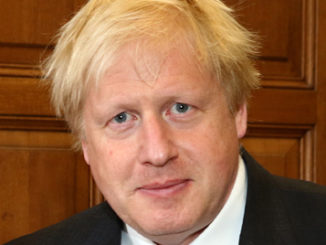
    LONDON (TIP): Boris Johnson on Thursday, June 13,  secured his position as the frontrunner in the race to succeed Theresa May as British prime minister as he won the highest number of votes in the first round of the leadership poll.

    The former Cabinet minister received 114 votes in the first round of a secret ballot of Tory MPs held in the House of Commons, followed by UK foreign secretary Jeremy Hunt in second place with 43 and environment secretary Michael Gove third with 37 votes.

    Three contenders – Mark Harper, Andrea Leadsom and Esther McVey – were knocked out of the race after failing to secure the minimum requirement of 17 votes.

    It leaves seven candidates in the fray for the second round of voting next week, including former Brexit secretary Dominic Raab in fourth place with 27 votes, home secretary Sajid Javid fifth with 23, health secretary Matt Hancock sixth with 20 and international development secretary Rory Stewart in last place with 19.

    The two most popular MPs from among the seven will be put to the wider Tory party members in a final vote later this month, with the winner of the contest to succeed May in Downing Street expected to be announced in the week of July 22.

    “Thank you to my friends and colleagues in the Conservative and Unionist Party for your support. I am delighted to win the first ballot, but we have a long way to go,” said Johnson, after the results were announced by the Conservative Party’s 1922 Committee, in charge of the election process.

    A large number of supporters of fellow pro-Brexiteers McVey and Leadsom are now expected to fall in behind Johnson, who was widely expected to sail through the first round of voting.

    (Source: PTI)

  • UK gets 1st female Sikh, 1st turbaned MP in General Election

    UK gets 1st female Sikh, 1st turbaned MP in General Election

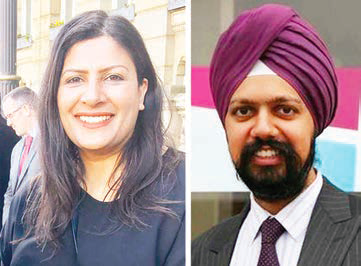
    LONDON (TIP): Britain on Friday, June 9, got its first female Sikh and first turban-wearing MP as the General Election results began pouring in with Indian-origin Labour Party candidates winning more seats than their rival Conservatives. Labour Party candidate Preet Kaur Gill won her Birmingham Edgbaston seat by polling 24,124 votes, defeating ruling Conservative party rival Caroline Squire by 6,917 votes.

    “I am delighted I have been given the opportunity to become the next MP for Edgbaston where I was born and raised. I want to engage with the people of Edgbaston and with hard work, passion and determination I think we can achieve great things together,” she said.

    Tanmanjeet Singh Dhesi, known as Tan, won his Slough seat decisively polling 34,170 votes, to become Labour’s first turban wearing MP.

    He defeated his Conservative party rival by a whopping 16,998 votes. Dhesi said he was “humbled” and wanted to serve the town where he was born and raised.

    “Credit to the Labour Party leadership for taking the bold step of giving Sikhs the opportunity to fight for winnable seats.

    Labour now needs to turn its attention to having visible Sikh representation in the House of Lords at the first opportunity so Sikhs are better represented and can bring fresh thinking and ideas,” Sikh Federation UK said in a statement.

    “Although it is early in terms of results declared this appears to be a disastrous night for the Conservatives and Theresa May given what she had hoped to achieve and a good night for the Labour Party. Labour is taking some important Conservative scalps,” it added. A second turban-wearing Sikh of the Labour Party Kuldip Sahota lost out to his Conservative rival by just 720 votes.

    Among some of the other Indian-origin contestants’ results declared so far, Conservative party’s Priti Patel has held on to her stronghold of Witham in Essex with a solid majority of 18,646 votes.

    Alok Sharma has held on to Reading West by 2,876 votes and Shailesh Vara has won in Cambridgeshire North West by 18,008 votes.

    The 2015 General Election first-timers for the Tories Rishi Sunak and Suella Fernandes have also held on to their seats decisively with a margin of 23,108 and 21,555 votes respectively.

    For the Labour party, the longest serving Indian-origin MP Keith Vaz held on to his Leicester East seat attracting 35,116 votes and his sister Valerie Vaz also won a solid 25,286 votes to hold on to her Walsall South seat.

    Lisa Nandy won in Wigan for Labour with 29,575 votes, Seema Malhotra held on to Feltham & Heston with 32,462 votes and Virendra Sharma polled 31,720 in his safe seat of Ealing Southall.

    Among some of the prominent losses, Labour’s Neeraj Patil – the former mayor of the London Borough of Lambeth – lost to Justine Greening, the UK’s Education Minister.

    He lost by a margin of 1,554 votes to Greening, who was defending her Conservative party stronghold.

    Paul Uppal, who was expected to regain Wolverhampton South West for the Tories, also lost out to his Labour rival.

    The Labour Party had selected 14 Indians and Conservative Party 13 as their parliamentary candidates. So far, the tally looks stronger for the Labour Party with seven Indian-origin MPs to Tory’s five. The ruling Conservative party is on course to be the single largest party in the UK general election as many of the results and leads become clear in the ongoing count.

    The projections indicate that the party remains shy of an overall majority, expected to win around 322 seats, down from the 2015 General Election’s 331 and short of the magic 326 figure for an overall majority in the House of Commons.

    (Source: PTI)

  • UK General Elections: It’s all over for Theresa May

    UK General Elections: It’s all over for Theresa May

    LONDON (TIP): With 646 of 650 results out, it is now clear no party has the majority to form the government. As things stood on Friday morning, the Conservatives had won 314 seats, a loss of 12, while Labour had won 261, a gain of 29.

    However, Theresa May is refusing to quit as Prime Minister despite her disastrous election night as the UK voted for a hung parliament. Mrs. May’s decision to call a snap election backfired in spectacular fashion as she lost the Conservatives’ majority in the House of Commons as Labour made significant gains.

    Mrs. May is now scrambling to try and form a government, potentially with the help of the Democratic Unionist Party and while the DUP has signaled a willingness to do a deal its leader Arlene Foster has expressed doubts that the Prime Minister can “survive”. Jeremy Corbyn, the Labour leader, has urged Mrs. May to resign as he said she should “go  and make way for a government that is truly representative of this country”. He also claimed it is “pretty clear who won this election” and that “the party that has lost in this election is the Conservative Party”.

    Meanwhile, even senior Tory figures have suggested she should consider her position.

  • Theresa May, Jeremy Corbyn face tough questions on live TV

    Theresa May, Jeremy Corbyn face tough questions on live TV

    LONDON (TIP): Prime Minister Theresa on May 29 and Labour Party leader Jeremy Corbyn faced tough questions and a skeptical audience in a live TV event May night ahead of next week’s parliamentary elections.

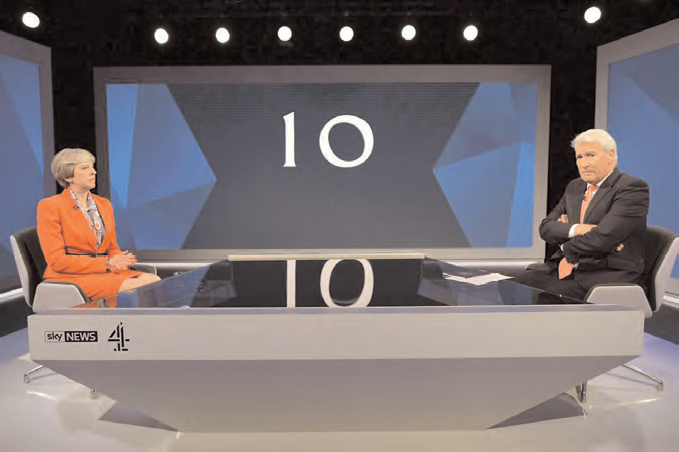
    It was not a debate, but did air policy and stylistic differences between the two foes. They did not appear together but were questioned separately by members of the audience and by aggressive interviewer Jeremy Paxman.

    The June 8 election pits May, the Conservative Party leader who opposed Brexit before the referendum last June but now favors it, against Corbyn, who has alienated many longtime Labour supporters with his hard-left views.

    The “Battle for Number 10” show broadcast on Sky News and Channel 4 brought the two prime contenders together in the same studio at the same time, but they did not appear together at any point. Voters are not likely to get a true debate before the vote.

    Facing harsh questioning from Paxman, one of Britain’s best known TV journalists, May defended her about-face on Brexit. She rebuffed his repeated attempts to get her to say whether she now thinks leaving the European Union is a good idea, saying only that the British voters have decided and that she is determined to get the best deal possible.

    “We are doing the right thing in making a success of Brexit,” she said, vowing to maintain her reputation as a “bloody difficult woman” during talks with European Union leaders if her party wins the election and keeps power. But Paxman set the tone by saying that if he were an EU negotiator who had observed all her recent flip flops, he would think of her as a “blowhard who collapses at the first sound of gunfire.”

    May often found herself on the defensive as audience members grilled her on cuts to the police, National Health Service and education, and a so-called “dementia tax” that might make it harder for elderly Britons to pass on their property to their heirs.

    At one point a heckler yelled, “You’ve clearly failed.” Corbyn did not enjoy smooth sailing either, with Paxman making numerous accusations and typically cutting Corbyn off before he could reply. Paxman challenged Corbyn’s refusal to denounce the Irish Republican Army and his having met with Hamas officials and suggested the Labour leader would seek to abolish the monarchy if his party triumphed.

    Corbyn said getting rid of Britain’s constitutional monarchy is “certainly not on my agenda.” He said he was fighting the election for “social justice” and to reduce poverty, not to change the law regarding the monarch. (AP)

  • Trump orders “review” of leaks as US-UK special ties turn shaky and NATO shudders

    Trump orders “review” of leaks as US-UK special ties turn shaky and NATO shudders

    WASHINGTON (TIP): President Trump on Thursday ordered ”complete review” by the Justice Department of leaks coming out of US government agencies as ties between Washington and London deteriorated sharply over American law enforcement agencies prematurely spilling information to the media on the Manchester bombing.

    The US move came after an outraged UK government said it would stop sharing intel with US because it is compromising investigations, and British Prime Minister Theresa May said she would raise the matter/raised the matter with Trump at the NATO summit in Brussels, grating that ”intelligence that is shared between our law enforcement agencies must remain secure.”

    The flap came after the US media published the suspected bomber’s name and other details of the probe even as British agencies moved to question his family and contacts. Photos of the blood smeared remnants of the attackers backpack and other evidence were also published in the U.S media, the information attributed to U.S law enforcement agencies.

    A furious British Counter Terrorism Policing, a body that includes the police, security and intelligence agencies, tweeted: ”Unauthorised disclosure of potential evidence in the middle of a major investigation undermines our work.” Trump ignored a reporter’s question on the matter during a photo-op in Brussels, but faced with British fury and threats to stop sharing intel, took the opportunity to initiate an omnibus ”review” into the leaks through a written statement.

    ”The alleged leaks coming out of government agencies are deeply troubling. These leaks have been going on for a long time and my Administration will get to the bottom of this. The leaks of sensitive information pose a grave threat to our national security,” the US President.

    Trump himself has been accused of sharing classified intel with Russian officials, something the President has said he has the ”absolute right” to do by virtue of the office he holds. He said he is ”asking the Department of Justice and other relevant agencies to launch a complete review of this matter, and if appropriate, the culprit should be prosecuted to the fullest extent of the law.”

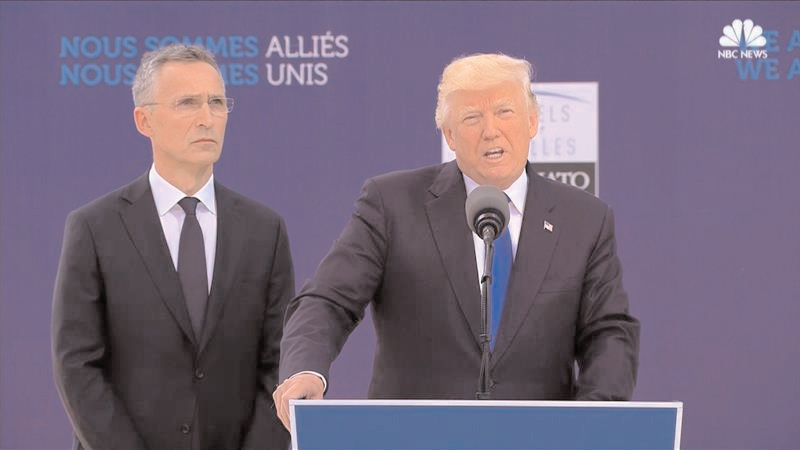
    ”There is no relationship we cherish more than the Special Relationship between the United States and the United Kingdom,” Trump added, amid evident disquiet on the margins of the NATO summit in Brussels, where the U.S. President repeated charges that allies ”owe massive amounts of money” on defense and asked them to pony up. Trump had called Nato ”obsolete” during his election campaign, and although he has subsequently reeled back on his comments, the issue of financial burden sharing hung grimly over the alliance meeting. ”Members of the alliance must finally contribute their fair share and meet their financial obligations,” Trump said at the meeting. ”Twenty-three of the 28 member nations are still not paying what they should be paying and what they are supposed to be paying for their defense. This is not fair to the people and taxpayers of the United States.”

    Consequently, Trump also appeared to hold back on the mutual defense pledge and security guarantees for the alliance. Trump’s eight-day tour of the Middle- East and Europe has been relentlessly caricatured in the U.S for perceived flubs and faux-pas, including shoddy language and lack of grace.

    Meanwhile, trouble continues to brew at home over his campaign aides’ Russia ties and Obamacare repeal. On Wednesday, a Republican candidate locked in a crucial by-election to Congress was charged with assaulting a journalist from the Guardian newspaper, making an already shaky GOP even more jittery.

    But Trump supporters insist that he is making history, and the relentless criticism is part of liberal hysteria. Maintaining that the 45th U.S President had just made a ”titanic foreign policy shift” and the media had missed it, Trump surrogate Newt Gingrich wrote in an oped that ”Never before has an American president tried so clearly to unite the civilized world, including the nations of the Middle East and Africa, against the forces of terrorism,” through what the former Speaker called a ”reality based foreign policy.” (PTI)

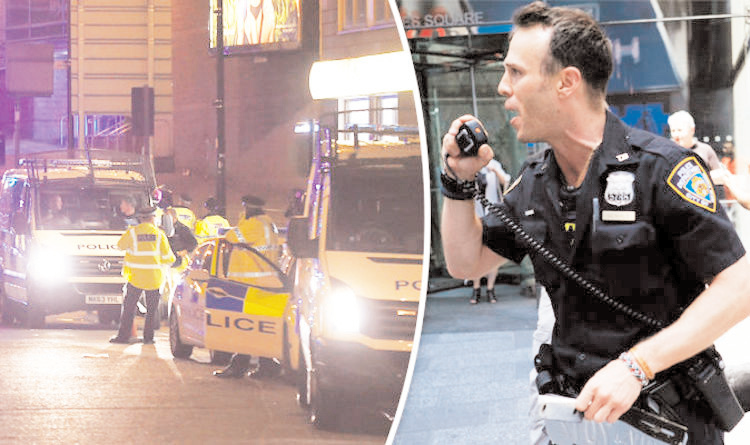
  • Manchester terror attack: Top developments

    Manchester terror attack: Top developments

    LONDON (TIP): British police are rushing to uncover a possible terror network thought to have helped Manchester Arena bomber Salman Abedi in the attack on the Ariana Grande concert on Monday.

    Greater Manchester Police say two men were arrested overnight Thursday in Manchester and in the Withington area south of the city. Officers also raided a property in the city’s Moss Side neighborhood early on Thursday and carried out a controlled explosion.

    Eight men have now been detained in Britain in connection with Monday’s attack. One of those arrested includes Abedi’s brother Ismail.

    Abedi’s relatives under the lens

    A further two people were arrested in Libya, taking the total number of people in custody in connection with the bombing worldwide to 10.

    Abedi’s father, Ramadan Abedi, and brother, Hashim, are the two arrests in Libya. The anti-terror force that took Hashim Abedi into custody in Libya said the teenager had confessed that both he and his brother,

    Salman, were members of the Islamic State (ISIS) group and that he “knew all the details” of the Manchester attack plot.

    ‘Intelligence must remain secure,’ angry May tells US

    The British government has expressed its anger at the release in US media of details from the investigation into Monday’s concert attack, including photographs of parts of the bomb.

    “We have a special relationship with the USA. It’s our deepest defense and security partnership that we have and it is built on trust, and part of that trust is knowing that intelligence can be shared confidently. I will be making clear to President Trump today that intelligence shared between law enforcement agencies must remain secure,” Prime Minister Theresa May said in a terse warning to the US.

    Britain to withhold intelligence reports from US

    The fall out of the leaks is that the British police have stopped sharing information on the suicide bombing in Manchester with the United States, citing the intelligence leaks in the US media risked hindering their investigation.

    The decision to stop sharing police information with US agencies was an extraordinary step as Britain sees the United States as its closest ally on security and intelligence.

    “This is until such time as we have assurances that no further unauthorised disclosures will occur,” a counter-terrorism source told Reuters.

    Britain threat level ‘critical’, another attack imminent

    British Prime Minister Theresa May also said progress is being made in the Manchester bombing investigation but the national threat level remains critical, meaning another attack may be imminent. As many as 1,000 Army troops have already been deployed to boost security operations.

    An incident reported in the Hulme area of Manchester caused a brief period of alarm before authorities gave the all clear. Police officers and army personnel had rushed to a street in Hulme after a ‘suspicious package’ was discovered there.

    Police discovers bomb-making workshop

    Manchester’s police chief said that Salman Abedi was part of a terror network and they’re hunting for a possible bomb-maker after the 22-year-old attacker detonated a sophisticated device at a concert venue packed with children on Monday night.

    Various media outlets reported that police had found a kind of bomb-making workshop in Abedi’s home and he had apparently stockpiled enough chemicals to make additional bombs. Some also reported bomb making materials which could be primed for imminent attacks had been found in the raids following the Manchester bombing. Abedi’s father has denied that his son was part of any such terror network.

    ‘He wanted revenge,’ says attacker’s sister

    Media reports cited a family friend saying that Salman Abedi had travelled to Libya with his father in 2011 to join the Tripoli Brigade militia as it battled the regime of Libyan dictator Muammar Gaddafi. His father too had been a militia member before he’d decided to flee the country when an arrest warrant was issued against him.

    Abedi’s sister said that her brother may have sought revenge for the deaths of Muslim children. “I think he saw children — Muslim children — dying everywhere, and wanted revenge. He saw the explosives America drops on children in Syria, and he wanted revenge,” Jomana Abedi is quoted as saying in an AFP report.

    Abedi wasn’t on any international watch list: Report 

    A German magazine reports that Salman Abedi, the Manchester concert bomber, passed through Duesseldorf airport four days before the attack. Citing unnamed federal security sources, the report says that the British-born Abedi twice flew from a German airport in recent years and wasn’t on any international watch list.

    German authorities are now trying to determine whether Abedi had contact with Islamic extremists in Germany before flying to Manchester last week, the magazine said. It also reports that British police informed their German counterparts Abedi had received paramilitary training in Syria.

    Donald Trumps cracks down on intelligence leaks

    President Donald Trump on Thursday described US intelligence leaks over the Manchester bombing as “deeply troubling” and threatened to prosecute those responsible. “There is no relationship we cherish more than the special relationship between the United States and the United Kingdom,” the US President said in a statement released by the White House.

    He said he has asked the Justice Department and other agencies to “launch a complete review of this matter.”

    Queen visits attack victims, Britain pays tribute to the fallen

    Queen Elizabeth II visited Royal Manchester Children’s Hospital to meet those injured in the Manchester Arena blast and the medical staff treating them. Twelve children under the age of 16 were taken to the hospital by ambulance following Monday night’s attack.

    Earlier on Thursday, at 11am, many across Britain fell silent and bowed their heads for a minute in tribute to the victims caught up in Monday night’s concert bombing. Crowds gathered at well-known sites including London’s Parliament and Trafalgar Squares and Manchester’s Albert Square. (TOI)

  • UK Prime Minister May pledges to curtail immigration, including from India

    UK Prime Minister May pledges to curtail immigration, including from India

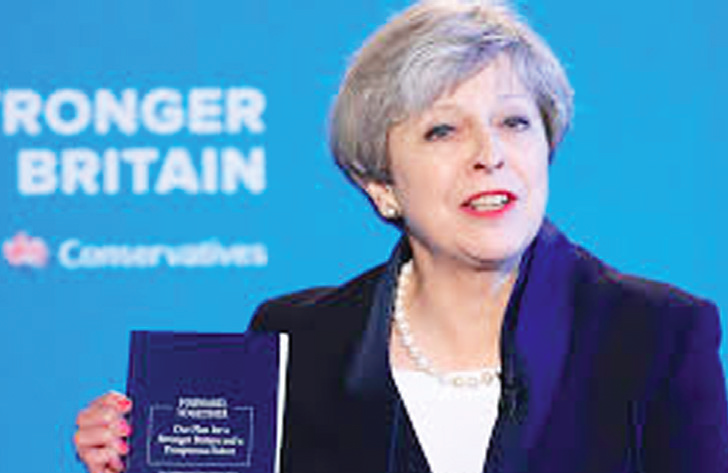
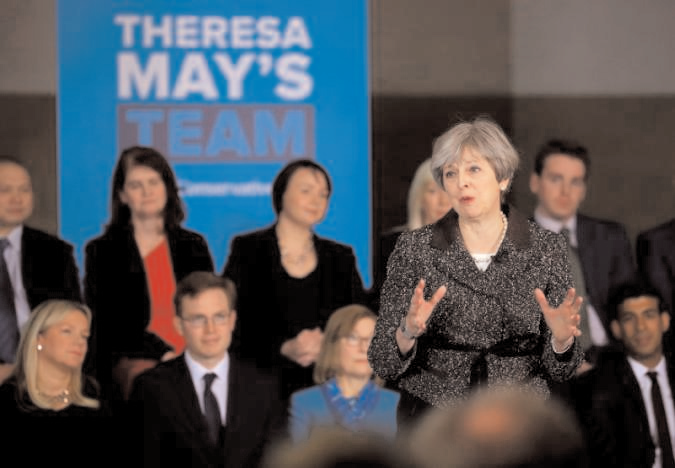
    LONDON (TIP): Prime Minister of UK Theresa May, on Thursday, May18, unveiled her Conservative Party’s election manifesto that makes cutting immigration from countries like India, a central poll pledge if her party wins the June 8 general election.

    The British PM set out plans to further tighten rules for skilled workers from outside the European Union, which involves anyone employing a non-EU worker to be expected to pay 2,000 pounds for each worker every year. This amount doubles the “Skills Charge” of 1,000 pounds already in force. Non-EU migrants will also be made to pay more for using the state-run National Health Service (NHS).

    According to the most recent UK Home Office figures, Indian nationals accounted for 53,575 or 57 per cent of skilled work visas granted in 2016, with US nationals the next largest group at 9,348.

    Prime Minister Theresa May has promised a “mainstream government that would deliver for mainstream Britain”. Launching the Conservative manifesto in Halifax, Mrs. May said a strong economy and delivering Brexit were top priorities.

    She said: “We must take this opportunity to build a great meritocracy in Britain. It means making Britain a country that works, not for the privileged few, but for everyone.”

    She said there were five priorities: a strong economy, facing up to the consequences of Brexit and a changing world, tackling “enduring” social divisions, responding to the. challenges of an ageing society and harnessing the power of fast-changing technology.

    Manifesto measures include:

    ● Balancing the budget by 2025

    ● Increasing the national living wage to 60% of the median earnings by 2020

    ● Restating the commitment to bring net immigration down to tens of thousands a year

    ● Increasing NHS spending each year to £8bn a year extra by 2022

    ● Increasing the amount levied on firms employing migrant workers

    ● A pledge that a referendum on Scottish independence cannot take place until the Brexit process is completed

    ● Scrapping winter fuel payments to better-off pensioners – at the moment, all pensioners qualify for one-off payments of between £100 and £300 each winter

    ● A reduction of the so-called “triple lock” on pensions to a “double lock” with the state pension to rise by the higher of average earnings or inflation – but to no longer go up by 2.5% if they are both lower than that

    ● An extra £4bn on schools in England by 2022 – partly funded by an end to the current provision of free school lunches for all infant pupils in England

    ● Scrapping the ban on setting up new grammar schools

    ● Universities charging maximum tuition fees will have to sponsor academies or help found free schools

    ● A free vote in the Commons to be held on repealing the ban on fox hunting

    On executive pay, the manifesto says packages should be approved by an annual vote of shareholders, and companies will have to publish details on how it compares to the pay of the workforce in general. There are also plans to ensure worker representation at board level.

    Mrs. May was asked whether her plans spelled a move away from Conservative policies of recent years, and in particular those of Margaret Thatcher. She said: “Margaret Thatcher was a Conservative, I am a Conservative, this is a Conservative manifesto.” She later added: “There is no May-ism. There is good solid Conservatism, which puts the interests of the country and the interests of ordinary working people at the heart of everything we do in government.” (Sources: BBC / PTI)

  • UK minister mentions alcohol in Gurudwara, admonished by Sikh woman

    UK minister mentions alcohol in Gurudwara, admonished by Sikh woman

    LONDON (TIP): UK Foreign Secretary Boris Johnson had a tough time on May 17 on the election campaign trail when a British Sikh woman admonished him for talking about whiskey during a stop at a gurdwara in the city of Bristol. Johnson, whose wife is of Sikh origin, was forced to apologise for raising the issue of high tariffs on scotch whiskey imports into India, which could be brought down if a free trade deal is struck between India and the UK post-Brexit.

    “He was simply making the point that a free trade deal with, for example, India could be huge for both sides,” said a spokesperson for the senior Cabinet minister. “He pointed out that in India billions of litres of whiskey are consumed every year but there is a 120 per cent (customs duty) on imports of scotch whiskey and wouldn’t it be great if we could have free trade.

    “One lady expressed her views based on a personal situation but the other 30 attendees warmly welcomed his remarks. He said he was sorry to hear of her personal story but that was all,” he said.

    Johnson had stopped over at the Shri Guru Nanak Prakash Singh Sabha to show his support for Bristol East Conservative candidate Theo Clarke. He was presented with a ceremonial turban and given a tour of the gurdwara before his remarks created a stir.

    “I wouldn’t be wanting to put somebody in power who wants to put more alcohol in India, which is causing lots of problems at the moment,” said a British Sikh woman, named locally as Balbir Kaur. “I am a practicing Sikh and to me that is absolutely outrageous,” she said.

    He was also put on the spot when he stressed that the Conservative party considered the matter of alleged British involvement in Operation Blue Star in 1984 “closed”.

    An independent inquiry into the issue has been included by the Opposition Labour party in its election manifesto released on Tuesday.

    Johnson, the former London mayor known for his lighthearted speeches, has been using recent canvassing opportunities within the Indian diaspora communities to highlight the prospects of an FTA between India and the UK.

    “Whenever we go to India, we have to pack bottles of whiskey because as you know there is a duty of 150 per cent in India on scotch whiskey. But imagine what we could do if there was a free trade deal with India,” he had said at a UK-India Awards ceremony in London last week.

    Britain’s ministers have been on a hectic campaign schedule in the run up to the June 8 general election and the nearly 1.5- million-strong Indian diaspora is seen as an attractive votebank.

    The Liberal Democrat party was quick to react to the latest controversy, claiming it shows the Tory party’s “bungling” approach.

    Lib Dem shadow foreign secretary Tom Brake said: “This crass misjudgement has shown Boris Johnson is incapable of representing his own party at home, let alone representing Britain abroad. It doesn’t bode well for all the trade deals the Brexiteers have promised.”

    “The British people don’t have to settle for bungling Boris and Theresa May’s risky and extreme version of Brexit. The Liberal Democrats will give people a say on the Brexit deal in a referendum, with the choice to remain in Europe.” (PTI)

  • British PM May vows energy price cap if re-elected

    British PM May vows energy price cap if re-elected

    British PM May vows energy price cap if           re-elected

    LONDON (TIP): British Prime Minister Theresa May vowed on May 9 to introduce a cap on domestic energy prices that would cut tariffs for around 17 million families if she is re-elected on June 8.

    Energy bills have doubled in Britain over the past decade to about 1,200 pounds ($1,553.40) a year, angering consumers who face rising inflation and muted wage growth, and drawing the ire of politicians ahead of the national election.

    According to the Sun newspaper, May will order the energy regulator Ofgem to cap the maximum costs of standard variable tariffs, the package used by two thirds of customers in Britain.

    May, whose ruling Conservative Party is around 20 points ahead of the opposition Labour Party in opinion polls, said she expected the move to save families on poor value tariffs as much as 100 pounds a year.

    “It will protect around 17 million families on standard variable tariffs from being exploited with sudden and unjustified increases in bills,” May wrote in the Sun.

    Share prices in Centrica, which owns household energy supplier British Gas, and SSE, have fallen this year since the ruling Conservative Party indicated its intention to set a price cap. Centrica shares are down 14 percent.

    Centrica Chief Executive Iain Conn said last month that May’s plan to cap energy prices suggests some in her government do not believe in free markets at a time when it is pinning its post-Brexit hopes on free trade.

    May last year praised free markets and free trade in a speech to party activists but also said that she would be prepared to intervene where markets were dysfunctional or where companies were exploiting the failures of the market.

    May’s government has previously called for more competition in a sector dominated by the big six providers of Centrica, SSE, Scottish Power, Npower, E.ON and EDF.

    The energy industry has argued that a price cap will wipe out competition and force companies to increase the cost of their lowest tariffs.

    The policy echoes a pledge made by the opposition Labour party ahead of the 2015 election. Their plans for a cap on price hikes were lambasted at the time by the Conservatives who accused the then Labour leader Ed Miliband of wanting to live in a “Marxist universe”. (Reuters)

  • VAISAKHI CELEBRATIONS AROUND THE WORLD

    VAISAKHI CELEBRATIONS AROUND THE WORLD

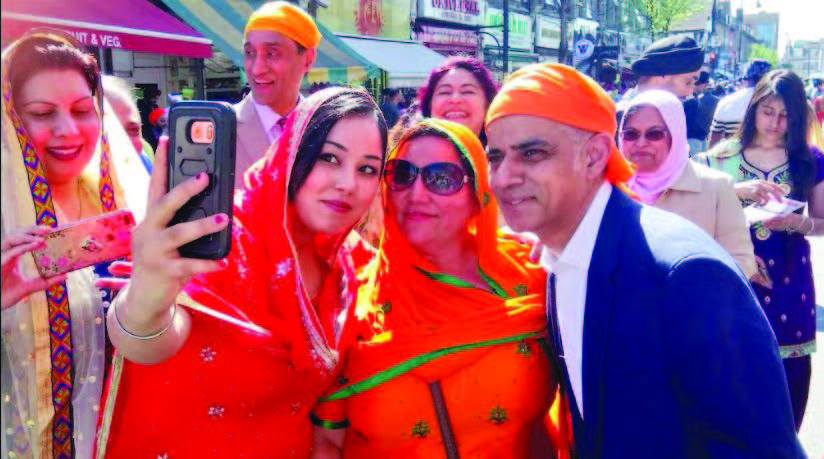
    Sadiq Khan Becomes First London Mayor to Celebrate #Vaisakhi

    Crowds gathered in Southall to watch the annual Vaisakhi parade, which started and ended at the Sri Guru Singh Sabha Southall Gurdwara on Havelock Road.

    Mayor of London Sadiq Khan was in attendance and tweeted: ‘Londoners don’t just tolerate our diversity, we celebrate it! Brilliant to be back in Southall alongside thousands at Vaisakhi celebrations.’

    It is thought to be the first time a London Mayor has ever visited the event, known as Nagar Kirtan, to mark Vaisakhi.

    With the sun beaming down, hundreds of people stopped by the many food stalls offering free drinks and Indian snacks (langar) while hyms were sung and various different dances took place.

    Other MPs including Southall MP Virendra Sharma and Feltham and Heston MP Seema Malhotra were in attendance.

    St John Ambulance and London Ambulance Service cycle responders were also present to keep everyone safe.

    The Sikh festival of Vaisakhi celebrates the birth of the Khalsa but is often mistaken for being a harvest festival or the Sikh New Year.

    In April 1699 the 10th Sikh Guru, Guru Gobind Singh Ji tested thousands of Sikhs and the first five to pass his test were initiated into a new order called the Khalsa.

    May says UK will need Sikh values of equality, respect

    UK Prime Minister Theresa May on April 13 said Britain needs Sikh values of equality and respect more than ever as the country forges a “new and ambitious role” in the world post Brexit.

    Greeting the Sikh community on the occasion of Baisakhi, May said Sikhs have set an example for all.

    “I send my best wishes to everyone in Britain and around the world celebrating Baisakhi -one of the most important dates in the Sikh calendar and a time when families and friends come together to commemorate the birth of the Khalsa,” she said in a video message released by Downing Street.

    She said Sikhs in the country consistently follow the pillars of their faith, which sets an example to all.

    Praising Sikh values of equality and respect, of fairness and helping those less fortunate, the British prime minister said these values Britain needs more than ever as it forges a “new, ambitious, role” in the world.

    “I am determined to build a country that works for everyone; a country where no matter who you are, you can achieve your goals – and the Sikh community is a vital part of that mission. So as the dancing and the festivals begin, at home and abroad, I would like to thank you for all that you do and to wish you a very happy,” she said.

    She noted: “As Sikhs across the globe take part in spectacular processions and neighbourhoods and gurdwaras burst forth with colour, I would like to take this opportunity to celebrate the immense contribution British Sikhs make to our country.

    “Whether it’s in the fields of business, the armed forces or the charitable sector, you consistently follow the pillars of your faith and in so doing set an example to us all,” she said.

    This year, the Indian High Commission in London has tied up with gurdwaras across London and other British Punjabi organisations to launch Baisakhi festivities on a grand scale.

    The event, to be held in north-west London on April 30, has been conceived as a grand mela complete with shabad kirtan and folk music to bring the Indian community together.

    “Come with your families and friends to celebrate, enjoy and be part of the best of Sikh culture,” according to a statement by the High Commission.

  • London shattered by terror attack after a decade

    London shattered by terror attack after a decade

    “We will never give in to terror", British PM Theresa May said, following Westminster attack
    “We will never give in to terror”, British PM Theresa May said, following Westminster attack

    LONDON (TIP): Asolo assailant, identified by police as Khalid Masood, plowed a car into people on Westminster Bridge in London, near Parliament, killing two people and injuring many others, before crashing into a railing, March 22, 2017. Aysha Frade and US tourist Kurt Cochran, 54, were killed on the spot, while a 75-year-old man died on Thursday, March 23 evening.

    According to witnesses, the assailant had sped up, mounted the pavement, and began hitting pedestrians indiscriminately. After the car crashed into railings outside the Houses of Parliament, Masood, armed with a knife, left his car and ran towards Parliament, where he was confronted by police. PC Keith Palmer – who was not armed – was stabbed and killed. Masood was then shot dead by armed officers. Parliament was suspended and politicians, journalists and visitors to the buildings were locked inside for about five hours. Hundreds were also evacuated from Parliament to nearby Westminster Abbey for safety.

    Masood, 52, who was born as Adrian Elms in Kent,had a range of previous convictions for assaults, including grievous bodily harm, possession of offensive weapons and public order offenses. Prime Minister Theresa May told the House of Commons that the attacker had been investigated some years ago over violent extremism but was “peripheral” figure. “He was not part of the current intelligence picture,” she added.

    “There was no prior intelligence of his intent or the plot.”

    Three women and five men were arrested in London and Birmingham on suspicion of preparation of terrorist acts following March 22 attack.

    The Islamic State has claimed responsibility for the attack, calling the perpetrator a “soldier of the Islamic State” in a release from their Amaq news agency.

    US president Donald Trump spoke to Theresa May to offer Britain the full cooperation and support of the United States. He “pledged the full cooperation and support of the United States Government in responding to the attack and bringing those responsible to justice,” a White House statement said.

    In the summer of 2005, London was rocked by the worst single terrorist attack on British soil. On 7 July 2005, four men with rucksacks full of explosives attacked central London. The target was London’s transport system. Four bombs went off there – three on the London underground and one on a bus. More than 50 people had lost their lives and hundreds more were injured. The attacks became known as the 7/7 bombings.

  • British PM May rejects call for Scottish independence vote

    British PM May rejects call for Scottish independence vote

    LONDON: British Prime Minister Theresa May has rejected a call from Scotland’s leader for a referendum on Scottish independence before Britain leaves the European Union.

    May said Thursday that ‘now is not the time’ to reopen Scotland’s independence debate, though she did not rule out a referendum in the future. Britain is due to begin the two-year exit process from the 28-nation bloc by the end of this month.

    The United Kingdom is made up of England, Scotland, Wales and Northern Ireland. The country as a whole decided in a June 23 referendum to leave the EU, but in that ballot Scots voted 62 to 38 percent to remain.

    Scottish First Minister Nicola Sturgeon announced earlier this week that she will seek a referendum on Scottish independence between the fall of 2018 and spring 2019, so voters can decide whether to leave the EU with the rest of the United Kingdom or to go it alone.

    The British government must agree to a legally binding referendum and May said ‘now is not the time.’

    “All our energies should be focused on our negotiations with the European Union,” May said, adding that holding a referendum while EU exit talks are still underway would “make it more difficult for us to get the right deal for Scotland and the right deal for the U.K.”

    A bill authorizing the British government to begin divorce proceedings became law Thursday. House of Commons Speaker John Bercow announced that the European Union (Notification of Withdrawal) Act had received the assent of Queen Elizabeth II.

    The bill was passed by Parliament on Monday but needed royal assent to become a law. Such assent is a formality- no monarch has refused to sign a bill for more than 300 years.

    May is now free to invoke Article 50 of the EU’s key treaty, triggering two years of exit negotiations.

    She says she will do that by March 31, calling it a ‘decisive moment’ for Britain. The prime minister’s office has indicated notification will come in the last week of the month. Under the terms of the EU treaty, Britain will no longer be a member of the bloc two years after May issues the notification. The British government hopes to seal a new free-trade deal between the UK and the bloc in that time. But EU negotiators warn it could take two years just to settle the divorce terms, and agreeing on a new relationship for the UK and the EU could take years longer. (AP)


  • Theresa May faces first Brexit bill defeat as House of Lords votes for amendment

    Theresa May faces first Brexit bill defeat as House of Lords votes for amendment

    Prime Minister Theresa May has faced her first parliamentary defeat over Brexit after Britain’s upper house voted to amend and thereby delay a bill empowering her to begin talks for the UK’s exit from the EU. The House of Lords voted on Wednesday 358 to 256 for an amendment requiring ministers to protect the rights of EU nationals based in the UK following Brexit.

    However, the government’s defeat in the Lords could prove a symbolic one as MPs can remove the amendment when it comes back to the House of Commons.

    The Department for Exiting the EU said: “We are disappointed the Lords have chosen to amend a bill that the Commons passed without amendment. “The bill has a straightforward purpose – to enact the referendum result and allow the government to get on with the negotiations.” May has said that any guarantee of the rights of EU nationals must be part of a deal protecting UK expats overseas. The amendment backed by the Lords requires the government to introduce proposals within three months of Article 50 to ensure EU citizens in the UK have the same residence rights after Brexit.

    May has set an end of the month deadline to invoke Article 50 of the Lisbon Treaty, which will trigger the two-year deadline for Brexit negotiations.

    MPs have already backed the European Union (Notification of Withdrawal) Bill without amendments and can remove the Lords’ amendment when they vote on it again later this month. The government is said to be confident of defeating the changes to the bill in the Commons. Jeremy Corbyn, the Opposition Labour leader who ordered his MPs to support the bill unamended when it went through the Commons, described the result of the Lords vote as “great news”, raising the possibility that he might tell his MPs to back the amendment in the Lower House. “The government must now do the decent thing and guarantee the rights of EU citizens living in the UK,” he said.

    The Lords will vote next week on a further amendment which would give MPs a “meaningful vote” on the outcome of May’s negotiations with the 28-member bloc. If that vote also goes against her, she could come under pressure from her own MPs to agree to that amendment passing into law. (AP)

  • British PM May wins crucial vote to start Brexit

    British PM May wins crucial vote to start Brexit

    Says she would trigger formal divorce talks with European Union by March-end

    LONDON (TIP): British Parliament overwhelmingly supported a Bill, February 9, empowering Prime Minister Theresa May to start crucial negotiations by March 31 on leaving the European Union, bringing Brexit a step closer. May said she would trigger formal divorce talks by March-end.

    The draft legislation of the European Union (Notification of Withdrawal) Bill was approved by 494 votes to 122 by the House of Commons after its final debate.

    The Bill allows Prime Minister May to invoke Article 50 of the Lisbon Treaty to begin a two-year period of negotiations for the UK’s new deal as a non-member of the European Union (EU) by 2019.

    Now that the Bill had passed the Commons, it will be debated in the House of Lords after it returns from recess on February 20, where it is expected to be given the final nod.

    Earlier, the Commons debated the last set of amendments to the Bill, including on key principles for the negotiation process, before the Bill went on to its third and final reading for the vote.

    Opposition Labour leader Jeremy Corbyn had instructed his MPs to vote in favor of the Bill whether any amendments are made or not. However, he faced a second round of rebellion after over 49 MPs had defied the whip at the last vote earlier this month.

    Some 52 Labour MPs rebelled in vote today, including Shadow business secretary Clive Lewis who resigned shortly beforehand. Shadow home secretary Diane Abbott, who missed last week’s initial vote on the Bill, backed it this time. She told the BBC she had “a lot of misgivings about the idea of a Tory Brexit” and predicted the UK would “come to regret it”, but added: “I’m a loyal member of the shadow cabinet and I’m loyal to Jeremy Corbyn.”

    May herself faced a rebellion of her MPs, but she managed to minimize the Tory rebellion by promising a Commons vote on Brexit before it is finalized.

    Britain sees no need for a second Scottish independence referendum and the devolved Scottish government should focus on improving the economy and tacking domestic issues rather than flirting with secession, Defence Secretary Michael Fallon said.

    An opinion poll published on Wednesday, February 8, showed support for Scottish independence rose after Prime Minister Theresa May proposed making a clean break with the European Union, stoking speculation that Scotland could demand another secession vote.


  • Theresa May faces fresh legal challenge over Brexit

    Theresa May faces fresh legal challenge over Brexit

    White Paper spells out need for new immigration laws

    LONDON (TIP): British Prime Minister Theresa May faces fresh legal challenge over Brexit as David Davis, the Brexit secretary, refused to rule out a vote on leaving the EEA when he was asked about it in the Commons by Labor MP Heidi Alexander. David Davis released document – a 77-page white paper setting out the government’s plans for leaving the EU- highlighting need for new laws on immigration and customs systems after UK leaves EU. “Leaving the EU will mean that our laws will be made in London, Edinburgh, Cardiff and Belfast, and will be based on the specific interests and values of the UK,” The White Paper states.

    The document, which sets out Theresa May’s plans was, was presented to Parliament on Thursday, February 2.

    It comes after a Supreme Court ruling empowered Parliament to give its approval before any official talks on Brexit could begin.

    The ruling was a blow to Theresa May, who would have rather bypassed a Parliament vote. However, MPs overwhelmingly supported the triggering of Article 50 with 498 votes to 114 on Wednesday.

    Brexit is an abbreviation for “British exit,” which refers to the June 23, 2016, referendum whereby British citizens voted to exit the European Union. The referendum roiled global markets, including currencies, causing the British pound to fall to its lowest level in decades.

  • EU gets tough: Bloc tells UK Brexit is lose-lose situation

    EU gets tough: Bloc tells UK Brexit is lose-lose situation

    LONDON (TIP): Since Britain voted to leave the European Union, UK officials have had one message: Brexit means Brexit.

    Now they have EU leaders’ reply: And it’s going to hurt.

    The prime minister of Malta, whose country is about to assume the EU presidency, is the latest leader to dash Britain’s hopes of an easy divorce, signaling that the 27 other nations will drive a hard bargain.

    Joseph Muscat told the BBC that “there will not be a situation when the UK has a better deal than it has today.”

    “In the UK it’s fair game to bash Brussels and then you don’t need to be surprised that in Brussels they bash you back,” Muscat said in an interview broadcast Friday. “So this is a bit of Catch-22. It won’t be a case whether one side gains and the other side loses. We are all going to lose something.”

    Malta, a former British colony, is usually one of the UK’s strongest supporters in Europe. The island nation is due to hold the EU’s rotating presidency for six months from Jan. 1 – a period that could coincide with the start of UK exit negotiations.

    British Prime Minister Theresa May says she will trigger Article 50 of the EU’s key treaty, beginning two years of exit talks, by March 31. She and her ministers have refused to set out in advance the type of deal Britain will seek, saying that would undermine their bargaining position.

    In the meantime, EU leaders have grown increasingly firm in their insistence that Britain won’t get an easy ride, and frustrated with Britain’s vagueness about its Brexit plans.

    Last week, Dutch Finance Minister Jeroen Dijsselbloem, who heads the group of 19 countries who use the common euro currency – accused British Foreign Secretary Boris Johnson of “saying things that are intellectually impossible, politically unavailable.”

    In particular, he referred to suggestions by Johnson and others that Britain might be able to stay in the EU’s single market for goods and services while imposing limits on immigration from the bloc. Free movement of workers is a key EU principle, but many Britons who voted to leave the EU are insistent the UK take control of immigration.

    Muscat dismissed the idea that Britain could have both single-market access and movement restrictions.

    “And I could in theory win the 100 meters Olympic race,” he said. “It’s just not happening.”

    Muscat’s exasperated tone echoes the frustration voiced by other EU politicians.

    UK Brexit Secretary David Davis visited the European Parliament in Strasbourg this week to meet EU negotiators, and characterized the trip as a chance to get “to know each other and get to trust each other.”

    But Manfred Weber, the German caucus leader of the parliament’s main conservative group, said he came out of the meeting thinking Britain had “no idea what Brexit really means.”

    Others have made similar claims. A report from accountancy firm Deloitte that was leaked last week claimed that splits within May’s government have delayed development of a negotiating strategy with the EU. The government is divided between Brexit-backers like Johnson and others, including May and Treasury chief Philip Hammond, who campaigned for Britain to remain in the EU.

    Muscat said he would not be surprised if Britain failed to meet its self-imposed March 31 deadline. It is challenging a court ruling that lawmakers in Parliament must get a vote before Article 50 is triggered. The case is due to be heard by the Supreme Court in December, with a judgment likely early next year.

    And he suggested a deal between Britain and the bloc could even be “scuttled at the very end of the process” by a veto in the European Parliament.(AP)

  • UK to take 2nd look at Indian student visas

    UK to take 2nd look at Indian student visas

    NEW DELHI (TIP): The UK government has agreed to take a second look at the student visa issue as PM Theresa May met her Indian counterpart Narendra Modi.

    Indian students going to the UK to study have fallen by half in the last few years largely because the UK has restricted avenues of post-study employment.

    “Prime Minister May noted that there remained no cap on overall numbers of international students studying at recognized educational institutions in the UK, that Indian students would continue to be welcome and that the UK Home Secretary had recently announced her intention to consult on changes to the UK student visa regime,” May noted.

    (PTI)

  • Theresa May praises British-Indians in Diwali message

    Theresa May praises British-Indians in Diwali message

    LONDON (TIP): Hailing the contribution of British-Indians, Prime Minister Theresa May has said she would highlight their success during her first official visit to India next month.

    May praised British-Indians in her message at the annual Diwali celebrations in the House of Commons on Wednesday.

    “In Britain’s Indian communities, we can see the good that can be done when people’s talents are unleashed. I think of all those running their own businesses, taking risks and working hard so that they can provide for their families and take on staff,” May said in her message, read out by Bob Blackman, the parliamentary host of the annual Diwali event organised by the Hindu Forum of Britain (HFB).

    She said that she would be highlighting this success when she visits India next month on the invitation of Prime Minister Narendra Modi.

    “I will be so proud to highlight the achievements of British-Indians next month when I make my first official visit to India as Prime Minister at the invitation of Prime Minister Narendra Modi,” May said.

    The event organised on the House of Commons Terrace Pavilion overlooking the river Thames began with the reciting of mantras and was attended by leading Indian-origin parliamentarians including Lord Swraj Paul, Lord Dolar Popat, Lord Jitesh Gadhia and Shailesh Vara.

    “I am incredibly proud, as a British-Indian and a British Hindu to see this event go from strength to strength. It is a celebration for all of us from all backgrounds,” said Priti Patel, the UK’s International Development Minister and the senior-most Indian-origin minister in May’s Cabinet

    The event this time coincided with a Jammu and Kashmir delegation’s visit led by Maharaja Kumar Ajatshatru Singh, the grandson of the Maharaja Hari Singh who signed the accession treaty for J&K to become a part of India on October 26, 1947.

    Blackman declared that October 26 would now be marked as J&K Day every year in the UK Parliament.

  • British-Indian Minister To Lead UK Business Team In Indore

    New Delhi: A major UK business delegation to Global Investors Summit in Madhya Pradesh will be led by a British Minister of Indian origin, Alok Sharma, an official statement said on Thursday.

    Alok Sharma, Foreign Commonwealth Office Minister for Asia and the Pacific, will join representatives of 28 UK businesses at the summit organised by the government of Madhya Pradesh in Indore on October 22-23.

    Speaking ahead of the summit, Sharma said, “Madhya Pradesh is one of the fastest growing states in India and a great example of how the UK and India are working together for both of our benefit.”

    “The UK has been a long-term supporter of the state, through aid and other partnerships, and it now has a vibrant economy,” he added.

    The UK now has a partnership with Madhya Pradesh, providing technical assistance on issues including Smart Cities and urban development, the statement added.

    British Prime Minister Theresa May will lead a trade mission to India next month during her first major bilateral visit since taking office.

    During her visit, she will join Prime Minister Narendra Modi to inaugurate the first India-UK TECH Summit, a showcase for partnership in technological industries.

    The two-day event will showcase the industrial strengths of the state and provide a global platform for interaction with Indian industry leaders, policy makers, investors and other stakeholders.

  • UK working on idea to sell visas to highest bidder

    UK working on idea to sell visas to highest bidder

    LONDON (TIP): Overseas millionaires may soon be able to buy or bid for UK visas in exchange of donations to hospitals and universities. The British government’s proposal in this regard says donors willing to help schools, universities or hospitals in the UK with much needed funds should be ‘let in’. Reported Migration Advisory Committee chairman Sir David Metcalf has told MPs to explore new innovative ways to attract wealthy investors to the country. “It may very well be that we should be auctioning some of these slots. There should be proper discussion about it. Equally it may very well be that we should be letting people in if they endow a Cambridge college, a major teaching hospital or the London School of Economics with £10 million.”

    British home secretary Theresa May has asked the committee to look at whether auctioning visas or making it available in exchange of donations can be a plausible option. Officials said though a screening process will ensure criminals aren’t let in through the process; it will also help reduce strain on public financing and funds. The Committee is expected to submit a report in February. Metcalf has spelled ways by which the new plan could be introduced. He said one option would see wealthy foreigners making investments in government bonds or UK businesses. In return, wealthy foreigners would be allowed to live and settle in the UK with their families indefinitely. Metcalf said the first preference would be to those, who donate for a noble cause like backing universities with funds or helping set up a hospital.

  • UK working on idea to sell visas to highest bidder

    UK working on idea to sell visas to highest bidder

    LONDON (TIP):
    Overseas millionaires may soon be able to buy or bid for UK visas in exchange of donations to hospitals and universities. The British government’s proposal in this regard says donors willing to help schools, universities or hospitals in the UK with much needed funds should be ‘let in’.

    Reported Migration Advisory Committee chairman Sir David Metcalf has told MPs to explore new innovative ways to attract wealthy investors to the country. “It may very well be that we should be auctioning some of these slots. There should be proper discussion about it. Equally it may very well be that we should be letting people in if they endow a Cambridge college, a major teaching hospital or the London School of Economics with £10 million.” British home secretary Theresa May has asked the committee to look at whether auctioning visas or making it available in exchange of donations can be a plausible option.

    Officials said though a screening process will ensure criminals aren’t let in through the process; it will also help reduce strain on public financing and funds. The Committee is expected to submit a report in February. Metcalf has spelled ways by which the new plan could be introduced. He said one option would see wealthy foreigners making investments in government bonds or UK businesses.

    In return, wealthy foreigners would be allowed to live and settle in the UK with their families indefinitely. Metcalf said the first preference would be to those, who donate for a noble cause like backing universities with funds or helping set up a hospital.

  • British government blocks MPs from quizzing spy chief

    British government blocks MPs from quizzing spy chief

    LONDON (TIP): The British government has blocked a parliamentary panel from questioning the head of domestic spy agency MI5 about the Edward Snowden leaks, the committee chairman said today, branding the decision “not helpful”. MI5 Director General Andrew Parker had been called before the home affairs committee to expand on evidence he gave to lawmakers last month about the intelligence released by the fugitive former US analyst. However, Home Secretary Theresa May, the interior minister, has written to the committee to decline the invitation, saying she did not believe it was “appropriate or necessary”. Prime Minister David Cameron also declined a request to question his national security adviser, Kim Darroch.

    Committee chairman Keith Vaz, a lawmaker with the opposition Labour Party, said he was “disappointed” by the responses, “which are not helpful to the committee’s inquiry into counterterrorism”. He added: “Ministers should take care not to dictate to parliamentary committees which witnesses can be called and for what reasons. “Witnesses, no matter how senior, should not be afraid of answering questions from MPs.” Parker appeared before parliament’s intelligence and security committee (ISC) in November, alongside the chiefs of the MI6 external spy agency and the GCHQ listening agency, for an unprecedented televised grilling. That was sufficient scrutiny, May argued, adding: “I do not believe that it would be appropriate or necessary for the oversight provided by the ISC to be duplicated by another committee.” The spy chiefs made headlines when they claimed that Al-Qaeda and other enemies were “lapping up” Snowden’s revelations about the extent of surveillance by the United States and its allies, and were using them to change the way they operate.

  • Terrorist tried three 9/11-type attacks in UK since 2009

    Terrorist tried three 9/11-type attacks in UK since 2009

    LONDON (TIP): Terrorists tried to carry out three 9/11-type attacks in the UK since 2009, British Home Office said on March 26. The home office listed three occasions: in December 2009, October 2010 and April 2012, when terrorist groups targeted civilian aircraft to carry out such attacks but were thwarted by British security agencies. Home secretary Theresa May on Wednesday said, “Aviation security is a high priority of our protective security programme. We have accelerated the deployment of new airport security scanners, which give us the best chance of detecting the threat from nonmetallic improvised explosives. Following a risk based assessment these are now operational in all terminals at major UK airports.”