
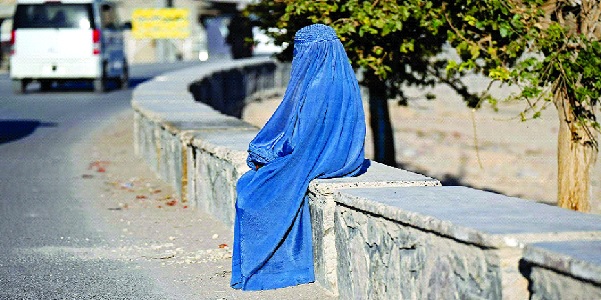

Kabul (TIP): Afghanistan’s Taliban authorities have reportedly ordered officials in the northern province of Balkh to stop using women’s names in official documents and replace them with the term “Bibi”, a move that has sparked fresh concerns over the systematic erosion of women’s rights and identity in the country.
The reported directive requires hospitals, clinics and other public institutions to use the nickname for female patients instead of their actual names. The word “Bibi”, commonly used as a respectful form of address for an elderly woman or grandmother, is also required to appear on medical prescriptions, according to reports by Afghan news outlet Zan Times and international media. The order, which has been reported in recent days, is part of a broader pattern of restrictions imposed on Afghan women since the Taliban returned to power in 2021.
The reported measure has raised concerns among Afghan women’s rights activists, who say the removal of women’s names from official records represents a further attempt to deny them individual identity and visibility in public life.
Women’s names erased from medical records
According to an investigation published by Zan Times and The Guardian, Taliban morality police officials instructed hospitals, private medical practices and clinics in Balkh province to stop recording female patients’ real names. The directive reportedly applies even to medical prescriptions, meaning women could be identified by the same nickname across medical records and healthcare documents. The reports have not established whether the order has been formally published as a written decree. Nor has there been independent confirmation of its implementation across the province. The scope of the reported measure has also raised questions about whether it applies to all official documents or primarily to medical records and documents handled by government institutions.
Activists warn of systematic erasure of identity
Afghan women’s rights activist Lalah Osmany, who is based in Germany, has condemned the reported policy, saying it goes beyond traditional social customs and amounts to the systematic removal of women’s identities.
Osmany said testimonies gathered from women, doctors and civil society activists indicated that some Afghan women were being addressed through degrading terms associated with animals, including “goat” and “livestock”.
She warned that replacing women’s names with such labels reduces them to objects or possessions rather than recognizing them as individuals.
“When a regime replaces a woman’s name and gives her one of an animal, it is stripping her of her human soul and reducing her to a mere biological creature or the property of a man,” she said, according to a report by EL PAÍS. The activist said the practice reflected a wider pattern of restrictions designed to limit women’s participation in public life and deny them recognition as independent individuals.
Medical risks raise further concerns
The reported directive has also raised concerns over the potential consequences for women’s healthcare.
Osmany warned that using the same nickname for multiple patients could create confusion in hospitals, increasing the risk of errors involving prescriptions, diagnoses and treatment.
“Imagine a hospital where dozens of prescriptions and medical records are filed under the same name – Bibi – or a number. The risks of making medical errors are huge,” she said.



Be the first to comment