


Tucked away in the eastern Himalayas, Sikkim is one of India’s most enchanting destinations-small in size, yet vast in natural beauty, cultural depth, and spiritual calm. With snow-capped peaks, emerald valleys, pristine lakes, ancient monasteries, and a deeply eco-conscious way of life, Sikkim offers a travel experience that feels both intimate and transformative. It is not merely a place to visit, but a landscape to feel, absorb, and remember.
A Land Sculpted by Nature
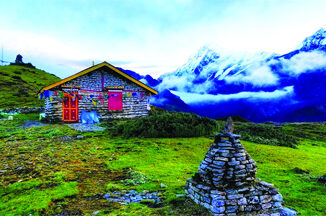
Sikkim’s geography is dramatic and breathtaking. Dominated by the mighty Mount Kanchenjunga, the third-highest peak in the world, the state unfolds in layers of alpine forests, rhododendron-covered hills, glacial lakes, and cascading waterfalls. From subtropical lowlands to icy high-altitude deserts, the diversity of terrain within a few hundred kilometers is astonishing.
Places like Yumthang Valley, often called the “Valley of Flowers,” burst into colour during spring, while Gurudongmar Lake, one of the highest lakes in the world, stuns visitors with its icy blue stillness. Rivers such as the Teesta and Rangeet carve their way through the mountains, adding rhythm and life to the landscape.
Gangtok: The Cultural Heart
The capital city Gangtok blends tradition with modernity effortlessly. Clean, organised, and surprisingly cosmopolitan, it offers panoramic views of the Himalayas alongside bustling markets, cafés, and cultural centres. The MG Marg promenade is the city’s social hub, lined with shops, eateries, and a relaxed mountain vibe. Gangtok is also home to significant spiritual sites such as the Enchey Monastery and the Namgyal Institute of Tibetology, which preserves rare manuscripts, thangkas, and artefacts that chronicle Tibetan Buddhism and Sikkim’s royal past.
Monasteries and Spiritual Heritage
Sikkim is deeply rooted in Buddhist traditions, and its monasteries are both spiritual sanctuaries and architectural marvels. The iconic Rumtek Monastery, seat of the Karmapa lineage, stands as a symbol of Tibetan Buddhism outside Tibet. Pemayangtse Monastery, one of the oldest and most sacred in Sikkim, offers sweeping views of the Himalayas and a profound sense of peace.
Prayer flags fluttering in the wind, the rhythmic chanting of monks, and the scent of incense lend Sikkim a meditative atmosphere that appeals to spiritual seekers and travellers alike.
North Sikkim: Raw, Remote, and Majestic
North Sikkim represents the state in its most untouched form. Snowbound villages like Lachen and Lachung serve as gateways to surreal landscapes. Here, nature dominates, and human presence feels humbling. Roads wind through rugged terrain, opening up to frozen lakes, high mountain passes, and endless skies. This region is ideal for travelers seeking solitude, adventure, and a deeper connection with the natural world.
Adventure and Eco-Tourism
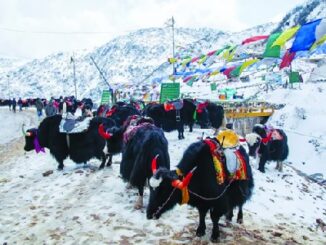
Sikkim is a paradise for adventure enthusiasts. Trekking routes such as the Goecha La Trek offer close-up views of Kanchenjunga and pass through forests, meadows, and glacial terrain. River rafting on the Teesta, mountain biking, paragliding, and yak safaris add excitement for thrill-seekers.
Equally important is Sikkim’s commitment to sustainable tourism. As India’s first fully organic state, Sikkim prioritises environmental protection, bans plastic bags in many areas, and promotes eco-friendly travel practices. Homestays, community tourism, and responsible trekking are encouraged to preserve the fragile Himalayan ecosystem.
A Mosaic of Cultures and Festivals
Sikkim’s population is a harmonious blend of Lepchas, Bhutias, and Nepalis, each contributing to the state’s rich cultural fabric. This diversity is reflected in local customs, architecture, music, and festivals.
Celebrations such as Losar, Saga Dawa, Pang Lhabsol, and Dasain are marked with vibrant rituals, masked dances, and communal feasts. These festivals offer visitors a rare glimpse into Sikkim’s living traditions and spiritual worldview.
Cuisine: Simple, Warm, and Soulful
Sikkimese cuisine mirrors its climate and culture-comforting, wholesome, and flavourful. Dishes like momos, thukpa, phagshapa, gundruk, and sel roti are staples, often prepared with locally sourced, organic ingredients. Fermented foods and warm soups are common, reflecting the region’s Himalayan heritage. Food in Sikkim is not about extravagance but nourishment, hospitality, and balance.

An interesting discussion is value comment. I feel that you must write extra on this matter, it won’t be a taboo topic however typically individuals are not enough to talk on such topics. To the next. Cheers
This web site is my breathing in, rattling wonderful design and perfect content material.
You have mentioned very interesting points! ps decent internet site.
Hello there, just became alert to your blog through Google, and found that it’s really informative. I’m going to watch out for brussels. I will appreciate if you continue this in future. A lot of people will be benefited from your writing. Cheers!
I truly enjoy studying on this web site, it contains fantastic posts.
I gotta favorite this web site it seems invaluable handy
Good day very nice web site!! Man .. Beautiful .. Superb .. I’ll bookmark your blog and take the feeds additionally?KI am glad to seek out so many useful information here in the publish, we want work out more techniques on this regard, thanks for sharing. . . . . .
Wonderful site you have here but I was curious about if you knew of any forums that cover the same topics talked about in this article? I’d really love to be a part of online community where I can get feed-back from other knowledgeable individuals that share the same interest. If you have any suggestions, please let me know. Appreciate it!
Hey there! I know this is kind of off topic but I was wondering if you knew where I could get a captcha plugin for my comment form? I’m using the same blog platform as yours and I’m having problems finding one? Thanks a lot!
Olxtoto adalah agen terpercaya untuk situs toto dan bandar togel yang melayani pemain di Indonesia dengan komitmen tinggi terhadap kepuasan pelanggan.
Olxtoto adalah agen terpercaya untuk situs toto dan bandar togel yang melayani pemain di Indonesia dengan komitmen tinggi terhadap kepuasan pelanggan.
Real nice design and style and good subject material, very little else we want :D.
I’m not that much of a internet reader to be honest but your blogs really nice, keep it up! I’ll go ahead and bookmark your website to come back in the future. All the best
Enjoyed studying this, very good stuff, thanks.
I besides conceive therefore, perfectly composed post! .
Wow! This could be one particular of the most useful blogs We have ever arrive across on this subject. Basically Great. I am also a specialist in this topic so I can understand your hard work.
You have mentioned very interesting points! ps decent web site.
Write more, thats all I have to say. Literally, it seems as though you relied on the video to make your point. You definitely know what youre talking about, why throw away your intelligence on just posting videos to your blog when you could be giving us something informative to read?
You have mentioned very interesting details! ps nice internet site. “Loneliness seems to have become the great American disease.” by John Corry.
Well I sincerely enjoyed reading it. This article offered by you is very helpful for proper planning.
I am often to blogging and i really appreciate your content. The article has really peaks my interest. I am going to bookmark your site and keep checking for new information.
Hello there! Quick question that’s completely off topic. Do you know how to make your site mobile friendly? My weblog looks weird when browsing from my apple iphone. I’m trying to find a template or plugin that might be able to resolve this issue. If you have any recommendations, please share. Appreciate it!
You made various good points there. I did a search on the topic and found the majority of people will consent with your blog.
You have remarked very interesting details ! ps decent website .
whoah this blog is wonderful i love reading your articles. Keep up the good work! You know, lots of people are searching around for this info, you could help them greatly.
I in addition to my guys were actually examining the good guidelines found on your web blog while instantly got a horrible suspicion I had not expressed respect to you for those techniques. Those men appeared to be consequently warmed to study them and have actually been loving these things. Many thanks for actually being indeed thoughtful and then for selecting certain quality things millions of individuals are really needing to understand about. My very own honest regret for not expressing appreciation to earlier.
You are my aspiration, I own few blogs and rarely run out from brand :). “Analyzing humor is like dissecting a frog. Few people are interested and the frog dies of it.” by E. B. White.
I appreciate your piece of work, appreciate it for all the good content.
Utterly pent subject matter, regards for entropy.
I do accept as true with all of the ideas you’ve introduced on your post. They’re really convincing and will certainly work. Still, the posts are very brief for beginners. Could you please lengthen them a bit from next time? Thank you for the post.
I love it when people come together and share opinions, great blog, keep it up.
I precisely desired to thank you very much yet again. I am not sure the things I might have sorted out without these secrets shared by you on such a situation. It has been an absolute challenging crisis for me personally, nevertheless looking at your expert fashion you dealt with the issue took me to weep over gladness. I’m just grateful for the service and thus hope that you recognize what a powerful job you have been undertaking training people via a blog. I am certain you have never met all of us.
I’m not that much of a internet reader to be honest but your blogs really nice, keep it up! I’ll go ahead and bookmark your site to come back in the future. Many thanks
I like the helpful info you provide in your articles. I’ll bookmark your weblog and check again here regularly. I’m quite certain I’ll learn many new stuff right here! Best of luck for the next!
Outstanding post, I believe website owners should learn a lot from this weblog its rattling user genial.
Some genuinely superb info , Glad I noticed this.
fantastic post, very informative. I wonder why the other experts of this sector don’t notice this. You should continue your writing. I am confident, you have a great readers’ base already!
Keep working ,remarkable job!
Amazing! This blog looks exactly like my old one! It’s on a entirely different subject but it has pretty much the same page layout and design. Superb choice of colors!
Hi , I do believe this is an excellent blog. I stumbled upon it on Yahoo , i will come back once again. Money and freedom is the best way to change, may you be rich and help other people.
Hi, i read your blog from time to time and i own a similar one and i was just wondering if you get a lot of spam remarks? If so how do you protect against it, any plugin or anything you can advise? I get so much lately it’s driving me crazy so any assistance is very much appreciated.
Please let me know if you’re looking for a author for your weblog. You have some really great posts and I feel I would be a good asset. If you ever want to take some of the load off, I’d really like to write some content for your blog in exchange for a link back to mine. Please send me an email if interested. Thanks!
I was looking through some of your content on this website and I conceive this site is real instructive! Retain putting up.
I loved as much as you will receive carried out right here. The sketch is tasteful, your authored subject matter stylish. nonetheless, you command get bought an nervousness over that you wish be delivering the following. unwell unquestionably come further formerly again since exactly the same nearly very often inside case you shield this increase.
Would you be fascinated about exchanging links?
Hi , I do believe this is an excellent blog. I stumbled upon it on Yahoo , i will come back once again. Money and freedom is the best way to change, may you be rich and help other people.
I was just searching for this info for some time. After six hours of continuous Googleing, finally I got it in your site. I wonder what’s the lack of Google strategy that don’t rank this type of informative sites in top of the list. Usually the top websites are full of garbage.
Thank you for the sensible critique. Me and my neighbor were just preparing to do a little research about this. We got a grab a book from our area library but I think I learned more clear from this post. I’m very glad to see such fantastic information being shared freely out there.
I’m not that much of a internet reader to be honest but your sites really nice, keep it up! I’ll go ahead and bookmark your website to come back down the road. All the best
Once I initially commented I clicked the -Notify me when new comments are added- checkbox and now each time a comment is added I get four emails with the same comment. Is there any means you can remove me from that service? Thanks!
Hey very cool blog!! Man .. Beautiful .. Amazing .. I’ll bookmark your web site and take the feeds also…I’m happy to find so many useful info here in the post, we need work out more techniques in this regard, thanks for sharing. . . . . .
My brother recommended I might like this website. He was totally right. This post actually made my day. You can not imagine just how much time I had spent for this information! Thanks!
I intended to draft you this bit of word just to say thanks over again for your incredible thoughts you’ve shared in this case. It has been so extremely generous of people like you to present easily all that a lot of folks might have advertised as an electronic book to earn some dough for themselves, notably seeing that you might have tried it in the event you wanted. These techniques also worked to be the fantastic way to understand that many people have similar keenness just like mine to see good deal more related to this issue. I am certain there are thousands of more enjoyable moments up front for individuals who looked at your blog.
My programmer is trying to convince me to move to .net from PHP. I have always disliked the idea because of the costs. But he’s tryiong none the less. I’ve been using Movable-type on numerous websites for about a year and am nervous about switching to another platform. I have heard great things about blogengine.net. Is there a way I can transfer all my wordpress content into it? Any kind of help would be greatly appreciated!
I have not checked in here for some time since I thought it was getting boring, but the last few posts are great quality so I guess I will add you back to my daily bloglist. You deserve it my friend :)
I couldn’t resist commenting
I have been browsing on-line greater than three hours today, but I never discovered any fascinating article like yours. It is lovely price sufficient for me. In my opinion, if all web owners and bloggers made excellent content material as you probably did, the net can be much more helpful than ever before.
I really appreciate this post. I have been looking all over for this! Thank goodness I found it on Bing. You have made my day! Thank you again!
Thanks for the sensible critique. Me and my neighbor were just preparing to do a little research about this. We got a grab a book from our local library but I think I learned more from this post. I am very glad to see such wonderful information being shared freely out there.
Thank you for any other informative blog. Where else may I am getting that kind of information written in such a perfect way? I’ve a undertaking that I’m just now working on, and I’ve been at the glance out for such information.
I have been browsing online greater than three hours nowadays, but I never found any interesting article like yours. It is beautiful worth enough for me. Personally, if all website owners and bloggers made excellent content as you did, the net can be much more useful than ever before.
Hello! I know this is kind of off topic but I was wondering which blog platform are you using for this website? I’m getting tired of WordPress because I’ve had issues with hackers and I’m looking at options for another platform. I would be awesome if you could point me in the direction of a good platform.
I was very pleased to find this web-site.I wanted to thanks for your time for this wonderful read!! I definitely enjoying every little bit of it and I have you bookmarked to check out new stuff you blog post.
Thank you for the sensible critique. Me & my neighbor were just preparing to do a little research about this. We got a grab a book from our local library but I think I learned more from this post. I am very glad to see such great info being shared freely out there.