Tag: Trump

  • Trump has an opportunity to create a legacy of unity and peace

    By Prof. Indrajit S Saluja
    By Prof. Indrajit S Saluja

    Donald Trump’s return to the White House has stirred intense debates and expectations across America’s diverse political spectrum. His supporters view his leadership as a way to address what they see as pressing issues, from illegal immigration to foreign conflicts, while those on the left call for more compassion, equity, and diplomacy. These contrasting views reflect not only America’s deep political divisions but also a broader expectation that Trump would need to balance conflicting demands across the country.

    One of the most divisive issues in Trump’s previous administration, and one that remains in the spotlight, is immigration. For his base, addressing illegal immigration is paramount. Many of his supporters feel that uncontrolled immigration contributes to a loss of jobs, increased crime, and burdens on public services. They believe Trump’s firm stance on border security and his earlier policies, such as building the wall along the southern border, are essential steps toward tackling this issue. They expect him to continue implementing strict policies and taking decisive action to curb illegal immigration.

    On the other side, however, are millions of Americans who view immigration through a more humanitarian lens. These citizens see the issue not just as a matter of law and order, but as one requiring compassion and empathy. They believe America’s identity has been shaped by immigrants and that, while reform is needed, there should be pathways to citizenship for those already living in the country, especially for children and those who have contributed positively to society. Liberals call for a balanced approach that addresses security concerns without compromising the humane treatment of individuals. Navigating these polarized viewpoints will be a key test of Trump’s leadership.

    Another area where Trump’s policy agenda will come under scrutiny is taxation. Traditionally, Republicans have favored tax cuts for corporations and the wealthy, believing that these policies stimulate economic growth by incentivizing investment and job creation. Trump’s tax reform during his presidency largely adhered to this philosophy, and his base expects him to continue with similar policies, favoring the business class and promoting wealth generation.

    But there is a growing chorus within America that calls for a different approach to tax policy. Many Americans, especially those facing financial hardships, believe that the tax system should be structured to benefit middle- and lower-income families. They argue that tax relief for the poor and greater investment in welfare programs and social security could create a more equitable society. In a nation where wealth inequality continues to widen, Trump would face pressure to either stay loyal to his party’s traditional tax stance or consider measures to support broader segments of the population. Balancing these contrasting expectations could determine how effectively he appeals to the wider electorate.

    One area where Trump’s outlook appears to align with public sentiment across the political spectrum is foreign policy. The idea of reducing U.S. involvement in overseas conflicts has gained traction among Americans who are weary of endless wars. Many want a strong U.S. military, but they would prefer it to serve primarily as a deterrent rather than engage in protracted conflicts that drain resources and often yield uncertain outcomes. Trump has previously criticized American interventions abroad, expressing a “peace through strength” philosophy that resonates with many who feel the U.S. should focus on domestic priorities rather than entangle itself in other nations’ disputes.

    The ongoing conflict between Russia and Ukraine is one arena where Trump’s non-interventionist stance might play out. Trump has suggested that he could negotiate an end to the conflict, potentially capitalizing on his previous rapport with Russian President Vladimir Putin. He has stated that he would push for an end to this war, likely by using U.S. leverage to halt military aid to Ukraine if it facilitates negotiations. With the U.S. as Ukraine’s principal backer, a shift in its support would likely prompt Ukraine to consider peace talks with Russia. While some view Trump’s approach as pragmatic, others fear it could undermine Ukrainian sovereignty and empower Russia. Nonetheless, his stance reflects a broader desire among Americans for a more restrained and calculated foreign policy.

    Another geopolitical hotspot where Trump could exert influence is the Israeli-Palestinian conflict. Currently, the Israeli government, led by Prime Minister Benjamin Netanyahu, has adopted a hardline stance, which critics argue escalates tensions and prolongs hostilities. Netanyahu’s political survival is often seen as tied to the conflict’s continuation, as it helps him consolidate support among right-wing factions. Trump, however, has the potential to play a mediating role. Given his established ties with Israeli leadership, he could leverage his influence to encourage a balanced approach that addresses Israel’s security concerns while also creating conditions for dialogue and peace with neighboring countries. Successfully brokering peace in both Ukraine and Israel could not only elevate Trump’s legacy but also position him as a serious contender for the Nobel Peace Prize, a symbol of his impact on global diplomacy.

    For Trump, however, the challenge lies in choosing his battles and approaching them with a sense of diplomacy. While he has strong convictions and an assertive style, bringing about meaningful change in such contentious areas requires more than rhetoric—it demands tact, empathy, and a willingness to listen to diverse perspectives. Many of his critics fear that he may instead focus on pursuing his perceived political adversaries, which could further divide the country and overshadow critical policy needs. However, a more measured approach could help unify Americans across the ideological spectrum and address issues that matter to all citizens, regardless of party affiliation.

    Ultimately, Trump’s second term will be shaped by his ability to navigate America’s polarized political landscape and deliver on his promises. To truly serve as a leader for all Americans, he would need to balance his commitment to his supporters with the needs of those who oppose him. From immigration reform to tax policy and foreign diplomacy, he has an opportunity to create a legacy of unity and peace. If he focuses on these lofty goals, rather than divisive politics, Trump could achieve what many see as nearly impossible: bridging divides at home and fostering peace abroad.

  • Biden, Trump trade barbs in a lackluster US Presidential Debate

    Biden, Trump trade barbs in a lackluster US Presidential Debate

    One faltered in communicating; the other eluded answers

    ATLANTA, GA (TIP):The first Presidential debate – a 90-minute affair- on June 28 in Atlanta which was hosted by CNN, had the U.S. President Joe Biden and former President Donald Trump spar on policies and performances. Their first question was on the economy. Biden who spoke mildly and in a hoarse voice dwelt on the economic gains under his watch. He claimed that he rescued the American economy from “free fall” and “chaos” when he took over the presidency from Mr. Trump in 2021.

    Trump in his usual loud voice rebutted Biden and claimed that during his term, “everything was rocking good.” He blamed Biden for rising prices that have frustrated Americans.
    “Inflation is killing our country,” Mr. Trump said. “It’s absolutely killing us.”

    The next question related to abortion rights. Biden blamed Trump for eroding abortion rights after the Republican’s three appointees to the U.S. Supreme Court voted to reverse Roe v. Wade, which had recognized a nationwide constitutional right to abortion.

    “It’s been a terrible thing what you’ve done,” Biden said. He pledged to restore the law under Roe if given a second term but didn’t say how he’d accomplish that. He said the idea of turning abortion laws back to states “is like saying we’re going to turn civil rights back to the states.”

    Trump said his presidency returned the issue of abortion to the people through state laws. He said he supports abortion ban exceptions for rape, incest and the life of the mother, and he repeated his claim that Biden supports abortion up to and after birth.
    “We think the Democrats are the radicals, not the Republicans,” Trump said.

    On the question on January 6 “insurrection” Trump’s answer was rather elusive. He lied about his role in the January 6, 2021 attack by his supporters on the U.S. Capitol, and tried to deflect by pivoting to other issues. Pressed on his role, he said he encouraged people to act “peacefully and patriotically,” then changed the subject to launch an attack on former House Speaker Nancy Pelosi, D-Calif.

    He said Biden ought to “be ashamed” for the way the January 6 defendants have been handled.

    On the question of health and fitness, both the candidates claimed they were absolutely fit. It was amusing to hear Trump challenge Biden to hit a ball for 50 yards which he said he could do easily.

    Their showdown took a bitter and personal turn. Biden highlighted Trump’s criminal convictions . Trump responded by invoking Biden’s son, hunter, who was recently convicted. Biden also spoke about Trump having sex with a porn star Stormy Daniels while Trump’s wife was pregnant. Trump rebutted Biden’s accusation denying that he had sex with the porn star. “I didn’t have sex with the porn star”, Trump said.

    The first Presidential debate failed to interest or enthuse the American people, many said.
    (With inputs from agencies)

  • Not by money alone, Mr. Trump

    Wake up, America-your future depends on it

    Donald Trump’s reported promise to the oil industry captains in exchange for a billion-dollar campaign fund in an attempt to return to the White House is deeply troubling. If true, it reflects a concerning disregard for the welfare of the nation and the American people in favor of personal ambition and financial gain. Such a deal prioritizes corporate interests over the broader public good and environmental sustainability, echoing the accusations against figures like Julius Caesar’s antagonist Cassius, who was accused of selling and manipulating positions for personal gain.

    The scenario you describe highlights a fundamental ethical issue: the potential sale of political influence in exchange for financial support. This kind of transaction not only undermines the democratic principles upon which the United States was founded, but it also jeopardizes the nation’s future by entrenching the interests of the fossil fuel industry at a time when the world is facing an urgent climate crisis. By making promises to protect the fossil fuel industry, Trump could be endorsing a path that exacerbates environmental degradation and hinders progress toward cleaner, sustainable energy sources.

    The comparison to Caesar’s accusation against Cassius is apt, suggesting a betrayal of the public trust for private gain. America’s political system is built on the idea of elected officials serving the interests of their constituents and upholding the country’s values and integrity. When politicians prioritize their own interests or the interests of specific industries over those of the public, they are eroding the foundation of democracy and contributing to the decay of the nation’s ethical standards.

    The personal history of Donald Trump—declaring bankruptcy multiple times, allegedly defrauding Americans by avoiding taxes, and living a life of luxury at the expense of others—paints a picture of a man with little regard for ethical conduct. This raises serious questions about his potential to lead the nation effectively and with integrity. If a leader cannot manage their own affairs responsibly, it is reasonable to doubt their ability to manage the complex challenges facing a nation.

    The metaphor of “vermin eating into the vitals of a tree” is a powerful image that conveys the potential long-term harm such a deal could cause to the country. If left unchecked, decisions driven by self-interest and financial gain can erode the core values and institutions that have historically made America strong. It is a call to action for Americans to be vigilant and demand accountability from their leaders.

    America deserves leaders who prioritize the well-being of the nation and its people, who strive to act in the best interests of all citizens, not just a select few. This requires rejecting any attempts to compromise political integrity for financial gain and holding politicians accountable for their actions.

    The scenario is a stark reminder of the importance of ethical leadership and the need for Americans to remain vigilant in their pursuit of a government that serves the public good. As the nation faces critical challenges, including the climate crisis and economic inequality, it is crucial to demand leaders who are committed to finding solutions that benefit all, rather than perpetuating a cycle of exploitation and self-interest. Wake up, America—your future depends on it.

  • Biden, Trump set for November 2024 clash

    Biden, Trump set for November 2024 clash

    WASHINGTON, D.C. (TIP): US President Joe Biden and his predecessor Donald Trump secured their parties’ presidential nominations with impressive wins in another round of key primaries, setting the stage for a grueling 2020 rematch between them in November.

    Biden, 81, won the Democratic presumptive nomination on Tuesday, March 12, after easily clinching the presidential primaries in Georgia, as the number of delegates in his kitty crossed the halfway mark of 3,933 pledged delegates. A total of 1,968 delegates were required to win the Democratic nomination for the November 5 presidential election.
    With wins in another round of key primaries, Donald Trump and Joe Biden have set the stage for a 2020 rematch in November.
    (Also read The Biden-Trump Rematch and the Historical Context of Presidential Rematches on Page 10)
    The last presidential rematch came in 1956 when Republican President Dwight D Eisenhower again defeated Adlai Stevenson, the Democratic opponent he had four years prior

    Four states — Georgia, Hawaii, Mississippi, Washington — one American territory and Democrats living abroad held their primaries on Tuesday. Biden would formally be declared the party’s nomination during the Democratic National Convention in Chicago in August.

    Trump, 77, reached the 1,215 delegates necessary with an allocation of delegates from Washington state. Trump will be officially nominated at the Republican National Convention in Milwaukee this July. He will lead the Republican Party in a third consecutive presidential election after clinching the nomination on Tuesday.

    Their rematch, long anticipated, but hardly clamored for, is broadly expected to mirror the 2020 campaign, though Trump will run this time under the specter of 91 felony charges.

    Trump is scheduled to become the first former American president to go on trial in a criminal case on March 25 in New York, where he faces charges he falsified business records to hide hush money payments to a porn star.

    Other charges are related to allegations that he plotted to overturn his 2020 election defeat; played a lead role in the January 6, 2021, insurrection at the US Capitol and illegally took classified documents from the White House.

  • After Colorado, Maine bars Donald Trump from presidential primary

    After Colorado, Maine bars Donald Trump from presidential primary

    Trump campaign says it would appeal Bellows’ decision to Maine’s state courts

    PORTLAND, MAINE (TIP): Maine’s Democratic secretary of state on Thursday, December 28, removed former President Donald Trump from the state’s presidential primary ballot under the Constitution’s insurrection clause, becoming the first election official to take action unilaterally as the US Supreme Court is poised to decide whether Trump remains eligible to return to the White House.

    The decision by Secretary of State Shenna Bellows follows a ruling earlier this month by the Colorado Supreme Court that booted Trump from the ballot there under Section 3 of the 14th Amendment. That decision has been stayed until the US Supreme Court decides whether Trump is barred by the Civil War-era provision, which prohibits those who “engaged in insurrection” from holding office.

    The Trump campaign said it would appeal Bellows’ decision to Maine’s state courts, and Bellows suspended her ruling until that court system rules on the case. In the end, it is likely that the nation’s highest court will have the final say on whether Trump appears on the ballot in Maine and in the other states.

    Bellows found that Trump could no longer run for his prior job because his role in the January 6, 2021, attack on the US Capitol violated Section 3, which bans from office those who “engaged in insurrection”. Bellows made the ruling after some state residents, including a bipartisan group of former lawmakers, challenged Trump’s position on the ballot.“I do not reach this conclusion lightly,” Bellows wrote in her 34-page decision. “I am mindful that no Secretary of State has ever deprived a presidential candidate of ballot access based on Section 3 of the Fourteenth Amendment. I am also mindful, however, that no presidential candidate has ever before engaged in insurrection.”

    The Trump campaign immediately slammed the ruling. “We are witnessing, in real-time, the attempted theft of an election and the disenfranchisement of the American voter,” campaign spokesman Steven Cheung said in a statement. Legal experts said that Thursday’s ruling demonstrates the need for the nation’s highest court, which has never ruled on Section 3, to clarify what states can do.

  • Trump’s White House comeback plans hit Colorado hurdle

    The Colorado Supreme Court has ruled that former US President Donald Trump, the frontrunner for the 2024 Republican nomination, is not eligible to return to the White House because of his role in the attack on the US Capitol in 2021. The court has ordered the exclusion of his name from the state’s Republican presidential primary ballot. The 4-3 ruling came on a lawsuit that challenged Trump’s eligibility under Section 3 of the 14th Amendment, which deems former office-holders ineligible from running again if they have engaged in ‘insurrection or rebellion’ against the US despite having taken an oath to uphold the Constitution.

    The verdict, which will inevitably be reviewed by the US Supreme Court, is not applicable outside the state. And Colorado is not a high-stakes state for Trump as he had lost by a big margin there in the 2020 presidential election. Nevertheless, the judgment can have a bearing on the decisions of courts on petitions seeking Trump’s disqualification in ‘more competitive’ states. It will also buttress the Democrats’ argument that the January 6, 2021, riot was an insurrection bid carried out at Trump’s behest.

    The anarchic assault on the US Capitol had disgraced the much-vaunted American democracy. Trump allegedly resorted to brazen incitement to violence in a bid to prevent the US Congress from certifying the result of the 2020 election, which he had lost to Joe Biden. The Colorado court has rightly observed: ‘President Trump’s direct and express efforts, over several months, exhorting his supporters to march to the Capitol to prevent what he falsely characterized as an alleged fraud on the people of this country were indisputably overt and voluntary.’ Even though opinion is divided over whether a lawsuit is a fair method for determining Trump’s eligibility, he undoubtedly deserves no leniency for riding roughshod over constitutional norms. While Trump is again playing the victim card, the Colorado judgment has the potential to queer his presidential pitch.
    (Tribune, India)

  • Trump decries charges against him, accuses ”radical left lunatics” of election interference

    Trump decries charges against him, accuses ”radical left lunatics” of election interference

    PALM BEACH, FL (TIP): A defiant former president Donald Trump denounced the criminal charges against him in connection to hush money payments made to a porn star before the 2016 presidential election and said the US has now become a “failing nation” where the “radical left lunatics” want to interfere with the elections by using law enforcement. Trump, the first former US President to be criminally charged, has pleaded not guilty to 34 felony counts of falsifying business records at his arraignment in a Manhattan court on charges relating to hush money payments made to Stormy Daniels.

    The 76-year-old former Republican president ruled the country for four years till January 2021.

    Addressing his supporters hours after he was arraigned, Trump said: “The only crime that I committed is to fearlessly defend our nation from those who seek to destroy it.” “Incredibly, we are now a failing nation. We are a nation in decline. And now these radical left lunatics want to interfere with our elections by using law enforcement. We can’t let that happen,” Trump, who is eying the White House for a second time in 2024, told his supporters at his Mar-a-Lago resort in Florida, soon after he flew back from New York. “Our country is going to hell,” the 76-year-old Republican leader said in a roughly 25-minute speech. He described the time since his exit from office as “the most embarrassing time in our country’s history.” “With all of this being said, and with a very dark cloud over our beloved country, I have no doubt nevertheless, that we will make America great again,” he said in the address, marking the first time he has spoken publicly since being arraigned on Tuesday.

    Trump also attacked Manhattan District Attorney Alvin Bragg, the prosecutor whose office convinced a New York grand jury to bring the first criminal charges ever against a former US president.

    “But now we’re there. Spend time [in New York] today, as you possibly read, with a local failed district attorney, charging a former president of the United States for the first time in history on a basis that every single pundit and a legal analyst said, ‘There is no case; there’s no case.’ They kept saying, ‘There’s no case!’” Trump said of his arrest.

    “He knew there was no case. That’s why last week he delayed for a month and then immediately took that back and threw this ridiculous indictment together; it came out today. Everybody said, ‘This is not really an indictment. There’s nothing here.’ My lawyers came to me and they said, ‘There’s nothing here; they’re not even saying what you did,’” he continued.

    Trump went on to call for the prosecution of Bragg, claiming he leaked the grand jury documents to the public.

    He criticized the indictment levelled against him, saying he is “going through a fake investigation” that “turned out to be a sham.” “Let me be as clear as possible: I am Innocent. The only offence I have committed is to defend America from those who seek to destroy it. What we’ve witnessed is election interference in the highest order,” he said. “Let me assure you – I have never been more determined than I am right now. They will not beat me. They will not break me. They will not stop me from fighting to save this country. The more they try to frame me, slander me, and destroy me, the stronger my resolve to complete our mission,” Trump said.

    He did not even spare State Supreme Court Justice Juan M Merchan, who is overseeing his case.

    The former president alleged that he is a “Trump-hating judge” with a “Trump-hating wife” and family “whose daughter works for Kamala (Harris) house and now receives money from the Biden-Harris campaign”.

    Trump said the US is now in a mess.

    “Our economy is crashing. Inflation is out of control. Russia has joined with China. Can you believe that? Saudi Arabia has joined with Iran,” he said.

    “China, Russia, Iran and North Korea have formed together as a menacing and destructive coalition that would have never happened if I were your president it would never have happened. Nor would Russia attack Ukraine. All of those lives will be saved. All of those beautiful cities would be standing,” he said.

    “Our currency is crashing and will soon no longer be the world standard, which will be our greatest defeat frankly, in 200 years. There will be no defeat like that will take us away from being even a great power. If you took the five worst presidents in the history of the United States and added them up they would not have done near the destruction to our country as Joe Biden and the Biden administration have done,” Trump said.

    The former president said that there are open threats by various countries of the use of nuclear weapons, something which was never mentioned or discussed by other nations during the Trump administration.

    “This could very well lead under the Biden administration’s leadership to an all-out nuclear World War III can happen. We’re not very far away from it, believe it or not,” Trump said.
    (Source: PTI)

  • A.G. Merrick Garland – F.B.I. search Trump’s Mar-a-Lago with Trump Attorney present. Peaceful Transfer of Power!?

    A.G. Merrick Garland – F.B.I. search Trump’s Mar-a-Lago with Trump Attorney present. Peaceful Transfer of Power!?

    “Mar-a-Lago has unleashed for future generations a new problem that will one day consume and destroy the most important goal of American Exceptionalism: Peaceful Transfer of Power. Now, every POTUS who does wrong, like a murderer who has murdered, will do more wrongs as they are “free,” and here, to avoid criminal prosecution, that criminal-POTUS will seek to destroy our cherished singular goal of peaceful transfer of power. Trump tried after losing the 2020 election. That Hunter Biden’s “activities” were suppressed by MSM in support of Joe Biden’s then-candidacy is wrong, but not excuse for January 6th.”

    By Ravi Batra

    Our republic – America – is in trouble and our precious peaceful transfer of power is at-risk; our divisions more brittle; and January 6th Insurrection Hearings surpassed by Mar-a-Lago. We, the United States of America, have crossed the Rubicon, and truly “no one is above the law”  with the F.B.I.’s effectuating on August 8, 2022 a federal search warrant issued by Hon. Bruce Reinhart, a Federal Magistrate Judge – with a history of being concerned about public integrity and well respected in the Palm Beach community.

    This First – raiding a former President’s home – is nevertheless troubling as even Richard Nixon was not raided, and his undeniable criminality was recorded on tape. Now, we are at a tension between two competing American Ideals: “no one is above the law” and “peaceful transfer of power.” The problem is that the former is a “means,” and the latter the “goal”; and we are witnessing the means destroy the goal.  The raid on Mar-a-Lago fully and honestly honors the “means,” no one is above the law; but in so doing, it also does more violence to our republic surviving – as Ben Franklin warned so many years ago in Philadelphia in 1787 – than the Insurrection on January 6th, as that was personal and merely people misled to a cause by an enchanting and charming president Trump, while this has the institutional force of law. That Merrick Garland is an honest man, with integrity intact, and a distinguished jurist gracing the role of Attorney General of these United States, and hence, both America’s lawyer and the Constitution’s lawyer is of no moment. Mar-a-Lago has unleashed for future generations a new problem that will one day consume and destroy the most important goal of American Exceptionalism: Peaceful Transfer of Power. Now, every POTUS who does wrong, like a murderer who has murdered, will do more wrongs as they are “free,” and here, to avoid criminal prosecution, that criminal-POTUS will seek to destroy our cherished singular goal of peaceful transfer of power. Trump tried after losing the 2020 election. That Hunter Biden’s “activities” were suppressed by MSM in support of Joe Biden’s then-candidacy is wrong, but not excuse for January 6th. On August 6th, just two days before the Mar-a-Lago Raid, I wrote an introductory editorial note to Belarus D.F.M. H. E. Yury Ambrazevich‘s Op-Ed. It’s worth repeating here, as now its inward-looking for our fellow Americans: “After the Magna Carta was wrestled from King John in 1215 at Runnymede, limiting the absolute power of a sovereign, the next and last great leap forward was – our Declaration of Independence in 1776, where individuals claimed certain inalienable rights to both freedom and to self-govern, and soon thereafter in 1787, our Constitution which memorialized our distrust of government’s power by separating it into three co-equal parts, and then for good measure, granted individuals the Bill of Rights that the split-powered government could not take away; American Exceptionalism. So, from the Greek’s “Order is beauty, and Beauty is order,” i.e., Order first, the noble American contribution is: we need Order, but absent God, who we trust, it’s power in human beings’ hands we don’t, so we separate it, and then block it with our Bill of Rights.”

    Lincoln at Gettysburg – but not every POTUS is Lincoln. “We the people” must not forget that our Government is “for” the people, and not the politicians. Abraham Lincoln promised us that at Gettysburg – but not every president honors that. My Revolutionary hero, Thomas Jefferson gave us the key: Eternal Vigilance. He didn’t say it, but I will: vigilance by the people of our government, not just the other way around. We the People are missing in action and MSM, always a resident outside the palace walls with an invitational pass to visit, when invited in, has too often dishonored its obligations by being unfaithful to Truth, without fear or favor. And, now the distinguished and honest Attorney General of the United States, former Chief Judge Merrick Garland…

    The key to making the “means” serve the “goal” is discretion: be it well know prosecutorial discretion, legislative discretion, behind-the-scenes presidential discretion, society-affirming judicial discretion, or the mother of all discretions: jury nullification.

    Transcript: Attorney General Merrick Garland Delivers Remarks on F.B.I’s search of Trump’s Mar-a-Lago on Monday August 8, 2022

    Washington, DC

    Thursday, August 11, 2022

    Remarks as Delivered

    Good afternoon. Since I became Attorney General, I have made clear that the Department of Justice will speak through its court filings and its work.

    Just now, the Justice Department has filed a motion in the Southern District of Florida to unseal a search warrant and property receipt relating to a court-approved search that the FBI conducted earlier this week. That search was of premises located in Florida belonging to the former President. The Department did not make any public statements on the day of the search. The former President publicly confirmed the search that evening, as is his right. Copies of both the warrant and the FBI property receipt were provided on the day of the search to the former President’s counsel, who was on site during the search. The search warrant was authorized by a federal court upon the required finding of probable cause. The “property receipt” is a document that federal law requires law enforcement agents to leave with the property owner. The Department filed the motion to make public the warrant and receipt in light of the former President’s public confirmation of the search, the surrounding circumstances, and the substantial public interest in this matter.

    Faithful adherence to the rule of law is the bedrock principle of the Justice Department and of our democracy. Upholding the rule of law means applying the law evenly, without fear or favor. Under my watch, that is precisely what the Justice Department is doing. All Americans are entitled to the evenhanded application of the law, to due process of the law, and to the presumption of innocence. Much of our work is by necessity conducted out of the public eye. We do that to protect the constitutional rights of all Americans and to protect the integrity of our investigations.

    Federal law, longstanding Department rules, and our ethical obligations prevent me from providing further details as to the basis of the search at this time. There are, however, certain points I want you to know. First, I personally approved the decision to seek a search warrant in this matter.

    Second, the Department does not take such a decision lightly. Where possible, it is standard practice to seek less intrusive means as an alternative to a search, and to narrowly scope any search that is undertaken. Third, let me address recent unfounded attacks on the professionalism of the FBI and Justice Department agents and prosecutors. I will not stand by silently when their integrity is unfairly attacked. The men and women of the FBI and the Justice Department are dedicated, patriotic public servants. Every day, they protect the American people from violent crime, terrorism, and other threats to their safety, while safeguarding our civil rights. They do so at great personal sacrifice and risk to themselves. I am honored to work alongside them. This is all I can say right now. More information will be made available in the appropriate way and at the appropriate time. Thank you.

    Follow Twitter: @ravibatra & @america-times

    (First published in The America Times)

  • Trump and his two adult children set to be Questioned Under Oath by New York A.G., starting July 15

    Trump and his two adult children set to be Questioned Under Oath by New York A.G., starting July 15

    The questioning of Mr. Trump and two of his adult children is part of the attorney general’s civil investigation

    NEW YORK (TIP): Donald J. Trump and two of his adult children have agreed to be questioned under oath in mid-July by lawyers from the New York State attorney general’s office, unless the state’s highest court intervenes. The agreement, filed Wednesday, June 8 in New York State Supreme Court, says that Mr. Trump, Donald Trump Jr. and Ivanka Trump have agreed to appear for testimony that will begin on Friday, July 15, and end the following week.

    The questioning will come as the state attorney general, Letitia James, concludes the final phase of her investigation into Mr. Trump and the business practices of his company, The Trump Organization. The agreement follows a number of legal setbacks for the former president, whose lawyers had fought the attorney general for months, hoping to avoid questioning.

    Wednesday’s agreement was filed two weeks after a state appeals court ruled to allow the questioning. The court rejected arguments from Mr. Trump’s lawyers that Ms. James’s civil investigation was politically motivated, and that she should be barred from questioning Mr. Trump under oath while he was also under criminal investigation for some of the same business practices.

    Alina Habba, a lawyer for Mr. Trump, said soon after that ruling that she would appeal the matter to the Court of Appeals. It is unclear whether the Court will agree to hear the case, but if it does, the three Trump family members may still have a hope of avoiding the interviews.

    Another of Mr. Trump’s adult children, Eric Trump, was questioned under oath in October 2020, and invoked his right against self-incrimination in response to more than 500 questions. While Mr. Trump and the two children could decline to answer questions for the same reason, doing so could harm them in Ms. James’s inquiry. In a criminal case, jurors cannot infer anything from a defendant’s refusal to testify, but that does not hold true for civil cases.

    Ms. James’s investigation began in March 2019 and has focused on whether Mr. Trump systematically misstated the value of his assets to gain financial advantage with lenders and tax authorities. Because the inquiry is civil, Ms. James cannot file criminal charges, but can file a lawsuit. A lawyer from her office signaled in April such a filing could occur in the near future. Lawyers from Ms. James’s office are also involved in a criminal investigation being led by the Manhattan district attorney, Alvin L. Bragg. That inquiry had been heading toward an indictment before Mr. Bragg and some of his top aides developed concerns about the strength of the case.

    In the civil investigation Mr. Trump was held in contempt of court in April by a state court judge, Arthur F. Engoron, and ordered to pay $10,000 a day until his lawyers filed a number of documents that were sought by the attorney general. The following month, Justice Engoron lifted the contempt fine, but set conditions and said he would reinstate that penalty if Mr. Trump did not comply.

    After a hearing involving lawyers for Mr. Trump and Ms. James on Wednesday, the judge said that he would leave the order in place — with no fine attached — and gave Mr. Trump’s lawyers a deadline of next Friday to file information about the Trump Organization’s document retention policies.

    In a recent live appearance on the podcast “Pod Save America,” Ms. James said that Mr. Trump “got caught” using “funny numbers in his financial documents.” She also said that she would “allow him to exhaust his appeal.”

    Mr. Trump has repeatedly denied wrongdoing and referred to Ms. James’s investigation as a witch hunt and to the attorney general as a radical left “racist.”
    (Source: New York Times)

  • Revival of G7 and its impact

    Revival of G7 and its impact

    From US perspective, the summit’s aim is to announce that ‘America is back’

    By Shyam Saran

    “From the US perspective, the objective of the summits is to announce that ‘America is back’ and ready to lead the world after the debilitating disruption of western alliances and partnerships and a retreat from global engagement during the Trump years. What Biden is signaling is that the revival of American leadership and diplomatic activism will be anchored in the web of its transatlantic relationships, even as the Indo-Pacific strategy will be its key preoccupation, given the acknowledged challenge posed by China. The emphasis on the transatlantic alliance and partnership is also important in countering the Russian threat.”

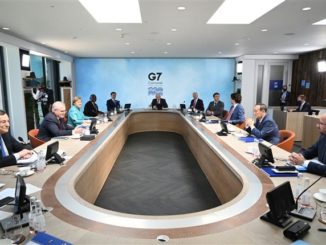
    The three-day G7 summit concluded on June 13 and released an unusually long and detailed joint statement of 70 paragraphs and a separate Open Societies Statement. The latter statement was on behalf of the G7 and the four invitees to the summit, namely Australia, India, South Korea and South Africa. The summit is only the first of three key meetings involving western countries. This week includes a meeting of the EU and the US and a meeting of the NATO military alliance, both in Brussels. Fortified by the display of solidarity at these three summits, President Biden will have his first summit with Russian President Putin in Geneva on June 16.

    From the US perspective, the objective of the summits is to announce that ‘America is back’ and ready to lead the world after the debilitating disruption of western alliances and partnerships and a retreat from global engagement during the Trump years. What Biden is signaling is that the revival of American leadership and diplomatic activism will be anchored in the web of its transatlantic relationships, even as the Indo-Pacific strategy will be its key preoccupation, given the acknowledged challenge posed by China. The emphasis on the transatlantic alliance and partnership is also important in countering the Russian threat. While Biden has described China as a competitor, Russia is the ‘enemy’, even though the US is prepared to work together with both on areas where there are convergent interests on global issues, such as climate change, cyber security and nuclear non-proliferation. Has Biden succeeded in convincing his western allies and partners and his adversaries that the US is back? The answer to that, as judged from the joint statement, should be a yes. But then, the Trump years were a low base to compare to.

    Has Biden achieved a degree of western consensus in presenting a united front against Russia and China? Perhaps more against Russia and less against China. For example, the launch of the Build Back a Better World (B3W) partnership was launched as a ‘values driven, high standard and transparent infrastructure partnership led by major democracies’ but stopped short of explicitly posing it as an alternative to China’s Belt and Road Initiative. There are few details of how this partnership is going to be financed beyond saying that this will be private financed but with ‘catalytic investment’ from public and multilateral sources. We may conclude that there are simply not enough resources available to be deployed by the G7 which could match what China has been offering, despite concerns over lack of transparency and exacerbation of the debt overload on several developing countries.

    There are several other references to Chinese misdemeanors which taken together do represent a broad western consensus on the need to confront China. These include the importance of maintaining peace and stability in the Taiwan Strait, ‘a free and open Indo-Pacific’, of avoiding ‘unilateral attempts to change the status quo and increase tensions in the East and South China Seas.’ In addition, there are references to human rights issues in Xinjiang and Hong Kong, both of which are regarded as ‘core issues’ by China. Overall, therefore, one could say that Biden has been able to fashion a consensus on acknowledging the Chinese security challenge and ideological challenge.

    Will this impress China? Up to a point. The economic and commercial relationship between Europe and China is deep and broad ranging as is that between China and Japan. The EU and China have been working together, for example, for several years on developing benchmarks for climate finance, including green bonds, disclosure norms and the running of carbon markets. The area of climate finance will assume critical importance as climate change action gets into high gear after the Glasgow summit later this year. There is a limit to disengaging from the world’s second largest economy and the central node in global supply chains.

    China has reacted by dismissing the G7, pointing out that a small group of countries cannot rule the world. There is another important shift the summit represents. After the global financial and economic crisis of 2007-8, it is the G20 which was established as the premier forum for international economic coordination. It worked very well in dealing with the immediate crisis, but its role has steadily diminished since then. With renewed tensions between the US and China and with Russia, the utility of the G20 is not so obvious currently. This adds to the significance of the revival of G7, even though its economic heft is much less than in its heyday. It constitutes only 30% of world GDP as against 60% at the end of the Cold War. However, the global trading system and its financial infrastructure continue to be dominated by the G7 so one should not underestimate its influence. It has the potential to emerge as a core of a broader coalition to achieve a degree of balance in the power equations that the emergence of China has upturned in the new millennium.

    The adoption of the Statement on Open Societies reflects Biden’s renewed emphasis on the importance of preserving and promoting ‘open societies, democratic values and multilateralism as foundations for dignity, opportunity and prosperity for all.’ For all the cynicism that attends the expression of such lofty statements, they have value in contesting China’s confident belief in the efficacy of its authoritarian ideology and system of governance. Biden is taking head on the prevailing pessimism about democracy within democracies themselves. One should welcome PM Modi being honored as the lead speaker at the session on Open Societies. His remarks were unexceptionable and worthy of a leader of the world’s largest democracy. One hopes that this is followed by a renewed commitment to democratic values which are enshrined in the Indian Constitution, but also constitute, as PM Modi said, the civilizational values of India.

    (The author is a former Foreign Secretary of India and senior fellow, Centre for Policy Research)

  • Barrett, Gorsuch, Kavanaugh side with liberal Supreme Court justices in computer fraud case

    Barrett, Gorsuch, Kavanaugh side with liberal Supreme Court justices in computer fraud case

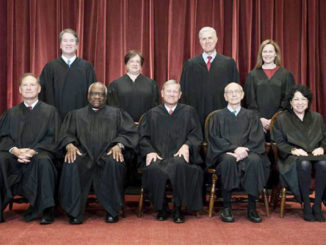
    WASHINGTON (TIP): Trump-appointed Supreme Court Justices Brett Kavanaugh, Amy Coney Barrett and Neil Gorsuch sided with liberal Justices Stephen Breyer, Sonia Sotomayor and Elena Kagan Thursday, June 3, to endorse a narrow approach on how to apply a 1986 law against computer hacking. The justices overturned the conviction of a police officer, Nathan Van Buren, who was paid to run a license plate search in violation of the police department’s policy and, according to the federal government, the Computer Fraud and Abuse Act.

    But Barrett, writing for the majority, said the officer technically did not access information he wasn’t entitled to. Instead, he simply misused his access to information he was authorized to see. Therefore, the court said, the officer did not violate federal law.

    “This provision covers those who obtain information from particular areas in the computer – such as files, folders or databases – to which their computer access does not extend,” Barrett wrote in the majority opinion. “It does not cover those who, like Van Buren, have improper motives for obtaining information that is otherwise available to them.”

    The vote breakdown pitted the three Trump-appointed justices and the court’s three liberals against the three more senior Republican-appointed justices: Chief Justice John Roberts and Justices Clarence Thomas and Samuel Alito.

  • Facebook suspends Trump for 2 years in response to Oversight Board ruling

    The change is part of a series of responses to the Facebook Oversight Board’s ruling on former president Trump.

    WASHINGTON (TIP): Facebook said Friday, June 4, that it plans to suspend Trump for two years following his comments in the wake of the Capitol insurrection on January 6th and will only reinstate him” if the risk to public safety has receded. “


    Facebook plans to announce that it will no longer automatically give politicians a pass when they break the company’s hate speech rules, a major reversal after years of criticism that it was too deferential to powerful figures during the Trump presidency.


    Since the 2016 election, the company has applied a test to political speech that weighs the newsworthiness of the content against its propensity to cause harm. Now the company will throw out the first part of the test and will no longer consider newsworthiness as a factor, according to a person familiar with the company’s thinking who spoke on the condition of anonymity because that person was not authorized to speak publicly. But Facebook doesn’t plan to end the newsworthiness exception entirely. In the cases where an exception is made, the company will now disclose it publicly, the person said — after years of such decisions being closely held. And it will also become more transparent about its strikes system for people who violate its rules.


    The moves, first reported by the Verge, are part of a set of responses to the Facebook Oversight Board’s recommendations. The largely independent Facebook-funded body recently ruled on whether the social network should reinstate former president Donald Trump’s account on its service. The company’s responses are the first major test of how a nongovernment watchdog might act as a check on the powerful social network, which is used by 3.45 billion people globally on a monthly basis.

  • Senate Republicans block Jan. 6 commission in victory for Trump

    Senate Republicans block Jan. 6 commission in victory for Trump

    WASHINGTON (TIP): Senate Republicans blocked legislation Friday, May 28, that would have launched a 9/11-style commission on the Jan. 6 attack at the U.S. Capitol, affirming they want to turn the page on the dark chapter in American history despite pleas for action from family members of a police officer killed in the riot, a Daily News report, May 28 said.

    The bill, which passed the House earlier this month with unusually broad bipartisan support, was derailed in a 54-35 procedural vote that would have cleared the way for the Senate to begin debate on the measure.

    Even though a majority of senators voted for the bill — including six Republicans — the chamber’s filibuster rule requires that most legislation receive the support of at least 60 members to succeed. The failed Jan. 6 commission vote marks the first GOP filibuster of Joe Biden’s presidency and is certain to ignite a debate over the need to abolish or reform the arcane rule.

    New York Sen. Chuck Schumer, the Senate’s Democratic majority leader, charged that the commission quashing makes the Republicans complicit in former President Donald Trump’s false insistence that Biden’s election was illegitimate — the same lie that spurred a far-right mob to storm the Capitol on Jan. 6.

    “What are you afraid of? The truth? Are you afraid Donald Trump’s big lie will be dispelled? Are you afraid that all of the misinformation that has poured out will be rebutted by a bipartisan, down-the-middle commission?” Schumer said on Senate floor before the vote. “This is about a democracy. This is about the future of our democracy. The big lie has eroded that democracy, and we must do everything we can to rebut it.”

     Kentucky Sen. Mitch McConnell, Schumer’s Republican counterpart, pushed his members to block the bill because he claimed Democrats would use the commission to trash talk his party ahead of the 2022 midterm elections.

    Despite McConnell’s criticism, the commission would have consisted of 10 members, evenly appointed by both parties, with the stated goal of making sure a tragedy like Jan. 6 could never happen again.

    The now-blocked bill was the product of bipartisan negotiations in the House between New York Rep. John Katko and Mississippi Rep. Bennie Thompson, respectively the top Republican and Democrat on the House Homeland Security Committee.

    To ensure its bipartisan nature, Thompson agreed to let the commission’s subpoena power be shared between the parties, which is unusual.

    Family members of Brian Sicknick, the U.S. Capitol Police officer who died after being attacked by Trump supporters on Jan. 6, pleaded with McConnell and his caucus this week to reconsider, even meeting with several Republican senators on Thursday, May 27.

    “It’s very disturbing that anyone would not want to support this. Why would they not want to get to the bottom of such horrific violence?” Sandra Garza, Sicknick’s partner, told reporters in between meetings Thursday. “Just boggles my mind.”

    (Source: Daily News)

  • Paul Ryan slams Trump in speech about future of Republican Party

    Paul Ryan slams Trump in speech about future of Republican Party

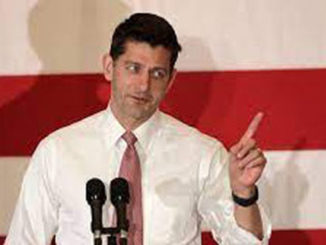
    LOS ANGELES(TIP): Paul Ryan, a former speaker of the House, sounded a pointed warning to the GOP in a speech about its future, arguing that voters will have little patience for a party built on fealty to former President Trump. He told conservatives gathered at the Reagan Library, in Simi Valley California, Thursday, May 27 night that they were at a crossroads.

    “If the conservative cause depends on the populist appeal of one personality, or on second-rate imitations, then we’re not going anywhere. Voters looking for Republican leaders want to see independence and mettle,” he said.And leaving no doubt about who he was talking about, though he did not name Mr. Trump, Ryan continued, “They will not be impressed by the sight of yes-men and flatterers flocking to Mar-a-Lago.”

    Among the Republican politicians who have spent time with Mr. Trump at his Florida resort and publicly stood by him is House Minority Leader Kevin McCarthy, who succeeded Ryan as the top House Republican when Ryan retired from the House in 2018.

    Ryan, who had his disagreements with Mr. Trump, also expressed deep dismay at the way his presidency concluded. “It was horrifying to see a presidency come to such a dishonorable and disgraceful end,” he said.

    But he did mention the former president by name in praising economic growth that took place during his presidency, prior to the pandemic and said, “To his credit, Donald Trump brought many new voters into our party.”


  • Exiting Afghanistan: On U.S. troop pullout

    Exiting Afghanistan: On U.S. troop pullout

    By announcing that all U.S. troops would be pulled out of Afghanistan by September 11, President Joe Biden has effectively upheld the spirit of the Trump-Taliban deal, rather than defying it. In the agreement between the Trump administration and the insurgents in February 2020, U.S. troops were scheduled to pull back by May 1, in return for the Taliban’s assurance that they would not let terrorist groups such as al-Qaeda and the Islamic State operate on Afghan soil. When Mr. Biden ordered a review of the U.S.’s Afghan strategy, there was speculation that he would delay the pullout at least until there was a political settlement. But he chose an orderly pullout – the remaining troops (officially 2,500) will start leaving Afghanistan on May 1, with a full withdrawal by September 11. Besides the U.S. troops, the thousands of coalition troops under the NATO’s command are also expected to pull back along with the Americans. Mr. Biden’s push to revive the peace talks between the Afghan government and the Taliban has hit a roadblock. A U.S.-initiated, UN-led regional peace conference is scheduled to take place in Ankara, Turkey, on April 24. But the Taliban have made it clear that they will not participate in it and have threatened to step up attacks if the U.S. did not meet the May 1 withdrawal deadline. It is not clear whether the peace conference will go through without the Taliban’s participation and what it would achieve even if it goes through without the Taliban.

    This leaves the already shaky Ghani government in an even more precarious situation. After September, the government will be left with itself on the battleground against the Taliban. For now, Mr. Ghani has held together the powerful sections of the state and society against the Taliban at least in the provincial capitals. But once the Americans are gone, the balance of power in the stalemated conflict could shift decisively in favor of the Taliban. In the recent past, whenever the Taliban overran cities, U.S. air power was crucial in driving them back. The country is already witnessing a series of targeted killings of journalists, activists and other civil society members opposed to the Taliban. This does not mean that the government is on the verge of collapse. The U.S. has promised that it would continue remote assistance to the government. The role of regional players such as Russia, China and India, which have a shared interest in a stable Afghanistan, will also be crucial in deciding the country’s future. But one thing is certain: the U.S., despite all its military might, has lost the war and its withdrawal, without any settlement or even a peace road map, leaves the Taliban stronger and the government weaker. That is an ominous sign.

    (The Hindu)

  • Indian American Frontline Healthcare Workers Protest Outside US Capitol over Green Cards Backlog

    Indian American Frontline Healthcare Workers Protest Outside US Capitol over Green Cards Backlog

    WASHINGTON (TIP): A group of Indian-American frontline healthcare workers languishing in the Green Card backlog held a demonstration in front of the US Capitol urging lawmakers and the Biden administration to end the per capita country-specific quota. A Green Card, known officially as a Permanent Resident Card, is a document issued to immigrants to the US as evidence that the bearer has been granted the privilege of residing permanently in the country. Indian IT professionals, most of whom are highly skilled and come to the US mainly on the H-1B work visas, are the worst sufferers of the current immigration system which imposes a seven per cent per country quota on allotment of the coveted Green Card or permanent legal residency.

    We are frontline COVID warriors, and we are here to tell how we have been shortchanged into a life of perpetual indentured servitude. Each of us has a story. We are here from all over the country asking for justice. Justice that has precluded us for decades now, Dr Raj Karnatak, an infectious disease and critical care physician and Dr Pranav Singh, a pulmonary and critical care physician, said.

    Most of us are from India. We trained in the US and took oath as physicians to serve the sick and needy. Most of us are serving the rural and underserved areas. We are in a Green Card backlog due to archaic country caps that allow no country to get more than seven percent of employment-based green cards, said the two Indian American doctors’ organizers of the peaceful protest said in a joint statement.

    According to them, due to decades of backlog, many high-skilled immigrants are not able to change jobs due to fear of losing the spot in the Green Card line and are indentured to one employer.

    Can only work in the specialty occupation the visa is allotted for decades. Many healthcare workers could not serve in COVID-19 hot spots as the visas are tied to the job and employer, they said.

    The small group of protestors said that President Joe Biden can direct United States Citizenship and Immigration Services (USCIS) to end the Green Card backlog for the frontline healthcare workers by utilizing the unused green cards in the past years.

    There was an HR 1044 fairness bill that was passed in the House of Representatives by 365 votes in 2019 and its senate equivalent S386 passed the Senate in 2020.

    Now it is back to House as a modified version. Representative Zoe Lofgren, initial co-sponsor of the bill HR 1044 has not shown any interest in bringing the bill to vote as a bipartisan solution to end the suffering of skilled professionals including frontline healthcare workers, they alleged.

    Dr Karnatak and Dr Singh said that India is a land of more than a billion people, but the number of green cards India gets is the same as a country as small as Iceland.

    Indian high-skilled workers are brought into the US on an H-1B visa. There is no country cap on the H-1B visa and due to its sheer population; Indians make 50 per cent of the H-1B workforce.

    The H-1B visa, the most sought after among Indian IT professionals, is a non-immigrant visa that allows US companies to employ foreign workers in specialty occupations that require theoretical or technical expertise. The technology companies depend on it to hire tens of thousands of employees each year from countries like India and China. The discrepancy in the number of H-1B hired from India and a small number of green cards allotted to India creates an inhumane Green Card backlog. Green Card backlog is adversely affecting the professional and personal lives of high-skilled immigrants from India including the frontline healthcare workers, they said.

    Frontline healthcare workers need immediate relief, they are suffering for a very long time. As frontline healthcare workers who are risking their lives in this pandemic, the least we deserve is a certainty. A certainty that if we die or get disabled, our children and spouses won’t be kicked out of the country, said the joint statement on behalf of the protestors. Last month, President Biden revoked a policy issued by his predecessor during the pandemic that blocked many Green Card applicants from entering the US.

    Reopening the country to people seeking green cards, or legal permanent residence, Biden in his proclamation said that the policy of former president Donald Trump does not advance the interests of the country.

    To the contrary, it harms the United States, including by preventing certain family members of United States citizens and lawful permanent residents from joining their families here, he said.

    The US is currently facing a backlog of nearly 473,000 qualified family-based Green Card requests.

    As a result of Trump’s ban on issuing green cards, as many as 120,000 family-based preference visas were lost. But this came as a big boon for issuing employment-based green cards, mainly those on H-1B visas.

  • Biden spells out foreign policy but does not indicate who are ‘key partners’

    Biden spells out foreign policy but does not indicate who are ‘key partners’

    By Shyam Saran

    The Biden speech is notable for its stress on democratic values and human rights as guiding principles of American diplomacy. He declared that ‘we must start with diplomacy rooted in America’s most cherished democratic values; defending freedom, championing opportunity, upholding universal rights, respecting the rule of law, and treating every person with dignity.’

    In a major speech at the State Department on February 4, US President Biden set out his foreign policy agenda in considerable detail. The speech bears careful attention as it indicates the priorities for this administration. One may note that there is not a single mention of India. The Indo-Pacific strategy and Quad as means of dealing with the challenge of China are missing. This confirms the assessment that India may not be as key a partner for the US under Biden as it appeared to be under the Trump administration. The omission is even more telling since this administration has several top professionals who are familiar with India and have had intensive dealings with it during earlier democratic administrations. One cannot argue that there are no India hands in the administration. We may need to work harder to sustain and further develop the Indo-US partnership. Biden laid stress on reviving alliance relationships describing them as ‘our greatest asset’. He added the phrase ‘key partners’ in the next sentence but gave no indication as to which countries are covered in this generic category. In the Indo-Pacific, the US is likely to give precedence to its military allies, Japan, South Korea and Australia. There is acknowledgement of the adversarial relations with China and Russia but the early extension of the START agreement for another five years reflects the willingness to remain engaged with Russia. The same approach will likely follow with China. Biden said clearly that on issues important to US interests, it will engage with China and climate change will offer the entry point for resuming high-level engagement. But US-China confrontation will remain part of the geopolitical landscape. The subsequent phone conversation between Secretary of State Blinken and state councilor Yang Jiechi demonstrated mutual antipathy.

    There are two other themes. One, the US will play a more active role on the multilateral front. This is reflected in the return to the Paris climate agreement, the resumption of membership of the WHO and a return to the UN Human Rights Commission. One should expect activism at the WTO in concert with the EU and Japan. The US may drop its opposition to the WTO appellate process by allowing fresh appointments to the appellate mechanism. It may no longer oppose the new Director General whose appointment Trump had held up. We did not see any indication of Biden’s interest in rejoining the Trans-Pacific Partnership or reviving negotiations on a Trans-Atlantic trade agreement. There continues to be caution on this front even as the WTO emerges as the forum where trade and investment issues may be negotiated. Both on climate change and multilateral trade issues, India could come under pressure. Biden obviously expects to leverage the US return to the Paris Agreement to pressure ‘major emitters’ to come up with more ambitious emission reduction commitments. India is already identified as a major emitter and will be expected to commit to achieving carbon neutrality, at least not later than China (2060). On the WTO, there is a long-standing record of bitter divergences on several key issues. Unless both countries make a major effort to manage these points of conflict, other more positive aspects of relations may be impacted.

    The Biden speech is notable for its stress on democratic values and human rights as guiding principles of American diplomacy. He declared that ‘we must start with diplomacy rooted in America’s most cherished democratic values; defending freedom, championing opportunity, upholding universal rights, respecting the rule of law, and treating every person with dignity.’ There followed a long paragraph on the recent developments in Myanmar and the expectation that friends and allies will join the US in demanding restoration of the democratically elected government. India may not be able to oblige, given its equities in Myanmar. We should expect greater scrutiny of domestic developments in India. We are witnessing some of the likely strains on relations, thanks to comments in the US Congress on the ongoing farmers’ protests. There is an assumption that the US administration may remain muted on these issues, given the importance of India’s role in the Indo-Pacific strategy. The speech heralds a more difficult challenge on this score.

    The initial moves on India’s western flank are encouraging. The US has changed its policy on Yemen. It could well engineer its return to the Iran nuclear deal. Here its allies and its adversaries, China and Russia, have a vested interest in facilitating the revival of the agreement. They will do the heavy lifting. This would be good for India.

    One should expect the Indo-US partnership on defense and counterterrorism to remain strong. Despite Biden having neglected to mention it, India’s role in maritime security and in Quad remains indispensable.

    One is unable to see the likelihood of PM Modi and Biden developing the kind of personal chemistry that was evident with Obama and more so with Trump. Biden has announced that he would convene a summit of democracies and India would certainly be invited. The date is uncertain. Perhaps before that there would be a G-7 summit hosted by the UK Prime Minister to which PM Modi is invited. That could be an occasion for a summit with Biden and for putting in place a positive and constructive trajectory for Indo-US relations. The democratic connection had helped us in clinching the Indo-US nuclear deal. President Bush, like Biden, was invested in promoting the democratic values. India and the US had together launched the UN Fund for Democracy in 2005. Perhaps we need to revive this initiative at this juncture.


    The bottom line: strengthening Indo-US partnership may require more hard work than one may have anticipated.

    (The author is a Former Foreign Secretary of India, and senior fellow, Centre for Policy Research)


  • Polarization of societies

    Polarization of societies

    By Shyam Saran

    “The Right has been able to exploit the existing social, communal and sectarian fault lines to deflect attention from its complicity in the disempowerment and the immiseration of the majority. In the US, it is by deliberately sharpening the racial divide, stoking the fear of immigrants and loss of cultural identity that a figure like Trump was able to continue rewarding the corporate class with large tax cuts at the cost of the very services that could ameliorate the worsening economic status of the less-educated white minority. Recently, historian Rana Dasgupta has drawn attention to a very cynical insight offered by Lyndon Johnson, a former President: ‘If you can convince the lowest white man he’s better than the best-colored man, he won’t notice you’re picking his pocket. Hell, give him somebody to look down upon and he’ll empty his pockets for you.’


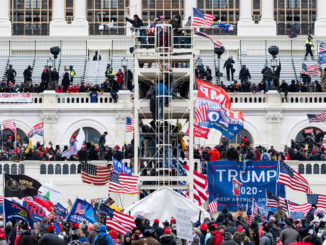
    Stop the Steal. Trump supporters stormed the capitol on January 6

    We see echoes of what Johnson was alluding to in our own country. Those most affected by demonetization were the already poor and those eking out a constantly threatened existence as small and medium enterprises and their unorganized workers. But millions were ready to stand in unending queues to get their paltry sums exchanged, their pain dulled by the belief that fat cats and money bags had been deprived of their ill-gotten gains. Except that they had not and many profited by turning their black money into white. Or if the lowliest Hindu is made to feel superior to the best among the Muslims in the country, perhaps he is ready to accept his dire economic situation and forget who may be really responsible for his deprivation.

    There has been a sigh of relief manifest across the world as Joe Biden has succeeded to the US presidency, presaging a more predictable and more ‘normal’ conduct of domestic and external affairs under an experienced and professional administration. Biden has promised to heal a deeply divided country, to promote reconciliation and unity and to restore the democratic and liberal credentials of the US as the world’s oldest democracy. This promises to be a long haul and unlikely to be achieved during one four-year administration. He would be deemed a success if he at least manages to, as he said, ‘lower the temperature.’

    The social and political polarization on display in the US is increasingly manifest in other democracies, including our own. A key causal factor is the rising inequalities of wealth and income that undermine the most powerful appeal of democracy which is egalitarianism, the equality of opportunity it promises and the fairness with which the state will treat all its citizens. As economies develop, as technology advances, there will inevitably be winners and losers. A democratic state will have to continually ensure that it is able to redistribute rising incomes and wealth in a manner that helps those left behind to retain hope in a better future, if not for themselves, then at least for their children. It is not that globalizationin itself has spawned huge inequalities, nor that inequality is inherent in increasingly arcane and specialized technological advancement. The fault lies with public policy which has failed to distribute the benefits of globalization more evenly. When the number of losers far outstrips the winners, and this state of affairs persists and even worsens, democracy will be challenged. This is what we witness in the US and in democracies across the world, India included.

    There is an intriguing question, however. It is the political Left (in which I broadly include the liberal constituency) which has historically mobilized support among those who are at the lower end of the economic and social scale. In the present case, the Right and nativist forces have captured the imagination of the exploited and deprived. The Left targets the rich and the corporate sector; the Right does not pay a price for associating with this privileged minority and profiting from its generous funding. What explains this oddity? That there is an alliance between the populist and the powerful elements within the corporate sector is more than apparent. But the liberal and the Left have been unable to leverage this to mobilize support among those who are, in fact, at the receiving end of this powerful nexus. The Right has been remarkably successful in co-opting the ranks of the dejected and deprived to buttress its own power. How is this possible?

    The Right has been able to exploit the existing social, communal and sectarian fault lines to deflect attention from its complicity in the disempowerment and the immiseration of the majority. In the US, it is by deliberately sharpening the racial divide, stoking the fear of immigrants and loss of cultural identity that a figure like Trump was able to continue rewarding the corporate class with large tax cuts at the cost of the very services that could ameliorate the worsening economic status of the less-educated white minority. Recently, historian Rana Dasgupta has drawn attention to a very cynical insight offered by Lyndon Johnson, a former President: ‘If you can convince the lowest white man he’s better than the best-colored man, he won’t notice you’re picking his pocket. Hell, give him somebody to look down upon and he’ll empty his pockets for you.’ Dasgupta points to an ugly truth: Sometimes people can be persuaded to ‘prize the removal of others’ rights above the preservation of their own.’

    And this is what is happening in the US. Can Biden change this?

    Why is the Left unable to build its constituency in the ranks of the deprived? Precisely because ideologically, it sees its role as transcending the societal fault lines and uniting around a more inclusive concept of egalitarianism.

    We see echoes of what Johnson was alluding to in our own country. Those most affected by demonetization were the already poor and those eking out a constantly threatened existence as small and medium enterprises and their unorganized workers. But millions were ready to stand in unending queues to get their paltry sums exchanged, their pain dulled by the belief that fat cats and money bags had been deprived of their ill-gotten gains. Except that they had not, and many profited by turning their black money into white.

    Or if the lowliest Hindu is made to feel superior to the best among the Muslims in the country, perhaps he is ready to accept his dire economic situation and forget who may be really responsible for his deprivation.

    There was only one brief occasion when the current political dispensation was threatened and that was when the label of ‘suit-boot kisarkar’ struck home but then it was never built up into an alternative political narrative. The Left in our country has failed precisely because it has become defensive about its core beliefs and started flirting with the narrow inclinations of the Right, for example, by doing its own religious rituals and spouting nationalist slogans. Nor is there stomach to shine the spotlight on the nexus among the politician-bureaucracy and big business that has come to dominate governments in democracies across the world.

    There are parallels between the oldest and the largest democracies in the world. Both are at critical junctures in their evolution as enlightened democracies envisaged by their respective constitutions. But I believe that the future of democracy as a political ideal may likely be determined by the trajectory that India takes in the coming years rather than the US, especially when the Chinese model of authoritarian capitalism seems to bewinning admirers across the world.

    (The author is Former Foreign Secretary and senior fellow, Centre for Policy Research)


  • Biden orders US to rejoin WHO; UN chief welcomes re-engagement

    Biden orders US to rejoin WHO; UN chief welcomes re-engagement

    Trump had cut off US funding to the WHO, saying it was “virtually controlled by China.”

     WASHINGTON / UNITED NATIONS(TIP):  The US rejoined the World Health Organisation (WHO) in one of the first official orders of the Joe Biden presidency, reversing a key foreign policy decision his predecessor Donald Trump took last year after accusing the UN health agency of incompetence and bowing to Chinese pressure over the coronavirus pandemic. In April last year, as the coronavirus pandemic was spreading across the globe, Trump cut off US funding to the WHO, saying it was “virtually controlled by China.” He then went further, triggering the process to pull the US completely out of the organisation.The withdrawal was due to go into effect in July this year, but Biden’s order will cancel it. Biden in a letter to UN Secretary-General Antonio Guterres on Wednesday, the first day of his presidency, said, “The United States intends to remain a member of the World Health Organisation.” “The WHO plays a crucial role in the world’s fight against the deadly COVID-19 pandemic as well as countless other threats to global health and health security. The United States will continue to be a full participant and a global leader in confronting such threats and advancing global health and health security,” Biden wrote.

    The UN Secretary-General welcomed the US’ re-engagement with the WHO, saying supporting the health agency is “absolutely critical” to combatting the COVID-19 pandemic. He said Washington joining the global vaccine initiative will boost efforts to ensure equitable access to vaccines for all countries.

    Guterres said now is the time for unity and for the international community to work together in solidarity to stop the virus and its shattering consequences.

    The US has been the largest funder to the WHO, contributing more than USD 450 million per annum. The US has been a party to the WHO Constitution since June 21, 1948.

    As the world reached a “heart-wrenching milestone” of two million COVID-19-related deaths less than a week ago, Guterres lamented that the deadly impact of the pandemic has worsened due to the absence of a global coordinated effort and said that “vocationalism” by governments is “self-defeating” that will delay a global recovery. Guterres has said the UN is supporting countries to mobilize the largest global immunization effort in history and the world organization is committed to making sure that vaccines are seen as global public goods – people’s vaccines.

    White House Press Secretary Jen Psaki said that Biden signed the executive order, reversing Trump’s decision to withdraw from the WHO. “This will strengthen our own efforts to get the pandemic under control by improving global health, and tomorrow we are not wasting any time,” she said.

    The WHO’s Executive Board has been meeting virtually this week, and the Biden administration announced that a US delegation, headed by Anthony Fauci, the government’s top infectious disease expert, will participate. Fauci will deliver a speech on January 21 to the WHO as head of a US delegation to lay out how the administration intends to work with the WHO on reforms, supporting the coronavirus response and promoting global health and health security

    “Once the United States resumes its engagement with the WHO, the Biden-Harris administration will work with the WHO and our partners to strengthen and reform the organisation, support the COVID-19 health and humanitarian response, and advance global health and health security,” the White House said in a fact sheet.

    Business Roundtable welcomed the decision of Biden to not to withdraw from the WHO. “We need international cooperation to get the COVID-19 pandemic under control here in America and around the world.

    Business Roundtable applauds President Biden’s decision to re-engage with the WHO to improve the international response to the pandemic and welcomes his commitment to WHO reform to prevent and better respond to future public health crises,” it said,

    (Source: PTI)

  • Indo-US relations under Joe Biden: Looking into the crystal ball

    Indo-US relations under Joe Biden: Looking into the crystal ball

    By Prabhu Dayal

    There are no doubt problems that will need to be overcome, such as those relating to bilateral trade and restrictions on H1B visas which adversely impact Indian professionals and Indian software companies. Biden may not immediately reverse the Trump administration’s policies which led to these problems, but we have better prospects now than with Trump who had himself formulated these policies. Biden has shown that he takes a broader view on issues such as foreign trade as compared to Trump with his infamous ‘America First’ policy. In a nutshell, my crystal-ball prediction is that the Biden Administration will seek to strengthen Indo-US relations, with China’s territorial and economic expansionism serving as a catalyst in this regard. Institutional linkages such as through Quad and the 2+2 dialogue will also be further cemented.

    • On his first day as US President, Joe Biden reversed a number of the Trump administration policies.
    • A question is being asked whether Joe Biden will also reverse some of Donald Trump’s policies towards India?
    • During the last two decades, the Indo-US relationship has been on an upward trajectory.

    Within minutes of entering the Oval Office for the first time on January 20, President Biden carried out a blitz by signing 17 executive orders.  Next day, he signed an additional 10 orders related to the coronavirus pandemic. These orders reversed a number of the Trump administration policies and covered areas Biden identified as his priorities on the campaign trail. Naturally, a question is being asked whether Biden will also reverse some of Trump’s policies towards India?In this regard, the remarks made yesterday, Jan 21, by Jen Psaki, the White House press secretary need to be noted. In response to a question at a news briefing, she said: “President Biden, who of course has visited India many times, respects and values the long, bipartisan, successful relationship between leaders in India and the United States. He looks forward to a continuation of that.”

    During the last two decades, the Indo-US relationship has been on an upward trajectory whether the White House occupant was a Republican or a Democrat. The Modi-Biden telephone conversation on November 17 endorsed the view that there is bi-partisan support in the US for strengthening what is not just a comprehensive political and economic relationship with India but also a strategic partnership reflecting the emerging global challenges for the world’s oldest and largest democracies, respectively.

    After his phone conversation with Prime Minister Modi, a statement from the Biden’s transition team said: “The President-elect noted that he looks forward to working closely with the prime minister on shared global challenges, including containing COVID-19 and defending against future health crises, tackling the threat of climate change, launching the global economic recovery, strengthening democracy at home and abroad, and maintaining a secure and prosperous Indo-Pacific region”. China was not specifically named, but one has to read between the lines. After all, the threat to the Indo-Pacific region emanates from which country if not from China?

    Retired Gen. Lloyd Austin, who has been nominated by President Biden as his Defense Secretary affirmed this when he told members of the Senate Armed Services Committee during his confirmation hearing on January 19:”If confirmed, my overarching objective for our defense relationship with India would be to continue elevating the partnership”. Responding to a question submitted before his confirmation hearing, Austin said. “I would further operationalize India’s ‘Major Defense Partner’ status and continue to build upon existing strong defense cooperation to ensure the US and Indian militaries can collaborate to address shared interests.”

    Tony Blinken, who is Biden’s nominee for the prestigious position of Secretary of State also expressed similar views during his own confirmation hearing when he told members of the powerful Senate Foreign Relations Committee on January 19: “India has been a bipartisan success story of our successive administrations”.

    It may also be recalled that during the virtual celebrations of India’s Independence Day organized by the Biden Campaign in 2020, Blinken had stressed that Biden has long been a champion of stronger ties with India. He had asserted: “If you go back 15 years, Joe Biden had a vision for the future of US-India relations. In 2006, he said, my dream is that in 2020, the two closest nations in the world will be India and the United States.” Blinken added: ”Well, we’re not quite there, but it’s a terrific vision, and one that I know he will act to realize, as president of the United States.” There are no doubt problems that will need to be overcome, such as those relating to bilateral trade and restrictions on H1B visas which adversely impact Indian professionals and Indian software companies. Biden may not immediately reverse the Trump administration’s policies which led to these problems, but we have better prospects now than with Trump who had himself formulated these policies. Biden has shown that he takes a broader view on issues such as foreign trade as compared to Trump with his infamous ‘America First’ policy.  It may also be mentioned that during his campaign, Joe Biden had taken up a position on issues like CAA and Jammu and Kashmir which was labelled as showing a lack of sympathy for India. These issues could come up in closed-door meetings, but it is unlikely that the Biden administration will raise them in public pronouncements. Working closely with India has become an important aspect of US foreign policy, and it will not be in US interests to undo the closeness in the present global scenario. Additionally, the fact that the Pentagon sees India as a potential purchaser of weapons systems would make it even more necessary for Biden to seek a closer relationship with the Indian political establishment. Therefore, in a nutshell, my crystal-ball prediction is that the Biden Administration will seek to strengthen Indo-US relations, with China’s territorial and economic expansionism serving as a catalyst in this regard. Institutional linkages such as through Quad and the 2+2 dialogue will also be further cemented.

    (The author is a retired diplomat) (Courtesy / OPOYI)

  • Impeachment of Trump : Even some Republicans favor it

    WASHINGTON (TIP): Sen. Ben Sasse (R-Neb.) said that Trump has “acted shamefully” and that he would “definitely consider” any articles of impeachment approved by the House – but he stopped short of calling for Trump’s immediate removal from office in Friday morning media interviews.

    The comments from Sasse, who has been far more vocal in his criticism of Trump than most Republicans, come as the Democratic-led House is considering voting on impeachment articles against Trump as early as next week in response to Wednesday’s takeover of the Capitol by his supporters.

    “Donald Trump has acted shamefully,” Sasse said on “CBS This Morning.” “He has been in flagrant dereliction of his duty, and he will be remembered for having incited this and for having drawn more division into an already divided people. That is who Donald Trump is. That is what his legacy is going to be.” Pressed on what should happen procedurally, Sasse said he would “definitely consider whatever articles [the House] might move,” calling Trump’s actions “wicked.” But Sasse said the most important question isn’t what happens to Trump in his remaining days in office. “The most important question is … how we bring the country back together,” he said.In a separate interview, Sasse blamed Trump for the violence at the Capitol. “It was ransacked by a mob that was incited by the president of the United States,” Sasse told syndicated radio host Hugh Hewitt. “The president had a rally hours before this happened where he is telling them to go to the Capitol and go wild. … The guy is addicted to division. This is a deep brokenness in his soul.” Sasse voted against removing Trump from office at his Senate impeachment trial last year.

    Rep. Clark says House could vote to impeach Trump by middle of next week

    Clark holds the title of assistant speaker, the No. 4 leadership position in the House caucus.

    Rep. Katherine M. Clark (D-Mass.), a member of the House leadership, said Friday, January 8,  that the chamber could vote to impeach Trump by the middle of next week if Pence does not initiate proceedings for the Cabinet to remove him from office under the 25th Amendment. Calling Trump “a traitor” in the wake of Wednesday’s storming of the Capitol by some of his supporters, Clark said on CNN that “we can act very quickly when we want to.” Clark holds the title of assistant speaker, the No. 4 leadership position in the House caucus. House Democrats are scheduled to discuss the prospect of moving on impeachment during a conference call on Friday.

    “Donald Trump needs to be removed from office,” Clark said. “And we are going to proceed with every tool that we have to make sure that happens to protect our democracy … We have a president who incited a seditious mob to storm the Capitol. … We have a president who has turned on us. He is a traitor.”

    If Trump is impeached for a second time by the House, it is unclear whether the Republican-controlled Senate would hold a trial before he leaves office on Jan. 20.

  • Indian Diaspora and the U.S. Election 2020

    Indian Diaspora and the U.S. Election 2020

    “The importance of the Indian American vote in this upcoming election is another point of debate among election enthusiasts. Most Indian Americans live in major cities and states such as New York, New Jersey, California, Illinois, and Texas. Most of these States are solidly Blue States, and the Asian Indian votes will have little or no impact other than adding on to the popular vote totals.”

    When Barack Obama was sworn in as the 44th                                     

                                                                                                                                                                                                                                                                                                                      By George Abraham

    President of the United States in January 2009, it was widely believed it to be a new dawn for America. As the first black President of the country, voted in by a sizable number of white voters gave new hope to millions for a more peaceful and prosperous America in a newly realigned political landscape. However, we have witnessed a story of deteriorating race relations and a strong emergence of identity politics that has resulted in further polarization in the body politic. America ceased to be a melting pot. Ethnic politics mixed up with race and gender relations started to inflame passions on both sides of the aisle, often preventing the country from reaching any consensus on pressing economic and social issues.

    There is little doubt that Donald Trump cashed in on this division and disenchantment of the electorate, especially the white voters, and won the presidency in 2016. It was a historic victory that stunned the “political class” in the U.S. and globalists around the world.  However, there was more to his victory than a voter dissatisfaction with the outgoing Democratic Administration. Undoubtedly, Trump’s election is also viewed as a rebuke of technocratic policies, increased centralization of power in Washington, and unchecked immigration policies that were heavily favored by Democrats. It was an acrimonious campaign, vitriolic in tune, that  brought shame and scorn upon the candidacies of Trump and Democrat Hillary Clinton – one was described as Misogynist, Xenophobe, Sexist and Racist and the other as deeply Corrupt and Untrustworthy.

    Much has changed in terms of politics in 2020, and the U.S. today is a more deeply divided country where  ‘peaceful demonstrations’ are no longer peaceful and advocates of a new generation of leaders demanding transformational changes that would have been simply unthinkable just a few years ago. Nobody knows yet whether this is a passing phenomenon or whether America is truly ready for upending an economic and political system that has been the envy of the world and attracted millions of people from impoverished lands to make their dream come true.

    Asian Indians, as we are referred to here, account for roughly a little over one percent of the population in the U.S. It is one of the most successful immigrant groups that have called America their home. The median income of an Indian household is higher than any other ethnic group’s  in the country. There is no doubt that so-called ‘arranged marriages’ might have helped those income levels with two professional households that are quite common within the community. Moreover, it is believed that there are about  half a million or more undocumented Indian Citizens who have either overstayed their visas or came across the Mexican border with the help of ‘Coyotes’. All these groups constitute part of the growing Indian Diaspora in the U.S.

    Although the Indian Americans are mostly conservative in their social outlook and not necessarily cleansed of their caste affiliations or prejudicial minds, they tend to favor the Democratic party, which is very liberal and left-leaning when it comes to policies and governance. There may be several factors associated with such an attitude. The Democratic party is viewed positively by the community regarding issues such as Immigration and Social Benefits. The party is also perceived as a better guardian of minority rights and civil rights of all its citizens.  The H1B visa holders, not a voting bloc yet but supported by the rest of the Diaspora, are looking for a more favorable response for obtaining permanent residency from a Democratic leadership than a Republican one. It is much more about self-preservation than principles or value judgment.

    However, the second-generation Indians have been more open-minded and progressive in their lifestyles and their philosophy regarding issues of integration and assimilation to the culture and traditions of their native land.  They tend to embrace the Democratic Party’s values and its platform that is characterized as a big tent: the ideas of inclusion, equality, and equity. The younger women in this new generation also support Women’s Rights, including the right to abortion and equal pay for equal work. Also, many seem to have justifiable apprehensions on the possible rise of the Far-Right movements that could threaten their safety and their children’s economic stability.

    Therefore, there is little or no surprise that as the recent poll indicates that around 70% of the Asian Indians may cast their votes in favor of the Biden/Harris ticket. The addition of Kamala Harris to the ticket, an Asian Indian, though she prefers to call herself ‘black American’ for political reasons, seems to have boosted the Diaspora’s support to the Democratic ticket. Many perceive Ms. Harris’s rise to the ticket for the second most powerful position in the United States as a vindication of their faith in the Democratic party and its acceptance of them as an integral part of the society.

    Donald Trump is not a stranger when dealing with Indians, and his business undertakings in Pune and Gurgaon are clear evidence of that existing bond. During the 2016 election, there was a surge of support for him from the Indian Community spearheaded by Shalabh (Shalli) Kumar, who raised campaign funds and arranged a large gathering in New Jersey in honor of him. However, he seems to have withdrawn from the scene, but several groups associated with Sangh Parivar organizations are battling for Trump’s re-election. The idea of ultra-nationalism promoted by Trump and Modi appeared to have unified this minority segment of the Diaspora that may cast their vote for Donald Trump on November 3rd. Then again, there are independent-minded voters who may vote for Trump solely based on policy decisions on issues such as lower taxes, less regulations, law and order, less aggressive foreign policy and unnecessary foreign interventions resulting in costly wars.

    Indian Diaspora in the U.S. is a diverse community representing different regions, languages, cultures, and faith. According to the latest statistics, 51 percent of the Diaspora consists of Hindus, and the rest includes Muslims, Sikhs, Christians, Buddhists, and other faiths. Therefore, the effort by some Hindu Organizations in U.S. that are in the tank for Prime Minister Modi to paint a monolithic view of the Indian Diaspora for the election purposes to the American public is not only disingenuous but grossly misleading. The Trump-Modi friendship does not appear to be an important yardstick in the Indian American electorate’s decision-making process.

    The importance of the Indian American vote in this upcoming election is another point of debate among election enthusiasts. Most Indian Americans live in major cities and states such as New York, New Jersey, California, Illinois, and Texas. Most of these States are solidly Blue States, and the Asian Indian votes will have little or no impact other than adding on to the popular vote totals. Texas may remain in the Republican column this time around, although it may trend more towards Democratic Party in future elections as Demographics change. The participation record of the Indian American voter in the past elections has been spotty. Otherwise,  possibilities abound in States like Pennsylvania and Michigan.

    However, the more significant aspect of this election cycle is that a record number of Asian Indian candidates are running for elections nationwide. It is quite noteworthy that the community has essentially become an integral and visible part of the American political arena in the short span of a few decades.

     (The author is a former Chief Technology Officer of the United Nations)

  • On Ravi Batra’s article ‘Can the United States Renege on the Payment Due to the WHO?’

    Dear Indrajit,

    I found it very interesting to read Ravi Batra’s legitimate complaint against the Government of China in his article ‘Can the United States Renege on the Payment Due to the WHO?’,  published in the September 18 edition of The Indian Panorama.

    Ravi Batra is a highly experienced and professional attorney.  He has presented a very convincing argument.  It appears that there is no doubt that the corona virus emanated at the lab in Wuhan.  It did not spring from the market.   Everyone keeps wondering why China took all the measures to make sure the virus did not spread across China but was totally negligent on its spread abroad.  It is true that China knowingly kept its international airports open for normal international traffic.  What is sauce for goose should be sauce for the ganders also.

    It is also true that China confided with the Director General of the W.H.O. to treat the matter of origin of the virus confidential and top secret.

    President Trump has withdrawn the USA as a member of the WHO in protest.  He has already levelled diplomatic protests.  This week, he also brought it to the attention of the members of the General Assembly of the U.N.   I hope the U.N.General Assembly will pass a resolution requesting China to pay damages to all the victims of the world.  Perhaps, Ravi Batra could work with the U.S.Secretary of State and U.S. .Ambassador to the U.N. in drafting the most appropriate resolution.   China must pay for the war reparations.

    200,000 Americans have died on account of coronavirus stemmed from Wuhan, China.  As Ravi Batra had indicated previously, not only American victims but also all victims of the world have legitimate grievance and complaint against the Government of China.

    I strongly recommend to Ravi Batra that he should file a class action lawsuit on behalf of the American victims.  I would even recommend that Ravi Batra join the forces of the U.S. Government in coordinating action against China.

    What China has done is worse than a world war,  and tantamounts  to  a war against humanity.

    Warmest regards.

    Very truly yours,

    Ven Parameswaran

    Email: vpwaren@gmail.com

  • US Election 2020

    US Election 2020

    By Ven Parameswaran

    6 WEEKS TO PRESIDENTIAL ELECTION

    TRAFALGAR GROUP POLL WAS THE ONLY POLL THAT PREDICTED TRUMP WOULD WIN IN 2016.

    IT IS THE ONLY MOST RELIABLE POLL PREDICTING 2020 ELECTION

    “Arizona and Minnesota are in the sights of both parties.  Florida probably is the most important state this year, and both candidates have hit it in recent days.  But in a close race, flipping just one state from Democratic blue to Republican red, or vice versa, could be decisive.  Travel by the presidential and vice-presidential candidates to Arizona and Minnesota shows those are the states that fall most directly into that category.  The Biden campaign thinks it could turn Arizona blue for the first time since 1996, and the Trump campaign is aiming to flip Minnesota red for the first time since 1972.”

    It has been impossible to predict Donald J. Trump.  The major TV networks – CBS, ABC, NBC, CNN, FOX and print media – NYTimes, WSJ, and Washington Post failed to predict 2016 election.    Because Trump has shocked the political scientists and the elites by keep on winning against all the odds.  Trump, who had never run for any elective office announced in 2015 that he was going to run for the President of the USA.  From that time on, the Democrats supported by the mainstream media and the polls sponsored by them have been attacking Trump ignoring the voters.   Trump is running on his performance.  Biden has made Trump the issue.

    TRUMP BURIES CLINTON AND BUSH DYNASTIES

    Trump defeated nine two term veteran Republican  governors of New York, New Jersey, Virginia, Florida, Texas, Wisconsin, Ohio, Arkansas and Louisiana in the primaries.  He also defeated five Republican senators from Kentucky, Pennsylvania, Florida, and Texas.  After that, he had to fight to win the nomination.    Finally, he defeated the most educated and popular Hillary Clinton heavily supported by the mainstream media.  This was a long political process but he buried Clinton and Bush dynasties.

    Michael Moore said before 2016 election: “And if you believe Hillary Clinton is going to beat Trump with facts and smarts and logic, then you obviously missed the past year of 56 primaries and caucuses where 16 Republican candidates tried that and every kitchen sink they could throw at Trump and nothing could stop his juggernaut.

    TRAFFALGAR GROUP POLL – MOST RELIABLE  POLL

    Robert Cahaly, senior strategist for the Trafalgar Group, made a name for himself in 2016 by being the only pollster to correctly show Donald Trump with a lead in Michigan and Pennsylvania – two key states he carried – heading into Election Day.   (He did not poll Wisconsin, another surprising win for Trump.)  Cahaly also showed Trump ahead in North Carolina and Florida, both of which he won, securing his improbable 304-227 Electoral College victory over Hillary Clinton.

    Cahaly managed to pick up support for Trump that all other pollsters missed in employing a unique method that sought to measure support from voters who had been “inactive” in recent election cycles, as well as adding a question to his surveys designed to isolate the effect of social desirability bias among Trump voters—the concept that people won’t tell pollsters their true intentions for fear of being stigmatized or being politically incorrect.

    After asking voters who they were supporting in 2016, the pollster followed up by asking them who they thought their neighbors were supporting, Trump or Clinton.  Cahaly consistently found a high degree of variance between who respondents said they were voting for and who they thought their neighbors were voting for, suggesting there was in fact a “shy Trump effect” at play.

    Two years later, Cahaly’s method once again proved solid.  In one of the most polled races of the cycle, Trafalgar stood alone as the only polling firm to correctly show a Ron DeSantis gubernatorial victory in Florida – as well as Rick Scott winning the Senate race there.  (Both narrow outcomes will likely result in recounts.)

    Trafalgar also correctly predicted Senate outcomes in Missouri, Montana, North Dakota, Texas and West Virginia, making it the most accurate pollster of the cycle among those firms that polled multiple Senate and governor races.

    In the Georgia governor race, Cahaly’s results showed a big win for Republican Brian Kemp over Democrat Stacy Abrams.  The final result, however, was a much closer Kemp victory.  Cahaly gave credit to the Abrams campaign.   They did a great job of registering voters late and bringing lots of new people in the process.

    The same was true in Texas, Cahaly said, where Beto O’Rourke finished just 2.6 per centage points behind Ted Cruz.

    Still, the pollster believes his method and methodology will be more valuable than ever as low voter response rates and social desirability bias continue to present challenges to all pollsters in the future.

    According to the latest Trafalgar polls, Trump is already slightly ahead or tied Biden in all battleground States.   It is important to note that the polls have started tightening.    Between now and the election, the Undecides approximately 10% will influence.     I have noticed the mainstream media and Realclear Politics Average  have been ignoring Trafalgar Group polls because they seem to tell the truth favoring Trump.

    In this era of a deeply and evenly divided electorate, presidential campaigns tend to be won in the margins, not in landslides.  And in recent days, each presidential campaign has shown where it hopes to get a bit of a marginal advantage.

    In the last seven presidential elections, the winner’s share of the popular vote nationally has been 46%, 51%, 53%, 51%, 48%, 49% and 43%.   Although Biden appears to hold a comfortable lead over Trump in national polls at the moment, recent history says there is ample reason to think the race will tighten in the remaining six weeks, and ultimately be decided by the outcome in a few closely divided swing states.

    The Trump campaign senses an opening with Hispanics.  Biden will almost certainly win the Hispanic vote overall, but Republicans think Trump can cut into that advantage.  Last week Trump was in Arizona for a roundtable with Hispanic voters. 

    Biden is playing for some of the blue-collar vote Hillary Clinton lost four years ago.  So Biden held a town hall with voters in Scranton, PA, and declared there that this is “a campaign between Scranton and Park Avenue.”

    The Biden campaign is worried about the level of Black enthusiasm.  Biden will win the Black vote by a wide margin, but lackluster turnout in some places  cost Clinton the election.  Now, the Trump campaign is making a play specifically for more votes among Black men.  In response, Kamala Harris has campaigned in recent days in minority communities in Pennsylvania, Wisconsin and Florida.

    ARIZONA and MINNESOTA

    Arizona and Minnesota are in the sights of both parties.  Florida probably is the most important state this year, and both candidates have hit it in recent days.  But in a close race, flipping just one state from Democratic blue to Republican red, or vice versa, could be decisive.  Travel by the presidential and vice-presidential candidates to Arizona and Minnesota shows those are the states that fall most directly into that category.  The Biden campaign thinks it could turn Arizona blue for the first time since 1996, and the Trump campaign is aiming to flip Minnesota red for the first time since 1972.

    FOLLOWING STATISTICS SHOW HOW RAZOR THIN WAS TRUMP’S WIN IN 2016

                                          CLINTON                         TRUMP

    Arizona                          45.13                               46.67

    Florida                            47.82                               49.02

    Maine 2                          40.98                               51.26

    Maine 1                          47.27                               47.50

    Minnesota                    46.44                                44.92

    North Carolina             46.17                                49.83

    Ohio                                 43.56                                51.69

    Pennsylvania                   47.46                                48.18

     Wisconsin                       46.45                                47.22

    New Hampshire             46.98                                 46.61

    Nevada                            47.50                                 45.98

    COLOR

    White                               39                                       54                             Total 74%

    Black                                91                                         6                               10%

    Latinos                             66                                       28                               10%

    FINAL 2016 VOTE:       48.2                                   46.1     

                                                                      Clinton led by 2.01 points   nationally


    After having botched the entire news coverage of the 2016 election, where all the ‘experts’ repeatedly told the American public that Trump had little to no chance of being the Republican nominee and even less a chance of being elected President, corporate media is back at it again, insisting all is well with the Biden campaign and the Democrats are safely on cruise control to take the White House and the Senate.

    This race is effectively tied today, Trump has momentum and enthusiasm, and Biden is going to have to campaign hard, energize his voters, and earn it if he hopes to unseat the incumbent.   

    (Ven Parameswaran, Chairman, Asian American Republican Committee (founded 1988) lives in Scarsdale, NY. He can be reached at  vpwaren@gmail.com)


  • Not the Third World War but the Nobel Peace Prize

    Not the Third World War but the Nobel Peace Prize

    During the closing month leading the nation to the polls to elect the 45th President of the U.S.A., in October 2016, it wasn’t just the presidential candidate Hillary Clinton but, there were other Democrats also who were pointing to the threatening language of Donald Trump to prove that he was not up to the Chief Commander’s responsibilities, using it as an electioneering strategy to defeat him. It did not work.

    Nobel Peace Prize Medal .

    Americans chose  Donald J. Trump to be the president and he became. However, the fear that labeled him a warmonger did not disappear. When he was still in his first year, not only Democrats but some Republicans, such as Bob Corker, Chairman of the Senate Foreign Relations Committee, who openly related his fears of Trump causing the third world war.  In April 2018, a year after Trump was sworn in the 45th President of the USA, BBC was talking about how he was pushing the world into the World War III. They speculated that it would involve America, Syria and North Korea as some of the warring parties.  

    As recent as January 2020, commentators at CNN, led by Richard Galant, were trending World War III because President Trump had killed Iranian terrorist mastermind Major Gen. Qasem Soleimani who ran the Iranian military operations across the Middle East and oversaw the attack on Americans that killed hundreds.

    Now comes the real Donald J. Trump, the American President for almost the full first term without any war, what to talk of the world war. And, not just that, he has in fact brought the world to a state of peace that we have not seen in quite some time. The Arab World is calm. Afghanistan is close to signing a peace treaty with the Taliban that would end a 19-year old war. The loss of American life has been at the minimum. Americans are coming home. Trump brought peace to America and the world that Obama was elected to do but ended the world and America in a worse shape than he got.

    The Norwegian Nobel Committee, responsible for deciding who will receive the Nobel Peace Prize Laurel was watching and winked when last month Israel and United Arab Emirates signed a diplomacy and trade accord, with an Israeli flight from Israel to UAE that flew over the Saudi Arabian airspace, another first for peace in the region. And then, yesterday, the Abraham Accord was signed in the White House among Israel, United Arab Emirates, and Bahrain. This is the most the Middle East has been at peace. And more such accords are in the making.

    The Nobel Committee received nomination of President Donald J. Trump for Nobel Peace Prize from Norwegian parliamentarian Ms. Tybring-Gjedde. Given the other peace initiatives Trump took, such as with North Korea, Iraq, and Turkey, there is enough for the committee to look at his candidacy favorably. This will be a well-deserved Nobel laurel for another American president that the committee would not have to regret like it did for the last time it awarded the Nobel to a sitting American president, which was in 2009.  

    (A. D. Amar, Ph.D. is Professor of Management at the Stillman School of Business, Seton Hall University, South Orange, NJ 07079 (ad.amar@shu.edu). He is founder, president of Indian-Americans for Trump (FEC REGD.).)