Tag: UK

  • UK judge orders Nirav Modi to be extradited to India

    UK judge orders Nirav Modi to be extradited to India

    Nirpal Singh Shergill

    LONDON (TIP): A UK court on Thursday, Feb 25, ruled that fugitive diamantaire Nirav Modi can be extradited to India to face charges of fraud and money laundering amounting to an estimated USD 2 billion.

    In a comprehensive extradition win for the Indian authorities, the judge has ruled that Nirav Modi not only has a case to answer in the Indian courts but that there is no evidence to suggest he would not receive a fair trial in India. Nirav Modi, wanted in India on charges of fraud and money laundering in the estimated $2-billion Punjab National Bank (PNB) scam case, lost his legal battle against extradition on all grounds as District Judge Samuel Goozee also concluded that there are no human rights concerns that his medical needs would not be addressed as per several Indian government assurances.

    The 49-year-old appeared via video link at Westminster Magistrates’ Court from Wandsworth Prison in south-west London, dressed in a formal suit and sporting a thick beard, and showed no emotion as excerpts of the judgment were read out in court.

    “I am satisfied that there is evidence upon which Nirav Deepak Modi could be convicted in relation [to] the conspiracy to defraud the PNB. A prima facie case is established,” the judge noted.

    He similarly concludes a prima facie case to have been established on all counts of charges brought by the Central Bureau of Investigation (CBI) and Enforcement Directorate (ED) — money laundering, intimidation of witnesses and disappearance of evidence.

    “I am not required to exclude all Mr Modi’s various alternative theoretical possibilities and narratives; nor exclude his personal interpretation of the evidence, in order to find a prima facie case has been established,” the judge noted, referring to the extradition case of former Kingfisher Airlines boss Vijay Mallya as precedent.

    He accepted that while Nirav’s mental health had deteriorated due to the lengthy incarceration in a London prison, exacerbated by the COVID-19 pandemic, his risk of suicide does not meet the high threshold to satisfy him that his mental state is such that it would be “unjust or oppressive” to extradite him.

    Under the UK Extradition Act 2003, the judge will now send his findings to the Secretary of State for Home Affairs, Priti Patel. It is the UK Cabinet minister who is authorized to order an extradition under the India-UK Extradition Treaty and has two months within which to make that decision. The Home Secretary’s order rarely goes against the court’s conclusions, as she has to consider only some very narrow bars to extradition which are unlikely to apply in this case, including the possible imposition of a death penalty.

    Whatever the ministerial decision, the losing side — Nirav Modi — has up to 14 days within which to approach the High Court and seek leave to appeal after the Home Secretary has made her decision known.

    Nirav’s legal team did not immediately confirm if he intends to appeal against Thursday’s ruling. Any appeal, if granted, will be heard at the Administrative Division of the High Court in London.

    Nirav Modi, meanwhile, remains on remand at Wandsworth Prison until the Home Secretary’s decision to sign off on the extradition order. The flashy diamond merchant was arrested on an extradition warrant on March 19, 2019 and has appeared via video link from Wandsworth Prison for a series of court hearings in the extradition case. His multiple attempts at seeking bail have been repeatedly turned down, both at the Magistrates’ and High Court level, as he was deemed a flight risk. Nirav is the subject of two sets of criminal proceedings, with the CBI case relating to a large-scale fraud upon PNB through the fraudulent obtaining of letters of undertaking (LoUs) or loan agreements, and the ED case relating to the laundering of the proceeds of that fraud. He also faces two additional charges of “causing the disappearance of evidence” and intimidating witnesses or “criminal intimidation to cause death”, which were added on to the CBI case.

    In the judgment clearing the path to extradition, the judge accepted the arguments put forth by the Crown Prosecution Service (CPS) — arguing in court on behalf of the Indian government — that Nirav in collusion with bank officials oversaw a “Ponzi-like scheme” structure where LoUs were used to repay earlier ones.

    “I do not accept the submissions that NDM was involved in legitimate business and using the LoUs in a permissible fashion…I find there is no evidence of genuine import transactions and the applications for the LoUs was being done dishonestly,” the ruling notes.

    “Considering the entirety of the evidence, the dummy directors’ evidence in their statements supports the Ponzi-like scheme and the operation of the fraud set out in the statements from the PNB officials,” it adds. The judge highlighted how he had received 16 volumes of evidence from the government of India (GOI), as many as 16 bundles of expert reports and defense evidence and a total of 32 lever-arch folders of documents, all of which he has considered in his ruling. He was, however, extremely critical of the “poorly presented” documentation by the Indian authorities and stressed: “I hope the GOI take these observations on board in relation to future requests.”

    The judge also noted that given the high public and media interest in the case, he did not believe there was any reason for him to doubt the Indian government’s assurances.

    “I am also required to consider the length and strength of relations between India and this country…There is no reliable evidence of the GOI breaching their solemn diplomatic assurance,” the judge concluded.

    Chronology of Nirav Modi’s case

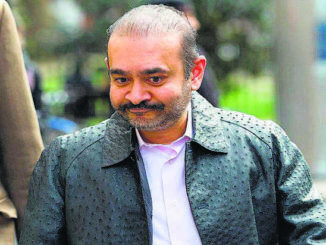
    Nirav Modi in his younger days                                                                       Photo / Courtesy PTI 

    January 29, 2018: Punjab National Bank (PNB) files police complaint against Nirav Modi, Mehul Choksi and others accusing fraud to the tune of Rs 2.81 billion.

    February 5, 2018: The Central Bureau of Investigation (CBI) launches an investigation into the alleged scam.

    February 16, 2018: The Enforcement Directorate (ED) seizes a cumulative Rs 56.74 billion worth of diamonds, gold and jewelry from Nirav Modi’s home and offices.

    February 17, 2018: The CBI makes first arrest in the case. Two PNB employees and an executive of Nirav Modi’s group were detained.

    February 17, 2018: Government suspends passports of Nirav Modi and Mehul Choksi for four weeks in connection with the PNB fraud.

    February 21, 2018: CBI arrests CFO of Nirav Modi’s firm and two other senior executives of his firms. It also seals his farmhouse in Alibaug.

    February 22, 2018: The ED seizes nine luxury cars belonging to Nirav Modi and his firms.

    February 27, 2018: A magistrate’s court issues a bailable arrest warrant against diamond trader Nirav Modi.

    June 2, 2018: The Interpol issues Red Corner Notice against Nirav Modi for money laundering.

    June 25, 2018: The ED moves to a special court in Mumbai seeking Nirav Modi’s extradition.

    August 3, 2018: The Indian Government sends a request for the extradition of Nirav Modi to the UK authorities.

    August 20, 2018: The CBI officials request Interpol Manchester to detain Nirav Modi after the latter informs about his presence in London to Indian authorities.

    December 27, 2018: The UK informs India that Nirav Modi is living in the country.

    March 9, 2019: British newspaper ‘The Telegraph’ confronts Nirav Modi on London’s streets and confirms his presence in the country.

    March 9, 2019: The ED says the government of the UK has sent an extradition request of fugitive diamantaire Nirav Modi to a UK court for further proceeding.

    March 18, 2019: Westminster Court in London issues arrest warrant against fugitive Nirav Modi after the Indian government request was forwarded to the court by the UK Home Office.

    March 20, 2019: Nirav Modi arrested in London and produced in Westminster Court, which denies him bail.

    March 20, 2019: Nirav Modi sent to Her Majesty’s Prison (HMP) Wandsworth till March 29.

    March 29, 2019: A Westminster Magistrates Court in London rejects Nirav Modi’s second bail application, saying there are “substantial grounds” to believe that he will fail to surrender. The judge fixes April 26 as the next date of hearing when he will appear via video link from jail.

    May 8, 2019: Nirav Modi denied bail for a third time, to remain in UK jail.

    June 12, 2019: UK court rejects Nirav Modi’s bail for the fourth time over fears he would abscond.

    August 22, 2019: Nirav Modi’s remand extended till September 19; UK extradition trial expected in May 2020.

    November 6, 2019: UK court rejects Nirav Modi’s new bail application.

    May 11, 2020: Nirav Modi’s five-day extradition trial in PNB fraud case begins in UK.

    May 13, 2020: Indian government submits more proof against Nirav Modi in money laundering case.

    September 7, 2020: UK court given fresh video tour of Mumbai’s Arthur Road Jail.

    December 1, 2020: Nirav Modi’s remand extended, final hearings in 2021.

    January 8, 2021: UK court decides to pronounce judgement in Nirav Modi’s extradition case on February 25.

    February 25, 2021: UK court rules Nirav Modi can be extradited to India to face charges of fraud and money laundering.

    (With inputs from PTI)


  • BRITISH PRIME MINISTER TO HOST VIRTUAL MEETING OF G7 LEADERS

    BRITISH PRIME MINISTER TO HOST VIRTUAL MEETING OF G7 LEADERS

    Nirpal Singh Shergill in London

    LONDON, (TIP): The British Prime Minister Boris Johnson will use the first leaders’ meeting of theUK’s G7 Presidency to call for further international cooperation on vaccine distributionand to build back better from coronavirus. Prime Minister will call for a new, global approach to pandemics that learns lessons fromthe division that characterized the initial international response to the coronavirus pandemic.

    This month the PM and Foreign Secretary will chair meetings of the UN Security Councilfocused on coronavirus, conflict and climate change.

    On Friday (19th February) the Prime Minister will host fellow G7 leaders for a virtual meeting todiscuss how the world’s leading democracies can work together to ensure equitable distributionof coronavirus vaccines around the world, prevent future pandemics and build back better from coronavirus.

    Friday’s meeting will be the first hosted by the PM as part of the UK’s G7 Presidency this year and thefirst gathering of G7 leaders since April 2020.

    The Prime Minister will use the meeting, which will also be US President Biden’s first major multilateralengagement, to call for leaders to work together on a joined-up global approach to pandemics thatbrings an end to the nationalist and divisive politics that marred the initial response to coronavirus.

    He will argue that putting our citizens first should not come at the expense of working on a unifiedresponse, and that the last twelve months of the pandemic have showed that no country can be safeuntil every country is safe from the pandemic. The rollout of vaccines offers a fresh opportunity todemonstrate the value of international cooperation.


    International pandemic preparedness will be a major priority for the UK’s G7 Presidency and thePrime Minister will work with fellow G7 leaders to implement his five-point plan to prevent futurepandemics announced at the UN General Assembly last year.


    The five-point plan includes a worldwide network of zoonotic research hubs, developing globalmanufacturing capacity for treatments and vaccines, the design of a global pandemic early warningsystem, the agreement of global protocols for a future health emergency and the reduction of trade barriers.


    There have already been positive steps to ensure equitable access to a coronavirus vaccine. Last monththe US announced it would join the COVAX initiative, becoming the final G7 country to do so. COVAX willprovide developing countries with 1.3 billion doses of the vaccine this year and theUK is providing £548m to the scheme.


    In recent weeks, the UK has worked closely with G7 partners on a huge range of global issues andshared challenges. On Friday, the Chancellor and Governor of the Bank of England held the first meetingof G7 Finance Ministers. G7 Foreign Ministers have spoken out together in the last month in condemnationof the military coup of Myanmar, the detention of Alexey Navalny in Russia and threats tohuman rights in Hong Kong.


    The Prime Minister said:

    “The solutions to the challenges we face – from the colossal mission to get vaccines to every single country,to the fight to reverse the damage done to our ecosystems and lead a sustainable recoveryfrom coronavirus – lie in the discussions we have with our friends and partners around the world.

    “Quantum leaps in science have given us the vaccines we need to end this pandemic for good. Now worldgovernments have a responsibility to work together to put those vaccines to the best possible use.

    I hope 2021 will be remembered as the year humanity worked together like never before to defeat a common foe.”


    During February, the UK also holds the Presidency of the United Nations Security Council, which rotates betweenmembers every month. The UK is using this Presidency to galvanize international actionon coronavirus, climate change and conflict.


    On the 23rd of February, the Prime Minister will chair a virtual meeting of the UN Security Council on the link betweenclimate change and conflict. This is the first time a UK Prime Minister has chaired a Security Council sessionsince 1992. The discussions at the meeting will inform crucial action ahead of the UK-hosted COP26 Summit inNovember.

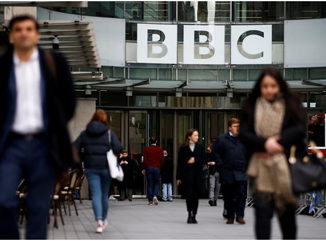
  • China bans BBC from broadcasting

    China bans BBC from broadcasting

    Beijing (TIP): China has banned BBC World News from broadcasting in the country for seriously violating its guidelines for reporting, its television and radio regulator has announced. The move comes a week after the UK revoked the license of Chinese state-owned broadcaster China Global Television Network’s (CGTN). China has criticised the BBC for its reporting on the deadly coronavirus pandemic and the persecution of ethnic minority Uighurs and lodged a protest with the British broadcaster. The BBC said it was “disappointed” by China’s decision to ban it. The Chinese regulator, National Radio and Television Administration (NRTA), has made the announcement on Thursday night on pulling BBC World News off the air in the country for serious content violation. The NRTA said BBC World News was found to have seriously violated regulations on radio and television management and on overseas satellite television channel management in its China-related reports, state-run Xinhua news agency reported.

    The BBC coverage went against the requirements that news reporting must be true and impartial, and undermined China’s national interests and ethnic solidarity, it said. “As the channel fails to meet the requirements to broadcast in China as an overseas channel, BBC World News is not allowed to continue its service within Chinese territory. The NRTA will not accept the channel’s broadcast application for the new year,” NRTA said in a statement.

    China’s ban followed British media regulator Ofcom revoking state broadcaster CGTN licence to broadcast in the UK.

    Ofcom’s decision to revoke the license of CGTN came after it found that the Chinese state television licence was wrongfully held by Star China Media Limited.

    CGTN was also found in breach of British broadcasting regulations for airing the allegedly forced confession of UK citizen Peter Humphrey.

    Reacting to China’s ban, the BBC said in a statement: “We are disappointed that the Chinese authorities have decided to take this course of action. The BBC is the world’s most trusted international news broadcaster and reports on stories from around the world fairly, impartially and without fear or favour.”

    The commercially-funded BBC World News TV channel broadcasts globally in English. In China, it is largely restricted and appears only in international hotels and some diplomatic compounds, meaning most Chinese people cannot view it, the BBC report on China’s ban said.

    British Foreign Secretary Dominic Raab called the move an “unacceptable curtailing of media freedom”.

    The US State Department condemned the decision, calling it part of a wider campaign to suppress free media in China.

    Relations between China and the UK have seen a serious deterioration in recent months over Hong Kong, where Beijing introduced a controversial new security law after a large pro-democracy movement swept the ex-colony.

    In January the UK introduced a new visa that gives 5.4 million Hong Kong residents the right to live in the UK and eventually becomes citizens because it believes China is undermining the territory’s rights and freedoms, the BBC report said.

    China’s tiff with BBC followed Beijing’s spat last year with three US newspapers resulting in the expulsion of some journalists from those media outlets.

    China has sharply criticised this month’s BBC report featuring interviews with Uighur women who said they had been systematically raped, sexually abused and tortured in China’s “re-education” camps in Xinjiang. PTI

  • UK PM Johnson has no plans for summer holiday, says his spokesman

    London (TIP): British Prime Minster Boris Johnson has no holiday plans for over the summer, his spokesman said on Thursday, after ministers were criticised for giving conflicting advice as to whether people should book breaks at home or abroad. Asked whether Johnson had any holiday plans, his spokesman said: “No.” “I am sure the prime minister, along with everybody else, is keen to have a break over the summer, but …. he hasn’t got one planned,” he added. — Reuters

  • UK bans direct flights from UAE, shutting world’s busiest international route

    London/Sydney (TIP): Britain is banning direct passenger flights to and from the United Arab Emirates from Friday, shutting down the world’s busiest international airline route from Dubai to London. Britain said it was adding the United Arab Emirates, Burundi and Rwanda to its coronavirus travel ban list because of worries over the spread of a more contagious and potentially vaccine-resistant COVID-19 variant first identified in South Africa. “This means people who have been in or transited through these countries will be denied entry, except British, Irish and third country nationals with residence rights who must self-isolate for ten days at home,” UK Transport Minister Grant Shapps said on Twitter on January 28. Emirates and Etihad Airways said on their websites they would suspend all UK passenger flights from 1300 GMT on Friday when the ban takes effect.

    Dubai airport, in a statement, advised passengers booked on flights due to arrive in the UK after the ban comes into effect to not go to the airport and instead contact their airline.

    The UK Transport Department advised British nationals currently in the United Arab Emirates to make use of indirect commercial airline routes if they wished to return to Britain.

    Due to border closures caused by COVID-19, Dubai to London was the world’s busiest international route in January with 1,90,365 scheduled seats over the month, according to airline data provider OAG. Emirates and Etihad normally carry large numbers of passengers connecting from Britain to destinations sucha as Australia through their airport hubs, meaning the decision to cancel those flights will have far-reaching implications. The Australian government said it would add more charter flights from Britain if needed as a result of the Emirates and Etihad cancellations. Eran Ben-Avraham, an Australian stranded in Britain due to strict limits on the number of arrivals in Australia, said his options for getting home were continually shrinking. “At the moment, it is only giving us three options of flying Qatar, ANA or Singapore Airlines,” he told the Australian Broadcasting Corporation. “Every day, it is making it more difficult to get home. The flights back are anywhere from like 4,000 pounds ($5,487),” he added. Reuters

  • Covaxin neutralizes UK strain: Bharat Biotech

    NEW DELHI/NEW YORK (TIP): India’s first indigenous Covid-19 vaccine, Covaxin, effectively neutralizes the more infectious UK variants of SARS-CoV-2 virus, reducing the possibility of the mutant virus escaping the body’s defense system. This was stated by Covaxin developer Bharat Biotech on Wednesday, Jan 20 following a research conducted by the company along with experts from National Institute of Virology (NIV) and Indian Council of Medical Research (ICMR). The study, yet to be peer reviewed, concluded that the vaccine generated enough antibody capability in recipients (given two doses) to neutralize the mutated variant, also known as lineage B117 or 20B/501Y.V1. The joint research paper, ‘Neutralization of UK-variant VUI-202012/01 with Covaxin vaccinated human serum’, has also been uploaded on bioRxiv, a server which carries pre-prints of research work before it is peer reviewed. The paper said the researchers performed the plaque reduction neutralization test, which is used to quantify the titer or concentration of the neutralizing antibody for a virus, using the sera collected from 26 volunteers who received Covaxin to test against the UK variant and the heterologous strain of the virus. The researchers said that the neutralization activity of the sera on both the UK-variant and the heterologous strain showed a similar efficiency. The research team was led by ICMR director general Balram Bhargava and Raches Ella, project lead: SARSCoV-2 vaccine and head of business development & advocacy, Bharat Biotech. India has so far detected over 100 Covid-19 cases with the UK variant of the virus.

  • Global Covid-19 cases top 96.8 mn, toll at 2.07 million

    The total number of global coronavirus cases has topped 96.8 million, while the deaths have surged to more than 2.07 million, according to the Johns Hopkins University. In its latest update on Thursday morning, the University’s Center for Systems Science and Engineering (CSSE) revealed that the current global caseload and death toll stood at 96,823,968 and 2,073,866, respectively. The US is the worst-hit country with the world’s highest number of cases and deaths at 24,432,807 and 406,001, respectively, according to the CSSE. India comes in second place in terms of cases at 10,595,660, while the country’s death toll soared to 152,718.

    The other countries with more than a million confirmed cases are Brazil (8,638,249), Russia (3,595,136), the UK (3,515,796), France (3,023,661), Italy (2,414,166), Spain (2,412,318), Turkey (2,406,216), Germany (2,090,195), Colombia (1,956,979), Argentina (1,831,681), Mexico (1,688,944), Poland (1,450,747), South Africa (1,369,426), Iran (1,348,316), Ukraine (1,210,854) and Peru (1,073,214), the CSSE figures showed.

    Brazil currently accounts for the second highest number of fatalities at 212,831.

    The countries with a death toll above 20,000 are Mexico (144,371), the UK (93,469), Italy (83,681), France (71,792), Russia (66,214), Iran (57,057), Spain (54,637), Colombia (49,792), Germany (49,499), Argentina (46,216), Peru (39,044), South Africa (38,854), Poland (34,141), Indonesia (26,857), Turkey (24,487), Ukraine (22,264) and Belgium (20,554).

  • UK TO HOST G7 SUMMIT IN CORNWALL FROM 11-13 JUNE 2021

    UK TO HOST G7 SUMMIT IN CORNWALL FROM 11-13 JUNE 2021

    • PM will use the UK’s G7 Presidency to unite leading democracies to help the world build back better from coronavirus and create a greener, more prosperous future.
    • Australia, India and South Korea invited as guest countries

    Nirpal Singh Shergill in London

    LONDON (TIP): The G7 Summit will be held in Carbis Bay, Cornwall from 11-13th June 2021.

    Prime Ministers and Presidents from the world’s leading democracies will come together inCornwall in June to address shared challenges, from beating coronavirus and tackling climatechange, to ensuring that people everywhere can benefit from open trade, technologicalchange and scientific discovery.

    Prime Minster Boris Johnson will use the first in-person G7 summit in almost two years to ask leaders toseize the opportunity to build back better from coronavirus, uniting to make the future fairer,greener and more prosperous.

    The G7 – which is made up of the UK, Canada, France, Germany, Italy, Japan, the USA andthe EU – is the only forum where the world’s most influential and open societies andadvanced economies are brought together for close-knit discussions. The Prime Minister’s ambition is to use the G7 to intensify cooperation between the world’sdemocratic and technologically advanced nations. To that end, he has invited leaders fromAustralia, India and South Korea to attend as guest countries to deepen the expertise andexperience around the table. Between them the 10 leaders represent over 60% of thepeople living in democracies around the world.

    The choice of Cornwall as the location for the Summit will mean the eyes of the world are onthe beautiful, historic and innovative region. The leaders’ meeting itself will be held in thecoastal town of Carbis Bay, supported by neighboring St Ives and other towns acrossthe region. The whole of Cornwall will reap the benefits of hosting the G7.The region is already a powerhouse for green innovation, providing an ideal setting fora Summit focused on building back better from the coronavirus pandemic.

    Visit Cornwall estimates the total economic impact for the county will be £50 million,including through an increase in future tourism. The Government will also work closely withCornish leaders and institutions to ensure the Summit leaves a long-term legacy for theregion, reaping the benefits of hosting the G7 for years to come.

    The UK will also host a number of meetings throughout the year between GovernmentMinisters from the G7, both virtually and in different locations across the UK – ensuringmany areas of the country experience the benefits of the UK’s G7 Presidency. Theseministerial summits will cover economic, environmental, health, trade, technology,development and foreign policy issues.

    Prime Minister Boris Johnson said:

    “As the most prominent grouping of democratic countries, the G7 has long been thecatalyst for decisive international action to tackle the greatest challenges we face. Fromcancelling developing world debt to our universal condemnation of Russia’s annexationof Crimea, the world has looked to the G7 to apply our shared values and diplomaticmight to create a more open and prosperous planet.

    “Coronavirus is doubtless the most destructive force we have seen for generations andthe greatest test of the modern world order we have experienced. It is only right that weapproach the challenge of building back better by uniting with a spirit of openness tocreate a better future.

    “Cornwall is the perfect location for such a crucial summit. Two hundred years ago Cornwall’stin and copper mines were at the heart of the UK’s industrial revolution and this summerCornwall will again be the nucleus of great global change and advancement. I’m very muchlooking forward to welcoming world leaders to this great region and country.” 2021 marks a crucial year of international leadership for the UK. In addition to the G7 Summit,during February the UK will assume the Presidency of the UN Security Council, and later thisyear the UK will host COP26 in Glasgow and a global education conference aimed at gettingchildren in the developing world into school.

  • UK bans arrivals from South American countries, Portugal over new coronavirus variant

    UK bans arrivals from South American countries, Portugal over new coronavirus variant

    The British government on Thursday, January 14,  announced its decision to ban arrivals from more than a dozen South American countries and Portugal from Friday following the detection of a new coronavirus variant. British Transport Secretary Grant Shapps tweeted: “I’ve taken the urgent decision to BAN ARRIVALS from ARGENTINA, BRAZIL, BOLIVIA, CAPE VERDE, CHILE, COLOMBIA, ECUADOR, FRENCH GUIANA, GUYANA, PANAMA, PARAGUAY, PERU, SURINAME, URUGUAY AND VENEZUELA — from TOMORROW, JAN. 15 at 4 a.m. following evidence of a new variant in Brazil.” “Travel from PORTUGAL to the UK will also be suspended given its strong travel links with Brazil, acting as another way to reduce the risk of importing infections. However, there is an exemption for hauliers travelling from Portugal (only), to allow transport of essential goods.” “This measure does not apply to British and Irish Nationals and third country nationals with residence rights — but passengers returning from these destinations must self-isolate for TEN DAYS along with their households,” he added. The new ban was announced after a meeting of senior British government officials on Thursday, Jan 14, the BBC reported. British Prime Minister Boris Johnson on Wednesday told MPs in the House of Commons, lower house of parliament, that the government was “concerned” about the new virus variant detected in Brazil.

    “We already have tough measures… to protect this country from new infections coming in from abroad,” he said. In December 2020, Britain has suspended flights from South Africa after a discovery of a new and concerning variant there. Johnson said there were “lots of questions” over the latest variant, including whether it is resistant to COVID vaccines. At present, experts are uncertain how effective existing vaccines will be against the new variant, the Evening Standard newspaper reported.

    Patrick Vallance, the British government’s top scientist, told ITV that the new variant contains “a change of the genetic code, at position 484, and that changes a part of the protein, it changes a bit of a shape of the protein”. He said that there is no evidence new variants are more deadly. The latest development came as another 1,564 have died within 28 days of a positive test, the highest daily death toll since the pandemic began in the country, according to official figures released Wednesday. The total number of coronavirus-related deaths in Britain now stands at 84,767, the data showed. Another 47,525 people in Britain have tested positive for COVID-19, bringing the total number of coronavirus cases in the country to 3,211,576, the figures showed. England is currently under the third national lockdown since the outbreak of the pandemic in the country. Similar restriction measures are also in place in Scotland, Wales and Northern Ireland. To bring life back to normal, countries such as Britain, China, Germany, Russia and the United States have been racing against time to develop coronavirus vaccines.

  • UK PM Johnson says no deal Brexit now strong possibility

    London (TIP): There is a strong possibility that Britain does not reach a trade deal with the European Union, British Prime Minister Boris Johnson said on Dec 10, but pledged to go to Paris, Brussels or Berlin or wherever necessary to try to get one. “I do think that we need to be very, very clear there’s now a strong possibility, strong possibility, that we will have a solution that’s much more like an Australian relationship with the EU, than a Canadian relationship with the EU,” Johnson said. “It doesn’t mean it’s a bad thing.” Negotiations with the European Union are in their final days, with large gaps remaining on core issues and both sides committed to making a decision on Sunday about whether talks should continue.

    “What I’ve said to our negotiators is that we’ve got to keep going, and we’ll go the extra mile … and I will go to Brussels, I will go to Paris or go to Berlin or wherever, to try to get this home and get to a deal,” he said.

    “But there’s always the possibility, the prospect, of coming out on Australian terms.” – Reuters

  • UK PM warns of New Year lockdown as he defends new tier system

    UK PM warns of New Year lockdown as he defends new tier system

    London (TIP): UK Prime Minister Boris Johnson was on Friday fighting back rebels from within his own Conservative Party who are opposed to most of England being put into the toughest two tiers of high COVID-19 alert after the country’s second stay-at-home lockdown ends next Wednesday.

    In a Downing Street briefing on Thursday after he ended his self-isolation on being in contact with a COVID-19 positive MP, Johnson defended the three-tier system as the best chance of avoiding a third complete national lockdown in the New Year.“If we ease off  now, we risk losing control of this virus all over again, casting aside our hard-won gains, and forcing us back into a New Year national lockdown with all the damage that would mean,” said Johnson. “Under our Winter Plan, England will return to a tiered system of local restrictions. Our decisions on which area enters which tier are based on public health advice according to five indicators: cases across all ages, especially the over 60s, the rate by which cases are rising or falling, the percentage of those tested in a local population who have COVID-19, and the pressure on the NHS,” he said.

    However, the COVID Recovery Group (CRG), made up of Tory backbenchers within his party, said it was “authoritarianism at work”. “There is no logic whatsoever in having a month of lockdown only for people to have to live under an even more severe set of restrictions afterwards,” said Harriett Baldwin, the Tory MP for West Worcestershire, which has been placed in Tier 2.

    Johnson has a comfortable 80-strong majority in the House of Commons but if 40 of his own MPs vote down his Winter Plan when it comes for a vote next Tuesday, he will have to rely on support from the Opposition to get it through. And, the Labour Party is expected to decide only early next week whether to back the plans after consultation with government coronavirus experts.

    Under plans laid out in the Commons on Thursday, only three areas of England – Cornwall, the Isle of Wight and Isles of Scilly – have been placed into the lowest Tier 1 or the medium restrictions category, with most of England either in Tier 2 or 3. Under the highest Tier 3 alert level, there is a complete ban on mixing of households except in limited outdoor settings. For Tier 2, the rule of six applies with up to six members of different households allowed to meet outdoors and under Tier 1, the rule of six applies both indoors and outdoors. PTI

  • Indian-Origin Couple’s Drive-in Wedding in UK

    Indian-Origin Couple’s Drive-in Wedding in UK

     LONDON (TIP):  An Indian-origin couple, keen not to delay their wedding plans despite a strict restriction on the number of guests allowed to assemble under England’s coronavirus lockdown rules, are celebrating this week after pulling off a first-of-its-kind drive-in wedding near London.

    London based Roma Popat and Vinal Patel were originally due to get married on April 20 but when lockdown disrupted their plans, they discussed the concept of a drive-in wedding with their wedding coordinator, Saheli Events, almost as a tongue-in-cheek thought rather than a serious plan.

    However, what began as a joke became a reality last Friday, when the couple were married in front of a small gathering of their immediate family with the ceremony being projected onto a big screen in a field next door to friends and family seated in more than 100 cars at Braxted Park in Chelmsford.

    “We’re delighted with how both the wedding ceremony and drive-in has gone,” said Saheli Mirpuri, Founder & Director of Saheli Events.

    “This year has been so difficult for luxury Asian weddings and celebrations in particular, but this was a creative way to still ensure that guests felt they were with the couple on the day, and we’re delighted to have worked with so many amazing suppliers to bring everything together,” she said.

    Under the UK government guidelines, only 15 people are allowed to be part of wedding ceremonies, which has resulted in many weddings either being postponed or couples trying to find virtual options to include friends and family to be a part of their big day.

    “When we had to postpone our wedding in April, we had no idea whether we would be able to get married this year or not,” said bride Roma.

    “We have so many friends and family and we wanted them to be part of our celebration. It literally meant everything to us to have everyone there, albeit in a slightly different way to the one we envisaged. It’s a day we’ll never forget,” she said.

    On arrival at the drive-in wedding, guests in cars were given welcome hampers containing anti-bacterial hand gel and requested to stay in their vehicles throughout. The option to order food was available from their respective seats through a COVID-safe delivery service direct to their cars. If they needed any help, they were advised to flash their lights or hazard flashers

    The traditional Hindu wedding ceremony unfolded on the big screen and as is the tradition, the groom’s grand entrance was marked by travelling around the field before the ceremony waving at all the guests in their cars.

    Horns were honked as he travelled past on a specially decorated golf buggy, driven by a member of venue staff wearing a protective mask.

    After the intimate ceremony inside had been completed, the newly-weds then travelled around the field on the same golf buggy, waving to their friends and families inside their cars.

    The couple were also able to watch a specially filmed tribute for them on the drive-in screen made by guests unable to travel to be with them on the day.

    Braxted Park, the wedding and events venue which hosted the unusual drive-in wedding, said it has since been receiving several inquiries from couples keen to organize their big day under similar Covid-secure settings.

    Under tougher restrictions that came in last month, maximum guest numbers at wedding ceremonies and sit-down receptions in England were halved from an initial 30 to 15 amid a spike in coronavirus infections.

    However, they were included as an exception to the wider rules banning groups of more than six from gathering.

  • Indian -Origin Rishi Sunak’s Reply upon being asked if he wishes to be UK PM

    Indian -Origin Rishi Sunak’s Reply upon being asked if he wishes to be UK PM

    LONDON (TIP): Indian – Origin British finance minister Rishi Sunak on Monday, October 5, denied he had ambitions to replace Prime Minister Boris Johnson.

    “Oh God. No. Definitely not,” Sunak said, chuckling, when asked if he wanted the keys to Number 10 Downing Street. “Seeing what the prime minister has to deal with – this is a job hard enough for me to do.”

    “I think he and I are personally close,” Sunak said. He confirmed Johnson called him “Rish”.

    When asked what he called Johnson, Sunak said: “I call him Prime Minister. He keeps trying to tell me to call him other things… but I just stick with PM.”

    “I grew up watching my parents serve our local community with dedication. My dad was an NHS family GP and my mum ran her own local chemist shop. I wanted to make that same positive difference to people as their Member of Parliament and I was first elected to represent this wonderful constituency in 2015 and re-elected in 2017 and 2019. I live in Kirby Sigston, just outside Northallerton.

    I have been fortunate to enjoy a successful business career. I co-founded a large investment firm, working with companies from Silicon Valley to Bangalore. Then I used that experience to help small and entrepreneurial British companies grow successfully. From working in my mum’s tiny chemist shop to my experience building large businesses, I have seen first-hand how politicians should support free enterprise and innovation to ensure our future prosperity.

    My parents sacrificed a great deal so I could attend good schools. I was lucky to study at Winchester College, Oxford University and Stanford University. That experience changed my life and as a result I am passionate about ensuring everybody has access to a great education. I have been a school governor, a board member of a large youth club, and have always volunteered my time to education programs that spread opportunity.

    I have been lucky to live, study and work internationally. I met my wife, Akshata, in California where we lived for a number of years before returning home. We have two daughters, Krishna and Anoushka, who keep us busy and entertained.

    In July 2019 I was appointed Chief Secretary to the Treasury, having entered Government service as the Minister for Local Government in January 2018. In February 2020, I had the honor to be appointed Chancellor of the Exchequer.”, Sunak once said about himself.

  • Indian-Origin Issa Brothers Win Bid to Buy UK Supermarket Chain

    Indian-Origin Issa Brothers Win Bid to Buy UK Supermarket Chain

    LONDON (TIP): Indian-origin billionaire brothers Mohsin and Zuber Issa are set to acquire a majority stake in the leading UK supermarket chain Asda from its US owner Walmart after a USD 8.8-billion deal was struck as part of a consortium involving private equity firm TDR Capital.

    The Issa brothers, whose parents moved to the UK from Gujarat in the 1970s, own the Euro Garages chain of petrol stations as part of their EG Group business.

    The supermarket deal, valued at around 6.8-billion pounds (USD 8.8-billion), follows an auction process for Asda over several months and returns the 71-year-old supermarket company back into British ownership after 21 years, a development welcomed by UK Chancellor Rishi Sunak.

    “Great to see Asda returning to majority UK ownership for the first time in two decades today,” Mr. Sunak said on Twitter.

    “The new owners have already committed to investing over GBP 1 billion in the next three years and increasing the proportion of UK-based suppliers. I wish them the best of luck,” he said.

    Announcing the deal, Walmart said Asda would keep its headquarters in Leeds in northern England, with chief executive Roger Burnley continuing to be in charge.

    “We are very proud to be investing in Asda, an iconic British business that we have admired for many years. Asda’s customer-centric philosophy focus on operational excellence and commitment to the communities in which it operates are the same values that we have built EG Group on,” Mohsin and Zuber Issa said in a statement.

    The brothers, born in Blackburn in north-west England, pledged support for the long-term growth of the supermarket as they praised the chain’s performance during the COVID-19 pandemic, demonstrating the “fundamental strength and resilience” of the business.

    “We believe that our experience with EG Group, including our expertise around convenience and brand partnerships and our successful partnership with TDR Capital, can help to accelerate and execute that growth strategy.

    “After a successful period as part of Walmart, we are looking forward to helping Asda build a differentiated business that will continue to serve customers brilliantly in communities across the UK,” they said.

    Robert Burnley welcomed the new ownership as an exciting new chapter and committed to delivering value to customers.

    “In a constantly changing retailing environment, our new ownership will further enhance our resilience, whilst creating significant, additional opportunities to drive growth. For Asda colleagues, a strong and growing business is important for our long-term future,” said Mr. Burnley.

    Walmart retains an equity investment in the business with an ongoing commercial relationship and a seat on the board.

    The deal, which is subject to regulatory approvals, is expected to be completed in the first half of 2021.

  • Indian-Origin Oxford University  Academic Leads Criticism of UK’s COVID  Lockdown Approach

    Indian-Origin Oxford University Academic Leads Criticism of UK’s COVID Lockdown Approach

    LONDON (TIP): A prominent Indian-origin Oxford University academic leads a group of over 30 academics who have expressed their doubts over the UK government’s localized and national lockdown approach to tackling a second wave of the coronavirus pandemic.

    Professor Sunetra Gupta, Professor of Theoretical Epidemiology at the University of Oxford, co-authored a letter addressed to Prime Minister Boris Johnson, Chancellor Rishi Sunak and the Chief Medical Officers (CMOs) of England, Wales, Scotland and Northern Ireland this week as a “constructive input” into the government’s policy response to the rising number of coronavirus infections.

    The Gupta-led group recommends more targeted measures that protect the groups most vulnerable to the deadly virus.

    “In summary, our view is that the existing policy path is inconsistent with the known risk-profile of COVID-19 and should be reconsidered,” notes the open letter.

    “Instead, more targeted measures that protect the most vulnerable from COVID, whilst not adversely impacting those not at risk, are more supportable… Such targeted measures should be explored as a matter of urgency, as the logical cornerstone of our future strategy,” the group says.

    They argue that because 89 per cent of COVID-19 deaths are in the over 65 group and are also concentrated in people with pre-existing medical conditions, these are the groups at which interventions should be targeted.

    “This large variation in risk by age and health status suggests that the harm caused by uniform policies (that apply to all persons) will outweigh the benefits,” the letter reads, warning that the effect on cancer treatment is especially acute, with people delaying or missing screenings, tests, or treatments.

    However, Ms Gupta’s team goes head to head with a contrary scientific point of view put forward in an open letter by Trisha Greenhalgh, Chair of Primary Care Health Sciences at Oxford University, signed by Edinburgh-based Indian-origin academic Devi Sridhar, Chair of Global Public Health, Edinburgh Medical School, among 23 other academics.

    “We strongly support your continuing efforts to suppress the virus across the entire population, rather than adopt a policy of segmentation or shielding the vulnerable until “herd immunity” has developed,” reads the letter addressed to the CMOs.

    “Society is an open system. To cut a cohort of “vulnerable” people off from “non-vulnerable” or “less vulnerable” is likely to prove practically impossible, especially for disadvantaged groups… The goal of “herd immunity” rests on the unproven assumption that re-infection will not occur. We simply do not know whether immunity will wane over months or years in those who have had COVID-19,” they write.

    Their letter, published in the ‘British Medical Journal”, says that the UK may have to move flexibly between levels of restriction rather than either full lockdown or release, depending on how well the virus is controlled.

    They also flag that measures that would help control the virus while also promoting economic recovery include making face coverings mandatory in crowded indoor spaces, improving ventilation in schools and workplaces, continuing to require social distancing, and discouraging large indoor gatherings.

    The face- off within the scientific community comes as Johnson laid out a new set of restrictions to come in force from Thursday, which once again requires people to work from home where possible and for hospitality businesses to bring down their shutters hours earlier in the evening.

    Plans for a further easing up for sporting and exhibition venues, scheduled for next month, have also been halted as part of the tougher measures to be enforced via fines between 100 pounds and 10,000 pounds. Johnson has told Parliament that the country should expect the restrictions to remain in place for around six months.

    “The unstated objective currently appears to be one of suppression of the virus, until such a time that a vaccine can be deployed. This objective is increasingly unfeasible,” warns Prof. Gupta’s group in their letter.

    On the other hand, the group backed by Prof. Sridhar, notes: “Despite claims to the contrary from some quarters, there are no examples of a segmentation-and-shielding policy having worked in any country.”

    The two sets of open letters indicate a growing split across the UK over tackling the second wave of the pandemic, with rival camps divided between strict lockdowns and greater freedom on people’s movements and businesses.

    It comes as the R number, or the rate at which the infection is transmitted, remains above the preferred mark of one and the UK’s death count from the deadly virus edges towards 42,000.

  • Indian – Origin Sikh Taxi Driver Assaulted by Passengers in UK

    Indian – Origin Sikh Taxi Driver Assaulted by Passengers in UK

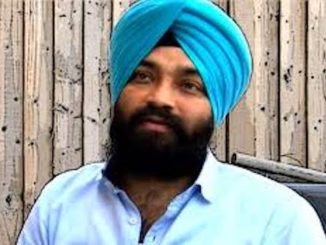
    LONDON (TIP): An India-Origin Sikh taxi driver was subjected to verbal and physical abuse by passengers he drove from a casino in the city of Reading in south-east England, prompting a UK police force to launch an investigation.

    Vaneet Singh, 41, said that a group of four men slapped and shoved him, and asked “are you Taliban” after he received them from the Grosvenor Casino in Reading, Berkshire, in the early hours of Sunday.

    One of the four also tried to remove his turban.

    “It was horrible, really frightening, I will never work the nightshift again. I”m still very scared,” he told the BBC.

    Thames Valley Police are appealing for witnesses as they investigate the report of an assault.

    Vaneet Singh, who worked as a music teacher at a school in Slough, Berkshire, turned to taxi driving after his teaching job was stalled during the coronavirus pandemic.

    The musician, who lives in Tilehurst with his wife and three children, said he has been left shaken up by the assault and will be avoiding night shifts.

    “It’s very bad experience. It’s my religion so I respect my turban,” he said.

    One of the four passengers, all described as white, pulled at his turban as he was driving and slapped him on the head, while others kicked and punched the back of the driver’s seat.

    He says he tried to explain the religious significance of the turban to them and asked them not to touch it.

    He recalled the passengers being well behaved at the start of the journey but “totally changed” as it went on.

    Vaneet Singh, who is suffering from aches and pains since the incident, is convinced the attack was of a racist nature and believes he was a victim of hate crime.

    Thames Valley Police are yet to confirm their line of inquiry in the assault case.

    (Source: BBC)

  • Indian-Origin Man gets Life for Brutally Murdering his Partner in UK

    Indian-Origin Man gets Life for Brutally Murdering his Partner in UK

    LONDON  (TIP): A 23-year-old Indian-origin man who stopped a police officer in the street and made comments implicating himself in an attack on his estranged partner has been sentenced to life imprisonment for her brutal murder by a UK court.

    Jigukumar Sorthi was sentenced to serve a minimum of 28 years behind bars before being considered for parole after he was found guilty of the murder of 21-year-old Bhavini Pravin, who was found stabbed at her home in the city of Leicester in March.

    “This was a horrific, brutal and merciless killing. You took the life of a beautiful, talented young woman, just 21 years of age,” Justice Timothy Spencer told Jigukumar Sorthi at the sentencing hearing at Leicester Crown Court on Wednesday.

    During a murder trial earlier this month, the jury heard how he had felt jilted by Bhavini Pravin after she broke off plans for their wedding ceremony.

    At around 12.30 pm on March 2, Jigukumar Sorthi went to her home and once inside they talked for a few minutes before Jigukumar Sorthi stabbed her multiple times and left the property.

    Leicestershire Police and East Midlands Ambulance Service personnel were called to the address where the victim was pronounced dead.

    Less than two hours after the incident, Jigukumar Sorthi approached an officer outside Spinney Hill Police Station in Leicester and made admissions implicating himself in the stabbing of Bhavini Pravin.

    A post-mortem examination was carried out and concluded Bhavini Pravin died as a result of multiple stab wounds.

    “Bhavini was a young woman who had the rest of her life to look forward to. She was a gentle caring soul and came from a close and very private family. It is fair to say she was the apple of her parents” eyes,” said Detective Inspector Kenny Henry, the senior investigating officer from the East Midlands Special Operations Unit Major Crime team.

    “Losing Bhavini so early in life and in such tragic circumstances continues to take its toll on her parents and brothers – their lives have been changed forever. To have lost their beloved daughter to someone who they trusted to take care of her is something they will never recover from,” he said, adding that the sentence would hopefully be of some comfort to her family.

    “Being present during the trial was understandably difficult for the family and I must commend their bravery, courage, and dignity throughout. Nothing will bring Bhavini back but I can only hope that today’s outcome will, in due course, be of some comfort knowing that the man who ended their daughter’s life has been brought to justice,” he added.

    According to local ‘Leicester Mercury” reports, Jigukumar Sorthi had a civil ceremony with Bhavini Pravin in India in 2017 and followed her to England on a spousal visa in August 2018.

    However, the couple lived at separate addresses and the match did not seem to work out.

    Bhavini Pravin was to marry Jigukumar Sorthi in a religious Hindu wedding ceremony, but her family called it off a day before the murder.

    Bhavini Pravin’s life was cut short in a brutal, callous attack in her own home. The defendant took a knife to her house and yet tried to claim he was not in control of his actions,” said Lucie Boulter from the Crown Prosecution Service (CPS).

    “We prepared compelling evidence that showed the court that this was clearly planned and premeditated,” she said.

    When he gave himself up to the police, Jigukumar Sorthi alleged that Bhavini Pravin had ruined his life.

    His lawyer told the court that his client had struggled to cope with life in the UK during the court proceedings which were translated into Gujarati for his benefit.

  • Indian-Origin London Mayor Candidate Geeta Dropped Over Anti-Semitism Remarks

    Indian-Origin London Mayor Candidate Geeta Dropped Over Anti-Semitism Remarks

    LONDON  (TIP): An Indian-origin entrepreneur-activist was on Monday dropped as a prospective London mayoral candidate to contest against Sadiq Khan next year after her past antisemitic comments came to light.

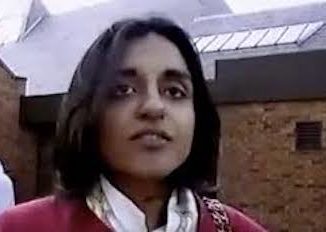
    Geeta Sidhu Robb, the founder of organic food and juice products firm Nosh Detox, had been shortlisted as the Liberal Democrat candidate to take on Labor’s Khan but was instead suspended from the party after a 1997 General Election footage revealed her making anti-Jewish remarks.

    “I apologize profusely for my actions in the 1997 General Election campaign. My behavior caused offence and hurt and I am deeply sorry,” said Sidhu Robb.

    “There is no room for any form of racism or antisemitism in society and as such I very much regret my conduct at that time. It is in no way an excuse, but the context was that I was on the receiving end of a consistent racist campaign and, wrongly, retaliated as I did,” she said.

    “I apologize profusely for my actions in the 1997 General Election Campaign. My behavior caused offence and hurt and I am deeply sorry. There is no room for any form of racism or anti-Semitism in society and as such I very much regret my conduct at that time.

    — Geeta Sidhu Robb (@GeetaSidhuRobb) September 14, 2020

    It is in no way an excuse, but the context was that I was on the receiving end of a consistent racist campaign and, wrongly, retaliated as I did.

    — Geeta Sidhu Robb (@GeetaSidhuRobb) September 14, 2020

    As a Conservative Party General Election candidate in Blackburn 23 years ago when she was contesting against incumbent Labor MP Jack Straw, Sidhu Robb was filmed saying: “Don’t vote for a Jew, Jack Straw is a Jew.”

    The London-based health food promoter, who came second behind Straw in that election, said she was “deeply ashamed” of the language she had used, which she is seen admitting in the footage was done in anger.

    “As shown in the footage, I instantly regretted my appalling behavior, which I continue to do. And I am actively reaching out to the Jewish community to listen and learn,” she said.

    “Two wrongs never make a right. I made a mistake and I take responsibility for my abhorrent actions 23 years ago; they were never repeated. I urge you to judge me on who I am today, a campaigner committed to eradicating inequality and discrimination in all its forms,” she added, in a lengthy Twitter statement.

    The London mayoral election was due to be held in May this year but has been postponed to May 2021 due to the coronavirus lockdown disruption.

    So far, incumbent Sadiq Khan is being challenged by Conservative Party candidate Shaun Bailey in the race. The Lib Dem choice has proved difficult as the party’s previous choice, Siobhan Benita, withdrew from the race saying she could not commit to an extra year of unpaid campaigning. The party is now back to seeking a prospective candidate after Sidhu Robb’s suspension.

    “Geeta Sidhu Robb has been suspended from the Liberal Democrats and will not be on the ballot paper to be the Liberal Democrat candidate for mayor of London. There is an investigation under way in accordance with due process,” a Lib Dem spokesperson said.

  • Indian-Origin Author among Six others on Booker Prize 2020 List

    Indian-Origin Author among Six others on Booker Prize 2020 List

    LONDON (TIP): Dubai-based Indian-origin author Avni Doshi is among the six authors shortlisted for the 2020 Booker Prize for her debut novel “Burnt Sugar”.

    The shortlist was unveiled virtually in London on Tuesday, September 15, after judges re-evaluated the 13 longlisted novels published in the UK or Ireland between October 2019 and September 2020 to whittle down the shortlist for the GBP 50,000 literary prize in November.

    “This utterly compelling read examines a complex and unusual mother-daughter relationship with honest, unflinching realism – sometimes emotionally wrenching but also cathartic, written with poignancy and memorability,” the judges said of Avni Doshi’s entry.

    Avni Doshi, born in the US and now living in Dubai, has previously spoken about the long journey to her first novel, which was released in India last year as ‘Girl in White Cotton’ and for its UK release in July.

    The rest of the shortlist includes Diane Cook for “The New Wilderness”, Zimbabwean writer Tsitsi Dangarembga for the third novel in her trilogy – ‘This Mournable Body’, Maaza Mengiste for “The Shadow King”, Douglas Stuart for “Shuggie Bain” and Brandon Taylor for “Real Life”.

    Literary heavyweight and former double Booker winner Hilary Mantel, in the running for her final installment in her series set in King Henry VIII’s 16th century England ”The Mirror and the Light”, failed to make the shortlist cut.

    “The shortlist of six came together unexpectedly, voices and characters resonating with us all even when very different. We are delighted to help disseminate these chronicles of creative humanity to a global audience,” said Margaret Busby, literary critic and chair of the 2020 judges.

    “As judges, we read 162 books, many of them conveying important, sometimes uncannily similar and prescient messages,” she said.

    “The best novels often prepare our societies for valuable conversations, and not just about the inequities and dilemmas of the world – whether in connection with climate change, forgotten communities, old age, racism, or revolution when necessary – but also about how magnificent the interior life of the mind, imagination and spirit is, in spite of circumstance,” she said.

    The organizers said that readers of the chosen books will travel to India to unpick an unsettling mother-daughter relationship redefined by dementia with Avni Doshi’s entry; explore the tender story of a mother’s battle to save her daughter in a dystopian city made inhospitable by the climate crisis; witness a woman confronting the realities of life and morality in Zimbabwe as she descends into poverty.

    They will uncover the extraordinary tales of the African women who went to war during Italy’s 1935 invasion of Ethiopia; find humanity and humor in the harsh realities experienced by a marginalized family in 1980s Glasgow; and question what “real-life” is in a fresh take on the campus novel, which offers a nuanced account of racism and homophobia.

    Gaby Wood, Literary Director of the Booker Prize Foundation, said: “Every year, judging the Booker Prize is an act of discovery. What’s out there, how can we widen the net, how do these books seem when compared to one another, how do they fare when re-read? These are questions judges always ask themselves, and each other.”

    “This year there has perhaps been more discovery than usual, both in the sense that debut novels are in the majority and due to the fact that the judges themselves were surprised to find that was the case. Why were they surprised? They were focusing on the books,” she said.

    “No one wins the Booker Prize because of who they are. A book wins because of what it does. What has transpired is a testament to the judges” faith in – among other things – first fictions: they have found these writers to have much to say, and found them to have said it in a way that became even richer on second reading.”

    The Booker Prize for Fiction is open to writers of any nationality, writing in English and published in the UK or Ireland. The shortlist of six books will be announced on September 15, with each shortlisted author receiving 2,500 pounds and a specially bound edition of their book at the prize ceremony scheduled for November.

    The 2019 Booker Prize for Fiction was won jointly by “The Testaments” by Margaret Atwood and ‘Girl, Woman, Other’ by Bernardine Evaristo. First awarded in 1969, the Booker Prize is recognized as the leading prize for literary fiction written in English.

    The rules of the prize were changed at the end of 2013 to embrace the English language “in all its vigor, its vitality, its versatility and its glory”, opening it up to writers beyond the UK and Commonwealth, providing they were writing novels in English and published in the UK.

  • Indian-Origin Parents Plead for Return of Children from Foster Care in UK

    Indian-Origin Parents Plead for Return of Children from Foster Care in UK

    LONDON / CHENNAI  (TIP): An Indian-origin couple who won a major UK court appeal recently that prevented their children from losing their Indian citizenship are now appealing for authorities in Britain to allow their two minor children in foster care in Britain to be reunited with their family to live in India.

    The parents, who cannot be named for legal reasons, are originally from Nagapattinam in Tamil Nadu and moved to the UK in 2004. They lost all contact with their children – a son aged 11 and daughter aged 9 – in August 2015 when they were taken into the care of the local childcare authorities in Birmingham.

    Their case has been going through the family courts in Britain and last week, a UK Court of Appeal judgment concluded that the Birmingham Children’s Trust must seek the court’s approval before any attempt to apply for British citizenship for the children in the face of “parental opposition”.

    “I am an Indian national. The children are Indian nationals too. We would love to go to India. We don’t want British citizenship for the children. We have made this clear,” said the 52-year-old father, a civil engineer struggling to make ends meet in Birmingham.

    “The Indian High Commission supported the return of my children in the court proceedings,” he said.

    The Consulate General of India (CGI) in Birmingham said it has been providing consular and legal assistance to the parents in their four-year-long legal battle.

    “We had submitted in the honorable Family Court in Birmingham that the Indian Consulate wishes to provide assistance for the children’s welfare needs and provide the necessary arrangements to provide the Indian passports for the children and will fund the costs of the flights and transportation to India and overseeing their care arrangements,” the CGI in Birmingham noted in a statement.

    The CGI said that it continues to offer support and monitor the progress in the case and had also assisted the parents to procure a home study report from the Child Welfare Committee, District Nagapattinam, regarding prospective custodians of the children in Tamil Nadu.

    “We must understand that the case is sub-judice and any comments on this case may not be appropriate,” the Indian consulate noted.
    The case was described by the UK Court of Appeal as a “challenging one for everyone”, with the Tamil-speaking parents requiring interpreters.

    In the latest appeal, the father was represented by prominent Indian lawyer Harish Salve, who argued that a change of citizenship marks a “fundamental change” and “matter of great moment”, which may or may not be in the children’s interests.

    The reasons behind the children’s removal from their parents” care were not revealed in court but a previous ruling in December last year determined that the minor boy and girl must remain in long-term foster care for the remainder of their childhoods.

    “My sole purpose of staying back here [in Birmingham] is to get my children released from the UK authorities and have them returned to India, whether with or to approved relatives… The children will lead a peaceful life with safety and security in India,” said the father, speaking in Tamil.

    His wife, a 45-year-old Indian national also from Tamil Nadu, is now living in Singapore with her mother and the couple’s four-and-a-half-year-old daughter, born after she left the UK while pregnant over fears of losing her third child to foster care as well.

    “Don’t I care for my third child well now? Their accusations are just false. They separated my children from me… I was not able to comprehend what was happening and I was just stunned. I asked for an interpreter since I could not understand English much,” said the tearful mother from Singapore, also speaking in Tamil.

    In court, she was assisted by Delhi-based advocate Nandita Rao, described as a legally qualified “McKenzie friend” – or someone who assists a litigant in UK court proceedings by giving advice.

    “In my personal capacity, as a person interested in child rights, I would suggest that the Birmingham authority ought to assess its capacity to preserve the nationality of children (who are not citizens of the UK) in the foster care system,” said Mr Rao.

    “Nationality has a de jure part (i.e. identity in law) and a de facto part (cultural identity). The latter includes preserving the language, food habits, social and family contacts of the child. If the authority is not in a position to ensure the cultural identity of a child is preserved… the local authority should explore foster care for the child in his home country, unless the child is an asylum seeker or has a risk of persecution in its home country,” she said.

    The local authority, the Birmingham Children’s Trust, said it was considering the implications of the judgment handed down by the UK Court of Appeal on August 6.

    “We have received the judgement and we will be considering the outcome and implications in our future practice,” said a spokesperson for the Birmingham Children’s Trust.

    Last week’s ruling had acknowledged that changing a child’s citizenship was a “momentous step” and not a routine matter.

    “Changing a child’s citizenship is a momentous step with profound and enduring consequences that requires the most careful consideration… The local authority should now indicate whether it wishes to progress the matter, in which case we will give appropriate directions,” it noted.

  • Indian-origin Jayant Krishna appointed as new CEO for UKIBC

    Indian-origin Jayant Krishna appointed as new CEO for UKIBC

    LONDON, UK (TIP): The UK India Business Council has announced that Jayant Krishna has accepted the invitation of the Board to become its new Group Chief Executive Officer. He will take charge from August 3.

    “Jayant brings a wealth of senior-level corporate and governmental experience from India and the UK to UKIBC, having previously led key initiatives of the Prime Minister’s Skill India mission as CEO, and Executive Director & Chief Operating Officer of the National Skill Development Corporation (NSDC),” the council said in a statement.

    Krishna, who will be the first UKIBC Group CEO to be based in India, will be replacing the current Group CEO, Richard Heald, OBE after a term of 10 years. Richard will step up to the role of Chair from September 1, 2020, succeeding the current Chair, Lord Davies of Abersoch, CBE who will retain a close association with the UKIBC by assuming the position of President of a new UKIBC Senior Leadership Council.

    “I’m pleased to accept this extraordinary opportunity to work towards further strengthening UKIBC’s support to UK and Indian industry, encouraging bilateral investment, and helping businesses succeed. UKIBC will continue to bolster two-way trade and investment flows between UK and Indian businesses,” Krishna said.

    Prior to this, Jayant was with the Tata group for over two decades. A British Chevening Scholar, he held various leadership roles at Tata Consultancy Services (TCS), including Director, Life Sciences & Healthcare (UK & Europe), Regional Director (UK & Ireland), Regional Manager in London, Global Delivery Centre Head in India, and Global Relationship Manager for one of TCS’s top five accounts worldwide, while based in London.

    Earlier, Krishna was a management consultant at a division of Tata Sons. More recently, he has been Senior Fellow at the Center for Strategic and International Studies (CSIS) in Washington, DC and Executive Director, Public Policy at the Wadhwani Foundation, focusing on Indian economic reforms and US-India bilateral business ties. He has chaired and served on multiple committees of the Government of India, chaired several taskforces of the Confederation of Indian Industry (CII), and is an Independent Director on the Boards of various companies.

    Over the past years, UKIBC has grown in size, scope, impact, and sustainability, expanding its presence in both the UK and India through the development of a range of advisory, support and consultancy services supporting both Indian and UK companies operating in the UK-India economic corridor.

    Group CEO & Chair (Designate), Richard Heald, OBE said, “The combination of Jayant’s insights of India, his extensive networks within government in India as well as his knowledge of UK and Indian corporates are unique. The appointment of our Group CEO in India underscores our ambition to make the UKIBC more bilateral in nature.”


  • Indian Origin Nikhil Rathi Appointed  New Chief Executive of FCA

    Indian Origin Nikhil Rathi Appointed New Chief Executive of FCA

    LONDON (TIP): HM Treasury on June 22 announced the appointment of Nikhil Rathi as the new permanent Chief Executive of the Financial Conduct Authority (FCA) of UK.

    Nikhil is currently the Chief Executive of London Stock Exchange plc. From September 2009 to April 2014, he was Director, Financial Services Group at HM Treasury. In this role, he led the Treasury’s work on the UK’s EU and international financial services interests. Nikhil is expected to take up the role in the Autumn.

    Chair of the FCA, Charles Randell, said: “I warmly welcome Nikhil to the FCA. I look forward to working with him as he leads the FCA to deliver the next phase of its mission. Nikhil has been closely involved in guiding the FCA’s development through his roles on our Practitioner Panel and Markets Practitioner Panel, and brings both private sector management skills and experience of domestic and international regulatory policymaking. I would also like to thank Christopher Woolard for steering the FCA through its initial response to Covid-19 with great energy and skill. He has been an exemplary leader in this very difficult period.”

    Nikhil Rathi said: “I am honored to be appointed Chief Executive of the Financial Conduct Authority. I look forward to building on the strong legacy of Andrew Bailey and the exceptional leadership of Christopher Woolard and the FCA Executive team during the crisis. FCA colleagues can be very proud of their achievements in supporting consumers and the economy in all parts of the UK in recent months.

    “In the years ahead, we will create together an even more diverse organization, supporting the recovery with a special focus on vulnerable consumers, embracing new technology, playing our part in tackling climate change, enforcing high standards and ensuring the UK is a thought leader in international regulatory discussions.”


  • Indian Origin Film Director Krishnendu Majumdar Named Chair of BAFTA

    Indian Origin Film Director Krishnendu Majumdar Named Chair of BAFTA

    LONDON (TIP): The British Academy of Film and Television Arts (BAFTA) appointed Krishnendu Majumdar as its new Chair. In doing so, Majumdar becomes the first person of color to be appointed to the role in BAFTA’s 73-year history and the youngest chair in 35 years.

    Majumdar has been Deputy Chair for one year and his tenure as Chair will run for the next three years – the newly extended term for all future BAFTA chairs.

    Majumdar is an EMMY-winning and BAFTA-nominated television producer and director. He has been closely involved with BAFTA for 14 years, having been the Chair of the Learning and New Talent Committee (2006-2010), the Chair of the Television Committee (2015-2019) and a member of the Board of Trustees for nine years.

    Majumdar has actively supported BAFTA’s year-round program of learning and new talent initiatives, including BAFTA Breakthrough and BAFTA Elevate. Majumdar is also chairing BAFTA’s Awards Review, convened in response to the lack of diversity in this year’s Film Awards nominations. He has been a long-time supporter of greater diversity on and off screen throughout his career and has also been on the Board of Directors UK and the PACT Council.

    Krishnendu Majumdar said: “It is a tremendous honor to be elected Chair of BAFTA and I’m lucky to be following Pippa Harris’ outstanding tenure and I want to pay tribute to the resilient and dynamic leadership that Pippa has shown. This year has been a difficult and turbulent time for many in our industry, working with Pippa, BAFTA’s talented and committed staff and membership, I want BAFTA to be at the heart of rebuilding the industry post-Covid. It is vital to ensure that we support people of all backgrounds, races and genders. Diversity and inclusion are crucial for the lifeblood of BAFTA, and we will continue to be a leader for real change across our industry.

    Krishnendu Majumdar co-founded the independent production company Me + You Productions in 2012, alongside Richard Yee. Since then, Majumdar has produced the critically acclaimed Dominic Savage drama series I Am for Channel 4 and the International Emmy-winning comedy, Hoff The Record. He has executive produced two series of the comedy drama Sick Of It, as well as the documentary series The Moaning of Life. Majumdar was also a showrunner on the BAFTA-nominated global hit franchise, An Idiot Abroad.

    Before co-founding Me + You, Majumdar worked as a freelance producer and director. His previous credits include BAFTA-nominated polemical film Who You Callin’ A Nigger? for Channel 4 and the major political film Michael Howard: No More Mr Nasty for BBC Two.

    Majumdar entered the industry by being the first and only person ever to be trained on both the prestigious ITN News Trainee and BBC Production Trainee schemes working across both ITN and the BBC at the outset of his career.

    He was born in South Wales to Bengali parents who arrived in the UK from India in the 1960s. His father was a GP who worked for the NHS for over 40 years.


  • Indian- Origin Rishi Sunak next in line as UK PM deputy after foreign minister


    Given the rapid spread of COVID-19 in the UK, where the death toll has crossed 6,000, and its impact on frontline ministers, questions around leadership have been increasingly doing the rounds

    LONDON (TIP): The UK’s Indian-origin finance minister, Rishi Sunak, is next in line to deputize for British Prime Minister Boris Johnson while he is in hospital with coronavirus and in case UK Foreign Secretary Dominic Raab is unable to carry on amid the pandemic, Downing Street has said. Sunak, who has been leading the UK government’s economic response during the COVID-19 lockdown as the Chancellor of the Exchequer, will automatically step in as part of an established order of precedence in the UK –  which does not have a written constitution.

    “There is an established order of precedence. The Prime Minister has appointed the Foreign Secretary [Raab] as his First Secretary of State. In line with the order of precedence, the Chancellor [Sunak] would follow from the Foreign Secretary,” Johnson’s spokesperson at Downing Street told reporters in response to a question about the chain of command at the top of the British government. 

    Given the rapid spread of COVID-19 in the UK, where the death toll has crossed 6,000, and its impact on frontline ministers, questions around leadership have been increasingly doing the rounds. 

    Sunak, 39, has had to table his maiden Budget as well as a series of mini budgets over the past few weeks to try and address the crisis faced by UK businesses as a result of the lockdown. 

    Johnson, 55, is said to be stable and responding to treatment after he was admitted to St. Thomas’ Hospital in London with persistent coronavirus symptoms and later moved to its intensive care unit (ICU) to be close to a ventilator. 

    “The Prime Minister’s condition is stable and he remains in intensive care for close monitoring. He is in good spirits,” a Downing Street spokesperson said earlier on Wednesday. 

  • Indian Origin British Parliamentarian Lisa Nandy is appointed UK Shadow Minister

    Lisa Nandy said her first focus will be on the “pressing matter” of Britons stranded abroad due to the coronavirus pandemic worldwide lockdown.

    LONDON (TIP): Indian-origin British parliamentarian Lisa Nandy on Monday promised a constructive Opposition to the UK government as she got to work as the shadow foreign secretary in the newly elected Labour Party leader Keir Starmer’s top team.

    The 40-year-old MP for Wigan in Greater Manchester was one of the first appointments to be announced by Starmer, who took over from Jeremy Corbyn as Leader of the Opposition over the weekend, and makes Nandy effectively his second in command on the frontbenches of the House of Commons.

    British Sikh Labour MP Preet Kaur Gill also made it to the new Starmer-led team as shadow international development secretary and Goan-origin Valerie Vaz was chosen as shadow leader of the House.

    Former Labour leader Ed Miliband also returned to the frontbenches as shadow business secretary.

    Nandy thanked the new party leader for the “opportunity to serve” and in response to her counterpart in government, Foreign Secretary Dominic Raab’s congratulatory message, said her first focus will be on the “pressing matter” of Britons stranded abroad due to the coronavirus pandemic worldwide lockdown.

    “You can be assured of constructive opposition and I look forward to speaking at the earliest opportunity about the coronavirus crisis and the pressing matter of Britons stranded abroad,” said Nandy, the daughter of India-born academic Dipak Nandy.

    “It’s a real honor to be tasked with leading Labour’s foreign policy response in these difficult times,” she posted on Twitter soon after her shadow cabinet appointment on Sunday night.

    Nandy came in third in a three-way Labour Party leadership postal ballot, which was won by Starmer who polled 275,780 votes followed by Rebecca Long-Bailey in distant second with 135,218 votes.

    Though Long-Bailey was seen as aligned to the old guard led by Jeremy Corbyn, she has been appointed to the post of shadow education secretary.

    Nandy, a vocal critic of the former leadership over its Brexit policies, is expected to emerge as a key Opposition voice under the new guard.

    Her appointment in the top team is seen as among the many signs of Starmer’s plan to revamp the Opposition Labour Party, which had suffered a bruising defeat during the December 2019 General Election.

    Besides Nandy, his top team includes Welsh parliamentarian Nick Thomas-Symonds as shadow home secretary and Oxford East MP Anneliese Dodds as shadow chancellor.

    Among the other appointments, Angela Rayner, the newly elected deputy leader, was also made the Labour Party chair.

    “I will have in my shadow cabinet those that want to serve towards the future aim of winning that next General Election. It’ll be a talented, balanced shadow cabinet,” said Starmer, stressing that the party’s will be keeping an eye on the 2024 General Election.

    “We just lost four elections in a row and therefore of course we need to change. If we don’t change, we will lose the next general election,” he said, in one of his first interviews as Labour leader.

    His win has been welcomed by Indian diaspora groups, who hope for a new chapter in the party’s connect with the 1.5-million-strong Indian-origin voter base in the UK which felt increasingly alienated under Corbyn’s perceived anti-India focus on contentious issues such as human rights in Kashmir.

    “I am confident that under your leadership the Labour Party will further strengthen its historic bonds with India and will build enduring bridges to connect with the Indian diaspora in the UK,” said Ruchi Ghanashyam, the Indian High Commissioner to the UK, in her congratulatory message for Starmer. 

    (Except for the headline, this story has not been edited by TIP staff and is published from a syndicated feed.)