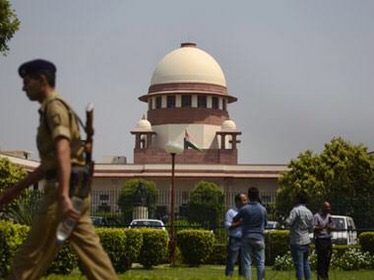
26th May, NEW DELHI: The Supreme Court has allowed an Italian marine, accused of killing two Indian fishermen, to return to Italy.
The court also ordered Salvatore Girone, the marine, to not attempt to influence witnesses or destroy evidence in the case upon his return to Italy.
In addition, the court asked the Italian ambassador to give an undertaking that he would bring Girone back to India to face trial when the time comes.
The Supreme Court ruled that Girone can return to Italy while the United Nations tribunal decides on a jurisdictional issue between India and Italy.
The apex court had earlier allowed another marine Massimiliano Lattore – also accused of the murder of the fishermen – to return to his country on health grounds.
His stay there was recently extended by the apex court until September 30.
New Delhi (TIP): President Pranab Mukherjee, who will visit Beijing and Guangzhou next week, is likely to do his bit to nudge China to stop shielding terrorists based in Pakistan from United Nations sanctions.
“India and China both are huge countries-multicultural, multiracial-if they come together in fighting this menace, I am sure it will have its own impact,” Mukherjee said in an interview to CCTV of China ahead of his forthcoming visit to the communist country.
“India always believes that every country should have a zero tolerance policy towards terrorism and the fight should be all out,” said Mukherjee, who will commence his four-day visit to China next Tuesday.
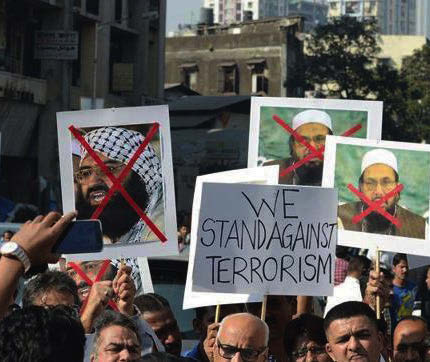
Mukherjee stressed on India-China cooperation against terrorism just a few weeks after New Delhi conveyed its disappointment over Beijing’s tacit move at a United Nations Security Council panel to block a plea to impose sanctions on Pakistan-based Jaish-e-Mohammed chief Moulana Masood Azhar.
India had moved a fresh plea to a UN panel established under the Security Council’s resolutions 1267, 1989 and 2253 seeking sanctions on Azhar, citing evidences it had to prove his links with the attack on the Indian Air Force base at Pathankot in Punjab. But the objection from China made it sure that the plea was put on a “technical hold”.
Beijing, an “all-weather friend” of Islamabad, earlier blocked several attempts by New Delhi to get UN sanctions imposed on Azhar and other terrorist leaders based in Pakistan.
“I would say that we have very comprehensive relationship with the People’s Republic of China. And we consider it is a very important relationship for us,” said the President.
Of all the threats to global security and peace, the most dangerous is the proliferation and potential use of nuclear weapons. That’s why, seven years ago in Prague, I committed the United States to stopping the spread of nuclear weapons and to seeking a world without them. This vision builds on the policies of presidents before me, Democrat and Republican, including Ronald Reagan, who said “we seek the total elimination one day of nuclear weapons from the face of the Earth.”
Thursday in Washington, I’ll welcome more than 50 world leaders to our fourth Nuclear Security Summit to advance a central pillar of our Prague Agenda: preventing terrorists from obtaining and using a nuclear weapon. We’ll review our progress, such as successfully ridding more than a dozen countries of highly enriched uranium and plutonium. Nations, including the United States, will make new commitments, and we’ll continue strengthening the international treaties and institutions that underpin nuclear security.
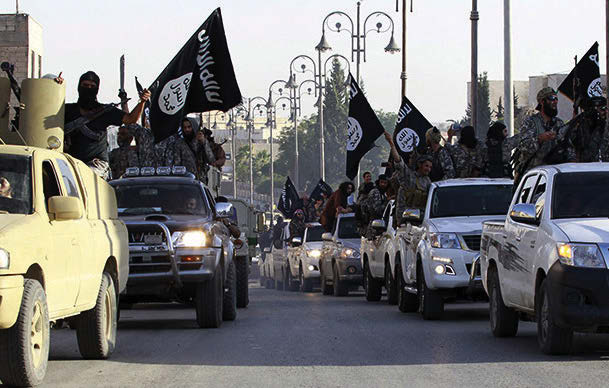
Given the continued threat posed by organizations such as the terrorist group we call ISIL, or ISIS, we’ll also join allies and partners in reviewing our counterterrorism efforts, to prevent the world’s most dangerous networks from obtaining the world’s most dangerous weapons.
Beyond preventing nuclear terrorism, we’ve made important progress toward the broader vision I outlined in Prague.
First, we’re taking concrete steps toward a world without nuclear weapons. The United States and Russia remain on track to meet our New START Treaty obligations so that by 2018 the number of deployed American and Russian nuclear warheads will be at their lowest levels since the 1950s. Even as the United States maintains a safe, secure and effective nuclear arsenal to deter any adversary and ensure the security of our allies, I’ve reduced the number and role of nuclear weapons in our national security strategy. I also have ruled out developing new nuclear warheads and narrowed the contingencies under which the United States would ever use or threaten to use nuclear weapons.
Second, we’re strengthening the global regime – including the Nuclear Non-Proliferation Treaty – that prevents the spread of nuclear weapons. We’ve succeeded in uniting the international community against the spread of nuclear weapons, notably in Iran. A nuclear-armed Iran would have constituted an unacceptable threat to our national security and that of our allies and partners. It could have triggered a nuclear arms race in the Middle East and begun to unravel the global nonproliferation regime.
After Iran initially rejected a diplomatic solution, the United States mobilized the international community to impose sanctions on Iran, demonstrating that nations that fail to meet their nuclear obligations will face consequences. After intense negotiations, Iran agreed to a nuclear deal that closes every single one of its paths to a nuclear weapon, and Iran is now being subjected to the most comprehensive inspection regimen ever negotiated to monitor a nuclear program. In other words, under this deal, the world has prevented yet another nation from getting a nuclear bomb. And we’ll remain vigilant to ensure that Iran fulfills its commitments.
Third, we’re pursuing a new framework for civil nuclear cooperation so countries that meet their responsibilities can have access to peaceful nuclear energy. The international fuel bank that I called for seven years ago is now being built in Kazakhstan. With it, countries will be able to realize the energy they seek without enriching uranium, which could be at risk of diversion or theft.
Our progress notwithstanding, I’m the first to acknowledge that we still have unfinished business. Given its violations of the INF Treaty, we continue to call on Russia to comply fully with its obligations. Along with our military leadership, I continue to believe that our massive Cold War nuclear arsenal is poorly suited to today’s threats. The United States and Russia – which together hold more than 90 percent of the world’s nuclear weapons – should negotiate to reduce our stockpiles further.
The international community must remain united in the face of North Korea’s continued provocations, including its recent nuclear test and missile launches. The additional sanctions recently imposed on Pyongyang by the United Nations Security Council show that violations have consequences. The United States will continue working with allies and partners for the complete and verifiable denuclearization of the Korean Peninsula in a peaceful manner.
More broadly, the security of the world demands that nations – including the United States – ratify the Comprehensive Test Ban Treaty and conclude a new treaty to end the production of fissile material for nuclear weapons once and for all.
I said in Prague that achieving the security and peace of a world without nuclear weapons will not happen quickly, perhaps not in my lifetime. But we have begun. As the only nation ever to use nuclear weapons, the United States has a moral obligation to continue to lead the way in eliminating them. Still, no one nation can realize this vision alone. It must be the work of the world.
We’re clear-eyed about the high hurdles ahead, but I believe that we must never resign ourselves to the fatalism that the spread of nuclear weapons is inevitable. Even as we deal with the realities of the world as it is, we must continue to strive for our vision of the world as it ought to be.
STORY: Tony Stark (Downey Jr.) and Steve Rogers have a difference of opinion over the Sokovia Accords, created by the United Nations, that seeks to create a governing body for the Avengers. Stark is in favour while Rogers prefers them to be free to act on their own instincts and thoughts. A series of events involving a multitude of superheroes from the Marvel Universe, intrigue and different kinds of motivation, leads to a clash between Iron Man and Captain America, among others.
Captain America: Civil War | MOVIE REVIEW
REVIEW: Without giving away anything that might spoil this treat for Marvel and superhero fans, let’s just say that Captain America: Civil War is essentially like a battle royale between superheroes like you’ve never seen before. And in a way that doesn’t bludgeon your senses into numb submission, like some other superhero films we’ve seen of late.
The Russo duo has managed to handle this ensemble cast of superheroes and their personalities with a certain deftness of touch that has to be seen to be believed. Black Panther, Spiderman, Captain America, Black Widow, Winter Soldier… well, pretty much all of them put in some seriously convincing performances. Downey Jr’s Stark-isms have been dialed down here, allowing us to get a glimpse of his real side, as being more than just a one-liner machine. But truth be told, it is Evans who steals the show. Enough said.
As for the action and cinematography, one word -amazing. The climax action sequence at Leipzig/Halle airport is something that might just leave you breathless. It is 17 minutes long (that’s right) and is straight up the stuff of legend. And no, entire cities and buildings need not be leveled to make a good group fight scene.
Rogers’ mistrust regarding new-world values (compared to the time he was from) is nicely explored. His unwillingness to compromise on his code is seen to great effect. There is darkness, there is depth, but the important thing is that the element of fun is also most definitely present. Oh and needless to say, don’t miss Stan Lee’s cameo and do stay for the post-credits scene.
WASHINGTON (TIP): China and Pakistan are closely coordinating moves to block India’s entry into the Nuclear Suppliers Group (NSG).
Beijing is using Pakistan’s non-starter position with the NSG to block India’s application in the name of parity, stating that it would either support NSG entry for both India and Pakistan, or none of them.
Talking about the China – Pakistan grand strategy to stall India’s admission into the NSG , well placed US sources who work with the NSG said that from all counts it does appear that China and Pakistan are coordinating closely to stop the Indian entry.
The sources pointed to the fact that when India sought an information session with the NSG Participating Governments (PGs) at the recent NSG Consultative Group meeting on April 25 and 26, where it would have made a formal presentation to the NSG Group in support of its membership, Pakistan requested for a similar discussion slot with the NSG PGs.
Sources said that even though Pakistan was fully aware that its request would be rejected, it made its application at the cue of China, in order for Beijing to look even-handed when it sought the rejection of both requests on grounds of parity.
Providing an insight into the China-Pakistan plan to stall India, sources say that Pakistan is now going to write to all the NSG PGs about its wish to join the NSG. This is being done in anticipation of an application by India for NSG membership at the forthcoming plenary session of the NSG in June.
The Pakistani application, added sources, is “just a decoy” for China to reject both applications on grounds of parity. China knows that Pakistan does not stand a chance at the NSG, and most of the NSG states will reject Islamabad’s application. By taking the lead in rejecting the Pakistani application along with that of India, China would like to project its position as “neutral” when in reality it is “working in tandem with Pakistan to stall India’s application “.
US sources are disappointed with the Chinese tactics of “using Pakistan’s non credentials with the NSG to settle scores with India”. Informed sources say that this strategy is not a secret and during Pakistan President Mamnoon Hussain’s visit to China in November 2015, China revealed its hand when it told President Hussain that if India is allowed to get NSG membership, China would ensure that Pakistan also joins the group.
The Chinese government told President Hussain that “if India is allowed to join the NSG and Pakistan is deprived of NSG membership, Beijing will veto the move and block the Indian entry”.
Sources maintain that true to its word, China is following a plan that will enable it to use Pakistan’s non-acceptance at the NSG to block India’s acceptance. “It is both or none” is the Chinese plan to derail the Indian application, say sources.
Chinese officials at the NSG level have been using the Pakistan card to stop India’s entry into the NSG while appearing to be even handed in China’s relations with India. Well informed sources also point to comments made by Pakistan’s former permanent representative to the United Nations Zamir Akram who virtually admitted the grand China – Pakistan plan to stall India’s entry into the NSG when, he said, that India will not make it to the NSG despite US. support since China was committed to both India and Pakistan joining the NSG at the same time, and would block any move for a unilateral admission of India.
He added that chances of India gaining entry into the NSG are virtually nil. The former senior Pakistani official also made it known that Islamabad has “friends at the NSG” who won’t let India enter the group.
US sources have seen through China’s game of “either both or none” in the NSG. They say that India’s non-proliferation credentials can never be compared with Pakistan’s, as Pakistan has a history of “selling Nuclear technology to rogue states like Libya”. They point to the father of Pakistan’s nuclear bomb, Dr A.Q. Khan, and his global nuclear trade.
Added to this history, is the fear in the West that Pakistan’s nuclear weapons, especially the tactical version that it is now in the process of developing, can easily find their way into the hands of terrorists, as Pakistan’s nuclear command is extremely vulnerable to penetration by Islamic hardliners. Well-placed sources say that China is aware of this situation, and is mindful of the fact that Pakistan can never be considered for membership in any global nuclear club, but that won’t stop China from using Pakistan as a “parity token to stop India which is fast emerging as China’s competitor at a global level”. (ANI)
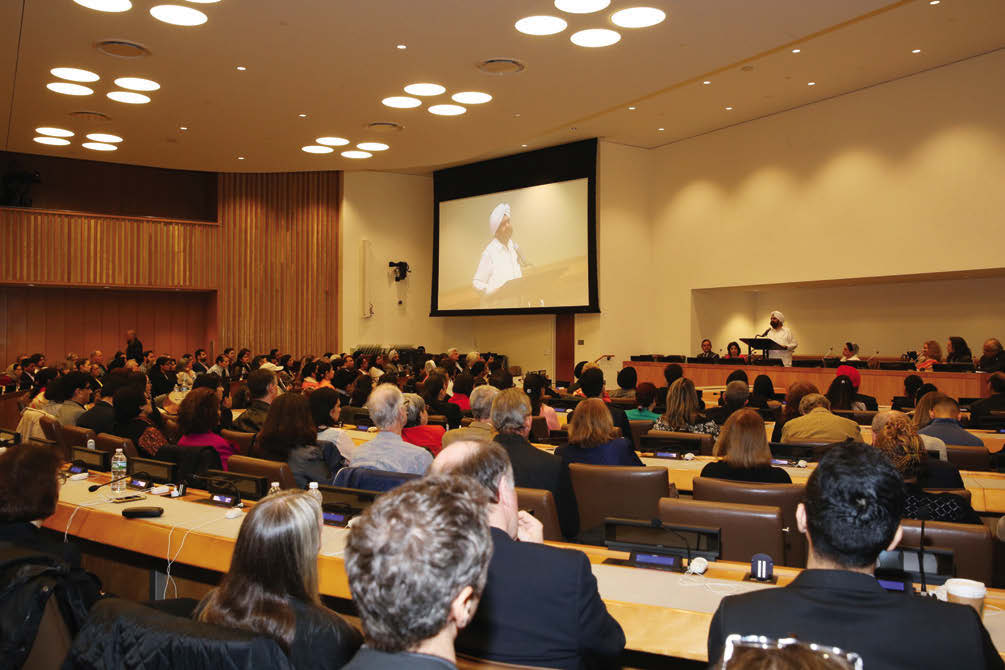
NEW YORK(TIP): Renowned spiritual Master Sant Rajinder Singh Ji Maharaj, head of Science of Spirituality,is no stranger to the United Nations. He was a featured speaker at the Millennium World Summit in 2000, when he delivered his message of inner and outer peace through spirituality to an international audience of religious and spiritual leaders. On Monday, May 2, he gave his second address at the widely respected institution, sponsored by theUNSRC SaluS Well Being Network Club in collaboration with Science of Spirituality. Appropriate to the occasion, his topic was, “Meditation as Medication for the Soul,” based on his book by the same name.
The Reverend Susana Bastarrica, president, UNSRC SaluS Well Being Network, and Mr. Vijay Nambiar, Special Advisor on Myanmar to Secretary-General Ban Ki-moon introduced the spiritual Master.
For the next hour, the spiritual Master spoke to an attentive audience about the benefits of meditation, emphasizing that relaxation, stress relief, better concentration, and improved relationships are byproducts of meditation, not its sole purpose. The prime purpose of stilling the body and stilling the mind in meditation is to experience God within ourselves.
He also said that in meeting with world leaders, he found they are seeking peaceful solutions to conflict.They are realizing that becoming more peaceful themselves through an interest in meditation, they are able to make better judgements in challenging situations.
Sant Rajinder Singh Ji Maharaj’s life and work can be summed up as a continuous journey of love and service. His peace paradigm, transforming lives through meditation, is an achievable construct that will heal the world one soul at a time. As head of Science of Spirituality, he is internationally recognized for his work toward promoting human unity. Among his many awards and tributes are five honorary doctorates for his tireless efforts in this field. His is a message of hope and promise, a light dispelling darkness in troubled times.
Renee Mehrra, Chief Administrative Officer for Science of Spirituality, NGO with ECOSOC, United Nations made the concluding remarks and reinforced Sant Rajinder Singhji’s profound, simple yet timeless message of inner peace, human unity at the level of the soul and compassion for all beings in the age of conflict and negativity.
For more information about Sant Rajinder Singh Ji Maharaj and his schedule please visit www.sos.org.
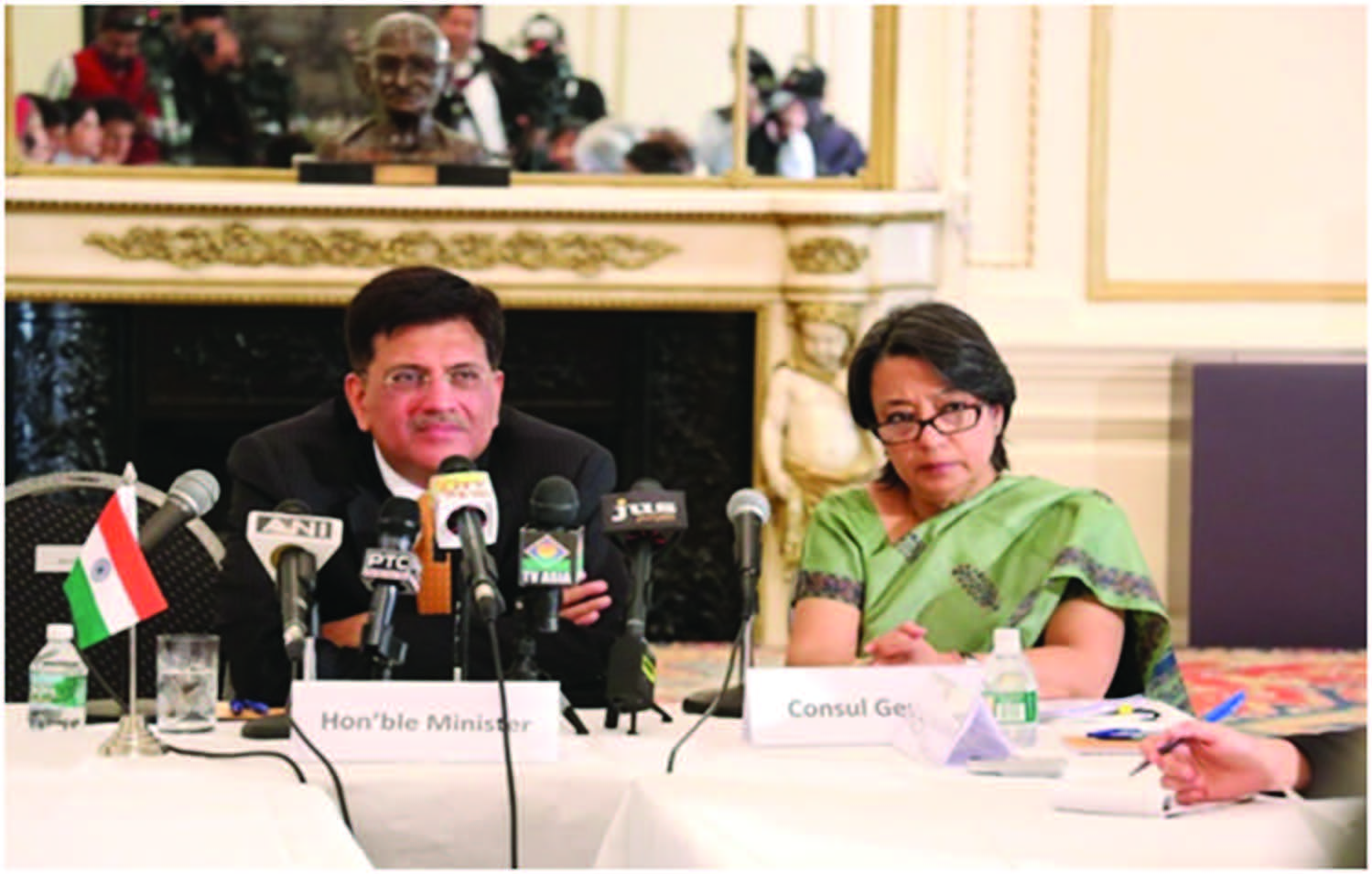
NEW YORK CITY (TIP): Mr. Piyush Goyal, Union Minister of State (IC) for Power, Coal, New & Renewable Energy visited New York to participate in a High Level Side Event in the United Nations Headquarters on the International Solar Alliance (ISA). The Minister was accompanied by an official delegation which included Secretary, Ministry of New and Renewable Energy, Joint Secretary, Ministry of New and Renewable Energy, and six members of his delegation
During the Minister’s visit to New York, he met with the local media atthe Consulate where he briefed about various steps undertaken by Indian Government to improve energy access, rapid scale up of renewable energy, enhancing grid reliability, integration of renewable in the grid and the massive opportunity presented by the untapped demand in the Indian market. He outlined the steps being taken to improve the contractual/counter-party risk framework which is critical to all investors and about initiatives such as Greening the Grid; National Solar Mission: LED Program for enhancing energy efficiency. Speaking on Ujwal Discom Assurance Yojna (UDAY), the Minister stressed upon the steps being taken to bring a drastic change in India’s power sectorand can take India to 7-8%growth in economy. He also mentioned that India will have surplus supply of coal by 2022 and this will help in electrification of Rural Areas.
During the course of his visit, the Minister will also be meeting with major energy sector investors to showcase business opportunities in India.
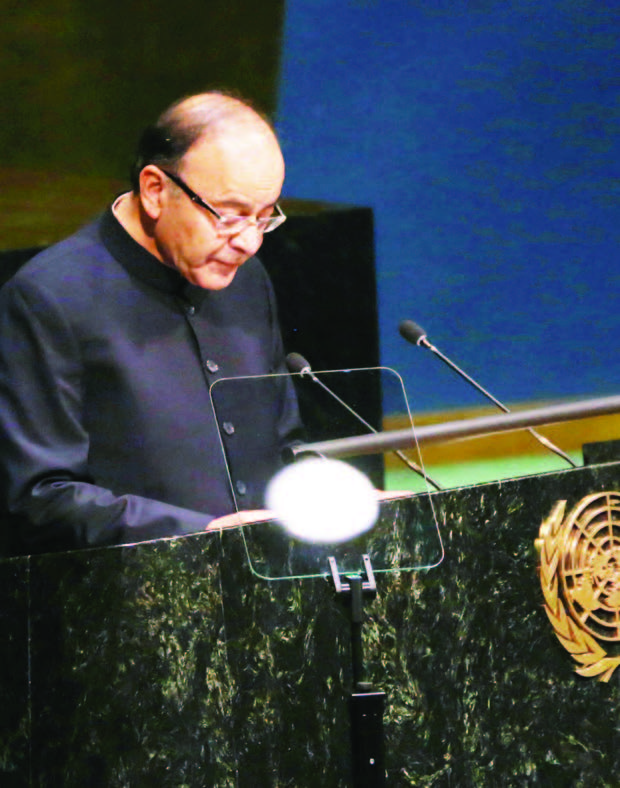
UNITED NATIONS (TIP): India has asked the global community to toughen its collective fight against the growing nexus of organized drug trafficking and terrorist networks by disrupting their financial flows, as these evils threaten peace, security and stability across regions.
“Terrorism constitutes one of the most dangerous threats to civilized societies today. Terrorism knows no borders and terrorists continue to strike cities and innocent civilians across continents,” Finance Minister Arun Jaitley said in his address to a special UN General Assembly session on the drug problem on Tuesday.
The “growing nexus of drug trafficking and terrorist networks endangers peace, security and stability across regions,” Jaitley stressed.
In a clarion call to the international community, he said, “we have to continue and toughen our collective fight against these evils.” “The criminal networks and drug syndicates can only be effectively busted by disrupting their financial flows,” he said at the three-day session that kicked off with the adoption by the 193-member body of the new framework on countering the world drug problem, drafted last month in Vienna by to UN body the Commission on Narcotic Drugs (CND). Jaitley had last week participated in the spring meetings of the International Monetary Fund and the World Bank in Washington and had held meetings with investors in the city.
Addressing the 30th Session of the UN General Assembly on World Drug Problem, Jaitley said the drug problem has global dimensions and requires collaboration across borders as it impacts nations’ ability to attain the objectives of the 2030 development agenda. He voiced India’s firm commitment to the three UN conventions on drug matters, emphasizing that as a supplier of licit opiate raw material to the world and a traditional licit opium cultivator, India is “fully conscious” of its own responsibility to eradicate any illicit cultivation, reduce demand and put in preventive and enforcement measures.
“National efforts, however intense and sincere, cannot adequately deal with the drug problem. Bilateral, regional and international cooperation is essential in this area,” he said. He pointed out that the three conventions adopted by the international community have served well in limiting and managing the drug problem and provide sufficient flexibilities to Member States to fine tune their domestic laws so as to be commensurate with the realities and challenges of 21st century.
“We strongly believe in the centrality of the three international drug control conventions in addressing and countering the world drug problem. He said several steps are being taken for strengthening supply and demand reduction activities as well as treatment and after-care facilities through a public health approach.
He said India is committed to ensuring the availability of controlled substances for medical and scientific purposes, while preventing their diversion, abuse and trafficking and ensure availability of drugs for palliative care, pain relief and opioid substitution therapy for cancer patients and drug abuse victims. Further augmenting regional cooperation to combat crimes related to drug and money laundering, Jaitley said India in coordination with UN Office on Drugs and Crime is in advanced stages of setting up a regional coordination center for South Asia named SARICC (South Asia Regional Intelligence and Coordination Centre) with India, Nepal, Bhutan, Myanmar, Bangladesh, Sri Lanka, and Maldives as founding members.
“The task ahead, especially in the next three years, is arduous indeed. I am confident that this session and its outcome will give a new impetus to the national, bilateral, regional and international action towards realizing a world free of drug abuse in our lifetime and achieve the’sustainable future we want’,” he said.
UNITED NATIONS (TIP): Days after China blocked its bid at the UN to ban JeM chief Masood Azhar, India on April 15 slammed use of “hidden veto” and demanded accountability, saying the world body’s general members are never informed of the reason for not acceding to requests for sanctioning terrorists.
“The procedures of unanimity and anonymity of the Al Qaeda, Taliban and ISIS Sanctions Committees need to be revisited. The procedures of unanimity and anonymity result in a lack of accountability,” India’s Permanent Representative to the UN Ambassador Syed Akbaruddin told the UN Security Council in an open debate on ‘Threats to International Peace and Security Caused by Terrorist Acts’ here.
Against the backdrop of China last month again blocking India’s bid to ban the mastermind of the Pathankot terror attack Masood in the UN Sanctions Committee, Akbaruddin said each of the 15 members in the committee now have a veto.
Without naming China, he said none except these 15 members are told of who is it that has wielded the veto in a specific instance.
“The general membership of the UN is never ever formally informed of how and why requests for listing terrorists are not acceded to. Counter terror mechanisms such as the Sanctions Committees that act on behalf of the international community need to build trust not engender impunity by the use of this form of a ‘hidden veto’,” Akbaruddin said.
After the attack on the airbase in Pathankot in January, India had in February written to the UN calling for immediate action to list the chief of the Pakistan-based terror outfit Jaish-e-Mohammad (JeM) under the UN Sanctions Committee.
The Indian submission was considered by the Counter-Terrorism Executive Directorate (CTED) for technical aspects of the evidence provided.
The technical team then with the support of the US, UK and France had sent it to all the members, sources had said.
All were told that if there are no objections, the designation will be announced after the expiry of the deadline but just hours before the deadline, China requested the UN committee to keep on hold the designation.
When asked at a briefing earlier this month as to why China had put a hold on the listing request by India against Azhar, Chinese envoy and President of the Security Council for the month Liu Jieyi had said that any listing would have to meet the requirements, stressing that it was the Council members’ responsibility to ensure that the criteria were followed.
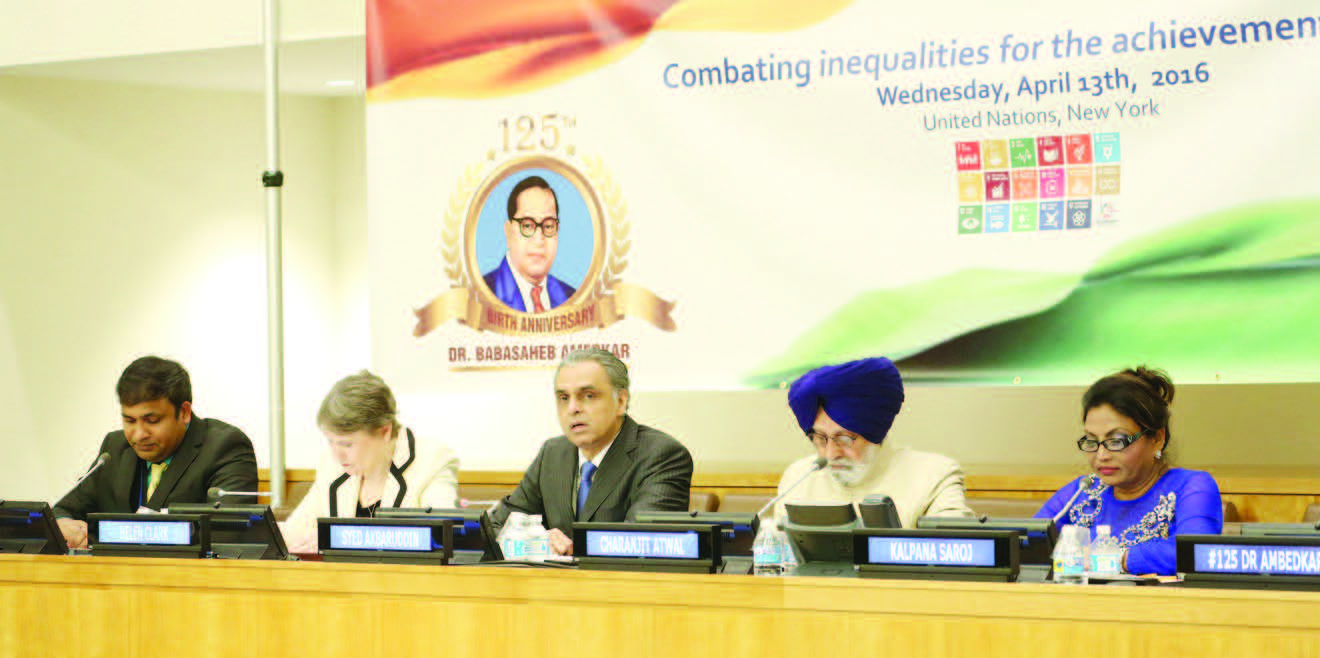
UNITED NATIONS, NY (TIP): A special event to commemorate the 125th Birth Anniversary of Dr. B.R. Ambedkar was organized by the Permanent Mission of India to the United Nations on April 13 at United Nations Headquarters. This was the first such commemoration of Dr. Ambedkar at the UNHQ.
Foundation for Human Horizon (US-based NGO with ECOSOC consultative Status) and Kalpana Saroj Foundation (India-based NGO of Padmashree Kalpana Saroj) were co-hosts of the event. Ms. Helen Clark, Administrator of UNDP in the Keynote address spoke on the legacy of Dr. B.R Ambedkar. She said that “Dr. Ambedkar understood that inequalities pose fundamental challenges to well-being”. Hon’ble Speaker of Punjab Legislative Assembly, Mr. Charanjit Singh Atwal (Chief Patron of Forum for SC and ST Legislators and Parliamentarians) delivered special remarks. Mr. Deelip Mhaske of Foundation for Human Horizon and Ms. Kalpana Saroj also addressed the gathering. The event also featured a Panel Discussion on the theme “Combating inequalities for the achievement of Sustainable Development Goals”.
The Panelist included Professor Stan Kachnowsky, Colombia University and Chair, HITLAB; Ms. Anupama Rao, Associate Professor, Colombia University and; Mr. Christopher Queen, lecturer Harvard University. Prof Stan Kanchowsky spoke on influence of Dr. Ambedkar’s vision on healthcare equity and the resulting rise of mobile health in India. Mr. Christopher drew parallels between the lives of Ambedkar and Martin L. King, Jr. in their attempt to create societies based on equality, freedom and brotherhood and to overcome barriers of class, caste, race, and religion to forge alliances for peace and justice. Ms. Rao spoke about the impediments of inequalities including caste and the need for social justice to achieve sustainable development through the implementation of 2030 Agenda. She also highlighted Dr. Ambedkar as an important thinker relevant to both 20th and 21st century.
A movie clip (a short version of the Films Division’s documentary edited by PMI) was screened on the occasion.
There was on overwhelming response with over 550 people, many from India and various parts of the world attended the event. Diplomats, UN senior officials, state government officials from India, students, civil society, private sector representatives and academia were also present at the special event.
UNITED NATIONS (TIP): With Pakistan announcing that the bilateral peace process with India has been “suspended”, UN Secretary General Ban Ki-moon has said that the offer of his “good offices” to help resolve the conflict stands but it is up to both nations to seek it.
“Whenever there is a conflict, an issue, between Member States, the Secretary-General’s offer for good offices stands as a matter of principle. But, that has to be agreed on and asked for by both parties,” Ban’s spokesman Stephane Dujarric told reporters here.
Dujarric was responding to a question at his daily briefing yesterday about whether the Secretary-General would like to offer his good offices given that the peace talks between India and Pakistan were “interrupted” again.
Introducing a fresh chill in Indo-Pak ties, Pakistan High Commissioner to India, Abdul Basit on April 7 said the bilateral peace process stands “suspended”.
He also poured cold water on India’s expectations that a team of NIA investigators would be allowed to visit Pakistan in connection with the Pathankot terror strike probe on the basis of reciprocity, a Pakistani Joint Investigation Team (JIT) having just concluded a visit to India.
India, however, countered the Pakistan High Commissioner’s assertion that the visit by Pakistani JIT was not on reciprocity and said that before the team’s visit, both sides had agreed that it would be on the basis of reciprocity.
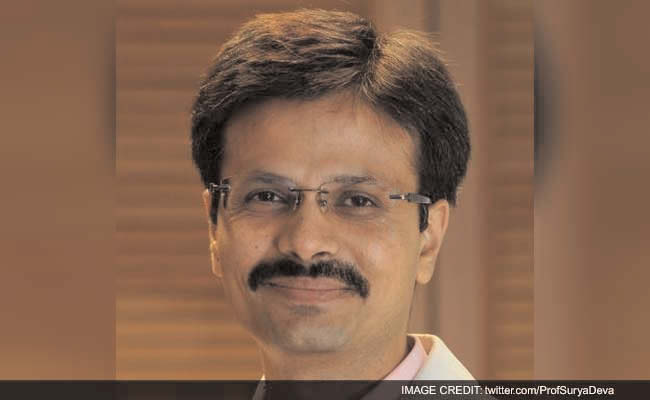
NEW YORK (TIP): An India-born academician has been named by the UN Human Rights Council as an adviser to one of its working groups on the issue of human rights and transnational corporations and other business enterprises.
Surya Deva has been appointed by the Geneva-based UNHRC as the Asia-Pacific representative of the UN Working Group on the issue of human rights and transnational corporations and other business enterprises.
Deva is an associate professor at the School of Law of City University of Hong Kong and his research interests lie in Business and Human Rights, Corporate Social Responsibility, India-China Constitutional Law, and Sustainable Development.
Deva recently wrote a background paper for India’s National Framework on Business and Human Rights and in 2014. He was elected a Member of the Executive Committee of the International Association of Constitutional Law.
President of the Human Rights Council Choi Kyong-lim informed in a letter to all permanent representatives to the United Nations Office at Geneva last week about Deva’s appointment.
Dr. Tarunjit Singh Butalia has been selected as the 2016 recipient of the Luminosa Award for Unity, an honor presented annually since 1998 by the Focolare Movement Mariapolis Luminosa of North America.
The Focolare movement pays tribute through this award to Butalia’s decades of work in interreligious dialogue and peacemaking, as well as for his scientific contributions to environmental sustainability.
The Luminosa Award for Unity recognizes institutions or persons who have given a significant contribution to the building of universal brotherhood through their work in ecumenism, interreligious dialogue, or any other aspect of social life. The award is sponsored by the Focolare Center for Education in Dialogue and was given for the first time in 1988.
A scientist based at The Ohio State University, Butalia has served admirably by leading groundbreaking interfaith initiatives with the Sikh community worldwide and on the boards of the Parliament of the World’s Religions, Religions for Peace – USA, North American Interfaith Network, and the Sikh Council for Interfaith Relations, among additional local and regional endeavors in his home state of Central Ohio such as the Interfaith Association of Central Ohio.
Noting Butalia’s contributions to the field of interreligious relations, the Focolare movement recognizes a special trip taken at the invitation of Pope Benedict XIV in celebration of the 25th anniversary of the World Day of Prayer for Peace, when Butalia visited the Vatican as one of only five Sikhs invited from around the world. He offered a prayer at the event. His efforts to facilitate stronger ties between these faiths was reflected by his initiating high-level dialogue between the US Sikh community and the U.S. Conference of Catholic Bishops.
“It is an honor to receive this Focolare award focusing on unity,” Butalia told the Parliament after receiving the uplifting news. He added,
In a world being increasingly divided along ethnic, religious, social, and class lines, it is imperative for people of faith and conscience to come together in solidarity to hold up the love we share for our fellow neighbors and citizens of the world. Our faiths call upon us to be peacemakers – it is time we step up to the challenge and walk the talk.
Transcending his executive commitments on the Parliament’s Board, Butalia has set himself apart as a trustee by thoughtfully supporting PWR’s recent moves toward strategic interfaith action. Working on the board’s first Faiths Against Hate Task Force established in 2012, Butalia would help to launch the Parliament’s Faith Against Hate program to strengthen the interfaith movement’s capacity, capability and will to stop rising war, hate and violence through informed and organized activism.
Parliament Executive Director Dr. Larry Greenfield said of the award:
Knowing first hand Dr. Butalia’s deep commitments to the interfaith movement and his far-reaching involvements in interfaith work, the Parliament congratulates our trustee colleague and commends the Focolare Movement for recognizing his extraordinary record of advancing harmony among the religious and spiritual traditions of our world.
Past winners come from a variety of faith backgrounds, industries and fields and include the President of the Director’s Guild of America, various United Nations Representatives, monarchs of nations, activists and faith leaders. A listing of past awardees can be accessed on the Focolare website, here.
The award will be presented to Butalia at the Focolare’s Mariapolis Luminosa in New York this September.
Dr. Tarunjit S. Butalia is founding trustee of the Sikh Council for Interfaith Relations. He is a member of the Board of Trustees of the Parliament of the World’s Religions. He also serves as on the board of Religions for Peace – USA and is its former Moderator. He is a Board member of the North American Interfaith Network and is former Vice-Chair. He has served on the board of the National Religious Coalition Against Torture as well as the World Sikh Council – America Region. He works locally with the Interfaith Association of Central Ohio.
More on the Focolare Movement:
The Focolare Movement is an international organization that promotes the ideals of unity and universal brotherhood. Founded in 1943 in Trento, northern Italy by Chiara Lubich as a religious movement, the Focolare Movement, though primarily Roman Catholic, now has strong links to the major Christian denominations and other religions, or in some cases, with the non-religious. It is also called the “Opera di Maria,” or “Work of Mary”. The Focolare Movement operates in 182 nations and has over 100,000 adherents. The Movement’s name comes from the Italian word for “hearth” or “family fireside”.
Attendees of the 2015 Parliament of the World’s Religions had the opportunity to learn more about the Focolare Movement from two sessions featuring Dr. Susan Kopp, an Interreligious and Ecumenical Activities Director of Focolare. One session entitled “Humanity is One” explored the relationship of Chiara Lubich, the founder of the Focolare Movement, with a prominent Islamic spiritual leader in North America and their engagement speaking in an African-American mosque in Harlem. Attendees would reflect on why it is so necessary to improve interfaith outreach into African-American Muslim communities, and how to do so.
See more at: http://www.parliamentofreligions.org/blog/2016-03-23-1905/honoring-peacebuilding-interfaith-dialogue-focolare-movement-selects-butalia
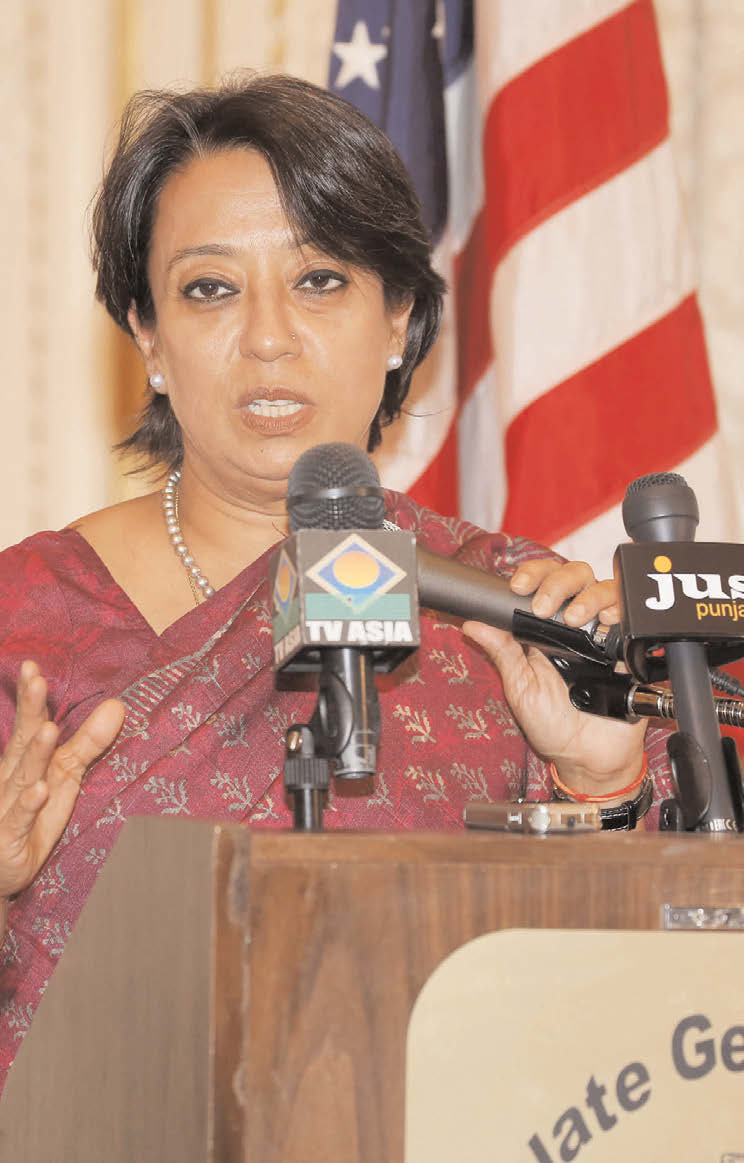
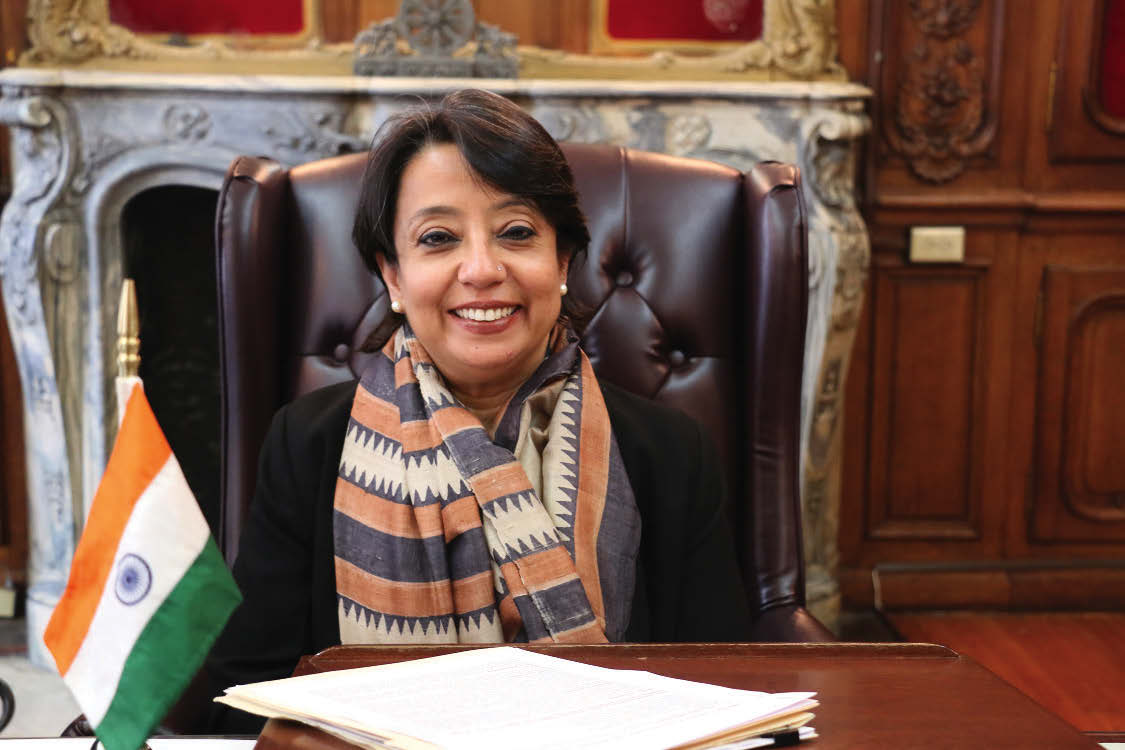
NEW YORK CITY (TIP): Deputy Consul General of India in New York Dr. Manoj Mohapatra hosted a reception with the community to welcome the new Consul General, Ambassador Riva Ganguly Das on Saturday March 12, 2016 in the Consulate’s ballroom.
Introducing the new Consul General, Manoj Mohapatra who has been holding the fort for about a month, after the transfer of the Consul General Ambassador Dnyaneshwar M Mulay to Delhi, said that prior to joining the post of Consul General of India in New York, Ambassador Das was Ambassador of India to Romania, Albania & Moldova with residence in Bucharest.
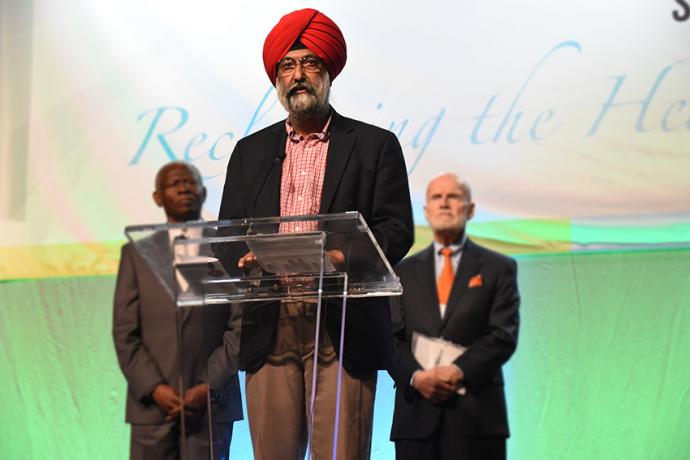
A large number of prominent guests including dignitaries which included Permanent Representative to the United Nations Ambassador Syed Akbaruddin, Special Advisor to the U.N. Ambassador Vijay Nambiar, Former PR Ambassador Hardeep Puri, Ambassador Mrs. Lakshmi Puri, Assistant SecretaryGeneral of the United Nations and Deputy Executive Director of UN Women, the United Nations Entity for Gender Equality and the Empowerment of Women, attended the event.
Deputy Consul General Dr Mohapatra introduced and welcomed the Consul General, followed by remarks from a number of guests. Those who spoke on the occasion included Ambassador Syed Akbaruddin, Vijay Nambiar, H.R. Shah, Sudhir Parikh, Yashpal Soi, Prof. Indrajit S Saluja and Dr. Seema Jain.
Speaking on the occasion, Ambassador Das said she was overwhelmed by the warm welcome and assurances of support. She said she understood well the formidable challenges she has before her, given the vast territorial jurisdiction of the New York Consulate and the large number of the Indian American community. She spoke of the high volume of work- nearly 1000 documents a day-but added quickly the Consulate was not daunted by the work. She said she would deal with issues and challenges.
MasterCard CEO Ajay Banga and his wife congratulate Ambassador das
A view of the gathering
Those who felicitated Ambassador Das included, besides others, Ambassador Syed Akbaruddin, Mr. Vijay Nambiar, Prof. Indrajit S Saluja and Dr. Seema Jain
Deputy Consul General Manoj Mohapatra introducing the new Consul General Ambassador Riva Ganguly Das – TIP – File Photo
Those who felicitated Ambassador Das included, besides others, Ambassador Syed Akbaruddin, Mr. Vijay Nambiar, Prof. Indrajit S Saluja and Dr. Seema Jain
Former PR Ambassador Hardeep Singh Puri and Ambassador Lakshmi Puri felicitate Ambassador Das
Ambassador Das underscored the importance of working together. She appealed to the gathering to extend their support to the Consulate for the best services.
The Consul General had a special word of appreciation for her deputy Manoj Mohapatra about whom she said she depended on him for a lot of her work.
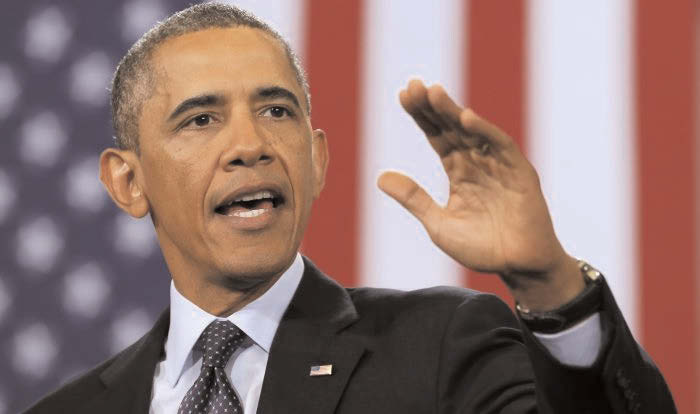
WASHINGTON (TIP): US President Barack Obama signed an order Wednesday implementing UN-backed sanctions on North Korea after a nuclear test and missile launch this year, as Pyongyang promised reprisals.
The White House said Obama had signed an executive order targeting the volatile hermit state’s energy, financial and shipping assets.
The measures were agreed to at the United Nations in response to the January 6 nuclear test and February 7 ballistic missile launch.
“The order is not targeted at the people of North Korea, but rather is aimed at the government,” said the document signed by Obama.
Among the entities targeted are the “propaganda and agitation department” of the Workers’ Party of Korea and mining firms that provide the regime with much-needed revenues.
The US treasury department estimates that coal revenues alone generate over $1 billion a year for the government of Kim Jong-Un.
In response to the UN sanctions and a US-South Korean drill, Kim has already ordered an upcoming nuclear warhead test and multiple ballistic missile launches.
US officials say the threats are concerning, but fit a pattern of sabre rattling by the regime.
Analysts and diplomats have said that loopholes in the UN sanctions leave room for China, Pyongyang’s key economic supporter, to continue business as usual.
In 2014, China accounted for more than 90 percent of North Korea’s $7.61 billion in total trade, according to the latest available figures from South Korea’s state-run Korea Trade-Investment Promotion Agency.
In response to Obama’s executive order, Beijing said Thursday that it “opposes any country’s unilateral sanctions.”
“We have stressed that the unilateral actions taken by any country must not undermine the lawful rights and interests of China,” foreign ministry spokesman Lu Kang told a regular briefing.
On Wednesday, North Korea jailed a 21-year-old American student.
Otto Warmbier was sentenced to 15 years’ hard labor for stealing a propaganda banner from a hotel.
White House spokesman Josh Earnest accused Pyongyang of using US citizens as “pawns to pursue a political agenda” and called for his release.
“We strongly encourage the North Korean government to pardon him and grant him special amnesty and immediate release,” Earnest said.
“The allegations for which this individual was arrested and imprisoned would not give rise to arrest or imprisonment in the United States or in just about any other country in the world.”
In announcing the sentence, state news outlet KCNA said Warmbier had committed his offense “pursuant to the US government’s hostile policy” toward North Korea.
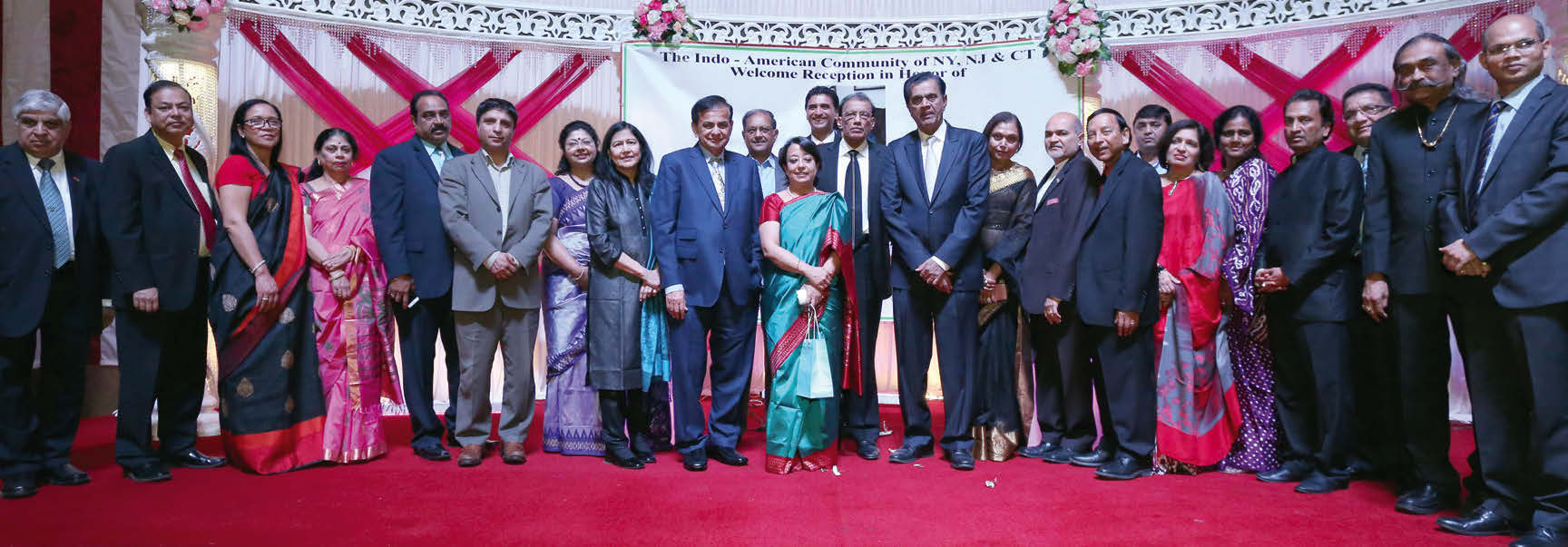
Ambassador Riva Ganguly Das with Representatives of Social and Cultural Organizations of Indian Americans at the reception, March 13
EDISON, NJ (TIP): More than six hundred Indian American community members gathered at the ornate room at Royal Albert’s Palace in Edison, New Jersey on Sunday, March 13 to extend a warm welcome to the new Consul General., Ambassador Riva Ganguly Das who has succeeded a popular Consul General Dnyaneshwar M Mulay.
Ambassador Das joined the Indian Foreign Service in 1986. She is a Post Graduate in Political Science from Delhi University. Prior to joining the Foreign Service, she was a Lecturer at Delhi University.
Ambassador Das had her first posting in Spain. Thereafter, she was at Headquarters dealing with External Publicity, Nepal and Passport/Visa work. She was Head of the Cultural Wing of the Indian High Commission in Dhaka. After her return from Dhaka, she took over as Director at the United Nations Economic and Social Affairs Division and participated in environmental negotiations, particularly climate change. She was the Deputy Chief of Mission in the Embassy of India, The Hague. She was also the Alternate Permanent Representative of India to the Organisation for Prohibition of Chemical Weapons at The Hague. She served as Consul General of India in Shanghai from 2008 to 2012. After her return from China, she headed the Public Diplomacy Division in the Ministry of External Affairs and she was in charge of the Latin America & Caribbean Division in the Ministry of External Affairs. Before joining as Consul General of India in New York, she was Ambassador of India to Romania, Albania & Moldova with residence in Bucharest.
At least two dozen speakers representing cultural and social organizations of New Jersey, New York and Connecticut spoke highly about the Consul General who expressed her deep gratitude to the members of the community for working as unofficial ambassadors of India strengthening bilateral relations between the US and India. Representatives of American Association of Physicians of Indian Origin, Asian American Hotel Owners Association, Telugu Association of North America, Federation of Indian Associations and Share and Care Foundationwere among the many more present on the occasion.
Dr. Manoj Kumar Mahapatra, Deputy Consul General spoke about the working at the Consulate. He informed the audience that more than one thousand documents were processed every day at the consulate. Dr. Mahapatrasaid that his office was processing emergency visa applications in 15 minutes while other applications took just two hours.
The Consul General assured that her office was committed to helping the community in whatever way possible and permissible. She said she would ensure the applicants seeking emergency documents were served without delay. At the same time, she said she would need the community’s support to deliver the results the community expected of the Consulate.
UNITED NATIONS (TIP): The Islamic State group has significantly expanded its control over Libya, fueling demand by the country’s warring parties for more arms to confront the threat, UN experts have told the Security Council.
ISIS has successfully recruited young men from local tribes, offering them protection and benefits but it has also enlisted military officers from the former regime of Muammar Gaddafi, said the report by the panel of experts who report to a UN sanctions committee.
ISIS jihadists have cemented their hold on the coastal city of Sirte, wiping out opposition and the group is “currently the most significant political and military actor in the region,” said the report which was submitted to the council on Wednesday.
The extremist group has also made inroads in Tripoli and in the western city of Sabrata, boosting its presence through local recruitment and foreign fighters who transit through Turkey and Tunisia.
Extremists from sub-Saharan Africa have traveled through Sudan to join ISIS ranks in Sirte and Benghazi, the report said, confirming fears that the Libyan IS branch is seeking to draw recruits from other parts of the continent.
“The political and security vacuum has been further exploited by Islamic State in Iraq and the Levant, which has significantly expanded its control over territory,” the report said.
The report did not provide estimates of the number of ISIS fighters in Libya.
Libya was thrown into turmoil after a NATO-backed uprising that toppled longtime dictator Kadhafi in 2011.
The country has been under an arms embargo since then, but the report cited a recent transfer of MIG-21F jets to Tobruk, where the internationally recognized government is based.
The jets “appear to be consistent with those owned by Egypt,” the experts said. Cairo, however, told the panel its information on the transfer was “incorrect.”
The panel is continuing to investigate claims that Turkey, the United Arab Emirates and Sudan have also violated the embargo.
“The continuation of armed clashes and the expansion of ISIL have led to an increase in demand for military materiel,” said the report, which cited a “revival of external support” for the various factions.
UNITED NATIONS (TIP): Following a milestone year in international development in which world leaders endorsed the 2030 Agenda for Sustainable Development, the 60th Session of the UN Commission on the Status of Women (CSW) will focus firmly on implementation of the ambitious agreement. The Sustainable Development Goals (SDGs) adopted by UN Member States in September 2015 are a universal roadmap for people and planet, addressing the key challenges of the 21st century, such as poverty, inequality and climate change. Gender equality and the empowerment of all women and girls is a goal in itself, and recognized as a central means to achieving the SDGs. Success depends on rigorous implementation.
The Commission is the single largest forum for Member States and other stakeholders to commit to new actions for advancement of women and their empowerment. This year’s CSW is the first after the adoption of the new 2030 Agenda for Sustainable Development. The session thus will build on the momentum garnered in September 2015 when, in conjunction with the adoption of the 2030 Agenda for Sustainable Development, more than 90 governments answered UN Women’s call for action to “Step It Up for Gender Equality”. World leaders pledged measurable actions to tackle structural barriers and remaining challenges to the achievement of gender equality in their countries. Civil society and businesses leaders complemented these pledges committing to combat stereotypes and shift practices towards fostering greater equality and opportunity.
“This gathering of so many of the key partners in the implementation of Agenda 2030 makes this a crucial opportunity to combine our strengths and align decisively around the central issues for action,” said UN Women Executive Director Phumzile Mlambo-Ngcuka.
The priority theme for the 60th session will be women’s empowerment and its link to sustainable development.
Discussions by governments will focus on creating a conducive environment for gender-responsive implementation of the 2030 Agenda for Sustainable Development, through actions to ensure enabling laws and policies, solid institutional infrastructures, adequate financial resources, strengthening of participation mechanisms, and investment in sex-disaggregated data, to guide national action.
Research underlines the benefit of women’s empowerment and gender equality for societies everywhere: for instance, if women played an identical role to men in labor markets, as much as USD 28 trillion could be added to global annual GDP by 2025. When women are at the peace tables, their participation increases the probability of a peace agreement lasting at least two years by 20 per cent, and 35 per cent over 15 years. And a child born to a mother who can read is 50 per cent more likely to survive. Yet, global reviews undertaken in 2015, during the 20 years’ commemoration of the historic Beijing Conference, revealed while there has been progress on women’s rights and gender equality, it has not been enough. Today, only one in five parliamentarians is a woman and women continue to earn less, have fewer assets and bear the burden of unpaid work and care.
Violence against women continues to affect one in three women, making it one of the most widespread human rights violations. The Commission will evaluate progress in the implementation of its agreed conclusions of 2013, on ending violence against women and girls, a pandemic that also comes with enormous economic costs to society.
The high-level meeting from 14-24 March underlines the determination of governments and activists to move the needle on women’s rights and gender equality. This year over 1,000 NGOs have pre-registered more than 8,100 of their representatives for the meeting. More than 200 side events will be hosted on the UN premises by Member States and UN entities, many of them in collaboration with civil society, about 150 of them in the first week of CSW alone, alongside 450 parallel events by NGOs, in the vicinity of the UN.
NEW YORK (TIP): Ambassador Riva Ganguly Das assumed charge as the new Consul General, March 7. She succeeds Ambassador Dnyaneshwar Mulay who was transferred last month to the ministry of external affairs in New Delhi.
Ambassador Das joined the Indian Foreign Service in 1986. She is a Post Graduate in Political Science from Delhi University. Prior to joining the Foreign Service, she was a Lecturer at Delhi University.
Ambassador Das had her first posting in Spain. Thereafter, she was at Headquarters dealing with External Publicity, Nepal and Passport/Visa work. She was Head of the Cultural Wing of the Indian High Commission in Dhaka. After her return from Dhaka, she took over as Director at the United Nations Economic and Social Affairs Division and participated in environmental negotiations, particularly climate change. She was the Deputy Chief of Mission in the Embassy of India, The Hague. She was also the Alternate Permanent Representative of India to the Organisation for Prohibition of Chemical Weapons at The Hague. She served as Consul General of India in Shanghai from 2008 to 2012. After her return from China, she headed the Public Diplomacy Division in the Ministry of External Affairs and she was in charge of the Latin America & Caribbean Division in the Ministry of External Affairs. Before joining as Consul General of India in New York, she was Ambassador of India to Romania, Albania & Moldova with residence in Bucharest.
It is learnt that she undertook a tour of various branches in the Consulate and interacted with the staff. She impressed upon the staff the importance of team work, reminding them that they represent a great country and together they have to produce the best results. She exhorted them to be professional and take pride in their country. Over the next few days, she plans to meet with representatives of service providers and leaders of the community.
Indian American community is hosting a reception to Ambassador Das on Sunday, March 13 at Royal Albert’s Palace in Edison, New Jersey. A reception is being given to her at the Consulate on Saturday, March 12.
NEW DELHI (TIP): India has submitted a formal request to the United Nations Committee 1267, seeking inclusion of the name of Jaish-e-Mohammed chief Masood Azhar on the sanctions’ list, said government sources.
“I can also confirm to you that we will be moving the 1267 Committee to also include the name of Masood Azhar on the sanctions list. It is a great anomaly that the organization Jaish-e-Mohammad is listed but not its leader,” said Vikas Swarup, Official Spokesperson of the Ministry of External Affairs, on Thursday.
“We have already given a list of terrorists affiliated to Al Qaeda, Taliban and other terrorist groups to the 1267 Committee. At this stage it would not be prudent to disclose anything further as to the names of these people because, as you know, this is a part of a process now,” he added.
Previously, India’s move to get Masood Azhar banned by the UN was scuttled by China.
UNITED STATES (TIP): An outbreak of fighting at a UN peacekeeping base sheltering civilians in South Sudan has killed at least seven people and injured 40, UN Secretary-General Ban Ki-moon said on Thursday.
The seven displaced persons were living in the base in the northeast town of Malakal where violence between the ethnic Dinka and Shilluk communities broke out overnight and continued into the day, he said.
Ban condemned the fighting and expressed concerns about the rise of ethnic violence in the more than two-year conflict. He warned “all parties against stoking ethnic disputes and calls on them to refrain from any actions or statements that could further escalate the situation,” according to a statement from his spokesman.
The UN chief reminded all sides that attacks on UN peacekeeping bases can constitute a war crime and urged them to implement a peace deal signed in August
Fighting has continued in South Sudan despite the peace accord. Thousands have died and more than 2.3 million have been driven from their homes.
Nearly 200,000 civilians have sought shelter in the UN mission’s eight compounds in South Sudan since the conflict began.
What is the issue at Jawaharlal Nehru University (JNU) in New Delhi? A radical left-wing student group as vocal and abusive as RSS/Parivar organized a function to discuss the ‘judicial murder of’ of Afzal Guru as they see it. The JNUSU President Kanhaiya Kumar was not at the function and had nothing to do with it.Yet he was arrested and charged with Sedition under the Indian Penal Code 124A. His speech to the students did not contain any anti-national sentiment, but rather only an affirmation of his faith in the constitution.
A group of irate lawyers at Patiala House Court. Their violent conduct is a matter of investigation
This is the latest in a series of incidents where the Modi Government has determined to stifle dissent, shutting down debates, and muzzling the freedom of expression in the country, all in the name of nationalism. It is happening on the heels of the suicide death of RohithVemula, who was ostracized by right-wing elements for demanding his rights to be heard.
‘Sedition’ is a colonial era rule that was used to suppress the voice of the Indian people, who were demanding freedom and dignity from the British Empire. Today, the BJP government is using the same old arcane law – which should not have any place in a 21st-century democracy – to target individuals and institutions that are perceived to be non-conformist. Although the Indian law of sedition is different from the British law, law enforcement agencies have always used it against artists, public men and intellectuals for criticizing the Government.
In the case of Kedarnath Singh vs State of Bihar (1962), a five-judge bench of the Supreme Court ruled that a charge of sedition would only apply if there were “an incitement to violence or public disorder”.There is no evidence to indicate that Kanhaiya Kumar raised slogans in favor of Pakistan, and against India.However, the heavy-handedness of the authorities on the campus and the speed in which the sedition charges were slapped on him clearly indicate that the government will not tolerate any dissent.
JNU has long been a target of right-wing Hindu activists, who see the Institution as a laboratory of liberal and democratic thought process. It has been crucial in producing some of the finest minds in India who have become great proponents of freedom and liberty. It should be noted that while Prime Minister NarendraModiwas the Chief Minister of Gujarat, he branded JNU as a laboratory for secularists, which needed to be shut down.
There is a certain pattern in how the HRD ministry, headed by Smithi Irani is dealing with institutions of higher learning. There was a growing acrimony with the students in FTII Pune, on the appointment of RSS ideologues to positions of power. Then, Ambedkar Periyar Study circle in IIT Madras was de-recognized. Then came the tragic suicide of Rohith Vemula, who was suspended after the complaints made by ABVP leaders to the HRD Ministry.
Any independent observer can view a common pattern that is the ABVP, the student wing of BJP, has become a tool in the hands of the HRD ministry to advance the saffron agenda of the RSS across campuses, and around the country. Whenever they complain about political rivals, the ministry swoops in and takes actions on their behalf against the students who advocate academic freedom without any interference from the ruling class.
University campuses ought to be a place where young minds can freely express their views, formulate their opinions, and create a forum where competing ideas and ideologies can germinate. A campus without vibrant intellectual discourse will fail in cultivating creative minds that are essential in coping with the challenges of globalizations and pressures of modernity.
The effort to penalize parties who are critical of the Government or some of its regressive policies as ‘anti-national’ is an advancing of an agenda that mirrors fascism. The German historian Arthur Rosenberg, in his book, Fascism and Mass movement, refers to two conditions as prefiguring the rise of fascism: the rise of right-wing nationalism and an active connivance between the state and storm troopers. Let us hope that what we have witnessed in University of Hyderabad and JNU are not early indications of such an evolution.
G. Sampath in a recent column described how according to the nationalist taxonomy of the SanghParivar, Adivasis in central India, Dalit students, Left Intellectuals, Human Rights activists, a certain Religious Minority, anti-nuclear activists, beef eaters, non-haters of Pakistan, inter-religious couples, homosexuals and labor activists are all anti-nationals. He further stated that if what happened at the Patiala House in New Delhi is taken into account, journalists and anyone dressed like JNU students could also be lumped together in that category.
What is more anti-national than justifying the murder of Mahatma Gandhi, the father of the nation or erecting a statue of NathuramGodse who had assassinated him? The Governmental hypocrisy was quite evident when Swami Omji from Hindu Mahasabha said the following “We killed Mahatma Gandhi. In the future, we will try to convince anti-nationals like Kejriwal. If he doesn’t listen, we will shoot him and kill him”. Doesn’t his statement constitute inciting violence or public disorder? Why then is the Government not responding to a charge of ‘sedition’ in these cases?
Under Modi’s tenure in Gujarat, journalists were targeted for sedition charges as well as harassment and denial of entry into the State Assembly. In 2006, Modi’s administration brought sedition charges against the Gujarati-language daily editor, ManojShinde, for his criticism of Modi’s mishandling of a flood. Sedition and treason charges were also brought against Times of India editor, Bharat Desai and crime reporter PrashantDayal along with photographer Gautam Mehta at Gujarat Samachar due to an investigative series on crime questioning high-ranking police officers.
If these developments continue unabated, it will constitute a growing threat to India’s democracy, a pluralistic framework which was preserved for the last six decades, under the successive Congress-led governments. According to PratapBanuMehta of Center for Policy research, ‘we are living under a government that is using nationalism to crush constitutional patriotism, legal tyranny to crush dissent, political power to settle petty scores and administrative power to destroy institutions”.
Addressing the Editors Guild of India, the Nobel Laureate AmartyaSen recently said the following: “we should not tolerate the intolerance that undermines our democracy that impoverishes the lives of many Indians, and facilitates a culture of impunity of tormentors”. I hope the nation is listening!
George Abraham
(The author is a former Chief Technology Officer of the United Nations. He can be reached at gta777@gmail.com)
NEW YORK CITY (TIP): The Indian community in New York, headed by GOPIO in collaboration with the Consulate of India organized a get together to bid farewell to the Consul General, Ambassador Dnyaneshwar M. Mulay on February 14, 2016.
Mr. Mulay addresses the gathering at Royal Albert’s Palace on February 16
Ambassador Dnyaneshwar M. Mulay, who served as the Consul General of Indian in New York for two years and ten months, received accolades from business owners and professionals alike at the farewell event which was attended by a large number of people from all walks of life.
Mr. Mulay’s rare achievements, to mention a few, include founding of monthly Media-India lectures, PM’s first visit with special reference to his public meeting with Indian community at Madison Square Garden and his interaction with the local public at Central Park, making the Consulate a model for cleaning drive by the Ministry, strengthening connection with Indian community by starting well-appreciated out-reach programs called ‘India at Your Doorstep’, besides several others.
Mr. Mulay has been appointed to head the newly formed ‘India Diaspora Division’ in the Ministry of External Affairs incorporating the Ministry hitherto known as Ministry of Overseas India Affairs. His many great contributions covering all aspect of services -personal and official were recalled and appreciated by the speakers who included India’s Permanent Representative to the United Nations Ambassador Syed Akbaruddin, H.R. Shah, Dr. Sudhir Parikh, Dr. Navin Mehta, Prof. Indrajit S Saluja, Attorney Ravi Batra, and Ashok Vyas. Deepak Dave conducted the program.
India’s Permanent Representative to the United Nations Syed Akbaruddin as a skillful diplomat who can handle any situation deftly
Ambassador Syed Akbaruddin, Permanent Representative of India at UN and a contemporary of Mulay in the Indian Foreign Services, recalled his early days when Mulay was known as a poet among his batch mates. “A literary person at heart Mulay emerged as a fine diplomat fulfilling his duties, which are like writing hard prose not poetries.”
Ambassador Akbaruddin recalled that Mulay had skillfully handled delicate issues during the political turmoil in Maldives where he was serving as the High Commissioner of India before coming to New York. His diplomatic skills were put to test in New York when India-US relations reached new lows in the event of the arrest of Devyani Khobragade, the then Deputy Consul General.
Dr. Navin Mehta, a former Chairman of Bharatiya Vidya Bhavan said, “We are going to miss his down-to-earth approach in con-necting with all sections of Indian Americans.”
Speaking on the occasion, Dr. Navin Mehta, a former Chairman of Bharatiya Vidya Bhavan who has known Mr. Mulay well for some years now said, “Mulay successfully implemented a policy of ‘bringing the consular services to our doorsteps’” said community leader Dr. Navin Mehta, “We are going to miss his down-to-earth approach in connecting with all sections of Indian Americans.”
Prof. Indrajit S Saluja described Mr. Mulay as a man endowed with the best of qualities of head and heart
Prof. Indrajit Saluja, Chief Editor of The Indian Panorama wondered how one man could have so many diverse qualities of head and heart and commented that God must have created Mr. Mulay with some special stuff. Turning to Mr. Mulay, he said, “you are leaving a rich legacy behind. You will always be remembered for the great work you have done here as Consul General and also for being a perfect gentleman”.
A plaque was presented to Mr. Mulay by Attorney Anand Ahuja on behalf of GOPIO.
Two days later, on February 16, the Indian American community organizeda farewellevent at Royal Albert’s Palace in Fords, New Jersey. Known for his literary talents the community recognized him as an officer who transformed the way passports and visa applications were handled under his watch.
Ambassador Mulay with hosts and community leaders at Royal Albert’s Palace
Those who acknowledged Mulay’s contribution as a ‘man of action’, included Ramesh Patel, Chairman, Federation of Indian Association, H. R. Shah, Chairman, TV Asia, Dr. Navin Mehta, Trustee, Bharatiya Vidya Bhavan and Dr. Sudhir Parikh, Chairman, Parikh Worldwide Media, all of who said that the consulate staff was more efficient than ever. Mulay on his part disclosed his style of functioning as that of a leader who cared for his subordinates. He pointed out that his staff needed a new vision in order to become more productive. “On the first day of my work, I called a few of my staff and asked them to give their opinion about a painting hanging on the wall. All of them said there was nothing wrong with the painting. Then I turned the painting upside down and asked them what they thought of it. All of them pointed out that the painting looked much better than before.”
Mulay narrated the above incident to bring home the point that it was possible to improve things without making a worker feel guilty. “I applauded my staff and showed them a different way to be more productive. A marked improvement in the functioning of the consulate was visible soon”, he said.
Issuing timely visas and processing applications for new passports are the most important responsibilities carried out by consulates. Any pitfall in discharging such duties is bound to bring bad reputation for the office of the Consul General. Mulay realized this fact and quickly implemented an ambitious plan to expedite applications for visa, OCI and OPI. He was promptly assisted by Dr. Manoj Kumar Mahaptra, whose youthful attitude sparked new energy among the consular staff.
Manoj Vyas, a well-known painter presenting to Mr. Mulay the latter’s portrait he made as a farewell gift
“We are proud to say that we process all applications within a day or two”, said Mulay in his speech at the farewell function. His vision was to project the New India House, the consulate premises, into a center for cultural and intellectual activities. “We held more than 200 events in a year”, he said adding that his office aimed at encouraging all sections of the community within its resources.
The monthly lecture series launched by Mulay on various current topics in art, literature, journalism and judiciary were well appreciated in the cultural circle of New York. The consulate hosted high-ranking officials
from the State Department such as Nisha Desai Biswal,Assistant Secretary, Bureau of South and Central Asian Affairs and high profile New Yorker such as Salman Rushdie.
Mulay is returning to New Delhi, where he will be responsible for the Affairs of Overseas Indians. “I hope to continue working with you”; he proclaimed demonstrating his deep interest in contributing for the progress of India with the help of Indian Americans. For the past year he initiated outreach initiatives to connect with people of Indian origin in various states of USA, which fall under his jurisdiction. He established good working relations with a number of officials including the Governor of Massachusetts Charlie Baker who sent a proclamation for Mulay.
The farewell event was hosted by a host of community organizations including FIA, GOPIO, AAPI, Bharatiya Vidya Bhavan, and others. A plaque was presented to Mulay on behalf of FIA. Andy Bhatia, a former Air India official conducted the event.
A view of the gathering at the Indian Consulate on February 14
UNITED NATIONS: Hailing India’s women peacekeeping unit in Liberia as an inspiration for all, UN chief Ban Ki-moon said that their conduct has served as an example of how women can help the world body in its efforts to combat sexual exploitation and abuse.
“Through their unwavering performance, professionalism and discipline, including during the Ebola epidemic, these brave women gained the respect of both the Government and the Liberian people,” the Secretary General’s spokesman said in a statement yesterday as the first-ever all-female police unit ended its operations after nine years.
The 125 women and supporting personnel will return to India this weekend.
According to the statement, Ban commended the Formed Police Unit (FPU) for their contributions in creating an environment for Liberia to assume fully its security responsibilities by June 30, 2016, as mandated by the Security Council.
Through their work, they managed criminality, deterred sexual and gender-based violence and helped rebuild safety and confidence among the population, Ban said.
Ban underscored that the conduct of the FPU served as an example of how the deployment of more female uniformed personnel can help the United Nations in its efforts to combat sexual exploitation and abuse.
The Secretary-General thanked all the women who served in the FPU for inspiring all Liberians, as well as current and future generations of female police officers, and becoming role models for gender equality.
He also payed tribute to the outstanding contribution of the Indian government in support of the United Nations peace operations.
UNITED NATTIONS (TIP): Ambassador Syed Akbaruddin, Permanent Representative of India to the United Nations, on February 12, applauded the United Nations Secretary General’s report on Preventing Violent Extremism. Thanking the President of the UN Body for organizing the debate on Preventing Violent Extremism, contained in document A/70/674, Ambassador Akbaruddin said, “My delegation welcomes the opportunity to focus on the pandemic which goes by the name of Violent Extremism. This modern day plague is destroying societies, hemorrhaging communities and disrupting state structures. From regions in conflict to the streets of distant cities, it is extracting a deadly price”.
Giving preliminary remarks, India’s PR said, “the Report adopts a sagacious approach of not attempting to enter into the divisive minefield of offering a definition of the phenomenon that goes by the name of Violent Extremism. We in the General Assembly would once again have been subjected to theological debates even though the need is for action. The approach to indicate pathways to address the problems with the best tools we have rather than going down the route of definition has our support”.
Ambassador Akbaruddin added that “given the variety of social, political, economic, psychological and cultural factors in play there can obviously be multiple pathways to the growth of violent extremism. Hence inter-connectedness between security and development as a central philosophical tenet of the approach outlined through the action plan is understandable. This also augurs well for a role for the United Nations which has long experience in stringing together inter-sectoral partnerships to address multi -dimensional issues through potentially multiple routes. However, we feel that while the Action Plan is full of prescriptions to Member States, it is low on what the UN will do in terms of assisting Member States in this venture. Mr. President, we acknowledge that addressing this malaise is primarily a Member State responsibility, and many are already confronting this as best as they can. Nevertheless, we need substantive value addition from the UN in this endeavor. Even more important than what we face is how we respond to the threat. What we are tackling is not merely a local problem that can be addressed unilaterally; it is a global contagion. Global links, franchise relations, home-grown terrorism and use of cyber space for recruitment and propaganda. All these present a new level of threat. We need significant options of international cooperation, which we do not discern in the plan before us today”.
Ambassador Akbaruddin, presenting India’s view, said that “the current architecture at the United Nations is not sufficient to tackle this virus that threatens us collectively. The Action Plan provides no solution to this shortcoming. For example, where is the single contact point that will assist Member States seeking United Nations assistance in preventing Violent Extremism. Having gone through the entire Action Plan, unfortunately, we did not find an answer to this simple and basic question”.
India’s PR added that “when all these numerous prescriptions that have been listed in the Action Plan are implemented there will still be instances where we will not be able to prevent determined instances of violent extremism. It is our view that there is no grievance whatsoever that can justify resort to violent extremism”.
Ambassador Akbaruddin said that while emphasizing on prevention we should not shift focus from ensuring that violent extremists are subject to the full force of law as they pose an imminent and continuing danger.
Ambassador Akbaruddin then spoke of the diversity of faiths and beliefs in India and observed that it is a nation whose unity is strengthened by its pluralism. He said, “It is our firm belief that ultimately it is the values represented by open and tolerant societies that are the best foil to the forces of violent extremism. Guided by this approach we, look forward to discussing the issues that are thrown up in the Action Plan in greater detail at the earliest opportunity”.
Signup to our Newsletter!
Don’t miss out on all the happenings around the world