Tag: United Nations

  • Crimes against humanity: Key U.N. committee adopts resolution paving way for first-ever treaty

    Crimes against humanity: Key U.N. committee adopts resolution paving way for first-ever treaty

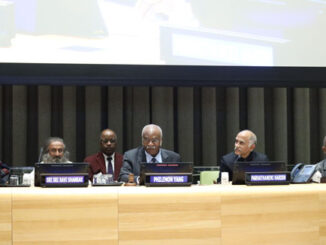
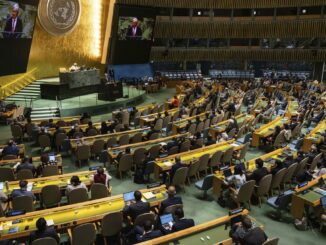
    UNITED NATIONS (TIP): A key United Nations (U.N.) General Assembly committee adopted a resolution on Friday, November 22, 2024, paving way for negotiations on a first-ever treaty on preventing and punishing crimes against humanity after Russia dropped amendments that would have derailed the effort. The resolution was approved by consensus by the assembly’s legal committee, which includes all 193-member U.N. nations, after tense last-minute negotiations between its supporters and Russia that dragged through the day.

    There was a loud applause when the chairman of the committee gaveled the resolution’s approval. It is virtually certain to be adopted when the General Assembly puts it to a final vote on December 4.

    “Today’s agreement to start up negotiations on a much-needed international treaty is an historic achievement that was a long time coming,” Richard Dicker, Human Rights Watch’s senior legal adviser for advocacy, told The Associated Press.

    “It sends a crucial message that impunity for the kinds of crimes inflicted on civilians in Ethiopia, Sudan, Ukraine, southern Israel, Gaza and Myanmar will not go unheeded,” he said.

    The resolution calls for a time-bound process with preparatory sessions in 2026 and 2027, and three-week negotiating sessions in 2028 and 2029 to finalize a treaty on crimes against humanity.

    Mr. Dicker said Russia’s proposed amendments left in question whether treaty negotiations would have been completed. Russia’s Deputy U.N. Ambassador Maria Zabolotskaya said Russia withdrew the amendments “in a spirit of compromise.” But she said Russia “dissociates itself from consensus.” “This, of course, does not mean that we are not ready to work on this crucial convention,” Ms. Zabolotskaya told the committee.

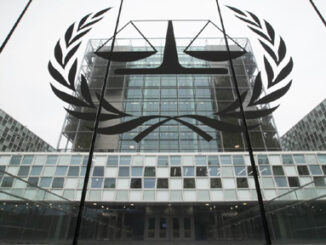
    The International Criminal Court was established to punish major perpetrators of war crimes, crimes against humanity and genocide and it has 124 countries that are parties to it. The ICC says crimes against humanity are committed as part of a large-scale attack on civilians and it lists 15 forms including murder, rape, imprisonment, enforced disappearances, sexual slavery, torture and deportation. But the ICC does not have jurisdiction over nearly 70 other countries.

    There are global treaties that cover war crimes, genocide and torture — but there has been no specific treaty addressing crimes against humanity. And according to sponsors of the resolution, led by Mexico and Gambia and backed by 96 other countries, a new treaty will fill the gap.

    Kelly Adams, legal advisor at the Global Justice Center, also called the resolution “a historic breakthrough” after many delays. Pointing to “the proliferation of crimes against humanity around the world,” she expressed hope that a treaty will be “strong, progressive and survivor-centric.”

    Amnesty International’s Secretary General Agnes Callamard expressed disappointment that the timeline had been extended until 2029, but said, “What’s important is that this process will deliver a viable convention.”

    “It is long overdue and all the more welcome at a time when too many states are intent on wrecking international law and universal standards,” she said. “It is a clear sign that states are ready to reinforce the international justice framework and clamp down on safe havens from investigation and prosecution for perpetrators of these heinous crimes.” After the resolution’s adoption, Gambia’s Counselor Amadou Jaiteh, who had introduced it hours earlier, called its approval “a once-in-a-lifetime opportunity to make a difference,” to hope for a world without crimes against humanity, “and a world where voices of victims are heard louder than their perpetrators.”

  • Hypocrisy at its worst: India rips apart Pak PM over Kashmir statement at UN

    Hypocrisy at its worst: India rips apart Pak PM over Kashmir statement at UN

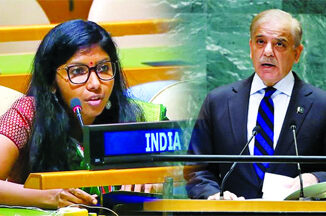
    United Nations (TIP)- In a strong retort, India has slammed Pakistan in the UN General Assembly, saying its “fingerprints” are on terrorist incidents across the world and the country should realise that cross-border terrorism against India will “inevitably invite consequences”.
    India exercised its Right of Reply in the UN General Assembly on Friday in response to Pakistan Prime Minister Shehbaz Sharif raising the issue of Jammu and Kashmir in his address at the General Debate of the 79th session of the UN General Assembly.
    “This Assembly regrettably witnessed a travesty this morning. A country run by the military, with a global reputation for terrorism, narcotics trade and transnational crime has had the audacity to attack the world’s largest democracy,” First Secretary in India’s Permanent Mission to the UN Bhavika Mangalanandan said, delivering India’s Right of Reply.
    She asserted that as the world knows, Pakistan has long employed cross-border terrorism as a weapon against its neighbors.
    “It has attacked our Parliament, our financial capital Mumbai, marketplaces and pilgrimage routes,” she said, referring to the 2001 Indian Parliament attack and the 26/11 Mumbai terror attacks carried out by Pakistan-based terror groups.“The list is long. For such a country to speak about violence anywhere is hypocrisy at its worst,” Mangalanandan said.
    In his address, Sharif raised the Kashmir issue, as expected, and said that to “secure durable peace”, India should reverse the Abrogation of Article 370 and enter into a dialogue for a “peaceful” resolution of the issue.
    He said India has spurned Pakistan’s proposals for a mutual “Strategic Restraint Regime”.
    Responding to this reference “to some proposal of strategic restraint”, India asserted that there “can be no compact with terrorism. In fact, Pakistan should realise that cross-border terrorism against India will inevitably invite consequences.”
    Reminding the international community that this was a nation that for long hosted Al Qaeda leader Osama bin Laden, Mangalanandan said Pakistan’s “fingerprints are on so many terrorist incidents across the world, whose policies attract the dreads of many societies to make it their home.
    “Perhaps it should come as no surprise that its prime minister would so speak in this hallowed hall. Yet we must make clear how unacceptable his words are to all of us. We know that Pakistan will seek to counter the truth with more lies. Repetition will change nothing. Our stand is clear and needs no reiteration,” she said.
    India stressed that it is even more extraordinary for a country with a history of rigged elections to talk about political choices, that too in a democracy.
    “The real truth is that Pakistan covets our territory, and in fact, has continuously used terrorism to disrupt elections in Jammu and Kashmir, an inalienable and integral part of India,” the young Indian diplomat said.
    She said it is ridiculous that a nation that committed genocide in 1971 and which persecutes its minorities relentlessly even now, “dare speak about intolerances and phobias. The world can see for itself what Pakistan really is.”
    A Pakistani diplomat went on to respond to Mangalanandan with a Right of Reply.
    Describing India’s assertions as “baseless and misleading”, the Pakistani diplomat said the United Nations Security Council, through numerous resolutions, has unequivocally called for a free, impartial plebiscite to enable the people of Jammu and Kashmir to exercise their inalienable right to self- determination. Source: PTI

  • PM Modi says US visit fruitful, focused on global initiatives

    PM Modi says US visit fruitful, focused on global initiatives

    Prime Minister Narendra Modi on Tuesday shared highlights of his visit to the United States, saying it has been “fruitful”, covered diverse programmes and focused on a series of subjects aimed at making the planet better. The Prime Minister shared a brief video of his engagements, from the Quad Summit to series of bilateral meetings including with US President Joe Biden. He also shared highlights of his address to the Indian diaspora, interaction with important American business leaders and address at the Summit of the Future in the United Nations.
    “This has been a fruitful USA visit, covering diverse programmes and focusing on a series of subjects aimed at making our planet better. Here are the highlights,” PM Modi said in a post on X.
    Quad Summit in Delaware
    One of the key highlights of the visit was the Quad Summit, hosted by US President Joe Biden in his hometown of Wilmington, Delaware. PM Modi recounted the personal touch of the meeting, mentioning Biden’s gesture of taking him to his home. “His affinity and warmth was a heart-touching moment for me,” PM Modi shared, as the video showed the two leaders warmly greeting each other.
    The Quad Summit, which saw participation from Japan’s Prime Minister Fumio Kishida and Australia’s Prime Minister Anthony Albanese, along with PM Modi and Biden, was another pivotal event. Reflecting on the meeting, PM Modi expressed his satisfaction in taking part at the beginning of his third term. When asked whether the Quad would continue beyond the US elections in November, Biden’s response, “way beyond November,” accompanied by a warm gesture towards PM Modi, highlighted the ongoing commitment to the alliance. India is set to host the next Quad Summit.
    During the summit, PM Modi reiterated the Quad’s mission, stating, “Our message is unequivocal: QUAD is here to stay, to assist, to partner, and to complement.” He also announced India’s contribution of $7.5 million under the Quad Moonshot Initiative, aimed at supporting health measures through sampling kits, detection kits, and vaccines. “India’s vision is ‘One Earth, One Health,’” he said.
    Engagement with Indian Diaspora and Business Leaders
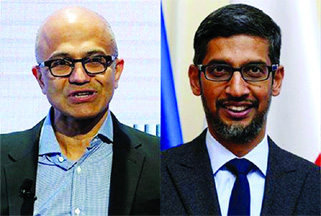
    The video also captured moments from PM Modi’s interaction with the Indian diaspora, with attendees enthusiastically cheering and waving as he spoke. In meetings with key American business leaders, PM Modi outlined the “golden opportunity” that India presents. Business leaders echoed this sentiment. Sundar Pichai, CEO of Google, praised PM Modi’s focus on using Artificial Intelligence to benefit the Indian population. “The Prime Minister wants to make sure that ultimately AI is there to benefit the people of India,” Pichai said.
    Jensen Huang, CEO of Nvidia, said, “This is India’s moment, we have to seize the opportunity,” while Enrique Lores, CEO of HP Inc., shared plans to expand manufacturing in India, pointing to the country’s growing potential in both technology and production. Eli Lilly’s CEO David A. Ricks also noted India’s rise as an economic power and its expanding research base.
    Accenture’s CEO Julie Sweet expressed excitement about the company’s plans to grow operations in India, while Biogen’s CEO Chris Viehbacher commended Modi’s vision of placing India at the forefront of technological progress in the 21st century. Holtec International CEO Kris Singh remarked on PM Modi’s focus on energy independence through clean energy initiatives, calling the Prime Minister “a very bright man.”
    Bilateral Meetings and UN Address
    The video also featured visuals of PM Modi’s meetings with various global leaders, including Japan’s Prime Minister Kishida, Australian Prime Minister Albanese, Nepal’s Prime Minister KP Sharma Oli, Kuwait’s Crown Prince Sheikh Sabah Khaled Al-Hamad Al-Mubarak Al-Sabah, Palestine’s President Mahmoud Abbas, Vietnam’s State President To Lam, and Ukraine’s President Volodymyr Zelenskyy.
    At the UN Summit of the Future, PM Modi called for urgent reform of global governance institutions, including the UN Security Council. He stressed that global action must align with global ambitions.
    Prime Minister Modi’s three-day visit to the United States, which began on September 21, covered a wide range of discussions and initiatives aimed at fostering global collaboration.

  • United Nations General Assembly Overwhelmingly Adopts Historic Text Demanding Israel End Its Unlawful Presence, Policies in Occupied Palestinian Territory within One Year

    United Nations General Assembly Overwhelmingly Adopts Historic Text Demanding Israel End Its Unlawful Presence, Policies in Occupied Palestinian Territory within One Year

    UNITED NATIONS (TIP): Adopting a historic text demanding that Israel bring to an end its unlawful presence in the Occupied Palestinian Territory, no later than 12 months from the adoption of the resolution, the General Assembly , on September 18, heard speakers stake out a range of positions regarding the best way to resolve this enduring crisis.

    Adopted by a two-thirds majority in a recorded vote of 124 in favor to 14 against, with 43 abstentions, the text titled “Advisory opinion of the International Court of Justice on the legal consequences arising from Israel’s policies and practices in the Occupied Palestinian Territory, including East Jerusalem, and from the illegality of Israel’s continued presence in the Occupied Palestinian Territory” (document A/ES-10/L.31/Rev.1) welcomed that opinion, which was issued on 19 July.

    Introduced Tuesday, September17, by the Permanent Observer of the State of Palestine in an emergency special session of the Assembly, the text seeks to implement the Court’s advisory opinion (for background, see GA/12625). It sets out numerous obligations on States and international organizations, including the obligation not to recognize as legal the situation arising from the unlawful presence of Israel in the Territory. By its other terms, the Assembly decided to convene during its seventy-ninth session an international conference for the implementation of UN resolutions pertaining to the question of Palestine and the two-State solution.

    Prior to its adoption, the Assembly Secretary said that in the absence of modalities, it is not possible to estimate the potential cost implications of convening an international conference. Once modalities are known, the budgetary implications will be assessed and the Assembly advised accordingly, she said.

    The adoption was hailed by several delegates, including that of Syria, who said it is an expression of international solidarity with the Palestinian people and a global rejection of Israeli occupation. Further, it renews the United Nations’ unequivocal support for the establishment of a Palestinian State, he said. The representatives of Saint Vincent and Grenadines, Marshall Islands and Thailand also reaffirmed the Palestinian right to self-determination.

    Voicing support for the International Court of Justice, Belgium’s delegate underscored that the resolution is in keeping with its advisory opinion. Israel’s multidecade illegal occupation undermines the human rights of Palestinians and compromises any chances of a peace process in the Middle East, he said. The adoption does not mean a reduction of Israel’s security, he pointed out, adding that terrorist groups, such as Hamas, feed on oppression and hopelessness. This text offers a realistic prospect of restoring hope in a population that has been left at the mercy of extremist ideology, he said.

    The representatives of Japan, Latvia, France, Estonia, Cyprus and Monaco also underscored the need to uphold international law and the key role of the World Court. While cognizant of Israel’s security needs, Greece’s delegate said, his country nevertheless voted in favor of the text because of its principled belief that the Court’s work should be respected. Singapore’s delegate said that his delegation also voted in favor because of its respect for the Court, even though it has serious reservations about the use of the institution’s advisory jurisdiction to bypass the need for States’ consent. Calling for measures that have not been negotiated by the Israelis and Palestinians may only harden positions, he warned.

    New Zealand supported the resolution, that country’s delegate said, even though it is not perfect. The 12-month time frame set out in the resolution for Israeli withdrawal from the Occupied Palestinian Territory, is “frankly unrealistic”, she said, adding: “However, in the next 12 months, we expect Israel to take meaningful steps towards compliance with international law.” The Palestinian Authority must also take meaningful steps to ensure political and security control of the occupied territories, she said.

    However, several delegates who voted against the text said it fails to address the immense security challenges that Israel faces. The representative of the Czech Republic regretted that the text does not acknowledge Hamas’ use of the Gaza Strip as a “launching pad for its rampage of killing of Israelis while systematically using Palestinian civilians as human shields”. A negotiated agreement is the best path to fostering a better future in the Middle East, he said, as did the representatives of Argentina and Hungary.

    The speaker for Papua New Guinea said the draft demands that Israel make unilateral concessions without any reciprocal steps from the other parties involved. Such unbalanced demands will perpetuate the conflict and reinforce views that the advisory opinion proceedings may have been biased, given the Court’s sole focus on the actions of Israel, he added. He also pointed to dissenting opinions from the Court judges.

    A significant number of countries who abstained from today’s vote expressed concerns about the language in the text itself — among these the delegates of Canada, Bulgaria, Austria, Japan, Republic of Korea, Guatemala, India, Sweden, Italy, Germany, Kiribati and Costa Rica. While there is no doubt about the illegality of Israel’s occupation, the representative of Switzerland said, the one-year timeline referenced in the text for the withdrawal of Israel does not acknowledge that country’s legitimate security concerns. The representative of the United Kingdom said her delegation abstained because the text does not provide sufficient clarity to advance a negotiated solution. Stressing that the reunification of Gaza and West Bank is a fundamental step towards a two-State solution, she also expressed concern about extremist Israeli settlers.

    Australia’s delegate said: “We are concerned that, by making demands of the entire United Nations membership that go beyond the scope of the advisory opinion, the resolution distracts from what the world needs Israel to do.” His country has insisted that Israel must cease settlement activity and has sanctioned extremist Israeli settlers. “We have not supplied weapons to Israel in at least the last five years,” he added. However, Australia will continue to call out unilateral actions that it believes undermine the prospect for peace, he said, while the representative of the Netherlands pointed to reservations regarding operative paragraph 5b of the text. While it remains of utmost importance that Israel retains its ability to defend itself, this must be done in accordance with international law, including humanitarian law, she stressed.
    (Based on an UNGA Press Release)

  • Bridging over troubled waters

    Bridging over troubled waters

    Following the failure of the Biden Plan, the ‘bridging proposal’ put forth by Antony Blinken is also on the verge of collapse in the wake of glaring mistrust between Hamas and Israel.

    By Prabhu Dayal

    US Secretary of State Antony Blinken wrapped up his visit to Israel earlier this week, saying that he had consulted with Prime Minister Benjamin Netanyahu, who had accepted a ‘bridging proposal’ for a ceasefire in Gaza. He also called on Hamas to accept the ‘bridging proposal’. What is the Gaza ceasefire ‘bridging proposal’, and will it work in the troubled waters of the Israel-Hamas war? Can we expect the fighting to be ended in Gaza and peace to be established? In my estimation, a peace deal is still very elusive. Disagreements over Israel’s future military presence in Gaza are hindering progress on a ceasefire and hostage deal. Moreover, Netanyahu has repeatedly said that Israel will not stop the attacks until Hamas has been completely destroyed, and Hamas is unwilling to trust Israel for this reason. In this scenario, ending the conflict is not easy at all.

    Blinken’s recent visit to Israel was an attempt to bridge the gaps. Clearly, he failed to secure a breakthrough for a Gaza cease-fire deal. More than ten and a half months have elapsed since the ongoing Hamas-Israel conflict started in Gaza. Many efforts have been made to end it but without success, for the conflict is showing no signs of ending. The underlying reason is that there is a big trust deficit between Hamas and Israel. It may be recalled that Hamas launched an attack on southern Israel on October 7, 2023, during which about 1,200 people were killed and 251 others were taken hostage. The Israeli military launched a counter-offensive in Gaza in which at least 40,334 Palestinians have been killed and 93,956 wounded. The vast majority of Gaza’s population has been displaced. A humanitarian crisis of unspeakable dimensions has resulted, and the life of the Palestinians in Gaza has become worse than hell. Ending this conflict is proving to be a huge challenge. Ageing gratefully Mediators from Qatar, Egypt and the USA spent months pursuing a three-phase plan in which Hamas would release the hostages in exchange for a lasting cease-fire, the withdrawal of Israeli forces from Gaza and the release of Palestinians imprisoned by Israel. The three-phase Israel–Hamas war ceasefire proposal was announced by Egypt and Qatar on May 5, and endorsed by Hamas on May 6. US President Joe Biden presented the deal and it came to be known as the Biden Plan.

    This was the plan’s outline: PHASE I • A complete ceasefire • Withdrawal of Israeli forces from populated areas in Gaza • Release of some hostages and some remains of hostages Also Read – Nexus of Good: Groundwork for excellence • Palestinian civilians can return to their homes in Gaza • A surge in humanitarian aid .
    PHASE 2 • A permanent end to hostilities • Exchange for the release of remaining living hostages • Israeli forces withdraw from Gaza
    PHASE 3 • A major reconstruction plan for Gaza • The final remains of hostages are returned to their families.
    On June 10, the United Nations Security Council supported the proposal as Resolution 2735. Hamas leaders largely accepted the announced “Biden plan” and the UN Resolution with some caveats. For example, they insisted that the end of the ceasefire as described in both be “permanent,” and that there be a complete withdrawal of all Israeli forces from Gaza. However, Israeli Prime Minister Netanyahu put a spanner in the works and ruled out a permanent ceasefire. He stated that Israel was open only to a partial ceasefire that did not include ending the war in Gaza. In fact, Netanyahu went further and rejected Biden’s proposal. He said in a social media post that the “actual” plan to which he agreed stipulated no end to the conflict until Hamas had been eliminated, no permanent ceasefire until all hostages were freed and victory was achieved and no end to an Israeli security role in Gaza.

    The Gaza ceasefire mediators have been making a fresh bid to ‘narrow the gaps’ between Israel and Hamas. Two key sticking points concern Israel’s demands which it is unrelenting. These relate to the Philadelphi Corridor and the Netzarim Corridor respectively. Firstly, Israel insists that it must have full control over the Philadelphi corridor which is a 14-kilometre-long narrow strip of land running inside Gaza along its southern border with Egypt. Israel says that Hamas has been smuggling arms across this border. Secondly, Israel is adamant that displaced people returning from southern Gaza to northern Gaza be screened at the Israeli-controlled Netzarim corridor that effectively divides the territory of Gaza into two parts. This corridor will allow the Israeli army to bisect and control the Gaza Strip. Israel considers this corridor to be essential for carrying out raids in northern and central Gaza. In other words, these demands by Israel mean that it will continue to maintain its troops inside Gaza even after a peace deal is reached. Hamas has rejected any such presence, saying it contravenes a three-stage peace plan announced by Joe Biden at the end of May, and later endorsed by the UN Security Council, which ultimately envisages a complete Israeli withdrawal from Gaza. Hamas also says that Israel had changed its conditions and parameters at the last minute. Hamas also argues that any concessions it makes would be met by more demands by Israel. On the other hand, the Israeli Prime Minister’s office denied making ‘new demands’, asserting that their position was always well known to the Americans. So, either Netanyahu is pulling a fast one, or else the Americans did not convey the correct picture regarding the Israeli position to their fellow mediators from Qatar and Egypt.

    Naturally, the disagreement over Israel’s future military presence in Gaza is also hindering progress on a ceasefire and hostage deal. The discussions around the Philadelphi corridor and the Netzarim corridor are proving to be contentious. Netanyahu is not budging from his position and neither are the Hamas leaders. Blinken’s recent visit to Israel was an attempt to ‘bridge the gaps’. Even more significantly, Israel has made it clear that a break in the fighting is all that it will agree to — not a permanent ceasefire. Netanyahu has made it clear that he is ready for a six-week ceasefire which will help to bring back some of the hostages while facilitating humanitarian relief supplies to reach the Palestinians in Gaza, but he would not give up on continuing the war in Gaza in order to destroy Hamas. In this scenario, even if an agreement is reached – still far from certain – it could end up lasting only weeks before it collapses and the war in Gaza resumes. Thus, Blinken’s ‘bridging proposal’ seems to be promising more than it can achieve.

    Meanwhile, concerns grow about the possible expansion and escalation of the conflict. Hezbollah launched hundreds of rockets and drones at Israel early Sunday (August 25) as Israel’s military said it struck Lebanon with around 100 jets to thwart a larger attack, in one of the biggest clashes in more than 10 months of border warfare. Any major spillover in the fighting risks transforming into a regional conflagration drawing in Hezbollah’s backer Iran and Israel’s main ally the United States. This would be a truly frightening scenario!

    (The writer is a retired Indian diplomat and had previously served as Consul General in New York)
    (First published in the Millennium Post. https://www.millenniumpost.in/opinion/bridging-over-troubled-waters-577147)

  • 12 years since Wisconsin gurdwara shooting in Oak Creek, ‘the lessons learnt since then’

    12 years since Wisconsin gurdwara shooting in Oak Creek, ‘the lessons learnt since then’

    US lawmakers pay tributes to Sikh victims on 12th anniversary of massacre

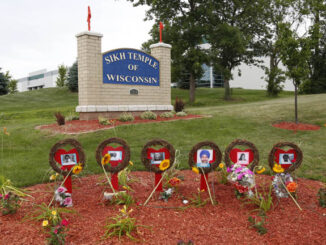
    NEW YORK (TIP): US lawmakers paid tributes to the members of the Sikh community who were killed in a massacre at a Milwaukee gurdwara 12 years ago, underscoring the need to reject bigotry and recommit to fighting hate and racism, as well as ending the gun violence epidemic in America. US Ambassador to the UN Linda Thomas-Greenfield visited the Oak Creek Sikh Temple in the Wisconsin city on the 12th anniversary of the “deadliest massacre of Sikhs on US soil” when a white supremacist claimed the lives of seven members of the Sikh community, according to a statement issued here Monday by the US Mission to the United Nations Spokesperson Nate Evans. “The Ambassador joined the victims’ families, community members, and temple leaders to honor those lives lost and lead a conversation on their ongoing efforts to combat hate against marginalized communities,” the statement said.

    Thomas-Greenfield “heard firsthand accounts of the impact of hate crimes, reiterated the ongoing efforts of the Biden-Harris Administration and across the UN to promote religious freedom, and commended the families of the victims, whose remarkable resilience allowed the tragedy to become a point of necessary reform”.

    On August 5, 2012, Wade Michael Page (40) entered the gurdwara in Oak Creek and opened fire, as members of the congregation had gathered to prepare for Sunday service.

    The victims of the massacre were Suveg Singh Khattra (84), Satwant Singh Kaleka (65), Ranjit Singh (49), Sita Singh (41), Paramjit Kaur (41), Prakash Singh (39) and Baba Punjab Singh (72).

    Baba Punjab Singh had remained almost fully paralyzed after being shot during the attack and passed away in March 2020 from complications related to his injuries.

    Members of The Congressional Asian Pacific American Caucus (CAPAC) released statements in observance of the anniversary. Congressman Raja Krishnamoorthi of Illinois said that Sikh Americans were killed and others injured after the white supremacist, driven by hate and bigotry, opened fire at the Oak Creek Gurdwara in Wisconsin.

    “Today, as we remember the lives lost and impacted by this senseless act of violence, we must recommit ourselves to fighting hate, racism, and prejudice in all its forms, as well as ending the gun violence epidemic in America,” he said.

    Krishnamoorthi said that all Americans should be able to worship and practice their faiths without fear, and “it falls on all of us to make the United States a better and more tolerant country for people of all faiths and backgrounds”.

    Representative Ro Khanna of California said that the Sikh community was devastated by a senseless act of hate, bigotry and violence. “As my CAPAC colleagues and I remember and grieve the six innocent lives lost, we are more committed than ever to pushing for transformative gun legislation. It is our duty as a nation to work together to remove weapons of war and ensure everyone is safe to worship without fear,” he said.

    Representative Shri Thanedar of Michigan said that on the anniversary of this tragic event, “we reaffirm that violence against any group is never acceptable. As the Chair of the Hindu, Buddhist, Sikh, and Jain American Congressional Caucus, I am committed to ensuring that Sikhs and all other religious groups can practice their religion freely without fearing for their safety.” Representative Pramila Jayapal of Washington stressed the need to “recommit to fighting the scourge of bigotry and racism that we see directed at the AAPI community. On this difficult day, I send my prayers and strength to the Oak Creek community and Sikh communities across the country and stand with them in the battle against both hate and gun violence”.

    CAPAC Chair Representative Judy Chu of California said the “horrific act of hate and gun violence” in the place of worship should not happen anywhere.

    “Sikh Americans, and all Americans, deserve to live, learn, worship, and play with a sense of safety. White supremacy, hate, and xenophobia rip apart the fabric of equality and unity that binds our nation, and we must reject any bigotry that puts more lives at risk,” Chu said.

    CAPAC First Vice Chair Representative Grace Meng of New York said, “We must remain committed to standing up against bigotry and racism in all its forms. In the United States diversity is our strength.

    CAPAC Chair Representative Judy Chu of California said the “horrific act of hate and gun violence” in the place of worship should not happen anywhere.

    “Sikh Americans, and all Americans, deserve to live, learn, worship, and play with a sense of safety. White supremacy, hate, and xenophobia rip apart the fabric of equality and unity that binds our nation, and we must reject any bigotry that puts more lives at risk,” Chu said.

    CAPAC First Vice Chair Representative Grace Meng of New York said, “We must remain committed to standing up against bigotry and racism in all its forms. In the United States diversity is our strength.

    “There is no place for the mass violence and religious intolerance that took place in Oak Creek. As a nation we must remain committed to creating a more tolerant and accepting society where everyone can freely and safely worship without the fear of violence and persecution.”

    CAPAC Whip Rep. Ted Lieu of California said white supremacy and xenophobia have no place in America. “Together, we must ensure that all individuals, regardless of religion, race, or ethnicity, can live without fear for their safety.” Wisconsin Governor Tony Evers proclaimed August 5 2024 as ’12th Anniversary of the Oak Creek Sikh Temple Shooting’ throughout the state. It said that the “anniversary remains a painful reminder of the work that still must be done to protect all communities in the United States against the rising threat of targeted, hate-fueled violence, it is also a shining example of resilience in the face of tragedy, and a continued, shared hope that a better tomorrow can exist for all.”

  • Uganda court to rule on harsh anti-gay law

    Uganda court to rule on harsh anti-gay law

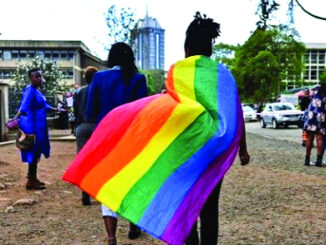
    KAMPALA (TIP): Uganda’s Constitutional Court is due to rule April 3 on a petition seeking to annul an anti-gay law that has been roundly condemned as one of the toughest in the world.
    The legislation was adopted in May last year, triggering outrage among the LGBTQ community, rights campaigners, the United Nations and Western nations.
    Known as the Anti-Homosexuality Act 2023, it imposes penalties of up to life in prison for consensual same-sex relations and contains provisions that make “aggravated homosexuality” an offence punishable by death.
    President Yoweri Museveni’s government has struck a defiant tone, with officials accusing the West of trying to pressure Africa into accepting homosexuality.
    The Constitutional Court in Kampala will issue its verdict from 10:00 am (0700 GMT), deputy registrar Susanne Okeny Anyala announced on Tuesday.
    It began hearing the case in December.
    The petition was brought by two law professors from Makerere University in Kampala, legislators from the ruling party and human rights activists.
    They charge that the law violates fundamental rights guaranteed by Uganda’s constitution, including freedom from discrimination and the right to privacy.
    The petitioners also say it contravenes Uganda’s commitments under international human rights law, including the United Nations convention against torture.
    The court will also determine whether the law was passed after sufficient consultation with Ugandan citizens, as required by the constitution.
    West trying to ‘coerce us’
    A 20-year-old man became the first Ugandan to be charged with “aggravated homosexuality” under the contested law in August last year.
    He was accused of “unlawful sexual intercourse with… (a) male adult aged 41”, an offence punishable by death.
    Uganda, a conservative and predominantly Christian country in East Africa, is notorious for its intolerance of homosexuality.
    It has resisted pressure from rights organisations, the United Nations and foreign governments to repeal the law.
    The United States, which threatened to cut aid and investment to Kampala, imposed visa bans on unnamed officials in December for abusing human rights, including those of the LGBTQ community.
    The World Bank announced in August it was suspending new loans to Uganda over the law, which “fundamentally contradicts” the values espoused by the international institution.
    In December, Ugandan state minister for foreign affairs Henry Okello Oryem accused the West of seeking “to coerce us into accepting same-sex relationships using aid and loans”.
    In 2014, international donors had slashed aid to Uganda after Museveni approved a bill that sought to impose life imprisonment for homosexual relations, which was later overturned.
    But the latest anti-gay law has enjoyed broad support in the conservative country, where lawmakers have defended the measures as a necessary bulwark against Western immorality. (AFP)

  • The Indian Panorama is grateful to Dr. V.K. Raju and the Eye Foundation of America for their work and support

    • By I.S. Saluja

    The Indian Panorama is grateful to Dr. V.K. Raju, President of the Eye Foundation of America and the board of directors of the Eye Foundation of America for their noble humanitarian work and great support to the publication. Their collaboration in publishing the special edition to pay tribute to Martyrs of India on the Martyrs Day is worth appreciation and deserves our gratitude.

    We take this opportunity to briefly introduce the eminent eye surgeon and a great philanthropist and his  team  dedicated to creating a world without childhood blindness.

    Dr. V.K. Raju

    VK Raju, MD, FRCS, FACS

    Ellis Island Award Nominee 2019

    Ophthalmologist, Regional Eye Associates

    President and Founder, Eye Foundation of America

    President and Founder, Goutami Eye Institute

    Clinical Professor, West Virginia University

    Director, International Ocular Surface Society

    Adjunct Professor, GSL Medical School

    Adjunct Professor, Wilmer Eye Institute, Johns Hopkins University

    Author: Musings on Medicine, Myth, and History-India’s Legacy

    Dr. VK Raju received his medical degree from Andhra University, India and Residency and Fellowship in UK. He is a fellow of the Royal College of Surgeons and a Fellow of the American college of Surgeons.

    V.K.Raju, MD, FRCS, FACS is a clinical professor of ophthalmology at West Virginia University, WV, USA, and practicing ophthalmologist at Regional Eye in Morgantown, WV, USA. In 1977, work began on what is now known as the Eye Foundation of America. With Dr. Raju’s guidance, the Eye Foundation of America’s work has grown. To date, the Eye Foundation of America has performed over 4 million vision screenings in rural areas of over 30 countries across the world, the latest being Guatemala in November, 2023.  Through the Eye Foundation of America, over 400,000 sight-saving surgeries have been performed at no cost. Over 800 medical professionals, including many residents and ophthalmologists, have been trained to identify and treat eye diseases.

    Dr. Raju remains highly involved as the Founder and President of the Eye Foundation of America to this day, returning to India every few months to participate in educational programs, vision screening camps, and surgeries.

    New green Goutami Eye Institute under construction

    His insatiable drive to improve the lives of others has also resulted in the recent culmination of another lifelong goal. The construction of another eye hospital is underway with wings devoted to specialties including ocular oncology, pediatric ophthalmology, and the retinopathy of prematurity, a disease effecting premature babies.

    Dr. V.K. Raju with President Jimmy Carter

    Dr. VK Raju has received awards from American Academy of Ophthalmology four times for his teaching, research and international service. A partial list of awards include Doctor Nathan Davis International award of Excellence in Medicine by American Medical Association Foundation, Lifetime Achievement Award from WV State Medical Association, the President’s Lifetime Achievement Award from President Barack Obama, Mahatma Gandhi Pravasi Samman award for Achievement in Medicine, House of Lords, London. He also received the Martin Luther King, Jr. Achievement Award from West Virginia University. He was also inducted into Medical Missions Hall of Fame by University of Toledo and Medscape placed him among the best doctors in America. Recently, he was awarded The Indian Panorama Lifetime Achievement Honor by  Ambassador Ruchira Kamboj, India’s  Permanent Representative to the United Nations.

    Dr. Raju receiving The Indian Panorama Lifetime Achievement Honor from Ambassador Ruchira Kamboj, India’s Permanent Representative to the United Nations.

    For over 40 years, Dr. Raju has dedicated himself to eliminating avoidable blindness in children and adults through outreach programs, surgeries, and educational efforts. V. K. Raju has published over 100 scientific articles, 17 book chapters, and 2 books. Still, he will tell you, “My work is only the beginning.” Only this morning, Dr. Raju shared with me two quotes. Now these quotes are a pointer to his mind.

    “Of all the senses vision is the most precious.”

    ( SARVENDRIYANAM NAYANAM PRADHANAM- in Sanskrit.

    80% of our learning is through vision.

    Join us in giving a gift of vision “

    Another now.

    “There is nothing new under the sun.”

    In this world, nothing is more important than children’s nutrition and education. If we give them nutrition and education, they will take care of themselves.

    Since 1977, Eye foundation of America is striving to do just that.

    “Be part of that effort”.

    He often speaks about the colossal work which needs to be done to prevent childhood blindness. He is passionate about his vision of a world without childhood blindness.

    Luckily for him, he says, he has been blessed with a wonderful team who are always there to share his vision and work for its realization. Let me introduce the readers of The Indian panorama to this great team.

    The Eye Foundation of America Board of Directors.

    We have no doubt that the vision of Dr. Raju to have a world without childhood blindness will be realized. If human effort could create a world without polio, why can’t the world be free from childhood blindness?

    We wish you, Dr. Raju and your dedicated team all success.

  • Celebrating 18 Years of Excellence: The Indian Panorama’s Gratitude Gala

    It was an evening of joy, celebration, and gratitude as The Indian Panorama welcomed patrons, well-wishers, and friends to the Gratitude Gala, marking the 18th year of the newspaper’s publication. The event was not just a milestone celebration but a testament to the unwavering support and encouragement received from a diverse community. The sheer number of guests in attendance not only made the evening vibrant but also served as a powerful affirmation of the publication’s quality and the satisfaction of its readers.

    The highlight of the evening was the presence of Ambassador Ruchira Kamboj, India’s Permanent Representative to the United Nations. Her inspiring words of wisdom resonated with everyone present, serving as a source of encouragement for the dedicated team behind The Indian Panorama. The presence of Congressman-elect Tom Suozzi, a true friend of the Indian American community, added a layer of significance to the celebration. With three terms as a US Congressman, his encouragement was a valuable endorsement of the publication’s impact.

    The Gratitude Gala also recognized and honored four distinguished individuals chosen by The Indian Panorama board for their remarkable contributions in their respective fields. Dr. VK Raju, a distinguished ophthalmologist and President of the Eye Foundation of America, has dedicated the past 40 years to the noble cause of eradicating childhood blindness worldwide. His tireless efforts have made a significant impact, aligning with The Indian Panorama’s commitment to positive change.

    Ranju Batra, a relentless advocate, secured recognition for India’s festival of lights, Diwali, by successfully lobbying for a Diwali postal stamp from the US administration. Beyond this achievement, she actively promotes diplomats and diplomacy through her organization, instituting the Diwali-Power of One awards to honor diplomats contributing to global peace. Her dedication aligns with the values championed by The Indian Panorama.

    Harry Singh Bolla’s inspiring journey from humble beginnings to billionaire status exemplifies the spirit of giving back to society. His philanthropic endeavors serve as an example worth emulating and resonate with The Indian Panorama’s commitment to social responsibility.

    Purnima Desai, through her institutions, Shikshayatan Cultural Center and Srininiketan Foundation, has been a stalwart in promoting Indian culture for over four decades. Her unwavering dedication aligns with the publication’s mission of fostering cultural understanding and appreciation.

    The evening was not just about accolades and recognition; it was a platform for meaningful communication between the diverse group of guests and honorees. The young talents who graced the stage with exceptional performances in music and dance added an extra layer of joy to the celebration. The dedicated volunteers who flawlessly managed the event deserve special appreciation, as their efforts contributed to the seamless flow of the evening.

    Acknowledgment is due to colleagues from the media world who stood in solidarity with The Indian Panorama. Special gratitude is extended to Gary Sikka, the owner of Pearl Banquet Hall, whose hospitality provided the perfect backdrop for the Gratitude Gala.

    In expressing gratitude, The Indian Panorama extends thanks to everyone associated with the event. Patrons, friends, and family members played a pivotal role in making the evening truly memorable. As The Indian Panorama embarks on the journey ahead, the support received at the Gratitude Gala serves as a powerful motivator to continue the pursuit of excellence and meaningful journalism.

  • Fastest-growing large economy in world, India projected to grow at 6.2% in 2024: UN

    Fastest-growing large economy in world, India projected to grow at 6.2% in 2024: UN

    United Nations (TIP)- India is projected to grow at 6.2 per cent in 2024, supported by robust domestic demand and strong growth in the manufacturing and services sectors, the United Nations has said. The UN World Economic Situation and Prospects (WESP) 2024 report, launched here on Thursday, January 4, said the gross domestic product in South Asia is projected to increase by 5.2 per cent in 2024, driven by a robust expansion in India, which remains the fastest-growing large economy in the world.
    “Growth in India is projected to reach 6.2 per cent in 2024, slightly lower than the 6.3 per cent estimate for 2023, amid robust domestic demand and strong growth in the manufacturing and services sectors,” the report said.
    India’s GDP is projected to increase to 6.6 per cent in 2025. The report notes that the economic growth in India is projected to remain “strong” at 6.2 per cent this year mainly supported by resilient private consumption and strong public investment.
    While manufacturing and services sectors will continue to support the economy, erratic rainfall patterns will likely dampen agricultural output, it said. “Indian economy again outperformed its peers, not just this year but in the last few years,” Chief of the Global Eonomic Division Monitoring Branch, Economic Analysis and Policy Division (UN DESA) Hamid Rashid told reporters. He said India’s economic growth has consistently remained over six per cent and “we believe this will continue in 2024 and 2025 as well”. Rashid noted that although inflation was relatively high for India, it didn’t have to raise rates as much and inflation has come down quite a bit. In response to a question on factors holding back India’s economic growth, Director of the Economic Analysis and Policy Division Shantanu Mukherjee cited India’s GDP growth rates of four years from 2022-2025 and said: “I’m not sure that 7.7%, 6.3%, 6.2% and 6.6% is exactly holding something back.” Source: PTI

  • UNSC observes a minute of silence to mourn Kuwait’s late Amir Sheikh Nawaf Al-Ahmad Al-Jaber Al-Sabah

    United Nations Security Council members mourn and honor Kuwait’s late Amir Sheikh Nawaf Al-Ahmad Al-Jaber Al-Sabah. (Photo : Mohammed Jaffer-SnapsIndia)

    UNITED NATIONS (TIP): Members of the United Nations Security Council observed Tuesday a minute of silence to mourn and honor Kuwait’s late Amir Sheikh Nawaf Al-Ahmad Al-Jaber Al-Sabah.
    The UN lowered its flag to half-mast at its New York headquarters in honor of the late Amir on Monday, December 18.
    The UN paid tribute to the late Amir describing him as a distinguished statesman, who contributed to the growth of understanding and cooperation in the Gulf and beyond, and pursued strengthened relations in support of peace and stability in the region and around the world. The ruling emir of the oil-rich nation Kuwait, Sheikh Nawaf Al Ahmad Al Sabah, has died at the age of 86, just over three years after assuming power, Kuwaiti state TV announced.

    His cause of death has not been revealed although the ruling emir was hospitalized last month “due to an emergency health problem” but was later reported to be in stable condition.

    The small Mideast nation, which is the holder of the world’s seventh-largest oil reserve, borders Iraq to the north and Saudi Arabia to the south, has seen internal power struggles behind palace doors.

    Kuwait state television broke into programming with Quranic verses just before a somber official made the announcement.

    “With great sadness and sorrow, we — the Kuwaiti people, the Arab and Islamic nations, and the friendly peoples of the world — mourn the late His Highness the emir, Sheikh Nawaf Al Ahmad Al Jaber Al Sabah, who passed away to his Lord today,” said Sheikh Mohammed Abdullah Al Sabah, the minister of his emiri court, who read the brief statement.

    State-run news previously reported that he had traveled to the United States for unspecified medical checks in March 2021.

    Sheikh Nawaf was named crown prince in 2006 and became emir in September 2020 following the death of his brother, Sheikh Sabah, who had ruled for more than a decade and shaped the state’s foreign policy for over 50 years.

    Sheikh Nawaf was the nation’s defense minister when Iraq invaded and occupied Kuwait in 1990, sparking the beginning of the first Gulf War. Kuwait has been a strong U.S. ally since then. Since he took over in 2020, Sheikh Nawaf has maintained a foreign policy that balanced ties with those neighbors, whilst domestically, eight governments were formed under his rule.

    Sheikh Nawaf’s term was focused on domestic issues as the nation struggled through political disputes — including the overhaul of Kuwait’s welfare system — which prevented the sheikhdom from taking on debt. That policy left it with little in its coffers to pay bloated public sector salaries, despite generating immense wealth from its oil reserves.

    In 2021, Sheikh Nawaf issued a long-awaited amnesty decree, pardoning and reducing the sentences of nearly three dozen Kuwaiti dissidents in a move aimed at defusing a major government standoff. He issued another just before his illness, aiming to resolve that political impasse that also saw Kuwait hold three separate parliamentary elections under his rule.

  • UN chief uses rare power to warn Security Council of impending ‘humanitarian catastrophe’ in Gaza

    UN chief uses rare power to warn Security Council of impending ‘humanitarian catastrophe’ in Gaza

    UNITED NATIONS (TIP): UN Secretary-General Antonio Guterres has used a rarely exercised power to warn the Security Council of an impending “humanitarian catastrophe” in Gaza and urged its members to demand an immediate humanitarian cease-fire.

    His letter to the council’s 15 members on Wednesday, December 6, said Gaza’s humanitarian system was at risk of collapse after two months of war that has created “appalling human suffering, physical destruction and collective trauma,” and he demanded civilians be spared greater harm.

    Guterres invoked Article 99 of the UN Charter, which says the secretary-general may inform the council of matters he believes threaten international peace and security. “The international community has a responsibility to use all its influence to prevent further escalation and end this crisis,” he said.

    UN spokesman Stephane Dujarric said he expects the secretary-general to address the Security Council on Gaza this week and to press for a humanitarian cease-fire. A short draft resolution circulated to council members late on Wednesday by the United Arab Emirates, the Arab representative on the council, would act on Guterres’ letter under Article 99. It demands “an immediate humanitarian cease-fire” and expresses “grave concern over the catastrophic situation in the Gaza Strip and the suffering of the Palestinian civilian population.” Earlier on Wednesday, the 22-nation Arab Group at the UN strongly backed a cease-fire.

  • Myanmar military says lost control of strategic border town

    Myanmar military says lost control of strategic border town

    YANGON (TIP): Myanmar’s military has lost control of a strategic town on the Chinese border following days of clashes with ethnic armed groups, in what analysts say is the biggest military challenge it has faced since seizing power. Fighting has raged on November 3 across northern Shan state, with an alliance of ethnic groups claiming to have seized four towns, blocked trade routes to China and captured dozens of military outposts.
    The remoteness of the rugged, jungle-clad region — home to pipelines that supply oil and gas to China — and patchy communications make it difficult to verify casualty numbers in the fighting, which the United Nations fears have displaced thousands.
    Government, administrative organisations and security forces were “no longer present” in the trade hub of Chinshwehaw, which borders China’s Yunnan province, junta spokesman Zaw Min Tun said in a statement late Wednesday.
    More than a quarter of Myanmar’s $1.8 billion border trade with China passed through Chinshwehaw between April and September, junta-controlled media reported in September, citing the commerce ministry.
    The Myanmar National Democratic Alliance Army (MNDAA), the Ta’ang National Liberation Army (TNLA) and the Arakan Army (AA) said on Thursday they also had control over the towns of Hpaung Seng, Hsenwi, and Kyukok. Clashes were ongoing in Kunlong and Hsenwi, the statement said, without giving details on casualties.
    China called on Thursday for an “immediate” ceasefire in northern Shan state — home to a planned billion-dollar rail link in its Belt and Road infrastructure project.
    A resident of Hsenwi, around 90 kilometres (55 miles) from Chinshwehaw, told AFP on Thursday that some junta troops remained in the town.
    Internet access was patchy and thousands of people had arrived in the town seeking safety, the resident said, asking for anonymity for security reasons.
    The price of rice and some commodities brought in from southern Myanmar had more than doubled at some shops in Muse, a trade hub north of Hsenwi on the China border, a resident in Muse told AFP. There was no fighting in or around the town, they said, also asking to remain anonymous for security reasons.
    Clashes have taken place at 10 locations across Shan state over the past six days, the junta spokesman said, without giving details on casualties.
    He accused the three armed groups of “blowing up power stations, blowing up bridges, destroying transportation routes”, without providing details.
    Thousands displaced
    “The military hasn’t faced this level of lightning offensive since the coup,” independent analyst David Mathieson told AFP.
    “It was a stunning military and intelligence failure that illustrates how stretched the Myanmar army really is.”
    Myanmar’s borderlands are home to more than a dozen ethnic armed groups, some of which have fought the military for decades over autonomy and control of lucrative resources.
    Some have trained and equipped newer “People’s Defence Forces” that have sprung up since the 2021 coup and the military’s bloody crackdown on dissent.
    The three armed groups say the military has suffered dozens killed, wounded and captured since Friday.
    Analysts say both sides likely inflate or deflate casualty figures. (AFP)

  • Iran says militants have ‘finger on trigger’ in anticipation of Israeli ground offensive in Gaza

    UNITED NATIONS (TIP): Iran’s foreign minister warned on October 27 that Lebanese and Palestinian militants had their “finger on the trigger” in anticipation of an Israeli ground offensive in the Hamas-ruled Gaza Strip.
    Iran’s clerical state backs Hamas, whose bloody assault inside Israel on October 7 triggered major retaliation, and has a close relationship with Hezbollah, the Lebanese Shiite militia that frequently fires into Israel.
    “What I gathered from what I heard from them and the plans that they have — they have their finger on the trigger,” Iranian Foreign Minister Hossein Amir-Abdollahian said of Lebanese and Palestinian militants he has met.
    Speaking to US National Public Radio from the United Nations, where he was attending a General Assembly session on the crisis, Amir-Abdollahian said the militants’ actions would be “much more powerful and deeper than what you’ve witnessed.”
    “Therefore I believe that if this situation continues and women and children and civilians are still killed in Gaza and the West Bank, anything will be possible,” he said.
    Amir-Abdollahian insisted, however, that militants would decide on their own rather than at the behest of Iran. “We don’t really want this conflict to spread out,” he said.
    His remarks came after US President Joe Biden ordered air strikes on two sites in Syria said to be used by Iran’s elite Revolutionary Guards.
    The Pentagon cast the strikes as measured retaliation after strikes by Iranian-backed militias in Iraq and Syria that left one US citizen contractor dead from a cardiac incident and 21 US military personnel with minor injuries.
    On October 7, Hamas militants stormed across the Gaza Strip’s border, killing 1,400 people, mostly civilians, and taking more than 220 hostages in the worst bloodshed in Israel’s history.
    Israel has struck back with a relentless bombing campaign which Gaza’s Hamas-run health ministry says has killed 7,326 people, mostly civilians, among them 3,038 children. (AP)

  • Ahead of G20 Summit, U.N. chief Guterres  calls for reform of global financial institutions, climate action

    Ahead of G20 Summit, U.N. chief Guterres  calls for reform of global financial institutions, climate action

    UNITED NATIONS (TIP): As U.N. Secretary-General Antonio Guterres arrives in India next week for the G20 Summit, the message he will take to the grouping of the world’s biggest economies will be a strong call for reform of global financial institutions and action to combat climate change.

    Mr. Guterres has a busy travel schedule lined up as he heads to the Africa Climate Summit in Nairobi, Kenya, on September 4-5; the ASEAN-UN Summit in Jakarta, Indonesia, on September 6-8; the G20 Summit in New Delhi, India and the Summit of the G77 and China in Havana, Cuba, on September 14-15.

    India, president of the G20, will host global leaders, including U.S. President Joe Biden, for the Summit scheduled to take place on September 9 and 10 in New Delhi.

    Speaking to UN reporters here on Thursday, August 31, Mr. Guterres said his message to G20 — the world’s biggest economies, which are also the biggest emitters — is that as climate chaos gathers pace, the world is looking to them. “They need to step up, accelerating their reduction of emissions — they account for 80% of them — and supporting countries that are already paying the price for decades of heating caused by fossil fuels,” he said.

    Mr. Guterres added that G20 countries also need to look seriously into reform of global financial institutions, rules and frameworks to adapt them to today’s realities and more effectively enable developing countries to access the resources they need to invest in the Sustainable Development Goals. “We must overcome the inequalities and divisions that blight our world today, including here, at the United Nations. Unless we act now, the Sustainable Development Goals could become an epitaph for a world that might have been,” he said.

    Mr. Guterres noted that the Africa Climate Summit, the UN-ASEAN Summit, the G20 Summit and the G77 Summit together “demonstrate the vitality of our multipolar international community.”

    “And multipolarity in itself does not guarantee peace and stability. On the contrary, without strong multilateral institutions, multipolarity could be a factor for escalating geostrategic tensions, with tragic consequences,” Mr. Guterres said.

    He noted that unless the international community strengthens and reforms global multilateral frameworks, fragmentation is all but inevitable. “And with fragmentation, confrontation can come. Multilateral institutions will only survive if they are truly universal,” he said.

    “And I will therefore be carrying the same message to all these meetings – the strong call for reforms to bring our outdated multilateral institutions and frameworks into line with the economic and political realities of today’s world based on equity and solidarity,” Mr. Guterres said.

    (Source: PTI)

  • India supports U.N.’s efforts in continuing Black Sea Grain Initiative

    India supports U.N.’s efforts in continuing Black Sea Grain Initiative

    UNITED NATIONS (TIP): India has voiced support for the U.N.’s efforts in continuing the Black Sea Grain initiative and expressed hope for an early resolution to the present impasse, a day after Russia announced it was terminating implementation of the U.N.-brokered deal that allowed export of grain and related foodstuffs and fertilizers from Ukrainian ports.

    Moscow on Monday, July 17, said it was terminating the implementation of the Black Sea Initiative — a U.N.-brokered deal that allowed food exports from Ukraine amid the ongoing conflict with Russia — including the withdrawal of Russian security guarantees for navigation in the North-Western part of the Black Sea.

    Addressing the U.N. General Assembly’s annual debate on the ‘Situation in the Temporarily Occupied Territories of Ukraine’ on Tuesday, India’s Permanent Representative to the U.N. Ambassador, Ruchira Kamboj, said New Delhi is concerned about the recent developments in the region, which have not helped in securing the larger cause of peace and stability.

    “India has supported the efforts of the U.N. Secretary-General in continuing the Black Sea Grain Initiative and hopes for an early resolution to the present impasse,” Ms. Kamboj said.

    “India continues to remain concerned over the situation in Ukraine. The conflict has resulted in the loss of lives and misery for its people, particularly for the women, children and elderly, with millions becoming homeless and forced to take shelter in neighboring countries,” she said.

    Ms. Kamboj asserted that India’s approach to the Ukrainian conflict will continue to be people-centric.

    “We are providing both humanitarian assistance to Ukraine and economic support to some of our neighbors in the Global South under economic distress, even as they stare at the escalating cost of food, of fuel and of fertilizers — which has been a consequential fall out of the ongoing conflict,” she said.

    U.N. Secretary-General Antonio Guterres voiced deep regret over Moscow’s termination of the implementation of the Black Sea Initiative decision, saying the initiative ensured the safe passage of over 32 million metric tons of food commodities from Ukrainian ports.

    The World Food Programme (WFP) has shipped more than 725,000 tons to support humanitarian operations — relieving hunger in some of the hardest-hit corners of the world, including Afghanistan, Horn of Africa and Yemen, Mr. Guterres said.

    He added that the Black Sea Initiative and the Memorandum of Understanding on facilitating exports of Russian food products and fertilizers have been a “lifeline” for global food security and a beacon of hope in a troubled world.

    “At a time when the production and availability of food are being disrupted by conflict, climate change, energy prices and more, these agreements have helped to reduce food prices by over 23 per cent since March last year,” he said. The U.N.-brokered Black Sea Initiative agreed by Russia, Turkiye, and Ukraine allowed millions of tons of grain and other foodstuffs to leave Ukraine’s ports, which Guterres said played an “indispensable role” in global food security.

    The U.N. noted that nearly one year into the agreement, more than 32 million tons of food commodities have been exported from three Ukrainian Black Sea ports to 45 countries across three continents.

    The partial resumption of Ukrainian sea exports enabled by the Initiative has unblocked vital food commodities and has helped reverse spiking global food prices, which reached record highs shortly before the agreement was signed, the UN said.

    Ms. Kamboj underlined that it is unfortunate that as the trajectory of the Ukrainian conflict unfolds, the entire Global South has suffered substantial collateral damage.

    “It is thus critical that the voice of the Global South be heard, and their legitimate concerns be duly addressed,” she said. Ms. Kamboj further said in her remarks that reports of attacks on civilians and civilian infrastructure are deeply worrying.

    “We have consistently advocated that no solution can ever be arrived at the cost of human lives. Escalation of hostilities and violence is in no one’s interest. We have urged that all efforts be made for an immediate cessation of hostilities and an urgent return to the path of dialogue and diplomacy,” she said.

    The Indian envoy underscored that dialogue is the only answer to settling differences and disputes, however daunting that may appear at this moment. “The path to peace requires us to keep all channels of diplomacy open,” she said.

    Noting Prime Minister Narendra Modi’s repeated engagements with both Russia and Ukraine, Ms. Kamboj said it is essential to emphasize that “we firmly believe that this is not an era of war. It is with this understanding and spirit that India actively participates in this debate.” She said that the global order that “we all subscribe to” is based on international law, the UN Charter and respect for the territorial integrity and sovereignty of all States. “These principles must be upheld without exception,” Ms. Kamboj said.
    (Source: PTI)

  • Indian-origin satellite expert Holla-Maini appointed as Director of United Nations Office for Outer Space Affairs by the UN chief

    Indian-origin satellite expert Holla-Maini appointed as Director of United Nations Office for Outer Space Affairs by the UN chief

    UNITED NATIONS (TIP): UN Secretary-General Antonio Guterres has appointed Indian-origin satellite industry expert Aarti Holla-Maini as Director of the United Nations Office for Outer Space Affairs (UNOOSA) in Vienna.
    Holla-Maini of the United Kingdom will succeed Simonetta Di Pippo of Italy.
    UNOOSA works to promote international cooperation in the peaceful use and exploration of space and in the utilization of space science and technology for sustainable economic and social development. Holla-Maini brings to this position over 25 years of professional experience in the space sector including in managerial and advocacy functions. Most recently, she has held the role of Executive Vice-President Sustainability, Policy & Impact at NorthStar Earth & Space. Prior to that, she spent over 18 years as the Secretary-General of the Global Satellite Operators Association, a statement issued here said on Monday.

  • Stop detaining and imprisoning journalists for doing their jobs: U.N. chief Guterres on World Press Freedom Day

    Stop detaining and imprisoning journalists for doing their jobs: U.N. chief Guterres on World Press Freedom Day

    World Press Freedom Day is observed annually on May 3

    UNITED NATIONS (TIP): U.N. Secretary-General Antonio Guterres on May 2 urged the international community to “speak with one voice” and call for stopping the detention and imprisonment of journalists for doing their jobs, as he sounded an alarm that freedom of the press is under attack in every corner of the world.
    Mr. Guterres underscored that “all our freedom” depends on press freedom.
    “Freedom of the press is the foundation of democracy and justice,” he said in his video message ahead of World Press Freedom Day 2023.
    World Press Freedom Day is observed annually on May 3.
    “On this and every World Press Freedom Day, the world must speak with one voice – Stop the threats and attacks. Stop detaining and imprisoning journalists for doing their jobs. Stop the lies and disinformation. Stop targeting truth and truth-tellers,” Guterres said in the message telecast in the UN General Assembly Hall here at a special event organized by UNESCO. Mr. Guterres voiced concern that in every corner of the world, freedom of the press is under attack. “Truth is threatened by disinformation and hate speech, seeking to blur the lines between fact and fiction, between science and conspiracy,” he said.
    He noted that at least 67 media workers were killed in 2022, an “unbelievable” 50 per cent increase over the previous years and nearly three-quarters of women journalists have experienced violence online and one in four have been threatened physically.
    “Journalists and media workers are directly targeted on and offline as they carry out their vital work. They are routinely harassed, intimidated, detained and imprisoned,” he said.
    The U.N. chief also added that the increased concentration of the media industry into the hands of a few, the financial collapse of scores of independent news organizations and the increase of national laws and regulations that stifle journalists are further expanding censorship and threatening freedom of expression.
    The event organized by UNESCO marks 30 years since the U.N. General Assembly’s decision proclaiming an international day for press freedom. This year’s theme for the Day is ‘Shaping a Future of Rights: Freedom of expression as a driver for all other human rights.’
    UNESCO Director-General Audrey Azoulay said hundreds of journalists globally have been attacked and imprisoned “just because they are doing their work. It is unacceptable.” She added that the level of impunity of crimes against journalists sends a “frightening” message and stressed that the security of journalists is a matter for society as a whole.
    Delivering the keynote address, Chairman and Publisher of The New York Times A.G. Sulzberger said that when the free press erodes in a society, “democratic erosion almost always follows.” He said all over the world, autocrats and those who aspire to join their ranks have used censorship, media repression and attacks on journalists to consolidate power. “That’s because gaining control of information is essential to gaining control of everything else.” He added that in countries where press freedoms were strong, including the United States, journalists now face systematic campaigns to undermine their credibility, followed by attacks on the legal
    protections that safeguard their work.
    In countries where press freedoms were already weak, journalists now face surging levels of violence, detention and harassment, he said adding that more journalists are being killed today for their work and the number of imprisoned journalists has reached a grim new record.
    “Spin a globe and you’ll find examples of these trends. In China, journalists are surveilled, intimidated and jailed…In Egypt, the government has used security services to buy up outlets and block uncooperative news sites…In India, authorities have raided newsrooms and treated journalists essentially as terrorists,” Sulzberger said.
    Referring to the situation in Russia, he said journalists who “dare to even acknowledge the war in Ukraine face long prison terms.” He called for the release of The Wall Street Journal reporter Evan Gershkovich, “who remains in Russian custody for sham charges.” Gershkovich was detained in March this year by Russian security services and is being held on an allegation of espionage.
    (Source: PTI)

  • India abstains in U.N. vote underscoring need for just, lasting peace in Ukraine

    India abstains in U.N. vote underscoring need for just, lasting peace in Ukraine

    • The resolution got 141 votes in favor and seven against; India was among the 32 countries that abstained

    UNITED NATIONS (TIP): India abstained in the U.N. General Assembly on February 23 on a resolution that underscored the need to reach as soon as possible a “comprehensive, just and lasting peace” in Ukraine in line with the principles of the U.N. Charter.

    The 193-member General Assembly adopted the draft resolution, put forward by Ukraine and its supporters, titled Principles of the Charter of the United Nations underlying a comprehensive, just and lasting peace in Ukraine. The resolution, which got 141 votes in favor and seven against, “underscores the need to reach, as soon as possible, a comprehensive, just and lasting peace in Ukraine in line with the principles of the Charter of the United Nations.” India was among the 32 countries that abstained.

    The resolution called upon member states and international organizations to redouble support for diplomatic efforts to achieve a comprehensive, just and lasting peace in Ukraine, consistent with the Charter.

    It reaffirmed its commitment to the sovereignty, independence, unity and territorial integrity of Ukraine within its internationally recognized borders, extending to its territorial waters and reiterated its demand that Russia immediately, completely and unconditionally withdraw all of its military forces from the territory of Ukraine within its internationally recognized borders, and calls for a cessation of hostilities. In the year since Russia’s February 24, 2022 invasion of Ukraine, several U.N. resolutions — in the General Assembly, Security Council and Human Rights Council, have condemned the invasion and underlined the commitment to the sovereignty, independence, unity and territorial integrity of Ukraine.

    India has abstained on the U.N. resolutions on Ukraine and consistently underlined the need to respect the U.N. Charter, international law and the sovereignty and territorial integrity of states.

    New Delhi has also urged that all efforts be made for an immediate cessation of hostilities and an urgent return to the path of dialogue and diplomacy.

    In September 2022, External Affairs Minister S. Jaishankar said in his address to the high-level U.N. General Assembly session that in this conflict, India is on the side of peace and dialogue and diplomacy.

    “As the Ukraine conflict continues to rage, we are often asked whose side are we on. And our answer, each time, is straight and honest. India is on the side of peace and will remain firmly there. We are on the side that respects the UN Charter and its founding principles. We are on the side that calls for dialogue and diplomacy as the only way out,” Jaishankar had said, adding that it is in the collective interest to work constructively, both within the United Nations and outside, in finding an early resolution to this conflict.

    India has also consistently underlined that in the conflict, the entire global South has suffered “substantial collateral damage” and developing countries are facing the brunt of the conflict’s consequences on food, fuel and fertilizer supplies.

    Jaishankar had said that India is on the side of those that are “struggling to make ends meet, even as they stare at the escalating costs of food, of fuel and fertilizers.” The UNGA resolution called for an immediate cessation of the attacks on the critical infrastructure of Ukraine and any deliberate attacks on civilian objects, including those that are residences, schools and hospitals.

    It urged all member states to cooperate in the spirit of solidarity to address the global impacts of the war on food security, energy, finance, the environment and nuclear security and safety and underscored that arrangements for a comprehensive, just and lasting peace in Ukraine should take into account these factors.


    U.N. Secretary-General Antonio Guterres told the emergency special session of the General Assembly that resumed on February 22 that Russia’s invasion of Ukraine is “an affront to our collective conscience” and said it is “high time” to step back from the brink.


    “The one-year mark of Russia’s invasion of Ukraine stands as a grim milestone — for the people of Ukraine and for the international community. That invasion is an affront to our collective conscience. It is a violation of the United Nations Charter and international law,” Mr. Guterres said adding that the invasion is having dramatic humanitarian and human rights consequences.

    In a strong message, Mr. Guterres said the war is fanning regional instability and fueling global tensions and divisions while diverting attention and resources from other crises and pressing global issues. “Meanwhile, we have heard implicit threats to use nuclear weapons. The so-called tactical use of nuclear weapons is utterly unacceptable. It is high time to step back from the brink,” he said.

    (Source: PTI)


  • India organizes special exhibition on millets at UN headquarters

    India organizes special exhibition on millets at UN headquarters

    UNITED NATIONS (TIP): India has organized a special exhibition on the millets at the UN headquarters in New York to commemorate the ‘International Year of Millets 2023’. The focus of the exhibition launched on Tuesday, February 14, by India’s Permanent Mission to the UN was on the different kinds of millets grown in India, their nutritional value and health benefits, including information on calorific content. The exhibition was attended by over a hundred delegates from the UN member states and senior UN officials.

    In her brief remarks, India’s Permanent Representative to the United Nations Ruchira Kamboj shared the reasons why India pursued making 2023 the International Year of Millets (IYM) and how millets were an important solution in the collective march towards the Sustainable Development Goals (SDGs).

    This was followed by a launch video on the IYM and a special address by Deputy Secretary-General Amina Mohammed. The Co-Founder and Director of MRIDA Group, Arun Nagpal, shared his experiences on his journey with millets from the farm to the table. This was followed by a special address by the Chef de Cabinet of the UN Secretary-General Earle Courtenay Rattray, after which the exhibition was officially opened.

    Millet-based savories were the other attraction for the guests to taste, while millet grains were also placed on display. The United Nations was treated to a sensory blend of seeing, touching, tasting, and learning about millets.

    The millet exhibition will be on display at the United Nations General Assembly Delegates Entrance Exhibition area from 14-17 February 2023, a media release said.

    The year 2023 has been designated as the ‘International Year of Millets’ after a proposal for it was brought forward by India and endorsed by Members of the UN’s Food and Agriculture Organization (FAO) Governing Bodies, as well as by the 75th Session of the UN General Assembly.

    Millets were among the first crops to be domesticated in India with several evidence of its consumption during the Indus valley civilization. Being grown in more than 130 countries at present, millet is considered a traditional food for more than half a billion people across Asia and Africa.

    In India, millets are primarily a Kharif crop, requiring less water and agricultural inputs than other similar staples. Millets are important by virtue of their mammoth potential to generate livelihoods, increase farmers’ income and ensure food and nutritional security all over the world.
    (Source: PTI)

  • World plagued by perfect storm on multiple fronts, we can work together to control damage: Guterres

    World plagued by perfect storm on multiple fronts, we can work together to control damage: Guterres

    Now more than ever, it is time to forge the pathways to cooperation in our fragmented world, he said

    DAVOS (TIP): The world is facing a perfect storm on multiple fronts and all that can be done now is working together to control the damage and seize the opportunities, UN Secretary General Antonio Guterres said on Wednesday, January 18. In a special address at the World Economic Forum Annual Meeting 2023 here, he also called for ending the addiction to fossil fuels, and stopping “our self-defeating war on nature.” “There are no perfect solutions in a perfect storm. But we can work to control the damage and seize opportunities,” he added.

    Now more than ever, it is time to forge the pathways to cooperation in our fragmented world, he said.

    “I am not here to sugarcoat the scale of that challenge, or the sorry state of our world. We can’t confront problems unless we look them squarely in the eye. And we are looking into the eye of a Category 5 hurricane,” he said.

    “Our world is plagued by a perfect storm on a number of fronts. Start with the short-term, a global economic crisis. The outlook is bleak. Many parts of the world face recession. The entire world faces a slowdown,” Guterres warned.

    He further said COVID-19 is still straining economies while the world’s failure to prepare for future pandemics is straining credulity. “Somehow, after all we have endured, we have not learned the global public health lessons of the pandemic. We are nowhere near ready for pandemics to come,” he said.

    In addition to that, there is an existential challenge with the world flirting with climate disaster, he said.

    “Every week brings a new climate horror story. Greenhouse gas emissions are at record levels. The commitment to limit global temperature rise to 1.5 degrees is going up in smoke. Without further action, we are headed to a 2.8 degree increase,” he added. “The consequences will be devastating. Several parts of our planet will be uninhabitable. And for many, this is a death sentence,” he cautioned.

    “But it is not a surprise. The science has been clear for decades… We learned last week that certain fossil fuel producers were fully aware in the 1970s that their core product was baking our planet,” he said.

    “Just like the tobacco industry, they rode rough-shod over their own science. Big Oil peddled the big lie. And like the tobacco industry, those responsible must be held to account. Today, fossil fuel producers and their enablers are still racing to expand production, knowing full well that their business model is inconsistent with human survival,” he said. Guterres said all these challenges, including violence and war, are inter-linked and they are piling up like cars in a chain reaction crash.

    “It would be difficult to find solutions to these global problems in the best of times — if the world was united. But these are far from the best of times, and the world is far from united,” he said.

    “We risk what I have called a Great Fracture — the decoupling of the world’s two largest economies,” he said, adding that it would result in a tectonic rift that would create two different sets of trade rules, two dominant currencies, two internets and two conflicting strategies on artificial intelligence. There are many aspects in which US-China relations diverge — particularly on questions of human rights and regional security. But it is possible and essential for the two countries to have meaningful engagement on climate, trade and technology to avoid the decoupling of economies or even the possibility of future confrontation, Guterres said.

    He also said that a “morally bankrupt financial system” is amplifying systemic inequalities and called for a new debt architecture that would provide liquidity, debt relief and long-term lending to enable developing countries to invest in sustainable development. According to him, the multilateral development banks must also change their business models and must concentrate on systematically directing private finance towards developing countries, providing guarantees and being first risk takers.

    (Source: Agencies)

  • Global intel collection seeing a sea change

    Global intel collection seeing a sea change

    In future, open-source information will have to be tackled by global security services. The explosion of social media contents as ‘Add-ons’ to strategic and tactical intelligence creates a serious challenge to the analytical capabilities as our agencies do not have time or capacity to monitor billions of terabytes of open information.

    “Significantly, Gen Jim Hockenhull, Commander of the British Strategic Command, had described the current battle as the ‘first digital war’ at a December 2022 Royal United Services Institute seminar. He said much of this digital capability was coming not from the traditional military sources but from “commercially available sources”. This creates “enormous opportunity, but also creates a real burden in terms of being able to deal with intelligence”. He said, “As many as 127 new devices are being connected to the Internet every second across the globe and there is a real challenge over the veracity of the available information.” He added a note of caution that this information was being used not just by sources inside the military but is being projected “for all to see and for all to interpret”.”

    By Vappala Balachandran

    A sea change is taking place in the intelligence collection and dissemination processes in western democracies. It has thrown the classical “intelligence cycle” to the wind. It is not clear whether this will augur well for the reliability of collected information. Although these changes were noticed earlier too, their constant use during Ukrainian resistance after the Russian invasion on February 24, 2022, has made them ‘trendy’.

    The traditional institutionalized collection of intelligence is being partly replaced by what is called ‘crowd-sourced open-source intelligence’ which had sprung up even before the Ukraine war started. Think tanks are acting as spokespersons instead of official channels. On February 25, 2022, the Royal United Services Institute (RUSI) released a paper, ‘Ukraine Through Russia’s Eyes’, based on documents accessed with the help of the Ukrainian intelligence. It said a February 2022 pre-invasion survey by the ninth Directorate of Russian intelligence Federal Security Service had found favorable conditions for a government change in Ukraine. Around 67 per cent of the Ukrainian public was ‘distrustful’ of President Volodymyr Zelenskyy.

    Although the majority trusted the army, that confidence did not extend to other institutions such as the police or even Parliament. In fact, 40 per cent of the respondents said they would not even join their army to defend Ukraine. Another point which swayed the decision towards invasion was a religious assessment that at least half of the Ukrainian population owing allegiance to the church would follow Moscow Patriarchy’s wishes.

    Simultaneously, not every component of the western intelligence alliance had shared the majority’s cautious optimism that Ukraine would be able to resist the massive Russian thrust. On June 4, 2022, the American Public Broadcast Service (PBS) said there was a feeling in the US Senate and House Intelligence Committee that the White House did not extend all-out support to Zelenskyy before the invasion began due to reticence by US intelligence services, perhaps based on their bad experience with the then Afghan President Ashraf Ghani, who fled in August 2021.

    The PBS quoted Lt Gen Scott D Berrier, Director of Defense Intelligence Agency, who admitted to having told a hearing in March 2022 that it “was a bad assessment” on his part to have earlier concluded that “Ukrainians were not ready as I thought they should be”. However, he admitted that this did not represent the entire intelligence community’s feelings. On the other hand, he said the Ukrainians had fought “bravely and honorably”.

    An assessment by a team of scholars at Brunel University, London, on May 19, 2022, had said a new model of cooperative government-public intelligence infrastructure was set up where the highlight was ‘crowd-sourced open-source intelligence’. Under this model, strategic intelligence collection has “transmuted into a distributed, globalized and even ‘democratized’ enterprise as open-source information has exploded in terms of scale and capabilities”.

    According to them, Russian reverses happened because they were unaware of the massive public-private capability of the NATO-backed coalition in intelligence, surveillance and reconnaissance, whereas Moscow, with a controlled media, was following the Cold War bureaucratic model of the intelligence process. In particular, they found that the Russian communication and intelligence infrastructure was failing. Consequently, they often used “in-field makeshift solutions such as mobile phones or unencrypted high-frequency radio which the Ukrainian military and even radio enthusiasts could have easily intercepted”.

    This assessment came true on January 1 when Ukraine conducted massive missile strikes on Makiivka in the Russian-occupied Donetsk region. This was described as one of the deadliest attacks on Russian forces, caused by careless use of mobile phones by Russian soldiers revealing their location, leading to a claim by Kyiv that 400 Russian soldiers had died and 300 injured. The Russian Defense Ministry has admitted to 63 deaths. A senior pro-Russian official of the region conveyed through ‘Telegram’ that a vocational school where the soldiers were housed was hit by the American high-mobility artillery rocket system (Himars).

    Significantly, Gen Jim Hockenhull, Commander of the British Strategic Command, had described the current battle as the ‘first digital war’ at a December 2022 Royal United Services Institute seminar. He said much of this digital capability was coming not from the traditional military sources but from “commercially available sources”. This creates “enormous opportunity, but also creates a real burden in terms of being able to deal with intelligence”. He said, “As many as 127 new devices are being connected to the Internet every second across the globe and there is a real challenge over the veracity of the available information.” He added a note of caution that this information was being used not just by sources inside the military but is being projected “for all to see and for all to interpret”.

    American academic Amy Zegart has said in Foreign Affairs that the Ukraine war has proved that “intelligence isn’t for government spy agencies anymore”. She said a volunteer group at Stanford University led by retired US Army veteran Allison Pusccioni, an open-source imagery analyst, has been providing evidence of Russian human rights violations to the United Nations. Zegart mentions that Bellingcat, an amateur investigators’ group, had identified the Russian hit team that tried to assassinate Sergei Skripal, a Russian renegade intelligence officer, in the UK. She recommends a permanent agency for the US to deal with only open-source information.

    In my opinion, this huge problem will have to be tackled in future by global security services. In my recent book on the history of intelligence, I had mentioned that even in 2007, all 16 US intelligence agencies were collecting one billion pieces of data everyday — much beyond their capacity to interpret. The explosion of social media contents as “Add-ons” to strategic and tactical intelligence creates a serious challenge to the analytical capabilities as our agencies do not have time or capacity to monitor billions of terabytes of open information which might have bearing on security. Such an agency could also openly liaise with media outlets and technology enterprises and also work as a technology innovator.

    (The author is Ex-Special Secretary, Cabinet Secretariat, Government of India)


  • Ashok Vyas

    Year to Year : Optimistic and Hopeful

    Impressions of any person, place or period are made of two parts. One relates to external circumstances, as we come to know of through media, another part is the internal response mechanism to any development or event.

    Looking at 2022, I would begin on an optimistic note, overall, we saw the world coming out of the clutches of the threat of Covid 19. We still have lingering effects of the epidemic and more apprehensions about its possible return with reports from China.

    This year also showed how quick our collective memories function in terms of forgetting the lessons of an unprecedented challenge faced by us as human race in recent times.

    The war between Russia and Ukraine captured our attention more intensely, gradually, less news but the challenge of war and destruction of a beautiful country as well as loss of innocent lives continues. The world order seems to be changing, the perception that USA’s support has helped Ukraine put on a brave fight against mighty Russia is gaining more ground with the recent visit of Ukraine president to the Whitehouse.

    India played a key role on the world scene in terms of successfully establishing its stand on several issues, including the stand adopted regarding its dealings with Russia. The Indian foreign minister showed on several forums that with calm mannerism and simple words, the strength of a nation can be expressed. Indian Prime Minister Narendra Modi continued to be the central figure in Indian politics as well as Global diplomacy. The only  leader, who openly and directly conveyed to Russian President Putin, that this is not the age of war. India didn’t stop buying Oil from Russia and while cornered, made it clear that Indian purchase is much less that the European nations. While the world economy has taken a hit after covid, the financial situation of the UK resulted in quick change of its prime minister. As we move towards 2023, Britisher with Indian roots Rishi Sunak, the first Hindu is leading the Great Britain.

    My expectations in 2023 are empowered by my hope and prayers. I believe we learn lessons but take time in implementing them, I look forward to the new year with greater awareness of taking care of the environment, leading a healthy life, building harmony and realizing the glory of being human. In addition to International day of Yoga, India gets the credit of drawing the attention of the world towards the significance of ‘Millet’ . Welcome to ‘The international year of Millet 2023 as declared by the United Nations in support of India’s initiative. We will have impactful impressions of India with creative and constructive insight under India leadsG20 as president. While saw massive layoffs, especially in the tech sector in the last few months of 2022 and the big news of twitter takeover by Elon Musk. I hope things would settle down and we will have a healthy, wealthy and growth oriented peaceful new year.

    Ashok Vyas


    (Poet, Hindu priest, author, program director with ITVGold for 25 years, founder of Heramba Art and Culture center with youtube channel ‘HerambaStudio’. President of Insight for Creativity LLC. Ashok has been working on three books for a few years, all are due to be published in 2023. (insightashok@Yahoo.com)

  • Need for UN Security Council reform cannot be denied forever: Jaishankar

    Need for UN Security Council reform cannot be denied forever: Jaishankar

    WASHINGTON, D.C. (TIP): The need to reform the UN Security Council cannot be denied forever, External Affairs Minister S Jaishankar has said even as he noted that India never believed that revamping the top organ of the world body will be an easy process. India has been at the forefront of the years-long efforts to reform the Security Council, saying it rightly deserved a place as a permanent member in the United Nations.

    Currently, the UN Security Council has five permanent members—China, France, Russia, the UK and the US. Only a permanent member has the power to veto any substantive resolution.

    India, currently a non-permanent member of the 15-nation UN Security Council, will complete its two-year tenure in December this year. In the month of December, India will preside over the Security Council.

    “We have, we have never thought that it was an easy process. But we do believe that the need for reform cannot be denied forever,” Jaishankar told a group of Indian journalists here on Wednesday, September 28 while responding to a question on the seriousness on the part of the US on reforming the Security Council.

    “My understanding is that the position that President (Joe) Biden put forward, is the most explicit and specific articulation of the US support for reform of the UN, including the Security Council,” he said on the last day of his visit to the US.

    “So, I don’t think it’s a reiteration of something, I don’t think in that sense, it’s kind of business as usual. Now, how this advances, where it goes, I think, depends on all of us: the members of the UN, and where we take it,” he said.

    “It is not the responsibility of a single country, however powerful. I think it’s a collective effort that the members of the UN have to make. We have been pressing the reform effort, including through the Intergovernmental Negotiations (IGN). And you also know where the reluctance comes from and let’s stay focused on it,” Jaishankar said.

    Jaishankar said on Saturday that negotiations for the much-needed UN Security Council reforms should not be blocked by procedural tactics and naysayers cannot hold the process “hostage in perpetuity.” “India is prepared to take up greater responsibilities. But it seeks at the same time to ensure that the injustice faced by the Global South is decisively addressed,” Jaishankar said in his address to the General Debate of the 77th session of the UN General Assembly.

    “In our term, we have acted as a bridge on some serious but divisive issues confronting the Council. We have also focused on concerns such as maritime security, peacekeeping and counterterrorism,” he said.

    He also said that India believes that multipolarity, rebalancing, fair globalization and reformed multilateralism cannot be kept in abeyance. The call for reformed multilateralism – with reforms of the Security Council at its core – enjoys considerable support among UN members, he said in his UNGA address.

    Jaishankar and UN Secretary-General Antonio Guterres discussed reform of the Security Council as well as the situation in Ukraine and Myanmar during their meeting in New York.

    Jaishankar met Guterres at the United Nations headquarters on Saturday after he addressed the high-level UN General Assembly. “An extensive discussion on pressing global challenges with UN Secretary General @antonioguterres. Agenda included the Ukraine conflict, UN reform, G20, climate action, food security and data for development,” Jaishankar tweeted.

    (Source: PTI)

  • At UNGA, US to focus on respect for core principles of international order: White House

    At UNGA, US to focus on respect for core principles of international order: White House

    WASHINGTON,D.C. (TIP): At the United Nations General Assembly session this year in New York, the United States would focus on respect for the core principles of the international order, which it says is needed now more than ever in view of the Russian invasion of Ukraine and the Chinese aggression against its neighbors, senior administration officials said. “As President Biden has made clear since taking office, the United States is committed to renewing our engagement with all regions of the world as we partner on tackling the most pressing challenges affecting us. The core message that I think you’re going to hear from leaders across the US government next week is that respect for the core principles of the international order is needed now more than ever,” Coordinator for Strategic Communications at the National Security Council in the White House John Kirby told reporters here. The UN General Assembly begins next Monday. US President Joe Biden will attend the UN general Assembly on Wednesday, September 21, he said.

    On September 20, Secretary of State Tony Blinken will co-chair the African Union, European Union, and Spain the Global Food Security Summit, which also will be co-hosted with Indonesia, Germany, Nigeria, and Colombia.

    The goal of the summit, he said, is to reaffirm the commitment of world leaders to act with urgency and at scale to respond to the pressing global food crisis and avert famine for hundreds of millions of people around the world.

    On September 21, Biden will host the seventh replenishment pledging session for the Global Fund to Fight AIDS, Tuberculosis, and Malaria. The fund enables programs that prevent, detect, and treat the deadliest infectious disease killers today, and will help make sure that they have the resources they need to build strong, resilient health systems within their communities, he said.

    “The president will also take this opportunity to encourage all nations to do more to help meet the proposed target of USD18 billion to be raised by 2025. And then lastly, on Wednesday evening, the president and first lady will host the heads of delegation and spouses at a diplomatic reception,” Kirby said.