Tag: United Nations

  • INDIA’S INDEPENDENCE IN THE 21ST CENTURY

    INDIA’S INDEPENDENCE IN THE 21ST CENTURY

    By Dr. Vinayshil Gautam

    Technological independence has to emerge as an important element of the national axiom.

    “A nation’s skill formation on technology handling cannot be mortgaged to another nation’s need for technology transfer and their need for technological growth”, says the author.

    The 1960s saw various services emerging, notably data in many forms. This included video-text, telex and facsimile. Carried over telephony and telegraph networks, infrastructure became the focus. Gradually telex and video-text waned while telephony, data, data-derived services and facsimile thrived. Now, email is well-established as a derivative of data services and numerous other variants have been developed.

    Email is an important factor because, for some time now, it firmly marks the convergence of communication and computing. Telecomderived data networks are used, and so also are computer-based networks. Computer-based networks use local and wide area networks to the stage at which their information flows can be readily handled by the same switching technique that handles telephony information flows.

    The emergence of multimedia services has followed. The emergence of mobile telephony has made portability both a ‘weapon’ of action and social incoherence. Access to networks is an important component of this transformation. Convergence with the entertainment industry has caused further decline of some professions – and industries – and the rise of new forms. These continually demand fresh purchasing and upgradation of capabilities.

    The rules of investment have had to be rewritten as technologies have to be phased out sometimes even before the break-even period is completed! In many ways, transition of telecommunications from a service ethic to business ethic has altered the work desk situation. Ownership and control also seems to be migrating from Government agencies to business interests. This is an important dimension in management of governance. Good governance requires a perceptive understanding of shifting issues.

    These shifting issues operate in the framework of international manoeuvring, and grow in the context of contextual, traditional capability. Happy times, when slogans like “greatest good of the greatest number” could carry acclaim because of ambiguous formulation, no longer give guidelines of sustaining public euphoria. Not long ago, debates on trans-national enterprises focused on their capital contributions, their impact on balance of payments and employment of home and host countries.

    Today, one has to factor in the effects of technology on national industrial structures, competitive abilities and income distribution. Striving for technological independence is as important an element of the national axiom as the need of recognising the imperatives of technological interdependence. Those who sloganeer the wastefulness of ‘rediscovering the wheel’, need to be reminded that R&D is necessary even for absorbing technology. As the technological contribution of some TNEs become increasingly questioned, the need for emancipated regulation has become more insistent.

    There is a great need to have methods of examining alternatives of regulating the transfer of commercial technology. The prospects of such methods need to be examined in a scholastic mode. The future of effective governance may be determined by the deftness of the ways in which this issue is handled. The ambit of technology transfer has to be widened from the broad sense of industrial design, product design, and process design to include other factors.

    These would inter alia cover managerial systems; technical skills required to establish and efficiently operate industrial facility. With the permeation of information technology, the dangers of trespassing have grown and become real. There are no new issues of technology transfer. There are only new possibilities of technology breaching many traditional defences of Government systems. Clearly, there is a need to have a framework of governance suitable to the high tech era without necessarily forsaking some of the moorings of the past. There is an urgent need to re-understand the concerns of technology transfer.

    The journey which began with the United Nations Conference on Trade and Development-1(1964) needs to be revisited. The focus on capital goods, intermediate goods, human labour and information remains. What is new, is the need to study the cusp of IT and human skills which is a noman’s zone. Decoding traditional decision making patterns may give the key to the inscrutable problem. A nation’s skill formation on technology handling cannot be mortgaged to another nation’s need for technology transfer and their need for technological growth.

  • Humanitarian Assistance Operations Near Sinjar, Iraq continue

    Humanitarian Assistance Operations Near Sinjar, Iraq continue

    TAMPA, FLA (TIP):
    The U.S. military conducted, August 12 night, a sixth airdrop of food and water for thousands of Iraqi citizens threatened by the Islamic State of Iraq and the Levant (ISIL) on Mount Sinjar, Iraq, a press release issued by the State Department. This airdrop was conducted from multiple airbases within the U.S. Central Command area of responsibility and included two C-17 and two C-130 cargo aircraft that together dropped a total of 108 bundles of supplies. U.S. fighter aircraft in the area supported the mission.

    The two C-17s dropped 80 container delivery system bundles of fresh drinking water totaling 7,608 gallons. In addition, the two C-130s dropped 28 bundles totaling 14,112 meals ready to eat. To date, in coordination with the government of Iraq, U.S. military aircraft have delivered nearly 100,000 meals and more than 27,000 gallons of fresh drinking water, providing muchneeded aid to the displaced Yazidis, who urgently require emergency assistance.

    The United States military will continue to work with the Department of State, the U.S. Agency for International Development, as well as international partners including the Government of Iraq, the United Nations, and non-government organizations to assess the need for additional humanitarian operations in Iraq going forward.

  • Hagel calls for US, Japan, India alliance

    Hagel calls for US, Japan, India alliance

    NEW DELHI (TIP):
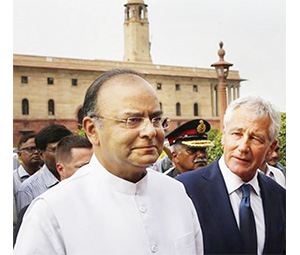
    The US Secretary of Defense Chuck Hagel, on August 9, proposed a trilateral military alliance involving India, Japan and the US, while advising New Delhi that it does not have to choose between Beijing and Washington, but continue to work with both. Hagel who ended his three-day visit to India by proposing the alliance, said “as US and Indian security interests converge, so should our partnerships with other nations”.

    “The United States and India should consider expanding their security cooperation with Japan … We should elevate our trilateral defense cooperation”, Hagel said. Japanese Prime Minister Shinzo Abe has been votary of such an alliance which could turn out to be the most powerful outside the US-led NATO.

    China, which has tense relations with Japan since the World War-II (1939-1945), in the past has protested against such a grouping. In May last year, the Communist Party-run Global Times newspaper reported “India gets close to Japan at its own peril”. Prime Minister Narendra Modi is slated to visit Tokyo at this month-end. Hagel was delivering a lecture, “achieving the potential of the US-India strategic partnership”, to mark 25 years of think-tank Observer Research Foundation in New Delhi.

    He chose to strike a balance in its strategy to bring India and Japan closer. “India need not choose between the closer partnership with America and the improved ties with China,” Hagel advised. In strategic circles, this is being seen as the US understanding India’s point of view which does not see a conflict with China – both nations share a 3,488-km disputed boundary called the Line of Actual Control (LAC). Hagel went on to highlight that China can work “cooperatively” with both India and the US.

    “In our relations with Beijing, both Delhi and Washington seek to manage competition but avoid the traps of rivalry. We will continue to seek a stable and peaceful order in which China is a fellow trustee”, Hagel said, probably fully knowing that his words are bound to resonate loudly in Beijing, Tokyo and Moscow – the last one being India’s trusted allay for five decades. Addressing the issue of the hydrocarbon rich disputed South China Sea, Hagel was candid “We ( India and US ) have a shared interest in maritime security across the region, including at the global crossroads of the South China Sea.

    We also have a shared stake in the security of global energy and natural resource supplies”. China has claimed total sovereignty over the South China Sea and consequently sole rights over the hydrocarbons under the seabed. Indian has gas-oil block off the coast of Vietnam in the same sea and most of its east bound trade passes through these waters. The dispute is pending in the United Nations.

    Hagel reiterated the promise to cooperate with India in co-production, co-development, and freer exchange of technology under the Defence Trade and Technology Initiative (DTTI), saying: “The DTTI now has on the table over a dozen cooperative proposals which would transfer significant qualitative capability, technology, and production knowhow”.

  • Israel vows to destroy Hamas tunnels, deaths spike

    Israel vows to destroy Hamas tunnels, deaths spike

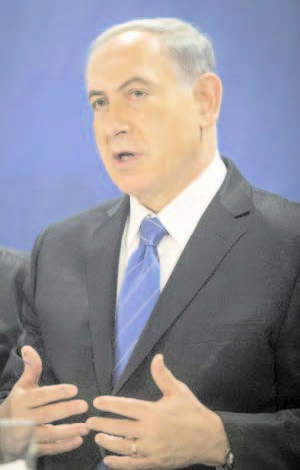
    JERUSALEM (TIP): Israeli Prime Minister Benjamin Netanyahu vowed on Thursday to destroy Hamas’ tunnel network designed for deadly attacks inside Israel “with or without a ceasefire,” as the Palestinian death toll soared past 1,400 — surpassing the number killed in Israel’s last major invasion of Gaza five years ago. Netanyahu’s warning came as international efforts to end the 24-dayold war seemed to sputter despite concern over the mounting deaths.

    The Israeli military said it was calling up an additional 16,000 reserve soldiers to pursue its campaign against the Islamic militants. At least 1,441 Palestinians have been killed, three-quarters of them civilians, since hostilities began on July 8, according to Gaza health officials — surpassing the at least 1,410 Palestinians killed in 2009, according to Palestinian rights groups. Israel says 56 soldiers, two Israeli civilians and a Thai agricultural worker have died — also far more than the 13 Israeli deaths in the previous campaign. As the toll grew, UN high commissioner for human rights Navi Pillay accused both Israel and Hamas militants of violating the rules of war.

    She said Hamas is violating international humanitarian law by “locating rockets within schools and hospitals, or even launching these rockets from densely populated areas.” But she added that this did not absolve Israel from disregarding the same law. The Israeli government, she said, has defied international law by attacking civilian areas of Gaza such as schools, hospitals, homes and UN facilities. “None of this appears to me to be accidental,” Pillay said. “They appear to be defying — deliberate defiance of — obligations that international law imposes on Israel.”

    Pillay also took aim at the US, Israel’s main ally, for providing financial support for Israel’s “Iron Dome” antirocket defense system. “No such protection has been provided to Gazans against the shelling,” she said. At the United Nations, Israel’s Ambassador Ron Prosor responded to criticism of his country, saying: “I think the international community should be very vocal in standing with Israel fighting terrorism today because if not, you will see it on your doorstep tomorrow.”

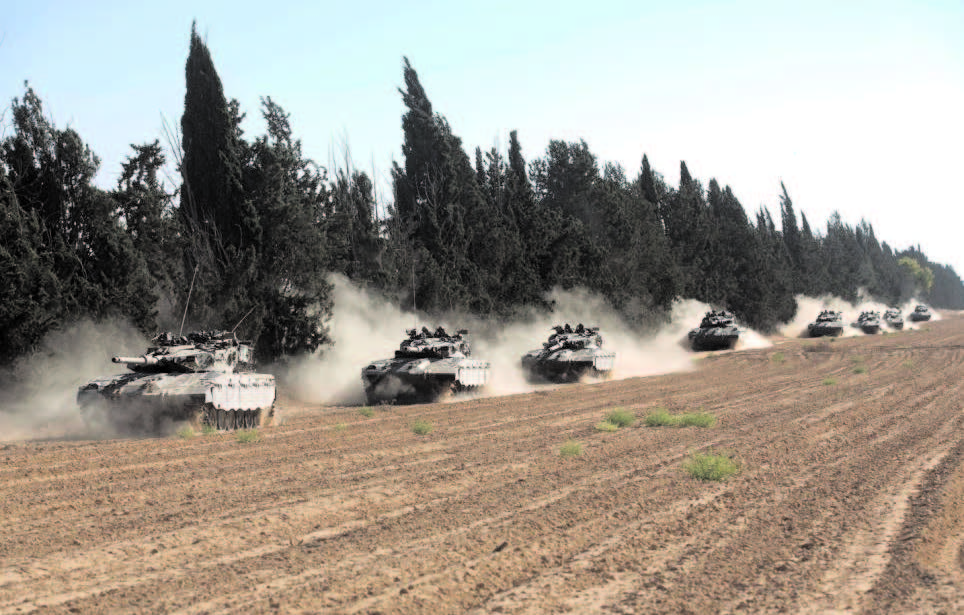
    Israel expanded what started as an aerial campaign against Hamas and widened it into a ground offensive on July 17. Since then, Israel says the campaign has concentrated on destroying cross-border tunnels militants constructed to carry out attacks inside Israeli territory and ending rocket attacks on its cities. Israel says most of the 32 tunnels it uncovered have now been demolished and that getting rid of the remainder will take no more than a few days. “We have neutralized dozens of terror tunnels and we are committed to complete this mission, with or without a cease-fire,” Netanyahu said Thursday in televised remarks. “Therefore, I will not agree to any offer that does not allow the military to complete this important mission for the security of the people of Israel.”

    For Israel, the tunnel network is a strategic threat. It says the tunnels are meant to facilitate mass attacks on civilians and soldiers inside Israel, as well as kidnappings, a tactic that Hamas has used in the past. Palestinian militants trying to sneak into Israel through the tunnels have been found with sedatives and handcuffs, an indication they were planning abductions, the military says. Several soldiers have been killed in the current round of fighting by Palestinian gunmen who popped out of underground tunnels near Israeli communities along the Gaza border.

    Israeli defense officials said the purpose of the latest call-up of 16,000 reserves was to provide relief for troops currently on the Gaza firing line, and amounted to a rotation that left the overall number of mobilized reservists at around 70,000. They spoke on condition of anonymity in line with regulations. However, Israeli officials have also said they do not rule out broadening operations in the coming days. Palestinians have fired more than 2,850 rockets at Israel — some reaching major cities but most intercepted by the Iron Dome defense system. On Thursday alone, more than 100 rockets were fired toward Israeli cities, the army said.

  • UN calls for accountability in Gaza conflict

    UN calls for accountability in Gaza conflict

    UNITED NATIONS:
    With the number of civilians killed in Gaza rising by the day, the United Nations’ top human rights official warned that war crimes may have been committed in the fight between Israel and Hamas — a struggle that shows no signs of waning. At least 1,432 people have been killed in Gaza during the current conflict, according to the Gaza Ministry of Health — a figure that is higher than the 1,417 Palestinians that the Palestinian Center for Human Rights said died in the 22 days of Israel’s Operation Cast Lead, which spanned 2008 and 2009.

    Those killed in the ongoing hostilities — which are tied to the Israeli military’s Operation Protective Edge — include 327 children and 166 women, the Gaza health ministry reports. U.N. High Commissioner for Human Rights Navi Pillay sounded an alarm Thursday, July 31 about the high numbers of civilian casualties, as well as how they’ve occurred. She called for “real accountability considering the increasing evidence of war crimes.” Pillay specifically pointed to the six United Nations schools in Gaza that have been struck, resulting in civilians’ deaths.

    The United Nations has blamed Israel for the strikes, but Israel says its military only responded to fire and did not target the schools. “The shelling and bombing of UN schools which have resulted in the killing and maiming of frightened women and children and civilian men, including UN staff, seeking shelter from the conflict are horrific acts and may possibly amount to war crimes,” Pillay said in a statement. Pillay didn’t excuse the Hamas militants, either. She once again condemned the indiscriminate firing of rockets into Israel, and the placement of military assets close to densely populated areas.

    But the biggest concern appeared to be the shelling of the schools. “If civilians cannot take refuge in UN schools, where can they be safe?” Pillay asked. “They leave their homes to seek safety — and are then subjected to attack in the places they flee to. This is a grotesque situation.” Another top U.N. official, Undersecretary for Humanitarian Affairs Valerie Amos, said there is a need for Israel and Hamas to comply with humanitarian and human rights law. “Each party must be held accountable to international standards; not the standards of the other party,” she said in remarks to the U.N. Security Council.

    The calls for accountability didn’t just come from the United Nations. “Civilian casualties in Gaza have been too high. It is clear the Israelis need to do more” to prevent civilian deaths, Pentagon spokesman Col. Steve Warren told reporters. U.S. Secretary of State John Kerry said he’s hopeful there can be a ceasefire that will bring peace — even temporarily to the region. After more than three weeks of fighting, Israeli Prime Minister Benjamin Netanyahu said Thursday that Israel would complete its goal of destroying Hamas’ network of tunnels with or without a cease-fire.

    Netanyahu said this is just the first phase of the demilitarization of Gaza. Fifty-six Israeli soldiers have died, according to the military, and three civilians have been killed in Israel since the conflict began. Many more citizens have been forced to take shelter, as rockets rained overhead. Still, the level of death and destruction doesn’t compare with what’s happening in Gaza, where health workers are struggling to deal with the relentless stream of dead and wounded.

  • Kerala is the model for inclusive development and governance – K.C. JOSEPH

    Kerala is the model for inclusive development and governance – K.C. JOSEPH

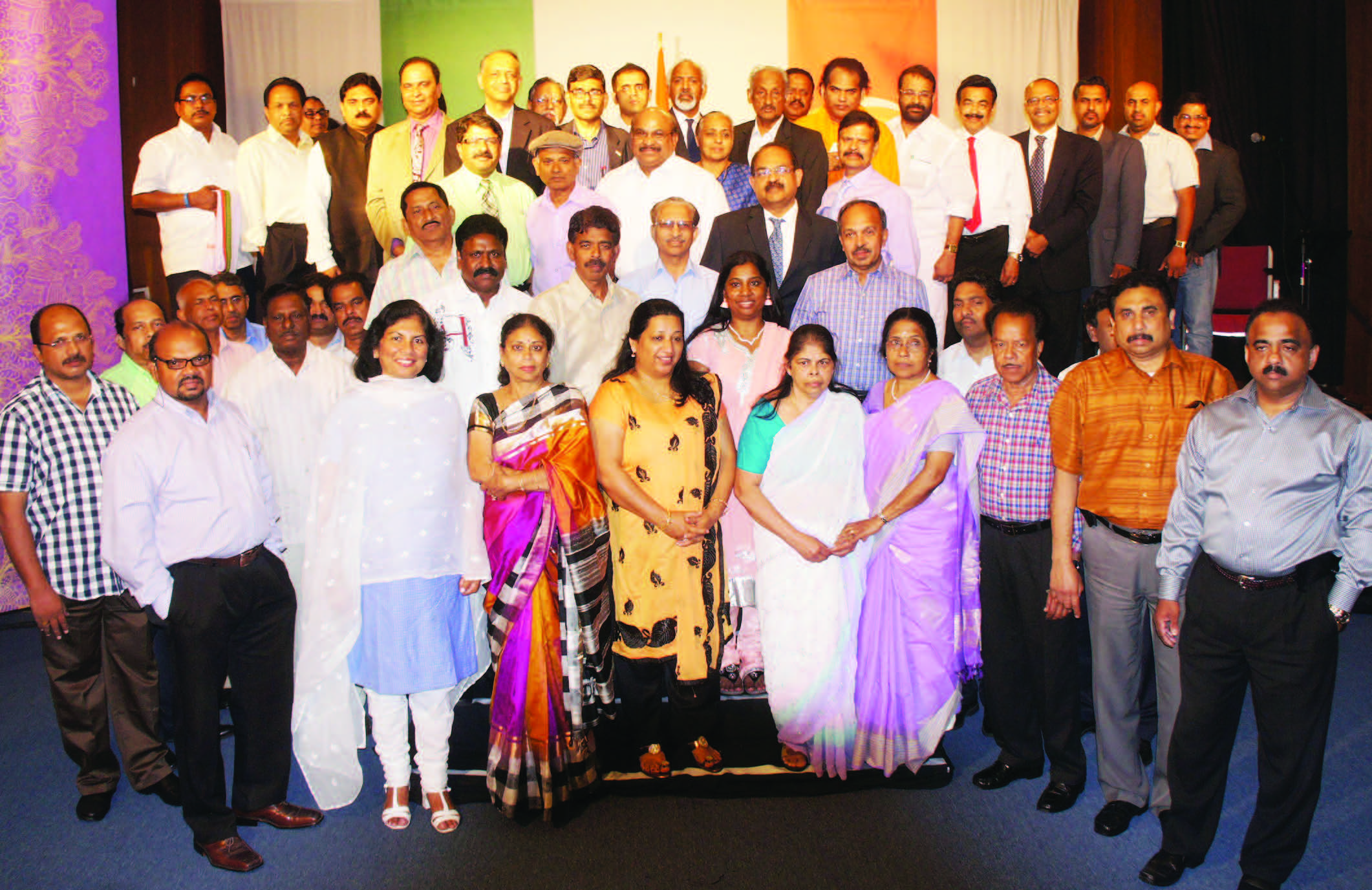
    NEW YORK (TIP): ‘Kerala is the real model for inclusive development and governance that has applied the philosophy of Congress party of uplifting the poor and aiding the minorities and the backward sections of the society thereby achieving the highest rank as the most developed state in India based on the United Nations Human Development Index’ said K.C. Joseph, Minister for Non- Resident Keralites Affairs and Rural development. Joseph was addressing a meeting organized by the Kerala Chapter of Indian National Overseas Congress (I), at Charis Center, in Floral Park, New York. ‘For those who are asking what Congress has done in the last 60years ought to go back and revisit the pre-independent India’ he challenged.

    ‘Congress party had not only led the country to its independence, but also led the green revolution and the IT revolution that catapulted the nation to become the 5th largest economy in the world. People tend to have short memories and the debacle in the last election might have been due to a critical ‘message gap’ across the voting population, primarily the young ones, that was clearly exploited by the opposition’ he added. He also assured the gathering of giving prompt attention to the Pravasee issues and promised full cooperation from the Kerala Government in that regard.

    George Abraham, the Chairman of INOC (I), presiding over the meeting lauded the minister for his 4 decades of selfless service to the people of Kerala and the non-resident Keralites in particular. ‘Mr. Joseph is truly a man of integrity and honor and someone who has an unblemished record in public life and someone we could all be truly proud of” Abraham added. President Juned Qazi thanked Kerala for being a stronghold for the Congress Party and thanked the minister for his efforts on behalf of the non-Keralites across the globe. He also congratulated the new team of leadership for the Kerala Chapter consisting of Thomas T. Oommen as the Chairman and R. Jayachandran as the President. Mr. Harbachan Singh, the General Secretary spoke of the activities of INOC (I), in US over the years and urged the Minister to strengthen the ties with the organization at the state level. He emphasized the formidable strength of the NRIs and how it could fuel the mutual benefit of the Indians in India and USA. Jaychandran in his address urged the Congress loyalists to stay focused in these difficult times for the party and promised to work hard to promote a truly democratic and pluralistic India while strengthening the bond between our two countries.

    A number of guest speakers also spoke on the occasion that included Swami Guru Ratnam Thapasi of Santhigiri, Kottayam DCC President Tomy Kallani, K.A. Francis of Manorama, P.T. Chacko, the press secretary of the Chief Minister of Kerala and Advocate Bino George. INOC (I) National and State leaders also spoke passionately at the session that included Zach Thomas, Jose Charummood, U.A. Naseer, Jose Thekkedom, Leela Maret, Balachandra Panickar, Varghese Thekkekara, Jaison Alex and Guru Dilip ji, Jose Kanatt and many others. They thanked the Minister for the assurance that he would attempt to strengthen the bond of cooperation and understanding between Indians in India and USA. Thomas T. Oommen, the Chairman of Kerala chapter was the Emcee and Jose Charummood expressed the vote of thanks.

  • GAZA DEATH TOLL NEARS 100, ISRAEL DOES NOT RULE OUT GROUND OFFENSIVE

    GAZA DEATH TOLL NEARS 100, ISRAEL DOES NOT RULE OUT GROUND OFFENSIVE

    GAZA/JERUSALEM (TIP): Israel said on July 12 it would not bow to international pressure to end air strikes in Gaza that officials there said had killed almost 100 Palestinians, despite an offer by US President Barack Obama to help negotiate a ceasefire with militants. Asked if Israel might move from the mostly aerial attacks of the past four days into a ground war in Gaza to stop militant rocket fire, Prime Minister Benjamin Netanyahu replied, “we are weighing all possibilities and preparing for all possibilities.” “No international pressure will prevent us from acting with all power,” he told reporters in Tel Aviv a day after a telephone conversation with Obama about the worst flare-up in Israeli- Palestinian violence in almost two years.

    On Friday Washington affirmed Israel’s right to defend itself in a statement from the Pentagon. But defence secretary Chuck Hagel told Israeli defence minister Moshe Ya’alon he was concerned “about the risk of further escalation and emphasized the need for all sides to do everything they can to protect civilian lives and restore calm.” A rocket caused the first serious Israeli casualty — one of eight people hurt when a fuel tanker was hit at a service station in Ashdod, 30 km (20 miles) north of Gaza, and Palestinian militants warned international airlines they would fire rockets at Tel Aviv’s main airport.

    Medical officials in Gaza said at least 75 civilians, including 23 children, were among at least 99 people killed in the aerial bombardments which Israel began on Tuesday. They included 12 killed on July 12. Palestinian President Mahmoud Abbas urged the United Nations security council to order an immediate truce. But Israel said it was determined to end cross-border rocket attacks that intensified last month after its forces arrested hundreds of activists from the Islamist Hamas movement in the occupied West Bank following the abduction there of three Jewish teenagers who were later found killed.

    A Palestinian youth was killed in Jerusalem in a suspected Israeli revenge attack. Israel’s campaign “will continue until we are certain that quiet returns to Israeli citizens”, Netanyahu said. Israel had attacked more than 1,000 targets in Gaza and there were “more to go.” Israel’s military commander, Lieutenant-General Benny Gantz, said his forces were ready to act as needed — an indication of a readiness to send in tanks and other ground troops, as Israel last did for two weeks in early 2009.

    “We are in the midst of an assault and we are prepared to expand it as much as is required, to wherever is required, with whatever force will be required and for as long as will be required,” Gantz told reporters. Western-backed Abbas, who is based in the West Bank and agreed a powersharing deal with Gaza’s dominant Hamas in April after years of feuding, called for international help: “The Palestinian leadership urges the security council to quickly issue a clear condemnation of this Israeli aggression and impose a commitment of a mutual ceasefire immediately,” he said.

    Race for shelter
    After the failure of the latest USbrokered peace talks with Israel, Abbas’s accord with Hamas angered Israel. The rocket salvoes by the hardline movement and its allies, some striking more than 100 km (60 miles) from Gaza, have killed no one so far, due in part to interception by Israel’s partly-US funded Iron Dome aerial defence system. But racing for shelter had become a routine for hundreds of thousands of Israelis and their leaders have hinted they could order troops into the Gaza Strip, a 40-km sliver of coastline that is home to nearly two million people. Some 20,000 reservists have already been mobilized, the army says.

    Hamas’s armed wing said it would fire rockets at Tel Aviv’s Ben-Gurion international airport and warned airlines not to fly to Israel’s main gateway to the world. The airport has been fully operational since the Israeli offensive began and international airlines have continued to fly in, with no reports of rockets from Gaza — largely inaccurate projectiles — landing anywhere near the facility, inland of the coastal metropolis. It is within an area covered by Iron Dome. The Israeli military said it launched fresh naval and air strikes early on Friday on Gaza, giving no further details.

    An air strike on a house in the city of Gaza killed a man described by Palestinian officials as a doctor and pharmacist. Medics and residents said an aircraft also bombed a three-storey house in the southern town of Rafah, killing five people. Later a four-year-old boy killed when a neighbour’s house was targeted by an Israeli raid, a Palestinian hospital official said. Two other people aged 70 and 80 were killed in a missile strike elsewhere in Gaza, the Palestinian Heath Ministry said.

    Homes, many belonging to militants, have been targeted frequently in attacks that have sent Palestinian families living nearby running into the streets in panic. Explosions echo constantly across the densely populated territory. The Palestinian interior ministry in Gaza said an Israeli strike targeted the home of a senior Islamic Jihad leader after darkness fell, at a moment when Israel reported heavy rocket barrages on its southern cities. There were no reports of any casualties in these raids. White streaks arcing into a blue sky, ending abruptly in flashes and dark puffs of smoke marked what the military said was the interception of three rockets over Tel Aviv.

    Lebanese rockets
    Fire was also exchanged across Israel’s northern border. Lebanese security sources said two rockets were fired into northern Israel on Friday but they did not know who had fired them. Israel responded with artillery fire. Palestinian groups in Lebanon have often fired rockets into Israel in the past.

  • Foreign funding and the Maharajas among NGOs

    Foreign funding and the Maharajas among NGOs

    It is speculated that a big portion of foreign funding goes to politicians and bureaucracy as a large number of institutes are owned, controlled and managed by politicians and business houses.

    India is a fascinating country. The number of stock exchanges we have, as per official records is 20, but the number of functioning exchanges is only two. The number of scrips listed on the Bombay Stock Exchanges [BSE] is nearly 9,000, only 3500 of these are traded at least once a year, and the top 50 securities constitute nearly two-third of the turnover. Actually only 250 to 300 are “active” traded scrips. Interestingly, the latest Handbook of Statistics on Indian Securities Market published by the Securities Exchange Board of India (SEBI) has dropped the column for number of scrips listed on the BSE! It is one way to solve the issue of numbers.

    In a similar fashion, we decided to probe the number of not-for-profit or nongovernmental organisations (NGO) in India. Being in the teaching line, we have the habit of probing issues that are otherwise not to be probed at all! Let sleeping dogs lie is the national dictum in such matters. NGOs are also known as Voluntary Organizations (VOs) or Voluntary Agencies (VAs) and more recently as Voluntary Development Organizations (VDOs), Non- Governmental Development Organizations (NGDOs) or Non-Profit Institutions (NPIs).

    There are equivalent names for NGOs available in different Indian languages. In Hindi NGOs are called Swayamsevi Sansthayen or Swayamsevi Sangathan. Prior to the enactment of the Societies Registration Act of 1860, voluntary action was guided mainly by religious and cultural ethos. Subsequently, a series of legislations addressing the non-profit sector were promulgated. The starting point in this respect was Article 19 of the Indian Constitution which recognized a number of civic rights including the right “….to form associations or unions”. It constitutes the legal basis of relevant legal provisions applicable to the non-profit sector.

    There are also non mandatory provisions that allow any group with the intention of starting a non-profit, voluntary or charitable work to organize itself into a legally registered entity. However, given the optional nature of these provisions, there is a large group of voluntary bodies that are not registered. The United Nations Development Programme (UNDP) India and the UN Volunteers(UNV) programme had organized a Forum in January 2006 at UNDP’s Delhi office to discuss the issues relating to implementation of the UN Handbook on Nonprofit Institutions (NPIs) in the System of National Accounts in India.

    The meeting was attended by representatives of the Planning Commission, Ministry of Statistics and Programme Implementation (MoSPI), NGOs, UNV Headquarters, and the Centre for Civil Society Studies of Johns Hopkins University, which is leading the effort to implement the UN NPI Handbook throughout the World. At this Forum, the UN Resident Coordinator and UNDP India Resident Representative stressed the need to implement the UN Handbook in order to capture the contribution of NPIs to the national economy. It was mentioned that the voluntary sector played a significant role in the economic and social change of the country and contributed significantly to the development in both rural and urban areas.

    The Forum therefore urged that India should take suitable steps to implement the UN Handbook on NPIs and compile accounts of NPIs functioning in the country. The National Policy on the Voluntary Sector, adopted in May 2007, presumably under the guidance of the National Advisory Council, pledges to encourage, enable and empower an independent, creative and effective voluntary sector, with diversity in form and function, so that it can contribute to the social, cultural and economic advancement of the people of India.

    It constitutes the beginning of a process to evolve a new working relationship between the government and the voluntary sector, without affecting the autonomy and identity of voluntary organizations (GoI/Planning Commission, 2007). Accordingly, it is expected that the enabling environment will be further enhanced to encourage the development and active engagement of the non-profit sector, including volunteerism, in the community’s affairs and developmental efforts. So we can conclude that at the beginning of the United Progressive Alliance (UPA)’s second term, the so called voluntary or NGO sector was fully ensconced in decision making and fund collecting activities. NGOs can be registered under several regulations or none-the latter is more common.

    The main statutory laws governing the various types of registered non-profit organizations are: The Societies Registration Act, 1860; The Indian Trusts Act, 1882; Public Trust Act, 1950; The Indian Companies Act (Section 25), 1956 Religious non-profit organizations can be registered under: the Religious Endowments Act, 1863; The Charitable and Religious Trust Act, 1920; Mussalman Wakf Act, 1923; Wakf Act, 1954 and the Public Wakfs (Extension of Limitation) Act, 1959 By 2009, a total of 33 lakh societies reported as “Societies registered under the Societies Registration Act/ Mumbai Public Trust Act”.

    Of these, the State Directorates of Economics and Statistics [DESs] were able to collect information for about 22.58 lakh units and computerize the information relating to about 21 lakh units. But when the Central Statistics Office (CSO) sent people searching for these NGOs in the states, it could not trace lakhs of them. Of the roughly 22 lakh NGOs it tried to verify, only 6.95 lakh could be traced. These figures did not include non-profit organizations registered under the Charitable and Religious Trust Act, 1920, which, if counted, would add a few thousands to the number. Then there are non-profit companies under the Indian Companies Act, 1956, and other laws that also help set up trusts.

    The numbers also did not include many groups and associations, which, in common parlance are referred to as mass-based groups, usually operating at block and village levels, at times federating into larger organizations for specific purposes or campaigns. A study by PRIA and Johns Hopkins University suggested, nearly 50% of the total voluntary organizations in India were not registered under any law. The antiquated societies registration law is blind when it comes to classifying these registered groups.

    It treats all registered societies the same way. These numbers include societies that run hugely profitable schools, colleges, hospitals and sports bodies in the country. Remember, the Board of Control for Cricket in India (BCCI) is also an NGO, registered under the Tamil Nadu Societies Registration Act. The Confederation of Indian Industries (CII) too is an NGO, under the law.

    The Major Findings from the CSO Survey are as follows:

    The CSO’s study covered only the societies registered under the Societies Registration Act 1860/Bombay Public Trusts Act, 1950 and companies Registered under section 25 of Indian Companies Act, 1956. Data available from the first phase shows that there are about 31.7 lakh NPIs registered in India and that 58.7% of these are located in rural areas. A majority of NPIs are involved in community, social and personal services, cultural services, education, and health services. The number of NPIs formed after 1990 has increased manifold. This is the post economic reform period when global powers began to show interest in India.

    There were only 1.44 lakh societies registered till the year 1970, followed by 1.79 lakh registrations in the period from 1971 to 1980, 5.52 lakh registrations in the period from 1981 to 1990, 11.22 lakh registrations in the period from 1991 to 2000, and as many as 11.35 lakh societies were registered after 2000. Since there is no clause in the Act for the de-registration of defunct societies, the first phase of the survey results give number of societies and their distribution on the basis of records available with the registering authorities. About 18 lakh societies have been visited during the second phase, i.e. 57.6% of the registered societies.

    Out of these, results are available for 4.65 lakh. The top three sectors where these societies were engaged is as follows: engaged in Social Services (35%), followed by Education Research (21%), and Culture Recreation (15%). The top three activities account for 71% of the registered societies. The data on total work force includes volunteers and paid workers. Out of the 144 lakh work force, only 11 lakh are paid workers. The CSO used the sum of their operational expenditures to come to a value of their economic output at a whopping Rs41,292 crore! Non Profit Institutions are also registered under the Indian Companies Act (Section 25), 1956.

    The financial data in respect of 2,595 companies listed with Ministry of Corporate Affairs has been obtained and analyzed. However, no information could be obtained in respect of the workforce of these companies and activities/purposes in which they are involved. CSO decided to limit the coverage to the Societies registered under Societies Registration Act 1860, Mumbai Trust Act and the Indian Companies Act (Section 25), 1956. This is because a majority of the NPIs are registered under Societies Registration Act 1860. This also means that NGOs under various religious non-profit organisations were excluded and they constitute a large number. The study found that in most States, the provision of submitting financial statements is not strictly enforced. Even if societies file financial statements with the registrar’s office, there is no mechanism to maintain this database.

    Maharajas among NGO’s:

    Maharajas among NGO’s: A category of NGOs are registered with Ministry of Home Affairs -under Foreign contributions regulations Act [ FCRA] -These can be called Euro or Dollar NGOs who get funds from private charities as well as Government organizations abroad. The salient features for 2011-2012 are as follows: I. A total of 43,527 Associations have been registered under the FCRA until 31 March 2012. During 2011-12, as many as 2001 associations were granted registration and 304 associations were given prior permission to receive foreign contributions. II. 22,702 Associations reported a total receipt of Rs11,546.29 crore as foreign contributions. [Under or non-reporting is common]

    TRENDS OVER LAST 10 YEARS

    Year No. of Registered Associations No.of Reporting Associations

    Amount of Foreign Contributions
    [Rs Crore]
    2002-2003
    26404
    165905046.51
    2003-2004
    2835117145
    5105.46
    2004-2005
    3032118540
    6256.68
    2005-2006
    3214418570
    7877.57
    2006-2007
    3393718996
    11007.43
    2007-2008
    3480318796
    9663.46
    2008-2009
    3641420088
    10802.67
    2009-2010
    38,43621,508
    10,337.59
    2010-201140,575
    22,735
    10,334.122011-2012
    43,527
    22,70211,546.29
    Total from 2002-2012
    97383.531. Source: Ministry of Home Affairs

    Foreigners Division, FCRA wing
    III. Delhi reported the highest receipt of foreign donations at Rs2,285.75 crore, followed by Tamil Nadu (Rs1,704.76 crore) and Andhra Pradesh (Rs1,258.52 crore).
    IV. Among districts, Chennai reported the highest foreign donations (Rs889.99 crore), followed by Mumbai (Rs825.40 crore) and Bangalore (Rs812.48 crore).
    V. The list of donor countries is headed by the US (Rs3,838.23crore), followed by UK (Rs1,219.02 crore), and Germany (Rs1,096.01 crore).
    VI. The list of foreign donors is topped by the Compassion International, US (Rs183.83 crore), followed by the Church of Jesus Christ of Latter day Saints, US (Rs130.77 crore), and the Kinder Not Hilfe (KNH), Germany (Rs51.76 crore).
    VII. World Vision of India, Chennai, Tamil Nadu (Rs233.38 crore) received the highest foreign donations among NGOs, followed by the Believers Church India Pathanamthitta, Kerala (Rs190.05 crore) and Rural Development Trust, Ananthapur, AP (Rs144.39 crore)
    VIII. The highest foreign contribution was received and utilized for–Rural Development (Rs945.77 crore), Welfare of Children (Rs929.22 crore), Construction and Maintenance of school/colleges (Rs824.11 crore) and Research (Rs539.14 crore). Activities other than those mentioned above received Rs2,253.61 crore. Interestingly establishment expenses [Building/ cars/ Jeeps/ Computers/Cameras etc.] constituted the bulk of expenditure in most of the NGOs.

    Need of the Hour:
    In the context of the Intelligence Bureau’s (IB) report on antidevelopment activities of many foreign funded NGOs, it may be time to constitute a commission of experts including those from the IB to comprehensively study this sector. Also, to use experiences of other countries like Russia, China and the US in dealing with NGOs and formulating regulation to govern them. Perhaps, it is also time to re-look the foreign funding of NGOs in the context of compulsory CSR contributions introduced in the Companies Act 2013-since we are no more the white man’s burden!

    (The author is Professor of Finance at IIM-Bangalore. He sits on the advisory boards of SEBI and the RBI.)

  • MILITANTS TAKE IRAQI GASFIELD TOWN

    MILITANTS TAKE IRAQI GASFIELD TOWN

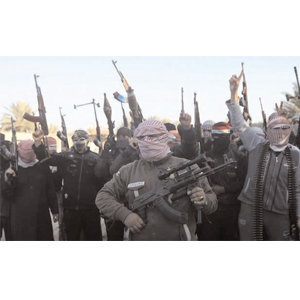
    BAGHDAD (TIP): Militants took a town an hour from Baghdad that is home to four natural gasfields on June 26, another gain by Sunni insurgents who have swiftly taken large areas to the north and west of the Iraqi capital. Iraq’s presidency said a session of parliament would be held on July 1, the first step to forming a new government that the international community hopes will be inclusive enough to undermine the insurgency. The overnight offensive included Mansouriyat al-Jabal, home to the gas fields where foreign companies operate, security forces said.

    The fighting threatens to rupture the country two and a half years after the end of US occupation. The insurgents, led by the hardline ISIS but also including other Sunni groups blame PM Nouri al-Maliki for marginalizing their sect during eight years in power and he is fighting for his job. Three months after elections, a chorus of Iraqi and international voices have called for the government formation process to be started, including Iraqi’s most influential Shia Grand Ayatollah Ali al-Sistani.

    The presidency issued a decree on Thursday for a parliament session on July 1, state television said. Parliament will then have 30 days to name a president and 15 days after that to name a prime minister although the process has been delayed in the past, taking nine months to seat the government in 2010. Maliki has dismissed the call of mainly Sunni political and religious figures, some with links to armed groups fighting Maliki, for a “national salvation government” that would choose figures to lead the country and, in effect, bypass the election. Northern Iraq’s Mosul fell to Sunni insurgents on June 10 and took Tikrit city two days later.

    Kurdish forces moved into Kirkuk on June 11 and now control the oil city. Sunni fighters want to form an Islamic Caliphate from the Mediterranean Sea to Iran. They control a border post with Syria and have stolen US-made weapons from Iraqi forces. Secretary of state John Kerry pressed Iraqi officials to form an “inclusive” government during a visit this week and urged leaders of the autonomous Kurdish region to stand with Baghdad against the onslaught.

    The United Nations has said that more than 1,000 people, mainly civilians, have been killed during the Sunni insurgents’ advance in Iraq. The figure includes unarmed government troops machine gunned in mass graves by insurgents, as well as several reported incidents of prisoners killed in their cells by retreating government forces. In addition to the bloodshed, close to a million people have been displaced in Iraq this year. Amin Awad, director of Middle East and North Africa bureau for the UN refugee agency, called Iraq on June 25 “a land of displacement”.

  • Hafiz Saeed slams ‘terror’ label for Jamat-ud-Dawa, says it serves people

    Hafiz Saeed slams ‘terror’ label for Jamat-ud-Dawa, says it serves people

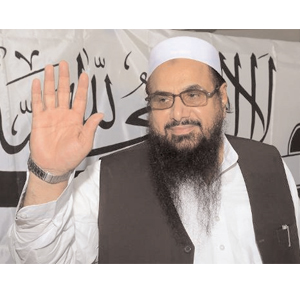
    LAHORE, PAKISTAN (TIP): The leader of a Pakistani Islamist organization that was labeled a terror group and slapped with economic sanctions by the United States denied having any links to militancy on June 26 and vowed to hold protests. Hafiz Muhammad Saeed, who is chief of Jamat-ud-Dawa (Organisation for Preaching), insisted his group was a charity and not a front for the Lashkar-e-Taiba (LeT) militant outfit which carried out the 2008 Mumbai attacks. “Jamat-ud-Dawa (JuD) has no link whatsoever with Lashkar-e-Taiba, which is a resistance wing in Kashmir,” he told a press conference in the eastern city of Lahore.

    “It is an independent Pakistani organization taking part in the promotion of education and relief operations. It is only serving the Pakistani people,” added Saeed. JuD is listed as an alias of LeT by the United Nations, which has also labelled Saeed an abettor of Al Qaeda and brought sanctions on him, though he has never been convicted of a crime inside Pakistan. Apart from the Mumbai attacks, which killed 166 people, LeT is active against Indian forces in Kashmir and was blamed for an attack on the Indian consul in Herat, Afghanistan in May. The US State Department announced the amendments to its Foreign Terrorist Organization list on Tuesday, where it also listed three further groups as fronts for LeT and brought sanctions against two more LeT operatives.

    The US Treasury said Nazir Ahmad Chaudhry, one of the two hit with sanctions, has been a senior leader and strategist for LeT since the early 2000s, while the second, Muhammad Hussein Gill, is an LeT founder and its chief financial officer. Saeed, 64, produced both men in front of the media and vowed to protest the decisions against them. “The designation of two JuD members is condemnable and we will hold protest rallies against the decision on Friday.

    “Americans don’t have any independent thought… they are stupid. They have been unleashing a negative propaganda campaign against us at the behest of India,” he added.A foreign office spokeswoman said the US sanctions would have no bearing any Pakistani response. “An action by any state individually does not have any bearing or obligations on Pakistan,” she said.

  • National imperatives in a complex world

    National imperatives in a complex world

    A well-thought-through response combining intelligence, the internal security apparatus and mature political initiatives are called for. The design and execution of a response that is successful will need to ensure that the response itself does not exacerbate the problem, as would appear to be the case so far. Use of a sledge hammer either leaves a crater or results in diffusion and dispersion even more difficult to address”, says the author.

    Adecisive electoral mandate provides just the opportunity required for a comprehensive review of the national security architecture long overdue. It gives the Prime Minister the freedom and authority to evaluate existing systems. Considered judgment will be needed on the efficacy of existing systems and structures, particularly of their cohesiveness and efficient functioning. Should the “review” so warrant, new systems capable of assessing threats and delivering appropriate responses to challenges to the nation’s security will need to be put in place early before existing systems are tested.

    New threats

    The nature of threats to national security is fast altering. These emerge inter alia from the changing nature of violence in troubled hotspots like Afghanistan, Yemen, from Syria and Iraq where there are deepening and exploding sectarian fault lines, from transnational organized crime like piracy and terrorism, weapons of mass destruction, cyber security and from instability in fragile states and cities. The BJP’s election manifesto acknowledges the comprehensive canvas of national security to include military security, economic security, cyber security, energy, food, water and health security and social cohesion and harmony.

    In the BJP’s view, the lack of strong and visionary leadership over the past decade, coupled with multiple power centers, has led to a chaotic situation. Clarity is required on the factors that have led to this. Revisiting the genesis of the national security architecture as it has evolved, including prior to 1998 when the first National Security Advisor (NSA), Brajesh Mishra assumed office is instructive. It was clear all along that crafting a national security architecture on a Cabinet Parliamentary model would pose difficulties.

    Members of the Cabinet, entrusted with responsibility for defense, external affairs, home and finance invariably are senior political figures. As members of the Cabinet Committee on Security (CCS), given their seniority and influence, there was anticipation they could operate as independent silos. Experience has shown there are in-built institutional constraints to correctly assess emerging threats in an evolving and fastchanging strategic landscape by functionaries within a silo. The institution of a National Security Adviser (NSA) has worked best in a Presidential system, such as in the United States, where the NSA draws authority from the President as the chief executive.

    This apprehension has been validated over the past decade and a half, variations in the personality of individuals notwithstanding. The strategic community, both within the country and outside has looked to the NSA to obtain the government’s line on issues central to the nation’s security. The ability to respond quickly, appropriately and, if necessary, decisively to threats to national security, imminent and real is of vital essence. This has, however, not always been the case.

    The “review” being proposed could catalogue the challenges to national security over the past decade and a half and critically examine them as case studies to evaluate the efficacy of our response. Caution needs to be exercised. Not always is the failure to respond appropriately due to institutional constraints. Weak political leadership in the past has also been an important factor.

    The attack by the Haqqani network on our Embassy in Kabul was anticipated by the CIA but could not be prevented. By the time its deputy director reached Islamabad, the terror machine had struck. No self-respecting nation can allow itself to be repeatedly wounded. Unless retribution is demonstrated, further attacks will follow.

    Bifurcation of two jobs

    The first NSA’s success was partly due to the fact that he doubled up as the Principal Secretary and was known to enjoy the full confidence of the Prime Minister. Healthy disagreements between the first NSA and the then External Affairs Minister, in spite of both being familiar with issues relating to defense, intelligence and diplomacy, the three components of national security, viewed holistically, was, however, an early pointer of the shape of things to come. The decision to bifurcate the two jobs for a short period under UPA-I is well documented for its shortcomings. Even Mani Dixit, the tallest professional of his generation, could not manage the pressures from the EAM and turf battles within the PMO.

    The performance of successors largely content “to push files”, succeeded or failed depending on how weak or strong the silos were in defense, external affairs and home. The NSA’s influence fluctuated particularly in relation to the incumbent in the Home Ministry. In the absence of full play in the areas of defense and home, even a talented professional ended up as no more than a foreign policy advisor. The portfolios of home, defense, finance and external affairs now have incumbents who, in terms of seniority within the BJP, have the benefit of several decades of association with the Prime Minister.

    This gives them clout which no civil servant can ever hope to acquire. Battles for turf are central to the functioning of any democracy. Weak political leadership in the Ministry of External Affairs (MEA) over the last decade, in spite of a first-rate Foreign Service has led to the relative weakening of the MEA. This weakness has been most manifest in relation to the conduct of our bilateral relationships in our immediate neighborhood which are in varying degrees of disrepair, as are our relations with China and the United States.

    The policy of acquiescence with China will need to be shed at the earliest and more clinical and realistic assessments put in place. Deep incursions into our territory cannot continue to be explained away in terms of an un-demarcated border. With the United States, the transactional nature of the relationship resulting from absence or insufficient attention in Washington has been more than matched by our own shortsightedness. It will be easier to deal with China, if our relations with the United States are perceived to be on the upswing.

    Focusing on Japan alone will place us in an untenable situation. The game changer will be the twin focus on US and China. In terms of military strength, there has been lack of clarity in what capability we are seeking. Most war games and doctrines are still addressing either 1971- type scenarios or a tactical nuclear weapons exchange. It is a sad reflection on the state of play that we are the biggest importers of conventional armaments, even after acquiring strategic capability.

    Rationalization of armed forces

    Every other country, including China and now the United States have “rationalized” their Armed Forces, a euphemism for reducing. On the other hand, we are seeking creation of three more Commands – Special Forces, Aerospace and Cyberspace. The Central Army and Southern Air force Commands have limited roles yet, we keep increasing our “tails and turf”. There is an urgent need to rationalize our defense thinking and structures as part of an overall national security review.

    In 1965, the Government of India had commissioned Arthur D. Little, an American consultancy firm to make recommendations on defense production in India. Many of their recommendations, including on the involvement of the Indian private sector, are still valid. It should not be difficult given the visible and available political will to break through the dependence on imports to modernize our own defense production structures using FDI and an infusion of technology. The present system is unsustainable.

    Resources are not only limited but the evolving situation in Iraq could place us in dire straits. Every dollar increase in the benchmark price of brent crude results in an additional liability of Rs 3,000 to 5,000 crore. The producers of oil are salivating at the prospect of oil prices touching new highs. This could spell gloom and even doom for importing countries, particularly those heavily dependent on imports, the price having gone up from $106 to $115 in just five days.

    Shoring up security
    ● In 1965, the Government of India had commissioned Arthur D. Little, an American consultancy firm to make recommendations on defense production in India. Many of their recommendations, including on the involvement of the Indian private sector, are still valid.
    ● Given the political will, it will be easy to break through the dependence on imports to modernize our own defense production structures using FDI and an infusion of technology.
    ● Along with an evaluation of existing systems, a comprehensive review of all security challenges emanating from developments outside our borders is imperative.
    ● We are the biggest importers of conventional armaments, even after acquiring strategic capability. Every other country, including China and now the United States have “rationalized” their Armed Forces The attack by the Haqqani network on our Embassy in Kabul was anticipated by the CIA but could not be prevented. Along with an evaluation of existing systems, a comprehensive review of all security challenges emanating from developments outside our borders is imperative.

    Entities known to be inimical to India’s interests, particularly those enjoying some form of support from agencies of the state, if not outright patronage, in a few countries in our immediate neighborhood would readily suggest themselves and constitute the relatively easier part of this exercise. The ability of these entities to make common cause with sections of our own population whose alienation quotient has been enhanced by internal mismanagement is easy to identify if not easy to counter.

    A well-thought-through response combining intelligence, the internal security apparatus and mature political initiatives are called for. The design and execution of a response that is successful will need to ensure that the response itself does not exacerbate the problem, as would appear to be the case so far. Use of a sledge hammer either leaves a crater or results in diffusion and dispersion even more difficult to address. The BJP’s election manifesto separately calls for a study of India’s nuclear doctrine and its updating to make it relevant to current challenges.

    (The author, a retired diplomat, was till early 2013 India’s Ambassador and Permanent Representative to the United Nations in New York. He is presently Non- Resident Senior Adviser, International Peace Institute, New York. He has recently joined the BJP).

  • Indian Health minister to meet US counterpart on first tour abroad

    Indian Health minister to meet US counterpart on first tour abroad

    His visit aims to evaluate the progress of the US-India Health Initiative which was launched in 2010

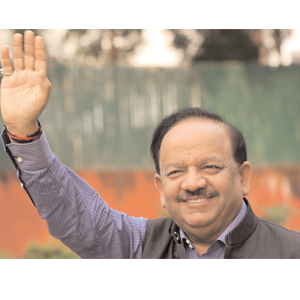
    DALLAS (TIP): India’s Health Minister, Dr. Harsh Vardhan began a five-day US visit on Tuesday, June 24. He will meet his counterpart and explore scope for cooperation and collaboration. Vardhan, on his first official tour abroad since he assumed office, will meet the new US Secretary of Health and Human Services, Sylvia Mathews Burwell, to evaluate the progress of the US-India Health Initiative, launched in 2010. He will attend meetings to discuss steps to consolidate the collaboration between the Indian government, United States Agency for International Development, United Nations Children’s Fund and others in ensuring an Acquired Immune Deficiency Syndrome (AIDS)-free generation.

    Vardhan said, “We are on the cusp of exciting possibilities. I am looking to talks seeking collaboration on global health security, telehealth and preventive health care.” Vardhan had on Monday called on Prime Minister Narendra Modi to tell him on the agenda of his meetings. He will also attend the annual India-USEthiopia initiative against child mortality, Call to action: A promise renewed. Health ministers from 25 countries are set to attend the meeting. Vardhan will deliver the keynote address.

    He will deliver a keynote address at the 32nd annual convention of the American Association of Physicians of Indian Origin (AAPI) in San Antonio, Texas, on Saturday. AAPI is the largest forum of ethnic medical professionals in the US with 138 local chapters. Website Swastha India, a joint initiative of AAPI and the Indian government, will also be launched. Vardhan said, “We are exploring more avenues for engaging AAPI in research, skill development and strengthening health care.” “The prime minister is engaged with AAPI and this association will be pursued to achieve health outcomes on the ground.”

  • Fresh fighting erupts on DR Congo-Rwanda border

    Fresh fighting erupts on DR Congo-Rwanda border

    KINSHASA (TIP): Rwandan and Congolese troops traded heavy weapons fire on June 12 in a second day of fighting on the border between the two neighbours which have been locked in a decades-long dispute. After the morning clashes abated, rival troops were engaged in a staredown from afar in the mountainous Kanyesheza region which straddles the border, a Congolese administrative official said on condition of anonymity.

    An AFP reporter on a press trip to the area with the Rwandan army and foreign defence attaches said the combat zone — some 20 kilometres (12 miles) north of the border towns of Goma in the DRC and Gisenyi in Rwanda — was calm on Thursday afternoon. “There were heavy arms fire, explosions, rockets,” which lasted for half an hour, said a resident in the area of the morning clashes. Another resident on the Congolese side of the frontier said about “30 families” were fleeing the border regions after the fighting.

    – Trading blame –

    senior Congolese military officer said that Rwandan troops had attacked their positions, but a Rwandan military source, also speaking anonymously, told AFP that there had “not been serious clashes, they were sporadic firings” of heavy weapons. The latest cross-border clash came a day after the two sides exchanged automatic weapons fire, with each blaming the other for the outbreak of violence. Rwanda’s army on Thursday displayed five bodies to journalists which it said were Congolese soldiers killed in the fighting on Wednesday, an AFP reporter said.

    Lambert Mende, a spokesman for the Congolese government, accused Rwanda of lying about the deaths of its soldiers. “Rwandans have taken corpses from hospitals, or killed poor peasants — perhaps Congolese, Rwandan maybe — just to back up their story,” he said. The DRC has said only one of its soldiers was killed. The Congolese army said the conflict started after one of its soldiers was kidnapped by Rwandan troops who crossed into its North Kivu province. However Rwanda said Congolese troops crossed into its territory and opened fire on Rwandan soldiers. “We are only seeking to reinforce our positions,” North Kivu governor Julien Paluku said.

    A resident of a village on the road from Goma to Kanyesheza, said he saw mounted heavy machine-guns and three army tanks roll past on June 12 morning.Each side denied returning fire when shelled by the other.In an apparent sign of goodwill, the Rwandan and Congolese armies sent a team from a Joint Verification Mission (JVM) they have formed with the United Nations to carry out checks in the conflict zone, a JVM official who monitors the border said.

    Both the JVM and a western military source confirmed the deaths of the five Congolese soldiers. No deaths were reported in Thursday’s fighting. Farhan Haq, a spokesman for the UN Secretary- General Ban Ki-moon, said diplomatic efforts were under way to “avoid unnecessary tension” and to encourage the DRC and Rwanda to “continue furthering good neighbourly relations.”

    – Strained relations –

    have been strained for decades between the neighbours, with the DRC accusing Rwanda of seeking to destabilise it by backing various militia which have risen up against Kinshasa.Much of the tension arises from the presence in the eastern DRC of Rwandan Hutu rebels in the Democratic Forces for the Liberation of Rwanda (FDLR).This armed movement’s older members are accused of taking part in the 1994 genocide of ethnic Tutsis in Rwanda which left an estimated 800,000 dead in three months of slaughter.

  • Sri Lanka reacts strongly to Jayalalithaa’s genocide remarks

    Sri Lanka reacts strongly to Jayalalithaa’s genocide remarks

    COLOMBO (TIP): Sri Lanka on Thursday reacted strongly against the genocide remarks made by Tamil Nadu chief minister J Jayalalithaa against the country over the Tamil issue and said it will make formal objections to India over her comments. “It is very much in keeping with the character of this politician to make wild allegations against Sri Lanka,” the government spokesman and minister of information Keheliya Rambukwella told reporters.

    He was reacting to the Tamil Nadu chief minister’s memorandum to Prime Minister Narendra Modi which carried word “genocide” on the Sri Lankan Tamil issue. She had demanded that India should sponsor a resolution in the United Nations condemning the genocide in Sri Lanka. “I request that India should sponsor a resolution in the United Nations condemning the genocide in Sri Lanka and to hold to account all those responsible for the genocide and thereby render justice to Tamils in Sri Lanka,” the Tamil Nadu chief minister had said in the memorandum submitted to the Prime Minister.

    “It is very wrong to use words like genocide to describe what happened in Sri Lanka,” he said. Rambukwella said Sri Lanka was to make formal objections to the Indian government over Jayalalithaa’s comments. Sri Lanka is happy that Modi won outright control of the Lok Sabha without having to rely on the support from Jayalalithaa. “We are happy that there is a very stable government in India.

    That is what I said even before the election, that a stable government in Delhi is good for Sri Lanka. Today Jayalalitha does not have the same influence over New Delhi as she would have had before. We are happy about that,” Rambukwella stressed. “We hope Prime Minister Modi will stand on the right side, that is Sri Lanka,” Rambukwella said.

  • Permanent Mission of India to the UN hosts International Day of UN Peacekeepers

    Permanent Mission of India to the UN hosts International Day of UN Peacekeepers

    NEW YORK (TIP): To commemorate the International Day of United Nations Peacekeepers on 29 May, the Permanent Mission of India to the United Nations hosted a somber function for all the recipients of the 106 Dag Hammarskjold Medals awarded this year by the United Nations.

    The function was held in the Dag Hammarskjold Library Building of the United Nations Headquarters in New York. The eight Indian peacekeepers, who laid down their lives while serving on United Nations Peacekeeping Operations, were specially remembered on this occasion.


    14
    Ambassador Asoke Kumar Mukerji, Permanent Representative of India to the UN speaking to the UN Peace Keepers to commemorate the International Day of United Nations Peacekeepers on 29 May

    In April 2013, five Indian peacekeepers, Lt- Col Mahipal Singh, Naik Subedar Shiv Kumar Pal, Havildars Hira Lal and Bharat Sasmal, and Lance Naik Nand Kishore Joshi laid down their lives in protecting the mandate of the United Nations Mission in South Sudan (UNMISS). They were part of a 32-member Indian troop contingent escorting five UN vehicles from Gumruk to Bor in the volatile state of Jonglei of South Sudan.

    The convoy was ambushed by 200 members of an armed militia, who used rocket propelled grenades and small arms to attack the convoy. Led by Lt-Col Mahipal Singh, the Indian peacekeepers engaged in a fierce battle which lasted for over an hour while protecting the convoy.

    Five injured Indian soldiers, including a Captain, were subsequently evacuated to the capital city of Juba in three UN helicopters for medical treatment. A UN spokesman said that the fierce resistance put up by Indian peacekeepers forced the rebels to withdraw and saved the lives of many of the civilians. In July 2013, UN Security Council Resolution 2109 called on the Government of South Sudan to complete its investigations in a swift and thorough manner and bring the perpetrators to justice.

    In December 2013, former Indian rower Subedar Dharmesh Sangwan, an Asian Games silver medallist, Asian Championship gold medal winner, and rated among the best rowers India has ever produced, along with Subedar Kumar Pal Singh, were the two Indian peacekeepers killed in cross-fire while protecting civilians sheltering in a United Nations compound in Akobo, South Sudan.

    A third Indian peacekeeper, who received a chest wound, was evacuated to the UNMISS facility in Malakal. 43 Indian peacekeepers, six UN police advisers and two UN civilian staffers were present at the base when an estimated 2,000 heavily armed youth surrounded the UN base in Akobo, and opened fire on the civilians seeking refuge inside.

    In December 2013, UN Security Council Resolution 2132 condemned the attack on the Indian peacekeepers, and stressed that efforts to undermine UNMISS’ ability to implement its mandate and attacks on United Nations personnel would not be tolerated. Sepoy Rameshwar Singh died in February 2013, while on escort duty in North Kivu as part of the Indian peacekeeping contingent of MONUSCO, the United Nations Peacekeeping Mission in the Democratic Republic of Congo.

    At India’s initiative, and in a symbolic tribute to those who have collectively given their lives in pursuit of international peace and security, the photographs of the 8 Indian peacekeepers were placed alongside a goldframed board, listing all the 106 peacekeepers from Member States of the United Nations who had lost their lives during the past year.

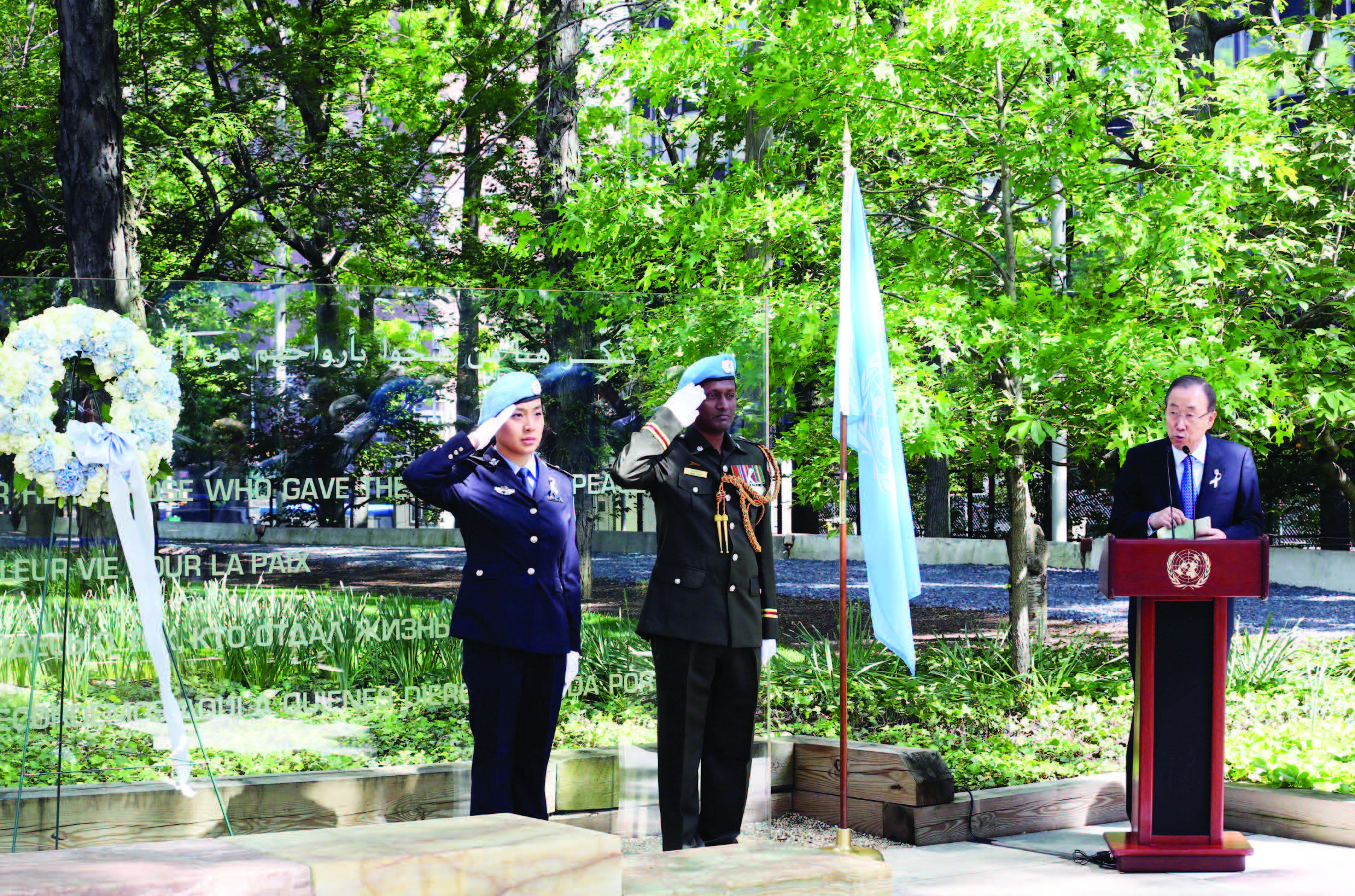
    Candles were lit in their memory on the occasion to demonstrate the solidarity of the United Nations peacekeeping community, and the collective debt owed by the international community to these brave souls. Earlier in the day, India’s Permanent Representative to the United Nations, Ambassador Asoke Kumar Mukerji, joined other Permanent Representatives and Military Attaches of Member States at a commemorative ceremony at the UN Peacekeepers Memorial on the North Lawn in the precincts of the United Nations Headquarters in New York.

    The UN Secretary General oversaw the wreath-laying at the Memorial for the first time. The proposal for this commemoration had been made by India, supported by several other Member States of the United Nations, in the C34 Peacekeeping Committee meeting, and endorsed by the 5th (Budget) Committee of the United Nations and the UN General Assembly last year.

  • UN security council renews mission in Somalia

    UN security council renews mission in Somalia

    UNITED NATION (TIP): The UN security council on May 29 extended a UN mission in Somalia for one more year to continue providing “good offices” in the country’s peace and reconciliation process. In an unanimously adopted resolution, the 15-member Council commended the United Nations Assistance Mission in Somalia (UNSOM) for its first 12 months of operation and decided to “extend UNSOM’ s mandate for a period of 12 months”, Xinhua reported.

    According to the resolution, the mandate of UNSOM includes providing United Nations “good offices” functions in support of peace and reconciliation; providing advice on peace- and state- building; coordination of international donor support; government capacity building on human rights; and human rights monitoring and reporting. It also condemned “in the strongest terms” recent terrorist attacks perpetrated by Al-Shabaab in Somalia and the region, underlined the importance of holding perpetrators to account.

    and reiterated that terrorist attacks will not lessen its resolve to support the peace and reconciliation process in Somalia. Expressing “deep concern” about the humanitarian situation as well as the reports of human rights violations in the country, the council members urged the Somali government to ensure that all perpetrators of serious violations of international humanitarian and human rights laws are held accountable. On May 2, 2013, the security council unanimously voted to establish a new UN Assistance Mission to be based in the national capital of Mogadishu. The mandate of this political mission began June 3. Somalia has been torn asunder by factional fighting since 1991 but has recently made progress towards stability

  • UN urges Lebanon election as soon as possible

    UN urges Lebanon election as soon as possible

    UNITED NATIONS (TIP): The UN security council is urging that Lebanon hold its presidential election “as soon as possible.” A statement issued May 29 by the council expresses disappointment that the election didn’t take place on time, and it calls on Parliament to “uphold Lebanon’s longstanding democratic tradition” and make sure the election occurs “without external interference.” Lebanon’s last president, Michel Suleiman, completed his six-year term on Sunday without a replacement, plunging the country into a political vacuum.

  • Reps. Joe Crowley (D-NY) and Ami Bera (D-Calif.) commend elections in India

    Reps. Joe Crowley (D-NY) and Ami Bera (D-Calif.) commend elections in India

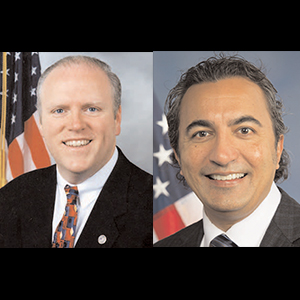
    NEW YORK (TIP): Rep. Joe Crowley (D-NY)who has represented New York City Congressional districts since 1999 and Rep.Ami Bera (D-Calif.) who has represented California’s 7th Congressional District since 2013, have commended elections in India. “At a time when democracy is under pressure in many corners of the globe, officials are currently tallying votes in the largest exercise of democracy in the world: the elections in India.

    “The numbers are staggering. In an election that took place over several weeks, nearly 815 million voters were eligible to vote at 930,000 polling locations. Indians cast their ballots for control of the Lok Sabha, Parliament’s lower house and the body that chooses the country’s prime minister. “To put this in perspective, the number of eligible voters in the Indian election surpasses the entire population of Europe.

    The number of new voters alone in India exceeds 100 million – just shy of one third of the entire population of the United States. It’s extraordinary to see a country of more than one billion people that could be the world’s most populous nation within a decade, carrying out another election. The world is truly watching history being made. “India’s commitment to democracy is something the United States, as well as other nations, should remember, acknowledge and respect.

    That respect is returned by the Indian people — our country’s common values are one reason why a clear majority of Indians, from all generations and educational levels, hold high opinions of the U.S., according to a recent Pew Research Center Survey. “This dynamic of respect and a desire for greater mutual support is especially visible to those of us who have traveled to India to help strengthen ties between our two countries.

    For all of our differences, we are struck by the many similarities in our political systems: the competing parties, the vigorous debates, the vibrant media and the independent judiciary are signs of democracy in action. “Our ties, however, go far beyond similarities and respect. We have many common underlying interests: we share goals in standing up against terrorism, ensuring stability in South Asia and globally, in growing our economies, and increasing development.

    Indians have also faced many problems similar to our own – after all, it was only weeks after 9/11 that the Indian Parliament was attacked. “If the United States and India can move our relationship further ahead, it could benefit our own constituents, as well as people throughout the world. Working on a path for India’s ascension to the United Nations Security Council is one important way to take concrete steps forward.

    Deepening our technological, security, educational and economic ties in a way that creates more high-paying American jobs is another. Beyond these priorities, India and the United States can collaborate on countless individual initiatives, in areas like research, transportation or development. “One thing is certain: moving closer together will do more good for our two countries than moving apart.

    In many ways, this is already happening organically. With more than 3 million Indian-Americans in the United States, many of whom remain close to families still in India, our people- to-people ties are stronger than ever and expanding by the day. Most Americans interact daily with Indian-American community members, who are visible and active in all aspects of our national life, whether it is business, entertainment, public service, medicine, religion, education and more.

    “The elections in India are a good reminder about the importance of democracy, our countries’ shared histories, and the potential for future growth. But they are also an opportunity to review, renew and reinvigorate our ties with a natural friend and partner”.

  • NYC Bhangra brings Holi colors to the Dag Hammarskjöld Park

    NYC Bhangra brings Holi colors to the Dag Hammarskjöld Park

    NEW YORK CITY, NY (TIP): Colorful hands did ‘Bale Bale’ when 10,000 New Yorkers came together to celebrate Holi at the Dag Hammarskjöld Park (at United Nations) on May 3rd 2014. In its 5th Annual year, Holi Hai organized by NYC Bhangra Dance Company was sponsored and supported by India.com. “Holi is a fun festival, and Bhangra is a fun dance, we simply bring the two together” said Megha Kalia, Founder NYC Bhangra and director of the festival. ” It is a festival of love and celebration. We wanted people from various backgrounds, and ethnicities to come together to forge their bonds of harmony and friendship”.

    The cultural extravaganza of dances included Bollywood, Bhangra, Salsa and Classical Kathak dances. ” We want to make this a credible platform for upcoming young talents!” said Megha Kalia. Sumona Dey, a student of the Suresh Wadekar music institute sang ‘ Dumma Dum Mast Kalander ‘. Wyland band showcased alternative rock music from New Jersey. Punjabi artists got the audiences moving to ‘Mirza ‘ a popular Punjabi folk song.

    The multiple interactive Bhangra dance lessons were the highlight, which the audiences lapped up instantly. ” There has been huge interest from non-Indian communities in our weekly dance classes. Majority of our company members are of American origin” said Dolly Kamalpreet, who is a senior choreographer & Instructor of NYC Bhangra Company. The junior students ranging 4yrs- 10 yrs of NYC Bhangra gave a special performance entertaining audiences that stole the hearts of all.


    36
    The joyful moments

    In addition to dance, music and colors the crowd enjoyed authentic Indian cuisine. Indian handicrafts, Henna artists made the event a holistic experience. ” The event has grown in scale and experience every year since its inception. It is something I eagerly wait for every year. The energy is unprecedented. I would love to come back to again ” said a local resident, who has been witnessing the vent for the past four years and wishes that it continues to grow.


    37
    Young performers at the Holi festivities

  • Aid rushed to survivors of Afghan landslide

    Aid rushed to survivors of Afghan landslide

    AAB BAREEK (AFGHANISTAN) (TIP): Aid groups on May 4 rushed to help survivors of a landslide in northern Afghanistan that entombed a village, killing hundreds of people and leaving 700 families homeless in the mountains.

    Much of Aab Bareek village in Badakhshan province was swallowed on Friday by a fast-moving tide of mud and rock that swept down the hillside and left almost no trace of 300 homes. Government officials said the current death toll was at least 300 and warned it could rise by hundreds more, after initial reports suggested that as many as 2,500 people may have died.

    Large crowds gathered at the remote disaster site, where rescue efforts were abandoned due to the volume of deep mud covering houses. Only a few bodies have been pulled from the debris. “Around 1,000 families are thought to have been affected with some 300 houses totally destroyed,” the United Nations Office for the Coordination of Humanitarian Affairs said in a statement.

    “Assessments to determine priorities on immediate child protection and water, sanitation, and hygiene needs for (displaced) families are continuing.” It added that 700 families were displaced, with many fleeing their homes in fear the unstable hillside could unleash more deadly landslides. Tents, emergency food supplies, health services and support for children who lost parents were being organised after many survivors spent another night in the open.

    Wailing near her father’s destroyed house, Begum Nisa, a 40-year-old mother of three, described the moment when the wall of mud smashed through the village. “I was eating lunch by the window of my house, then suddenly I heard a huge roar,” she said. “I shouted to my family to save themselves, but it was too late. I have lost my dear father and mother. I also lost my uncle and five members of his family.”

  • KFC CREATES A VEG MENU FOR INDIA

    KFC CREATES A VEG MENU FOR INDIA

    NEW DELHI (TIP): KFC, the Kentucky-based fast-food chain known for its “finger-lickin’ good” range of chicken fillets and burgers, has finally given in to India’s penchant for vegetarianism. In what appears to be a first across all KFC franchises globally, KFC India has unveiled a segregated vegetarian menu along with a strong message about its newfound bias for vegetarian offerings.

    Paneer Zinger and Veg Twister, in addition to the hot-selling Potato Krisper Burger, Veg Strips, Veg Rockin’ Burger and Veg Rice Bowl will now vie for consumer mind space along with their popular nonveg counterparts. The company has not only introduced new products under its veg range, it has also tweaked its global tagline “So good” to “So veg, so good” to show its commitment towards the category. Executives at the company say the new menu will help them satiate high local demand for vegetarian options.

    “We recognized an opportunity to deliver a significant vegetarian range for the Indian consumer, and to reach out to a broader target audience,” says Dhruv Kaul, director of marketing at KFC India. Around 42% of Indian households are vegetarian, according to the Food and Agricultural Association of the United Nations, and 35% of weekdays are vegetarian for rest of the non-vegetarian population. The apparent split is backed up by consumer choice at various fast food restaurants across the country.

    For instance, last month, on National Breakfast Day, out of the total free breakfast meals offered by fast food chain McDonald’s, 66% customers chose a Veg McMuffin over Egg McMuffin. Interestingly, McDonald’s is the first global fast-food chain to bring in a customized vegetarian menu to India, which boasts of McAloo Tikki burgers, among others. Since then, it has steadily been increasing the number of vegetarian options on its menu, along with other chains such as Subway.

    Nearly 70% of the total pizzas sold in the country are vegetarian pizzas even in regions like Punjab, which is known for its meat-loving populace. “It also helps that vegetarian options are more affordable than non-vegetarian ones,” says Arvind Singhal, chairman of retail consultancy Technopak.

    In the future, vegetarian offerings are expected to play a big role for fast food companies in India, with more and more urban consumers preferring vegetarian food as it is considered healthier. At present, India is emerging as one of the fastest growing fast food markets in the world. According to a National Restaurant Association of India (NRAI) report, the fast food industry in India is estimated at Rs 8,000 crore and is growing at a CAGR of 35-40% annually.

  • Flight search brings satellite company unaccustomed fame

    Flight search brings satellite company unaccustomed fame

    LONDON (TIP): On an enormous electronic map of the globe in the modernist headquarters of a satellite company here, two green hexagons the size of dinner plates hovered off the west coast of Australia, revealing signals from an armada of ships and planes converged in the hunt for any remains of Malaysia Airlines Flight 370.

    The searchers were there in large part because the company, Inmarsat, had produced an innovative analysis of a series of fleeting radio signals from the plane — picked up by one of its satellites in the hours after the jet, carrying 239 people, disappeared from radar screens March 8. Investigators say Inmarsat’s findings were critical to establishing that the Boeing 777-200 almost certainly crashed into the southern Indian Ocean.

    And more than a month since the flight took off, they remain among the few clues that investigators have as they try to piece together what happened. This week, the search vessels moved to an area hundreds of miles northwest of Perth, where Australian and Chinese ships have detected multiple “pings” consistent with those of a plane’s underwater locater beacons — not far from where Inmarsat’s calculations helped narrow estimates of the plane’s last location.

    The most recent of those signals were detected on Wednesday, prompting Australian officials leading the search to suggest that remains of the plane could be found soon. Through it all, the staff in Inmarsat’s east London control room have kept constant tabs on the global flow of mobile voice and data transmissions carried by its network of 11 satellites orbiting 22,000 miles above the earth. Superimposed upon the 21-foot-long map dominating a wall is a color-coded mosaic of cells, each spanning several hundred square miles. “The nature of our system is such that we can direct communications capacity very quickly to anywhere on the globe,” said Ruy Pinto, Inmarsat’s chief technology officer.

    “We are designed for that,” he added. “So when there is an event that we feel is going to require additional capacity or resources, we have a group of people that gets together and starts diverting resources to provide terminals, radio frequency and power.” Inmarsat, a communications company with $1.25 billion in revenue and 1,900 employees in more than 60 locations, has grown accustomed to playing a vital supporting role in world events, including conflicts and disaster relief. But in the case of the missing Malaysian jet, the company has found itself thrust, somewhat uncomfortably, into the spotlight. On a recent day, the cells over geopolitical hot spots like Crimea, Syria and Afghanistan were lit up in pink or yellow.

    They reflected a heavy concentration of satellite phones and portable broadband terminals in use by various military, media and relief organizations. Busy sea lanes near the English Channel, the Persian Gulf and the Straits of Malacca were tinted a deep green. Mr. Pinto pointed out the patch of activity off the Australian coast. But he and the handful of engineers who did the Flight 370 analysis maintained a stoic reserve. “There is no sense of a job well done quite yet, but that will probably come later,” said Mr. Pinto, 54, a Brazilian who joined Inmarsat as a software engineer in 1990.

    “There is a strong feeling that why we’re doing this is to help the investigation and try to help the families.We are very sure that our emotions, whatever they are, are nothing compared to their emotions, and we are very conscious that the story isn’t about us.” Known originally as the International Maritime Satellite Organization, Inmarsat was created in 1979 by the 88-member International Maritime Organization, an arm of the United Nations, and charged with providing a seamless global network for basic ship-to-shore voice and data communications, including free emergency services for ships in distress.

  • UN asks Lanka to cooperate with UNHRC

    UN asks Lanka to cooperate with UNHRC

    UNITED NATIONS (TIP): UN chief Ban Ki-moon has asked Sri Lanka to engage “constructively” and cooperate with its human rights body to implement a resolution calling for an international inquiry into alleged war crimes committed during the final stages of the country’s civil war.

    Ban has “consistently underlined the importance of an accountability process for addressing violations of international humanitarian and human rights law in Sri Lanka,” the UN Secretary General’s Deputy Spokesman Farhan Haq told reporters here yesterday. “He welcomes the determination by the High Commissioner for Human Rights to advance accountability and promote lasting peace and reconciliation in the country,” he said.

    Haq said Ban “calls on the government of Sri Lanka to constructively engage and cooperate with the Office of the High Commissioner (for Human Rights) on the implementation of the resolution adopted last week by the Human Rights Council.” Haq was responding to a question on comments by Sri Lankan Minister Mahinda Samarasinghe that Sri Lanka would not participate or cooperate in the investigations into human rights violations.

    The Council had on March 27 voted to open an international inquiry into alleged war crimes committed by the Sri Lankan government and the Liberation Tigers of Tamil Eelam (LTTE) in the final stages of a decades-long conflict that ended in 2009. India had abstained from voting on the resolution which was adopted by a vote of 23 in favour to 12 against.

    The Geneva-based Council requested the Office of the UN High Commissioner for Human Rights (OHCHR) to undertake a “comprehensive investigation” into alleged serious violations and abuses of human rights and related crimes by both parties, and to establish the facts and circumstances of such alleged violations “with a view to avoiding impunity and ensuring accountability”. Haq said Ban recalled the commitments made to him on accountability by the President of Sri Lanka in their joint statement of 2009. The United Nations will remain engaged with Sri Lanka to support Sri Lanka’s efforts to make progress in accountability, reconciliation and a lasting political solution,” Haq added.

    The resolution had also called on the Sri Lankan government to release publicly the results of its investigations into alleged violations by security forces, including the attack on unarmed protesters in Weliweriya in August 2013, and the report of 2013, by the court of inquiry of the Sri Lanka Army. UN High Commissioner for Human Rights Navi Pillay had stressed the need to ensure justice and accountability, including through the establishment of an independent and credible investigation, saying: “This is essential to advance the right to truth for all in Sri Lanka and create further opportunities for justice, accountability and redress.”

  • 2014 Guru Nanak Interfaith Prize for Bhai Sahib Mohinder Singh Ahluwalia and The Rev. Dr. Katharine Rhodes Henderson

    2014 Guru Nanak Interfaith Prize for Bhai Sahib Mohinder Singh Ahluwalia and The Rev. Dr. Katharine Rhodes Henderson

    NEW YORK (TIP): Bhai Sahib Mohinder Singh Ahluwalia, Chairman, Guru Nanak Nishkam Sewak Jatha and The Rev. Dr. Katharine Rhodes Henderson, President, Auburn Theological Seminary have been selected for the 2014 Guru Nanak Interfaith Prize. The award will be given away at a special function on April 8, 2014.

    Bhai Sahib Mohinder Singh Ahluwalia is chairman of the Guru Nanak Nishkam Sewak Jatha in Birmingham, United Kingdom, a faith-based charitable organization. A visionary Sikh faith leader, he serves on the University of Birmingham Community Advisory Board and is patron of the United Religions Initiative and a member of the European Council of Religious Leaders (World Council of Religions for Peace). He is also a supporter of the Council for a Parliament of the World’s Religions (CPWR) and Globalization for the Common Good, and a senior member of The Elijah Interfaith Institute.

    He holds honorary doctorates from the University of Central England for service to the community and from the University of Birmingham for support of work in education, faith and divinity. He has had extensive experience in the multidisciplinary fields of housing, town planning, roads, water supply, sanitation and conservation work, and has been an agent of change in the fields of engineering, faith propagation, charity work, education and research. He worked as a civil engineering professional and housing executive for 20 years, providing aid to Zambia under the technical jurisdiction of the UK’s Overseas Development Administration (ODA), now called the Department for International Development (DFID).

    The Rev. Dr. Katharine Rhodes Henderson is president of Auburn Theological Seminary, a seminary rooted in Christian tradition with multi-faith commitments, which prepares bold and resilient leaders who can bridge religious divides, build community, pursue justice, and heal the world. Raised in Louisville, Kentucky, Dr. Henderson earned a Master of Divinity at Union Theological Seminary in New York City and a doctorate at Teachers College, Columbia University. She is ordained in the Presbyterian Church (U.S.A.) and is the author of God’s Troublemakers: How Women of Faith Are Changing the World (Continuum, 2006). She is an internationally known religious leader who has been featured in The Washington Post, The New York Times, Los Angeles Times, and Crain’s New York Business, and on MSNBC’s Melissa Harris- Perry and NPR’s On the Media.

    Dr. Henderson participated in a United Nations panel on the global culture of peace, and she attended a White House session on human trafficking. She also led efforts to create MountainTop, a summit of nearly 100 faith leaders to promote cooperation and catalyze the multi-faith movement for justice. As the founder of Sikhism, Guru Nanak taught that we discover our oneness with humanity by exploring the differences that separate us. The Guru Nanak Interfaith Prize recognizes and supports the efforts of those individuals and organizations who work to advance that vision. According to Guru Nanak, religions are paradoxical. They help us to discover and cultivate what is best and most hopeful about one another and the world that sustains us. And yet, they often spark conflict and violence.


    9
    The Rev. Dr. Katharine Rhodes Henderson, President, Auburn Theological Seminary who has been selected for the 2014 Guru Nanak Interfaith Prize, is the first woman recipient of the award.

    The Guru Nanak Interfaith Prize is based on the conviction that religious dialogue helps to minimize religious conflict by cultivating awareness that we each view the world from the limitations of our own traditions, and we have much to learn from the traditions of others. The Guru Nanak Interfaith Prize was established with a gift from the family of Sardar Ishar Singh Bindra and Sardarni Kuljit Kaur Bindra, prominent Sikh- Americans living in Brookville, New York. In September 2000, the Bindra family endowed the Sardarni Kuljit Kaur Bindra Chair in Sikh Studies at Hofstra University in honor of the family’s matriarch.

    The Guru Nanak Interfaith Prize is an expression of Sardar Ishar Singh Bindra’s longstanding dedication to interfaith harmony. The Guru Nanak Interfaith Prize in the amount of $50,000 is awarded biannually to an individual or organization chosen by a distinguished panel of judges. The goal of this award is to enhance awareness of the critical role of religious dialogue in the pursuit of peace as well as to provide direct support for the furtherance of such activities. His Holiness the 14th Dalai Lama of Tibet, Tenzin Gyatso, was named the first winner of the Guru Nanak Prize in 2008 in recognition of his many years of promoting interfaith dialogue and understanding around the world. Others who received the prize include 2010: Rabbi Arthur Schneier and Religions for Peace in 2010 and Dr. Eboo Patel in 2012.

    Award Criteria
    A panel of judges composed of religious leaders, academics and individuals known for their commitment to interfaith dialogue will consider the recent and career accomplishments of nominees. Award recipients will have demonstrated extraordinary leadership, courage and a capacity for inspiring in others a willingness to embrace the vulnerability that is the key to true religious dialogue. Eligibility: Any living individual or organization that the nominator believes has contributed to the promotion of constructive dialogue and/or relations between faith communities. Criteria: The committee invites nominators to consider a wide-range of activities. A nominee may, for example, have organized members of different faith communities to work toward a common goal; produced a work of art or literature that contributes to or publicizes the importance of interfaith dialogue; or uses a position of authority or power to bring faith communities together. Nominees may be designated on the basis of a single contribution or a lifetime of contributions.

  • Music for Peace Concert organized by the PMI in Association with UNAI at the United Nations

    Music for Peace Concert organized by the PMI in Association with UNAI at the United Nations

    NEW YORK, NY (TIP):
    The Permanent Mission of India to the United Nations, along with the UN Academic Impact (an initiative of the Department of Public Information of the UN) organized a Special Musical Concert titled: “Music for Peace” on 24 March, 2014 at the Dag Hammarskjold Library Auditorium at the United Nations. The event coincided with Nowruz, the spring festival marking the Iranian New Year The event featured a recital on the Sarod, by one of the greatest living exponents of the instrument, Sarod Maestro Amjad Ali Khan, accompanied by his most accomplished sons, Amaan Ali Khan and Ayaan Ali Khan.

    The event witnessed a packed auditorium of 160 plus, which included nearly 40 Permanent Representatives of UN Member states, in addition to members of the media and several other dignitaries. In his welcome remarks Ambassador Asoke K Mukerji, Permanent Representative of India to UN underscored that the musical concert, was a part of the continuing celebration of Nowruz, that was observed by the UN General Assembly on 24th March, and that the medium of music as an instrument of peace, was a message shared by 1.2 billion Indians globally.


    19
    Ambassador Asoke Mukerji makes opening remarks

    Mr. Ramu Damodaran, Chief, UN Academic Impact, stated that the Musical Concert was a first step in launching a dialogue through music and bringing people together, as part of the ongoing project series of the UNAI. Sarod Maestro Amjad Ali Khan highlighted the role of music as a binding force amongst diverse societies. In his brief remarks, the Maestro pointed out that the pure sound brings unity, joy and peace.


    20
    Deputy Chef de Cabinet Ambassador Noel Sinclair presenting a memento to the Maestro

    The other part of the music- lyrics- has somehow become more important even though the fact is language creates divisions. The performance included Mahatma Gandhi’s favorite hymns, a composition by Gurudev Rabindranath Tagore, and improvisation on Indian classical Ragas. The performance drew standing ovation from the packed audience, several of whom, subsequently interacted with the visiting artists at a reception hosted at the Indian Mission in honor of the Sarod Maestro Amjad Ali Khan and his group.