Tag: US

  • A U.S.-Iran detente could be on the cards

    A U.S.-Iran detente could be on the cards

    By Mohammed Ayoob

    The exit of John Bolton, and Israel’s diminished influence on Washington, signal a possible reduction in tensions.

    Israel and John Bolton have been the two major obstacles to a direct encounter between the two Presidents as a prelude to a possible rapprochement between the U.S. and Iran. Mr. Trump, despite his close relationship with Prime Minister Benjamin Netanyahu, seems to have concluded that the Israeli leader is too dependent on the U.S. and especially on Mr. Trump to attempt to block such a meeting if he decides to go ahead with it. Mr. Netanyahu seemed to confirm this understanding this week when he stated: “Obviously, I don’t tell the U.S. President when to meet or with whom.

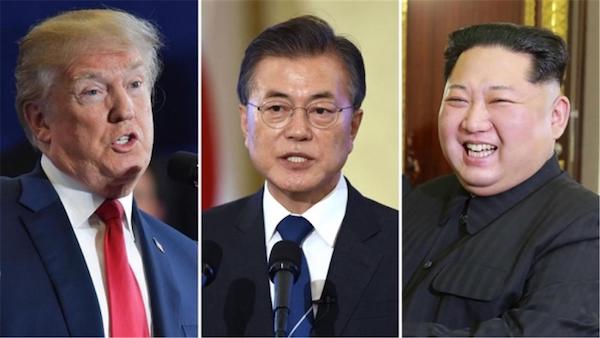
    If it is not Afghanistan, then it must be Iran. U.S. President Donald Trump desperately needs a dramatic foreign policy breakthrough before the 2020 elections to establish his reputation as a strategist who can shape afresh the contours of American foreign policy. His lovefest with Kim Jong-un has petered out without producing any noticeable reduction in North Korea’s nuclear arsenal or any curbs on its ballistic missile program. His attempt to get the Taliban to accept a ceasefire so that he could begin withdrawing American troops from Afghanistan, and thus fulfil the promise he had made during the 2016 election campaign, has also stalled because of Kabul’s opposition and the Taliban’s unwillingness to stop military action before a settlement is announced.

    This leaves Iran as the only arena where Mr. Trump can demonstrate his diplomatic dexterity even if it means returning to the status quo that had existed when President Barack Obama left office. However, Mr. Trump would like to add a dramatic flourish to turning the clock back.

    Some of Mr. Trump’s closest associates, especially the recently sacked National Security Advisor John Bolton, have been promoting a policy that amounted to advocating a regime change in Iran, even if by force. However, Mr. Trump is fundamentally averse to leading the U.S. into an open-ended war with Iran. This stance is prompted largely by his attachment to his campaign promise of bringing American soldiers home that garnered a significant number of votes for him in the last election. He, therefore, abhors the idea of sending more of them to the volatile West Asia.

    Zarif’s visit to Biarritz

    These instincts were on display at the recently concluded G7 meeting in France following an unscheduled visit by Iranian Foreign Minister Mohammad Javad Zarif to Biarritz for talks with the French President Emmanuel Macron  announced at the conclave that a Trump-Rouhani meeting was likely to take place in the “coming weeks”.

    Mr. Trump said that he had no intention of imposing regime change on Iran and declared that under the right circumstances, he would certainly agree to a meeting with Mr. Rouhani.

    In a speech hours earlier, Mr. Rouhani had also signaled that he was willing to talk with Trump. He has since qualified his positive response by adding that he would meet Mr. Trump only after Washington lifted the sanctions re-imposed on Tehran after Mr. Trump pulled the U.S. out of the nuclear deal in 2018. But the signal that Iranian leaders are not averse to talking with their American counterparts has been sent by Tehran and received in Washington. In turn, Mr. Trump reciprocated by stating that he has no problem meeting with President Rouhani. “It could happen. It could happen. No problem with me,” he said earlier this week.

    Israel and John Bolton have been the two major obstacles to a direct encounter between the two Presidents as a prelude to a possible rapprochement between the U.S. and Iran. Mr. Trump, despite his close relationship with Prime Minister Benjamin Netanyahu, seems to have concluded that the Israeli leader is too dependent on the U.S. and especially on Mr. Trump to attempt to block such a meeting if he decides to go ahead with it. Mr. Netanyahu seemed to confirm this understanding this week when he stated: “Obviously, I don’t tell the U.S. President when to meet or with whom.”

    Differences with Israel

    Nonetheless, this relative softening of their respective stands by the U.S. and Iran have worried the Israeli establishment. This is why, of late, Mr. Netanyahu has once again been making shrill noises about Iran’s nuclear weapons capability. He has even gone to the extent of identifying a nuclear facility near Isfahan that, according to him, the Iranians destroyed after he had made its existence public. In response Iranian Foreign Minister Javad Zarif promptly tweeted: “The possessor of REAL nukes cries wolf — on an ALLEGED ‘demolished’ site in Iran.” It is clear that there is a fundamental disjuncture between American and Israeli objectives regarding Iran and recent events have begun to bring the fissures in American Israeli approaches to this issue into the open.

    Mr. Bolton, an outspoken foreign policy hawk, has been the standard bearer of the hard line vis-à-vis Iran and is directly or indirectly responsible for many of the harshest measures adopted by the Trump administration in regard to Iran. He was also strongly opposed to the deal that Zalmay Khalilzad had worked out with the Taliban in order to begin an orderly withdrawal of American forces from Afghanistan. Mr. Bolton’s virulent opposition to any deal with Iran short of complete denuclearization and regime change, both objectives beyond the realm of possibility, had angered Mr. Trump, especially because it ran counter to his instinctive antipathy toward getting involved in overseas military conflicts.

    However, the firing of John Bolton, when combined with the visible diminishing of Israeli influence on U.S. policy toward Iran, signals that Washington is interested in easing tensions with Tehran. This is confirmed by the Secretary of State Mike Pompeo’s statement on September 10 that it was possible that a meeting between Mr. Trump and Mr. Rouhani could take place this month on the sidelines of the UN General Assembly session in New York. Such a meeting, even if it does not immediately resolve all the contentious bilateral issues, could form the beginning of a de-escalatory process that is likely to benefit both Washington and Tehran in the long run.

    (The author  is University Distinguished Professor Emeritus of International Relations, Michigan State University, and Senior Fellow, Center for Global Policy, Washington, DC)

  • By taking the U.S. House of Representatives, Democrats can try to frame national agenda

    By taking the U.S. House of Representatives, Democrats can try to frame national agenda

    The Democratic Party made a comeback in Tuesday’s midterm elections after spending two years in the political darkness, when it seized control of the House of Representatives. Yet, predictions of a “blue wave”, as a backlash to the racially charged, polarizing campaign led by President Donald Trump, failed to materialize. The Democrats secured control of the 435-member lower chamber of Congress, flipping at least 26 seats from their Republican incumbents. This outcome, which will likely give the Trump administration pause for thought on the policy agenda for the remainder of its tenure, ends one-party rule in Washington. Yet, Mr. Trump hailed the results as a “tremendous success”, alluding to the fact that Republicans gained at least two seats in the Senate, giving them a clear majority in the 100-seat upper chamber. Results among the 36 gubernatorial races favored Democrats: although Mr. Trump’s support paid off in some swing States crucial to his 2020 re-election campaign, including Florida, Iowa and Ohio, his party failed to hold on to power in Wisconsin and Michigan. Democrats flipped seven States out of Republican control. While the 2018 midterm election results tracked the typical historical pattern of the party controlling the White House facing setbacks on Capitol Hill, the voter split appeared to reflect the legacy of Mr. Trump’s 2016 campaign. Republicans polled well in small towns and rural areas, while Democrats fared well in urban and suburban districts across the country. The Grand Old Party scored well in Senate races in Texas, Indiana, North Dakota and Missouri.

    Does this mean that the bitter polarization, racial hatred and culture wars that buoyed Mr. Trump’s prospects in 2016 have become entrenched in American society? Perhaps, but what the Democratic sweep of the House implies is that the constitutionally mandated system of checks and balances will be actively in force from January 2019. This could come in the form of House subpoenas to the White House, impediments to the progress of the additional tax cut proposals of the White House, or even putting the brakes on hardline stances impacting trade policies. Democrats under the likely leadership of Representative Nancy Pelosi may be tempted to lead the charge on inquiries into some of the Trump Organization’s murkier business dealings, or the Robert Mueller-led investigation into Russian interference in the 2016 election. But for now the Democrats are unlikely to go as far as attempting to impeach Mr. Trump. And rightly so, for a sober assessment of the midterm election mandate would focus on jobs, healthcare, and immigration, issues that matter most to the common American. If bipartisanship, and not belligerence, emerges between the two sides, that might then afford some space to discuss concerns about the functioning of the U.S. democratic machine, including campaign finance laws, redistricting and voter suppression.

    (The Hindu)

  • Is India ready for Advanced Plastics?

    Is India ready for Advanced Plastics?

    Dr Aniket Vyas with 3 D Printer
    The author says that the market for polymer and plastic products is growing steadfastly in India. Yet, India seems to be lagging in accepting new inventions and products for a variety of reasons.

    After studying nanocomposite polymer system during PhD at university of Cincinnati, the first opportunity I had with product development in real life applications was coatings to support 3D printing. It was an independent invention at the end of my doctoral studies in collaboration with another graduate student in lab across hallway, Brad Ruff, an expert in mechanical engineering who introduced me to the world of 3D printing along with problems it faced. I was excited to be part of this entrepreneurial project as 3D printing is one of the latest advancements in material science still in its infancy and India is yet to catch up in this application. The problem was that the first layer of any object should stick to a surface while it is being 3D printed, but once the object is made, it should be easily released. There was no such product till 2014 that was made specifically for this application, and a deep understanding of polymers is necessary to innovate such a product as adhering and releasing are two opposite phenomena that should be exhibited by a single product. Once we had porotypes’, we went live on Kickstarter with our coated substrate plate “Geckotek” for 3D printers which was successful with initial seed funding raised to $60,000.

    As the product began to be sold commercially, I obviously took this product to India to share with various companies involved with 3D printing. Although the product received a great appreciation yet there was hesitation to adapt such technology. The first road block was the pricing and currency exchange rates as production was being done in USA. Secondly, production in India would not make it cheap as ingredients used in making Geckotek coating were highly specialized and engineered that were not available in Indian market and had to be imported from USA or European countries. Thirdly, Indian 3D printing manufacturers are focused on making big production scale 3D printers for mass manufacturing while in USA there is big group of 3D printer hobbyists who love to try new designs and products. The first generation of Geckotek coatings was not meant for manufacturing scale 3D printers and was more for hobbyists or small scale jobs, but the bigger picture was that Indian Entrepreneurs were not interested in spending resources on developing a new substrate for large scale 3D printers, as they were content with conventional way of 3D printing such as ABS slurry of kepton tape which are often inefficient or unsafe. While Geckotek coatings were appreciated and well received in American market, it was perceived mostly as a “geeky” innovation in India. That made me realize how these two countries operates so differently when it comes to market for materials. In spite of having cutting edge research Institutes like ICT and IITs we often are not able to launch new products due to non-willingness of market to change which in turn is due to mindset of end consumers and restricted spending habits (which is good in a way).  On the other hand, in USA, not only resources are available for research, but market is also open to try new ideas and test new concepts. Thus, one can make a co-relation, for any country to be technologically advanced, an open market provides fertile conditions where new inventions and innovated products are accepted.

    Another important application for polymeric material is baby diapers which is a huge global market and India is one of the fastest growing markets in baby care while USA is approaching stagnation. With the help of polymeric materials, we have come a long way for baby diapers from using milkweed leaf, animal skin, moss, linens and other natural resources to cloth diapers and to super absorbent breathable disposable diapers.

    The most important properties for baby diaper users are leakage prevention and design features that enhance the fit and perceived comfort of baby diapers. Most of the ground-breaking research occurred in USA as evident by numerous patents issued to American companies.  Scientists worked diligently on several aspects of diapers manufacturing to ensure that a) the back sheet does not leek but is porous enough to allow passage of air b) elastic tab should be stretchable just enough to fit baby’s waist without being very tight, and they should have strength to survive in case mother over stretches them, c) A lot of non-woven are used in diapers which are again polymer coated fibers to provide comfort and softness to baby’s skin.

    All of above-mentioned research took place primarily in USA because the consumers were ready to accept a new product decades ago while Indian consumers at the time were not ready to spend money on something like diapers and the practice was to stick to traditional ‘langot’ type diaper made of cloth. According to report published by Research and Markets in Indian Diapers Market, 2021 “In India, of late, the hygiene industry is experiencing an unprecedented growth as hygiene products are being adopted into the lifestyle of the masses. With the increased awareness and increasing purchasing power, customers are fast shifting from cloth nappies to baby diapers. Consumers today are looking for baby diapering solutions that go beyond the basic benefits of dryness and go the extra mile to incorporate value-adding features such as softness and caring for their baby’s delicate skin.”

    The market for polymer and plastic products is growing steadfastly in India. Plastic industry is usually associated with non-biodegradable material that is not good for environment, but it is equally important to understand that plastics are making extraordinary human achievements possible through applications in aerospace and satellites due to light weight designs. They are making everyday life better by preventing food wastage through applications in Food Industry for packaging and preserving. Plastics are the most sought out material for production as the processing of these material is highly efficient and sustainable requiring less energy and natural resources and generates fraction of greenhouse gas emission compared to alternative materials – metals or ceramics. It also increases efficiency for transportation and freight due to light weight vehicles in ground transportation and aviation. Moreover, with the advancement in polymer technology, these materials can be designed to have desired properties that has added convenience and luxury to our modern life.

    However, at the same time the non-biodegradable waste that is associated with single-use plastic also needs to be addressed. Plastic pollution has emerged as a global phenomenon over the decades of accumulation that requires global and comprehensive solution. India is visibly one of the countries that is affected badly by plastic pollution in spite of having lower per capita consumption of plastic compared to other developed countries. About 300 million tons of plastic is produced globally each year, out of which roughly 6% is produced in India. Out of total plastic produced in India, 80% is discarded as waste, and due to lack of awareness and proper protocols to discard plastic waste for recycling, most of it goes into landfills and oceans. Govt. is taking strong steps to reduce plastic pollution for example banning of single use plastic in Maharashtra, but this is not going to be enough as plastics are used almost everywhere from a wallet in pocket, wrist watch and eye glasses, plastic bottles and packaging material to bikes and cars. Moreover, the consumption of plastic is increasing at a drastic rate in India due to increased buying power of middle class.  With increasing demand and consumption of plastics, there need to be more cognizance about proper disposal of plastic waste for efficient recycling. It is a responsibility not only for the government but also the plastic manufacturers and eventually end consumers to spread awareness and tackle plastic pollution strategically and boldly. Else our luxury today will become a burden for our future generations.

    (The author is a Polymer Scientist, earned his Doctorate in Material Science from University of Cincinnati, Ohio. He is co-inventor of Geckotek, a specialty coating that is used in 3D printing. He is active researcher in application of polymeric material in health and hygiene sector.)

     Disclaimer – The views, thoughts, and opinions expressed in the text belong solely to the author, and not necessarily to the author’s employer, organization, committee or other group or individual.

  • The New Deals: U.S.-Mexico-Canada Pact

    The New Deals: U.S.-Mexico-Canada Pact

    After more than a year of intense negotiation, the U.S., Canada and Mexico managed to arrive at a revised trade agreement on Sunday to replace the quarter-century-old North American Free Trade Agreement (NAFTA). Even though the deal does not do anything new to promote the cause of free trade among the North American nations, it achieves the objective of averting any significant damage to the international trade system. Sadly, this is the best anyone could possibly hope for in the midst of the global trade war that began this year. When it comes to the finer details, the U.S.-Mexico-Canada Agreement (USMCA) makes several changes to NAFTA, which U.S. President Donald Trump had promised to scrap. The most prominent changes are the tweaks to production quotas applied to Canada’s dairy industry, which were intended to help protect it by restricting supply. Under the new deal, Canada will have to allow American dairy producers to compete against locals, a move that will favor Canadian consumers. The U.S. agreed to retain Chapter 19 and Chapter 20 dispute-settlement mechanisms as a compromise. This will help Canada and Mexico deal with protectionist duties imposed by the U.S., often under the influence of domestic business lobbies, against their exports.

    Not all the amendments, however, are congenial to the prospects of free trade. Many are simply hard compromises that Canada and Mexico may have made just to defuse trade tensions with the U.S. And not unlike other free trade deals entered into by governments, the present one attempts to micromanage trade in a way that benefits specific interest groups at the cost of the overall economy. The new labor regulations and rules of origin will add to the cost of production of goods such as cars, thus making them uncompetitive in the global market. The USMCA mandates a minimum wage that is above the market wage on labor employed in Mexico, yet another move that will make North America a tough place to do business. Foreign investors may now have fewer protections from unfriendly local laws as the accord does away with resolutions through multilateral dispute panels for certain sectors. But it is its potential to end up as a double-edged sword for the U.S.’s major trading partners that Indian policymakers may find instructive. Announcing the USMCA, Mr. Trump signaled he would now extend his ‘all or nothing’ approach to resetting trade ties with the European Union, China, Japan and India. Terming India “the tariff king”, he said it had sought to start negotiations immediately, a move he reckoned as a bow to the power of tariffs that a protectionist U.S. could wield. In dealing with an emboldened Trump administration, India’s trade negotiators will now have their task cut out if they want to protect exporters’ access to one of the country’s largest markets for its services and merchandise.

    (The Hindu)

  • October 5 New York & Dallas Print Editions

    October 5 New York & Dallas Print Editions

    [vc_row][vc_column][vc_column_text]

    Print Replica ~ Digitally

    E-Editions

    [/vc_column_text][/vc_column][/vc_row][vc_row][vc_column width=”1/3″][vc_custom_heading text=”New York Edition” font_container=”tag:h2|text_align:center” google_fonts=”font_family:Istok%20Web%3Aregular%2Citalic%2C700%2C700italic|font_style:700%20bold%20regular%3A700%3Anormal” link=”url:https%3A%2F%2Fwww.theindianpanorama.news%2Fwp-content%2Fuploads%2F2018%2F10%2FTIP-October-5-NYC.pdf|||”][vc_single_image image=”94814″ img_size=”full” add_caption=”yes” alignment=”center” onclick=”custom_link” link=”https://www.theindianpanorama.news/wp-content/uploads/2018/10/TIP-October-5-NYC.pdf”][/vc_column][vc_column width=”1/3″][vc_custom_heading text=”Dallas, Texas Edition” font_container=”tag:h2|text_align:center” google_fonts=”font_family:Istok%20Web%3Aregular%2Citalic%2C700%2C700italic|font_style:700%20bold%20regular%3A700%3Anormal” link=”url:https%3A%2F%2Fwww.theindianpanorama.news%2Fwp-content%2Fuploads%2F2018%2F10%2FTIP-October-5-Dallas-TX.pdf|||”][vc_single_image image=”94813″ img_size=”full” add_caption=”yes” alignment=”center” onclick=”custom_link” link=”https://www.theindianpanorama.news/wp-content/uploads/2018/10/TIP-October-5-Dallas-TX.pdf”][/vc_column][vc_column width=”1/3″][vc_single_image image=”82828″ img_size=”medium” alignment=”center” onclick=”custom_link” link=”https://www.theindianpanorama.news/advertising-media-kit-portal-indian-panorama/”][vc_single_image image=”82829″ img_size=”medium” alignment=”center” onclick=”custom_link” link=”https://www.theindianpanorama.news/advertising-media-kit-portal-indian-panorama/”][/vc_column][/vc_row][vc_row][vc_column][td_block_ad_box spot_id=”custom_ad_3″][/vc_column][/vc_row][vc_row][vc_column width=”2/3″][vc_custom_heading text=”Lead Stories This Week” font_container=”tag:h2|text_align:center” google_fonts=”font_family:Istok%20Web%3Aregular%2Citalic%2C700%2C700italic|font_style:700%20bold%20regular%3A700%3Anormal” link=”url:https%3A%2F%2Fwww.theindianpanorama.news%2F|||”][td_block_5 limit=”12″][/vc_column][vc_column width=”1/3″][vc_widget_sidebar sidebar_id=”td-default”][/vc_column][/vc_row]

  • Leveraging China vis-a-vis Uncle Sam

    Leveraging China vis-a-vis Uncle Sam

    By G Parthasarathy

    It would be naive to infer any change in China’s efforts to undermine India’s influence across its Indian Ocean neighborhood or moderate its support for Pakistan and terrorist groups like the Jaish-e-Mohammed. But it does indicate that China would not like Doklam-like tensions again. Also, it gives India more space to deal with Trump’s US., says the author.

    While public attention was focused on the highly publicized 2+2 Dialogue between the Foreign and Defense Ministers of India and the US, two interesting developments took place in India’s relations with China. The first was a remarkably warm meeting that Prime Minister Modi had with the visiting Chinese Defense Minister, General Wei Fenghe, on August 21. The Prime Minister appreciated that differences between the two countries were being handled with “sensitivity and maturity”, which was evident from the prevailing peace along the China-India borders. He also welcomed the growing cooperation between the two countries, including in areas of defense and military exchanges.

    Unlike its earlier behavior, which resulted in three million people being stranded and 130 killed in floods in Assam last year, China provided India information on the rising levels of the Brahmaputra, this year well in advance. This enabled India to deal with the flood situation effectively. It would, however, be naïve to infer that these developments signal any change in China’s efforts to undermine India’s influence across its Indian Ocean neighborhood, or moderate its economic, diplomatic and military support for Pakistan and terrorist groups like the Jaish-e-Mohammed. But it does indicate that after the Modi-Xi Jinping summit in Wuhan last year, China would not like tensions like those witnessed in Doklam last year, to arise again, in the near future.

    These developments give India more diplomatic space to deal with Trump’s US, which has offended friends and foes alike. The Trump Administration has unilaterally renounced many past American bilateral, regional and global commitments, with its “America First” policies. It is an Administration that has offended and dealt arbitrarily, even with long-term allies like Canada, Germany and Japan. India needs to be totally realistic in dealing with the Trump Administration. Even before commencing discussions with New Delhi, the Trump Administration filed a complaint against India in the World Trade Organization challenging our export programs. Ironically, this move came at a time, when the US had levied heavy duties on India’s exports of steel and aluminum.

    The Americans are indicating a desire for an early, face-saving exit, from Afghanistan. The Afghan armed Forces will, hopefully, continue to be armed, equipped and financed to meet challenges posed by the Pakistan-backed Taliban. A far more active engagement by India, with parties that respect the Constitution in Afghanistan, is imperative, so that the Afghans can ensure that Pakistan does not lead the Americans up the garden path, with a promise of good behavior, by the Taliban. Russia and China, for different reasons, now have a cozy relationship with the Taliban. They evidently hope that the Taliban will join them in taking on the Islamic state. Neither the Russians nor the Chinese, however, have a past record of understanding Afghanistan and its people objectively. China will also inevitably face the consequences of brutal suppression of its Muslim population in Xinjiang, bordering Afghanistan.

    Military cooperation between India and the US received a boost during the Pompeo-Mattis visit, with the establishment of formal links between India’s Western Naval Command and the American Fifth Fleet, based in Bahrain. Maritime cooperation with this Fleet would be very helpful, in events affecting the safety and security of over six million Indians, living in the Gulf region. Moreover, the Communications and Security Agreement signed during the recent talks would give India access to valuable intelligence information that Americans could provide. The US and India have shared concerns about growing Chinese assertiveness across the Western Pacific and Indian Oceans. These include Beijing seeking the establishment of a “string of pearls” across sea-lanes, from Kyaukpyu in Myanmar, to Djibouti. India, the US and Japan have been carrying out tripartite naval exercises. These exercises should now be extended across India’s west coast.

    Recent US legislation, popularly alluded to as CAATSA, enables it to impose sanctions on countries, which have “significant transactions” with Russian arms industries. These would adversely affect all banks having dollar transactions, which virtually all major Indian banks have. After strong lobbying by India, the Trump Administration got the legislation amended to enable it to exempt countries like India, Indonesia and Vietnam from its provisions. India has also been affected by recent sanctions imposed by the Trump Administration on oil purchases from Iran, a major supplier, after the Obama Administration revoked UN sanctions. With the reintroduction of sanctions on Iran by the Trump Administration, New Delhi would have to get a sanctions waiver from President Trump, for oil imports from Iran, after November.

    China escapes the effect of these sanctions, because it has a largely balanced trade with Iran and Russia and no dollar transfers are required. India has trade deficits and cannot arrange payments through bilateral settlement mechanisms, with either Russia or Iran. These are the two most crucial issues, affecting India-US relations presently. But what is interesting is that not a word was uttered officially about these crucial issues, by either side, after the recent 2+2 Dialogue. The American move, imposing sanctions on purchase of Russian arms, are obviously as motivated by a desire to promote its own arms sales, as by geopolitical considerations, to pressurize Russia. India will lose face internationally if it backs off from getting crucial S400 air defense missiles from Russia, for which negotiations have been completed.

    India could consider devising measures to modify its arms relationship with Russia, to one linked to its “Make in India” program. Payments will, of course, be made easier, if the Russians import more from India, by resorting to rupee trade, like the Soviet Union did. While US sanctions are not likely to be applied for India’s Chabahar port project in Iran, New Delhi will inevitably have to progressively reduce oil imports from Iran, after persuading the US not to oppose dollar payments, for a specified time, beyond November.

    In a long-term perspective, international cooperation has to be sought, if the US is to be prevented from acting in an arbitrary manner. Even its allies like Germany, which could face US sanctions for gas imports from Russia, may not be averse to considering such actions, to end the dominance of the US dollar, in international transactions.

    (The author is a former Indian diplomat.)

  • September 21 New York & Dallas Print Editions

    September 21 New York & Dallas Print Editions

    [vc_row][vc_column][vc_column_text]

    Print Replica ~ Digitally

    E-Editions

    [/vc_column_text][/vc_column][/vc_row][vc_row][vc_column width=”1/3″][vc_custom_heading text=”New York Edition” font_container=”tag:h2|text_align:center” google_fonts=”font_family:Istok%20Web%3Aregular%2Citalic%2C700%2C700italic|font_style:700%20bold%20regular%3A700%3Anormal” link=”url:https%3A%2F%2Fwww.theindianpanorama.news%2Fwp-content%2Fuploads%2F2018%2F09%2FTIP-September-21-NYC.pdf|||”][vc_single_image image=”94612″ img_size=”full” add_caption=”yes” alignment=”center” onclick=”custom_link” link=”https://www.theindianpanorama.news/wp-content/uploads/2018/09/TIP-September-21-NYC.pdf”][/vc_column][vc_column width=”1/3″][vc_custom_heading text=”Dallas, Texas Edition” font_container=”tag:h2|text_align:center” google_fonts=”font_family:Istok%20Web%3Aregular%2Citalic%2C700%2C700italic|font_style:700%20bold%20regular%3A700%3Anormal” link=”url:https%3A%2F%2Fwww.theindianpanorama.news%2Fwp-content%2Fuploads%2F2018%2F09%2FTIP-September-21-Dallas-TX.pdf|||”][vc_single_image image=”94613″ img_size=”full” add_caption=”yes” alignment=”center” onclick=”custom_link” link=”https://www.theindianpanorama.news/wp-content/uploads/2018/09/TIP-September-21-Dallas-TX.pdf”][/vc_column][vc_column width=”1/3″][vc_single_image image=”82828″ img_size=”medium” alignment=”center” onclick=”custom_link” link=”https://www.theindianpanorama.news/advertising-media-kit-portal-indian-panorama/”][vc_single_image image=”82829″ img_size=”medium” alignment=”center” onclick=”custom_link” link=”https://www.theindianpanorama.news/advertising-media-kit-portal-indian-panorama/”][/vc_column][/vc_row][vc_row][vc_column][td_block_ad_box spot_id=”custom_ad_3″ tdc_css=””][/vc_column][/vc_row][vc_row][vc_column width=”2/3″][vc_custom_heading text=”Lead Stories This Week” font_container=”tag:h2|text_align:center” google_fonts=”font_family:Istok%20Web%3Aregular%2Citalic%2C700%2C700italic|font_style:700%20bold%20regular%3A700%3Anormal” link=”url:https%3A%2F%2Fwww.theindianpanorama.news%2F|||”][td_block_5 separator=”” limit=”12″ tdc_css=””][/vc_column][vc_column width=”1/3″][vc_widget_sidebar sidebar_id=”td-default”][/vc_column][/vc_row]

  • September 14 New York & Dallas Print Editions

    September 14 New York & Dallas Print Editions

    [vc_row][vc_column][vc_column_text]

    Print Replica ~ Digitally

    E-Editions

    [/vc_column_text][/vc_column][/vc_row][vc_row][vc_column width=”1/3″][vc_custom_heading text=”New York Edition” font_container=”tag:h2|text_align:center” google_fonts=”font_family:Istok%20Web%3Aregular%2Citalic%2C700%2C700italic|font_style:700%20bold%20regular%3A700%3Anormal” link=”url:https%3A%2F%2Fwww.theindianpanorama.news%2Fwp-content%2Fuploads%2F2018%2F09%2FTIP-September-14-NYC.pdf|||”][vc_single_image image=”94492″ img_size=”full” add_caption=”yes” alignment=”center” onclick=”custom_link” link=”https://www.theindianpanorama.news/wp-content/uploads/2018/09/TIP-September-14-NYC.pdf”][/vc_column][vc_column width=”1/3″][vc_custom_heading text=”Dallas, Texas Edition” font_container=”tag:h2|text_align:center” google_fonts=”font_family:Istok%20Web%3Aregular%2Citalic%2C700%2C700italic|font_style:700%20bold%20regular%3A700%3Anormal” link=”url:https%3A%2F%2Fwww.theindianpanorama.news%2Fwp-content%2Fuploads%2F2018%2F09%2FTIP-September-14-Dallas-TX.pdf|||”][vc_single_image image=”94491″ img_size=”full” add_caption=”yes” alignment=”center” onclick=”custom_link” link=”https://www.theindianpanorama.news/wp-content/uploads/2018/09/TIP-September-14-Dallas-TX.pdf”][/vc_column][vc_column width=”1/3″][vc_single_image image=”82828″ img_size=”medium” alignment=”center” onclick=”custom_link” link=”https://www.theindianpanorama.news/advertising-media-kit-portal-indian-panorama/”][vc_single_image image=”82829″ img_size=”medium” alignment=”center” onclick=”custom_link” link=”https://www.theindianpanorama.news/advertising-media-kit-portal-indian-panorama/”][/vc_column][/vc_row][vc_row][vc_column][td_block_ad_box spot_id=”custom_ad_3″ tdc_css=””][/vc_column][/vc_row][vc_row][vc_column width=”2/3″][vc_custom_heading text=”Lead Stories This Week” font_container=”tag:h2|text_align:center” google_fonts=”font_family:Istok%20Web%3Aregular%2Citalic%2C700%2C700italic|font_style:700%20bold%20regular%3A700%3Anormal” link=”url:https%3A%2F%2Fwww.theindianpanorama.news%2F|||”][td_block_5 separator=”” limit=”12″ tdc_css=””][/vc_column][vc_column width=”1/3″][vc_widget_sidebar sidebar_id=”td-default”][/vc_column][/vc_row]

  • Indian-Origin Finance Consultant among 3 Killed in US Bank Shooting

    Indian-Origin Finance Consultant among 3 Killed in US Bank Shooting

    NEW YORK(TIP): An Indian- origin Finance consultant was among three people killed when a gunman opened fire in a bank building in the US city of Cincinnati. He was only 25 years old.

    Pruthviraj Kandepi, who belonged to Andhra Pradesh’s Guntur district, was killed when 29-year-old Omar Enrique Santa Perez from the town of North Bend, Ohio, opened fire at the headquarters for the Fifth Third Bank near Fountain Square in downtown Cincinnati, police said.

    India’s Consul General in New York Ambassador Sandeep Chakravorty told the media that the consulate is in touch with the police, Mr Kandepi’s family as well as members of the community.

    An official of the Telugu Association of North America (TANA) said that Mr Kandepi was working with the bank as a consultant. Arrangements were being made to send his body to India, he added.

    The two other victims of the Cincinnati bank shooting were identified as 48-year-old Luis Felipe Calderon and 64-year-old Richard Newcomer.

    Five people were shot, some multiple times, in the incident, they said, adding that the gunman was killed in a shootout with the police.

    According to Cincinnati Police Chief Eliot Isaac, officers responded to a 911 call at around 9:10 am local time about an “active shooter” at the bank.

    The gunman was shot multiple times as four police officers approached him, and he died at the scene.

    He had a pistol and more than 200 rounds of ammunition, Mr Isaac said, adding that the gunman was not a former or current employee of the bank. He had gone to several businesses before going to the bank, he said.

    Perez had opened fire in the building’s loading dock before continuing into the lobby area and firing more shots, Mr Isaac told reporters at a televised press conference.


  • Why These Trade Talks with Canada are getting so Tough

    Why These Trade Talks with Canada are getting so Tough

    By A.D. Amar

    By far, the biggest contributor to its export income has been the USA. Seventy-five percent of its exports are to America. Because of this enormity of its exports to America that bring in many billion dollars into the Canadian economy (about $50 billion just for selling cars to the USA), if American exports are interrupted, Canada will face huge economic and social problems. That is why, it is understandable that Canada is going to fight tooth and nail to keep its exports to America going unhindered, while not importing goods to protect its local producers and to preserve its cash. Ironically, American political and business leaders, because of Canada’s influence on American politics and business, want the status-quo to continue.

    Watching the currently going US-Canadian trade talks will make anyone understand why no US president in decades, spanning both political parties, dared to get into renegotiating America’s trade deals that had been sealed and practiced for so, so long ago, even though unfair.

    The deal with Canada, or NAFTA on a broader scale, is not an isolated case of a trade deal that is unfair to America. Almost all American trade deals are unfair, and that is why, American Presidents decided to stay away from them. They knew that the reopened trade talks will open tough issues that had been so negotiated that America had to open its borders to the other country such that it could export to America unabated, whatever and how much it wanted to export. However, when it came to importing from America, the other country, according to the deal, could engage in protectionism in whatever form it wanted. Take, for example, Canada’s imposition of a 300% tariff on all dairy products imported from America. And America tolerated this. In essence, basically, America always became the only free market in every deal. There was no laterality.

    Through the kind of trade deals described above, for the last more than seventy years, America has made the whole world wealthy, whether it had been the countries in Asia, Europe, or North America, including Germany, Japan, China, South Korea, Canada, and Mexico, to name just a few. The trade agreements that they signed legitimized the unfair trade practices against the USA. The outcome had been a constant outflow of wealth from the United States to other countries. Consequently, during the ensuing decades, America fell from holding the top position in almost every measurable economic or social indicator to the bottom of its heap. And, the previously named are the countries among those that replaced America. Since it had been going on for so long, these nations had gotten used to exporting to America to earn cash to pay for imports for their needs from other countries who sold them at the lower prices, or they did it to fulfill their obligations of the deals they signed with the other countries who traded with them. They treated their trade deal with the USA as an entitlement. Because of the effort needed to conduct these negotiations afresh, and the low probability of an outcome that would satisfy the populations involved had the American presidents maintain their status-quo.

    Let us, again, take the case of Canada. By rank, it is the 38th country in the world by population size, but 10th when it comes to exports, making it a very powerful, global exporter. Until 2007, it was America’s largest trading partner (lost that position to China). By far, the biggest contributor to its export income has been the USA. Seventy-five percent of its exports are to America. Because of this enormity of its exports to America that bring in many billion dollars into the Canadian economy (about $50 billion just for selling cars to the USA), if American exports are interrupted, Canada will face huge economic and social problems. That is why, it is understandable that Canada is going to fight tooth and nail to keep its exports to America going unhindered, while not importing goods to protect its local producers and to preserve its cash. Ironically, American political and business leaders, because of Canada’s influence on American politics and business, want the status-quo to continue.

    Now, let’s take the other side of Canadian foreign trade. While America takes in 75% of Canadian exports, America is not Canada’s largest trading partner. No surprise, it is China. And, do not wonder; that is the case in almost all America’s trading partners. That is how, America did not have well-paying jobs for its population, and had to fund its budgets by taking loans, mostly from its trading partners.

    The above given analysis provides us enough to accept that, in spite of exporting so much to America, mostly America’s trading partners do not import enough from the US to help balance the bilateral trade. Each of these countries uses its export dollars earned from America to buy more from China, European Union and other countries, leaving for America an annual trade deficit that was $566 billion in 2017. This is the problem that the Trump Administration is attempting to rectify through these, so called, the new NAFTA negotiations. The situation is exactly the same when we look at almost all of America’s major trade deals. The toughest and the largest one of them all is the trade deals with China. And only Trump has the understanding, desire and the stamina to take on these trade fights, simultaneously, to halt the outflow of these many, many billion American dollars every year that we could use to bring back to the top of the global ranks the standard-of-living and quality-of-life of our population.

    (The Author is Business Professor at Seton Hall University. His areas of expertise are strategy, knowledge, and operations. He can be reached at AD.Amar@shu.edu; Tel: (973) 761 9684)          

  • August 31 New York & Dallas Print Editions

    August 31 New York & Dallas Print Editions

    [vc_row][vc_column][vc_column_text]

    Print Replica ~ Digitally

    E-Editions

    [/vc_column_text][/vc_column][/vc_row][vc_row][vc_column width=”1/3″][vc_custom_heading text=”New York Edition” font_container=”tag:h2|text_align:center” google_fonts=”font_family:Istok%20Web%3Aregular%2Citalic%2C700%2C700italic|font_style:700%20bold%20regular%3A700%3Anormal” link=”url:https%3A%2F%2Fwww.theindianpanorama.news%2Fwp-content%2Fuploads%2F2018%2F08%2FTIP-August-31-NYC.pdf|||”][vc_single_image image=”94259″ img_size=”full” add_caption=”yes” alignment=”center” onclick=”custom_link” link=”https://www.theindianpanorama.news/wp-content/uploads/2018/08/TIP-August-31-NYC.pdf”][/vc_column][vc_column width=”1/3″][vc_custom_heading text=”Dallas, Texas Edition” font_container=”tag:h2|text_align:center” google_fonts=”font_family:Istok%20Web%3Aregular%2Citalic%2C700%2C700italic|font_style:700%20bold%20regular%3A700%3Anormal” link=”url:https%3A%2F%2Fwww.theindianpanorama.news%2Fwp-content%2Fuploads%2F2018%2F08%2FTIP-August-31-Dallas-TX.pdf|||”][vc_single_image image=”94260″ img_size=”full” add_caption=”yes” alignment=”center” onclick=”custom_link” link=”https://www.theindianpanorama.news/wp-content/uploads/2018/08/TIP-August-31-Dallas-TX.pdf”][/vc_column][vc_column width=”1/3″][vc_single_image image=”82828″ img_size=”medium” alignment=”center” onclick=”custom_link” link=”https://www.theindianpanorama.news/advertising-media-kit-portal-indian-panorama/”][vc_single_image image=”82829″ img_size=”medium” alignment=”center” onclick=”custom_link” link=” https://www.theindianpanorama.news/advertising-media-kit-portal-indian-panorama/”][/vc_column][/vc_row][vc_row][vc_column][td_block_ad_box spot_id=”custom_ad_3″ tdc_css=””][/vc_column][/vc_row][vc_row][vc_column width=”2/3″][vc_custom_heading text=”Lead Stories This Week” font_container=”tag:h2|text_align:center” google_fonts=”font_family:Istok%20Web%3Aregular%2Citalic%2C700%2C700italic|font_style:700%20bold%20regular%3A700%3Anormal” link=”url:https%3A%2F%2Fwww.theindianpanorama.news%2F|||”][td_block_5 separator=”” limit=”12″ tdc_css=””][/vc_column][vc_column width=”1/3″][vc_widget_sidebar sidebar_id=”td-default”][/vc_column][/vc_row]

  • August 17 New York & Dallas Print Editions

    August 17 New York & Dallas Print Editions

    [vc_row][vc_column][vc_column_text]

    Print Replica ~ Digitally

    E-Editions

    [/vc_column_text][/vc_column][/vc_row][vc_row][vc_column width=”2/3″][vc_custom_heading text=”New York & Dallas Edition” font_container=”tag:h2|text_align:center” google_fonts=”font_family:Istok%20Web%3Aregular%2Citalic%2C700%2C700italic|font_style:700%20bold%20regular%3A700%3Anormal” link=”url:https%3A%2F%2Fwww.theindianpanorama.news%2Fwp-content%2Fuploads%2F2018%2F08%2FTIP-August-17-NYC.pdf|||”][vc_single_image image=”94053″ img_size=”full” add_caption=”yes” alignment=”center” onclick=”custom_link” link=” https://www.theindianpanorama.news/wp-content/uploads/2018/08/TIP-August-17-NYC.pdf”][/vc_column][vc_column width=”1/3″][vc_single_image image=”82828″ img_size=”medium” alignment=”center” onclick=”custom_link” link=”https://www.theindianpanorama.news/advertising-media-kit-portal-indian-panorama/”][vc_single_image image=”82829″ img_size=”medium” alignment=”center” onclick=”custom_link” link=”https://www.theindianpanorama.news/advertising-media-kit-portal-indian-panorama/”][/vc_column][/vc_row][vc_row][vc_column][td_block_ad_box spot_id=”custom_ad_3″ tdc_css=””][/vc_column][/vc_row][vc_row][vc_column width=”2/3″][vc_custom_heading text=”Lead Stories This Week” font_container=”tag:h2|text_align:center” google_fonts=”font_family:Istok%20Web%3Aregular%2Citalic%2C700%2C700italic|font_style:700%20bold%20regular%3A700%3Anormal” link=”url:https%3A%2F%2Ftheindianpanorama.news%2Feditions%2F|||”][td_block_5 separator=”” limit=”12″ tdc_css=””][/vc_column][vc_column width=”1/3″][vc_widget_sidebar sidebar_id=”td-default”][/vc_column][/vc_row]

  • Federal deficit jumps 20 percent after tax cuts, spending bill

    Federal deficit jumps 20 percent after tax cuts, spending bill

    WASHINGTON(TIP): The federal deficit jumped 20 percent in the first 10 months of the 2018 fiscal year, the Congressional Budget Office (CBO) reported Wednesday, August 8.

    Spending outpaced revenue between the beginning of the fiscal year, on Oct. 1, and July by $682 billion, $116 billion more than over the same period in the last fiscal year.

    The rising deficit is largely the result of the tax cuts President Trump signed into law at the end of last year, as well as a bipartisan agreement to boost spending, according to CBO.

    Tax revenues from individuals rose, even as revenues from corporate taxes dropped.

    The Trump administration has argued that the tax cuts would bring down the deficit, as economic growth led to higher tax revenue. The economy did expand in the second quarter by 4.1 percent.

    But economists have argued the growth would have to be much larger to reduce the deficit.

    The CBO projects that the deficit will reach $793 billion by the end of the year and approach $1 trillion next year. White House estimates have the deficit surpassing $1 trillion in 2019.

    Budget watchers have warned that interest payments — the amount the Treasury has to pay just to service the debt — are slated to become the fastest-growing annual expenditure.

    The CBO projects that in 30 years, the government will spend more on servicing debt than on Social Security or defense.

  • Remembering Oak Creek

    Remembering Oak Creek

    Six years ago, on August 5, a neo-Nazi entered the Oak Creek Gurdwara and opened fire on the Sangat, killing six Sikh Americans and wounding four, in one of the worst acts of violence at a place of worship in US History. Join us in reflection on this terrible attack on our community that took the lives of Satwant Singh Kaleka, Paramjit Kaur, Sita Singh, Ranjit Singh, Prakash Singh, and Suveg Singh Khattra.

    In the days, months, and years that have followed, we have seen the Sikh American, and wider American community, join together to dedicate themselves to Seva (selfless service), to hosting events to dispel misconceptions about Sikh Americans, and to support the families of the victims.

    In the aftermath of this tragedy, as Americans we have shown that we are stronger when we come together as one people, and a unified nation.

    In spite of the progress we have made as a nation and as a community there is still a lot of work to be done. In this past year we have seen a rise in hate crimes as stated by the FBI and even this past week there was a hate crime committed near San Jose, CA. “At a time when divisive rhetoric has taken over our country, we have to remain vigilant while still staying in steadfast to our beliefs and principles,” said SALDEF Executive Director Baldev Singh. “The Oak Creek sangat remains a shining example for how Sikhs should be and help us keep renewed spirits of Chardhi Kala.”

    Join us to the honor the memory of the Sikh Americans killed at the Oak Creek Gurdwara by sharing your thoughts and prayers for the families or the wider American community, via email or connecting with us on SALDEF’s Facebook, Twitter, and Instagram using the hashtag #RememberOakCreek.

    As always, we encourage you to practice your faith freely and with pride.

  • At the Crossroads: the Glen Cove Gurdwara

    At the Crossroads: the Glen Cove Gurdwara

    By I.J. Singh & Neena I. Singh

    There is no doubt that our beloved gurdwara is at an existential crisis at this time. We will stumble through it but will we learn any lessons?  Look at all the gurduaras around us in this country in despair.  Look at Sikh teachings and I am sure we can do much, much better.  Let’s see if we can remake our problems into a progressive opportunity rather than a destructive threat.

    No question that sharp lines, etched in stone, if judged by the vicious bitterness of current communication, now divide our community.  How best to move forward?  Welcome the differences; life teaches us that all progress stems from differences and how we handle them.

    We know of the move for all officers and trustees to resign and the gurduara to be managed by a collective of previous officers for a while, until we return to a more equitable and sensible frame of mind. Sounds good except for the correspondence that is hardly reflective, thoughtful, hopeful or helpful.

    An apology at the gurduara by one side was followed by harsh responses from many sides.  That cannot ever lead us to a productive solution. The issue of who has which papers and documents; how and when and to whom will they be delivered remains unresolved; also unresolved is the police report.

    Keep in mind that the gurduara is a community institution, not a private holding corporation.  We cannot allow any group to hijack the gurduara.  If it is a privately-owned corporation where the major agenda is the elaborate menu at langar with lack of relevant community programs then our note today is out of order, as is our attendance at the gurduara.  At this time the sangat is totally side-lined.  Do they have a place and a role in this gurduara?

    We offer a few working ideas here:

    1. Both sides should immediately stop issuing statements to justify their own behavior or condemning the other side.  Such activities absolutely do not help if the purpose is to resolve issues and differences.
    2. In the meantime, we should nominate a small group of 3 to 5 individuals (men and women) to run the gurduara as an interim arrangement. There should be representation of both sides in this subcommittee. A war of words has no place here. We need to talk to each other, not talk at each other.
    3. Let both sides provide any records they have to this small interim committee, who will hold them and secure them but will not issue any comments about them, except to see that they have received all material.
    4. This subcommittee would design what procedures – corrective steps, apologies, or resignations etc. – are necessary to bring the community together and not split it permanently. This subcommittee would also explore organizational and procedural mis-steps in how we run meetings, elections and related matters. At this time, we dare say that we have rules but rarely do we follow or understand them well.  At this time the daily briefings continue to roil the community.  They don’t help at all.
    5. This sub-committee should report its recommendations to the sangat in a public forum.

    Clearly, the goal is NOT to determine guilt but to close the divisions in the community.  Participants act from their own position that they think is justified and in good faith.  But an institution must have room for different views as well.  Good institutions have term limits for their officers.    We can revisit the Constitution as well, although the problem at this time may be that it is not being used.

    Let us create an institution that can be a model for other gurduarasthat our community – young and old — can find useful. Gurduaras should not collapse like Maharaja Ranjit Singh’s kingdom — a house of cards. He failed to foresee the future; let’s learn from that mistake. Gurduara of Slough in the UK seems like a good model; let’s explore their functioning.

    Let us focus on the program gurduaras can offer.  Keep an eye on waste of community funds and resources: time, money and energy! Procedures for resolution of problems must exist in the framework of every institution.

    Unanimity of opinion and homogeneity of thought does not make a successful progressive community and institution.  Respect differences and work with them.  An institution such as ours must display fundamental transparency, accountability and participatory self-governance.

    Any positive suggestions and initiatives should be both solicited and welcome?

    ijsingh99@gmail.com


  • EPA Administrator Scott Pruitt Resigns in the face of ethics issues

    EPA Administrator Scott Pruitt Resigns in the face of ethics issues

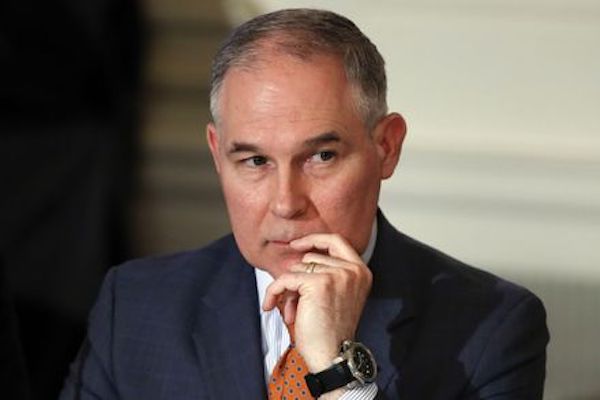
    WASHINGTON(TIP): Scott Pruitt, the administrator of the Environmental Protection Agency who was key to implementing President Trump’s conservative agenda but came under intense scrutiny for a series of questionable ethical decisions, resigned Thursday, July 5 afternoon. Pruitt’s deputy at the EPA, Andrew Wheeler, will serve as the agency’s acting administrator starting Monday, President Trump said in a tweet.

    “I have no doubt that Andy will continue on with our great and lasting EPA agenda,” Mr. Trump tweeted. “We have made tremendous progress and the future of the EPA is very bright!” 

    Donald J. Trump

    @realDonaldTrump

     I have accepted the resignation of Scott Pruitt as the Administrator of the Environmental Protection Agency. Within the Agency Scott has done an outstanding job, and I will always be thankful to him for this. The Senate confirmed Deputy at EPA, Andrew Wheeler, will…

    3:37 PM – Jul 5, 2018

    Pruitt had been the subject of a seemingly endless deluge of stories about his behavior and spending practices. It began earlier this year when it was revealed that Pruitt had rented a room at a favorable rate from a well-connected energy lobbyist. Pruitt’s lavish spending on his own security then came under scrutiny, as did his decision to install a $43,00 private phone booth in his office. There were also allegations that Pruitt had created a toxic professional atmosphere at the EPA that penalized his critics.

    Pruitt said his decision to leave the EPA was a hard one in his resignation letter to Mr. Trump.

    “It is extremely difficult for me to cease serving you in this role first because I count it a blessing to be serving you in any capacity, but also, because of the transformative work that is occurring,” Pruitt wrote. “However, the unrelenting attacks on me personally, my family, are unprecedented and have taken a sizable toll on all of us.”

    Mr. Trump defended Pruitt Thursday evening while speaking to reporters on Air Force One. He said there was “no final straw” and that he had not requested Pruitt’s resignation.

    “Scott Pruitt did an outstanding job inside of the EPA,” the president said. “We’ve gotten rid of record breaking regulations and it’s been really. You know, obviously, the controversies with Scott — but within the agency we were extremely happy. His deputy has been with me actually a long time. He was very much an early Trump supporter. He was with us on the campaign. He is a very environmental person. He’s a big believer, and he’s going to do a fantastic job.”

    The government had launched numerous investigations and probes into Pruitt’s behavior, although he continued to insist that he had done nothing wrong. At the time of Pruitt’s resignation, the EPA inspector general was looking into his protective service detail, his traveling at taxpayer expense, and the allegedly excessive raises he gave to some members of his staff. Swamped by requests and stretched thin by the sheer number of audits into Pruitt, the EPA inspector general had also agreed to look into his housing arrangements and allegations that he had staff members perform his personal errands, among other issues.

    Pruitt is the fifth member of Mr. Trump’s cabinet to resign or be fired since he took office. The others were former Acting Attorney General Sally Yates, former Health and Human Services secretary Tom Price, former Secretary of State Rex Tillerson, and former Veterans Affairs secretary David Shulkin.

    (Source: CBS News)

  • July 06 New York & Dallas Print Editions

    July 06 New York & Dallas Print Editions

    [vc_row][vc_column][vc_column_text]

    Print Replica ~ Digitally

    E-Editions

    [/vc_column_text][/vc_column][/vc_row][vc_row][vc_column width=”1/3″][vc_custom_heading text=”New York Edition” font_container=”tag:h2|text_align:center” google_fonts=”font_family:Istok%20Web%3Aregular%2Citalic%2C700%2C700italic|font_style:700%20bold%20regular%3A700%3Anormal” link=”url:https%3A%2F%2Fwww.theindianpanorama.news%2Fwp-content%2Fuploads%2F2018%2F07%2FTIP-July-6-NYC.pdf|||”][vc_single_image image=”93532″ img_size=”full” add_caption=”yes” alignment=”center” onclick=”custom_link” link=”https://www.theindianpanorama.news/wp-content/uploads/2018/07/TIP-July-6-NYC.pdf”][/vc_column][vc_column width=”1/3″][vc_custom_heading text=”Dallas, Texas Edition” font_container=”tag:h2|text_align:center” google_fonts=”font_family:Istok%20Web%3Aregular%2Citalic%2C700%2C700italic|font_style:700%20bold%20regular%3A700%3Anormal” link=”url:https%3A%2F%2Fwww.theindianpanorama.news%2Fwp-content%2Fuploads%2F2018%2F07%2FTIP-July-6-Dallas-TX.pdf|||”][vc_single_image image=”93533″ img_size=”full” add_caption=”yes” alignment=”center” onclick=”custom_link” link=”https://www.theindianpanorama.news/wp-content/uploads/2018/07/TIP-July-6-Dallas-TX.pdf”][/vc_column][vc_column width=”1/3″][vc_single_image image=”82828″ img_size=”medium” alignment=”center” onclick=”custom_link” link=”https://www.theindianpanorama.news/advertising-media-kit-portal-indian-panorama/”][vc_single_image image=”82829″ img_size=”medium” alignment=”center” onclick=”custom_link” link=”https://www.theindianpanorama.news/advertising-media-kit-portal-indian-panorama/”][/vc_column][/vc_row][vc_row][vc_column][td_block_ad_box spot_id=”custom_ad_3″ tdc_css=””][/vc_column][/vc_row][vc_row][vc_column width=”2/3″][vc_custom_heading text=”Lead Stories This Week” font_container=”tag:h2|text_align:center” google_fonts=”font_family:Istok%20Web%3Aregular%2Citalic%2C700%2C700italic|font_style:700%20bold%20regular%3A700%3Anormal” link=”url:https%3A%2F%2Fwww.theindianpanorama.news%2F|||”][td_block_5 separator=”” limit=”12″ tdc_css=””][/vc_column][vc_column width=”1/3″][vc_widget_sidebar sidebar_id=”td-default”][/vc_column][/vc_row]

  • June 22 New York & Dallas Print Editions

    June 22 New York & Dallas Print Editions

    [vc_row][vc_column][vc_column_text]

    Print Replica ~ Digitally

    E-Editions

    [/vc_column_text][/vc_column][/vc_row][vc_row][vc_column width=”1/3″][vc_custom_heading text=”New York Edition” font_container=”tag:h2|text_align:center” google_fonts=”font_family:Istok%20Web%3Aregular%2Citalic%2C700%2C700italic|font_style:700%20bold%20regular%3A700%3Anormal” link=”url:%20https%3A%2F%2Fwww.theindianpanorama.news%2Fwp-content%2Fuploads%2F2018%2F06%2FTIP-June-22-NYC.pdf|||”][vc_single_image image=”93326″ img_size=”full” add_caption=”yes” alignment=”center” onclick=”custom_link” link=” https://www.theindianpanorama.news/wp-content/uploads/2018/06/TIP-June-22-NYC.pdf”][/vc_column][vc_column width=”1/3″][vc_custom_heading text=”Dallas, Texas Edition” font_container=”tag:h2|text_align:center” google_fonts=”font_family:Istok%20Web%3Aregular%2Citalic%2C700%2C700italic|font_style:700%20bold%20regular%3A700%3Anormal” link=”url:%20https%3A%2F%2Fwww.theindianpanorama.news%2Fwp-content%2Fuploads%2F2018%2F06%2FTIP-June-22-Dallas-TX.pdf|||”][vc_single_image image=”93327″ img_size=”full” add_caption=”yes” alignment=”center” onclick=”custom_link” link=” https://www.theindianpanorama.news/wp-content/uploads/2018/06/TIP-June-22-Dallas-TX.pdf”][/vc_column][vc_column width=”1/3″][vc_single_image image=”82828″ img_size=”medium” alignment=”center” onclick=”custom_link” link=”https://www.theindianpanorama.news/advertising-media-kit-portal-indian-panorama/”][vc_single_image image=”82829″ img_size=”medium” alignment=”center” onclick=”custom_link” link=”https://www.theindianpanorama.news/advertising-media-kit-portal-indian-panorama/”][/vc_column][/vc_row][vc_row][vc_column][td_block_ad_box spot_id=”custom_ad_3″ tdc_css=””][/vc_column][/vc_row][vc_row][vc_column width=”2/3″][vc_custom_heading text=”Lead Stories This Week” font_container=”tag:h2|text_align:center” google_fonts=”font_family:Istok%20Web%3Aregular%2Citalic%2C700%2C700italic|font_style:700%20bold%20regular%3A700%3Anormal” link=”url:https%3A%2F%2Fwww.theindianpanorama.news%2F|||”][td_block_5 separator=”” limit=”8″ tdc_css=””][/vc_column][vc_column width=”1/3″][vc_widget_sidebar sidebar_id=”td-default”][/vc_column][/vc_row]

  • Interview: 4th International Day of Yoga

    Interview: 4th International Day of Yoga

    The Fourth International Day of Yoga is just a few days away. Since June 21, 2015, when International Day of Yoga was first celebrated, IDY celebrations have multiplied, spreading over a couple of days. This year, with quite a few celebrations already scheduled, we will be seeing the celebrations starting as early as June 15 and going up to the end of the month. However, among all other celebrations, there are two which are official and more noteworthy. The one is organized by Permanent Mission of India at the United Nations, and, the other, by the Indian Consulate.

    The Indian Panorama Chief Editor Prof. Indrajit S Saluja spoke with Consul General of India in New York, Ambassador Sandeep Chakraborty, and Ambassador Syed Akbaruddin, Permanent representative of India to the United Nations to know from them how the historic event was planned this year.

    Here are excerpts from the interview with Ambassador Sandeep Chakraborty.

    TIP: Thank you so much and we are meeting for the 4th International Day of Yoga Celebrations this year and it was a wonderful, very successful day of Yoga last year; the first that probably was organized after you took over, and congratulations for that. And since you have already set the bar so high, people are expecting a lot better performance and celebration this year. So, without waiting, for my readers to know, I would request you first to highlight the program that you have devised for people to celebrate International Day of Yoga.

    Amb: Thank you Saluja Sahib. There are two aspects of this year’s celebration. One is that we are working with many organizations, particularly organizations which have and share this idea & vision of Yoga, associated to Yoga.  So, we are partnering with large number of organizations in many states and many counties. So, that part has already started. You know a few weeks back we had a big curtain raiser event at TV Asia, you must have seen it, many people came, I think it was covered in your Newspaper.

    TIP: Yeah, we even covered that right on the front page.

    Amb:  Yes. Yes…absolutely. So there if you saw, large number of organizations came. So, this year I think what we are trying to do is that we are partnering with many organizations in New York, New Jersey, Connecticut, Boston area and everybody has been joining hands under this one framework. So that celebrations have started and will continue. We have 2 weekends in frame of reference in the sense that starting from June 16 to June 24, we are celebrating Yoga Day, our main event. So, not only we did the TV Asia Program we also had a Yoga cruise partnering with Vegetarian Vision and Malcolm Foundation. So, around 400 people came for that Yoga cruise where there were a lot of discussions, asanans, a lot of yoga, and yoga related events took place on the cruise for 4 hours. So, that also is a part of our yoga day celebrations.

    Secondly, our main event is on June 16 at 11 o’clock. I invite everybody to Governor’s Island. We have chosen that to be a very iconic place in New York. And we though if we do Yoga there you know what the idea of Yoga Day is. The idea is to focus on the importance of Yoga and it’s like any anniversary that we celebrate so we thought that if we do it at an iconic place then the message will go loud and clear. So, on June 16, invite your readers to join us. It’s a beautiful place against the backdrop of the ocean, the Statue of Liberty and Manhattan Skyline. Carolyn Maloney who is our Congresswoman of Manhattan will be our chief guest. So that will be a 2-hour program with various aspects of Yoga and meditation, music and dance. So, it will be a fiesta of Yoga. Then various organizations like temples, cultural organizations, Indian community all over this region are doing and we are trying to support them and trying to attend their functions. So, that will be the Consulate’s footprint of Yoga Day. Then of course our permanent mission to the UN will be organizing I think 2 events, on 20th and 21st. Those are also important events. So, the Yoga calendar is rather packed, I must say.

    TIP: I understand you are having for the first time an International conference also.

    Amb: Yes, I was coming to that as well. Now as part of the Yoga day celebrations on June 20th and 21st, we are having an international conference on Yoga here in the Consulate. That is an event that is a specialized event, not an event for Yoga practitioners that way but much more about people who do research on Yoga, academicians, you know people who have been seriously working on Yoga, doctors, scientists, academicians so that will be technical seminar where people will read papers and you know trying to give more clinical and scientific basis to what we know is Yoga. So, that will be of 2 days on June 20th and 21st and President of ICCR Mr. Vinay Sahastrabuddhe, he will be coming as chief guest at this event.

    TIP:  And you have something on June 22, 23 and 24, 3rd International Conference on Integrative medicine?

    Amb: That is also there. We are joining hands with Center of Excellence of in Integrative Medicine in Boston. So that will be in Boston not here.  They are partnering with Harvard Medical School and some other prominent Institutions of the Boston area. So, those will take place from June 23 to June 25. So, it’s a very packed calendar, yes.

    TIP: Yes, I do see it’s a very packed calendar for community as well, as there are Yoga celebrations at various places starting from Hicksville, after that, Connecticut, Westchester, Hartsdale.  There are so many of them coming up.  These are all being supported by the Consulate?

    Amb:  These are all, yes in coordination, we are meeting, we are talking, and we are working together.

    TIP:  Now, having talked about this packed calendar, Congratulations! You know there is so much activity going on. It has now been 3 years you know. Now this is 4th year that we are into celebrating the International Day of Yoga, what has been the achievement because it means huge investment in terms of human energy, in terms of funds, finances; what has been the gain-the overall gain. How do you sum up this aspect?

    Amb: You see what we are trying to do, I think, the effort of Government of India and Consulate is that so far Yoga was seen as spherical, you know you do everything and then you do some Yoga. Yoga was more seen in the West at least as an exercise. You want to lose weight, you have back pain, you have a neck pain, you do Yoga. Our effort is now to mainstream Yoga. Yoga is a lifestyle. Yoga is not only doing asanas; yoga is meditation, yoga is keeping your mind and body under control. Yesterday I was addressing a seminar in Bhakti Center where eminent Professors from Yale and Indiana Universities had come. You know today some of the questions that are being raised, I think the only answer is in what we broadly term as Yoga. How do you treat depression? how do you treat addiction? how do you treat suicidal tendencies? how much of pills will you take?  The answer is Yoga…it teaches us to keep our mind and body and soul under control.

    TIP: Ultimately, all boils down to one thing “Health”

    Amb: Yeah, Mental & physical health.

    TIP: That is why the West is interested in it.

    Amb: I think all of us should be interested in it. Our effort is to mainstream Yoga and I think it is happening because the kind of interest that is being exhibited by Universities and Hospitals. A renowned Hospital in Manhattan now has a gallery on Ayurveda including Yoga. It was unthinkable a few years back that a mainstream hospital of New York will have a gallery on Yoga and which I went and inaugurated. Harvard Business School, Massachusetts Hospital, General Hospital, all these people have been doing work on Yoga because they realize you know that after some point this allopathy doesn’t give any answer. If a patient is dying how will you console him? What is that you have to do to control the pain? Here meditation and Yoga helps you. People are realizing it and that is the biggest gain of celebrating Yoga Day.

    TIP: You added to Yoga, Ayurveda which is altogether a different stream? This is now being combined and I have a question here for you. I understand the businesses in India, the business houses particularly the ones I can name like Baba Ramdev’s Patanjali. They are into manufacturing so may herbal medicines and all that and they claim to be curing so many maladies which even the higher end allopathic medicines cannot cure. Now you may look into this aspect also. Is there a thinking on the part of the government which is of course business friendly that one day Yoga would become a trillion-dollar business all over the world and with that Ayurveda would also become trillion or may be many more trillion, zillion dollar business?

    TIP: Is there a thinking of that kind?

    Amb: Yes, there are 2 aspects to it. One is I don’t see any problem in the sense that you know if our Indian medicines become popular in the world and generate revenue for the people, I see no harm in that but there is a slight difference in popularizing Yoga and popularizing Ayurveda. I am talking from experience. Yoga is very noninvasive; anybody can do Yoga and Yoga comes with caviars. If back pain, don’t do this exercise. If obese, don’t do this exercise, if spondylitis, don’t do this exercise, but there is no popping of pills, there is nothing that you consume but Ayurveda you have to consume you know herbs and other medicines. Now, when you consume there are regulatory issues like if you have to import a medicine into the US there is FDA regulation. So, then there is a barrier there and it is not so easy to overcome that barrier. So, I would say as and when companies will overcome that barrier they will register their products in foreign markets. Then what is the harm in popularizing Indian medicines in foreign markets?

    TIP: That’s why I say, like right now Yoga has been promoted over the years, So Ayurveda is now being promoted and we don’t do any of these kinds of things- promotions or something- unless and until we have something else on the back of our mind.

    Amb: I will not be able to focus on Ayurveda because there are issues in Ayurveda in terms of regulatory methods, but Yoga is noninvasive, Yoga is not subject to any regulatory control, Yoga is soft power. Yoga is a life style. I think it’s a very win-win kind of a formula that we have adopted, and it shows India in good light. It is an ancient Indian tradition, People are accepting it you know It’s not that Yoga has become popular only because Consulate or Government is promoting it.  Yoga has been popular in the US for many many years. In fact, although it originated in India it became very popular because of the work done in the US. So, I see a lot of synergy between what is happening in the US and our efforts in popularizing Yoga. Yoga is a way of thinking you know how you control your mind, how you become impulsive, how you become reflective, how you take care of the environment, how you build relationships. A lot of aspects are there, and I think it’s a very positive story which needs to be told and we feel very happy to be associated with the story.

    TIP: Let me phrase a question connected with entrepreneurship and Yoga removing Ayurveda, I understand Ayurveda products are being brought in as dietary supplements mostly, you cannot bring them in as medicines so there is that issue. Yoga as we know as of now connects with products like yoga mats , yoga pants , you have even shoes included etc. whereas in our original practice of yoga, we have bamboo mats or jute mats , so when we talk about entrepreneurship we are in the land of opportunities, America, promoting Indian products connected with Yoga only could be a focus point, removing everything when we see a lot of companies promoting all the above products,  even hot yoga studios, Is it possible that Govt. of India brings out one such business or branch for people who are connected with it may be we can have Kerala people making yoga mats with bamboo or Jute leading to a handicraft promotion?

    Amb: I think what you are saying is very relevant because yoga products, books are selling and becoming popular like hot cakes. Yoga professionals are getting jobs, yoga gurus have become more popular, Yoga sites and there is a yoga TV channel, popular, run by ZEE TV. So, these are spin offs of the concept

    TIP: That’s why I said Yoga could become a trillion-dollar business

    Amb: Yes, Why not? If Soccer and cricket are trillion dollar business then why not Yoga?

    TIP: Is there going to be a blueprint regarding the products.

    Amb: I think Govt, of India could be thinking about this but I am not really aware, but I know they were talking to Khadi Gram Udyog and they asked us for what products will do well. So, we told them to manufacture high quality Yoga mats in Khadi.

    TIP So there is a plan?

    Amb: Yes, there is. But I don’t think India is an open society. So most of the entrepreneurship will come from Private sector and I am sure it is there. I am sure, but we must not expect the govt to do so.

    TIP: The government is not into business. Govt. can make policies to promote.

    Amb: Yes, But I will be very happy if private sector does that and I am sure they are doing it. Like for example, Ghee. It is being rediscovered.  American Indians earlier referred to Ghee as a bad thing. Nowadays ghee is in demand, and popular. America companies are making it. In fact, some people came, and I gave them ghee as a return gift and told them to have it. It was a cardamom flavor made in the US. One Indian entrepreneur featured in a popular American TV show for manufacturing ghee. In fact, coconut oil is very popular and manufactured in the US. Then turmeric, of course, sweets and saffron. Turmeric is known to cure many diseases. So, we used to be carefree to consume all these things but in America people take these cautiously.

    TIP: Any message for readers of the Indian Panorama?

    Amb: Yes, please come to Governor’s Island on June 16 to celebrate International Day of Yoga. Hopefully, the weather will be fine, and we will have a great celebration.


  • An improbable friendship

    An improbable friendship

    “Donald Trump and Kim Jong-un have stunned the world. They may yet surprise us by pulling off a détente.”

    “With Mr. Trump and Mr. Kim, it is difficult to predict how the process will unfold but it is a new opening. One can almost visualize Mr. Trump and Mr. Kim telling each other as they said their goodbyes in Singapore: “I think this is the beginning of a beautiful friendship.”

    By Rakesh Sood
    “Truth is stranger than fiction, but it is because Fiction is obliged to stick to possibilities; Truth isn’t,” wrote Mark Twain. Nothing proves it better than the summit between U.S. President Donald Trump and North Korean Supreme Leader Kim Jong-un in Singapore on Tuesday. No reality TV show could have scripted an episode with greater suspense and drama than what the two leaders successfully imparted to their meeting.

    Mr. Trump, the 72-year-old leader of one of the world’s oldest democracies, an $18 trillion economy with a 1.3 million strong military, of whom 28,500 troops are deployed in South Korea, and Chairman Kim, at 34 the third-generation leader of a totalitarian state with an impoverished economy estimated at less than $40 billion and a military force of 1.2 million with a newly acquired nuclear capability, make for an unusual couple. And yet, as Mr. Trump said, “From the beginning we got along.” Describing Mr. Kim as “very talented”, he recalled with a degree of empathy that the North Korean had faced a challenge when he took over his country at just 26 years.

    Art of making friends

    Less than a year ago, the heightened rhetoric on both sides had led to growing concerns about the possibility of a nuclear exchange as North Korea ramped up its nuclear and missile testing programs. In September 2017, it conducted its sixth nuclear test, declaring it a thermonuclear device, a claim that has been disputed. However, with a yield of 100-300 kt (kiloton), it marked a significant improvement from earlier tests. Four of the six tests have been undertaken by Mr. Kim with a view to miniaturizing the device to fit a missile warhead.

    Simultaneously, he accelerated the missile program conducting over 80 flight tests during the last seven years, compared to 16 undertaken by his father from 1994 to 2011. At least three new missiles have been successfully tested and inducted. These include the Musudan (around 3,500 km), Hwasong 12 (4,500 km) and Hwasong 14 (around 10,000 km). Last November, Hwasong 15 was tested with a range estimated at 13,000 km, making it clear that North Korea was close to developing the capability to target the U.S. mainland.

    Mr. Trump warned North Korea with “fire and fury like the world has never seen”. North Korea responded by threatening to hit Guam “enveloping it in fire”. Mr. Trump announced that “military solutions are now fully in place, locked and loaded”. The UN Security Council met repeatedly, tightening economic sanctions on North Korea. Mr. Trump described Mr. Kim as a “rocket man on a suicide mission for himself and his regime” while North Korea vowed to “tame the mentally deranged U.S. dotard with fire”. Russia and China appealed for restraint, proposing a “freeze for freeze”, calling on the U.S. to stop military exercises with South Korea in return for North Korea halting its nuclear and missile testing.

    Beginnings of a thaw

    The situation began to change with Mr. Kim’s New Year’s address indicating that North Korea had achieved its nuclear deterrent capability and offering a new opening in relations with South Korea as it prepared to host the Winter Olympics in February. Things moved rapidly thereafter. The two Korean teams marched together at the opening ceremony and the presence of Mr. Kim’s sister, Kim Yo-jong, added a dash of bonhomie to the soft diplomacy.

    Two senior South Korean officials visited Pyongyang in early March. Over a long dinner conversation, Mr. Kim indicated continued restraint on testing and willingness to discuss denuclearization of the Korean peninsula if military threats to North Korea decreased and regime safety was guaranteed. The testing restraint was formally declared on April 21, a week before the summit between the two Korean leaders on April 27 in Panmunjom, which was acclaimed a success.

    The U.S. was kept fully briefed by South Korean officials and in early March Mr. Trump indicated readiness to meet Mr. Kim, leading to heightened speculation about mismatched expectations all around. Even after two visits by Mike Pompeo (first as CIA chief and then as Secretary of State) and the release of three Americans sentenced for spying, there were hiccups when National Security Adviser John Bolton held up the “Libyan model” for North Korea’s disarmament and the U.S. launched air combat exercises together with South Korea. North Korea responded angrily. The summit was put off, followed by an exchange of conciliatory letters between the two leaders amid mounting suspense, and on June 1 the summit was reinstated.

    There have been previous attempts by the U.S. to address concerns regarding North Korea’s nuclear program. The first was the 1994 Agreed Framework after North Korea threatened to withdraw from the Nuclear Non-Proliferation Treaty (NPT). This was annulled by the Bush administration in 2002 with the ‘axis of evil’ speech. Consequently, North Korea withdrew from the NPT. The Six Party talks (second round) were initiated in 2004, resulting in a joint statement the following year reiterating commitment to denuclearization, with a peace treaty and security guarantees to be concluded. The process collapsed when the U.S. imposed new sanctions, and in 2006 North Korea conducted its first nuclear test.

    Changed situation

    Since then, the situation has changed. The old process is dead; North Korean capabilities have grown dramatically, increasing anxiety especially in South Korea and Japan and Chinese worries about U.S. deployment of missile defense in South Korea. There are challenges too. The U.S. would ideally like complete, verifiable and irreversible disarmament as would Japan. North Korea seeks regime legitimacy and regime security together with sanctions relief while reducing its dependency on China. China would like to prolong the process to ensure its centrality. And South Korea would like to lower tensions while retaining the American presence. Reconciling these needs time and sustained dialogue.

    The Joint Statement in Singapore is shy on detail but carries political promise. Instead of obsessing on the nuclear issue, it reflects clear recognition that a new beginning in U.S.-North Korea relations is possible only by replacing the 1953 Armistice Agreement with a permanent peace treaty and that regime security guarantee for North Korea is a prerequisite for denuclearization. Mr. Trump has accepted that the denuclearization process will take time, but he wants to take it to a point that makes it irreversible. The affirmation of the Panmunjom Declaration (signed between the two Korean leaders in April) means that bilateral normalization between the two Koreas will move apace and a meeting involving the U.S. and possibly China to conclude a peace treaty can happen by end-2018.

    Mr. Trump’s unilateral announcements at the press conference are equally promising. He announced suspension of joint military exercises with South Korea and indicated that North Korea would dismantle a major missile engine testing site. There is no sanctions relief yet but given the changing psychological backdrop, it is likely that there may be a loosening by China and Russia.

    Summit diplomacy has a mixed record. In 1972, U.S. President Richard Nixon travelled to China for the first summit with Chairman Mao Zedong leading to a realignment of political forces whose impact is still reverberating. In 1986, U.S. President Ronald Reagan and Soviet leader Mikhail Gorbachev met in Reykjavik, coming close to agreement on abolition of all nuclear weapons till realpolitik eventually prevailed.

    With Mr. Trump and Mr. Kim, it is difficult to predict how the process will unfold but it is a new opening. One can almost visualize Mr. Trump and Mr. Kim telling each other as they said their goodbyes in Singapore: “I think this is the beginning of a beautiful friendship.”

    (The author is a former diplomat and currently Distinguished Fellow at the Observer Research Foundation.  He can be reached at  rakeshsood2001@yahoo.com)


  • Trump-Kim summit – Can the virus of informal summits proliferate?

    Trump-Kim summit – Can the virus of informal summits proliferate?

    Practitioners of old-style diplomacy are yet to catch their breath after the curtains had come down on the Trump-Kim summit in Singapore. No black-suited diplomat sat across the table to thrust and parry, no preparatory meetings of the alphabet soup of security advisory bodies burnt the midnight oil. Yet, by all accounts the summit concluded on a positive note. This is a huge takeaway, for the Korean Peninsula dispute is rated as among the world’s intractable, frozen-in-time animosities that bigger statesmen have opted to tip-toe around. That Kim and Trump, both looked down upon as neophytes among the hard-bitten big boys of global diplomacy, appear to be cracking open a puzzle that eluded past deal makers like Bill Clinton, may well be a pointer to political leaders taking matters into their hands rather than wait for tenured diplomats and intelligence officials to conduct the preliminary spadework.

    PM Modi has also tried his hand at springing diplomatic surprises: the invite to all SAARC heads of government at his prime ministerial swearing-in ceremony and the surprise touchdown in Pakistan were meant to unlock a dispute through an informal approach. Modi unlike Trump, however, missed a vital trick — he failed to consult other players who also have equally interested fingers in the South Asian pie. The US and North Korea avoided a pushback or a spoiler attempt like the Pathankot attack by whirlwind diplomacy that drew in Russia and China. PM Modi now seems to be taking a similar approach by long deliberative sessions with Vladimir Putin and Xi Jinping, the two major players in the region.

    Old-school diplomats would look askance at these unusual efforts to break ice. But similar acts of creativeness — Indira Gandhi-Bhutto clinching the Simla agreement without aides or Henry Kissinger’s secret visit to Beijing that unfroze the Sino-US deadlock — establish that history is made with acts of political will, with or without the diplomatic entourage. The subcontinent needs one such moment in its backyard. If the Trump-Kim bromance endures, PM Modi won’t be averse to a second informal shot at enduring peace in the neighborhood.

    (Tribune, India)

  • Salman Khan among 5 Bollywood stars sued for ‘million-dollar breach’ in US

    Salman Khan among 5 Bollywood stars sued for ‘million-dollar breach’ in US

    The Chicago-based Vibrant Media Group in its lawsuit against the Bollywood artists, their agents alleged ‘breach of contract’.

    NEW YORK(TIP): Superstar Salman Khan and a host of other Bollywood artists including Katrina Kaif, Sonakshi Sinha, Ranveer Singh and Prabhu Deva have been sued by an Indian-American promoter, which alleged that they refused to perform at a concert in the US despite having taken money from it.

    The Vibrant Media Group in its lawsuit against the Bollywood artists and their agents Matrix India Entertainment Consultants Private Limited and Yashraj Films Private Limited alleged “breach of contract”.

    According to the complaint, in 2013 the Vibrant Media Group had hired the artists to appear live and perform at the concert ‘Celebrating 100 years of Indian Cinema’, which was to be held on September 1, 2013.

    The show had to be cancelled as Salman Khan was unable to leave India due to legal troubles in Rajasthan. The Vibrant Media Group had agreed to postpone the event, the lawsuit said.

    The Vibrant Media Group, according to the lawsuit, recently learned that Salman Khan and the other artists, instead of keeping their promise or even offer to return the deposits they had received for the performance, had agreed to perform with another promoter.

    “All calls to Mr Khan, his agents, and other artists, for the return of the funds have gone unanswered,” the group said as it sought damages of at least USD 1 million.

    According to the complaint, Vibrant Media paid more than USD 200,000 to Salman Khan in advance of the concert to be held at the Sears Centre in Chicago on September 1.

    Katrina Kaif was paid USD 40,000 and Sonakshi Sinha USD 36,000. None of these funds have been returned, it alleged.

    The lawsuit, filed by Chicago-based Vibrant Media Group before a Northern District Court of Illinois, Eastern Division on June 10, has been assigned to District Judge Sharon Johnson Coleman.

    Others sued by the promoter include superstar Akshay Kumar besides singers Udit Narayan, Alka Yagnik and Usha Mangeshkar.

    (Source: Deccan Chronicle)


  • Half of Americans back Trump’s handling of North Korea: Poll

    Half of Americans back Trump’s handling of North Korea: Poll

    WASHINGTON(TIP): According to a Reuters/Ipsos opinion poll released on Wednesday, June 13, just over half of all Americans say they approve of how President Donald Trump has handled North Korea, but only a quarter think that his summit this week with Kim Jong Un will lead to the denuclearization of the Korean peninsula, according to a

    In a joint declaration following their meeting in Singapore on Tuesday, June 12 the North Korean leader pledged to move toward complete denuclearization of the peninsula and Trump vowed to guarantee the security of the United States’ old foe. Forty percent of those polled said they did not believe the countries would stick to their commitments.

    Another 26 percent said they believed the United States and North Korea would meet their commitments, while 34 percent said they did not know whether they would follow through.

    Thirty-nine percent believe the summit has lowered the threat of nuclear war between the United States and nuclear-armed North Korea, slightly more than the 37 percent who said they did not believe it changed anything.

    Trump has pursued what he calls a “maximum pressure” campaign” against Pyongyang to force it to give up its nuclear weapons. He toughened up international sanctions to further isolate North Korea and then agreed to meet directly with Kim after South Korea’s president convinced him that the North was committed to giving up its nuclear weapons.

    The Reuters/Ipsos poll suggests the Republican president has broad support for one of his biggest foreign policy efforts, despite criticism from non-proliferation experts that Trump had exacted few concrete commitments from Kim on Tuesday on dismantling his nuclear arsenal.

    Republicans appear much more enthusiastic than Democrats about the potential benefits of the summit. The poll found that Republicans were twice as likely as Democrats to say that the meeting lowered the threat of nuclear war, and they were three times as likely to say that both sides would follow through on their commitments.

    Democrats typically give Trump low approval ratings – only 12 percent approve of his overall job performance. But about 30 percent said they approved of his handling of North Korea.

    Trump, who returned to Washington early on Wednesday, hailed the meeting with Kim, the first between a sitting US president and a North Korean leader, as a success that had removed the North Korean nuclear threat. Their seemingly friendly meeting was in sharp contrast to their tit-for-tat insults and bellicose rhetoric late last year while Pyongyang carried out its biggest nuclear and missile tests.

    In the poll, Trump received a 51 percent approval rating for his handling of North Korea and also led the list of leaders who should take the most credit for the summit and the joint pledge. Forty percent say the former real estate developer should take the most credit, followed by South Korean President Moon Jae-in with 11 percent. Kim was third with 7 percent.

    Trump has repeatedly touted his role in bringing the reclusive North Korea to the negotiating table, a feat that he says his predecessors were unable to pull off.

  • Will India join the US in Scientific Revolution?

    Will India join the US in Scientific Revolution?

    Trump has offered India 100% access to all US Technologies and treat India as the closest ally

    By Ven Parameswaran

    Close alignment with the US will strengthen India’s national security and protect its sovereignty.  China will think twice before threatening to attack India. Future wars will be won by whoever has superior technology, says the author

    The US spends half a trillion dollars a year on scientific research—more than any other nation on Earth—but China has pulled into second place, with the European Union, third and Japan, a distant fourth.   China is on track to surpass the US by the end of this year, according to the National Science Board.  In 2016, annual scientific publications from China outnumbered those from the US for the first time.

    “There seems to be a sea change in how people are talking about Chinese science,” said Alanna Krolikowski, a Chinese science expert at Missouri University of Science and Technology. Foreign observers, many of whom were once condescending, now “are rather in awe at what the Chinese policies have accomplished.”

    The scientific advances are a small piece of China’s larger ambitions.   President Xi Jinping aims to supplant the USA as the world’s economic superpower within three decades.  In October Xi vowed to produce “a world-class army by 2050.”  Meanwhile, China is spending more on infrastructure than the US or Europe, and the middle class has ballooned – making relocation more attractive.

    India was ahead of China in nuclear development and could have tested before 1964, when China tested. India was foolish to wait for China to test first; and tested only in 1974.  The US punished India with severe sanctions.  Indian scientists were shut off from all international scientific conventions.  India further tested in 1998 and the US punished with more sanctions.  Thanks to George W Bush for offering India civil nuclear agreement that lifted the sanctions of 3 decades.  India was shut off for 30 years.   Nehru may be held responsible for enabling China to advance ahead of India.

    There is something dangerously wrong with Indian policies.  After 71 years of independence, India is unable to deliver water and electricity 24/7 to all Indians.  Why?   The Indian Institute of Technology is branded No.1 in the world.  At least 50,000 of IIT alumni have settled in the US. As citizens of the USA many of them have performed par excellence in different fields.

    Prime Minister Modi must take aggressive steps to transform India from backwardness to modernization. He should liberalize policies to encourage the USA to invest and participate in the Indian economy.  Modi physically embraced Trump at the White House. He must follow up by India embracing the US and seek full alignment with the USA.    Chester Bowles, American Ambassador to India during Truman’s and Kennedy’s era fell in love with India and recommended a strong partnership with the USA.  But Nehru turned down the offer.    India pretended nonalignment, but it was aligned with the Soviet Union.

    Prime Minister Modi must capitalize on the opportunity President Trump has offered to India in technology, defense, and economic development.   If India gives carte blanche to the USA, India will be modernized within the shortest possible time enabling the US to import consumer and industrial products from India instead of from China.Full access to the latest U.S. technology and investing in research and development can make India compete with China.  India is the youngest country in the world.  India is also the largest English speaking country in the world, second being the USA.    India should be able to create huge employment opportunities for its large supply of engineers, scientists and management professionals.

    Close alignment with the US will strengthen India’s national security and protect its sovereignty. China will think twice before threatening to attack India.  Future wars will be won by whoever has superior technology.   In this context, India should continue to align with Israel, besides, of course, its close alignment with the US.

    (The author, 64 year resident of USA; MBA, Columbia Business School, is a Diplomat-in-Residence and Senior Adviser to Imagindia Institute. a think tank in New Delhi. He can be reached at  vpwaren@gmail.com)

  • China and South Korea Pushing for Trump-Kim Summit-Advantage Trump

    China and South Korea Pushing for Trump-Kim Summit-Advantage Trump

    By Ven Parameswaran

    China and North Korea want the U.S. to withdraw its base in South Korea and recall 40,000 of its army.  China and North Korea are asking for total denuclearization of the entire Korean Peninsula, including B-52 nuclear equipped bombers in South Korea.  The U.S. could save by withdrawing, provided North Korea fully complies, says the author.  

    The Korean War ended in the Armistice Agreement of 1953.  This Agreement was made possible because V. K. Krishna Menon’s proposal for the repatriation of prisoners belonging to different countries was accepted by the United Nations.  President Eisenhower acknowledged and thanked India for its positive contribution that ended the Korean war.

    President Trump deserves credit for his statesmanship and courage in negotiating with North Korean leader Kim-Jong-Un.   This is made possible only because Ambassador Nikki Haley was able to convince China and Russia to vote for the severest sanctions against North Korea.  Nobody knows why China changed its policy and decided to support the USA against its client State, North Korea.   It must be pointed out that after the severest sanctions, North Korea has had no choice but to depend on China for its existence and political support.  This is the reason Kim-Jong-Un made a private trip to Beijing by train before taking the initiative to seek a summit meeting with Trump.  He also had meeting with Chinese leader Xi, after Trump canceled the meeting.   Does this not show that China is more interested in getting along with Trump, and therefore, was prepared to be tough on North Korea?  What are China’s goals?

    China and North Korea want the U.S. to withdraw its base in South Korea and recall 40,000 of its army.  China and North Korea are asking for total denuclearization of the entire Korean Peninsula, including B-52 nuclear equipped bombers in South Korea.    The U.S. could save by withdrawing, provided North Korea fully complies.  The U.S. Naval power and airpower are second to none and because of the latest and sophisticated technology, the U.S. can win wars without a land base.

    North Korea cannot afford to be the victim of the severest sanctions.  North Korea is interested in economic development.   Therefore, North Korea is trying to demonstrate that it can be trusted by destroying the nuclear test sites in front of the world media.  Kim also created goodwill by releasing the U.S. prisoners.   When Trump cancelled the June 12 Summit, Kim reacted positively.  To prove, Kim of North Korea and Moon of South Korea met again, and the world saw mutual embrace and goodwill.  

    South Korea also seems to be more enthusiastic and positive about making sure the Summit takes place.  Towards this end, Moon has been applying diplomatic pressure on Trump and the U.S. Secretary of State.  

    Trump has reiterated that the U.S. will not remove sanctions until North Korea is ready and willing to denuclearize North Korea first with international inspection control.  Trump has also said that the US will be happy to help North Korea’s economy.  

    So far, Moon and Kim have demonstrated to the world that they are interested in ending the war and signing a peace accord with the approval of the US and China.  Reunification of Koreas is also a possibility in the future as happened with the Germanys.    

    Japan was almost defenseless when North Korea dared to test its missiles over Japanese airspace.  Japan is also interested in denuclearization of North Korea.   

    As of now, it appears that the historic Summit may take place on June 12, 2018 in Singapore, based on President Trump’s decision.  Trump is a tough negotiator.  He has decided to go for the Summit after calling it off.  This is only because he could feel the goodwill generated by South Korea, North Korea and China.   Preparations are going on and the diplomatic intercourse is heavy between Beijing, Pyongyang, Seoul and Washington.  

    President Trump said that he was willing to take the risk for the sake of peace of the Koreas and the world.  If indeed the Summit takes place in Singapore as scheduled, Trump will be cheered by the world.  ” Presidents Bill Clinton, George W Bush, and Obama tried and failed, but Trump succeeded” will be the headline of the world media on the 12th June.    

    This is a great and golden opportunity for Kim-Jong-Un of North Korea to create trust and demonstrate that he really wants peace.  So far, Trump has succeeded in changing the attitude of Kim, who has been uncompromising.  It is heartening to note that Kim changed though he was provoked by John Bolten, National Security Adviser and the remarks by the US Vice President.  

    (The author, a 64-year resident of the USA is a Diplomat-in-Residence and Senior Adviser for the New Delhi Think Tank, Imagindia Institute. He resides in New York, and can be reached at vpwaren@gmail.com)