Tag: US

  • June 01 New York & Dallas Print Editions

    June 01 New York & Dallas Print Editions

    [vc_row][vc_column][vc_column_text]

    Print Replica ~ Digitally

    E-Editions

    [/vc_column_text][/vc_column][/vc_row][vc_row][vc_column width=”1/3″][vc_custom_heading text=”New York Edition” font_container=”tag:h2|text_align:center” google_fonts=”font_family:Istok%20Web%3Aregular%2Citalic%2C700%2C700italic|font_style:700%20bold%20regular%3A700%3Anormal” link=”url:https%3A%2F%2Fwww.theindianpanorama.news%2Fwp-content%2Fuploads%2F2018%2F06%2FTIP-June-01-NYC.pdf|||”][vc_single_image image=”93002″ img_size=”full” add_caption=”yes” alignment=”center” onclick=”custom_link” link=”https://www.theindianpanorama.news/wp-content/uploads/2018/06/TIP-June-01-NYC.pdf”][/vc_column][vc_column width=”1/3″][vc_custom_heading text=”Dallas, Texas Edition” font_container=”tag:h2|text_align:center” google_fonts=”font_family:Istok%20Web%3Aregular%2Citalic%2C700%2C700italic|font_style:700%20bold%20regular%3A700%3Anormal” link=”url:https%3A%2F%2Fwww.theindianpanorama.news%2Fwp-content%2Fuploads%2F2018%2F06%2FTIP-June-01-Dallas-TX.pdf|||”][vc_single_image image=”93003″ img_size=”full” add_caption=”yes” alignment=”center” onclick=”custom_link” link=”https://www.theindianpanorama.news/wp-content/uploads/2018/06/TIP-June-01-Dallas-TX.pdf”][/vc_column][vc_column width=”1/3″][vc_single_image image=”82828″ img_size=”medium” alignment=”center” onclick=”custom_link” link=”https://www.theindianpanorama.news/advertising-media-kit-portal-indian-panorama/”][vc_single_image image=”82829″ img_size=”medium” alignment=”center” onclick=”custom_link” link=”https://www.theindianpanorama.news/advertising-media-kit-portal-indian-panorama/”][/vc_column][/vc_row][vc_row][vc_column][td_block_ad_box spot_id=”custom_ad_3″ tdc_css=””][/vc_column][/vc_row][vc_row][vc_column width=”2/3″][vc_custom_heading text=”Lead Stories This Week” font_container=”tag:h2|text_align:center” google_fonts=”font_family:Istok%20Web%3Aregular%2Citalic%2C700%2C700italic|font_style:700%20bold%20regular%3A700%3Anormal” link=”url:https%3A%2F%2Fwww.theindianpanorama.news%2F|||”][td_block_5 separator=”” limit=”8″ tdc_css=””][/vc_column][vc_column width=”1/3″][vc_widget_sidebar sidebar_id=”td-default”][/vc_column][/vc_row]

  • It’s not about the nuclear deal

    It’s not about the nuclear deal

    The U.S. won’t ease the terms of sanctions on Iran, as the goal is regime change in Tehran

    By Chinmaya R. Gharekhan
    The impact on India will be severe. The price of crude is already close to $80. Energy imports from Iran will become difficult and expensive. Fuel prices will go up. The Reserve Bank of India might have to increase interest rates to contain inflation and step in to check the fall in the rupee’s value. All this might have a direct bearing on politics, given the fact that the government was the beneficiary of low crude price for the first four years but may have to face consequences of inflation and attendant factors in its fifth, says the author.

    If — and that’s a big if — the leaders of the U.S., China, South Korea and North Korea succeed in concluding a deal on the denuclearization of the Korean peninsula as well as on a peace treaty formally ending the Korean War, they would be front runners for the Nobel Peace Prize. That deal could appropriately be called a Joint Comprehensive Plan of Action (JCPOA) if it lays down a detailed blueprint for denuclearization, with provisions of intrusive inspections. The only thing that could stand in their way is Iran.

    There should be little doubt that U.S. President Donald Trump’s real, but of necessity undeclared, objective in withdrawing from the Iran nuclear deal is a regime change in Tehran. This goal is even more ardently desired by Israel and Saudi Arabia. Ever since Iranian President Mahmoud Ahmadinejad made particularly provocative statements about Israel, Israelis of all political persuasions have wanted to get rid of the regime in Iran. The Saudis have openly called for cutting off the head of the (Iranian) snake. Thus, three important and powerful states have a congruence of interests seldom seen in recent times.

    Iranian discontent

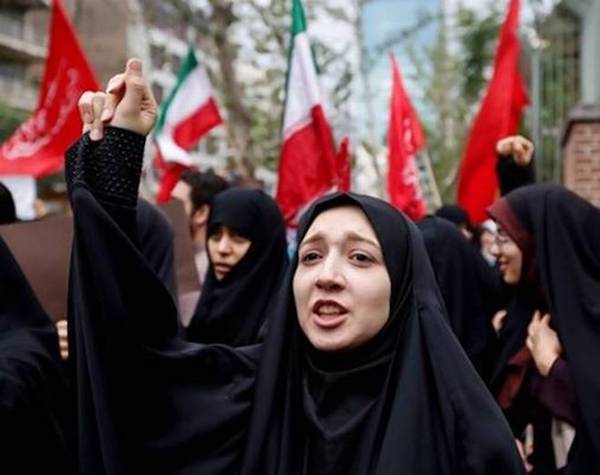
    There have been frequent and persistent reports in the Western media for several months about large-scale demonstrations and protests by Iranian people against the regime. Living conditions are difficult. Iran did not get the goodies that it expected after signing the JCPOA. Inflation is high. The Iranian rial is trading at 75,000 to the dollar. People are angry with the government. According to the well-researched work Democracy in Iran: Why It Failed and How It Might Succeed by American academic Misagh Parsa, disaffection among the people has manifested itself in several forms. Hundreds of mosques do not have imams and the attendance at Friday prayers has dwindled dramatically. Some are converting to Christianity and, according to Professor Parsa, even to the Baha’i faith, which is the largest non-Muslim community in Iran. Professor Parsa states that there is massive corruption as well as economic inequality in Iran. All in all, he suggests that it is quite likely that there might be a revolutionary upsurge, though he is careful not to indicate any timeline for it.

    A different calculation

    It is this discontent that Mr. Trump might be counting on tapping. His calculation seems to be that the reimposition of severe sanctions would render life very difficult, almost unbearable, for the populace who might, in the absence of other avenues, take to the streets, as they did in 1979 to overthrow the Shah’s regime which too, like the present one, had strong military and oppressive secret services such as the Savak but which could not defeat public anger, frustration and rage. For these reasons, Mr. Trump is unlikely to listen to voices of reason or to appeals from his Western allies. He is equally not likely to grant exemptions from sanctions to any country engaging in any form of trade and other transactions with Iran. His administration will follow strict interpretation of the guidelines regarding the sanctions regime.

    Iranian restraint

    Iran has shown restraint, forsaking knee-jerk reaction. It did not declare that the deal was dead, as it might well have done. It did not announce immediate resumption of uranium enrichment, which it emphasized will be at the industrial level. It has so far not called off International Atomic Energy Agency (IAEA) inspections. Iran will consult with the other signatories to the JCPOA for several weeks before taking any further action. This shows the maturity of Iranian diplomacy. It remains to be seen how long France and others will stick to their position of continuing to adhere to the deal; they will eventually have to fall in line in some way with the Americans, if not for political then for economic considerations. For Mr. Trump, the Republicans are fully with him and the Democrats will be too eventually.

    Will Iran live up to the American calculation? For the present, Mr. Trump’s decision has strengthened the hardliners. President Hassan Rouhani, regarded as a moderate, has no option but to take a defiant stance. The Iranian people, proud as they are of their heritage, will stand behind their regime. But there may come a time when their hardships reach a stage when they might feel compelled to take to the streets.

    In the meanwhile, Iran will even more vigorously support the Bashar al-Assad regime in Damascus, in which it will be joined by Russia and Hezbollah, which has done very well in the parliamentary elections in Lebanon this month. The Houthi rebels in Yemen will feel more emboldened to take on the Saudi-led coalition; of course, the Yemeni people will continue to suffer, as will the Syrian people, for years to come. Iran will more directly intervene in Iraq and render the possibility of progress in the non-existent peace effort in Afghanistan even more difficult.

    If the regime in Tehran does not collapse, the Washington-Jerusalem-Riyadh axis might look for an alternative course of action, not excluding military. In that case, the Nobel Peace Prize will elude Mr. Trump.

    Prime Minister Narendra Modi has established special relationship with Israel and its present Prime Minister, Benjamin Netanyahu. He has also made efforts to forge intimate relations with the U.S. With both India has the upper hand, since it is they who want to sell expensive military hardware to India. Under the circumstances, India has made a well-drafted two-sentence statement on the Trump decision. The first strikes a balance between Iran’s right to develop nuclear energy for peaceful purposes as also the international community’s concern to ensure that its nuclear program remains strictly peaceful. The second sentence contains implicit disapproval of the American decision and warns, again implicitly, against any strong military action. For India, the question will also be: can it rely on the U.S. to honor even its written word embodied in international agreements? Mr. Trump wants to annul every single achievement of his predecessor — Obamacare, the North American Free Trade Agreement, the Trans-Pacific Partnership, the Paris Agreement, and now JCPOA. India will have to remain vigilant in dealing with this administration; it would not be prudent to assume that it is a special case.

    Fallout for India

    The impact on India will be severe. The price of crude is already close to $80. Energy imports from Iran will become difficult and expensive. Fuel prices will go up. The Reserve Bank of India might have to increase interest rates to contain inflation and step in to check the fall in the rupee’s value. All this might have a direct bearing on politics, given the fact that the government was the beneficiary of low crude price for the first four years but may have to face consequences of inflation and attendant factors in its fifth.

    (The author is a former Indian Ambassador to the United Nations, was Special Envoy for West Asia in the Manmohan Singh government)

  • Trump’s Iran walk-back: Double whammy for India after CATSA

    Trump’s Iran walk-back: Double whammy for India after CATSA

    Just when Indian diplomats were figuring out how to mitigate the impact of Countering America’s Adversaries Through Sanctions Act (CATSA) on its arms and oil trade with Russia, South Block has another reason to burn the midnight oil. US President Donald Trump’s intention to exit the Iran deal, and reimpose sanctions if Tehran declines to renegotiate, could send India’s plans for the region in smoke. The sanctions will pretty much cover all areas of interest to India vis-a-vis Iran: petroleum, ports, shipping and banking. The bright side is that except for Saudi Arabia and Israel, pretty much the rest of the world has not taken kindly to Trump’s attempt to redefine the Joint Comprehensive Plan of Action (JCPOA) to cover “responsible” behavior by Iran both externally and domestically.

    The world can be grateful that Tehran doesn’t have an impetuous leader like Trump. Javed Zarif, Iran’s chief negotiator for the deal, has resolved to diplomatically lobby with the other parties to the agreement. Yet, Trump’s explanation that Iran could emulate North Korea by negotiating denuclearization will find few takers for it is widely realized that Tehran would have to be suicidal if it were to show signs of weakness. On the contrary, the US may have lost North Korea’s trust by going back on the Iran deal just as it lost Palestinian support after Trump announced the shifting of the US embassy to East Jerusalem.

    India needs to work with countries with a shared interest in the JCPOA to ensure that Trump’s exit from the Iran deal does not harm its investments and plans for the region. India and other countries on the same page must also engage with Iran to discourage it from retaliatory malign behavior that may further muddy the waters. PM Modi will get the opportunity to discuss the issue with like-minded leaders when he meets them for two multilateral summits later this year. The problem for India is it has no company like the Chinese Sinopec which has no business interests with a US company and can thus escape sanctions. India will first have to make common cause with countries in the same Iranian boat.

    (Tribune, India)

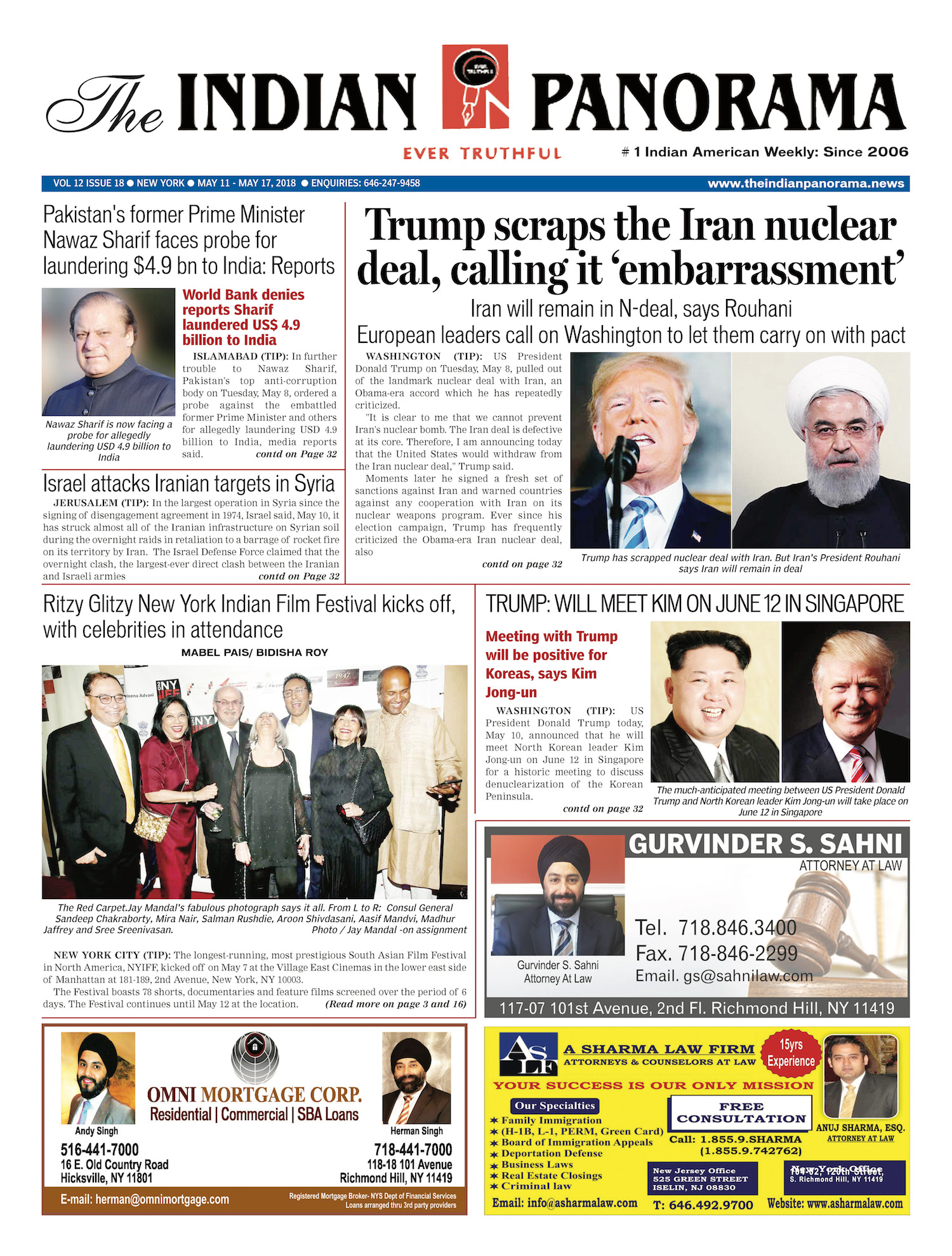
  • May 11 New York & Dallas Print Editions

    May 11 New York & Dallas Print Editions

    [vc_row][vc_column][vc_column_text]

    Print Replica ~ Digitally

    E-Editions

    [/vc_column_text][/vc_column][/vc_row][vc_row][vc_column width=”1/3″][vc_custom_heading text=”New York Edition” font_container=”tag:h2|text_align:center” google_fonts=”font_family:Istok%20Web%3Aregular%2Citalic%2C700%2C700italic|font_style:700%20bold%20regular%3A700%3Anormal” link=”url:https%3A%2F%2Fwww.theindianpanorama.news%2Fwp-content%2Fuploads%2F2018%2F05%2FTIP-May-11-NYC.pdf|||”][vc_single_image image=”92685″ img_size=”full” add_caption=”yes” alignment=”center” onclick=”custom_link” link=”https://www.theindianpanorama.news/wp-content/uploads/2018/05/TIP-May-11-NYC.pdf”][/vc_column][vc_column width=”1/3″][vc_custom_heading text=”Dallas, Texas Edition” font_container=”tag:h2|text_align:center” google_fonts=”font_family:Istok%20Web%3Aregular%2Citalic%2C700%2C700italic|font_style:700%20bold%20regular%3A700%3Anormal” link=”url:https%3A%2F%2Fwww.theindianpanorama.news%2Fwp-content%2Fuploads%2F2018%2F05%2FTIP-May-11-Dallas-TX.pdf|||”][vc_single_image image=”92686″ img_size=”full” add_caption=”yes” alignment=”center” onclick=”custom_link” link=”https://www.theindianpanorama.news/wp-content/uploads/2018/05/TIP-May-11-Dallas-TX.pdf”][/vc_column][vc_column width=”1/3″][vc_single_image image=”82828″ img_size=”medium” alignment=”center” onclick=”custom_link” link=”https://www.theindianpanorama.news/advertising-media-kit-portal-indian-panorama/”][vc_single_image image=”82829″ img_size=”medium” alignment=”center” onclick=”custom_link” link=”https://www.theindianpanorama.news/advertising-media-kit-portal-indian-panorama/”][/vc_column][/vc_row][vc_row][vc_column][td_block_ad_box spot_id=”custom_ad_3″ tdc_css=””][/vc_column][/vc_row][vc_row][vc_column width=”2/3″][vc_custom_heading text=”Lead Stories This Week” font_container=”tag:h2|text_align:center” google_fonts=”font_family:Istok%20Web%3Aregular%2Citalic%2C700%2C700italic|font_style:700%20bold%20regular%3A700%3Anormal” link=”url:https%3A%2F%2Fwww.theindianpanorama.news%2F|||”][td_block_5 separator=”” limit=”8″ tdc_css=””][/vc_column][vc_column width=”1/3″][vc_widget_sidebar sidebar_id=”td-default”][/vc_column][/vc_row]

  • Trump: Will meet Kim on June 12 in Singapore

    Trump: Will meet Kim on June 12 in Singapore

    Meeting with Trump will be positive for Koreas, says Kim Jong- un

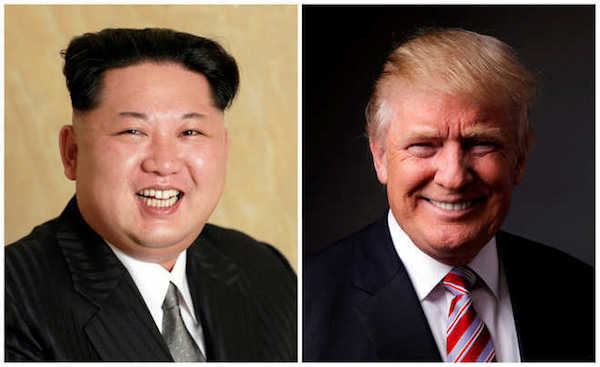
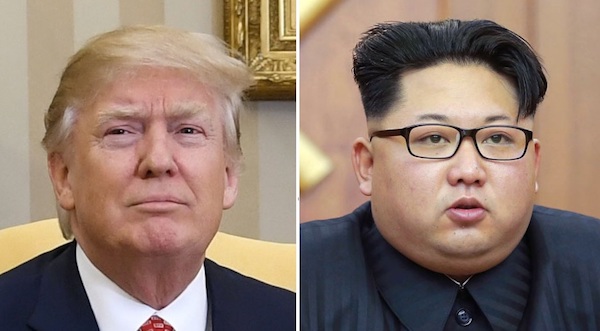
    WASHINGTON(TIP): US President Donald Trump today, May 10, announced that he will meet North Korean leader Kim Jong-un on June 12 in Singapore for a historic meeting to discuss denuclearization of the Korean Peninsula.

    Trump’s announcement came hours after US Secretary of State Mike Pompeo returned home from North Korea with three detained Americans.

    Trump, who personally greeted the trio at the Andrews Air Force Base, praised Kim for their release ahead of their summit.

    “The highly anticipated meeting between Kim Jong Un and myself will take place in Singapore on June 12th. We will both try to make it a very special moment for World Peace!,” Trump tweeted.

    Trump has struck a cautiously optimistic tone in discussing the prospects of reaching a deal during his upcoming summit with Kim, saying he is hopeful a historic agreement can be brokered while also warning the talks could prove unfruitful.

    But the President saw the release of the three Americans as yet another reason for optimism as he prepares for the summit. “We are starting off on a new footing-I really think we have a very good chance of doing something very meaningful. A lot of very good things have happened,” Trump said as he greeted the three former prisoners.

    The Americans-Kim Dong Chul, Kim Hak-song and Kim Sang Duk, also known as Tony Kim-were freed yesterday by North Korea while Pompeo was on a visit to Pyongyang to finalize the details of the Trump-Kim summit.

    The summit, which has been in the works since Trump accepted Kim’s invitation to meet in March, will be the first ever meeting between a sitting US president and North Korean leader.

    US officials had also considered holding the summit at the Korean demilitarized zone or in Mongolia, but ultimately settled on the city-state of Singapore as the location.

    Meanwhile, Kim Jong-un has said that the meeting with Trump will be positive towards easing tensions on the Korean Peninsula, Pyongyang state media reported on Thursday, May 10.

    Kim made the remark to visiting US Secretary of State Mike Pompeo on Wednesday, May 9 the state-run Korean Central News Agency (KCNA) reported.

    During the meeting with Pompeo, Kim described the planned summit as “historic” and “the excellent first step towards promotion of the positive situation development in the Korean peninsula and building of a good future”.

    This was Pompeo’s second visit to the Asian country after his secret trip over Easter, when he also met with Kim, to finalize preparations for the summit, reports Efe news.

    “At the meeting, an in-depth discussion was made on the practical matters for holding the North Korea-US summit and its procedure and ways. Kim Jong-un reached a satisfactory consensus on the issues discussed with the US state secretary,” Yonhap News Agency quoted KCNA as saying.

    This is the first time that the North Korean leader officially spoke of the meeting with Trump, which has been scheduled for the end of May or the beginning of June and will be the first meeting in history between the heads of government of the two countries.

    KCNA said Kim also “accepted an official suggestion of the US President for the release of Americans who have been detained” and gave an order “on granting amnesty to them for their repatriation”.

    The three Americans–Kim Dong-chul, 64, Kim Sang-duk, 58, and Kim Hak-song, around 60–who had been held prisoners in North Korea, were all born in South Korea but later acquired the US citizenship.

    Pompeo also delivered Kim a “verbal message” from Trump, adding Kim highly appreciated that the US President had shown “deep interest in settling the issue through dialogue”.

    Details of Trump’s message were not disclosed.

    The North’s media covered Wednesday’s meeting extensively.

    The Rodong Sinmun, the official newspaper of North Korea’s Workers’ Party, devoted the front page to the Kim-Pompeo meeting, with relevant photos, including those showing the two shaking hands.

    (Source: PTI / IANS)


  • Trump scraps the Iran nuclear deal, calling it ’embarrassment’

    Trump scraps the Iran nuclear deal, calling it ’embarrassment’

    Iran will remain in N-deal, says Rouhani

    European leaders call on Washington to let them carry on with pact

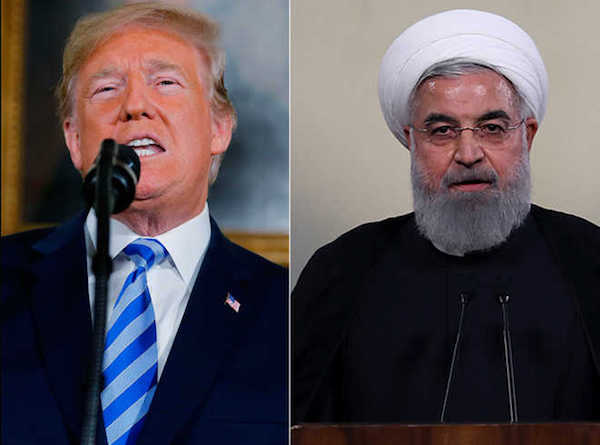
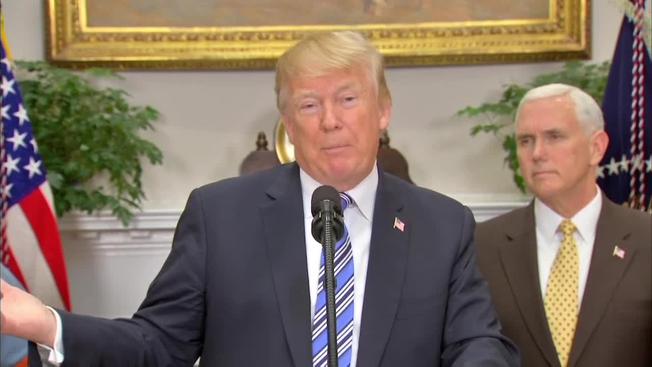
    WASHINGTON(TIP): US President Donald Trump on Tuesday, May 8, pulled out of the landmark nuclear deal with Iran, an Obama-era accord which he has repeatedly criticized.

    “It is clear to me that we cannot prevent Iran’s nuclear bomb. The Iran deal is defective at its core. Therefore, I am announcing today that the United States would withdraw from the Iran nuclear deal,” Trump said.

    Moments later he signed a fresh set of sanctions against Iran and warned countries against any cooperation with Iran on its nuclear weapons program.

    Ever since his election campaign, Trump has frequently criticized the Obama-era Iran nuclear deal, also known as the Joint Comprehensive Plan of Action or JCPOA.

    France, Germany, and the UK regret the U.S. decision to leave the JCPOA. The nuclear non-proliferation regime is at stake.

        — Emmanuel Macron (@EmmanuelMacron) May 8, 2018

    He had described the agreement, which was negotiated by then US secretary of state John Kerry, as a bad deal.

    I am deeply concerned by today’s announcement that the US will be withdrawing from the JCPOA & will begin reinstating US sanctions, says @antonioguterres. Full text here: https://t.co/LqC2WFJfAC

        — UN Spokesperson (@UN_Spokesperson) May 8, 2018

    The Iran nuclear deal was reached in Vienna in July 2015 between Iran and the P5 (the five permanent members of the UN Security Council) plus Germany and the European Union.

    Trump’s decision would have global ramifications, straining Iranian economy and heightening tensions in the Middle East.

    Iran will remain in N-deal, says Rouhani

    Meanwhile, Iranian President Hassan Rouhani said on Tuesday, May 8, that Iran would remain committed to a multinational nuclear deal despite US President Donald Trump’s decision to withdraw from the 2015 agreement designed to deny Tehran the ability to build nuclear weapons.

    “If we achieve the deal’s goals in cooperation with other members of the deal, it will remain in place… By exiting the deal, America has officially undermined its commitment to an international treaty,” Rouhani said in a televised speech.

    “I have ordered the foreign ministry to negotiate with the European countries, China and Russia in coming weeks. If at the end of this short period we conclude that we can fully benefit from the JCPOA with the cooperation of all countries, the deal would remain,” he added.

    The Joint Comprehensive Plan of Action (JCPOA) is the full name for the nuclear deal, struck in 2015 between Iran, the five permanent members of the U.N. Security Council — the United States, Russia, China, Britain and France — and Germany.

    Rouhani added that Iran was ready to resume its nuclear activities after consultations with the other world powers which are part of the agreement.

    Trump’s announcement was hailed by Washington’s principal allies in the Middle East, Israel and Saudi Arabia, both sworn foes of Iran.

    Under the deal, Iran curbed its nuclear activities in return for the lifting of most sanctions imposed on the country.

    Trump said he would reimpose economic sanctions on Tehran immediately. His decision puts pressure on his European allies, who are key backers of the deal and reluctant to join the United States in reimposing sanctions on Iran.

    Banking turmoil

    Some Iranians had been cashing in their savings even before Trump’s announcement he would pull out from the international deal with Iran, straining a banking system weighed down by bad loans and years of isolation.

    An official with Iran’s biggest state-owned Melli Bank told Reuters savings had declined by an unspecified amount, although he said this was a temporary phenomenon and that they would recover once the uncertainty over Trump’s decision passed.

    “When there is political uncertainty, its psychological impact on people causes a drop in savings. But it will pass after Trump’s deadline,” the official said before the announcement, declining to be named. A senior Iranian central bank official said conditions within the banking system had deteriorated in the past year, and “we have still not passed the danger zone” but added that the central bank had “all the measures ready to prevent any crisis”.

    EU will stand by Iran

    Europe will stand by the international nuclear accord with Iran, EU Foreign Policy chief Federica Mogherini said in a live press statement in Rome on Tuesday. “The EU is determined to preserve it,” she said. “We expect the rest of the international community to continue to preserve it, for the sake of collective security.” “The nuclear accord belongs to the whole of the international community,” Mogherini added. “To the Iranian people I say: do not let anyone dismantle this deal, one of the greatest achievements of the international community.”  “I am particularly worried about tonight’s announcement of further sanctions,” she said, adding that the deal with Iran “is the culmination of 12 years of diplomacy.”

    Most Americans reject move

    Less than one in three Americans agrees with President Donald Trump’s decision to pull the US out of an agreement to limit Iran’s nuclear program, according to a Reuters/Ipsos national opinion poll released on Tuesday, May 8.

    The poll, conducted on May 4-8, ahead of the President’s announcement to end the deal, found that 29 per cent of adults wanted to end the deal with Iran and five other world powers to ease sanctions and limit Iran’s nuclear program. Another 42 per cent said the US should remain in the deal, and the remaining 28 per cent said they “don’t know”. Even among those who are registered as Republicans, less than half — 44 per cent — advocated ending the US involvement in the deal. Another 28 per cent wanted to remain, and the remaining 28 percent said they did not know. — Agencies

    ‘US undermined commitment to treaty’

    If we achieve the deal’s goals in cooperation with other members of the deal, it will remain in place… By exiting the deal, America has officially undermined its commitment to an international treaty. Hassan Rouhani, Iranian President

    ‘Will work collectively’

    We will work collectively on a broader framework, covering (Iran’s) nuclear activity, the post-2025 period, ballistic activity, and stability in the Middle-East, notably Syria, Yemen, and Iraq. Emmanuel Macron, French President

    ‘It’s a historic move’

    Israel thinks that Trump made a historic move, and this is why Israel thanks him for his commitment to confront the terrorist regime in Tehran, and his commitment to ensure that Iran never gets nuclear weapons. Benjamin Netanyahu, Israeli Prime Minister

    ‘Decision misguided’

    Donald Trump’s decision to withdraw from the deal is misguided. I believe that the decision to put the JCPOA at risk without any Iranian violation of the deal is a serious mistake. Barack Obama, former US President.

    (Source: PTI and agencies)


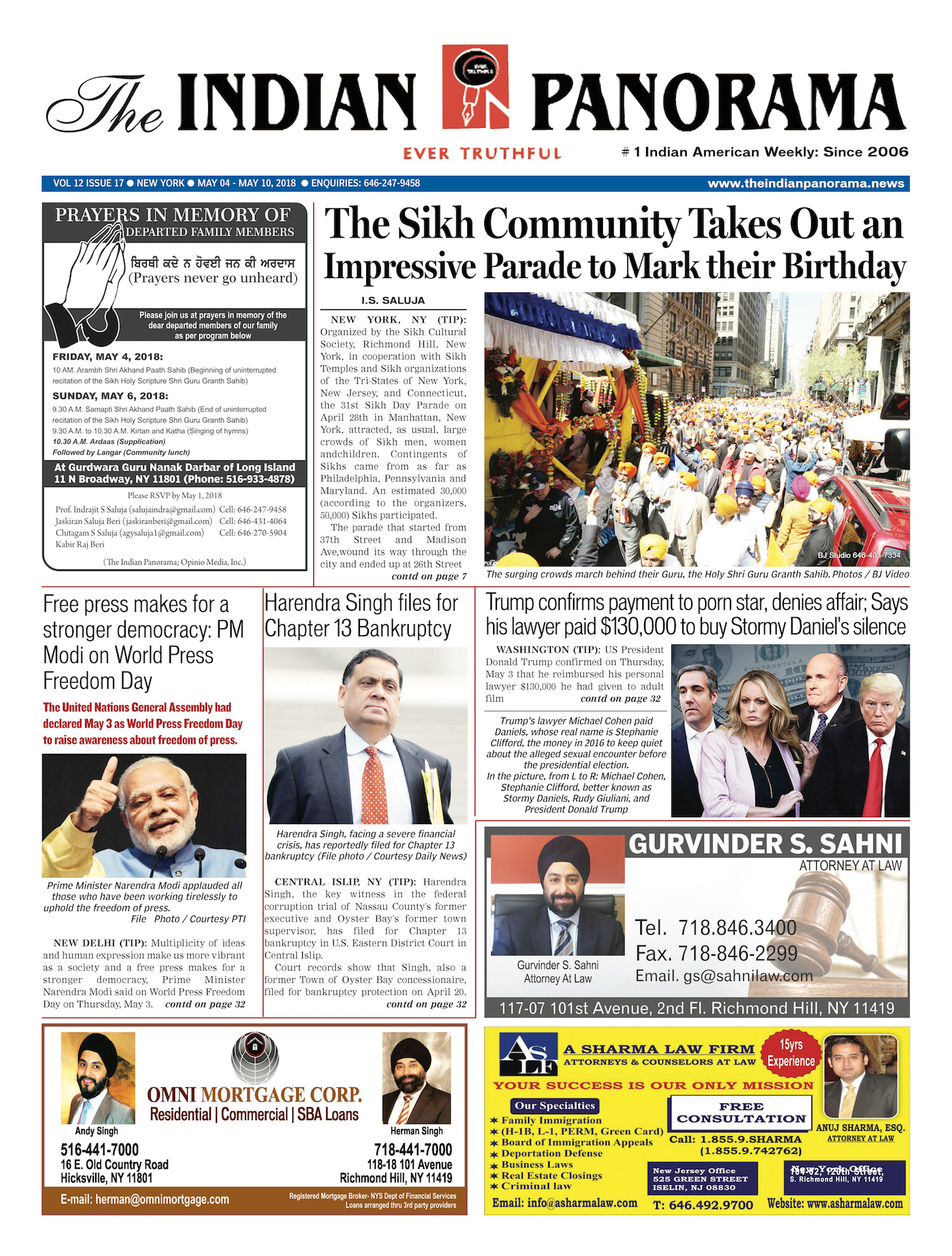
  • May 04 New York & Dallas Print Editions

    May 04 New York & Dallas Print Editions

    [vc_row][vc_column][vc_column_text]

    Print Replica ~ Digitally

    E-Editions

    [/vc_column_text][/vc_column][/vc_row][vc_row][vc_column width=”1/3″][vc_custom_heading text=”New York Edition” font_container=”tag:h2|text_align:center” google_fonts=”font_family:Istok%20Web%3Aregular%2Citalic%2C700%2C700italic|font_style:700%20bold%20regular%3A700%3Anormal” link=”url:https%3A%2F%2Fwww.theindianpanorama.news%2Fwp-content%2Fuploads%2F2018%2F05%2FTIP-May-4-NYC.pdf|||”][vc_single_image image=”92593″ img_size=”full” add_caption=”yes” alignment=”center” onclick=”custom_link” link=”https://www.theindianpanorama.news/wp-content/uploads/2018/05/TIP-May-4-NYC.pdf”][/vc_column][vc_column width=”1/3″][vc_custom_heading text=”Dallas, Texas Edition” font_container=”tag:h2|text_align:center” google_fonts=”font_family:Istok%20Web%3Aregular%2Citalic%2C700%2C700italic|font_style:700%20bold%20regular%3A700%3Anormal” link=”url:https%3A%2F%2Fwww.theindianpanorama.news%2Fwp-content%2Fuploads%2F2018%2F05%2FTIP-May-4-Dallas-TX.pdf|||”][vc_single_image image=”92592″ img_size=”full” add_caption=”yes” onclick=”custom_link” link=”https://www.theindianpanorama.news/wp-content/uploads/2018/05/TIP-May-4-Dallas-TX.pdf”][/vc_column][vc_column width=”1/3″][vc_single_image image=”82828″ img_size=”medium” alignment=”center” onclick=”custom_link” link=”https://www.theindianpanorama.news/advertising-media-kit-portal-indian-panorama/”][vc_single_image image=”82829″ img_size=”medium” alignment=”center” onclick=”custom_link” link=”https://www.theindianpanorama.news/advertising-media-kit-portal-indian-panorama/”][/vc_column][/vc_row][vc_row][vc_column][td_block_ad_box spot_id=”custom_ad_3″ tdc_css=””][/vc_column][/vc_row][vc_row][vc_column width=”2/3″][vc_custom_heading text=”Lead Stories This Week” font_container=”tag:h2|text_align:center” google_fonts=”font_family:Istok%20Web%3Aregular%2Citalic%2C700%2C700italic|font_style:700%20bold%20regular%3A700%3Anormal” link=”url:https%3A%2F%2Fwww.theindianpanorama.news%2F|||”][td_block_5 separator=”” limit=”8″ tdc_css=””][/vc_column][vc_column width=”1/3″][vc_widget_sidebar sidebar_id=”td-default”][/vc_column][/vc_row]

  • April 27 New York & Dallas Print Editions

    April 27 New York & Dallas Print Editions

    [vc_row][vc_column][vc_column_text]

    Print Replica ~ Digitally

    E-Editions

    [/vc_column_text][/vc_column][/vc_row][vc_row][vc_column width=”1/3″][vc_custom_heading text=”New York Edition” font_container=”tag:h2|text_align:center” google_fonts=”font_family:Istok%20Web%3Aregular%2Citalic%2C700%2C700italic|font_style:700%20bold%20regular%3A700%3Anormal” link=”url:https%3A%2F%2Fwww.theindianpanorama.news%2Fwp-content%2Fuploads%2F2018%2F04%2FTIP-April-27-NYC.pdf|||”][vc_single_image image=”92477″ img_size=”full” add_caption=”yes” alignment=”center” onclick=”custom_link” link=”https://www.theindianpanorama.news/wp-content/uploads/2018/04/TIP-April-27-NYC.pdf”][/vc_column][vc_column width=”1/3″][vc_custom_heading text=”Dallas, Texas Edition” font_container=”tag:h2|text_align:center” google_fonts=”font_family:Istok%20Web%3Aregular%2Citalic%2C700%2C700italic|font_style:700%20bold%20regular%3A700%3Anormal” link=”url:https%3A%2F%2Fwww.theindianpanorama.news%2Fwp-content%2Fuploads%2F2018%2F04%2FTIP-April-27-Dallas-TX.pdf|||”][vc_single_image image=”92476″ img_size=”full” add_caption=”yes” alignment=”center” onclick=”custom_link” link=”https://www.theindianpanorama.news/wp-content/uploads/2018/04/TIP-April-27-Dallas-TX.pdf”][/vc_column][vc_column width=”1/3″][vc_single_image image=”82828″ img_size=”medium” alignment=”center” onclick=”custom_link” link=”https://www.theindianpanorama.news/advertising-media-kit-portal-indian-panorama/”][vc_single_image image=”82829″ img_size=”medium” alignment=”center” onclick=”custom_link” link=”https://www.theindianpanorama.news/advertising-media-kit-portal-indian-panorama/”][/vc_column][/vc_row][vc_row][vc_column][td_block_ad_box spot_id=”custom_ad_3″ tdc_css=””][/vc_column][/vc_row][vc_row][vc_column width=”2/3″][vc_custom_heading text=”Lead Stories This Week” font_container=”tag:h2|text_align:center” google_fonts=”font_family:Istok%20Web%3Aregular%2Citalic%2C700%2C700italic|font_style:700%20bold%20regular%3A700%3Anormal” link=”url:https%3A%2F%2Fwww.theindianpanorama.news%2F|||”][td_block_5 separator=”” limit=”8″ tdc_css=””][/vc_column][vc_column width=”1/3″][vc_widget_sidebar sidebar_id=”td-default”][/vc_column][/vc_row]

  • Can the 3 Ms save Iran deal?

    Can the 3 Ms save Iran deal?

    By Arun Kumar

    The Macron-Merkel-May trio hopes to bear upon Trump to keep pact

    Besides the Europeans, the looming May 12 deadline also has India worried, as since the end of sanctions, it has greatly strengthened its bilateral relations and economic partnership with Iran. During Rouhani’s visit, the two countries signed nine agreements, including a crucial one on connectivity via the strategic Chabahar Port. India has also committed itself to completing the Chabahar- Zahedan rail link to provide an alternative route to Afghanistan, completely bypassing Pakistan, say the author.

    French President Emmanuel Macron has just ended a glitzy visit with President Donald Trump. German Chancellor Angela Merkel came calling today and British Prime Minister Theresa May has been burning the phone across the Atlantic. Their mission: to persuade the mercurial occupant of the White House not to tear up the Obama era 2015 landmark Iran nuclear deal as he threatened on the campaign trail.

    The wily Donald is not telling anyone what he would do on May 12 when he must either sign a fresh waiver on Western sanctions against Iran or walk away from what Trump has decried as an “insane” and “ridiculous” deal signed by P5+1 — the US, Russia, China, UK, France and Germany — world powers with Tehran to end its nuclear weapons program.

    But swept off his feet by what the American media called “Le Bromance” unleashed by Trump at the first State dinner of his presidency, Macron ended up calling for a new “big deal” with the old one limiting Iran’s uranium enrichment for 15 years serving as one of its four pillars.

    Or did the suave Frenchman charm the Manhattan mogul into buying these side deals he Merkel and May have been working on to convince Trump to stay on in the Iran deal? European leaders are also said to be crafting a “Plan B” to continue without the US. But Iran is unlikely on come on board without the US.

    The three new pillars that Macron suggested in Washington would rework the sunset clause in the accord to ensure there is no nuclear activity by Iran in the long run, as feared by the critics who have accused Europeans, particularly Germany, of putting business before security.

    The Macron proposal would also seek to limit Tehran’s ballistic missile program and curb its “regional influence” by ceasing support for militant groups across the Middle East, particularly Yemen and Syria.

    Even as he declined to show his hand, Trump suggested: “I think we will have a great shot at doing a much bigger maybe deal, maybe not deal” built on solid foundations. In an escalating war of words, he also cautioned Iran against restarting its nuclear program, warning it may “have bigger problems than they have ever had before.”

    Iranian President Hassan Rouhani, who during his February visit to India — the first by an Iranian head of state in 10 years — had dismissed Trump as a “haggler”, was quick to heap fresh insults on “a tradesman” with no understanding of diplomacy. Western powers, he asserted, had no right to make changes in the deal now.

    Earlier in February, Iranian deputy foreign minister Abbas Araqchi had assured that Iran’s commitment to not seek nuclear weapons is permanent and that there was no sunset clause in the deal.

    Besides the Europeans, the looming May 12 deadline also has India worried, as since the end of sanctions, it has greatly strengthened its bilateral relations and economic partnership with Iran. During Rouhani’s visit, the two countries signed nine agreements, including a crucial one on connectivity via the strategic Chabahar Port. India has also committed itself to completing the Chabahar- Zahedan rail link to provide an alternative route to Afghanistan, completely bypassing Pakistan.

    Chabahar Port, Rouhani declared, can serve as a bridge connecting India to Afghanistan, Central Asia and Eastern Europe.

    India, which backs “full and effective implementation” of the Iran nuclear deal, could use Afghanistan as a bargaining chip at the next India-US two plus two dialogue between Trump’s incoming Secretary of State Mike Pompeo and Defense Secretary James Mattis and their Indian counterparts, Sushma Swaraj and Nirmala Sitharaman. The dialogue earlier set for April 18-19 in New Delhi was postponed with the unceremonious dismissal of Trump’s previous chief diplomat Rex Tillerson.

    Pompeo, currently CIA Director, who is set to join Trump’s equally hawkish new National Security Adviser John Bolton, assured the Congress during his confirmation hearings that he would work to fix the “terrible flaws” in the Iran nuclear deal even if Trump walks away from it.

    Unlike Tillerson, who favored a somewhat softer approach towards Pakistan, Pompeo, Bolton and Mattis are all for ramping up US pressure on Pakistan to roll up its terrorism infrastructure to allow India to engage in institution building in Afghanistan.

    Trump’s declaration of a virtual trade war against friends and foes alike has sent diplomats across the world scrambling for new options. India and China, too, are coming closer with Chinese foreign minister Wang Yi declaring that the upcoming informal summit between Indian PM Narendra Modi and Chinese President Xi Jinping would be a “new starting point in relationship.” The two have, for long, put their vexed boundary dispute on the back burner to let their trade relations bloom. China has emerged as India’s largest trading partner with an 18 per cent growth, taking bilateral trade to $84 billion.

    The fate of the Iran deal would certainly cast a shadow on the upcoming nuclear summit between Trump and North Korean leader Kim Jong-un. If Trump tears up the Iran accord, can Kim trust him to keep his word on a peace pact with Pyongyang?

    Would the author of “The Art of the Deal”, who looks at every issue as a transaction, risk a legacy building landmark accord with Kim after bringing him to the negotiating table with threats of “fire and fury”?

    Not likely, as after a secret preparatory visit by Pompeo, a la Henry Kissinger, the legendary architect of Richard Nixon’s opening to China, he now sees Kim whom he once dismissed as the “Little Rocket Man” as “very open and very honorable.”

    At their joint presser, Macron declared that “together US and France would defeat terrorism, curtail weapons of mass destruction in North Korea and Iran and act together on behalf of the planet.” The last bit was seen as a hint that Trump may be open to revisiting the Paris Climate accord too.

    Earlier in January, Trump declared that he would reconsider joining the “terrible” Trans Pacific Partnership if the US got a “substantially better deal.”

    At his presser with Macron, Trump declared in a conspiratorial tone: “Nobody knows what I am going to do on the 12th (of May), although Mr President, you have a pretty good idea.” Macron responded with just a wink.

    It would, indeed, be hazardous to guess what Trump would or would not do. But given that he is open to revisiting every “terrible” deal in search for a “better” one, it may be safe to presume that the Iran accord will live another day.

    (The author is an expert on international affairs)

  • April 20 New York & Dallas Print Editions

    April 20 New York & Dallas Print Editions

    [vc_row][vc_column][vc_column_text]

    Print Replica ~ Digitally

    E-Editions

    [/vc_column_text][/vc_column][/vc_row][vc_row][vc_column width=”1/3″][vc_custom_heading text=”New York Edition” font_container=”tag:h2|text_align:center” google_fonts=”font_family:Istok%20Web%3Aregular%2Citalic%2C700%2C700italic|font_style:700%20bold%20regular%3A700%3Anormal” link=”url:https%3A%2F%2Fwww.theindianpanorama.news%2Fwp-content%2Fuploads%2F2018%2F04%2FTIP-April-20-NYC.pdf|||”][vc_single_image image=”92379″ img_size=”full” add_caption=”yes” alignment=”center” onclick=”custom_link” link=”https://www.theindianpanorama.news/wp-content/uploads/2018/04/TIP-April-20-NYC.pdf”][/vc_column][vc_column width=”1/3″][vc_custom_heading text=”Dallas, Texas Edition” font_container=”tag:h2|text_align:center” google_fonts=”font_family:Istok%20Web%3Aregular%2Citalic%2C700%2C700italic|font_style:700%20bold%20regular%3A700%3Anormal” link=”url:https%3A%2F%2Fwww.theindianpanorama.news%2Fwp-content%2Fuploads%2F2018%2F04%2FTIP-April-20-Dallas.pdf|||”][vc_single_image image=”92380″ img_size=”full” add_caption=”yes” alignment=”center” onclick=”custom_link” link=”https://www.theindianpanorama.news/wp-content/uploads/2018/04/TIP-April-20-Dallas.pdf”][/vc_column][vc_column width=”1/3″][vc_single_image image=”82828″ img_size=”medium” alignment=”center” onclick=”custom_link” link=”https://www.theindianpanorama.news/advertising-media-kit-portal-indian-panorama/”][vc_single_image image=”82829″ img_size=”medium” alignment=”center” onclick=”custom_link” link=”https://www.theindianpanorama.news/advertising-media-kit-portal-indian-panorama/”][/vc_column][/vc_row][vc_row][vc_column][td_block_ad_box spot_id=”custom_ad_3″ tdc_css=””][/vc_column][/vc_row][vc_row][vc_column width=”2/3″][vc_custom_heading text=”Lead Stories This Week” font_container=”tag:h2|text_align:center” google_fonts=”font_family:Istok%20Web%3Aregular%2Citalic%2C700%2C700italic|font_style:700%20bold%20regular%3A700%3Anormal” link=”url:https%3A%2F%2Fwww.theindianpanorama.news%2F|||”][td_block_5 separator=”” limit=”8″ tdc_css=””][/vc_column][vc_column width=”1/3″][vc_widget_sidebar sidebar_id=”td-default”][/vc_column][/vc_row]

  • North Korea offers to denuclearize without demanding withdrawal of US troops from peninsula

    North Korea offers to denuclearize without demanding withdrawal of US troops from peninsula

    Offer conveyed via South Korean president ahead of critical talks between Donald Trump and North Korean leader Kim Jong-un

    WASHINGTON(TIP): As a planned summit between Donald Trump and North Korean leader Kim Jong-un approaches, Pyongyang has indicated it would abandon its nuclear program without requiring American troops to leave the Korean Peninsula.

    “The North is expressing a will for a complete denuclearization”, South Korean president Moon Jae-in said to reporters. “They have not attached any conditions that the U.S. cannot accept, such as the withdrawal of American troops from South Korea. All they are talking about is the end of hostile policies against North Korea, followed by a guarantee of security”.

    Achieving a deal on those terms would represent a resounding success for Mr Trump, who months earlier had threatened to “totally destroy” North Korea during a United Nations speech to world leaders.

    North Korea has long decried the presence of US troops, and their regular joint drills with South Korean forces, as provocations that could presage an invasion and necessitate Pyongyang’s military buildup.

    But any demands for an exit of US troops would likely be a nonstarter for America. Despite nascent diplomatic efforts, the Trump administration has stuck by a campaign of “maximum pressure” and harsh sanctions on the North Korean regime.

    The commitment to denuclearize while allowing US forces to remain, conveyed via a South Korean leader who has prioritized better relations with the North, continued diplomatic maneuvering ahead of high-stakes talks. Earlier this month CIA director Mike Pompeo met with Mr Kim in Pyongyang, and Mr Trump said efforts are on pace to convene talks by June.

    After spending the first stretch of Mr Trump’s term threatening to devastate other countries and testing increasingly sophisticated ballistic missiles believed to be capable of hitting the US mainland, North Korea pivoted to talking with the South and extending Mr Trump an invitation to meet with Mr Kim.

    Paralleling the American-led efforts to end the North Korean nuclear threat, South Korea is hoping to use the diplomatic opening to achieve a lasting change to the status quo on the Korean Peninsula.

    Earlier in the week, South Korean officials said they hoped to also strike a peace accord to formally bring an end to the Korean War, which halted with a 1953 armistice but never again technically ended in the decades the north and the south spent warily watching each other across a heavily fortified border.

    Taken together, the efforts to conclude the war and dismantle Pyongyang’s weapons program offer the contours of a sweeping response to one of the world’s most intractable issues.

    Mr Trump expressed both hopefulness and a willingness to abandon the talks if they prove futile, saying earlier this week that the US would do “everything possible to make it a worldwide success” but adding that America might still walk away.

    “If I think that it’s a meeting that is not going to be fruitful, we’re not going to go”, Mr Trump told reporters. “If the meeting, when I’m there, is not fruitful, I will respectfully leave the meeting”.


  • India in Trumpland needs to cut Trade Deals with US to keep afloat

    India in Trumpland needs to cut Trade Deals with US to keep afloat

    By Arun Kumar

    The businessman-author of The Art of the Deal, who looks at every issue as a transaction, would also be in no hurry to tear up the Iran nuclear deal, Pompeo or no Pompeo. For him, threat is a negotiating tactic. So, India has little to lose sleep on this count”.

    Washington is said to be in turmoil sending shock waves across the world from New York to New Delhi, with a mercurial President Donald Trump firing aides left and right and courting controversy with his fiats.

    Will his new incoming hawkish National Security Adviser John Bolton, who has in the past advocated military strikes against both Iran and North Korea, push his boss into another war and upend the proposed summit between Trump and North Korean leader Kim Jong-un?

    Or would CIA director Mike Pompeo, another hardliner set to replace moderate Secretary of State Rex Tillerson, spur the President to make good on his campaign promise to tear up the “disastrous” Iran nuclear deal forcing nations like India into yet another balancing act?

    And would Trump’s imposition of steel and aluminum tariffs, essentially aimed at China, set off a trade war catching India in the crossfire?  Or perhaps the brash billionaire would implode in a clash of wills with special counsel Robert Mueller, former FBI director, probing alleged Russian interference in the 2016 presidential election and any collusion with the Trump campaign?

    Or maybe the juicy tales of alleged dalliances with a porn star and a Playmate would finally prove the undoing of “The Donald”, as the first wife of the thrice married former reality TV star lovingly called him?

    As pundits on either side of the political divide fill the airwaves with such kite flying, “There is no news anymore. It’s all Trump,” as noted TV host Larry King lamented ripping into TV channels going after eyeballs and newspapers savoring the circulation windfall.

    With Trump setting the agenda, there is hardly any attempt to look at the issues dispassionately and give the devil his due. For instance, when the President ordered the expulsion 60 Russian diplomats in response to nerve agent attack on a former Soviet spy in Britain, Los Angeles Times, among others, had a different take.

    “Trump quiet as US expels 60 suspected Russian spies,” read the Times’ headline, even as the liberal daily acknowledged lower down that it was the “most aggressive diplomatic slap down since the end of Cold War”.

    Thus, contrary to instant analysts’ fears there is little danger of Trump, who in 2004 described the Iraq war as a “big fat mistake”, leading the US into another conflagration as his “America First” policy leaves no room for “regime change” or “nation building” abroad.

    The businessman-author of The Art of the Deal, who looks at every issue as a transaction, would also be in no hurry to tear up the Iran nuclear deal, Pompeo or no Pompeo. For him, threat is a negotiating tactic. So, India has little to lose sleep on this count.

    North Korea too would likely be a different story. Trump has often been painted as getting his strategic advice from TV shows, particularly Fox News, and influenced by the last man he sees before making up his mind. But contrary to conventional wisdom, the President keeps his own counsel. Witness the number of men who have been shown the door. These include Steve Bannon, his former chief strategist, who was once portrayed by influential Time on its cover as “The Great Manipulator” and “The second most powerful man in the world”.

    Trump surprised the world by accepting an invitation for nuclear talks with Kim in May after trading childish barbs with the “little rocket man” about the size of their nuclear buttons as he threatened to respond with “fire and fury” to any provocations from Pyongyang.

    Ahead of the crucial summit that he agreed to despite telling Tillerson that “our wonderful Secretary of State was wasting his time trying to negotiate” with Kim, Trump has scored his first victory on the tariff issue with South Korea.

    Under the significant one-on-one deal, Seoul has agreed to limit its steel exports to the US and ease US auto imports. Pundits concede that Trump might well pull a rabbit out of his hat at the summit. Henry Kissinger, the legendary architect of Richard Nixon’s opening up to China, has endorsed the summit attributing it to Trump’s unique style. As he told the New York Times that it may not be what “we traditionalists would have recommended in the first place” but “it could restore a political initiative to us, and could compel a conversation with countries (who may not otherwise want one).”

    During the presidential campaign, Trump had vowed to be a “true friend” to and “best friends” with India.

    But that has not prevented him from slamming India’s “high” import duties on Harley-Davidson bikes. His administration has also taken India, which has a $24 billion trade surplus with the US, to the WTO, challenging export subsidies that benefit $7 billion Indian exports. But given Prime Minister Narendra Modi’s bonhomie with Trump, they too could well work out a deal like South Korea.

    Indians are also concerned about the Trump administration’s plans to restrict H-1B visas for professionals, which are largely cornered by Indians, and limiting visas to relatives to immediate family. But his plans to introduce a point-based merit system for immigration may well work to the advantage of Indians in the long run.

    Other than that, thanks to bipartisan political support, Trump has continued to consolidate ties with India that have been growing stronger under three previous Presidents — Bill Clinton, George Bush and Barack Obama. As he told Modi last June, “The relationship between India and the United States has never been stronger, never been better.”

    His national strategy unveiled last January also welcomes “India’s emergence as a leading power and stronger strategic and defense partner” as a counterbalance to China in the Indo-Pacific Region.

    With the fight against terrorism emerging as an important area of convergence, the Trump administration also did something unprecedented in suspending security assistance to Pakistan after several warnings to Islamabad to stop supporting terrorists fell on deaf ears.

    Indian interests may be safe in Trumpland, but the ongoing Russia probe has been hanging like a cloud on Trump with all his Russia-related actions viewed as suspect. He has been itching to fire Mueller to end what he deems as the “single greatest witch-hunt in American political history”.

    Republican leaders have cautioned him against sparking a constitutional crisis by firing Mueller with Lindsey Graham, former Republican presidential rival turned supporter, warning that it would be “the beginning of the end of his presidency”.

    But Trump being Trump, he may well do the unthinkable — and yet survive!

    (The author is an expert on India-US relations)

  • March 16 New York & Dallas Print Editions

    March 16 New York & Dallas Print Editions

    [vc_row][vc_column][vc_column_text]

    Print Replica ~ Digitally

    E-Editions

    [/vc_column_text][/vc_column][/vc_row][vc_row][vc_column width=”1/3″][vc_custom_heading text=”New York Edition” font_container=”tag:h2|text_align:center” google_fonts=”font_family:Istok%20Web%3Aregular%2Citalic%2C700%2C700italic” link=”url:https%3A%2F%2Fwww.theindianpanorama.news%2Fwp-content%2Fuploads%2F2018%2F03%2FTIP-March-16-NY.pdf|||”][vc_single_image image=”91863″ img_size=”full” add_caption=”yes” alignment=”center” onclick=”custom_link” link=”https://www.theindianpanorama.news/wp-content/uploads/2018/03/TIP-March-16-NY.pdf”][/vc_column][vc_column width=”1/3″][vc_custom_heading text=”Dallas, Texas Edition” font_container=”tag:h2|text_align:center” google_fonts=”font_family:Istok%20Web%3Aregular%2Citalic%2C700%2C700italic|font_style:700%20bold%20regular%3A700%3Anormal” link=”url:https%3A%2F%2Fwww.theindianpanorama.news%2Fwp-content%2Fuploads%2F2018%2F03%2FTIP-March-16-TX.pdf|||”][vc_single_image image=”91864″ img_size=”full” add_caption=”yes” alignment=”center” onclick=”custom_link” link=”https://www.theindianpanorama.news/wp-content/uploads/2018/03/TIP-March-16-TX.pdf”][/vc_column][vc_column width=”1/3″][vc_single_image image=”82828″ img_size=”medium” alignment=”center” onclick=”custom_link” link=”https://www.theindianpanorama.news/advertising-media-kit-portal-indian-panorama/”][vc_single_image image=”82829″ img_size=”medium” alignment=”center” onclick=”custom_link” link=”https://www.theindianpanorama.news/advertising-media-kit-portal-indian-panorama/”][/vc_column][/vc_row][vc_row][vc_column][td_block_ad_box spot_id=”custom_ad_3″][/vc_column][/vc_row][vc_row][vc_column width=”2/3″][vc_custom_heading text=”Lead Stories This week” font_container=”tag:h2|text_align:center” google_fonts=”font_family:Istok%20Web%3Aregular%2Citalic%2C700%2C700italic|font_style:700%20bold%20regular%3A700%3Anormal” link=”url:https%3A%2F%2Fwww.theindianpanorama.news%2F|||”][td_block_5 limit=”8″][/vc_column][vc_column width=”1/3″][vc_widget_sidebar sidebar_id=”td-default”][/vc_column][/vc_row]

  • Rex Tillerson sacking: Rexit and beyond

    Rex Tillerson sacking: Rexit and beyond

    More proof that propriety, protocol, punditry no longer hold sway in the U.S. administration

    Even by his standards for unexpected diktats, U.S. President Donald Trump’s decision to fire his Secretary of State, Rex Tillerson, and replace him with CIA Director Mike Pompeo, came out of the blue. Mr. Tillerson, who was the CEO of ExxonMobil Corporation before taking up the role, did not agree with Mr. Trump on fundamental policy matters, the President said. This is widely seen as an allusion to Mr. Tillerson’s preference, contra-Trump, for diplomacy as a means of defusing the North Korean crisis. Also implied was a widening chasm between the two men on the merits of the Iran nuclear deal. With Mr. Tillerson’s departure, the number of senior officials exiting the Trump administration after a little more than a year has reached at least 24. Less than a week before the long-rumored “Rexit”, White House Chief Economic Adviser Gary Cohn, formerly a Wall Street banker, quit his post over his opposition to Mr. Trump’s proposal to levy hefty steel and aluminum tariffs. And, less than a week before Mr. Cohn, White House Communications Director Hope Hicks resigned after admitting to a Congressional panel investigating Russian influence on the 2016 election that she had occasionally told “white lies” on Mr. Trump’s behalf. Rumors now swirl that National Security Adviser H.R. McMaster may also soon be ousted. The question at this point is: does the existing coterie of senior White House officials enjoy the confidence of their President to a sufficient magnitude as to ensure that policies can be executed in a meaningful way?

    In one sense, there does not appear to be cause for alarm over the incessant departures from the White House. It is quite possible that Mr. Trump has used his first year in office to consolidate his vision and attract the right talent to realize his governance paradigm, essentially rooted in a nationalistic, or “America First”, world view. Take the case of Mr. Pompeo: he is far more aligned with Mr. Trump’s hawkish approach towards the Kim Jong-un regime than Mr. Tillerson was. There is a case to be made that Mr. Trump’s hardline stance is what is ultimately bringing the North Koreans to the negotiating table. Mr. Tillerson, insistent on talks, was likely to have been an impediment to this strategy. The deeper message is that the liberal order of the Obama years is gone. Propriety, protocol and punditry no longer hold sway — Mr. Trump had no quarrel with Mr. Tillerson over the Secretary leaving numerous senior State Department posts vacant, but only cared about the top diplomat’s concurrence with his strategy. The President will likely apply this principle — and find himself the right people — in other policy areas as well, such as trade and immigration. Nations that engage with America may glean valuable lessons from this churn.

    (The Hindu)

  • Indian Origin Jay Shetty Goes To US For Potentially Path-breaking Autism Treatment

    Indian Origin Jay Shetty Goes To US For Potentially Path-breaking Autism Treatment

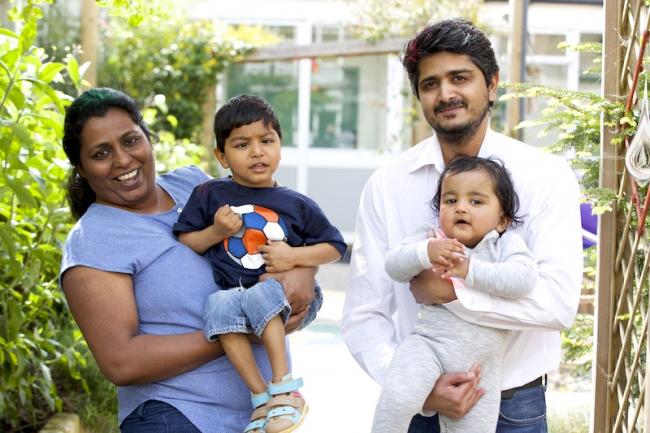
    LONDON (TIP):  Jay Shetty ,A seven-year-old Indian origin, suffers from a debilitating form of cerebral palsy and autism since he was a baby, which means he cannot walk, talk or sit up unaided. He left with his family for the US on March 11th for a revolutionary treatment that has the potential to improve the quality of his life and give hope to others with neurological disorders.

    He is now set to undergo a pioneering clinical trial at Duke University Medical Centre in North Carolina, which relies on the infusion of his younger brother’s umbilical cord blood frozen at birth.

    After a lot of research on stem cells, we had decided before I got pregnant with Kairav, our younger son, that we would save our child’s cord blood. Then towards the end of the pregnancy in 2015, I got in touch with Duke University and they were planning on doing a sibling cord blood therapy trial, said Jay’s mother Shilpa.

    She and husband Raj had the umbilical cord blood of their younger child frozen and stored by UK-based blood bank Cells4Life.

    Umbilical cord blood is rich in a kind of stem cell that can, in theory, help heal most parts of the body, either by stimulating growth or by transforming into the required type of mature cell.

    These can then be put back into the body, even many years later. It relies on a close tissue match for the recipient, to lower the odds of the body rejecting it.

    When the Shettys contacted Duke University, they were told that Kairav’s blood was a match for Jay’s raising the prospect of the UK’s first such sibling cord blood therapy on Jay.

    Stem cell is a cure for some and improvement for all, so we are pretty sure it will definitely have some improvement in Jay’s life, said Shilpa.

    The family from Maharashtra, who have been based in London for over 15 years, are determined not to be put off by some dissenting voices within the medical community who cast doubts on the rare procedure.

    According to Shilpa, because it is not an invasive therapy , they want to go into it with a positive nothing to lose attitude.

    It is in its early stages and it has always been the norm that people will doubt treatments which have not been proved yet. But stem cells in general after years of proven research are known to have the ability to reach the damaged organ and regenerate new cells, she said.

    Claudia Rees, Operations Director at Cells4Life, describes the procedure as a cutting-edge treatment , considered a cornerstone of a relatively new area of science known as regenerative medicine.

    Stem cells and cord blood have already been used to cure diseases such as leukaemia, lymphoma and testicular cancer; in the near future it is likely that these treatments will provide hope for common and often life-threatening conditions such as heart disease, Alzheimer’s and diabetes, said Rees.

    Jay will be in the US for the treatment for a week and undergo rehabilitation in the UK after the cord blood transfusion procedure. The family have managed to raise nearly 26,000 pounds through fundraising to assist with the massive costs involved.

    Jay cannot express and communicate much but we are pretty sure he knows what’s going on as he is pretty bright.

    Kairav is two and half, so doesn’t know much. But he knows a lot of travelling revolves around Jay for therapies. So, he is used to it, said their mother, who believes even a small improvement in Jay’s quality of life as a result of the therapy would be a success story for their family.


  • Trump announces new trade tariff plans, Faces Opposition within and without

    Trump announces new trade tariff plans, Faces Opposition within and without

    WASHINGTON (TIP): Republicans on Capitol Hill reacted angrily to President Donald Trump’s announcement Thursday, March 8, that he is going forward with new tariffs on steel and aluminum, arguing that the move will harm the economy and that it threatens to start a broader trade war.

    WASHINGTON — Republicans on Capitol Hill reacted angrily to President Donald Trump’s announcement Thursday that he is going forward with new tariffs on steel and aluminum, arguing that the move will harm the economy and that it threatens to start a broader trade war.

    And while there are limits to what they can do to stop it, members are contemplating measures that could block the president from fully implementing his proposal.

    “I don’t think Republicans will put up with this, and I personally believe that we may be able to stop it in the Congress,” Sen. Orrin Hatch, R-Utah, said.

    Sen. Hatch: Trump has ‘been misled’ over tariffs 1:07

    The president announced a 10 percent tax on imported aluminum and a 25 percent tax on imported steel, carving out exceptions for imports from Canada and Mexico. But those exemptions weren’t enough to placate congressional Republicans who have traditionally opposed protectionist action on trade.

    GOP leaders had lobbied the White House from moving forward, writing letters, speaking out in the media and through outreach to the president and his advisers.

    During a conference call between White House officials and GOP Hill staffers Thursday, administration representatives requested favorable comments from members on the president’s plan, a suggestion that the staff in one office laughed at, according to a Republican aide.

    In a rare rebuke of the president, Republicans are vowing to continue challenging him in ways that could result in either new legislation or support for expected legal challenges to the move.

    “I disagree with this action and fear its unintended consequences,” House Speaker Paul Ryan said. “There are unquestionably bad trade practices by nations like China, but the better approach is targeted enforcement against those practices.”

    Senate Majority Leader Mitch McConnell said the exemptions for Canada and Mexico are not enough.

    “Members of the Senate, myself included, are concerned about the scope of the proposed tariffs on steel and aluminum and their impact on American citizens and businesses, including many I represent in Kentucky,” McConnell said.

    And, outside, EU talked tough. “If Donald Trump puts in place the measures this evening, we have a whole arsenal at our disposal with which to respond,” European Financial Affairs Commissioner Pierre Moscovici said.

    Counter-measures would include European tariffs on US oranges, tobacco and bourbon, he said, adding that some products under consideration for an EU riposte were largely produced in constituencies controlled by Trump’s Republicans. “We want Congress to understand that this would be a lose-lose situation,” Moscovici told BFM TV.

    The EU is by far the biggest trading partner of the United States by value and, after China, member states have together the biggest trade surplus with the country. Once approved by Trump, the tariffs would go into effect after two months.

    In Beijing, Foreign Minister Wang Yi said history showed that trade wars were not the correct way to resolve problems. “Especially given today’s globalization, choosing a trade war is a mistaken prescription. The outcome will only be harmful,” he said on the sidelines of an annual meeting of China’s Parliament.

  • Trump agrees to meet North Korea’s Kim

    Trump agrees to meet North Korea’s Kim

    WASHINGTON (TIP): US President Donald Trump has agreed to meet North Korean leader Kim Jong-un by May, a top South Korean official announced on Friday, March 9, even as the White House said the two leaders would meet “at a place and time to be determined”.

    South Korean National Security Adviser Chung Eui-Yong, who led his country’s delegation to Pyongyang for talks with the North Korean leaders, made the announcement at the White House hours after he briefed Trump and his national security team.

    Reading from a prepared statement, Chung said the North Korean leader has expressed his “eagerness to meet with President Trump as soon as possible.”

    Chung attributed the North Korean turnaround to Trump’s leadership and his maximum pressure policy together with international solidarity.

    In his meeting with the North Korean leader, Chung said Trump is committed to denuclearization of the Korean Peninsula.

    “Kim pledged that North Korea will refrain from any further nuclear or missile tests. He understands that the routine joint military exercises between the Republic of Korea and the United States must continue. He expressed his eagerness to meet President Trump as soon as possible,” he said.

    “President Trump appreciated the briefing and said he would meet Kim Jong-un by May to achieve permanent denuclearization. The Republic of Korea, along with the United States, Japan, and our many partners around the world, remain fully and resolutely committed to the complete denuclearization of the Korean Peninsula,” Chung said.

    “Along with Trump, we are optimistic about continuing a diplomatic process to test the possibility of a peaceful resolution,” he said.

    “The Republic of Korea, the United States, and our partners stand together in insisting that we not repeat the mistakes of the past, and that the pressure will continue until North Korea matches its words with concrete actions,” the South Korean national security adviser said.

    Reacting to the announcement White House Press Secretary Sarah Sanders said, “President Trump greatly appreciates the nice words of the South Korean delegation and President Moon. He will accept the invitation to meet with Kim Jong Un at a place and time to be determined.”She added that the sanctions on the reclusive nation must remain.

    “We look forward to the denuclearization of North Korea. In the meantime, all sanctions and maximum pressure must remain,” Sanders said.

    According to a senior administration official, Trump may meet the North Korean leader in couple of months.

    Congressman Ed Royce, Chairman of the House Foreign Affairs Committee said Kim’s desire to talk shows sanctions the administration has implemented are starting to work.

    “We can pursue more diplomacy, as we keep applying pressure ounce by ounce. Remember, North Korean regimes have repeatedly used talks and empty promises to extract concessions and buy time,” he said.

    “North Korea uses this to advance its nuclear and missile programs. We’ve got to break this cycle. The United States and South Korea must stand shoulder-to-shoulder in applying the sustained pressure needed to peacefully end this threat. And Beijing must do its part,” Royce said.

    (Source: PTI)

  • Can India and the Global Indians Contribute to the Scientific and Technology Revolution?

    Can India and the Global Indians Contribute to the Scientific and Technology Revolution?

    By Ven Parameswaran
    The only way the U.S. can expand its lead in Science and Technology is by working together with the scientists in India.     According to a recent report in the Times of India, India is all set to produce the world’s largest number of engineers.  While 85% Indian men have shown interest in engineering, the number stands at a close 79% among women in India, says the author. 


    “Science & Engineering Indicators”, a voluminous document, describing the state of American technology was just released by the National Science Foundation and National Science Board.  This contains facts and figures on research and development, innovation and engineers.   But the report’s startling conclusion lies elsewhere:   China has become—or is on the verge of becoming—a scientific and technological superpower.

    After all, science and technology constitute the knowledge base for economically advanced societies and military powers, and China aspires to become the world leader in both.  Still, the actual numbers are breathtaking for the speed with which they have been realized.

    25 years ago, China’s economy was tiny, and its high-tech sector barely existed.  Since then, here is what has happened.

    China has become the second largest R&D spender, accounting for 21 per cent of the world total of nearly $2 trillion in 2015.  Only the U.S., at 26% ranks higher, but if present growth rates continue, China will soon become the biggest spender.  From 2000 to 2015, Chinese R&D outlays grew an average of 18% annually, more than 4 times faster than the U.S. rate of 4%.

    There has been an explosion of papers on technology by Chinese teams.  Although the U.S. and the EU each produce more studies on biomedical subjects, China leads in engineering studies.  American papers tend to be cited more often than the Chinese papers, suggesting that they involve more fundamental research questions, but China is catching up.

    China has dramatically expanded its technology workforce.  From 2000 to 2014, the annual number of bachelor’s degree graduates went from about 359,000 to 1.65 million.  Over the same period, the comparable number of U.S. graduates went from 483,000 to 742,000.  This includes graduates of Chinese and Indian origin, may be 50%.

    Much of China’s high-tech production once consisted of assembling sophisticated components made elsewhere.  Now, says the report, it is venturing into demanding areas such as “supercomputers and smaller jetliners.”

    China still lags in patents received.  Over the past decade, American firms and inventors account for about half the US patents annually.    I should point out that there are so many eminent Indian American scientists and technologists who have accumulated large number of patents.  40% of start-ups in the Silicon Valley are started by Indians.

    Zero and mathematics were invented in India.  Algebra, Trigonometry, and Decimal /Fraction systems were invented in India.   Albert Einstein said that without zero there is no computer or internet.   The Indian Institute of Technology is the topnotch in the world.  A degree from IIT is equal to combined degrees from Harvard, M.I.T. and Princeton stated Leslie Stahl, CBS 60 Minutes anchor after she visited the IIT’s in India.   Sir C.V. Raman of Bangalore won a Nobel prize in Physics several centuries ago.  So many other Indians have also won the Nobel prize in Science.  Professor Ramanujan of Cambridge University, U.K. has made original contributions to advanced mathematics.  Laser Technologist, Bhowmik of Los Angeles had 100 patents.

    The only way the U.S. can expand its lead in Science and Technology is by working together with the scientists in India.     According to a recent report in the Times of India, India is all set to produce the world’s largest number of engineers.  While 85% Indian men have shown interest in engineering, the number stands at a close 79% among women in India.

    In India, the Software services industry alone recruits about 300,000 people every year.   Engineering tops the list of professions seen as most vital for economic growth.

    TRUMP OFFERS TO SHARE 100% of U.S. TECHNOLOGY

    President Trump has made a huge policy change benefitting India.   Trump stated that the US will share 100 per cent of all its technology with India and treat India as its closest ally.  This will enable American companies to set up shops in India and allow them to transfer technology to Indians.  Because of comparative advantage and availability of large supply of engineers, these American companies in joint venture with Indian companies could contribute to scientific and technological revolution, especially R&D.

    I recall that after India first tested nuclear bomb the US imposed heavy sanctions against India.  This prevented Indian scientists from attending international conventions.   This sanction continued for long and never lifted.  Only after President George W Bush’s offer of nuclear civil agreement, such sanctions were removed.

    If the U.S. and India work hand in hand, China will find difficult to compete for global leadership in Science and Technology.

    (The author, a resident of Scarsdale, NY is a former President & CEO, First Asian Securities Corp, NY.  An MBA from Columbia Business School, he is the Chairman, India, National Republican Asian Assembly, Washington D.C, and Senior Vice Chairman, Indian American Republican Committee)