Tag: USIBC

  • US-India Business Council launches task force to align leadership between two nations on artificial intelligence

    US-India Business Council launches task force to align leadership between two nations on artificial intelligence

    WASHINGTON, D.C. (TIP): The US India Business Council on Thursday announced the launch of its AI Task Force (AI-TF) which it said is a pivotal step in aligning US and Indian leadership on Artificial Intelligence (AI).

    The business body, which represents leading global companies operating across the United States, India, and the Indo-Pacific region, said that AI-TF will advance AI concepts and principles, drive multi-stakeholder processes, and promote the development and commercialization of AI technologies. The AI-TF builds on the Chamber of Commerce’s AI principles and endorsement of the OECD’s recommendations on AI, it said.

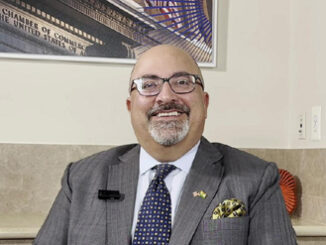
    “The AI-TF is a game-changer, especially needed amid the rapidly evolving landscape of Artificial Intelligence. Through this initiative, we seek to harness the immense potential of AI, propelling competitiveness in both US and Indian economies and our citizen-led societies,” USIBC president Atul Keshap said.

    He said that the USIBC looks forward to shaping a future where AI is a catalyst for progress.

    “Together, we look forward to shaping a future where AI is a catalyst for progress, bringing forth advancements that uphold our shared values and democratic principles and drive economic prosperity for both our great democracies,” he said.

    The new committee members, include Kamal Ahluwalia, president at Ikigai Labs and Todd Skinner, president of International at TransUnion; alongside USIBC Board Chairman and executive vice chairman of Nasdaq Ed Knight.

    “The creation of USIBC’s AI-TF is a major step toward fostering a deeper partnership on the most innovative and transformative technologies of our time,” said Knight.

    “The Task Force will encourage a principled approach to AI adoption, ensuring that these transformative technologies can be harnessed in a manner that is safe and secure,” he said.

    Dr. Sethuraman Panchanathan, director of the US National Science Foundation said partnerships will be key to the future of a trustworthy, safe, and secure AI enterprise.

    “AI is advancing at an incredible pace, requiring researchers to collaborate and share resources for cutting-edge innovations and discoveries alongside a commitment to shared values and principles,” he said.

    Matthew Pine, Xylem president and CEO, said that collaboration is critical to ensure communities have access to the solutions they need to address water challenges. “This collaboration is why Xylem launched the Reservoir Center for Water Solutions alongside water sector leaders, and why we were honored to gather Director Panchanathan and the US-India Business Council to announce the creation of the AI Task Force,” he said.
    (Source: PTI)

  • Digital economy is space for future growth and opportunity between India, US: USIBC President

    Digital economy is space for future growth and opportunity between India, US: USIBC President

    WASHINGTON, D.C. (TIP): Describing the digital economy as a goose that lays golden eggs, the head of the US-India Business Council (USIBC) has called for the creation of structures, regulations and the legal framework to ensure the continued vitality and growth of this key sector in the US and India. Addressing the 7th India Ideas Conclave in Bangalore on Sunday hosted by the India Foundation, at the panel “Commerce & Industry 2.0.” President of the USIBC Atul Keshap discussed India’s impressive development, the success of government-led digitization efforts, and the country’s status as the fastest-growing large economy.

    “Digital economy trade is the goose that lays the golden eggs between both of our countries…My appeal to you would be that we make sure that we create the structures, and the regulations, and the legal framework to ensure the continued vitality and continued growth of the digital economy in the United States and India,” Keshap, also a former top American diplomat, said. “There is a sweeping revolution happening in India, and it is going to have an enormous positive impact on India, on America, and on the entire world. After centuries of disruption, India is returning… to its historic stature as one of the largest and most dynamic and prosperous economies on earth,” Keshap said. The former State Department diplomat, who recently served as the Chargé d’affaires of the US Embassy in India, was speaking on transformations in infrastructure, economic policy, and the digital economy among other areas. During the panel discussion, Keshap expressed optimism that US-India cooperation could help address some of the global economic challenges. “We can have a dispositive impact in building a dependable, resilient, free world supply chain for all of the things that we must have — the critical materials of fueling and powering and supporting innovation societies — things like semiconductors and rare earth,” he said. Responding to questions, Keshap emphasized that the main imperative for India to attract continued investment from global companies and build stronger trade ties with the United States is to create an enabling and predictable policy landscape.

    “An investor wants stability, predictability, transparency, ease of doing business, simple procedures, and a level playing field, they don’t want an unfair advantage,” he said.

    Reaffirming the USIBC’s vision of a USD 500 billion US-India trade partnership, Keshap highlighted the digital economy as a space for future growth and opportunity, according to a press release issued here.

  • USIBC inducts 4 top executives to its India Advisory Council

    USIBC inducts 4 top executives to its India Advisory Council

    WASHINGTON, D.C. (TIP): The US India Business Council (USIBC) has added four top executives to its India Advisory Council, a premier strategic body comprising of a highly influential network of senior India-based executives and thought-leaders committed to growing trade and investment between America and India. The executives are heads of India operations of 3M, Dell, J&J, and Microsoft.

    Ramesh Ramadurai, the managing director of 3M India; Alok Ohrie from J&J, Sarthak Ranade from Dell India and Anant Maheshwari from Microsoft India, according to a statement from USIBC.

    “We are very pleased to welcome Ramesh, Alok, Sarthak, and Anant to our India Advisory Council. As the newest members of this group, we expect Ramesh, Alok, Sarthak, and Anant will enable USIBC to raise to new heights its policy leadership in the life sciences, digital technology, and manufacturing sectors,” said Atul Keshap, president of USIBC.

    Arundhati Bhattacharya, Chief Executive Officer and Chairperson, Salesforce India who has assumed the role of IAC Chair said, the council plays a strategic role in the way business and government engage.

    “We are delighted to welcome these industry stalwarts to the India Advisory Council and look forward to an engaging and insightful future of nurturing business relationships,” Bhattacharya said.

    Formed in 2017, The India Advisory Council serves as a premier strategic body for representatives of Indian companies and Indian affiliates of American companies—including CEOs, presidents, managing directors, and chairpersons—to collaborate on a forward-looking advocacy agenda in India. Its members help lead USIBC engagements, meet with senior Indian and US government officials to offer advice, and influence USIBC policy and programme direction to ensure the organization remains the cutting-edge platform for advancing the US-India relationship. Representing all major sectors, the IAC bolsters USIBC’s mission to promote bilateral trade and investment between the US and India and spearheads coordinated advocacy for cross-cutting initiatives including global health, supply chain resiliency, and the energy transition, the statement said.

  • Veteran Indian American diplomat Atul Keshap is the President of US-India Business Council

    Veteran Indian American diplomat Atul Keshap is the President of US-India Business Council

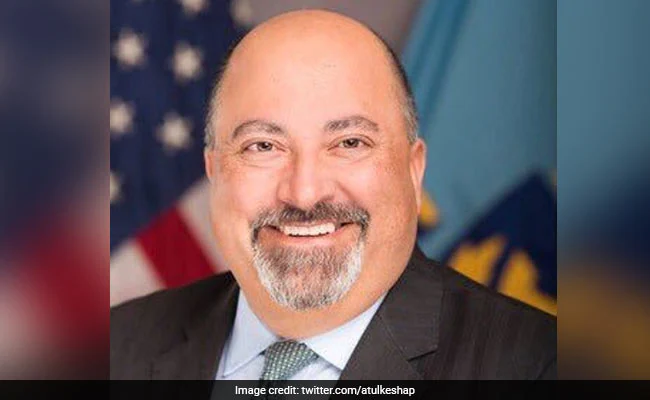
    WASHINGTON D.C. (TIP): Veteran Indian American diplomat Atul Keshap is set to lead the US-India Business Council (USIBC) as President from Wednesday, January 5 taking over from another former Indian American diplomat Nisha Biswal. Keshap, who most recently served in New Delhi as US Chargé d’Affaires to India, leading the US Embassy team has joined the US Chamber of Commerce, the chamber announced Jan 4.

    A 28-year veteran of the US Department of State, he has held a number of senior US government positions including Deputy Assistant Secretary of State for South Asia in Washington, DC and US Ambassador to Sri Lanka and Maldives.

    A part of the US Chamber USIBC represents top global companies operating across the United States, India, and the Indo-Pacific. Amid dynamic growth within the US-India commercial partnership, it serves as the premier voice of industry and create connections between businesses and governments across both countries, a chamber release said.

    Through its flagship Washington, DC and New Delhi offices and presences across both countries, USIBC works with members to identify and advance key policy priorities, it said. Recognizing that US-India trade is increasingly driven by new business hubs, USIBC is also focused on strengthening connections between cities and states.

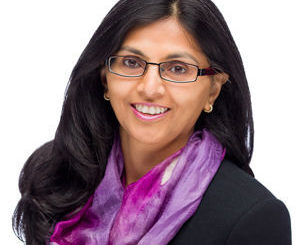
    Keshap’s predecessor Biswal, a former US Assistant Secretary of State for South Asia, will remain deeply involved with USIBC as the US Chamber’s Senior Vice President of International Strategy and Global Initiatives and South Asia.

    “The US-India Business Council is a critical and vital voice in driving ever closer commercial cooperation between the world’s two largest democracies,” said Myron Brilliant, Executive Vice President and Head of the International Division of the US Chamber of Commerce.

    “We’re ecstatic to have Ambassador Keshap as USIBC’s next President. His deep expertise, and deep global network will empower the organization to even greater heights and serve our members well.”

    “As the next President of USIBC, I’m honored and excited to continue my involvement in shaping and strengthening the robust relationship between the United States and India. I’m thrilled to join the US Chamber’s international powerhouse team and be part of the world’s largest and most influential advocacy organization,” said Keshap.

    “India and its inspired citizenry hold a special place in my heart, and I believe there is no better place to continue this journey than serving as President of USIBC, which is committed and dedicated to enhancing commercial ties between the two countries,” he added. “With the two countries on the cusp of entering an even more robust era in our strategic partnership, I feel privileged and honored to lead USIBC.”

    “I’m thrilled to welcome my former State Department colleague to the US Chamber family,” said Biswal. “Ambassador Keshap brings a wealth of experience and knowledge of India and the Indo-Pacific to his new role.”

    “Across multiple US administrations, he has been instrumental in expanding US-India strategic and economic cooperation and growing commercial ties across multiple sectors,” she said.

    “I look forward to working with Atul and the entire USIBC team to deliver to our members and leaders in both countries unmatched experience, advocacy, and networks to further deepen the US-India partnership.”

    Keshap’s previous positions included Principal Deputy Assistant Secretary of State for East Asia and Pacific Affairs and US Envoy for Asia Pacific Economic Cooperation.

    He has also served in a number of distinguished roles at the National Defense University, the White House National Security Council, and in diplomatic postings in Washington and abroad, including in India from 2005-2008.

  • Regular India-US engagements under Trade Policy Forum will help removing barriers to trade: USIBC

    Regular India-US engagements under Trade Policy Forum will help removing barriers to trade: USIBC

    WASHINGTON, D.C. (TIP):  A regular engagement between India and the United States under the bilateral Trade Policy Forum mechanism will help remove barriers to trade, facilitate higher levels of investment and increase two-way trade in goods and services, the US India Business Council said Tuesday, November 23. ”We’re encouraged with positive statements coming from both sides and are certain regular engagements under the Forum will help removing barriers to trade, facilitate higher levels of investment and increase two-way trade in goods and services,” the USIBC said. In a statement, the USIBC congratulated Commerce Minister Piyush Goyal and US Trade Representative (USTR) Katherine Tai for a successful reconvening of the US-India Trade Policy Forum and said that they are glad to see the robust agenda set forth by the leaders. ”Today’s meeting also confirms the widespread benefit of U.S.-India commercial partnership and the importance of innovation and investment, reaffirming the importance of collaboration on the Quad, climate, health, and labor issues,” the council said. ”We look forward to playing a significant role in guiding and advancing these issues on behalf of the USIBC membership and working in tandem with both governments,” it said.

  • U.S. Chamber Commends Prime Minister Modi on His Historic Re-Election

    U.S. Chamber Commends Prime Minister Modi on His Historic Re-Election

    WASHINGTON (TIP): After the landslide victory of BJP in the Lok Sabha election that is bringing Prime Minister Narendra Modi back into office for a second term, the U.S. Chamber of Commerce welcomed the outcome of the largest democratic exercise in history, describing it as ‘Ushering in an opportunity for global economic and strategic leadership in India.’

    Nisha Biswal, President of the U.S.-India Business Council at the U.S. Chamber of Commerce, said that in 2014, Prime Minister Modi and the Bharatiya Janata Party won an election on a platform of development for all and an agenda of robust economic reform. “Over the past five years, we have seen good progress on reforms, which include the establishment of a national Goods and Services Tax, passage of the Insolvency and Bankruptcy Code, and a variety of legal and regulatory reforms which have catapulted India’s Ease of Doing Business ranking from 142 to 77. These reforms laid the foundation for India’s strong record of economic growth. Still, much remains to be done to unlock the expansive growth potential of the Indian market. With a strong mandate from the Indian people, Prime Minister Modi will have an opportunity to usher in an era of global economic and strategic leadership for India.”

    “A strong U.S.-India commercial partnership will support these goals, helping India to grow into a $5 trillion economy in the next five years. USIBC believes that trade and investment between the two countries is a critical element of India’s future growth and looks forward to working with Prime Minister Modi and his team to unlock new growth opportunities across the U.S.-India corridor”, she further added.

  • Indian American USIBC President Nisha Biswal will deliver keynote at Ekal Vidyalaya’s Washington gala

    Indian American USIBC President Nisha Biswal will deliver keynote at Ekal Vidyalaya’s Washington gala

    WASHINGTON, DC(TIP): Indian American USIBC President Nisha Desai Biswal will deliver the keynote address at the Ekal Vidyalaya’s Washington, DC, area gala,which will be held at the Congressional Country Club in Bethesda, MD, on October 12.

    The event will consist of a dinner, auction, and fundraiser to support rural development in India.

    Biswal, who served as an assistant secretary of state for South and Central Asian Affairs from 2014 to 2017, is one of a number of prominent Indian Americans scheduled to attend the event. Others include Sonal Shah, executive director of the Beeck Center for Social Impact and Innovation at Georgetown University, and Vinod Prakash, president & CEO of the India Development and Relief Fund Inc. USA (IDRF).

    Prakash, an economist who worked for the World Bank for several years, will be honored at the event for his lifetime of service.

    “The goal of the gala is to raise money for the integrated development of Indian villages,” said Dr. Sudhir Sekhsaria, convener and chair of the gala. “Ekal mainly focuses on four areas for the development of villages: primary education, preventive healthcare, economic empowerment of villagers through skills training, and spreading awareness among villagers about right to information.”

    Sekhsaria, a prominent physician in the Washington area, said Ekal’s village adoption program costs $1,000 per village, and the goal of the gala is to facilitate the adoption of 300 villages.

    A number of prominent Ekal leaders, including Ekal USA President Suresh Iyer, its former President Vinod Jhunjhunwala, Executive Director Ranjani Saigal, Ekal Abhiyan Trust Board secretary Bajrang Lal Bagra and gala co-chair Dr. Suresh C. Gupta, will speak at the event.

    Popular Indian American actor Omi Vaidya will be the master of ceremonies.

    Another feature of the gala will be a concert by Bollywood playback singer Sumitra Iyer.

  • Adi Godrej to be honored with the 2017 USIBC Global Leadership Award

    Adi Godrej to be honored with the 2017 USIBC Global Leadership Award

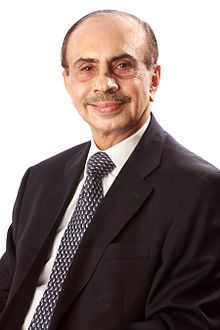
    WASHINGTON (TIP): The U.S.-India Business Council (USIBC) announced that Chairman and CEO of The Dow Chemical Company Andrew Liveris and Chairman of the Godrej Group Adi Godrej will be honored with the 2017 USIBC Global Leadership Award. Vice President Mike Pence will address its 42nd Annual Leadership Summit in Washington, D.C. The Annual Leadership Summit is USIBC’s signature event, drawing top business and government leaders and serves as a forum for engaging in discussions on deepening U.S.-India commercial ties.

    During the summit, USIBC will also present its “2017 Global Leadership Awards” to Andrew Liveris, Chairman and CEO of The Dow Chemical Company, and Adi Godrej, Chairman of the Godrej Group for creating inclusive business environments, integrating India in the global supply chain and advancing core values such as manufacturing, innovation and scale in tough market conditions. The Council’s annual summit will bring together stakeholders including government and private sector leaders, and top media figures to discuss the bilateral relationship and chart a way forward. With the transition in the U.S. government, the Council has taken a lead role in sustaining the momentum of the U.S.-India bilateral ties.

    USIBC President Mukesh Aghi said, “The Council believes that this is a vibrant period for the two nations and the growing partnership is deeper and broader than ever before. We expect the upward trajectory to continue.”

    The Council’s 42nd Anniversary summit will highlight: (1) The important role of private sector in advancing the ties between the two countries; (2) Future of U.S.-India Trade relationship; (3) Strengthening and deepening of defense partnership. Executive Chairman of Cisco and USIBC Chairman John Chambers will provide the State of the Council address, reflecting on the growth and potential of the U.S.-India bilateral ties.

    A congressional panel on the U.S.-India Defense & Trade Partnership will include Senator Mark Warner, Co-Chair, U.S.-India Senate Caucus, Senator John Cornyn, Co-Chair, U.S.-India Senate Caucus, Congressman George Holding, Co-Chair, U.S.-India House Caucus and Congresswoman Tulsi Gabbard, Co-Chair, U.S.-India House Caucus. Ambassador Navtej Sarna, Indian Ambassador to the United States and Congressman Pete Sessions, Chairman, House Committee on Rules will deliver special remarks during the summit.

  • Chandrababu Naidu honored with Transformative Chief Minister Award at Silicon Valley Summit

    Chandrababu Naidu honored with Transformative Chief Minister Award at Silicon Valley Summit

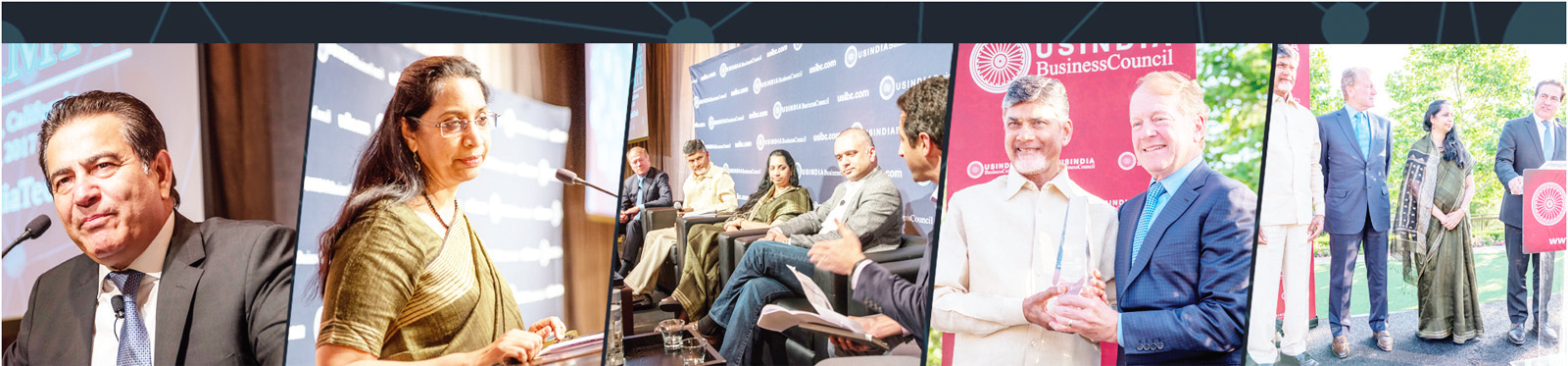
    WASHINGTON (TIP): Chief Minister of Andhra Pradesh Chandrababu Naidu was awarded the Transformative Chief Minister Award by The U.S.-India Business Council (USIBC) during their annual summit, an honor that has been instituted by the Council to acknowledge excellence in public service and recognize the honoree’s achievement in championing U.S.-India ties in the areas of trade, politics and culture. Recognized alongside Chief Minister Naidu, Secretary, Ministry of Electronics and IT, Aruna Sundararajan was honored with the USIBC Transformative Leadership Award for distinguished public service and her commitment to advancing U.S.-India cooperation and Digital India.

    USIBC hosted its annual summit in Silicon Valley in first week of May, calling for collaboration. The theme of this year’s summit was U.S.-India Technology Partnership. Industry and government leaders from the U.S. and India discussed the power of digital transformation to accelerate economic growth, create jobs, and encourage the start-up and entrepreneurial environment.

    USIBC brought together key stakeholders, including Government of India officials, industry leaders in fintech, digital payment service providers, IT, sharing economy, Ecommerce, and venture capitalists to renew key linkages and advance the convergent interests of the two countries.

    Senior policy makers and heads of global organizations held discussions on dynamic aspects of the U.S.-India commercial relationship that included panel discussions on: (1) Enabling Entrepreneurship and Corporate Responsibility; (2) Make in India; (3) Digital Payments, Internet of Things and Smart Planning; (4) Future of U.S.- India Technology Partnership featuring the Chief Minister of Andhra Pradesh Chandrababu Naidu and IT Secretary Aruna Sundararajan, alongside tech innovators Dheeraj Pandey, CEO of Nutanix, and USIBC Chairman and Cisco Executive Chairman, John Chambers. The panel was moderated by CNBC’s senior technology reporter, Ari Levy.

    Approximately 200 senior level business leaders and investors attended the summit. Attending companies at the summit included Amazon, PayPal, Deloitte, Facebook, iCreate, Nuveen, Mastercard, Mobility Infrastructure Group, Varian Medical, and Visa.

  • US Industry commends India’s Union Budget 2017: Says It Seeks to Simplify Ease of Doing Business for Foreign Investors

    US Industry commends India’s Union Budget 2017: Says It Seeks to Simplify Ease of Doing Business for Foreign Investors

    The U.S.-India Business Council (USIBC) commended the 2017 Union Budget presented by Finance Minister Arun Jaitley, saying the budget has a forward-looking outlook and builds off the economic reforms enacted over the last three years of Prime Minister Modi’s government. USIBC feels that the budget deepens the Government’s move towards a digital economy, while remaining committed to attracting foreign investment, increasing infrastructure spending in roads and civil aviation, rationalizing the tax structure, spurring domestic growth while also bringing in rural India into the fold of the digital economy.

    USIBC has commended the noteworthy reform measures that have been implemented in the last year including the passage of the Goods and Services Tax (GST), the bankruptcy code, FDIs in several sectors of the economy, and measures for financial inclusion. In light of these reforms, the Council was pleased to note that the budget is a fiscally sound agenda that doubles down on Prime Minister Modi’s stated goals of improving the ease of doing business by reducing red tape, investing in “Skill India”, and attempts to mitigate the negative impact of demonetization.

    USIBC President, Dr. Mukesh Aghi said, “At a time of global uncertainty, budgets can be challenging to implement but the Finance Minister has done an admirable job in creating a vision that will propel the domestic economy while remaining cognizant about foreign investors. The industry welcomes positive steps in the affordable housing segment, bringing the ‘Housing for All’ scheme a step closer to reality. Relaxation on long term capital gains and infrastructure status to the segment will boost supply in the market. The Council looks forward to more announcements on liberalization in certain sectors in the near-term.”

    Rajiv Khanna, President of India-America Chamber of Commerce described it as a well-balanced budget. “It is a well thought out and a well balanced budget. The fact that the Indian stock market has reacted so positively to the budget speaks for itself”, said Mr. Khanna.

    Ron Somers, founder and CEO of India First Group also commended the budget. “I am in complete agreement with Finance Minister Arun Jaitley: when you look around the world today and witness all the retrenchment and chaos underway from Russia to China to Brazil, India stands out as a beacon of stability and predictability,” said Somers.

    Karun Rishi, President of USA-India Chamber of Commerce (USAIC) described it as a well-balanced, fiscally cautious budget in the right direction.

    The Indian Panorama invited readers to comment on the Indian Union Budget. Most felt it was a soft budget which did not hurt common people much, may be because of the impeding elections in a couple of important state assemblies. Whatever, the consensus was that it was an unexciting, lackluster budget. Here are their comments.

    Dr. VK Raju, an eminent eye surgeon based in Morgantown, WV says: “India has had 25 finance ministers since independence in 1947 that have presented and passed in Parliament 83 budgets- both interim and annual so far. Mrs. Indira Gandhi from Indian National Congress, as the Prime Minister of India was the only woman to hold the Finance Portfolio (1970-71). Her critics used to call her “the only man in Indian Cabinet.”

    Since our Independence in 1967, we have few islands of excellence in many fields, yet the India we all dream about is far from reality.

    The budget can undoubtedly give a shot in the arm to our economy, but consider these:

    1. The human resource is the ultimate resource of a nation.
    2. Water and sanitation are still major problems.
    3. Investment in human development is more productive than investment in physical assets and moreover, it leads to a faster rate of national growth.
    4. Malnutrition in children and 23% of middle school girls dropping out of school because of feminine hygiene issues.

    India is a highly developed country with developing country problems. In the west, poverty is relative and in India it is absolute poverty.

    Finally see what the great statesman, Nani Palkhivala said, “To my countrymen, who gave unto themselves the constitution but not the ability to keep it. Who inherited a resplendent heritage but not the wisdom to cherish it, who suffer and endure in patience without the perception of their potential. I say, Change the mindset, sky is the limit for India.”

    George Abraham, a former Chief Technology Officer at the United Nations and Chairman of INOC (USA) made the following comment.

    “I could not bring myself commenting on this budget without mentioning the way Modi Government’s unprecedented rush for submission on the day when one of its longest serving members of Lok Sabha and former Union minister Shri. E. George Abraham Ahamed has passed away. I am saddened by the fact that his memory has been dishonored!

    At the outset, I would like to agree with many observers that the budget has some positive elements such as tax deduction for lower-income earners. However, the budget has done very little for the middle class, farmers, daily laborers, self-employed or small and medium businesses who are hit hard by the reckless demonetization policy of this Government. The budget is also appeared to be rushed through for narrow political benefits with an eye on the upcoming state elections.

    At this point in time, the economic fundamentals are on a downward trend with fall in demand and fall in consumption with job losses in millions. While the GDP forecast is downgraded to be a percent or lower, there are no new bold initiatives for job creation or very few incentives to promote investment.

    Obviously, there is so much emphasis on digitization while not referencing the fact that there are 18,000 villages in India are still without electricity and 47 percent of the population lack any access to a bank account and the Internet is unavailable in the remote areas of the country.

    Although the Union budget has made an attempt to deal with political contributions, there would be little accountability without laying a solid groundwork for transparency, disclosures, and penalty.

    Finally, though the Prime Minister has characterized MGNREGA  as a ‘living monument,’ of Congress failure, the Finance Minister gave it a nudge by allocating 699 crores more than the previous year. It is a clear admission that the MGNREGA is so vital to the rural households across the land, and it would be suicidal for the Modi Government to scuttle it.

    In summary, the budget failed either to address the current hardships the lower echelon of the society is facing due to demonetization or putting up bold reforms for incentivizing investment or job creation.”

    Anu Jain, a Finance analyst had this to say. “Indian Finance Minister Arun Jaitley has presented the Union Budget for the year 2017-18. It was the first budget in the history of independent India to be presented on February 1

    This is his fourth annual budget and the first budget after demonetization. The Union Budget 2017 was broadly focused on 10 broad themes.

    They are – Farmers, Rural Population, Youth, Poor and Health Care for the Underprivileged; Infrastructure; Financial Sector for Stronger Institutions; Speedy Accountability; Public Services; Prudent Fiscal Management; Tax Administration for the honest.

    “The impact on growth from the governments cash crackdown would wear off soon and called 2017 budget is for the poor”, said Mr. Jaitley. Yet, while vowing prudent fiscal management, Arun Jaitley also raised his 2017-18 federal deficit targets to 3.2 percent of gross domestic product to cover his spending promises. Jaitley said, “As we all see that India as “an engine of global growth” but we should remember risks to its outlook from likely U.S. interest rate hikes rising oil prices and signs that globalization is in retreat”. PM Narendra Modi’s surprise decision last November to scrap high-value banknotes worth 86 percent of India’s cash in circulation has hit consumer demand, disrupted supply chains and hurt capital investments. The worst of the cash crunch is now over. Manufacturing survey showed that business was slowly returning to normal. Still, the finance ministry forecasts that growth could dip to as low as 6.5 percent in the current fiscal year till March, before picking up slightly in the coming fiscal year to between 6.75 and 7.5 percent.

    The Income Tax rates have been slashed and that’s certainly a reason for everyone to cheer. Those earning up to Rs 3 lakhs per annum will now be completely exempted from paying tax. Individuals earning between Rs 3 lakhs and Rs 5 lakhs per annum will get a 5% benefit as the tax rate has been slashed from 10% to 5%. Also, people earning higher than Rs 5 lakhs per annum are also eligible for the 5% reduction in income tax and businesses with turnovers of no more than Rs 50 crore get a tax break. This all is healthy to trigger the economy and help everyone especially the middle class and small business.

    Government targets to bring almost one crore households out of poverty by 2019. The budget proposes to complete 1 crore houses for those without homes.

    Budget has raised the allocation for the “Mahatma Gandhi National Rural Employment Guarantee Act” (MGNREGA) to an all-time high from Rs 37,000 crore to Rs 48,000 crore. This is big hike, and was the highest ever allocation to rural India.

    Budget also highlighted that the participation of women in MGNREGA is increased to 55 per cent. In the budget, there is allocation for linking Aadhar to various bank accounts and to health cards for senior citizens. After announcing demonetization, Modi government has been promoting linking of Aadhar numbers to bank accounts and also claims credit for systematization as Aadhar registrations grow.

    Railway e-tickets: In a move to encourage the use of services, service tax on railway tickets booked electronically have been pulled back. Currently, a service charge of Rs 20 is levied for sleeper class and Rs 40 for all air conditioned classes per ticket while booking tickets on the IRCTC website.

    The continuing theme of attacking black money was evident in the move to ban all cash transactions of over Rs 3 lakh and the attempt to clean up political funding. Parties will now have to disclose the identities of those donating over Rs 2,000, though electoral bonds will be introduced to allow anonymity for clean donors. The government has lined up more incentives for startups. Profit linked deduction will be allowed for three years out of seven instead of three years out of five.

    But there is negative impact of budget on LED Lights, Tobacco, Mobile phones etc.

    The 2017 India budget looks all round development budget, aimed to take India to growth path, while focusing on helping low and middle income group people including farmers and village folk, the poor and youth – while not unusual, became even more necessary because of the criticism that demonetization had hurt the informal sector and the rural economy. It is first budget which include railway budget too projecting an overall growth of more than 7%.”

    Indu Jaiswal, a senior community leaders said: “I think the new budget proposed for 2017 by Mr. Jaitley will definitely benefit the country. Specially encouraging digital payment, transactions at fuel pumps, hospitals and railway stations will help in eliminating cash handling. As we are progressing in the right direction these proposals for upgrading the financial transactions system will help.

    We must include all areas of business specially healthcare. Together we will continue to make a difference.

    Ashok Ojha, a senior journalist and a promoter of Hindi language in the US opined that the budget might determine the course of movement of Indian economy but doesn’t necessarily reflect the condition of its entire people.

    “The presentation of annual budget in the Indian Parliament is a democratic ritual that is supposed to accelerate the growth of Indian economy, which is on upward path since the past decade. The Modi Government has made a wide range of tax concessions aimed at directly assisting the middle class working man save some money every year. In addition to helping the middle class city dweller the annual budget of India also targeted farmers who produce the food for the nation. Helping farmers with varieties of crop loans and insurance policies may go a long way making the farming community prosperous and the country self-sufficient in agriculture.

    My sister called me from her village in Buxar district of Bihar. Two decades ago her village lacked even the basic electricity to light her home. She boldly invited me to visit her home where all rooms were fitted with heater and air-conditioning. She said her family agriculture business helped her save enough money to install comfortable living and now we feel that ‘Our living is no less comfortable than that of city dwellers’.

    The farming community in India is no doubt prospering, however, the budget failed to take stock of the debt that the rural economy is carrying on its soldiers. We don’t know if the budget is able to protect a debt struck farmer from taking the extreme step of committing suicide.

    The budget allocates two months interest free credit for farmers and many other insurance plans. It is hoped that rural India will receive funding to improve crop yield and provide employment to rural population.

    The budget might determine the course of movement of Indian economy but doesn’t necessarily reflect the condition of its entire people. Indian boasts of its huge workforce of young people within the age range of 20 to 35, who continue to look for job and with every passing year ejected from various jobs that subscribe age limit for employment. During the past few years the job growth remained very dismal. The education system failed to improve and address the demands of the 21st century. In its new budget proposals the Modi Government promised to set up one hundred skill development centers while institutions of higher education, especially in states like Bihar, continue to be out of tune with the new demands and challenges of 21st century.

    The government plans to improve employment opportunities by teaching foreign languages for young people, however, improving the quality of education for Indian languages are on back burners. Of course, the prime minister promised to pay $6,000 for every pregnant woman in rural India, however, hospitals continue to charge hefty amount from patients with serious illnesses. In USA a patient death is the failure of the hospital, in India, it is a normal situation that enables hospital authorities collect their dues before the dead is released for last rites. India seems to become insensitive to rail accidents. One hears stories of rail accidents almost every month. There is no way to know if the provision of Rs. 1,31,000 crores in the national budget will be wisely used to upgrade the system.

    I returned to USA after a month-long trip to India, where ATM machines fail to eschew cash, two months after the much hated demonetization of high value Indian currencies. A story goes like this: A Western tourist exchanged his dollar bills into Indian rupees in 500 and 1000 denominations. The same day government of India ordered these currencies invalid. The tourist was visiting India for 40 days. He spent rest of his time in India returning his rupees bills of 500 and 1000 by queuing outside of banks. There are many stories that tell the story of negative impact of demonetization but the government ignored to talk about it in its budget.

    The government push to make the country cash less is a dangerous one. The whole world deals in cash, especially for small transactions. If you are forced to get a credit card and use for purchases, you are destined to be drowned in heavy debt very soon. This is the true saga of middle class in developed economies including USA. Indian government promotes the cash less economy that would bring misery over its middle class, the same people who are responsible for improving the Indian economy to more than seven percent growth rate. There is no sign Modi government is capable to force the big industrialist mend their ways of working. Barring a few, no major case of corruption has been unearthed, except the arrests of individuals, who were caught carrying a few lakhs of currencies.

    Travelling from Delhi airport to my home in Dwarka I met a number of young people who had left their villages in far flung areas of Bihar and Odisha to drive taxis for living. These young people work for companies like Uber and Ola. Some of them plan to go back to their native village where they would appear for collage examinations. I bet these young people, who are without a pull in Delhi, are destined to continue driving taxis even after they would graduate from colleges.

    I travelled to Jaipur to attend the annual literature festival. The festival didn’t charge entry fee for young people who came to listen to authors from all over the world. I could see hundreds of young people, who thronged the venue every afternoon to mingle with friends. I am sure these young people were trying to make a sense of their lives and figure out if there is a future for themselves should they decide to become writers.

    During my month long trip to India I found that government offices including banks reverting to old days, when files used to move slowly. Officials talk about government guidelines that must be observed in order to ensure compliances. I visited a number of government offices and banks all of who were not busy working on their laptops. Wi-Fi was not functioning most of the time and many people continued to wait days and weeks for clearance of their files.

    All government steps are geared towards winning elections. The ruling Bharatiya Janata Party is facing daunting challenges in five states immediately after the release of the budget. It is quite natural that the concessions declared in the national budget reflect its concern for the common man. How much gain the common man gets due to the new initiatives is something to see in coming months.”

    The Indian Panorama will welcome comments on the subject from our wide awake readers.

  • On his third US tour, Chhattisgarh CM eyes investment in ‘Priority Industries’

    On his third US tour, Chhattisgarh CM eyes investment in ‘Priority Industries’

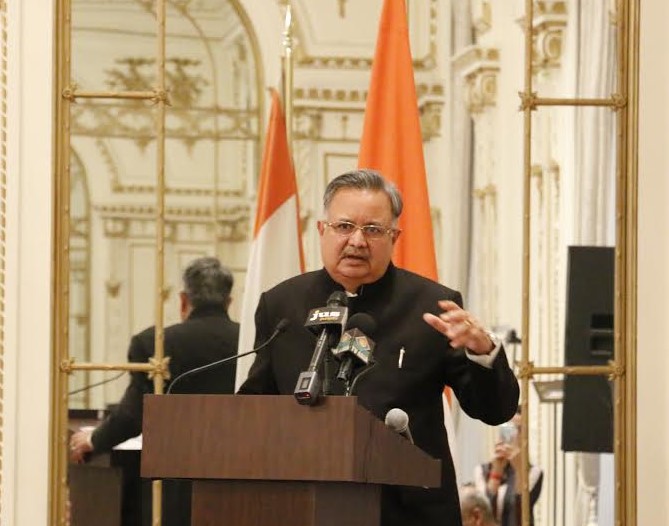
    NEW YORK CITY (TIP): Every time he comes to the US, he ‘takes home something new.’ On his third US tour, Chief Minister of Chhattisgarh, Dr Raman Singh wooed investors to invest in new sectors, highlighting the tremendous potential across those sectors in the state that has been declared as the ‘Best fiscally managed State’ by Reserve Bank of India. Singh, currently on an official tour of the US, highlighted investment opportunities in Chhattisgarh in front of a gathering at the Indian Consulate, New York on November 29. Senior state government officials accompanied him at the interactive luncheon event, jointly hosted by US India Business Council (USIBC) and the Consulate.

    In his welcome address, Subodh Kumar Singh, Secretary to Chief Minister and Commerce & Industries, described how some of the key initiatives under Raman Singh’s leadership including railway network, industrial infrastructure and smart cities in Chhattisgarh has become the main driver of growth and development in the State. He also briefed the audience about the priority industries for investment – food processing, energy, life sciences, defense, information technology, electronics, and manufacturing.

    Dr Mukesh Aghi, President of USIBC in his special remark, stressed on enhanced investment partnership between US and India.

    There was a brief Power Point presentation by Vivek Dhand, Chief Secretary of Chhattisgarh, that highlighted recently implemented reforms including single window system, tax reforms, construction permits, environment & labor reforms, inspection reforms and commercial dispute and paperless courts. Given that the state came into existence only 16 years ago, he took the opportunity to mention that the World Bank has recently ranked Chhattisgarh fourth in Ease of Doing Business as per Ranking 2016 among all Indian states and Union Territories.

    While giving introduction of Dr Raman Singh, the longest ever serving Chief Minister from BJP, Deputy Consul General Dr Manoj Kumar Mohapatra said, “Indo-US relationship is measured by number of visits. In the last two years Prime Minister Modi and President Obama met more than 12 times. That shows the defining partnership.”

    Describing Chhattisgarh as ‘Heart of India’, the Chief Minister said, “I just want to tell you what it was 16 years back and what it is today.” Mentioning the reforms and policies undertaken during his tenure that has made the state a frontrunner in ease of doing business, Dr Singh said, “Chhattisgarh is the best destination for investment not just in the core sectors of mines and minerals but also in areas like IT, engineering and solar energy.”

    Noting that investors may not be fully aware of the investment opportunities in the young, not so known resource-rich state, Dr Singh invited investors to visit Chhattisgarh to see the investment potential of the state. “Come, see, and then invest.”

    A token of appreciation was presented to him by Dr Mukesh Aghi, followed by a Q&A session.

    During the brief Q & A session, Prof. Indrajit S Saluja asked the chief minister to clarify on the allegation of a Rs. 36000 crore scam in the public distribution system in the State. Dr. Singh categorically denied there was any scam. He said it was a conspiracy. 60 lakh families benefitted from the scheme and nobody complained. “Our PDS model is unique. So far, no other state could follow that model”, Mr. Singh said.


    Later, speaking with The Indian Panorama Chief Editor I S Saluja, in an exclusive interview, Dr Singh appealed to the NRIs to invest in Chhattisgarh. “Our state is the destination for investment. You will get all facilities there. The infrastructure is top class. I want investments in sectors like IT, engineering and solar energy. I am sure if they (NRIs) visit the state they will be convinced to invest. So, I want them to visit (Chhattisgarh).”

    When asked if he wants to invite the media to visit Chhattisgarh so that they can project the bright side of the state, Dr Singh said, “Of course. I would invite my media friends here to visit Chhattisgarh. Every year in the first week of November we organize special event to showcase the development activities of our state. I will invite the media from US to come and have a fair idea about our activities.”

    Dr Singh also said that he will ask his officials to be in direct touch with the ethnic media in US for a closer relationship to help boost the image of his state.

  • INDIAN AMERICANS AMONG SIX NEW MEMBERS TO JOIN USIBC TO ADVANCE INDIA-US COMMERCIAL RELATIONSHIP

    INDIAN AMERICANS AMONG SIX NEW MEMBERS TO JOIN USIBC TO ADVANCE INDIA-US COMMERCIAL RELATIONSHIP

    WASHINGTON (TIP): The U.S.-India Business Council’s (USIBC) board of directors announced, November 22, 2016, the appointments of six global business leaders to serve as members of the board. Among them are three Indian Americans. They are Sanjay Bhatnagar, President & CEO, WaterHealth International; Amit Midha, President of Asia Pacific and Japan Region and Chairman, Global Emerging Markets, Dell and Bob Patel, CEO, LyondellBasell. Others nominated are John Rood, Senior Vice President, Lockheed Martin International. Omar Ishrak, CEO, Medtronic and Enrique Ostale, CEO of Latin America, India, and Africa, Walmart. They join a prestigious group of CEOs and executives on USIBC’s board of directors, including USIBC Chair John Chambers, Executive Chairman of Cisco Systems.

    “The U.S.-India Business Council and the board of directors remain committed to advancing the bilateral commercial relationship between the United States and India. Our members are encouraged by Government of India’s commitment to economic growth and improving the business climate in India. Even as a transition occurs in the U.S. government, USIBC will continue to advocate for meaningful and consistent dialogues at the highest levels between the two sides. The U.S.-India partnership is deeper and broader than ever before and given the growing importance of India as the world’s fastest growing economy, it is critical that the next administration continue the work on furthering ties between our countries,” said Mukesh Aghi, President, USIBC.

    “Medtronic is pleased to partner with the U.S.-India Business Council in its efforts to deliver world-class and innovative healthcare solutions to millions of Indians,” said Omar Ishrak, Medtronic chairman and chief executive officer. “The innovation-based economy supports the growth of the life sciences industry and continues to be one of the most promising opportunities for the U.S.-India bilateral ties.” “I’m pleased to join the U.S.-India Business Council and work towards bolstering the commercial ties between India and the United States,” said Amit Midha, President, Commercial, Dell EMC Asia Pacific and Japan. “These bilateral opportunities will only continue to grow as India makes impressive strides in implementing economic reforms. Digital India holds a trillion dollar technology opportunity, we will continue to collaborate with governments, partners and customers to create a technology enabled future for modern India.”

    Sanjay Bhatnagar, President & CEO at WaterHealth International said, “As India continues on its track towards economic progress, it is more essential than ever before that businesses bring long-term, inclusive and sustainable solutions to address the challenges India is facing.”

    Enrique Ostale, CEO of Latin America, India, and Africa at Walmart said, “I am pleased to join an esteemed group on USIBC’s board of directors and support its efforts to deepen the business relationship between the U.S. and India. Through our India investments, we continue to support local businesses and contribute to the prosperity of the nation.”

    Bhavesh (Bob) Patel, CEO and Chairman of the Management Board at LyondellBasell said, “The U.S. and India have a special relationship, and I’m very honored to be part of an organization dedicated to strengthening our ties through commerce. As India’s middle class continues to grow, so will the need for durable products that make modern life more convenient and comfortable.”

  • Nitin Gadkari Tells Investors that it is a Golden Opportunity to Invest in India

    Nitin Gadkari Tells Investors that it is a Golden Opportunity to Invest in India

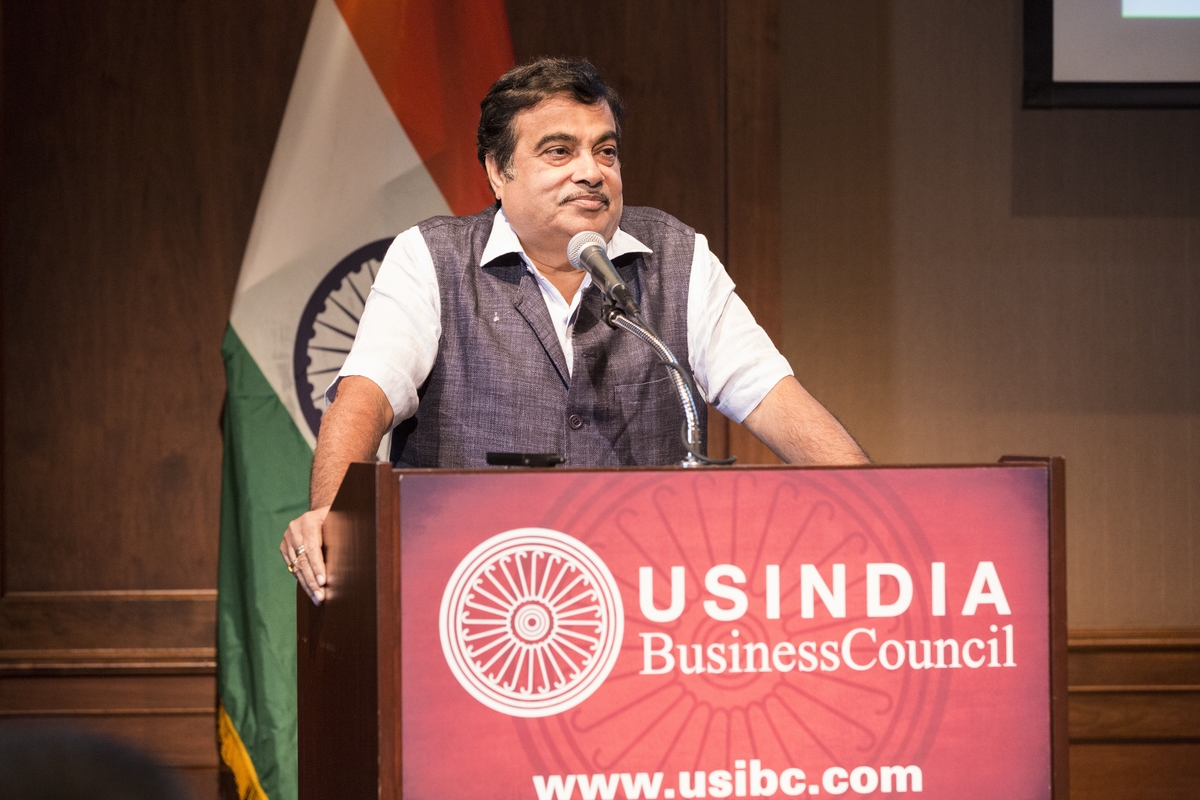
    July 11, 2016 – Washington, DC – The U.S. India Business Council (USIBC) today hosted a luncheon discussion with Indian Union Minister for Road Transport and Highways & Shipping Shri Nitin Gadkari. The roundtable was attended by senior executives of U.S. and Indian companies that included TransAsia Infrastructure, Uber, Bentley Systems, Tata, Caterpillar, Moody’s, DLZ Corporation and Texas Instruments. The discussion was focused around Minister Gadkari’s plans and vision to strengthen India’s infrastructure, investment opportunities in road construction and port-led industrialization, and how U.S. industry can collaborate with the Government of India.

    Speaking to investors, Minister Gadkari said, “Prime Minister Modi has made the country’s infrastructure development the top-most priority of the government. We are committed to improving the country’s road, highways, and port connectivity in a time-bound, result oriented, corruption-free and transparent manner that includes e-governance and fast-tracking decision-making. The pace of road construction has accelerated to an all-time high of 20 kilometers per day and next year we plan to increase it to 41 km per day. This is a golden opportunity to invest in India.” The Minister also spoke on the new highways under construction in the country, financing mechanisms under PPP models, framing policies for logistics parks, modernization of roads, building intelligent traffic systems for road safety and further innovation and technology to India’s logistics sector Minister Gadkari’s team also outlined the progress that has already been made in the roads, highways, and shipping sectors. Rohit Kumar Singh, Joint Secretary, Ministry of Road Transport and Highways, highlighted specific investment opportunities in the highways sector; whereas Alok Srivastava, Additional Secretary, Ministry of Shipping, shared details on the Sagarmala Program – the Ministry’s flagship port-led development initiative to bring down logistics cost and boost investment, exports, and jobs.

    USIBC President Dr. Mukesh Aghi said, “With an upsurge in India’s e-commerce markets and the unprecedented growth in Indian cities, there is a critical need for advanced logistical services and better transportation infrastructure. India needs $1 trillion for developing new roads, ports, rail lines, and airports over the next few years and U.S. companies can provide the necessary expertise as well as capital to enable the robust growth of this sector. We are excited to witness the rapid growth of this sector— under Minister Gadkari’s leadership, road construction rates have gone up, infrastructure spending has received a boost and India has jumped ranks in the Logisitics Performance Index. It is timely and urgent to explore the full potential of U.S.-India collaboration in this sector.”

    Dr. Ravindra Verma, Managing Director of TransAsia Infrastructure Group, a confederation that manages and executes multi-modal integrated transport and logistics infrastructure in Asia provided an industry perspective during the discussion. Dr. Verma said, “Under Minister Gadkari’s leadership, the Indian highways sector is now at a critical turning point. More than $100 billion in capital is now needed over the next several years to expand existing corridors and build new ones to keep up with the growth in traffic. This presents an opportunity for all players in North America to mobilize resources on a major scale. We are now actively gathering over $1 billion in global capital towards a dedicated multi-modal surface transport platform RoadStar, with major focus on India.”

    About the U.S.-India Business Council: Formed in 1975 at the request of the U.S. and Indian governments, the U.S.-India Business Council is the premier business advocacy organization, comprising 400 top-tier U.S. and Indian companies advancing U.S.-India commercial ties. USIBC is the largest bilateral trade association in the United States, with liaison presence in New York, Silicon Valley, and New Delhi.

  • Indian Consulate Outreach Program in Hartford, Connecticut on June 3rd, 2016

    Indian Consulate Outreach Program in Hartford, Connecticut on June 3rd, 2016

    NEW YORK CITY, NY (TIP): With an aim to strengthen ties with the local Indian community in Connecticut, a high level delegation led by Ambassador Riva Ganguly Das would be visiting Hartford, Connecticut (CT) on June 3rd, 2016 for an Outreach Program.

    The delegation will comprise of representatives from nationalized Indian banks, Air India, IndiaTourism Office, Confederation of Indian Industries (CII), Federation of Indian Chambers of Commerce & Industry (FICCI), United States India Business Council (USIBC), Make my Trip and Cox and Kings Global Services (CKGS).

    During the visit, the delegation would be meeting the Honorable Governor of Connecticut Mr. Dannel Malloy, the Honorable Mayor of Hartford, Mr. Luke Bronin, local chambers of commerce, business communities and the Indian-American communities.

    The delegation will address the Indian Community at a reception in the evening, starting at 7pm, at the Comfort Inn & Suites. The Consulate and the accompanying delegation members from the chambers of commerce, banks and tourism office will address any queries related to steps taken to improve consular services, passport, visa and banking services, business environment and economic reforms. This platform will provide a great opportunity for the community to interact with the Consulate and its partner stakeholders.

    Venue: Comfort Inn & Suites, 900 East Main Street, Meriden, CT 06450

  • USIBC endorses Indian Budget as Attractive

    USIBC endorses Indian Budget as Attractive

    WASHINGTON (TIP): American companies, either those with a foothold or who are planning to set foot in India, are bullish on the latest budget presented by the Modi government, business advocacy group U.S.-India Business Council has said.

    “We talked to some of our members on the feedback, and they have been bullish about the budget itself. I feel that its investment in infrastructure, in trying to provide ease of doing business and providing certain tax certainties is good for U.S. investors,” Mukesh Aghi, USIBC president, told PTI in an interview Feb. 29.

    Aghi said the annual budget presented by Union Finance Minister Arun Jaitley maintains the fiscal deficit at 3.5 percent from 3.9 percent and gives international investors an assurance that India can provide discipline among emerging markets.

    Referring to the fact that foreign direct investment in India is up by 40 percent, Aghi, who was recently in India for the Make in India summit in Mumbai, said the move sent a positive signal to the global market.

    “The sentiment (on India among U.S. companies) is on the positive side,” Aghi said in response to a question, hoping that this would bring much greater American investment to India.

    U.S. companies have made $15 billion worth of FDI in India in the last 18 months and are expected to invest another $27 billion this fiscal year, he said, adding that with the latest budget, this figure is expected to go up.

    The infrastructure sector and food retail industry provide a lot of opportunities for investment, he said. Allowing 100 percent FDI in the marketing of food produced in India will likely bring in new investors who will provide the needed manufacturing and retail jobs, he said.

    “This will help farmers increase sales, spur investment in cold chain and storage infrastructure to make sure food is better preserved, and bring new and diverse food products to a larger percentage of the Indian population than ever before,” Aghi said.

    The USIBC president also lauded the Union Finance Minister for creating an investment-friendly climate even as he said U.S. firms are expecting to roll out of the Goods and Services Tax, which can be a “game changer” for the country’s economy.

    “Tax reforms presented in this budget are unprecedented and lay the road map to creating an attractive environment for foreign investors. U.S. companies are still eager for the implementation of GST that has the potential to be a game changer for the economy. This is also an inclusive budget -one that creates opportunities for increasing domestic demand,” Aghi said.

    “The message is that U.S. companies are very bullish on India,” Aghi said, adding that the large section of U.S. FDI in India is going into the IT sector and manufacturing environment.

    Responding to a question, he said USIBC members feel India could move a bit faster on the corporate tax reduction. The American corporate sector, he noted, is looking forward to the intellectual property policy coming out. “I would say a big chunk of the issues were addressed (in the budget),” he said.

    “Yes, we have made progress. But the issue is we should benchmark every state with let’s say Singapore or Hong Kong. We should not measure states within India with each other. We need to raise the bar,” he said.

  • MasterCard CEO Ajay Banga named American India Foundation co-chair

    MasterCard CEO Ajay Banga named American India Foundation co-chair

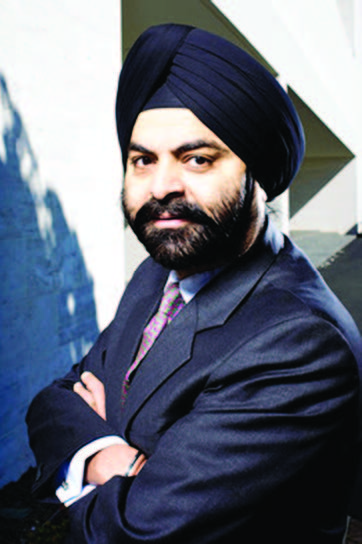
    NEW YORK (TIP): MasterCard CEO Ajay Banga has been appointed as a co-chair of American India Foundation (AIF). The American India Foundation (AIF), a nonprofit organization that is devoted to accelerating social and economic change in India, is one of the leading U.S. philanthropic organization working in the U.S. and India.

    “Ajay Banga, President and Chief Executive Officer of MasterCard, has graciously accepted our invitation to join the AIF Board of Directors and has further agreed to serve as a co-chair of the Board, bringing immense experience and passion in US-India relations and business,” Lata Krishnan, co-founder and co-chair of the American India Foundation (AIF) said in a statement.

    In addition to his role at MasterCard, Banga is a member of President Obama’s Advisory Committee for Trade Policy and Negotiations. He serves on the Board of Directors of the U.S.-India Business Council (USIBC), where he recently completed his tenure as its longest-serving chairman.

    Banga is also a member of the U.S.-India CEO Forum. He is a Fellow of the Foreign Policy Association and was awarded the Foreign Policy Association Medal in 2012.

    Banga was selected for the Padma Shri this year, which was announced two days ago. “look forward to working with Lata and the entire AIF team as they continue to drive social and economic inclusion in India and build an even stronger bridge between the United States and India,” Banga said.

    “I’ve seen the impact organizations like this can have on empowering individuals to live more productive lives. With the current pace of change, it’s an exciting time to be joining this group,” he said.

    Mr. Banga serves on the Executive Committee of the Business Roundtable. He is chairman of the Financial Services Roundtable, as well as vice chairman of the Business Council. He is a member of the International Business Council of the World Economic Forum, the Council on Foreign Relations, and the Economic Club of New York.

    Prior to MasterCard, Mr. Banga was chief executive officer of Citigroup Asia Pacific. During his career at Citigroup, he held a variety of senior management roles in the United States, Asia Pacific, Europe, Middle East and Africa and oversaw its efforts in microfinance.

    Mr. Banga is a graduate of Delhi University and the Indian Institute of Management, Ahmedabad.

  • MASTER CARD CEO AJAY BANGA AMONG 4 IN THE US GET A PADMA AWARD

    MASTER CARD CEO AJAY BANGA AMONG 4 IN THE US GET A PADMA AWARD

    NEW YORK (TIP): Three Indian Americans and a former U.S. ambassador to India were announced Jan. 25 as this year’s recipients of the coveted Padma awards.


    Avinash Dixit, Robert Blackwill, Salman Amin Sal Khan and Ajaypal Singh Banga
    Avinash Dixit, Robert Blackwill, Salman Amin Sal Khan and Ajaypal Singh Banga

    Retired diplomat Robert Blackwill – who served as the U.S. ambassador to India from 2001 to 2003 – was awarded the Padma Bhushan, India’s third-highest civilian honor. Indian American economist Avinash Dixit bagged a Padma Vibhushan. American teacher Salman Amin Sal Khan, and Ajaypal Singh Banga, President and CEO of MasterCard have been selected for Padma Shri awards. The awards are given in various disciplines/ fields of activities, art, social work, public affairs, science and engineering, trade and industry, medicine, literature and education, sports, civil service, etc.

    ‘Padma Vibhushan’ is awarded for exceptional and distinguished service; ‘Padma Bhushan’ for distinguished service of high order and ‘Padma Shri’ for distinguished service in any field. The awards are announced on the occasion of Republic Day every year.

    Indian American economist Avinash Dixit was awarded the Padma Vibhushan, India’s second-highest civilian honor. Dixit, one of the world’s leading economists developed the Dixit-Stiglitz model with Nobel laureate Joseph Stiglitz in 1977.

    Education entrepreneur Salman ‘Sal’ Khan was awarded the Padma Shri award, India’s fourth-highest civilian award. Khan founded the Khan Academy in 2009. In 2012, Time magazine named Khan in its annual list of the 100 most influential people in the world.

    Ajaypal Banga was awarded the Padma Shri award; Singh ascended to the role of MasterCard’s CEO and president in July 2010. He had previously served as the global credit card company’s president and chief operating officer. Banga formerly served for four years as the chairman of the U.S. India Business Council, which aims to forge new markets and business opportunities between the two countries. He stepped down in September 2015 as John Chambers, executive chairman of Cisco, was elected the USIBC’s next chairman.

    Last year, President Barack Obama appointed Banga to serve as a member of the President’s Advisory Committee for Trade Policy and Negotiations.


  • USIBC names two new vice chairs to push India trade

    USIBC names two new vice chairs to push India trade

    WASHINGTON (TIP): The US-India Business Council (USIBC) has named Punit Renjen, CEO of Deloitte Touche Tohmatsu Limited (Deloitte Global),and Edward Monser, President of Emerson, as USIBC Vice Chairs to further build on US-India relationship.

    The leading business advocacy organization comprised of 350 top-tier US and Indian companies advancing US-India commercial ties recently appointed former Cisco CEO John Chamber as USIBC Chairman.

    Chambers, immediate past USIBC Chairman and CEO of MasterCard Ajay Banga, and Edward Monser, will embark on the USIBC Chairman’s Executive Mission to India in mid-February, and also participate in the inaugural Make in India week.

    “I believe that there are tremendous opportunities this year to build on the US-India relationship,” said Monser. “With India’s push for advancement across industries, and initiatives like Make in India gaining momentum, I see several channels for collaboration, exchange of ideas, and exchange of technology between the two countries.”

    “I am optimistic about the continued trajectory of US-India relations and the positive impact this will have, not only for our two countries, but indeed for the world,” said Punit Renjen.

    “In growing the exchange of talent between our two countries and further opening channels for increased trade and investment, we will be able to deepen innovation, create high-quality jobs and fuel our industries’ global competitiveness for the 21st century.”

    Congratulating the “two great business leaders,” USIBC President Mukesh Aghi said: “Together, with our combined experience, we can tackle some of the most difficult challenges on both sides.

    “We have already seen the expansion of FDI into the media and entertainment, single brand retail, and defense sectors. Indian states are also actively reaching out to investors here in the US, showcasing the power of competitive federalism.

    High on the priority list this year includes the passage of the Goods and Services Tax and land acquisition reform in India, as well as growing the manufacturing sector in order to consolidate India’s presence as a key player in the global economy.”

    Chambers said the two new appointees “have done great work in promoting trade between our two countries” and “Our job for this year is to build on this momentum and shape and further the Council’s priorities.”

    “We still have challenges ahead and there are areas we must discuss, however, I am positive we can do so in a way that befits our community and our leaders’ ambitions.”

    IANS

  • Invitation to Invest in Karnataka

    Invitation to Invest in Karnataka

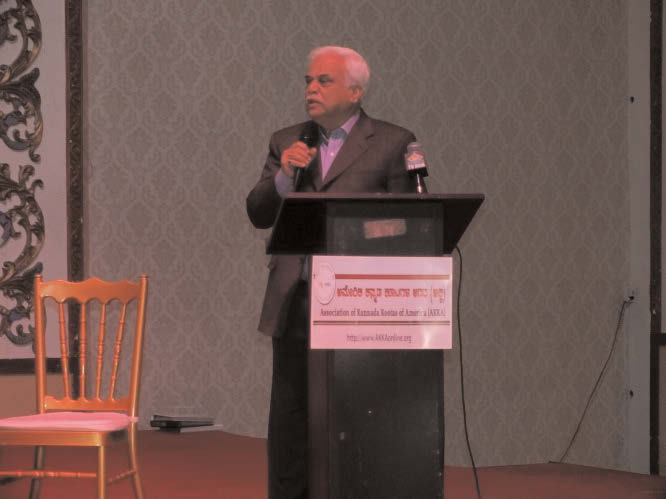
    NEWYORK (TIP): A high level delegation led by Sri R.V. Deshpande, Minister for Large & Medium Industries and Tourism, Government of Karnataka, was warmly welcomed by Consul General Ambassador Dnyaneshwar. M. Mulay at the India House in New York, December 4.

    In the Interaction with members of USIBC, TiE and AKKA, Mr. Deshpande strongly pitched for inward investments into Karnataka highlighting several steps that are being taken by Government of India to ease business, physical and digital infrastructure and taxation. He specifically spoke of the steps initiated by Government of Karnataka to decongest Bengaluru and disperse industry to tier 2 and tier 3 cities.

    Invest in KarnatakaAddressing a gathering of industry captains, Minister Deshpande said that it is a great honor to release a report on India, on foreign soil.

    Mr. Deshpande released EY’s India Attractiveness Survey 2015 report which observes that international corporations with a presence in India are far more optimistic about the country’s prospects than those who are not yet established in the country.

    A whopping 32% of the respondents said that India is the most attractive place for investments in the next 3 years. India has already emerged as the No. 1 FDI destination globally with capital inflows of US$ 30.8 Billion in 2014. 62% of those interested to expand or enter India over the next year, say that they plan manufacturing activities in the country. The Government’s flagship programs Make in India and Digital India have had a positive impact on investor sentiment. Make in India has gained considerable momentum and industry is a lot more optimistic about its success now than about a year ago.

  • U.S. India Business Council Applauds Conclusion of U.S.- India Trade Policy Forum

    U.S. India Business Council Applauds Conclusion of U.S.- India Trade Policy Forum

    WASHINGTON (TIP): Following the successful conclusion of the ninth round of U.S.-India Trade Policy Forum, the USIBC hosted a reception, providing an opportunity for deeper engagement between industry stakeholders and government officials from both the United States and India. The U.S.-India Trade Policy Forum (TPF) is a government-to-government trade dialogue aimed at increasing bilateral investment between the two nations.

    The trade policy forum comes on the back of U.S.-India Strategic and Commercial as well as Prime Minister Modi’s visit to the west coast of the United States. The talks focused on four primary areas of bilateral ties-agriculture, services, promoting investment in manufacturing, and intellectual property. USIBC member companies submitted recommendations under these four working groups to the USTR.

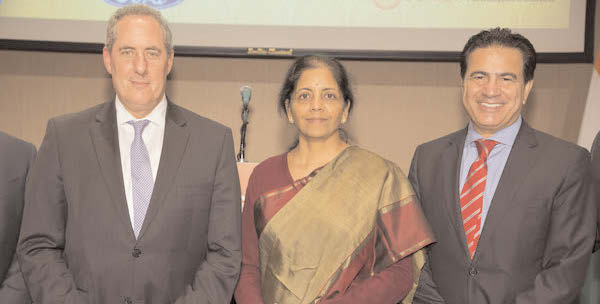
    The reception was attended by high ranking government officials such as Minister of Commerce and Industry Nirmala Sitharaman, United States Trade Representative Michael Froman, Commerce Secretary of India Rita Teotia and Deputy USTR Ambassador Holleyman.

    The event received broad representation from USIBC’s diverse membership base of 300+ companies that include Ford, MasterCard, Pfizer, Lockheed Martin, Bank of America, PayPal and Boeing.

    During the discussion, Minister Sitharaman and Ambassador Froman highlighted the direction in which the two nations are working together to foster a robust and open bilateral trade environment. Following Prime Minister Narendra Modi’s visit to the west coast and a series of successful dialogues over the last few months, both nations view the bilateral relationship with greater enthusiasm.

    Mukesh Aghi, President of the U.S.-India Business Council said, ” The trade policy forum couldn’t have come at a better time. We have seen India rise in World Bank’s Ease of Doing Business Index under the leadership of Prime Minister Modi. The Trade Policy Forum represents another important step towards strengthened trade relations between the U.S. and India. India is growing to be one of the most open economies in the world today and USIBC member companies are excited by the opportunity to grow the bilateral trade five-fold. Increasing FDI projects in sectors like manufacturing, defense, Smart Cities and clean technology along with positive environment fostered by initiatives like Make in India and Digital India are proving to be game changers and creating jobs for the Indian economy.”

    “We have seen enhanced engagement between the United States and India in the course of the past year, with a high bar set by President Obama and Prime Minister Modi,” said United States Trade Representative Michael Froman. “Our work this week under the Trade Policy Forum focused on translating engagement into tangible results that will increase the pace of trade growth between our economies. To that end, Minister Sitharaman and I focused our work on forward looking policy initiatives in intellectual property, manufacturing, agriculture and services that can expand trade and investment and benefit our manufacturers, workers, innovators, service providers, farmers, and ranchers.”

    Minister Sitharaman congratulated Ambassador Froman on the successful conclusion of the Trans-Pacific Partnership (TPP) after eight years of painstaking efforts and said, “The U.S.-India Trade Policy Forum was an intense engagement, one which we can say with confidence is moving forward with a lot of positive outcomes.”

    “Abbott continues to see India as a promising market for growth. The government’s vision for promoting ease of doing business and attracting investment enables Abbott to help more people live healthier, better lives,” said Claude Burcky, Vice President of International Government Affairs, Abbott.

  • Cisco Executive Chairman John Chambers  Elected Chairman of U.S.: India Business Council

    Cisco Executive Chairman John Chambers Elected Chairman of U.S.: India Business Council

    WASHINGTON, D.C.(TIP): The U.S.-India Business Council (USIBC) Board of Directors announced that Mr. John T. Chambers, Executive Chairman of Cisco, has been elected as the Council’s next Chairman. The formal announcement of the appointment was made at the Council’s 40th Anniversary Leadership summit that kicked off the U.S.-India Strategic and Commercial Dialogue.

    The transition will come at the end of a four-year term by Ajay Banga, President and CEO of MasterCard. Mr. Banga has been the Council’s longest-serving Chairman.

    “On behalf of the USIBC Board, it’s my privilege to announce and to welcome USIBC’s incoming chairman, John Chambers. John will of course be building on USIBC’s 40-year legacy which we’re celebrating tonight. We look forward to working with John and supporting him as his tenure officially begins the first of next year,” said Ajay Banga through a video message at the Council’s 40th Anniversary Leadership Summit.

    “As a longtime supporter of USIBC, I have witnessed the Council’s influence rise dramatically as a direct result of the leadership provided by current chairman, Ajay Banga, and former chairs such as Terry McGraw and Indra Nooyi,” said John Chambers. “It is an exceptional honor to be entrusted with such a legacy and I look forward to building on their successes as USIBC’s next Chairman. With Prime Minister Modi’s upcoming visit to the Silicon Valley, the important focus on building a digitally empowered nation through Digital India and the ongoing strategic and commercial dialogue, it is an exciting time to join the Council.”

    “We are grateful for Ajay’s leadership and commitment to furthering U.S.-India ties over the last four years. During his tenure, he blazed an equally impressive path by adding top American and Indian companies to the Council’s membership, increasing Council revenue and adding staff capacity at the Council’s regional offices to serve members. Due to Ajay’s leadership, the Council’s board of directors now includes 14 global Presidents and CEOs. The Council and its board are delighted to welcome John Chambers as the new Chairman. His global business acumen will be instrumental as we move forward to realize the full potential of U.S.-India relations. I look forward to working closely with John and the USIBC board to build on the Council’s proud, 40-year history,” said Mukesh Aghi, President of USIBC.

  • Indra Nooyi, Shobhana Bhartia get The Global Leadership Award

    Indra Nooyi, Shobhana Bhartia get The Global Leadership Award

    WASHINGTON, UNITED STATES:  PepsiCo Chairman Indra Nooyi and Hindustan Times Group chairperson Shobhana Bharatia have been presented with the 2015 Global Leadership Award of the US India Business Council, for their commitment to driving a more inclusive global economy and their roles as women leaders, reported PTI

    Ms Nooyi and Ms Bharatia were honoured with this prestigious annual award last evening during the annual gala of the USIBC, the top advocacy group for India and American companies in the US.

    US Vice President Joe Biden, Secretary of State John Kerry, among others, addressed on the occasion.

    Noting that USIBC plays a critically important role in strengthening the India-US relationship, Ms Nooyi said, there are tremendous opportunities ahead to work together in new ways that capitalise on their collective strengths and pave the way to shared prosperity for the countries, companies and citizens.

    Ms Bharatia, also Editorial Director of the HT group, said, “As the representative of a media group that realises the importance of looking at both India Shining, and the Other India to get a real picture of what is happening in our country, and as a woman leader in a nation where women are finally coming into their own, I am delighted to receive this award.”

    “Our two countries, both democracies, have a strong and free media and I see increasing opportunities for collaboration as media and technology companies from India and the US navigate the evolving digital landscape,” Ms Bhartia said after receiving the award.

    Renowned Indian-American artist, Natvar Bhavsar who is known for his abstract expressionism and “color-field” painting was awarded the Artistic Achievement Award.

    “My work aims to transcend boundaries and I am honoured to receive this award that recognises my Indian roots and my training in arts that took place in the United States,” he said.

    “I would not be the artist I am today had it not been for the inspirations that have guided me in my absorbing the gifts offered by both cultures, my birthplace India and my half a century’s participation in the creative life of New York City,” Mr Bhavsar said.

  • USIBC 40th Annual Leadership Summit

    USIBC 40th Annual Leadership Summit

    WASHINGTON (TIP): Vice President Joe Biden, Secretary of State John Kerry, India’s Minister of External Affairs Sushma Swaraj, and other high-ranking officials from both governments, along with captains of industry from both countries, will address the U.S.-India Business Council on the occasion of its 40th anniversary on September 21 in Washington, DC, to kick off the first U.S.-India Strategic and Commercial Dialogue.

    “It’s a privilege for USIBC to host government and business leaders from both countries on the eve of the U.S.-India Strategic and Commercial Dialogue and on the occasion of the council’s 40th anniversary. The founding principle of the council four decades ago – which grew out of the vision of then-U.S. Secretary of State, Henry Kissinger – remains even more true today: the world’s largest democracies share a love of freedom and an entrepreneurial spirit that – if nurtured -can help realize the full potential of India-U.S. relations,” said USIBC Chairman and MasterCard President and CEO, Ajay Banga.

    “The U.S. business relationship with India is one of the most valuable in the world, and we have seen great progress over the last 40 years,” said President of USIBC Mukesh Aghi. “We are honored to welcome these distinguished speakers from both countries – from both public and private sectors – on the occasion of this milestone anniversary. This level of bilateral engagement and commitment to furthering trust and cooperation has been one of USIBC’s hallmarks for the past four decades and will be for decades more to come,” said USIBC President, Mukesh Aghi.

    The government to government dialogue at this year’s summit will also include U.S. Secretary of Commerce Penny Pritzker, Minister of State for Commerce and Industry Nirmala Sitharaman, Minister of State with Independent Charge for Power, Coal and New & Renewable Energy Piyush Goyal.

    The Council also honors business and government leaders for their commitment towards building a more inclusive global economy. This year’s honorees include CEO and Chairman of PepsiCo Indra Nooyi and Chairperson and Editorial Director of the Hindustan Times Group, Shobhana Bhartia.

  • Haryana Chief Minister  Manohar Lal invites NRIs to Invest in his State

    Haryana Chief Minister Manohar Lal invites NRIs to Invest in his State

    NEW YORK (TIP): The Haryana Chief Minister, Manohar Lal, has appealed to the non-resident Indians (NRIs) in New York to come forward and help in the development of their paternal villages and support the efforts being made by the state government. The NRIs could do so by participating in the Adarsh Gram Yojana, a Government of India scheme which has been adopted by the Haryana Government, he said.

    Addressing the NRIs at a program held in New York, August 17, the Chief Minister said that the 15 MPs and 90 MLAs of Haryana were engaged in ensuring development of villages under the Adarsh Gram Yojana but the number of villages in Haryana exceeds 6,500. The NRIs of Haryana origin could adopt the remaining villages and help in their development.

    Those present on the occasion assured the Chief Minister of all possible support.

    Speaking at another event organized by Non Resident Indians to honor him in New York  the Chief Minister said that in its 10-month tenure, the Haryana Government had formulated a new industrial policy. While people from India and the rest of the world connected to Haryana would invest under the policy, those from across the globe also consider Haryana an ideal state, whether they want to invest in a welfare project or achieve their targets by investing in an earning project, he said.

    The Chief Minister said that Haryana has witnessed a remarkable growth in terms of infrastructure. While the State had only four National Highways till now, nine National Highways are being built to connect the districts. The State has an abundance of raw material for industries, which could be transported easily as a result of these new road projects.

    The Chief Minister said that Haryana being an agrarian state, the setting up and promotion of agro-based industries, food processing, pharma, information technology, auto, defense production, aerospace and aircraft industries would remain a priority for the Haryana Government. “Agro-industries are being set up in Haryana. Besides, Haryana will work further with major companies like IBM, Harley Davidson and Hollister, which have more than 1,000 projects, so that our industries can advance in an appropriate manner,” he added.

    Welcoming those investing in Haryana, the Chief Minister invited others to take advantage of facilities offered by the State and invest in Haryana.

    Later, the Chief Minister , addressed investors at a meeting of the US India Business Council in Washington on August 19.

    Emphasizing investment opportunities in Haryana, Chief Minister Manohar Lal said, “We strive to attract both international and domestic business in to the state of Haryana. To achieve this end, I am proud of the reform efforts that have gone in to making public services more efficient- land registration is now enabled through information technology (IT), long-pending land acquisition cases have been resolved and infrastructure construction is faster as evidenced by the completion of the Delhi-Faridabad Metro project and restarting of work on Kundli-Manesar-Palwal Expressway. We are pushing for policy reforms in a manner that will place Haryana as a business-friendly state and create jobs. I welcome American enterprise to be a part of our state’s growth.”

    Lauding the vision of Chief Minister Manohar Lal, Mukesh Aghi, President of USIBC, said, “Since 2000, the state of Haryana has emerged as a major investment hub in Northern India. The city of Gurgaon is a key center for the information technology and automotive industries. The state’s Enterprise Promotion Policy 2015 aims at enhancing ease of doing business, promotes micro, small-scale and medium enterprises and encourages long-term investment in the state to flourish. All these measures are critical for not just enhancing the perception of doing business in India, but also indicate the reality of ease of doing business.”

    Sonny Khurana, President and CEO of iTECH, a leading distribution company in the telecom sector, said, “Haryana, with its diversified economy and vibrant cities is well positioned to leverage initiatives such as Make in India and Smart Cities. Emerging markets are important for iTECH’s business model. A pro-growth government, under the visionary leadership of Mr. Manohar Lal, places Haryana as a strong hub for future investment opportunities.”

    The round table discussion focused on key areas for investment promotion in the state that include energy related initiatives, aerospace, food processing, auto/auto components and mass rapid transport.

    The event was attended by companies and senior leaders from every major sector of business-Blumberg Grain, IREO, Coca Cola, Wipro, Capital Novus, Cargill, Medtronic, Uber and Boston Scientific.

    Rajiv Khanna, President of India-America Chamber of Commerce was  optimistic about Haryana Chief Minister's visit
    Rajiv Khanna, President of India-America Chamber of Commerce was optimistic about Haryana Chief Minister’s visit

    Commenting on the visit of Haryana Chief Minister, Rajiv Khanna, President of India-America Chamber of Commerce, a binational chamber of commerce which is the focal point of cross border investments between the U.S. and India, said: ” We continue to be optimistic that states like Haryana would lead the country towards growth, prosperity and a greater economic co-operation with the United States. This does not mean that we under estimate the challenge in achieving these goals, particularly those posed by the failure of the Indian Parliament to pass the much needed legislations during the recent monsoon session that would have expedited the realization of these goals. It only means that we expect the state chief minister and his team to rise to the challenge and make it happen even with this setback, because failure is not an option for India.”

    On arrival in New York on August 16, Manohar Lal first went to the Memorial Tower in Downtown Manhattan and paid his homage to the victims of 9/11.

    Manohar Lal pays homage at the 9/11 Memorial , August 16
    Manohar Lal pays homage at the 9/11 Memorial , August 16

    The Chief Minister was in time for the India Day Parade, believed to be the largest India Day Parade, outside India. He stayed for a while watching the floats pass by, greeting waving hand to the milling crowds and making a brief speech.

    Chief Minister Manohar Lal at the India Day Parade in New York, August 16. Seen in the picture: Consul General Dnyaneshwar M Mulay (second left), Bollywood actor Parineeti Chopra, Manohar Lal
    Chief Minister Manohar Lal at the India Day Parade in New York, August 16. Seen in the picture: Consul General Dnyaneshwar M Mulay (second left), Bollywood actor Parineeti Chopra, Manohar Lal
  • Global Indians – 13 Global CEOs

    Global Indians – 13 Global CEOs

    Prime Minister Narendra Modi has all along been appreciative of the struggles and achievements of NRIs. His close association with a number of NRIs all across the world is well known. There is no country in the world where Modi does not have NRI friends.

    And it is not only Modi who is appreciative of the NRI movers and shakers, the common Indian whether in India or abroad, takes great pride in the achievements of persons of Indian origin. So, here we are sharing with our readers information on the NRIs who are “global CEOs”. We congratulate them and take pride in their achievements which have done the Indian nation and its 1.3 billion people proud. They have made India’s Independence Day a very special one, with the laurels they have won.

    Sundar PichaiSundar Pichai – Pichai is an Indian American computer engineer and Indian Institute of Technology, Kharagpur alumnus. He is the new CEO of Google. The decision came after Google’s founders Larry Page and Sergei Brin decided to re-organize the company by creating a mother company called Alphabet.

    The new mother company will include, besides Google, units such as Calico (which focuses on Longevity), X lab (which incubates new efforts like Wing, Google’s drone delivery effort) and units dealing with life sciences (such as the one working on smart contact lens that detects blood sugar level). Google’s investment arms, Ventures and Capital, will also be part of Alphabet.

    The journey of Sundar Pichai from a student of IIT-Kharagpur to Google CEO has been truly remarkable.

    Satya NadellaSatya Nadella – Satya Narayana Nadella was born in Hyderabad on 19 August 1967. He is the current Chief Executive Officer (CEO) of Microsoft. He was appointed as CEO on 4 February 2014, succeeding Steve Ballmer. Before becoming CEO of Microsoft, Nadella was Executive Vice President of Microsoft’s Cloud and Enterprise group, responsible for building and running the company’s Computing Platforms, Developer Tools and Cloud Computing Services.

    Nikesh Arora Nikesh AroraNikesh Arora – Nikesh Arora is a former Google executive and President & Chief Operating Officer of SoftBank Corp.

    Arora graduated from the IIT, Banaras Hindu University, Varanasi.

    He holds a degree from Boston College and an MBA from Northeastern University. He also holds the CFA designation.

    Ajaypal Singh BangaAjaypal Singh Banga – Ajay Banga is the current president and chief executive officer of MasterCard.MasterCard announced on April 12, 2010 that Ajay Banga, previously MasterCard’s president and chief operating officer, had been named by the Board of Directors to serve as the company’s president and chief executive officer, effective July 1, 2010.

    Banga succeeded Robert W. Selander, who had been MasterCard’s chief executive officer since March 1997.

    Presently, he is also the chairman of the US-India Business Council (USIBC) representing more than three hundred of the largest international companies investing in India.

    Indra NooyiIndra Nooyi – India-born Indra Krishnamurthy Nooyi is the current Chairperson and Chief Executive Officer of PepsiCo, the second largest food and beverage business in the world by net revenue.

    She has consistently ranked among the World’s 100 Most Powerful Women.

    In 2014, she was ranked 13 in the list of Forbes World’s 100 most powerful women.

    Rakesh SachdevRakesh Sachdev – Rakesh Sachdev has been the Chief Executive Officer and President of Sigma-Aldrich Corporation since November 2010.

    He served as the Chief Financial Officer of Sigma- Aldrich Corporation from November 18, 2008 to November 2010 and also served as its Chief Administrative Officer from May 2009 to November 14, 2010 and Senior Vice President from May 2005 to November 2010.

    He is a graduate of the Indian Institute of Technology, New Delhi with a Bachelor’s Degree in Mechanical Engineering. He holds a Master’s Degree in Business Administration in Finance from Indiana University, as well as a Master’s Degree in Mechanical Engineering from the University of Illinois.

    Francisco D'SouzaFrancisco D’Souza  – Francisco D’Souza was born on 23 August 1968. He is the CEO of Cognizant and was part of the team that founded the NASDAQ-100 company in 1994.

    Francisco is Cognizant’s CEO since January 2007.

    Francisco D’Souza is among the youngest Chief Executive Officers in the software services sector. In 2007, at the age of 38, he took over from Lakshmi Narayanan, who was promoted to Vice Chairman.

    Rakesh KapoorRakesh Kapoor – Rakesh Kapoor was born 4 August 1958. He is Chief Executive of Reckitt Benckiser plc, a UK FTSE-listed multinational consumer goods company, a major producer of health, hygiene and home products.

    Anshu JainAnshu Jain – Anshuman Jain was born on 7 January 1963 in Jaipur. He took over as Co-CEO of Deutsche Bank on 1 June 2012 to succeed Management Board Chairman Josef Ackermann.

    He was a co-CEO of the bank between 2012 and July 2015. He is a member of Deutsche Bank’s Management Board.

    Earlier, as head of the Corporate and Investment Bank, he was globally responsible for Deutsche Bank’s corporate finance, sales and trading, and transaction banking business. Jain resigned as co-CEO in July 2015 though he is expected to remain a consultant to the bank until January 2016.

    Vikram PanditVikram Pandit – Vikram Shankar Pandit was born on 14 January 1957. He is the former chief executive of Citigroup, a position he held from December 2007 until he was forced to resign, on 16 October 2012.

    Shantanu NarayenShantanu Narayen – Shantanu Narayen was born on May 27 1963. He is the CEO of Adobe Systems. Prior to this, he was the president and chief operating officer since 2005. He is also the president of the board of the Adobe Foundation.

    Padmasree WarriorPadmasree Warrior – Padmasree Warrior is the former Chief Technology & Strategy Officer (CTO) of Cisco Systems, and the former CTO of Motorola, Inc.

    As of 2014, she is listed as the 71st most powerful woman in the world by Forbes.

    rajeevRajeev Suri – Rajeev Suri headed Nokia Solutions and Networks (NSN) since October 2009, has been credited for “presiding over consistently improving results leading to the successful turnaround and restructuring of the company.” Suri joined Nokia in 1995 and headed the Asia Pacific region for NSN in 2007.

    According to his official profile, Suri has a Bachelor of Engineering degree in Electronics and Telecommunications from Mangalore University. He is based in Espoo, Finland.