Washington (TIP)- The number of Americans filing new claims for unemployment benefits rose slightly last week, while layoffs dropped to an 11-month low in July as labor market conditions remain tight. The labor market has largely weathered 525 basis points in interest rate hikes from the Federal Reserve since March 2022, and likely delivered another month of strong employment gains in July. Despite labor market tightness, the inflation outlook continues to improve.
Other data from the Labor Department on Thursday showed a marked slowdown in labor costs in the second quarter, thanks to a sharp rebound in worker productivity. That added to reports last month showing a significant moderation in annual inflation in June. Labor market strength and receding inflation are fanning optimism that the economy could avoid a recession.
“Recession risk is receding,” said Bill Adams, chief economist at Comerica Bank in Dallas.
Initial claims for state unemployment benefits increased 6,000 to a seasonally adjusted 227,000 for the week ended July 29, the Labor Department said. The increase was in line with economists’ expectations.
Claims are in the lower end of their 194,000-265,000 range for this year, in part benefiting from difficulties adjusting the data for seasonal patterns.
Automakers typically idle plants in July to retool for new models. But these temporary closures do not always happen around the same time, which could throw off the model the government uses to strip out seasonal fluctuations from the data.
Unadjusted claims dropped 8,485 to 205,012 last week. Filings fell sharply in California and Ohio. There were also notable decreases in Texas and Georgia. These more than offset a sharp rise in Missouri.
Aside from the technical issues, the overall labor market remains solid as employers hoard workers after struggling to find labor during the COVID-19 pandemic. While there have been high-profile layoffs in the technology and finance sectors, small businesses are still boosting headcount after being squeezed out by large enterprises snapping up workers.
U.S. stocks opened lower. The dollar rose against a basket of currencies. U.S. Treasury prices fell.
US stocks: Wall Street tumbles to its worst loss in months
Wall Street tumbled to its worst drop in months on Wednesday, Aug 2, as its torrid rally that critics called overdone lost more momentum.
The S&P 500 sank 1.4% for its sharpest tumble since April. It was the second straight loss for the index after it hit a 16-month high last week.
The Dow Jones Industrial Average dropped 348 points, or 1%, while the Nasdaq composite fell 2.2%.
Prices were mixed in the bond market after Fitch Ratings cut the credit rating of the U.S. government. The repeated standoffs in Congress about whether to allow a default on the U.S. debt were just some of the reasons for Fitch’s cut. The downgrade strikes at the core of the global financial system because U.S. Treasurys are considered some of the safest possible investments.
Fitch’s move follows a similar one by Standard & Poor’s in 2011, one that coincided with a European debt crisis to help cause stocks and bonds around the world to swing violently. So far, this most recent downgrade has caused less drama across markets.
Tag: Washington
-

US labor market still strong; worker productivity rebounds
-

U.S. CITIZENSHIP TEST: PROPOSED CHANGES TO ASSESS ENGLISH-LANGUAGE SKILLS WORRY SOME WHO HAVE PASSED CURRENT EXAM
WASHINGTON, D.C. (TIP)- Under the proposed changes, applicants would be asked to verbally describe three color photographs showing “ordinary usage scenery, such as daily activities, the weather or food,” according to a notice in the Federal Register by the U.S. Citizenship and Immigration Services. The current test asks applicants questions based on what they put on their application, called the N-400, to test their English-language skills. The proposed changes also would add multiple-choice questions to the civic portion of the test. Applicants must get six out of 10 civics questions correct to pass that section. The changes will undergo a trial-testing period for several months this year and, if adopted, take effect late next year.
WHAT TO KNOW
Proposed changes to the U.S. citizenship test would both revamp the exam’s speaking section to assess an applicants’ English-language proficiency and add multiple choice questions. Applicants would be asked to verbally describe three color photographs showing “ordinary usage scenery, such as daily activities, the weather or food.” The U.S. Citizenship and Immigration Services would perform a trial-testing period for several months this year and, if adopted, the changes would take effect late next year. Shaorui Li, chair of the Asian Association of Great Stony Brook and a member of the Three Village school board, said some members of the Asian Association are worried about the proposal. “It’s mainly people who are not fluent in English,” Li said. “For people like them, they are very concerned it will be difficult for any to get citizenship. Katherine Tichacek, a New York City regional spokeswoman for the agency, said in a statement: “In response to stakeholder feedback, U.S. Citizenship and Immigration Services is currently exploring trial-test options for a possible naturalization test redesign effort. USCIS will continue to engage stakeholder partners, including community-based organizations with experience in naturalization, and the agency will thoroughly review trial-test results and their impact on reducing barriers to naturalization before considering any permanent revisions to the naturalization test.”
-

Indian-origin US diplomat Dr. Geeta Rao Gupta championing global women’s rights in India on week-long visit
WASHINGTON, D.C. (TIP): Dr Geeta Rao Gupta, US Ambassador-at-Large for Global Women’s Issues is visiting India from August 1-8 to participate in the G-20 conference and meet her Indian counterparts with an aim to highlight and advance the Biden administration’s gender equality policy priorities in the region and around the world. According to the State Department’s official release, Rao kicked off her visit from Gujarat where she will spearhead the American delegation to the G20 Alliance for the Empowerment and Progression of Women’s Economic Representation (G20 EMPOWER) Conference.
In addition, she will participate in the G20 Ministerial Conference on Women’s Empowerment, the release said on Tuesday. Her India visit concludes on August 8, with two stops in Mumbai and Bengaluru.
Rao, who is the fourth Ambassador-at-Large for Global Women’s Issues at the US Department of State and the first woman of color to hold the position, will be in Mumbai from August 5-6 where she will engage in crucial discussions with representatives from the private sector and civil society. These discussions are geared towards understanding and shaping gender equality priorities in India, the State Department said. -

Indian American Shohini Sinha named head of FBI field office in Salt Lake City
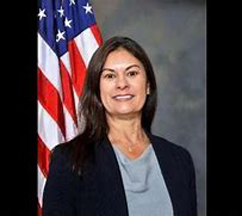
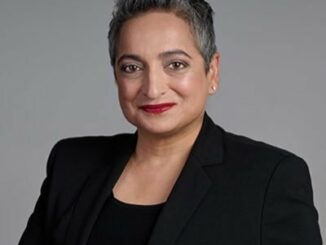
WASHINGTON, D.C. (TIP): Shohini Sinha, an Indian American, known for her work on counter-terrorism investigations, has been named the special agent in charge of the FBI’s field office in Salt Lake City in the US state of Utah. Sinha, who most recently served as executive special assistant to the Director at FBI Headquarters in Washington DC was named the special agent in charge by FBI Director Christopher Wray, who highlighted Sinha’s exceptional track record on counter-terrorism investigations and extensive experience within the agency.
Having joined the FBI as a special agent back in 2001, Sinha has had a remarkable career, the release said on Monday.
Her journey began at the Milwaukee Field Office, where she dedicated her efforts to counterterrorism investigations.
Demonstrating her versatility and commitment, she also embarked on several temporary assignments, including stints at the Guantanamo Bay Naval Base, the FBI Legal Attaché Office in London, and the Baghdad Operations Centre, it said.
In recognition of her outstanding performance, Sinha earned a promotion to supervisory special agent in 2009 and was transferred to the Counterterrorism Division in Washington, DC.
There, she took on the role of program manager for Canada-based extraterritorial investigations, fostering collaboration with Canadian liaison officers based in Washington, DC.
In 2012, Sinha achieved another milestone as she was promoted to assistant legal attaché in Ottawa, Canada.
Her work in this capacity revolved around tackling counterterrorism matters through close cooperation with the Royal Canadian Mounted Police and the Canadian Security Intelligence Service.
Continuing her upward trajectory, she was promoted to field supervisor in the Detroit Field Office in 2015. In this role, she effectively led squads responsible for investigating complex international terrorism cases.
Demonstrating her adaptability and a keen interest in cutting-edge matters, Sinha made a strategic move to the cyber intrusion squad in early 2020. There, she tackled both national security and criminal cyber intrusion cases, displaying her expertise in this rapidly evolving domain.
Later that year, she received yet another promotion, this time to assistant special agent in charge of national security matters in the Portland Field Office, further solidifying her reputation as a seasoned professional, it said.
In 2021, Sinha’s exceptional performance and leadership qualities were recognized once again when she was chosen to serve as the executive special assistant to the FBI Director in Washington, DC.
In this pivotal role, she played an instrumental part in various high-level initiatives, making a positive impact on the agency’s operations.
Prior to joining the FBI, Sinha had pursued a different path, working as a therapist and later as an administrator for a private, not-for-profit clinic in Lafayette, Indiana.
Her passion for helping others, coupled with her strong educational background—a bachelor’s degree in psychology and a master’s degree in mental health counselling from Purdue University in Indiana—has undoubtedly contributed to her success in both the fields of counselling and law enforcement, the release added. -

Indian American Nisha Desai Biswal confirmed as deputy CEO of DFC
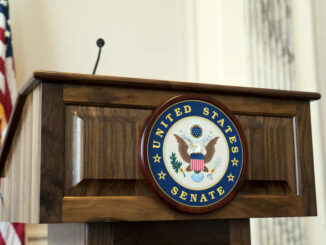
WASHINGTON, D.C. (TIP): The United States Senate confirmed Nisha Desai Biswal to serve as the Deputy Chief Executive Officer of the US International Development Finance Corporation.
The DFC addresses the most critical challenges facing the developing world by providing loans, loan guarantees, direct equity investments, and political risk insurance for private-sector-led development projects, feasibility studies, and technical assistance.
From 2013 to 2017, Biswal served as Assistant Secretary of State for South and Central Asian Affairs, a role in which she acted as a point person for the Obama administration on South Asia. In that job, she oversaw the US-India strategic partnership, including the launch of an annual US-India Strategic and Commercial Dialogue, as noted by the White House.
With over 30 years of experience in US foreign policy and international development programs within the Executive Branch, Congress, and the private sector, Biswal most recently held the position of Senior Vice President for International Strategy and Global Initiatives at the US Chamber of Commerce, overseeing the US India Business Council and US Bangladesh Business Council. She has also served as the President of US-India Business Council.
Previously, she served as an Assistant Administrator for Asia at the US Agency for International Development, where she directed and supervised USAID programs and operations across South, Central, and Southeast Asia.
In the early years of her career, Biswal spent more than a decade on Capitol Hill in various roles, including as staff director on the State and Foreign Operations Subcommittee on Appropriations and as professional staff on the Foreign Affairs Committee in the House of Representatives.
Over the years, she has served as the Chair of the Advisory Committee on Voluntary Foreign Aid, a member of the board of the National Democratic Institute, a member of the US Institute of Peace International Advisory Council, the United States Institute of Peace Afghanistan Study Group, and the Aspen Institute’s India-US Track 2 Dialogue on Climate and Energy.
Biswal graduated in international relations and economics from the University of Virginia. She is married to Subrat Biswal and the couple has two daughters, Safya Biswal and Kaya Biswal. -

Trump pleads not guilty at arraignment on federal charges in 2020 election probe
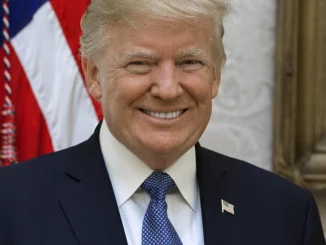
WASHINGTON, D.C. (TIP): Former President Donald Trump appeared in a federal courtroom Thursday, August 3, for his arraignment on four felony charges accusing him of trying to overturn the 2020 election results, pleading not guilty in the latest case brought by special counsel Jack Smith, CBS News reports.
Trump appeared before a magistrate judge in U.S. District Court in Washington, D.C., to deny the charges, which are the most serious criminal allegations he is facing. While cameras were not allowed in the courtroom, CBS News reporters were on the scene to document the proceeding.
When the arraignment got underway shortly after 4 p.m., the former president stood to be sworn in, stating his name and age. Judge Moxila Upadhyaya then formally read the charges and reminded him of his rights. He said he understood, and entered his plea of “not guilty.” Smith was present for the hearing, the second time he and Trump have come face to face in a federal courtroom. The judge agreed to release Trump under the conditions that he not violate federal law and appear in court when required. He is also barred from discussing the facts of the case with any potential witnesses, except through attorneys. The arraignment lasted about a half an hour. The next hearing is set for Aug. 28 before a different judge who will now oversee the case, but Trump will not be required to attend. A federal grand jury hearing evidence in Smith’s investigation approved a historic indictment on Tuesday charging Trump with four felony counts: conspiracy to defraud the United States; conspiracy to obstruct an official proceeding; obstruction of and attempt to obstruct an official proceeding; and conspiracy against rights.
The 45-page charging document accuses Trump and six co-conspirators of pursuing several schemes to block the transfer of power to Joe Biden after Trump lost the 2020 election, culminating in the Jan. 6 attack on the Capitol. The indictment alleges Trump knew his claims of widespread voter fraud were false but “repeated and widely disseminated them anyway — to make his knowingly false claims appear legitimate, create an intense national atmosphere of mistrust and anger, and erode public faith in the administration of the election.”
The former president traveled from New Jersey on his private plane for Thursday’s hearing. His motorcade made its way into D.C., weaving through downtown traffic on its way to the courthouse near the Capitol. Trump has denounced Smith’s probe as politically motivated and denies any wrongdoing.
This was Trump’s third arraignment on criminal charges in four months. In April, he was booked and processed in New York on state charges related to an alleged “hush money” payment to an adult film star in 2016. In June, he appeared in court in Miami to face federal charges in Smith’s parallel investigation into his handling of classified documents found at his Mar-a-Lago resort. He pleaded not guilty in those cases, as well.
The former president spoke briefly to reporters on the tarmac in Virginia before he departed. He reiterated much of what he has said for months, insisting President Biden and his allies are trying to damage him politically.
“A very sad day for America,” the former president said, standing under an umbrella in the rain. “And it was also very sad driving through Washington, D.C., and seeing the filth and the decay and all of the broken buildings and walls and the graffiti. This is not the place that I love. It’s a very sad thing to see.
“When you look at what’s happening, this is a persecution of a political opponent,” he continued. “This was never supposed to happen in America. This is the persecution of the person that’s leading by very, very substantial numbers in the Republican primary and leading Biden by a lot. So, if you can’t beat him, you persecute him or you prosecute him. We can’t let this happen in America. Thank you very much.”
(Source: CBS News) -

US completes second lottery round for H-1B visa, successful candidates notified
WASHINGTON, D.C. (TIP): The US has completed a second round of random lottery selection for the much sought-after H-1B work visa for foreign guest workers and the successful applicants have been notified, according to a federal agency. The H-1B visa is a non-immigrant visa that allows US companies to employ foreign workers in specialty occupations that require theoretical or technical expertise.
Technology companies depend on it to hire tens of thousands of employees each year from countries like India and China. “We now have randomly selected, from the remaining FY 2024 registrations properly submitted, a sufficient number of registrations projected as needed to reach the cap,” US Citizenship and Immigration Services (USCIS) said on Tuesday, August 1.
All the successful applicants eligible for the H-1B visas for the fiscal year beginning October 1, have been notified about it, it said.
USCIS had to conduct an unprecedented second round of the H-1B lottery, which is held in the first week of April, mainly because of a large number of unqualified applications that were successful in the first H-1B lottery.
“The large number of eligible registrations for beneficiaries with multiple eligible registrations – much larger than in previous years – has raised serious concerns that some may have tried to gain an unfair advantage by working together to submit multiple registrations on behalf of the same beneficiary,” USCIS said.
“This may have unfairly increased their chances of selection. We remain committed to deterring and preventing abuse of the registration process, and to ensuring only those who follow the law are eligible to file an H-1B cap petition,” it said.
The federal agency said the H-1B electronic registration process, implemented in 2020 beginning with the fiscal 2021 H-1B cap, has dramatically streamlined processing by reducing paperwork and data exchange and provides overall cost savings to petitioning employers.
Historically, employers filed their full, and often voluminous, H-1B cap-subject petitions with USCIS during a five-day filing period, after which USCIS would select eligible petitions through a random selection process.
This process resulted in unnecessary paperwork and incurred mailing costs for both petitioners and the agency.
By streamlining the H-1B cap selection process with an electronic registration system, USCIS created cost savings for petitioners and efficiencies for the agency.
USCIS said during the initial registration period for the 2024 H-1B cap, it saw a significant increase in the number of registrations submitted compared to prior years.
“Generally, we saw an increase in the number of registrations submitted, the number of registrations submitted on behalf of beneficiaries with multiple registrations, and the number of registrations submitted on behalf of unique beneficiaries with only one registration. USCIS saw upward trends in the FY 2022 and FY 2023 H-1B registration periods as well,” it said.
Based on evidence from the 2023 and 2024 H-1B cap seasons, USCIS has already undertaken extensive fraud investigations, denied and revoked petitions, and continues to make law enforcement referrals for criminal prosecution. USCIS believes that the decreased filing rate for 2024 H-1B cap petitions as compared to the three previous fiscal years indicates that these investigations are having an impact, the federal agency said.
The H-1B programme is an essential part of our nation’s immigration system and our economy, and USCIS is committed to implementing the law and helping meet the ever-changing needs of the US labor market, it said.
“We are working on an upcoming H-1B modernization rule that will propose, among other improvements, bolstering the H-1B registration process to reduce the possibility of misuse and fraud in the H-1B registration system,” it said.
(Source: PTI) -

US Fed lifts rates, Jerome Powell leaves door open to another hike in September
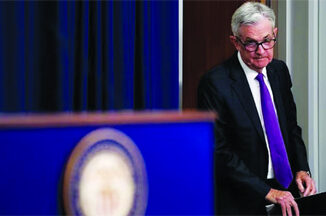
Washington (TIP)- The Federal Reserve raised interest rates by a quarter of a percentage point on Wednesday, July 26, and Fed Chair Jerome Powell said the economy still needed to slow and the labor market to weaken for inflation to “credibly” return to the U.S. central bank’s 2% target.
The hike, the Fed’s 11th in its last 12 meetings, set the benchmark overnight interest rate in the 5.25%-5.50% range, a level last seen just prior to the 2007 housing market crash and which has not been consistently exceeded for about 22 years.
“The (Federal Open Market) Committee will continue to assess additional information and its implications for monetary policy,” the Fed said in language that was little changed from its June 14 statement and which left the central bank’s policy options open as it searches for a stopping point to the current tightening cycle.
Powell made no promises either way, with a September meeting eight weeks from now considered “live” for another rate increase, though a continued slowing of inflation and weaker economic data may also prompt policymakers to pause.
In a press conference following the Fed’s latest policy move, the Fed chief said the central bank was very much looking at “the totality” of incoming data, and particularly studying it for signs that the economy is heading for a period of “below-trend” growth that Powell thinks is necessary for inflation to fall.
Key price measures are still increasing at more than double the Fed’s target. While inflation has been easing, that has so far happened with little apparent cost to the labor market, where the unemployment rate remains at a low 3.6%. Economic growth has remained above the Fed’s estimated 1.8% trend rate; economists polled by Reuters expect data on Thursday will show second-quarter gross domestic product expanded at just that level.
Powell acknowledged as a positive development that inflation has fallen from the highs of last year without serious damage to the economy.
But as the Fed enters a tricky period in its inflation fight, balancing the need for further rate increases against the risks of going too far, he said finishing the task on inflation will likely require some economic losses.
“My base case is that we will be able to achieve inflation moving back down to our target without a really significant downturn that results in high levels of job losses,” Powell said. “But it’s a long way to be sure and we have a lot left … Reducing inflation is likely to require a period of below-trend growth and some softening of labor market conditions.”
As stated after its meeting last month, the Fed said it would watch incoming data and study the impact of its rate hikes on the economy “in determining the extent of additional policy firming that may be appropriate” to reach its inflation target.
Though inflation data since the Fed’s June 13-14 meeting has been weaker than expected, policymakers have been reluctant to alter their hawkish approach until there is more progress in reducing price pressures. In their most recent projections, issued at the end of the June meeting, 12 of 18 policymakers said they anticipated at least one more rate increase would be needed by the end of this year for financial conditions to be restrictive enough to ensure inflation continued to decline. Source: Reuters -

‘Shocked and horrified’ by the video of extreme attack on two women in Manipur: US
WASHINGTON, D.C. (TIP): The US is “shocked and horrified” by the video of an extreme attack on two women in Manipur and supports the Indian Government’s efforts to seek justice for them, a senior Biden administration official has said. The video showing two women being paraded naked and molested by a group of men on May 4 in Kangpokpi district surfaced on July 19, attracting condemnation countrywide.
“We were shocked and horrified by the video of this extreme attack on two women in Manipur.
We convey our profound sympathies to the survivors of this act of gender-based violence and support the Indian Government’s efforts to seek justice for them,” Vedant Patel, Deputy Spokesperson of the State Department, told reporters at his daily news conference on Tuesday, July 25.
Patel was responding to a question asked by a Pakistani reporter on the violence in Manipur.
Prime Minister Narendra Modi himself noted that such violence against women is shameful in any civilized society, Patel said. “And as we have previously stated, we encourage a peaceful and inclusive resolution to the violence in Manipur and encourage authorities to respond to the humanitarian needs and protect the lives and property of all groups,” Patel added.
In his first public comments on the situation in Manipur, Prime Minister Modi last week expressed pain and anger over the incident, saying it has shamed 140 crore Indians and asserted that the guilty will not be spared even as the Congress Party termed his remarks “too little, too late”.
More than 160 people have lost their lives, and several have been injured since ethnic violence broke out in the state on May 3, when a ‘Tribal Solidarity March’ was organized in the hill districts to protest against the Meitei community’s demand for Scheduled Tribe (ST) status.
Meiteis account for about 53 per cent of Manipur’s population and live mostly in the Imphal Valley, while tribals, which include Nagas and Kukis, constitute 40 per cent and reside mostly in the hill districts.
Meanwhile, the small Manipuri diaspora in the United States has sought an immediate end to violence in the state and the imposition of the president’s rule, which it said is important to restore law and order in Manipur.
“I am so tired of talking about this issue. I am so exhausted talking about this issue. … What can we do? Why are we as a world, as people allowing this to happen? There is a very simple solution in India itself, which is the president’s rule. The government for reasons of their own have decided not to do or say anything about this,” Florence Lowe, president of the North Manipur Tribal Association told PTI in an interview.
Adjunct Professor of Digital Production Management at the University of Texas at Dallas, Florence is the daughter of a former Indian Police Service Official of Uttar Pradesh cadre.
Born in Manipur, Lowe spent most of her childhood in Uttar Pradesh. In May she formed the North American Manipur Tribal Association to bring the hill-tribe people from her state together under the banner of one platform to protest against the violence in the state of their origin.
“They’re letting the fires burn. At least in the US what we are trying to do is to raise awareness with our Congress people and our Senators and with world organizations like the World Bank, the UN, the UNHCR (United Nations High Commissioner for Refugees) and so on,” Lowe said.
(Source: PTI) -

IRS invites public input on ways to improve dispute resolution programs; suggestions wanted
WASHINGTON, D.C. (TIP): The Internal Revenue Service , on July 27, invited public input on improvements to certain post-filing alternative dispute resolution (ADR) programs currently offered to taxpayers.
“The IRS is greatly interested in examining ways to help to reduce the time, costs and administrative burden for taxpayers and the government in resolving tax disputes,” said Andy Keyso, Chief of the Independent Office of Appeals. “We’re open to all suggestions about how to better use ADR techniques to help expedite their fair resolution.” The IRS is committed to resolving disputes with taxpayers without a costly legal process whenever possible. The Inflation Reduction Act Strategic Operating Plan (initiative 2.4) emphasizes improvements to tax certainty programs that help taxpayers resolve compliance issues quickly and with finality.
Available ADR programs
ADR programs can be important tools for resolving tax disputes efficiently without litigation in a way that is fair and impartial to taxpayers and the government.Over the past two decades, the IRS has offered four principal post-filing ADR programs:
Fast Track Settlement (FTS) – available to taxpayers under audit and in the jurisdiction of Large Business & International (LB&I), Small Business and Self Employed (SB/SE), or Tax Exempt and Government Entities Division (TEGE). Under FTS, an independent Appeals mediator assists the taxpayer and the IRS to try to reach an agreement on disputed issues, facilitating settlement discussions and offering settlement proposals.
Fast Track Mediation – Collection (FTMC) – available for certain collection cases and issues to help taxpayers resolve disputes resulting from Offers in Compromise and Trust Fund Recovery Penalties. Collection Due Process cases and cases worked at a Collection Campus site are some of the cases excluded from FTMC. Under FTMC, an independent Appeals mediator assists the taxpayer and the IRS to try to reach an agreement on disputed issues.
Rapid Appeals Process (RAP) – available to most LB&I cases or SB/SE estate and gift cases. It consists of a pre-Appeals conference in which IRS Appeals utilizes mediation techniques to try to resolve unagreed issues while the case is in Appeals’ jurisdiction. RAP enables taxpayers and Exam to work together to expedite the resolution of unagreed issues in Appeals and is meant to be completed in one conference.
Post Appeals Mediation (PAM) – available if IRS Appeals settlement discussions are unsuccessful and the remaining disputed issues are fully developed. Cases for which tax disputes have been previously mediated through a different ADR program, such as through FTS, are ineligible for PAM. PAM is available to resolve disputed tax issues that originate from an IRS audit or to resolve disputed tax issues that originate through IRS tax collection actions.
The IRS is interested in suggestions to improve the administration of these ADR programs and in proposals for other approaches to ADR that can increase the use and efficacy of ADR in the resolution of tax disputes.Public input sought on ADR programs
The IRS welcomes comments on all aspects of alternative dispute resolutions practices to help inform IRS policies for improving taxpayer service and resolving issues and cases fairly and expeditiously.The IRS particularly welcomes thoughts on:
Reasons taxpayers choose not to use these ADR programs (e.g., Fast Track Settlement – see LB&I FTS, SB/SE Examination FTS, and TEGE FTS; Fast Track Mediation – Collection; Rapid Appeals Process – see RAP; and Post Appeals Mediation – see PAM), and potential modifications to these programs that can remedy taxpayer concerns.
Issues that are currently excluded from these ADR programs that should not be excluded.
Other ways in which these ADR programs could be improved.
Suggestions for how best to educate taxpayers and representatives about these ADR programs.
Experiences with the use of mediators from the IRS Independent Office of Appeals, and suggestions for how Appeals can ensure that mediators promote an ADR engagement that is conducive to settlement.
Suggestions for how best to extend the use of these or other ADR programs to taxpayer segments that may be less aware of, or familiar with, ADR, such as small business and low-income taxpayers, and whether any unique characteristics of these segments necessitate modified ADR procedures.
Feedback about experiences with the IRS when ADR programs were offered or not offered by IRS personnel or were denied when requested by taxpayers.
Feedback about whether there are types of cases where ADR has proven particularly useful (e.g., valuation cases) and, if so, how ADR use can be increased in these types of cases.
Ideas to achieve tax certainty or resolution sooner beyond these existing ADR programs, including ideas for new ADR programs.
All comments beyond the items listed above are welcome. Public comments can be sent to ap.adr.programs@irs.gov by Aug. 25, 2023. -

Second lottery round for H-1B applicants to be conducted this year: US immigration service
The decision could benefit more Indian professionals
WASHINGTON, D.C. (TIP): A second round of random lottery selection for the much sought-after H-1B visas for fiscal 2024 will soon begin after it was determined that “additional registrations” need to be selected to reach the numerical allocations, the US federal immigration agency has announced, a decision that could benefit more Indian professionals. The US Citizenship and Immigration Services (USCIS) said on Thursday that it will select the additional registrations from the previously submitted electronic registrations using a random selection process.
In March, the USCIS conducted an initial random selection of properly submitted electronic registrations for the fiscal year (FY) 2024 H-1B cap, including for beneficiaries eligible for the advanced degree exemption.
Only those petitioners with selected registrations for FY 2024 are eligible to file H-1B cap-subject petitions. The initial filing period for those with selected registrations for FY 2024 was from April 1, 2023, through June 30, 2023. The H-1B visa is a non-immigrant visa that allows US companies to employ foreign workers in specialty occupations that require theoretical or technical expertise. Technology companies depend on it to hire tens of thousands of employees each year from countries like India and China.
“We recently determined that we would need to select additional registrations to reach the FY 2024 numerical allocations. Soon, we will select additional registrations from previously submitted electronic registrations using a random selection process,” the USCIS said in a statement.
“We will announce once we have completed this second selection process and have notified all prospective petitioners with selected registrations from this round of selection that they are eligible to file an H-1B cap-subject petition for the beneficiary named in the applicable selected registration,” the statement said.
Those with selected registrations will have their accounts updated to include a selection notice, which includes details of when and where to file, it added.
As mandated by Congress, USCIS can issue a maximum of 65,000 H-1B visas in a year. It can also issue another 20,000 H-1B visas to foreign students who have completed higher studies from a US university in Science, Technology, Engineering and Mathematics (STEM) subjects.
(Source: PTI) -

Indian American Republican Presidential candidate Vivek Ramaswamy criticizes affirmative action
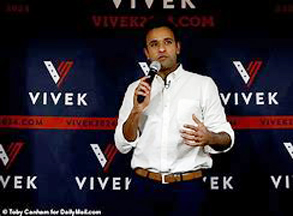
WASHINGTON, D.C. (TIP): Republican presidential candidate Vivek Ramaswamy, 37, has emerged as a prominent voice against affirmative action and what he terms “preferences” in college admissions and hiring. His campaign has revolved around the idea of promoting “pure merit” and ending race-conscious policies. However, it has come to light that Ramaswamy’s past reveals a significant contradiction in his stance, says Kali Holloway.
Ramaswamy’s opposition to affirmative action has been one of the main pillars of his presidential campaign, alongside his fight against “wokeness.” He has criticized race-based admissions as a “cancer on our national soul” and pledged to end them if elected president. Curiously, Ramaswamy received substantial support from the Soros Fellowship for New Americans in 2011 during his time as a graduate student at Yale Law School, according to The Daily Beast. The fellowship, backed by the family of George Soros, is intended to provide opportunities and equity to immigrants and children of immigrants, aiming to level the playing field for historically marginalized groups.
Despite receiving support from the fellowship, Ramaswamy seems to have attempted to distance himself from it. The media reported, citing a Mediate story by Isaac Schorr, that he paid to have information about the fellowship removed from his Wikipedia page. This move raises questions about the candidate’s discomfort with his own association with a program that aligns with the very principles he opposes.
The fellowship’s selection process reflects a holistic approach, considering factors beyond just academic grades, aiming to support students who have overcome obstacles and demonstrated potential for success. This approach bears resemblance to the admissions process used by institutions like Harvard, which considers various aspects of applicants, including race, to create a more equitable environment, the media reported.
Ramaswamy’s public criticism of affirmative action has been explicit, accusing such policies of perpetuating psychological slavery and anti-black racism. However, the fellowship he received appears to share similar objectives of creating a level playing field for underrepresented groups.
When confronted with the inconsistency of his opposition to race-conscious policies and his acceptance of the Soros Fellowship, Ramaswamy’s campaign adviser emphasized that the fellowship is not based on a specific skin color or melanin content. This response appears to downplay the fact that Ramaswamy benefited from a fellowship explicitly intended for immigrants, a group that often faces systemic barriers to success.
The irony lies in Ramaswamy’s failure to acknowledge how such support may have positively influenced his own journey. As he emphasizes the importance of a colorblind meritocracy, his past demonstrates the impact of opportunities aimed at leveling the playing field for marginalized groups, the Beast pointed out. This apparent contradiction in his stance raises questions about the sincerity of his opposition to affirmative action and his commitment to the ideals of a fair and equitable society.
“Vivek is against race-based preferences in hiring and admissions,” a senior advisor to Ramaswamy’s campaign, Tricia McLaughlin, told Kali Holloway, the author of the piece, via email. “Immigrants are not defined by a certain skin color or melanin content.” -

U.S. announces $345 million military aid package for Taiwan
The White House’s announcement said the package would include defense, education and training for the Taiwanese
WASHINGTON, D.C. (TIP): The U.S. on Friday, July 28, announced $345 million in military aid for Taiwan, in what is the Biden administration’s first major package drawing on America’s own stockpiles to help Taiwan counter China, says an AP report.
The White House’s announcement said the package would include defense, education and training for the Taiwanese. Washington will send man-portable air defense systems, or MANPADS, intelligence and surveillance capabilities, firearms and missiles, according to two U.S. officials who spoke on the condition of anonymity to discuss sensitive matters ahead of the announcement.
U.S. lawmakers have been pressuring the Pentagon and White House to speed weapons to Taiwan. The goals are to help it counter China and to deter China from considering attacking, by providing Taipei enough weaponry that it would make the price of invasion too high. While Chinese diplomats protested the move, Taiwan’s trade office in Washington said the U.S. decision to pull arms and other materiel from its stores provided “an important tool to support Taiwan’s self-defense.” In a statement, it pledged to work with the United States to maintain “peace, stability and the status quo across the Taiwan Strait.”
Taiwan’s Ministry of National Defense also expressed its appreciation in a statement Saturday morning that thanked “the U.S. for its firm commitment to Taiwan’s security.”
The package is in addition to nearly $19 billion in military sales of F-16s and other major weapons systems that the U.S. has approved for Taiwan. Delivery of those weapons has been hampered by supply chain issues that started during the COVID-19 pandemic and have been exacerbated by the global defense industrial base pressures created by Russia’s invasion of Ukraine.
The difference is that this aid is part of a presidential authority approved by Congress last year to draw weapons from current U.S. military stockpiles — so Taiwan will not have to wait for military production and sales. This gets weapons delivered faster than providing funding for new weapons.
The Pentagon has used a similar authority to get billions of dollars worth of munitions to Ukraine.
Taiwan split from China in 1949 amid civil war. Chinese President Xi Jinping maintains China’s right to take over the now self-ruled island, by force if necessary. China has accused the U.S. of turning Taiwan into a “powder keg” through the billions of dollars in weapons sales it has pledged.
The U.S. maintains a “One China” policy under which it does not recognize Taiwan’s as an independent country and has no formal diplomatic relations with the island in deference to Beijing. However, U.S. law requires a credible defense for Taiwan and for the U.S. to treat all threats to the island as matters of “grave concern.”
Getting stockpiles of weapons to Taiwan now, before an attack begins, is one of the lessons the U.S. has learned from Russia’s invasion of Ukraine, Pentagon deputy defense secretary Kathleen Hicks told The Associated Press earlier this year. Ukraine “was more of a cold-start approach than the planned approach we have been working on for Taiwan, and we will apply those lessons,” Ms. Hicks said. Efforts to resupply Taiwan after a conflict erupted would be complicated because it is an island, she said.
China regularly sends warships and planes across the center line in the Taiwan Strait that provides a buffer between the sides, as well as into Taiwan’s air defense identification zone, in an effort to intimidate the island’s 23 million people and wear down its military capabilities.
Liu Pengyu, a spokesman for China’s embassy in Washington, said in a statement Friday that Beijing was “firmly opposed” to U.S. military ties with Taiwan. The U.S. should “stop selling arms to Taiwan” and “stop creating new factors that could lead to tensions in the Taiwan Strait,” Mr. Liu said.
-

Indian American executive Amrapali “Ami” Gan quits as OnlyFans CEO
WASHINGTON, D.C. (TIP): : Indian American executive Amrapali “Ami” Gan is leaving as CEO of OnlyFans, an internet content subscription service based in London to lead Hoxton Projects, a marketing company she has founded. She spent nearly three years as CEO of the creator platform that supports adult content. She will be replaced by chief strategy and operations officer Keily Blair.
“Spending nearly 3 years at OnlyFans while it echoed throughout the cultural zeitgeist, has been beyond rewarding,” Gan wrote in a Twitter thread.
The Mumbai-born Gan has spent most of her life in California, where she currently lives. She reportedly operated from the company’s offices in Los Angeles.
In her stint as the CEO of OnlyFans, she accomplished business goals such as prioritizing platform safety, scaling the organization globally and growing the platform’s community of fans and creators.
According to Gan’s tweet, OnlyFans paid out $10 billion in creator earnings and made it twice to the FT’s list of Europe’s Fastest Growing Companies during her tenure as CEO. She added creator-led content on the platform increased at a steady pace and OnlyFans also launched its safety and transparency center when she served as the CEO. “Within this time, I’ve accomplished incredible goals for the business including enhancing its priority focus on platform safety, scaling the organization globally, and growing OF’s diverse community of creators and fans,” Gan wrote. Ami Gan’ new venture, Hoxton Projects, will delve deep into the field of communication and marketing to help founders and growing business to expand their impression.
“Hoxton Projects reimagines the agency paradigm to support founders and growing businesses on how to best communicate and market their purpose and competitive advantage,” Gan tweeted.
Shortly before Gan took over as CEO, OnlyFans announced that it would ban sexually explicit content, sending its community of creators into an uproar. However, this decision was eventually reversed. Despite her tenure as a CEO, Gan’s background is in marketing; she was previously the chief marketing officer of OnlyFans, and before that, she led communications efforts at Cannabis Cafe, Red Bull, Quest Nutrition and other companies.
-
US Creates ‘Keep STEM Talent Act of 2023’ after Canada’s H1B work permit fills up in 2 Days
By Anil Gupta
WASHINGTON, D.C. (TIP): Senator Durbin re-drafted the ‘Keep STEM Talent Act of 2023‘ bill immediately after Canada’s #H1 B-based open work permit saw an unprecedented demand.
It is to be noted that this same bill was introduced in 2022 but did not move forward. As per immigrants’ popular opinion, immigration bills are always deadlocked in US Congress between Democrats and Republicans.
They have not seen any meaningful reform for the last 30+ years. That’s probably the reason Canada’s H1 B-based open work permit was received with so much enthusiasm.
Canada expected to fill up 10k spots in 1 year but filled up the quota in less than 48 hours.
Keep STEM Talent Bill of 2023
The bill aims to keep STEM graduates from US-based universities away from the dreaded yearly green card quota limits. This means that anyone who qualifies will be able to get a green card without any yearly GC quota limits.As per this bill, one can get the US green card if they have:
- STEM Degree from US-based University
- Physically present in the US to complete this education.
- Advance Degree (Masters or Higher level).
- Job offer from a US employer
- Job is directly related to STEM degree
- The pay rate is higher than the median wage level in the local area of work location.
- Have the approved labor certification (generally known as PERM)
- STEM Degree is in one of the fields of study
- Computer and information sciences and support services
- Engineering
- Mathematics and statistics
- Biological and biomedical sciences
- physical sciences
- agriculture sciences
- Natural Resources and Conservation Sciences
It is not clear if the bill will also removed the most problematic and discriminatory ‘Country of birth’ based green card numbers.
What are the chances of this Act becoming a law?
As per the past trend and the way this act has been written, the chances of passing both the House and Senate to become law are extremely low. The same Act was introduced in 2022 as well but nothing happened. It serves more as news than any substantial effect on the lives of skilled immigrants.
As per our analysis, this has a 0.5% chance of becoming law even though the act does have logical provisions.
It will most probably die in the middle of the two party’s election campaign.
People living and working in the US on an H1B visa; holding an approved i140 for US green card but staring at the multiple decades-long wait are tired and desperate to get rid of mental stress.
Business Community Opinion
Several business owners have voiced their opinion on the need to fix the US immigration law over time.
O’Leary Ventures Chairman Kevin O’Leary @kevinolearytv says bad U.S. immigration policy is resulting in a brain drain and Canada is benefitting from H1-B visa problems.
Elon Musk also praised the Canadian H1B open work permit and called it a ‘smart move’.
-

Judge Cannon sets a trial date for next May in Trump’s classified documents case in Florida
WASHINGTON, D.C. (TIP): A federal judge in Florida has scheduled a trial date for next May for former President Donald Trump in a case charging him with illegally retaining hundreds of classified documents.
The May 20, 2024, trial date, is a compromise between a request from prosecutors to set the trial for this December and a bid by defense lawyers to put it off indefinitely until sometime after the 2024 presidential election.
If the date holds, it would follow close on the heels of a separate New York trial for Mr. Trump on dozens of state charges of falsifying business records in connection with an alleged hush money payment to a porn actor.
It also means the trial would not start until deep into the presidential nominating calendar and probably well after the Republican nominee is clear — though before that person is officially nominated at the Republican National Convention.
In pushing back the trial from the December 11 start date that the Justice Department had asked for, Judge Cannon wrote that “the government’s proposed schedule is atypically accelerated and inconsistent with ensuring a fair trial”.
She agreed with defense lawyers that the amount of evidence that would need to be sifted through before the trial, including classified information, was “voluminous and likely to increase in the normal course as trial approaches”.
“The Court finds that the interests of justice served by this continuance outweigh the best interest of the public and Defendants in a speedy trial,” Judge Cannon wrote.
In a statement referring to the Department of Justice, the Trump campaign called Judge Cannon’s order “a major setback to the DOJ’s crusade to deny President Trump a fair legal process. The extensive schedule allows President Trump and his legal team to continue fighting this empty hoax”.
Mr. Trump could yet face additional trials in the coming year. He revealed this week that he had received a letter informing him that he was a target of a separate Justice Department investigation into efforts to undo the results of the 2020 presidential election, an indication that charges could be coming soon.
The target letter referred to multiple distinct statutes Mr. Trump could be charged with violating, including conspiracy to defraud the government, according to a person familiar with the matter who insisted on anonymity to discuss private correspondence.
Mr. Trump’s new lawyer in that investigation, John Lauro, told Fox News on July 21 that prosecutors appeared to be accusing Mr. Trump of “some kind of effort to obstruct” the January 6, 2021, counting of state electoral votes and “whether or not President Trump intimidated anyone or ballot stuffed”.
He said Mr. Trump would not be appearing before a grand jury because “he did absolutely nothing wrong”.
“He’s done nothing criminal,” Mr. Lauro said. “And he’s made his case that he was entitled to take these positions as president of the United States. When he saw all these election discrepancies and irregularities going on, he did what any president was required to do because he took an oath to do exactly that.” Multiple judges appointed by Mr. Trump and Mr. Trump’s own attorney general said there was no evidence of widespread fraud that could have affected the outcome of the election.
Prosecutors in Georgia, meanwhile, plan to announce charging decisions within weeks in an investigation into attempts by Mr. Trump and his allies to subvert the vote in that state.
The trial before Cannon would take place in a federal courthouse in Fort Pierce.
It arises from a 38-count indictment last month, filed by Justice Department special counsel Jack Smith, which accused Trump of willfully hoarding classified documents, including top secret records, at his Mar-a-Lago estate in Palm Beach and conspiring with his valet, Walt Nauta, to hide them from investigators who demanded them back.
Mr. Trump and Mr. Nauta have both pleaded not guilty.
-

Indian-Americans reach out to lawmakers over increasing Hinduphobia in US
Elected representatives say there is a need to pay attention to discrimination against the Hindus in the US
WASHINGTON, D.C. (TIP): A group of eminent Indian-Americans has urged lawmakers here to take steps against rising Hinduphobia activities in the US and protect the rights of the Hindu community in the country.
As many as 21 Congressmen attended the Second National Hindu Advocacy Day on the US Capitol during which the elected representatives said that there is a need to pay attention to discrimination against the Hindus in the US.
There is need to pay attention to how, “there is discrimination not just by race but also by religion and Hinduphobia and intimidation of the Hindu community is an old problem,” Congressman Rich McCormick told attendees of the day-long conference at the US Capitol organized by Coalition of Hindus of North America (CoHNA). McCormick said that bills like California’s SB403 “are racist, discriminatory and divisive, since they seek to classify people in ways that the people themselves reject.” This is not American and needs to be opposed, the Republican Congressman from Georgia said.
“I believe strongly in freedom of religion for every individual and stand against any kind of attacks and phobia,” said Congressman Sri Thanedar.
He spoke of the importance of ensuring representation for diverse groups and freedom of religion.
“The Hindu religion is a peaceful one, yet it has been attacked and needs to be protected. Like others, Hindus deserve to be able to practice their religion without any kind of hate, prejudice or phobia. As a Congressman, I myself noted the lack of a Hindu caucus and therefore helped create one,” Thanedar said.
Hindu Americans from 12 states who attended the day-long conference were Hank Johnson, Tom Keane, Rich McCormick, Thanedar, Buddy Carter and Sanford Bishop, as well as Ohio State Senator Niraj Antani. “Hindus are under attack in the US,” Atani said. According to Nikunj Trivedi, president of CoHNA, there has been growing awareness about the Hindus in the US “It’s been a productive year of advocacy for the Hindu community with states like Georgia and cities as far apart as Fremont, California and Memphis, Tennessee, seeking to educate about the problem with resolutions and proclamations against Hinduphobia.
“We also witnessed history as the growing popularity of Hindu festivals like Diwali led to the successful declaration of the festival as a holiday in New York City public schools,” he said.
The idea of ‘caste discrimination’ in America is strange at best, given the lack of proper data of any actual discrimination, said Prof Babones, executive director of the Indian Century Roundtable.
“How do California lawmakers plan to figure out someone’s caste in the US, given that there are over 1100 scheduled castes, over 700 scheduled tribes and over 2500 castes in the OBC category just in India alone? Dalit is not a ‘caste’,” he added.
(Source: PTI) -

US and like-minded countries including India need to work together to shape the course of AI: Arti Prabhakar
WASHINGTON, D.C. (TIP): The United States and like-minded countries including India need to work together to shape the course of artificial intelligence, Arti Prabhakar, the Science Advisor to President Joe Biden, said on Friday, July 21 as the administration roped in several IT giants like Google and Microsoft to ensure that it is not misused and is being used for public good.
“The work that we are doing includes working with companies to hold them accountable and there’s some important progress on that today. We’re also working on executive actions that we can take within existing law, and the President is considering an executive order that we think can really boost our ability to deal with AI’s harms and also start using it for good,” Indian-American Prabhakar told PTI in an interview.
“That’s what we can do from the executive branch. We’ll also continue to work with Congress on bipartisan legislation as they start putting legislation forward. Then critically and underpinning all of this is the work that we’re doing globally with our international partners and allies, including with India,” Prabhakar said.
“And that is because this is a global technology. It’s everywhere. Everyone is participating and it’s really affecting, it’s going to affect everyone’s lives and we want to make sure that like-minded countries work together to shape the course of AI,” she said in response to a question.
AI, she said, was one of the important topics of discussion when President Joe Biden met Prime Minister Narendra Modi here last month.
“I think that’s very much on the minds of our global leaders when they meet with President Biden. That’s what happened with Prime Minister Modi and many others. I had the opportunity to be at Congress when the Prime Minister spoke and then at the State Dinner and then again at the luncheon that the Vice President and the Secretary of State hosted and artificial intelligence came up repeatedly in those conversations,” she said.
“In fact, the prime minister made a wonderful joke when he addressed Congress and he said he thought AI stood for America, India, which is another way of interpreting it. But I think really the theme of many of the conversations that have happened is exactly what you’re saying is we’re going to have to link arms and be clear about how to achieve safe AI so all of our citizens can benefit from it,” Prabhakar said.
Prabhakar, who spent half of her professional life in Silicon Valley and has her regular home in Palo Alto, said she senses the excitement about AI in Silicon Valley.
“What I would say is go build amazing applications for artificial intelligence because that is part of how we’re going to go forward and make sure while you’re doing it, to build AI that is safe and trustworthy so that it really does lift us up in the end,” she said.
On Friday, Biden announced voluntary commitments that the administration has worked on with seven leading AI companies. These companies include Google, Microsoft, Amazon, Meta, and some of the smaller AI companies. A number of tech companies, some of the biggest leaders in AI, are signing up for some commitments on safety, security and trust.
“It is such an important step that we’ve been able to achieve by holding these companies to account because it’s the first time that the industry has started to come together and take responsibility,” she said.
“Then we’re going to be working on what we need to do as an executive branch, and that will include figuring out how do we manage as AI makes voice cloning, makes fraud easier. As cybercrime becomes easier, some of these harms start advancing. How do we mitigate those harms within the laws and regulations that we already have?” she said. “And then how do we start using AI for public purposes? How do we use it to deal with the climate crisis that we’re confronting? How do we use it to improve health outcomes for everyone here in America and around the world? So, we’re seeing both the bright and the dark side and we’re actively working on both pieces,” she said.
Describing AI as the most powerful technology of this time, she said the president’s been clear that how it is used is going to express their values. But that’s true as well around the world.
“We know every part of the world is trying to use AI to create a future that expresses their values. I think we can disagree about lots of things in this country and around the world, but the one thing I think we would all of us would agree on is that we don’t want to live in a future that’s driven by technology, that’s shaped by authoritarian regimes,” Prabhakar said. “That’s why I think it is so important for like-minded countries, for democratic countries to come together and make sure that we’re working together to use AI in ways that express our values,” said the top American scientific official.
(Source: PTI) -

Indian American Republican presidential aspirants Haley, Ramaswamy on track to qualify for first Republican debate
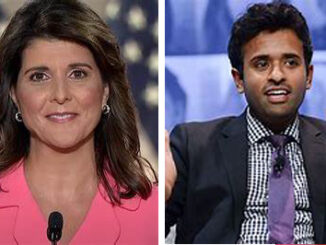
WASHINGTON, D.C. (TIP) : Nikki Haley and Vivek Ramaswamy, the two Indian American Republican aspirants in 2024 presidential race, are on track to qualify for the first Republican primary debate on Aug 23 in Milwaukee, according to media reports.
Haley and Ramaswamy would be facing off with former President Donald Trump and Florida Governor Ron DeSantis, South Carolina senator Tim Scott and former New Jersey governor Chris Christie during the debate in Milwaukee − the largest city in the key battleground state of Wisconsin.
Several other candidates including former Vice Present Mike Pence, Will Hurd, Doug Burgum, Asa Hutchinson, Ryan Binkley, Francis Suarez and Larry Elder are still working on qualifying, according to the reports.
The Republican National Committee set forth requirements in June that candidates must meet on status, polling, fundraising and pledging to take part in the debate.
Candidates must poll at least 1% in three national polls or 1% in two national polls and 1% from an early state poll from two “carve out” states recognized by the committee.
Candidates must also have a minimum of 40,000 unique donors’ part of their presidential campaign committee – with at least 200 unique donors per state – and sign a pledge agreeing to support the eventual party nominee.
According to the reports Haley, the first Indian American to serve in a presidential cabinet under Trump as US ambassador to UN is on track to meet the requirements for the debate.
The news reported she’s raised over $7.3 million through her campaign and affiliated committees between April and June.
The survey from Morning Consult shows she has registered 3% of support among Republican voters, which is on par with two of her rivals. She’s also maintained scoring above 1% in other polls.
Haley indicated on Twitter she plans on supporting the eventual nominee for the Republican party.
“Absolutely irresponsible that Trump, DeSantis, and others won’t commit 100% to supporting the Republican nominee,” Haley tweeted. “There’s no room for personal vendettas in this battle to save our country.”
Biotechnology entrepreneur Vivek Ramaswamy has also fulfilled the debate criteria, according to his spokesperson Tricia McLaughlin cited by media reports.
McLaughlin told the media that Ramaswamy has 65,000 donors. As part of his fundraising strategy, Ramaswamy has laid out incentives for supporters such as offering to give them a 10% cut of the total money he raises for his presidential bid, according to Axios. The survey from Morning Consult shows Ramaswamy has received 8% support from GOP voters, surpassing former Vice President Mike Pence and trailing behind DeSantis. He’s also starting to receive double-digit figures in some polls.
Trump, the Republican frontrunner, has 56% of support from potential Republican voters, and he’s placed first in other national and state polls, according to a survey from Morning Consult.
His campaign said that he has also raised more than $35 million during the second quarter of the year – about twice the amount raised during the first quarter.
DeSantis, who’s trailing behind Trump in the Republican primary polls, has raised more than $20 million during the first six weeks of his candidacy and has about 50,000 donors as of late June. -

Increase in H-1B quota sought to address shortage of highly skilled professionals in US
WASHINGTON, D.C. (TIP): An association of more than 2,100 small and mid-size IT companies in the US mostly owned and operated by Indian-Americans has urged lawmakers to double the H-1B quota from the current 65,000 to address the massive shortage of highly skilled workforce in the country.
The H-1B visa is a non-immigrant visa that allows US companies to employ foreign workers in specialty occupations that require theoretical or technical expertise. Technology companies depend on it to hire tens of thousands of employees each year from countries like India and China.
More than 240 members of the association named ITServe converged in the US capitol on Tuesday for the first-ever in-person Congressional advocacy day during which they plan to reach out to Congressmen and Senators to brief them about the massive shortage of highly skilled workforce in the US.
They said the shortage of highly skilled workforce is impacting their businesses and the American advantage in general. In addition to increasing the number of H-1B visas from 65,000 currently to 130,000 per annum, ITServe is also urging lawmakers to increase the investment in STEM (Science, technology, engineering, and mathematics) education in the US to develop the required high-skilled force within the country.
Coinciding with the Congressional advocacy of ITServe, Indian-American Congressman Raja Krishnamoorthi on Tuesday introduced the High-Skilled Immigration Reform for Employment (HIRE) Act.
The act would strengthen US competitiveness by helping to close the skills gap – the space between the skills required for jobs that employers need to fill, and the skills possessed by current prospective employees.
It would help to close the skills gap by providing additional funding to strengthen US elementary and secondary school science, technology, engineering, and math (STEM) education programs while also doubling the number of H-1B visas available annually from 65,000 to 130,000 to allow American employers, including in critical technology sectors, to draw the best talent from around the world.
“Creating jobs and building the economy of the future requires us to lead the way in technology by developing our domestic workforce while drawing the best talent from around the world,” Krishnamoorthi said.
“The US needs to maintain its leadership in technology and innovation,” Vinay Mahajan, ITServe Alliance president, said.
(Source: PTI) -

Joe Biden nominates Admiral Lisa Franchetti to be the first woman to lead U.S. Navy
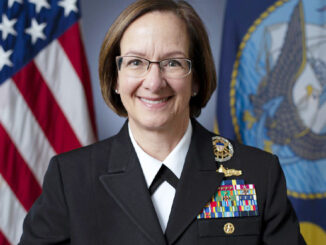
WASHINGTON, D.C. (TIP): President Joe Biden on July 21 nominated Admiral Lisa Franchetti to lead the Navy, an historic step that would break a gender barrier in the U.S. military by making her the first woman to command the service and to become a member of the Joint Chiefs of Staff.
The decision by Mr. Biden is a surprise. Pentagon officials had widely expected the nomination to go to Admiral Samuel Paparo, who leads the Navy in the Pacific and who has experience grappling with the growing challenge from China. Still, Ms. Franchetti, who is currently the Vice-Chief of Operations for the Navy, was among the candidates believed to be in the running for the position, is widely respected and counts broad experience, including as commander of U.S. Naval Forces Korea, officials said.
In a statement, Mr. Biden noted Ms. Franchetti’s 38 years of experience.
“Throughout her career, Admiral Franchetti has demonstrated extensive expertise in both the operational and policy arenas,” Mr. Biden said in a statement, noting that she was the second woman ever to achieve the rank of four-star admiral in the U.S. Navy.
Last year, Mr. Biden picked Admiral Linda Fagan to lead the U.S. Coast Guard, making her its first female commanding officer. But the coast guard is not formally part of the Department of Defense, and instead falls under the Department of Homeland Security.
Ms. Franchetti would become the first woman to lead a military service within the Defense Department and to join the Joint Chiefs of Staff, a group of eight top uniformed service members who advise the President on military issues.
Mr. Biden also elevated Mr. Paparo, nominating him to become the commander of all U.S. military forces in the Pacific. He picked Vice-Admiral Stephen “Web” Koehler to succeed Mr. Paparo as commander of U.S. Pacific Fleet.
Mr. Biden’s announcement comes during a block on all U.S. military nominations in Congress by Senator Tommy Tuberville, who is protesting a Defense Department policy that reimburses costs for service members who travel to get an abortion. Senior military nominations must be approved by the Senate. Although the review is usually routine, a single senator can pause the process by putting a hold on nominations that force them to be considered one at a time, taking many hours each. Mr. Tuberville’s block could have a far-reaching impact across the armed forces, affecting troops and their families, and ultimately costing the U.S. military talent, a point underscored this month by Mr. Biden’s pick to become the top U.S. general, Air Force General Charles “C.Q.” Brown.
The military is already having to shuffle staff to fill a top leadership post after the commandant of the Marine Corps, one of the members of the Joint Chiefs of Staff, stepped down on July 10 when his four-year term ended.
His Number 2 has taken over but the hold on promotions has left the Marine Corps without a confirmed leader in the job for the first time in more than a century, the Pentagon said.
Mr. Biden said the delay undermined national security.
“What Senator Tuberville is doing is not only wrong — it is dangerous,” Mr. Biden said in the statement.
“He is risking our ability to ensure that the United States Armed Forces remain the greatest fighting force in the history of the world. And his Republican colleagues in the Senate know it.”
-

Indian-American business leader Shamina Singh appointed to serve on President’s Export Council
Shamina Singh has studied at Harvard, Yale, Stanford, and the Indian School of Business
WASHINGTON, D.C. (TIP): US President Joe Biden has announced his intent to appoint Shamina Singh, a prominent Indian-American business leader, to the President’s Export Council, which serves as the principal national advisory committee on international trade. Singh, who is the Founder and President of the Mastercard Center for Inclusive Growth, has said that she is “honored to join the group of esteemed leaders that make up the President’s Export Council.” According to a statement from the White House, on July 14, President Biden announced his intent to appoint Singh to serve in the key role. “I am deeply honored to join the group of esteemed leaders that make up the President’s Export Council,” Singh said.
The President’s Export Council serves as the principal national advisory committee on international trade. The Council advises the president of government policies and programs that affect US trade performance, promotes export expansion and provides a forum for discussing and resolving trade-related problems among the business, industrial, agricultural, labor and government sectors.“From the earliest days of my career, I’ve gravitated toward work that helps create long-lasting and inclusive prosperity for people and economies in the US and around the world,” she was quoted as saying in the statement on Mastercard’s website.
Singh also serves as the Executive Vice President of Sustainability at Mastercard and is a member of the company’s Management Committee.
She has drawn on over 20 years of global experience to develop a unique social impact model that leverages public and private sector assets. In 2018, Mastercard created the Mastercard Impact Fund with an initial USD 500 million investment. Singh was named President and charged with activating those philanthropic dollars to advance inclusive growth and financial inclusion worldwide.“Through that work, and particularly at Mastercard, I’ve learned how the dialogue between the public and private sector can open bigger doors more widely than many other approaches. I’ve seen firsthand the catalytic impact that can result from effective cross-sector partnerships. I look forward to bringing this perspective to the Council, serving the Administration and having an opportunity to advance America’s economic interests across the globe,” she said.
Deeply committed to public service, Singh has held senior positions in the White House and the US House of Representatives. Singh was the Executive Director of the first President’s Advisory Commission on Asian Americans and Pacific Islanders. In 2015, she was appointed by President Barack Obama and confirmed by the US Senate to a six-year term on the board of AmeriCorps. She served as chair for two years.
Singh co-chairs the Ad Council of America’s Advisory Committee on Public Issues and serves on the Advisory Boards of the Aspen Institute Civil Society Fellowship and the New York Department of Financial Services Innovation. Singh has studied at Harvard, Yale, Stanford, and the Indian School of Business. She earned a Bachelor of Science from Old Dominion University and a Master of Public Affairs from the Lyndon B. Johnson School of Public Affairs at the University of Texas, Austin. She received the Alumni of Distinction award from both institutions. Singh becomes the latest addition from the Indian-American community to serve in the key positions in the Biden administration. A record 150-plus Indian-Americans serve in the key positions.
(Source: PTI) -

Indian-American Congressman Dr Bera receives Champion of Healthcare Innovation Award
Bera served as Chief Medical Officer for Sacramento County in California before being sworn in as a Congressman in 2013
WASHINGTON, D.C. (TIP): Dr Ami Bera, an Indian-American physician-turned politician has received the Champion of Healthcare Innovation Award for his contributions to making high-quality care affordable and accessible in the US. Bera, 58, the longest-serving Indian-American serving in the US Congress, was among those facilitated during the council’s Innovation Expo held here last week.”Honored to receive the Champion of Healthcare Innovation Award from @HealthInFocus. As a doctor, I’m committed to working to ensure that every American has access to high-quality, affordable health care,” Bera, a Democrat, tweeted on Friday, July 14.
Bera served as Chief Medical Officer for Sacramento County in California before being sworn in as a Congressman in 2013 and has represented Sacramento County in the US House of Representatives since then.
He is currently a member of the House Foreign Affairs Committee, where he serves as Chairman of the Subcommittee on Asia, the Pacific, Central Asia, and Nonproliferation.
He is also a member of the House Permanent Select Committee on Intelligence and the Select Subcommittee on the Coronavirus Pandemic. During his 20-year medical career, Bera worked to improve healthcare availability, quality, and affordability. A first-generation American born and raised in California, Bera earned both his Bachelor of Science (BS) and Doctor of Medicine (MD) from the University of California, according to his website.
(Source: PTI) -

World Bank President Ajay Banga to attend G20 meeting in India
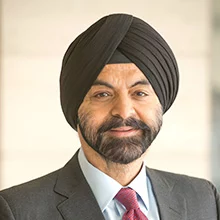
WASHINGTON, D.C. (TIP): World Bank President Ajay Banga will travel to India next week to attend the G20 Finance Ministers and Central Bank Governors Meeting in Ahmedabad, Gujarat, according to the development lender.
This would be Banga’s first trip to India after he took over as the World Bank president last month.
Gujarat is hosting four meetings of G20 in the first two weeks of July. These meetings will provide an opportunity for business representatives to share their perspectives, insights and policy recommendations on various economic and business-related topics and will play a very significant role in shaping global economic agendas and policies, according to officials.
(Source: PTI) -

A significant milestone for the sport as Major League Cricket begins in US
WASHINGTON, D.C. (TIP): Cricket is all set to hit a significant milestone this week with the launch of Major League Cricket in the US as Texas Super Kings face off against Los Angeles Knight Riders at America’s new premier venue in Dallas on Friday, July 14.
All six teams comprising some of the major cricket players and local American talents would play 18 games, leading up to the first-ever championship final on July 30. Eleven matches will take place at Grand Prairie Stadium near Dallas in Texas, while seven games are scheduled to take place at Church Street Park in North Carolina.
All the tickets for the first match, at the cricket-specific stadium featuring 7,200 seats and a grass wicket meeting the highest levels of international standards, have been sold off, the organizers said.
The six teams are Los Angeles Knight Riders, MI New York, San Francisco Unicorns, Seattle Orcas, Texas Super Kings and Washington Freedom. Most of the teams are owned by Indian Americans who are venture capitalists, in the IT and start-up sector.
The inaugural season will be played in a round-robin format with the four best performing teams competing in a multi-game playoff and final round to decide a champion, to be crowned on July 30, a media release said.
Based out of Seattle Washington State, the Seattle Orcas are owned by an investor group including Microsoft’s CEO Satya Nadella, Soma Somasegar, Samir Bodas, Ashok Krishnamurthi, and Sanjay Parthasarathy – and the GMR Group.
Los Angeles Knight Riders are based out of Los Angeles and is owned by Knight Riders Groups. San Francisco Unicorns is owned by Anand Rajaraman and Venky Harinarayan, co-founders of Cambrian ventures.
Texas Super Kings are co-owned by the Chennai Super Kings, Ross Perot Jr., and Anurag Jain; while Washington Freedom team is owned by Indian American entrepreneur Sanjay Govil. ”It’s not only the Indian diaspora that is very excited, those from Australia, United Kingdom, Pakistan, Sri Lanka, Bangladesh, New Zealand are also excited about the start of the Major League Cricket in the United States,” said an avid cricket fan, M R Rangaswami from San Francisco, who is flying to Dallas to watch the opening match.
Star players set to take part include Afghanistan T20 captain Rashid Khan, South African internationals Faf du Plessis, Quinton de Kock and David Miller, West Indians Kieron Pollard, Andre Russell and Dwayne Bravo, Australians Marcus Stoinis and Aaron Finch, England’s Jason Roy and Liam Plunkett, Sri Lankan Dasun Shanaka and New Zealand’s Trent Boult.
Players have been drafted mainly from all major cricket playing nations except for India, because of the existing rules of the BCCI.
”The US media market is the largest in the world. So, at some point, they’ll realize that sending these (Indian) players is good for everybody,” Rangaswami told PTI. Ahead of the start of the games, Sameer Mehta, co-founder of Major League Cricket said fans will experience an unforgettable night for cricket in America, with a full house welcoming the world’s top players to Grand Prairie Stadium for the opening match. ”Since we arrived in Texas, it’s been incredible to see the support for the Texas Super Kings.
”We can’t wait to get out on the field at Grand Prairie Stadium and represent the Lone Star State in front of a full house and be part of a special night for cricket in America,” said Faf du Plessis, captain of the Texas Super Kings.
”It’s going to be a historic night at Grand Prairie Stadium, as the first ever Major League Cricket game unfolds in front of a packed stadium this Thursday night. I’ve always spoken about wanting to represent the Knight Riders wherever they play. ”We’ve long talked about coming to the United States and I’m glad it’s finally happening.
”It’s great to hear that the opening game has been sold out, and we can’t wait to bring our exciting brand of cricket to the cricket fans in America.” said Sunil Narine, captain of the Los Angeles Knight Riders. Anurag Jain, co-owner of the MLC Texas Super Kings Cricket, said. ”We look forward to having a professional team in Texas for the passionate local cricket community to root for and to introduce the sport to new fans across the country.
(Source: PTI)