Tag: Whatapp

  • Sedition law colonial, concerned over misuse: SC

    Sedition law colonial, concerned over misuse: SC

    New Delhi (TIP): Expressing concern over the “misuse” of the sedition law and “no accountability of executive agencies”, the Supreme Court sought to know on Thursday, July 15,  if this “colonial law” is still needed 75 years after Independence.

    Hearing a petition by Major General (retired) SG Vombatkere who has challenged Section 124A of the IPC which deals with the offence of sedition, Chief Justice of India N V Ramana turned to Attorney General K K Venugopal: “It’s a colonial law. It was meant to suppress the freedom movement. The same law was used by the British to silence Mahatma Gandhi, Tilak etc. Still, is it necessary after 75 years of independence?”.

    Venugopal told the bench – it also included Justices A S Bopanna and Hrishikesh Roy – that the provision need not be struck down and guidelines can be set out so that it meets its legal purpose.

    Stating “I am indicating what I am thinking,” the CJI said if one sees the history of people charged under the section, the conviction rate is very low.

    “The enormous power of this section can be compared to a carpenter being given a saw to make an item, (but) uses it to cut the entire forest instead of a tree. That’s the effect of this provision,” he said.

    He cited the example of how Section 66A of the Information Technology Act continues to be used even after being struck down by the court in 2015. “Take the 66A IT Act. Thousands of cases were registered even after being struck down,” he said, adding that if the police want to fix somebody, they can also invoke 124A, and that everybody is a little scared when the section is invoked. “These are all issues which need to be looked into,” he said.

    “Our concern is misuse of law and no accountability of executive agencies,” the CJI said, clarifying that he was not blaming any state government for the misuse.

    He said if some party doesn’t want to hear the voice of another party, they may use this type of law and implicate other people. “It’s a serious question for individuals,” he said.

    The bench wondered why the government, which had repealed a number of pre-colonial laws, was not looking into the sedition law.

    “Continuation of these types of laws after 75 years! The government has repealed a number of laws now… I don’t know why you are not looking into this,” the CJI said.

    Venugopal told the court that the provision need not be struck down, but guidelines could be set out so that the law meets its legal purpose.

    He said a similar petition is already pending before a bench headed by Justice U U Lalit and the court has directed that counter-affidavits be filed.

    On April 30, the court had issued notice to the Centre on a petition filed by two journalists — Kishorechandra Wangkhemcha from Manipur and Kanhaiya Lal Shukla from Chhattisgarh.

    The CJI said he was aware of this and would decide how to proceed.

    Advocate P B Suresh, appearing for petitioner Vombatkere, also drew the court’s attention to the May 31 remarks by a bench headed by Justice D Y Chandrachud which, while restraining the Andhra Pradesh police from taking coercive action against two TV news channels charged with sedition, said it was of the view that section 124A of the IPC will need interpretation, especially on its application with regard to freedom of the press.

    Vombatkere’s plea challenges the constitutional validity of the sedition law on the ground that it has a “chilling effect” on speech and is an unreasonable restriction on the fundamental right of free expression.

    He said “a statute criminalising expression based on unconstitutionally vague definitions of ‘disaffection towards Government’ etc. is an unreasonable restriction on the fundamental right to free expression guaranteed under Article 19 (1)(a) and causes constitutionally impermissible ‘Chilling Effect’ on speech”.

                    Source: The Indian Express

  • Devotees can have ‘darshan’ of Ramlala in Ayodhya temple by 2023-end

    Devotees can have ‘darshan’ of Ramlala in Ayodhya temple by 2023-end

    New Delhi (TIP) : Toward 2023-end, devotees will be able to have “darshan” of Ramlala in the Ayodhya Ram temple. Speaking to The Daily Guardian, Shri Ram Janmabhoomi Teerth Kshetra trust’s general secretary Champat Rai said: “Date has been fixed for getting darshan in Ayodhya’s grand Ram temple. In 2023, Ramlala will be established at the sanctum sanctorum of the Ram temple. By 2025, the vision of Ram temple complex in entire 70 acres will be completed. The decision has been taken in the meeting of Ram Mandir Trust in Ayodhya on Thursday, July 15.”

    Meanwhile, the construction work of Ram temple in Ayodhya is on full swing. The Daily Guardian has an exclusive picture of the construction work. It can be seen in this picture that despite the rain, the temple construction work is going on for 24 hours. At the same time, there are elaborate security arrangements in the Ram temple complex. The premises are being monitored 24 hours a day. For this, watch towers and CCTV cameras have been installed, so that the construction and surrounding activities are monitored at all times.

    Speaking to The Daily Guardian, Shri Ram Janmabhoomi Teerth Kshetra Trust member Anil Mishra said that the foundation work of Ram temple will be completed by October. After this, the work of the walls and building of the Ram temple will be started from November. Till now, 15 layers of the foundation of the Ram temple have been prepared and the work of 16th layer is going on.

    Anil Mishra also said that review is going on regarding the construction of Ram temple. The review is being done for the construction of Ram temple in association with Tata Consultancy and LNT. Tata Consultancy-LNT›s expert and Gujarat›s architect Ashish Sompura has given a presentation through a projector in the meeting regarding the construction of Ram temple. He described how in the coming days, the pace of construction of Ram temple will be further accelerated. It is expected that the work of filling the foundation will be completed by October. After this, the construction work of the main building of the temple will start from November.

  • India eases drone norms in boost for future tech

    New Delhi (TIP): The Union civil aviation ministry on Thursday, July 15,  released the draft of the national drone policy, making it significantly easier for people and companies to own and operate drones, while also streamlining a labyrinthine certification process for manufacturers, importers and users, in a move that aims to boost future tech.

    Civil aviation minister Jyotiraditya Scindia underlined the key highlights of the new policy in a series of tweets on Thursday. The document has been now been put up for public inputs till August 5, following which it will be notified. The rules will replace the Unmanned Aircraft System Rules (UAS), 2021, which came into force in March.

    “In a major fillip to the drone industry, I am happy to present the Draft Drone Rules 2021 that mark a stark shift from the earlier UAS Rules. 10 key takeaways: Several approvals abolished & processes made easier; number of forms reduced from 25 to 5; coverage of drones increased from 300 kg to 500 kg; fee reduced to nominal levels; yellow zone reduced from 45 km to 12 km from the airport perimeter; no flight permission required up to 400 ft in green zones…,” Scindia wrote.

    Drones have been in the spotlight since such a device was used to target an Indian Air Force (IAF) base in Jammu with explosives last month. Officials in defence have since said they are working on anti-drone technologies. Typical consumer drones usually have some inbuilt safeguards, which mean not all are unsafe.

    Drones now form a significant new consumer tech category, particularly among hobbyists and visual artists, and are being tested for a range of practical as well as industrial uses such as automated package deliveries by e-commerce companies.                 Source: HT

  • ‘Early stages’ of Covid-19 third wave, amid Delta surge: WHO

    ‘Early stages’ of Covid-19 third wave, amid Delta surge: WHO

    The coronavirus disease (Covid-19) pandemic is now in the “early stages” of the third wave, warned World Health Organization (WHO) chief Tedros Adhanom Ghebreyesus on Wednesday, even as he sounded a fresh alarm over a global surge in cases of the Delta variant of the SARS-CoV-2 coronavirus. “Unfortunately…we are now in the early stages of a third wave”, Ghebreyesus said in an address to the emergency committee on Covid-19 established under the International Health Regulations (IHR), a treaty that guides global response to public health risks.

    “The Delta variant is now in more than 111 countries and we expect it to soon be the dominant Covid-19 strain circulating worldwide, if it isn’t already,” a UN report quoted World Health Organization chief Ghebreyesus as saying. He added that the coronavirus is continuing to evolve and resulting in more transmissible variants.

    Tedros Adhanom, the director-general of the international public health agency, pointed out that Covid-19 cases and deaths were on the decline for a while due to increasing vaccination rates in Europe and North America, but the global trend has now reversed and cases are rising once again, the last week being the fourth consecutive one which witnessed rising cases in all but one of WHO’s six regions. Deaths are also rising again, after 10 weeks of steady decline, it said. WHO said that the recent spread of the Delta variant of the coronavirus is being fueled by “increased social mobility” and inconsistency in the use of proven public health and social measures. Vaccination against Covid-19 is important but that alone will not stop the pandemic, the global health body said, pointing out that countries need to undertake a “comprehensive risk management approach to mass gatherings”, an updated guidance for which was recently issued by WHO.

  • UK passes COVID-19 jabs milestone but masks confusion mounts

    London (TIP): Two-thirds of UK adults have now been fully vaccinated against the coronavirus, the government said Wednesday, July 15, arguing that the breakthrough justified its contentious move to drop most pandemic curbs next week.

    A total of 35,155,767 second doses have now been administered since the Western world’s first mass vaccination rollout began in December, official figures showed.

    “Barely 8 months since the first vaccine, 2/3 of UK adults have had both doses,” Prime Minister Boris Johnson tweeted.

    “Thank you to everyone coming forward and to those helping others get jabbed. You are the reason we are able to cautiously ease restrictions next week,” he said.

    From Monday, the government will lift most restrictions on public gatherings in England and allow businesses such as nightclubs to reopen, to the concern of scientists who say it is too soon with the Delta variant still spreading rapidly.

    There will be a patchwork of different rules on face coverings across the UK and within England, if other cities and transport operators follow the lead of London mayor Sadiq Khan.

                    Source: AFP

  •  US Surgeon General Vivek Murthy makes out a case for Covid Vaccination

     US Surgeon General Vivek Murthy makes out a case for Covid Vaccination

    Says he lost 10 family members to Covid

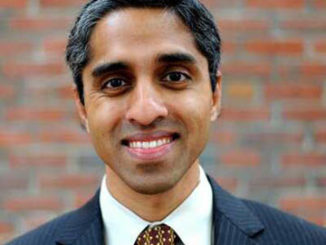
    WASHINGTON (TIP): US Surgeon General Dr Vivek Murthy, an Indian-American, on Thursday, July 15, said he lost 10 family members both here and in India to the Covid pandemic.

    Murthy, who is occupying the position for the second time, said this at a White House briefing making a strong case for people to get vaccinated to protect themselves from the deadly virus.

    “On a personal note, it’s painful for me to know that nearly every death we are seeing now from Covid could have been prevented. I say that as someone who has lost 10 family members to Covid and who wishes each and every day that they had had the opportunity to get vaccinated,” Murthy said. “I see that also as a concerned father of two young children who aren’t yet eligible for the vaccine, but I know that our kids are depending on all of us to get vaccinated to shield them from this virus,” he added.

    “Every week, I talk to doctors and nurses across the country who are burning out as they care for more and more patients with Covid who never got vaccinated, all too often because they were misled by misinformation, he said.

    “We must confront misinformation as a nation. Every one of us has the power and the responsibility to make a difference in this fight. Lives are depending on it,” said the top American doctor.

    So far, 160 million Americans have been vaccinated, he said, adding that that is all good news.

    “But we are not out of the woods yet. Millions of Americans are still not protected against Covid, and we are seeing more infections among those who are unvaccinated,” he said.

    Launching a campaign against misinformation, Murthy urged people to raise the bar for sharing health information by checking sources before they share it with others to ensure that the information is backed by credible scientific sources.

    “As we say in the advisory, if you’re not sure, don’t share. Second, we’re asking health organizations to proactively address misinformation with their patients. Today, the American Academy of Pediatrics is announcing an educational campaign to help parents navigate online health information. I’m encouraged to see this commitment. And again, this is just the beginning,” he said.

    Asking educational institutions to help improve health information literacy, he said the administration is asking technology companies to operate with greater transparency and accountability.

    (Agencies)

  • US editor jailed in Myanmar fears he has Covid: Lawyer

    US editor jailed in Myanmar fears he has Covid: Lawyer

    BANGKOK (TIP): An American journalist detained in Myanmar told his lawyer he believes he has Covid, but prison authorities deny he is infected.

    Danny Fenster was detained at Yangon International Airport on May 24 as he was trying to board a flight to go to the Detroit area in the United States to see his family. He is the managing editor of Frontier Myanmar, an independent online news outlet based in Yangon, Myanmar’s biggest city.

    Fenster has been charged with incitement for which he could be sentenced up to three years’ imprisonment. The military-installed government that took power in February has tried to silence independent news media by withdrawing their licences and by arresting dozens of journalists.

    The US government and press freedom associations have been pushing for Fenster’s release. Fenster is being held in Insein Prison as Myanmar faces a coronavirus surge it is ill-equipped to fight, with a public health system in tatters due to the political turmoil that arose in reaction to the military’s ouster of the elected government of Aung San Suu Kyi. It has a very small supply of Covid vaccines.

    Health authorities on Thursday reported 4,188 new cases of the coronavirus, bringing Myanmar’s official total since the pandemic began last year to 212,545. There were 165 deaths recorded, bringing the total to 4,346.

    Fenster’s lawyer, Than Zaw Aung, said his client told him during a video hearing that he is infected with the coronavirus and has not received medicines he requested.

    Insein Prison began a two-week lockdown on July 8 due to the virus surge. Fenster participated in Thursday’s brief pre-trial hearing from the prison, while the lawyer took part from a township court.

    (Agencies)

  • US Senate passes bill to ban most imports from China’s Xinjiang over rights abuses

    US Senate passes bill to ban most imports from China’s Xinjiang over rights abuses

    WASHINGTON (TIP): The U.S. Senate passed on Wednesday, July 14, a bill to ban imports from China’s Xinjiang region. Several human rights groups, media outlets, and national governments have accused China of committing human rights abuses against the mostly Muslim Uyghur minority group in the region.

    The Uyghur Forced Labor Prevention Act works on the presumption that all goods from Xinjiang were produced using forced labor unless proven otherwise. Imported products from the region would have to be certified as not being made with forced labor.1

    The legislation would also require the Department of Homeland Security to create a list of entities that support or otherwise work with the Chinese government in oppressing Uyghurs and other ethnic minorities.

    The bill will go to the House, and if passed, to the President’s desk.

    The U.S. previously banned the imports of cotton and tomatoes grown in Xinjiang. The region produces about one-fifth of the world’s cotton supply.

    In recent weeks, the U.S. has blacklisted several Chinese entities over their alleged involvement in abuses in Xinjiang.2

    Earlier in July, French prosecutors opened a “crimes against humanity” investigation into four fashion brands accused of profiting from forced labor in Xinjiang.3

    U.S. SENATOR

    ‘Won’t let corporations profit from rights abuses’

    “We will not turn a blind eye to the CCP’s ongoing crimes against humanity, and we will not allow corporations a free pass to profit from these horrific abuses,” said Senator Marco Rubio (R-FL), referring to the Chinese Communist Party.4

    CHINA

    US action will drive Xinjiang’s people into poverty

    “The accusation of ‘forced labor’ is a sheer lie. The true intention of the U.S. moves to hype up this issue is to undermine Xinjiang’s prosperity and stability and deprive the people in Xinjiang of the right to subsistence, employment and development. What the U.S. has done amounts to forced unemployment and forced poverty. It fully reveals the sinister intention of the U.S. to use Xinjiang to contain China,” said Chinese Foreign Ministry Spokesperson Zhao Lijian.5


  • Texas Judge Orders Immediate End of DACA; NY Immigrant Rights Advocates Demand Swift Action by Biden

    Texas Judge Orders Immediate End of DACA; NY Immigrant Rights Advocates Demand Swift Action by Biden

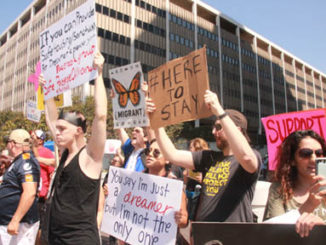
    NEW YORK(TIP): Judge Andrew Hanen, on July 16, ruled the Deferred Action for Childhood Arrivals program (DACA) invalid going forward. In his ruling, Judge Hanen blocked the Department of Homeland Security from approving any new grants of DACA. As of now, the Judge’s order will not impact current DACA recipients or their ability to renew their grants of DACA. In May 2018, Texas Attorney General Ken Paxton, along with six other state Attorneys General, filed a suit in the United States District Court for the Southern District of Texas. The case-Texas v. Nielsen-sought an aggressive and swift end to the DACA program. Appointed by former President George W. Bush and confirmed by the Senate in 2002, Judge Hanen quickly developed a reputation for anti-immigrant rulings and injunctions. A recent FWD.us report revealed a clear majority of Americans support legalization for Dreamers, TPS recipients, and essential workers. The report also outlines that legalization would provide $149 billion in GDP and $39 billion in federal, state, and local taxes.

    Murad Awawdeh, Executive Director, New York Immigration Coalition:

    “Today’s ruling is a chilling reminder that the Republicans’ far-right anti-immigrant agenda continues to outlive Donald Trump with devastating consequences for our communities. Rescinding DACA would be a disaster for America’s health, economy, and legacy. Nearly 50,000 New Yorkers and their families are now at risk of being ripped from the only home they’ve ever known. Judge Hanen’s ruling makes it crystal clear that Washington can’t keep playing politics with the lives of these New Yorkers and the hundreds of thousands like them across the country. U.S. Senate Majority Leader Schumer, Speaker Pelosi, and President Biden must use the budget reconciliation process to finally pass permanent protections for not just these young people, but also TPS recipients and essential workers. We can’t wait any longer.”

    Background : The ruling comes a little more than a year after the Supreme Court of the United States (SCOTUS) ruled against President Donald J. Trump’s attempt to end the DACA program. For years, the New York Immigration Coalition called for an establishment of permanent legalization for Dreamers. Citing the extreme urgency created by Judge Hanen’s forthcoming ruling, the NYIC led the state’s immigrant advocacy organizations in demanding immediate action from President Joseph R. Biden and US Senate Majority Leader, Chuck Schumer to protect Dreamers and create a pathway to citizenship for them and their families.

    The New York Immigration Coalition

    The New York Immigration Coalition (NYIC) is an umbrella policy and advocacy organization for more than 200 groups in New York State. We envision a New York state that is stronger because all people are welcome, treated fairly, and given the chance to pursue their dreams. Our mission is to unite immigrants, members, & allies so all New Yorkers can thrive. We represent the collective interests of New York’s diverse immigrant communities and organizations and devise solutions to advance them; advocate for laws, policies, and programs that lead to justice and opportunity for all immigrant groups; and build the power of immigrants and the organizations that serve them to ensure their sustainability, to improve people’s lives, and to strengthen our state.

  • Social media platforms ‘killing people’ with misinformation, says Biden

    Social media platforms ‘killing people’ with misinformation, says Biden

    WASHINGTON (TIP): The U.S. President’s comments came a day after US Surgeon General Vivek Murthy declared misinformation about the vaccines a threat to public health.

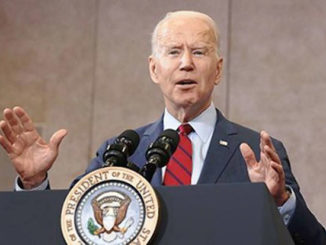
    President Joe Biden has said that social media companies are “killing people” by failing to police misinformation on their platforms about COVID-19 vaccines.

    Mr. Biden, asked if he had a message for platforms like Facebook where false or misleading information about the coronavirus vaccines has spread, told reporters, “They’re killing people.” “The only pandemic we have is among the unvaccinated,” he said.

    Speaking on Thursday, July 15, Dr. Murthy said misinformation about COVID-19, deemed an “infodemic” by the World Health Organization, was deadly.

    “Misinformation poses an imminent and insidious threat to our nation’s health,” Dr. Murthy said during remarks at the White House. “We must confront misinformation as a nation. Lives are depending on it.” Given the role the internet plays in spreading health misinformation, Murthy said technology companies and social media platforms must make meaningful changes to their products and software to reduce the spread of false information while increasing access to authoritative, fact-based sources.

    Too often, he said, the platforms are built in ways that encourage, not counter, the spread of misinformation.

    “We are asking them to step up,” Dr. Murthy said. “We can’t wait longer for them to take aggressive action.” Facebook spokesperson Dani Lever responded: “We will not be distracted by accusations which aren’t supported by facts. The fact is that more than 2 billion people have viewed authoritative information about COVID-19 and vaccines on Facebook, which is more than any other place on the internet.” “More than 3.3 million Americans have also used our vaccine finder tool to find out where and how to get a vaccine. The facts show that Facebook is helping save lives. Period,” Lever said.

    Twitter posted on its platform, “As the COVID-19 pandemic evolves around the world, we’ll continue to do our part to elevate authoritative health information.”

    (Agencies)

  • All about Xi Jinping and party

    All about Xi Jinping and party

    The centenary speech an exercise in self aggrandizement and promotion of CCP

    By Jayadeva Ranade

    “Xi Jinping asserting full reunification indicates that he will remain unyielding on issues of sovereignty. It is relevant for those with whom China has unresolved territorial or maritime disputes. While the celebrations allowed the CCP to effectively project its contribution to China’s ‘rise’ and its future relevance, the repeated references in Xi Jinping’s speech to foreign bullying, efforts to separate the party from the people, and call for the people’s support, reveal the worries of the party leadership. He deftly fashioned his speech to take credit for China’s achievements and affirm that the party would guide China towards ‘the second century goals.”

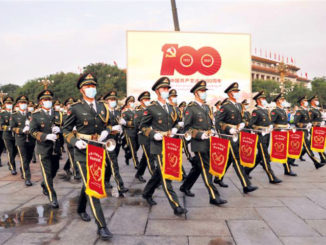
    The Chinese Communist Party (CCP) concluded its centenary celebrations with a grand event and speech by CCP general secretary Xi Jinping on July 1. It provided the CCP and Xi Jinping an opportunity to share their assessment of the journey thus far and give a broad sense of direction for the future. In his speech Xi Jinping mentioned the Belt and Road Initiative and the ‘community of shared destiny’ — his personal projects — hinting that he would continue in office beyond the party congress next year.

    The celebrations confirmed also that the CCP leadership is sensitive to the military’s morale. Contrary to its announcement in March, a carefully vetted crowd watched a military parade and flypast by the latest generation J-20 ‘stealth’ fighter aircraft and ZL-10 transport helicopters over Tiananmen Square. The party was honored with a 100-gun salute.

    The entire CCP politburo was present on the Tiananmen Gate Tower. The state-owned CCTV showed Xi Jinping deferentially walking a step behind his grey-haired predecessor Hu Jintao. Former President Jiang Zemin was absent, possibly because of age. The invitees included many retired veteran cadres, including 104-year-old Song Ping and former Premier Wen Jiabao. Suggesting that Xi Jinping is possibly seeking the support of party ‘elders’ at the next party congress, Jiang Zemin’s long-serving chief of staff and ex-Vice President Zeng Qinghong was present. Particularly interesting was the presence of Bo Xicheng, son of one of China’s ‘Eight Immortals’, Bo Yibo and brother of incarcerated former politburo member Bo Xilai, who tried to push Xi Jinping aside in the run up to the 18th party congress in 2012 and take over China’s top three posts! The CCP’s international liaison department had requested political parties from around the world to send congratulatory letters on the occasion. Of the Indian parties, only the CPI and CPI (M) responded positively.

    Xi Jinping’s nearly hour-long speech was crafted to exude confidence blended with aggression and nationalism. It was calculated as much to concretize the CCP’s monopoly on power in China as to rally nationalist sentiment against anti-China foreign forces and mobilize the people towards achieving the second centenary goal under the CCP’s leadership. It avoided mentioning calamitous disasters like the Great Leap Forward and Cultural Revolution, in which over 80 million people lost lives, were disabled or scarred for life. Surprisingly, neither did it list what material benefits the people could expect in the coming decades.

    Xi Jinping paid the ritual obeisance to veteran Chinese communist revolutionaries, acknowledging them by name. The rest of his speech focused on the party: how it had ushered in ‘socialism with Chinese characteristics’, ‘profoundly changed the course of Chinese history in modern times’, modernized China, and its indispensability for China. Xi Jinping declared ‘we must uphold the firm leadership of the party. China’s success hinges on the party. Without the Chinese Communist Party there will be no new China and no national rejuvenation’. The party was mentioned 133 times.

    It also conveyed a message to foreign powers, whose remarks bore Xi Jinping’s imprimatur. Stressing that China was no longer ‘a semi-colonial, semi-feudal society’ and had ended ‘all the unequal treaties imposed on our country by foreign powers and all the privileges that imperialist powers enjoyed in China’, Xi Jinping was emphatic that ‘any attempt to divide the party from the Chinese people or to set the people against the party is bound to fail’.

    Alluding to increasing US pressure on China, he declared that ‘the Chinese people will not allow any external forces to bully, oppress, or enslave us; anyone who deludes themselves into doing so will suffer a crushing and bloody head-on collision with the great wall of steel (PLA) made of the flesh and blood of 1.4 billion Chinese people’. China’s official news agency Xinhua subsequently released a toned-down version saying ‘anyone who would attempt to do so will find themselves on a collision course with a great wall of steel forged by over 1.4 million people’.

    Xi Jinping subtly directed credit for achievements towards himself. He declared ‘a historic resolution to the problem of absolute poverty in China’, as China marched towards its second centenary goal. The goal of alleviating absolute poverty by 2021 was Xi Jinping’s flagship programme. Xi Jinping also said, ‘in this new era, we have upheld and strengthened the party’s overall leadership’, overcoming many ‘major risks and challenges. Xi Jinping traced these achievements to the 18th party congress. He reinforced this with a call to uphold the core position of the general secretary on the party central committee and in the party as a whole.

    Xi Jinping’s uncompromising remarks on Hong Kong, Macau and Taiwan are revealing. He promised Hong Kong and Macau the rule of law but tempered with greater autonomy. On Taiwan, he specifically mentioned the 1992 consensus and reiterated China and the party’s commitment to the ‘full reunification’ of China.

    Xi Jinping asserting full reunification indicates that he will remain unyielding on issues of sovereignty. It is relevant for those with whom China has unresolved territorial or maritime disputes. While the celebrations allowed the CCP to effectively project its contribution to China’s ‘rise’ and its future relevance, the repeated references in Xi Jinping’s speech to foreign bullying, efforts to separate the party from the people, and call for the people’s support, reveal the worries of the party leadership. He deftly fashioned his speech to take credit for China’s achievements and affirm that the party would guide China towards ‘the second century goals’.

    (The author is President, Centre for China Analysis and Strategy)

  • Population control in Uttar Pradesh

    Creating awareness is the best bet to achieve goal

    The assurance by the BJP government in Uttar Pradesh led by Yogi Adityanath that population control measures will not be aimed at any class or section is welcome, provided there is transparency in its implementation. With an estimated population of over 24 crore, UP is the most populous state of India with its accompanying developmental hazards which act as an impediment to growth. Industrial growth in the state is among the slowest in the country, resulting in high unemployment and migration of workforce. The huge population has also impacted health parameters – UP’s infant mortality rate is among the highest in India. With about one-fifth of the country’s child population, UP also faces the challenge of tackling absenteeism and low enrolment in schools. The return of migrant workers in large numbers has put the onus on the state government to provide them with benefits, besides making immunisation a long-drawn process.

    With Uttar Pradesh headed for the Assembly polls next year, the BJP government in the state is merely trying to fulfil the promises that it had made in its 2017 election manifesto. The manifesto had promised to accelerate development and the draft Bill released to mark World Population Day is a step in that direction. Objections to the policy have been invited and the provision to incentivize couples who do not have more than two children, while good in intent, is bound to give rise to fears of discrimination among others. Reassuringly, CM Yogi has stressed on creating awareness and not coercion to bring in population stabilization. The use of force could well be reminiscent of the forced sterilization campaigns carried out during the Emergency. A country like China has relaxed its two-child policy, allowing couples to have three children to address the country’s long-term demographic imbalance, ageing society and reduced working age population. UP’s concerns on these counts may be justified but the policy should not be directed at any particular section of society. Social cohesion is also a prerequisite for all-round progress. 

    (Tribune India)


  • Sedition law-Overdue review

    Supreme Court’s remarks on sedition cases bode well for its inevitable invalidation

    It is gratifying to note that the Supreme Court, while indicating its intention to reconsider the sedition provision in the Indian Penal Code, has raised the question most relevant to the issue: “Why does Section 124A continue in the statute book even after 75 years of independence?” Chief Justice N. V. Ramana has also pointed to the rampant misuse of the section by the police across the country and reminded the government that it was a legal provision that the colonial regime had used to suppress the freedom movement. The issues flagged by the Chief Justice of India may set the tone for what would be a comprehensive reconsideration of a section that has been frequently and wrongfully used, especially in the last few years, to suppress dissent, criminalize strident political criticism and taint opponents with the tag of being ‘anti-national’. Even though it is often argued that the misuse of a law alone does not render it invalid, there is a special case to strike down Section 124A because of its inherent potential for misuse. There is a pattern of behavior among all regimes that indicate a proclivity to invoke it without examining its applicability to the facts of any case. Recent cases show that sedition is used for three political reasons: to suppress criticism and protests against particular policies and projects of the government, to criminalize dissenting opinion from human rights defenders, lawyers, activists and journalists, and to settle political scores, sometimes with communal hues.

    It is not to be forgotten that the section was upheld in 1962 by a Constitution Bench mainly by reading down the import of the terms “bring into hatred or contempt”, or “to create disaffection towards the government established by law” and limit its scope to only those instances of speech or writing that show a pernicious tendency to create public disorder. Without this attenuated interpretation, the restriction imposed on free speech by Section 124A would have been declared unconstitutional. The court is now seized of several cases that seek a reconsideration of the 1962 verdict, citing more recent judgments expanding the scope of fundamental rights and doctrines that have been subsequently evolved. In particular, the “chilling effect” that a law may have on free speech and the vague and ‘overbroad’ definition of sedition that renders both provocative and innocuous speeches or writings equally liable for prosecution are points to be examined. In 2016, the government itself admitted in Parliament that the definition of sedition is too wide and requires reconsideration. The Law Commission also released a consultation paper in 2018 that said “In a democracy, singing from the same songbook is not a benchmark of patriotism. People should be at liberty to show their affection towards their country in their own way.” While issuing fresh guidelines and safeguards is one way of quelling the potential for its misuse, it will be more helpful if Section 124A is struck down altogether.

    (The Hindu)

  • Long Island Girl Placed Third in Scripps National Spelling Bee Competition

    Long Island Girl Placed Third in Scripps National Spelling Bee Competition

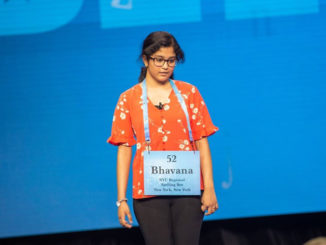
    PLAINVIEW, NY (TIP):  Long Island’s Bhavana Madini competed in the Scripps National Spelling Bee finals on Thursday, July 8, where she was placed third overall.

    Bhavana made it to round 14 out of 18 before she was eliminated. She misspelled the word “athanor,” which is a type of furnace used by chemists. Madini had put on a very strong showing, though. She competed in the finals in 2019, where she was placed 51st.

    She managed to spell words like “theodolite” and “phylloxera,” and define words like “tergiversate” and “aphyllous.” As the third-place finisher, Madini won a $15,000 prize.


  • FIACONA mourns the demise of the Catholicos of the East

    FIACONA mourns the demise of the Catholicos of the East

    NEW YORK (TIP): Federation of Indian American Christian Organizations of North America (FIACONA) extends our heartfelt condolences at the demise of his holiness Baselios Marthoma Poulose Bava of the Indian Orthodox Church.  He was one of the youngest persons to become the Catholicos of the Eastand the only one to be consecrated by his predecessor.  He was a scholar and a gentleman who cared for the welfare of the poor and the distorted.  He probably ruled the church during one of its most difficult times.  History may picture him as the head of the church who had to deal harshly with another sister church, but in his heart, he wanted peace with all the churches.  We can only hope that the situation will improve, and the new administration of both churches will come together and settle their issues amicably.  We hope that the National Council of Churches (NCC) and Kerala Council of Churches (KCC) will play an important role to bring its member churches to a round table discussion and sort out the issues in a Christian manner rather than dragging the name of Christ in the court system and making a mockery in front of the world.  It was a welcome sign to see the heads or representatives of various denominations to sit on the same dais in Thiruvalla to celebrate the Indian Christian Day on July 3, 2021, which is sort of a miracle.  FIACONA hopes that this will be the beginning of the union of Churches or at least greater cooperation between churches.

    Late Catholicos was a pious and passionate person.  He loved and treated all in an affectionate way.  He will be missed by all those who knew and loved him.  I was told by those who studied with him for post graduate studies at the CMS College that he was a caring priest with good spirit.  On behalf of FIACONA we extend our heartfelt condolences to all the bishops, priests and believers who grieve at the loss of their beloved Bava.

  • Modi’s Cabinet reshuffle

    The revamp belies PM’s claim that caste in India has been ‘buried’

    By Julio Ribeiro

    “Modi had said caste had been buried, but he had also said black money would be eliminated with demonetization and Covid had quietly fled the country because of some unnamed advantages we Indians have been blessed with! But I am for ignoring those erroneous calculations. I have no doubt that he tried hard, he worked like he always does, 18 hours a day, and he felt victory was his on each occasion! He should have admitted those miscalculations. If he had done that his credibility would not have taken a tumble.”

    Unexpected Move: The PM has established the Ministry of Cooperation. (Photo : PTI)

    A Prime minister in the Westminster system of governance has the sole right to choose his or her Council of Ministers. He or she can also drop one or more ministers whenever he or she thinks it necessary and induct a minister or more whenever he or she thinks fit. There has been some criticism and many comments on Modi’s recent rejig of his Cabinet. He has expanded the number to nearly 80, almost the maximum permitted by law. The salient feature is that he found representation for all castes, and even many sub-castes to please as many sections of our vast population as possible.

    Scheduled Castes were allotted 12 slots, Scheduled Tribes eight. There is nothing wrong in that. In fact, that is how it should be in a multi-religious, multi-cultural society.

    Some critics have pointed out that Modi had boasted, after the 2014 and the 2019 elections, that caste had died and been buried by the electorate. He might have willed that to happen or dreamt that had happened. A leader is entitled to his fancies. The bitter truth is that caste will not go away from our ancient land in the foreseeable future. It is too deep-rooted to be wished away.

    Take my Goan Christian community. Its adherents were converted from Hinduism by the Portuguese over 400 years ago. One would have expected the ubiquitous caste configurations to have disappeared after conversion, but it is practiced even today, in marriages in particular. If something so traumatic as changing gods could not excise caste from consciousness, how does any impartial observer of the political space expect this PM or any past or future PM to eliminate caste considerations from something so relevant to expectations as representations in a Cabinet?

    Modi had said caste had been buried, but he had also said black money would be eliminated with demonetization and Covid had quietly fled the country because of some unnamed advantages we Indians have been blessed with! But I am for ignoring those erroneous calculations. I have no doubt that he tried hard, he worked like he always does, 18 hours a day, and he felt victory was his on each occasion! He should have admitted those miscalculations. If he had done that his credibility would not have taken a tumble.

    When he gave a place to different castes in his Cabinet, he was aware that efficiency would suffer. He neutralized this by entrusting some critical portfolios to newcomers whose capabilities he had observed over a period of time. A less-known politician from his native Gujarat replaced Dr Harsh Vardhan as Health Minister. It is a calculated gamble.

    Mansukh Mandaviya was the Junior Minister of Chemicals and Fertilizers in which capacity he dealt with the pharmaceutical industry, the pricing of essential drugs, etc. His work there has propelled him to higher responsibilities. Modi probably has arranged for increased supply of vaccines in the next five months, something he has kept to himself to spring a pleasant surprise.

    Ravi Shankar Prasad was a vociferous proponent of his leader and his policies. Why was he dropped? I can only guess that he was more confrontational than required. This created too many hassles in the matter of appointment of judges and attracted negative attention internationally when he twisted the hands of local Twitter bosses. What Modi probably desired was a workable balance which Prasad was unable to provide.

    A former bureaucrat has been saddled with three portfolios: Communications, Information Technology and Railways. Ashwini Vaishnaw was an IAS officer of the Odisha cadre. A huge responsibility has been cast on him. For succeeding here, he needs more than grey matter. He needs to learn the skills of a juggler also.

    Narayan Rane from Maharashtra has, at last, got some importance after changing three parties. I cannot figure out what the BJP will gain, maybe a Lok Sabha seat or two, if at all. Rane himself lost his seat last time out. His two sons contested two Assembly seats and only one of them won. If Modi has been told that the Maratha vote will consolidate behind Narayan Rane, I can safely state that the PM has been misinformed. In the Konkan, it is the OBC vote that predominates.

    My recollection of Narayan Rane is a personal one. For over 20 years, I was chairman of charitable organization called the Happy Home and School for the Blind. President Bill Clinton and PM Atal Bihari Vajpayee had visited our school. I took over the reins from retired Justice Bakhtawar Lentin of the Bombay High Court. He had succeeded former Vice-President of India and former CJI, Justice M Hidayatullah.

    Despite our credentials, Narayan Rane, as CM of Maharashtra, when approached by a restaurateur of the city, cancelled our government lease of the land on which we had built the boarding school and transferred it to the restaurant owner! I met the Chief Secretary, Arun Bongirwar, and threatened to sit on the road in front of the school with 200 blind boys. I also filed a writ in the High Court, which succeeded. Our pro-bono lawyer, Navroz Searvai, told me that in his long career in the courts he had never encountered such gross abuse of power.

    The rabbit that a shrewd politician like Modi intends to pull out from his hat is in the establishment of the Ministry of Cooperation (cooperative societies are a State subject under the Seventh Schedule of the Constitution) and investing the responsibility to his trusted lieutenant. What is the purpose of this unexpected move? Why does the Home Minister, the No. 2 slot in the Cabinet, with a full-time job, have to do with cooperatives? His many agencies and the Income Tax Department and Enforcement Directorate under the Finance Ministry are sufficient to tackle the ills spawned by cooperative banks and sugar manufacturers. Why has Amit Shah been roped in? We will wait and watch with bated breath.

    (The author is a retired IPS officer)

  • Government sans governance is unimaginable

    Government sans governance is unimaginable

    By Suresh Kumar

     “Instead of guiding the officialdom to rise and work for the nation, politicians prefer to deepen the spoils system for their immediate and personal gains. Not many try to understand governance, though they are quick to promote those who take refuge in leakages and pilferages in the government. A person discredited with squandering billions of public money can get away with just one godfather who has clout in the corridors of power. Government sans governance is unimaginable.”

    The decline in governance is so sharp, that those in power do not hesitate to defend and protect the most immoral, corrupt and even inept persons. Power is being traded for personal greed, wealth, and even for other immoral acts at the altar of interests and well-being of the common man, particularly those who have no access to information and are poorly endowed.

    William Boyer, an American political scientist, defined governance as the action of governments plus its interaction with non-governmental partners in the process of governing — their collective relationship, the economy, and public policy. It is a collaborative process within a set of predefined laws and rules, enunciating public policies.

    India is, perhaps, one of the few countries with a comprehensively written Constitution, leaving little, if any, scope for its non-compliance. It defines the framework of public policy and governance by governments. With the changing realities over time, the Indian Constitution has seen amendments over 100 times. But its basic character remains unchanged, making it a most dynamic document that has withstood the vicissitudes of politics of all shades.

    Governments, if they function following constitutional proprieties, will deliver good governance. They shall check deviations and variations from the law. For, if they start ignoring the rules of law, why would the people need them? There can, thus, be governance without a government, but the converse is not true and is unimaginable.

    In the past three decades, irrespective of their political character, some of the governments did things, some of which were beyond the constitutional limits, to meet their personal and political goals. The public essence of these political establishments was missing, and their capabilities to manage and lead the bureaucratic set-up stood suspect.

    These days, the basics of governance are amiss more often than expected owing to the ambitions and greed of a few. The common man suffers and those in power attempt to bribe him through subsidies, freebies and doles, to hide their sins and incapabilities. The core issues of education, healthcare, employment and basic amenities, required for an improved living, are less focused goals of governments. Education and jobs, if assured and ensured as basic rights of the citizens, will minimize the need to provide doles.

    A recent trend is to mislead the common man through false and unsubstantiated information through social media, which remains largely unregulated on the pretext of freedom of speech. Surely, freedom of speech does not mean freedom to lie and mislead or create divisions and unrest in society. A statutory code of conduct to ensure discipline in social media and the written law of torts is necessary for a cohesive and an informed socio-economic growth.

    A rise in generational aspirations is natural, and the system has to evolve to meet them. For this, information, education and communication have to improve with modern techniques. Governmental efforts to suppress rising aspirations through traditional or outdated methods, and even tricks, most of which are not considered credible anymore, seem to be doing more damage than imagined. Ignoring the stakeholders’ consultation for any contemplated government policy or action and suppressing the common man with the use of State’s power will not help. It may sharpen and deepen divisions in society.

    The slow rise in maturity and inadequate understanding of and attention to the requirements of nation-building are other discernible features of our new crop of politics and bureaucracy. Instead of guiding the officialdom to rise and work for the nation, the politicians prefer to deepen the spoils system for their immediate and personal gains. Not many try to understand governance, though they are quick to promote those who take refuge in leakages and pilferages in the government. A person discredited with squandering billions of public money can get away with just one godfather who has clout in the corridors of power.

    The decline in governance is so sharp, that those in power do not hesitate to defend and protect the most immoral, corrupt and even inept persons. Power is being traded for personal greed, wealth, and even for other immoral acts at the altar of interests and well-being of the common man, particularly those who have no access to information and are poorly endowed.

    Another glaring drawback in governments is that they ignore facts and data. Conclusions are drawn without the knowledge of reality. Dictates of whims and fancies are believed more than what is on record. There is no accountability for uninformed conclusions and decisions. Some political philosophers assert that wrong decisions do get noticed and accounted for during the elections, but by then enough damage is done to the system and the people.

    On the other hand, some information experts blame the data management policies and systems for the lack of information with the policymakers. There is no statutorily established system through which an official or a politician is guided and provided information before s/he gets on with any policy planning and implementation. Elected representatives are just thrust with power immediately on election without any orientation and prior access to information and guidance. Governance appears to be the least of their concerns.

    Undeniably, judicial scrutiny of executive decisions has saved the country from many embarrassing and not-so-well-informed decisions and situations. There have been occasions when laws and rules have been either moderated or annulled by the judiciary primarily because these were violative of the well-established principles of the Constitution and public policy.

    Judicial scrutiny and moderation became more pronounced after the Emergency in 1975, and more importantly after the 42nd Constitutional Amendment. But some thinkers believe that even such scrutiny can be manipulated and maneuvered.

    This may not happen all the time, but it is not unheard of or unnoticed. Can judicial scrutiny be made more stringent and infallible?

    The declining public essence of governance has reached alarming levels, though it may not be correct to say that all governments have not governed well. However, there is a need to wake up. For effective and people-centric governance by the governments, effective data and information management systems, enhanced transparency, and effective and un-maneuverable judicial scrutiny need urgent attention.

    (The author is Chief Principal Secretary to Punjab Chief Minister)

  • US Senate confirms Indian-American Seema Nanda as solicitor for labor dept

    US Senate confirms Indian-American Seema Nanda as solicitor for labor dept

    WASHINGTON (TIP): The US Senate has confirmed Indian-American civil rights lawyer Seema Nanda as the solicitor for the Department of Labor. A former CEO of the Democratic National Committee who also served in the Department of Labor during the Obama Administration, Nanda, 48, was confirmed by the Senate with 53-46 votes on Wednesday, July 14.

    Nanda served as chief of staff, deputy chief of staff and deputy solicitor at the US Department of Labor in the Obama-Biden administration. Earlier, she spent over 15 years in various roles as a labor and employment attorney, mostly in government service. Nanda led the now named Office of Immigrant and Employee Rights Section of the US Justice Department’s Civil Rights Division where she served as a supervisor attorney in the Division of Advice at the National Labor Relations Board and worked as an associate in private practice in Seattle. After the Obama-Biden administration, Nanda led the Democratic National Committee as the CEO and served as the COO and executive vice president at the Leadership Conference on Civil and Human Rights.Nanda is presently a fellow at Harvard Law School’s Labor and Worklife Program. She grew up in Connecticut and is a graduate of Brown University and Boston College Law School.

    (Source: PTI)

  • Indian American Rahul Gupta nominated as America’s drug czar

    Indian American Rahul Gupta nominated as America’s drug czar

    I.S. Saluja

    WASHINGTON (TIP): President Joe Biden nominated Indian American Rahul Gupta, the top health official at maternal-and-child advocacy group March of Dimes, as the nation’s top drug policy official, the White House announced, July 13. Gupta, a primary-care doctor who led Biden’s transition efforts for the drug policy office, would be the first Indian American and as the physician to serve as drug czar if confirmed by the Senate, the reports said.

    “President Biden’s nomination of Dr. Rahul Gupta to be the first physician ever to lead the White House Office of National Drug Control Policy is another historic step in the Administration’s efforts to turn the tide of our nation’s addiction and overdose epidemic,” a White House statement said.

    “Dr. Gupta brings firsthand experience as a medical doctor and public health official using evidence-based strategies to address the overdose epidemic in West Virginia,” the statement added. “We hope he will be confirmed by the Senate soon.” The three-decade-old drug policy office — which was created with the support of Biden, who coined the term “drug czar” in 1982 — coordinates national policy around fighting substance-use disorders, including the response to an opioid crisis that has worsened during the pandemic, the report noted.

    Gupta has publicly warned that the pandemic probably exacerbated addiction-related public health problems, citing the shift from in-person care.

    “When those services are either shut down or turned into virtual services, more people can be denied those services and that only leads to more suffering,” Gupta told Sinclair Broadcast Group in a news report broadcast this week.

    Gupta, an ally of Sen. Joe Manchin III has been favored for months to take the role of drug czar, but he faced resistance from some anti-addiction advocates, who argued he did too little to ensure safe-needle exchange during a 2017 HIV outbreak in West Virginia, the report said.

    Gupta would replace Regina LaBelle, who has served as the office’s acting director since January.

    West Virginia Gov. Jim Justice said Tuesday that Dr. Rahul Gupta’s nomination can only help the state.

    “During his time in West Virginia, Dr. Gupta led the way in our battle against the opioid crisis – something that has and continues to touch the lives of nearly every one of our residents in some way. Under his leadership, our state had turned a corner in that fight,” said Gov. Justice. “There’s still much more work to do, especially with the additional challenges brought on in the past year by the COVID-19 pandemic, but I believe that there is no one better-suited to this important job than someone who represented a state and a people where this crisis really hits close to home. I have full confidence that Dr. Gupta will continue his distinguished record of public service on behalf of all Americans, while also putting a positive spotlight on the high quality of professionals we have working in West Virginia every day. I wish Dr. Gupta nothing but success in this critical role.”U.S. Senator Joe Manchin (D-WV) on July 13, released the following statement about the nomination:

    “Dr. Rahul Gupta’s nomination to serve as the Director of the Office of National Drug Control Policy means someone with firsthand knowledge of the opioid crisis, especially in West Virginia, will be coordinating the national fight against the drug epidemic that continues to ravage our nation. West Virginia has continued to lead the country in drug overdose rates for over 20 years. Dr. Gupta will bring over a decade of extensive experience combatting the drug epidemic to ONDCP – the office charged with addressing the drug epidemic that has killed over 90,000 Americans just last year. He will also be the first physician in charge of ONDCP, bringing needed medical knowledge to this public health crisis.”

    On twitter Tuesday, July 13, U.S. Senator Shelley Moore Capito (R-WV) said, “Dr. Gupta understands the crippling impact the addiction crisis has had on West Virginia. Looking forward to working together to increase drug prevention efforts, support treatment and recovery, and reduce the supply of deadly drugs in our communities.”

    The nomination of Rahul Gupta has been widely welcomed by the Indian American community.

    Dr. VK Raju, an eminent ophthalmologist from Morgantown, West Virginia, who has known Dr. Gupta for years, said in a statement issued from Morgantown: “I am the President and founder of Eye Foundation of America (world without childhood blindness), and have known Dr. Rahul Gupta for many years. As our foundation has a public health approach, Dr Rahul Gupta, with his enormous public health and managerial skills, contributed to our foundation internationally. During the opioid crisis in West Virginia, while many were talking about the problem, he focused on the solutions. He believes in” working together works” and worked with policy makers and leaders of different political parties successfully. Above all, he is a man of integrity which contributed to his success.  President Biden’s wisdom is evident in selecting Dr. Gupta to lead the office of the national drug control policy.”

    Congratulating Dr. Rahul Gupta, New Jersey based H. S. Panaser, Global Marketing and Business Development Consultant, Speaker and EDP Trainer said,”Dr. Gupta has been widely recognized in his efforts to abate the substance use crisis while having a deep understanding of institutional racism and racial inequities across the nation. Someone who has been repeatedly recognized for advancing equity and civil rights, Dr. Gupta developed implicit bias training for healthcare workers as one of his first achievements at March of Dimes. He has not only developed West Virginia’s definition for neonatal abstinence syndrome, but under his tenure, opioid prescribing fell to record lows, treatment systems were expanded and harm reduction services initiated. In fact, recently, both houses in the West Virginia legislature passed unanimous resolutions to request President Biden to nominate him as the next ONDCP Director.

    “We are at an inflection point in our nation when it comes to war on drugs. Over the next four years, we may have a unique opportunity to impact our national drug policy through the Office of National Drug Control Policy that will set the course for the next several decades.”

  • Indian Americans, US Lawmakers, Welcome Biden’s Nomination of Eric Garcetti as Envoy to India

    Indian Americans, US Lawmakers, Welcome Biden’s Nomination of Eric Garcetti as Envoy to India

    WASHINGTON (TIP): Powerful US lawmakers and eminent members of the Indian American community have welcomed the nomination of Los Angeles Mayor Eric Garcetti as the country’s next envoy to India. US President Joe Biden on Friday, July 9, announced the nomination of Gracetti, 50, as the US Ambassador to India. “I am honored to accept his nomination to serve in this role,” Mr Garcetti said in a statement soon after he was nominated for the role.

    Top American lawmakers and eminent members of the Indian-American community described it as an excellent choice. “Mayor Garcetti is an excellent choice to serve as US ambassador to India. The importance of India to the global economy and national security will only continue to grow over the coming years – and having a steady hand to guide our relationship with that nation is vital,” Senator Dianne Feinstein said.

    Garcetti, as the grandson and great-grandson of immigrants, is committed to economic opportunity and justice for all, two bedrock American values that he will effectively champion in India, she said.

    Biden’s nomination of Garcetti to serve as next ambassador to India is an important step forward in the US-India partnership as the two countries work together to end the pandemic, increase economic cooperation, and ensure regional security, Indian-American Congressman Raja Krishnamoorthi said.

    “Mayor Garcetti’s experience in leading Los Angeles while championing international cooperation between the world’s leading cities will undoubtedly serve him well as he helps strengthens the relationship between the world’s largest democracy and its oldest,” he said.

    The choice of Eric Garcetti to be the US ambassador to India is a mark of how keen the Biden administration is on establishing strong ties with India, said MR Rangaswami, a Silicon Valley-based entrepreneur and investor, about his nomination.

    Mr Rangaswami said Mr Garcetti has a strong track record as the mayor of America’s second largest city and a personal connection with Biden.

    “Both of these will be significant assets as he plays a leading role in the efforts to further strengthen US-India ties and we at Indiaspora are delighted with this development,” he said.

    “As Co-Chair of the Congressional India Caucus, I look forward to working with Garcetti to strengthen the relationship between the world’s oldest and largest democracies,” said Congressman Brad Sherman.

    Indiaspora, a nonprofit organization of global Indian leaders, in a statement said as the Mayor of Los Angeles, the United States’ second largest city, Mr Garcetti would bring valuable political and administrative experience to the role.

    “A close political confidante of President Biden who served as a Co-chair of his campaign in 2020, Garcetti also would have the President’s ear,” it said.

    Mr Garcetti has a range of international experience, having lived and worked in Asia as well as Europe and Africa.

    A Rhodes’ scholar, he has served as Los Angeles’ first Deputy Mayor for International Affairs, where he expanded L.A.’s global ties to bring more jobs, economic opportunity, culture, education, and visitors to the city, according to Los Angeles” government website.

    “Ambassadorship to India is a critical position for strengthening ties between the world’s largest and the world’s oldest democracy, and President Biden has made an excellent choice in Los Angeles Mayor Eric Garcetti,” said IMPACT executive director, Neil Makhija.

    “As Mayor, Eric Garcetti oversaw the vaccine deployment in the nation’s second largest city, where over 50 per cent of people over the age of 16 are now vaccinated. Garcetti understands the urgency and reality of addressing climate change, is familiar with geopolitics of the Indo-Pacific region from his service in the US Navy,” he said.

    “As a trusted ally of President Biden, Eric Garcetti will make great strides in strengthening diplomatic ties between the United States and India as ambassador, especially during this time of humanitarian crisis,” Mr Makhija said.

  • Jaipur Foot has given new hope, ray of light to people everywhere: Foreign Secretary Harsh Vardhan Shringla

    Jaipur Foot has given new hope, ray of light to people everywhere: Foreign Secretary Harsh Vardhan Shringla

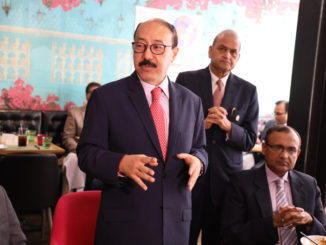
    Presenting a bouquet to Mr. Shringla. On right is Prem Bhandari, and on left, Kanak Golia, among others.                                                                          Photo / Mohammad Jaffer-SnapsIndia
    Receiving Mr. Shringla on arrival. Seen in the picture, among others are Ambassador Tirumurti, Consul General Randhir Kumar Jaiswal, Attorney Ravi Batra, Prof. Indrajit S Saluja.                                                            Photo / Mohammad Jaffer-SnapsIndia

    NEW YORK (TIP): Jaipur Foot, a prosthetic limb, has given a new hope and ray of light to people everywhere and has changed lives of people around the world, Foreign Secretary Harsh Vardhan Shringla said. Shringla arrived in New York Wednesday, July 14 toparticipate in high-level events in the UN Security Council. Shringla’s visit comes as India prepares to assume the Presidency of the powerful 15-nation Security Council for the month of August.

    Speaking at a welcome event organized in the city by Jaipur Foot USA and Gracious Givers Foundation USA, Shringla said every person in India is aware of the contributions that Jaipur Foot has done. He added that “we are proud” to work with Padma Bhushan D.R. Mehta, founder of Bhagwan Mahaveer Viklang Sahayata Samiti (BMVSS) and Jaipur Foot.

    He lauded the efforts of the organization and Jaipur Foot USA Chairman Prem Bhandari for their contribution that has helped change the “lives of so many people in our country” and have worked with the Ministry of External Affairs “to change the lives of people all over the world,” right from Vietnam, Bangladesh to Latin America and Sri Lanka. Shringla recalled that a young girl in Bangladesh, who lived for 10 years without a limb after she was run over by a car when she was just 6, was fitted with a Jaipur Foot limb. The expression on her face spoke of the appreciation for the work of Jaipur Foot and its team, he said.

    In March this year, India’s Permanent Representative to the UN Ambassador T S Tirumurti, while speaking at a Security Council briefing on Syria, had referred to the artificial limb fitment camp of Jaipur Foot conducted in Damascus that had benefitted over 500 Syrians.

    “Our artificial limb fitment camp of the well-known ‘Jaipur Foot’ of the Jaipur-based BMVSS in India, which was conducted in Damascus, benefited over 500 Syrians affected by the conflict. We had undertaken this Jaipur Foot initiative under the rubric of ‘India For Humanity’. We certainly need humanity now more than ever on the humanitarian crisis facing Syria,” Tirumurti had said. Tirumurti had also tweeted that “In my statement… to @UN #SecurityCouncil on #Syria, I referred to our artificial limb fitment camp of ‘Jaipur Foot’ of BMVSS of Padma Bhushan Dr.DR Mehta, conducted in Damascus and benefiting 500+ Syrians. Initiative taken under ‘India for Humanity’ to celebrate Gandhi@150.”

    Bhandari said that under the India for Humanity initiative, nearly a dozen Jaipur Foot camps have been conducted. On August 5 last year the agreement between MEA and BMVSS has been further extended and one camp has already been conducted in Uganda despite the COVID19 pandemic. He said under Mehta’s leadership, a camp was held in Parkian in Kashmir at 9000 feet last week for the benefit of the needy.

    In April this year, then Secretary (West) Vikas Swarup had said at the UNSC open debate on ‘Mine action and sustaining peace: Stronger partnerships for better delivery’ that in October 2018, the ‘India for Humanity’ initiative was launched as a part of Mahatma Gandhi’s 150th anniversary celebrations, with a focus on Mahatma Gandhi’s philosophy of compassion and service to humanity.

    Under this initiative, 13 artificial limb fitment camps have been held by India in 12 countries and more than 6500 artificial limbs have been fitted, mainly in Asia and Africa. These camps were fully sponsored by Ministry of External Affairs and materialized by Bhagwan Mahaveer ViklangSahayata Samiti.

    “We are pleased to convey that the limb fitment camps, which aim to provide for the physical, economic and social rehabilitation of the affected persons and help them regain their mobility and dignity, have now been extended up to March 2023. In this context, we acknowledge the association of BMVSS Jaipur, led by Dr. D.R. Mehta, for contributing artificial limb ‘Jaipur Foot’ for thousands affected by disabilities brought by conflicts and land mines,” Swarup had said. In November 2018, Vice President M Venkaiah Naidu had inaugurated a ‘Jaipur Foot’ camp in Lilongwe, Malawi and distributed the free India-made prosthetic limb to several beneficiaries. The camp was launched under the ‘India for Humanity’ programme. Inaugurating the camp, Naidu had said the first Jaipur Foot camp in the series is launched in Malawi because it was in Africa that Gandhiji took his “first steps towards becoming a Mahatma, a great soul and later went on inspire a number of generations”.

    (With inputs from PTI)

  • Rich Tributes Paid to Veteran Journalist Tejinder Singh

    Rich Tributes Paid to Veteran Journalist Tejinder Singh

    Paris Huang, Voice of America Chinese service
    Lisa Mathews, President, National Press Club
    Mesfin Mekonen, Manager, Reliable Source Bar and Grill
    Marie Harf, Former US State Department Spokesperson.
    Lalit Jha, Chief US Correspondent, Press Trust of India.
    Ranju Batra, Chairperson, Diwali Foundation USA.
    Ravi Batra, Chairman, National Advisory Council on South Asian Affairs.
    Nisha Biswal, Former Assistant Secretary, US Department of State.
    Stephen Mani, First Secretary at Indian Embassy shaking hands with Ravi Batra. Also seen in the picture are Poonam Sharma, Managing Editor of India America Today who emceed the event (second from left) and Ranju Batra (third from left).
    Colleagues, friends, and admirers of Tejinder Singh.
    Journalists from New York with Ravi Batra, Ranju Batra and Marie Harf. From L to R: Jay Jasbir Singh, Prof. Indrajit S Saluja, Ranju Batra, Ravi Batra, Marie Harf, Sharanjit Singh Thind, and HP Singh.
                                                                                                  (Photos : Curtis Jordan for India America Today)

    I. S. Saluja

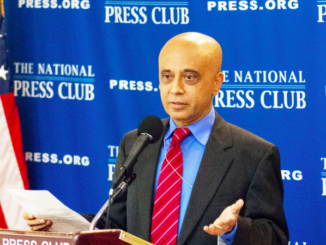
    WASHINGTON (TIP): Veteran Indian-origin journalist Tejinder Singh who passed away on May 29 this year was fondly remembered by friends, colleagues and admirers at a well-attended memorial meeting at National Press Club, Washington on July 12. Tejinder Singh was a veteran White House correspondent and founder and editor of the India America Today newswire. He was the Vice-President (Print) for the Asian American Journalists Association (AAJA-DC) 2011-12.

    Tejinder Singh was born and brought up in the industrial town of Kharagpur, in the eastern Indian state of West Bengal. A veteran multimedia political and business journalist, Tejinder worked as a broadcast journalist with the BBC, South African Broadcasting Corp.,and Flemish-English and Indian networks. He was the editor-in-chief for New Europe, The European Weekly, based in the EU capital of Brussels, Belgium from 1997 – 2009. Tejinder moved to the U.S. in 2009 and founded IAT in 2012.Rich tributes were paid to the ace journalist who was popular and held in esteem by his friends and colleagues.

    Speaking on the occasion, Ranju Batra Chairperson, Diwali Foundation USA said:” We are all here to give tribute to a dear friend and a great journalist.  I’m glad we could all come together to celebrate his life.

    I want to share with you how Tejinder Singh supported me as editor-in-chief of India America Today. Today, nearly 5 years after successfully completing my 7-years long personal journey to get United States Postal Service to issue a Diwali Stamp in 2016, it’s easy to forget that the dream to get one was impossible. As many before me had tried for over 20 years and given up.

    During those long years full of hope and despair, when there was “no light at the end of the tunnel,” the media supported me in a big way, as it was a cause dear to everyone’s heart in the US, and over a billion people across the world.  Tejinder Singh – a Greek Orthodox – encouraged me as a brother, and was constantly caring, kind and supportive when my Dream seemed impossible – even with support from Congress-members Carolyn Maloney, along with Grace Meng, Eliot Engel and Greg Meeks to name a few.

    When the USPS finally agreed to issue the Diwali Stamp, Tejinder was so excited, and he came up to New York for the Dedication of the immortal Forever Diwali Stamp on October 5th, 2016. When he came up he had an additional reason for pride, I had personally sold 170,000 stamps for Day One making Diwali stamp the best seller ever in the USPS’s 200+ years history.

    Two months later, when 24 nations at the UN honored my journey, Tejinder Singh was there. When out of that UN event, based upon remarks made by a Deputy Foreign Minister, the Diwali Foundation USA was formed in 2017 and it bestows the “Power of One” Awards for exceptional world class diplomats that honor the ideals of the U.N. Charter enhancing peace & security. And Tejinder Singh was there.

    Today, we are in Washington D.C., home of Tejinder Singh’s India America Today in the National Press Club, to pay tribute to him, and his life as a journalist, for he helped make dreams come true. He supported and contributed to causes, with joy and passion. With deep sadness I say We will all miss him.”

    Attorney Ravi Batra, Chairman National Advisory Council on South Asian Affairs, a friend to Tejinder, was filled with emotion when he paid his tribute to his friend who he described as “a firebrand of a journalist.” “He was a John Wayne kind of a reporter, with true grit. He was a proud and active member of the National Press Club,” Batra added.

    That we are here today paying tribute to Tejinder Singh in the National Press Club, the Cathedral for Free Press, with President Lisa Matthews participating, along with Mesfin Mekonen, Paris Huang, Lalit Jha, my “better half” – a term Tejinder enjoyed using often – Ranju, the ever graceful Marie Harf, A/S Nisha Biswal, the gentlemanly John Kirby, and each of you, including, as a matter of personal privilege, our miracle daughter Angela – a bond Tejinder rejoiced and celebrated – speaks volumes both of how vital Press Freedoms are to Lincoln’s Gettysburg recipe for democracy, and Tejinder Singh’s dedication to journalism and to help form a more perfect nation, and world.

    Edward Bulwer-Lytton said, “The pen is mightier than the sword.” Tejinder was a throwback to a mold of journalist-giants whose personal sense of righteousness was their North Star – superbly stated by Gene Kelly, as E. K. Hornbeck, in the legendary movie “Inherit the Wind” that the role of a journalist is: “to comfort the afflicted and afflict the comfortable.”

    We join in John Kirby’s observation that Tejinder was a gentleman. Tejinder saw the First Amendment as Holy as I do. We talked often. He wanted more, much more of me and Ranju in his professional life, and with the National Press Club. I’m sad I didn’t accept his multi-year desire, as we would have rocked and rolled – from issues national and geopolitical – driven to do right, or to paraphrase my late great friend and supporter, the legendary District Attorney Bob Morgenthau: Fly straight, without fear or favor.

    I would often say to Tejinder, that both the Press and the Law seek the truth and abhor a lie – let alone, Big Lies. And that makes us relatives. Just like Spencer Tracy and Gene Kelly were inseparable in “Inherit the wind.” As my friend, the late great NY investigative journalist Wayne Barrett would say to me, the battle between good and evil is perpetual. Our nation is convulsing from within, as exhibited by the Insurrection on January 6th and promoters of Lies for self-gain and self-importance, none more tragic than the resulting fall of America’s mayor Rudy Giuliani for his “trial by combat.” January 6th troubled Tejinder greatly, and which I view as more injurious to our Republic than 9/11.

    Our exceptional Founders, less imperfect given our commonplace arrogance today, bequeathed to us the First Amendment as a robust check on power – and Tejinder used it, and in so doing, heeded Ben Franklin’s warning: “It’s a republic madam, if you can keep it.” Tejinder’s life was well spent in keeping our Republic robust and vibrant, willing to look at ourselves honestly and always with the desire to help “form a more perfect union.”

    I can cite many examples when things might trouble Tejinder and he would call me – and I would act to remedy the problem. Perhaps, just two examples of last year when I and my family were suffering from Covid19 and I was at death’s door. Two events around that time bothered Tejinder:  worshippers in a Gurudwara in Kabul being slaughtered by ISIS, and soon thereafter, the killers of Daniel Pearl were released in Pakistan.

    As for Kabul, aware of the global heartburn after Christchurch slaughter of innocent’s worshippers at two Mosques and the resulting billionaire’s family becoming suicide bombers in Sri Lanka to blow up Holy Easter, I felt there needed to be a tempered response – as this was an attack by a terror organization rather than a demented individual Facebooking his New Zealand slaughter for celebrity. So, I wrote an open letter to then-President Trump asking for a response worthy of terror-eradication. Innocent Sikhs are as valuable as innocent Muslims. But as to Daniel Pearl, I knew that the State Department had tried, and still the killers who had video-taped the ghastly killing – as Daniel was Jewish – were released. I then reached out to my friend in London, who is the number one supporter of Pakistan’s P.M. Imran Khan, a nation founded by a lawyer-gentleman Mohammed Ali Jinnah. I argued that Pakistan as a civilized nation cannot tolerate this, and after the Holocaust, we are all Jewish.

    I’m delighted to say that Imran Khan filed an appeal and the Killers were re-arrested. The subsequent incomprehensible acquittal by Pakistan’s Supreme Court left us only with an extradition option – and since this was now an inter-governmental decision, I told Tejinder I will only re-engage if Secretary Blinken asked me to. I share this as a tribute to Tejinder – for it was his being upset by these two events that real justice was sought and in fact enhanced.

    Two of my defining heroes are Thomas Becket, who chose God over King, and Sir Edmund Burke, who provides a moral imperative in our lives: “all that is necessary for evil to triumph is for some men to do nothing.” My final tribute to Tejinder Singh is that he honored in full measure Sir Edmund Burke’s call to moral righteousness. Tejinder was a good man, who stood tall and fought evil. May his memory be forever Blessed.

    So, yes, Tejinder comforted the afflicted, and afflicted the comfortable. I will miss my friend, and his random calls. We will miss Tejinder’s good deeds, his sharing in friendship of human trials and tribulations, and his always reaching for social and political justice, using journalism’s sunshine disinfectant as the pull and push for justice.

    Rest In Peace my friend.

    The Lord bless you and keep you;

    The Lord make His face shine upon you, And be gracious to you;

    The Lord lift up His countenance upon you, And give you peace.”

    Several others who paid tribute to Tejinder Singh included Lisa Mathews, President National Press Club, Mesfin Mekonen, Manager, Reliable source Bar and Grill, Paris Huang, Voice of America Chinese Service, Lalit Jha, Chief U.S. Correspondent, Press Trust of India (PTI), Marie Harf, former US State Department Spokesperson, and Nisha Biswal, former Assistant secretary, US Department of State.

    Stephen Mani, First Secretary, Press, Information and Culture at Embassy of India represented Ambassador Taranjit Singh Sandhu.

    Many journalists came from as far as New York. They included The Indian Panorama publisher and chief editor Prof. Indrajit S Saluja, Sharanjit Singh Thind, publisher and chief editor of South Asian Insider, Jay Jasbir Singh, Publisher and chief editor of Hum Hindustani, and H.P. Singh from Parikh Worldwide.

    Poonam Sharma, Managing Editor, India America Today, the Master of Ceremonies spoke of carrying forward the legacy of Tejinder Singh, and thanked the guests for their attendance.

  • Sirisha Bandla isthe third Indian-Origin Woman to fly into Space

    Sirisha Bandla isthe third Indian-Origin Woman to fly into Space

    HOUSTON (TIP): Aeronautical engineer Sirisha Bandla on Sunday, July 11, became the third Indian-origin woman to fly into space when she joined British billionaire Richard Branson on Virgin Galactic’s first fully crewed suborbital test flight from New Mexico. Virgin Galactic’s VSS Unity, as the spaceplane is called, took off for the 1.5-hour mission above New Mexico following a 90-minute delay due to bad weather. Ms Bandla joined Branson and five others on board Virgin Galactic’s SpaceShipTwo Unity to make a journey to the edge of space from New Mexico. “I am so incredibly honored to be a part of the amazing crew of #Unity22, and to be a part of a company whose mission is to make space available to all,” 34-year-old Bandla tweeted days before the flight.

    “When I first heard that I was getting this opportunity, it was just… I was speechless. I think that that probably captured it very well. This is an incredible opportunity to get people from different backgrounds, different geographies and different communities into space,” she said in a video posted on the Twitter handle of Virgin Galactic on July 6. The primary objective for Unity 22 was to serve as a test flight for future commercial passenger flights by Virgin Galactic.

    Ms Bandla, who was born in Guntur district in Andhra Pradesh and brought up in Houston, was astronaut No 004 and her flight role was Researcher Experience. The other crewmembers were two pilots and three other crewmates, including billionaire Branson, who turns 71 in a week.

    She became the third Indian-origin woman to fly into space after Kalpana Chawla and Sunita Williams. Wing Commander Rakesh Sharma is the only Indian citizen to travel in space. The former Indian Air Force pilot flew aboard Soyuz T-11 on April 3, 1984, part of the Soviet Interkosmos program. Ms Bandla moved to the US when she was 4-year-old and graduated with a Bachelor of Science degree from the School of Aeronautics and Astronautics, Purdue University in 2011. She finished her Master of Business Administration degree from George Washington University in 2015.

    Ms Bandla wanted to be an astronaut for the US National Aeronautics and Space Administration (NASA). However, her poor eyesight meant she could not meet the requirements to become a pilot or an astronaut. When she was at Purdue University, a professor told her about an opportunity in the field of commercial space flights.

    Virgin Galactic – the business Branson started in 2004 – aims to fly private citizens to the edge of space. The trips are designed to permit passengers to experience three to four minutes of weightlessness and observe the curvature of Earth.

  • Indian American Surgeon Atul Gawande nominated to Senior Job at USAID

    Indian American Surgeon Atul Gawande nominated to Senior Job at USAID

    WASHINGTON (TIP): U.S. President Joe Biden on Tuesday, July 13 nominated writer, surgeon and public health expert Atul Gawande to lead global health development at the U.S. Agency for International Development, including for COVID-19, the White House said. Gawande, author of four New York Times best-selling books and a professor at Brigham and Women’s Hospital, Harvard Medical School and the Harvard T.H. Chan School of Public Health, would serve as the assistant administrator of USAID’s Bureau for Global Health, if confirmed by the U.S. Senate.

    His role at USAID will focus on efforts to prevent child and maternal deaths, control the HIV/AIDS epidemic, and combat infectious diseases, such as COVID-19, a White House official said.

    Gawande appears to be taking his own advice. Last month, he told advanced degree graduates at Stanford University to be “open to trying stuff – to saying yes” to new opportunities. “I’m honored to be nominated to lead global health development at USAID, including for COVID. With more COVID deaths worldwide in the first half of 2021 than in all of 2020, I’m grateful for the chance to help end this crisis and to re-strengthen public health systems worldwide,” Atul Gawande said in a tweet. Atul Gawande is the Cyndy and John Fish Distinguished Professor of Surgery at Brigham and Women’s Hospital, Samuel O. Their Professor of Surgery at Harvard Medical School, and Professor of Health Policy and Management at Harvard TH Chan School of Public Health.

    He is also founder and chair of Ariadne Labs, a joint center for health systems innovation at Brigham and Women’s Hospital and the Harvard TH Chan School of Public Health, and of Lifebox, a nonprofit organization making surgery safer globally.

    During the coronavirus pandemic, he co-founded CIC Health, which operates COVID-19 testing and vaccination nationally, and served as a member of the Biden transition COVID-19 Advisory Board.

    From 2018 to 2020, he was CEO of Haven, the Amazon, Berkshire Hathaway, and JPMorgan Chase health care venture. He previously served as a senior advisor in the Department of Health and Human Services in the Clinton Administration. In addition, Mr Gawande has been a staff writer for The New Yorker magazine since 1998. 2He is the winner of two National Magazine Awards, Academy Health’s Impact Award for highest research impact on health care, a MacArthur Fellowship, and the Lewis Thomas Award for writing about science.

  • Indian American Samir Banerjee lifts Wimbledon boys’ singles title

    Indian American Samir Banerjee lifts Wimbledon boys’ singles title

    LONDON (TIP): Indian American tennis player Samir Banerjee on Sunday, July 11, lifted the Wimbledon boys’ singles title with a straight set win over compatriot Victor Lilov, here. Playing only his second junior Grand Slam, 17-year-old won 7-5 6-3 in the final that lasted in one hour 22 minutes. Banerjee’s parents had moved to America in 1980s. At the junior French Open, Banerjee, ranked 19 in the world, had crashed out in the first round.

    India has been struggling to field a worthy contender at junior Grand Slams for some time now.

    Due to lack of a robust domestic circuit and not having enough competitions at home to earn world-ranking points, India has been struggling to create the next crop of youngsters. Yuki Bhambri was the last Indian to win a junior singles title when he triumphed at the Australian Open in 2009 while Sumit Nagal won the Wimbledon boys doubles in 2015 with Vietnam’s Ly Hoang Nam.

    Ramanathan Krishnan was the first Indian to win a junior major when he won the 1954 Junior Wimbledon championship.

    His son Ramesh Krishnan won the 1970 junior Wimbledon and junior French Open titles while Leander Paes won the 1990 junior Wimbledon and junior US Open. Paes was also a runner-up at the junior Australian Open.