

The answer lies in both the unique nature of GenZ and the unprecedented economic distress they are facing
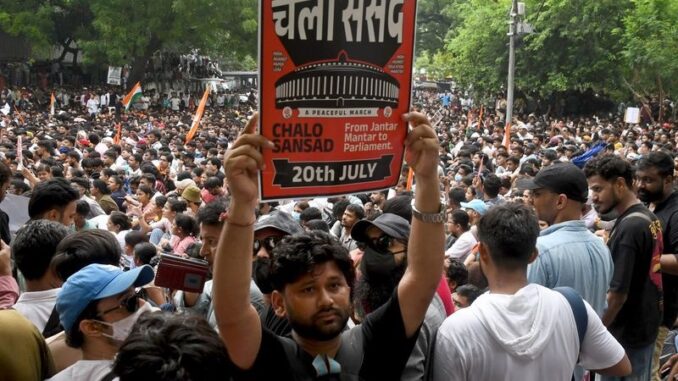
GenZ from India’s towns and cities — the ones who turned up at Jantar Mantar —are children of the most prosperous generation in the history of post-Independence India. Even those from lower-middle-class families have seen more material comforts in the past three decades than their grandparents did. Many were born into homes with cars, air conditioners, microwave ovens, washing machines, laptops, and smartphones. What were luxuries to Gen X and Millennials are essentials for GenZ.

India’s GenZ surprised everyone last month when they turned up in their thousands from across the country to protest against our corrupt public examination system. I use the word ‘surprised’ advisedly. GenZ has been written off as a desensitized, self-absorbed, pleasure-seeking generation with the attention span of a 30-second reel.
They are seen as a demographic innocent of politics or of social issues, who can be pacified with the latest iPhone or the newest color range of Labubus. Why, then, did this depoliticized and atomized generation spontaneously erupt in such an unrestrained rebellion when the heavy hand of state action has silenced many an inveterate dissident?
The answer lies in both the unique nature of GenZ and the unprecedented economic distress that they are facing. GenZ — those born between 1997 and 2012 — are between 14 and 29 years of age right now. So, most of them qualify to be part of the working-age population, which includes anyone aged 15 years or older.
The Centre for Monitoring Indian Economy (CMIE) estimates that there are 378 million Indians in the 15-29 years’ age group. Out of these, 128 million would work if they got a job, but only 83 million are employed. That means the effective unemployment rate among GenZ is a whopping 35%.
And this is happening despite — or perhaps because of — more young people getting college degrees. Again, the CMIE surveys indicate that in the past three years, India has added 90 million graduates to the working-age population. Almost all of them would belong to GenZ. In the same period, an additional 49 million graduates have got added to the labor force —people who want paid work.
The number of graduates who are unemployed has increased by nearly 12 million. That means, roughly one in four young people who earned college degrees to get better jobs is currently jobless.
The high level of unemployment among the GenZ is not because there are no jobs available. It is about the quality of jobs being offered. A significant proportion of GenZ jobseekers have college degrees or professional diplomas. Their parents spent lakhs of rupees on their education so that they could get well-paying white-collar jobs. This is true even for those whose parents had blue-collar occupations.
It is understandable that these graduates are not going to willingly become factory workers, plumbers, electricians or Uber drivers merely because those positions are more easily available. None of those professions requires spending three years in college.
But there are very few white-collar jobs available for the young. The most robust indicator for this is Naukri.com’s JobSpeak Index, which is based on more than 80 lakh “new job mandates” every year.
Now consider those who graduated and joined the labor force over the past three years: their number has increased by 75%. Out of these, some did manage to get work, which means they would have at best three years of work experience.
What kind of hiring opportunities do these GenZ folks have? The JobSpeak Index shows that hiring activity in this space -— those with 0-3 years of experience — has grown by just 10% in three years.
The situation is worse for the older lot among GenZ. If one assumes that most young people enter the work force at 22, the oldest among the GenZ cohort would have seven years of work experience. The latest
Index estimates that hiring opportunities for those with four-seven years of work experience have dropped by 6% in the past three years.
This trend is confirmed by the CMIE’s overall employment data, which covers non-white-collar jobs as well. Seven years ago, when the oldest of GenZ started looking for work, the urban unemployment rate for those in the 20-24 age group was 45%. Today, it has crossed 50%. Back then, the unemployment rate for those in the 25-29 age bracket was 15%. Now, it is more than 20%.
As I said earlier, part of the reason is that GenZ consists of many more graduates than the generation preceding it. So, they want better jobs than their seniors were willing to settle for. That is why some of this high unemployment is voluntary — GenZ youth would rather wait for a suitable job than accept a position that pays poorly or lacks social status.
But this is not simply because they went to college. GenZ from India’s towns and cities — the ones who turned up at Jantar Mantar —are children of the most prosperous generation in the history of post-Independence India. Even those from lower-middle-class families have seen more material comforts in the past three decades than their grandparents did. Many were born into homes with cars, air conditioners, microwave ovens, washing machines, laptops, and smartphones. What were luxuries to Gen X and Millennials are essentials for GenZ.
They are also perpetually bombarded by overt and covert advertisements for goods, services, and lifestyles via social media. Entire communities are constantly being formed around new products and trends, with influencers telling the young that their lives are incomplete if they don’t buy them immediately.
This has created an unbridgeable gap between material aspiration and the opportunities to fulfil them. And this gap gets amplified by the virtual communities and identities that social media produces.
Yet, these very cybercommunities, which transcend the limits imposed by physical human interaction, became the basis for the impromptu organization of the Jantar Mantar protests. Instagram reels replaced political networking, so much so that protesting itself became a GenZ fad. That is why frustration and angst transformed into memes, jokes, and joie de vivre never before seen at protest sites.
It is an explosive force that the powers that be are unfamiliar with. No one knows how to contain it or what it will lead to in the days to come.
(Aunindyo Chakravarty is a business analyst and former Senior Managing Editor, NDTV India & NDTV Profit. His X handle is @Aunindyo2023)



Be the first to comment