WASHINGTON (TIP): On the eve of International Women’s Day, the Bill and Melinda Gates Foundation has announced a USD 170 million project aimed at advancing women’s economic empowerment in four countries, including in India.
Announced on Tuesday, March 6, the investments focused in India, Kenya, Tanzania and Uganda will target four key priorities — advancing gender equality, spreading digital financial inclusion, increasing job opportunities, and supporting the agricultural sector and women’s support groups.
“One of the most profound ways a woman can make life better for herself and her family is to take control of her economic future,” said Melinda Gates, co-chair of the Bill & Melinda Gates Foundation.
“When women have money in their hands and the authority to choose how to spend it, they grow in confidence and power. They change the unwritten rules that say women are lesser than men,” she said in a statement.
The investments will build on the foundation’s previous financial commitments to advance progress on gender equality, including USD 80 million for gender data, advocacy and accountability, of which USD 20 million was dedicated to supporting women’s movements, a statement said.
According to the foundation, the data show that when a woman has the option of working outside the home and access to financial services to participate in the formal economy, families break the cycle of poverty and national GDPs rise.
When women have access to financial resources such as cash or mobile money, the ability to control those resources and the ability to make decisions that affect her, and her family’s future, women are empowered in ways beyond economics, it said.
The investments will not only help better understand what works to ensure women are able to fully participate in economies, but also dismantle the barriers that have held women back for far too long, said Sarah Hendriks, director, gender equality at the Bill & Melinda Gates Foundation.
“Our strategy is aimed at giving more women and girls the economic opportunities they need to engage as equals in society,” Hendriks said.
International Women’s Day is celebrated on March 8 every year. It commemorates the movement for women’s rights.
INTERVIEW BY PROF. INDRAJIT S SALUJA, CHIEF EDITOR, THE INDIAN PANORAMA
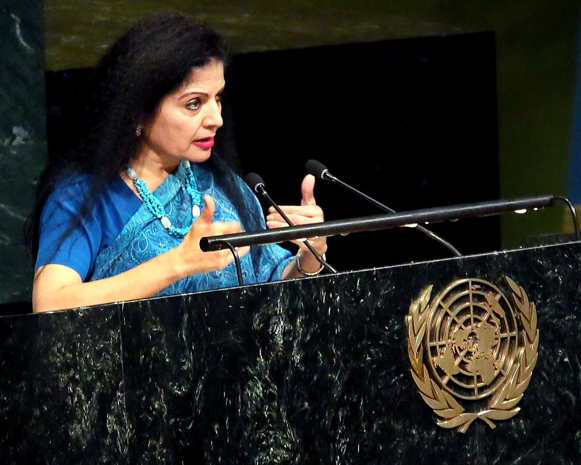
“The power of one is about passion, commitment and indomitable courage and keeping faith with the causes we serve no matter the difficulties and setbacks. It’s about not giving up ever.” Ambassador Lakshmi Puri, Assistant Secretary General & Deputy Executive Director UN Women, had said, receiving her Diwali Power of One Award at the United Nations on December 11, 2017. The only woman among five diplomats to be honored, Ambassador Puri made her resolve known: “I will power on believing in the infinite possibility of all of us to achieve our infinite potential for good”.
As this champion of gender equality prepared to leave the UN Women towards the end of January 2018 to go back to India, after having served the apex women’s body of the United Nations since its inception in 2011, The Indian Panorama succeeded in securing her nod for an interview.
So, on a January 2 cold morning I reached her office in the iconic Daily News building on 42nd Street in New York City to speak with her. In a candid conversation with me she spoke passionately about her work at the UN Women – how much needed to be done, how much has been done, and how much more needs to be done – for gender equality, for emancipation of women, for empowerment of women. I could see a tigress in her when ready to pounce if she thought she was being challenged. During the conversation, at one or two points, she flipped at some remark which she considered was sexist or discriminatory.
I tried to wean her away from the subject so dear to her, to her personal life and succeeded but only briefly because she was possessed with thinking only of women and their rightful and dignified place in society.
Here are excerpts from the interview.
TIP: You have put your heart and soul in your work to care for the dignity of women as guided by your parents and that’s what,Ibelieve, you have instilled in your children. You are known to be a fiercely feminist personality. I would like my readers to know what is the role of UN Women when it comes to emancipation, ending bias and grant women their rights as human beings I will then come to my other question.
AMB: Un Women was founded in Jan. 2011, and I joined in March 2011. So, Iam in the leadership team since the beginning and this forum is the only global advocate for gender equality, women’s empowerment and women’s right in every area. So, what does that mean? It means for us that international agreements and commitments made by govts. to uphold and advance gender equality and empowerment, norms and standards. And that has been UN women’s and my own contribution.Because we have in place today historic gender equality compact on the part of international community which is reflected in the Beijing platform for action not only recommitted but taken forward.
Similarly, the UN’s sustainable development agenda has made gender equality central to the agenda. And there is a sustainable goal on achieving gender equality and empowering all women. So, we mobilized all countries tostrongly support and take forward the goal.
And that goal is about ending all forms of violence against women, child marriage, women trafficking, harmful practices like honor killing, sex selection, and everything. apart from that all harmful practices that we have in, includingIndia, south Asia. So, this is a strong sustainable target.
Similarly, ending all forms discrimination, laws and practices. Women’s economic empowerment equal ownership over productive resources. Similarly, parity in voice participation and leadership in all public life, economic and political life. That means in parliament, in the executive, in judiciary, in law enforcement, in public service, in corporations, everywhere. and, then it also involves universal access to sexual and reproductive health and reproductive rights. Women need control over their bodies and their reproductive role. And, then, the goal also recognizes that women have to bear disproportionate role in domestic care. This is really frontier pushing. 2/3rds of such work is done by women and in places like in India, it is higher which is without compensation and it also without opportunity, cost on education, income and employment, economic empowerment. So, valuing that, reducing that, redistributing that and provisioning that. so, these goals are something that were very hard to attain and that’s something that I count that as my legacy – the whole gender equality, climate change, peace and security, the new urban agenda. My husband is the urban affairs minister in India,but we have been advocating before the govt. of India and implementing smart cities program and all the urban programs that they are doing. PM Modi is very much supportive of gender equality program and his new India campaign.
Receiving the Diwali Power of One Award, in recognition of powerful advocacy and leadership in ensuring the adoption of a dedicated goal on gender equality and women’s empowerment (SDG 5) within the Sustainable Development Goals, and championship of the cause, December 11, 2017 Photo /Jay Mandal
But sexual harassment in work place is very pervasive. It is challenging to women who are coming out and participating in different sectors of political life and professions. So, all these stories are now coming out like “metoo” movement.
TIP: I concur with what you are saying but centuries old cultural, social and patriarchal norms take time to change. Compared to US, there are not many women rising to top in Punjab or Africa. How tough do you think your ground is whether in Punjab or Africa?
AMB: Well, cultural,social, and patriarchal norms are critical and that is why we believe in movement building. and that is why I believe govt. of India’s – bibi bachao, beti padhao – unless you start building culture and social norms around valuing the girl child that she is of equal value and also you dismantle all the patriarchal institutions and norms that devalue the child and aversion to the girl child, you are not going to get any change. So, movement building has to be done. This movement building has been going on through village councils. UN women has been working in India through women village councilors and zilla parishad councilors. Because they have got elected on quota and there are 1.5 million women councilors who are acting as staff. What we have do is to work with them, train them and demand rights and public services from authorities and also implementation of the programs that have been approved, money to be spent on programs that have been approved. So, our governance program is very successful program.
Women’s economic empowerment, access to energy and water and sanitation are really important. But you have to target gender equality when you target these programs. And equally these programs will benefit gender equality in return. For example, the jan-dhan program, the access to finance, women’s disadvantage in terms of owning property, lands and in Punjab this is prevalent in spite of having a law that prevents it and also to disincentivize the discrimination. So effective laws and policies and their effective implementation, movement building, and youth have to be part of all this.
On the youth side, we have this LEAP program – Leadership, empowerment, action and prevention of violence against women and partnership with women’s organization, young men’s organization and intergenerational dialog. So that is the youth part.
We are very successful in our “he or she” programs. men and boys have to be made champions of gender equality. Women have to stand up for their rights. I have seen in India women are transmitting harmful, discriminatory patriarchal norms. So social transformation by women themselves is important. but men and boys have to be taught from the beginning.
With Prime Minister of India, Narendra Modi, October 2017 Photo / PMO
TIP:That is where the problem is. When there are many women in the family, only then men are sensitive to feminist issues.
AMB:Yes, it has to begin when youare a boy. Every father and mother must bring up their children in a gender equal way. Boys must learn in their textbooks in the way their teachers teach them about how women and girls are lower in dignity. The other day PM Modi said in “swacha Bharat abhiyan” – he talked about how everybody in the house leaves the woman to do the cleaning work. Why? It should be the responsibility of each one. So that kind of new culture respecting the dignity and equal rights of women has to be developed. Education is an important part, but prevention, protection, prosecution of perpetrators, ending violence against women and provision of multisectoral services- in all of that again, changing mindset and educating from the beginning is needed. We are now dealing with generations of people who have grown up on gender unequal basis and mindset that have stereotypes. So, we have to change that and to change that we have to work with them. and we have been working with them.
90% of the world is governed by men leaders and they are leading from the front. You asked about Africa. We have worked with tribal leaders, advocating and championing. It has been successful.
Faith is another important thing. In Sikhism, women are always seen as equal. And, what has happened now? it is with all other religions including Hindus that we worship them on one side and on the other, we devalue them.
Farewell call with the Secretary-General of the United Nations, Antonio Guterres, December 2017 Photo/ Mohammed Jaffer-SnapsIndia
In order to build 50/50 progress by 2030, we have to take some measures. We are leading not only in India but many parts of the world, “Gender parity Democracy” movement.
TIP: Do you think, likereservation system, we should have a similar system in political and corporate world?
AMB: I entirely advocate what is in the Beijing platform and what is in the convention for ending all forms of discrimination against women. There is a rule for special temporary measures. it is not that these measures will be there forever, but when you levelthe playing field, you need some special measures to take those who are at the position of disadvantage now to the position of equality and once that has been achieved, then those measures will become irrelevant. So thatis what we should aspire for.
Now to your question, even before going to corporate, we have been advocating, and achieved constitutional amendments in many countries whereby quotas have been set for parliaments but not yet in India.We are strongly advocating for “reservation bill” in India. There are electoral system challenges and diverse community cultures, but we are advocating reservation bill strongly and parliamentary seats for women for some time. I remember one case in a village panchayt near Jaipur when she stated that she was first nominated and now she defeated 15 other contestants on her own strength. She said people voted for her because she delivered -“I built roads, got schools opened, got projects opened”.
It is not only women and girls that we do reservation for; it is for good governance.
Accepting the Eleanor Roosevelt Human Rights Award In recognition of her contribution to furthering the mission of the United Nations, her deep-seated commitment to human rights, as well as the global impact of her work, November 2016
TIP: So those girls are advocating requirements for themselves.
AMB: So, you need to bring us up to a level when we don’t need any more help and also to a point where people recognize women’s equal participation in governance.
That brings me to the corporate world. It is a major challenge. There are many countries – like Norway – that have special measures which state that any company that wants to be listed on stock exchange has to have 50 percent women on board. China and Japan are also working towards having women board members. So, it is a mandatory movement. There are movements in India, European union and Germany as well.
In Australia, women owned business companies are given certain preferences. These kinds of incentives build women’s management and governance capacity in the corporate sector as well.
So, you need some measures to achieve that.
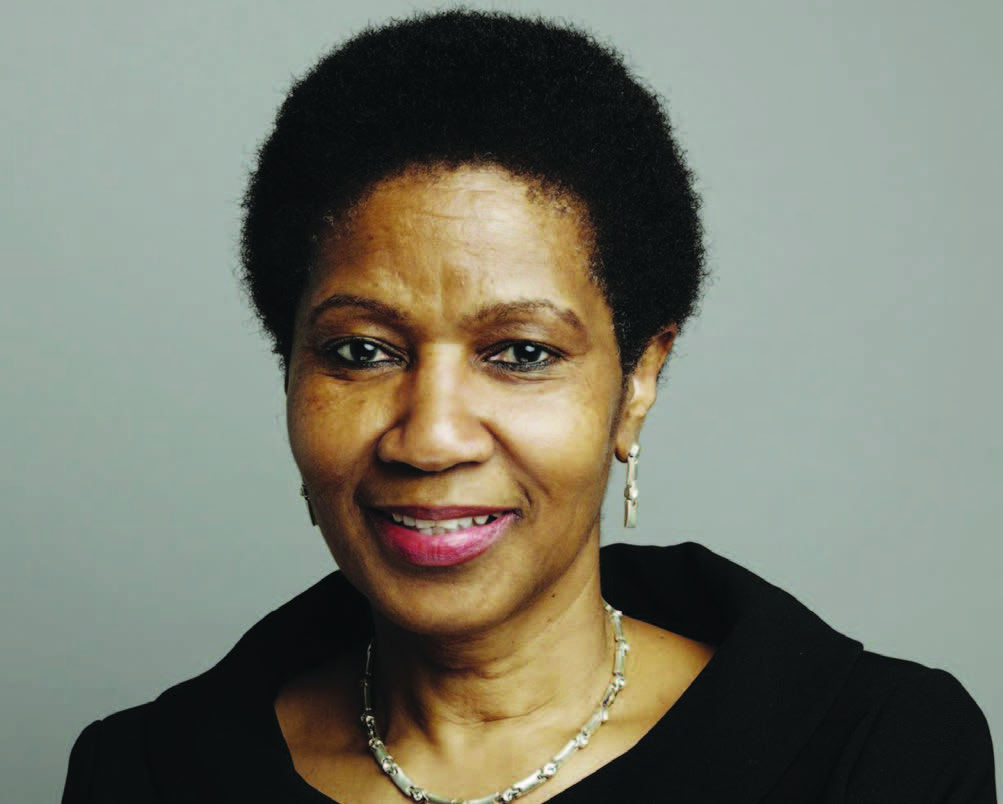
With Prime Minister of Canada, Justin Trudeau, global champion of gender equality and UN Women; and Executive Director of UN Women, Phumzile Mlambo-Ngcuka. June 2016
TIP: Even though India had Lady PM and President in politics, what about corporate sector?
AMB: We have women CMs, ministers etc. We are taking many steps but not enough.This is a very slow progress. In order to build 50/50 progress by 2030, we have to take some measures.We are leading not only in India but many parts of the world, “Gender parity Democracy” movement.
We have great women’s movement in India, many NGO leaders are women.
As UN organization, we have our first MOU with NYC and we have partnership program on all aspects of gender equality. Like NYC, we are working with many cities in in the world. We also have safe and sustainable cities program which include 66 cities in the program and India has about 8 or 9 cities that participates in the gender equality program which includes many areas like transport, business etc.
Regarding your earlier question on women, apart from this norm setting and movement building, one major project has been how to build a knowledge hub. we want to bring out the facts for a “gender statistics revolution”.
We need to know and bring out what is happening with women and girls – whether economic empowerment, violence etc. and we have this program called “making women and girls count”.
India is a pathfinder country. There are about now 20 countries that participating in this program. Now social media is also helping in that – gender statistics revolution.
We need to bring out the facts to make people outreach to bring about the emancipation of women. As Swami Vivekananda said -“arise, awake and stop not” – this whole knowledge is important and that is the basis of the revolution.
TIP: Is there a time frame for that?
AMB:We have set a time-frame of 2030. That is why the slogan is – “planet 50/50 by 2030”. We are asking every country to step up.
We are very strapped and under-resourced. Original target was 1 billion, then it became 500 million and now we are struggling to reach 300 million. It has been a big challenge. We have tried to raise from philanthropist and private sectors, including India. We are doing everything, but governments are not forthcoming.
TIP: Just like any country that violates UN resolutions, are there any sanctions for the country that violates the gender equality?
AMB: UN women is intergovernmental organization. There are no sanctions that can be placed but we work with every country to make them speed up the gender equality. In UAE we have opened an office. We are having dialog with Saudi Arabia and we have a very strong Arab office in Egypt that oversees all of the Arab world.
We are working in conflict countries, natural disasters, refugee countries, we are working on humanitarian response and resiliencebuilding, making sure that whateverhumanitarianresponse is provided, there is a very strong focusing on differential and disproportionate response on women as they are more prone to exploitation.
TIP:Regrading your 2030 target, do you think your organization needs more resources and extra power to meet the target?
AMB: Absolutely. This has been one of my regrets that the international community has been very strong in committing in terms of norms and standards to women’s empowerment and gender equality, they have not setup institutions to take this forward. So, the financial commitment part has not been commensurate with declared political commitment. We are very strapped and under-resourced.
Original target was 1 billion, then it became 500 million and now we are struggling to reach 300 million. It has been a big challenge. We have tried to raise from philanthropist and private sectors,including India. We are doing everything, but governments are not forthcoming.
“Making Women and children count” is supported by Gates Foundation.
With the godmother of feminism, Gloria Steinem at the launch symposium of the Women, Peace and Security program at Columbia University, October 2017
I would like all women to come forward and claim their rights which are equal to all the men and boys. And to all men and boys, join the gender equality cause, because this is not only good for your mothers, sisters, colleagues etc.; it is good for you.
TIP: US president has decided to cut back funding for UN. So, are you also affected?
AMB: No, we were in fact very happy that in 2017 contribution from US increased by a million.
TIP: What about now?
AMB: In 2017 US govt. gave 8.5 million, 1 million more than the previous year.
TIP:How is India performing?
AMB: India, from the inception, has played a very stellar role and they are the only country contributing 1 million every year.
TIP:One last question. Your husband, Mr. Hardeep Singh Puri has been a wonderful diplomat. Now that he has chosen to go into politics, how do you look at the new avatar of your husband.
AMB: He always wanted to be in politics. He was in politics during his student days. He always wanted to break out of his civil service mantle and go into politics. After retirement, he chose to go into politics. I am very happy that he has assumed the role of minister for urban and housing development which is very critical in order to achieve all the 17 goals of sustainable development and he has my full support.
TIP: Before we close, would you like to say something to The Indian Panorama readers?
AMB: I would like all women to come forward and claim their rights which are equal to all the men and boys. And to all men and boys, join the gender equality cause, because this is not only good for your mothers, sisters, colleagues etc.; it is good for you.
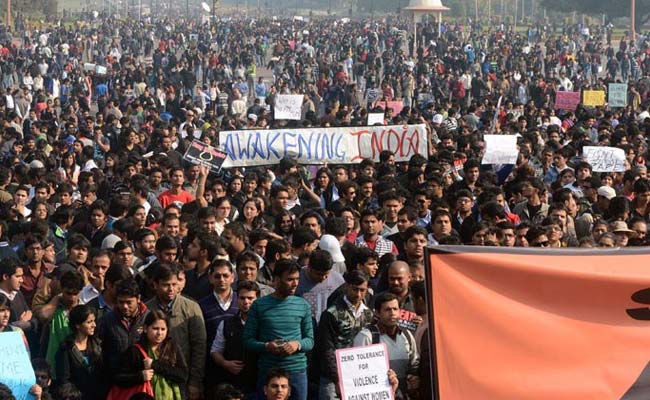
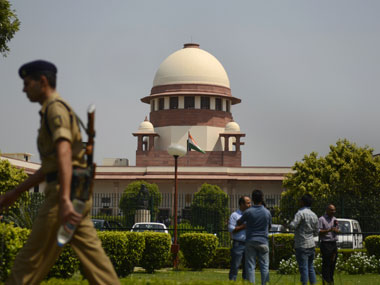
NEW DELHI: The Supreme Court today upheld the death penalty+ for the four convicts for the 2012 gang-rape and murder of Nirbhaya.
“The Nirbhaya rape-cum-murder case+ is rarest of rare case and we are compelled to give extreme punishment to ensure justice,” said the apex court, while delivering the order.
What the judges have said in the 429-page judgment:
“The present case clearly comes within the category of ‘rarest of rare case’ where the question of any other punishment is ‘unquestionably foreclosed’. If at all there is a case warranting award of death sentence, it is the present case.”
“The dying declarations… do withstand close scrutiny and they are consistent with each other.”
“It is absolutely obvious that the accused persons had found an object for enjoyment in her and, as is evident, they were obsessed with the singular purpose sans any feeling to ravish her as they liked, treat her as they felt.”
“It sounds like a story from a different world where humanity has been treated with irreverence.”
“We are compelled to arrive at the singular conclusion that the aggravating circumstances outweigh the mitigating circumstances now brought on record.”
“The wanton lust, vicious appetite…have driven the appellant to commit a crime which can bring in a ‘tsunami’ of shock in the mind of the collective, send a chill down the spine of the society.”
“After throwing the informant and the deceased victim, the convicts tried to run the bus over them so that there would be no evidence against them. They made all possible efforts in destroying the evidence…”
“The cruel manner in which the gang-rape was committed in the moving bus… and the coldness with which both the victims were thrown naked in cold wintery night of December, shocks the collective conscience of the society.”
“The gruesome offences were committed with highest viciousness. Human lust was allowed to take such a demonic form.”
“The evidence brought on record with regard to finger prints is absolutely impeccable”
As soon as it read out its order, the packed court began to applaud.
The top court was hearing an appeal filed by the four convicts – Akshay, Pawan, Vinay Sharma and Mukesh – who challenged the Delhi High Court’s March 2014 confirmation of the death sentence handed to them by a trial court in 2013.
“The brutal, barbaric, and demonaical conduct of the convicts shook the conscience of humanity and they don’t deserve leniency+ ,” the top court said.
Nirbhaya’s father said something similar this morning.
“Leave the Supreme Court, even God will not forgive such people. They will be awarded death sentence,” said Nirbhaya’s father. “Only the death penalty (will do) for culprits now, it should not be denied,” Nirbhaya’s mother Asha Devi had said ahead of the hearing.
“We have full faith in the judicial system and I am sure that the Supreme Court will announce death sentence in its verdict for the guilty. I am sure the Supreme Court will give justice to my daughter. This will set an example for the world,” she added
The convicts’ lawyer+ had a dissenting view.
“You can’t hang someone just to send a message to society. Human rights have been slaughtered today,” said AP Singh, the convicts’ lawyer, to ANI. “Justice is not done, we will file a review petition after reading the order,” he added.
On December 16, 2012, Nirbhaya, the 23-year-old paramedic, was raped and brutalised with an iron rod on a moving bus in Delhi. She and her male friend were then thrown out of the bus. Nirbhaya lost her battle for life in a Singapore hospital on December 29.
The top court today commended the work of the Delhi Police and bringing the criminals to book.
“The investigations done by Delhi Police was fair and impartial and the probe has passed the test of fairness and reliability,” the SC said.
“The dying declaration of Nirbhaya is reliable as it was corroborated by medical and other evidences,” it added.
Of the six accused, Ram Singh hanged himself in prison, while another, who was a juvenile at the time of the crime, was convicted in August last year and will serve the maximum sentence of three years in a reform home.
When the Delhi high court rejected the convicts’ appeal in 2014, it said “debauchery, avarice, profligacy and viciousness appear to be the compelling forces” behind the crime. The court also said the crime was “completely recvolting” and “indubitably been committed in an extremely fiendish, demoniac, barbaric and nefarious manner.”
Today’s apex court appeal was heard by a bench headed by Justice Dipak Misra and comprised Justices R Banumathi and Ashok Bhushan.
It was expected that the Supreme Court would not grant relief to the accused as Justice Dipak Misra doesn’t hesitate to give a death sentence and is exceedingly sensitive to women’s rights and liberties, ANI news agency said today.
MUMBAI (TIP): Setting aside the acquittal of seven persons, including five policemen and two doctors, the Bombay High Court on May 4 upheld the conviction and life imprisonment of 12 persons in the Bilkis Bano gangrape case. It, however, dismissed a CBI appeal seeking death penalty for three of the convicts on the grounds that they were the main perpetrators of the crime.
Bilkis Bano said, “My rights, as a human being, as a citizen, woman, and mother were violated in the most brutal manner, but I had trust in the democratic institutions of our country. Now, my family and I feel we can begin to lead our lives again, free of fear.”
A Division Bench of Justices K Tahilramani and Mridula Bhatkar, in a 430-page judgement, said while the probe conducted by the Gujarat Police was “flawed with a dishonest investigation”, the evidence and statements given by Bilkis Bano were “completely trustworthy”. Bilkis was gangraped in March 2002 at a time when she was pregnant. Seven of her family members were killed in Gujarat’s post-Godhra riots.
“The appeal against conviction filed by the 11 convicts (one of them is dead) is dismissed. The conviction and sentence is upheld. The appeal filed by the prosecution against the acquittal of seven persons (in the case) is allowed. The acquittal is set aside,” the Bench announced.
These seven persons — five policemen and two doctors — have been convicted for not performing their duty (Section 218) and for tampering with evidence (Section 201). Each of them were told to pay a fine of Rs 20,000 within eight weeks.
Author – Faizan Mustafa (The author is Vice Chancellor, NALSAR University of Law, Hyderabad).
The All India Muslim Personal Law Board has, in a recent meeting, decided on a code of conduct for divorce. In a major climbdown, it has conceded ground and resolved in favor of “one divorce.” Therefore, instant triple divorce will no more be an option with a Muslim male. by the discussions on television channels it seems all Muslim women are getting instant triple divorce. But then facts are just opposite and speak for themselves. As per the 2011 Census, only 0.49 per cent Muslim women were divorcees and all of them have not been given triple divorce. Though fatwas are nothing more than opinions and do not have any legal sanctity yet they do give us some indication about the legal problems on which Muslims seek opinion of the clergy.
Anybody and everybody has been commenting on triple talaq. There has been an utter confusion about what it really means. We bring to readers of The Indian Panorama informed view of a scholar in the hope that misinterpretations will get removed. Readers’ comments are welcome. – EDITOR
To find out prevalence of triple divorce, this author collected data from Darul iftaa (institutions which issue fatwas). The data from ten states revealed that that in last one year 340,206 fatwas were sought. Of which only 6.50 per cent fatwas were asked about triple divorce. The Supreme Court had refused to ban Darul Qaza (Sharia courts) rejecting the plea of them being parallel judicial forum. The apex court had rightly termed them as mere arbitration councils. Data from 33 such councils collected by this author too reveals that these councils never grant triple divorce and divorce is permitted only through one pronouncement preceded by efforts of reconciliation through arbitration. Such institutions are mostly used by the Muslim women for either getting divorce or annulment or cancellation of marriage as getting settlements from such forums is speedier and cost-effective.
Wrong impression
Similarly, a wrong impression has been created that most Muslim women are getting triple divorces through phone, email and via sms. Even according to Bharatiya Muslim Mahila Andolan’s (BMAA) case study on triple divorce only one divorce out of 117 was given in this manner. As per BMMA’s own findings, only 0.2 per cent got divorces on phone, just 0.6 per cent received divorce through email. Similarly, in another survey by BMMA, out of 521divorces, only one woman got triple divorce via SMS that is, only 0.19 per cent. Thus, the problem is not as serious as is made out by the Narendra Modi and Yogi Adityanath governments.
The current case in the apex court was originally about the denial of inheritance right to Hindu women under the 2005 amendment. This lady had won the case against her brothers in the high court but she lost in the Supreme Court. At the end of judgment, strangely the bench of Justice Dave and Justice Goel ordered that Muslim law is discriminatory and ordered on its own the filing of Public Interest Litigation. Thus, the current PIL by Shayra Bano to get triple divorce declared as unconstitutional.
The case has taken an interesting twist because her husband who had given her triple divorce has filed a case for the restitution of conjugal rights. It was she who had left the matrimonial home.
As per the current law laid down by the apex court in 2002, Muslim divorce has to be for a reasonable cause and must be preceded by efforts of reconciliation through arbitration. The Supreme Court has also held that three pronouncements will be counted as only one revocable divorce. Thus, instant triple divorce no more dissolves marriage, except in cases of divorce by mutual consent and divorce at the initiative of the wife or exercise of right to divorce by her where such a right has been delegated to her by the husband at the time of marriage.
The position of All India Muslim Personal Board (AIMPB) on this issue has been quite regressive, rigid and unyielding. It has been consistently asserting that though instant triple divorce is undesirable and sinful yet nevertheless valid. It had the audacity to assert in the Supreme Court that if triple divorce is not permitted, husbands may kill their wives and therefore triple divorce is in the interests of wives. What is the reason of this inflexible stand? Law making is indeed a private enterprise in Islam. Jurists intervene between God and State. Muslim Personal Law is based on the interpretations given by various jurists. Since earlier jurists with the exceptions of few did opine that instant triple divorce does dissolve marriage, due to doctrine of taqleed (imitation of earlier juristic view), ulema of Hanafi school (followers of Abu Hanifa) of the Sunni sect who dominate board feel constrained by the views of early leaders of this school.
In this context, on 15-16 April, 2017, the unanimous decision of the AIMPLB therefore is a huge climbdown. The Board has softened its rigid stand and has issued detailed eight-step instructions on how divorce will henceforth take place among Indian Muslims. (See box)
Thus, the Board has fully incorporated the elaborate process of divorce given in the Quran and has also complied with the law laid down by the Supreme Court in the Shamimara case. The result of this historic decision is that instant triple divorce will no more be an option with a Muslim male. The Indian media which has very low level of trustworthiness did not report this decision in the right perspective. It criticized the board for not punishing the person who will still give instant triple divorce. Television anchors at the top of their voice criticized that mere social boycott will not suffice.
The AIMPLB is, of course, an NGO with a huge following among Muslims. As many as 4.8 crore Muslims have given signed petitions endorsing the Board’s position on Muslim Personal Law. These petitions have now been submitted to the Law Commission. Thus, the Board’s social boycott may work as deterrent on ground. Though this author is not in favor of the power of social boycott or ex-communication being given to either clergy or khap panchayats and opposes the apex court verdict on this issue.
As law stands today, the Supreme Court did uphold such a power about Bohra Muslims in the Syedna Tahir Saifuddin case. Tankhiya or ex-communication among Sikhs too is widely practiced. Even President Zail Singh was ex-communicated on the issue of Operation Blue Star. Only Parliament has the power to create new crimes and provide punishments for such crimes. Thus, even the Supreme Court cannot punish people for giving triple divorce but Parliament can certainly do so.
Slow process of reform
Personal law being religious law cannot be reformed in one go. We started the process of Hindu Law Reform in 1941, with the appointment of Hindu Law Reform Committee. After several compromises with the Hindu right, the Hindu Code Bill could be passed in 1955 with bifurcation into three separate Bills. A Hindu daughter could be made a coparcener with a right to inherit ancestral property only in 2005. The reform process is not yet over even after 76 years. Thus, we must appreciate the AIMPLB in taking the first positive step in the direction of reforms. I see some light at the end of tunnel.
The reform process will indeed be painfully slow. When reforms come from within, there will be greater acceptability of reforms. We must realize that if the people in the family and neighbors consider that divorce has taken place, mere declaration by the Supreme Court that it has not taken place would not drastically change the ground situation.
Law is not a great agent of social control and we must accept its limitations in bringing about social change. Things which society considers illegal, law on its own cannot easily make them legal. Similarly, what society considers legal, law cannot make illegal. Poor implementation of dowry laws is a case in point.
Moreover, at times the wife herself may believe that triple divorce has irrevocably dissolved her marriage. In the Masroor Ahmad case, the wife had filed the case of rape against the husband who continued to have sexual relations with her even after giving her triple divorce. Of course, the Delhi High Court held that since three pronouncements are to be counted as one, she continued to be his wife and thus there was no rape. It is disgusting to note that India still does not recognize marital rape as rape.
AIMPLB has a major role to play in internal law reforms. If religious leaders, ulema and imams under the control of the Board proactively preach in their Friday sermons the correct way of divorce as per the latest resolution, triple divorce will die a natural death. Divorce should neither be too difficult nor too easy. In fact, if married life has become hell, there is no point in forcing incompatible partners to bear everyday torture. In number of cases of Hindu law, the Supreme Court had to use its extraordinary power of doing complete justice under Article 142 to permit divorce even prior to the end of the statutorily mandated period of separation.
The eight-step code of conduct for talaq as given by AIMPLB
Firstly, if there are difference between spouses, they will try to resolve them amicably by talking to each other in the spirit of forgiveness and accommodation. The resolution said that if there are shortcomings in one person, the other person should overlook them as there must be several good or plus points as well.
Secondly, if above conversation does not give desired results, there may be temporary withdrawal of the company of the spouse while continuing to live in the same house.
Thirdly, in case of failure of first two steps if differences continue to persist, parties should try sincere reconciliation within family or by appointing one arbitrator from each side. No stone should be left unturned in making parties agree to reconciliation.
Fourthly, if arbitration does not yield positive results and there is no possibility of patch up and “irretrievable breakdown of marriage” has really taken place, only one divorce is to be pronounced by the husband.
Fifthly, this single pronouncement is to be compulsorily followed by the waiting period of three months or if the wife is pregnant till the delivery of the child.
Sixthly, if during this waiting period, parties change their mind and see value in living together, they need not do anything more and the divorce would automatically stand revoked.
Seventhly, if no express or implied revocation of divorce takes place within the waiting period, divorce would become complete at the end of three months or extended period due to pregnancy.
Finally, if after some time, parties again realize out of their free will that they want to yet again reunite, they need not do any intervening marriage (halala), just a fresh nikah with new terms and conditions and fresh meher (dower payment to wife) would suffice to revive their relationship.
Data on divorce
Darul Iftaa data from 10 states revealed that that in last one year 340,206 fatwas were sought. Of which only 6.50 per cent fatwas were asked about triple divorce. According to Bharatiya Muslim Mahila Andolan’s (BMAA) case study on triple divorce, only one divorce out of 117 was given in this manner.
As per BMMA’s findings, only 0.2 per cent got divorces on phone, just 0.6 per cent received divorce through email. In another survey, out of 521 divorces only one woman got triple divorce via SMS, that is only 0.19 per cent.
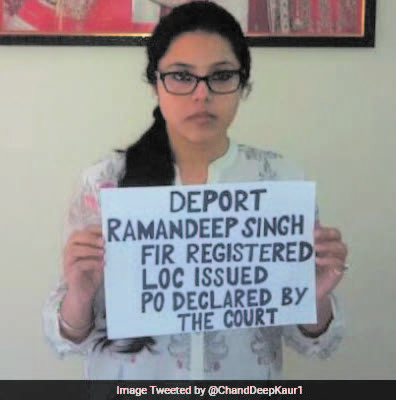
KAPURTHALA (TIP): A 29-year-old woman who has been deserted by her NRI husband has sought help from External Affairs Minister Sushma Swaraj. She has requested the minister to get him deported from New Zealand. Though her husband, Ramandeep Singh, has been declared a proclaimed offender by the Punjab Police, Chand Deep Kaur has requested Ms Swaraj for help, saying that she wants to set an example so that no other Non-Resident Indian cheats his wife.
“I have sought (Sushma) Swaraj’s help in getting my husband deported. He is in New Zealand,” Ms Kaur, who is based in Kapurthala, said.
She also wants her husband’s passport to be cancelled. “I want to set an example so that no other NRI husband can ever dare to cheat a woman. I also want stringent laws in place to check such men,” she said.
Ms Kaur said she has received a call from the ministry to send relevant documents in connection with her case. “I want him back here for divorce so that I can start my life afresh,” she said.
Chand Deep Kaur married Ramandeep Singh, who was working as an accountant in Auckland, in July 2015. “Soon after our wedding he returned to New Zealand, in August 2015,” Ms Kaur said. “I stayed with him at his family’s house in Jalandhar,” she said. “He returned to India briefly in December 2015 and went back to New Zealand in January 2016,” she said.
“I spent just 40-45 days with my husband,” she said. She alleged that the behavior of her in-laws changed after marriage. “They told me that they had disowned Ramandeep so I should move back with my parents,” Ms Kaur claimed.
“I tried calling my husband repeatedly, but he did not respond. I even tried to contact members of my in-laws’ family but they also refused to respond, and blocked my number instead,” she said.
She then lodged a complaint against her husband in August 2016. He was booked under charges of criminal breach of trust, among other sections of the Indian Penal Code. A look-out circular was also issued against Ramandeep, she said.
A police official in Jalandhar later said Ramandeep was declared a proclaimed offender in February 2017.
After Arunabh Kumar, the founder of The Viral Fever, an online entertainment YouTube channel, filmmaker Vikas Bahl, directer of the film, Queen, has also been accused of sexual harassment at workplace by female employees.
Such incidences have created a furore on social media. They have finally brought to limelight the unspoken problem of workplace sexual harassment in this country. Though we are aware of the term ‘sexual harassment’, we lack clarity on what kinds of behaviour constitutes for it. A consulting firm, HRhelpdesk.in, recently did a nationwide research on workplace sexual harassment and put together insights by talking to women across the country.
Here are some subtle signs to watch out for at office to know if you’re being harassed:
SEXIST BEHAVIOUR: Actor-author Twinkle Khanna recently pointed out that calling someone sexy at workplace isn’t appropriate. If your colleagues make sexist jokes towards you, chances are that you’re being harassed. “In many workplaces, the abusers prior starting their sexual harassment actions, use sexist behaviour. This strategy is used to suppress the women employee; to make them feel small and weak prior starting the real harassment act. Sexist behaviours are identified by actions where co-worker or a senior employee passes comments like, ‘ this portfolio is not suitable for you because you are a woman’ or ‘you got promoted because you’re a woman’ or using the age old jokes that say women are not good. Generally sexist behaviour may not be termed as a direct sexual harassment action but such an act should be taken as red alarm by the victim that their silence may welcome something worse tomorrow,” says Shivani Misri Sadhoo, psychologist.
The so called harmless flirting: Getting a compliment isn’t a bad thing. But, if a compliment makes you feel sexually objectified, it’s a sign of sexual harassment. If a colleague disrespects your personal space and touches you, report it to the HR.
INAPPROPRIATE ONLINE BEHAVIOUR: If one of your colleagues sends you personal messages on your phone, social media accounts, making you feel uncomfortable, then it’s unacceptable. Your colleagues need to maintain professional and personal boundaries. Violation of these boundaries is considered as sexual harassment. “Sexual harassment is getting more and more subtle. Sending sexualised forwarded messages on whatsapp, out of proportion compliments at work, sending work related requests at odd hours, frequent requests for out of office meetings all account to sexual harassment. Although the victim is often confused whether it is harassment or not, it’s always better to pay attention to your instincts as they never lie,” says Pulkit Sharma, psychologist.
The quid pro quo stance: Your senior colleagues shouldn’t make statements such as, “Come, lets go for dinner. I’m your boss,” and then hint at returning the favour in kind. This is sexual harassment. The quid pro quo behaviour along with coercion is strict no-no at workplace. “We must highlight the suppressed voices of women facing sexual harassment which is not only plaguing the organisational culture but also failing diversity programmes. Through this survey, we found out that respect and dignity at the workplace, which women deserve as an equal member of the workforce, is often absent in workplaces. This kind of behaviour not only pushes women away from the corporate world, but also forces them to curtail their career ambitions post career breaks,” says Amarpreet Kaur, founder, HRhelpdesk.in.
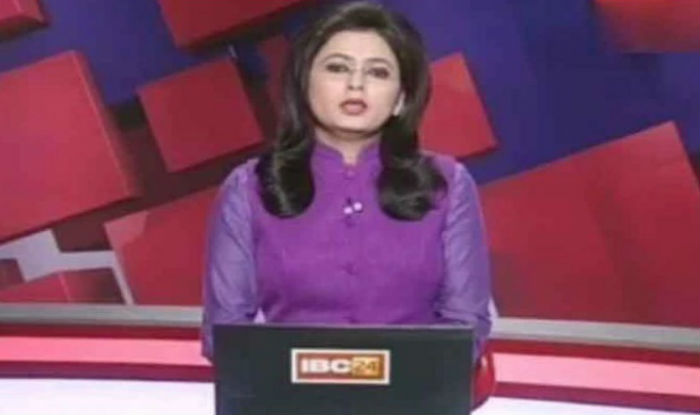
Supreet Kaur, a news anchor with Chattisgarh’s private IBC-24 channel was reading her morning bulletin on Saturday and was directed to break the news of a fatal accident in the Mahasamund district fifteen minutes after her show began. A car had crashed as a result of which three out of five people who were travelling in the vehicle were dead.
The local reporter, who was sharing details of the accident on air, wasn’t able to reveal the identity of the passengers. But Supreet, 28, realised soon after that one of them could be her husband as she knew that he was supposed to travel in a Renault Duster on the route at the same time with four of his friends. She read the news without letting viewers understand her plight and completed the show, reports suggest, before she went out of the studio and broke down.
The Editor said that the production team was aware of the news but could not inform Supreet as she was live.
She has reportedly left for the accident site.
“She is an extremely brave lady. We are proud of her as an anchor, but what happened today has left us in shock,” Supreet’s colleague said, Hindustan Times reports.
Harshad Gawde and two others – Gaurav Sahu and Nishant Wakil – were killed on the spot and two others were injured when their SUV collided with the rear end by a truck on Saturday morning while they were returning from Saraipali towards Raipur, news agency PTI reports.
Chhattisgarh Chief Minister Raman Singh expressed his condolence over the incident and praised the woman’s courage.
“I salute Supreet’s strength in dealing with her husband’s demise with extraordinary bravery and professionalism. May the departed soul rest in peace,” Mr Singh said in a tweet last night.
Supreet Kaur, who has been working with IBC-24 since the past nine years, married Harsad Kawade a year ago, news reports state.
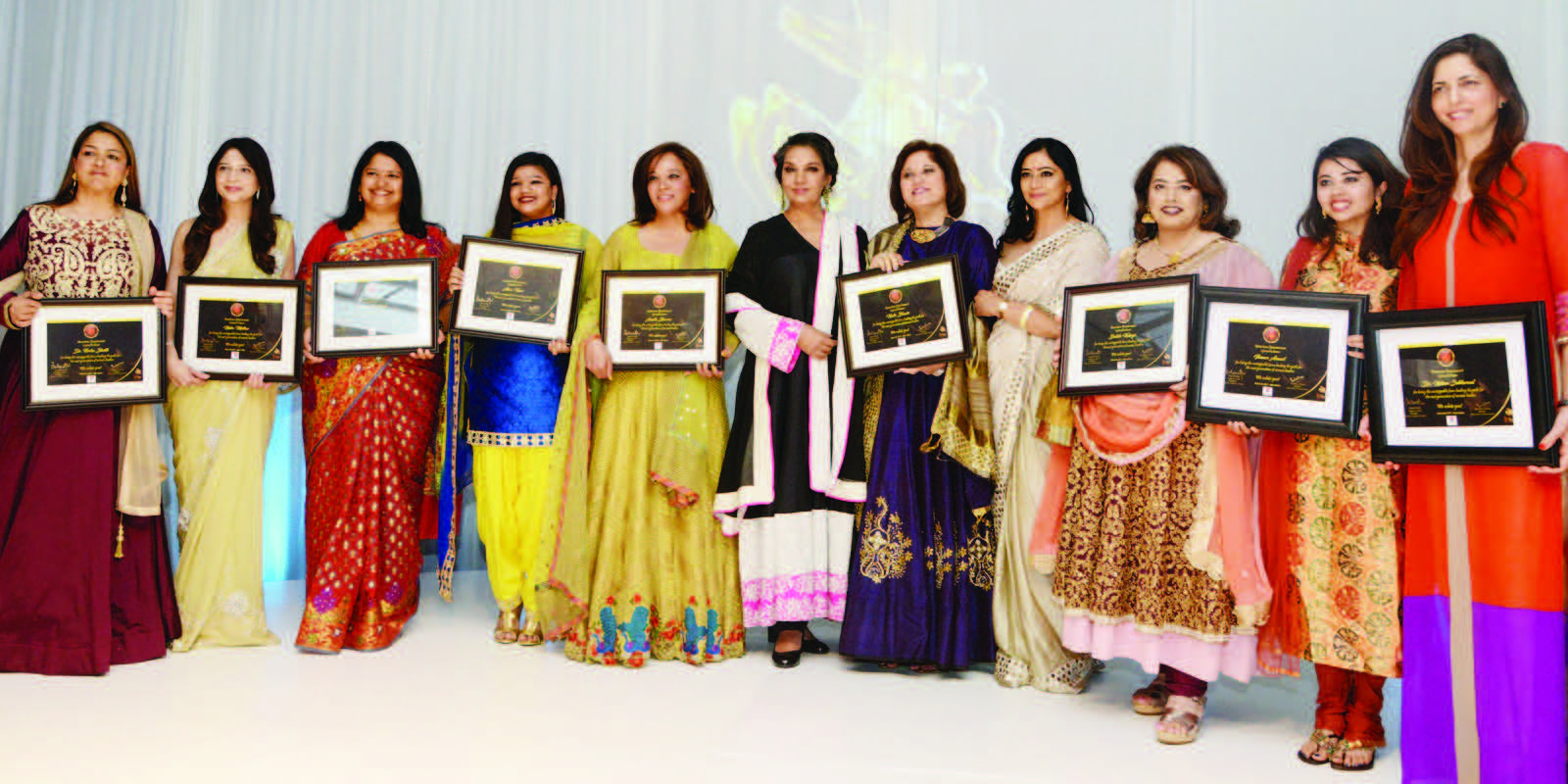
NEW JERSEY (TIP): With all eyes on a beautifully decorated stage, almost 300 guests from New York and New Jersey in audience, the expectations were running high to know the names of 15 women “Honorees” who have left an indelible impression on society in USA. An event which has been the talk of the town since it was announced three weeks ago by Brain Storm Entertainment in association with Renascent Enterprise, IAA Women Achiever Awards held at newly built MARIGOLD in New Jersey offered everything that raised expectations.
Manish Malhotra Fashion Show
Fifteen women to be selected through a process audited by Ernst and Young, a fund raiser with Chief Guest Shabana Azmi and a fashion show by superstar of fashion industry, Manish Malhotra for Mijwan Welfare Society (NGO run by Shabana Azmi) at a venue that has created a name for its grandeur in such a short time, it was an evening to watch.
Tanvi Prenita Chandra, local promoter of the show
Guests started arriving early at 5 pm and crowded the reception to ensure they got best seats after a formal photo-op. The bar was filled soon with hundreds and an air with best fragrance and some of outfits that would have surprised celebrity designer Manish Malhotra. Many wanted to know the names of the winners since such events have rarely presented surprise. But Tanvi Prenita Chandra, promoter and Vandana Krishna, brain behind the event lived upto her promise, and nobody including “Honorees” knew about the surprise about to unfold. Some wanted to have a glimpse of Manish Malhotra who was busy with models and wanted to make his maiden presentation the best ever in East coast. Photographers ensured they clicked the pics of the most notable guests from Tri-State which would fill the Facebook after the event. Selfie stars were busy too, almost competing with each other in putting maximum in one frame.
Cineyug promoter Aly Morani was quietly checking the finishing of the grand room for stage and settings, first of its kind where the evening was to unfold. Side panels with white fabric were used as screens with a state of the art projectors and backdrop lit to make the setting most serene. A totally new concept of a fashion show with top models were to walk on the floor with a ramp-style setting between front three rows, thus, giving the audience a closer view of beautiful dresses of Mijwan collection by celebrity Manish Malhotra.
A warm welcome from Vandana Krishna
Vandana Krishna introduced the evening and awards event to a hall filled with 300 plus guests. She shared the overview of upcoming Indian Academy Awards to be held in California in July. Vandana Krishna and Saurabh Pandey, two veterans from the entertainment industry are launching their awards event in SFO with Bollywood, Tollywood and Hollywood stars as guests and performers when the winners will be announced once again through a popular selection process audited by Ernst and Young. The grand 2-day event is expected to host 50,000 in audience. The event was announced in Mumbai in last week of December by RAEES Bollywood Badshah Shahrukh Khan and launched at a media conference by superstar Madhuri Dixit in Santa Clara in January.
Vandana said, “As an initiative of the Indian Academy Awards we want to share the success stories of real women with the world, to encourage all the Non Residents of India. True stories of women entrepreneurs are an inspiration to change the world. Today’s women are making the difference with their innovative ideas, seeking solutions and reclaiming their status as equals. We want to create a platform to honor these women and to share their success with the world.”
One could see smiling Tanvi Prenita Chandra of Renascent Media who was the local promoter for hosting the show. “Women empowerment …this cause is very close to my heart and I feel fortunate to get this opportunity to host this history making event with most respected Bollywood icon Shabana Azmi ji and world famous designer Manish Malhotra. A big thank you to the sponsors Nirvani restaurant, Morgan Stanley, Laxmi (House of Spices), Mphasis Corporation, Hometowne rx, Pro Beauty Academy, KTC Edibles Ltd, The Marigold and Corporate Limousine Services for the support of this great cause. I have done my best to present a different type of show with celebrities from Mumbai and feel happy it has all come together in flying colors witnessed by elite crowd in such a short span of three weeks” said Tanvi.
Host Nisha Mathur, herself a celebrity, opened the evening and in her inimitable style announced the winners one-by-one. The honorees graced the stage and accepted the honors to an applaud by audience which marked the recognition by all. Fifteen honorees who had travelled from all over just like other guests to attend the event and were caught by surprise when their names were announced. Ms Shabana Azmi presented the awards to each honoree as Nisha invited them after a brief introduction.
The winners were selected via a nomination process managed by EY. The final jury members comprising of Bollywood actresses Manjari Phadnis and Chitrashi Rawat, Wellness and grooming expert Avni Gandhi Varma will made the final selection.
The next segment included the introduction of Mijwan Welfare Society by none other than Ms Shabana Azmi who shared the details of her father, Kaifi Azmi’s dream for the small village in U.P. which has been converted by funds raised by the NGO to support women.
Shabana Azmi and Manish Malhotra
Ms Azmi’s humility and happiness was visible as she fondly recalled the time she spent with her father who was a great poet and supported for equality of women. She expressed her gratitude for Manish Malhotra and generous audience as well as every donor till date who have supported the Society.
Actors & Activist Shabana Azmi was the guest of honor for the final event.
Mijwan today is not only a story of the progress of a small village in India, but it’s also the story of women journeying on, past the patriarchal conforms of their society. It’s the hope for a better tomorrow, beating in the hearts of rural women who have taken charge of their own destinies
The finale was the fashion show as colorful lights came up and beautiful modelsdisplayed the dresses. One could see the audience was dazzled with the exquisite hand embroidery called Chikankari by Mijwan Women. The ‘Mijwan Summer Couture 2017’ was clearly the highlight of the evening. The grace with which each model walked and carried the dress, almost everyone in audience captured the view with eyes while top photographers and cameraman from television channels captured through their lens. Music enhanced the walk on the ramp between the aisles and many females almost touched the dresses with their cell phones cameras to decide on their choices. About thirty minutes of mesmerizing presentation before Manish Malhotra came to the stage himselfin his customary style to accept the honors.
Manish Malhotra has pulled women out of oblivion and brought their craft to the doorsteps of Bollywood by creating glamorous outfits in his signature style. By giving women gainful employment, he has given the women to negotiate more space for themselves within the family structure.
The show epitomized the continuous realization of Kaifi Saab’s vision and the wonderful legacy of hope for his village, Mijwan. (www.mijwan.org)
Evening closed with the fund raiser and Ms Azmi assisted by her US associate Ketki Parikh collected the checks with humble thanks that will help spread the word for the Mijwan Society all over US in times ahead.
A landmark is created by Brainstorm Entertainment in association with Renascent Media in East coast as West coast now waits for the mega event in July when superstars will land in Silicon Valley. (Press Release)
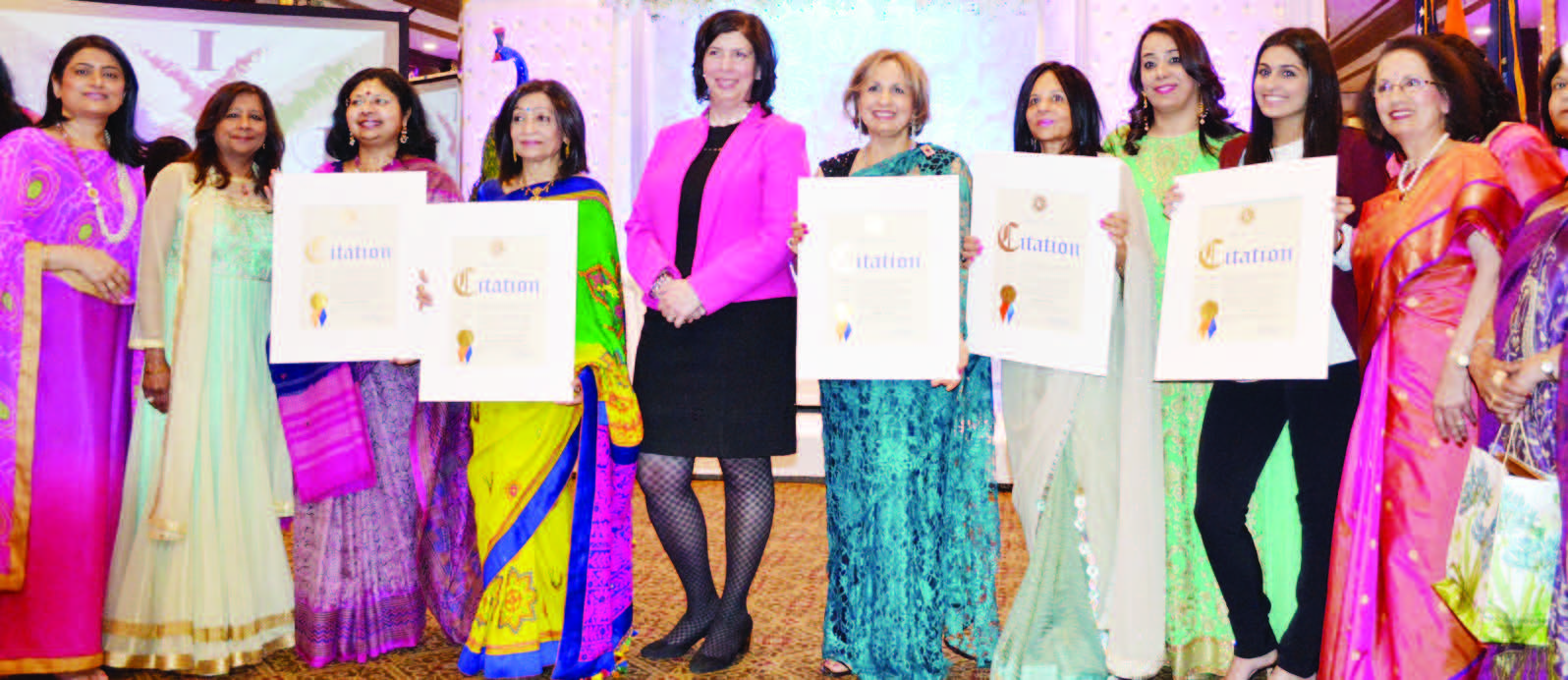
HICKSVILLE, NY (TIP): As Nassau County District Attorney Madeline Singas, Town of Hempstead Councilwoman Dorothy Goosby, Town of Hempstead Clerk Nasreen Ahmed (Among many other VIP’s) walked into Antun’s of Hicksville on Friday March 24, they all very well felt the pride and achievement in the air. The Grand ball room was full of so many accomplished and elite, who’s who of the society gathered for one singular purpose, to be the part of and celebrate 6th Outstanding Women’s Achievements Gala, part of Women’s History Month and International Women’s Day Celebrations
IAF (Indian American Forum) led by Indu Jaiswal, known for her strong commitment and dedication to the community cause was the organizing force behind the gala. This year well known business woman Vandana Govil was the Chairperson of the Gala. And of course, the hall was beautifully decorated with Peacocks, and spring flowers theme courtesy Sunita Sadhnani of Glamorous Event Planners. Evening started with lighting of the lamp. Indu Jaiswal Chairperson of IAF in her remarks welcomed all the guests congratulated all the honorees and praised their efforts in achieving such success.
American National Anthem sung by Inesha Singh and Indian National Anthem sung by Roopam Maini… Master of Ceremonies Mr Anuj Rihal and Chanbir Kaur Sethi made the evening enjoyable. Chanbir Kaur, Roopam Maini and Inesha Singh coordinated a brief Q&A session with the honorees discussing and emphasizing their accomplishments
In addition to Madeline Singas who was also Chief Guest and Keynote speaker was presented with an award, 4 other distinguished women who had excelled in their profession and community services were presented with Outstanding Women’s achievements Awards
Kalpana Patel is President and Chief Executive officer of Unique Comp Inc (UCI) an award-winning information technology services company providing IT Solutions and services to Federal, NY State and NY City agencies. Kalpana Patel has received many National and International award and recognition for her performance. Kalpana attributes her success to her parents’ upbringing, Bansi Shah and UCI Team which is with her since inception is really Unique in her opinion which has put UCI on runway to succeed
Ranju Batra is a woman driven to success and serving him public good by working harder and always paying attention to details. Her successful and historic 7 years journey towards Diwali Stamp is a matter of Pride for generations to come. It was officially dedicated on October 5, 2016 at The India Consulate. She is a loving wife, and a devoted mother of two, one of whom is a special needs miracle daughter Angela. And another capable lawyer son. Ranju has excelled in the public arena and made a difference with her excellence-with-humility approach at all things. She also served as Past President of AIA NY… Ranju’s diligence and goal oriented “grassroots philosophy has made her a strong and worthy bridge between United States and India, bringing both national both peoples closer and together.
Dr Binita R Shah has bestowed upon the highest academic rank of distinguished Teaching Professor of Emergency Medicine and Pediatrician 2013 the State of University of New York Trustees Albany honoring her mastery of teaching. Binita R Shah has earned a national and international reputation through her highly acclaimed pediatric books 5 so far. Dr Shah’s quest for improving the quality of care delivered to critically ill and injured children globally has led her to travel all over the world. Binita also has passion for performing arts. She also started organizing cultural programs in Herricks Community center. Binita considers herself fortunate as her children and their spouses are practicing in the field of medicine
Mrs. Vandana Sharma Air India Regional Manager- Americas, has been with Air India for more than 22 years. She hails from Allahabad, and most recently from Mumbai. She came to New York as Regional manager -Americas 2015. So far during her tenure here she has inaugurated two new flights from the USA between Fan Francisco and Delhi and between Newark and London.
This Year IAF also introduced Awards from Young Achievers and Future Leaders Jiya Singh a senior at Jericho high School. Jiya is very active in community projects such as Project Dignity aims to building bathrooms in India, Jiya has was placed third in the Nassau County for Tennis and qualified to the New York State tournament. Jiya also received Future Business Leaders of America Scholarships and formed E Commerce Website for ecofriendly banquet halls. Jiya is also a successful Golfer.
Setu Mehta is a is fun loving, caring and kind with a talent for making others around her smile. She is a senior at Herricks High Scholl and is the Valedictorian of her class. Her passion includes playing viola. She has played her t Carnegie Hall, Lincoln center, Adelphi School of performing arts. In addition, she loves Indian Classical dances, Setu has been named toas a National merit Commended Scholar and a member of the National honors Society. She is known by her friends as someone who is approachable and ready to help out. She loves the outdoors, cooking and reading and is always having fun…
NASSAU County DA Madeline Singas was all in praises for the efforts of Indian American Forum and Indian American Community. She congratulated all honorees and stressed the importance of role women are playing in this world. Citations of behalf of Nassau County Executive Edward P Mangano were presented by Zahid Syed, Chairman of Human right Commission Nassau County to all honorees. Syed praised their efforts and congratulated them for their achievements. Citations were presented from the town of Hempstead Supervisor Anthony Santino by Councilwoman Goosby and town Clerk Nasrin Ahmed. Town of Oyster Bay Supervisor Saladino and Councilman Imbroto and Town of North Hempstead Supervisor Judi Bosworth presented Citations to the honorees
Among those present during the event were Bobby Kalotee Founder of IAF, Nassau County Human right Commissioner Sharanjit Singh Thind, Bina Sabapathy, President of India Association of Long Island, Sher Madra , Shammi Singh and Peter Bheddah, Board of Directors of Nargis Dutt Foundation, Shashi Anand well known business woman, Haseena Mooppan and Jasia from Domestic Harmony Foundation, Rizwan Qureshi from HAB Bank, Roopam Maini from Indus American Bank, Sangeeta Bahl, Past President of Rotary Club, Shiv Dass and Subhash Kapadia, Kamal Dandona, Bharat Jotwani, T S Anand, Peter Bheddah , Smiti Khanna and several other dignitaries were present
Dance performances presented by students of well-known Choreographers Swati Vaishnav and Dr Ari Datta. Mr Mohinder Taneja and Animesh Goenka gave special thanks for all of our sponsors and media partners.
Board of Trustees Dr Azad Anand, Surinder Rametra, and Bobby Kalotee, a, Animesh Goenka, Volunteers Nirmala Rametra, Jaya Bahadkar, Anu Gulati, Dr Meena Jaiswal, Vijay Goswamy, Tejal Kamath, Sunny Thakkar and Many other helped in making the event a grand success. It was indeed a very successful evening, showcasing and honoring outstanding women achievers, who are successful in business, cultural, professional, education, and medical. Community and social services.
NEW DEIHI (TIP): It will be a long working summer for the country’s top judges.
For the first time in the Supreme Court’s history, three constitution benches of five judges each will sit during the summer break. These would be in addition to the two regular vacation benches set up every year to hear urgent matters.
Chief Justice of India JS Khehar made the announcement on Thursday while fixing May 11, the first day of the summer break, for hearing petitions demanding scrapping of triple talaq, nikah halala and practice of polygamy among Muslim community.
The court was ready to give up its vacation to hear “issues of grave importance”, the CJI said. “The court is ready to sit even on Saturdays and Sundays to hear the matter,” he said.
Nineteen of the 28 judges will be hearing cases during the 90-day break, which is unprecedented. Typically, four SC judges work during court holidays.
The practice has often come under criticism in the face of huge backlog. Prime Minister Narendra Modi had last year questioned the long vacation.
The SC also breaks for around 10 days in winters. High courts follow a similar holiday calendar though dates vary.
The court will also hear if WhatsApp sharing with Facebook, its parent company, details of calls, messages, photographs and documents exchanged by 160 million Indian users violated the citizens’ right to privacy.
The third constitution bench will examine whether children born to Bangladeshi migrants could be accorded Indian citizenship. It is not clear which of the benches would be led by the CJI.
As the CJI came out with the schedule, senior advocates, including country’s top law officer the attorney general Mukul Rohatgi, expressed concern over simultaneous hearing of the cases.
Rule and tradition required the court to take the lawyer’s consent before hearing a case during a vacation, Rohtagi said. “If we don’t hear the matter now, it will be pending for years, if you (Centre) do not want to cooperate let us know. But then, don’t come blaming us that the matter has been pending for so long,” the CJI said.
To commemorate International women’s day, Indian Academy Awards launched IAA WOMEN ACHIEVERS AWARDS; a campaign urging NRI women to share their personal success stories so that they could be rewarded and felicitated.
IAA aims at felicitating those women holding positions of decision making. We are requesting NRI women to share their real life stories in their respective field with the intention to empower the women of today.
In today’s world, women play important roles in Politics, ecommerce, education, investing, travel, fashion, arts etc. However, it is not easy in another country especially in the USA.
Vandana Krishna, Director, Brainstorm Entertainment adds “As an initiative of the Indian Academy Awards we want to share the success stories of real women with the world, to encourage all the Non-Residents of India. True stories of women entrepreneurs are an inspiration to change the world. Today’s women are making the difference with their innovative ideas, seeking solutions and reclaiming their status as equals. We want to create a platform to honor these women and to share their success with the world.”
The Indian Academy will now celebrate woman empowerment through nominations and authenticated online voting process. Women achievers will be honored for their achievements as strong Indian-American women. Those who have made a significance will be nominated for a special category of awards which would be part of the main event scheduled on 26th March, 2017.
Tanvi Prenita ChandraFounder and Presidentof Renascent Media, who is also theorganizerand local promoter for hosting IAA WOMEN ACHIEVERS AWARDS. Tanvi, a highly respected personality has been dedicated to help the South Asian Community in New Jersey for over 17yrs through her work at Radio, Television, Stage, Marketing and Events.
The winners will be selected via a nomination process by EY. The final jury members comprising of Bollywood actresses Manjari Phadnis and Chitrashi Rawat, Wellness and grooming expert Avni Gandhi Varma will make the final selection.
Actor & Activist Shabana Azmi would be the guest of honor for the final event.
The legendary poet, Kaifi Azmi & his daughter Shabana Azmi’s NGO, Mijwan Welfare Society has been invited by The IAA to showcase the exquisite hand embroidery called Chikankari by Mijwan Women. The ‘Mijwan Summer Couture 2017’ by designer Manish Malhotra would be the highlight of the evening.
The fashion show is a fundraiser and the proceeds collected at the event would be donated to the NGO to support its aim, i.e Education and Empowerment of the girl child.
Manish Malhotra has pulled women out of oblivion and brought their craft to the doorsteps of Bollywood by creating glamorous outfits in his signature style. By giving women gainful employment, he has given the women to negotiate more space for themselves within the family structure.
The show epitomizes the continuous realization of Kaifi Saab’s vision and the wonderful legacy of hope for his village, Mijwan. (www.mijwan.org)
Mijwan today is not only a story of the progress of a small village in India, but it’s also the story of women journeying on, past the patriarchal conforms of their society. It’s the hope for a better tomorrow, beating in the hearts of rural women who have taken charge of their own destinies.
Recently, the Indian Academy Awards celebrated the first of its kind, The Indian Worldwide Academy and all that it stands for, was announced by superstar Shah Rukh Khan in Mumbai @ US Consulate and in January it was launched by Actor Madhuri Dixit in California!(AV Link – FB & YT of both the AV’s)
From exchanging cultures to building bridges for tourism, engaging cinema lovers to creating a platform to identify potential talent for the Indian film industry, the IAA, is a real-time celebration for cinema lovers, by cinema lovers and of cinema lovers across the world.
What makes these awards stand out, is the fact that it invites a global audience to be part of the jury, by a simple registration process.
The Academy also has one of the biggest certifying agencies in the world to make the voting process authentic.
This is how it becomes a truly global, democratic award ceremony that will redefine the entertainment world.
Managed by Asia’s largest production company Cineyug and choreographed by contemporary dance guru of Bollywood Shiamak Davarthis extravaganza, will be nothing short of a mega show that bringing the best of Hollywood, Bollywood and Tollywood together to create history in the entertainment world and will be hosted at the Oracle Arena in the Bay Area of California.
INDIAN ACADMEY AWARDS – HOSTED, PRESENTED & CURATED BY INDIAN CINEMA
AWARDED BY THE VIEWERS!
www.indianacademyaward.com www.iaawomenachievers.com Facebook – Indian Academy Awards Indianacademyawards17@gmail.com
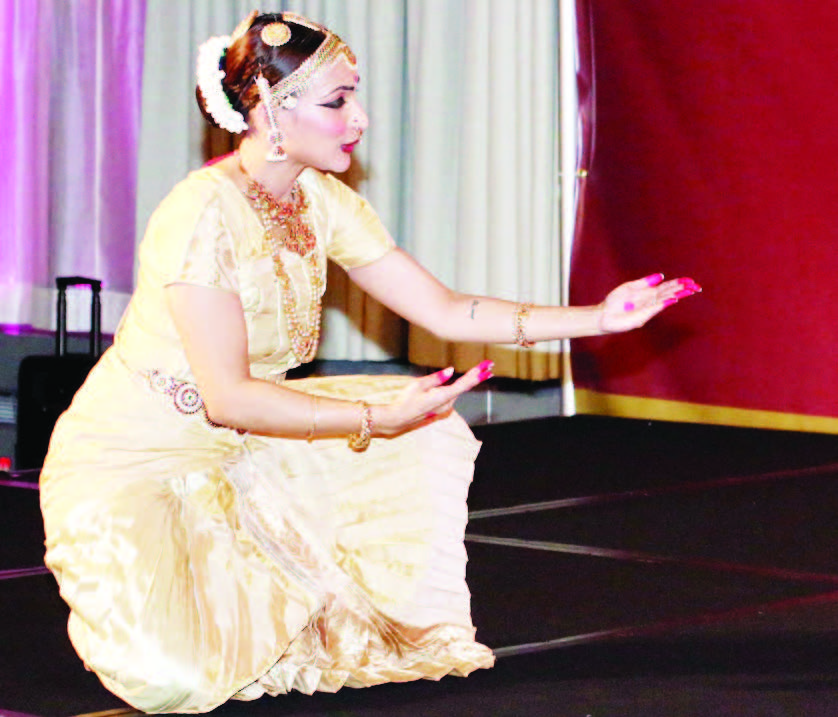
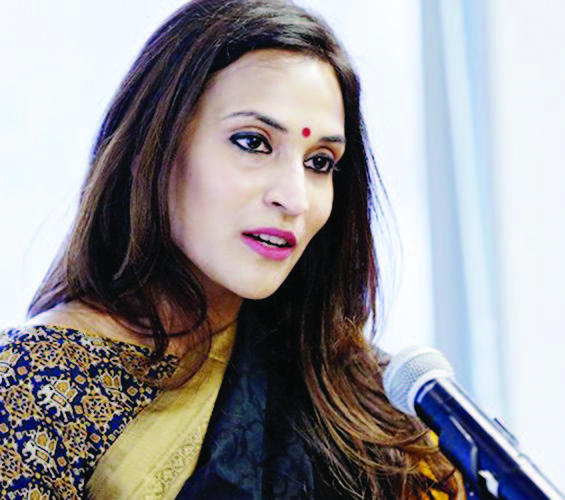
NEW YORK (TIP); Aishwaryaa Rajinikanth Dhanush, famous filmmaker, UN Ambassador for Gender Equality and daughter of Super Star Rajinikanth presented a Bharathanatyam performance at the United Nations on the International Day for Women, March 8. The nattuvangam was provided by her dance guru noted Bharatanatyam dancer Meenakshi Chittaranjan. Last year the UN Woman named Aishwaryaa as Goodwill Ambassador for Gender Equality.
It was the first time a celebrity dancer from Tamil Nadu performed at the world body in the presence of diplomats and invitees. The event was organized by the Permanent Mission of India to the United Nations.
Aishwaryaa R Dhanush, is an Indian film director and a start up entrepreneur. She is the daughter of the Indian Superstar Rajinikanth who is one of Asia’s best known actors. She is married to Dhanushwho is today one among the most talented and successful Pan-Indian actors. She is a mother of two boys.
Aishwaryaa completed her schooling at The Ashram in Chennai. She acquired a diploma in law from Chennai.
She directed her first feature film “3” in 2011 featuring her husband Dhanush. The film was successful critically and commercially and it catapulted Aishwaryaa as a leading young director. The film was famous for the song “why this kolaveri” which became a worldwide Viral phenomenon. She was invited to several prestigious film festivals and panels post the release. Aishwaryaa’s second feature film “Vai raja Vai ” an ensemble cast venture released in 2015 was also equally successful.
Aishwaryaa is a multi-talented person. She is trained Bharatnatyam dancer, a voracious reader and writes very well. She launched her company Ten Entertainment recently, which is a digital medium to promote short film content
Aishwaryaa is keenly interested in the cause of women and has associated herself with various welfare activities. She strongly propagates the cause that every girl child in India should have the fundamental right to Education and to be independent. She is a perfect example of how an Indian woman juggles various roles. Her future plans include directing feature films and developing and extending her company Ten Entertainment in various digital media spheres.
Amy Schumer says she feels sexy despite being what Hollywood calls fat.
Slamming the body image standards followed by the film industry, the 35-year-old actress says she feels “strong and healthy” in her skin, regardless of what people tell her about her body.
“I’m what Hollywood calls, very fat. Before I did anything, somebody like explained to me, ‘Just so you know, Amy, no pressure, but if you weigh over 140 lbs., it will hurt people’s eyes. And I was like (‘Okay’) I just bought it. I was like, ‘Okay, I’m new to town. So I lost weight. I look very stupid skinny. My dumb head stays the same size but then my body, like, shrivels and just look like a, like a Thanksgiving Day parade (balloon) of Tonya Harding. Nobody likes it. It’s not cute on me. I feel very good in my own skin. I feel strong. I feel healthy. I do. I feel sexy,”Schumer says.
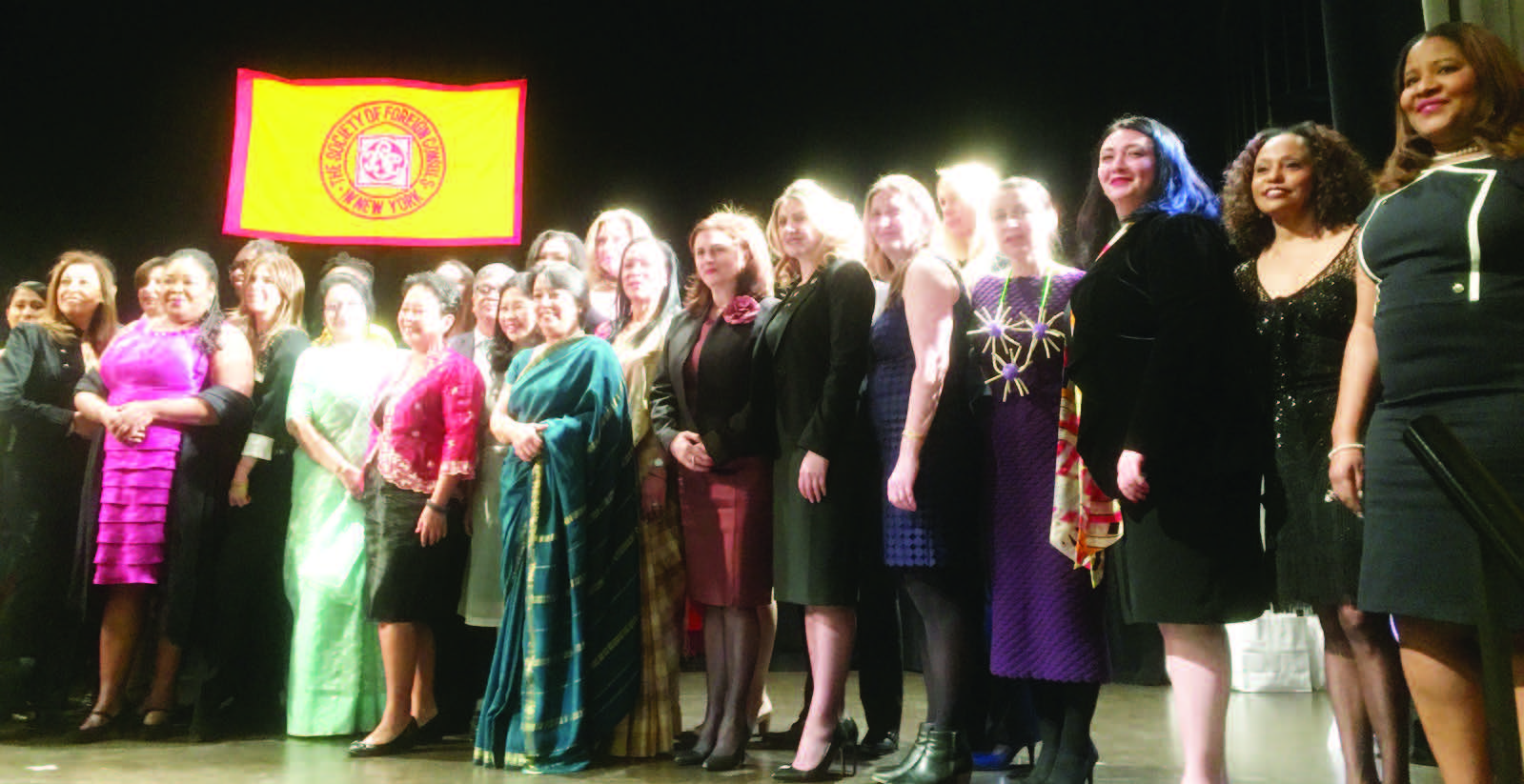
Malini Shah among 18 women honored by SOFC for outstanding contribution to the society
The Society of Foreign Consuls (SOFC), New York, hosted an event to celebrate the International Women’s Day on March 02, 2017 at the Bohemian National Hall, New York City. The event was an occasion to honor the academic, economic and social achievements of women around the world.
The program witnessed participation by all the Lady Consuls General in New York as well as prominent women from various countries who have made major contributions to their communities. Besides, it had cultural performances and a reception hosted by Mr. Martin Dvorak, the Consul General of Czech Republic and Deputy President of the Society of Foreign Consuls.
In recognition of International Women’s Day, 18 women from all over the world were honored for their outstanding professional achievements and contribution to community empowerment in New York and America with their hard work and dedication.
Initiated in 2011 by Consul General of the Republic of Kazakhstan Raushan Yesbulatova, the reception in celebration of Women’s Day was so successful that it was established as an annual celebration. Since then every year the Consulate General of the Republic of Kazakhstan graciously carries the flag of organizers.
Malini Shah receiving the citation from SOFC President and Consul General of Columbia Maria Isabel Nieto (left) and India’s Consul General Riva Ganguly Das
Eighteen Foreign Consulates in New York came together this year to honor 18 outstanding women achievers from their respective countries. Participating countries included Algeria, Bangladesh, Barbados, Bulgaria, Columbia, Georgia, Haiti, Hungary, India, Indonesia, Jamaica, Kazakhstan, Kosovo, Philippines, Russia, Slovakia, Saudi Arabia and Turkey. All participating countries contributed to the reception with their national specialties.
The 18 honorees were – Malini Shah (India) Rahmouna Rouni (Algeria), Nayeema Khan (Bangladesh), Janet C Malone (Barbados), Boriana Pavlova (Bulgaria), Betty Garces (Columbia), Eteri Chkadua (Georgia), Rodneyse Bichotte (Haiti), Zsuzsa Marka (Hungary), Amaliya Suryani (Indonesia), Yvonne J Graham (Jamaica), Gaukhar Noortas (Kazakhstan), Albana Krasniqi (Kosovo), Analisa Leonor Blares (Philippines), Tatiana Deptola (Russia), Rasha Al-Bawardy (Saudi Arabia), Luba Gregus Mason (Slovakia), and Tulay Taskent (Turkey).
Interestingly, among the 18 Consuls General, 13 were women – including India’s Consul General Ambassador Riva Ganguly Das. Well known Indian American community leader and philanthropist Malini Shah was honored with 17 others for her contribution to the society. Air India Regional Manager, USA, Ms Vandana Sharma graced the occasion along with other prominent Indians.
Air India Regional Manager, USA, Ms Vandana Sharma who was a guest at the event, is seen here with India’s Consul General Riva Ganguly Das (Center) and Malini Shah who was honored
Upon receiving the citation from SOFC President and Consul General of Columbia Maria Isabel Nieto and Ambassador Riva Ganguly Das, Malini said, “I am deeply honored to get this recognition. This is how New York celebrates its diversity and culture. I love to work for humanity and will continue to do so.”
On this occasion SOFC received a proclamation from NY Governor Andrew Cuomo declaring March 2017 as ‘Women’s History Month.’
Actress Jessica Chastain, who has been a vocal supporter of gender equality, has revealed that she has faced some discouragement in raising the issue.
Chastain says she was once told by a director that she “talks too much about all of this women stuff”, reports a leading daily. “I had one male director say to me that I talk too much about all of this ‘women stuff’. This is a person I love, and maybe he was concerned I would hurt my career,” Chastain told a leading magazine. “I’m not attacking anyone. I’m trying to create more inclusiveness, compassion and empathy — which in turn makes better movies, better art,” she added.
Across the world, too many women and girls spend too many hours on household responsibilities – typically more than double the time spent by men and boys. They look after younger siblings, older family members, deal with illness in the family and manage the house. In many cases this unequal division of labor is at the expense of women’s and girls’ learning, of paid work, sports, or engagement in civic or community leadership. This shapes the norms of relative disadvantage and advantage, of where women and men are positioned in the economy, of what they are skilled to do and where they will work.
This is the unchanging world of unrewarded work, a globally familiar scene of withered futures, where girls and their mothers sustain the family with free labor, with lives whose trajectories are very different from the men of the household.
We want to construct a different world of work for women. As they grow up, girls must be exposed to a broad range of careers, and encouraged to make choices that lead beyond the traditional service and care options to jobs in industry, art, public service, modern agriculture and science.
We have to start change at home and in the earliest days of school, so that there are no places in a child’s environment where they learn that girls must be less, have less, and dream smaller than boys.
This will take adjustments in parenting, curricula, educational settings, and channels for everyday stereotypes like TV, advertising and entertainment; it will take determined steps to protect young girls from harmful cultural practices like early marriage, and from all forms of violence.
Women and girls must be ready to be part of the digital revolution. Currently only 18 per cent of undergraduate computer science degrees are held by women. We must see a significant shift in girls all over the world taking STEM subjects, if women are to compete successfully for high-paying ‘new collar’ jobs. Currently just 25 per cent of the digital industries’ workforce are women.
Achieving equality in the workplace will require an expansion of decent work and employment opportunities, involving governments’ targeted efforts to promote women’s participation in economic life, the support of important collectives like trade unions, and the voices of women themselves in framing solutions to overcome current barriers to women’s participation, as examined by the UN Secretary-General’s High-level Panel on Women’s Economic Empowerment. The stakes are high: advancing women’s equality could boost global GDP by USD 12 trillion by 2025.
It also requires a determined focus on removing the discrimination women face on multiple and intersecting fronts over and above their gender: sexual orientation, disability, older age, and race. Wage inequality follows these: the average gender wage gap is 23 per cent but this rises to 40 per cent for African American women in the United States. In the European Union, elderly women are 37 per cent more likely to live in poverty than elderly men.
In roles where women are already over-represented but poorly paid, and with little or no social protection, we must make those industries work better for women. For example, a robust care economy that responds to the needs of women and gainfully employs them; equal terms and conditions for women’s paid work and unpaid work; and support for women entrepreneurs, including their access to finance and markets. Women in the informal sector also need their contributions to be acknowledged and protected. This calls for enabling macroeconomic policies that contribute to inclusive growth and significantly accelerate progress for the 770 million people living in extreme poverty.
Addressing the injustices will take resolve and flexibility from both public and private sector employers. Incentives will be needed to recruit and retain female workers; like expanded maternity benefits for women that also support their re-entry into work, adoption of the Women’s Empowerment Principles, and direct representation at decision-making levels. Accompanying this, important changes in the provision of benefits for new fathers are needed, along with the cultural shifts that make uptake of paternity and parental leave a viable choice, and thus a real shared benefit for the family.
In this complexity there are simple, big changes that must be made: for men to parent, for women to participate and for girls to be free to grow up equal to boys. Adjustments must happen on all sides if we are to increase the number of people able to engage in decent work, to keep this pool inclusive, and to realize the benefits that will come to all from the equal world envisaged in our Agenda 2030 for Sustainable Development.
(Message of Executive Director, UN Women Phumzile Mlambo-Ngcuka)
NEW DELHI (TIP): A five-judge constitution bench would be set up by the Supreme Court to hear and decide on a batch of petitions relating to the practice of triple talaq, ‘nikah halala’ and polygamy among Muslims.
A bench headed by Chief Justice J S Khehar took on record three sets of issues framed by parties with regard to the cases and said the questions for consideration of the constitution bench would be decided on March 30.
The bench, also comprising Justices N V Ramana and D V Chandrachud, said “the issues are very important. These issues cannot be scuttled”.
Referring to the legal issues framed by the Centre, it said all of them relate to the constitutional issues and needed to be dealt by a larger bench.
The bench asked the parties concerned to file their respective written submissions, running not beyond 15 pages, by the next date of hearing, besides the common paper book of case laws to be relied upon by them during the hearing to avoid duplicity.
When a woman lawyer referred to the fate of the apex court judgement in the famous Shah Bano case, the bench said “there are always two sides in a case. We have been deciding cases for last 40 years. We have to go by the law and we would not go beyond the law.”
The bench also made it clear that it is willing to sit on Saturdays and Sundays to decide on the issue as it was very important.
During the last hearing, the apex court had said it would decide the issues pertaining to ‘legal’ aspects of the practices of triple talaq, ‘nikah halala’ and polygamy among Muslims but not deal with the question whether divorce under Muslim law needs to be supervised by courts as it fell under the legislative domain.
‘Nikah halala’ means a man cannot remarry a woman after triple talaq unless she has already consummated her marriage with another man and then her new husband dies or divorces her.
The bench headed by the CJI had said “You (lawyers for parties) sit together and finalise the issues to be deliberated upon by us.”
In a shocking revelation by actress Ileana D’Cruz, she admitted to have been eve-teased and harassed, describing the experience as ‘traumatic’.
Sharing the link of an post that read, “I’m Leaking My Ex’s Dirty Messages and Voice Notes Because He’s Left Me No Choice”, she tweeted, “Absolutely despicable piece of c**p! So proud of this girl who exposed this s***e!Whoever you are lady mad respect”.
Ileana then used the micro-blogging site to talk about her experience. “I’ve been a victim of eve-teasing and harassment and it’s traumatic. I’m lucky I have beautiful parents who gave me strength when I needed it,” she posted. Many actors and tinsel town crowd has come out in the open and have shared their experiences of abuse.
Filmmaker Anurag Kashyap had also shared the same article which is about an anonymous girl troubled by her former boyfriend.
Hollywood actor Ashley Judd who is in the Capital, as a part of the World Congress Against Sexual Exploitation of Women and Girls initiative, spoke at length about gender discrimination, and said that she too has been a victim of sexual harassment.
“I was molested when I was 7 years old. I was raped at 14, and then I was raped in 1998. It’s a miracle that I wasn’t trafficked,” she said. The 48-year-old has been in India for the last one week as a part of the initiative. At the press conference, the actor sported mehendi on her right palm, and greeted everyone with a Namaste. At the end of her five-minute speech, she spoke in Hindi and urged everyone to rise against sexual exploitation, and decriminalising of prostituted women and girls. “Ab samjhauta nahi,” she said.
Hollywood has often been accused of discriminating against women. Ashley shared, “ There is a big pay gap in Hollywood, because of gender discrimination, and my life time earnings are 40 % less than what I should have earned, had there been pay equality in the industry.” Source: HT
The New York Asian Women’s Center, a leader in providing innovative and award-winning multilingual and culturally responsive services to survivors of domestic violence, human trafficking, sexual violence and later in life abuse, officially changed its name to Womankind at a press conference in Manhattan on last month.
Indie rock artist Queen V rocks the press conference Photo courtesy Yinan Xia
“We changed our name to create an identity that speaks to the power of our unique ways of thinking and doing – changing paradigms, building and healing,” said Larry Lee, executive director of Womankind. “And to show that we are more inclusive and transforming, we changed because we had outgrown our name.”
For 35 years, Womankind has helped Asian women and their children rise above trauma and build a path to healing through counseling, safe and confidential emergency housing, immigration and legal services, economic empowerment programs and so much more.
Representatives from the organization also revealed the trailer of a short film by director Benjamin Ross called “Rise Above,” which premiered during the Sundance Film Festival in Park City, Utah, last weekend. The virtual reality (VR) film focuses on Brittany, a South Asian youth survivor of sexual violence, and was produced by Oculus’ “VR For Good” initiative.
“It was great to be able to tell my story of abuse through the medium of virtual reality and to be able to share the film through social media,” said Brittany. “I hope the film encourages more people from my generation to report abuse and speak out against violence.”
The organization also announced the opening of a new community office in Brooklyn, which will allow advocates to provide services for double the number of victims from that community. The Brooklyn Center makes for a total of THREE community offices and TWO emergency residences that Womankind manages in New York.
Indie rock artist Queen V ended the press conference on a high note by performing her rendition of “Broken Wings,” which is now available on Itunes. Proceeds from the sales will benefit Womankind.
NEW YORK (TIP): Priyanka Chopra was appointed as UNICEF global Goodwill Ambassador at UNICEF’s 70th Anniversary celebration at the United Nations headquarters in New York, December 11. The ‘#Quantico’ actress celebrated her appointment alongside Ambassadors David Beckham and Orlando Bloom. The actress has served with the United Nations International Children’s Emergency Fund in India, where she has been a longtime girls’ rights advocate.
The ‘Quantico’ actress poses with David Beckham at the United Nations headquarters in New York
“My involvement with UNICEF began almost 10 years ago in India. Today, I stand here humbled, enriched and committed, because of it. Thank you, UNICEF, for the amazing journey so far as well as this huge honor. Along this decade old journey, with UNICEF, I have been on many field trips to villages and centers across India. On those trips, I spent time with numerous young girls and their families and experienced firsthand the transformative power of empowering young girls with opportunities that are rightfully theirs”, said Priyanka.
The actress also took to Twitter to express her joy. She wrote, “Can’t believe it’s been 10 years! Honored to now serve as UNICEF Global Goodwill Ambassador along with this amazing group For Every Child.”
UNITED NATIONS: Madhu Saran, a leading social entrepreneur from Chennai was named ‘Women Entrepreneurship Day Global Ambassador of India’ by Wendy Diamond, Founder Women’s Entrepreneurship Day (WED) at a glittering function held in the United Nations headquarters on Friday, November 18.
Women’s Entrepreneurship Day WED carries throughout the year in support of women in business globally and ignites women leaders, innovators, and entrepreneurs to initiate startups, drive economic expansion, and advance communities worldwide.
WED is celebrated in 144 countries and 110 universities/colleges internationally reaching over 1.4 million people. New York State Governor Andrew Cuomo and New York City Mayor Bill
de Blasio have proclaimed Women’s Entrepreneurship Day an official day.
According to the Global Poverty Project, women make up half the world’s population and yet represent a staggering 70 percent of the world’s poor. Gender inequality affects women everywhere, not just in developing countries. In the US, equal pay for equal work is still a dream even in Hollywood. Nurturing the self-confidence of girls and young women is a must. It is these considerations that motivated entrepreneur Wendy Diamond to launch Women’s Entrepreneur Day (WED).
After volunteering in Honduras with the Adelante Foundation, which provides micro credit to low-income women, Diamond decided to form an international event that would celebrate and advance the work of female business owners, entrepreneurs and change makers. The goal is to empower the 4 billion women on the planet and bring hope to 250 million girls living in poverty. From the immediate success of WED, it’s clear that the global movement to empower women entrepreneurs, innovators and job creators was waiting to be activated.
WED was first held at the United Nations in 2014 and, incredibly, observed in 144 countries right from the start, opening a bounty of impact community service ideas across the world. The third annual International Women’s Entrepreneurship Day at the UN, led by serious discussions about critical issues affecting women and men worldwide.
“Women worldwide have historically been underpaid, undervalued, underrepresented, underfunded – and underestimated…and still are,” says Diamond. “Women-owned businesses are set to increase by 90 percent in the next five years. We need to change the status quo because lifting women creates economic opportunity and vitality locally and globally,” said Diamond.
According to WED report, Women perform 66 percent of the world’s work, yet earn only 10 percent of the world’s income. At the same time, they account for 85 percent of consumer purchases and control $20 trillion in worldwide spending.
“Our mission is to empower the 4 billion women across the globe to be catalysts of change and uplift the 250 million girls living in poverty globally. We are committed to gathering a think tank of inspiring women leaders who can amplify our message of expanding women in business in communities around the world,” said Diamond.
Distinguished speakers for WED 2016 at the United Nations include Amir Dossal, founder and chairman of Global Partnership Forum, Amrith Rohan Perera, Ambassador of Sri Lanka to the UN, Crown Princess Katherine of Serbia, Cristina Gollach, UN Under-Secretary General for Communications, Ambassador Lizzie Flores; Dr. Shefali Tsabary (World-Renowned Clinical Psychologist); Monique Giggy (Director Singularity University Accelerator) and Randi Zukerberg, founder of Zuckerberg Media.
Ms. Saran made her space printed in India and abroad over 16 years of business experience which includes software, construction, beauty industry, media and social Services. Ms. Saran is the spirit behind the success of strategy and directions as Managing Director of her companies. She combines her conviction that education is the most effective transformation tool and her unshakable belief in scalable and sustainable practices for social inclusion to champion the cause of academic – industry linkage.
She leads the seamless integration of the firm’s strategy, people and customers with the intent to build a world – class organization committed to professional skill development, employability and inclusion. Her dream come true company is RIVER – The Power of Women is social service companies which focus only onto women’s.
She is dedicating her time on to rural female and young rural girls onto their education, employability and molding the right females to become an entrepreneur in current industry. She holds a master degree from Madras University and has received several prestigious awards from many industries including from Government of India.
NEW YORK (TIP): Celebrating 20 years of vital work to end violence against women and girls, the UN Trust Fund to End Violence against Women (UN Trust Fund) hosted its fund-raising gala last night, showcasing a range of innovative interventions that are working to end the pandemic globally. Co-hosted by UN Women Executive Director Phumzile Mlambo-Ngcuka and Oscar-winning actress and UN Women Goodwill Ambassador Nicole Kidman, the packed high-profile event brought together gender rights activists, UN officials and the private sector, spotlighting beneficiaries and their life-changing work across the world.
“Tonight we celebrate the essential work done by the UN Trust Fund, paying tribute to our grantees, whose success stories embody the resilience of women and girls in the face of violence,” said Phumzile Mlambo-Ngcuka, UN Women Executive Director. “We know that these vital investments in initiatives to end violence have high returns and have already made a difference to millions of women and girls. But there is a great deal more to do to scale up prevention and increase appropriate services, and that needs more funding so that we can bend the curve down and bring the scourge of violence against women to an end,” she added.
Violence against women and girls is now part of the public discourse much more than ever before, along with significant progress in legislation and grassroots efforts to address the issue. Yet, it continues to be a gross human rights violation of pandemic proportions. Today, one in three women worldwide have experienced physical or sexual violence-mostly by an intimate partner. The UN Trust Fund to End Violence against Women is the only global grant-making mechanism dedicated to eradicating all forms of violence against women and girls. Managed by UN Women, on behalf of the UN system, during the last 20 years, more than 400 organizations have been supported by the UN Trust Fund with results that indicate sustained resources and dedicated work can lead to the prevention and elimination of violence against women and girls. Focusing on prevention of violence, implementation of laws and policies, and improving access to vital services for survivors, the UN Trust Fund has spent the past 20 years focused exclusively on funding life-changing programs for millions of women and girls.
“I am here because I support the UN Trust Fund and I applaud and celebrate its 20 years of making a difference,” said Nicole Kidman, UN Women Goodwill Ambassador. “When I became UN Women’s Goodwill Ambassador 10 years ago, my first mission took me to Kosovo, where I met with women and girls who had survived violence. That was when I first understood what the work of the UN Trust Fund means. I saw first-hand the real difference it makes in lives of women and girls: They found shelter for themselves and their children. They received counseling to overcome the horrific trauma of rape during the war that had ravaged the Balkans. They were supported to make a living and stand on their own. It was a life-changing experience for me and one that has inspired me ever since. This is why, as UN Women’s Goodwill Ambassador, I see my role as that of an advocate to end violence against women and girls.”
During the event, Mrs. Ban Soon-taek, Patron of the UN Women for Peace Association, a key supporter of the UN Trust Fund, was presented with the UN Trust Fund’s Orange Heart, for her outstanding efforts to end violence against women and girls.
Moderated by NBC journalist Richard Lui, with an Honorary Host Committee comprised of actors and actresses Sir Patrick Stewart, Danai Gurira, Ruth Wilson, Gillian Anderson, and Kelly LeBrock as well as luminaries such as Kweku Mandela, the event brought together 300 people at the Loeb Boathouse in New York’s Central Park, who heard moving stories of impact and change from beneficiaries of UN Trust Fund-supported projects.
Stories of change underlined the high-profile event. Award-winning journalist Ann Curry interviewed seventeen-year-old Aiturgan Dzholdoshbekova from?Kyrgyzstan, who recounted how a local UN Trust Fund-supported project to prevent bride-kidnapping became a beacon of light and hope for her, and transformed her life.
“We are very happy to be in a school free from violence. We were able to change the situation of girls in our families and in our schools,” said Dzholdoshbekova. “The boys have started to understand the issue and are advocating [with us]. The school has become a safe space where we can be happy, educate and develop ourselves,” she adds.
Tommy Clark, the Founder and CEO of South African NGO Grassroots Soccer and a grantee of the UN Trust Fund, was also interviewed by Ann Curry live onstage and spoke about an?innovative sports-based intervention?to empower girls and prevent HIV and gender-based violence.
Renowned theatre actress Nehassaiu deGannes narrated the inspirational stories of two other beneficiaries-a?woman in Gambia?who will no longer subject her daughter to Female Genital Mutilation, a harmful traditional practice that affects at least 200 million girls today; the other a girl in?Cambodia?who feels safer at her work in a factory.
The gala also saw the official launch of ?the Orange Label, the result of a partnership between the UN Trust Fund and the UK-based prestigious London College of Fashion, which aims to adorn a variety of products and engage small and large scale companies around the world. Designed by students of the college, the Orange Label will be used as a brand for cause-related marketing initiatives to benefit UN Trust Fund supported programs. Through the fashion and associated industries, the Label will connect the private sector and UN Trust Fund supported programs in joint efforts to prevent and end the pandemic of violence against women and girls.
The evening concluded with a high-powered rendition of the song?Rise, performed by Jayna Brown, a young musician who was recently a semi-finalist on the hit TV show,?America’s Got Talent. ?Guests rose to showcase their support and commitment to enable the UN Trust Fund to continue their life-changing work.
Donations to the UN Trust Fund can be made by text, or via the website. Background information: The UN Trust Fund to End Violence against Women
The UN Trust Fund is the only global grant-making mechanism dedicated to eradicating all forms of violence against women and girls globally. Supporting over 400 organizations over the past 20 years, UN Trust Fund grantees show that with sustained resources and dedicated work, violence against women and girls can be prevented and eliminated. Focusing on prevention of violence, implementation of laws and policies and improving access to vital services for survivors, the UN Trust Fund has spent the past 20 years funding life-changing programs for millions of women and girls. The UN Trust Fund is managed by UN Women on behalf of the UN system.
Website: http://untf.unwomen.org/en UN Women is the UN organization dedicated to gender equality and the empowerment of women. A global champion for women and girls, UN Women was established to accelerate progress on meeting their needs worldwide. For more information, visit www.unwomen.org. UN Women, 220 East 42nd Street, New York, NY 10017, New York. Tel: +1 646 781-4400. Fax: +1 646 781-4496.
NEW YORK CITY (TIP): Aishwaryaa Rajinikanth Dhanush, UN Women’s Advocate for Gender Equality and Women’s Empowerment in India, strongly believes that to bring gender equality in the society we have to first understand what equality means. She spoke of this equality beginning from home where a girl is given the same status and opportunities as a boy. The film director, classical dancer and writer, who was appointed UN Women’s Advocate in August this year, was delivering a speech at UN Women’s Headquarter in NYC on October 27. America Tamil Sangam and UN Women jointly organized the event. In his welcome speech America Tamil Sangam President Prakash Swamy described how extremely talented Aishwaryaa maintains her simple, down to earth approach despite being daughter of India’s biggest star Rajinikanth and wife of another superstar Dhanush. He also highlighted Aishwaryaa’s social awareness and urge to help people in distress that had made her ideal for the advocate’s job.
“As a first step in our march towards equality, we would need to understand what equality means. Now I understand that this has been debated and continues to be debated by philosophers, politicians ad nauseam”, said Aishwaryaa. “And I understand we are yet to fully understand what equality means.” She also admitted that the present situation is grim but it has a solution too. “While an understanding of what is equality is important, but to wait or to make half-hearted attempts until we fully understand, would result in future generations looking back at us and wondering what sort of society did we live in! And we should be conscious of what sort of legacy are we likely to leave behind.”
UN Women Deputy Executive Director Lakshmi Puri briefed the audience about the transformations UN wants to bring to society with their vision for the 2030 Agenda and Planet 50-50 by 2030. International Women’s Day celebration on 8 March 2016 was aimed to mobilize people around the world to call for a Planet 50-50 by 2030. UN Women is organizing a series of diverse, high-profile events in over 40 countries, where ordinary citizens, activists, musicians, athletes, students, security personnel, scholars and stock exchange officials will be among those who commit to “Stepping It Up for Gender Equality. “One woman can represent 500 women better than 500 men can represent one woman.” Said Puri. UN Women Executive Director, Phumzile Mlambo-Ngcuka also delivered a brief speech where she expressed hope thatAishwaryaa with her genuine commitmentto the causewill be a true game changer to make this planet equal for men and women.
Signup to our Newsletter!
Don’t miss out on all the happenings around the world