
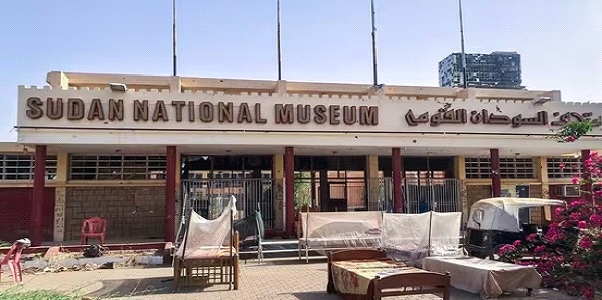

Khartoum (TIP): Rebel fighters in Sudan’s civil war have landed on a lucrative way to funding their brutal campaign: looting the country’s museums.
Historians and curators say the Rapid Support Forces that have been fighting government forces for the past three years are now targeting Sudan’s rich cultural history and selling it to the highest bidder in the illicit international art market. Across the country, their fighters have joined private looters in stripping museums of valuable artifacts chronicling the country’s history from the Stone Age to the rise of Islam.
What began in 2023 as a power struggle between the Sudanese Armed Forces (SAF) led by Abdel Fattah al-Burhan and the paramilitary Rapid Support Forces (RSF) commanded by Mohamed Hamdan Dagalo has now evolved into a complex war economy. Armed groups are competing not only for territorial control but also for access to resources that can sustain prolonged fighting. At the center of this war economy is Sudan’s gold sector. The country is among Africa’s leading gold producers, with significant deposits concentrated in Darfur and Kordofan.
Security experts say the RSF has consolidated control over several key mining areas, allowing it to generate independent revenue streams outside the state system. The gold is often smuggled through informal cross-border networks and eventually enters international markets, where its origins are difficult to trace.
“These revenues are critical,” a regional analyst said. “They allow armed groups to operate autonomously, procure weapons, and maintain loyalty within their ranks.”
In a troubling development, Sudan’s cultural heritage is also being targeted. Historians and curators report widespread looting of museums and archaeological sites, with valuable artifacts disappearing into illicit trafficking networks.
The National Museum of Sudan-home to thousands of artifacts spanning ancient Nubian civilizations to early Islamic history-has reportedly been among the institutions affected.
Experts allege that fighters linked to the RSF, along with organized looting networks, are stripping cultural sites and selling antiquities on the black market. The proceeds, they say, are being used to finance military operations.
The UNESCO has previously warned that trafficking of cultural property from conflict zones not only erases history but can also contribute to funding violence.
Land and Food Supplies Under Pressure
Control over agricultural land has also become a strategic objective. Sudan’s fertile ????? along the Nile are critical for food production, and their capture allows armed groups to exert economic and social control over local populations.
Fighting has disrupted farming cycles, destroyed infrastructure, and displaced millions, worsening an already severe humanitarian crisis.
Sudan’s geographic location has further elevated the stakes. The Red Sea port of Port Sudan has become a key logistics center for humanitarian aid, trade, and military supply chains.
Control over such routes offers both economic leverage and strategic advantage, making them prime targets in the ongoing conflict.


Be the first to comment