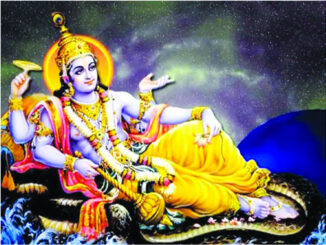
Yogini Ekadashi, one of the 24 revered Ekadashis in the Hindu lunar calendar, holds profound spiritual significance. Observed during the Krishna Paksha (waning phase of the moon) in the month of Ashadha (June-July), this Ekadashi is dedicated to Lord Vishnu and is particularly known for its power to absolve sins and diseases, especially those arising from karma related to harming others. The word Yogini signifies a spiritually empowered female adept or a seeker of union (yoga) with the divine, implying that this Ekadashi elevates one’s spiritual consciousness and aligns the practitioner with higher states of realization.
Scriptural Reference and Mythological Background
Yogini Ekadashi is glorified in the Brahma Vaivarta Purana, where Lord Krishna narrates its greatness to King Yudhishthira. According to the legend, there once lived a royal physician named Hemamali who served Kubera, the king of wealth and a devotee of Lord Shiva. Hemamali was responsible for bringing fresh flowers for Shiva’s worship but failed in his duty one day as he indulged in sensual pleasures with his wife.
As punishment for his negligence, Kubera cursed Hemamali with leprosy and banished him from his kingdom. Stricken with disease and misery, Hemamali wandered through forests until he met sage Markandeya. The compassionate sage advised him to observe Yogini Ekadashi with full devotion and sincerity. Hemamali followed the fast and was not only cured of his leprosy but also relieved of his past sins, eventually returning to a life of dignity and devotion.
Significance of Yogini Ekadashi
– Liberation from Past Sins
Yogini Ekadashi is believed to absolve even the gravest sins, particularly those related to harming others either physically, emotionally, or through negligence. The fast purifies the mind and body and brings spiritual liberation (moksha).
– Healing and Health Benefits
The legend’s emphasis on the cure of leprosy metaphorically points to the healing of both physical ailments and the toxicities of the mind-greed, lust, anger, and pride. Thus, Yogini Ekadashi is observed by devotees seeking freedom from chronic illness and spiritual stagnation.
– Karmic Redemption
The observance of this Ekadashi helps release accumulated negative karma and initiates the path of righteous living through sattvic (pure) practices and surrender to God.
– Spiritual Awakening and Yogic
Symbolism
The term “Yogini” resonates with the yogic path-where one seeks union with the divine through austerity, devotion, and mindfulness. Yogini Ekadashi is seen as a gateway to inner transformation and awakening of the higher self.
Rituals and Observance
Fasting (Vrata)
Devotees observe a strict fast on Yogini Ekadashi. There are different forms of fasting:
– Nirjala (without water): The most austere and rarely followed.
– Phalahar (fruit and milk): Most common and practical.
– Ekadashi Bhojan: A simple meal avoiding grains, beans, onions, garlic, and certain spices.
Worship of Lord Vishnu
Devotees perform puja with devotion to Lord Vishnu, reciting the Vishnu Sahasranama, Bhagavad Gita, and Ekadashi Vrat Katha. A sacred lamp (deepa) is lit, and offerings of tulsi leaves, fruits, and incense are made.
Night Vigil (Jagran)
Devotees often stay awake through the night chanting bhajans, meditating, and engaging in spiritual discussions.
Charity and Kind Acts
Feeding the poor, helping the needy, and donating clothes or food is considered highly auspicious on this day, aligning with the Ekadashi’s core theme of selflessness and detachment.
Parana (Breaking the Fast)
The fast is broken the next day during the Dwadashi tithi after proper rituals. It is important not to break the fast during the Ekadashi tithi as it negates the benefits.
Symbolism and Deeper Meaning
– Yogini Ekadashi as the Destroyer of Inner Disease: The leprosy of Hemamali is symbolic of the inner disease of ignorance (avidya) and indulgence (moha). Observing this Ekadashi helps cleanse these tendencies.
– Union of Bhakti and Discipline: The Ekadashi marries devotion (bhakti) with restraint (tapas), leading to a balanced spiritual life.
– Feminine Energy and Empowerment: The name “Yogini” subtly connects the energy of this day with the shakti (divine feminine), and the potential for spiritual empowerment through discipline and grace.
Regional Observances
– In North India, especially among Vaishnavas, the day is observed with fasting and night-long kirtans.
– In South India, temples of Vishnu and Krishna conduct special abhishekam and archana.
– In parts of Nepal, devotees consider this Ekadashi sacred for healing and family welfare.
– In ISKCON communities, Yogini Ekadashi is observed with collective prayers, fasting, and discourses.
Scientific and Health Perspective
Modern science has begun to understand the physiological benefits of intermittent fasting. On an Ekadashi day:
– The lunar influence is believed to be strong on body fluids.
– Fasting helps detoxify the body and promotes gut health.
– It instills mental clarity, emotional regulation, and spiritual receptivity.
Yogini Ekadashi stands as a beacon of redemption and renewal. It is not just a ritualistic observance but a call to purify the self-body, mind, and spirit. By fasting with faith, engaging in introspection, and immersing in divine remembrance, devotees unlock the subtle doors to inner peace, healing, and spiritual growth. In the chaos of modern life, such sacred pauses offer not just divine grace but also psychological rejuvenation and karmic cleansing.
Tag: Yogini Ekadashi
-

Yogini Ekadashi: A sacred observance of devotion, detachment and redemption
-

Yogini Ekadashi
Ekadashi fasting holds an important place in Hinduism. Ekadashi of Krishna Paksha of Ashadha month is called Yogini Ekadashi. In this fast, the idol of Lord Narayana is bathed in the Ganges water and offered prasad, aarti is offered with flowers and lamps. In Yogini Ekadashi fast, donations should be given to poor Brahmins. By observing this fast, the sin incurred by cutting the Peepal tree is destroyed and the heaven is attained.
Importance
On the day of Yogini Ekadashi, Shri Hari or Lord Narayan, one of Lord Vishnu’s other names, is worshipped. The day is significant for devotees who believe that the Yogini Ekadashi Vrat or fast gives them prosperity and joy in their lives. Since this fast occurs only once a year, those who observe it gain virtues equivalent to feeding 88 thousand Brahmins. According to the Padma Purana, everyone who religiously observes the Yogini Ekadashi rituals experiences meaningful life changes.
Yogini Ekadashi Vrat Katha
There are two Yogini Ekadashi Stories. One is Yudhishthir, the Pandavas eldest son, and the other is Hem Mali, the gardener of Kubera, the Lord of Wealth.
Lord Krishna had also counselled his cousin Yudhishthira, the eldest Pandava, on the significance of the Yogini Ekadashi vrat. Lord Krishna, Lord Vishnu’s Avatar on Earth, had stated: “Oh, king, I will tell you about the best of all fasting days, the Ekadasi, which occurs during the dark part of the month of Ashadha. It is known as Yogini Ekadasi, and it eliminates all types of immoral responses and grants ultimate salvation.
This Ekadasi carries people who sink in the vast ocean of material life and transports you to the shore of the spiritual realm. The day is the core of all holy fasting days in all three worlds. Fasting on Yogini Ekadashi is really strong and fortunate. King Kuber was a devout Shiva devotee who offered flowers to the Lord on a daily basis. A Yaksha named Hem Mali worked as a gardener. He will get Kuber flowers from Mansarovar on a daily basis. However, he did receive the flowers but neglected to send them to Kuber because he was too preoccupied with his lovely wife. As a result, the king sent his servant to ascertain the true cause of Hem’s carelessness.
When Kuber found out, he became enraged and cursed Hem with the deadly disease leprosy and forced him to be divorced from his wife. Hem had left the palace and was suffering greatly as a result of the illness.
The hem came across the ashram of Rishi Markandeya after roaming for several years in the jungle, and after hearing his tale, he advised him to observe Yogini Ekadashi Vrat.
Hem Mali observed the fast with zeal and prayed for forgiveness to Lord Vishnu. As a consequence of the Lord’s acceptance of his prayers, Hem was cleansed of all his sins. He was no longer afflicted and was reunited with his loving wife.
Similarly, on Yogini Ekadashi, all devotees who observe this fast and pray to Lord Vishnu with pure thoughts and feelings will be liberated from all problems and health-related concerns.
On this day, you may offer prayers to the Lord of the Lotus Feet by reciting Vishnu Mantras or Vishnu Sahasranamam. Fasting on Yogini Ekadashi is said to be equivalent to feeding 88 Brahmins.
The best day to get rid of worrying health problems is Yogini Ekadashi. Learn the proper Puja rituals method from our experts to obtain Lord Vishnu’s divine blessings.
Rituals
Yogini Ekadashi devotees or observers are expected to rise early and take a holy bath before beginning the ceremony’s rituals.
When conducting all of the rituals, it is important to have complete commitment and devotion. Yogini Ekadashi Vrat must be observed by devotees.Devotees must worship and pray to the goddess, as well as bring incense sticks, candles, and tulsi leaves. To complete the fast, you must recite the tale of Yogini Ekadashi. The deity’s aarti must be done, and then holy food (prasad) must be distributed to everyone.
Devotees must attend Lord Vishnu’s temple during the Yogini Ekadashi festival to receive the deity’s divine blessings. All Yogini Ekadashi Fast rituals begin on the eve of Dashami (tenth day).
On this particular day, observers are expected to eat a single Satvik meal before the sunset date. The Vrat will last until the end of the Ekadashi tithi.
Nighttime sleep is not permitted for the observers. To appease Lord Vishnu, they must spend their whole day reciting Mantras. The recitation of the ‘Vishnu Sahasranama’ is considered extremely auspicious. Devotees worship Lord Vishnu with great reverence on this day.
On the eve of Yogini Ekadashi, doing charity is thought to be extremely rewarding. The observer should help the Brahmins by donating food, clothing, and funds.Yogini Ekadashi fast is considered the most important Ekadashi fast by Hindus. Yogini Ekadashi fasting begins on the night of Dashami (the tenth day) of the lunar month’s dark half. Here are some of the advantages of fasting on this day.
This fasting cycle is very beneficial for getting rid of different illnesses and diseases.It aids devotees in attaining salvation from sins and evil deeds.Fasting during this time frame heightens moral consciousness.
It strengthens trust and loyalty to Lord Vishnu, who fulfils all wishes and provides his devotees with a luxurious life. You can also perform an online Vishnu Puja for that.
On this day, penance leads to the forgiveness of sins and the clearing of the road to Moksha.
Yogini Ekadashi has a strong effect on one’s life if the fast and puja is followed strictly. The fast like other Ekadashi fasts begin from sunrise and continues until the next day sunrise. The person observing the vrat should not consume any kind of cereal or grain like wheat, barley, or rice.
The food eaten should be made separately without salt. He/she should wake up before sunrise of the day of yogini Ekadashi and have a bath. It is also important that one remains clean throughout the day and chant Lord Vishnu chants. As per the fast demands, the devotee should remain awake during the night and pray for good health to Lord Vishnu. -

Yogini Ekadashi
Ekadashi fasting holds an important place in Hinduism. Ekadashi of Krishna Paksha of Ashadha month is called Yogini Ekadashi. In this fast, the idol of Lord Narayana is bathed in the Ganges water and offered prasad, aarti is offered with flowers and lamps. In Yogini Ekadashi fast, donations should be given to poor Brahmins. By observing this fast, the sin incurred by cutting the Peepal tree is destroyed and the heaven is attained. Yogini Ekadashi comes after Nirjala Ekadashi (Jyeshta shukla paksha ekadashi) and before Dev Shayini Ekadashi (Ashadha shukla paksha). Yogini ekadashi fast can be observed by anyone, young or old, and is for individuals who want to avoid any kind of disease or health problems. This fast is especially important to be observed by people who are suffering from any skin related problems including leprosy. This vrat, like many other Ekadashi fasts, is quite rewarding and removes all past sins and bad deeds and provides good health. This fast should be performed by both males and females. The idol of Lord Narayana should be bathed in the Ganges water. Worship and aarti should be done with flowers, dhoop and lamps. One must worship the Peepal tree on this day, because there is a habitat of Narayan in the Peepal tree.
Story
As per the legends, the story of Yogini Ekadashi states that once there was a gardener named Hemamali who lived with his beautiful wife Visalakshi. Hemamali used to serve his duties in the kingdom of Alakapuri whose King was Kuvera.
The King was a firm devotee of deity Shiva and used to worship and offer prayers to the deity on a daily basis. For the King’s prayers for Lord Shiva. , the gardener used to collect fresh flowers from the Mansarovar Lake and offer them to him.
Hemamali was too much attracted towards the beauty of Visalakshi and one day he neglected his duties and stayed with his wife. King Kuvera after waiting for a long time sent his guards to find out the reason behind the absence of Hemamali.
The guards informed the King that Hemamali was busy spending time with his wife and thus neglected his duties. The King in anger summoned Hemamali to his court and cursed him to get affected with leprosy as well as to be separated from his wife.
Hemamali had to left Alakapuri. He was also affected by leprosy and used to wander in the forest for a long time. One day while wandering, Hemamali met Sage Markandeya. After listening to the story of Hemamali, the sage suggested him to observe a fast of Yogini Ekadashi and worship Lord Vishnu for forgiveness.
As suggested by the Sage, Hemamali worshipped and offer prayers to Lord Vishnu and also observed a fast of Yogini Ekadashi with utmost devotion and dedication. As a result, Hemamali was relieved from the curse and attained his natural appearance and healthy body back. He was also united with his wife Visalakshi and lived a happy life.
Rituals of the Yogini Ekadashi vrat
The puja and fast of Yogini Ekadashi starts from dashami tithi (the tenth day of the Hindu calendar) until dwadashi tithi (the twelfth day of the Hindu calendar). Those observing this vrat should completely give up tamasic food and adopt a satvik diet. He or she should also abstain from all physical pleasures. The devotee should think positive and pray for well-being to Lord Vishnu while offering flowers and sweets to the picture or idol of the diety.
Other puja items like incense stick, deepak (lamp), water container and bell should be kept in a plate to offer to the God. Tulsi leaves should be bought on the previous day, so that one does not have to pluck it on the day of Ekadashi. All the devotees offer it to Lord Vishnu. It is also considered auspicious to workship Peepal tree on this day. Other family members can also get involved in the puja even if they are not fasting and sing the bhajans and aarti loudly for family health and happiness. After the puja is over Prasad is disturbed to everyone and it should consist of either sweets or fruits.
The observer of the fast has to remember to eat one or maximum two meals without grains and salt. He or she must avoid drinking water too frequently. The next day, during sunrise the devotee offers prayer to the Lord, and lit lamp, along with distributing prasad (sweets), which completes his/her fast.
Importance of Yogini Ekadashi 2022
Yogini Ekadashi like other Ekadashi fasts has a great significance and is observed by many Hindus all over the world. It is mentioned in the Padma Puran that whoever follows the rituals of the Yogini Ekadashi is able to achieve good health, becomes prosperous, and in return leads a happy life. This fast comes once every year and its effect is as strong as serving and feeding around 80,000 brahmins. Yogini Ekadashi has a strong effect on one’s life if the fast and puja is followed strictly. The fast like other Ekadashi fasts begin from sunrise and continues until the next day sunrise. The person observing the vrat should not consume any kind of cereal or grain like wheat, barley, or rice. The food eaten should be made separately without salt. He/she should wake up before sunrise of the day of yogini Ekadashi and have a bath. It is also important that one remains clean throughout the day and chant Lord Vishnu chants. As per the fast demands, the devotee should remain awake during the night and pray for good health to Lord Vishnu.