
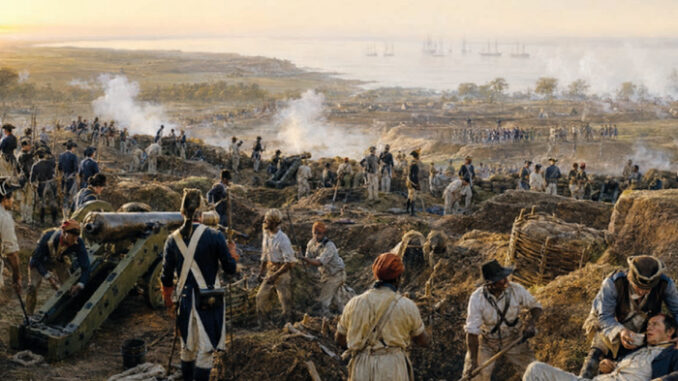

I n 1781, British General Charles Cornwallis established a base at Yorktown, Virginia. Washington and the French commander Rochambeau moved their armies south from New York. A French fleet under Admiral de Grasse defeated a British relief effort in the Chesapeake, trapping Cornwallis. American and French forces constructed siege lines and bombarded the British positions. Cornwallis surrendered on October 19, 1781. Yorktown ended major combat in North America, though war continued elsewhere.
Britain’s political will to recover the colonies collapsed. Peace negotiations produced the Treaty of Paris in 1783, recognizing American independence and granting the United States territory extending to the Mississippi River, subject to boundaries and claims that ignored Indigenous sovereignty. The war cost lives, homes, fortunes and communities. Soldiers returned to uncertain pay; Loyalists departed or rebuilt; enslaved people faced freedom, re-enslavement or continued bondage; Native nations confronted accelerated expansion. The new United States had secured sovereignty-but had not resolved the meaning or reach of the liberty it celebrated.


Be the first to comment