Month: February 2014

  • Interim Budget 2014: Cars, consumer durables to be cheaper

    Interim Budget 2014: Cars, consumer durables to be cheaper

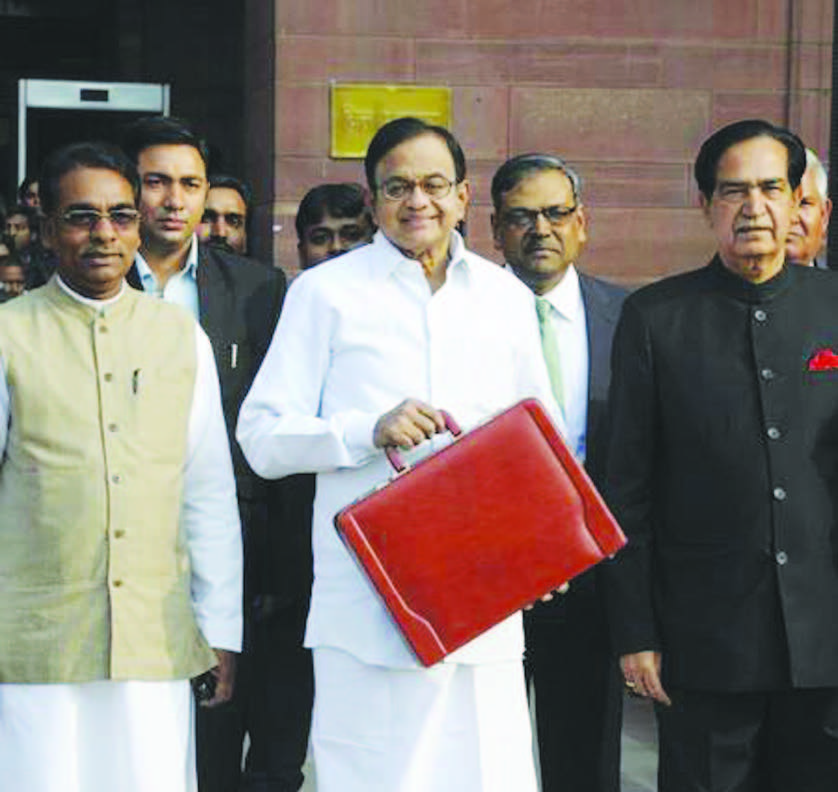
    NEW DELHI (TIP): Financial markets went in for the interim budget with little expectation, and rightly so, as finance minister P. Chidambaram was not expected to tinker with the existing tax laws. But he still had room to manoeuvre and propose changes that will have an impact on your money, well, for at least three months of the next financial year. The markets were looking for the government to contain its deficit under the budgeted target of 4.8% of the gross domestic product (GDP) for the year.

    The government managed to restrict the fiscal deficit to 4.6% of the GDP, and now expects it to come down further to 4.1% in the next fiscal. Therefore, the two very important indicators—the fiscal deficit and the current account deficit which were worrying the financial markets and individuals alike—are now in a much better shape than a year ago, though the improvement under both the heads can be debated. Beyond this critical number of fiscal deficit, there was not much that markets were looking for.

    25
    As a result, the BSE S&P Sensex closed with a modest gain of 0.48%. However, there were some surprises for individuals. If you plan to buy a new car, there is good news as excise in this segment has been reduced, and so they are likely to be cheaper. There is also relief in store for those struggling with the burden of education loans, taken up to 31 March 2009. We take a close look at some of the proposals that will have an impact on your pocket.

    Relief on student loans
    The budget has extended the education loan subsidy scheme with some significant benefits. The finance minister has proposed a moratorium wherein you will not have to pay the interest on your education loan taken before 31 March 2009. The government will shoulder the burden of the outstanding interest portion as of 31 December 2013. From January 2014 onwards, you pay. Given that these loans were taken about four-and-a-half years back, borrowers are likely to have finished their education and moved on to jobs or are at least looking for one.

    The difficult economic scenario in the country, with the GDP growth having fallen from 6.7% in FY09 to a budget estimate of 4.9% for FY14, jobs are not that easy to come by. Says A. Krishna Kumar, managing director and group executive (national banking), State Bank of India (SBI): “This is definitely a good move and will ease pressure on those who are still looking for jobs.” It is too early for banks to know exactly how much this liability is. SBI’s Kumar says, “We are yet to calculate the exact impact on our outstanding education loans.” The government has given an estimated benefit of around Rs.2,600 crore to about 900,000 borrowers. How does this work for you? We take an example using a calculator on Punjab National Bank’s website. Let’s assume, you took an education loan of Rs.10 lakh in April 2007 for a two-year course.

    The interest rate was 12% per annum for 10 years with no processing fees. Your equated monthly instalment (EMI) per month was likely around Rs.14,350. Let’s say, you got a job after two years and started to repay the loan. But in December 2012, you lost your job and have not been able to pay the EMI since. In this case (assuming that the bank hasn’t invoked the guarantee or declared the loan as a bad debt), your outstanding EMIs for 12 months (as on December 2013) would be about Rs.1,72,200. Of this, the interest would be Rs.63,710. As the proposal suggests, the government will pay this outstanding interest on your behalf.

    You will, however, have to start paying from January 2014. More details are awaited. Also, the relief is only for the outstanding interest and not the principal. Your final benefit will depend on the terms of the loan— when you took the loan, the interest rate, the period for which you haven’t paid, and others. It would be pre-emptive to say that this move will result in borrowers becoming complacent and the unpaid dues in this segment going up. Moreover, these loans are not a big portion of banking credit.

    Cheaper wheels
    Another piece of good news came by the way of the proposal to reduce the excise duty for the auto sector till 30 June. The excise duty has been reduced from 12% to 8% on motorcycles, scooters, small cars and commercial vehicles—such as Maruti Suzuki India Ltd’s Alto, Hyundai Motor India Ltd’s i10, Tata Motors Ltd’s Indica, Bajaj Auto Ltd’s Pulsar and TVS Motor Co. Ltd’s Wego.

    For large and mid segment cars, the reduction is from 27% or 24% to 24% or 20%; and for sports utility vehicles (SUVs), from 30% to 24%. According to Prabhudas Lilladher Pvt. Ltd, the benefit is expected to be Rs.1,500-2,000 for two-wheelers and Rs.15,000-20,000 for small cars.

    SUVs should be cheaper by Rs.48,000-60,000, but “given the current slowdown, the automakers may not be able to pass on the entire benefits for SUVs”, says Surjit Arora, research analystinstitutional equities, Prabhudas Lilladher. This may generate more demand and improve sales. Yaresh Kothari, research analyst-automobiles, Angel Broking Ltd, says, “It is a positive announcement for the sector. The cut in excise duty will be passed on to the consumer. Historically, they (auto manufacturers) have always done it. The benefit will differ based on the price of the vehicle.”

    Says Suresh Sadagopan, a Mumbai-based financial planner: “It’s a one-time kind of savings possibility in the short term. If you plan to buy, try and cash in on this benefit before 30 June.” Consumer goods For the mobile handset segment, the finance minister announced that excise duty for all categories of handsets will now be 6% with central value-added tax (Cenvat) credit or 1% without it. Last year, the excise on mobile phones priced above Rs.2,000 had been raised to 6% from 1%, upsetting the industry as the cost of smartphones went up. The reduced excise, however, may not mean cheaper phones.

    “This will not have any significant impact on prices as it will reduce costs marginally given the competition from Chinese manufacturers and the grey market,” says Hemant Joshi, partner, Deloitte Haskins and Sells. Cenvat credit essentially means that a manufacturer can set off excise or service tax paid on the input cost—for example, of raw materials— against its total excise liability. “This may give an edge to domestic manufactures as importers will continue to pay 6%,” says Bipin Sapra, tax partner, EY.

    Two domestic phone manufacturers—Micromax and Karbonn—were the third and fourth largest mobile handset sellers in India with 10.1% and 9.1% market shares, respectively, at the end of the December-2013 quarter, according to International Data Corp. The leader is Samsung, followed by Nokia. The finance minister also proposed to reduce the excise duty on capital goods and consumer nondurables from 12% to 10% for items falling under chapters 84 and 85 of the Central Excise Tariff Act.

    “What this means is that prices of some products such as basic machinery and electronic goods will be affected,” says Sapra. Prices of items such as washing machines, vacuum cleaners, computers, transistors, batteries, software, basic landline telephones, computer disks, knitting machines, etc., may go down if manufacturers choose to pass on the benefit. Super-rich surcharge The surcharge on the super-rich remains. Last year, a 10% surcharge was applied to those with taxable income above Rs.1 crore. This onetime move was supposed to be only for the assessment year 2014-2015, and was in addition to the education cess of 3%.

    The surcharge and income tax rates will continue for the purpose of deduction of tax at source from salaries during the financial year 2014-15, and for computing the “advance tax” payable during that financial year on current incomes. “Practically, the income tax rates, including surcharge, will apply for tax withholding or payment of advance tax. Salaried individuals who pay taxes every month will have to pay this surcharge till the time the new government drops it.

    But non-salaried individuals, who pay advance tax only in September, may not have to pay the additional surcharge at all if the new government drops it,” says Kuldip Kumar, executive director, PwC India. According to the Finance Bill, the total amount payable as income tax and surcharge shall not exceed the total amount payable as income tax on a total income of Rs.1 crore by more than the amount of income that exceeds Rs.1 crore. Here’s an example.

    The tax liability on a taxable income of Rs.1 crore is around Rs.29 lakh. So, if the income is even Rs.10 more than Rs.1 crore, the tax liability will go up by only Rs.10 and not Rs.2.9 lakh. Overall, while the finance minister managed to deliver on his promise of containing expenditure, the reduction in excise duty on various items and relief on education loans will also benefit a key constituent in elections—the middle class. The excise relief will lapse if the new government decides against it. Investors and consumers now have to wait till the new government presents its budget for the full year and give a fresh direction to economic policy and tax laws.

  • Dallas wants to host 2016 RNC

    Dallas wants to host 2016 RNC

    DALLAS, TX (TIP): Republican leaders want to bring the 2016 Republican National Convention to Dallas. The city would need to raise at least $50 million to host the event. At least five other cities are vying for the chance to host.

    The four-day event would be held at the American Airlines Center. American Airlines Center (AAC) is a multi-purpose arena, located in the Victory Park neighborhood, near downtown Dallas, Texas.

    The venue serves as the home to the Dallas Mavericks of the National Basketball Association, and the Dallas Stars of the National Hockey League. The arena is also used for concerts and other live entertainment. It opened in 2001 at a cost of $420 million.Dallas last hosted the convention in 1984, nominating President Ronald Reagan for a second term.

  • 101-year-old man to contest US Congressional polls

    101-year-old man to contest US Congressional polls

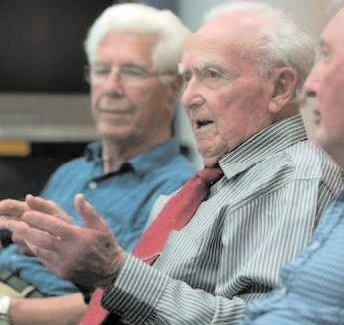
    HOUSTON (TIP): Better late than never! A 101-year-old man in the US has launched a bid to enter the House of Representatives and contest the Congressional polls. Joe Newman from Sarasota, Florida, will compete for Florida’s 16th Congressional District.

    After living for 101-years, Newman has seen what this country is capable of and he believes Congress can do much better, the WFLA-TV reported. He will be running as a write-in candidate for a Congressional seat that covers Sarasota and Manatee Counties during the election later this year. It can be said that experience is the greatest teacher and Newman has plenty he wants to share.

    “You learn through life you have certain responsibilities. And if you don’t fulfil them, how can you look in the mirror?” Newman was quoted as saying. He has seen this country go through some challenges, such as the Great Depression when he was 16-years old. “If people are saying, who is this fool at 101 and running? Call me a fool.

    I’m sorry, but I’ve got to get out and convince John and convince Jim, hey think! What is the best thing our society can do and what is the responsibility of our society?” he said. “My hope is that we get a chance to speak out and make people reflect on what you want from your society,” he added. Newman’s mother ran a grocery store in their Indiana home and she used food to help pay off the mortgage.

    Later, after graduating from the University of Notre Dame, Newman got a job spreading awareness about a new federal program called Social Security. “That was our job, to sell them why a program like Social Security is essential to the economy and to society,” Newman said. Now Newman has a new message to share; he feels the government should be focused on improving society and not catering to special interests. So he is running for Congress.

  • Kamala Harris seeks re-election as California attorney general

    Kamala Harris seeks re-election as California attorney general

    WASHINGTON (TIP): California’s Indian-American Attorney General Kamala Harris, the first woman as well as the first African American and South Asian to hold the job, has filed her papers for re-election. “So far, so good,” said Harris,who is so far running unopposed, after filing the papers with San Francisco’s Department of Elections last week.

    “The deadline is March 7, so we’ll see,” she was quoted as saying by local San Francisco Appeal. Harris, 48, daughter of an Indian mother and an African-American father, previously served two terms as San Francisco’s district attorney before winning her current seat in 2010. As of Jan 31, Harris had reported more than $3.1 million in campaign funds – $2.5 million of which was raised in 2013, according to the California Secretary of State’s office.

    Harris said her strong fundraising totals reflect that people support the work she has done over the past four years. She said she hopes to continue work in areas including human trafficking, privacy rights, homeowner foreclosure relief and criminal justice reforms aimed at reducing recidivism among criminal offenders.

    “I love this job,” she added. She said she could not comment on measures that could appear on the ballot this year that would decriminalize recreational marijuana use because her office is required to write summaries for the ballot initiatives. A career prosecutor, Harris began her career in the Alameda County District Attorney’s Office,where she specialized in prosecuting child sexual assault cases.

  • Whistleblower fired from US nuclear site for raising safety concerns

    Whistleblower fired from US nuclear site for raising safety concerns

    SPOKANE (TIP)): A whistleblower who raised safety concerns at the most polluted nuclear weapons production site in the US was fired on Tuesday from her job at the Hanford Nuclear Reservation.

    Donna Busche’s complaints are part of a string of whistleblower and other claims related to the design and safety of an unfinished waste treatment plant at Hanford, created by the federal government in the 1940s as part of the top-secret project to build the atomic bomb. Today, it is the nation’s most contaminated nuclear site, where cleanup costs about $2 billion each year.

    Busche, 50, said she was called into the office Tuesday morning and told she was being fired for cause. “I turned in my key and turned in my badge and left the building,” Busche told Associated Press in a telephone interview from Richland, where Hanford is located.

    Busche worked for URS Corp, which is helping build a $12 billion plant to turn Hanford’s most dangerous wastes into glass. Construction of the plant has been halted over safety concerns. Busche has filed complaints with the federal government, alleging she has suffered retaliation since filing her original safety complaint in 2011.

  • Two US security officers found dead in Seychelles

    Two US security officers found dead in Seychelles

    NAIROBI, KENYA (TIP): Two American security officers have been found dead on a ship made famous when it was hijacked by Somali pirates, according to a statement on Wednesday by Seychelles police.

    The two Americans, Jeffrey Reynolds and Mark Kennedy, both 44, were found dead Tuesday in a cabin on the Maersk Alabama, the ship hijacked by pirates in 2009, an event dramatized in the movie “Captain Phillips” starring Tom Hanks, according to a statement issued by police in the Indian Ocean island nation of Seychelles.

    The police gave no cause of death but said a post mortem has been scheduled. The US Coast Guard stated from its headquarters in Washington that it is also investigating the deaths.

  • Sikh American Drives Away with Victory in Minnesota

    Sikh American Drives Away with Victory in Minnesota

    MINNESOTA (TIP): In a significant win for the Sikh American community in Minnesota, Jatinder Singh of Blaine, Minnesota and SALDEF succeeded in challenging the Minnesota Department of Public Safety, Driver and Vehicle Services’ (DVS) driver’s license policy.

    The victory ensures that he and other Sikh Americans in Minnesota can wear their turbans in driver’s license photos. Last month, Singh contacted SALDEF after he was told his turban was not allowed in his driver’s license photo, effectively barring him from renewing his license. SALDEF immediately contacted DVS to address the matter.

    In direct discussions, SALDEF pointed DVS officials to the department’s explicit policy on religious accommodation. In fact, the department’s own guidance material shows examples of compliant photographs, including a full-face photo of a Sikh American man wearing a turban. Following SALDEF’s intervention, Jatinder Singh was able to successfully obtain his license with his articles of faith intact.

    DVS Director, Patricia McCormick apologized for the incident and reported, “As a result of your letter and the agent’s actions, the department is working to remind agents and drivers license examination staff of the process for renewals specifically related to accommodating the Sikh turban.” She pledged to work with SALDEF on religious accommodation training of DVS staff as needed.

    “We commend Director McCormack and the Minnesota DVS for quickly correcting this problem so Jatinder Singh could get his driver’s license,” said Jasjit Singh, Executive Director of SALDEF. “We also commend Jatinder Singh for identifying an opportunity to make change, for the benefit of Sikh Americans in Minnesota and elsewhere, who now see a shining example of a fair policy properly enforced.” SALDEF has expressed gratitude for local community member support from Jasjit Ahluwalia, Harsohena Kaur, and Ricky Singh.

  • Barack Obama says Ukraine truce welcome ‘if implemented’

    Barack Obama says Ukraine truce welcome ‘if implemented’

    TOLUCA, Mexico: US President Barack Obama and Canadian Prime Minister Stephen Harper said on Wednesday that news of a truce between Ukraine’s government and opposition would be welcome if it leads to dialogue.

    The two leaders “strongly condemned” the violence in Ukraine during a North American summit in Toluca, Mexico, according to the White House. “The leaders noted reports of a truce between the government and the opposition which, if implemented, would be a welcome step forward in pursuing that meaningful dialogue,” a statement added.

    “They agreed they will continue to monitor the situation closely to ensure that actions mirror words,” it said in a readout of the leaders’ 30-minute meeting. Ukrainian President Viktor Yanukovych announced the start of direct talks with the opposition after receiving three top anti-government lawmakers in a presidential office less than a block from the site of the unrest.

    The embattled leader was under mounting pressures after clashes between police and anti-government protesters left at least 26 people dead in Kiev on Tuesday. The White House warned that it was considering possible sanctions against those behind the unrest. The 28-nation European Union will hold emergency talks Thursday to mull sanctions in the wake of clashes between police and anti-government protesters in Kiev that left at least 26 people dead.

    The White House said Obama and Harper “both resolved to work closely with European allies on options for additional measures, including measures to hold those responsible for violence accountable.” Obama and Harper said the Ukrainian military should show restraint and refrain from getting involved in issues that should be resolved by civilians.

  • Missing SIU student from Morton Grove found dead

    Missing SIU student from Morton Grove found dead

    CHICAGO (TIP): The search for a missing Southern Illinois University student from suburban Morton Grove has ended in heartbreak for family and friends after police said they found him dead in a wooded area Tuesday, February 18 nearly a week after he was last seen.

    Police in downstate Carbondale said they found the body of Pravin Varughese at about 9:45 a.m. He had last been seen around 11 p.m. Feb. 12 leaving a party about three miles from where his body was discovered.

  • India and Pakistan important allies in Afghanistan: US

    India and Pakistan important allies in Afghanistan: US

    WASHINGTON (TIP): The United States has said that both India and Pakistan are important allies in its endeavour to bring peace and stability in strife-torn Afghanistan.

    “We appreciate Pakistan’s efforts to further Afghan-led reconciliation. Pakistan is obviously an important partner in supporting a secure and stable Afghanistan, which is vital to the security of the region,” State Department deputy spokesperson Marie Harf told reporters.

    “But I would say the same thing about India that India is also an important partner in supporting a stable and secure region, including in Afghanistan,” Harf said. She said that the US would continue to work with the two South Asian neighbours on security issues in Afghanistan, particularly going longer into 2014.

    Asked about the security situation in Pakistan and the terrorist threat there, Harf said both the US and the Pakistan governments are concerned about it. “Because its citizens, in fact, have been affected by it more than anyone. We have a constant dialogue with the Pakistani government on counter-terrorism efforts and building their capacity to fight this threat,” she said.

  • 3-year-old girl with IQ of 160 enters Mensa

    3-year-old girl with IQ of 160 enters Mensa

    LOS ANGELES (TIP): A three-year-old US girl has entered the geniuses’ club Mensa after scoring an incredible 160 in the IQ test, making her as intelligent as Albert Einstein.

    Alexis Martin from Arizona, who can label all the continents and countries on a map, is the youngest person from the state to enter Mensa.

    Mensa only accepts people with IQs in the top 2%. Martin’s parents noticed her abilities when she exactly recited the bedtime story from the night before. Alexis is also fluent in Spanish, which she learnt using an app. Although Einstein never took an IQ test, experts say he had an IQ of around 160.

  • Nun, 84, gets 3 years in jail for N-protest

    Nun, 84, gets 3 years in jail for N-protest

    KONXVILLE (TENNESSEE) (TIP): An 84-year-old nun was sentenced on Tuesday to nearly three years in prison for breaking into a US nuclear weapons complex and defacing a bunker holding bomb-grade uranium, a demonstration that exposed serious security flaws.

    Two other activists who broke into the facility with the nun, Megan Rice, were sentenced to over five years in prison, in part, because they had much longer criminal histories of mostly nonviolent civil disobedience.

  • Musharraf appears before court in treason case

    Musharraf appears before court in treason case

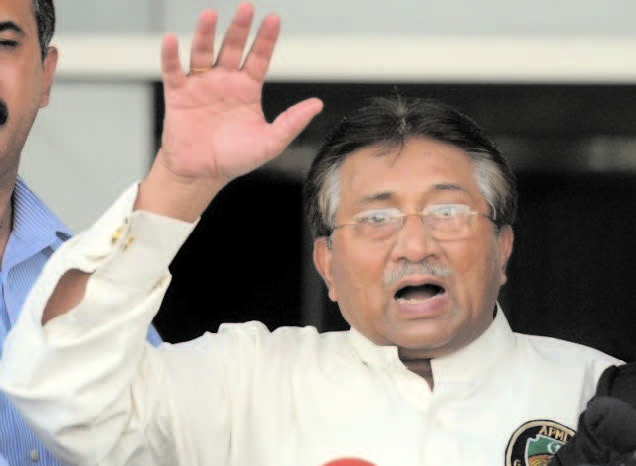
    ISLAMABAD (TIP): Ex-Pakistan president Pervez Musharraf on Tuesday appeared before a special court constituted to hear the treason case against him for the first time since it was constituted late last year.

    He had repeatedly missed hearings citing security and health reasons since December 24. Musharraf was widely expected to be indicted. Instead, justice Faisal Arab-led three-member bench issued a short order stating he would face indictment upon his second appearance before the court. “He would soon be ordered to appear in court again,” the order said.

    The ex-army chief’s lawyers argued their client should not be charged until the legality of the special court to hear the case is decided. “A decision about whether Musharraf should be tried by a military or a civilian court will be made on February 21,” said Ahmed Raza Kasuri, one of Musharraf’s lawyers.

    Earlier, the 70-year-old ex-president was brought to the court from a military hospital in Rawalpindi in a heavilyprotected convoy. He sat in witness box and stood briefly when addressed by the judge. But Musharraf did not speak. When Justice Arab asked him how he was feeling, he replied with a smile on his face that he was “good”.

    He remained in the court for 20 minutes and was taken back to the hospital, where he was admitted on January 3 after complaining of chest pain while traveling to the court for hearing. The trial against Musharraf is related to his suspension, abrogation and subversion of the constitution after imposition of emergency rule in November 2007.

    He is Pakistan’s first military ruler facing treason charges in a civilian court. The conviction in the case carries a possible death sentence or life imprisonment. Since his return from self-imposed exile in March 2013, Musharraf has faced several other criminal cases dating back to his days in office.

  • Nepal plane crash kills 18 people

    Nepal plane crash kills 18 people

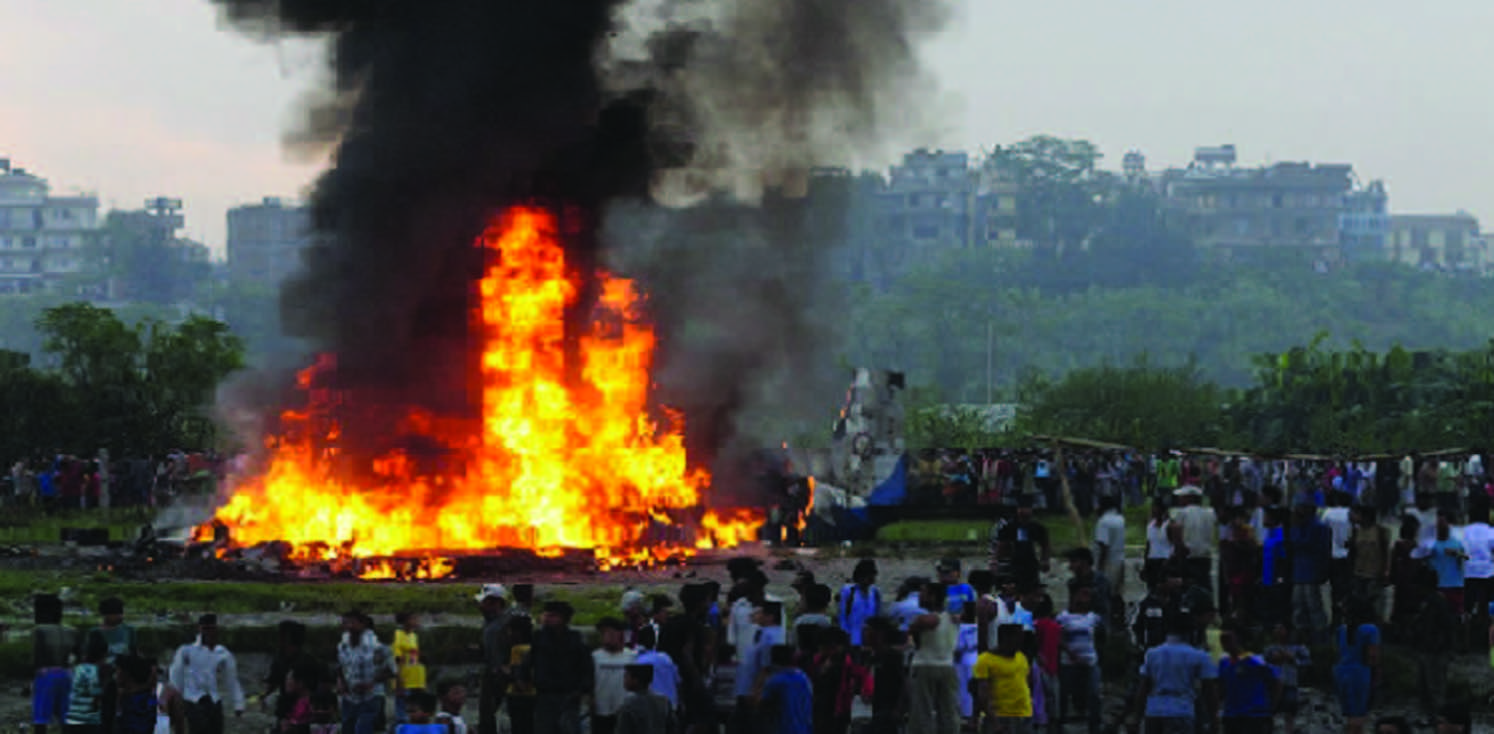
    KATHMANDU (TIP): All the 18 people on board a missing Nepalese aircraft have been found dead in the remote mountain area on Monday. The incident serves as a reminder of the poor aviation safety record in the country.

    The 40-year-old Twin Otter aircraft of the state-owned Nepal Airlines Corporation went missing on Sunday afternoon while flying from the tourist town of Pokhara to remote Jumla in western Nepal in poor weather conditions. Poor weather conditions obstructed search efforts on Sunday.

    The wreckage of the plane was found in a highland in Arghakanchi district about 350 kilometres west of Kathmandu and the bodies of the dead — some of them in unrecognizable condition and in pieces — after being alerted of the location by a mobile phone signal. Although there were no aircraft accidents in 2013, there have been two fatal ones each in 2010, 2011 and 2012.

    The government is expected form an investigation committee to find the cause of the accident, but it seems that the aircraft hit a mountain because visibility was poor and it was snowing, according to Bimlesh Karna, deputy director of the Civil Aviation Authority of Nepal.

    The plane had left Pokhara, about 200 kilometres west of Kathmandu, at 12.43pm on Sunday and was expected to land in Jumla, about 600 kilometres northwest of Kathmandu, an hour later. But it lost contact half an hour later, Karna said. About 150 police, army and paramilitary personnel and helicopters had been deployed to look for the aircraft from Sunday afternoon. The bodies of the dead have been brought to Kathmandu.

  • Obama becomes the unwitting face of fake Viagra in Pakistan

    Obama becomes the unwitting face of fake Viagra in Pakistan

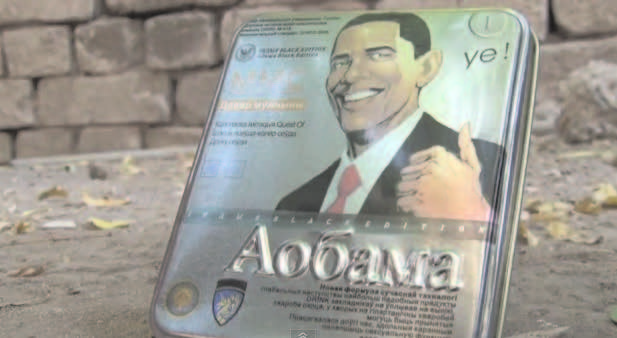
    ISLAMABAD (TIP)Barack Obama has unwittingly become the face of contraband Viagra, which is currently seeing booming sales in conservative northern Pakistan.

    A Peshawar market has pills and gels available emblazoned with the US president’s image that promise to boost libido and sexual function, according to news agency Agence France Presse. Four of the fake Viagra pills cost $1 and sales are on the up, despite being banned in Pakistan.

    The drug is instead smuggled in from Afghanistan and is sold in pharmacies. Although some versions of the contraband drug are simple copies, others are made from unknown chemicals and can produce potentially harmful side effects. The use of the drug has become increasingly popular among the younger generations – or the people who would not typically need to use it.

    Some users have reported side effects that doctors in the area have been unqualified to treat. Afghanistan’s close proximity means the drug is likely to remain on sale in the region thanks to a steady and readily available supply.

  • UN seeks foreign probe of Sri Lanka war crimes: Report

    UN seeks foreign probe of Sri Lanka war crimes: Report

    COLOMBO (TIP): The United Nations’ human rights chief has recommended an international investigation into war crimes committed in Sri Lanka during the final stages of its Tamil separatist conflict, a report said on Sunday.

    The local Sunday Times newspaper in Sri Lanka said Navi Pillay has asked the UN Human Rights Council (UNHRC) to set up independent probe, saying that Colombo “consistently failed to establish the truth” and ensure accountability for the atrocities, despite repeated calls.

    “Establish an international inquiry mechanism to further investigate the alleged violations of international human rights and humanitarian law and monitor any domestic accountability process,” the Sunday Times quoted Pillay as saying. The newspaper quoted from Pillay’s report to next month’s UNHRC sessions in Geneva, an advance copy of which had been given to Colombo for its observations.

    It accused Sri Lanka of failing to probe rights abuses and continuing to violate democratic freedoms. There was no immediate comment from the Sri Lankan foreign ministry, but Colombo has repeatedly said that its troops did not commit any war crimes.

    However, it has asked for more time to ensure ethnic reconciliation between majority Sinhalese and minority ethnic Tamils. Pillay’s recommendations noted fresh emerging evidence of what took place during the final stages of the ethnic war that ended in May 2009 with the crushing of the top leadership of the Liberation Tigers of Tamil Eelam (LTTE) in a no-holds-barred offensive.

  • Sans US, Pak-TTP peace may disturb India’s serenity

    Sans US, Pak-TTP peace may disturb India’s serenity

    “Both India and Pakistan gained from the US military intervention in Afghanistan, albeit in different ways. Both will face problems, though in diverse forms, after the US military exits Afghanistan”, says the author.

    In the midst of widespread terrorist violence, the Nawaz Sharif Government in Pakistan has been trying to reconcile with the perpetrators of such violence through dialogue. Ever since his victory in the Pakistani national election, Prime Minister Sharif has not hidden his attempt to make peace with the Tehreek-e-Taliban Pakistan (TTP) – a coalition of diverse groups of militants in the country.

    The TTP, also known as Pakistani Taliban, is a distinct entity from the Afghan Taliban, which are the creation of the Pakistani ruling establishment; but the Pakistani Taliban are the declared enemy of the Pakistani Government. The Afghan Taliban ruled Afghanistan with the full support of Islamabad for about five years and sought to establish an extreme form of Islamic rule over that country. Taking cue from its Afghan counterpart, the Pakistani Taliban have vowed to establish a similar form of Islamic rule in Pakistan and naturally the call has given migraine to the Pakistani establishment.

    Although, the Pakistan Army, the ISI, various Islamic groups and Pakistani political parties have never been averse to the creation of an Islamic State with a Constitution and a judicial system based on Sharia Law in Afghanistan, but the same is not acceptable at home. Paradoxically, the TTP demands the implementation of Sharia Law and regards the current Pakistani Constitution as un- Islamic, but the Government has sought to negotiate peace with the TTP only under the terms and conditions of the country’s Constitution.

    The irony is successive Pakistani Governments have been rewarded as well as coerced by the United States to cooperate in the war against the Taliban insurgents in Afghanistan, but the Pakistan Army and the ISI have half-heartedly sided with the US and have kept their lines of communication and assistance open with sections of Taliban fighters, particularly the Haqqani Group. Pakistan’s clandestine support to selected groups of the Afghan Taliban and open war against the TTP is a double-edged sword that threatens Pakistan’s continued existence as a unified political entity.

    Other groups of the Afghan Taliban and the TTP seem to have combined their efforts to uphold their ideology giving nightmares to Islamabad. The sanctuaries TTP allegedly enjoys on the Afghan side of the Pak-Afghan border are obviously under the protection of the Afghan Taliban and not the Karzai Government. As the United States prepares for the exit of its military from Afghanistan, Islamabad has no option but to fight a lone battle against elements of the Afghan Taliban and the TTP.

    The danger that Pakistan military perhaps perceives comes from the well demonstrated capability of the Afghan Taliban to withstand the might of the American and NATO forces. American departure from Afghanistan will surely inspire the TTP as well to pursue its own goals of Italianization of the entire Pakistani society. While the Afghan Taliban is fighting the occupant Americans on their soil, the TTP has waged a war against both the Pakistani Government and the Americans.

    Three USrelated demands of the TTP as conditions to sign peace deal with the Pakistani Government happen to be: putting a full stop to US drone attacks, Pakistan’s withdrawal from US-led war on terrorism, and breaking of “all relations” with the United States. For all practical purposes, it appears to be an ultimatum to the Nawaz Sharif Government to choose sides between TTP and the United States. However, the first two demands are not difficult to achieve. Americans may terminate drone attacks after their military depart from Afghanistan.

    After 2014, there will be no US war on terrorism, at least in this part of Asia, and therefore Washington will not need Pakistani cooperation. But by demanding to end all relations with the US, the TTP is asking for the moon! Yet another duplicity that has landed Islamabad in trouble is clandestine permission to the CIA to launch drone attacks against selected targets and then publicly complain against the US “highhandedness”. Pakistan’s helplessness in tackling the TTP-inspired violence in the country is clearly discernible. The TTP is clearly more fearful of the US drone attacks then the Pakistani security forces.

    Can Pakistan stem the spread of the TTP influence and its control to large parts of Pakistan after the US ceases its drone operations? This is a Herculean task. Yet another puzzle in coming years will be Pakistan’s ability to draw foreign assistance after the US withdraws from Afghanistan. Billions of dollars of US money that flowed into the country is simply going to dry up. Rampant instability in the country and the lack of resources may immerse Pakistan in a whirlpool that could further embolden the TTP. All these possibilities have made it imperative for the Nawaz Sahrif Government to reach out to militant groups in general and the TTP in particular for reconciliation.

    The United States started the war against terrorism in Afghanistan and subsequently extended it to Pakistan under the Obama Administration. But the Obama Administration first ended its military intervention in Iraq, and is now planning to exit from Afghanistan. With the Af-Pak strategy gone, America’s tactical alliance with Islamabad will most likely finish off. The world has witnessed the fate of Iraq after the termination of US military operations. The situation will most likely replicate in the Af-Pak region. The fallout of instability in this region will be enormous on India. Rubbing salt into its wounds, India can do little to promote peace within Pakistan. Moreover, India’s soft power will be endangered in Afghanistan post 2014. If the militancy prevails, Pakistani State may just implode.

    However, even if the Nawaz Sharif Government manages a peace accord, the danger to India will be no less. Islamabad may just try to divert the ire of these militant groups towards India. The time has actually come for Islamabad and New Delhi to cooperate in tackling terrorism together, especially because the US will most likely wash its hands off regional terrorist activities. Pakistan’s peace and prosperity partly hinges on its peaceful ties and constructive cooperation with India.

    But the psychological baggage and negative historical legacy needs to be cleaned before one can think of such a scenario. Both India and Pakistan gained from the US military intervention in Afghanistan, albeit in different ways. Both will face problems, though in diverse forms, after the US military’s exit. Self-help in the region and abiding faith in bilateralism perhaps holds the answer.

  • Political insult administered by US to Narendra Modi shouldn’t be overlooked

    Political insult administered by US to Narendra Modi shouldn’t be overlooked

    US diplomacy is a cynical mixture of principle and expediency. The world’s foremost power needs to project internationally that its policies are based on certain high principles so that its global hegemony is not seen as resting on raw power alone, but has a moral basis.

    Hence, its crusade for democracy, rule of law, human rights and individual enterprise, on which rests its ‘soft power’. Juggling moral posturing and hardheaded pursuit of national interest often lands the US into contradictions from which opportunism is the only way out. An immediate illustration of this is the US decision to reach out to Narendra Modi. Since 2005 Modi is not eligible for a US visa under its domestic law for “severe violation of religious freedom”.

    For the US to unilaterally hold Modi guilty of violating religious freedom, without the Indian legal system concluding that, smacks of the usual US imperiousness. The Europeans ended their boycott of Modi months ago, but the US has stubbornly refused to do so until now. If the UK with its respect for rule of law, its large population of Indian origin and conflicting pressures from diverse Indiaconnected lobbies could see the absurdity of ostracizing Modi despite the latter being wrung through domestic political and legal processes without proof of guilt, the US has obviously believed their superior legal and moral bench-marks precluded equally sane thinking.

    Now that Modi appears to be coasting towards political success in the coming elections, the US ambassador has received the green light to engage him. If the US believes in the democratic process legitimizing a political leader, why has it disregarded the fact that Modi has won two legislative polls after 2002? If despite sustained enquiries, police investigations and court proceedings Modi has not been found guilty of the acts of commission and omission imputed to him in the 2002 riots, why has the US treated him as a political pariah for the last eight years? So much for US championship of democracy and the rule of law internationally.

    The US obstinacy on Modi has also constituted interference in India’s internal political affairs, as it took, in effect, sides in the bitter internal debate in India about his conduct during the Gujarat riots. Sections of our own political class have tried to exploit the visa denial as a moral indictment, if nothing else, of the Gujarat chief minister. That this class should judge a foreign government’s position on an internal matter more worthy than the political judgment rendered in elections in Gujarat and the legal outcome of our own investigative and judicial instances is unworthy in itself.

    The cold-shouldering of Modi also points to the distorting influence on US diplomacy of agenda-driven civil society and religious lobbies. The US Congress is especially vulnerable to them, and because of separation of powers in the US, the administration often acts erratically and arbitrarily under Congressional influence. This places a burden on the international system because the US extends the domestic pressures within its territory to its external relations, pushing others to subscribe to the US world view, its solutions to problems and often its laws.

    Naturally, the US reach-out to Modi will be interpreted as signifying that the US now expects a change of government in Delhi and acknowledges his possible ascension to power. The US is belatedly trying to extricate itself from an untenable position; its step should not be given any undue importance as its political impact is highly marginal. Exaggerating its importance will only play into US hands, persuading the Americans that they can take objectionable decisions and retract from them at a moment of their choosing, without paying any price because they are too important to be ignored or penalized. The US ambassador need not be rebuffed, but the political insult administered to Modi should not be overlooked easily or too soon.

  • Wendy Doniger’s book on Hinduism; a Muslim’s Perspective

    Wendy Doniger’s book on Hinduism; a Muslim’s Perspective

    As a Muslim, I stand with Rajiv Malhotra’s crusade to set the record straight. I understand what the faulty writings do; destroy the cohesiveness of a given society and its world”, says the author

    On March 5, 2010, I wrote, “The book: ‘Hindus, An Alternate History’ is out now. Wendy Doniger writes on Indian history laden with errors,. The petition points out specific mistakes and if you agree with the contents please sign; my signature is # 5935.” Today, on February 18, 2014, I looked at the Petition again, and it’s a disappointing number: 11,020.

    I am right in the middle after four years of signatures. Everyone had dropped the ball. As members of the civil societies we cannot perpetuate the errors and pass these on to the next generation as facts. It is our responsibility to highlight the errors, and let the reader “beware clause” be added to the book that the facts are not verified, particularly when the book proclaims it to be an alternate history of Hinduism. Wendy Doniger is a popular author and the responsibility falls squarely on her shoulders to set the record right.

    The publishers need to add a note of caution; that it is her version of the history and not necessarily the absolute truth. It is still not too late to add that caveat in the electronic version of the book. Indeed, all history books revisited must contain that warning. A few clauses in the petition may not have any grounding, but overall, the book has well documented errors that need to be addressed. The following video is a must to understand the errors. It is 2:33:45 long, but covers the errors in good detail. https://www.youtube.com/watch?v=C tiARMXwI0Q As a Muslim, I stand with Rajiv Malhotra’s crusade to set the record straight.

    I understand what the faulty writings do; destroy the cohesiveness of a given society and its world. This was done to Quran as well, not the Arabic version, but the translation. The European Kings deliberately mistranslated the Quran in 1142 AD – to paint it in bad light and get their subjects worked up and fight for them against the invading Arabs. The Monastery of Abbey even coined the word Mohammadan to complete their propaganda.

    They frightened the Christians to fight against the “evil marauding” men from the desert, thus Islamophobia was born. Just like some of the European and American non-Hindu scholars of Hinduism have perpetuated the errors based on prejudices against Paganism, the Non-Muslim scholars have made the similar mistakes about Islam. The European and American scholars of Islam base their knowledge on those mistranslations. Unfortunately, even a Muslim has mistranslated it to do the opposite (www.QuraanConference.com). Just like the Hindus did nothing about it, Muslims did nothing either.

    They simply endured the abuse silently. All of this has come to the fore since 9/11, and work has begun on it. I have done my share of work and need to go on a crusade like Rajiv Malhotra to rekindle the pluralistic heritage embedded in Islam, as he did with Hinduism. Criticism of Prophet, Quran and Islam will not make them disappear; I will repeat Criticism of Hinduism will not make Hinduism disappear either. Islam is not going anywhere; prophet is not going anywhere, and by opening ourselves up to criticism, we will learn a lot more about our faith than we would ever know.

    We need to move away from intolerance to acceptance of a different point of view without having to agree with it. Prophet Muhammad lived through it and Muslims can learn from his examples. The best way to combat anything in life is to produce a better product- said Prophet Muhammad, which we successfully employed against Pastor Jones challenge to burn 2998 Quran copies. Rajiv Malhotra has done a similar thing in response to Wendy Doniger’s book. I am glad to read both sides of the issues – that’s what ups us to see things rationally. I watched the Video, it is good as well.

    Indeed, some of the references made in the book were pulled out of thin air. However, forcing the book to be withdrawn goes against the God given right to free speech, just as the fatwa against Satanic Verses by Salman Rushdie is wrong. The right thing to do is publish a book to counter it – as is done by Rajiv Malhotra. The real issue is freedom of press. No matter how bad and ugly it is, freedom is the right way to guard all in the end. I have opposed any censorship of freedom of expression. If we introduce discretion, then it will create more problems.

  • Expel the lawless lawmakers

    Expel the lawless lawmakers

    They have once again brought shame to India. What can you do with a member of parliament who sprays pepper in the parliament? What can you do with a member of parliament who snatches papers from the presiding officer of the House?

    What can you do with a legislator who slaps a Marshall in the Assembly? What can you do with legislators who take off their shirts in the Assembly? They are our lawmakers. But they are the worst lawbreakers.

    Our heads hang in shame to see them behave like ruffians. It is unfortunate that the nation has to witness such macabre scenes in our legislatures where the wisdom of the chosen should be working to find ways to deal with the issues impacting the lives of billions of people. Let them look around and see a sea of problems engulfing the nation.

    Sixty five years of independence and what do we have? Poverty, hunger, illiteracy, disease and the mother of all, corruption. It is these issues that our lawmakers should be dealing with. It is these issues that should invite their attention and concern and impel them in to making laws to bring succor to the common people.

    But, unfortunately, their priorities are misplaced. It is time that all political parties agree on a strict code of conduct for all members of parliament and legislatures. The existing code has failed to work. The least that the parties should do is to expel the members who were unruly and brought bad name to all lawmakers and shame to the nation. A beginning has to be made; and the sooner the better.

  • No bigotry, please

    No bigotry, please

    We have several Indians contesting congressional elections across the United States and two from Silicon Valley – A Republican and a Democrat. I only wish, I could visit each one of them and ask them to reflect India’s pluralistic ethos in their dealings and not get stuck up with bigotry of exclusive organizations.

    We need to learn to be inclusive to be even more successful,we are all one family, a great gift from Vedic teachings that is completely forgotten by the politicians there, and I hope the Indian America Politicians here will least learn from Tulsi Gabbard before they launch, and I am going to set up my shop for the upcoming congress persons to learn to be pluralistic.

    60% of Americans have liked the Coke commercials in a Dallas Morning News Survey, 20% are happy about it, but we still have 20% that did not like inclusion. 72% of Americans believe that there are multiple paths to God; Jesus is not the only one.

    America is moving towards Pluralism, and we need to guard these values, to ensure generations of Americans will enjoy living in America, and our kids and grand kids will not be subjected to bigotry. Have we taught our kids to be biased towards other people? If we have, we have poisoned them, at least guard ourselves from biasing others.

  • 54 New Leos Inducted

    54 New Leos Inducted

    EDISON, NJ (TIP): Lions Clubs International President Lion Barry J. Palmer rejuvenated Edison Visionary Leo club on Friday, February 14 by inducting 54 new members. The induction was held at TV Asia Studio in Edison. Leo club is an activity of Lions Clubs to mentor youth and give them opportunity to serve the community.

    This was Lion Barry J. Palmer’s first visit to New Jersey. Lion Palmer is the leader of world’s largest humanitarian community service organization.With his theme “Follow your dream”, he is leading this 97-year-old organization to get ready for another century of service. As a part of his agenda, he has challenged lions to recruit and mentor young adults into Leo program. Edison Visionary Lions Club accepted that challenge and recruited 54 new members. To mark this success, Lion Palmer visited Edison to congratulate Lions and motivate Leos. Assemblyman Upendra Chivukula, Edison Mayor Tom Lankey and TV Asia CEO H. R. Shah were on hand to welcome the President.

    12
    Jersey City Gurudwara was recognized for their contribution towards the disaster relief fund of Lions Club International foundation. Sarvesh Dharayan, Atma Singh, Rina Bajpai, Kajol Bishnoi and Ojas Chitnis received Melvin Jones Fellowship for their generous contributions and service.
    Mayor Lankey stressed the importance of volunteerism and community involvement. H. R Shah, a member of Hoboken Lions club in 1974, stated the importance of Lions movement to better the communities. He expressed gratitude towards the organization to kick-start his career as a community leader. Assemblyman Chivukula got a thunderous applause when he refused to call himself a former lion. He stated “Once a lion, always a lion”. He accepted honorary membership of Lions Clubs offered by the International President. Councilman Dr. Sudhanshu Prasad also graced the occasion with his presence.

    During the induction ceremony, Lion Palmer talked about his vision for the future of community service. He thanked new Leo club members for taking the first step towards serving the community. He gave several examples of Lions and Leos making a difference around the world. He stressed importance of Education and character building. Lion Palmer also explained the LEO motto – Leadership, Experience and Opportunity. All the attendees were mesmerized by his speech. During the event, Jersey City Gurudwara was recognized for their contribution towards the disaster relief fund of Lions Club International foundation.

    Sarvesh Dharayan, Atma Singh, Rina Bajpai, Kajol Bishnoi and Ojas Chitnis received Melvin Jones Fellowship for their generous contributions and service. Ojas Chitnis (10) is the youngest recipient of fellowship in New Jersey. Rohan Singeetham was announced as a local winner of the Peace Poster competition for the youth. The event was attended by several dignitaries including Past International Director Bob Moore, Past council chair Bob Virgadamo, District governor Winster Ceballos and Nancy Jakubczyk, Past District Governor John Kobland, Cabinet treasurer Anu Chitnis, Chairman of Lead India 2020 Hari Eppanapally, Jugesh Soni, Virendra Tavathia and Seema Jagatiani More than 20 members of Edison Visionary Lions Club and several Leo parents actively participated in the event.

    Vice district governor Lion Mahesh Chitnis applauded the support of Varsha Naik of Navarang Dance academy for her extraordinary effort in recruiting several members. Leo advisors Poonam Dutta and Subarna Sahni were also recognized. Edison Visionary Lions club is serving Edison community since 2010 through its various service activities like Sandy relief, socials for individuals with special needs, providing food and clothing to homeless, disaster relief for fire victims and many more.

    Under the leadership of Mahesh Chitnis, this club has become one of the most active community service organizations in the central jersey area. With 46,000 clubs and 1.35 million Lions is the world’s largest service club organization. Its members do whatever is needed to help their local communities Lions clubs sponsor approximately 5,800 Leo clubs in 140 countries.While helping others in their community, Leos develop leadership skills and experience teamwork in action. For more information about the Leo and Lions Club Programs, visit Lions Web site at www.lionsclubs.org or contact Lion Mahesh Chitnis at vdg@16j.org

  • US Sikh group challenges Congress party plea

    US Sikh group challenges Congress party plea

    NEW YORK (TIP): A US Sikh human rights group has challenged a motion filed by India’s Congress party for dismissing of a human rights violation case relating to the 1984 anti-Sikh violence.

    In a 32-page memorandum of law filed with the US Federal Court here Monday Sikhs For Justice” (SFJ) argues that it has subject-matter jurisdiction as also legal standing to file the case on behalf of the victims of the 1984 violence after the assassination of then Prime Minister Indira Gandhi.

    The memorandum said the subject matter jurisdiction “is being invoked on the grounds of plaintiffs’ being granted refugee status in the US” and the Alien Torts Statute (ATS) grants jurisdiction to US Courts to hear the human rights violation cases committed outside the US.

    The federal court in Manhattan is set to hear the arguments from SFJ and the Congress party on March 19 for and against continuation of the 1984 human rights violation case. The Congress motion challenges both the court’s jurisdiction and the legal standing of SFJ to file the case, and asserts that the statute of limitations has expired.

    In support of its motion, the Congress has submitted a declaration claiming that the party had not received the US court summons in accordance with the Hague Service Convention. In support of the US jurisdiction in the case, SFJ legal advisor Gurpatwant Singh Pannun, alleged that to mislead the US court, the Congress, which is a political organization, had repeatedly mischaracterized its structure as “corporate”.

  • Free Eye Surgery Camp Sponsored by Science of Spirituality/Sawan Kirpal Ruhani Mission

    Free Eye Surgery Camp Sponsored by Science of Spirituality/Sawan Kirpal Ruhani Mission

    NEW YORK (TIP): This year, over 1000 people will be screened for surgery at Kirpal Bagh, Kalyan Vihar, Delhi as part of the Free Eye Surgery program sponsored by Science of Spirituality/Sawan Kirpal Ruhani Mission, under the direction of Sant Rajinder Singh Ji Maharaj.

    This first Free Eye Surgery program of the year was held on February 6, 2014 as part of the 27th International Human Unity Conference, Sant Rajinder Singh Ji Maharaj presiding. The date falls on the birth anniversary of Sant Kirpal Singh Ji Maharaj (1894-1974), founder of the Human Unity Conferences.

    Three prominent surgeons traveled to India from the United States to volunteer their skills. One of them, Dr. Sumit Bhatia, said, “It is very gratifying to be able to provide services like this. Doctors in the local hospital operated alongside us, and in one week we were able to help more than 500 people.

    Many people contributed. Companies donated supplies as did the hospitals in the United States where we are on staff.” The three doctors, who took time off from their Chicago area practices, stayed at Kirpal Ashram in Delhi. Since its inception in 2002, 11,000 eye patients have been treated, and those with cataracts are operated on free of charge.

    The patients, who come from villages and small towns in Northern India, are very poor and mostly illiterate. The surgery provides free sight-saving operations to those not otherwise able to afford them. For more information about Sant Rajinder Singh Ji Maharaj and Science of Spirituality/Sawan Kirpal Ruhani Mission, visit www.sos.org or call 800.222.2207.

  • GOPIO will hold 25th Anniversary May 27-29 in Trinidad & Tobago

    GOPIO will hold 25th Anniversary May 27-29 in Trinidad & Tobago

    NEW YORK (TIP): The Global Organization of People of Indian Origin (GOPIO International) has decided to hold its 25th (Jubilee) Anniversary in Port of Spain in Trinidad& Tobago, with a 2-day gala celebration on 27th May to 29th May, 2014 preceding the annual Indian Arrival Day commemoration in that country.

    GOPIO International Trinidad & Tobago Chapter will be the convention host, along with a well organized convention team which includes GOPIO’s regional and international chapters, executives, councils and life members, as well as businesses, government, organizations and academic supporters.

    Hosting of GOPIO 25th (Jubilee) Anniversary in Port of Spain has been enthusiastically endorsed and supported by the Government of Trinidad & Tobago, prominent persons of Indian origin and several chambers of commerce, businesses, organizations, academicians and academic institutions, media and others. The strong relationship between GOPIO and Trinidad & Tobago began with the formation of GOPIO in 1989 with high level representation of several prominent persons from Trinidad& Tobago, as well as other countries of the Caribbean region.

    This relationship blossomed to continuing participation in GOPIO at the highest levels at GOPIO’s major events and GOPIO’s many visits to Trinidad & Tobago over the years. In addition, the International Chapter of Trinidad & Tobago is among the most active and vibrant of GOPIO’s many chapters globally, addressing current and critical community issues such as spousal abuse, alcoholism, education, children and health concerns. GOPIO is proud to have hosted Hon.

    PM Kamla Persad Bissessar on 12th January, 2012 at special reception/dinner in Kolkata during her visit to India as the chief guest at Pravasi Bharatiya Divas 2012. GOPIO chapters in the Caribbean region are: Trinidad & Tobago; Guyana; Suriname; St Vincent; Belize; Guadeloupe and Martinique, with others in formation in Jamaica, St Lucia, Grenada and Barbados. Recently, GOPIO has held and collaborated on several major conferences in the Caribbean region: Trinidad & Tobago (2011); St Vincent (2012); Suriname (2013); Guyana’s 175th Indian Arrival Day Commemoration (2013; and Belize (2014). Minister Vayalar Ravi (India’s Ministry of Overseas Indian Affairs) visited Trinidad & Tobago and other countries in the Caribbean region in 2007, 2011 and 2013.

    “We feel privileged and are fully prepared to host GOPIO 25th (Jubilee) Anniversary in 2014 in Port of Spain in grand style that is fitting and well deserved”, said Ena Maraj, president of GOPIO International Trinidad& Tobago Chapter, who initiated the proposal to host the event. Dr Arnold Thomas, GOPIO International Coordinator (Caribbean Region) remarked that, “It is important to highlight this region of the Indian Diaspora, along with the many benefits and unique advantages of holding GOPIO’s 25th (Jubilee) Anniversary in Port of Spain”.

    Trinidad and Tobago is an independent island nation located just off the northern coast of South America, with a population of over 1,300,000 of which 45% are people of Indian origin whose ancestors were brought there as indentured sugar plantation laborers with the first arrivals on 30th May, 1845. For more information, please contact GOPIO International at +1-818-708-3885, Email: GOPIO-Intl@sbcglobal.net. GOPIO is a non-partisan, non-sectarian global organization formed in 1989 and has chapters in several countries, actively promoting the interests of people of Indian origin worldwide by monitoring and addressing current critical issues of concern, and by enhancing cooperation and communication between groups of Indians living in various countries.