Month: September 2017

  • As I See It –  India needs to push for a new deal

    As I See It – India needs to push for a new deal

    It must reopen the discussion on balancing the global intellectual property system with development

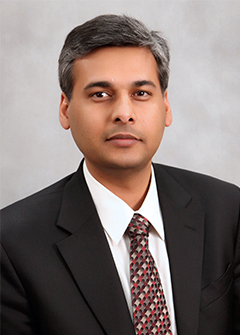
    By Padmashree Gehl Sampath

    Global trade and intellectual property are at a crossroads. In a time when multilateral consensus is languishing on a large number of issues, the Trump administration is considering pulling the U.S. out of most free trade agreements on the ground that it needs a more favorable environment for its companies and its people. Much will be written about the carnage as far as jobs, wages and national sovereignty that the current American onslaught on trade deals brings to the fore. Here, I focus on a critical issue — how trade deals are becoming the new Trojan horse to ensure stronger patent protection and continued profits to global companies.

    Problem with trade deals

    A bit about the historical trajectory of events. The Agreement on Trade-Related Aspects of Intellectual Property Rights (TRIPS) embodied an international regulatory regime for the first time, in 1995. Although it represented a major compromise for most developing countries, it was only the starting point for many other nations, which have since then promoted excessive protection of private investor interests through bilateral trade agreements, often at the expense of wider public interests. Corporate libertarians, riding high on increased market power, continue to lobby their governments for absolute protection of intellectual property (IP) rights of corporations.

    For the U.S., which has never made any qualms about the importance of its domestic corporate interests, trade agreements are a prime vehicle to supplant its strong domestic standards of IP protection in partner countries, in a bid to ensure the same level of privileges for its companies abroad. Over the past 20 years, the American strategy has been a neat one: to pursue bilateral agreements with individual countries one by one to ensure stronger IP protection across markets, by sidestepping the multilateral regime.

    Gaming the system

     In an inter-connected and highly globalized world, what goes around comes around quite fast and often with drastic consequences for all. In this case, the crux of the matter lies in how these stronger rules are changing the global corporate landscape. For years now, while patent protection is getting stronger in all sectors in a large number of countries, the conditions for its grant are becoming greatly relaxed. Not only do such lax patenting requirements allow companies to claim patents more broadly — or consecutively, with little show of original effort as in the case of evergreening — but also patents can be claimed on all possible inventions (and discoveries) that are of relevance to the present, and even to the future. A large number of countries have already foregone many degrees of policy freedom by signing up to ‘TRIPS-Plus’ standards of protection. This, in conjunction with other trade measures, is disintegrating existing markets and rigging established rules of the game. A superstar firm today is not necessarily one with the greatest technological breakthroughs or the largest research and development labs, but surely is one that has a large IP portfolio, engages in extensive litigation on patent issues, and thrives on licensing revenues. Noting the gravity of the situation, The Economist in 2016 produced two short opinion pieces on how corporate profits and returns on capital are at near record levels in the U.S. and what might be wrong with it. It argued that established companies are “becoming more entrenched” in existing markets worldwide, and made the case that high profits may be a sign of a sickness rather than growth and called for reining in IP rights.

    At the global level, these sectors are stratified, with profits neatly split up between large corporations and new kinds of non-innovator firms that simply amass patents speculatively in upcoming, promising technologies for spurious returns. The non-innovator companies are the patriciates of the system: when they hit the technology jackpot, they control the market and have the power to shift wealth and control competition. An example that beautifully captures the situation is Qualcomm Inc., an American company that is the legal patent holder of thousands of patents that are considered critical to build mobile phones with wireless technologies, accounting for a total profit of $5.7 billion through intellectual property licenses in 2016 alone.

    Stemming the tide

    For India, the fate of its pharmaceutical and software sectors swings in the balance, and guaranteeing fair and unfettered competition will be critical to ensure that we do not lose more ground to global companies abroad and at home. The United Nations Conference on Trade and Development (UNCTAD)’s recent Trade and Development Report calls for stronger measures to protect domestic sectors against the undue domination of large companies, particularly in high-profit sectors such as pharmaceuticals, media and information and communications technology (ICT), where foreign companies still account for most of the transfer of profits across borders. Warning against trade deals that seek to protect the status quo, the report identifies patents as an instrument of unfair market power across markets. The report uses data for U.S. multinational companies (MNCs) and their foreign affiliates in India to show that patent reforms have led to significant increases in the rates of return to affiliates of American companies by enabling monopoly profits when compared to publicly listed and locally headquartered companies, which are increasingly being left behind. In the pharmaceutical sector, for example, the analysis that ranges 20 years (from 1996) shows that profits of domestic companies are in sharp decline since the late 2000s while those for the American MNC affiliates operating in the Indian market are rising steeply. A similar trend is visible in the ICTs sector as well.

    It is important to take these findings in the broader perspective of what India’s growth drivers will be in the years to come. Our high-technology sectors are already taking a beating because they operate in a volatile global environment. Supporting IP standards that simply follow a ‘winner takes all’ ideology without emphasis on technological advancement and competitive markets will be a regrettable mistake. What India needs right now is a clear and tough stance on intellectual property both in domestic policy and at the multilateral level. At home, support for innovation has to be accompanied with instruments that guard against the misuse of market power, coercive bargaining and aggressive merger and acquisition strategies if local firms should survive and flourish.

    Heated negotiations in the run-up to the upcoming WTO Ministerial Conference in Argentina already show that these issues will be central: there are ongoing attempts by big business to push for new rules in areas such as e-commerce to slice up profit-making opportunities of the future. Other proposals being made will largely limit the ability of governments to constrain corporate behavior in the public interest even if they succeed partially. In such an international context, we need to stop soft-peddling on these issues in the pretense that we aspire to be a major IP player in the same vein as the U.S. What we need is a return to old-fashioned pragmatism that clearly shows the West that India recognizes the fallacy of the current IP system and leads the way to broker a global new deal. This new deal should not only call for a return to business in the WTO by tackling the forgotten issues of the Doha Round but also firmly reopen the discussion on balancing the global IP system with development. That way, even if we don’t win in Argentina, we will have made an ambitious start in redefining the global trade and IP agenda.

    (The author is a policy expert at the United Nations Conference on Trade and Development, is one of the authors of the Trade and Development Report 2017)


  • Gauging the status quo – By M. K. Narayanan

    Gauging the status quo – By M. K. Narayanan

    By M. K. Narayanan
    “Notwithstanding the carefully structured discussions between the two leaders — and while Doklam did not figure in the discussions — relations between India and China are unlikely to show any marked improvement in the near, and perhaps even in the medium, term. For the present, avoidance of a conflict will remain the principal objective on both sides, with China no doubt looking for an expansion of opportunities for trade. The key watchwords would, hence, be peace and tranquility, says the author.


    The Brazil, Russia, India, China and South Africa grouping (BRICS) has since long ceased to be of material significance as multilateral institutions go. The recent BRICS Summit in Xiamen (China) only seemed to confirm this. It suggests that BRICS may be going the way of quite a few other organizations.

    Inconsequential declaration

    Little of consequence appears to have happened, or to have emerged, from the latest summit. The Xiamen Declaration is proof of this. Considering that this meeting was taking place in the shadow of significant global events, notably North Korea’s nuclear provocations and the U.S. response, other serious developments in Asia, including Afghanistan and West Asia, apart from issues of consequence elsewhere, the absence of any reference to these events in the Summit Declaration suggests that BRICS is clearly out of sync with current realities.

    Much has been made by the media about the inclusion of Pakistan-based terrorist groups such as the Lashkar-e-Taiba and the Jaish-e-Mohammed among the many terrorist groups active in the region. It, however, needs to be understood that this was merely a reiteration of something already mentioned in the declaration of the Heart of Asia Conference held in India in December 2016.

    The Heart of Asia declaration had highlighted the ‘gravity of the security situation in Afghanistan and in the region, drawing attention to the high levels of violence caused by the Taliban, terrorist groups including the Islamic State, al-Qaeda and its affiliates, the Haqqani network, Islamic Movement of Uzbekistan, East Turkestan Islamic Movement (ETIM), Lashkar-e-Taiba, Jaish-e-Mohammed, Tehreek-e-Taliban Pakistan, Jamaat-ul-Ahrar, Jundullah and other foreign terrorist groups’. To attach special significance to the inclusion of this passage in the Xiamen Declaration, and view it as China administering a resounding slap on its ally, would be a profound mistake.

    The BRICS declaration is perhaps more significant for what it did not include. Absence of any mention of China’s Belt and Road Initiative (BRI) — even though Beijing sets such great store by it — is one. At this point, one can only speculate on the reason. It is possible that China may not have wanted to introduce a discordant note into the proceedings — knowing India’s reservations regarding the project — of a conference that it was presiding over. Or perhaps, China does not think that BRICS could make a material contribution to the achievement of its objective.

    BRICS’ limited scope

    One takeaway from the conference also could be that China sees little use of BRICS to achieve its geopolitical and geo-economic objectives across Asia and beyond. BRICS as a body can hardly help China in dealing with a knotty problem like North Korea. It has no need for BRICS to deal with problems such as the South China Sea and freedom of navigation on the seas. From its point of view, BRICS is an outlier as far as pressing problem in the region and beyond are concerned.

    BRICS suffers from other infirmities as well. Brazil and South Africa are increasingly becoming peripheral to BRICS’ aims and objectives. Russia is currently more preoccupied with establishing its supremacy in Eurasia, and its interest in BRICS is not of the same order as in the past. This leaves only India, and limits the scope of BRICS to issues and regions such as Afghanistan that have featured in previous BRICS meetings.

    The summit, however, provided an opportunity for leaders to meet and conduct business. For instance, Prime Minister Narendra Modi’s intervention at the BRICS Business Council helped highlight India’s emergence as one of the most open economies on the globe. At the BRICS Emerging Markets and Developing Countries Dialogue, Mr. Modi highlighted India’s long tradition of partnership with fellow developing countries. Among the ten commitments he listed was that of creating a safer world by “organized and coordinated actions on at least three issues: counter-terrorism, cyber security and disaster management”. The Prime Minister also called for a skilled, healthier and equitable world, as also the critical importance of sustainable development goals.

    Bilaterals, Beijing détente

    Considerable significance attaches to the meetings held between Mr. Modi and the Russian and Chinese leaders on the sidelines of the summit. The emphasis during his meeting with Russian President Vladimir Putin seems to have been on the restoration of ties between the two countries to levels that existed in the past. Discussions also centered on ways to boost bilateral trade and investment, especially in the oil and natural gas sectors.

    The meeting with Chinese President Xi Jinping acquired particular significance coming as it did after the over two-month-long stand-off at the Doklam Plateau. The convergence between the two countries on international terrorism at the BRICS Summit seems to have led to a thaw for the time being. Assurances emanating from the meeting, and the adoption of a low-key approach, were aimed at enhancing mutual trust. The intention seemed to be to establish ‘new ways’ to prevent future incidents such as Doklam, and concentrate on essentials needed to establish better relations.

    Notwithstanding the carefully structured discussions between the two leaders — and while Doklam did not figure in the discussions — relations between India and China are unlikely to show any marked improvement in the near, and perhaps even in the medium, term. For the present, avoidance of a conflict will remain the principal objective on both sides, with China no doubt looking for an expansion of opportunities for trade. The key watchwords would, hence, be peace and tranquility.

    The road after Doklam

    It would take much longer for trust to return; as it is, trust between the two countries had begun to be affected as India moved closer to the U.S., strengthened its relations with countries like Japan and Vietnam that were not too well disposed towards China, and participated in multilateral defense exercises which appeared to have an anti-China slant. In the circumstances, restoring trust is not going to be easy.

    In Astana in June this year, when the Indian and Chinese leaders met on the sidelines of the Shanghai Cooperation Organization Summit, the emphasis was on not allowing “differences to become disputes”. This was reflected in the so-called Astana Understanding. Doklam effectively put paid to this. While Mr. Modi is possibly willing to put Doklam behind him, the Chinese are unlikely to do so and are more likely to moderate their response keeping the Doklam incident in mind. China may continue to reiterate the obvious and talk of ‘peaceful co-existence and mutually beneficial cooperation to strengthen bilateral relations’, but India needs to be cautious. China is likely to view India’s actions with even greater suspicion than hitherto.

    The kind of language employed by the Chinese side in the context of the meeting of the two leaders is an index of this. Mr. Xi observed that China and India are “each other’s opportunities and not threats”; India and China “need to show to the world that peaceful co-existence and win-win cooperation is the only right choice for the two countries”; China would like to work with India to uphold the Five Principles of Peaceful Co-existence (Panchsheel), advance political mutual trust, mutually beneficial cooperation and move forward the development of bilateral relations along the right track. This might sound like accenting the positive in Sino-Indian relations and moving to a more calibrated approach, but it does not necessarily reflect any greater willingness on the part of China to see the other side’s point of view.

    Evidently, the China-centric world view will continue to prevail. For the moment, China is anxious to maintain peace on its border with India, as China has lately been sensing opposition to its policies from many other countries, apart from a host of problems in its neighborhood. In totality, these could undermine the Chinese Dream of Mr. Xi. North Korea is perhaps the most vexatious of the problems, one that is happening on China’s doorstep. Smaller countries of Southeast Asia such as Indonesia, and even Singapore and Vietnam, are signaling opposition to China’s restrictions on rites of maritime passage and freedom of navigation in the seas around China.

    China also faces an ever-widening arc of threats from terrorists of different categories such as the ETIM, the Islamic Movement of Uzbekistan and Uighur separatists to its West. With the critical 19th Party Congress set to take place soon, peace and tranquility on its periphery has thus become an imperative necessity.

    (The author is a former National Security Adviser and a former Governor of West Bengal)

  • “You are the backbone of our country”, Rahul Gandhi says to NRIS in New York

    “You are the backbone of our country”, Rahul Gandhi says to NRIS in New York

    Bidisha Roy

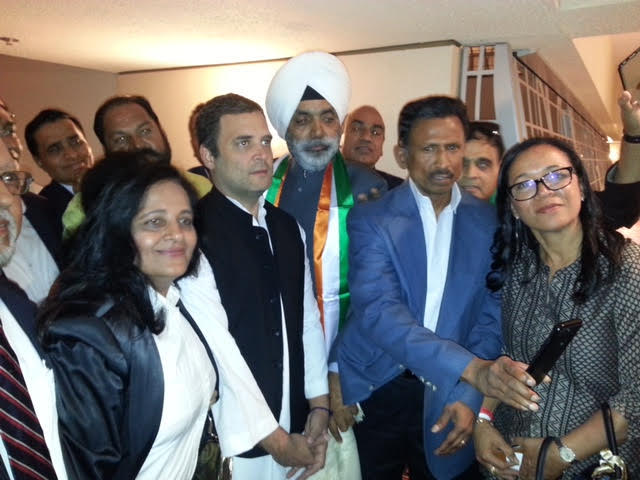
    NEW YORK CITY (TIP): Congress vice President Rahul Gandhi stated  that NRIS are the backbone of India and “original Congress movement was an NRI movement.”

    Addressing a gathering in a hotel in Times Square here on Sept 20 he said Mahatma Gandhi, Jawaharlal Nehru, B. R Ambedkar, Maulana Abul Kalam Azad, and Sardar Vallabhbhai Patel were all NRIs who “went to the outside world, saw the outside world, returned to India and used some of the ideas they had got and transformed India.”

    He also urged NRIs to contribute to resolving the economic and social challenges in India. “You need to get involved. You have tremendous knowledge, you have tremendous understanding, you work in different fields. I invite you to come and work with the Congress party and discuss the vision going forward. We want to take your help.”

    Congress Vice president Rahul Gandhi addresses the gathering at University of California, Berkeley
    Photo / courtesy Jay Mandal-on assignment

    At one of his last events in two-week long US trip, Rahul Gandhi also criticized Modi government without mentioning any name for their ‘Divisive Politics.’ “Divisive politics is ruining India’s reputation of  peace and harmony abroad. There are forces in our country that are dividing India and it is very dangerous, it ruins our reputation abroad. Divisive politics is going on and it has to be fought,” he said.

    Rahul Gandhi said he had met leaders from the Democratic and Republican Party over the past few days and was asked about the situation in the country. “Many, many people in the Democratic Party and the Republican Party asked me what is going on in your country. We always believed that your country worked together, we always believed your country was peaceful. What is going on in your country?”

    He said many countries in a violent world were looking towards India as the “answer for peaceful coexistence. ”So,  we cannot afford to lose our most powerful asset. Our most powerful asset is that 1.3 billion people live happily, non-violently, peacefully… This is something that as Congress people, every single one of us has to defend,” he said.

    Rahul Gandhi asserted that he would visit America, whenever he is asked to, and remain in touch with the community. His close aide Sam Pitroda, U.S.-based telecom expert who pioneered the telecom revolution in India and is in charge of the Indian Overseas Congress, said the organization’s footprint was expected to expand to 30 countries from the present 18 and in every state in the US.

    Earlier, on arrival in the US, Rahul Gandhi addressed students at the University of California, Berkeley, and, later, at Princeton. One of the striking features of Gandhi’s interaction with students at Berkeley was his frank admission that a “certain amount of arrogance” had crept into the Congress midway through UPA II, and it had stopped having “conversations with people.

    Post his lecture on ‘India At 70: Reflections On The Path Forward’, during a question-answer session, Gandhi took a question on dynastic politics, and said, “Most parties in India have that problem (dynastic politics). So, don’t give us the stick… Akhilesh Yadav is a dynast. Stalin (Tamil Nadu) is a dynast. (Prem Kumar) Dhumal’s son is a dynast… Even Abhishek Bachchan is a dynast. That is how India runs…don’t get after me because that is how the entire country is running. By the way, last, I recall, Ambani’s kids were running their business and that was also going on in Infosys. That is what happens in India.”

    At Princeton University,  the Congress leader said it was imperative for the Indian government to ensure blue-collar jobs for its people as nearly 30,000 youngsters are joining the job market every day and only 450 get the job. Gandhi appreciated one of PM Modi’s flagship projects – ‘Make in India’ but said the scheme should be aimed at small and medium businesses. “Not many small and medium businesses are getting access to finance or to the legal system or the political system. The small companies that should be turning into large is not happening. If Make in India is implemented well, it is a powerful idea,” he remarked.


  • Apna Bazar Companies S&L Vegetables, Corp. and J&B Vegetables, Inc Convicted

    Apna Bazar Companies S&L Vegetables, Corp. and J&B Vegetables, Inc Convicted

    Had Failed to Pay Minimum Wage and Overtime to over 150 Employees

    Grocer Paid nearly $450,000 In Restitution to Workers for Unpaid Wages and Over $160,000 In Unpaid Unemployment Contributions, says New York State Attorney General A.G. Schneiderman

    QUEENS (TIP):  Attorney General Eric T. Schneiderman, on September 20,, announced the guilty pleas and convictions of S&L Vegetables, Corp. and J&B Vegetables, Inc., two grocers that did business as Apna Bazar Cash & Carry (“Apna Bazar”) and operated two food markets in Floral Park and Hicksville, NY.

    Each Apna Bazar market pled guilty to one count of Grand Larceny in the Third Degree, one count of Falsifying Business Records in the First Degree, one count of Failure to Pay Wages, and one count of Willful Failure to Pay Contributions. The plea agreement mandates that Apna Bazar pay a total of $447,832.11 for unpaid wages and $162,445.47 in unpaid unemployment contributions to the New York State Department of Labor (“NYSDOL”)–bringing the total wages recovered by Attorney General Schneiderman since taking office to nearly $30 million for more than 21,000 workers.

    The Attorney General said the Queens County Supreme Court, on September 20, sentenced each Apna Bazar market to a three-year conditional discharge with a condition that the stores undergo monitoring for one year. The Court also ordered the defendants to pay restitution for the back wages and unemployment insurance contributions, which the Attorney General’s Office confirmed has been paid in full by the defendants.

    “The defendants in this case acted out of greed, cheating over 150 hardworking employees out of hundreds of thousands of dollars in wages they earned,” said Attorney General Schneiderman. “My office will continue to enforce wage and labor laws to make sure that New Yorkers get the pay they rightfully earn and ensure companies are meeting their obligations to the unemployment insurance safety net.”

    “Under the leadership of Governor Cuomo, the Department of Labor will continue to vigorously pursue any employer who willingly cheats workers out of what they’re rightfully owed,” said State Labor Commissioner Roberta Reardon. “What’s more, in this case, the employer chose to attempt to skirt their Unemployment Insurance obligations. The Department of Labor takes the responsibility of investigating these crimes very seriously and will continue to refer these cases to law enforcement offices around the state.”

    An investigation conducted by the New York State Department of Labor and referred to the Attorney General’s Office revealed that between 2012 and 2015, Apna Bazar repeatedly failed to pay proper minimum wage and overtime to more than 150 employees working at both of these markets. Many of these employees worked over 60 hours per week but were paid a fixed daily amount, which often resulted in paychecks that were well below the state minimum wage for even a typical 40 hour workweek. In addition, the employees did not receive proper overtime compensation of time-and-one half for working over 40 hours in a week. Both Apna Bazar entities also failed to accurately report to the NYSDOL the number of employees working at both locations during this period, falsifying their New York State Quarterly Combined Withholding, Wage Reporting, and Unemployment Insurance Return forms—resulting in significant underpayment of unemployment contributions to the NYSDOL.

    Apna Bazar’s Long Island market is located at 217 Bethpage Rd. in Hicksville, NY and its Queens location is located at 260-04 Hillside Ave. in Floral Park, NY. As part of the plea agreements, Apna Bazar agreed to place both locations under supervision by an independent monitor for one year. The monitor will ensure that employees are paid properly, that there is accurate reporting of employees and that all documentation is properly submitted to the NYSDOL, as well as require two bi-annual reports detailing defendants’ compliance with the applicable labor and penal laws.

    This case was prosecuted by Assistant Attorneys General Jennifer S. Michael and Matthew Ross, under the direct supervision of Labor Bureau Criminal Section Chief Richard Balletta and Labor Bureau Chief ReNika Moore. The Executive Deputy Attorney General for Social Justice is Alvin Bragg and the Criminal Enforcement and Financial Crimes Bureau Chief is Stephanie Swenton. This case was investigated by Senior Labor Standards Investigator Reyna Moreno of the New York State Department of Labor Division of Labor Standards, and Louis Adinolfi and Peter Dixon, Auditors with the New York State Department of Labor Unemployment Insurance Division, under the supervision of Milan Bhatt, Assistant Deputy Commissioner for Worker Protection, and James Rogers, Deputy Commissioner for Worker Protection. The case was also investigated by New York State Attorney General Investigator Edward Ortiz, under the supervision of Supervising Investigator Sylvia Rivera, Deputy Chief Investigator John McManus and Chief of the Investigations Unit, Dominick Zarrella.

    (Source: NYSAG)

  • MQM Demands Right to Self-Determination; Alleges genocide of Mohajirs by Pakistan Army

    MQM Demands Right to Self-Determination; Alleges genocide of Mohajirs by Pakistan Army

    Protesters at the UN call Pakistan “epicenter and exporter of terrorism in the region

    I.S. Saluja

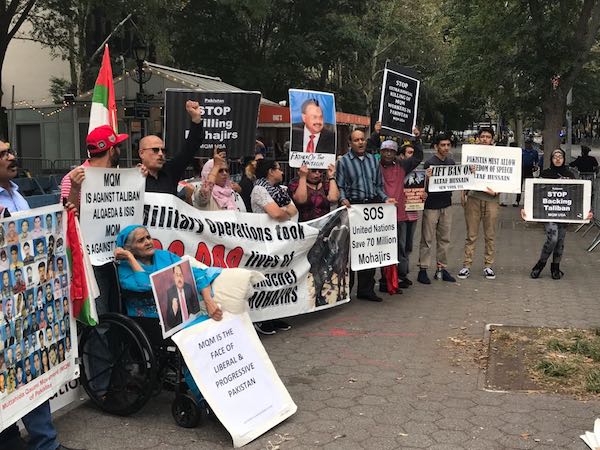
    NEW YORK CITY, NY (TIP): On September 21, around 50 MQM members gathered in front of the UN to protest the genocide of Mohajirs by Pakistan Army. The MQM chose to protest during the time when the Pakistan PM was addressing the UNGA.

    Carrying placards, big and small, they shouted slogans “Mohajirs demand right of self-determination”; “Pakistan Army is killing Mohajirs”; “Stop genocide of Mohajirs”.

    Anjum Arif of New York who is a Member of MQM Central Organizing Committee and Rukunuddin Taj, a Member of Central Co-ordination Committee demanded that United Nations should intervene and stop genocide of Mohajirs and suppression of minorities.

    The speakers spoke at length about their grievances and demands.

    Calling Pakistan as the “epicenter of Terrorism” the speakers said that Pakistan had provided sanctuary to terrorist outfits and that ISI was supporting extremism and terrorism in the region. They pledged to lend their full support to the US, the UN and the world in eliminating terrorist sanctuaries in Pakistan.

    One of their demands was the right to self-determination. They demanded that the United Nations take note of the genocide of Mohajirs in Pakistan and facilitate the process of self-determination.

    They said the census conducted earlier this year in Karachi and urban areas of Sind was rigged. They demanded a fresh census under the supervision of the UN.

    They demanded that the UN intervene to stop the genocide of Mohajirs in Sind.   They alleged Pakistan army had killed 22000 Mohajirs since 1992 and 170 persons were still missing. There are 70 million Mohajirs in Pakistan who all live in fear of being eliminated by Pakistan army.

    Another allegation of the speakers was that there was a blanket media ban on their leader Altaf Hussain who was living in self-exile in Britain. They demanded that the illegal and undemocratic ban be lifted.

    They announced that a bigger rally will be held on Saturday, September 23 at the same venue to make their grievance and demands once again. They said more MQM leaders will be coming to address the protesters

    Mohajirs are Moslems who migrated from India at the time of partition of India in 1947. The majority settled in the port city of Karachi and urban areas of Sind province of Pakistan.

    They follow Islam and speak Urdu. They are secular, liberal and progressive. Some of the Mohajirs have been quite famous in various fields. The first Prime Minister of Pakistan, Liaquat Ali Khan was a Mohajir. So was a former Army General and President Parvez Musharraf. There have been many artists, scholars, intellectuals, scientists whose contribution has been immense.

    “Mohajirs look to the US, the United Nations and justice and peace-loving nations of the world to deliver them from Pakistan”, said a spokesman of MQM.

  • Pakistan is “Terroristan”, says India in Strong Rebuttal to Pakistan PM at UN

    Pakistan is “Terroristan”, says India in Strong Rebuttal to Pakistan PM at UN

    UNITED NATIONS (TIP):  Pakistan is now “Terroristan”, India said in a formidable rebuttal at the UN to Pakistani Prime Minister Shahid Khaqan Abbasi calling for a UN special envoy on Kashmir, alleging that the “struggle of the people in the region is being brutally suppressed” by India.

    Exercising its Right of Reply after Mr Abbasi’s belligerent speech at the UN General Assembly, said it was “extraordinary” that the state that sheltered Osama bin Laden was creating narratives based on deception and deceit.

    “In its short history, Pakistan is a geography synonymous with terror. The quest for a land of pure has actually produced ‘the land of pure terror’. Pakistan is now Terroristan with a flourishing industry producing and exporting global terrorism,” Eenam Gambhir, India’s First Secretary to the UN, said on September 21.

    India caustically described Pakistan as a country whose counter-terrorism policy was to “mainstream and upstream terrorists” by either providing safe havens to terror leaders in its military town or protecting them with political careers.

    “Its current state can be gauged from the fact that Hafiz Mohammad Saeed, a leader of the UN designated terrorist organization Lashkar-e-Taiba, is now sought to be legitimized as a leader of a political party,” Ms Gambhir said.

    None of this, she said, can justify Pakistan’s avaricious efforts to covet territories of its neighbors. “In so far as India is concerned, Pakistan must understand that the state of Jammu and Kashmir is and will always remain an integral part of India. However, much it scales up cross-border terrorism, it will never succeed in undermining India’s territorial integrity.”

    Ms Gambhir also said Pakistan, after diverting billions of dollars in aid towards creating a dangerous infrastructure of terror, was paying the price.

    “Even as terrorists thrive in Pakistan and roam its streets with impunity, we have heard it lecture about human rights in India. The world does not need lessons on democracy and human rights from a country whose own situation is charitably described as a failed state,” she said.

    Earlier, the Pakistan Prime Minister, in his first address to the UN General Assembly, had accused India of terror against his country and had warned of a “matching response” if it “ventures across the Line of Control or acts upon its doctrine of limited war against Pakistan”.

  • Diwali at Times Square

    Diwali at Times Square

    [vc_row][vc_column][vc_single_image image=”88008″ img_size=”full”][/vc_column][/vc_row]

  • WE WISH OUR READERS A HAPPY NAVRATRI, JEWISH NEW YEAR, ISLAMIC NEW YEAR

    WE WISH OUR READERS A HAPPY NAVRATRI, JEWISH NEW YEAR, ISLAMIC NEW YEAR

    [vc_row][vc_column][vc_column_text]

    WE WISH OUR READERS A HAPPY NAVRATRI, JEWISH NEW YEAR, ISLAMIC NEW YEAR

    [/vc_column_text][/vc_column][/vc_row][vc_row][vc_column width=”1/3″][vc_single_image image=”87872″ img_size=”large”][/vc_column][vc_column width=”1/3″][vc_single_image image=”87871″ img_size=”large”][/vc_column][vc_column width=”1/3″][vc_single_image image=”87870″ img_size=”large”][/vc_column][/vc_row]

  • Senators Harris, Sanders and 15 Democratic Colleagues Introduce Medicare for All Act

    Senators Harris, Sanders and 15 Democratic Colleagues Introduce Medicare for All Act

    Washington , D.C. TIP: On Sept 13, US Senator Kamala D. Harris, U.S. Senator  from California, Bernie Sanders, and 15 members of the Democratic caucus introduced legislation to guarantee health care to every American by expanding and improving Medicare.

    “Healthcare should not be thought of as a partisan issue – it’s a nonpartisan issue,” Harris said. “Cancer, diabetes, and high blood pressure affects folks around our country regardless of whether they are in a red state or a blue state, regardless of their income, and regardless of their status. We should not differentiate in the way that we do public health policy and we should understand that everyone should receive the healthcare they need regardless of where they live, their income, or their zip code. That is what this bill is about, and I’m proud to co-sponsor the Medicare for All Act. It is about saying that healthcare is a right for all, not a privilege for a few.”

    Sixty percent of the American people want to “expand Medicare to provide health insurance to every American,” including 75 percent of Democrats, 58 percent of Independents, and 46 percent of Republicans, according to an April 2017 poll by The Economist/YouGov.

    Harris continued, “Taxpayers of the United States deserve a better return on their investment. We know the public health model shows us so well, if you want to deal with an epidemic, the smartest, most effective, and cheapest way to deal with it is prevention first. That means early intervention. If we’re dealing with it in the emergency room, it’s too little, too late and it’s too expensive. Let’s give the taxpayers of the United States a better return on their investment, which means Medicare for All.”

    The Medicare for All Act of 2017 establishes a national health insurance program called the Universal Medicare Program. Under this legislation, every resident of the United States will receive health insurance through an expanded Medicare program with improved and comprehensive benefits.

    It has been the goal of Democrats since Franklin D. Roosevelt to create a universal health care system guaranteeing health care to all people.

    Harris and Sanders introduced the bill in the Senate along with Senators Tammy Baldwin (D-Wis.), Richard Blumenthal (D-Conn.), Cory Booker (D-N.J.), Al Franken (D-Minn.), Kirsten Gillibrand (D-N.Y.), Martin Heinrich (D-N.M.), Mazie Hirono (Hawaii), Patrick Leahy (D-Vt.), Edward Markey (D-Mass.), Jeff Merkley (D-Ore.), Brian Schatz (D-Hawaii), Jeanne Shaheen (D-N.H.), Tom Udall (D-N.M.), Elizabeth Warren (D-Mass.) and Sheldon Whitehouse (D-R.I.).

    The Medicare for All Act of 2017 would ensure that Americans will no longer have to delay or avoid going to the doctor because they can’t afford it; that a hospital stay will not bankrupt you or leave you deeply in debt; that you will be able to get the prescription drugs you need at a price you can afford; that middle class families will never have to spend 20 or 30 percent of their incomes on health care; and, that Americans will save billions of dollars a year in medical administrative costs.

    Under this bill, Americans will benefit from the freedom and security that comes with finally separating health insurance from employment. As is the case in every other major country, employers would be free to focus on running their businesses rather than spending an enormous amount of time, energy and money trying to provide health insurance to their employees.

    The bill has been endorsed by 30 national organizations and unions including: Labor Campaign for Single Payer, Our Revolution, Social Security Works, Progressive Campaign Change Committee, Democracy for America, Working Families Party, MoveOn, All of Us, Demand Progress, Health Care Now, Progressive Democrats of America, CREDO, Public Citizen, Latinos for Healthcare Equality, Americans for Democratic Action, AIDS Healthcare Foundation, DailyKos, Food & Water Watch, Friends of the Earth, 350.org, American Sustainable Business Council, LULAC (League of United Latin American Citizens), National Nurses United, International Association of Machinists and Aerospace Workers, New York Nurses Association, Utility Workers Union of America, International Federation of Professional and Technical Engineers, United Mine Workers of America, Amalgamated Transit Union and Brotherhood of Maintenance of Way Employes Division of the International Brotherhood of Teamsters.

  • Governor Cuomo Signs Executive Order Prohibiting State Agencies from Inquiring About Immigration Status

    Governor Cuomo Signs Executive Order Prohibiting State Agencies from Inquiring About Immigration Status

    Order Protects Immigrants in New York From Fear and Intimidation

    Action Also Forbids Law Enforcement Officers from Inquiring About or Disclosing Immigration Status Unless Investigating Illegal Criminal Activity

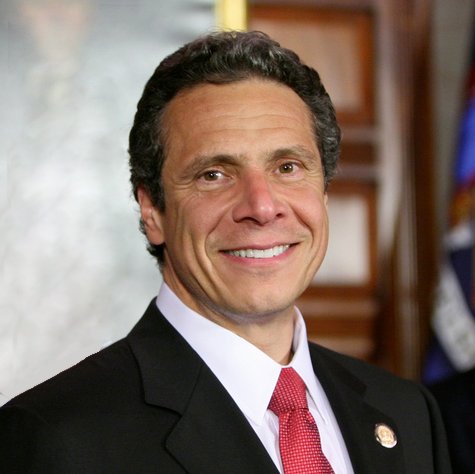
    New York TIP : New York Governor Andrew M. Cuomo on Sept 15 issued Executive Order 170 that prohibits state agencies and officers from inquiring about or disclosing an individual’s immigration status unless required by law or necessary to determine eligibility for a benefit or service. Law enforcement officers will also be prohibited from inquiring about immigration status unless investigating illegal criminal activity. This prohibition against inquiring into status includes, but is not limited to, when an individual approaches a law enforcement officer seeking assistance, is the victim of a crime, or is witness to a crime.

    “As Washington squabbles over rolling back sensible immigration policy, we are taking action to help protect all New Yorkers from unwarranted targeting by government,” Governor Cuomo said. “New York became the Empire State due to the contributions of immigrants from every corner of the globe and we will not let the politics of fear and intimidation divide us.”

    In March, Governor Cuomo launched the Liberty Defense Project, the nation’s first public-private immigrant legal defense initiative, to respond to the surge in demand for help that is overwhelming nonprofit organizations serving immigrants. The partnership is supported by more than $10 million in funding to offer legal assistance and representation to immigrants in New York, regardless of their status, through a statewide network of attorneys and advocacy organizations.

    Since taking office, the Governor has taken aggressive steps to provide assistance to immigrant communities. In 2011, he signed a wide-reaching Executive Order to ensure language access across state agencies, suspended the State’s participation in a federal program that required local law enforcement to help identify deportable individuals, signed legislation holding entities that defraud immigrants accountable, and established the Office for New Americans. He launched NaturalizeNY, the first public-private partnership of its kind to encourage and assist eligible immigrants in New York State with becoming U.S. citizens. As Attorney General, Governor Cuomo also worked to combat immigration fraud, having utilized general civil rights laws to successfully investigate and prosecute companies for defrauding immigrants. He also secured court judgments and settlements in excess of $23 million dollars on behalf of the state’s immigrant population.

    Protecting New York’s Immigrants

    New York State has and continues to serve as a beacon for immigrants.  For the past five years, New York State, through the Office for New Americans, has helped immigrants fully participate in New York State civic and economic life through a network of 27 community-based centers around the state that provide English classes, civic education, guidance on how to start / grow a business, and naturalization assistance.


  • SAALT Demands for Clean DREAM Act without Compromises

    SAALT Demands for Clean DREAM Act without Compromises

    Maryland TIP: In response to reports of a deal on DACA made by Democratic leadership and the President, with rumors of increased border enforcement provisions included in that agreement, Suman Raghunathan, Executive Director of South Asian Americans Leading Together (SAALT), a national civil rights and racial justice organization, released the following statement:

    “We demand a clean DREAM Act, without any compromises on increased border enforcement that will negatively impact immigrant families. Last week’s cruel termination of DACA by President Trump is just the latest in this administration’s toxic anti-immigrant policies. Over 800,000 lives reduced to bargaining chips for a more militarized border is unconscionable, unacceptable, and un-American. Democratic leadership including Sen. Chuck Schumer and Rep. Nancy Pelosi must stand up for DREAMers, stand up for our country’s ideals of equality and fairness for all people, and stand against this administration’s anti-immigrant policies.”

    “Over 27,000 Asian Americans, including 5,500 Indians and Pakistanis, have already received DACA. An additional estimated 17,000 individuals from India and 6,000 from Pakistan respectively are eligible for DACA, placing India in the top ten countries for DACA eligibility. These families are at risk of deportation and must be protected, not with a wall or more armed forces on the border, but with a roadmap to citizenship for aspiring new Americans.”

    “This is a category 5 administration, threatening millions of people who find themselves in its path, forced to hide underground and in the shadows for any hope of survival. A climate change of hate is to blame, with anti-immigrant, anti-Muslim policies blustering and wreaking havoc across our nation. Reversing this trend, before it’s too late, is the need of the hour, and it must begin with a clean DREAM Act without compromises.”

    A Press release by SAALT.org

  • Two Indian American Students from Disadvantaged Backgrounds Receive Full Scholarships to SUNY Colleges

    Two Indian American Students from Disadvantaged Backgrounds Receive Full Scholarships to SUNY Colleges

    New York TIP: New York Governor Andrew M. Cuomo recently announced the 2017 winners of the Carey Gabay Scholarship Program.

    Two Indian American Students – Jasleen Kaur from Ozone Park, Queens and Avik Kadakia from Belleros are among the 5 winners. The scholarship program was created to honor the legacy of Carey Gabay, an attorney and public servant, who was tragically killed as an innocent victim of gun violence in September 2015 at the age of 43. Each scholarship covers all costs of attendance, including tuition, room and board, college fees, books and supplies, and transportation and personal expenses.

    “Carey was an inspiration who believed in the power of public service, and these outstanding students exemplify his core values, determination and commitment to hard work,” Governor Cuomo said. “As we reach the second anniversary of his passing, these scholarships will help us carry on Carey’s memory, values and commitment to improving the lives of all New Yorkers.”

    Carey grew up living in public housing and attending public school in the Bronx. After a successful high school career, he went on to graduate from Harvard University and Harvard Law School. He had a longstanding commitment to public service and giving back to those around him, and while at Harvard University, he ran to become the president of his undergraduate student body. More recently, he worked tirelessly in public service, first as an Assistant Counsel to Governor Cuomo and later as First Deputy Counsel for the Empire State Development Corporation.

    The five chosen students exemplify Carey’s commitment to social justice, leadership, and mentoring, as well as his personal story of succeeding academically despite having an economically disadvantaged background. This is the second year of granting the scholarships.

    SUNY Chancellor Kristina M. Johnson said, “Congratulations to this year’s Carey Gabay scholarship winners. Jasleen, Mirelly, Isaiah, Avik, and Daquan are role models in their own right, having excelled academically while committing so much of their time to making a positive difference in their community. It is a pleasure to honor their hard work and achievement.”

    Jasleen emigrated to the United States from India when she was 12.  She has faced adversity with housing, losing her family’s home to fire. In high School, she was part of a Jr. Doctors club and began performing independent scientific research at Brooklyn College. As part of her commitment to social justice, Jasleen has worked to pursue gender equality issues while volunteering through the National Council of Jewish Women. She graduated from Midwood HS, where former NY First Lady Matilda Cuomo graduated in 1949.  She hopes to become a doctor and volunteer with Doctors Without Borders, bringing medical care to poor communities.

    Jasleen will attend Stony Brook University.

    Avik emigrated to the United States from India. He has faced several struggles in his life, and opened his family’s home to others as a temporary shelter following Superstorm Sandy in 2012. In high school, Avik was president of Student Government and class Valedictorian, and was heavily involved in peer mentoring and tutoring. He is dedicated to pursuing social justice by helping others through leadership, giving a voice to those who are unable to speak for themselves.

    Avik will attend Stony Brook University.


  • Twitter hires Indian American Sriram Krishnan as director of product team

    Twitter hires Indian American Sriram Krishnan as director of product team

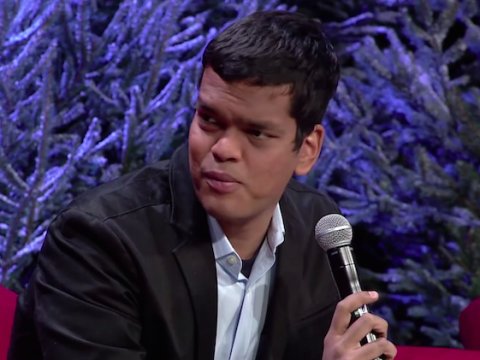
    TIP: Micro-blogging website Twitter has hired Indian-born Sriram Krishnan, a former top executive from Facebook and Snap, as its Senior Director of Product.

    “I’m going to be joining Twitter and become a part of #theflock to work with the fantastic product team there,” Krishnan tweeted. A well-known product executive around Silicon Valley, Krishnan has primarily focused on ad technology.

    As someone who uses Twitter a LOT, I’m a big believer in the impact it has on the world in ways big and small, especially in recent times. Krishnan earlier tweeted

    “So so so so so so excited to have you Sriram! Welcome home,” tweeted Twitter CEO Jack Dorsey late on Monday.

     Starting October 2, he will be responsible for core features inside the main app, including timeline, direct messaging and search.

    Krishnan will report to Keith Coleman, Twitter’s Vice President of Product.

    According to a Recodereport, Krishnan left Facebook in February 2016 where he helped build the company’s ad network as well as audience network. At Snap, he helped build out the company’s ads API to help lead advertising efforts at Snapchat’s parent company Snap. He quit Snap in February, just a month ahead of the company’s IPO.

    At Facebook, he led “Facebook Audience Network” to take on Google.

    With inputs from IANS & Firstpost


  • USCIS Resumes Premium Processing for Some Categories of Applicants Seeking H-1B Visas

    USCIS Resumes Premium Processing for Some Categories of Applicants Seeking H-1B Visas

    WASHINGTON TIP: — U.S. Citizenship and Immigration Services (USCIS) resumed premium processing today for all H-1B visa petitions subject to the Fiscal Year year (FY) 2018 cap. The FY 2018 cap has been set at 65,000 visas. Premium processing has also resumed for the annual 20,000 additional petitions that are set aside to hire workers with a U.S. master’s degree or higher educational degree.

    H-1B visas provide skilled workers for a wide range of specialty occupations, including information technology, academic research, and accounting. When a petitioner requests the agency’s premium processing service, USCIS guarantees a 15-day processing time. If the 15- calendar day processing time is not met, the agency will refund the petitioner’s premium processing service fee and continue with expedited processing of the application. This service is only available for pending petitions, not new submissions, since USCIS received enough petitions in April to meet the FY 2018 cap.

    In addition to today’s resumption of premium processing for H-1B visa petitions subject to the FY 2018 cap, USCIS previously resumed premium processing H-1B petitions filed on behalf of physicians under the Conrad 30 waiver program, as well as interested government agency waivers and for certain H-1B petitions that are not subject to the cap. Premium processing remains temporarily suspended for all other H-1B petitions, such as extensions of stay.

    USCIS plans to resume premium processing for all other remaining H‑1B petitions not subject to the FY 2018 cap, as agency workloads permit. However, remaining petitioners may submit a request to expedite their application if they meet the specific agency criteria. USCIS reviews all expedite requests on a case-by-case basis, and requests are granted at the discretion of the office leadership.

    USCIS will release future announcements when we begin accepting premium processing for other H-1B petitions, not subject to the FY 2018 cap.

    Source:  uscis.gov


  • U.S. energy department taps an Indian American MSU scholar for $750,000 Early Career Award

    U.S. energy department taps an Indian American MSU scholar for $750,000 Early Career Award

    Mississippi TIP : A Mississippi State assistant professor of chemical engineering is receiving a prestigious early career research award, along with $750,000 in research funding, from the U.S. Department of Energy’s Office of Science.

    Neeraj Rai is one of only 59 scientists in the U.S. selected for the award. His current research project is one of 38 selected for funding from academic institutions nationwide and is titled “Probing Condensed-Phase Structure and Dynamics in Hierarchical Zeolites and Nanosheets for Catalytic Upgradation of Biomass.” The funding award is to support research expenses over a five-year period.

    Rai’s research goal is to develop advanced computational frameworks for understanding chemical and physical processes at the molecular level and to design novel materials for meeting the nation’s future energy needs. Students in his research group will simulate biomass conversion for establishing design principles for developing efficient catalysts and processes that convert lignin and cellulose into chemicals, fuels and other renewable and sustainable materials that benefit society.

    His recognition marks the first DOE early career research award at Mississippi State University.

    “Dr. Rai’s research expertise in molecular-level chemical processes has several broad impacts to our society. I am proud to see his transformative work recognized with such a prestigious award,” said Jason Keith, dean and professor of the Bagley College.

    Rai said current chemical processes have been designed and perfected over the last century primarily to process hydrocarbon based feedstock.

    “However, it is a significant challenge to convert biomass into fuels and chemicals due to significant oxygen content. So, we have to create new technologies that are efficient and economically viable to convert complex biomass into carbon neutral products,” Rai explained.

    Before joining MSU, Rai was a postdoctoral research associate at the Catalysis Center for Energy Innovation, a DOE Energy Frontier Research Center at the University of Delaware. He also conducted postdoctoral research in the chemical and biomolecular engineering department at the University of Notre Dame. He obtained his doctoral degree in chemical physics from the University of Minnesota, and his bachelor’s in chemical engineering from Karnataka Regional Engineering College, presently known as the National Institute of Technology, Karnataka, India.

    MSU is Mississippi’s leading university, available online at www.msstate.edu.


  • Sushma Swaraj Holds Trilateral Talks With US, Japan Counterparts in New York

    Sushma Swaraj Holds Trilateral Talks With US, Japan Counterparts in New York

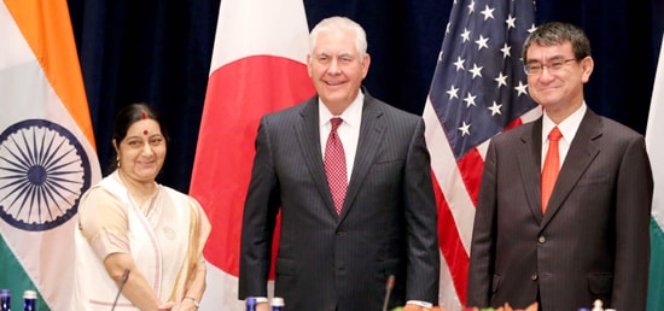
    New York TIP: India’s External Affairs Minister Sushma Swaraj had a Ministerial Trilateral meeting with US Secretary of State Rex Tillerson and Japan’s Minister for Foreign Affairs Taro Kono in New York on Sept 18. On the sidelines of the UN General Assembly here, the three top diplomats also exchanged views on maritime security, connectivity and proliferation issues.

    “The ministers emphasised the need for ensuring freedom of navigation, respect for international law and peaceful resolution of disputes,” Ministry of External Affairs spokesperson Raveesh Kumar said.

    “On connectivity initiatives, the importance of basing them on universally recognised international norms, prudent financing and respect for sovereignty and territorial integrity was underlined,” Kumar said in a statement.

    China is engaged in hotly contested territorial disputes in both the South China Sea and the East China Sea. Beijing has built up and militarised many of the islands and reefs it controls in the region.

    China claims sovereignty over all of South China Sea. However, Vietnam, Malaysia, the Philippines, Brunei and Taiwan have counter claims.

    India and China last month ended a 73-day standoff in Doklam area of the Sikkim sector that was triggered by China’s move to build a road in the border area.

    Ms.Swaraj also deplored North Korea’s recent actions and stated that its proliferation linkages must be explored and those involved be held accountable, Kumar said.

    Tensions have dramatically risen on the Korean peninsula after North Korea early this month conducted its biggest nuclear test, which its state-run KCNA news agency described it as a hydrogen bomb.

    The three ministers directed their senior officials to explore practical steps to enhance cooperation, he said at the conclusion of the meeting.

    Sushma Swaraj arrived in New York early on Monday to attend the 72nd annual session of the UN General Assembly. She is scheduled to address the United Nations on September 23.

    During her week-long stay here, she is likely to hold between 15-20 bilateral meetings in addition to several multilateral and trilateral meetings.

  • Indian American girl makes it to US army

    Indian American girl makes it to US army

    18-year-old Sukhleen inducted as private after combat training

    KAPURTHALA (TIP): Less than a year after moving to the US with her family, 18-year-old Begowal girl Sukhleen Dhillon has been inducted as a private in the army, according to a September 16 Tribune report filed by Aparna Banerji.

    Sukhleen’s father, Jatinder Singh Mintu, who is on a visit to Kapurthala these days, proudly shows the certificate issued by the Fort Jackson Army Training Camp in July. It reads: “This certificate is presented to Pvt Dhillon Sukhleen Kaur, Bravo Company, 1st Battalion, 13th Infantry Regiment, for successful completion of basic combat training.”

    Sukhleen is part of a company of 450 young recruits training in Georgia. She is the only Indian girl cadet among them, while there are several Indian men.

    Speaking to The Tribune from Georgia, she said, “It’s special to have come this far. I have handled tricky weapons and walked over 10 miles carrying weights of more than 30 pounds. It feels nice to make my parents and country proud.” She is keen on becoming a lieutenant.

    Jatinder, accompanied by his brother Kulwinderjit Singh, said, “Sukhleen initially felt lonely in the US. She then started following army aspirants on the internet. Soon, she surprised us by saying that she wanted to join the US army.”

    Jatinder, who is in the construction business, admitted that the family once had doubts whether she would be able to train so hard. “During a training session, she suffered a fracture. We got worried and thought of calling her back. But she stayed put and said the injury would heal soon. We realized that she would pursue her dream at any cost,” said the Kapurthala native, whose grandfather and paternal uncles served in the Indian Army.

    Sukhleen studied at Begowal till Class VI and then moved to Amritsar after her mother, Balbir Kaur, got a job as a school principal there. She studied in the holy city till Class XII before shifting to the US last year. She wants her brother, Arshdeep, to join the army as well.

  • Dhawan to miss first three ODIs against Australia

    Dhawan to miss first three ODIs against Australia

    NEW DELHI (TIP): India opener Shikhar Dhawan has been released from the team for the first three ODIs against Australia to attend to his wife, who is unwell.

    “Team India opener Shikhar Dhawan has requested to be released from the team for the first three ODIs of the Paytm Australia tour of India, 2017, to attend to his wife, who is unwell,” a BCCI release stated.

    The Senior Selection Committee has decided not to name any replacement for Dhawan for the first three matches.

    During the last series against Sri Lanka also, Dhawan had left after the One-day Internationals as his mother was unwell at that time.

    The India team for first three ODIs against Australia: Virat Kohli (captain), Rohit Sharma (vice-captain), KL Rahul, Manish Pandey, Kedar Jadhav, Ajinkya Rahane, MS Dhoni (wk), Hardik Pandya, Axar Patel, Kuldeep Yadav, Yuzvendra Chahal, Jasprit Bumrah, Bhuvneshwar Kumar, Umesh Yadav, Mohammed Shami. Source: PTI

  • Pak celebrates international revival with victory

    Pak celebrates international revival with victory

    LAHORE (TIP): Pakistan took a giant step towards reviving international cricket at home with a 20-run victory over the World XI in a match before excited crowds amid tight security.

    The T20 match, accorded international status by the International Cricket Council, is only the second time Pakistan has hosted an international match since militants attacked the bus of the visiting Sri Lankan team in March 2009, killing eight people and injuring seven players and staff.

    Long before the match started, around 9,000 police officers and paramilitary forces were deployed to the area, cordoning off the team hotels and stadium.

    But the large security presence did little to temper the enthusiasm of fans in the cricketmad country.

    Pakistan, sent into bat by World XI skipper Faf du Plessis, notched 197/5 with Babar Azam hitting a rapid 52-ball 86.

    His career-best T20 score had 10 boundaries and two sixes. Azam added 122 for the second wicket with Ahmed Shehzad (39) as Pakistan built on the loss of opener Fakhar Zaman for eight.

    Shoaib Malik smashed a 20-ball 38 with two sixes and four boundaries to give the final touches to the innings.

    The World XI started off well with Tamim Iqbal hitting 18 with three boundaries and Hashim Amla smashing three boundaries and a six in his 17-ball 26 but left-arm pacer

    Rumman Raees dismissed both in the same over to put the brakes on their innings.

    Skipper Faf du Plessis hit four boundaries and a six while Darren Sammy smashed three sixes — both scoring 29 — but were unable to see their team through.

    For Pakistan, paceman Sohail Khan and leg-spinner Shadab Khan finished with two wickets apiece. Source: AFP

  • VIRAT IS A BETTER ODI BATSMAN, SMITH AHEAD IN TESTS: CLARKE

    VIRAT IS A BETTER ODI BATSMAN, SMITH AHEAD IN TESTS: CLARKE

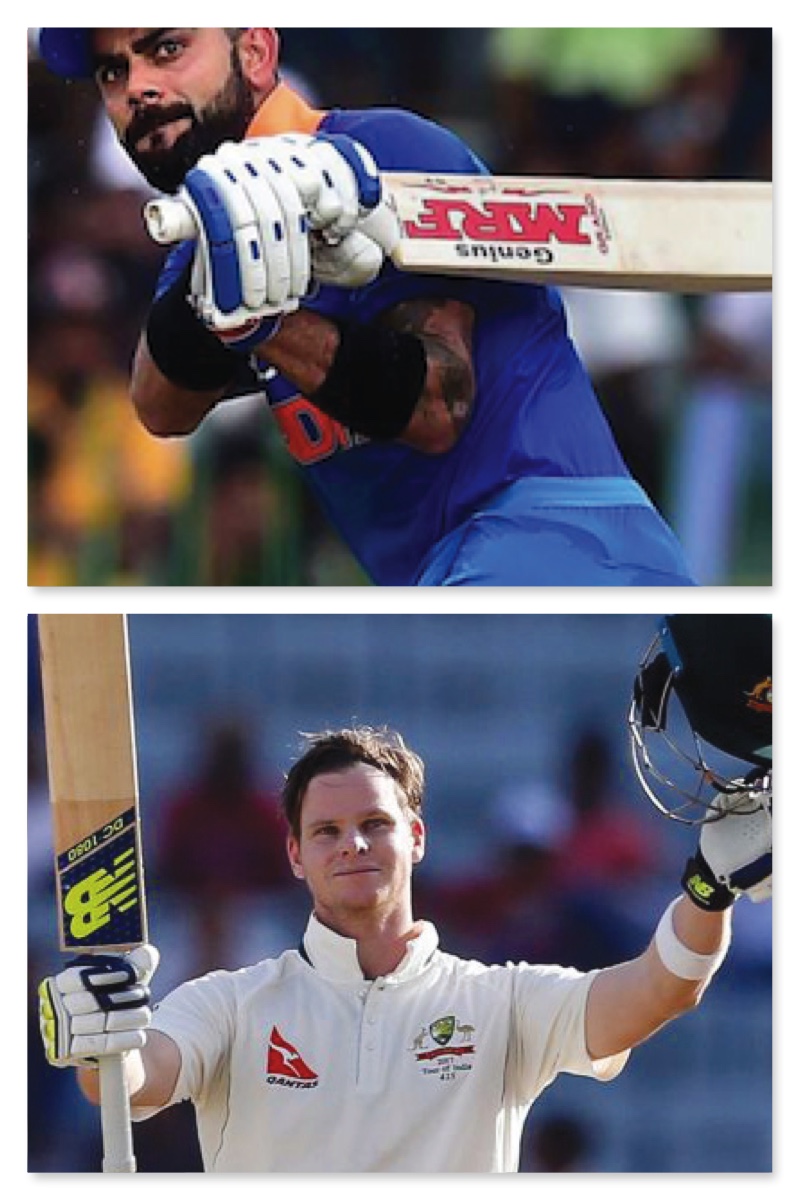
    NEW DELHI (TIP): Virat Kohli and Steve Smith are on even keel as far as leadership qualities are concerned, feels former Australia skipper Michael Clarke even though he rates the Indian captain as a slightly better ODI batsman.

    Asked who is a better batsman and leader among the two contemporary greats, Clarke observed: “Virat is a better ODI batsman but just about that. Smith perhaps is better in longer format.”

    “In terms of captaincy, both are equal and they are improving. At the moment, Virat is on top as his team is winning. But again, irrespective of the number of runs you score, what matters is whether your team is winning matches or not,” said Clarke, who is here as a TV expert for the upcoming five-match ODI series.

    Harbhajan Singh, during the last Test series, had stirred the hornet’s nest by terming the Australian side as the weakest ever to tour India and even predicting a 4-0 whitewash. Australia eventually did much better to lose 1-2.

    Clarke was asked the same question about whether this side, led by Smith, is the weakest to tour India, considering it did not even qualify for the Champions Trophy semi-final.

    Clarke’s sense of humour came to the fore as he came up with a cheeky response.

    “I am silly but I am not that silly to give you a front- page headline for tomorrow’s newspaper!” he answered with a wry smile as everyone had a good laugh.

    On a serious note, he said: “Obviously, this is an opportunity for this Australian side to translate their potential into consistent performance. This team needs to back its talent as there’s enough talent in the squad.”

    The Indian team has played an aggressive brand of cricket and Clarke did find certain similarities between the two sides led by Sourav Ganguly and Virat Kohli.

    “I think there are similarities. Sourav Ganguly deserves a lot of credit for the environment he created. He never took a backseat. MS Dhoni, Anil Kumble and Kohli have all done it in their own ways. The current Indian team is led by an aggressive skipper who does not want to lose,” Clarke said during a promotional event.

    Clarke said premier fast bowlers Mitchell Starc and Josh Hazlewood, who are currently recuperating from injuries, would be missed by Australia.

    The incentive, according to the former skipper, should be a 4-1 win which could put Australia on top of the ICC ODI rankings.

    “A carrot right there for Smith and the boys because if they win 4-1 then they become the No.1 side again.”

    “The support staff has to work out the way they wish to play. Whether they want to play an aggressive brand of cricket or wish to hold back and play the full quota of overs.

    “We still have some way to go before the 2019 World Cup, but honestly we have not won as much as we would like,” Clarke replied when asked about the brand of cricket, he is expecting from the Aussies.

    Most of the Australian players are part of the Indian Premier League which makes it easier for them to adapt to the conditions.

    “The experience of playing in India makes it all the more easier for the Aussies. India is like a second home for these guys as they have played in the IPL. They know the conditions and the opposition so there can’t be any excuse,” Clarke signed off.

    Source:PTI

  • Suzuki to pump in fresh investment of Rs 3,800 cr in Gujarat

    Suzuki to pump in fresh investment of Rs 3,800 cr in Gujarat

    GANDHINAGAR (TIP): Japan’s Suzuki Motor Corp on Thursday announced fresh investments of around Rs 3,800 crore in Gujarat to add a third car production plant.

    The company along with its partners Toshiba and Denso will also invest around Rs 1,150 crore for a new unit to produce lithium ion batteries.

    The new investment in enhancing capacity of the Hansalpur plant will take the company’s total investment in the facility to around Rs 13,400 crore, where it has already put in Rs 9,600 crore on two plants along with another engine and transmission production unit.

    The Hansalpur-based plant is Suzuki Motor Corp’s first wholly-owned unit in India.

    Announcing the fresh investments, Suzuki Motor Corp (SMC) Chairman Osamu Suzuki said the company will invest Rs 3,800 crore on the third plant which will have a production capacity of 2.5 lakh units annually.

    When the third plant starts functioning fully, the SMC’s Gujarat plant will have a total capacity of 7.5 lakh units per annum. He, however, did not elaborate on the time for commissioning of the third plant.

    The first two plants also have capacity of 2.5 lakh units per annum, while the engine and transmission unit has a capacity to produce 5 lakh units a year. The overall production capacity of SMC along with its Indian arm, Maruti Suzuki’s two plants in Haryana will increase to 22.5 lakh units annually.

    Currently, the first plant at Hansalpur produces premium hatchback Baleno.

    The second plant along with the engine and transmission units is expected to go on stream in 2019.

    He said with the new investment, the company’s Hansalpur facility will will help in generating employment for 10,000 people, including suppliers. “We will also construct a hospital and school near Hanslapur facility,” he added.

    Last week Maruti Suzuki India Chairman R C Bhargava had stated that SMC was also considering setting up a fourth production line of 2.5 lakh units at Hansalpur plant to take its total capacity to a million units.

    Suzuki said as part of strategy for adapting to new technologies, SMC along with its partners Toshiba and Denso will invest USD 180 million (around Rs 1,151 crore) to manufacture lithium ion batteries.

    The batteries will be used for “hybrid vehicles manufactured in India and export these genuinely manufactured in India vehicles to international market”, Suzuki said.

    The plant is expected to be operational from 2020, he said adding, “We plan to continue with our efforts to promote make-in-India program further”.

    Last year, SMC had joined hands with Toshiba Corporation and Denso to set up a plant in India to produce lithium ion batteries.

    The three Japanese entities inked an agreement to form a joint venture to tap growing popularity for electric vehicles in India and supply lithium-ion battery packs in the country. Source: PTI

  • GOLD RETAKES RS 31,000 LEVEL ON DEMAND PUSH, SOARS RS 650

    GOLD RETAKES RS 31,000 LEVEL ON DEMAND PUSH, SOARS RS 650

    NEW DELHI (TIP): Gold on Sept 14 took strength from a positive trend overseas by surging Rs 650 per 10 grams to seize the Rs 31,000 level, driven up by fresh local buying.

    But silver fell sharply by Rs 350 to Rs 41,500 per kg, mainly due to softening demand by industrial units and coin makers. Tension still brews on the Korean front as North Korea is digging in its heels over the UN resolution and the sanction over its most powerful nuclear test, analysts said.

    Any major uncertainty, according to experts, is directly proportional to the appeal of safe haven assets. Simply put, the higher the turmoil, the greater the risk aversion, which pushes investors more towards safe asset classes, including gold.

    Bullion traders said robust demand from local jewellers as well as retailers too fed the rally in gold prices.

    Globally, gold rose by 0.08 per cent to USD 1,323.60 an ounce after hitting a two-week low of USD 1,318.96. Silver too edged up 0.03 per cent to USD 17.75 an ounce in Singapore.

    In the national capital, gold of 99.9 per cent and 99.5 per cent purity surged Rs 650 each to Rs 31,000 and Rs 30,850 per 10 grams, respectively. The precious metal had lost Rs 650 in the last two days.

    Sovereign continued to be traded at the previous level of Rs 24,700 per piece of eight grams.

    In contrast, silver ready dropped Rs 350 to Rs 41,500 per kg and weekly-based delivery cracked below the 41,000 mark by sliding Rs 370 to Rs 40,930 per kg.

    Silver coins, however, held steady at Rs 74,000 for buying and Rs 75,000 for selling of 100 pieces. Source: PTI

  • VW RECALLS 4.86 MN VEHICLES IN CHINA OVER AIRBAG CONCERNS

    VW RECALLS 4.86 MN VEHICLES IN CHINA OVER AIRBAG CONCERNS

    The announcement came just 10 days after VW and its local partners agreed to recall 1.82 million vehicles owing to a faulty fuel pump

    BEIJING (TIP): Volkswagen will recall almost five million vehicles in China over airbag concerns, Chinese authorities said on Thursday, dealing a new blow to the German automaker in the world’s largest car market.

    VW and its joint ventures with Chinese partners FAW and SAIC will start withdrawing 4.86 million vehicles fitted with potentially faulty airbags made by Japan’s bankrupt airbag giant Takata from March 2018, according to China’s top consumer watchdog.

    The announcement came just 10 days after VW and its local partners agreed to recall 1.82 million vehicles owing to a faulty fuel pump.

    In March Volkswagen recalled nearly 6,80,000 premium Audi cars in China over defects in coolant pumps that could lead to engine fires, and another 572,000 due to potential problems arising from leaks in the panoramic sunroof.

    The latest recall involves vehicles made between 2005 and 2017, according to the General Administration of Quality Supervision, Inspection and Quarantine.

    Of the vehicles being recalled, more than 4.7 million units were made in Chinese factories and 103,573 are imports.

    Takatahas recalled some 100 million airbags produced for some of the largest automakers, including about 70 million in the US, due to the risk that they could improperly inflate and rupture, potentially firing deadly shrapnel at the occupants.

    The defect has been linked to 16 deaths and scores of injuries worldwide. China is a crucial market for VW, which sold nearly four million vehicles in the world’s biggest auto market last years.

    VW is still trying to recover from the controversy after it admitted in 2015 to equipping its diesel cars with defeat devices to evade emissions tests.

    The company pleaded guilty in March to charges stemming from “dieselgate” and agreed to pay $4.3 billion in penalties—on top of $17.5 billion in civil settlements.

    Volkswagen still faces legal challenges in Germany and worldwide, and has so far set aside more than 22 billion euros ($24.4 billion) to cover costs. Experts estimate the final bill from the scandal could be even higher.

    Source: AFP

  • MOVIE REVIEW – THE NUT JOB 2: NUTTY BY NATURE

    MOVIE REVIEW – THE NUT JOB 2: NUTTY BY NATURE

    Story

    A bunch of squirrels influenced by the leader of the pack, Surly, are used to leading an easy-lazy life in the lush green Liberty Park. They happily invade an out of business nut shop and feed themselves without making an effort to go look for food. But their luck runs out as the shop explodes and their home (the park) gets destroyed, thanks to a corrupt mayor, who sees more profit in an amusement park replacing the garden. Can the fluffy gang survive?

    Review

    This survival tale has its share of cute moments and inspiring life lessons but it strictly caters to the younger audience. At a time when most Hollywood animation studios are making films that appeal to all age groups, this one seems a tad dated in terms of its narrative approach and presentation. ‘There is no substitute for hard work’ is the point that the makers strive to drive home.

    They harp on it endlessly, making it all too preachy eventually. The animals are adorable but the portrayal of humans is juvenile and one-sided. If the mayor wasn’t evil enough, you have his destructive, control freak daughter, who sneers at everything that moves. Their collective hatred and attack on the animals seem uncalled for beyond a point.

    Also, the film fails to offer a spectacular visual experience, which could have probably enhanced an enormously cliched and predictable plot. To cut to the chase, this one’s a forgettable sequel, which has its moments but not enough to deserve a big screen viewing, unless you are obsessed with talkative squirrels.

  • KENDALL JENNER SUED OVER T-SHIRTS AGAIN

    KENDALL JENNER SUED OVER T-SHIRTS AGAIN

    Another photographer has sued model Kendall Jenners company Kendall Jenner Inc over the controversial t-shirt line, which featured photographs of musical icons with their own likenesses superimposed.

    According to a report, photographer Al Pereira has filed a lawsuit against Kendall Jenner Inc, claiming she had no right to use an image he shot of Tupac Shakur, Notorious B.I.G. and Redman in the collection.

    Kendall and her sister Kylie had pulled the $125 t-shirts from sale earlier this year after photographer Michael Miller took legal action against the sisters for using his images without permission, and planned to sue for any profits they made from the garments during the short time they were on sale.

    However, the brand officials had said the copyright infringement lawsuit was “baseless” because they obtained the shirts with the rapper’s image from a company that had a valid license to sell them. They then said that they had only sold two of the garments before pulling the stock from sale. Source: IANS