Month: August 2018

  • Indian–Origin Man gets $1.2 Million in Compensation for “Fake News” Article in Canada

    Indian–Origin Man gets $1.2 Million in Compensation for “Fake News” Article in Canada

    VANCOUVER, CANADA(TIP): An Indian-origin Canadian businessman has been awarded $1.2 million in damages after he was defamed in a series of fake news articles instigated by a prominent American blockchain investor.

    It is one of the biggest compensations of its kind in Canada. Vancouver-based Altaf Nazerali, who is originally from Bhuj, Gujarat, had sued Patrick Byrne, CEO of online retailer Overstock.com, for a campaign of lies aimed to tarnish the reputation of the NRI businessman.

    Last week, the Supreme Court of Canada rejected Patrick Byrne’s appeal against $1.2 million granted to the NRI businessman by the Supreme Court of British Columbia in 2016.

    The huge compensation for Altaf Nazerali comes after a seven-year legal battle to clear his name after a series of articles published in 2011, on an American website DeepCapture.com tried to depict the NRI businessman as a drug trafficker, arms dealer and gangster and a financial supporter of al-Qaida. The articles tried to show that he had links to Russian and Italian mafias.

    The articles were written by Mark Mitchell and published on the website – owned and published by Byrne- which reports on criminal financial conspiracies.

    In its 2016 judgment in favor of the NRI business, Justice Kenneth Affleck of Vancouver-based British Columbia Supreme Court had said: “Mitchell, Byrne and Deep Capture LLC engaged in a calculated and ruthless campaign to inflict as much damage on Nazerali”s reputation as they could achieve.

    “It is clear on the evidence that their intention was to conduct a vendetta in which the truth about Nazerali himself was of no consequence.”

    The American blockchain investor challenged the judgment in the Supreme Court of Canada which last week threw it out.

  • Not by Violence, my Sikh Brethren

    Not by Violence, my Sikh Brethren

     By Prof. Indrajit S Saluja

    Sikhs in the US are belittling themselves by indulging in acts of violence against factions which do not agree with their ideology. While there is freedom of expression in this country, there is also a restriction that the expression has to be peaceful. Physical attacks are a felony and the US law enforcement is bound to proceed against the perpetrators of violence.

    It pains peaceful Sikhs in America (and elsewhere in the world, too) to find a faction of Sikhs supporting creation of Khalistan in India, making physical attacks on those Sikhs who do not subscribe to their ideology. Nobody questions their right to advertise and advocate their demand for a Khalistan in India, but all eyebrows will be raised when they commit violence against those not supporting them, or rather opposing them.

    The Sikh groups supporting Khalistan have of late taken to the forbidden path of violence.

    May be, they are frustrated that the mass of Sikhs abroad does not support them. In India, where they want Khalistan, they hardly have any influence. It is their frustration which is driving them to acts of violence against their opponents. They may not realize now, but history has a lesson to be reminded of- there is ultimate failure when a movement goes violent, because then it loses direction, and people’s sympathy.

    They need to be reminded of the famous words: you may befool some for all the time; all for some time; but not all for all times.

    Advocates of Khalistan need to understand this.

    They may also do well to remember that Law Enforcement in this country will not allow them the freedom to go violent against individuals. When the law comes calling these people will repent.

    In attacking Manjit Singh GK, President , Sikh Gurdwara Managing Committee, and a Shiromani Akali Dal leader,  and his companions at a gurdwara in Yuba City on Saturday, August 25, the attackers who claim to be pro- Khalistan, have shown complete disregard to the Sikh Gurus who have taught us the lesson of universal brotherhood. They have set a bad example for our younger generation. They have strengthened the already strong impression among US law enforcement that the Sikhs are a violent community. They have further sullied the image of the Sikhs worldwide. They have challenged peace loving majority of Sikhs. They have challenged the laws of the land.

    I only hope, wisdom will dawn on them and they will act as the Sikhs our revered Gurus wanted the Sikhs to be- humble, loving and treating the entire mankind as children of One God. Only then will the Khalsa have a sovereign sway.

    And, in fine, I urge the US administration to curb with a heavy hand this tendency to be violent among some people. Or, else, this nation which has prided itself as being a nation of peaceful and loving people, will soon face the headaches of a third world country.

    Are you all listening?

    If yes, and, if you agree with my viewpoint, share it with as many as possible. Because it is the question of the dignity of the Sikhs and India. Because it is the question of peace in America.

  • US-China trade war escalates as new tariffs come in

    US-China trade war escalates as new tariffs come in

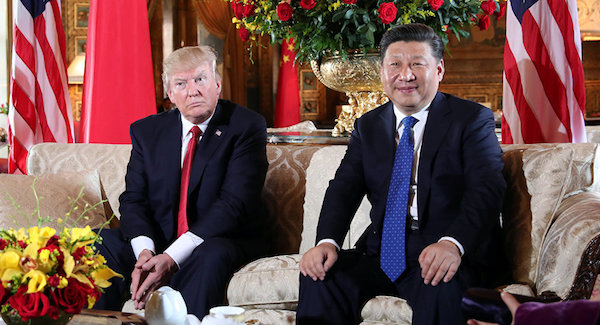
    BEIJING / WASHINGTON(TIP): The United States and China escalated their acrimonious trade war on Thursday, August 23, implementing punitive 25 percent tariffs on $16 billion worth of each other’s goods, even as mid-level officials from both sides resumed talks in Washington.

    The world’s two largest economies have now slapped tit-for-tat tariffs on a combined $100 billion of products since early July, with more in the pipeline, adding to risks to global economic growth.

    China’s Commerce Ministry said Washington was “remaining obstinate” by implementing the latest tariffs, which kicked-in on both sides as scheduled at 12:01 p.m. in Beijing (0401 GMT).

    “China resolutely opposes this, and will continue to take necessary countermeasures,” it said in a brief statement.

    “At the same time, to safeguard free trade and multilateral systems, and defend its own lawful interests, China will file suit regarding these tariff measures under the WTO dispute resolution mechanism,” it said.

    President Donald Trump has threatened to put duties on almost all of the more than $500 billion of Chinese goods exported to the United States annually unless Beijing agrees to sweeping changes to its intellectual property practices, industrial subsidy programs and tariff structures, and buys more U.S. goods.

    That figure would be far more than China imports from the United States, raising concerns that Beijing could consider other forms of retaliation, such as making life more difficult for American firms in China or allowing its yuan currency to weaken further to support its exporters.

    ‘We have more bullets’

    Trump administration officials have been divided over how hard to press Beijing, but the White House appears to believe it is winning the trade war as China’s economy slows and its stock markets tumble.

    “They’re not going to give that up easily. Naturally they’ll retaliate a little bit,” US Commerce Secretary Wilbur Ross said on CNBC on Wednesday at a Century Aluminum smelter in Hawesville, Kentucky, which is restarting idled production lines due to Trump’s aluminum tariffs.

    “But at the end of the day, we have many more bullets than they do. They know it. We have a much stronger economy than they have, they know that too,” Ross said.

    Economists reckon that every $100 billion of imports hit by tariffs would reduce global trade by around 0.5 percent.

    They have assumed a direct impact on China’s economic growth in 2018 of 0.1-0.3 percentage points, and somewhat less for the United States, but the impact will be bigger next year, along with collateral damage for other countries and companies tied into China’s global supply chains.

    The tariffs took effect amid two days of talks in Washington between mid-level officials from both sides, the first formal negotiations since US Commerce Secretary met with Chinese economic adviser Liu He in Beijing in June.

    Business groups expressed hope that the meeting would mark the start of serious negotiations over Chinese trade and economic policy changes demanded by Trump.

    However, Trump on Monday told Reuters in an interview that he did not “anticipate much” from the talks led by US Treasury Under Secretary David Malpass and Chinese Commerce Vice Minister Wang Shouwen.

    Trump’s hard line has rattled Beijing and spurred rare criticism within the highest levels of China’s ruling Communist Party over its handling of the trade war, sources have said.

    Beijing has denied US allegations that it systematically forces the unfair transfer of U.S. technology and has said that it adheres to World Trade Organization rules.

    The official Xinhua news agency said in a commentary on Thursday that China approached the latest round of talks in good faith, but that Washington remains vague about what it wants.

    “As US President Donald Trump said in his book on making deals, ‘the point is that you can’t be too greedy.’ The two sides would hence be advisable to define their top concerns in this round of talks and outline a roadmap, in a bid to find a way out of the current impasse and towards the final settlement of the issues.”

    Washington’s latest tariffs apply to 279 product categories including semiconductors, plastics, chemicals and railway equipment that the Office of the US Trade Representative has said benefit from Beijing’s “Made in China 2025” industrial plan to make China competitive in high-tech industries.

    China’s list of 333 US product categories hit with duties includes coal, copper scrap, fuel, steel products, buses and medical equipment.

    Though it is too early for the trade battle to show up in much economic data as yet, tariffs are beginning to increase costs for consumers and businesses on both sides of the Pacific, forcing companies to adjust their supply chains and pricing, with some U.S. firms looking to decrease their reliance on China.

    One executive at a major US manufacturer in China told Reuters the uncertainty about the duration of the trade conflict was more damaging than the tariffs themselves because it made business planning difficult.

    (Source: Reuters)

    If the tariffs are in place for long, there will come a point at which the company would begin moving some sourcing and production out of China, a process that would be irreversible for several years once set in motion, the executive said, declining to be identified due to the sensitivity of the matter. Reuters

  • A Sterling Punjabi

    A Sterling Punjabi

    By BRP Bhaskar

    Kuldip Nayar was one of the young millions whose life was disrupted by Partition but rebuilt it and went on to make brilliant contributions in his chosen fields, starting with journalism. Devotion to the fine traditions of Punjab’s composite culture enabled him to overcome the bitterness of the early experience and become a lifelong advocate of India-Pakistan friendship and Hindu-Muslim amity.

    Journalism was Nayar’s first love. He had studied law before landing in Delhi as a refugee but started life as a reporter of an Urdu daily. One of the events he covered at that time was Mahatma Gandhi’s assassination.

    After spending some years in the government’s public relations outfit, during which period he served as information officer to Home Minister Lal Bahadur Shastri, he returned to active journalism as chief of the fledgling United News of India which big newspapers had launched to provide for competition in agency journalism.

    Once out of the government set-up, Kuldip Nayar was keen to follow the path of independent journalism. Since the colonial days, news agencies had limited political reporting to the coverage of briefings and speeches. He broke the self-imposed barrier and pioneered reporting of political developments based on information gathered informally, himself leading the effort.

    Morarji Desai believed that his chances of succeeding Jawaharlal Nehru were botched by Kuldip Nayar’s UNI report which said he had “thrown his hat in the ring”. Desai came under heavy criticism as Nehru’s body was lying in state at the time.

    Nayar, who was in Tashkent to cover for UNI the Indo-Pakistan summit hosted by Soviet Prime Minister Alexei Kosygin after the 1965 war and reported Shastri’s sudden death at midnight there just in time for the morning editions in India.

    After leaving UNI, he began a long innings in English print journalism, first as Resident Editor of The Statesman in Delhi and then as Editor of the Express News Service. He invited Indira Gandhi’s wrath by trying to mobilize public opinion against the Emergency, particularly the restrictions on the media, and was arrested and detained.

    After the Emergency there was a shift in gear which took him briefly into diplomacy and into Parliament.

    Matthew Arnold famously said journalism is literature in a hurry. To Kuldip Nayar, it was instant history. He took the earliest opportunity to put in book form many of the events to which he was a witness as a journalist. The title of his highly successful first book “Between the Lines” was also the title of a column with which he broke new ground. It was syndicated to a large number of newspapers in India and abroad, giving him a reach none of his contemporaries could claim. Many foreign publications turned to him for insights on Indian and South Asian developments.

    Human rights were one of Kuldip Nayar’s primary concerns. He often went beyond the confines of journalism and articulated them as an activist. He regularly led peace activists to the Wagah border to light candles on August 14 and 15 as Pakistan and India celebrated their Independence anniversaries.

    A staunch secularist, in the last four years, Kuldip Nayar repeatedly raised his voice against the organized attempts at communal polarization.

    Born in Sialkot in 1923. Began his career in journalism in Urdu press.

    Nayar was in Tashkent when Lal Bahadur Shastri died. Soon after midnight on January 11, 1966 when most newspapers in India had gone to bed, Nayar phoned in the flash to the United News of India.

    High Commissioner of India to the United Kingdom in 1990 and Member of the Rajya Sabha in 1997

    Honored with ‘Lifetime Achievement Award’ at the eighth edition of the Ramnath Goenka Excellence awards for his contribution to the field of journalism in 2015

    Opposed the Defamation Bill introduced by the Centre in the late 1980s, seen as an attempt to contain free speech in India. It was later withdrawn by the Union government.

    Article titled ‘Immigrants or vote banks?’ was published in the Nagpur edition of the Lokmat Times on Thursday morning, hours after his death.

    (The author is a Senior journalist and Nayar’s former colleague)

  • Gauri Lankesh killers had a long hit-list?

    Gauri Lankesh killers had a long hit-list?

    Most of 16 pistols recovered in Maharashtra were acquired recently: police

    K.V. Aditya Bharadwaj

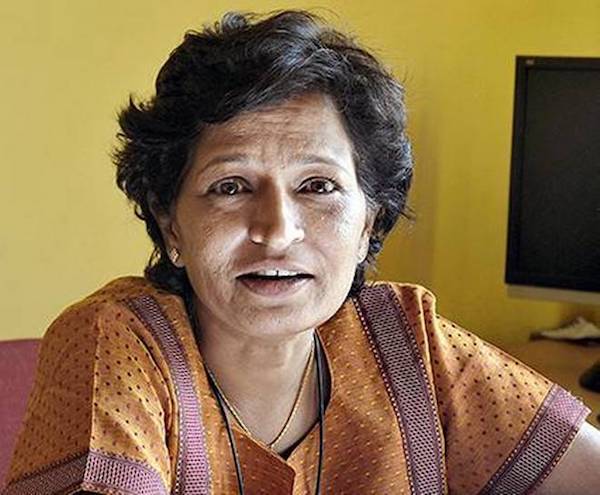
    BENGALURU(TIP): Most of the 16 country-made pistols recovered from the three right-wing activists arrested in Maharashtra were procured recently, most likely after the arrest of K.T. Naveen Kumar — one of the accused in the Gauri Lankesh case — in February 2018. Sources said this is a cause for concern as it indicates that the people involved were plotting to kill more people on their hit list, many in a short span of time.

    These are suspected to include the two pistols used in the murders of Narendra Dabholkar, Govind Pansare, M.M. Kalburgi and Gauri Lankesh. They are being tested for possible matches with cartridges found at the crime scene.

    During the course of their investigation into the murder of Gauri Lankesh, the SIT in May 2018 had recovered a hit list of 34 intellectuals from Amol Kale’s diary, eight of who were from Karnataka. The probe revealed an ambitious plan to set in motion multiple murder plots simultaneously in Karnataka.

    The probe revealed a plot to kill Mysuru-based rationalist Prof. K.S. Bhagavan, which investigators said was at an advanced stage of implementation. K.T. Naveen Kumar, 37, of Hindu Yuva Sena, a fringe group, was arrested by Bengaluru police in February 2018 when he was trying to procure a country-made pistol for the murder. This indicated that the gang had no weapon other than the one used to kill Gauri Lankesh. FSL reports have linked the weapon to the murder of M.M. Kalburgi.

    The pistol, which was used to kill Narendra Dabholkar and was also one of the weapons used in the murder of Govind Pansare, is not working, the probe had indicated.

    Amol Kale reportedly told interrogators that they were trying to create ‘multiple self-contained teams’ to execute multiple plots. His diary had entries pointing to several plots targeting rationalists in Karnataka.

    “At that time, we doubted their ability to carry out multiple assassinations. But now, the 16 pistols indicate that they seemed to have been moving towards that goal,” said a senior officer, who said it is alarming as it indicates that remnants of the gang continue to be active and furthering the conspiracy even after the arrest of most of their key players.

    Sources said Srikanth Pangarakar, a former Shiv Sena councillor from Jalna who was arrested by the Maharashtra ATS, was a close associate of Amol Kale, the alleged kingpin in the Gauri Lankesh case. The investigation indicates that they were in constant touch for the past one year and Pangarkar had visited well-known country-made pistol hubs in central India.

    (Source: The Hindu)


  • Trump says market would ‘crash’ if he was impeached

    Trump says market would ‘crash’ if he was impeached

    WASHINGTON(TIP): President Donald Trump said in an interview aired on Thursday that the US economy would collapse if he was impeached.

    “I will tell you what, if I ever got impeached, I think the market would crash. I think everybody would be very poor, because without this thinking, you would see—you would see numbers that you wouldn’t believe in reverse,” Trump told the program Fox and Friends.

    Trump was responding to a question on his mounting legal woes after his former attorney Michael Cohen said under oath that Trump instructed him to commit a felony by breaking US campaign finance laws.

    The US president then launched into a rambling statement on job creation and other economic progress he said had been made during his presidency and insisted Americans would be much worse off if Hillary Clinton had won the 2016 election.

    “I don’t know how you can impeach somebody who has done a great job,” Trump said.

  • Support for Relief Efforts for Victims of Floods in Kerala, India

    Support for Relief Efforts for Victims of Floods in Kerala, India

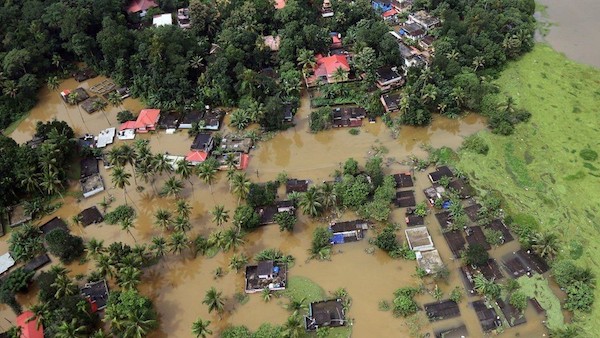
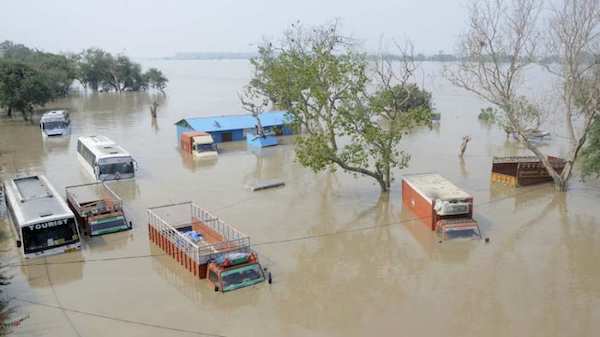
    NEW YORK(TIP): The Indian Diaspora Council International (IDC) and its global affiliates join with other associations and organizations in expressing our concern and urging support for the people of Kerala (India) affected by the recent devastating floods which that have caused numerous deaths, displacement, suffering, pain and anguish. Several local and international news reports have compared this flooding as the worst in Kerala in a century.

    Widespread downpours are forecast for the next 24 hours in the region, although rainfall intensity has declined over the past two days, according to a bulletin from the India Meteorological Department. Kerala’s monsoon showers this year have been 41 percent more than normal, contrasting with nationwide rainfall, which is 8 percent below average, the India Meteorological Department said.

    People wading through flood waters to find a safe destination
    Photos https://www.bbc.com/news/world-asia-india-45232327

    IDC commends the efforts being made by the State of Kerala and the Government of India to bring desperately needed relief to the affected citizens to alleviate the difficulties being experienced and for the well-being of its citizens. We urge other countries, as well as local, regional and international relief agencies, individuals, organizations, associations to respond urgently to this disaster and provide needed relief and contributions in a timely manner.

    Expressing grief over the unfortunate deaths and damage caused to property due to floods, India’s Prime Minister, Hon. Narendra Modi, observed that rescue of people who are still marooned remains the topmost priority.

    “Lot of people are still marooned,” said P. H. Kurian, relief commissioner of Kerala, said, adding thousands were rescued on Saturday. “We will increase the relief efforts”, he said.

    IDC urges relief contributions online and desperately needed clothing, materials and non-perishable food by contacting the nearest Indian High Commission or Indian Consulate, or via bona fide international relief agencies such as International Red Cross.

  • Weekly Horoscope August 27– September 2, 2018

    Weekly Horoscope August 27– September 2, 2018

    By Astrologer Bejan Daruwalla

    Contact no: +918141234275

    Aries: Ganesha says you rope in your associates in your dealings and this proves to be a good move. The attention also shifts from the work front to home and family and there are many domestic responsibilities and joys to handle and enjoy. You also have to invest some time in your housing society or community and you can’t get away from all this. Nor do you want to. There are other responsibilities to attend to as well. Plus, there may be demands from siblings, co-workers, immediate and distant family and neighbors.

    Taurus: – Love and money are the twin themes of the week. You also find time to relax, and there could perhaps be a home away from home as a kind of holiday retreat or weekend getaway. There will be loans, joint accounts, bonds, insurance and funds of all kinds to deal with on the money front, along with soaring expenses. You do a juggling act and manage it all well. You will also be spending a lot of time with loved ones and that will give you many happy moments. The family is important.

    Gemini: – Your people skills will be at their best and you will get the support of both colleagues and loved ones. Partnerships and collaborations are vital and most beneficial in this period. You surmount many obstacles and ride the wave to glorious times. You worry about your image and there may be legal issues that could tarnish it. You confide in family and form a strong team to battle these challenges. You find great support and strength in your association.

    Cancer: – Money and its jingle appeal to you more than ever before. You look at finances in a big way, as that is the main theme of this period. Personal and work-related finances hog the limelight. There are tax issues and all sorts of monetary developments that will take up your time. You have to solve it all and spend time behind closed doors getting to the nitty gritty of your finances and its implications.

    Leo: – Once the finances are worked out, you get to spending the money which you believe is hard earned. There are many expenses and, for a change, your creative instincts blossom. You do well at work and there is recognition. You may even get an award for something you have done. You love the limelight and the appreciation that it all brings. You are the toast of the office, and may get a promotion, if not more. If you are on your own, you make tangible expansion of the business/enterprise. A tremendous sense of aestheticism, of beauty, now grips you.

    Virgo: – You have achieved a lot, but you don’t want to stop here. You are prepared to stick your neck out like a platoon commander flushing out terrorists. This works as you break new ground and make many startling discoveries. Your new interests include religion and spirituality, travel and education. You have to kept money aside for the family and for a nest egg, and so monetary issues are not the real focus this week. You look for harmony and try to smooth the feathers you have rustled in the past.

    Libra: – Your conciliatory moves and work success are highly appreciated. There is enhanced income and prestige. You party a lot now and look at finances in the form of inheritance and legacies. You are a social butterfly and spend time at various gatherings enjoying yourself thoroughly. You are ebullient and enthusiastic, and your happy mood is contagious.

    Scorpio: – You are again on the work track. You are confident, pragmatic and determined and will forge ahead furiously. You earn plaudits for your achievements and decide to expand further and make more money, which is never out of your sights for long. You look at holistic progress and make the necessary adjustments to your personal and work life so that both show steady progress and harmony. There are expenses and minor delays to your plans including some medical expenses.

    Sagittarius: – You give your best to work and your relationships and there is great intensity in whatever you do. You extend your hand towards humanity, undertake social work and spend quality time with your children and/or parents. You are full of commitment and bond well with others. You are endowed now with a new vision and charisma and look at the future with immense possibilities in mind. You are riding the crest of a wave and feel that the world is yours to conquer.

    Capricorn: – You see yourself in a new light and are empowered by your success. The early part of the year was hectic and now you try to enjoy yourself and ride on the momentum generated in the previous months. There is a welcome change in your perspective and the way you are looking at the world. You are caring and considerate, alert and active. There is a new you eyeballing the world and whatever it has to offer. But, at the same time, while all this is hunky dory, avoid unnecessary show downs and run-ins with friends, family, colleagues and the law.

    Aquarius: – You are busier than ever before and highly motivated in all that you undertake – and it shows in the results. You spend quality time with loved ones and there are possibilities of exciting travel. But there are pinpricks like unexpected expenses, ill-health in the family, and a frittering away of valuable resources on issues that are of no relevance to you; in other words, there is highly avoidable wastage of both time and money. There is envy and politics at the workplace and you have to tread with caution. There may also be a brush with the law. Don’t put your faith in people without ascertaining their credentials.

    Pisces: – There are many distractions at play here. There are partnerships, religious ceremonies, meetings and interviews and several business/collaborations/connections, all of which lead you into a profitable, upward spiral. This is a good time to spread your wings and meet as many people as possible. There will be journeys and conferences and you will benefit greatly from them. There is romance in the air and, if married, there will be dealings with close family, your spouse, even your in-laws.


  • SANT RAJINDER SINGH JI MAHARAJ, HEAD OF SCIENCE OF SPIRITUALITY, INAUGURATES SPECTACULAR New National Headquarters In CHICAGO

    SANT RAJINDER SINGH JI MAHARAJ, HEAD OF SCIENCE OF SPIRITUALITY, INAUGURATES SPECTACULAR New National Headquarters In CHICAGO

    CHICAGO, IL(TIP): Over the last three decades, Sant Rajinder Singh Ji Maharaj has impacted the lives of millions of people throughout the world with his message of personal transformation through meditation on the inner Light and Sound. As witness to his global influence, thousands of people from 30 different countries gathered in Lisle, IL on Saturday, July 28, for the inauguration of the new National Headquarters for the Science of Spirituality.

    Accompanied by a delegation of dignitaries from local cities, the U.S. Senate and the U.S. House of Representatives, Sant Rajinder Singh Ji Maharaj cut the ribbon to inaugurate the iconic building. The organization’s new home embodies love, grace, and universality, bringing together design elements from the East and the West, just as the spiritual Master’s message brings together people from all walks of life.

    The ribbon-cutting took place in front of the reflecting pool where a three-ton sculpture named “The Meditator” embodies the Science of Spirituality logo and represents a person in meditation. The gently rippling pool in which it sits echoes the inner stillness and peace a person experiences in meditation. In the middle of the main building, the circular, gold-colored main hall rises from the tinted, curved glass arms that surround it, evoking two hands cupped in prayer and reaching to the heavens for divine inspiration and love.

    Perhaps one of the most interesting features of the building is a separate golden circular structure designed as a meditation sanctuary. It sits on a floor that was poured separately so that sound or vibration cannot travel from any other part of the building. The sanctuary is only for meditation. With its transitional lighting and serene atmosphere, the sanctuary will serve the community as a place to sit in silence and discover the peace and joy embedded within.

    Speakers at the Inauguration

    The architect, Gensler, is widely recognized as the world’s largest and leading collaborative architectural design firm, whilethe general contractor, Skender, has been the builder of choice for many of the world’s leading brands. The Science of Spirituality Meditation Center, built in accordance with green standards, represents one of Gensler’s and Skender’s most recent iconic successes.

    The inauguration program, featuring a panel of honored guests as speakers, took place on the stage of the main hall immediately following the ribbon-cutting. Speaking first, Sant Rajinder Singh Ji Maharaj expressed his appreciation to the guests, after which he outlined the four main purposes of the Meditation Center.

    He said, “We have a wisdom awaiting us deep within. Instead of only logging onto the Internet, we can take some time daily to log into our own inner essence to lead to a wisdom to enrich our lives. We can discover how to enter our personal sanctuary through meditation, leading to inner and outer peace and lasting joy. Meditation can help us uncover our spiritual side and discover the wonders within.”

    U.S. Congressman Bill Foster, from the 11thDistrict of Illinois, commented on how the Science of Spirituality has brought together people from all backgrounds. “I cannot tell you how proud I am to look out at the wonderful diversity in this audience and think how it reflects the diversity of these communities, of the state of Illinois, the United States and all of humanity. Thank you for representing them.”

    Kathryn Kruger, PhD read a welcome letter from U.S. Senator Dick Durbin, Illinois: “There’s an old saying: travel light, live light, spread the light, be the light. The Science of Spirituality has been the light in Lisle, Illinois for years, and today, with the inauguration of its new meditation center, that light shines a little bit brighter. Thank you for all you do and all you will continue to do in this community. Your work matters and makes a meaningful difference in all the lives you touch.”

    Marina Faz-Huppert, the Chicago Director for U.S. Senator Tammy Duckworth, Illinois, read the Senator’s congratulatory letter, in which she said, “I am particularly appreciative of the Center’s mission to support people from all walks of life in coming together to encourage peace. Your efforts are vital in uniting people all over the world and emphasizing the values of kindness, goodness, and harmony.”

    U.S. Representative Grace Meng from New York, after mentioning the organization’s affiliation with the United Nations as an NGO and praising its commitment to enriching the lives of those it serves, wrote: “I commend Science of Spirituality for its unwavering dedication to supporting its community and beyond.”

    All the thanks and appreciation are a testament to the tireless efforts of Sant Rajinder Singh Ji Maharaj whose vision for humanity is both individual and global. It is one in which all people can realize the true value of their deepest self. Through meditation we deepen our commitment to serving the world with love and compassion. Through meditation we realize that all life forms are vital and valuable members of one family of God.

    When the Meditation Center opens its doors to the public in September, not only will the community find a sanctuary of peace where they can spend time in meditation, but they will also be able to register for a variety of classes, programs, and events. These, as with all Science of Spirituality programs, are free. From vegetarian cooking classes, to learning how to meditate or participating in retreats, the Meditation Center will offer the community a full schedule of activities. All are welcome.

    For more information see: www.sos.org

    (Based on a press release issued by Renee Mehrra)


  • AAPI Urges US Govt. to Expedite H-1B, J-1 Visa for Physicians

    AAPI Urges US Govt. to Expedite H-1B, J-1 Visa for Physicians

    AAPI leaders share health and wellness message at India Day Parade in New York

    NEW YORK CITY(TIP):  “As the rapidly approaching start date for all GME programs, we at AAPI want to urge the US administration to expedite review of pending H-1B/J-1 Visa applications by non-U.S. International Medical Graduates (IMGs), who have been accepted to postgraduate training programs in order to avoid unnecessary delays,” said Dr. Naresh Parikh, President of AAPI, during a Media Greet & Meet event.

    In his key note address, Ambassador Sandeep Chakravorty said, “You have excelled in your fields of medicine, and thus make significant contributions through hard work, commitment and dedication to your profession and the people you are committed to serve.” While conveying his greetings and best wishes to AAPI leaders for the success of the convention and Global Healthcare Summit, Consul General of India in New York Sandeep Chakravorty described the fast-growing health sector, particularly the pharmaceutic industry in India. Ambassador Chakravorty lauded the efforts of AAPI, particularly for the free clinics across India, and the new clinic planned to be inaugurated in the state of West Bengal.

    In his Presidential address, Dr. Naresh Parikh, who was elected unopposed in every election leading to his current leadership of national SAAPI, stated that American Association of Physicians of Indian Origin (AAPI), the largest ethnic Medical Association in the nation, representing the interests of over 100,000 physicians, Fellows and Residents in the United States, while working closely with the Lawmakers individually, regionally and nationally through our AAPI Legislative Day on Capitol Hill, have consistently supported a comprehensive immigration reform.

    Dr. Parikh pointed out that in order to meet the growth in demand and shortage of physicians, the US has looked up to the highly trained and qualified physicians from other countries to meet our growing demand for physicians to meet our nation’s healthcare needs. In this context, AAPI has joined other Medical Association in the country in urging the US to expedite and reduce/eliminate the hurdles for speedy process of the applicants seeking H-1B visa. The J-1 visa to qualified physicians, enabling these foreign-trained physicians to serve our nation’s healthcare needs.

    His top priorities in the upcoming year will be to enhance membership, enabling AAPI members to recognize the many benefits of being members of AAPI, this attracting new members and sustaining those who are already members of AAPI. Bringing in financial stability to the organization is a major thrust for the new team, he said. Strengthening the many projects and programs in India and the United States, while taking on new initiatives and coordinating individual efforts to maximize results are some of the other plan s, he told the audience.

    Dr. Suresh Reddy, President-Elect of AAPI, in his passionate address, praised the leadership of Dr. Naresh Parikh. “I am so fortunate to be able to work under Dr. Parikh,” he said. He highlighted the importance of enabling the 2nd generation Indian Americans and help them realize their dreams. “AAPI is very strong,” he said and he along with the new team under Dr. Parikh will work together to enhance the image and bring stability to this noble organization.

    Dr. Gautam Samadder, the immediate past President of AAPI, urged the new leadership of AAPI to stand united and help make “our voices heard” in the corridors of power. In his brief remarks, Dr. In his felicitation remarks, Dr. Ajay Lodha, the immediate past president of AAPI, praised the leadership of Dr. Parikh. “Under the leadership of Dr. Gautam and his team, AAPI has been brought to new heights,” he said.

    Speaking on the occasion, Prof. Indrajit S Saluja, Editor of The Indian Panorama urged the AAPI leadership to take up a project to supplement the efforts of the Eye Foundation of America, headed by eminent ophthalmologist Dr. V.K. Raju in preventing avoidable blindness among children in India. Dr. Urmilesh Arya, National President of AIA and Dr. Bathija also supported the suggestion of Prof. Saluja

    Prof. Saluja also mooted the idea of a media advisory committee which was readily accepted by AAPI president Dr. Naresh Parikh.

    Dr. Kusum Punjabi lauded the efforts of AAPI leadership, encouraging young generation of Indian Americans and helping them realize their dreams. She along with Dr. Raj Bhayani was the Emcees at the event. In his brief remarks, Dr. Bhayani, highlighted the fact that Indian-Americans constitute less than one percent of the country’s population, but they account for nine percent of the American doctors and physicians. “The overrepresentation of Indians in these fields (engineering, IT and medicine) is striking – in practical terms, one out of seven doctors is likely to be of Indian Heritage. They provide medical care to over 40 million of US population.”

    Dr. Raj Bhayani welcomed the AAPI delegates and the media persons to the press conference, while Dr. Suresh Reddy proposed vote of thanks. Dr. Shashi Shah, past BOT chairman introduced the Consul General to the audience. Earlier, during the day, AAPI members attended an outstanding Leadership Conference, addressed by renowned speakers with a working lunch and was followed by a Conference from 10 am to 5.30 pm. The Leadership conference agenda focused on: Self-Management, Team Building Skills; And Addressing Challenges in AAPI.

     Towards making this goal and other objectives of AAPI, Dr. Parikh has an excellent and dedicated executive committee, consisting of Dr. Suresh Reddy, President-Elect; Dr. Sudhakar Jonnalagadda, Vice President; Dr. Anupama Gotimukula, Secretary; Dr. Anjana Samadder, Treasurer; and Dr. Ajit Kothari, Chairman of the Board of Trustees. Dr. Parikh thanked Dr. Ajay Lodha, Dr. Raj Bhayani and Dr. Kusum Punjabi, among many others for their leadership and the initiatives in organizing the conference today. Miss India USA Shree Saini made a special appearance at the event.

    AAPI Float in FIA Parade to mark India’s Independence, August 19

    On August 19th, AAPI joined the India Day Parade with a multi-color float spreading the message of health and wellness at the largest India Day Parade in New York City, organized by the Federation of Indian Americans. “AAPI takes special pride in saluting our beloved tricolor. Let us recall with pride the great sacrifice of our freedom fighters, whose undying love for India secured us our freedom,” Dr. Parikh said, as the float carrying AAPI leaders overflew with delegates from across the nation.

    “As we celebrate the 72nd anniversary of India’s Independence. AAPI, the premier organization that represents over 65,000 physicians and 25,000 Residents of Indian Origin in the United states, want to convey our greetings to all peoples of Indian origin on this day of national celebration,” Dr. Naresh Parikh, AAPI, President, declared. For more information, please visit: www.aapiusa.org

    (Based on a Press release issued by Ajay Ghosh)

  • Chicago Marathon – Priya’s Running for a Cure!

    Chicago Marathon – Priya’s Running for a Cure!

    CHICAGO, IL(TIP): There’s no better feeling than making the world a better place and having the time of your life along the way. I’ll be running the Chicago Marathon on Sunday, October 7 with The Leukemia & Lymphoma Society (LLS) – Team in Training! This race is more than a run – LLS and I are trying to cross the finish line in finding a cure for cancer and would love your help!

    LLS offers a variety of programs and services to patients and their families in support of its mission: Cure leukemia, lymphoma, Hodgkin’s disease and myeloma, and improve the quality of life of patients and their families.

    By fundraising, we can help have an impact in fighting cancers of all forms – driving life-saving results for millions of people. Please visit my fundraising page and join in making that happen through a tax-deductible contribution: http://pages.teamintraining.org/nyc/chicago18/PPatel

  • Xavier University School of Medicine receives full CAAM-HP Accreditation

    Xavier University School of Medicine receives full CAAM-HP Accreditation

    This is a full accreditation from 2018-2021

    ARUBA / NEW YORK (TIP):  Xavier University School of Medicine and President Ravishankar Bhooplapur are excited to announce that the University has received full accreditation from the Caribbean Accreditation Authority for Education in Medicine and other Health Professions or CAAM-HP. This is the highest possible accreditation that is offered by CAAM-HP. The standards used are based on the Liaison Committee of Medical Education (LCME)which accredits US medical schools.  CAAM-HP is recognized by the National Committee on Foreign Medical Education and Accreditation (NCFMEA), which is a part of the US Department of Education,as having standards comparable to those used to accredit US Medical Schools. This accreditation makesXavier fully compliant with the Educational Committee for Foreign Medical Graduates (ECFMG)rule that starting in 2023ECFMG applicants must graduate from a medical school that is accredited by an accrediting body that is recognized by the World Federation for Medical Education (WFME) and its Programme for Recognition of Accrediting Agencies. Xavier School of Medicine now holds full accreditation from (CAAM-HP), and a provisional accreditation from the Accreditation Commission of Colleges of Medicine (ACCM). Both of these accrediting bodies are recognized by ECFMG and the WFME. Xavier graduates will also be eligible for residencies in the state of California starting January 1st, 2020. The state of California has passed legislation that the state now follows the regulations of the ECFMG 2023 rule.

    President Bhooplapur and the committed board of trustees are proud to have achieved accreditations of these standards and are working hard to continue providing an excellent education for the school’s students. The University currently holds a 94% first time pass rate on the United States Medical Licensing Examination (USMLE)Step1 exam. This exam is the first of 3 exams you need to take in order to receive your MD degree.

    Along with the school’s recent full accreditation from CAAM-HP, Xavier has entered into a collaboration agreement with The Baruch S. Blumberg Institute (BS/BI). The institute is a non-profit translational research organization. BS/BI already has 32 companies at the center and a number of these companies have had their research and discoveries approved by the US FDA and have reached $1 billion valuations. This will provide the students a unique opportunity to network and conduct research with scientists in the commercial and academic field. This collaboration agreement will give Xavier students a competitive advantage amongst their peers and give them the ability to participate in high level research electives.

    Xavier University School of Medicine was founded in 2004 and is charted by the government of Aruba. The school is a not for profit medical school with the goal of “Cultivating Great Minds for Primary Care Medicine”.The campus is located in the largest city in Aruba, Oranjestad. The island of Aruba is located in the southern waters of the Caribbean and is below the hurricane belt. The average temperature on the island is 82°F/28°C. Travel to the island is very accessible because there are direct flights to and from North America offered on a daily basis. Aruba is one of only 2 islands in the Caribbean to have pre-clearance for US bound flights. This allows passengers to avoid having to go through customs once they have landed back in the US as they have already been checked before boarding.

    The school has a diverse student population from 27 different nationalities, and under the current leadership has expanded to open pre-med campuses in Ghana, Jordan, and India. In addition to this Xavier has also worked hard to develop new post-graduate courses covering a number of fields including, Anatomy, Biochemistry, Pharmacology, Physiology and Radiology.

    Xavier University School of Medicine is proud to announce the recent full accreditation it has received from CAAM-HP.

    ###

    If you would like to learn more information about this recent accreditation announcement, please call Andrew Sheldon at 516-333-2224 or email asheldon@xusom.com.

  • “Ekal” Targeting $10 Million with Dazzling Galas

    “Ekal” Targeting $10 Million with Dazzling Galas

    HOUSTON (TIP): After last year’s phenomenal success of magnificent fund-raising gala – ‘Future of India’ – “Ekal Vidyalaya Foundation (EVF)”, this year, is launching the most ambitious plan to host three Galas, at three strategic locations in USA. In sold-out Yr.2017Gala at majestic art-deco ‘Cipriani-Wall Street” banquet hall, ‘Ekal’ raised $2 Millionfor its Literacy, Healthcare and Integral-Development projects for rural India. It was Ekal’s first ever attempt at gathering generous individuals for its nation-building cause. According to EVF-USA President, Suresh Iyer, this unprecedented show of support from philanthropists brought the year-end tally of donations to $8 Million.

    Every year, Ekal’s hosts over 50 fund-raising events in major metropolitan centers across USA, by bringing famous ‘Bollywood Artistes’ for concerts. Earlier this year, Ekal had invited two groups of talented performers for this purpose. One group was headed by Kathak dancers Aditi Bhagwat & Kunal Tavri and another group was headed by Kaushik & Pranita Deshpande. They each were the star-attractions in 23 and 30 concert-events, respectively. The response to these concerts was so overwhelming that the events were sold-out at most of the places in advance. Over the years, Ekal’s progress has been consistently exponential. Now with three forthcoming Ekal galas planned for high net-worth supporters, Ramesh Shah, the Chairman of EVF-USA has no doubt that Ekal in 2018, is going to hit $10 Millionmagical mark for the first time.

    Suresh Iyer, President, Ekal Vidyalaya Foundation, USA

    As of now, Ekal has 72,000schools under its wings, grooming 1.92 Millionchildren annually – more than half of which are girls. Hon. PM Modi, in his clarion call to eradicate illiteracy from every small corner of the nation, wants Ekal to establish 100,000 schools by year Yr. 2022 – 75thanniversary of India’s independence. The primary objective of glittering galas is not only to raised funds for this task of national concern, but also, to encourage every sphere, every strata of Indian diaspora to invest itself in India’s future.Three eagerly-awaited galas are all taking place in October – Houston, TX on October 6; Bethesda MD on October 12 and in New York City NY on October 13. For details of venue, tickets and sponsorship kindly tap into <http://www.nycgala.ekal.org/> OR <www.ekal.org>.The distinguished speaker at all three galas will be Media Moghul Dr Subhash Chandra (Chairman, Essel Gr of Companies that includes ZEE-TV). In addition, at NYC gala iconic former CEO of Pepsi and Apple, John Sculley, is going to grace the evening as a Chief guest speaker. This NYC gathering will also be entertained by ‘Indian Idol’ competition winner – ‘Sreeramchandra’. In Houston, along with Dr Subhash Chandra, another highlight of the evening is going to be renowned motivational speaker, Shiv Khera.

    As the largest grass-root educational movement undertaken by Indians and NRIs, Ekal is socially conscientious, wherever it operates. Last year during ‘Hurricane Harvey’, Ekal volunteers not only worked along side ‘Sewa International’ in rescue and rehabilitation efforts in Houston region but also raised money for the victims. As the catastrophic destruction is currently unfolding in Kerala due to torrential rain and floods, ‘Ekal-India’ is actively involved there too with “Sewa Bharati”. Bajrang Bagra, CEO of ‘Ekal-India’ says,” the whole Ekal movement is all about giving dignity and self-esteem to rural-tribal folks of India”.

    (Based on a press Release issued by Prakash Waghmare)


  • GOPIO MAKES APPEAL FOR FLOOD VICTIMS OF KERALA

    GOPIO MAKES APPEAL FOR FLOOD VICTIMS OF KERALA

    NEW YORK(TIP): The fury of recent floods in Kerala is unprecedented in the history and has wreaked havoc on the lives and livelihood of millions of people.

    More than 350 people have died in the worst flooding in nearly 100 years. More than 350,000 people have found shelter in relief camps and thousands of others on high ground in areas cut off by floods. Thousands of people who were stranded on rooftops or the upper floors of homes have been rescued. Relief and rescue efforts have been in full swing. Supplying of food, medicine and clean water is a growing challenge for authorities.

    More than 82,000 rescue operations have been mounted by the Indian military, disaster management teams and volunteer workers including fishermen. Their efforts, however, have been hampered, by incessant rain, which had limited their work to daylight hours.

    The aftermath of the flood can also be beset with many problems. Damage to infrastructure is expected to come to $3 billion. Roads and 134 bridges have suffered damage, isolating remote areas in the hilly districts of the state which are worst affected. Thousands of homes have been lost; many more have been found severely damaged. Acres and acres of crops have suffered extensive damage.

    Millions of people underwent harrowing experiences and lost belonging that they had owned. All of them are faced with daunting task of rebuilding their lives from scratch. The magnitude of rehabilitation will be an enormous task which need help from everyone, the government of Kerala, the central government and development agencies. Affected people are looking up to various agencies, philanthropic and NRIs/PIOs to help the victims in rehabilitation efforts.

    GOPIO would like to raise awareness of this enormous natural calamity and would appeal to all NRIs/PIOs to help their unfortunate brethren during this challenging phase. With comparatively much better access to resources, majority of the NRIs/PIOs, if not all, are in a better position to give donation that can easily make a huge difference. GOPIO Fund would supplement in the rehabilitation effort and help people as they start to rebuild their lives. You may send your donation as per information given below.

    For more information, you may contact Inder Singh, Executive Trustee, GOPIO Foundation at indersinghusa@gmail.com or +1 818-708-3885 or Dr. Thomas Abraham, GOPIO Chairman at gopio@innoresearch.net or +1 203-329-8010 or Sunny Kulathakal, GOPIO President at kulathakal44@gmail.com or +91 9845756692.

    The funds raised will be channelized through established rehabilitation organizations who are in the field with close supervision of GOPIO International and our GOPIO-Kochi.

    Donation to GOPIO may be sent as follows:

    By check to: GOPIO International, 11433 Arlee Ave., Norwalk, CA 90650, USA

    Or by using your credit card at the – PayPal link.

    Visit www.gopio.net or specifically http://www.gopio.net/Kerala_Flood_2018_Donations.htm


  • Taxpayers with high incomes, complex returns:  Check withholding soon to avoid a year-end tax surprise

    Taxpayers with high incomes, complex returns: Check withholding soon to avoid a year-end tax surprise

    WASHINGTON(TIP): The Internal Revenue Service today urged high-income taxpayers and those with complex tax returns to check their withholding soon to avoid an unexpected tax bill or penalty when they file their 2018 federal income tax return in 2019.

    The Tax Cuts and Jobs Act, the tax reform legislation passed in December, made major changes to the tax law, including increasing the standard deduction, removing personal exemptions, increasing the Child Tax Credit, limiting or discontinuing certain deductions and changing tax rates and tax brackets.

    Any of these far-reaching changes could have a big impact on the tax refund or balance due on the tax return taxpayers file next year. That’s why the IRS encourages every employee to do a “paycheck checkup” soon to check that they are having the right amount of tax taken out of their pay. The IRS Withholding Calculator and Publication 505, Tax Withholding and Estimated Tax, can help.

    A checkup is especially important for those with high incomes and complex returns because they are often affected by more of these changes than people with simpler returns. This is also true if they also make quarterly estimated tax payments to cover other sources of income or are subject to the self-employment tax or alternative minimum tax.

    Changes that affect high-income taxpayers

    For 2018, the standard deduction nearly doubled to $24,000 for joint filers and $12,000 for singles. There were also numerous changes to itemized deductions, including:

    – A $10,000 cap on deductions for state and local property, sales and income taxes.

    – New limits on deductions for some mortgage interest and home equity debt.

    – Higher limits on the percent of income a taxpayer can deduct as charitable contributions.

    – No deduction for those miscellaneous expenses that, in prior tax years, had to exceed 2 percent of a filer’s income to qualify. These included investment expenses and un-reimbursed employee expenses such as travel, meals, entertainment and uniforms.

    Many who itemized in the past may find they’ll pay less tax in 2018 by taking the standard deduction.

    Do a ‘paycheck checkup’ soon

    Checking and adjusting how much tax is withheld from pay now can prevent an unexpected tax bill and penalties next year at tax time. It can also help taxpayers avoid a large tax refund, if they’d prefer to have their money in their paychecks throughout the year.

    Taxpayers need to adjust their withholding as soon as possible for an even, consistent amount of withholding throughout the rest of the year. Waiting means there are fewer pay periods to withhold the necessary federal tax – so more tax will have to be withheld from each remaining paycheck.

    Whether someone uses the Withholding Calculator or Publication 505, it’s helpful to have their completed 2017 tax return handy to help estimate the amount of income, deductions, adjustments and credits to enter. They’ll also need their most recent pay stubs to help compute their withholding to date.

    Employees can use the results from the Withholding Calculator or Publication 505 to help determine if they should complete a new Form W-4, Employee’s Withholding Allowance Certificate, and what information to include on the form.

    Though primarily designed for employees who receive wages, the Withholding Calculator can also be helpful to some taxpayers receiving pension and annuity income. Recipients of pensions and annuities can change their withholding by completing Form W-4P and submitting it to their payer.

    All taxpayers should remember that if their personal circumstances change during the year, they should re-check their withholding.

    Taxpayers who change their withholding for 2018 should recheck their withholding at the start of 2019. This is especially important for taxpayers who reduce their withholding sometime during 2018. A mid-year withholding change in 2018 may have a different full-year impact in 2019. So, if taxpayers don’t submit a new Form W-4 for 2019, their withholding might be higher or lower than intended. To help protect against having too little withheld in 2019, taxpayers should check their withholding again early in 2019.

    People with more complex situations may need to use Publication 505

    Taxpayers with more complex situations might need to use Publication 505 instead of the Withholding Calculator. This includes employees who owe self-employment tax, the alternative minimum tax or tax on unearned income from dependents. It can also help those who receive non-wage income such as dividends, capital gains, rents and royalties. The publication includes worksheets and examples to guide taxpayers through these special situations.

    In some of these situations, a household may make estimated tax payments but also have tax withheld by an employer. It’s important to account for both amounts when figuring how much tax to have an employer withhold. Publication 505 helps taxpayers include estimated tax payments; the Withholding Calculator does not.

    Adjusting withholding

    If an employee determines they should adjust their withholding, they should complete a new Form W-4 and submit it to their employer as soon as possible. Some employers have an electronic method to update a Form W-4.

    If an employee has a change in personal circumstances that reduces the number of withholding allowances they can claim, they must submit a new Form W-4 within 10 days of the change with the correct number of allowances.

    As a general rule, the fewer withholding allowances an employee enters on the Form W-4, the higher their tax withholding will be. Entering “0” or “1” on line 5 of the Form W-4 means more tax will be withheld. Entering a bigger number means less tax withholding, resulting in a smaller tax refund or potentially a tax bill or penalty.

    Taxpayers may also need to determine if they should make adjustments to their state or local withholding. They can contact their state’s department of revenue to learn more.

    Additional information

    The Withholding Calculator does not request personally identifiable information such as name, Social Security number, address or bank account number. The IRS does not save or record the information entered on the calculator. As always, taxpayers should watch out for tax scams, especially via email or phone and be alert to cybercriminals impersonating the IRS. The IRS does not send emails related to the calculator or the information entered in it.

    The calculator and Publication 505 are not tax-planning tools. Taxpayers needing advice regarding the new tax law and their personal situation should consult a trusted tax professional.

    Taxpayers can get more information on these topics at www.irs.gov/withholding. Additionally, IRS.gov/getready has information about steps taxpayers can take now to get a jump on next year’s taxes, including how the new tax law may affect them.

    (IRS)

  • Indian American comedian Hasan Minhaj adds to the current political and social issues

    Indian American comedian Hasan Minhaj adds to the current political and social issues

    NEW YORK(TIP): The reputed Indian American comedian was quoted saying in one of his events in India “he is not afraid to take “big swings”, and doesn’t think “log kya kahenge”, a Hindi phrase for “what will people say”.

    “I am very lucky. I am in an incredible privileged position as a comedian in America and we are given certain protection. Despite the problems that the country has, we are given these incredible privileges and protections,” Hasan said.

    “I know a lot of journalists, activists and performers around the world who don’t get that. So, I just feel incredibly grateful for the opportunities that I have,” Hasan said before the release of Lionsgate Films’ “The Spy Who Dumped Me” in India.

    He essays the role of Topher Duffer, a CIA Harvard alum in the movie — an action thriller, starring Mila Kunis and Kate McKinnon in comical roles. “And because I have those opportunities, I want to take big swings. I want to say things that I really feel about,” he added when asked whether he thinks about the consequences before taking on big names on public platforms.

    After doing some gigs, Hasan got his big break when he became a part of “The Daily Show”. But he found worldwide fame with his “Homecoming King”, debuted Off-Broadway in October 2015. He then recorded a version of that show in January 2017 for his first Netflix special.

    Growing up in the US as a Muslim from Aligarh was a bumpy ride for Hasan. And he gave words to his story through “Homecoming King”, filled with anecdotes of his struggle searching for his identity.

    Hasan was also applauded for roasting Trump at White House Correspondents’ Dinner last April, an event Trump had refused to attend.

    He infuses a wide spectrum of issues to his stand-up acts, but says the content doesn’t stem from an angry space.

    “I just think in my performance style, I am not particularly angry. I try to come out from a really honest place. Even when people disagree with me (and express themselves) via internet comments or even in the streets, they are like ‘Look, I don’t agree with you or I don’t like the show, but I don’t dislike you. I see where you coming from’,” he says.

    “I can live with that and I think that is a far more nuanced way to have a dialogue, especially in these times,” Hasan adds.

    How does he look back at his struggle of finding a voice — and his own identity — in the country?

    “I think it is one of those things where, for the longest time, one of my goals was to make it as a simulation of American comedians. Just do everything you can to fit in and try to relate it to the audience,” said the star.

    Looking back, he said: “In ‘The Daily Show’, Jon Stewart and Trevor Noah really push you to say what is your perspective and what is your take…That is the unique thing. That is the thing which breaks the chat.

    “Once I realized that, I was like, ‘Oh, actually being generic, trying to play everybody, isn’t very good for comedy or storytelling’. So, I just doubled down to the things which I really believe in and are a part of my identity,” he said.

    Hasan wants to continue on the same path.

    “That is the most interesting thing. I think the best feeling which I have as a performer, when I share the project, is when people in the audience say, ‘I always felt that way’ or ‘Thank you for saying that’ or ‘You were able to put that in words’,” he says.

    “That means a lot to me. It is so cool that in the US comedian special I got to put the concept like ‘log kya kahenge’,” he adds.


  • Indian American Doctor from Texas Convicted for Raping Patient will Serve 10 Years of Probation

    Indian American Doctor from Texas Convicted for Raping Patient will Serve 10 Years of Probation

    HOUSTON(TIP): An Indian American doctor from Texas will spend 10 years of probation instead of jail for raping a sedated patient in a hospital.

    Jurors convicted Shafeeq Sheikh, 46, a former physician at the Baylor College of Medicine, of second-degree sexual assault after a trial that ended this past week.

    The crime is punishable by up 20 years in prison, but the Texas jury sentenced Sheikh to 10 years of probation on August 17.

    Sheikh will have to register as a sex offender. Unlike most states and the federal government, Texas grants juries the power to set criminal punishments.

    The punishment has surprised defense attorneys, disappointed law enforcement and raised concerns from a victims advocacy group, according to media reports.

    The jurors had recommended the sentencing, to which visiting Senior District Judge Terry L Flenniken was required to follow by law, according to local media report.

    Sheikh was working in night shift at Houston’s Ben Taub Hospital in 2013 when a woman was admitted for shortness of breath and wheezing. She was in the hospital overnight and sedated when Sheikh came to her room several times during the night and sexually assaulted her.

    The woman said she attempted to get help from a nurse, but the call button would not work.

    DNA evidence collected from a rape kit matched the DNA sample of the guilty doctor’s cheek swab. But it took two years for charges to be filed against Sheikh.

    Surveillance video also captured Sheikh on the floor where the woman’s room was located. He used his badge to swipe onto her floor at least 12 times that night. “He sought her out. He chose her to prey on,” Assistant District Attorney Lauren Reeder said during Friday’s sentencing.

    “You know he’s the type of man who would go in multiple times, testing the waters, seeing how far he could go and get back to his normal business after that.”

    “You know he’s the kind man of who walked around for two years before he was charged with this… knowing what he did,” she added.

    During the trial, the doctor admitted to the sexual contact with the woman, but insisted it was consensual. lawyers also pleaded with the jury to show some compassion to Sheikh, his wife and children, who also suffered consequences due to his actions.

    “The dreams of a man, the childhood dream to become a doctor, were shattered by his conduct. He destroyed his own dreams,” Sheikh’s lawyer Stanley Schneider said.

     “What he has done to himself and his family is punishment. They are serving his sentence with him. His children are serving his sentence with him.”

    The Texas Medical Board revoked his license in 2015 after they found he was a “continuing threat to public welfare.” Sheikh has since left the hospital.

     The woman, now 32, said after the sentencing she wanted to move on from the incident. She told KHOU11 in 2015 that she believed there are other victims.

    (Source: KHOU11)


  • Indian-Origin UAE Based Businessmen Donate Rs. 125 Million for Kerala Floods

    Indian-Origin UAE Based Businessmen Donate Rs. 125 Million for Kerala Floods

    DUBAI (TIP): Indian-origin UAE based business Tycoons have announced Rs.125 million donation for flood relief operations in the flood-hit Kerala, according to a media report.

    164 people have lost their lives in Keralasince August 8 due to floods caused by rains and landslides, while over 3.14 lakh people have been moved to relief camps.

    The state is facing the worst flood in 100 years with 80 dams opened and all rivers in spate. A body blow has been dealt to the scenic state, with its infrastructure, standing crops, and tourism facilities severely hit.

    Kerala-born businessman Yusuff Ali MA, chairman and managing director of Lulu Group, has announced a Rs.50 million donation for rain-battered Kerala, Khaleej Times reported.

    KP Hussain, chairman of Fathima Healthcare Group, has donated Rs.50 million. He said that Rs.10 million out of Rs.50 million will directly go to the Kerala Chief Minister’s relief fund, while the rest will be allocated for medical relief aid, the Gulf paper added.

    Mr Hussain said that his group has coordinated with the state’s health secretary to send volunteers from its medical faculty. This includes doctors and paramedics being sent to relief camps.

    “As per our geological studies and today’s condition in Kerala, the stagnant water will be drained much later than expected. Hence, there is a high possibility of more deaths in the event of spread of various diseases like fever, dysentery, gastric issues, skin disorders etc.,” he was quoted as saying by the paper.

    “This situation needs to be handled very seriously and emergency treatment has to be provided with immediate effect. As recommended by the public health secretary, we have received the list of medicines which will be suppliedto the relief camps.”

    Indian – origin billionaire BR Shetty, chairman of Unimoni and UAE Exchange, pledged Rs. 20 million.

    Azad Moopen, Indian physician and philanthropist, and founder chairman and managing director of Aster DM Healthcare, pledged Rs. 5 million. The group also announced that it had mobilized a disaster support team of over 300 volunteers.

    The Indian community in the UAE, numbering 2.6 million, constitutes 30 per cent of the total population. It is the largest expatriate community in the country.


  • Indians Living in China Donate Rs. 14 Lakh for Kerala Flood Relief

    Indians Living in China Donate Rs. 14 Lakh for Kerala Flood Relief

    BEIJING (TIP): Indians living in China have raised over Rs. 14 lakh for the welfare of flood relief victims in Kerala.

    In Beijing, the Malayalee Association along with the Indian Community of Beijing (ICB) raised 50,000 yuan (about Rs. five lakh) at a get together.

    Suresh Varma, president of the Beijing Malayalee Association, said the money is being routed to the Chief Minister’s relief fund in Kerala through the Indian Embassy.

    The funds were collected at a special platform setup at the Indian restaurant Taj Pavilion with a lunch and donated to Kerala relief fund, said M H Pastakia, ICB member.

    In Yiwu, the international consumer trade hub which has a large Indian community, raised about 80,000 yuan (Rs. eight lakh) to be donated to the relief fund.

    In Shanghai, the Indian association has so far raised 20,000 yuan (Rs. two lakh) to be sent to the Kerala flood relief fund, member Amit Waiker said.

    The Indian Embassy is helping the community to route the proceeds to the Chief Minister’s welfare fund.

  • Indian-Origin student group in UK calls for action on fake calls scam

    Indian-Origin student group in UK calls for action on fake calls scam

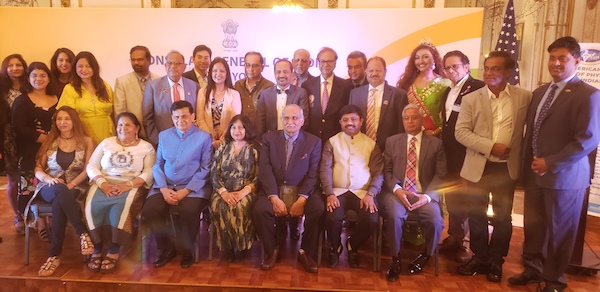
    LONDON (TIP): An Indian-origin student group in London called for action to support members who had been subjected to a fake calls scam, which involves fraudsters claiming to be from the UK Home Office and threatening innocent students with deportation.

    Indian National Students Association (INSA) UK resolved at its annual National Executive meeting in London over the weekend to provide support to students affected by the scam.

    “At the meeting, representatives from Westminster University and King’s College London chapters highlighted the issue of fake calls being made to Indian students and resolved to provide support to those affected,” INSA UK said in a statement.

    The case of Hardik Somani, from Westminster University, emerged as a case study after he was targeted by fraudsters posing as “officials of the Home Office”.

    He was threatened with immediate deportation for failing to fill out paperwork “correctly” and was warned he faced a 10-year ban from the UK unless he paid a “fine” of up to 6,500 pounds. INSA UK said it supported him through the process of alerting the UK authorities.

    Shweta Kulkarni, President of the students’ body, said: “INSA UK was set up to speak up on behalf of Indian students and we are keen to address all issues of concern, including such fake calls and visa hurdles.

    “We urge the authorities to take action against the fraudsters and increase the level of support for the targeted students.”

    A Home Office spokesperson said: “Legitimate Home Office officials will never contact individuals to demand payment over the phone for visa fees or fines.

    “Anyone who thinks they have been a victim of fraud should contact the police.”

    Earlier this month, another Indian students’ body — the National Indian Students and Alumni Union (NISAU) UK — and the University of Manchester had issued alerts directed at Indian students, warning them to be wary of such scam phone calls.

    It called on students not to engage with such callers, who use software to create “spoof” numbers that may seem legitimate.

    “The fraudster may use the terms ‘deportation notice’, ‘alien registration form’ and ‘late fee charges’… Do not make any payment… Report the matter to Action Fraud,” the advisory said.


  • US Attorney General Jeff Sessions hits back at Trump criticism

    US Attorney General Jeff Sessions hits back at Trump criticism

    WASHINGTON(TIP): Stung by US President Donald Trump’s criticism of him as being unable to take control of the Justice Department, attorney general Jeff Sessions came out with a strong rebuttal.

    Sessions, in a rare rebuttal to Trump, issued a statement defending the integrity of his department.

    “I took control of the Department of Justice the day I was sworn in,” he said. “While I am attorney general, the actions of the Department of Justice will not be improperly influenced by political considerations.”

    Sessions, a longtime US senator and early supporter of Trump’s presidential bid, drew Trump’s ire when he recused himself in March 2017 from issues involving the 2016 White House race.

    That removed him from oversight of the federal special counsel’s investigation of Russia’s role in the election and whether Trump’s campaign worked with Moscow to influence the vote. Trump has repeatedly called the investigation a witch-hunt and maintained there was no collusion.

    Trump told Fox that Sessions should not have recused himself from Russia-related matters.

    “He took the job and then he said, ‘I’m going to recuse myself,’” Trump said. “I said, ‘What kind of a man is this?’”

    However, Trump told “Fox & Friends” he would “stay uninvolved” in department matters.

    Trump intensified his criticism of the Justice Department in a Fox News interview broadcast on Thursday, August 23, as the White House grappled to respond to the conviction of former Paul Manafort, Trump’s former campaign chairman, on multiple fraud counts and a plea deal struck by Michael Cohen, Trump’s former personal lawyer, that implicated the president.

    Trump reprised a litany of complaints about the Justice Department and the FBI, attacking both without providing evidence they had treated him and his supporters unfairly.


  • The freedom to differ

    The freedom to differ

    Space for a rational and responsible debate on ideas and religion is shrinking

    By Swami Agnivesh

    I can understand that my advocacies and interventions are provocative to the Parivar.  But the hallmark of the democratic mindset is the freedom to differ in a rational and responsible manner. In our tradition, differences in ideas and beliefs are to be addressed through dialogues — shaastrarths — and not by violence and intimidation. We have always believed that the preference for violence is a sign of weakness, not of strength, says the author.

    that spirituality is the light of life. But my idea of spirituality has been, from the beginning, different from its pietistic version. The goal of spirituality is to build a dharmic society, wherein all human beings can attain growth, freedom and dignity. If so, a world-denying, escapist religiosity is clearly unacceptable. So, I developed for myself the vision of Vedic socialism and applied spirituality.

    In this, I have been inspired by the teachings of Maharshi Dayanand. The nine principles of Arya Samaj, as formulated by him, have been my guiding light. I became deeply convinced that his endeavor to re-instate reason in the sphere of religion, and his relentless battle against religious obscurantism and superstitions of all kinds, is the way forward for India. I left academics and plunged into spiritual activism under the world-transforming vision of Dayanand, convinced that it was the cause for which I was to live, for the rest of my life.

    So, my sanyas is a relentless pursuit to seek the light of truth and to make it prevail in the life of our country. The shaping discipline of my life is ‘to doubt, to debate and, if need be, to dissent’. It is not an option for me, hence, to be coopted into anybody’s myths, make-believe or partisan agenda. My spiritual discipline obliges me to satisfy my conscience that what I embrace is in full harmony with the light of truth. I have taken a stand against the indoctrination and communal conditioning by religions, using the arsenal of blind faith, of humans from infancy onwards. I have no doubt that this is an atrocity on freedom and is clearly violative of rights. Every form of conditioning, especially the conditioning that begins from birth, militates against the right to choose, which is basic to religious freedom. To me, freedom to choose where I should stand and which cause I need to support, based on a free and informed application of reason, is the essence of the religion I wish to practice and is, hence, the essence also of religious freedom.

    Dayanand’s campaigns against blind faith and religious obscurantism is an aspect of his commitment to make justice and human dignity prevail in our society. Merely attacking superstition is an academic exercise. I resist and question this evil as part of my commitment to make truth prevail. My reading of history convinces me that blind faith — and the suppression of free and rational thinking it brings about — is the main weapon that agents of injustice, exploitation and oppression use. My spiritual calling and conviction make it incumbent on me to resist this aberration.

    I state the above, to alert my countrymen that the attacks launched on me, which can no longer be glossed over as stray instances, are assaults on the freedom of religion that I am entitled to under Article 25 of our Constitution. The right to practice, preach and propagate my religious vision does not mean, as I understand it, the right to convert anyone. It envisages the freedom to express my spiritual convictions in the public sphere. It protects me from the need to toe the line drawn by some muscular outfits and ideologies.

    I see the present trend not only as a personal threat, but also as a dangerous social and national malady. As a sanyasi in the Arya Samaj tradition, I feel that the Samaj itself is under attack. In this respect two strategies are used. First, that of penetration and colonization. RSS elements have penetrated the Arya Samaj in several areas and, with the help of weak and willing collaborators, hollowed out its innards. The crucial distinction between the RSS and the Arya Samaj stands blurred in such pockets.

    The orchestrated physical attacks on me signal the inauguration of the second strategy: that of intimidation and coercion. The message is clear: the Arya Samaj will be allowed only a shadowy existence in the backyard of Hindu triumphalism as spearheaded by the Sangh Parivar. Any attempt to articulate the authentic spiritual vision of the Samaj will be crushed.

    The RSS and the Arya Samaj are opposites. The one stands for authoritarian, top-down regimentation. It is a threat to social justice and the fundamental values of our Constitution. It scorns the universal vision of the Vedas and espouses a jingoistic and casteist idea of India, which is intolerant and narrow-minded. It replaces truth with violence, especially the violence of blind faith. It swears by hierarchical stratifications that discriminate against women, Dalits and adivasis. The Arya Samaj, in contrast, insists on the freedom of religion based on the primacy of reason. It has a creedal commitment to gender equality and social justice. It dreams of establishing a society of the noble (arya).

    I can understand that my advocacies and interventions are provocative to the Parivar.  But the hallmark of the democratic mindset is the freedom to differ in a rational and responsible manner. In our tradition, differences in ideas and beliefs are to be addressed through dialogues — shaastrarths — and not by violence and intimidation. We have always believed that the preference for violence is a sign of weakness, not of strength.

    What are the options available to me at the fag end of my life? To be silenced by the agents of aggression or to be coopted by them into an agenda that I am totally convinced is a peril to the country? Or, to soldier on, for as long as I retain my breath, and uphold the relevance of the spiritual vision of Maharshi Dayanand to our times? As for me, this does not present a personal dilemma. It poses a challenge; a challenge significant for the country as a whole.

    (The author is an Arya Samaj scholar and social activist)


  • Accepting help: on UAE’s aid to Kerala

    Accepting help: on UAE’s aid to Kerala

    Junk the precedent; taking aid from countries for disaster relief is no sign of weakness

    The clearest indication so far that India would turn down offers of financial assistance from foreign governments for relief and rehabilitation work in Kerala came on Wednesday. And yet, it only added to the confusion. The Ministry of External Affairs spokesperson said that “in line with the existing policy”, the Central government would meet requirements in Kerala through “domestic efforts”. Various governments have made specific offers to Kerala, from about ₹700 crore from the UAE to about ₹35 lakh from the Maldives. The spokesperson added that only PIOs, NRIs or international foundations could send money from overseas to the Prime Minister’s or Chief Minister’s relief fund. But as Chief Minister Pinarayi Vijayan indicated, this clarity about existing policy is missing in the Central government’s National Disaster Management Plan. Put out in 2016, the Plan states that India will not appeal for foreign aid in the wake of a disaster. But it goes on to say: “… if the national government of another country voluntarily offers assistance as a goodwill gesture in solidarity with the disaster victims, the Central Government may accept the offer.” The condition applies that the Union Home Ministry would consult the MEA and assess the requirements “that the foreign teams can provide”. So, what exactly is government policy? Is it laid out in the NDMP document that has an opening message from Prime Minister Modi? Or is it based on the decision of the UPA government to refuse aid or assistance in the wake of the 2004 tsunami — a decision born out of a sense of false pride and a misplaced sense of shame — that became a sort of convention thereafter?

    It is not only this mismatch between convention and written document that has created space for the current controversy. Irrespective of what was agreed upon in the past, democracies should be supple enough to respond to emergencies in ways that benefit the greater common good. It serves well no citizen of India for the government to stand on mere precedent or pride to turn down genuine offers of help, in terms of funds or expert teams — or to even ask for help. Offers of aid from foreign governments must naturally be scrutinized to see if they compromise national security and other interests. But to stand on notions of self-reliance in a multilateral world, to spurn a helping hand, is to be beholden to a strange pride. There is no shame in taking help, just as there should be no hesitation in offering it. India has a longstanding tradition of rushing help elsewhere. Leaving Centre-State politics, if any, aside, the government should not just gracefully accept the assistance for Kerala, it should junk the 2004 precedent.

    (The Hindu)

  • Rebooting the system for a skills upgrade

    Rebooting the system for a skills upgrade

    There needs to be a road map to rescue private Industrial Training Institutes from their weak state

    The only way to mobilize adequate resources the right way is to do skills training and have equipment and tools that keep pace with changing needs and ensure that employers have skin in the game.

    Small shops, basements, tin sheds and godowns. These are not random workplaces but places where private Industrial Training Institutes (ITIs) are running in the country (India). Disturbing facts such as these come from the report of the Standing Committee on Labour (2017-18) headed by Bharatiya Janata Party MP Kirit Somaiya, on the “Industrial Training Institutes (ITIs) and Skill Development Initiative Scheme” of the Ministry of Skill Development and Entrepreneurship (MSDE). It was submitted to Parliament few months ago.

    Explaining the scale-up

    The ITIs were initiated in the 1950s. In a span of 60 years, until 2007, around 1,896 public and 2,000 private ITIs were set up. However, in a 10-year period from 2007, more than 9,000 additional private ITIs were accredited.

    What explains this huge private sector scale-up? The committee says that it is not efficiency but a disregard for norms and standards. However, the ITIs are not alone. The National Skill Development Corporation (NSDC) today has more than 6,000 private training centers. Since it has short-term courses and its centers open and close frequently, it is all the more prone to a dilution of standards. Private training partners have mushroomed at the rate of five a day (mostly with government support) and it is clear that the government has been unable to regulate private institutions for quality. Private sector engagement in skill development has been taken up by standalone private training partners and not employers. The latter could have made the system demand-driven. Meanwhile, the lack of a regulator for skill development, with teeth, has led to poor quality affiliation, assessment and certification.

    The Somaiya committee report is scathing in its tone and specific in details. It outlines instances of responsibility outsourcing, no oversight, connivance and an ownership tussle between the Central and State governments.

    Private-ITI accreditation troubles started when the Quality Council of India (QCI), a private body, was hired due to “high workload of affiliation and shortage of [government] staff”. The QCI did not follow accreditation norms created by the National Council for Vocational Training (NCVT) and it appears that neither scale nor standard was achieved, but only speed. ‘Speed’ now risks the future of 13.8 lakh students (on an average, 206 students per ITI) studying in these substandard ITIs, which can be closed any time.

    The ITIs have a unique functioning set-up. While they were formed under the government’s Craftsman Training Scheme, their day-to-day administration, finances and admissions are with State governments. The NCVT performs an advisory role. The ITIs often run into issues with no one to take ownership. A case in point is the examination process — the question paper is prepared by the NCVT, but administered and evaluated by instructors of the State Councils for VT. The NCVT is just a stamp with no role in actually assessing quality. How can quality outcomes be expected without quality assessments?

    The parliamentary committee has shed light on the ITIs. If the same exercise were extended to other skill development schemes, the picture would be grimmer. There are 183 cases pending in High Courts on non-compliance of norms by the ITIs. However, the short-term training programs of the Ministry evade any scrutiny and action. For example, the Standard Training Assessment and Reward scheme spent ₹850 crore in 2013-14 with no norms for quality. There were no Aadhaar checks, attendance requirements and batch size limitations. Private training operators have made a profit with no court cases.

    The report also reinforces disturbing findings of a national survey by the research institute (NILERD) of the Planning Commission in 2011 about private ITIs: they offered training in less than five trades (in government ITIs it is less than 10); had fewer classrooms and workshops for practice; and their teachers were very poorly paid.

    A starting point

    So, what can we do systemically? A good point to start would be the Sharda Prasad Committee recommendations.

    We need better oversight, with a national board for all skill development programs. The core work (accreditation, assessment, certification and course standards) cannot be outsourced. Like every other education board (such as the CBSE), a board is required in vocational training that is accountable. Since we have the NCVT as a legacy, it should be used as a kernel to constitute the board. We should also have a mandatory rating system for the ITIs that is published periodically. A ranking of the ITIs on several parameters such as the one done by the National Assessment and Accreditation Council in tertiary education can be replicated.

    There should be one system, with one law and one national vocational education and training system. The silos in which vocational training happens in India is unfortunate. We need to create a unified national vocational system where the ITIs, NSDC private vocational trainers and vocational education in schools, and the other Central ministries conducting training gel seamlessly and can learn from, and work with each other. A unified legal framework can facilitate such a unification. The absence of a law has only weakened regulation and monitoring. What we need is a national vocational act that replaces all scattered regulations — recommended in the 12th Five Year Plan.

    Micro-institutional reforms

    The ITIs have many internal issues such as staffing and salaries that need attention, as the NILERD nationwide survey in 2011 had found. There is also a critical need to reskill ITI teachers and maintain the student-teacher ratio. Since technology obsolescence is a continuous challenge, financial support envisaged through the NSDC should be extended to the ITIs.

    The primary reason for hiring the QCI and the mess that followed was this: “huge workload of affiliation and shortage of staff”. This is true even today. It is unlikely that without fixing this, the QCI mistake will not be repeated. There has been a tremendous push by the government for private sector talent in government; perhaps it is worth considering talent from the open market to fill up higher posts in skill development.

    Institutional reforms such as moving the office of the Directorate General of Employment (the arm that has all data on employment) from the Ministry of Labour to the MSDE would help. It would also complement the Directorate General of Training already under MSDE.

    Employers and financing

    This is the last but perennial challenge. Given the scale of our demographic challenge, a belief that financing from corporate social responsibility, multilateral organizations such as the World Bank, and the government will meet the financial needs for skill development is wishful thinking.

    The only way to mobilize adequate resources the right way is to do skills training and have equipment and tools that keep pace with changing needs and ensure that employers have skin in the game. This is possible through a reimbursable industry contribution (RIC) — a 1-2% payroll tax that will be reimbursed when employers train using public/private infrastructure and provide data. RIC, which is implemented in 62 other countries, was recommended in the 12th Plan and is an idea whose time has come. An estimate by the first author of this article indicated that such a tax would generate ₹17, 000 crore per annum for skilling in India — which is several multiples of State/Union governments’ current annual budget for skilling.

    Finally, while there is so much talk of skills for the future and the impact of artificial intelligence and automation, data show that 13.8 lakh students in the ITIs are suffering due to poor institutional accreditation. Placement in NSDC training has been less than 15%. Maybe if we take care of the present, we will be better prepared for the future.

    (Santosh Mehrotra is Professor of Economics, Centre for Labour, Jawaharlal Nehru University, a member of the Prasad Expert Committee on Sector Skill Councils, and a lead author of the National Skills Qualification Framework. Ashutosh Pratap works on skills and jobs issues and has worked with the Expert Committee)


  • University of Texas Dallas Indian American Lecturer Amandeep Sra Earns ‘National Award for Excellence in Undergrad Teaching’

    University of Texas Dallas Indian American Lecturer Amandeep Sra Earns ‘National Award for Excellence in Undergrad Teaching’

    DALLAS (TIP): Dr. Amandeep Sra is the recipient of the 2018 Centennial Award for Excellence in Undergraduate Teaching from Iota Sigma Pi, the national honor society for women in chemistry. Founded in 1902, Iota Sigma Pi serves to promote the advancement of women in chemistry by granting recognition to women who have demonstrated superior scholastic achievement and high professionalism.

    The organization presents several awards to professionals in the field of chemistry and scholarships to graduate, undergraduate and high school students. The Centennial Award is given each year to a female educator for excellence in teaching chemistry.

    Sra teaches freshman- and sophomore-level chemistry and is the general chemistry lab coordinator in the School of Natural Sciences and Mathematics. These classes enroll about 250 students per lecture section, and each semester serve about 1,200 students in the lab.

    Such large classes include a large number of nontraditional students, many of whom said in nomination letters for the award that Sra finds ways to reach everyone and will go above and beyond with workshops, study sessions and mentoring to help students understand the material.

    “Having one-on-one interaction with students is very important. As I get to know them, I feel I can better help them in the areas they need most.”

    Before she began teaching part time in 2011 and full time in 2012, Sra conducted research in materials science and engineering and electrical engineering at UT Dallas and did biomedical research at the Harold C. Simmons Comprehensive Cancer Center at UT Southwestern Medical Center. Such diverse research experiences have made her a better teacher, she said.

    “My basic training is as a chemist,” said Sra, who earned her PhD in chemistry at the Bhabha Atomic Research Center in India. “Multidisciplinary research experiences have helped me a lot because freshmen who take my classes have different majors.

    “My knowledge from working in a biology-oriented field, as well as in materials science and electrical engineering, has helped me integrate these topics into teaching chemistry. I think this has been really helpful for the students because now they see that chemistry is not just an isolated subject but is the basic foundation of many sciences.”

    Sra was nominated for the national award by Dr. Julia Chan, professor of chemistry and biochemistry at UT Dallas, who won the 2008 Agnes Fay Morgan Research Award from Iota Sigma Pi. That award recognizes the achievements of scientists under the age of 40.

    “Dr. Sra is creative and able to inspire students because of her ability to integrate current research trends, and this effort is not trivial,” Chan said. “She is also a mentor to veterans and nontraditional students in her classes, and she takes an active role in ensuring students’ success.”

    Sra also received UT Dallas’ 2018 President’s Teaching Excellence Award in Undergraduate Instruction for a non-tenure-track faculty member and a 2017 Outstanding Teaching Award from the School of Natural Sciences and Mathematics.

    “When I first started teaching, it was part-time. But once I realized how much I enjoyed it and enjoyed interacting with students, I decided it was a good career move to switch to full-time teaching,” Sra said.

    (Press Release)