Month: May 2020

  • A plan to revive a broken economy

    A plan to revive a broken economy

    By Jayati Ghosh, Harsh Mander, Prabhat Patnaik
    A combination of wealth and inheritance taxation and getting multinational companies to pay the same effective rate as local companies through a system of unitary taxation will garner substantial public revenue. They will also reduce wealth and income inequalities which have become horrendous. A 2% wealth tax on the top 1% of the population, together with a 33% inheritance tax on the wealth they bequeath every year to their progeny, could finance an increase in government expenditure to the tune of 10% of GDP.

    An estimated 12.2 crore Indians lost their jobs during the coronavirus lockdown in April: CMIE

    There are clear, implementable steps the Centre can take in fiscal terms to revive the economy and support livelihoods

    The Prime Minister has just announced Lockdown 4.0. Despite some resulting increase in economic activity, vast numbers of working people will remain without their regular incomes. He also announced a package of ₹20 lakh crore, but this includes already allocated money of ₹6-lakh crore and monetary policy directives to banks and non-banking financial companies. The announcements by the Finance Minister thus far involve no additional public spending, even though this is urgently required to revive the economy and prevent further contraction. Here we discuss what the government should do immediately in fiscal terms for reviving the economy and supporting livelihoods.

    Food and cash transfers first

    The immediate need is to provide free food and cash transfers to those rendered incomeless. Providing every household with ₹7,000 per month for a period of three months and every individual with 10 kg of free food grains per month for a period of six months is likely to cost around 3% of our GDP (assuming 20% voluntary dropout). This could be financed immediately through larger borrowing by the Centre from the Reserve Bank of India. The required cash and food have to be handed over to State governments to make the actual transfers, along with outstanding Goods and Services Tax compensation.

    This is easily doable for several reasons. First, food grains are plentiful, as the Food Corporation of India had 77 million tons, and rabi procurement could add 40 million tons. Second, because of the lockdown restrictions, the multiplier rounds of such expenditure are heavily truncated at present and would not generate as much demand as in normal times. Third, cash transfers in many spheres will only enable current demand to continue (such as payment of house rent to continue occupancy) and not create any fresh demand. Fourth, when greater normalcy finally allows pent-up demand to surface, output could also expand because of resumed economic activity. Finally, putting money in the hands of the poor is the best stimulus to economic revival, as it creates effective demand and in local markets. Hence, an immediate program of food and cash transfers must command the highest priority.

    Revamp MGNREGA work

    But the post-lockdown world will be different for several reasons. First, millions of migrant workers have endured immense hardships to trudge back home, and are unlikely to return to towns in the foreseeable future. Employment has to be provided to them where they are, for which the Mahatma Gandhi National Rural Employment Guarantee Scheme (MGNREGS) must be expanded greatly and revamped with wage arrears paid immediately. The 100-day limit per household has to go; work has to be provided on demand without any limit to all adults. And permissible work must include not just agricultural and construction work, but work in rural enterprises and in care activities too.

    The revamped MGNREGS could cover wage bills of rural enterprises started by panchayats, along with those of existing rural enterprises, until they can stand on their own feet. This can be an alternative strategy of development, recalling the successful experience of China’s Township and Village Enterprises (TVEs). Public banks could provide credit to such panchayat-owned enterprises and also assume a nurturing role vis-à-vis them.

    The second change is the palpable unsustainability of the earlier globalization, which means that growth in India in the coming days will have to be sustained by the home market. Since the most important determinant of growth of the home market is agricultural growth, this must be urgently boosted.

    The MGNREGS can be used for this, paying wages for land development and farm work for small and medium farmers; apart from government support through remunerative procurement prices, subsidized institutional credit, other input subsidies, and redistribution of unused land with plantations. Agricultural growth in turn can promote rural enterprises, both by creating a demand for their products and by providing inputs for them to process; and both these activities would generate substantial rural employment.

    The Urban focus

    In urban areas, it is absolutely essential to revive the Micro, Small and Medium Enterprises (MSMEs). Simultaneously, the vast numbers of workers who have stayed on in towns have to be provided with employment and income after our proposed cash transfers run out. The best way to overcome both problems would be to introduce an Urban Employment Guarantee Program, to serve diverse groups of the urban unemployed, including the educated unemployed. Urban local bodies must take charge of this program and would need to be revamped for this purpose.

    “Permissible” work under this program should include, for the present, work in the MSMEs. This would ensure labor supply for the MSMEs and also cover their wage bills at the central government’s expense until they re-acquire robustness. It should imaginatively also include care work, including of old, disabled and ailing persons, educational activities, and ensuring public services in slums.

    These measures are in direct contrast to those that seek to entice private investors by easing labor laws. The humanitarian crisis of the lockdown reveals the imperative for more, not less labor protection. Such measures, far from reviving investment or employment, would also further reduce domestic demand.

    96% migrant workers did not get rations from the government, 90% did not receive wages during lockdown: survey

    The ‘care’ economy

    The pandemic has underscored the extreme importance of a public health-care system, and the folly of privatization of essential services. The post-pandemic period must see significant increases in public expenditure on education and health, especially primary and secondary health including for the urban and rural poor.

    The “care economy” provides immense scope for increasing employment. Vacancies in public employment, especially in such activities, must be immediately filled. Anganwadi and Accredited Social Health Activists/workers who provide essential services to the population, including during this pandemic, are paid a pittance and treated with extreme unfairness. We must improve their status, treat them as regular government employees and give them proper remuneration and associated benefits, and greatly expand their coverage in settlements of the urban poor.

    These could easily come within the total package announced by the Prime Minister, which could be financed by printing money. But in the medium term, public revenues must be increased. This is not because there is a shortage of real resources which, therefore, has to be taken from other existing uses through taxation. Rather, since much unutilized capacity exists in the economy, the shortage is not of real resources; the government has to just get command over them.

    A combination of wealth and inheritance taxation and getting multinational companies to pay the same effective rate as local companies through a system of unitary taxation will garner substantial public revenue. They will also reduce wealth and income inequalities which have become horrendous. A 2% wealth tax on the top 1% of the population, together with a 33% inheritance tax on the wealth they bequeath every year to their progeny, could finance an increase in government expenditure to the tune of 10% of GDP.

    It would be argued that this might cause large financial outflows, which the country can ill-afford. Contrarily, even foreign capital is more likely to be attracted to a growing economy than one in sharp decline because of lack of stimulus. Also, a fresh issue of special drawing rights by the International Monetary Fund (which India has surprisingly opposed along with the United States) would provide additional external resources.

    These additional resources, we estimate, would suffice to finance the institution of five universal, justiciable, fundamental economic rights: the right to food, the right to employment, the right to free public health care, the right to free public education and the right to a living old-age pension and disability benefits. The broken economy must be rebuilt in ways to ensure a life of dignity to the most disadvantaged citizen.

    (Prabhat Patnaik is Professor Emeritus, Centre for Economic Studies and Planning, Jawaharlal Nehru University (JNU), New Delhi. Jayati Ghosh is a professor of economics at JNU. Harsh Mander is a human rights worker, writer and teacher)


  • Visa, OCI card suspension prevents several Indians in US from flying back home

    Visa, OCI card suspension prevents several Indians in US from flying back home

    NEW YORK (TIP): Several Indians in the US, either on the H-1B work visa or Green Card having children who are American citizens by birth, are being prevented from travelling to India aboard the special repatriation flights being run by Air India amidst the coronavirus-linked global travel restrictions.

    According to the regulations issued by the Indian government last month and updated last week, visas of foreign nationals and OCI cards, that provide visa-free travel privileges to the people of Indian-origin, have been suspended as part of the new international travel restrictions.

    For some of the Indian citizens like the Pandey couple in New Jersey (name and place changed at request), it’s a double whammy. Having lost their H-1B job, they have to go back to India within the stipulated 60 days as required by law. The couple has two kids aged one and six, who are American citizens.

    In the wee hours of Monday, they had to return from Newark airport as Air India refused to give their kids a ticket to fly to India along with them, despite them having a valid Indian visa. The young mother and father are Indian citizens.

    They said that the officials from Air India and (Indian) Consulate (in New York) were very cooperative.

    But they could not do anything as their hands were tied by the latest regulation issued by the Indian government, a shocked Ratna Pandey told PTI.

    “I would like to urge the Indian government to reconsider their decision on humanitarian basis,” said the Indian national who has lost her job but could not leave the US within the stipulated 60 days to avoid any future visa complications.

    She now plans to make an appeal to the US Citizenship and Immigration Services (USCIS) to extend their stay.

    Last month, H-1B visa holders, mostly Indians, launched a White House petition urging US President Donald Trump to extend their permissible stay from 60 to 180 days after job loss. However, there has been no decision from the White House so far.

    While there is no official statistics of how many Indian H-1B visa holders have lost their jobs, it is believed to be substantial.

    The US, due to the coronavirus pandemic, is experiencing an unprecedented unemployment rate and more than 33 million Americans have lost their jobs in the last two months. Given this massive job loss, Indians, who have lost their jobs, are unlikely to get one and thus many would have no other option but to travel back home.

    In the case of single mother Mamta (name changed), the situation is graver as her son is just three-month old. Only she was given the ticket and the infant was not allowed to fly along with her because he carried an American passport.

    “I would like to request the Indian government to let us fly back home. I don’t want to stay in the US any longer,” she told PTI hours after being prevented from boarding her hometown Ahmedabad-bound flight from Newark on Sunday.

    “I am alone here. I don’t have a relative here. It’s a difficult situation,” she said.

    “Vande Bharat Mission is a humanitarian mission. But this is certainly inhuman,” said Rakesh Gupta (name changed) from Washington DC.

    An H-1B professional, Gupta has lost his job and needs to return to India within the stipulated 60 days. He and his wife, Geeta (name changed) being Indian citizens, received the confirmation of their seats in the flight but have been told that their two-year-old daughter cannot travel with them as she carried an OCI card.

    “I don’t believe this,” he said.

    Unlike the Pandey couple and Mamta, who had made the payment of USD 1,361 per ticket for their flight back home, Rakesh has not made the payment. Air India has said that the money would be refunded.

    All three Indian citizens requested the Indian government to help them travel back home by making necessary changes in the current regulations.

    As per a recent government notification, all existing Indian visa holders, and visa-free travel facility, granted to OCI card holders who are not in India, have been suspended till restrictions on international air travel remains.

    New York-based community leader Prem Bhandari said the May 5 travel advisory had created multiple painful issues for the OCI card holders in the US and also to Indian citizens who are either on Green Card or H-1B visas and want to travel back home, but cannot leave their kids who are Americans by birth.

    “We would like to express our disappointment with the discrimination between OCIs and citizens in respect of entering India at this critical stage when many OCIs have lawfully built their homes, families and businesses in India,” Bhandari said in a letter to Union Home Secretary Ajay Kumar Bhalla on Monday.

    (Source: PTI)


  • U.S. Senator Richard Burr steps aside as committee chair in view of FBI stock trades probe

    U.S. Senator Richard Burr steps aside as committee chair in view of FBI stock trades probe

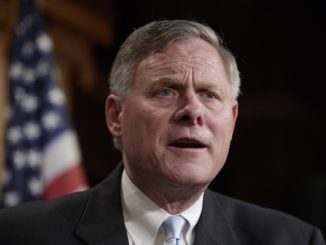
    WASHINGTON (TIP): U.S. Senator Richard Burr will step aside as chairman of the powerful Senate Intelligence Committee, after the FBI seized his mobile telephone in a major escalation of a probe of his stock trades before the downturn caused by the coronavirus pandemic.

    Republican Senate Majority Leader Mitch McConnell said Burr contacted him on Thursday morning to inform him of his decision to move aside temporarily during the investigation.

    “We agreed that this decision would be in the best interests of the committee and will be effective at the end of the day tomorrow,” Mr. McConnell said in a statement.

    Mr. Burr has denied wrongdoing and said he relied solely on news reports to guide decisions on stock sales, amid reports he and other senators sold shares after private briefings on the risks of the coronavirus crisis.

    He told reporters at the U.S. Capitol on Thursday, May 14, he decided to step aside because he did not want the investigation to distract the intelligence committee from its work.

    “I thought this was the best thing to do,” Mr. Burr said.

    Mr. Burr’s attorney, Alice Fisher, said in a statement that Mr. Burr was “actively cooperating” with the government inquiry.

    Known for bipartisanship, the Senate panel is soon to release an extensive report led by Mr. Burr on Russia’s involvement in the 2016 U.S. presidential election. U.S. intelligence determined that Moscow sought to meddle in the campaign to boost the Trump candidacy.

    Moscow denies such actions. President Trump dismisses the allegations as a hoax.

    Senator Mark Warner, the Democratic committee vice chairman who has worked closely with Mr. Burr, told reporters he thought Mr. Burr had made the right choice in temporarily stepping aside, and hoped the matter would be resolved as quickly as possible.

    The Republican senator turned over his phone to FBI agents after they served a search warrant at his Washington home.

    The warrant marked a significant step-up in the investigation of Mr. Burr’s stock sales in mid-February, when he and other lawmakers were receiving regular briefings on the coronavirus outbreak and President Donald Trump and some of his political allies were downplaying the threat to the public.

    Mr. Trump said he did not know anything about Mr. Burr’s decision and had not discussed Mr. Burr’s situation with anyone at the Department of Justice.

    “I know nothing about it… That’s too bad,” he told reporters.

    A senior Justice Department official said the FBI did not conduct a raid but paid a visit to Mr. Burr’s home to collect his cellphone. Approval of the warrant — significant because it was served on a sitting senator — was obtained at the “highest levels” of the Justice Department, the official said.

    The Intelligence Committee chairmanship is one of the most important positions in the Senate. The panel approves the president’s nominees to lead the country’s spy agencies and handles oversight of their operations, conducting most of its business behind closed doors.

    It was not immediately clear who would step in as chairman. The three senators next in line for seniority on the Republican-led intelligence committee — Jim Risch, Marco Rubio and Susan Collins — all chair other committees.

    The Senate’s Republican leadership will decide who will take the position.

    Other senators whose stock trades have been scrutinized have denied trading on coronavirus information.

    Republican Senator Kelly Loeffler has forwarded documents and information about stock trades by her and her husband to the Justice Department, the Securities and Exchange Commission and the Senate Ethics Committee, CNBC quoted a representative for Ms. Loeffler as saying on Thursday.

    Ms. Loeffler has denied wrongdoing in connection with her sales of millions of dollars in shares in the weeks after lawmakers were first briefed on the virus.

    Senator Dianne Feinstein, an intelligence committee Democrat, has turned over documents to the FBI about stock trades by her husband that show she was not involved, a spokesperson for Ms. Feinstein said on Thursday.

    Mr. Burr’s decision called to mind the decision of Democratic Senator Bob Menendez to step aside as ranking member of the Senate Foreign Relations Committee in 2015 as he faced corruption charges. Those charges were eventually dropped.

    (Source: Agencies)

  • China stealing US research on COVID-19: Pompeo

    China stealing US research on COVID-19: Pompeo

    WASHINGTON (TIP): U.S. Secretary of State Mike Pompeo on Thursday accused China of “stealing” U.S. intellectual property and data related to COVID-19 research.

    Mr. Pompeo’s allegations came a day after the FBI and the Department of Homeland Security claimed that organizations conducting research into COVID-19 may be targeted by computer hackers linked to the Chinese government.

    The U.S. condemns attempts by cyber actors and non-traditional collectors affiliated with People’s Republic of China (PRC) to steal U.S. intellectual property and data related to COVID-19 research, Mr. Pompeo said in a statement.

    The United States calls on China to cease this malicious activity, Mr. Pompeo said, adding that the potential theft of this information jeopardizes the delivery of secure, effective, and efficient treatment options.

    China on Thursday termed as slanderous the U.S. accusation that hackers backed by Beijing may be attempting to steal COVID-19 related research and vaccine materials and said that “smearing and scapegoating” others will not make the deadly virus go away.

    Chinese Foreign Ministry spokesman Zhao Lijian said U.S. officials are shifting the blame on Beijing as they struggled to handle the coronavirus pandemic back home.

    The U.S. claims have added fuel to tensions between the two nations, which are engaged in a war of words over the origin of the coronavirus that has killed over 300,000 people globally. Mr. Pompeo alleged that China’s behavior in cyberspace is an extension of its counterproductive actions throughout the COVID-19 pandemic.

    Mr. Pompeo in the strongly-worded statement said while the U.S. and its allies and partners are coordinating a collective, transparent response to save lives, “China continues to silence scientists, journalists, and citizens, and to spread disinformation, which has exacerbated the dangers of this health crisis.

    The FBI said that it is “investigating the targeting and compromise of U.S. organizations conducting COVID-19-related research by China-affiliated cyber actors and non-traditional collectors.”

    “These actors have been observed attempting to identify and illicitly obtain valuable intellectual property (IP) and public health data related to vaccines, treatments, and testing from networks and personnel affiliated with COVID-19-related research,” the FBI said.

    The potential theft of this information jeopardizes the delivery of secure, effective, and efficient treatment options, it said.

    Meanwhile, President Trump, annoyed with China’s handling of the pandemic, has ruled out renegotiating a trade deal with China.

    “The Chinese said somewhere that they would like to renegotiate the (trade) deal. We are not going to renegotiate,” Mr. Trump told Fox Business News on Thursday, May 14.

    “Look, I’m not happy about anything having to do with that particular subject (China) right now. Everything I said turned out to be right. You look at other countries they charge us tariffs to do business and we are not allowed to charge them,” he said.

    Responding to a question, Mr. Trump said the Chinese have always stolen Intellectual Property (IP) from the U.S. “They were never called (out). Now they are being called out,” he said.

    “We can stop them; they are going to try doing it. I mean you could also stop doing business with them, that is one thing. Look, we have lost a fortune dealing with China. We have rebuilt China,” he said.

    The President said he does not want to speak to Chinese President Xi Jinping right now. “I have a very good relationship, but I just — right now I don’t want to speak to him,” he said.

    (Source: Agencies)

  • Narendra Modi announces ₹20-lakh-crore economic stimulus package

    Narendra Modi announces ₹20-lakh-crore economic stimulus package

    Gives a call for being ‘vocal for local’ and for self-reliance

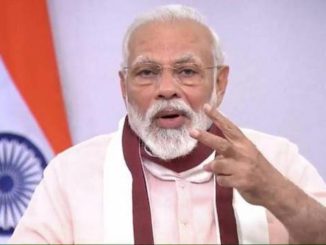
    Prime Minister Narendra Modi on Tuesday, May 12,  said a new-look Lockdown 4.0 beyond May 17 was in the offing, while announcing an economic stimulus package for ₹20-lakh-crore (estimated at 10% of the GDP), with a clearly defined leap towards economic reforms that will, in his words, lead to Atmanirbhar Bharat, or a self-reliant, resilient India.

    This amount includes packages already announced at the beginning of the lockdown incorporating a slew of measures from the RBI and the payouts under the Pradhan Mantri Garib Kalyan Yojana.

    Addressing the nation on television, Prime Minister Modi said the whole world was reeling from the crisis engendered by the COVID-19 pandemic, as was India. In this crisis, however, India had had an opportunity to look at systems and institutions that were in existence before the crisis hit and how they crumbled. “We have been hearing for many years that the 21st century will be India’s century, and this crisis is, I believe one that carries a message, that we have to move forward not just to combat the crisis but to prevail,” Mr. Modi said. “That can happen when we are self-reliant.”

    He gave the example of India’s ramped-up capacity in producing Personal Protection Equipment (PPE) kits and N-95 masks required by medical personnel and frontline health workers to illustrate his point that India could achieve this.

    “When the first case hit us, we didn’t produce either of these things. Now, within weeks we have the capacity to produce 2 lakh of PPE and 2 lakh of N95 masks every day,” Mr. Modi said.

    Clarifying that by self-reliance he did not mean insularity and suspicion of the world as in the past but embracing the world in the spirit of Vasudhaiva Kutumbakam (the world is one family).

    “Self-reliance in this sense is neither exclusionary nor isolationist, it is for helping the world, with our actions. In the past whenever we have acted it has impacted the world in a positive way — be it solving the Y2K riddle in 1999, or our campaigns against open defecation, tuberculosis and polio,” Mr. Modi said.

    He said that the new edifice of this self-reliant India would be based on the five pillars of the economy, infrastructure, demography, technologically driven systems and to strengthen demand and supply chains, with the supply chains being based on local sourcing.

    “In the past few days we have seen how local supply chains and shops are the only things that have helped,” he said.

    The Prime Minister said the economic package would not be based on incremental changes, but a quantum leap in bold reforms with regard to land, labor, law and liquidity.

    “In the last few days we have seen the suffering of our workers, migrant labor, street vendors and daily wagers and farmers. This package will be aimed at them. It will be aimed at the honest taxpayer, at our industry that makes its capital work,” he said.

    Mr. Modi signed off on a strong note to buy local, and to be vocal about it. “Local production helped us in this crisis, and when you look at several global brands, they began as local but were marketed and raised to a global level. We have to do the same with our produce. We need to be vocal about local,” he said. “We must and will make India self-reliant,” he said.

    A day after PM Modi made the announcement, the Finance Minister Nirmala Sitharaman, on May 13,  announced a ₹3 lakh crore collateral free loan scheme for businesses, especially micro, small and medium enterprises (MSMEs), as part of a ₹20-lakh-crore economic stimulus package to deal with the COVID-19 pandemic.

    For salaried workers and taxpayers, some relief was provided in the form of an extended deadline for income tax returns for financial year 2019-20, with the due date now pushed to November 30, 2020. The rates of tax deduction at source (TDS) and tax collection at source (TCS) have been cut by 25% for the next year, while statutory provident fund (PF) payments have been reduced from 12% to 10% for both employers and employees for the next three months.

    Apart from MSMEs, other stressed business sectors which got attention were non-banking finance companies (NBFCs), power distribution companies, contractors and the real estate industry.

    MSMEs will get the bulk of the funding. The ₹3 lakh crore emergency credit line will ensure that 45 lakh units will have access to working capital to resume business activity and safeguard jobs, Ms. Sitharaman said. For two lakh MSMEs which are stressed or considered non-performing assets, the Centre will facilitate provision of ₹20,000 crore as subordinate debt. A ₹50,000 crore equity infusion is also planned, through an MSME fund of funds with a corpus of ₹10,000 crore.

    NBFCs, housing finance companies and microfinance institutions — many of which serve the MSME sector — will be supported through a ₹30,000 crore investment scheme fully guaranteed by the Centre, and an expanded partial credit guarantee scheme worth ₹45,000 crore, of which the first 20% of losses will be borne by the Centre.

    Power distribution companies, which are facing an unprecedented cash flow crisis, will receive a ₹90,000 crore liquidity injection. Contractors will get a six-month extension from all Central agencies, and also get partial bank guarantees to ease their cash flows. Registered real estate projects will get a six-month extension, with COVID-19 to be treated as a “force majeure” event.

    Nirmala Sitharaman with MoS Anurag Thakur outlines stimulus plans at a news conference on Thursday, May 14.
    Photo Credit/ Shiv Kumar Pushpakar

    On May 14, the Finance Minister announced another round of stimulus.

    The Centre will help create affordable rental housing for the urban poor and provide relief worth ₹1,500 crore to small businesses through an interest subvention scheme, apart from extending credit for street vendors, farmers, and middle-class housing.

    Apart from free food for migrant workers, these are the major highlights of the second tranche of the Atmanirbhar Bharat Abhiyan stimulus package, announced by Finance Minister Nirmala Sitharaman on Thursday, May 14.

    Noting that migrant workers and other urban poor face difficulties in finding affordable housing, the Finance Minister said a scheme to build rental housing complexes through public private partnership mode would be launched under the existing Pradhan Mantri Awas Yojana (PMAY) scheme. Both public and private agencies will be incentivized to build rental housing on government and private land, while existing government housing will be converted into rental units.

    The credit linked subsidy scheme for lower middle class housing under PMAY will also be extended by one year to March 2021, and is likely to benefit 2.2 lakh more families, said Ms. Sitharaman, expressing the hope that this would also create jobs and stimulate demand for the steel, cement and construction industries.

    Street vendors who have been hit hard by the lockdown will be given access to easy credit through a ₹5,000 crore scheme, which will offer ₹10,000 loans for initial working capital.

    The scheme will be launched within a month and will benefit 50 lakh vendors, said the Finance Minister.

    Small businesses who have taken loans under the MUDRA-Shishu scheme, meant for loans worth ₹50,000 or less, will receive a 2% interest subvention relief for the next year, which will cost the government ₹1,500 crore.

    The Centre plans a drive to enroll 2.5 crore farmers who are not yet part of the Kisan Credit Cards scheme, along with fish workers and livestock farmers, and provide them with ₹2 lakh crore worth of concessional credit. NABARD (National Bank for Agriculture and Rural Development) will also extend additional refinance support worth ₹30,000 crore to rural banks for crop loans, Ms. Sitharaman said.

    “The only fiscal outlay in today’s announcements are the ₹3,500 crore for food grains to migrants and ₹1,500 crore for the MUDRA loanees. So only ₹5,000 crore is actually coming from government coffers, while the rest are credit-based measures,” said Himanshu, an economist at Jawaharlal Nehru University’s Centre for Economic Studies and Planning.

    Terming the government’s approach as “stingy and half-hearted”, he noted that at a time when demand is down, any moves to provide liquidity are not going to help, adding that putting cash in people’s pockets would have been a better approach.

    “Banks are parking money with the RBI (Reserve Bank of India), so the problem is not liquidity, but rather the appetite of people to take credit at this time,” he said. “Effectively, the burden of revival has been passed on to the people most affected by the lockdown,” he added.

    Meanwhile, Congress spokesman said Govt’s ‘jumla package’ fell way short of what PM Modi had promised.

    A senior spokesperson of the party, Anand Sharma, said the country believed that Prime Minister Narendra Modi was serious when he made the “dramatic” announcement of giving 10 per cent of the GDP as a package to revive the economy and support workers and migrant laborers, and that expectations had soared.

    “The Finance Minister’s announcement dashed all hopes,” he said.

    Congress’ chief spokesperson Randeep Surjewala said Finance Minister Nirmala Sitharaman’s announcements were nothing but a “jumla package”.

    Senior party leader Ahmed Patel said: “It is not an economic package. It is an empty package wrapped with speeches since the last three days.”

    Congress spokesperson Manish Tewari pointed out that Finance Minister Nirmala Sitharaman articulated the second tranche of the bailout or economic package that this government had conceptualized.

    “It is unfortunate that the entire press conference (of Sitharaman) was a classic display of arrogance, ignorance and insensitivity,” he said addressing reporters via a video link.

    “We expected that the Finance Minister would come out with what the government is doing to ferry the migrants who are walking on the roads back to their homes safely. But nothing like that happened,” Tewari said.

    (With inputs from agencies)

  • May 15 New York & Dallas E – Edition

    [vc_row][vc_column][vc_column_text]

    E-Edition

    [/vc_column_text][/vc_column][/vc_row][vc_row][vc_column width=”2/3″][vc_custom_heading text=”” font_container=”tag:h2|text_align:center” google_fonts=”font_family:Istok%20Web%3Aregular%2Citalic%2C700%2C700italic|font_style:700%20bold%20regular%3A700%3Anormal” link=”url:https%3A%2F%2Fwww.theindianpanorama.news%2Fwp-content%2Fuploads%2F2020%2F05%2FTIP-May-15-Dual-Edition.pdf|||”][vc_single_image image=”99304″ img_size=”full” add_caption=”yes” alignment=”center” onclick=”custom_link” link=”https://www.theindianpanorama.news/wp-content/uploads/2020/05/TIP-May-15-Dual-Edition.pdf”][/vc_column][vc_column width=”1/3″][vc_single_image image=”82828″ img_size=”medium” alignment=”center” onclick=”custom_link” link=”https://www.theindianpanorama.news/advertising-media-kit-portal-indian-panorama/”][vc_single_image image=”82829″ img_size=”medium” alignment=”center” onclick=”custom_link” link=”https://www.theindianpanorama.news/advertising-media-kit-portal-indian-panorama/”][/vc_column][/vc_row][vc_row][vc_column width=”2/3″][vc_custom_heading text=”Lead Stories This Week” font_container=”tag:h2|text_align:center” google_fonts=”font_family:Istok%20Web%3Aregular%2Citalic%2C700%2C700italic|font_style:700%20bold%20regular%3A700%3Anormal” link=”url:https%3A%2F%2Fwww.theindianpanorama.news%2F%20|||”][/vc_column][vc_column width=”1/3″][vc_widget_sidebar sidebar_id=”mh-sidebar”][/vc_column][/vc_row]

  • The solution to fight Coronavirus is now becoming a reality

    The solution to fight Coronavirus is now becoming a reality


    The world is looking for a drug and a vaccine to overcome the deadly virus. Many countries and many research groups are working feverishly to find an effective remedy. Fortunately, there have been some breakthroughs which give hope that the pandemic will ultimately be controlled.

    H.S. Panaser

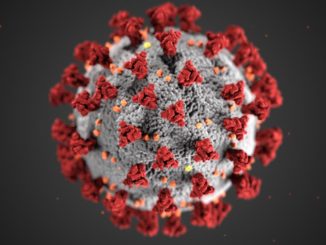
    The novel coronavirus is rapidly spreading its fang globally and has already led to more than 2,58,344 deaths and 3.66 million positive cases. Yes, that is a huge number and will most likely continue to rise in the coming days. Even though the countries across the globe have closed their borders and continue to take stringent measures (including a complete lockdown) to contain the spread of this highly infectious virus, the flattening of the curve is yet to be seen.

    In the United States, COVID-19 has caused more than 70,000 fatalities and the number of positive cases has touched almost 1.2 million. Italy, on the other hand, remains one of the worst-hit nations in the world with 2,13,013 positive cases.

    The world is looking for a drug and a vaccine to overcome the deadly virus. Many countries and many research groups are working feverishly to find an effective remedy. Fortunately, there have been some breakthroughs which give hope that the pandemic will ultimately be controlled.

    The ‘significant’ breakthrough of Israel

     Israeli Defense Minister Naftali Bennett announced the country had a remarkable breakthrough in the development of COVID-19 vaccine. He said that Israel’s Institute for Biological Research (IIBR) has developed a monoclonal neutralizing antibody, which will effectively neutralize novel coronavirus in the body of the carriers. Bennet stated that Italian researchers have made a ‘significant breakthrough’ in developing an antibody to combat novel coronavirus. He was quoted as saying, “I am proud of the institute staff for this terrific breakthrough.”

     Italy claims to develop first COVID-19 vaccine

    While multiple research groups are developing potential vaccines, Italian scientists have claimed to develop a vaccine that has successfully generated antibodies in mice that work on human cells. The vaccine has been tested in the Spallanzani Hospital  in Rome. It is said to be one of the most advanced stages of testing of a potential vaccine in the country as the vaccine neutralizes the SARS-CoV-2 in the human cells.

    After a single vaccination, the mice developed antibodies that can block the virus from infecting human cells. The researchers selected the two best candidates after observing that the five vaccine candidates generated a large number of antibodies

    The Oxford vaccine against COVID-19

    Oxford University initiated a phase-1 human clinical trial of its vaccine on April 23, where two volunteers were injected and Elisa Granato is one of the first ones to get injected with the vaccine. The vaccine -ChAdOx1 nCoV-19- was developed under three months by the University’s Jenner Institute. It uses a weakened strain of common cold virus (adenovirus) that causes infections in chimpanzees. For the vaccine to work, scientists have taken the genetic material of the novel coronavirus present on the surface of the virus and put it in the virus.

     The status of coronavirus vaccine in India

    Prime Minister Narendra Modi reviewed India’s status in developing a vaccine for the novel coronavirus, drug discovery, diagnosis, and testing on Tuesday. It was found that as of now more than 30 vaccines are in different stages of development while a few are ready to go to clinical trial stages. It is also important to note that the Pune-based Serum Institute of India is the world’s largest vaccine maker and India produces 60 per cent of the world’s vaccines.

    (The author is Chair, Global Indian Trade and Cultural Council, Director, International Affairs, C3 Summit LLC, Director, Empire Holdings (Acquisitions & Mergers), President, Global Haryana Chamber of Commerce  Chair, India USA Super PAC. He can be reached at  +1- 732-266-2027)


  • US India 2020 Trade Relations in Health Sector under COVID -19 Challenge

    US India 2020 Trade Relations in Health Sector under COVID -19 Challenge

    H.S. Panaser is a fierce champion of collaboration between US and India in the Healthcare sector

    We are living in unprecedented times. The entire world is focusing on the coronavirus pandemic.  Legions have contracted the illness; many have died from it.  The virus surprised every sector of society and caught many people unawares and  unprepared. Health officials are working furiously to address and contain it.  But just as unprepared are families who do not know what their loved ones would want if faced with a serious or life-threatening illness. With life coming to a near standstill in America, it’s time to have these important conversations with the people who mean the most to you. To ask them about the kind of medical care they want or don’t want in times of serious illness.  If you haven’t had those conversations yet, now is the time.

    Our prayers are with the families currently dealing with COVID-19 and other serious illnesses, particularly those who have lost a loved one.  All of us in some way have been impacted by the uncertainties related to this dangerous virus.  For some, it means cancelled travel plans or events.  For others, it means lost work.  For those in healthcare, it means bracing for unknown clinical challenges.  For families with loved ones in senior care facilities, it means limited visits. I lost my father in law Professor Emeritus Harkishan Singh, Padma Shri awardee on March 20th. We as family could not join his final journey. due non availability of flights. We were  humbled to see the live coverage when this saint was, on special request,  brought to the Panjab University for the Faculty members  and students to pay their last respects before taking him to the cremation ground.

    Future development between US India relations in Covid 19 era, as I see.

    Both the United States and India will be key players in future developments in the medical supply trade relevant to the COVID-19 crisis, as each is a giant on the world stage in pharmaceutical production. India is the second largest exporter of pharmaceuticals to the United States and the United States is the largest exporter of medical devices to India. However, each has now put into place—or is considering—trade restrictions in these sectors. India has banned exports of certain active pharmaceutical ingredients in order to counteract recent interruptions in supplies from China and has just put into place a ban on exports of ventilators and surgical and patient masks. The United States is reportedly considering new “Buy American” restrictions on pharmaceutical products. Even before that, or in parallel, the United States and India should start their own coordination on trade matters relevant to the COVID-19 crisis. The two sides have already begun to reengage in their efforts to conclude a bilateral trade deal, following their failure to do so when US President Donald J. Trump visited India in February. Prospects for this deal remain very good given that the pending issues are no more than a handful and the ministers involved—US Trade Representative Robert Lighthizer and Indian Minister of Commerce and Industry Piyush Goyal—enjoy a strong rapport.

     When all is said and done, there is a strong likelihood that COVID-19 will have hit both the United States and India hard.  Even despite their differences, they share much in common as the two largest democracies in the world, which may make the challenges more difficult in steering public opinion towards social distancing and related preventative actions. The United States and India also have a deepening strategic relationship and their efforts to conclude a bilateral trade deal—even as difficult as that has been—suggest greater potential for expanding their collaborative work. More significantly, this is precisely the kind of situation that can test the potential for building out the relationship and contributing to a larger global response. Let a new initiative in the US-India partnership begin—one that can contribute to a global response to COVID-19.

    It is of interest to understand the relationship between small companies and innovation / R&D in USA, India and China.

    Countries that have competitive small & medium industries (Bulls Eye) witness a high degree of innovation. For example, the US has had 50% of all innovations and 94% of all radical innovations—since the Second World War—coming from new and small firms. The number of patent applications, another indicator for innovation, validates this theory further. Small & medium enterprises in China, which due to their low product prices have worried Companies around the world, file 80% of intellectual property applications in China, as compared to a mere 15% by Indian small & medium enterprises in India. An effective way to induce innovation among Indian small businesses is to adopt a programme like the Small Business Innovation and Research (SBIR), popular in the US and a few other countries. Under SBIR, governments disburse funds on a competitive basis to small enterprises and help them build their R&D capabilities. Improving R&D will boost innovation and make enterprises more competitive. As a result, they will generate higher employment and will be more productive with improved products and services. In fact, SBIR in the US has helped small businesses secure over 67,000 patents since its inception. Thus this segment will create a very  large number of employment, skill development and increase in infrastructure,  and  in totality boost commerce and GDP.

    Indian Pharmaceuticals is a sunrise industry with a competitive advantage for India globally. we should leverage India’s position by unleashing entrepreneur spirit the bullish outlook for health care segment is now taking India in a forward momentum. The market size of India in Pharmaceuticals alone is estimated to be US $100 billion and medical devices is  US $25 billion by 2025. In the year 2019 India did export worth 20 billion dollars alone and had crossed US $25 billion  in the first three months of 2020. The happy news for Indian Pharmaceutical industry in totality is now the amendment in FDI policy where one can invest up to 100% specially if it is medical devices as we are importing 80% of medical devices. India is looking towards undecisive growth tenure as 55 billion US dollar of product line is going off patents and this will certainly help India accelerate a higher market share and exports. 

    As for Corona virus vaccine R&D under US India Relations, recently US Secretary of State  Mike Pompeo said that “US India were working together to develop vaccines for COVID-19 “ The research of new vaccines has been in collaborative efforts between India and US going on for last three decades it has resulted in too stopping the fight against dengue, influenza and tuberculosis. Following are some of the examples of the latest research which is being conducted between USA and India:

     1. The Serum Institute of India, which is the world largest vaccine manufacturer, a 53-year-old company manufactures 1.5 billion doses annually with 1700 people. it exports 20 different vaccines to 165 nations of which majorities exports. the vaccine approximately costs about  50 Cent a dose. They have now collaborated with Codagenix  a US biotech company. The new vaccine is created by reducing the virulence or removing the harmful properties of a pathogen yet keeping it alive. The animal trials started in April and the human trials are expected by September end.

    2. A Hyderabad based Bharat Biotech in partnership with University of Wisconsin and US based Flugen is to make a 300 million doses of vaccine for global distribution for COVID-19. this 450-crore rupee company earlier came up with a rotavirus vaccine at $1 a dose

    3.Four other pharmaceutical companies each developing Covid vaccine  are in the early development phases: Zydex Cadila, Biological E, Indian Immunologicals and Mynvax.

    In one of the interviews professor David Nabarro, at Imperial College UK said that humans will have to live with the threat of Covid for the foreseeable future because there is no guarantee that a vaccine will be successfully developed .

    About the author

    H.S. Panaser is Global Marketing and Business Development Consultant, Speaker and EDP Trainer. He is Founder and President of Global Indian Trade and Cultural Council. A strong and innovative leader with more than  three decades of experience in fortune 500 companies in Pharmaceutical, Medical Tourism and Food and Health segment in Global Marketing and CRM Management, he launched  several  new products which are brand leaders globally like Zantac, Ventolin etc. He represented Max, Fortis and many other hospital chains globally in Medical Tourism.  Presently,  he is a global consultant for Pharmaceutical and Medical devises manufacturers and software  in healthcare companies. He has a strong network of Angel Investors, Venture Capitalists and other Financial Consultants.  His Other affiliations and experience include  Chair, Tri-state US India Political Action Committee,  Ex-President, Global Haryana Chamber of Commerce, Advisor on Board, C3Summit International LLC, President, US SAARK Business Forum, , Director A I Nexus, President – Global Marketing NYSO, India and Member on Board, Automotive Aftermarket Industry Association, USA.

     He can be reached at  hspanaser@gmail.com      (Phone +1- 732-266-2027).

  • May 8 New York & Dallas Print Editions

    May 8 New York & Dallas Print Editions

    [vc_row][vc_column][vc_column_text]

    Print Replica- Digitally

    E-Editions

    [/vc_column_text][/vc_column][/vc_row][vc_row][vc_column width=”2/3″][vc_custom_heading text=”Dual Edition” font_container=”tag:h2|text_align:center” google_fonts=”font_family:Istok%20Web%3Aregular%2Citalic%2C700%2C700italic|font_style:700%20bold%20regular%3A700%3Anormal” link=”url:https%3A%2F%2Fwww.theindianpanorama.news%2Fwp-content%2Fuploads%2F2020%2F05%2FTIP-May-8-Dual-Edition.pdf|||”][vc_single_image image=”99252″ img_size=”full” add_caption=”yes” alignment=”center” onclick=”custom_link” link=”https://www.theindianpanorama.news/wp-content/uploads/2020/05/TIP-May-8-Dual-Edition.pdf”][/vc_column][vc_column width=”1/3″][vc_single_image image=”82828″ img_size=”medium” alignment=”center” onclick=”custom_link” link=”https://www.theindianpanorama.news/advertising-media-kit-portal-indian-panorama/”][vc_single_image image=”82829″ img_size=”medium” alignment=”center” onclick=”custom_link” link=”https://www.theindianpanorama.news/advertising-media-kit-portal-indian-panorama/”][/vc_column][/vc_row][vc_row][vc_column width=”2/3″][vc_custom_heading text=”Lead Stories This Week” font_container=”tag:h2|text_align:center” google_fonts=”font_family:Istok%20Web%3Aregular%2Citalic%2C700%2C700italic|font_style:700%20bold%20regular%3A700%3Anormal” link=”url:https%3A%2F%2Fwww.theindianpanorama.news%2F%20|||”][/vc_column][vc_column width=”1/3″][vc_widget_sidebar sidebar_id=”mh-sidebar”][/vc_column][/vc_row]

  • Science of Spirituality/SKRM Feeds Tens of Thousands  During India’s Nationwide Lockdown

    Science of Spirituality/SKRM Feeds Tens of Thousands During India’s Nationwide Lockdown

    NEW YORK / NEW DELHI (TIP): As the world comes to grips with a global pandemic of epic proportions, countries have taken strong measures to curb the spread of the COVID-19 virus. On March 24, a nationwide lockdown was instituted in India in an effort to protect its 1.3 billion-strong population by breaking the cycle of infection and containing the outbreak. However, as declared by Dr Tedrous Ghebreyesus, director general of the World Health Organization (WHO), “these steps can have unintended consequences for the poorest and most vulnerable within a population.” In India, millions of migrant workers dependent on daily wages have been impacted. Government programs are being implemented to ensure food and essentials reach the most vulnerable at this time.

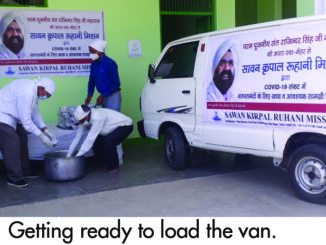
    Complementing the national efforts, under the leadership and guidance of Sant Rajinder Singh Ji Maharaj, spiritual head of US based  Science of Spirituality (SOS)/Sawan Kirpal Ruhani Mission (SKRM), SOS volunteers across the country have mobilized to set up food kitchens and food drives, bringing warm meals and basic essentials to individuals in need. From Delhi to Jalandhar, Amritsar to Hyderabad, Mumbai to Dehradun, SOS volunteers, while practicing social distancing, have united to prepare and package meals and supplies at SOS Centers around the country. These packages are then distributed in collaboration with the local government authorities on a daily basis as a means of alleviating hunger within the communities. With over 3000 satellite centers around the world, and over 2000 centers in India alone, the organization’s large footprint affords it the expansive reach necessary to feed tens of thousands during these challenging times.

                                                  Distributing food in Ahmednagar, Maharashtra

    Service to humanity or seva, as it is known in Hindi, is a core tenet of Science of Spirituality, a worldwide spiritual organization dedicated to transforming lives through meditation. In the words of Sant Rajinder Singh Ji Maharaj, service is “the sweetest fruit on the tree of love.” It is an acknowledgement of the fundamental unity underlying our existence, and when carried out with kindness, compassion, and in a spirit of selflessness, such service has the power to change the world, one heart at a time.

                                                   Distributing food in Ahmedabad, Gujarat

    This spirit of selflessness, kindness, and generosity has been growing around the world as individuals and communities embrace their common humanity and find creative ways to help each other at this time. So much so that when the definitive history of the coronavirus pandemic is written, it will not only relate a story of loss and despair, but also one of human unity, where we came together as a global community to meet one of the greatest challenges of our time.

    For more information about Sant Rajinder Singh Ji Maharaj and Science of Spirituality, visit www.sos.org

  • Alvida Irrfan!!

    Alvida Irrfan!!

    By Jaskiran Saluja

    In 1986, when  director Mira Nair was scouting for her film Salaam Bombay! at the National School of Drama in New Delhi, she fixed her gaze on a young man from Jaipur. “I noticed his focus, his intensity, his very remarkable look—his hooded eyes,” she later recalled of seeing Irrfan Khan. Though she cast him, she soon decided that he was too towering at more than six feet, that he seemed too well fed to convincingly play a malnourished child. To Khan’s dismay, Nair pared his role down to scraps. “I remember sobbing all night when Mira told me that my part was reduced to merely nothing,” the actor told the Indian magazine Open in 2015. “But it changed something within me. I was prepared for anything after that.”

    The actor died Wednesday in Mumbai, two years after being diagnosed with neuroendocrine cancer. On Wednesday when Irrfan breathed his last, his last words reflected how much he missed his mother. “See, amma has come. She is sitting next to me. Amma has come to take me,” was Irrfan Khan’s last words. He then adds, “But what is the choice apart from being positive in tough situations. We have made this film with the same positivity. And I hope this film will teach you, make you laugh, make you cry and then make you laugh again. Enjoy the trailer and be kind to each other…And yes wait for me”.

    Khan’s final movie, Angrezi Medium, was the last Bollywood film released in theaters before the COVID-19 pandemic resulted in a nationwide lockdown. Irrfan recorded an audio message for his fans during the trailer release of Angrezi Medium. His last message played along with a promotional clip of his film. “There is a saying… ‘When life gives you lemons, you make lemonades out of it. It sounds good. But when life actually puts lemon in your hands, it becomes really tough to make lemonade,” Irrfan says.

    Irrfan with friend and wife Sutapa. “If I get to live, I want to live for her. She is the reason for me to keep at it still,” he said towards the dusk of his life.

    The film ended up being the bookend to a singular body of work that had begun in 1988 with Salaam Bombay! After that movie, Khan spent more than a decade appearing in television serials and supporting roles on film, before breaking through with his dynamic lead performance as a feudal soldier in Asif Kapadia’s The Warrior (2001). That performance kick-started a career that has no precedent in Indian film history.

    Khan’s featherlight touch made the job look simple, distracting you from the fact that acting is, at its core, work. He could play the romantic lead with flushed ardor, as he did in Shoojit Sircar’s Piku (2015), but he knew how to cede the spotlight as a supporting player too. His style was free of the vanity or self-consciousness that could’ve made him seem larger than life. As his fame grew, he retained the essential quality that endeared him to viewers: a sense of relatability. Khan was an everyman who, improbably, became a star.

    He was born Sahabzade Irfan Ali Khan—just one R—to a middle-class Muslim family in the city of Jaipur, Rajasthan, in 1967. A shy and gentle kid, he’d wanted to be an actor since he was small, according to a recent biography by the writer Aseem Chhabra. Khan’s immediate family didn’t watch many movies, though, forcing him to nurture his dreams in secret. He understood that his physical attributes, including his darker complexion, could be professional limitations, but he went on to attend the National School of Drama, where he arrived as a bundle of raw potential.

    On-screen, Khan’s most vital instrument may have been that pair of soulful eyes that captured Nair’s imagination three decades ago. They could exude menace or innocence, depending on the role. His eyes helped him bring sensual urgency to his early performance as Rahul, a young musician who has an affair with a married woman named Sandhya (played by Dimple Kapadia) in Govind Nihalani’s Drishti (1990). When the two lovers lock gazes, whatever’s transpiring between them feels electric. The film offers Khan just a few short scenes before he more or less evaporates from the narrative, yet the memory of his character lingers long after he’s gone. That role was just a preview of the great work Khan would deliver after the turn of the millennium. Trying to pick highlights from this era is a fool’s errand. He shone in bigger releases such as Vishal Bhardwaj’s Maqbool (2003), a riff on Macbeth set in the Mumbai underworld, and Anurag Basu’s Life in a Metro (2007), a collage of intersecting tales.

    “An incredible talent, a gracious colleague, a prolific contributor to the World of Cinema … left us too soon,” Bachchan tweeted.

     When it comes to independent cinema, Ritesh Batra’s The Lunchbox (2013) features one of his most moving performances. The film, which documents an epistolary bond between two lonely souls, gives Khan a role that bears amusing parallels to his Salaam Bombay! character. He plays a widower named Saajan who marches through each day listlessly. Yet he forges a connection with a stranger, an equally forlorn housewife named Ila (Nimrat Kaur), when they begin exchanging letters by accident. The correspondence seems to awaken Saajan, and Khan makes the character’s decision to gradually let his guard down feel organic. Much of the performance depends on voice-over, and Khan was blessed with a honeyed voice that recalls the tired maxim about an actor being able to recite the phone book without sacrificing a viewer’s attention.

    His talents would ferry him to American and British cinema in the late aughts. These films mostly cast Khan in supporting roles, such as his wordless cameo as a villager in Wes Anderson’s The Darjeeling Limited (2007) or his part as a scientist in The Amazing Spider-Man (2012), that only suggested the depth of his talent. (Television, in contrast, gave him a rich showcase in Season 3 of HBO’s In Treatment, where he once again played a widower, this time an immigrant from Kolkata.) These movies didn’t deserve him, but Khan dignified them with his presence, refusing to sink with the flimsy material he was given.

    Unlike those works, Nair’s The Namesake, a 2006 film adaptation of Jhumpa Lahiri’s novel of the same name, gave his skills more breathing room. As the professor Ashoke Ganguli, Khan embodies an ideal of the Bengali immigrant father in the eyes of his son, Gogol (Kal Penn). He is at once a figment of memory and a person whose struggles and desires feel achingly real. Ashoke is a specific kind of person, a Bengali intellectual who adapts to life in America after a rough period of adjustment. The eventual tragedy at the heart of the narrative—Ashoke’s sudden death—is piercing because of how vividly Khan portrays this man.

    Who could’ve predicted that Khan would, like his character in that film, leave us young and without much warning? It’s tempting to wonder what characters Khan would’ve introduced us to as he eased into old age, as his hair began to gray. That viewers are deprived of knowing feels like theft. Among The Namesake’s most arresting moments is a scene in which Ashoke narrates the story of how he named his son. The sequence plays on Khan’s strongest devices: You see those eyes glimmer with pain and pride, and Khan’s voice shepherds you through this man’s past. His is a love you recognize as human, but Khan expresses the sentiment with restraint. It’s a kind of beauty, in other words, that you only see in movies.

    The Bollywood superstar wrote this open letter that was published by Times of India before starting his treatment for cancer in 2018.

    It’s been quite some time now since I have been diagnosed with a high-grade neuroendocrine cancer. This new name in my vocabulary, I got to know, was rare, and due to fewer study cases, and less information comparatively, the unpredictability of the treatment was more. I was part of a trial-and-error game.

    I had been in a different game, I was travelling on a speedy train ride, had dreams, plans, aspirations, goals, was fully engaged in them. And suddenly someone taps on my shoulder and I turn to see. It’s the TC: “Your destination is about to come. Please get down.” I am confused: No, no. My destination hasn’t come. No, this is it. This is how it is sometimes.

    The suddenness made me realise how you are just a cork floating in the ocean with unpredictable currents! And you are desperately trying to control it.

    In this chaos, shocked, afraid and in panic, while on one of the terrifying hospital visits, I blabber to my son, ‘The only thing I expect from ME is not to face this crisis in this present state. I desperately need my feet. Fear and panic should not overrule me and make me miserable’.

    That was my intention. And then the pain hit. As if all this while, you were just getting to know pain, and now you know his nature and his intensity. Nothing was working; no consolation, no motivation.”

    Irrfan also wrote about finding peace during  this painful time and said the only thing certain is the uncertainty.

    “The charisma you brought to everything you did was pure magic,” tweeted Indian actor and model Priyanka Chopra Jonas.

    “As I was entering the hospital, drained, exhausted, listless, I hardly realised my hospital was on the opposite side of Lord’s, the stadium. The Mecca of my childhood dream. Amidst the pain, I saw a poster of a smiling Vivian Richards. Nothing happened, as if that world didn’t ever belong to me.

    This hospital also had a coma ward right above me. Once, while standing on the balcony of my hospital room, the peculiarity jolted me. Between the game of life and the game of death, there is just a road. On one side, a hospital, on the other, a stadium. As if one isn’t part of anything which might claim certainty – neither the hospital, nor the stadium. That hit me hard.

    I was left with this immense effect of the enormous power and intelligence of the cosmos. The peculiarity of MY hospital’s location – it HIT me. The only thing certain was the uncertainty. All I could do was to realise my strength and play my game better.

    This realisation made me submit, surrender and trust, irrespective of the outcome, irrespective of where this takes me, eight months from now, or four months from now, or two years. The concerns took a back seat and started to fade and kind of went out of my mind space.

    For the first time, I felt what ‘freedom’ truly means. It felt like an accomplishment. As if I was tasting life for the first time, the magical side of it. My confidence in the intelligence of the cosmos became absolute. I feel as if it has entered every cell of mine.

    Time will tell if it stays, but that is how I feel as of now.

    Irrfan also talked about his well-wishers and those praying for him across the world.

    Throughout my journey, people have been wishing me well, praying for me, from all over the world. People I know, people I don’t even know. They were praying from different places, different time zones, and I feel all their prayers become ONE. One big force, like a force of current, which got inside me through the end of my spine and has germinated through the crown of my head.

    It’s germinating – sometimes a bud, a leaf, a twig, a shoot. I keep relishing and looking at it. Each flower, each twig, each leaf which has come from the cumulative prayers, each fills me with wonder, happiness and curiosity. A realisation that the cork doesn’t need to control the current. That you are being gently rocked in the cradle of nature.

    In his recent interview to Mumbai Mirror, Irrfan said “It’s been a roller-coaster ride, a memorable one. Happy moments were underlined because of the inherent uncertainty. We cried a little and laughed a lot. We became one huge body,” he said.

    Khan went on to talk about how crucial it was for him keep his thoughts from wandering. “You screen out noises. You are selective about what you want to filter in. I have gone through tremendous anxiety but have somehow managed to control it, then, let go. You are playing hopscotch all the time,” he said.

    On the subject of his wife Sutapa, Khan called her “the reason” he’s still able to power through. “What to say about Sutapa (wife)? She is there 24/7. She has evolved in care-giving and if I get to live, I want to live for her. She is the reason for me to keep at it still,” he said.

    Sutapa had previously written a post on Facebook where she discussed the family’s year long struggle with Khan’s cancer.  “Longest year of our life . Time was never measured with pain and hope at the same time ever. While we take our baby steps back to work, to life I am submerged in prayers wishes and faith from friends ,relatives,  strangers and a connection with universe which gives us a small chance for this new start.”

    She added, “It seems unbelievable never ever I realized the meaning of the word unpredictable so well never ever I could feel peoples wishes on my bones my breath my heartbeat which helped me to stay focused and kicking.. I can’t take names because there are names and there are names I don’t even know who played angels. Sorry for not been able to answer individually but I know what you mean to us.”

    He leaves behind a wife and two children.

    “You fought and fought and fought. I will always be proud of you.. we shall meet again” Tweeted Award-winning filmmaker Shoojit Sircar

    The whole world, it appears, is mourning the loss of Irrfan Khan. In New York, many, already cooped  in their homes because of lockdown, watched Irrfan’s movies over and over again, as if they wanted neve to be separated from the man.

    “Irrfan Khan’s demise is a loss to the world of cinema and theatre,” tweeted Indian Prime Minister Narendra Modi. “He will be remembered for his versatile performances across different mediums. My thoughts are with his family, friends and admirers.”

    Other prominent politicians, like Home Minister Amit Shah and former Maharashtra Chief Minister Devendra Fadnavis, also shared their condolences online.

    “The charisma you brought to everything you did was pure magic,” tweeted Indian actor and model Priyanka Chopra Jonas.

     Award-winning filmmaker Shoojit Sircar also posted a tribute on Twitter, writing, “You fought and fought and fought. I will always be proud of you.. we shall meet again.”

    Amitabh Bachchan, another Bollywood  icon, said in a tweet that Khan’s death created “a huge vacuum.” 

    “An incredible talent, a gracious colleague, a prolific contributor to the World of Cinema … left us too soon,” Bachchan tweeted.

    “Irrfan Khan’s demise is a loss to the world of cinema and theatre,” tweeted Indian Prime Minister Narendra Modi. “He will be remembered for his versatile performances across different mediums. My thoughts are with his family, friends and admirers.”


    Alvida Irrfan!! Cinema won’t be the same without you!

  • May 1 New York & Dallas E – Edition

    [vc_row][vc_column][vc_column_text]

    E-Edition

    [/vc_column_text][/vc_column][/vc_row][vc_row][vc_column width=”2/3″][vc_custom_heading text=”” font_container=”tag:h2|text_align:center” google_fonts=”font_family:Istok%20Web%3Aregular%2Citalic%2C700%2C700italic|font_style:700%20bold%20regular%3A700%3Anormal” link=”url:https%3A%2F%2Fwww.theindianpanorama.news%2Fwp-content%2Fuploads%2F2020%2F05%2FTIP-May-1-Dual-Edition.pdf|||”][vc_single_image image=”99196″ img_size=”full” add_caption=”yes” alignment=”center” onclick=”custom_link” link=”https://www.theindianpanorama.news/wp-content/uploads/2020/05/TIP-May-1-Dual-Edition.pdf”][/vc_column][vc_column width=”1/3″][vc_single_image image=”82828″ img_size=”medium” alignment=”center” onclick=”custom_link” link=”https://www.theindianpanorama.news/advertising-media-kit-portal-indian-panorama/”][vc_single_image image=”82829″ img_size=”medium” alignment=”center” onclick=”custom_link” link=”https://www.theindianpanorama.news/advertising-media-kit-portal-indian-panorama/”][/vc_column][/vc_row][vc_row][vc_column width=”2/3″][vc_custom_heading text=”Lead Stories This Week” font_container=”tag:h2|text_align:center” google_fonts=”font_family:Istok%20Web%3Aregular%2Citalic%2C700%2C700italic|font_style:700%20bold%20regular%3A700%3Anormal” link=”url:https%3A%2F%2Fwww.theindianpanorama.news%2F%20|||”][/vc_column][vc_column width=”1/3″][vc_widget_sidebar sidebar_id=”mh-sidebar”][/vc_column][/vc_row]