Month: June 2021

  • Barrett, Gorsuch, Kavanaugh side with liberal Supreme Court justices in computer fraud case

    Barrett, Gorsuch, Kavanaugh side with liberal Supreme Court justices in computer fraud case

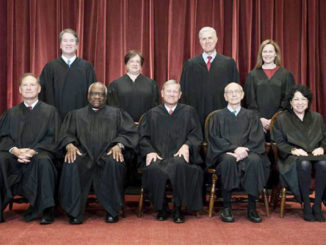
    WASHINGTON (TIP): Trump-appointed Supreme Court Justices Brett Kavanaugh, Amy Coney Barrett and Neil Gorsuch sided with liberal Justices Stephen Breyer, Sonia Sotomayor and Elena Kagan Thursday, June 3, to endorse a narrow approach on how to apply a 1986 law against computer hacking. The justices overturned the conviction of a police officer, Nathan Van Buren, who was paid to run a license plate search in violation of the police department’s policy and, according to the federal government, the Computer Fraud and Abuse Act.

    But Barrett, writing for the majority, said the officer technically did not access information he wasn’t entitled to. Instead, he simply misused his access to information he was authorized to see. Therefore, the court said, the officer did not violate federal law.

    “This provision covers those who obtain information from particular areas in the computer – such as files, folders or databases – to which their computer access does not extend,” Barrett wrote in the majority opinion. “It does not cover those who, like Van Buren, have improper motives for obtaining information that is otherwise available to them.”

    The vote breakdown pitted the three Trump-appointed justices and the court’s three liberals against the three more senior Republican-appointed justices: Chief Justice John Roberts and Justices Clarence Thomas and Samuel Alito.

  • White House defends Dr Fauci over lab leak emails

    White House defends Dr Fauci over lab leak emails

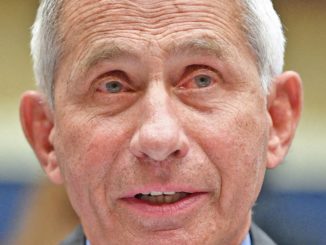
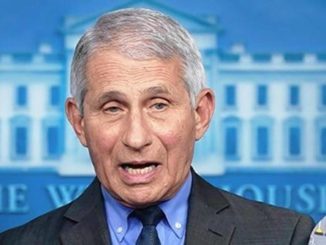
    WASHINGTON (TIP): The White House has defended the president’s top coronavirus adviser, Dr Anthony Fauci, amid scrutiny of his recently released work emails. Dr Fauci has been the face of the nation’s Covid-19 response, drawing both praise and criticism.

    “I’m very confident in Dr Fauci,” President Joe Biden said on Friday, June 4.

    But emails have raised questions on whether he backed Chinese denials of the theory that Covid-19 leaked from a lab in Wuhan.

    A trove of Dr Fauci’s emails covering the onset of the coronavirus outbreak were released this week to media under a freedom of information request.

    Why are people talking about Dr Fauci’s emails?

    In one email sent last April, an executive at a health charity thanked Dr Fauci for publicly stating that scientific evidence does not support the lab-leak theory.

    In an interview with CNN, Dr Fauci said the email had been taken out of context by critics and he had an “open mind” about the origin of the virus.

    In his defense, White House press secretary Jen Psaki said Dr Fauci had been an “undeniable asset”.

    In a daily press briefing on Thursday, she said: “The president and the administration feel that Dr Fauci has played an incredible role in getting the pandemic under control, being a voice to the public throughout the course of this pandemic.”

    Mr Biden reiterated his support after delivering remarks on Friday, when a reporter asked if he still had confidence in the infectious disease chief.

    There is no proof Covid-19 came from a lab, but Mr Biden has ordered a review into the matter that angered China, which has rejected the theory. Chinese authorities linked early Covid-19 cases to a seafood market in Wuhan, leading scientists to theorise the virus first passed to humans from animals.

    But recent US media reports have suggested growing evidence the virus could instead have emerged from a lab in Wuhan, perhaps through an accidental leak.

    What did Fauci tell CNN?

    On Thursday, Dr Fauci maintained there was nothing untoward in an email exchange between himself and an executive from a medical non-profit organization that helped fund research at a diseases institute in Wuhan, the Chinese city where Covid-19 was first reported.

    The NIH, which is a US public health agency, gave $600,000 (£425,000) to the Wuhan Institute of Virology from 2014-19 via a grant to the New York-based non-profit group EcoHealth Alliance, for the purpose of researching bat coronaviruses.

    Peter Daszak, head of EcoHealth Alliance, emailed Dr Fauci in April 2020, praising him as “brave” for seeking to debunk the lab leak theory. “Many thanks for your kind note,” Dr Fauci replied. Dr Fauci told CNN on Thursday, June 3, it was “nonsense” to infer from the email any cozy relationship between himself and the figures behind the Wuhan lab research. “You can misconstrue it however you want,” he said, “that email was from a person to me saying ‘thank you’ for whatever it is he thought I said, and I said that I think the most likely origin is a jumping of species. I still do think it is, at the same time as I’m keeping an open mind that it might be a lab leak.”

    He added: “The idea I think is quite farfetched that the Chinese deliberately engineered something so that they could kill themselves as well as other people. I think that’s a bit far out.”

    The face of America’s fight against Covid-19

    Allies of the US National Institutes of Health (NIH) infectious disease specialist say Dr Fauci’s messages show nothing more than a dedicated public servant navigating the early days of a once-in-a-century pandemic.

    But conservative critics are suggesting Dr Fauci may have engaged in a cover-up, and even claim he perjured himself in testimony to Congress.

    How has the lab leak theory gathered pace?

    According to an investigation in Vanity Fair magazine published on Thursday, Department of State officials discussed the origins of coronavirus at a meeting on 9 December 2020.

    They were told not to explore claims about gain-of-function experiments at the Wuhan lab to avoid attracting unwelcome attention to US government funding of such research, reports Vanity Fair.

    Gain-of-function studies involve altering pathogens to make them more transmissible in order to learn more about how they might mutate.

    The Wall Street Journal reported last month that three employees at the Wuhan Institute of Virology fell ill and were admitted to hospital in November 2019, just before the first reported Covid-19 cases.

    Days later, President Biden instructed US spy agencies to conduct a 90-day review into whether the virus could have emerged from a Chinese lab.

    His administration had previously deferred to the World Health Organization for answers on how the pandemic began.

    Why the lab-leak theory is being taken seriously

    “I would like to see the medical records of the three people who are reported to have got sick in 2019,” Dr Fauci told the Financial Times on Thursday. “Did they really get sick, and if so, what did they get sick with?”

    He called on China to also release the medical records of six miners who fell ill after entering a bat cave in 2012 in China’s Yunnan province.

    Three miners died, and Chinese researchers later visited the cave to take samples from the bats.

    “It is entirely conceivable that the origins of Sars-Cov-2 was in that cave and either started spreading naturally or went through the lab,” he said. Dr Robert Redfield, who led the Centers for Disease Control and Prevention during the Trump administration, told Vanity Fair that he received death threats from fellow scientists when he backed the Wuhan lab leak theory last spring. “I was threatened and ostracized because I proposed another hypothesis,” Dr Redfield said. “I expected it from politicians. I didn’t expect it from science.”

    What has Fauci previously said about the lab leak?

    During congressional testimony on 12 May, Dr Fauci emphatically denied the US had ever funded controversial gain of function research at the Wuhan lab. During a subsequent Senate hearing on 26 May, Senator John Kennedy, a Louisiana Republican, asked how Dr Fauci could be sure that Wuhan scientists did not use the money for gain-of-function research.

    “You never know,” Dr Fauci conceded, while adding that he believed the Chinese researchers were “trustworthy”.

    What’s the other political reaction?

    Former President Donald Trump – widely vilified last year when he raised the possibility that Covid-19 came from the Wuhan lab – said on Thursday that Dr Fauci had a lot of questions to answer.

    “What did Dr Fauci know about ‘gain of function’ research, and when did he know it?” Mr Trump wrote in a statement.

    He added: “China should pay Ten Trillion Dollars to America, and the World, for the death and destruction they have caused!”

    The same day, House of Representatives deputy Republican leader Steve Scalise demanded in a letter that Dr Fauci testify before Congress on the “US government’s role in funding research that may have contributed to the development of the novel coronavirus”.

    China’s foreign ministry last week dismissed the Wuhan lab leak theory as “extremely impossible”.

    Covid-19 is known to have infected some 172 million people, killing more than 3.5 million.

    (Source: BBC)

  • Nassau County Executive Curran Unveils Newly Redesigned Park Dedicated to Champion of 9/11 Responders

    Nassau County Executive Curran Unveils Newly Redesigned Park Dedicated to Champion of 9/11 Responders

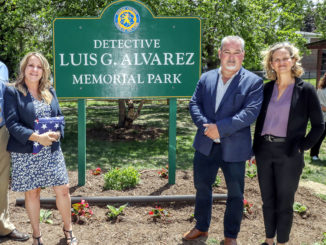
    Curran with officials, family of the late Detective Alvarez and neighbors. (Photos : Courtesy Nassau County)

    MINEOLA, NY (TIP): Nassau County Executive was joined by the family of the late 9/11 champion Detective Luis G. Alvarez, elected officials, Nassau County Police Department, members of the NYPD and other distinguished guests to officially unveil Detective Luis G. Alvarez Memorial Park in Oceanside, May end. It is with great honor that we officially rename Terrell Avenue Park after the late 9/11 patriot and champion of first responders, Detective Luis G. Alvarez. We owe Det. Alvarez an enormous debt of gratitude and it is my sincerest hope that this newly redesigned park will forever serve as a tribute to his life, a reminder of his sacrifice and a tranquil spot for his family, neighbors and community to enjoy.

    Retired NYPD Bomb Squad Detective and leading champion for September 11th Victim Compensation Fund, Det. Luis G. Alvarez passed away in June 2019 at 53 after a battle with cancer stemming from his assignment at Ground Zero. Det. Alvarez transfixed the nation just weeks before his death with his testimony alongside activist and comedian Jon Stewart, to extend the September 11th Victim Compensation Fund Act. His advocacy resulted in the passage of the “Never Forget the Heroes: James Zadroga, Ray Pfeifer, and Luis Alvarez Permanent Authorization of the September 11th Victim Compensation Fund Act” which provides funding through the year 2092.

  • Meet the Good Samaritan Nikhil Mehta

    Meet the Good Samaritan Nikhil Mehta

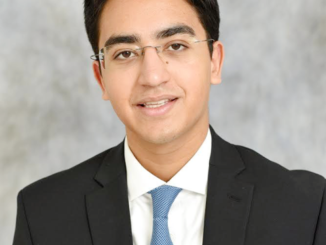
    Nikhil Mehta is a 17-year-old young gentleman currently a rising junior at Smithtown High School East, Long Island, New York. He is taking several college-level courses, maintaining a 4.55 GPA, attained AP Scholar with Honor Award, and is part of the National Honor Society. At school, he is the Director of the Linked Elderly Outreach Program, a program dedicated to relieving the isolation of the elderly during Covid 19 and is a nationally awarded writer. He loves to cook and can play a mean tune on the violin; at the same time, his tennis serves are to be watched out for. What is even more outstanding about this young kid is that he is very compassionate, empathetic, and is dedicated to serving his community. His goal is to encourage his generation to take part in humanitarian work and raise empathy.

    He has grown up seeing his grandparents’ Kanak and Prabha Golia’s philanthropic work and has been deeply inspired to do so in his life as well. He has his non-profit organization called Blossom Charity, whose mission is to help others in need. At such a young age, he has been raising funds to help educate the underprivileged. He has made a team effort to help the slums in Delhi. He has brought hope for the kids who have no hope. During the Covid-19 pandemic, he created a Covid-19 Guide to educate the children on preventing the spread of Coronavirus. This guide was distributed throughout NYC schools and hospitals. He had helped the elderly connect to their families when they were isolated by donating iPads to nursing homes. He was awarded by the Suffolk County Executive Steve Bellone for Dedication to Community Service. He received the highest President’s Volunteer’s Service Award in 2020. Nikhil was given the prestigious opportunity to speak at the Indian consulate about “The Importance of Empathy and Compassion: Raising Awareness for Today’s Youth.”

    During the Covid-19 pandemic, Nikhil realized how this dreaded disease had affected America. He had been home with his brother and sister all year, not going to school. He didn’t get to see his grandparents, who live in Indore and have not been able to see them for over two years. Moreover, recently Nikhil saw his uncle- Dr. Ajay Lodha, pass away from Covid-19, leaving him quite emotional. Nikhil was touched by what is going on as the pandemic is sweeping India at a staggering pace. With over 200,000 cases daily, he witnessed the COVID pandemic bringing India to its knees with the hospitals overwhelmed, and people especially in rural areas and villages, in dire need. “I couldn’t breathe, seeing the suffering.” Seeing pictures of long hospital lines and sick people, and many people gasping for air was the reason behind his inspiration – “Oxygen on Wheels.”

              Nikhil was motivated to join in the effort to help India “breathe better.” Oxygen on Wheels is a free service to provide oxygen support inside a specially designed bus to needy patients in the rural villages of Jodhpur and patients. They are waiting for admission to the hospitals. These buses can hold up to 4-5 patients with oxygen concentrators. They are positioned outside the hospitals; or a central location in the rural villages. He ran this idea through his grandparents, got their blessing, and connected with his uncle Prem Bhandari, who turned his wish into a reality. It took a team effort, however within 24-72 hours; Nikhil’s Uncle was able to get the first van with four oxygen concentrators on the road to rural villages. Nikhil was able to raise funds from his friends, family, and, most of all, the community. They now have added two more vans. Nikhil was lucky enough to speak to the Honorable Chief Minister of Rajasthan, propose his ideas, and request assistance to further the cause. With support from the government, Oxygen on Wheels program is escalated to the entire state of Rajasthan. He also discussed his future project to create an Ambulance system throughout the rural villages, where people have to walk miles to get healthcare. Nikhil’s goal is to make the future of his underprivileged rural villages better.

    He wants to make a difference. He is a Youth Ambassador for the Rajasthan Foundation. He also strongly feels that one needs to have a sense of identity and connect with their hometown and country. “I have a sense of attachment and belonging due to the environment in our house and community.” The COVID-19 pandemic has shown us how connected the world is. Given these challenging times, it is our duty and responsibility to help each other and extend ourselves. He quotes a famous saying, “we can’t help everyone, but everyone can help someone.”

  • Fourth Of July Fireworks Poised for Full NYC Return: Mayor de Blasio

    Fourth Of July Fireworks Poised for Full NYC Return: Mayor de Blasio

    NEW YORK CITY (TIP): Expect more fireworks as New York City marks its first Fourth of July under newly lifted coronavirus restrictions.

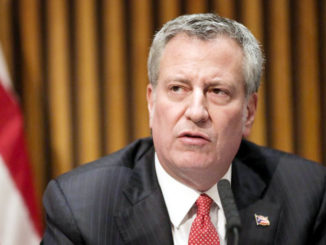
    An announcement is coming soon about the return of Macy’s annual July 4 fireworks show, Mayor Bill de Blasio said.

    De Blasio played coy with details but teased the show won’t be like last year’s pared-down affair that was spread across multiple nights and boroughs.

    “Obviously, things are moving in the right direction to be able to have something much more like we’ve had historically, but we still have to be smart about it,” he said Tuesday. “We have to structure it for this kind of transitional moment we’re in.”

    The city is entering what de Blasio has dubbed the “Summer of New York City” — a time when COVID-19 levels have fallen to the point that restrictions can lift and life returns to a pre-pandemic normal. He has envisioned most restrictions, aside from a handful, melting away in the summer heat by July 1.

    The return of Macy’s fireworks shows to a mass gathering format could be an important symbolic victory for the city. The Macy’s website for the show includes a video that implores people to “look up.” “This Fourth of July we look up to a brighter future for everyone, everywhere,” the video states.

  • ERIC ADAMS UNVEILS “WeRISE” AGENDA TO RAISE IMMIGRANT SAFETY AND EMPOWERMENT

    ERIC ADAMS UNVEILS “WeRISE” AGENDA TO RAISE IMMIGRANT SAFETY AND EMPOWERMENT

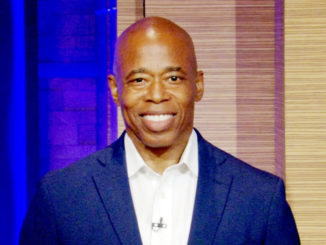
    NEW YORK (TIP): Front running mayoral candidate Eric Adams, on June 3, unveiled his “WeRISE” agenda to raise immigrant safety and empowerment,  at a town hall for ethnic and community media. The Indian Panorama editor Prof. Indrajit S Saluja was one of the attendees. Adams noted that New York City is “not only home to the United Nations; we are the home of people from every nation.” A 2015-19 estimate from the U.S. Census Bureau showed that 36.8 percent of this city’s residents — more than one out of every three — is foreign-born, living across the five boroughs.

    “My Administration will lift up immigrants as high as Lady Liberty lifts her torch in our harbor, as a beacon of hope for all who come to our shores,” said Eric Adams. “Too many of our neighbors live in the shadows, scarred by the abusive rhetoric and tactics of the Trump era and fearing a denial of their rights. The intimidating complexity of our City bureaucracy is compounded by the challenges that immigrants with limited English proficiency face in navigating everything from education to housing to healthcare. In addition to building on our existing efforts to increase civic engagement to new levels and foster the leadership of voices from every community, we will ensure that together WeRISE.”

    Adams announced that he would launch a $50 million annual Immigrant Venture Fund for small businesses started by first- and second-generation New Yorkers, with a special weight toward businesses that support the immigrant community. According to a 2018 report from the Mayor’s Office of Immigrant Affairs (MOIA), 52 percent of the city’s businesses are immigrant-owned. To pay for this Venture Fund, his administration would divert funds from the New York City Economic Development Corporation (EDC)’s budget that are historically allocated for discretionary tax benefits and tax-exempt financing for major companies seeking City support.

    Regarding immigrant safety, Adams declared that he would direct all city agencies to make their services accessible without putting immigrants at risk of law enforcement action, expand already existing legal services, and severely restrict cooperation between the New York City Police Department (NYPD) and Immigration and Customs Enforcement (ICE) — including ensuring that ICE is removed from all City buildings and facilities — until there is major federal reform, including the use of body cameras by all ICE agents. He also reaffirmed that he would combat hate crime with a zero-tolerance policy, including attacks targeting immigrant communities.

    Noting that more than 150 different languages are spoken in the city, Adams said he would direct the NYPD to prioritize language justice for victims to make it easier to safely report, as well as work in partnership with district attorneys to ensure that they have the resources they need to swiftly identify, apprehend, and prosecute those who prey on innocent New Yorkers through these cowardly acts. Additionally, his administration would take a more robust approach with the Office for the Prevention of Hate Crimes that includes rapid graffiti removal, support for expanded anti-hate curriculums in our public schools, and innovative cross-cultural dialogue initiatives like his “Breaking Bread, Building Bonds” program at Brooklyn Borough Hall that brings together everyday people each from all various ethnicities, identities, and faiths around a dinner and conversation.

    Adams’ “WeRISE” agenda also includes:

    • Boosting funding for NYC Cares to expand outreach to immigrant communities and enroll them in the City’s health plans for which they are already eligible;
    • Creating one-stop-shop health centers in underserved communities, sited in NYCHA complexes and open storefronts that are accessible to any New Yorker — no matter their legal status in the U.S., as well as pairing safety-net hospitals with wealthier ones to share cost burdens;
    • Prioritizing language justice, and funding it, with qualified City translators and stipend-based fellows expand language access for City services and resources.
    • Enhancing the IDNYC program with extraordinary security to protect users, an improved MyCity platform that provides direct connection to social services through a single portal, and mandating access to this program for any person leaving Rikers Island and needing proof of identity.
    • Using our leverage as a client to create a fairer economy for immigrants, rewarding businesses that hire local workers and benefit minority and female owners and workers — especially on City-financed projects.
    • Hiring a Chief Diversity Officer to drive change on equity for minorities and women, and also create a tool to track the share of M/WBE contracts and how much the City is spending on those companies versus others in real-time.
    • Bolstering City legal services battling discrimination in the workplace, such as cases of wage theft and unjust denial of Section 8 vouchers, as well as any other forms of harassment based on immigration status.
    • Instituting a robust program for culturally aware professional development of educators.
    • Opening a new Mayor’s Office of Community and Ethnic Media, to expand the resources they need to continue bringing vital information to New Yorkers.

    “Eric is a proven champion for immigrants in our city,” said Bronx Borough President Ruben Diaz Jr. “He knows that when they rise, we all rise. The focus that he will bring to empowering immigrants and keeping them safe, as shown in this plan, shows how committed he is to making the American Dream a citywide reality.”

    “New York City has always been a beacon of opportunity for immigrants to live, grow, and thrive,” said Council Member Adrienne Adams. “We continue to welcome, with open arms, those who want to create better lives for themselves and their families. I am proud to endorse Eric Adams’ immigrant empowerment plan, which will further help, protect, and support immigrants in New York City. We must continue to address the issues facing our immigrant communities to ensure that their voices are heard, and that they are safeguarded in all levels of government.”

    “Eric Adams’ ‘WeRISE’ plan demonstrates that he totally gets that our greatest asset as New Yorkers is our diversity–but that diversity must be supported and nurtured in order for this City to grow,” said Council Majority Leader Laurie Cumbo. “A lot of candidates are giving lip service to the value of our immigrant community, but few are backing it with a plan that is backed by experience except Eric Adams.”

     “As the first Haitian-American woman and first African-American woman to lead the largest Democratic County in our city, I am proud to support a mayoral candidate in Eric Adams who respects and values all our immigrant communities,” said Assembly Member Rodneyse Bichotte-Hermelyn. “He sees us and he knows that combating inequality and injustice means lifting all of us up. From empowering our M/WBEs to battling hate crimes, I look forward to working with Eric in City Hall to support our immigrant neighbors.”

    “I thank Eric Adams for his strong support of immigrant entrepreneurship and defense of any New Yorker facing discrimination,” said Council Member Peter Koo. “Eric is a true friend to immigrants, and his ‘WeRISE’ plan is the right plan to connect every New Yorker — no matter where they come from or what language they speak — to the City services and resources that will help them succeed.”

    “Eric Adams has been assisting individuals and families of immigrant New Yorkers for the past four decades, even in isolated neighborhoods many average New Yorkers didn’t know existed,” said Sheikh Musa Drammeh, head of the National Community Peacebuilding Commission. “His ability to build the largest and most diverse networks of supporters is the result of the investment he has made in building relationships through public service. Every immigrant group thinks they know Eric Adams better than anyone else. Eric Adams is the only public servant that walks into any room anywhere in the city and knows half of them. He will be the most effective political leader to articulate and efficiently provide constituent services for the immigrant communities, because he knows them and their needs and they know him and his leadership.”

    “Mr. Adams is a long-standing friend of the Bangladeshi community,” said Shamsul Haque, president of Rise Up New York. “He has visited dozens of Bangladeshi events, mosques, mingled with community leaders, and cultivated friendships. Seeing the recent spike in violent crimes, the Bangladeshi community feels the city is going back to the 1990’s. Mr. Adams’ campaign slogan, ‘public safety is prerequisite to prosperity,’ struck a chord with Bangladeshi New Yorkers. When public safety deteriorates, our families, friends, and neighbors will not be safe. People and businesses will leave the city, which will cause a decline in revenue.”

    “Every American should have the opportunity to pursue entrepreneurship,” said Emil Skandul, immigrant rights advocate and entrepreneur. “The defining characteristic of the immigrant experience is the drive to build a better economic foundation for one’s family in this country. For so many immigrants and first-generation Americans, entrepreneurship is their raison d’etre — a chance to control their future by working hard and smart. However, too often traditional networks of fundraising are the limiting factors for ventures. An Immigrant Venture Fund will establish a path toward achieving the American Dream.”

  • Education important pillar of India-US ties: Ambassador Sandhu

    Education important pillar of India-US ties: Ambassador Sandhu

    WASHINGTON (TIP): Education is an important pillar of India-US partnership, India’s top diplomat in the United States said after a virtual meeting with the Chancellor of the University of California, Davis. Good discussion this afternoon with Chancellor Gary May and his team on the big potential for knowledge and research partnership in agriculture, health, digital and climate change, said Taranjit Singh Sandhu, India’s Ambassador to the US.

    “Education is an important pillar of India-United States partnership,” Sandhu said in a tweet after the meeting with Chancellor May.

    Chancellor May is known as a highly engaged educational leader with a passion for helping others succeed.

    In 2015, the then President Barack Obama honored him with the Presidential Award for Excellence in Mentoring students in science, technology, engineering and maths. In 2021, he received the prestigious Lifetime Mentor Award from the American Association for the Advancement of Science for demonstrating extraordinary leadership to increase the participation of underrepresented groups in the fields of science and engineering.

    The university is located in the heart of the region which has historical ties with the US Sikh community, which includes many immigrants from Punjab.

    Today, half of the Sikh population in the US resides in California.

    To preserve the stories and history of the immigrants from Punjab and share their contributions to the state of California, the university has created an archive of videos, photos and other documents. The ambassador’s interaction with Chancellor May is part of his continuing outreach to US universities.

    (Source: PTI)

  • Indian American Steven Olikara announces his US Senate Exploratory Committee for 2022

    Indian American Steven Olikara announces his US Senate Exploratory Committee for 2022

    WISCONSIN (TIP): Steven Olikara, the son of Indian immigrants living in Wisconsin, has just announced his US Senate Exploratory Committee for 2022 Wisconsin Senate election.

    If he gets elected, Olikara, a Brookfield, Wisconsin native, entrepreneur and nonprofit leader, will be the only person of Indian origin in the US Senate.

    “While the politicians have the food fight at the top, the people at the bottom are stuck,” Olikara said in a press release. “That’s why I’m calling on all Wisconsinites to join us in a movement to elevate a more inclusive, compassionate and honest form of politics.” Olikara is traveling across Wisconsin for a “Dignity Tour” that convenes Wisconsinites from all walks of life: groups of farmers, small business owners, factory workers, veterans, Indigenous communities, and people with disabilities. The tour will guide an agenda for a more inclusive and compassionate form of politics that rejects the current system that pits people against each other, the release said.

    “Olikara has devoted his life and career to bringing together people from opposite sides of the political divide,” it said.

    A graduate of Brookfield East High School and the University of Wisconsin-Madison, Olikara launched the Millennial Action Project in 2013.

    The multi-million-dollar national nonprofit trains elected officials to build coalitions that pass innovative laws to promote greater economic mobility, a cleaner environment and a healthier democracy.

    For two years, Olikara hosted “Red & Blue Dialogues” across Wisconsin with political leaders and constituents from across the ideological spectrum, conversations that focused on issues including the future of work, higher education, and the environment.

    The Milwaukee Journal Sentinel named it one of “10 big ideas to help fix Wisconsin’s problems.”

    “We have to model the leadership we want to see,” Olikara said. “Our democracy needs us. If we have the courage to stand up, organize and wake up from this dark moment in our politics, we will change the future of our state and our country.”

  • NRI tycoon Yusuffali pays nearly $1.5 million blood money to save Indian national in the UAE

    NRI tycoon Yusuffali pays nearly $1.5 million blood money to save Indian national in the UAE

    ABU DHABI (TIP): A 45-year-old Indian, who was on death row in the United Arab Emirates for killing a young Sudanese boy in a road accident in 2012, can’t believe that he will be a free man and can return to the country to be with his family.


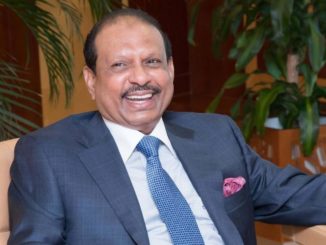
    Becks Krishnan was saved by prominent NRI businessman and philanthropist M A Yusuffali who helped to pay his “blood money” amounting to nearly $1.5 million.


    Krishnan, who hails from Kerala, was sentenced to death by the UAE Supreme Court after he was found guilty of killing a young Sudanese boy when he recklessly drove and rammed his car into a group of children in September 2012.


    Ever since, his family and friends have been trying hard for Krishnan’s release without any success, especially as the victim’s family had already gone back and settled in Sudan, putting an end to any discussion or pardon.


    The Krishnan family then approached Yusuffali, Chairman of Lulu Group, who went about getting the details of the case and got in touch with all stakeholders.


    Ultimately, in January 2021, the victim’s family in Sudan agreed to pardon Krishnan. Subsequently, Yusuffali paid 500,000 Dirhams (Rs one crore approximately) as compensation in the court to secure the man’s release, the Lulu group said here in a statement.


    Talking to the Indian embassy officials yesterday in Al Watba Jail in Abu Dhabi, a highly emotional Krishnan could not believe the turn of events.


    “It’s a re-birth for me, as I had lost all hope of seeing the outside world, let alone a free life. My only wish now is to see Yusuffali once before flying to my family,” Krishnan was quoted as saying in the statement.


    When asked for his comments, Yusuffali simply thanked the almighty for the release of Krishnan and the benevolence of visionary rulers of the UAE for the release of Krishnan and wished him a happy and peaceful life ahead.


    All legal procedures related to Krishnan’s release have been completed on Thursday, and he is expected to travel back to his hometown in Kerala soon, putting an end to nine years of agony for him and his family, a senior official of the Lulu Group told PTI over the phone.


    Abu Dhabi-based Lulu Group, that owns Lulu Hypermarkets and shopping malls, is one of the top retailers in the Middle East and North African region (MENA). — (Source: PTI)


  • US V-P Harris speaks with PM Modi, assures Covid vaccines to India

    US V-P Harris speaks with PM Modi, assures Covid vaccines to India

    Some of 6 million doses for ‘surge’ nations to be shipped to India

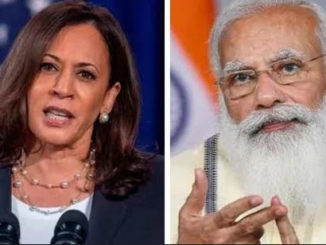
    WASHINGTON (TIP): US Vice President Kamala Harris on Thursday, June 3, spokewith India’s Prime Minister Narendra Modi and three other world leaders and informed them that the US will begin sharing the first 25 million doses of COVID-19 vaccines to their respective countries.

    Harris and PM Modi further discussed strengthening efforts to fight the COVID-19 pandemic. The call was initiated by the American side, top government sources said. During the call, Harris stressed the Joe Biden administration’s efforts to ‘achieve broad global coverage, responding to surges and other urgent situations ad public health needs and helping as many countries as possible who requested vaccines’, according to Senior White House Advisor and Chief Spokesperson Symone Sanders.

    Thanking Harris, PM Modi tweeted, “I deeply appreciate the assurance of vaccine supplies to India as part of the US Strategy for Global Vaccine Sharing. I also thanked her for the all the support and solidarity from the US government, businesses and Indian diaspora.” Modi and Harris also discussed ongoing efforts to further strengthen India-US vaccine cooperation, “and the potential of our partnership to contribute to post-Covid global health and economic recovery”, added the prime minister in his tweet.

    The prime minister also expressed the hope to welcome Harris in India ‘soon after the normalization of the global health situation’. Also Read – Uyghur exiles describe forced abortions, torture in Xinjiang Apart from Modi, Harris also dialed President Andres Manuel López Obrador of Mexico, President Alejandro Giammattei of Guatemala, and Prime Minister Keith Rowley, Chairman of the Caribbean Community (CARICOM). “The Vice President notified each of the leaders that the Biden-Harris Administration will begin sharing the rest 25 million doses of COVID vaccines to their respective countries and others, as part of the Biden-Harris Administration’s framework for sharing at least 80 million vaccines globally by the end of June,” the White House said in a statement.

    US President Joe Biden on Thursday, June 3, announced his plans to allocate 75 per cent – nearly 19 million of the first tranche of 25 million doses – of unused COVID-19 vaccines through the UN-backed COVAX global vaccine sharing programme to countries in South and Southeast Asia as well as Africa. In a statement, President Biden provided details on how the US will allocate the first 25 million of the vaccines to lay the ground for increased global coverage and to address real and potential surges, high burdens of disease, and the needs of the most vulnerable countries. “At least 75 percent of these doses – nearly 19 million- will be shared through COVAX, including approximately 6 million doses for Latin America and the Caribbean, approximately 7 million for South and Southeast Asia, and approximately 5 million for Africa,” Biden said. “The remaining doses, just over 6 million, will be shared directly with countries experiencing surges, those in crisis, and other partners and neighbors, including Canada, Mexico, India, and the Republic of Korea, he said.

    The Biden administration had been under pressure to send the excess COVID-19 vaccines with the US to nations like India, which are facing severe vaccine shortages. “We are sharing these doses not to secure favors or extract concessions. We are sharing these vaccines to save lives and to lead the world in bringing an end to the pandemic… And we will continue to follow the science and to work in close cooperation with our democratic partners to coordinate a multilateral effort, including through the G7, Biden added. COVID-19 Vaccines Global Access, abbreviated as COVAX, is a worldwide initiative aimed at equitable access to COVID-19 vaccines directed by Gavi, the Vaccine Alliance, the Coalition for Epidemic Preparedness Innovations, and the World Health Organisation.

    President Biden on May 17 had said the US will share 20 million more COVID-19 vaccine doses with other countries, taking the total number of such shots to 80 million. Ten million is equal to one crore. The additional 20 million doses will be of the Pfizer Inc/BioNTech, Moderna Inc and Johnson & Johnson vaccines, on top of 60 million AstraZeneca Plc doses he had already planned to give to other countries. Biden said the United States “also recognize that ending this pandemic means ending it everywhere. As long as this pandemic is raging anywhere in the world, the American people will still be vulnerable. And the United States is committed to bringing the same urgency to international vaccination efforts that we have demonstrated at home.

    (Agencies)

  • Eager to involve Indian investigators and sites in global clinical trials: Anthony Fauci

    Eager to involve Indian investigators and sites in global clinical trials: Anthony Fauci

    WASHINGTON (TIP): Dr. Anthony Fauci, who is the head of the U.S. National Institute of Allergy and Infectious Diseases, said that India and the U.S. must continue to collaborate on research related to SARS-CoV-2 as well as vaccines and adjutants.


    “We also are eager to involve Indian investigators and sites in global clinical trials to evaluate the safety and efficacy of various COVID-19 therapeutics,” he added, referring to the need to step up joint research into the treatment of COVID-19 patients.


    Speaking about lessons learned by the United States from the pandemic, Dr. Fauci said that it was necessary to implement “well designed and validated scientific approaches to guide effective public health and clinical practice”. The U.S. has seen the highest number of COVID-19 cases (more than 34 million) in the world and the highest number of deaths (611,000), India ranks second on cases (more than 28 million) and third on deaths (338,000), globally.


    “International cooperation and collaboration are essential to advance scientific discovery, and to manage global health threats,” said Dr. Fauci. “We must address inequities in our health systems, so that future epidemics are not a burden primarily borne by disadvantaged populations. Finally, we all need to make sure that the public receive accurate, evidence-based guidance from health officials, and political leadership,” he added.

  • US Congress tables Bill to remove per-country cap on green card

    US Congress tables Bill to remove per-country cap on green card

    WASHINGTON (TIP): A bipartisan legislation has been introduced in the US House of Representatives to eliminate the per country cap on employment-based green card.

    The legislation was introduced by Congresswoman Zoe Lofgren and Congressman John Curtis, and it is likely to benefit Indian IT professionals anguishing over decades of green card wait.

    The Bill phases out the 7 per cent per-country limit on employment-based immigrant visa and raises the 7 per cent per-country limit on family-sponsored visa to 15 per cent.

    The Equal Access to Green cards for Legal Employment (EAGLE) Act, 2021, needs to be passed by the Senate before it can be sent to the White House for the President to sign it into a law.

    Its predecessor, the Fairness for High Skilled Immigrants Act, was passed in the House in the 116th Congress with a resounding bipartisan vote of 365 to 65. “We all know that our immigration system is severely broken, and it has been broken for decades,” said Lofgren, Chair of the House Subcommittee on Immigration and Citizenship.

    The basic framework for allocating the immigrant visa dates back to the middle of the 20th century and was last seriously updated in 1990, when the Congress established the worldwide numerical limits on visa and the seven per cent per-country cap that still exists today, she said.

    Over time, these limitations have led to backlogs that were unimaginable in 1990. The effect has been that countries with relatively small populations are allocated the same number of visas as a relatively large population country.

    “The result? A person from a large-population country with extraordinary qualifications who could contribute greatly to our economy and create jobs waits behind a person with lesser qualifications from a smaller country,” she added.

    (Source: PTI)

  • Despairing India needs a JP for this century

    Despairing India needs a JP for this century

    By Yogendra Yadav

    We have lived for far too long in the 21st century with the carcasses of ideologies of the 19th century. They were already outdated by the second half of the 20th century; they make no sense in the 21st. These ideologies received from the past force square pegs of a new reality into prefabricated round holes. They fail to incorporate new ideas, issues and energies. 

    “It’s the eighth year of a charismatic Prime Minister. The economy is in a shambles, with low growth, high unemployment and rising inflation. Doubts are giving way to disillusionment, disappointment to anger. The imperious political dispensation treats popular protests with disdain.

    It’s the eighth year of a charismatic Prime Minister. The economy is in a shambles, with low growth, high unemployment and rising inflation. Doubts are giving way to disillusionment, disappointment to anger. The imperious political dispensation treats popular protests with disdain.


    No, I am not depicting Narendra Modi’s India. This fragment, nearly half a century old, is from Indira Gandhi’s India. The date June 5, 1974 was a turning point in the history of the Bihar movement. Jayaprakash Narayan or JP gave a call for ‘Sampoorna Kranti’ or total revolution at a massive rally in Patna that day. Sampoorna Kranti became the rallying cry of the Bihar movement. Slogans like “Sampoorna kranti ab naara hai, bhavi itihaas hamara hai” reverberated during that famous challenge to Indira that led to the Emergency and, finally, the ballot revolution of 1977. Does that lapsed ideological lingo of a bygone era hold some relevance for us today? I think it does. That is why the Samyukt Kisan Morcha’s decision to observe June 5 this year as Sampoorna Kranti Diwas holds a deep historic significance.

    In my previous birth as a student of public opinion, attitude and behavior, one thing never ceased to surprise me: the optimism of the Indian public. No matter how horrid the reality on the ground, a question about expectations of the future always got an overwhelming positive response. The analyst in me found this intriguing. The political animal in me found this frustrating.

    Looking back, I think this naïve optimism may have been the oxygen that kept democracy alive despite all odds.

    That optimism is under threat today. Take three recent examples. Mahesh Vyas of the Centre for Monitoring Indian Economy reports that the share of households that expected a rise in their income over the next one year had come down to just five per cent in April this year, compared to 30 per cent in 2019, when the economy was already in a bad shape. On the same day, FICCI’s Business Confidence Survey — no good indicator of popular mood — reported a nosedive in its index of business confidence. More to the point, Yashwant Deshmukh — no critic of Modi government — writes that the CVoter poll found 80 per cent Indians in a state of despondency, saying they do not think anything is on the right path. Hope is the most scarce commodity in today’s India. Loss of hope is an indicator of the loss of faith in the Modi government. But this is also a challenge to the Opposition and democratic system. India desperately needs hope.


    This is not a challenge of crafting a positive political communication. This is not about coining a smart political slogan, or a new ‘jumla’. Indians have been through that. They believed in “achhe din” and have seen the reality. They still yearn for hope, but one that is believable, that maps on to the ground, that shows a path and offers a vehicle.


    This is what ideologies do. An ideology provides a frame to understand the present, diagnose what is wrong with it and identify seeds of change. It offers a utopia, an imaginary future destination that we must strive for. And it traces a path from the present to that imagined future with the help of agents of change and their strategies.


    It is not fashionable to use this word in the 21st century, after the collapse of political systems that foregrounded their ideologies. But let us not delude ourselves: those who call themselves non-ideological are also purveyors of an ideology, the ideology of status quo. We don’t need that. India needs a forward-looking ideology that provides a frame for instituting hope.


    This cannot be done by any of the existing ideologies. We have lived for far too long in the 21st century with the carcasses of ideologies of the 19th century. They were already outdated by the second half of the 20th century; they make no sense in the 21st. This applies as much to the ideologies of the Right as it does to the Left. These ideologies received from the past force square pegs of a new reality into prefabricated round holes. They fail to incorporate new ideas, new issues, new energies.


    Instead of integrating various ideas, we turn to patchwork ideologies like Gandhian Socialism or hyphenation like Ambedkarite-Feminism or absurd labels like Left-Liberal. No wonder these ideologies or their combination do not generate the kind of hope that India needs today.


    This is where JP’s call for a total revolution comes in. By the time he gave this call in 1974, he had been through the entire spectrum of ideologies of his time. Beginning as a naïve nationalist in his childhood, he converted to Marxism-Leninism in his youth and was an ardent champion of the USSR. Disillusionment with communism in his 40s led him first towards democratic socialism and then towards Gandhi and Vinoba Bhave. Through the 60s, he advocated a communitarian ideology. His call for a total revolution was not one more stage in his intellectual journey; it was the summation of the entire journey and an attempt to integrate all the ideologies of the 20th century for our purpose.


    JP was ahead of his times. Thus, the idea remained necessarily sketchy. He did not go beyond saying that total revolution entails a radical refiguring both of the system as well as the human being, that it meant a revolution in the political, economic, social, cultural as well as spiritual spheres. He insisted that a revolutionary transformation must be non-violent and cannot happen overnight.


    Standing on his shoulders, we can do much better. We can incorporate ideologies that JP’s wide spectrum did not encompass: Phule-Ambedkarite legacy, feminism, environmentalism. We can attend to issues that he did not quite grasp: caste, gender, ecology, information order.


    We can discard many of the superstitions of the ideologies of the 19th century: the idea of a vanguard of history, and universal models of revolutionary transformation and one-stroke revolution.


    Instead of deducing the picture of a good society from a universal utopia, we can anchor a new ideology in the values of the Indian Constitution. We can revolutionize the idea of revolution.


    Creating such an ideology is one of the biggest challenges of our times. This is not just a challenge for political leaders and workers; this is a challenge for all social activists, intellectuals, academics and artists. Let this June 5 be the starting point of this difficult but necessary journey.

    (The author is National President, Swaraj India)

  • Sedition law must go

    British-era clause can’t be used to fix activists, journalists

    After over seven decades of Independence, India is struggling to get rid of the sedition law – widely misused against activists and journalists. In view of its ‘chilling effect’, the Supreme Court has decided to examine the archaic Section 124A of the Indian Penal Code (IPC) in the context of media freedom after the filing of sedition cases against journalists in Andhra Pradesh. According to Section 124A, a person commits sedition if he/she brings or attempts to bring in hatred or contempt or excites or attempts to excite disaffection towards the government established by law in India. It attracts life imprisonment.

    After Independence, sedition was proposed in the Constituent Assembly as one of the grounds to restrict freedom of speech and expression. But KM Munshi opposed it, saying that if sedition were allowed to stay, ‘an erroneous impression would be created that we want to perpetuate 124A of the IPC or its meaning which was considered good law in earlier days.’ After the Constitution came into force, the Punjab High Court in Tara Singh Gopi Chand v. the State (1951) declared Section 124A unconstitutional. Once described as ‘highly objectionable and obnoxious’ by Nehru, Section 124A continues to be on the statute book, thanks to the First Amendment piloted by him that added ‘public order’ to Article 19(2) as a ground to restrict free speech.

    It was on the basis of public order in Article 19(2) that the SC, in Kedarnath Singh’s case (1962), upheld the validity of Section 124A. However, the court restricted its scope to some extent. In Balwant Singh’s case (1995), it let off two men accused of raising anti-India slogans, hours after Indira Gandhi’s assassination in 1984, saying that raising of slogans a couple of times – which neither evoked any response nor any reaction from the public – couldn’t attract sedition. The court’s comment about possible filing of sedition cases against news channels for showing a body being thrown into a river indicates that the problem runs much deeper. Many countries, including the UK and Australia, have abolished the sedition law. It’s time for India to follow suit.

    (Tribune, India)

  • Get out and Vote

    Election Day is Tuesday, June 22, 2021. Polls are open from 6am to 9pm.

    Early Voting Period is June 12, 2021 – June 20, 2021.

    New York City Primary Election is just two weeks away. Is the Indian American community fully prepared to exhibit its strength? Well, some believe, its isn’t. Some others claim it is better prepared now than before. They cite the number of Indian origin candidates who have thrown their hats in the electoral ring. But does the number of Indian American candidates in the electoral fray indicate the enthusiasm of voters? Well, again, many say” No”.

    The Indian American community has never been enthusiastic about voting in the elections. But for the committed voters in both the parties, very few have ever bothered to know the candidates, or support them, and much less go to polling station to cast their “valuable” vote. The question is why the community would give political donations, and yet not vote? It may be, partly because the community does not find any of the several candidates in the electoral battle strong enough to win. They prefer not to “waste” their time in campaigning or casting their vote. This despondency has been explained repeatedly by many in the Indian American community. They have to understand that it is not always a candidate from your own community who should be considered good enough to represent you, but it could be anyone. If the community backs a candidate, the candidate will feel obliged to take care of the community. It is a question of owning your candidate. The Indian American community must realize that they are a force to reckon with, being the highest earning, on an average, and one of the highly educated in the US, with ideas to influence the outcome of any election, at least at the local level. But it is also subject to one and the only condition- provided they exercise their right to vote. A right they must exercise as responsible citizens. So, folks, you have choices. Go in for early vote which opens on June 12. Or, wait till you get to the polling station on June 22. And, yes, be careful about the new Ranked Choice voting system which allows you to list your preferences. It will help to get hold of a person who is conversant with information on the system. Whatever, let your voice be heard. Do vote.


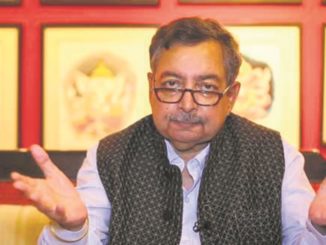
  • Supreme Court of India throws out sedition case against Journalist Vinod Dua:  upholds right to criticize government

    Supreme Court of India throws out sedition case against Journalist Vinod Dua:  upholds right to criticize government

    NEW DELHI (TIP): The Supreme Court of India, on Thursday, June 3, quashed an FIR registered by the Himachal Pradesh Police against senior journalist Vinod Dua last year for his comments critical of the government’s handling of Covid-19 lockdown on YouTube.

    “We are of the firm view that the prosecution of the petitioner for the offences punishable under Sections 124A and 505 (1) (b) of the IPC would be unjust. Those offences, going by the allegations in the FIR and other attending circumstances, are not made out at all and any prosecution in respect thereof would be violative of the rights of the petitioner guaranteed under Article 19(1)(a) of the Constitution,” a Bench headed by Justice UU Lalit said.


    Mar 30, 2020: Dua’s YouTube video slams government over nationwide lockdown in 2020

    May 6: FIR against Dua in HP by local BJP leader, alleging sedition

    June 4: Another FIR against Dua in Delhi by a BJP spokesperson

    June 10: Delhi HC stays probe into FIR lodged in Capital

    June 12: HP Police summon Dua

    June 13: Dua moves SC

    June 14: SC restrains HP Police from arresting Dua, but doesn’t stay probe

    Sep 16: Centre tells SC Dua’s show incited people to migrate during pandemic

    June 3, 2021: SC quashes sedition case against Dua

    The Bench, which had reserved its verdict on October 6 last year, said: “We have quashed the proceedings and the FIR. Every journalist will be entitled to protection under the Kedar Nath Singh judgment (on sedition).” While upholding the validity of Section 124A of the IPC (sedition), a Constitution Bench of the Supreme Court had in Kedar Nath Singh case (1962) restricted the scope of the law by saying that its application should be limited to “acts involving intention or tendency to create disorder, or disturbance of law and order; or incitement to violence”.

    The Bench, however, rejected Dua’s prayer for setting up of a high-level committee in each state for prior vetting of sedition charges against journalists of 10-year standing, saying that “it will be directly encroaching upon the legislative domain”.

    The Shimla FIR was registered at the instance of a BJP leader, who filed a criminal complaint against Dua, accusing him of instigating violence against the government by allegedly spreading fake news.

    Quoting from its verdict in the Kedar Nath Singh case, the top court said, “A citizen has a right to say or write whatever he likes about the government, or its measures, by way of criticism or comment, so long as he does not incite people to violence against the government established by law or with the intention of creating public disorder.”

    It said, “It’s only when the words or expressions have pernicious tendency or intention of creating public disorder or disturbance of law and order that Sections 124A…of the IPC must step in.”

    Referring to Dua’s alleged seditious statements, the Bench said they could “at best be termed as expression of disapprobation of actions of the government and its functionaries so that the prevailing situation could be addressed quickly.”

    “They were certainly not made with the intent to incite people or showed a tendency to create disorder or disturbance of public peace. The petitioner was within the permissible limits laid down in the decision of this court in the Kedar Nath Singh case,” it said while quashing the First Information Report (FIR).

    (Source: PTI)

  • Facebook suspends Trump for 2 years in response to Oversight Board ruling

    The change is part of a series of responses to the Facebook Oversight Board’s ruling on former president Trump.

    WASHINGTON (TIP): Facebook said Friday, June 4, that it plans to suspend Trump for two years following his comments in the wake of the Capitol insurrection on January 6th and will only reinstate him” if the risk to public safety has receded. “


    Facebook plans to announce that it will no longer automatically give politicians a pass when they break the company’s hate speech rules, a major reversal after years of criticism that it was too deferential to powerful figures during the Trump presidency.


    Since the 2016 election, the company has applied a test to political speech that weighs the newsworthiness of the content against its propensity to cause harm. Now the company will throw out the first part of the test and will no longer consider newsworthiness as a factor, according to a person familiar with the company’s thinking who spoke on the condition of anonymity because that person was not authorized to speak publicly. But Facebook doesn’t plan to end the newsworthiness exception entirely. In the cases where an exception is made, the company will now disclose it publicly, the person said — after years of such decisions being closely held. And it will also become more transparent about its strikes system for people who violate its rules.


    The moves, first reported by the Verge, are part of a set of responses to the Facebook Oversight Board’s recommendations. The largely independent Facebook-funded body recently ruled on whether the social network should reinstate former president Donald Trump’s account on its service. The company’s responses are the first major test of how a nongovernment watchdog might act as a check on the powerful social network, which is used by 3.45 billion people globally on a monthly basis.

  • 37th anniversary of Operation Blue star: The game is for power not for Punjab

    37th anniversary of Operation Blue star: The game is for power not for Punjab

    Prabhjot Singh

    It was on June 1 in 1984 that the Indian armed forces launched a military action on the Golden Temple complex, allegedly to neutralize the Sikh militants led by Sant Jarnail Singh Bhindranwale. The operation lasted 10 days, resulting in the death of hundreds of innocent pilgrims inside the complex, besides extensive damage to thehighest seat of the Sikh temporal power Shri Akal Takht Sahib and the historic Ramgarhia Bungas. Indian military claimed it had lost 700 soldiers besides a few hundred wounded. -EDITOR

    The Sikhs, a global community, have every reason to nurse a grouse both against the Congress – for engineering attack on their sancta sanctorum besides depriving the State of its rightful territorial and rivers water rights – and the Bharatiya Janata Party (BJP) for not assuaging their hurt psyche without taking any action to mitigate it.


    Thirty-seven years after the traumatic Operation Blue Star, Punjabis in general and Sikhs in particular, continue to ponder what makes all ruling parties at the Centre to betray them.


    All agitations in this border State have ended in trading of power without anything being said about its long-standing demands, be it territorial rights, dams and water works, prime institutions and its people.


    Sikhs have been in the habit of hawking newspaper headlines for reasons that extend beyond the geographic boundaries of their motherland for whose independence they made nearly 80 per cent of the total sacrifices.


    Of late some of the world leaders while eulogizing the contributions this minute minority community has made in the Corona pandemic went to the extent of saying that there should be a gurdwara – Sikh temple – everywhere to look after the suffering humanity.


    It is that institution of gurdwara that has been making the Sikh community seek answers from the Central Government in India in general and the national political parties in particular.


    Questions about the attack on their sancta sanctorum have either been ignored or they remained mired in controversies.


    The Sikhs, a global community, have every reason to nurse a grouse both against the Congress – for engineering attack on their sancta sanctorum besides depriving the State of its rightful territorial and rivers water rights – and the Bharatiya Janata Party (BJP) for not assuaging their hurt psyche without taking any action to mitigate it.


    Wreaked by two politics-engineered partitions, this once affluent State continues to struggle to get its long-standing demands, including territorial sovereignty and rightful claim over its river waters, met. While the first partition in 1947 played havoc with the life and property of this border province, the second partition took away whatever little progress or gains it had made since independence. All major projects, including its capital, dams and water works and institutions, were taken away and brought under control of the Centre.


    It is all the more agonizing for the Sikhs when they look back at the history. Before the 1947 partition, says historian Research Professor Rajmohan Gandhi, the then British rulers tried to appease all major communities of northern India – the majority Hindu community and the minorities Muslims and the Sikhs.  Though he did not say in many words that while the Hindus got India and the Muslims Pakistan, the Sikhs had to swallow false promises.


    After partition, their agitation for a Sikh Homeland ended in a truncated State they got which was without a capital, most of its dams and water works and many Punjabi speaking areas.


    While they were still trying to come out of the trauma of the two partitions, came the Operation Blue star. Whatever are the causes or reasons behind the “Dharam Yudh” morcha that made the Sikhs launch a struggle to get autonomy for States after adopting the Sri Anandpur Sahib resolution of August 1977.

    Indian Military inside the Golden Temple.

    Agreed violence has no place in any civilized society in general and liberal democracies in particular, Punjab has never been at peace with itself for a continuous period of 30 or more years. To be precise, Sikhs have always been at war, if not with the powers at the Center, then among themselves.  And even in their struggle, political, religious or social, they have always pioneered a number of initiatives, both in and outside India. It is here where the role of journalists, as members of the fourth estate, becomes crucial in highlighting injustices done to the State or its people,


    Journalists are eyes and ears of a society as they play a critical role in preserving democracy. They are mandated to act as watchdogs in liberal democracies as while weaving their stories, they not only understand the importance or significance of Rule of Law but also keep the public good above everything else. While judging a journalist or his or her work, especially in the context of Punjab, it is important to understand the trying circumstances in which they worked.


    The State had the longest spell of President’s rule besides promulgation of draconian laws to contain militancy. A State that was once acknowledged as the sword arm or sports arm of the country besides serving as the food bowl of the country is now tottering at brink.


    Some experienced journalists, both from within and outside the country, would invariably use objectivity and verification combined with storytelling skills to make a subject both credible and newsworthy. But journalists from Punjab remain a suspect in the eyes f the Centre. Punjab has had more spells of curfew than any other State in the country. It is not to suggest that what a journalist writes has general acceptance. Objectivity itself is subjective. Like everything else, criticism of journalistic works often has political dividends. Increasing attacks by politicians on the credibility of a journalist or a media house have often been part of a conscious strategy to weaken both the accountability and credibility of journalism in general and a journalist in particular.


    Of late, we all have been a witness to a collapse of the notion that politically relevant facts can be discerned by news professionals, reiterating the general belief that journalists are no more apolitical leaving their readers uncertain about ingesting the messages communicated to them as credible. These changing perceptions and thoughts apart, there are old timers who are continuing to discharge their role as torchbearers. They religiously follow professional ethics and discharge their duties as ears and eyes of the society they represent.  Recently I reviewed a book by one of my friends, Jagtar Singh, for The Tribune, an institution with which I remained associated for 37 years.


    As a veteran journalist and columnist, Jagtar Singh, remained an eyewitness from the very beginning of the fight for Sikh Homeland, to the present.


    His latest book “The Khalistan Struggle: Rivers on Fire” is the story of militant struggle in the border state of Punjab. It tells students of history as to what sparked this struggle, which were the people in the beginning and how this discourse shaped up as a fight for a separate Sikh state.

    The Akal Takht Sahib bore the brunt of the military action.

    Not only this, several other books about the Sikh religio-political discourse in synergy of both the peaceful and militant struggle from the earlier days, have taken up only selective militant actions, as these were the incidents as these shaped the discourse at crucial moments.


    For Sikhs, it is not only their emotive bondage with the institution of gurdwara in general and the sanctum sanctorum in particular but has acted as a catalyst to prove to the world that the Sikh gurdwara which the Indian defence forces attacked with mortar, grenades and guns in 1984, are the shelter homes for those in distress. And these spiritual centers-cum-shelter homes do not discriminate with beneficiaries on the grounds of their ethnicity, colour, creed, religion or language. No Sikh would ever take or accept any attack 0n its place of worship.


    Most of those who have done work or written essays on developments in Punjab since 1947 have documented their works well.However, a few important revelations made in the book, including one about the assassination of the then Prime Minister Indira Gandhi, need corroboration. The author says that the names of all those who gunned down Indira Gandhi and those who were part of the design to kill her were in public domain. At least three more people besides all those known names were part of the plan to avenge Operation Bluster.


    This revelation has not been substantiated as he mentions that one of the three names – Manbir Singh Chaheru – purchased a plot in Mohali for Bimal Kaur Khalsa, wife of Delhi Police Sub Inspector Beant Singh, one of the two assassins who killed Indira Gandhi. It appears to be a post-action (assassination) association that brought Bimal Khalsa in contact with Manbir Chaheru and Damdami Taksal. All said and done, it was the religious hurt that made Beant and Satwant kill Indira Gandhi. The revelation cannot be dismissed, as corroboratory evidence may have remained unexplored.

    A picture of destruction

    Incidentally I covered most of the militant actions, including assassinations of Indira Gandhi and Beant Singh, besides Operation Bluestar, Kapuri Morcha and the Dharam Yudh morcha.

    Coming to the emotive issue of rivers’ waters, it has been proved that the State Assembly ever ratified none of these awards. The assembly took up the issue twice, first during the Akali Government of Surjit Singh Barnala that annulled the 1981 award, and the second by the Congress Government of Capt Amarinder Singh that set aside all water agreements. It may sound strange that none of these Legislative pronouncements could become effective. The issue has been once again thrown open by the Apex Court necessitating the Centre to get back to the rigmarole of holding meetings with the Chief Ministers of Punjab and Haryana.


    When the Barnala government annulled the 1981 award (Indira-Darbara award), the State Assembly simultaneously endorsed the Rajiv-Longowal accord that mandated for setting up of a Tribunal to resolve the waters’ sharing problem. And the Tribunal so set up – Eradi Tribunal – after submitting its interim report in 1987, failed to give its final report even after 24 years costing the state exchequer several crores.


    When we talk of Punjab Rivers’ waters issue, reference to Riparian principle or law becomes imminent. Going by Encyclopedia Britannica, “In property right doctrine pertaining to properties adjacent to a waterway that (a) governs the use of surface water and (b) gives all owners of land contiguous to streams, lakes, and ponds equal rights to the water, whether the right is exercised or not. The riparian right is un-sufructuary, meaning that the landowner does not own the water itself but instead enjoys a right to use the water and its surface.”


    Going by the basic philosophy of the Riparian Law or principle, the actual rights rest with the people who live adjacent to waterways. Intriguingly, in case of Punjab, the actual beneficiaries were uprooted and the State or the center claimed ownership rights over the waters. And select powerful people, holding high positions both in the state and the center, forget about the water awards without ever getting to the beneficiaries, the people, for their endorsement.


    Now coming back to the Operation Blue star, after 37 years, there is no credible or authentic version of the whole unfortunate episode that reveals actual drills of the operation, exact total casualties, the fate of the archives, artifacts, books and documents that were there in the SGPC museum damaged during the attack on Operation Blue star.


    Complicity of other powers, including the British government, in the events leading to the Operation Blue star, is still to be told.


    (Prabhjot Singh is a former Chief of Bureau of The Tribune. He can be reached at prabhjot416@gmail.com)


  • June 4 New York & Dallas E – Edition

    June 4 New York & Dallas E – Edition

    [vc_row][vc_column][vc_column_text]

    E-Edition

    [/vc_column_text][/vc_column][/vc_row][vc_row][vc_column width=”2/3″][vc_custom_heading text=”Dual Edition” font_container=”tag:h2|text_align:center” google_fonts=”font_family:Istok%20Web%3Aregular%2Citalic%2C700%2C700italic|font_style:700%20bold%20regular%3A700%3Anormal” link=”url:https%3A%2F%2Fwww.theindianpanorama.news%2Fwp-content%2Fuploads%2F2021%2F06%2FTIP-June-4-Dual-Edition.pdf|||”][vc_single_image image=”110322″ img_size=”full” add_caption=”yes” alignment=”center” onclick=”custom_link” link=”https://www.theindianpanorama.news/wp-content/uploads/2021/06/TIP-June-4-Dual-Edition.pdf”][/vc_column][vc_column width=”1/3″][vc_single_image image=”82828″ img_size=”medium” alignment=”center” onclick=”custom_link” link=”https://www.theindianpanorama.news/advertising-media-kit-portal-indian-panorama/”][vc_single_image image=”82829″ img_size=”medium” alignment=”center” onclick=”custom_link” link=”https://www.theindianpanorama.news/advertising-media-kit-portal-indian-panorama/”][/vc_column][/vc_row][vc_row][vc_column width=”2/3″][vc_custom_heading text=”Lead Stories This Week” font_container=”tag:h2|text_align:center” google_fonts=”font_family:Istok%20Web%3Aregular%2Citalic%2C700%2C700italic|font_style:700%20bold%20regular%3A700%3Anormal” link=”url:https%3A%2F%2Fwww.theindianpanorama.news%2F%20|||”][/vc_column][vc_column width=”1/3″][vc_widget_sidebar sidebar_id=”mh-sidebar”][/vc_column][/vc_row]

  • Eye Foundation of America: Dedicated to elimination of avoidable blindness in children worldwide

    Eye Foundation of America: Dedicated to elimination of avoidable blindness in children worldwide

    Prof. Indrajit Saluja

    Eye Foundation of America is dedicated to the elimination of avoidable blindness in children worldwide, and, in India. Dr. VK Raju, an internationally reputed ophthalmologist, is founder and president of the Eye Foundation of America.

    Late Arthur J Pais, a senior journalist with India Abroad recorded his impressions of Dr. VK Raju in the publication’s August 21, 2009, edition which I have always rated as one of the best profiles I have ever read. I am tempted to quote from it.

    . VK Raju, an internationally reputed ophthalmologist, is founder and president of the Eye Foundation of America

    “Dr. VK Raju has received many honors for his humanitarian work in saving the eyes of the poor not only in India but in half a dozen countries from Iraq to America, but the emotions he felt for Srinu Maddula, who earned his Doctorate in Pharmaceutical studies from Rutgers University in 2009 and began working for a major company, and who presented his first pay check to the Eye Foundation of America that Raju started in 1979, was transcendent.

    Srinu Maddula with mother

    It was in 1979 that Maddula had corneal transplants to both eyes, at the age of 2. His family had travelled to Morgantown, West Virginia, Raju’s home for more than three decades (now four decades). The surgery was free and most of the other expenses were borne by Raju. Now, it was time for Maddula to pay him back.

    “You feel blessed when something like that happens”, he said, referring to Maddula’s gesture. “

    Maddula who is the poster boy of the Eye Foundation is deeply attached to Dr. Raju and the Foundation. He is now actively involved as one of the EFA Board members and is a regular and generous donor

    EFA began its work in 1979 in Morgantown, West Virginia, USA. EFA grew out of his earlier work providing services and treatment near his birthplace in Rajahmundry, a town in Southeast India’s Andhra Pradesh. Raju organized teams to go to remote areas and deliver eye care in areas where there otherwise were none. These traveling clinics were known as “eye camps.” (Eye camps remain a standard part of the Foundation’s services today.)

    Raju dedicated virtually all the spare time he had outside his busy ophthalmological practice in West Virginia and used his own funds to cover many of the expenses. Eventually it became apparent that the lack of accessible, affordable eye care was very large and shared by an enormous number of people worldwide. In order to battle avoidable blindness on a global scale and to gain strength by partnering with other organizations, Raju created the 501 © 3 nonprofit organization that we know today as the Eye Foundation of America.

    Today, Foundation has grown far beyond its original size and scope but never outgrew the vision of its founder, who continues to look ahead. EFA has built modern eye hospitals and trained ophthalmic assistants and other personnel to carry on our work.  We provide workshops and fellowships for physicians and medical students throughout the world. We also conduct research to find better ways of preventing blindness, to learn how to distribute Vitamin A efficiently

    Dr. VK Raju speaking at Rotary Club of Calcutta Centennial Celebrations in Kolkata, Jan 1, 2020

    His team has done wonders, considering the tremendous work done by them.

          * 2.5 million+ outpatients

          * 350 thousand+ eye surgeries

          * 30 thousand+ on children

    This is completed by the Eye Foundation of America team since 1977 in India and 21 other developing countries.  Additionally, the Eye Foundation of America lays great emphasis on teaching and training of health professionals who receive the Foundation’s support at every level.

    According to the World Health Organization (WHO), there are as many as 1.4 million blind children worldwide who are affected. WHO reports that eighty percent of the world’s 45 million blind people live in developing countries. The Eye Foundation of America’s (EFA) mission is to go where the need is greatest — often rural and remote areas of developing countries where there is no medical care or where the cost of the care is prohibitive.

    EFA provides medical eye care and treatment that is both affordable and accessible to all on equal terms, with the goal of eliminating avoidable blindness, especially in children. They take extra steps to ensure that our treatment is of the highest quality–comparable to that provided by the best hospitals in the world. EFA also delivers that care in ways that maintain each patient’s self-respect and dignity.

    EFA has treated Native Americans, wounded refugees in war-torn Afghanistan and Iraq, and have built eye hospitals in India–one with a wing devoted exclusively to children. They work in more than 14 countries and plan to extend that reach in the years ahead.

    Although the Eye Foundation of America serves people of all ages, they have a special place in their heart for children because it is they who have the most to lose. Visually impaired or blind children grow up without the same advantages as sighted children. Unable to read and write, they often cannot support themselves as adults and become a burden on their families and communities.

    The Eye Foundation of America’s Goutami Eye Institute in Rajahmundry, Andhra Pradesh sponsors a free 6-month certificate program that trains local young men and women to become ophthalmic assistants. They pay them a living stipend during training and often hire graduates to staff hospitals. The career training helps them support themselves in places where jobs are difficult to find.  Eighty percent of the graduates come from poor families.

    Eye Foundation of America’s Goutami Eye Institute in Rajahmundry, Andhra Pradesh conducts workshops and other programs to teach its staff about new medical techniques and equipment

    The Goutami Eye Institute conducts workshops and other programs to teach its staff about new medical techniques and equipment. This program has been expanded to include physicians and medical practitioners from all over the world. Some workshops provide Continuing Medical Education (CME) credits. Fellowships available through Goutami Institute allow postgraduate physicians from India to further their education.

    The commitment of Goutami towards training and education in eye care is spread across medical and non-medical spheres. Long-term fellowships for young post-graduates and Short-term fellowships and observer ship for practicing ophthalmologists and periodic Continuing Medical Education programs with eminent national and international faculty are available for medical fraternity.

    Training of Key Informants, like teachers, medical practitioners, primary health care workers, etc., in identifying and referring people, especially of children, with eye problems is done periodically.

    Education of community on avoidable causes of blindness and visual impairment is undertaken in the form of patient information series on different eye aliments and through health talks.

    It is to achieve this end that Dr. Raju, in collaboration with his daughter, Dr. Leela Raju, authored a book “Musings on Medicine, Myth, and History – India’s Legacy”. It is a masterpiece to be read by everyone who would like to know hoe medicine and surgery came out of India.

    An avid reader and a writer, Dr. Raju has authored dozens of articles and also written books, the first being “Musings on Medicine, Myth and History- India’s Legacy”.

    For his monumental work, Dr. VK Raju has been profusely recognized, honored and awarded. The latest recognition came his way early this year when he was admitted to Toledo University Global Medical Missions Hall of Fame for his efforts to eradicate blindness.

    Dr. Raju has traveled round the world, attending conferences and meetings; speaking at various national and international meets; interacting with great minds to find solutions to the problems of health, particularly blindness among children. Most of his time is spent in traveling.

    He is a keen student of history and admires the great historian Padma Bhushan Dr. Romila Thapar who he recently visited in Delhi and interacted with her on many issues of mutual interest.

    Dr. Raju, a keen student of history, with the legendary historian Padma Bhushan Dr. Romila Thapar on one of his visits to Delhi

    At the speed and the zeal, with which Dr. Raju is working to fulfil his mission of life to eradicate preventable blindness among children, it can be expected that he will set up more medical facilities, apart from the Goutami Hospital he is running at Rajahmundry in Andhra Pradesh, India. Of course, he alone cannot do it. He will need cooperation of government of India and people. Government of India could play a contributory role by providing certain facilities to set up such medical centers. And people can contribute their bit by donating liberally to a humanitarian effort of great significance. I learn, Dr. Raju is already working on a plan to have a series of medical facilities in various States of India. It will be worthy of all lovers of humanity to chip in to support a historic mission of The Eye Foundation of America.

    The Eye Foundation of America Team.

    The Eye Foundation of America Team  consists of  extremely dedicated people who are totally passionate about the cause that Dr. Raju has espoused of preventing avoidable blindness among children of the world.

    (The author is chief editor of the weekly English newspaper ‘The Indian Panorama’)

  • Eye Foundation  of America Friend/ Fundraiser on 5th June, 2021

    Eye Foundation of America Friend/ Fundraiser on 5th June, 2021

    Eye Foundation of America will hold a friend/ fundraiser on June 5, 2021. It will be a virtual event, being co-hosted by Eye Foundation of America, AAPI, GAPIO and Rotary. The virtual event will start at 9 PM EST.

    Speaking with The Indian Panorama, Eye Foundation of America founder and chairman Dr. VK Raju, an eminent ophthalmologist said that the evnt has been planned as a mix of scholarly deliberations and entertainment.

    Joe Manchin, US Senator West Virginia

    U.S. Senator Joe Manchin (D-W.Va.) was sworn into the United States Senate on November 15, 2010 to fill the seat left vacant by the late Senator Robert C. Byrd. For Senator Manchin, serving as West Virginia’s Senator is truly an honor and a privilege.

    Born and raised in the small coal mining town of Farmington, W.Va., Sen. Manchin grew up learning the values that all West Virginians share — family, common sense, fairness and hard work. From his days as a state legislator to his six years as Governor to his current role, Senator Manchin has always been committed to his philosophy of “retail government” — in other words, connecting with all of his constituents and making service to them his top priority. Throughout his public life, he has never let politics or ideology stand in the way of commonsense solutions. Instead, he believes that only by putting politics aside and working hard to bring people together can we do what is right for West Virginia and the nation.

    As a Senator, Joe Manchin is committed to bringing this same spirit of bipartisanship to Washington. As he has done throughout his entire life, he remains committed to working with Republicans and Democrats to find commonsense solutions to the problems our country faces and is working hard to usher in a new bipartisan spirit in the Senate and Congress.

    Legislatively, job creation is Senator Manchin’s top priority, and he believes that government should act as a partner, not an adversary, in helping to create the environment that produces good American jobs. Senator Manchin currently serves as the Chairman of the Senate Energy and Natural Resources Committee, and also serves on the Senate Committee on Appropriations, the Senate Committee on Armed Services, and the Senate Committee on Veterans Affairs – four critical committees that tackle the important work of addressing our nation’s energy needs, overseeing discretionary spending, standing up for our Veterans, and defending our nation.

    Eye Foundation of America will be honoring distinguished ophthalmologists from aound the world. They include Dr. Gullapalli N. Rao, Dr. R. D. Ravindran, Joel S. Schuman, Dr. Pradeep Y Ramulu,Dr. Peter J. McDonnell, and Dr. SS Badrinath.

    Dr. Gullapalli N. Rao

    Dr. Gullapalli N. Rao is the founder – Chair of L.V. Prasad Eye Institute, Hyderabad, and Former President   of Academi a Ophthalmologica Internationalis” and former Chair and President of the” International Agency for the prevention of Blindness “

    Among his numerous accolades, he received Doctor of Science, university of Melbourne and International Blindness Prevention award from American academy of ophthalmology. He is a Padma Shri and was elected in 2017 to the Ophthalmology Hall of Fame by American Society of cataract and refractive surgery and in 2020 honored by the All-India Ophthalmological Society by the institution of “Gullapalli N Rao -AIOS Annual Lecture ” (one among the first five honorees). He published over 200 scientific articles in peer reviewed journals.

    The eye Foundation of America, along with our Collaborating organizations, is thrilled to honor this great physician, scholar, and humanitarian.

    Dr. R. D. Ravindran

    Dr. R. D. Ravindran is the chairman of Aravind Eye Care System, Madurai. He is an outstanding surgeon and leader with numerous accolades. In 2015, he was one among the “100 Compassionate leaders” of SALT magazine.

    Dr Ravindran started his practice under G. Venkata Swamy the founder of Aravind Eye care system in 1987. Every time Aravind opens a new center he was identified to be the chief and thus has vast hands-on experience in science of building and replicating hospitals. He served as a regional co-chair of the International Association for prevention of blindness, and the Board member of Vision2020: The right to sight-India since 2008. He has numerous scientific publications and reviewer of many Ophthalmic journals.

    He has numerous leadership positions in International prevention of Blindness organizations.

    The eye Foundation of America, along with our Collaborating organizations, is thrilled to honor this great physician, scholar, and humanitarian.

    Joel S. Schuman

    Joel S. Schuman, MD, FACS is the Elaine Langone Professor and Vice Chair for

    Research in the Department of Ophthalmology and Professor of Neuroscience & Physiology at NYU Langone Health, NYU Grossman School of Medicine.

    He is Professor of Biomedical Engineering and Electrical & Computer Engineering at NYU Tandon School of Engineering and Professor of Neural Science in the Center for Neural Science at NYU College of Arts and Sciences.

    He chaired the ophthalmology department at NYU Langone Health, NYU Grossman School of Medicine 2016-2020 and at University of Pittsburgh/UPMC 2003-2016.

    At Tufts University 1991-2003 he was Residency Director and Glaucoma and Cataract Service Chief. Dr. Schuman and his colleagues were first to identify a molecular marker for human glaucoma, published in Nature Medicine in 2001. Continuously funded by the National Eye Institute as a principal investigator since 1995, he is an inventor of optical coherence tomography (OCT), used world-wide for ocular diagnostics.

    Dr. Schuman has published more than 400 peer-reviewed scientific journal articles. Dr. Schuman has received numerous awards and is a 2012 Champalimaud Award Laureate.

    The Eye Foundation of America, along with our collaborating organizations, is thrilled to honor this great physician, scholar, and humanitarian.

    Dr. Pradeep Y Ramulu

    Dr. Pradeep Y Ramulu MD, PhD is a glaucoma specialist and the director of Glaucoma division, Wilmer Eye Institute, Johns Hopkins University. He is well known for his exceptional basic and clinical research in glaucoma. He received awards from American academy of ophthalmology, American Glaucoma Society, and most recently Pisart Award from Lighthouse Guild.

    He is fluent in English, Spanish and Telugu languages. He vast expertise in cataract surgery, glaucoma surgery and pediatric glaucoma. He has varied research interests in Visual disability and Rehabilitation, Aging and Vision. He has numerous publications in peer reviewed scientific journals.

    The Eye Foundation of America, along with our collaborating organizations, is thrilled to honor this great physician, scholar and humanitarian.

    Dr. Peter J. McDonnell

    Dr. Peter J. McDonnell is the director of Wilmer Eye Institute at the Johns Hopkins School of Medicine, Baltimore. He received numerous national and International awards for teaching, research, and leadership. He belongs to the society of Heeds Fellows, Doheny Society of scholars, Hall of Fame, ARCS Foundation.

    He is editor of the Ophthalmology Times. He is President of National Alliance of Eye and Vision research. He is specialist in Corneal diseases and surgery, Dr. McDonnell is an International Leader in Corneal Transplantation, Laser refractive surgery and treatment of Dry Eye.

    The Eye Foundation of America, along with our collaborating organizations, is thrilled to honor this great physician, scholar and humanitarian.

    Dr. SS Badrinath

    Dr. SS Badrinath is Founder and Chairman of Sankara Nethralaya, Chennai. He is an elected fellow of National Academy of Medical Sciences and Padma Bhushan. After finishing Retina Fellowship under Charles Schepens at Retina Service of the Massachusetts Eye and Ear Infirmary, Boston returned to Chennai and introduced outstanding Vitreo – Retinal service in India and trained numerous retinal surgeons.

    Dr. Badrinath is not well. We wish him health.

    Trio Solace Musicians/ Band

    On top of it all, Eye foundation of America has in attendance the famous band Trio Solace from New York to keep the guests entertained.

    For further information, visit www.EyeFoundationofAmerica.org

  • “Operation Blue Star – Counterbalancing Terror –  results in boomeranging horrible pain”

    By Ravi Batra

    The 1984 Operation Blue Star was the biggest internal security mission ever undertaken by the Indian Army. Operation Blue Star was Indira Gandhi’s solution to the haywire going law and order situation in Punjab.

    Operation Blue Star was carried out between June 1 and June 10, 1984, in Amritsar.-EDITOR

    Leadership requires making choices – picking between not “good” and “bad,” but “bad” and “worse.” This Op-Ed is aimed at policymakers – to abandon counterbalance as a pillar of statecraft, and it’s noisy and genie-out-of-the-bottle progeny: state-sponsored Terrorism. It doesn’t work, and is very painful at the bitter end. Being “right,” and winning by “right means” permits an end – as a civil “trial by jury” does daily in our courts even for losers. Nations, however, continue to exercise “might is right,” when it really never was – given its lingering “tail”.

    My takeaway: don’t use counterbalance; it’s sexy upfront, and painful as a nightmare divorce in the end. Recently, Kurds in Syria bear witness – as some of them became Terrorists against Turkey.

    The Akal Takht- the symbol of the supreme temporal power of the Sikhs, was destroyed in the Operation Bluestar. (Photo : CourtesyCentralSikhMuseum.com)

    The enemy of my enemy is my friend; or so goes the saying, lovingly followed by policymakers seeking a shortcut to victory for several millennia. Indeed, counterbalancing continues as a steady pillar of statecraft the world over. It matters not that ultimately it doesn’t work, and backfires with a painful boomerang.

    Recall President Ronald Reagan’s “Freedom Fighters” in Afghanistan who we trained and equipped to fight the then-USSR’s excursion in Afghanistan to an unhappy exit. Then, after 9/11, when we were in hot pursuit of its mastermind OBL and ended up in Afghanistan – our Freedom Fighters became the Taliban we were fighting against. 40 years and lots of blood and treasure we have spent, only to make a recent Jello gelatin flexible peace-deal with the Taliban, and then cause the local government’s twin executives to sign on after the fact to make it operational, all so we may extricate ourselves from a war we cannot lose, nor win by civilized standards in a place where our values are alien to the local ecosystem. My takeaway: don’t use counterbalance; it’s sexy upfront, and painful as a nightmare divorce in the end. Recently, Kurds in Syria bear witness – as some of them became Terrorists against Turkey.

    Well, let’s go back to 1971 – when the Blood Telegram sent from Dhaka was ignored in China-loving Richard Nixon’s Washington DC – and Indira Gandhi, Prime Minister of India, moved to save the remaining Hindus in now-Bangladesh from genocidal demise. India secured a striking victory in short order that exceeded expectations and was decisive to boot. Pakistan was unhappy, to state the obvious. Nations have found that sponsoring Terror is attractive – because it is what I call – war on the cheap. Pakistan enjoyed such sponsorship as a rejoinder. India’s Punjab and Kashmir border Pakistan, and cross-border Terror-support in Sikh-rich Punjab was easier, as Sikhism’s founder, Guru Nanak’s immortal roots remain in Pakistan – a matter of great importance even now while celebrating His 550th Birthday in Nankana Sahib, Lahore Pakistan via opening the visa-free Kartarpur Corridor – thanks to P. M. Imran Khan and P. M  Narendra Modi – which nations and people of goodwill celebrate.

    So after 1971, Pakistan’s cross-border sponsorship was for Khalistan to be born – perhaps, as a nation for a nation – with three Sikh leaders Shabeg Singh, Balbir Singh, and Amrik Singh turned separatists, who were allegedly taught tactics more familiar to Terror in Pakistan. As a result, India suffered a porous border and a porous state in Punjab and Kashmir, such that India’s sovereignty would be an afterthought if not stopped.  Mrs. Gandhi decided to fight fire with fire, and allegedly “sponsored” a genuine Sikh leader Jarnail Singh Bhindranwale. Ultimately, he and his armed supporters came under threat of arrest, being un-controllable by Delhi, and took refuge in the Golden Temple – the holiest Harmandir Sahib – and Operation Blue Star was born in June 1984 to turn back the hands of time and Statecraft’s expediently sexy counterbalance pillar. When first trying to peacefully end the stalemate and get the innocent pilgrims released failed over two days, as the separatists were armed with even Chinese-made grenade-launchers, on June 5th military force was initiated to forcibly evict Terrorists from the house of worship. That goal would be tough enough without religion being implicated; but attacking the holiest Sikh Gurdwara – a sanctuary – with 10,000 booted soldiers was successful in a military sense, but a failure by all other metrics. Harmandir Sahib was severely damaged, ancient scripts and artifacts forever lost in the “firefighting fire.” Thereafter, while the Indian Government rebuilt it, the Sikh community tore it down and rebuilt it afresh – perhaps, as we recently tore down our newly built embassy in Moscow and rebuilt it anew.

    The historic Ramgarhia Bunga damaged in the Operation Bluestar
    (Photo : Courtesy Central Sikh Museum.com)

    The price of counterbalancing Pakistan’s punishment – trying to create Khalistan for loss of her East Pakistan – was that Mrs. Gandhi was assassinated on October 31, 1984 by her favorite bodyguard, Beant Singh, and Satwant, both Sikhs – whom she insisted upon keeping. What followed was nothing short of a bloodbath – known as the Anti-Sikh Riots or worse – where even innocent Sikhs were hurt, injured and even killed and some members of the Indian Congress party were allegedly directing the Sikh-killings in an opportunistic manner – a stain that India has dealt with (and still has to remedy) as we did for interning loyal Japanese-Americans after Pearl Harbor some 40 years later.

    Recall in 1988, President Reagan signed the Civil Liberties Act to compensate more than 100,000 Japanese-Americans who were incarcerated in internment camps during World War II. The Law offered a formal apology and paid $20,000 in compensation to each surviving victim.

    Leadership requires making choices – picking between not “good” and “bad,” but “bad” and “worse.” This Op-Ed is aimed at policymakers – to abandon counterbalance as a pillar of statecraft, and it’s noisy and genie-out-of-the-bottle progeny: state-sponsored Terrorism. It doesn’t work, and is very painful at the bitter end. Being “right,” and winning by “right means” permits an end – as a civil “trial by jury” does daily in our courts even for losers. Nations, however, continue to exercise “might is right,” when it really never was – given its lingering “tail.” A lesson China will learn from its current collective and sequential miscalculations: Tibet, Uighurs, OBOR with AIIB, exporting Wuhan Virus (lab-engineered as it has the Spike Glycoprotein (S) spliced off the 2003 SARS Bat viruses and transplanted onto the surface of the AIDS virus in 2019 – see, my April 14, 2020 “Open Letter to POTUS et al” in public domain – recently re-confirmed by former head of MI6) as a global Pearl Harbor, with it’s cover-up, followed not by an apology and compensation, but added belligerence in South China Sea and Hong King, and inter alia, converting diplomacy, a channel most useful during disputes and war, and instead burning it by making diplomats act as a “Wolf Warrior” commando doing battle. That our Hollywood celebrates Chinese-Americans and China is starkly in contrast to the steady anti-American diet fed by Chinese Communist Party leadership to her people. That is both strategic, as it is tactical – something President Trump, Secretary Esper, Speaker Pelosi and Leader McConnell ought digest, as we too have our nation to defend in present time from folks we saw as friends, since Nixon, but who played us.

    Disclosure: I legally represented Indian National Congress and Mrs. Sonia Gandhi, merely a loving wife, mother and daughter-in-law in 1984, when they were sued by a so-called entity, Sikhs for Justice, under the Alien Tort Claims Act in United States Federal Courts in New York – SDNY and EDNY. I successfully argued that India, where all events occurred and all actors reside, was ineligible for US courts to exercise extra-territoriality and it was for India to remedy this stain. The lofty U. S. Second Circuit Court of Appeals issued two orders in 2014 and 2015, respectively, agreeing to dismiss the cases pursuant to US law. Thereafter, Rahul Gandhi, adopting my legal filings, gave an interview to Arnab Goswami confirming for the first time that “some” Congressmen were complicit in misconduct. SFJ’s subsequent cases against then-PM Manmohan Singh and PM Narendra Modi were dismissed, based upon the precedents I secured, along with application of the Foreign Sovereign Immunities Act, as Prime Ministers, as head of government, are so entitled – which neither INC or INC President Sonia Gandhi was so entitled.  Now, SFJ is out of the media-rich harassing litigation, but, allegedly, based upon reports, may be subject to Foreign Agent Registration Act given its foreign supporters.”

    (The author is a senior attorney and Chair, National Advisory Council South Asian Affairs. He can be reached at ravi@ravibatralaw.com)


  • TFF@20 LINEUP

    20TH ANNIVERSARY FESTIVAL CELEBRATES

    RETURN OF LIVE EVENTS

    CULMINATING IN SPECIAL JUNETEENTH PROGRAMMING


    “After a year of closed cinemas, canceled gatherings, and virtual everything, it is with joy and hope that we finally invite New Yorkers out of their homes and back to the movies. Immersed in the city itself, Tribeca 2021 will bring once-in-a-lifetime big-screen experiences to filmmakers and audiences alike as we reconnect, re-imagine, and reopen through the shared experience of film.” – Cara Cusumano, Festival Director & VP of Festival Programming.

    The Tribeca Film Festival’s 20th anniversary edition (TFF20) is a celebration of audiences reuniting with comedic, music-centered, and socially conscious films from diverse storytellers using art to illuminate and entertain. The Festival runs June 9-20, 2021, with live in-person events at outdoor venues across all New York City boroughs.

    The features program includes 66 films from 81 filmmakers from across 23 countries. The line-up includes 56 world premieres, 1 international premiere, 4 North American premieres, 1 U.S. premiere, and 4 New York premieres.This year’s program includes 15 directors returning to Tribeca with their latest projects, and over 60% of the feature films are directed by female, BIPOC, and LGBTQ+ filmmakers. This year’s Festival received a record high of 11,222 total submissions across all categories.

    Special curated Juneteenth programming highlighted throughout different verticals of the Festival will celebrate voices from the African Diaspora, with special emphasis on African-American artists, performers, filmmakers, and interdisciplinary creators.

    The feature categories include 6 U.S. Narratives, 6 International Narratives, and 8 Documentary competition features. Additionally, the feature line-up includes 8 Spotlight Narratives, 11 Spotlight Documentaries, 13 Viewpoints, 3 Midnight, 7 Movies Plus selections, 3 Tribeca Critics’ Week.

    Many of the films will also be available for U.S. audiences to view online the day after they premiere in person through the Tribeca at Home virtual hub.

    As previously stated, the 2021 Tribeca Festival Opening Night film will be “In the Heights,” the screen adaptation of Lin-Manuel Miranda’s Tony Award-winning musical, directed by Jon M. Chu.

    For updates and more, Follow @Tribeca on Twitter, Instagram, Facebook, YouTube, LinkedIn and visit at tribecafilm.com/festival #Tribeca202

    2021 FEATURE FILM Selection:

    U.S. NARRATIVE COMPETITION

    Tribeca’s U.S. Narrative Competition showcases extraordinary work from breakout independent voices and distinguished filmmaking talent. These world premieres will vie for the Founders Award for Best Narrative Feature, Best Screenplay, Best Cinematography, Best Actor, and Best Actress.

    The films vying for the competition are “Catch The Fair One,” “God’s Waiting Room,” “Mark, Mary & Some Other People,” “The Novice,” “Poser,” and “Queen Of Glory.”

    DOCUMENTARY COMPETITION

    Over Tribeca’s 20-year history, the non-fiction film selections have exhibited work from emerging and renowned filmmakers, including future Academy Award® winners. This year’s films will compete for Best Documentary Feature, Best Cinematography, and Best Editing.

    The films in the documentary competition are “All These Sons,” “Ascension (登楼),” “Blind Ambition,” “Fathom,” “The Kids,” “Like a Rolling Stone: The Life & Times of Ben Fong-Torres,” “On the Divide,” and “The Scars of Ali Boulala.”

     INTERNATIONAL NARRATIVE COMPETITION

    The New-York based Festival breaks its geographical boundaries with the International Narrative Competition, welcoming filmmakers from abroad to join a global platform for contemporary world cinema. These films will compete for Best Narrative Feature, Best Screenplay, Best Cinematography, Best Actor, and Best Actress.

    The films in the international narrative competition category include “All My Friends Hate Me,” “Do Not Hesitate,” “Roaring 20’s (Années 20),” “Souad,” and “Wild Men (Vildmænd).”

    SPOTLIGHT NARRATIVE

    Anticipated premieres from acclaimed filmmakers and performers are the focus of the Spotlight Narrative section which continues to be a launching pad for the most buzzworthy new films. This year’s Spotlight section will open with the world premiere of Pan Nalin’s The Last Film Show.

    India Sweets & Spices (Photo / TFF2021)

    In the spotlight narrative category, the films are “False Positive,” “How It Ends,” “India Sweets and Spices,” “Italian Studies,” “The Last Film Show,” “No Man Of God,” “Twelve Mighty Orphans,” and “Werewolves Within.”

     SPOTLIGHT DOCUMENTARY

    Documentaries consistently make waves at Tribeca as notable filmmakers and major stories are represented in this section through high-profile premieres.

    In this category, the films are “A-ha the Movie,” “Bernstein’s Wall,” “BITCHIN’: The Sound and Fury of Rick James,” (*Part of the Juneteenth programming), “A Choice of Weapons: Inspired by Gordon Parks” (*Part of the Juneteenth programming), “Lady Boss: The Jackie Collins Story,” “LFG,” “The Lost Leonardo,” “The Price Of Freedom,” “Roadrunner: A Film About Anthony Bourdain,” “Stockholm Syndrome, and “Wolfgang.”

    VIEWPOINTS 

    Viewpoints, which includes narratives and documentaries, recognizes distinct voices in independent filmmaking by creating a home for bold directorial visions and embracing distinct characters or points of view.

    7 Days
    Photo / TFF2021

    Entering the viewpoints category are “7 Days,” “Accepted,” “as of yet” (*Part of the Juneteenth programming), “The Beta Test,” “Building A Bridge,” “The Conductor,” “The Death Of My Two Fathers” (*Part of the Juneteenth programming), “The Justice Of Bunny King,” “The Legend of the Underground” (*Part of the Juneteenth programming), “North By Current,” “Perfume de Gardenias,” “Sisters On Track,” and “Wu hai.”

    MIDNIGHT

    Always surprising and boundary-pushing, Tribeca Midnight is the destination for the best in horror and genre discoveries: “Shapeless,” “Ultrasound,” and “We Need To Do Something.”

    MOVIES PLUS

    Tribeca’s unique Movies Plus events bring the film experience off the screen with live conversations and performances after each screening – “The Father of the Cyborgs,” “The Neutral Ground” (*Part of the Juneteenth programming), “No Straight Lines: The Rise of Queer Comics,” “The One and Only Dick Gregory” (*Part of the Juneteenth programming), “Paper & Glue, a JR Project,” and “With/In.” Each film is followed by a Q&A. “Reflection: a walk with water” is followed by a special performance.

    TRIBECA CRITICS’ WEEK

    Tribeca Critics’ Week is a section of the Festival that presents a curated slate of feature films from film critics including Eric Kohn (IndieWire), Hunter Harris and Tre’vell Anderson: “Ailey” (*Part of the Juneteenth programming); “The Ballad of a White Cow (The Ghasideyeh Gave Sefid)”; and “Rita Moreno: Just a Girl Who Decided to Go For It.”

    2020 FESTIVAL SELECTIONS

    After having their planned Tribeca 2020 premieres canceled, the feature films of the 2020 Festival have been invited back for long awaited in-person premieres in 2021.

    Participating titles include “499,” “All the Streets Are Silent,” “The Art of Political Murder,” “Asia,” “Banksy Most Wanted,” “Brian Wilson: Long Promised Road,” “Clean,” “Contactado,” “Cowboys,” “Dear Mr. Brody,” “Enemies of the State,” “Fries! The Movie,” “Fully Realized Humans,” “The God Committee,” “Happily,” “Harley,” “Honeydew,” “I Carry You With Me,” “I Promise,” “Ice Cold,” “Jacinta,” “Kiss The Ground,” “Kubrick by Kubrick,” “La Madrina: The [Savage] Life of Lorine Padilla,” “Landfall,” “Larry Flynt for President,” “The Last Out,” “Lorelei,” “Love Spreads,” “Marvelous and the Black Hole,” “Materna,” “Miracle Fishing: Kidnapped Abroad,” “My Heart Can’t Beat Unless You Tell It To,” “No Future,” “Not Going Quietly,” “The Outside Story,” “P.S. Burn This Letter Please,” “Pray Away,” “Ricky Powell: The Individualist,” “She Paradise,” “Simple As Water,” “The Sit-In: Harry Belafonte Hosts The Tonight Show,” “Socks on Fire,” “The State of Texas vs. Melissa,” “Stateless (Apátrida),” “Sweet Thing,” “Television Event,” “This Is Paris,” “Through the Night,” “Wake Up on Mars (Réveil sur Mars),” “Women In Blue,” “Yusuf Hawkins: Storm Over Brooklyn,”

    —————————

    2021 SHORTS PROGRAM

    The 2021 Tribeca Festival™ Shorts Program lineup includes 46 short films striking hopeful and optimistic tones from 20 countries worldwide. World Premieres account for 70% of the competition slate, which is the highest percentage in Tribeca history. The short films will be presented in eight programs: two documentaries, two narratives, two hybrids (including both narrative and documentary), one animation, and one New York shorts program. Additionally, the Festival will feature a special curated out-of-competition Juneteenth program and a live performance by Blondie, following the screening of “Blondie: Vivir En La Habana.”

    “As we curated these in-person programs, we thought a great deal about the challenges of the past year and what our audience has been missing; travel, music, dance, and fun,” said Sharon Badal, Vice President of Filmmaker Relations and Shorts Programming. “Our programs are lighter, brighter and inspiring. They introduce unique new voices to our audience.”

    International storytelling continues to be celebrated in this year’s Tribeca’s Short Film Program, with 41 percent of its selections originating from 20 countries including Australia, Brazil, Canada, China, Denmark, Finland, France, Ireland, Italy, Japan, Norway, Netherlands, New Zealand, Poland, Qatar, Sweden, Sudan, United Kingdom, the United States and Wales.

    The 2021 Tribeca Festival Shorts Program is:

    Acting Out

    True stories about rebellion and reflection.

    All World Premiere Program

    “Virtual Voice,” “Radical Love,” “Coded” and “Miss Panama.

    Animated Shorts Curated by Whoopi G

    Imaginative storytelling and captivating craft.

    “Try to Fly,” “Navozande, the musician (Navozande, le musicien),” “Ashes (Popioty),” “Dirty Little Secret,” “Death and the Lady,” “Leaf Boat (Cwch Deilen),” “There are Bunnies on Fire in the Forest” and “Blush.” 

    Art and Soul

    Music and dance shorts that will soothe your soul.

    “Unspoken,” “RESIST: The Resistance Revival Chorus,” “Silence,” “19 Seventy Free: Part 1,” “Thirsty” and “Blondie: Vivir En La Habana.”

    Go Big

    Sports shorts with risk, reward and resilience.

    Kata,” “The Queen of Basketball,” “Nando,” “Joe Buffalo” and

    “Learning To Drown.”

    Let’s Fly Away

    Miss traveling? Wander the world in these international shorts.

    “How To Fall in Love in a Pandemic,” “Peninsula,” “The Kicksled Choir (Sparkekoret),” “Beautiful They” and “Grottaroli.”

    New York, New York 2021

    So nice we did it twice!

    All World Premiere Program.

    “Liza Anonymous,” “Cracked,” “Leylak,” “Esther In Wonderland” and “No Longer Suitable For Use.”

     Straight Up With a Twist

    “Take a shot” on these wildly creative shorts.

    “The Cocktail Party,” “The Last Marriage,” “Two Jacked,” “Molly Robber,” “The Bouncer (Poke),” and “Girl With a Thermal Gun.”

    Pursuing Happiness

    These shorts navigate life’s ups and downs.

    “GraceLand,” “Six Nights,” “Magnolia Bloom,” “Enjoy,” “We Do This Once” and “The Angler.”

    Shining Stars

    Enjoy these shorts celebrating Juneteenth.

    “Waves,” “Cherry Lemonade,” “Magnolia Bloom,” “Silence,” “Enough” and “19 Seventy Free: Part 1.”

    Special Screenings

    Blondie: Vivir En La Habana (After the Movie:  A live performance by Blondie) and “Takeover.”

    Widen The Screen Program

    Tribeca Studios and its partners give a platform to Black creators and filmmakers. This includes four documentaries from the Queen Collective, which returns for the third year, and four 8:46 films, a program that is new to the festival for 2021.

    The Queen Collective Shorts:

    The debut of four Queen Collective documentaries, created by four diverse young women, aimed at accelerating gender and racial equality behind the camera.

    Change The Name (Photo : TFF2021)

    “Black Birth,”” Change the Name,” “Game Changer” and “A Song of Grace.”

    8:46 Films: SATURDAY MORNING

    A collective of Black creative executives to produce four short films influenced by the length of time it took for George Floyd’s life to change the world, reclaiming the story to build a legacy of hope.

    “Cupids,” “Pearl and Henry,” “She Dreams at Sunrise” and “Slow Pulse.”

    Recipients of the Tribeca Festival awards for Best Narrative Short, Best Documentary Short, and Best Animated Short will qualify for consideration in the Academy Awards’ Short Films category, provided the film complies with Academy rules. Tribeca also gives out a Student Visionary Award.

    The 2020 Shorts Programs will be screened at the 2021 Festival and will include 64 short films in ten programs.

    The 2020 Shorts Program is as follows:

    Animated Shorts Curated by Whoopi G

    Imaginative storytelling and captivating craft. Suggested for those 14 and older.

    “Grandad Was A Romantic,” “Umbrella,” “The Tiger Who Came to Tea,” “Beyond Noh,” “Kapaemahu,” “Bathwell in Clerkentime,” “Friends,” “To Gerard.”

    Choose Your Battles

    Docs about politics, perseverance and purses.

    The Undocumented Lawyer (Photo : TFF2021)

    “Sixth of June,” “USA V SCOTT,” “The Undocumented Lawyer,” “Shikaakwa,” “Vote Neil,” “Making The Case.”

    Don’t Look Back

    Some decisions are irrevocable.

    “The Last Ferry from Grass Island (島嶼故事),” “No More Wings,” “Burros,” “The Cypher,” “The Catch,” and “Saria.”

    Live and Learn

    Doc life lessons past, present and future.

    Mr. Somebody,” “Solitary,” “Float,” “Betrayal,” “Crescendo!,” and “Unnúr.”

    LOL

    Comedies that go off the rails.

    One Last Heist,” “A Piece of Cake,” “Query,” “I Can Change,” “Egg,” and “John Bronco.”

    New York

    All world premiere stories from the city we call home.

    Prelude,” “Black Ghost Son,” “Look At Me,” “Gets Good Light,” “Sloan Hearts Neckface,” and “Tapes.”

    No Surrender

    Docs concerning courage and conviction.

    On Falling,” “Tall Tales with True Queens,” “Akashinga,” “Echoes in the Arctic,” “Tā Moko – Behind the Tattooed Face,” and “My Brother’s Keeper.”

    Rhythm of Life

    Music infused docs with heart and soul.

     The Difference,” “My Father The Mover,” “Welcome to a Bright White Limbo,” “When I Write It,” and “Motorcycle Drive By.”

    Update Required

    Out of this world Sci-Fi shorts.

    Carmentis,” “The Light Side,” “Abducted,” “System Error,” “A Better You,” “TOTO,” and “Jack and Jo Don’t Want To Die.”

    Without Borders

    Compelling dramas from here and abroad.

    Grey Zone (תחום אפור),” “Cru-Raw (Cru),” “Liliu,” “Soup (Cyn),” “Blood and Glory,” “The Black Veil,” and “Vera.”

     The Queen Collective, Tribeca Studios and partners

    This year’s docs feature authentic and positive portrayals of diverse women in front of the camera and celebrate multicultural women storytellers and directors behind the camera.

    Tangled Roots,” and “Gloves Off.”

     Stephan Jenkins of Third Eye Blind will perform after the screening of the 2020 Shorts Program Rhythm of Life at Brookfield Place New York.

    Many of the films will also be available for U.S. audiences to view online the day after they premiere in person through the Tribeca at Home virtual hub.

     PASSES AND TICKETS

    Festival passes and tickets are available at tribecafilm.com/festival/tickets. For updates and more information on the Festival, visit tribecafilm.com/festival

    (Mabel Pais writes on The Arts and Entertainment, Social Issues, Spirituality, and Health & Wellness)